
Thank you to all the subscribers to our Early Access program…we thank you for your continued support.
We are excited to offer this new service to keep you informed and up-to-date on the latest Dinar and currency news.
More News, Rumors and Opinions Tuesday PM 120302924
KTFA:
Clare: Prime Minister's Advisor: Budget awaits parliamentary amendments to suit government program
12/3/2024 Baghdad - WAA - Amina Al-Salami,
the financial advisor to the Prime Minister, Mazhar Muhammad Salih, confirmed today, Tuesday, that the financial situation in the country is currently governed by the Federal General Budget Law, while indicating that the budget is awaiting amendments that suit the government program.
Saleh told the Iraqi News Agency (INA): "The financial situation in the country is currently governed by the Federal General Budget Law No. 13 of 2023 in accordance with the Three-Year Budget Law (2023, 2024 and 2025)."
KTFA:
Clare: Prime Minister's Advisor: Budget awaits parliamentary amendments to suit government program
12/3/2024 Baghdad - WAA - Amina Al-Salami,
the financial advisor to the Prime Minister, Mazhar Muhammad Salih, confirmed today, Tuesday, that the financial situation in the country is currently governed by the Federal General Budget Law, while indicating that the budget is awaiting amendments that suit the government program.
Saleh told the Iraqi News Agency (INA): "The financial situation in the country is currently governed by the Federal General Budget Law No. 13 of 2023 in accordance with the Three-Year Budget Law (2023, 2024 and 2025)."
He added that "the legislation and approval of the federal general budget for the year 2025 has become a foregone conclusion as a law under the three-year budget and has been legally adopted," noting that "the three-year budget law was submitted and legislated for the year 2025 in accordance with the Three-Year Federal General Budget Law, which was issued in the Official Gazette in June 2023, and there is an amendment to the paragraphs related to the region's revenues and expenditures presented to the Council of Representatives to make amendments that suit the government program." LINK
************
Clare: It does not remain "just attractive".. Iraq wants to invest its money "in projects abroad"
12/2/2024 News-Economy
revealed a member Parliament Iraqi MP Ibtisam Al-Hilali announced today, Monday, Iraqi plans to activate foreign investments, meaning that Iraq By investing his surplus money in projects abroad.
Al-Hilali said in an interview with Sumaria News, "Thanks to the good diplomatic relations that the government of Mohammed Shia al-Sudani has established with neighboring countries and the world, economic relations have also improved," noting that "there are large internal and external investments."
She explained that "domestic investments serve the country by improving the environmental situation and infrastructure," indicating that "foreign investments have a financial and economic return for Iraq."
She stressed that "we had a meeting with the French embassy to activate foreign investments," indicating that "Iraq is a capable country."physically He can invest his money in foreign investments to benefit the public. Iraq and neighboring countries.”
Questions have often been raised about why the investment Iraq His money is invested in various sectors, including external sports sectors as well as technology, similar to other countries, which could lead to a diverse financial return with the lack of non-oil revenues in Iraq Compared to oil revenues.LINK
************
Courtesy of Dinar Guru: https://www.dinarguru.com/
Frank26 [Iraq boots-on-the-ground report] FIREFLY: Mr Sammy wants to tell you that the day when we stop the currency auction and deal no more in dollars in these auction but all in payout of dinars, it's either very soon before or right after that of the closing of the auctions we have to see a new rate... FRANK: You're 100% correct Mr. Sammy. You know what they're going to do. They're going to lift the value...Stopping of these auctions will require a new exchange rate...They're going to stop them on December 31, 2024.
Pimpy Real Effective Exchange Rate - that is not the nominal exchange rate that we see. The one we watch is called a nominal exchange rate. We get 1307 dinar for every dollar...What is a Real Effective Exchange Rate (REER)? The weighted average of a county's currency in relation to an index or basket of other major currencies...It's making a comparison of goods sold. They're trying to see if they are competitive against other countries. It's not the same thing as a nominal exchange rate...an officially announced rate. The Central Bank sets the exchange rate if it is fixed. It doesn't set the exchange rate if it's floating, which is determined by supply and demand...One is dealing with good sold and the other is dealing with the actual exchange of one currency for the other.
************
Iraq Urgent News for IQD Investors
Edu Matrix: 12-3-2024
URGENT - IRAQ CLOSES BORDERS due to a possible attack from Israel. News for IQD Investors # iqd Rate Here is the channel's statement and intent. Israel is growing impatient with Iraq as militants launch missiles from Iraqi soil every day.
Do the Middle East conflicts date back to biblical times? Why is Iran so upset with Israel? What we know for sure is that Iraq is bracing for a possible attack from Israel.
The IQD Exchange rate is slightly higher than usual for a Monday. The rate has been known to increase on the weekends and return to normal on Monday mornings.
Expect A Stock Market Correction, (NOT A CRASH), To Hit Soon. This Is Why.
Greg Mannarino: 12-3-2024
$36 Trillion Debt Crisis and New Trade Wars
$36 Trillion Debt Crisis and New Trade Wars
David Lin: 12-3-2024
In a world where economic indicators are often painted with a broad brush, the recent discussion between Matthew Piepenburg of Von Greyerz AG and David Lin has brought to light the perils that arise from massive national debts and the looming threat of trade wars.
With the U.S. debt surpassing a staggering $36 trillion, experts like Piepenburg are sounding alarms about potential economic collapse and the cascading effects of tariffs on inflation and growth.
$36 Trillion Debt Crisis and New Trade Wars
David Lin: 12-3-2024
In a world where economic indicators are often painted with a broad brush, the recent discussion between Matthew Piepenburg of Von Greyerz AG and David Lin has brought to light the perils that arise from massive national debts and the looming threat of trade wars.
With the U.S. debt surpassing a staggering $36 trillion, experts like Piepenburg are sounding alarms about potential economic collapse and the cascading effects of tariffs on inflation and growth.
The enormity of the U.S. national debt is hard to fathom. With fiscal policies driven by ongoing governmental spending, social programs, and responses to crises such as the Covid-19 pandemic, this figure continues to climb.
Piepenburg highlights that the sheer size of this debt is unsustainable, potentially leading to adverse consequences for the economy. As the government borrows more to cover its obligations, the risk of default—or inflation as a means to reduce the real value of that debt—grows.
An economy burdened by such debt also accumulates risks associated with higher interest rates, which could become necessary to attract investors to buy more government bonds. Higher interest rates would, in turn, increase borrowing costs for businesses and consumers, adversely affecting spending, investment, and overall economic growth.
In conjunction with soaring debt levels, escalating trade tensions further compound these economic challenges. The U.S. administration’s recent imposition of tariffs on various imports is a focal point of Piepenburg’s discussion, evoking fears of a new trade war reminiscent of the one initiated in 2018. Trade wars often result in increased costs for goods, driving up inflation as prices are passed down to consumers.
Economists argue that tariffs can lead to disruptions in supply chains, decrease the efficiency of markets, and stifle global trade, which has historically fueled economic growth. Piepenburg emphasizes that the interplay between rising tariffs and inflation could create a challenging environment, not just for U.S. consumers but for the global economy as well.
Amidst these conflicting headwinds, the outlook for the dollar itself appears uncertain. As the largest economy grapples with historic levels of debt and potential trade conflicts, the strength of the dollar, long seen as a global safe haven, could be tested. Piepenburg articulates concerns about a potential loss of confidence in the currency as inflation rises and purchasing power diminishes.
Should the dollar weaken significantly, it could trigger a series of negative effects—from increased costs of imports to struggles in maintaining financial stability—potentially leading to a scenario where the U.S. economy suffers further contraction.
Piepenburg’s warning of “crazier times” reflects a sentiment that is increasingly echoed among analysts and economists. As monetary policy grapples with inflation management and attempts to stabilize the economy amidst geopolitical uncertainties, markets may see volatility like never before.
Investors are urged to consider hedging their wealth not just against inflation, but also against the destabilizing effects of potential trade wars. Gold and other commodities are often seen as safe-haven assets in uncertain economic climates, with many market participants exploring diversification strategies in anticipation of turbulent times ahead.
As the United States navigates a debt crisis and examines the implications of new trade wars, the questions of inflation, economic growth, and the future of the dollar loom larger than ever. Matthew Piepenburg’s insights into these matters serve as a clarion call for vigilance amid a complex and evolving economic landscape.
As consumers, investors, and policymakers grapple with these issues, the conversation about sustainability, resilience, and structural reform becomes more critical than ever. A cautious approach may be warranted as the global economy stands at a precipice, ready to either soar or stumble in response to the extraordinary challenges ahead.
Is The US Banking System In Trouble?
Is The US Banking System In Trouble?
December 2, 2024 Notes From the Field By James Hickman (Simon Black)
In the year 1157, the Republic of Venice was engaged in a bitter trade war with its arch rival the Byzantine Empire.
While the rest of Europe was barely surviving thanks to the stupidity of their centrally planned feudal economies, Venice was a place where anyone, even the most illiterate peasant, could work hard, take some risks, and become fabulously wealthy.
In short, it was the medieval America. And unsurprisingly its economy was booming.
Is The US Banking System In Trouble?
December 2, 2024 Notes From the Field By James Hickman (Simon Black)
In the year 1157, the Republic of Venice was engaged in a bitter trade war with its arch rival the Byzantine Empire.
While the rest of Europe was barely surviving thanks to the stupidity of their centrally planned feudal economies, Venice was a place where anyone, even the most illiterate peasant, could work hard, take some risks, and become fabulously wealthy.
In short, it was the medieval America. And unsurprisingly its economy was booming.
Trade was the bread and butter of the Venetian economy. Venice had the fastest ships, the boldest captains, the shrewdest merchants, and by far the best legal and economic system.
In the other corner was the Byzantine Empire, a superpower in decline. Even the emperor at that point was more of a figurehead as nearly everything in the economy was controlled by incompetent career bureaucrats.
Even despite its decline, however, the Byzantine Empire still controlled regional trade in the Black Sea and Eastern Mediterranean. And Venice dominated trade in the Western Mediterranean.
It was only natural that the two-- a rising power versus a declining power-- would lock horns in a trade war.
Bear in mind that medieval trade wars were not what we think of today. In our modern era, a trade “war” is mostly harsh words, barbed tweets, and now potentially tariffs.
A thousand years ago, a trade war was almost an actual war-- naval battles, piracy, wanton slaughter… pretty much standard medieval warfare short of a full-blown ground invasion.
And like any war, a trade war was expensive.
So, in the year 1157, rather than raise taxes, the Venetian government launched a special loan program from its citizens. Participation was pretty much mandatory. But the basic idea was that, unlike taxes, the government would pay back the money, with interest.
Investors were issued paper certificates as a guarantee of repayment. And since nearly everyone in Venice had paper certificates (since the loan was mandatory), merchants and bankers began trading certificates to settle transactions.
The government loan certificates had essentially become a financial security-- and even a form of money. And the world’s first real bond market was born.
These days bonds are considered a boring, ‘safe’ investment. And most individual investors seldom bother to even learn about the bond market, let alone actually buy any bonds.
After all, bonds aren’t nearly as sexy as the stock market.
But bonds are still a critical piece of the global financial system. And just like in medieval Venice, bonds are almost a form of money, i.e. large corporations, banks, and governments consider bonds a “cash equivalent”.
Banks in particular are massive hoarders of bonds. When you make a deposit at your bank, most of the time they use that money to buy bonds.
That’s because, again, bonds are considered safe and boring. Especially US government bonds. And banks are supposed to be safe and boring.
But a serious problem started to creep into this ‘safe and boring’ asset class around ten years ago.
You might recall back during the 2008 financial crisis, central banks around the world printed tons of money and slashed interest rates to zero.
Governments also started spending like crazy in an effort to bail out their economies, and most of them went very deeply into debt.
The US national debt was $9.5 trillion just prior to the 2008 financial crisis. Barely three years later it had risen to $15 trillion.
But because interest rates were so low, most of that $5 trillion in new debt had a yield of roughly 1%.
And it was America’s commercial banks (along with insurance companies) which bought up a huge portion of those 1% yielding bonds.
Well, eventually the economy emerged from its crisis… so the Fed began to hike interest rates. But in doing so they created a huge problem for banks.
If there’s one thing to understand about bonds, it’s this: bond values fall when interest rates rise.
Think about it-- the banks bought trillions of dollars’ worth of bonds during the financial crisis. And their bonds were locked in a ~1% yield.
When rates suddenly rose to 2%, the value of the banks’ 1% bonds obviously fell. After all, why would a bond with a 1% fixed yield be worth the same as a new bond that pays 2%?
So, the new, higher rates caused the banks’ bond portfolios to suffer huge losses. Some banks were even heading towards insolvency. But they used a bunch of clever accounting tricks to hide their losses and pretend that everything was fine.
I first wrote about this nearly ten years ago and predicted that some banks will fail as a result.
Fortunately for the banks, the interest rate hikes were short-lived. By 2019 the Fed reversed course and started cutting rates. Then came the pandemic, and rates once again went to zero.
You’d think the banks would have collectively breathed a sigh of relief, learned from their mistake, and vowed to never load up on low-yield bonds ever again.
Yet the opposite happened. Banks bought trillions of dollars’ worth of US government bonds throughout 2020-2021 with yields as low as 0.01%. Crazy.
Today bond yields have risen to more than 4%... and, SHOCKER, the same effect has taken place: banks’ bond portfolios have suffered enormous losses.
The FDIC recently reported the total ‘unrealized’ bond loss to be over half a trillion dollars. That’s a lot.
The US banking system as a whole has enough equity to cover that loss. But individually, many banks do not.
In fact, this is precisely the reason that Silicon Valley Bank (among others) failed in 2023. So if rates don’t fall dramatically (or worse-- rates go up), then we could see more banks fail.
Bank of America is one of the naughty banks with nearly $90 billion in losses from higher interest rates. That’s over a third of the bank’s total equity.
This means that Bank of America is not insolvent; but at some point, the regulators could force them to reinforce their balance sheet by suspending their dividend and raising more capital. This is likely a big reason why Warren Buffett dumped so much Bank of America stock.
(Bizarrely, since reporting massive bond losses in their most recent quarterly report, Bank of America’s stock price has shot up nearly 20%. The same thing happened with Silicon Valley Bank’s stock in 2023.)
But, again, while there’s currently still enough capital in the US banking system as a whole to fend off a major crisis, there’s a MUCH bigger problem lurking-- and I’ll write to you about this soon.
In the meantime, if you’d rather avoid the mess entirely, definitely consider short-term T-bills in Treasury Direct (it’s like having a four-week CD), or dollar-pegged tokens like USDC.
There’s also the option of a foreign bank account in a financially secure jurisdiction, which includes the added benefit of asset protection and diversification.
To your freedom, James Hickman Co-Founder, Schiff Sovereign LLC
PS- Banks are marketed as pillars of security, but in reality represent significant risk to your hard earned money. In the upcoming Monthly Letter for Schiff Sovereign Premium subscribers, we uncover the cracks in the banking system and explain how these challenges are affecting both individual banks and the system at large.
More importantly, we provide actionable strategies to safeguard your wealth—and even grow it—despite these uncertainties.
https://www.schiffsovereign.com/trends/is-the-us-banking-system-in-trouble-151833/
Seeds of Wisdom RV and Economic Updates Tuesday Afternoon 12-03-24
Good Afternoon Dinar Recaps,
COINBASE WILL DROP LAW FIRMS WHO HIRE ANTI-CRYPTO FORMER SEC STAFF — CEO
Coinbase CEO Brian Armstrong said the exchange stopped working with law firm Milbank after it hired former SEC official Gurbir Grewal.
Coinbase CEO Brian Armstrong said the cryptocurrency exchange will not work with law firms that hire individuals involved in what he described as anti-crypto actions during their tenure in government.
Good Afternoon Dinar Recaps,
COINBASE WILL DROP LAW FIRMS WHO HIRE ANTI-CRYPTO FORMER SEC STAFF — CEO
Coinbase CEO Brian Armstrong said the exchange stopped working with law firm Milbank after it hired former SEC official Gurbir Grewal.
Coinbase CEO Brian Armstrong said the cryptocurrency exchange will not work with law firms that hire individuals involved in what he described as anti-crypto actions during their tenure in government.
On Dec. 3, Armstrong said in an X post that Coinbase will avoid law firms that hire people who tried to “unlawfully kill” an industry without clarifying the rules. He urged the crypto community not to support individuals who had worked against the sector.
Armstrong claimed senior partners at law firms are often unaware of the crypto industry’s position on this issue. He encouraged community members to make their law firms aware that hiring anti-crypto officials could result in losing business.
Coinbase drops Milbank after law firm hires Gurbir Grewal
Armstrong said that Coinbase ended its relationship with Milbank after the law firm hired Gurbir Grewal, the former enforcement director at the United States Securities and Exchange Commission.
On Oct. 2, the SEC announced that Grewal would resign from his position at the agency. The securities regulator said that Grewal had recommended over 100 enforcement actions to address “widespread noncompliance” in the digital asset industry.
On Oct. 15, Milbank said it had onboarded the former SEC official to its litigation and arbitration group. Milbank chairman Scott Edelman praised Grewal’s “record of success” as a federal prosecutor and the SEC’s enforcement head.
Because of this, Armstrong said Coinbase decided to stop working with Milbank. He said:
“If you were senior there, you cannot say you were just following orders. They had the option to leave the SEC and many good people did. It was not a normal SEC tenure.”
Following Donald Trump’s victory in the 2024 US presidential election, members of the crypto community have expressed optimism about a more favorable regulatory environment in the US. This has contributed to bullish momentum in the market, with Bitcoin reaching an all-time high of $99,645 on Nov. 22.
@ Newshounds News™ Source: CoinTelegraph
~~~~~~~~~
BRICS NEWS: BRICS COUNTRIES REACT TO TRUMP’S 100% TARIFF THREATS
President-elect Donald Trump threatened BRICS countries with 100% tariff rates if they decide to ditch the US dollar for trade.
Trump made it clear that de-dollarization or launching a new currency and payment system to bypass the US dollar will be met with a 100% tariff on goods entering the US markets. If the tariff is imposed, BRICS countries will find it hard as their imports and export sectors will be hit.
On the heels of the recent 100% tariff threats by Trump, BRICS countries have reacted to the development. While some members doubt the tariff can be put in place, others remain cautious to not irk the President-elect. The balancing act of diplomacy now comes into the picture and how they navigate the next four years will decide the success of the de-dollarization agenda.
100% Tariffs on Goods Entering the US: BRICS
BRICS member Russia said that Trump’s threats will backfire as the alliance is committed to uprooting the US dollar’s dominance. “More and more countries are switching to the use of national currencies in their trade and foreign economic activities,” said Kremlin spokesman Dmitry Peskov to Reuters.
The spokesperson said that BRICS countries will band together stronger if Trump adds further economic pressure on the alliance. “If the US uses force, as they say, economic force, to compel countries to use the dollar it will further strengthen the trend of switching to national currencies,” said Peskov.
On the other hand, BRICS member India also remains skeptical of Trump’s 100% tariff threats. The think tank GTRI said that imposing tariffs will inadvertently make consumer goods more expensive for US customers. While the export and import sectors will take heat, eventually the sellers will place the tax on the consumer’s shoulders.
@ Newshounds News™ Source: Watcher Guru
~~~~~~~~~
WANT TO STAY AHEAD IN CRYPTO? WATCH THIS NOW | Youtube
The UK Introduces Regulations!
@ Newshounds News™
Source: Seeds of Wisdom Team RV Currency Facts
~~~~~~~~~
Seeds of Wisdom Team RV Currency Facts Youtube and Rumble
Newshound's Podcast Link
Newshound's News Telegram Room Link
Q & A Classroom Link
Follow the Roadmap
Follow the Timeline
Seeds of Wisdom Team™ Website
Subscribe to Seeds of Wisdom Team™ Newsletter
Thank you Dinar Recaps
The Money Machine: How a Secret Meeting Doomed Financial Freedom
The Money Machine: How a Secret Meeting Doomed Financial Freedom
Awake-In-3D December 2, 2024
In the hushed stillness of a cold November night in 1910, a clandestine meeting took place on a remote island off the coast of Georgia. Jekyll Island was no ordinary retreat—it was the exclusive playground of America’s wealthiest and most powerful families. But this gathering wasn’t for leisure. Under the cover of darkness, seven men slipped onto the island, carrying with them a secret that would alter the course of history.
Disguised as duck hunters to avoid detection, these men bore no firearms. Instead, they carried documents, drafts, and the blueprint for what would become the most enigmatic institution in the world: the Federal Reserve. What began that night has shaped the destiny of nations, yet most Americans remain oblivious to the true nature of this powerful entity.
This is the story of how the Federal Reserve came to be—and why its origins remain shrouded in secrecy.
The Money Machine: How a Secret Meeting Doomed Financial Freedom
Awake-In-3D December 2, 2024
In the hushed stillness of a cold November night in 1910, a clandestine meeting took place on a remote island off the coast of Georgia. Jekyll Island was no ordinary retreat—it was the exclusive playground of America’s wealthiest and most powerful families. But this gathering wasn’t for leisure. Under the cover of darkness, seven men slipped onto the island, carrying with them a secret that would alter the course of history.
Disguised as duck hunters to avoid detection, these men bore no firearms. Instead, they carried documents, drafts, and the blueprint for what would become the most enigmatic institution in the world: the Federal Reserve. What began that night has shaped the destiny of nations, yet most Americans remain oblivious to the true nature of this powerful entity.
This is the story of how the Federal Reserve came to be—and why its origins remain shrouded in secrecy.

The Architects of Control
The men who gathered on Jekyll Island represented the titans of industry and finance. Their identities remained hidden for decades, but investigative efforts eventually revealed their names: Senator Nelson Aldrich, a financial advisor to the Rockefeller family; Paul Warburg, a banker whose family ties extended to Europe’s financial elite; and other representatives of the Morgan, Rothschild, and Kuhn Loeb dynasties.
Officially, they met to discuss banking reform, a necessary step after the financial panics of the late 19th and early 20th centuries. Unofficially, their mission was far more ambitious: to consolidate control over the nation’s money supply. By creating a central bank, they could centralize power and establish a system that ensured their interests would prevail—no matter the cost to the public.
A System Born in Secrecy
When the Federal Reserve Act was passed in 1913, it was celebrated as a triumph of modern economics. Sold to the public as a safeguard against economic instability, the Federal Reserve was touted as a protector of the common good. Few questioned its design or its motives.
But a closer look at its structure reveals an unsettling truth. Despite its name, the Federal Reserve is not a government agency. It is a privately controlled entity with a veneer of public oversight. Its decisions are made behind closed doors, shielded from scrutiny, and its mandate often aligns more with the interests of global financial elites than with those of the average citizen.
The Debt Machine
For over a century, the Federal Reserve has operated as the ultimate engine of debt. When it “creates” money, it does so not by printing currency but by electronically adding to the reserves of commercial banks. This newly created money is loaned out at interest, ensuring that every dollar in circulation is tied to debt.
The implications are staggering. The national debt, now in the trillions, is not an accidental byproduct of poor fiscal policy—it is the intended consequence of a system that thrives on perpetual borrowing. Every year, interest payments siphon billions of taxpayer dollars into the coffers of those who control the system, leaving less for infrastructure, education, or healthcare.
Inflation: The Hidden Tax
Most Americans are unaware that inflation, often dismissed as an unavoidable economic phenomenon, is a deliberate tool wielded by the Federal Reserve. By increasing the money supply, the Federal Reserve devalues the dollar, eroding the purchasing power of ordinary citizens.
For those who control assets—stocks, real estate, and commodities—this devaluation often translates into increased wealth. But for workers, savers, and retirees, it means rising costs, stagnant wages, and diminished savings. The result? A widening chasm between the elite and the everyday citizen.
The Global Web
The influence of the Federal Reserve doesn’t end at America’s borders. Its policies ripple through the global economy, affecting currencies, markets, and governments worldwide. Institutions like the International Monetary Fund and the World Bank, often viewed as benevolent forces, play their part in this global financial system. By offering loans to struggling nations, they impose crippling austerity measures, ensuring these countries remain dependent and indebted.
This is not a coincidence. It is a carefully orchestrated system designed to concentrate power and wealth in the hands of a few, while the rest of the world grapples with economic uncertainty.
The Illusion of Democracy
Every election cycle, Americans are bombarded with promises of economic reform, tax cuts, or spending increases. Yet no matter who sits in the Oval Office or controls Congress, the Federal Reserve operates with impunity. Its policies—quantitative easing, interest rate manipulation, and money creation—proceed without public consent or accountability.
During the 2008 financial crisis, the Federal Reserve bailed out major banks with trillions of dollars, drawn not from its own reserves but from the American taxpayer. Meanwhile, millions lost their homes, jobs, and savings. The system had spoken: the needs of the elite outweighed those of the public.
The Unmasking
For decades, these truths were buried beneath layers of academic jargon, political rhetoric, and public complacency. But in the 1990s, a researcher and writer set out to uncover the Federal Reserve’s dark origins and lay bare its true purpose. He traced the threads of this mystery back to that fateful meeting on Jekyll Island, piecing together the story of how the world’s most powerful financial institution was born in secrecy and deception.
This writer was G. Edward Griffin, and his book, The Creature from Jekyll Island: A Second Look at the Federal Reserve, has become a cornerstone for those seeking to understand the hidden forces shaping our world. Griffin’s work is not just an exposé but a call to action, urging readers to question the systems that govern their lives and demand accountability from those in power.
The creature from Jekyll Island is no myth—it is a reality that continues to shape the economic destiny of billions. And until its secrets are fully exposed, it will remain the greatest mystery of modern finance.
=======================================
© GCR Real-Time News
Visit the GCR Real-Time News website and search 100’s of articles here: Ai3D.blog
Join my Telegram Channel to comment and ask questions here: GCR_RealTimeNews
Follow me on Twitter: @Real_AwakeIn3D
News, Rumors and Opinions Tuesday 12-3-2024
Note: All intel should be considered as "Rumors" until we receive official announcements ...and “Rates and Dates” could change anytime until we get to the banks/redemption centers.
RV Excerpts from the Restored Republic via a GCR: Update as of Tues. 3 Dec. 2024
Compiled Tues. 3 Dec. 2024 12:01 am EST by Judy Byington
Possible Timing:
Get ready for 10 days of communication darkness. Shutdowns will occur, but only in certain areas. Banks will close, ATMs and credit cards will stop working, and you’ll need at least three weeks of food and water. If you’re unprepared, don’t worry—the military has your back and will supply what you need. Nonstop education will be broadcast, teaching everyone about the true principles of freedom and justice.
Note: All intel should be considered as "Rumors" until we receive official announcements ...and “Rates and Dates” could change anytime until we get to the banks/redemption centers.
RV Excerpts from the Restored Republic via a GCR: Update as of Tues. 3 Dec. 2024
Compiled Tues. 3 Dec. 2024 12:01 am EST by Judy Byington
Possible Timing:
Get ready for 10 days of communication darkness. Shutdowns will occur, but only in certain areas. Banks will close, ATMs and credit cards will stop working, and you’ll need at least three weeks of food and water. If you’re unprepared, don’t worry—the military has your back and will supply what you need. Nonstop education will be broadcast, teaching everyone about the true principles of freedom and justice.
~~~~~~~~~~
Global Currency Reset:
Judy Note: There was 0 intel on Monday about the RV.
Mon. 2 Dec. 2024 Iraq: Nothing happened this morning regarding Iraq. They still haven’t paid their citizens salaries. Sale of Iraqi bonds from December moving forward will only be in Dinar. From what I can find, those sales started today. CBI has taken over running the currency auctions. This will do away with the parallel (black) market. These two points suggest that we are on the threshold of Iraq releasing their new rate.
Mon. 2 Dec. 2024: BRICS countries now control over 20% of world’s gold reserves. A recent report from the World Gold Council reveals that the BRICS nations (Brazil, Russia, India, China, and South Africa) collectively hold over 20% of the world’s gold reserves.
Mon. 2 Dec. 2024 DEDOLLARIZATION: The Crushing Blow to the U.S. Dollar
What Putin and China have masterminded is nothing short of a financial revolution aimed at obliterating the global dominance of the U.S. dollar. This isn’t a distant possibility—it’s unfolding right now.
For decades, the elites weaponized the dollar to enslave the world. Using endless sanctions, trade restrictions, and financial manipulation, they forced nations to kneel—or face total economic annihilation.
But the BRICS alliance is dismantling their empire. These nations have flipped the script and unleashed a new, game-changing currency that bypasses the dollar entirely. Every trade deal sealed with this currency is another nail in the coffin of the dollar’s supremacy.
And when the petrodollar collapses—when oil and energy are no longer tied to the greenback—the consequences will be cataclysmic. The U.S. economy, built on illusions and control, will implode. Hyperinflation will ravage America as the dollar’s value plummets. The elites will scramble, but their power will evaporate before your eyes.
This isn’t just an economic shift—it’s a declaration of war against the global elite’s control.
And here’s the kicker: They didn’t see it coming. While they were busy spreading chaos and lies, the world united behind their backs. Now, the tide has turned, and their fortress is crumbling.
Prepare for the collapse. Prepare for the storm. This is the reckoning they thought they could escape, but the truth is, there’s no running from justice. The system they built is about to collapse on itself.
Are you watching? Because this moment will change everything. The age of the dollar is over. The age of freedom is rising. Stay strong, stay awake, and get ready to witness the fall of their empire.
~~~~~~~~~~~~
Mon. 2 Dec. 2024 Insiders Reveal: The U.S. Government Is Preparing for Total Collapse! …G***o TV on Telegram
Behind closed doors, the U.S. government is bracing for the inevitable collapse of the dollar, and they’re hiding the truth from you.
Leaked intelligence reports confirm that top-secret meetings have been held involving senior officials from the Federal Reserve, Treasury Department, and CIA to devise emergency contingency plans. They know the BRICS currency is poised to dismantle the U.S. economy, and they’re scrambling to delay the collapse. But here’s the truth: their efforts are futile.
What these reports expose is truly earth-shattering: the U.S. has already launched covert operations to sabotage the BRICS currency project. Insider sources reveal that multiple cyberattacks have been carried out against BRICS financial infrastructure in a desperate attempt to destabilize the rollout of their revolutionary currency.
Here’s the kicker: Every single one of these attacks was completely neutralized by the Quantum Financial System (QFS). The QFS technology is so advanced and secure that even the U.S. intelligence agencies couldn’t breach it.
This failure has sent shockwaves through Washington’s corridors of power, leaving the elites in panic as they realize they are no longer in control. The collapse they tried to avoid is coming, and the global financial system is shifting out of their hands.
The BRICS nations are rising, the QFS is unstoppable, and the era of American dominance is crumbling before our eyes. The storm is here. Prepare for the endgame!
Read full post here: https://dinarchronicles.com/2024/12/03/restored-republic-via-a-gcr-update-as-of-december-3-2024/
************
Courtesy of Dinar Guru: https://www.dinarguru.com/
Militia Man The world has expectations of Iraq doing things. Remember the World Bank is the one that said be prepared for shocks. They have to be careful with that because technically having Iraq open up to the world and adjusting her real effective exchange rate with her true value is going to be reflected at some point in time in the Forex because she's going to be doing international trade.
Clare Article: "Government Advisor: Number of Bank Accounts in Iraq Increases to More Than 14 Million” Quote: "Salih, confirmed today, Saturday, that financial inclusion in Iraq, represented by bank accounts, has risen to 14 million, with 20 million users, while indicating that Iraq is witnessing a boom in adopting e-governance as a basis for integrity and financial efficiency...national indicators confirm that financial inclusion in Iraq has increased from 20% to 48% at present compared to previous years..."
************
Banks Are Doing Away With Cash, And People Are Terrified
Atlantis Report: 12-3-2024
The banks you trust with your life savings are on the brink of collapse. Right now, all around us, hundreds of big U.S. banks are falling apart, and your money is at risk.
But there's a solution for those who want to safeguard their finances before the inevitable failure of these institutions. Today we'll explain what's happening to the American banking system and show you how to protect your money before it’s too late.
We’ve all heard the whispers: another bank collapse, another bailout, another financial crisis looming. And with everything happening in the world right now — from inflation, to higher interest rates, to recession — it’s hard not to wonder: is my money safe in the bank?
In the past year alone, we’ve seen many established financial institutions collapsing in the U.S. But what does this mean for you, and how can you take steps to secure your savings before things get worse?
By the end of this video, you’ll understand the depth of this crisis and know how to keep your money safe.
Seeds of Wisdom RV and Economic Updates Tuesday Morning 12-03-24
Good Morning Dinar Recaps,
HOUSE LAWMAKERS PROPOSE STUDIES ON AI IN FINANCIAL SERVICES, HOUSING
Top lawmakers in the United States introduced a bill that would require federal regulators to conduct studies on how artificial intelligence (AI) impacts the financial services and housing industries.
Congresswoman Maxine Waters introduced a bill directing several federal financial regulators to study the present and potential benefits and risks of AI in the two industries. It was co-sponsored by House Financial Services Committee Chair Patrick McHenry.
The pair have also supported each other in a resolution acknowledging the increasing use of AI in the finance and housing markets, according to a Dec. 2. statement from the House Financial Services Committee.
Good Morning Dinar Recaps,
HOUSE LAWMAKERS PROPOSE STUDIES ON AI IN FINANCIAL SERVICES, HOUSING
Top lawmakers in the United States introduced a bill that would require federal regulators to conduct studies on how artificial intelligence (AI) impacts the financial services and housing industries.
Congresswoman Maxine Waters introduced a bill directing several federal financial regulators to study the present and potential benefits and risks of AI in the two industries. It was co-sponsored by House Financial Services Committee Chair Patrick McHenry.
The pair have also supported each other in a resolution acknowledging the increasing use of AI in the finance and housing markets, according to a Dec. 2. statement from the House Financial Services Committee.
Under the Waters-sponsored AI Act of 2024, key regulators like the Federal Reserve and the Federal Deposit Insurance Corporation would have to report how banks implement AI to detect and deter money laundering, cybercrime and fraud.
AI is already impacting mortgage lending and credit scoring, among other things, Waters said, explaining the need for a more comprehensive AI reporting regulatory framework.
AI-powered research is also being used for market surveillance purposes and tenant screening, McHenry’s resolution said.
McHenry added: “These bills are a small, but critical, step forward to empower the financial system to realize the numerous benefits artificial intelligence can offer for consumers, firms, and regulators.”
His resolution suggested the House Financial Services Committee should consider whether to reform privacy laws as data use becomes more AI-driven.
McHenry said he wants the US to remain a leader in AI development and utilization.
Waters and McHenry’s measures build on the House Committee’s Bipartisan AI Working Group, which was established on Jan. 11.
Republican members include French Hill, Young Kim, Mike Flood, Zach Nunn and Erin Houchin, while the Democrat members include Stephen Lynch, Sylvia Garcia, Sean Casten, Ayanna Pressley and Brittany Pettersen.
The group’s formation followed US President Joe Biden’s executive order on Oct. 30 to establish a “Safe, Secure, and Trustworthy Development and Use of Artificial Intelligence.”
@ Newshounds News™
Source: CoinTelegraph
~~~~~~~~~

TRUMP’S SEC CHAIR SELECTION: PREDICTION MARKETS SIGNAL MAJOR REGULATORY CHANGES
These prediction markets show trader speculation, not confirmed plans. Paul Atkins leads in trading as a possible Trump’s SEC chair pick, with markets showing a 70% probability. Any appointment would follow the 2024 election results, but traders expect significant changes in financial market oversight.
How Trump’s SEC Chair Appointment Could Impact Crypto Regulation and Market Oversight
The race for the next possible SEC chair shows clear patterns in prediction markets. Here’s what current trading reveals:
Paul Atkins Emerges as Leading SEC Chair Candidate
Traders strongly back Atkins for Trump’s SEC chair position. His SEC commissioner experience and pro-innovation views match his 70% rating in prediction markets. His selection could bring major changes to crypto regulation approaches.
New SEC Chair Appointment Could Reshape Markets
Paul Atkins Emerges as Leading SEC Chair Candidate
Traders strongly back Atkins for Trump’s SEC chair position. His SEC commissioner experience and pro-innovation views match his 70% rating in prediction markets. His selection could bring major changes to crypto regulation approaches.
New SEC Chair Appointment Could Reshape Markets
Prediction markets suggest big changes if Trump picks a new SEC chair. Current market odds favor:
▪️Paul Atkins: Former SEC commissioner (70% chance)
▪️Brian Brooks: Crypto industry expert (20% chance)
▪️Hester Peirce: Current SEC commissioner (2% chance)
Crypto Regulation 2024 Faces Potential Overhaul
Traders believe crypto regulation in 2024 could change significantly. Markets suggest Atkins as SEC chair might ease current restrictions. His past work shows he supports innovation with reasonable oversight.
Market Trading Shows Strong Confidence
Over $503,418 in trading volume reveals high interest in the SEC chair position. Atkins’ probability has jumped from 25% to 70% since November, though these remain speculative bets.
Regulatory Framework Faces Possible Changes
Markets suggest a new SEC chair might change:
▪️How crypto is overseen
▪️Market rules
▪️Support for new ideas
▪️How rules are enforced
Prediction markets offer insights but can’t guarantee outcomes. Any SEC chair needs proper nomination and approval. Current trading shows what markets expect while acknowledging many factors could affect the final choice.
Trading patterns point to possible regulatory shifts, but all predictions remain speculative. The high trading volume shows strong market interest in potential SEC leadership changes, even as the actual appointment process awaits future developments.
@ Newshounds News™
Source: Watcher Guru
~~~~~~~~~
What's Driving XLM Price to OVERTAKE XRP - The Economic Ninja | Youtube
The Ninja compares XLM and XRP.
@ Newshounds News™
~~~~~~~~~
Seeds of Wisdom Team RV Currency Facts Youtube and Rumble
Newshound's Podcast Link
Newshound's News Telegram Room Link
Q & A Classroom Link
Follow the Roadmap
Follow the Timeline
Seeds of Wisdom Team™ Website
Subscribe to Seeds of Wisdom Team™ Newsletter
Thank you Dinar Recaps
Tuesday Morning “Tidbits From TNT” 12-3-2024
TNT:
Tishwash: CBL to print 30 billion dinars in order to withdraw old banknotes
The Central Bank of Libya (CBL) has announced signing contracts to print 30 billion dinars to replace the old currency, saying the old banknotes will be withdrawn "smoothly" at a later-set date.
This came during a meeting held by the Governor of the Central Bank, Naji Issa, to review the plan of the Central Bank of Libya to solve the problem of cash shortages.
During the meeting, it was agreed to raise the ceilings for immediate payment at the level of individuals and merchants to 20,000 dinars for a single transfer for individuals, and 100,000 for a single purchase transaction.
TNT:
Tishwash: CBL to print 30 billion dinars in order to withdraw old banknotes
The Central Bank of Libya (CBL) has announced signing contracts to print 30 billion dinars to replace the old currency, saying the old banknotes will be withdrawn "smoothly" at a later-set date.
This came during a meeting held by the Governor of the Central Bank, Naji Issa, to review the plan of the Central Bank of Libya to solve the problem of cash shortages.
During the meeting, it was agreed to raise the ceilings for immediate payment at the level of individuals and merchants to 20,000 dinars for a single transfer for individuals, and 100,000 for a single purchase transaction.
The Central Bank also revealed in the statement the launching of a new service for transfers between companies with a ceiling of one million dinars for a single transfer.
According to the statement, Issa ordered the directors of the departments concerned with the Central Bank of Libya, the liquidity team, and banks suffering from a liquidity shortage, to manage according to the plan approved by the Board of Directors to solve this problem gradually and radically starting from January 2025.
The Governor also stressed the need to improve and develop the infrastructure of banks in order to achieve the expansion of electronic payment services according to the prepared plan. link
************
Tishwash: Securities Commission: Iraq Stock Exchange Leads Arab Stock Markets
The Securities Commission announced, today, Monday, the rise in the Iraq Stock Exchange index, while indicating that it topped the Arab financial markets in October 2024.
The Authority said in a statement received by the Iraqi News Agency (INA): "The Arab Monetary Fund mentioned in its monthly report for October 2024 the distinguished performance of Arab financial markets, as the Iraq Stock Exchange topped the list of best performing markets during the month, recording a growth of 12.39%, ahead of the rest of the markets in the region."
According to the report, the Damascus Stock Exchange came in second place with a growth of 6.99%, while the Dubai and Amman stock exchanges witnessed an improvement of 1.94% and 1.35%, respectively, while the Muscat, Bahrain and Kuwait stock exchanges recorded slight increases of less than 1%.
According to the statement, the Chairman of the Authority, Faisal Al-Haimus, confirmed that "this distinguished performance of the Iraq Stock Exchange reflects the positive developments in the local economic environment and the regulatory reforms implemented by the Authority to enhance the attractiveness of investment in the Iraqi financial market," noting that "we will continue to work to provide a stable and transparent investment environment that enhances confidence among investors and contributes to supporting the national economy."
Al-Haimas stressed that "this achievement is an additional incentive to continue efforts aimed at developing the Iraqi financial market and enhancing its role as an engine of economic growth in Iraq."ink
************
Tishwsh: Ways you never thought of.. Judges reveal methods of smuggling hard currency
Several judges and legal experts spoke about the latest methods of smuggling dollars out of the country, pointing out that currency smugglers have developed their means and methods of smuggling money.
They explained in statements covered by (Al-Masry - Monday) that one of the latest methods that have been presented, in practical reality, is smuggling currency through prepaid electronic payment cards, where the accused agrees with ordinary citizens to issue payment cards in their names in exchange for small amounts that he gives them, then he fills the cards, carries them and takes them out of the country through airports and then withdraws the amounts in cash through ATMs in the countries to which he travels.
They continued, currency smugglers collect a large number of Key Cards and Visa Cards after filling them with national currencies and traveling with them outside Iraq. link
************
Tishwash: Visa Launches Tap to Phone Technology in Iraq
In cooperation with the Moroccan Electronic Monetary Association
Visa, a global leader in digital payments, has launched “Tap to Phone” technology in partnership with the Maghreb Electronic Money Association (S2M) to empower small and medium-sized businesses in Iraq with solutions to accept digital payments at a low cost.
The Maghreb Electronic Money Association’s Mobile Tap solution, which uses Visa’s Tap to Phone technology, enables merchants using Near Field Communication (NFC)-enabled Android devices to accept contactless payments simply by downloading a dedicated app. The collaboration aims to revolutionize the payments landscape by enabling merchants to seamlessly accept payments using their smartphones without the need for additional hardware investment.
“We are delighted to partner with the Maghreb Electronic Money Association to launch Tap to Phone in Iraq. This strategic collaboration is in line with our commitment to enhance financial inclusion for small businesses by providing digital payments capabilities at a lower cost,” said Leila Serhan , Vice Chairman and Regional Head of Corporate Business Leadership for North Africa, Levant and Pakistan at Visa.
This innovative solution enables retail outlets to develop and improve the payment experience for consumers. Service staff at store fronts can support consumers to make payments easily without having to stand in queues at the cashier, which means a better customer experience.”
Mobile Tap provides SMEs with the option to accept digital payments at a lower cost, paving the way for greater participation in the digital economy. This innovative approach eliminates the need for traditional POS terminals and can help facilitate a better consumer experience in payments. The solution provides merchants and customers with greater convenience and flexibility during transactions.
The Mobile Tap service empowerment reflects S2M ’s unwavering commitment to empowering merchants through innovative software and technology, significantly enhancing the commerce experience for all. “This strategic alliance presents a great opportunity to elevate the level of digital payment solutions available and promote financial inclusion across Iraq, ensuring that all consumers and merchants can participate and thrive. Over the past decade, we have witnessed the incredible potential for innovation and growth within the Iraqi market, and we are committed to supporting its dynamic payments ecosystem,” said Mohamed Amarti Rifi, S2M Executive Vice President.
As a network that works for everyone, everywhere, Visa’s mission is to advance digital commerce for the benefit of consumers, businesses and economies across Iraq. This strategic collaboration aligns with Visa’s goal of enabling more payment acceptance points using cutting-edge technologies such as Tap to Phone to support small businesses with digital payments capabilities at a lower cost. link
************
Mot: .. Not Something You See Every Day!!!!
"Dad gassing up in Eureka Roadhouse, Alaska. Only in Alaska." -- Briana Brumley

Mot: Losing car in parking lot

Seeds of Wisdom RV and Economic Updates Monday Evening 12-02-24
Good Evening Dinar Recaps,
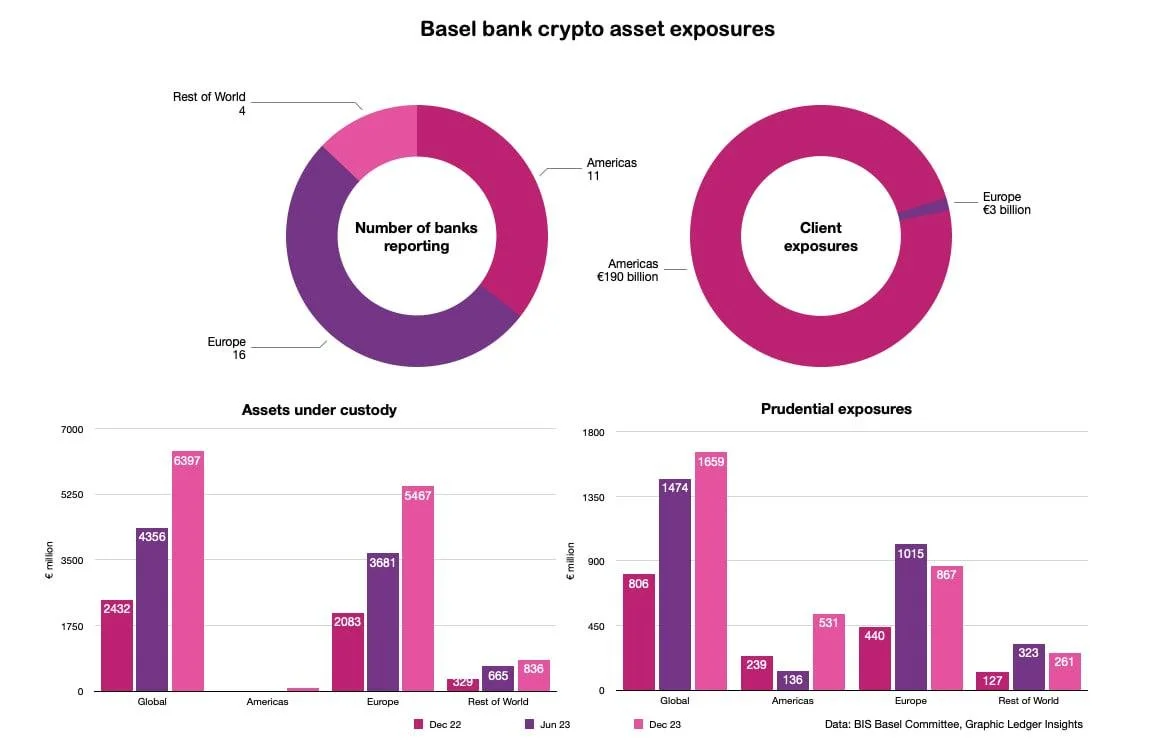
BASEL FIGURES: AMERICAN BANKS ENABLED $201 BILLION IN CLIENT CRYPTO EXPOSURES IN 2023
This week the Basel Committee on Banking Supervision published Basel III monitoring statistics for December 2023, including crypto-asset exposures. Given this was before the launch of US Bitcoin ETFs, the data is a little stale.
However, they already show significant growth in American banks providing crypto services to clients. The statistics repeat the patterns of the previous period.
Good Evening Dinar Recaps,
BASEL FIGURES: AMERICAN BANKS ENABLED $201 BILLION IN CLIENT CRYPTO EXPOSURES IN 2023
This week the Basel Committee on Banking Supervision published Basel III monitoring statistics for December 2023, including crypto-asset exposures. Given this was before the launch of US Bitcoin ETFs, the data is a little stale.
However, they already show significant growth in American banks providing crypto services to clients. The statistics repeat the patterns of the previous period.
PIC
In particular, the Americas are almost entirely absent from the crypto custody space, largely because of the SEC’s SAB 121 accounting rule, which makes it prohibitive for banks to provide custody. That’s already relaxing and will likely be dropped altogether by the incoming Trump administration.
n the second half of 2023, assets under custody in Europe grew by 49% to €5.5 billion ($5.8bn) compared to the first half. At a global level, 94% of custody was for spot crypto rather than tokenized assets or ETPs.
When it comes to enabling client exposures, the roles are completely reversed. The Americas dominate providing 98% of services. The figures are on a different scale, with American banks enabling €190 billion ($201 billion) of client exposures.
American banks also substantially increased their own exposures – by almost four times, albeit from a small base. 2023 year end prudential exposures amounted to €531 million.
While APAC is viewed as a promising growth sector, by the end of 2023 it still lagged far behind. However, the figures depend on which banks are included in the dataset.
Of the four banks reporting in the ‘rest of world’ category, none reported any client crypto exposures. The banks’ own exposures were down 20% to a negligible €261 million with custody at €836 million. A lot of legislative changes have happened this year, so next year’s figures could be more interesting.
The statistics cover a total of 31 banks globally.
@ Newshounds News™
Source: Ledger Insights
~~~~~~~~~
RIPPLE NEWS : WISDOMTREE SUBMITS XRP ETF S-1 APPLICATION WITH THE US SEC
▪️WisdomTree Files for XRP ETF: WisdomTree Digital submits S-1 filing for an XRP ETF, marking growing institutional interest in Ripple's cryptocurrency.
▪️XRP Demand Surge: XRP's market value rises as institutional investors, including 21Shares and Bitwise, file for XRP ETFs amid U.S. regulatory clarity.
Last week, WisdomTree Digital Commodity Services, LLC, a subsidiary of a prominent New York-based asset management firm with over $113 billion in AUM, filed for an XRP exchange-traded fund (ETF) with Delaware authorities. Earlier today, the investment firm submitted to the Securities and Exchange Commission (SEC) the S-1 filing for the WisdomTree XRP Fund.
According to the SEC filings, the WisdomTree XRP Fund will tap into the Bank of New York Mellon (BNYM) as the trustee, fund accountant, and transfer agent.
However, the prospectus for the WisdomTree XRP Fund did not reveal the ticker that will be listed on the Cboe BZX Exchange, thus indicating several updates of the filings will take place in the near term.
Growing Interest in XRP Among Institutional Investors
As Coinpedia previously reported, the demand for XRP among institutional investors has significantly grown following the anticipated crypto policy implementation in the United States.
In addition to WisdomTree, several other fund managers have filed to offer a spot XRP ETF to prospective investors to help diversify their crypto portfolios.
For instance, asset management firm 21Shares recently fueled for a spot XRP ETF. Additionally, Bitwise, Grayscale Investments, and Canary Capital have all filed for a similar product.
As a result, it is evident that the demand for XRP among institutional investors is exponentially growing amid regulatory clarity in the United States.
Market Impact
The direct impact of the high demand for XRP among institutional investors is visible on the rising market value. The large-cap altcoin, with a fully diluted valuation of about $240 billion, overtook Solana (SOL) and Binance (BNB) to become the third largest crypto asset, excluding stablecoins.
After more than six years of consolidation, XRP price is well positioned to enter its discovery phase of the macro bull cycle in the coming months.
@ Newshounds News™
Source: CoinPedia
~~~~~~~~~
THE EASY WAY TO GROW YOUR WEALTH WITH XRP IN JUST 30 DAYS | Youtube
@ Newshounds News™
Source: Seeds of Wisdom Team RV Currency Facts
~~~~~~~~~
Seeds of Wisdom Team RV Currency Facts Youtube and Rumble
Newshound's Podcast Link
Newshound's News Telegram Room Link
Q & A Classroom Link
Follow the Roadmap
Follow the Timeline
Seeds of Wisdom Team™ Website
Subscribe to Seeds of Wisdom Team™ Newsletter
Thank you Dinar Recaps
A Few More Tidbits From TNT Monday Night 12-2-2024
TNT:
Tishwash: TikTok under scrutiny.. Central Bank suspends financial transactions with its agents in Iraq
The Central Bank announced, today, Sunday (December 1, 2024), the suspension of financial transactions with TikTok agents in Iraq.
The Central Bank stated in a document received by "Baghdad Today" that "it was decided to stop incoming and outgoing financial transactions for TikTok agents inside Iraq. link
TNT:
Tishwash: TikTok under scrutiny.. Central Bank suspends financial transactions with its agents in Iraq
The Central Bank announced, today, Sunday (December 1, 2024), the suspension of financial transactions with TikTok agents in Iraq.
The Central Bank stated in a document received by "Baghdad Today" that "it was decided to stop incoming and outgoing financial transactions for TikTok agents inside Iraq. link
************
Tishwash: Parliamentary Finance Committee sets a “national path” to end oil disputes between Baghdad and Erbil
The head of the Parliamentary Finance Committee, Atwan Al-Atwani, announced on Sunday the determination of a "national path" to resolve the oil disputes between Baghdad and Erbil, noting that the committee is preparing a report on amending one of the articles in the General Budget Law.
A statement by the committee received by Shafaq News Agency stated that Al-Atwani chaired an expanded meeting with the senior staff of the Ministry of Oil, in the presence of the committee members and a number of members of the Oil, Gas and Natural Resources Committee. The meeting discussed the files of managing the country's oil wealth and the future of oil prices, as the country's budget is formed by 90% of these revenues.
According to the statement, the meeting discussed developments in resolving outstanding issues with the Kurdistan Region regarding resolving disputes over calculating production costs and adapting foreign companies’ contracts to the Iraqi constitution, with the aim of resuming exports via the Turkish Ceyhan pipeline.
Al-Atwani pointed out that his committee is in the process of preparing its report on amending Article 12 of the General Budget Law, and submitting it to the House of Representatives for the second reading.
He stressed that the Finance Committee held a series of continuous meetings with officials in the federal government and the regional government, and "defined a national path to find a radical solution to this problem on a constitutional and legal basis and in a way that achieves justice in the distribution of wealth among Iraqis."
Al-Atwani stressed the need to set a timetable for implementing the provisions of the oil agreement between the center and the region, in accordance with what was stipulated in the draft law amending the Federal General Budget Law, which the Council of Ministers voted on and sent to Parliament.
In turn, the Undersecretary of the Ministry of Oil for Extraction Affairs, Basem Muhammad Khadir, reviewed the mechanisms for calculating the cost of oil production and transportation, and the most prominent understandings reached with the region in this regard.
The Undersecretary of the Ministry of Oil stressed the necessity for the Federal Ministry of Oil to be responsible for the reservoir management of the region’s oil fields, noting that his ministry has fixed standards for calculating the cost of producing a barrel of oil, whether at the level of fields managed by national effort or those managed by foreign companies. link
*************
Tishwash: Association of Banks: 75% of the money supply is outside the banking system
The Private Banks Association said on Sunday, December 1, 2024, that three-quarters of the monetary mass in Iraq is outside the banking system.
The Executive Director of the Private Banks Association, Ali Tariq, said in a statement followed by "Ultra Iraq", "About 75 percent of the monetary mass is outside the banking system and requires a great effort to encourage citizens, companies and institutions to use the banking system more, which is currently happening, but this type of work needs to be accelerated to control financial operations in Iraq."
Despite what the director said in this regard, the World Bank claimed last February that the infrastructure for electronic payment systems in Iraq is “among the best in the region,” according to a statement issued by the Central Bank of Iraq .
“During the last two years, deposits in the banking sector have increased, but there is still a large amount of cash outside the banking system. This requires increasing confidence in the banking sector, whether governmental or private, and strengthening this confidence through the Central Bank of Iraq and the Iraqi government, in addition to offering investment programs for deposits that reflect on citizens’ deposits, which could generate returns for depositors in these banks, and thus there is an incentive and motivation to increase these deposits,” Tariq added.
The Iraqi authorities have taken steps towards activating the electronic payment system , starting with localizing employees’ salaries, and then installing electronic payment devices in different places, including gas stations. However, many experts and specialists still believe that the culture of electronic payment is not at the required level, for many reasons, including those related to economic and electronic culture, in addition to the fact that the widespread corruption in the country hinders its full implementation.
According to experts , the Iraqi government, through attempts to implement electronic payment, aims to withdraw the cash mass in circulation in Iraq, which amounts to 84 trillion dinars. link
************
Mot: Here is photographic evidence that Rudolph was not allowed to play in any reindeer games.

Mot: . ole "'Earl"" is mighty Handy He is!!

Seeds of Wisdom RV and Economic Updates Monday Afternoon 12-02-24
Good Afternoon Dinar Recaps,
BRAZIL PROPOSES TO BAN STABLECOIN WITHDRAWALS TO SELF-CUSTODIAL WALLETS
A public consultation notice from the Central Bank of Brazil intends to prohibit stablecoin withdrawals to self-custody wallets.
The Central Bank of Brazil (BCB) has unveiled a regulatory proposal prohibiting centralized exchanges from allowing users to withdraw stablecoins to self-custodial wallets.
According to the public consultation notice, the transfer of stablecoins — called “tokens denominated in foreign currencies” — between residents would be restricted in cases where Brazilian law already allows payments in foreign currencies.
Good Afternoon Dinar Recaps,
BRAZIL PROPOSES TO BAN STABLECOIN WITHDRAWALS TO SELF-CUSTODIAL WALLETS
A public consultation notice from the Central Bank of Brazil intends to prohibit stablecoin withdrawals to self-custody wallets.
The Central Bank of Brazil (BCB) has unveiled a regulatory proposal prohibiting centralized exchanges from allowing users to withdraw stablecoins to self-custodial wallets.
According to the public consultation notice, the transfer of stablecoins — called “tokens denominated in foreign currencies” — between residents would be restricted in cases where Brazilian law already allows payments in foreign currencies.
The BCB shared in a statement:
“The initiative reflects our commitment to adapting the financial system to the realities of digital assets while safeguarding the integrity of international capital flows.”
The move is part of the crypto regulation bill approved in Brazil in December 2022, which determined that the BCB is responsible for creating the rules for the crypto industry in the country.
The public consultation will be open until Feb. 28, 2025, and market participants can share their opinions with the regulator. However, the BCB can override the inputs and do as described in the document.
Balancing regulations
According to the Brazilian central bank, the proposed rules aim to enhance legal certainty for businesses and individuals while fostering competition and efficiency in the foreign exchange market.
The proposed regulation outlines three core activities for virtual asset services providers operating in the foreign exchange market: facilitating international payments and transfers via crypto, providing exchange or custody services for tokens denominated in Brazilian reais for non-residents, and managing transactions involving tokens pegged to foreign currencies.
In addition, crypto investments, whether inbound or outbound, would be subject to the same regulatory standards as traditional investments. External credit, direct foreign investment, and Brazilian capital abroad involving crypto would require compliance with existing international capital regulations.
Under the public consultation, centralized exchanges must also get a foreign exchange license to offer stablecoin-related services.
A significant market
According to data from Brazil’s Internal Revenue Service (RFB) published on Nov. 13, nearly 4.4 million Brazilians transferred $4.2 billion in crypto in September.
Stablecoins represented 71.4% of all the value transferred during the month, with roughly $3 billion transacted. Tether USD (USDT) dominated with $2.77 billion moved by Brazilian crypto investors.
@ Newshounds News™
Source: CoinTelegraph
~~~~~~~~~
COINBASE ANNOUNCES APPLE PAY FOR FIAT-TO-CRYPTO PURCHASES
“Coinbase Onramp takes the hassle out of fiat-to-crypto conversions with lightweight KYC for eligible purchases, free USDC on and offramping, and access to the most popular payment methods,” Coinbase said in a statement.
Apple Pay will allow users to get onchain in seconds granting quick access to some of the world’s leading cryptocurrencies. Users can access Moonshot, an app using Onramp to get Onchain quickly.
For eligible purchases, Coinbase provides lightweight KYC to make the process of getting Onchain even simpler while still protected. The addition of Apple Pay also allows users to access free USDC on and offramping on Coinbase.
According to Coinbase, if you’re an existing app using Coinbase Onramp, there’s nothing you need to do. Users will automatically see Apple Pay appear as an option when making an eligible purchase. Eligible users can sign up for Onramp quickstart to get started and access Apple Pay as an option on Coinbase. Users can also use one-click-buy for an even faster experience.
Coinbase investors gained confidence in the company following the announcement, with COIN stock climbing 3% Monday.
@ Newshounds News™
Source: Watcher Guru
~~~~~~~~~
XRP BECOMES THE TOP TRADED TOKEN ON BINANCE AND COINBASE, HITS ALMOST 7-YEAR HIGH
XRP, which saw its fourth ETF filing Monday, also now has the third-largest market cap among all cryptocurrencies, after it shot past Tether’s USDT and Solana’s SOL.
XRP has been the most popular token by trading volume in the last 24 hours on several centralized exchanges, such as Binance and Coinbase
XRP’s virality on centralized exchanges comes as the token climbed on Monday to a nearly seven-year high of $2.77, a 40% jump in the last 24 hours and a 433% increase over the past 30 days.
The token native to the Ripple ledger currently has a market cap of about $158 billion, surpassing both Tether’s USDT and Solana’s SOL, making XRP the third largest cryptocurrency by market cap.
On Binance, the dominant non-U.S. centralized exchange, XRP’s 24-hour volume of $7 billion makes up 13.3% of total trading activity. For the U.S.’s biggest exchange, Coinbase, XRP has a 24-hour volume of $3 billion, comprising almost 30% of the total volume.
XRP tops trading volume on OKX, Kraken, and KuCoin as well, market data from CoinGecko shows. XRP trading on Upbit, a prominent centralized exchange in South Korea, makes up 38.6% of the entire venue’s 24-hour trading volume of $19.8 billion.
Wall Street titans are also preparing to launch spot XRP exchange-traded funds as ETF provider WisdomTree submitted a Monday filing for a spot XRP ETF with the U.S. Securities and Exchange Commission, joining Bitwise, Canary Capital, and 21shares.
Small Retail FOMO
“The 6-year (nearly 7-year) high comes as wallets with 1M-10M XRP have accumulated 679.1M tokens (currently worth $1.66B) in just 3 weeks,” the team behind market intelligence platform Santiment wrote on X early Monday. At current prices, one million XRP tokens are worth almost $2.8 million.
Maksim Tkachuk, who works on product at Santiment, further told Unchained over Telegram that the team is observing high levels of FOMO, short for “fear of missing out,” from small retail holders, defined as addresses with 100 to 10,000 XRP tokens.
“Overall when those retail darlings take the spotlight, the whole market becomes dangerous as the main drivers of the price at this point are greed and FOMO,” Tkachuk wrote.
“Per [Santiment’s] internal agreement – the top is near… at least a very sizeable correction is what we agree on like 20-25 percent in majors.”
Stablecoin, RWA and DeFi Plans
Meanwhile, Ripple is gearing up to roll out a new USD stablecoin on its blockchain, as the New York Department of Financial Services is expected to approve the product, according to Fox Business last week.
Sally Zhu, who is part of the venture capital arm of crypto market-making firm Amber Group, messaged Unchained on Telegram saying, “I think XRP’s recent price surge is about the buzz around tokenizing [real-world assets]…” They’re teaming up with players like Archax to bring things like equities and global debts onto the XRP Ledger.”
Archax, a digital asset exchange, broker, and custodian, announced on Nov. 25 that it has provided access to a money market fund in a tokenized form on the XRP Ledger. “With such a huge opportunity to reshape how financial instruments are traded and managed, XRP is riding the wave of optimism now.”
Decentralized finance (DeFi), a subsector of the crypto space that enables users to conduct financial activities without intermediaries, has strong roots in Bitcoin, Ethereum, and Solana. Some crypto users are now exploring DeFi on the XRP Ledger.
For example, Robert Leshner, the CEO of asset management firm Superstate, said he was in the “trenches,” testing the infrastructure of automated market markets and inspecting the memecoins on the network, per an X post on Sunday.
Despite the recent upward price movement of XRP, people in the crypto space have long criticized the XRP Ledger for its lack of decentralization. Justin Bon, founder and chief investment officer of Cyber Capital, specifically pointed to the consensus mechanism for the XRP Ledger. “XRP’s consensus is based on UNLs (Unique Node Lists), literal centralized lists of trusted nodes released by single parties, including the foundation,” Bons wrote on X.
@ Newshounds News™
Source: Unchained Crypto
~~~~~~~~~
XRP WORLD RESERVE CURRENCY | Youtube
@ Newshounds News™
Source: Seeds of Wisdom Team RV Currency Facts
~~~~~~~~~
Seeds of Wisdom Team RV Currency Facts Youtube and Rumble
Newshound's Podcast Link
Newshound's News Telegram Room Link
Q & A Classroom Link
Follow the Roadmap
Follow the Timeline
Seeds of Wisdom Team™ Website
Subscribe to Seeds of Wisdom Team™ Newsletter
Thank you Dinar Recaps
More News, Rumors and Opinions Monday Afternoon 12-2-2024
KTFA:
Clare: The Iraqi Parliament begins voting on the “Personal Status” law. Learn about its content (documents)
12/2/2024
The Iraqi Parliament began voting on Monday on a draft amendment to the Personal Status Law, after months of political, popular and legal debate over the paragraphs to be amended.
Earlier today, the House of Representatives held a regular session with an agenda that included voting on personal status laws, general amnesty, and returning properties to their owners, which are still a subject of political controversy.
Shafaq News Agency publishes below the draft amendments to the law LINK
KTFA:
Clare: The Iraqi Parliament begins voting on the “Personal Status” law. Learn about its content (documents)
12/2/2024
The Iraqi Parliament began voting on Monday on a draft amendment to the Personal Status Law, after months of political, popular and legal debate over the paragraphs to be amended.
Earlier today, the House of Representatives held a regular session with an agenda that included voting on personal status laws, general amnesty, and returning properties to their owners, which are still a subject of political controversy.
Shafaq News Agency publishes below the draft amendments to the law LINK
***********
Clare: Al-Alaq to {Sabah}: Our critical position is very excellent
12/2/2024 Cairo: Israa Khalifa
Thanks to the well-studied and wise financial policies of Prime Minister Mohammed Shia al-Sudani's government, the country's monetary position has become very excellent, as described by the Governor of the Central Bank of Iraq, Ali Mohsen Al-Alaq, in a special interview with "Al-Sabah".
This position came to reassure citizens and confirm that there are no real fears of any economic crises occurring here or there. Al-Alaq said in a special interview with "Al-Sabah": "The monetary position in Iraq is (very excellent) at the present time in terms of controlling inflation and the high adequacy of foreign reserves, which enables the Central Bank to remain stable, defend the exchange rate, and achieve monetary stability, despite the circumstances surrounding the country and the region."
He explained that "the reserve covers our needs, and this is what distinguishes the Central Bank of Iraq compared to other central banks in the region," noting that "the Central Bank adopts an unconventional monetary policy that is not based only on achieving monetary stability."
Al-Alaq announced the Central Bank's success in implementing the transition plan for "foreign transfers, in line with international practices and standards, and that it is currently taking place smoothly and transparently - especially covering imports at the official exchange rate - which leads to general stability in prices."
Regarding the (Riyada) Bank, the Governor of the Central Bank said: "The (Riyada) Bank will be contributed by Iraqi banks and supported by the Central Bank itself in order to diversify the production base, reduce unemployment levels, and provide basic pillars for sustainable development with the support of specialized international organizations." LINK
************
Courtesy of Dinar Guru: https://www.dinarguru.com/
Mnt Goat ...I want to tell you the statistics of the monetary mass in Iraq is in dinars not US dollars. Thus, 100 trillion dinars or about not even a trillion US dollars. I also want to bring out that the CBI just told us the size of the Iraqi foreign exchange reserves exceeds by 140% the local currency issued... in the USA...the equivalent of the 1 dinar is expected to come out as about $4 USD.
Militia Man Everyone is very impressed with Iraq's prime minister and especially where they are today. They're focus is financial inclusion, bringing the Iraqi world, to the world...They got new technologies ... electronic taxes and tariffs...they're breaking out with their stock exchange. Their stock exchange has been on fire the last two year. One thing after another supports that Iraq has moved and done...things we've never seen before. It's powerful information...It's exciting times...
************
Only good news in Iraq
Nader: 12-2-2024
LIVE! WORLD DE-DOLLARIZATION WILL ACCELERATE. IT CANNOT BE STOPPED.
Greg Mannarino: 12-2-2024
Central Bank Collapse Incoming, Silver Prices will Explode
Central Bank Collapse Incoming, Silver Prices will Explode
Wall Street Silver: 12-2-2024
In recent months, the financial landscape has taken on a precarious demeanor, with rising concerns about massive national debt, banking instability, and inflation.
The latest voice in this conversation is Adrian Day, a seasoned investment strategist and advocate for precious metals, who has joined forces with Wall Street Silver to discuss the potential economic turmoil ahead and its implications for silver prices.
Central Bank Collapse Incoming, Silver Prices will Explode
Wall Street Silver: 12-2-2024
In recent months, the financial landscape has taken on a precarious demeanor, with rising concerns about massive national debt, banking instability, and inflation.
The latest voice in this conversation is Adrian Day, a seasoned investment strategist and advocate for precious metals, who has joined forces with Wall Street Silver to discuss the potential economic turmoil ahead and its implications for silver prices.
Adrian Day’s analysis paints a stark picture of the current financial environment. With national debts skyrocketing across the globe, particularly in the United States, Day argues that an impending “debt storm” threatens to unleash chaos on both domestic and international markets.
The pandemic-induced spending and subsequent monetary policy interventions have exacerbated the situation, pushing debt levels into uncharted territory. This reckless financial strategy, he warns, sets the stage for a possible banking collapse.
The signs are evident — increased borrowing, rising interest rates, and the likelihood of recession create a perfect storm for the financial system. As lenders tighten credit and consumers grapple with job instability and inflation, financial strains mount on institutions that may not withstand the strain.
The interconnectedness of global finance implies that distress in one area can spiral outwards, potentially triggering wider banking crises.
With this precarious backdrop, Day emphasizes the urgent necessity for investors to reassess their portfolios. Traditional assets like stocks and bonds may not provide the safety and security that investors seek during turbulent times.
This is where silver enters the discussion. Historically seen as a hedge against inflation and currency devaluation, silver’s value is poised to rise as economic uncertainties amplify.
Day speculates that as confidence in the banking system wavers, more investors may flock to precious metals, driving up the demand for silver. The supply constraints due to production limitations and ongoing industrial demand for silver in sectors like technology and renewable energy further strengthen the case for a bullish outlook on silver prices.
The question on many investors’ minds is whether we are teetering on the edge of a banking collapse. Day argues that while the situation is concerning, it is not entirely grim. Governments and central banks have tools at their disposal to mitigate such crises, but their effectiveness depends on timely interventions and sound policies.
However, Day cautions that complacency could prove disastrous. The confluence of high debt levels, inflation, and banking vulnerabilities requires close monitoring and proactive measures. Investors who recognize the signs and take action could position themselves favorably in the forthcoming landscape.
As Adrian Day joins Wall Street Silver to share his insights on the evolving financial landscape, it becomes clear that vigilance and preparation are paramount. The looming debt storm, the potential for a banking collapse, and the rising value of silver as a hedge create an intricate puzzle for investors.
With Day’s expertise in precious metals, astute investors may find a path forward, leveraging the rising silver prices as both a safeguard and an opportunity amid economic uncertainty.
As the world navigates these choppy financial waters, the lessons from history remind us of the intrinsic value of tangible assets like silver. Whether the banking system can weather the impending storm remains to be seen, but one thing is certain: the conversation around silver and its role in safeguarding wealth will only grow louder in the coming months.