
Thank you to all the subscribers to our Early Access program…we thank you for your continued support.
We are excited to offer this new service to keep you informed and up-to-date on the latest Dinar and currency news.
Thoughts From DJ: “Money Supply”
DJ: DID YOU KNOW?
Sept 15th Post 2024 (Money Supply)
When we absorb all the Intel in relation to the GCR-RV we have to consider some basic questions. At the top of the list is, where is the money coming from? There will either have to be a redistribution of wealth or an increase in the global Money Supply. ( Money supply refers to the total amount of monetary assets available in an economy at a specific time.
It includes various forms of currency, such as physical cash (coins and banknotes) and demand deposits (money in bank accounts that can be easily accessed). Money supply is categorized into different measures:, M0: Physical currency in circulation, M1: M0 plus demand deposits and other liquid assets and M2: M1 plus less liquid assets like savings accounts and time deposits )
DJ: DID YOU KNOW?
Sept 15th Post 2024 (Money Supply)
When we absorb all the Intel in relation to the GCR-RV we have to consider some basic questions. At the top of the list is, where is the money coming from? There will either have to be a redistribution of wealth or an increase in the global Money Supply. ( Money supply refers to the total amount of monetary assets available in an economy at a specific time.
It includes various forms of currency, such as physical cash (coins and banknotes) and demand deposits (money in bank accounts that can be easily accessed). Money supply is categorized into different measures:, M0: Physical currency in circulation, M1: M0 plus demand deposits and other liquid assets and M2: M1 plus less liquid assets like savings accounts and time deposits )
As of 2024, the estimated global money supply is around $120 trillion. This figure includes various forms of currency such as cash, demand deposits, savings accounts, and other easily accessible assets. The M2 money supply being a broader measure, also takes into account less liquid assets like time deposits. Beyond traditional money, global financial markets—including investments, real estate, and other assets—total in the hundreds of trillions, with some estimates of total global wealth exceeding $1,540 trillion
The amount of money supply needed to run the global economy is not a fixed figure, but it needs to balance facilitating trade, investment, and economic growth without causing inflation. In practical terms, this depends on factors like productivity, the velocity of money (how quickly money circulates), and the state of the economy. Central banks regulate money supply to stabilize economic growth and control inflation, adjusting it as economies expand or contract. The current global money supply of around $120 trillion reflects these adjustments to keep the economy functioning smoothly.
If all currencies were hedged against hard assets (such as gold or other commodities), it would reduce the flexibility of central banks to adjust the money supply based on economic conditions. In such a system, the money supply would be limited by the availability of the asset, which could constrain economic growth, especially during times of increased demand. This would also lead to more stability in currency value but could make the global economy less responsive to economic crises or fluctuations in trade.
Historically, the gold standard imposed such limitations, which is one reason why modern economies moved to fiat currency systems. So even if we see a move to asset backed currencies there will have to be some form of a fiat component.
So back to the original question, where is the money coming from? You cannot just add currency to the money supply. And judging by the astronomical amounts being suggested, common sense says you would create global inflation overnight. Redistributing current global wealth would mean somebody is going to have to give up something.
People out there saying the GCR has started, answer that question before passing on information that cannot be substantiated. Instead of looking for funds to show up in your account pay more attention to the mechanisms required to move the money first. When those are in place then start believing.
We should quit watching how the plane takes off and worry more on how it’s going to land.
DJ
And, Right On Cue, Gold Hits Another All Time High...
And, Right On Cue, Gold Hits Another All Time High...
Notes From The Fuield By James Hickman (Simon Black) September 16, 2024
This is an anomaly we haven’t seen before.
Gold just hit yet another all-time high. But what’s strange is that, if you look at gold’s supply and demand fundamentals, the price should almost be falling. Not rising.
I’ll explain—
On the supply side, gold production is actually increasing slightly. The largest miner in the world, Newmont Mining, produced nearly 30% more gold in the first half of 2024 compared to 2023. And across the entire industry (according to the World Gold Council), global gold mining output is up slightly over 2023.
And, Right On Cue, Gold Hits Another All Time High...
Notes From The Fuield By James Hickman (Simon Black) September 16, 2024
This is an anomaly we haven’t seen before.
Gold just hit yet another all-time high. But what’s strange is that, if you look at gold’s supply and demand fundamentals, the price should almost be falling. Not rising.
I’ll explain—
On the supply side, gold production is actually increasing slightly. The largest miner in the world, Newmont Mining, produced nearly 30% more gold in the first half of 2024 compared to 2023. And across the entire industry (according to the World Gold Council), global gold mining output is up slightly over 2023.
So much for shrinking supply.
But what about demand? Well, this is usually broken down into four main segments.
The first and (by far) largest segment of demand is jewelry. But global jewelry demand is down.
Signet Jewelers (which owns major jewelry brands like Kay, Zales, Jared, Blue Nile, and many others) has reported an 8.5% drop in revenue so far in 2024 versus 2023. Meanwhile China’s Gold Association reported a 27% decline in gold jewelry purchases in the first half of 2024.
Even on the high-end side, LVHM’s jewelry division (which includes the luxury brand Tiffany’s) also reported a 5.1% sales decline due to “an uncertain economic and geopolitical environment. . .”
So overall jewelry worldwide (which is THE biggest component of gold demand) is down. Worldwide.
The next segment which drives gold demand is investment demand, i.e. individual investors who buy bars and coins... but most often invest via Exchange-Traded Funds.
Well, the largest ETFs in North America (GLD and IAU, which comprise 80% of the market) are DOWN for the year, meaning they have been net SELLERS of gold, rather than buyers. Even in the month of August, these two combined for a big fat whopping 1.7 metric tons of net purchases, roughly $200 million.
That’s nowhere near enough to move the gold price.
Meanwhile, across the Pacific, all of Asia’s gold ETFs COMBINED only purchased a net 0.3 metric tons (i.e. $30 million) last month. Again, this is simply not enough demand to move the gold price.
And so far for the year, worldwide, gold ETF holdings are DOWN by about 44 metric tons.
The third category of gold demand is industrial use. You might already know, for example, that there’s about 50mg of gold in your mobile phone thanks to gold’s unique chemical properties as an electrical conductor.
So mobile phone producers (along with certain medical device manufacturers and a handful of other industries) also buy gold. It’s pretty small demand, though— industrial and technology use only makes up about 10% of global gold demand.
That said, it’s worth pointing out that iPhone sales (which is a good proxy for global mobile phone production) are down substantially, from a peak of $48 billion in Q1/2021 to just $39 billion in its most recent quarter.
So, to summarize, jewelry demand is flat or down. Investment demand for gold is flat or down. Industrial demand is too small to matter, but even that is down. Meanwhile, supply is rising.
Rising supply and falling demand? It seems like gold prices should be falling right now. And yet gold just reached yet another record high. What gives?
Well, as we’ve said before, the answer is central banks.
Poland is a great example; despite being a relatively small country, it bought 19 metric tons of gold last quarter alone. And it plans to buy at least another 125 tons in the future. That’s a lot of gold.
This is a trend taking place worldwide; central banks including China, Turkey, Qatar, India, Czech Republic, etc. have loaded up on gold this year. And in the second quarter of 2024, central banks purchased 183 metric tons of gold... which is far more than usual.
Central banks typically buy small amounts of gold, i.e. a few metric tons here and there. But over the past two years, they’ve been buying gold like crazy.
It’s pretty obvious why. They’re concerned about the world, and they’re concerned about the fate of the US dollar and US government finances.
Think about it— central banks around the world own TRILLIONS of dollars worth of US government bonds, i.e. US dollar foreign reserves. And they’re obviously worried.
Congress and the White House run outrageous budget deficits every year. The federal government’s dysfunction is a constant national embarrassment. The US national debt is set to soar by AT LEAST $22 trillion over the next decade. And inflation is far from being solved.
Foreign central banks know this. And they realize that, in a few years time, their trillions of US dollar reserves will be worth a lot less.
So they’re trying to do something about it now. And that means trading at least SOME of their dollars for gold... hence the feverish central bank gold purchases, and the all-time record high in the gold price.
We’ve already suggested that gold could easily go much higher... especially if Kamala wins. I think that’s easily a $10,000 gold price, which would suggest only a small percentage of US dollar foreign reserves invested in gold.
That doesn’t mean the gold price can’t fall in the meantime. Gold prices have been rising for so long, and, realistically, nothing goes up or down in a straight, uninterrupted line.
Some central banks will continue buying gold irrespective of its price. Others will be more conservative and try to play the market. Singapore’s central bank, for example, actually sold a bit of gold recently and are probably hoping for a pullback in prices to buy more.
But over the longer term, gold is still an extremely sensible hedge with a lot of upside.
Having said that, the real value we see right now is in gold miners.
Look at Newmont mining— and, this is not a recommendation, but just an example. Newmont is the world’s largest gold miner, i.e. more than 80% of its revenue is essentially gold.
Gold is at an all-time high, yet Newmont’s stock price is about 40% below its record high from a few years ago.
Sure, it’s a much more complicated story; you have to consider gross margins and mining costs and country risk, etc. But the larger point is that gold stocks (especially relative to gold) are very cheap right now... especially when you consider where gold could be a few years from now.
To your freedom, James Hickman Co-Founder, Schiff Sovereign LLC
https://www.schiffsovereign.com/trends/and-right-on-cue-gold-hits-another-all-time-high-151422/
Seeds of Wisdom RV and Economic Updates Monday Afternoon 9-16-24
Good Afternoon Dinar Recaps,
LAWMAKER CALLS ON CFTC TO REGULATE ELECTION MARKETS AS POLYMARKET ACTIVITY FALTERS AMID UNCERTAINTY
Lawmaker warns that banning election betting could fuel illegal platforms, threatens election integrity.
Congressman Ritchie Torres has called on the Commodity Futures Trading Commission (CFTC) to regulate election-related prediction markets rather than blocking them.
Good Afternoon Dinar Recaps,
LAWMAKER CALLS ON CFTC TO REGULATE ELECTION MARKETS AS POLYMARKET ACTIVITY FALTERS AMID UNCERTAINTY
Lawmaker warns that banning election betting could fuel illegal platforms, threatens election integrity.
Congressman Ritchie Torres has called on the Commodity Futures Trading Commission (CFTC) to regulate election-related prediction markets rather than blocking them.
In a letter addressed to CFTC Chair Rostin Behnam, Torres urged the regulator to focus on promoting responsible innovation and working with platforms like Kalshi and Polymarket to ensure such markets are regulated rather than pushing traders towards illegal, unregulated platforms.
Torres’ letter followed a Sept. 6 court ruling that partially overturned the CFTC’s efforts to prevent Kalshi, a US-based prediction platform, from offering election-related contracts. He emphasized that further legal challenges could harm both election integrity and consumer protection, allowing illegal platforms to flourish.
Torres wrote:
“The CFTC has a mandate to promote responsible innovation.”
He urged the agency to collaborate with regulated market participants, ensuring election-related contracts are conducted transparently and securely within regulated markets.
Polymarket declines amid uncertainty
Polymarket has seen a significant decline in activity over the last few days as regulatory pressure and uncertainty over election betting continue to mount.
According to Dune Analytics, Polymarket’s daily active traders dropped by nearly 40%, from 12,595 on Sept.11 to 7,627 by Sept. 15. The platform’s daily trading volume also fell dramatically, down 85.6%, from $37.2 million to $5.35 million over the same period.
The drop in activity follows the CFTC’s proposal to limit certain event contracts, particularly those related to political outcomes. The regulator has expressed concerns about the potential for manipulation in such markets, citing instances where fabricated information, like a fake poll involving musician Kid Rock, distorted market prices.
Despite the regulatory challenges, Polymarket has gained some mainstream recognition, with Bloomberg recently integrating the platform into its financial terminals. The move suggests that interest in decentralized prediction markets is growing, even as regulators scrutinize the sector more closely.
Intensifying debate
The debate over election prediction markets intensified on Sept. 6 when a federal court ruled in favor of Kalshi, allowing the platform to offer election-related contracts. The platform hailed the decision as a historic moment, stating that for the first time in 100 years, Americans could legally trade on election outcomes.
However, the CFTC quickly filed an emergency motion to stay Kalshi’s election markets, citing concerns about potential manipulation. The agency has argued that election markets could undermine public trust in the democratic process.
The CFTC’s actions have faced criticism from lawmakers like Torres, who urged the watchdog to accept the court’s ruling and focus on regulating these markets to ensure transparency and consumer protection.
Torres wrote in his letter:
“The CFTC should be focusing on regulating exchanges, protecting consumers, and safeguarding the integrity of elections.”
He warned that continued legal battles could push traders toward unregulated platforms, further jeopardizing election integrity.
@ Newshounds News™
Source: CryptoSlate
~~~~~~~~~
RIPPLE JOINS HANDS WITH HEDERA AND APTOS LABS TO LAUNCH MICA CRYPTO ALLIANCE
▪️Ripple, Hedera and Aptos Labs, founding members of DLT Science Foundation, made a key announcement on Monday.
▪️The three firms launched the MiCA Crypto Alliance to enhance compliance with EU markets in crypto assets regulation.
▪️XRP hovers around $0.5600 on Monday.
Ripple (XRP) made a key announcement alongside other founding members of a crypto alliance. The DLT Science Foundation is behind the effort, Ripple partnered with Hedera and Aptos Labs.
XRP erased recent losses and held steady above $0.5600 on Monday.
Daily digest market movers: Ripple leads effort for crypto alliance launch
▪️Ripple partnered with crypto firm Aptos Labs and distributed ledger technology-based Hedera for the DLT Science Foundation. The DLT Science Foundation (DSF) is a non-profit organization that promotes blockchain technology adoption among firms.
▪️The foundation’s mission is to create an open ecosystem and work with industry, academia and developer communities.
▪️DSF announced the launch of the MiCA Crypto Alliance for better coordination among industry members and for navigating the regulatory landscape in the European Union (EU).
▪️The alliance aims to foster cooperation between firms navigating the EU’s regulation pertaining to innovation in blockchain technology.
▪️MiCA sets strict disclosures for Crypto-Asset Service Providers (CASPs) and expects centralized exchanges and crypto firms to disclose climate impact of operations, among other details, through white papers and online descriptions accessible to the public.
Technical analysis: XRP eyes double-digit gains
XRP has been in a multi-month downward trend since its July 2024 top of $0.9380. The native token of the XRP Ledger erased recent losses and trades at $0.5731, above support at $0.5600.
Newshounds News™
Source: FX Street
~~~~~~~~~
Ripple Stablecoin is for All, Including Retail Investors: XRP Ledger Validator
Vet, an XRPL dUNL validator, has debunked speculations that the highly anticipated Ripple stablecoin RLUSD is only for institutional investors.
In an X post, the dUNL validator stated that RLUSD is for everyone, both institutions and retail users. According to him, a compelling ecosystem would need an all-rounded adoption to thrive. As a result, Ripple will need both retail and institutions to boost the stablecoin’s utility
RLUSD is for Everyone
Vet further asserted that institutions would play an important role in RLUSD distribution, creating a path to widespread adoption of the stablecoin. He stated that institutions would receive RLUSD from the XRP Ledger and distribute it to users.
It bears mentioning that retail traders and some institutional investors cannot assess stablecoins directly. USD-pegged assets are usually minted in treasuries and distributed to certain institutions. These organizations, in turn, move them to other institutions and exchanges.
As a result, Vet noted that retail traders and other institutions would access RLUSD through exchanges and automated market makers. This would allow the stablecoin to be widely used for cross-border payments and consequently provide liquidity on the XRP Ledger.
Vet’s analogy supports community pundit WrathofKahneman’s stance on the boiling issue. The XRP community enthusiast stated that the misconception that institutions alone would use RLUSD was false.
WrathofKahneman pointed out that Ripple’s On-Demand Liquidity (ODL) requires retail traders. Hence, creating a stablecoin for seamless cross-border transactions without the inclusion of retail is not rational. Notably, the actual date for the launch of RLUSD remains a mystery, with Ripple’s CEO Brad Garlinghouse noting it will debut in weeks.
The RLUSD Institution Theory
The notion that RLUSD was only for institutional investors came up from a comment by Ripple’s chief technology officer, David Schwartz. In an X post, Schwartz stated that the Ripple stablecoin would only be accessed directly by institutions.
He likened the scenario to Tether’s USDT and Circle’s USDC, noting that retailers cannot directly access the stablecoins. Schwartz reiterated the same notion in another post, asserting that retail only acquired these stablecoins from exchanges and not directly from their treasuries.
It bears mentioning that RLUSD has been speculated to replace XRP as a bridge asset for ODL transactions. However, Schwartz stated that the stablecoin, which is in beta testing on the XRPL mainnet and the Ethereum network, would complement XRP, providing broader options for users.
@ Newshounds News™
Source: The Crypto Basic
~~~~~~~~~
Join President Trump LIVE at 8PM (ET) on X Spaces for his announcement on World Liberty Financial!
@ Newshounds News™
Watch Here: https://x.com/realDonaldTrump/status/1835754983259558260
~~~~~~~~~
BIG! XRP and Interledger Protocol key to solving current issue of disconnected financial networks. | Youtube
@ Newshounds News™
Source: Source: Seeds of Wisdom Team Currency Facts
~~~~~~~~~
Newshound's Currency Facts Youtube and Rumble
Newshound's Podcast Link
Newshound's News Telegram Room Link
Q & A Classroom Link
Follow the Roadmap
Follow the Timeline
Seeds of Wisdom Team™ Website
Subscribe to Newsletter
Thank you Dinar Recaps
The Global Currency Reset: What is the future of a Global Currency
The Global Currency Reset: What is the future of a Global Currency
David Bonellie Last updated: February 21, 2024
The Global Currency Reset: What is the future of a Global Currency
The Global Currency Reset (GCR) typically refers to a hypothetical event in which the world’s currencies are supposedly “reset”. The GCR looks at new values based on the revaluation of specific currencies and the devaluation of others. Proponents of the GCR theory argue that this reset is necessary to address the current flaws in the global financial system. A GCR can level the playing field for developing nations.
The Global Currency Reset: What is the future of a Global Currency
David Bonellie Last updated: February 21, 2024
The Global Currency Reset: What is the future of a Global Currency
The Global Currency Reset (GCR) typically refers to a hypothetical event in which the world’s currencies are supposedly “reset”. The GCR looks at new values based on the revaluation of specific currencies and the devaluation of others. Proponents of the GCR theory argue that this reset is necessary to address the current flaws in the global financial system. A GCR can level the playing field for developing nations.
There are several impacts that global currency changes can have on individuals and their businesses, global mobility, and investing.
Brief History of Fiat Currency (Modern Money)
Fiat currency is not backed by a physical commodity such as gold or silver but is based on confidence and trust in the issuing government or central bank.
Bretton Woods Gold Standard
The Bretton Woods Agreement of 1944 established the US dollar as the world’s reserve currency and pegged it to the value of gold, providing a fixed exchange rate system. After World War II, governments sought to manage their economies and stabilize their currencies.

The agreement required countries to guarantee the convertibility of their currencies into US dollars to within 1% of fixed parity rates, with the dollar convertible to gold bullion for foreign governments and central banks.
Move to the PetroDollar
This type of fiat policy lasted until 1971, when the US government ended the gold standard. The move away from the gold standard was another “global currency reset” at the time and has existed for the last fifty years.
Shortly after 1971, the term “petrodollar” refers to the system that emerged whereby oil-exporting countries agreed to price their oil exports in US dollars. The petrodollar allowed the US to maintain its dominance in the global financial system and helped to support the value of the US dollar.
Several currencies are pegged to the US dollar, a common strategy in the Caribbean and several of the citizenship by investment countries. The East Caribbean Dollar is the primary currency across all five CBI countries, and investors can settle their financial investment requirements in US dollars to obtain citizenship.

Turkey’s citizenship by investment programs pricing is in US dollars. Although in this instance, investors need to convert their US dollar into Turkish Lira.
The Global Currency Reset
Potential Benefits and Challenges of a Global Currency Reset
Proponents of a global currency reset (GCR) argue that there could be several benefits to a global currency reset. Some hope that a GCR will help to reduce the disparity in wealth and income between countries and promote greater financial fairness by reducing the dominance of a single country’s Currency in the global financial system.
A currency reset moves away from a monetary system focused on short-term profits and speculation. Additionally, a GCR could promote a more efficient allocation of resources and investment in long-term development.
In this regard, the global currency reset reduces geopolitical tensions by reducing the dominance of a single country’s Currency in international trade and finance and could promote greater cooperation and stability in global economic relations.
Proposed Models for a Global Currency Reset
As there is no official movement or proposals on a currency reset, it is challenging to nail down one model that can be adopted. That being said, here are four potential options for a global currency reset.
A Global Reserve Currency
Under this model, a single global reserve currency would replace the current system, in which the US dollar is the dominant reserve currency. This global Currency could be backed by a basket of commodities or other currencies and managed by an international body such as the International Monetary Fund (IMF).
Regional Currencies
Another model for a GCR would involve the creation of regional currencies within specific geographic areas. For example, the Euro is a regional currency used within the European Union. Under this model, several regional currencies could replace the US dollar as the dominant global Currency.
Blockchain-Based Currencies
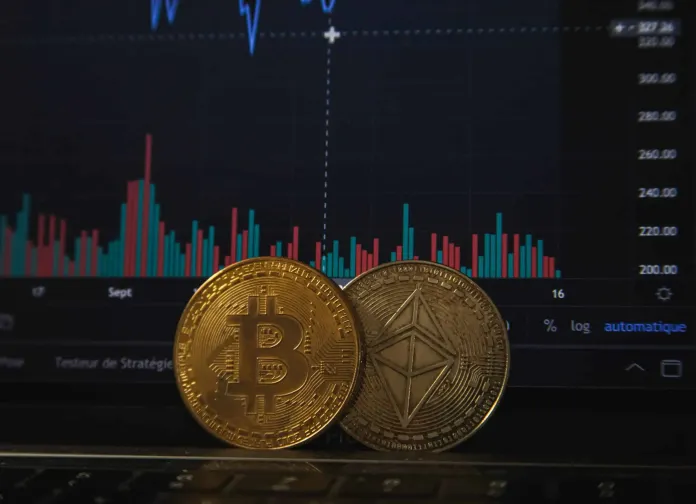
Some proponents of a GCR have suggested that a blockchain-based cryptocurrency is ideal for replacing the current system. This Currency would be based on decentralized ledger technology and managed by a distributed network of computers rather than a central authority. It is possible that Bitcoin or Ethereum be the global settlement cryptocurrency in the future.
There are a few citizenship by investment nations that are forward looking with regards to a GCR. Antigua and Barbuda’s Digital Assets Business Bill and Saint Kitts and Nevis Virtual Assets Bill are two pieces of legislation that allow registration of businesses interacting with cryptocurrencies. One step closer to allowing investors to pay for citizenship directly with crypto in the future.
Central Bank Digital Currency (CBDC)
Similar to a blockchain-based currency, A CBDC is a digital version of a country’s fiat currency issued and backed by the central bank of that country. It operates on a centralized ledger and is subject to the central bank’s monetary policy. The purpose of a CBDC is to provide a secure and efficient means of payment while also providing greater transparency and control over the monetary system.
Central Digital Bank Currencies (CBDC) or Cryptocurrency in the Global Currency Reset
One of the biggest global currency resets will be a central bank digital currency or cryptocurrency. Governments favor a CBDC because of their ability to control and have absolute visibility. Cryptocurrency and peer-to-peer transactions do not offer the government such control.
Is a Central Digital Bank Currency (CBDC) a Cryptocurrency without Privacy?
Governments are investigating the use of CBDC for a variety of reasons. One of the primary motivations is to increase financial inclusion. CBDCs could provide access to financial services for people who do not have access to traditional banking systems.
By providing a digital payment system that does not require a bank account, CBDCs could help to reduce the number of unbanked individuals. Another potential benefit of CBDCs is improving payment system efficiency and leading to faster and more cost-effective transactions.
CBDCs could also provide central banks with additional tools for implementing monetary policy. For example, a CBDC could have negative interest rates, stimulating economic growth during periods of economic downturn. Governments using a CBDC can offer greater protection to consumers against f***d and theft. All transactions are available on a secure, tamper-proof ledger.
A CBDC will require its users to complete a KYC before being able to transact. There is the potential for privacy and encryption technology, but governments will unlikely align this way.
Global Cooperation of a CBDC as the Currency Reset
If Nigeria’s CBDC is anything to go by, there will be severe pushback from a large portion of the population. The opposing viewpoint from Nigerian citizens is the manner of design of the Currency, the lack of trust in the government and central bank, and the perceived benefits and drawbacks of the system.
A CBDC raises privacy concerns using a centralized ledger to record all transactions. The CBDC would give the government or central bank issuing the CBDC a high degree of visibility into individuals’ financial activities. Although a global currency reset and CBDCs can include zero-knowledge privacy, there will be doubt among potential users.
Alternatively, countries like El Salvador adopted Bitcoin as a legal tender and the use of StableCoins as transaction currencies. A stablecoin is pegged to the US dollar but is a cryptocurrency, allowing users to transact anonymously. Previously bankless citizens now being able to engage in financial transactions with relative ease.
Implications for Investors and Businesses
If privacy is not a concern for businesses and investors, a global currency reset can offer several benefits for business transactions.
Faster and more efficient payments;
Lower transaction costs;
Improved security and f***d protection; and
Increased access to financial services.
Impact on Citizenship by Investment and Golden Visa Programs
One advantage of using a CBDC for citizenship by investment is a easier and faster option for investors to transfer funds. CBDC investors can move their investment funds more quickly and securely than with traditional payment methods.
Additionally, because the details of all transactions are on a secure, tamper-proof ledger, it may be easier for governments to track and verify investment transactions. Seeing each transaction could help to prevent f***d and ensure compliance with citizenship by investment program requirements.
Source: Global Residence Index
“Tidbits From TNT” Monday 9-16-2024
TNT:
Tishwash: Iraq offers 100 investment opportunities in November
The Investment Authority revealed the desire of Egyptian companies to enter as partners in the International Development Road project with the aim of establishing this vital corridor, while it will offer 100 investment opportunities at its forum scheduled to be held in early November.
The Authority’s spokesperson, Hanan Jassim, said in a press statement that the Authority’s Chairman recently held an extensive meeting with a number of major Egyptian companies, during which they confirmed their desire to enter the local market on a large scale in order to employ Egyptian expertise in the fields of infrastructure, bridges, and electric power, in addition to building residential cities, as well as entering as a fourth partner in the International Development Road project with Turkey, Qatar, and the Emirates with the aim of establishing this vital corridor that shapes the future of the region’s economies for the next stage.
TNT:
Tishwash: Iraq offers 100 investment opportunities in November
The Investment Authority revealed the desire of Egyptian companies to enter as partners in the International Development Road project with the aim of establishing this vital corridor, while it will offer 100 investment opportunities at its forum scheduled to be held in early November.
The Authority’s spokesperson, Hanan Jassim, said in a press statement that the Authority’s Chairman recently held an extensive meeting with a number of major Egyptian companies, during which they confirmed their desire to enter the local market on a large scale in order to employ Egyptian expertise in the fields of infrastructure, bridges, and electric power, in addition to building residential cities, as well as entering as a fourth partner in the International Development Road project with Turkey, Qatar, and the Emirates with the aim of establishing this vital corridor that shapes the future of the region’s economies for the next stage.
She added that the meeting witnessed an invitation to these companies to attend the investment forum that will be held early next November, during which 100 investment opportunities will be presented in all sectors.
She pointed out that the Authority has granted eight investment licenses in the housing, oil, gas, electricity and tourism sectors since the beginning of this year until now.
Jassim explained that the residential projects included the Al-Ghazlani residential city in Mosul, covering an area of 4,700 dunums, as well as part of the Karbala City Banks project, covering an area of 100 dunums, in addition to a third project on another part of the Karbala City Banks project, covering an area of 1,400 dunums, in addition to the new Ali Al-Wardi City project in Baghdad, covering an area of 61 million square metres.
She added that the authority granted a special license in the electricity sector for a project to generate electricity through solar energy with a capacity of 1000 megawatts for a French company in Basra Governorate, as it is the first license of this kind within the government’s plan to diversify in the energy sector, in addition to other projects represented by the sustainable Baghdad forests in Rashid Camp, the Bani Omar gas field project in Basra Governorate, as well as another project to complete the axial weighing stations within the plan of the Ministry of Construction, Housing and Public Municipalities to protect bridges from large loads.
Jassim pointed out that the investment process in the country has taken a new pattern that will raise the level of services and urban development, noting that the amended Investment Law No. 13 of 2006 is attractive to investors due to the facilities it includes. link
************
Tishwash: Iraq trades more than two trillion dinars electronically in a month
The Executive Director of the Iraqi Private Banks Association, Ali Tariq, revealed on Sunday the volume of electronic trading in the country during the month of August, confirming that it exceeded two trillion Iraqi dinars.
Tariq told Shafaq News Agency, "The value of electronic trading in the past month of August alone exceeded two trillion Iraqi dinars," indicating that "the amount was transferred and traded using electronic payment systems of various types, whether cards or payment systems."
Tariq pointed out that "the amount reached two trillion dinars for only one month, and this amount will double to more than that in the coming months."
He explained that the number of electronic cards reached 20 million cards, which means that approximately 50% of the Iraqi population own electronic payment cards, and some citizens own two or three cards.
Tariq concluded by saying, “The number of electronic payment devices in the public and private sectors has exceeded 30,000 devices.”
In October 2023, the Iraqi Council of Ministers issued several executive measures related to the electronic payment system and electronic points of sale (POS), and said at the time in a statement that they "aim to enhance the use of electronic payment in Iraq and facilitate financial and commercial operations." link
************
Tishwash: Al-Sudani confirms Iraq's openness to partnership with all those wishing to contribute to the development road project
Prime Minister Mohammed Shia al-Sudani stressed, on Saturday, the necessity of intensifying research and explanations regarding the Grand Faw Port and Iraq's Development Road projects and the opportunities they will provide, noting that these two projects are a basic gateway to economic growth in Iraq and the region, and an important pillar for expanding the non-oil economy.
This came during the dialogue seminar held in the capital, Baghdad, under the title (The Path to Development - Opportunities and Development), in the presence of an elite group of economic experts, investors, businessmen and media outlets, according to a statement by Al-Sudani's office, received by Shafaq News Agency.
Al-Sudani stressed that the quadripartite agreement between Iraq, Turkey, Qatar, and the UAE constitutes the axis of operating the development road, but the project is open to positive partnership with all those who wish to contribute to this international development effort, stressing that the global economy today has come to depend on the main corridors for trade, manufacturing, and integration, and the development road project will be an important axis of these international corridors.
He pointed to the industrial cities that will be established along the road, starting with the industrial city in Al-Faw, which will transform Iraq from a country landlocked in commercial and industrial routes to an open country, through its contribution to expanding Iraq's maritime effectiveness and raising the importance of its ports, most notably the Grand Faw Port.
The statement pointed out that the symposium included several axes related to the strategic development road project, including the economic and developmental feasibility of the project, which constitutes one of the future paths of the Iraqi economy, and how Iraq will move through it to become a new major player in the international shipping and transport arena, in addition to the thousands of job opportunities the project will provide, mechanisms for developing partnerships with the private sector, and the challenges facing the partnership between the government and the private sector. link
************
Mot: ..... HUH???????

Mot.. how to avoid Drama!!!!

Seeds of Wisdom RV and Economic Updates Monday Morning 9-16-24
Good Morning Dinar Recaps,
RIPPLE NEWS: SEC’s Decision on Crypto Classification Ends XRP Lawsuit Appeal
In a major win for Ripple and the crypto industry, the SEC has officially decided not to appeal the XRP ruling, according to WallStreetBulls. This move marks the end of the highly publicized legal battle that’s loomed over Ripple’s future since December 2020.
The case, which revolved around whether XRP was an unregistered security, cast a shadow over Ripple and its market operations for nearly three years. However, with the SEC backing down, Ripple can now move forward without fear of further legal challenges.
Good Morning Dinar Recaps,
RIPPLE NEWS: SEC’s Decision on Crypto Classification Ends XRP Lawsuit Appeal
In a major win for Ripple and the crypto industry, the SEC has officially decided not to appeal the XRP ruling, according to WallStreetBulls. This move marks the end of the highly publicized legal battle that’s loomed over Ripple’s future since December 2020.
The case, which revolved around whether XRP was an unregistered security, cast a shadow over Ripple and its market operations for nearly three years. However, with the SEC backing down, Ripple can now move forward without fear of further legal challenges.
What influenced this sudden turn of events? Let’s understand the SEC’s confusion!
A Shift in SEC’s Stance
The SEC’s decision not to appeal stems from its position in the ongoing Binance case. In this case, the SEC has acknowledged that crypto, by itself, does not meet the criteria to be classified as a security. This acknowledgment undermined the very foundation of its lawsuit against Ripple, leaving little room for an appeal.
The original lawsuit accused Ripple of selling unregistered securities through XRP sales. But with the SEC’s stance now shifting, continuing the fight would have been futile. This development not only brings relief to Ripple but could have long-term implications for other cryptocurrencies facing similar scrutiny.
Ripple’s Victory – A Game Changer for Crypto?
Ripple’s win is seen as a huge milestone for the broader crypto space. The SEC’s acceptance that crypto isn’t automatically a security could reshape how regulators treat digital assets. This case closure sets a crucial precedent, possibly helping other cryptocurrencies navigate regulatory challenges with more confidence.
Stuart Alderoty, Ripple’s Chief Legal Officer, added another layer of insight, reminding everyone that while Ripple’s battle is over, the “fair notice” defense remains vital for other crypto entities.
He criticized the SEC’s reliance on the 2017 DAO report, stating it was confusing, and the SEC even apologized for the lack of clarity. This highlights that despite Ripple’s victory, there’s still work to clear up regulatory ambiguity in the industry.
As Ripple emerges from this legal saga, the focus now shifts to how this ruling will impact future regulatory actions. Will the SEC’s shifting stance lead to greater acceptance of cryptocurrencies? One thing is certain: this victory could open doors for more market adoption and provide a clearer framework for the future of digital assets.
@ Newshounds News™
Source: Coinpedia
~~~~~~~~~
XRP NEWS: Robinhood Relists XRP After Ripple’s Legal Victory
XRP is back in action, breaking past $0.5900 and eyeing its July 2024 high of $0.6602, all thanks to Robinhood re-listing it on its commission-free platform! This comes as Ripple’s legal battle with the SEC officially ends, sparking optimism in the crypto community. While the addition of XRP to Robinhood’s crypto brokerage is exciting news, there’s more to the story let’s dig in.
XRP Listing on Robinhood – A Strategic Move?
Robinhood’s crypto arm quietly updated its supported assets to include XRP, alongside other coins like Bitcoin, Ethereum, and Shiba Inu. However, the platform hasn’t officially announced the move, leaving the community to discover the change on its help page. The catch? Only EU customers can currently trade XRP, leaving U.S. users waiting for potential updates.
While trading isn’t available yet, Robinhood users can now see XRP’s price chart, which is exciting for the XRP community. This could mean wider market access and more trading activity, which could make investors and fans hopeful.
Speculation around XRP’s return to Robinhood had been brewing, especially after the brokerage acquired Bitstamp, which supports XRP trading. However, the lengthy Ripple vs. SEC lawsuit had been a significant hurdle, now cleared after Ripple agreed to pay $125 million in fines, resolving the case without an appeal from the SEC.
More Listings on the Horizon?
With the lawsuit behind them, Ripple has newfound regulatory clarity, making XRP an attractive asset for exchanges and investors. Robinhood’s move could encourage other platforms to relist the coin as well, especially as XRP has seen a 3.75% rise in value, trading at $0.5898, outpacing other top 10 coins.
In addition to Robinhood’s listing, Grayscale’s launch of the first XRP Trust has further bolstered confidence in XRP’s future, with increasing prospects for a potential spot ETF. As Ripple emerges from its legal struggles, more support for XRP seems inevitable, with growing optimism for the coin’s adoption.
@ Newshounds News™
Source: Coinpedia
~~~~~~~~~
BANK OF RUSSIA TO LAUNCH DIGITAL RUBLE PAYMENT INFRASTRUCTURE BY JULY 2025
The Bank of Russia aims to open the payment infrastructure for the Russian central bank digital currency (CBDC), the digital ruble, by July next year.
Larger banks will offer digital ruble accounts and services by this deadline, with smaller institutions following later. The initiative seeks to enhance payment efficiency and reduce costs, with retailers also required to accept digital rubles. A pilot program is currently underway involving banks, individuals, and businesses.
Russia Plans Digital Ruble Rollout by 2025
The Bank of Russia has submitted a proposal to open the payment infrastructure for Russia’s central bank digital currency (CBDC), the digital ruble, by July 1, 2025, local media reported last week.
The largest banks in Russia will be required to offer services such as digital ruble accounts, transfers, and payments within their systems. The aim is to allow citizens and businesses to use the digital ruble alongside traditional payment methods like cash and non-cash transactions.
The central bank forwarded its proposed legal amendments to the Russian Ministry of Finance, establishing different deadlines for various financial institutions.
Larger banks are expected to be ready by July 2025, while others with a universal license have until July 2026. Smaller credit institutions must comply by July 2027.
Retailers with annual revenues over 30 million rubles will also be required to accept digital rubles starting in 2025, with smaller businesses following in the next two years.
The Bank of Russia explained:
Both banks and trade and service enterprises will be able to implement their acceptance as their systems become ready.
The digital ruble is intended to improve payment systems by reducing costs and increasing efficiency. Payments will be made through a universal QR code system based on the NSPK platform, eliminating extra expenses for banks and businesses.
Digital ruble transactions for citizens will be free, and businesses will have the option to choose between digital and traditional rubles. Currently, a pilot program involving 12 banks is in place, and as of Sept. 1, the program expanded to include 9,000 individuals and 1,200 businesses. “People and businesses will choose which form of the ruble to use,” said the Bank of Russia.
@ Newshounds News™
Source: Bitcoin News
~~~~~~~~~
Sen. Coons’ S. 4751 Could Limit Crypto Firms’ Ability To Challenge SEC
In July 2024, the U.S. Supreme Court's decision in Corner Post, Inc. v. Board of Governors of the Federal Reserve System expanded the ability of plaintiffs to sue federal agencies. The Court ruled that the statute of limitations to challenge an agency action starts when the plaintiff is harmed, not when the action occurs.
Justice Amy Coney Barrett's decision extended the timeframe for companies to file lawsuits against regulations, allowing challenges long after the rules are issued.
However, Senate bill 4751, the Agency Stability Restoration Act of 2024, sponsored by Sen. Chris Coons (D-DE), aims to limit this by setting a strict six-year statute of limitations from the date of the agency action, regardless of when harm occurs. Co-sponsors of the bill include Senators Dick Durbin (D-IL), Richard Blumenthal (D-CT), Mazie Hirono (D-HI), Cory Booker (D-NJ), Peter Welch (D-VT), and Sheldon Whitehouse (D-RI).
For the crypto industry, which has long been at odds with the Securities and Exchange Commission (SEC) under Chair Gary Gensler in particular, the bill could significantly impact its legal strategy.
The industry's ability to challenge SEC enforcement under the Administrative Procedure Act (APA) often hinges on demonstrating harm from the agency’s actions. If passed, the Act would require these challenges to happen quickly, potentially before the full effect of regulations is known.
The Corner Post Decision: Broadening The Right To Challenge
In Corner Post, a North Dakota truck stop challenged a 2011 Federal Reserve rule on debit card fees, even though it didn’t open until 2018.
The key issue was whether the six-year statute of limitations started in 2011, when the rule was issued, or in 2018, when the business was affected. In a 6-3 decision, the Supreme Court ruled the clock starts only when the plaintiff suffers harm.
Justice Barrett, writing for the majority, called the case “straightforward,” explaining that a claim under the APA doesn't begin until there’s a “complete and present cause of action.” Critics, like The Center for Progressive Reform, fear this decision will lead to lawsuits long after a rule is enacted, but Barrett argued that more time to sue doesn’t guarantee success.
@ Newshounds News™
Source: Forbes
~~~~~~~~~
HEDERA CONTRIBUTES ENTIRE CODEBASE TO LINUX FOUNDATION
Hedera shifts toward open-source decentralization, transferring its codebase to Linux Foundation’s Decentralized Trust for global collaboration.
Hedera, a decentralized public network, announced that it has become a founding premier member of the Linux Foundation’s newly launched decentralized trust initiative.
The decentralized network contributed its entire source code, including its hashgraph consensus algorithm and all core services, tools and libraries, to the Linux Foundation.
Hedera’s contribution, which forms the new project “Hiero,” aims to allow developers to collaborate on decentralized trust technologies globally under an open-source and inclusive framework.
Project Hiero
Hedera’s decision to transfer its entire codebase to the LF Decentralized Trust initiative indicates a substantial shift toward decentralization.
Daniela Barbosa, GM of decentralized technologies at the Linux Foundation and executive director of LF Decentralized Trust, told Cointelegraph that open-source development is “essential for decentralized technologies.”
“At LF Decentralized Trust we believe that open source, combined with open development and open governance as part of a neutral foundation, is the future of decentralized technologies that will be adopted across enterprise, governments, and app ecosystems.”
Implications for developers
As Charles Adkins, president of Hedera, explained to Cointelegraph, the open-source model is anticipated to benefit developers by fostering collaboration and interoperability.
“By contributing Hedera’s codebase to Hiero under Linux Foundation’s Decentralized Trust, developers gain access to a more open, collaborative environment.” Adkins explained that this development allows developers from “various ecosystems to engage with Hedera’s technology more easily, accelerating innovation and adoption."
Hedera joins the DeRec Alliance
On Sept. 5, Hedera and Cardano’s development arm, Input Output (IOHK), became the final founding members of the Decentralized Recovery Alliance (DeRec Alliance).
The two final members will serve on the Technical Oversight Committee for the next two years, helping shape policies and standards that simplify user experience and facilitate crypto recovery.
Leemon Baird, chief scientist at Hashgrapha and co-founder of DeRec, told Cointelegraph that it was “great to see the industry coming together” to address a “critical need for a safety net.”
@ Newshounds News™
Source: CoinTelegraph
~~~~~~~~~
Trump is safe after Gunshots heard | Youtube
@ Newshounds News™
Source: Source: Seeds of Wisdom Team Currency Facts
~~~~~~~~~
Newshound's Currency Facts Youtube and Rumble
Newshound's Podcast Link
Newshound's News Telegram Room Link
Q & A Classroom Link
Follow the Roadmap
Follow the Timeline
Seeds of Wisdom Team™ Website
Subscribe to Newsletter
Thank you Dinar Recaps
News, Rumors and Opinions Monday AM 9-16-2024
Note: All intel should be considered as "Rumors" until we receive official announcements ...and “Rates and Dates” could change anytime until we get to the banks/redemption centers.
RV Excerpts from the Restored Republic via a GCR: Update as of Mon. 16 Sept. 2024
Compiled Mon. 16 Sept. 2024 12:01 am EST by Judy Byington
Global Currency Reset:
Judy Note: From the below Intel it appeared that the RV began on Fri. 13 Sept. when banks received financial transactions and were given up to 72 hours to finalize them, or risk a fine of $20 billion per institution. The new Iraqi Dinar rate appeared to be active on bank screens, although it was still trading upward without a settled rate. Bond payments were expected to complete by next Wed. 18 Sept.
Note: All intel should be considered as "Rumors" until we receive official announcements ...and “Rates and Dates” could change anytime until we get to the banks/redemption centers.
RV Excerpts from the Restored Republic via a GCR: Update as of Mon. 16 Sept. 2024
Compiled Mon. 16 Sept. 2024 12:01 am EST by Judy Byington
Global Currency Reset:
Judy Note: From the below Intel it appeared that the RV began on Fri. 13 Sept. when banks received financial transactions and were given up to 72 hours to finalize them, or risk a fine of $20 billion per institution. The new Iraqi Dinar rate appeared to be active on bank screens, although it was still trading upward without a settled rate. Bond payments were expected to complete by next Wed. 18 Sept.
On Mon. 16 Sept. at 8pm EST President Trump was set to announce the launch of World Liberty Finance, where The People would have their own individual and secure bank account of which no banker, or anyone else, had control. It appeared to me that this would be the formal announcement of the Global Currency Reset including NESARA/GESARA activation.
Sat. 14 Sept. 2024 Wolverine: “The RV has begun. It is my opinion that notifications should be coming out Sun. 15 Sept, or tomorrow Mon. 16 Sept. at the latest. …All banks have paid the transactions released Fri. 13 Sept. in their accounts. Now they just need to send the notifications to those involved. You can celebrate because there is no turning back. They have up to 72 hours to finalize the transaction, with the risk of a fine of 20 billion per institution. The Hague Court entered this battle and brought order to this brothel.” https://www.in.gov.br/web/dou/-/resolucao-bcb-n-410-de-11-de-setembro-de-2024-584289886
Sat. 14 Sept. 2024 TNTRayren98: “Every source is saying it completed last night Fri. 13 Sept. We are awaiting start time.”
Sat. 14 Sept. 2024 MarkZ: “I finally found a bond person NOT under an NDA. A really big bond deal. I did a little poking and was informed there is a final bond contract getting paid on the 18th. I find this interesting because it appears that starting on the 18th they are not making them sign an NDA on bond deals. I did a quick search and found another bond holder with an appointment just after the 18th….none of those require an NDA. To me this is huge good news and means they plan on having most bonds done by the 18th because then it won’t matter about the secrecy.
Sun. 15 Sept. 2024: Iraq is currently receiving applications from their banking system to transition into the new digital economy. Between 60 to 70 banks have sent in their application to transition into International electronic platforms. This pretty much covers all of their Banks except for a handful. They’re still telling us that this aspect of their banking reforms will take till the end of the year, but we are seeing progress and lots of confidence in their new electronic banking system. This article goes on to tell us that they are in an accelerated stage and moving forward with intention and purpose. …Goldilocks on Telegram
The largest devaluation in history of the dollar begins next week. It won’t happen all in one week, but next week is when monetary policies change. …Goldilocks on Telegram
Read full post here: https://dinarchronicles.com/2024/09/16/restored-republic-via-a-gcr-update-as-of-september-16-2024/
************
Courtesy of Dinar Guru: https://www.dinarguru.com/
Mnt Goat ...They don’t need any economic revival to put a fair market rate for the dinar back on FOREX. It is all a lie....They are “artificially” suppressing the rate of the dinar. When will this abuse of the dinar end? I believe this end is near...
Walkingstick Aki was sent over there 3 months ago to Michigan to take care of one of the CBI satellite banks. He's still sitting there. You know why? Because he's waiting for his next orders to open up that bank. That tells me this is very close to popping at any moment. If not they would not have sent Aki to sit there and wait all these months. They would have sent him more towards the end of this year...To refresh your memory Aki will run one of the banks for the CBI in Dearborn Michigan representing the CBI...The CBI will have many of their private banks around the world collecting the 3 zero notes.
************
Michael Burry's Warning For The Stock Market Crash, Most People Have No Idea What's Coming Next
Millionaires Invest: 9-15-2024
Michael Burry, the famed investor known for predicting the 2008 financial crisis, has made a startling new prediction: he believes we're heading back to an economic environment reminiscent of the 1970 and early 2000s.
For those unfamiliar, the 1970s and early 2000s, these were tumultuous times marked by economic chaos and market bubbles. The stock market saw dramatic declines, losing half its value in just 15 months, unemployment rates soared, and inflation spiraled out of control with prices rising at unprecedented rates.
Most troubling, these issues weren't short-lived—they persisted for the entire decade.
Burry now warns that we may be on the brink of repeating this grim chapter of history, driven by the unchanging nature of human behavior.
IT'S OVER: Yellen Says "No Recession!" BUT U.S. Economy In Free Fall Collapse
Sean Foo: 9-15-2024
Either Yellen knows something we don't or she's gaslighting us on the state of the US economy. As major indicators start to collapse, she is still insisting on a soft landing.
However, she made the same fateful prediction back in 2007 as a Fed President. Here's what you must know!
Timestamps & Chapters:
0:00 Yellen Declares NO Recession
2:38 U.S. Bankruptcies Explode
5:39 Deficit Nightmare Not Working
8:22 US Earnings Collapse
10:52 Massive Gaslighting
Some “BRICS News” Sunday 9-15-2024
34 Countries Joining BRICS according to Russian President: The End of G7?
Fastepo: 9-15-2024
Russian President Vladimir Putin announced that 34 countries have expressed interest in joining BRICS, either formally or through various levels of engagement. During a meeting with senior BRICS officials focused on security matters, Putin emphasized Russia's commitment to the bloc's expansion as it assumes the 2024 chairmanship.
"More than three dozen countries, precisely 34, have shown interest in participating in BRICS activities in some capacity," Putin stated, underscoring Russia's priority to facilitate swift integration of new members.
As chair of BRICS for 2024, Russia has approached the role with a sense of urgency and responsibility, according to Putin.
34 Countries Joining BRICS according to Russian President: The End of G7?
Fastepo: 9-15-2024
Russian President Vladimir Putin announced that 34 countries have expressed interest in joining BRICS, either formally or through various levels of engagement. During a meeting with senior BRICS officials focused on security matters, Putin emphasized Russia's commitment to the bloc's expansion as it assumes the 2024 chairmanship.
"More than three dozen countries, precisely 34, have shown interest in participating in BRICS activities in some capacity," Putin stated, underscoring Russia's priority to facilitate swift integration of new members.
As chair of BRICS for 2024, Russia has approached the role with a sense of urgency and responsibility, according to Putin. "Our chairmanship carries a special mandate: to ensure the seamless and accelerated integration of new member states into all BRICS mechanisms," he added.
Putin highlighted the group's accomplishments in addressing global security challenges, including efforts to combat cybercrime and terrorism. "BRICS has developed a strong foundation of cooperation in areas such as counterterrorism, illegal arms and drug trafficking, transnational crime, and illegal migration,"
Putin said. He also pointed to the creation of a specialized electronic registry for sharing data on cyberattacks as a key achievement of the bloc’s collaborative efforts. This video explores the growing interest from potentials countries in joining BRICS and analyzes their potential contributions to the bloc.
The discussion delves into how their membership could significantly expand BRICS' global influence and economic reach.
Through an in-depth examination of the economic, political, and strategic implications, the video offers insights into how BRICS might evolve in the coming years and what the inclusion of these new members could mean for the organization's role on the global stage.
BRICS Minister Confirms Plans For Gold Backed Currency (Will Gold Price Soar In October?)
Smart Silver Stackers: 9-15-2024
In a recent interview, Andrey Mikhailishin, the head of the task force on financial services of the BRICS Business Council, outlined a list of projects related to the establishment of a BRICS global payment system.
Of particular interest to gold & silver stackers, is that BRICS plans to peg their unit of exchange 40% to gold.
There are plans to announce aspects of these new projects at the October BRICS conference.
If an official announcement of a BRICS gold backed currency does take place, there could be a major impact on the gold price & the silver price
BRICS vs. NATO: Turkey's Bold Move and the US Dollar's Future
Taylor Kenny: 9-15-2024
CHAPTERS:
00:00 - Turkey Joins BRICS
00:37 - A Growing Power Bloc with Global Ambitions
01:18 - Turkey's Military Strength and NATO Influence
02:27 - Tensions Between Turkey and the U.S.
03:41 - A Strategic Asset
04:59 - Challenging U.S. Dominance
05:34 - What’s at Stake?
06:40 - Turkey’s Future Role
Seeds of Wisdom RV and Economic Updates Sunday Afternoon 9-15-24
Good Afternoon Dinar Recaps,
Russia All Out For Crypto Regulation, US Dollar Dominance Under Threat?
In order to combat strain in international trade, Russia has plans to complete crypto regulation and to properly combat USD dominance
▪️Russia is pushing forth in its crypto regulation and adoption agenda
▪️The country aims to finalize its crypto regulation push by November
▪️The aim is to use these assets for international trade settlement
Russia is making big plans for crypto regulation in the region by November. Notably, the process has already commenced but will be finalized in the next few months.
Good Afternoon Dinar Recaps,
Russia All Out For Crypto Regulation, US Dollar Dominance Under Threat?
In order to combat strain in international trade, Russia has plans to complete crypto regulation and to properly combat USD dominance
▪️Russia is pushing forth in its crypto regulation and adoption agenda
▪️The country aims to finalize its crypto regulation push by November
▪️The aim is to use these assets for international trade settlement
Russia is making big plans for crypto regulation in the region by November. Notably, the process has already commenced but will be finalized in the next few months.
According to Anatoly Aksakov, the Chairman of the State Duma Financial Market Committee, Russia’s Central Bank and the Ministry of Finance will prepare the necessary by-laws from now until the scheduled time.
Russia Rolls Out Crypto Regulation Gradually
At the beginning of this month, the law that permits the use of crypto payments in foreign trade settlements and exchange trading within the framework of an experimental legal regime came into force. However, it needed full regulation, including bylaws, to establish rules for cross-border crypto payments.
Russia’s financial authorities will see that all these processes are finalized by November.
In addition to preparing the crypto regulation and bylaws, the Central Bank and the Ministry of Finance will consider the circle of individuals and organizations that will take part in the first stage of the process. The participants will include credit institutions and banks.
According to Aksakov, these entities would help to “feel out” the mechanism of this market. They will also help the authorities to better understand how to regulate it. As time progresses, the number of participants for the process will be expanded.
The Threat to US Dollar
Despite the crypto regulation moves, Russia is keen on not getting the assets into the wrong hands. The country acknowledged the versatility of the asset class and how it could also be misused.
Also, Russia has no plans to fully replace its fiat currency Ruble with cryptocurrencies. The Chairman of the State Duma Financial Market Committee stated that it would only be used for foreign trading activities and not for payment within Russia.
This move is in sync with the primary goal of the BRICS Group, a bloc of countries with some of the world’s leading economies. Member countries of this group are focused on challenging the dominance of USD. It is worth noting that Russia is one of the founding members of this bloc.
For the longest time, the BRICS Group has been trying to develop an alternative to the USD for cross-border settlements. They have onsidered the use of digital assets and some other asset classes for some time now. Last month, Russia hinted at building a Chinese yuan-pegged BRICS stablecoin to further push the de-dollarization efforts.
@ Newshounds News™
Source: CoinGape
~~~~~~~~~
SEC CRYPTO ENFORCEMENT ACTIONS SURGED 3,000% TO $4.7 BILLION IN 2024: REPORT
Despite fewer cases, the SEC’s enforcement strategy shifted to larger fines, with average penalties jumping to $426 million per action.
The U.S. Securities and Exchange Commission (SEC) has ramped up its enforcement actions against the cryptocurrency sector in 2024, imposing nearly $4.7 billion in fines.
This figure represents a 3,018% increase from the $150.3 million in fines issued in 2023.
Record Breaking Settlement
According to a report from Social Capital Markets, 2024’s figures are largely attributed to the SEC’s $4.47 billion settlement with Terraform Labs and its former CEO, Do Kwon, in June making it the largest enforcement action to date by the agency.
This legal action addressed serious issues, including misleading investors and offering unregistered securities, following the collapse of TerraUSD (UST) and its associated ecosystem.
The total fines for 2024, which stand at $4.68 billion, include various penalties such as forfeiture, disgorgement, civil penalties, settlement, and prejudgment interest.
Although the regulator’s crackdown dropped from 30 in 2023 to 11 in 2024, average fines soared to about $426 million, up from $14.71 million in 2022.
“This trend indicates a strategic shift by the SEC toward fewer but larger fines, with a focus on making high-impact enforcement actions that set precedents for the entire industry,” the report notes.
Other notable fines in 2024 include penalties against firms like GTV Media Group and fraudsters John and Tina Barksdale, each exceeding $100 million.
Crypto Fines Amounted to $7.42 Billion Since 2013
Since 2013, the SEC has issued over $7.42 billion in fines against the cryptocurrency industry. Of this total, 63% has been in 2024 alone.
In 2019, the $1.24 billion fine imposed on Telegram Group Inc. and TON Issuer Inc. for unregistered token sales led to a notable 2,000% increase in the average fine compared to previous years.
Ripple Labs received a $125 million fine for selling XRP as an unregistered security, causing the average fine for that year to rise to $35.2 million. However, the SEC is yet to agree as it can dispute this one.
The enforcement actions in 2024 also emphasize accountability for both companies and their executives, with “firm + Individual” penalties totaling $5.08 billion across 63 actions.
Most fines exceeded $1 billion, making up 46% of the total, largely due to the $4.68 billion penalty against Terraform Labs. Punishments ranging between $1 million and $10 million are also common, accounting for 30%, and often involve smaller firms. There were also judgments falling under $1 million, highlighting ongoing scrutiny of minor projects.
@ Newshounds News™
Source: Crypto Potato
~~~~~~~~~
Kraken Requests Jury Trial in Legal Battle With the SEC Over Alleged Securities Law Violations
The crypto exchange Kraken has officially requested a jury trial in its ongoing legal battle with the U.S. Securities and Exchange Commission (SEC).
Last November, the SEC charged Kraken with operating its crypto trading platform as an unregistered securities exchange, broker, dealer and clearing agency.
Earlier this year, Kraken filed in US District Court to dismiss those charges, positing that the SEC’s claims would widen the definition of investment contracts and expand the regulator’s jurisdiction outside of its delegated responsibility.
That request didn’t fly with US District Judge William H. Orrick, who denied the exchange’s request last month, ruling that the SEC “plausibly alleged that at least some of the cryptocurrency transactions that Kraken facilitates on its network constitute investment contracts, and therefore securities, and are accordingly subject to securities laws.”
In a new document filed in court on Thursday, Kraken requests a jury trial and responds to the SEC’s complaint, arguing that it operated for more than a decade without any hint from the regulator that it was violating securities laws.
“In fact, in 2021, the Chair of the SEC told Congress that ‘the exchanges trading in these crypto assets do not have a regulatory framework at the SEC,’ and ‘it is only Congress that could really address this lack of a framework.’
Kraken has tried to work with the SEC to make registration feasible. But the industry’s efforts have been stonewalled at every step, as the SEC has instead chosen to pursue a strategy of fighting with its sister regulators for enforcement authority its Chair admitted it did not have.
This has predictably led to a patchwork of inconsistent and irreconcilable court decisions in an area that is plainly in need of a uniform regulatory approach.”
Kraken says the SEC refused to identify which crypto asset transactions it classified as investment contracts until the regulator filed its complaint last year.
“The digital assets themselves cannot be the investment contracts because they carry none of the rights and obligations of a share of stock, a bond, or any other financial asset that Congress has said is subject to SEC regulation. The digital assets themselves are the only things that are traded, brokered, or settled on Kraken.”
The SEC argues that Kraken hawked more than 11 different “crypto asset securities” on its platform and was required by law to register with the regulator.
Those alleged securities include Cardano (ADA), Algorand (ALGO), Cosmos (ATOM) and Solana (SOL), among others.
@ Newshounds News™
Source: DailyHodl
~~~~~~~~~
TRUMP TAKEN TO SAFETY AFTER SECRET SERVICE OPENS FIRE ON MAN WITH POSSIBLE GUN AT HIS PALM BEACH GOLF CLUB
Donald Trump was taken to safety by the Secret Service after agents opened fire on a man who was spotted with what may have been a gun while the former president was on the links, according to law enforcement sources.
Sources said the Secret Service spotted a suspicious individual on the Trump International Golf Course West Palm Beach, and opened fire when agents saw what appeared to be the barrel of a gun.
It’s not clear whether the man was on the course or near it.
An agent opened fire, shooting multiple times.
“President Trump is safe following gunshots in his vicinity. No further details at this time,” Trump spokesman Steven Cheung said Sunday afternoon.
The man was later arrested by local police on I-95.
It comes almost exactly two months after Thomas Matthew Crooks shot Trump at a rally in Butler, Pa. on July 13 — wounding him in the ear.
Sen. Lindsey Graham took to X minutes after news of the shooting broke to laud the former president for his fortitude.
“Just spoke with President Trump. He is one of the strongest people I’ve ever known. He’s in good spirits and he is more resolved than ever to save our country.”
“President Trump is safe following gunshots in his vicinity. No further details at this time,” Trump spokesman Steven Cheung said Sunday afternoon.
The West Palm Beach course is about five miles inland from Mar-a-Lago, which Trump dubbed the “Winter White House.”
The Secret Service — which came under widespread criticism following the July assassination attempt — wrote on X that it was investigating a "protective incident” involving the former president that occurred shortly before 2 p.m.
The agency said it’s coordinating with the Palm Beach County Sheriff’s office on the investigation.
Initial reports suggested two people were firing at each other. However, sources said investigators now believe the Secret Service agent was the only shooter.
The man’s motives are not yet known. He was arrested by Palm Beach County sheriff’s deputies.
The White House issued a statement soon after the incident: “The President and Vice President have been briefed about the security incident at the Trump International Golf Course, where former President Trump was golfing. They are relieved to know that he is safe. They will be kept regularly updated by their team.”
This is a developing story.
@ Newshounds News™
Source: NY Post
~~~~~~~~~
Muddy Water SEC's Crypto Custody Confusion: Understanding the Exemption | Youtube
#SeedsofWisdomTeam
@ Newshounds News™
Source: Seeds of Wisdom Team Currency Facts
~~~~~~~~
Great Breakdown - #Brics from R Jax and Lowtide. #Seeds of Wisdom Team | Youtube
#SeedsofWisdomTeam
@ Newshounds News™
Source: Seeds of Wisdom Team Currency Facts
~~~~~~~~~
Newshound's Currency Facts Youtube and Rumble
Newshound's Podcast Link
Newshound's News Telegram Room Link
Q & A Classroom Link
Follow the Roadmap
Follow the Timeline
Seeds of Wisdom Team™ Website
Subscribe to Newsletter
Thank you Dinar Recaps
More News, Rumors and Opinions Sunday PM 9-15-2024
KTFA:
Frank26: "BECAUSE THE WRONG PATH WAS A PROGRAM RATE"..........F26
Al-Sudani: Iraq today is on the right path
9/14/2024
Prime Minister Mohammed Shia Al-Sudani, during a dialogue seminar by the Anki Foundation for Studies and Research on the path to development, in the presence of Mr. Al-Hakim:
Iraq depends on oil as the only source to cover its expenses, which have begun to increase.
The development path needs more study and clarification.
KTFA:
Frank26: "BECAUSE THE WRONG PATH WAS A PROGRAM RATE"..........F26
Al-Sudani: Iraq today is on the right path
9/14/2024
Prime Minister Mohammed Shia Al-Sudani, during a dialogue seminar by the Anki Foundation for Studies and Research on the path to development, in the presence of Mr. Al-Hakim:
Iraq depends on oil as the only source to cover its expenses, which have begun to increase.
The development path needs more study and clarification.
We must think properly to activate sectors that support oil.
- There must be projects that suit Iraq to be a focus of development.
We have started establishing and implementing the development road project, which will transform Iraq into an open country.
We have unnatural materials that have not been exploited in industries and the strategic location of Iraq.
We are in the planning, design and other studies phase and we have approached the World Bank to begin implementing the development road from Basra to Mosul.
Capital finds opportunity in Iraq amid security and political stability
- Many capitals want to invest in Iraq
Iraq today is on the right track LINK
************
Frank26: "WHY?... BECAUSE... THE MONETARY REFORM DEMANDS THIS"..........F26
Al-Alaq: The number of digital banks in Iraq will be greater than neighboring countries
9/14/2024
The Governor of the Central Bank of Iraq expected, on Saturday, that the number of digital banks in the country would increase and be larger than in neighboring countries.
This came during his hosting of the activities of the Electronic Payment Conference towards Financial Stability in Iraq, which was launched in the capital, Baghdad, and was attended by a Shafaq News Agency correspondent.
Al-Alaq said during the hosting that “the experience of digital banks in the world is an experience that indicates a shift towards an approach that is completely consistent with technical developments and employing them in a direction that serves various operations.”
He added, "Digital banks are widely spread in the world, and the volume of financial transactions for these banks has reached about 5 trillion annually, and it is hoped that the number will reach about 7 trillion dollars by the year 2027."
Al-Alaq also pointed out that this is an important indicator that calls on us to stimulate this aspect, focus on it and push it forward, adding that “Iraq will be one of the countries that will advance in digital banks that occupy an important space, and the number of these banks in Iraq will be greater than in neighboring countries.”
He continued by saying, "Before launching the licensing round for digital banks, the Central Bank conducted in-depth studies and reviewed the experiences of other countries extensively until we set the necessary rules and controls to license this type of bank."
The Central Bank Governor concluded his speech by saying, “We were surprised that the number of applicants to establish digital banks exceeded 70 banks,” stressing that “the Central Bank is studying the applications to establish digital banks, sorting them out, and selecting a limited number of them.” LINK
************
Courtesy of Dinar Guru: https://www.dinarguru.com/
Frank26 [Iraq boots-on-the-ground report] FIREFLY:
Mr Sammy [Iraqi bank manager friend] says we are in charge of our own money. It's not being overseen by the US Treasury. FRANK: This is the most powerful thing I can share with you tonight...IMO when Alaq came back he told everybody there's no more sanctions on the banks of Iraq...That means your program rate does not exist anymore. FIREFLY: Mr Sammy says they are running the new system...This new system will remain for the rest of the year...This monetary reform education phase we're in right now will last for this whole year... [Post 1 of 2....stay tuned]
Frank26 [Iraq boots-on-the-ground report] FRANK: Mr. Sammy and I are on the same page. The only difference is he's turning the page a little slower than I am. I do not see this going into next year. Actually it's impossible. I see the monetary reform education...commercials...US Treasury revealing to you all sanctions have been release, which tells me we are extremely close...Mr Sammy...tells you it's coming at the end of the year or beginning, I tell you it's now... [Post 2 of 2]
************
Fed’s Own Charts Show Dollar’s Purchasing Power Heading to Zero, Hyperinflation Next – Lynette Zang
Kitco News: 9-15-2024
Michelle Makori, Lead Anchor and Editor-in-Chief at Kitco News, interviews Lynette Zang, Founder & CEO of Zang Enterprises, who warns that the transition to hyperinflation has already begun.
Zang says to expect tremendous market volatility in 2025, adding that the public will start losing confidence in the U.S. dollar.
She also breaks down the latest developments when it comes to the health of the U.S. banking sector, her recession outlook, global monetary system shifts, and the role that gold plays.
Zang also shares her gold price outlook and how to prepare for the coming economic uncertainty.
00:00:00 Coming Up
00:01:42 Introduction: Health of the Banking Sector
00:04:54 Currency Life Cycles
00:07:25 Global Reserve Currencies
00:14:42 Economic Indicators and Recession Outlook
00:21:01 Hyperinflation Concerns
00:37:01 Banking System Collapse and Bail-ins
00:46:50 FDIC, Public Perception, Banking Confidence
00:52:33 The Role of Gold in Economic Stability
01:00:27 Global Monetary System Shifts
01:11:37 Preparing for Economic Uncertainty
Economist’s “News and Views” Sunday 9-15-2024
"The Debt Trap Is Sprung" | Alasdair Macleod
Liberty and Finance: 9-14-2024
Alasdair Macleod discusses the current state of the banking system and the rising value of gold.
He highlights the increasing fragility of banks, citing Warren Buffett's significant sell-off of Bank of America shares as indicative of broader concerns about inflation and capital flow.
Macleod explains that central banks' aggressive gold accumulation responds to the potential devaluation of fiat currencies, with gold reaching all-time highs partly due to weakening confidence in the dollar.
"The Debt Trap Is Sprung" | Alasdair Macleod
Liberty and Finance: 9-14-2024
Alasdair Macleod discusses the current state of the banking system and the rising value of gold.
He highlights the increasing fragility of banks, citing Warren Buffett's significant sell-off of Bank of America shares as indicative of broader concerns about inflation and capital flow.
Macleod explains that central banks' aggressive gold accumulation responds to the potential devaluation of fiat currencies, with gold reaching all-time highs partly due to weakening confidence in the dollar.
According to Macleod, the ongoing shift in investment toward gold reflects a flight from unstable financial systems and increasing investor fear.
This analysis underscores the growing importance of precious metals as a hedge against economic instability and currency risk.
NTERVIEW TIMELINE:
0:00 Intro
1:36 Banking system
7:45 Gold's rally
15:15 Economic outlook
19:55 Gold BRICS currency?
Silver to Outperform Gold 4 to 1 as New Monetary System Emerges in the Next 3 Years
David Lin: 9-15-2024
David Morgan, Publisher of The Morgan Report, discsusses the outlook for gold, silver, and how the gold "barometer is signalling "stormy times ahead".
1:00 - Gold vs silver
4:19 - Silver as industrial metal
7:30 - Gold as a barometer
8:30 - Stormy times ahead
11:20 - Bankruptcies
16:00 - Inflation outlook
21:40 - Increased deficit
24:10 - Federal reserve rate cut
27:00 - Capital flow shifts
29:46 - Dollar outlook
32:30 - New monetary system
33:30 - Why hasn't silver hit new highs?
36:50 - Industrial use case of silver
38:20 - Silver mining
40:00 - How money controls us
A Powerful Economic Indicator Just Triggered A MASSIVE Warning
George Gammon: 9-14-2024
“Tidbits From TNT” Sunday 9-15-2024
TNT:
Tishwash: Al-Sudani: Iraq today is on the right path
Prime Minister Mohammed Shia Al-Sudani, during a dialogue seminar by the Anki Foundation for Studies and Research on the path to development, in the presence of Mr. Al-Hakim:
Iraq depends on oil as the only source to cover its expenses, which have begun to increase.
The development path needs more study and clarification.
We must think properly to activate sectors that support oil.
TNT:
Tishwash: Al-Sudani: Iraq today is on the right path
Prime Minister Mohammed Shia Al-Sudani, during a dialogue seminar by the Anki Foundation for Studies and Research on the path to development, in the presence of Mr. Al-Hakim:
Iraq depends on oil as the only source to cover its expenses, which have begun to increase.
The development path needs more study and clarification.
We must think properly to activate sectors that support oil.
- There must be projects that suit Iraq to be a focus of development.
We have started establishing and implementing the development road project, which will transform Iraq into an open country.
We have unnatural materials that have not been exploited in industries and the strategic location of Iraq.
We are in the planning, design and other studies phase and we have approached the World Bank to begin implementing the development road from Basra to Mosul.
Capital finds opportunity in Iraq amid security and political stability
- Many capitals want to invest in Iraq
Iraq today is on the right track
Iraq is witnessing recovery and stability and everyone needs his return
Iraq will enter the gas market after investing in several fields
Iraq is the best corridor in the communications and optical cable file
Providing job opportunities is one of the reasons that prompted us to proceed with the development road project.
We concluded the Faw Investment Refinery contract and it was activated.
With these projects, we will recreate the experience of the sixties and seventies to work in the private sector to provide job opportunities.
- The railway designs for the development road project have been fully completed.
- The third meeting of the Ministerial Council on the development path will be held next November.
We have started preparing a study on forming a body to manage the development road project.
- We have made real reforms in the tax and banking system.
There is no spot on Iraqi territory outside the control of our security forces, and we have directed the preparation of a comprehensive plan to secure the path of development.
The development road project needs 5 years to be completed. link
************
Economist: Lower oil prices will not affect dollar exchange rate and salaries in Iraq - Urgent
Economic expert Mustafa Akram Hantoush explained today, Saturday (September 14, 2024), that the decline in oil prices will not affect the exchange rate of the dollar and salaries in Iraq.
Hantoush said in an interview with Baghdad Today, "The dollar exchange rates in Iraq will not be affected by the decline in oil prices, as this issue depends on supply and demand in the local market, and has no relation to the oil file and oil revenues."
He explained that "in terms of operating expenses, including salaries, they will not be affected by the crisis, even if oil prices reach $50, as the state is able to pay salaries and governing expenses."
Hantoush added that "the impact of fluctuations in oil prices will greatly affect investment programs, and that oil prices may threaten the state's investment side, as happened in the past years, including 2015, 2016, and 2017, when projects suffered from significant delays in those years."
These financial concerns reflect the challenges facing the global oil market, as oil prices have fallen significantly in recent weeks due to weak global demand, especially from China, which is the world's largest oil importer.
Every now and then, fears are circulated in Iraq about the government’s inability to pay employees’ salaries due to financial liquidity, especially since the country’s oil imports, which constitute more than 90% of the Iraqi economy, are in Iraq’s account at the US Federal Reserve. link
************
Tishwash: Are the winds of “economic” change blowing after electronic payment?
Will electronic payment end the fluctuations of the Iraqi economy, and what if it has a negative impact on it? And how can it be controlled without supervision?
These are big questions that the “Iraq Observer” agency puts in the hands of those in charge, while the activities of the “Electronic Payment towards Financial Stability in Iraq” conference were launched today, Saturday, in the capital, Baghdad, under the auspices of Prime Minister Mohammed Shia Al-Sudani, and jointly organized by the Prime Minister’s Office, the Association of Private Banks, and the Central Bank of Iraq, at the Rashid Hotel, with the attendance of Arab and international banking figures.
Absolute rentierism
In turn, the economic expert Abdul Karim Al-Issawi said, “All the economic reforms and legal legislation undertaken by the Iraqi governments in the field of advancing and developing the performance of the economy to reduce the contribution of the extractive sector in the formation of commodity sectors, the contribution of other economic commodity sectors; foremost of which are agriculture and industry.”
Al-Issawi told the Iraq Observer Agency, “The stereotype of absolute rentierism from a single funding source represented by oil export revenues remains as it is.”
The economic expert explained that “one of the reasons for this, most notably the absence of correct and scientific visions to restore life to the manufacturing industries after they were exposed to sabotage and the loss of their qualified cadres, and the industries were exposed to the phenomenon of commercial dumping practiced by neighboring Arab and non-Arab countries, the result of which was their exclusion from competition, in addition to the lack of control over official and unofficial border crossings.”
He continued: “On the other hand, the process of employing workers has doubled as a policy followed by successive Iraqi governments after 2003 for reasons and motives, most of which are political and without well-studied scientific planning. The problem was reinforced by the weak contribution of the private sector to economic development, which did not receive appropriate support.”
He pointed out that there is a point that must be noted and reminded of: the transitional phase laws have increased public expenditures from the federal budget, and as a result, made the allocations for operating expenses account for more than 80% of Iraq's annual budget.
He added, "It is unfortunate that this large amount of spending is not on Iraqi products, but rather on imports of foreign goods and services, and thus is reflected in the economic multiplier of the countries exporting to Iraq."
He said that the reality of the Iraqi economy puts the government of Prime Minister Mohammed Shia al-Sudani before difficult choices that must be made to reduce spending, rationalize government expenditures for the three presidencies, and reduce budget allocations for some ministries that receive taxes from providing services to beneficiaries.
He said: “It is certainly necessary for Iraqi governments to always keep in mind that the issue of diversifying the Iraqi economy is extremely important, given the nature of crude oil in global markets as a commodity that is exposed from time to time to shocks whose effects Iraq cannot avoid due to the lack of economic and financial buffers such as sovereign funds or a stock market, which can be resorted to to provide financial resources to meet the requirements of operational and investment expenses.
He added: “What reinforces these fears are the geopolitical tensions in the Middle East and the military threats between the occupying entity and Iran and other areas in southern Lebanon and Yemen and from parties in Iraq. There is no doubt that a direct military clash will quickly affect Iraq’s oil exports if Iraq’s ports are targeted and the Strait of Hormuz is closed.”
Official reassurance
In turn, the financial advisor to the Prime Minister, Mazhar Muhammad Salih, reassured citizens after the global decline in oil prices.
“Despite the noise surrounding the global energy markets and the conflicting possibilities about their impact on the national economy, it is necessary to know the strengths of the Iraqi economy,” Saleh said in a statement followed by the “Iraq Observer” agency. “The decline in Iraq’s external debt to its lowest level in the last forty years, not exceeding $10 billion, came from the government’s determination to follow a precise program to settle the external debt, which today constitutes less than 9% of the country’s total foreign exchange reserves, which are approximately $108 billion, and are the highest reserves in the country’s monetary and financial history.”
He added, "In terms of stability and growth in economic activity, the growth indicators in the non-oil GDP have touched 6%, supported by construction and housing activities and infrastructure development, in addition to the development of grain sector production, accompanied by the renaissance of the transportation and communications sector and the growth of the digital economy."
Quarter of a billion
While the Central Bank of Iraq's dollar sales amounted to more than $257 million in the currency auction.
The bank sold in its auction the day before yesterday 257 million 345 thousand 110 dollars, covering it at a basic exchange rate of 1310 dinars per dollar for documentary credits and international settlements for electronic cards, at a rate of 1310 dinars per dollar for foreign transfers, and at a rate of 1305 dinars per dollar in cash.
Most of the dollar sales went to boost balances abroad in the form of transfers and credits, which amounted to $244,595,110, up 95% from cash sales of $12,750,000.
The number of banks that purchased cash dollars was one bank, while the number of banks that met requests to enhance balances abroad was 15 banks, and the total number of exchange companies participating in the auction was 22 companies. link
************
Mot: ooooooooooh the Insight of the INternet is just Awesome at times!!!! Fainting goat

Mot: Nothing is Impossible = but…

Seeds of Wisdom RV and Economic Updates Sunday Morning 9-15-24
Good Morning Dinar Recaps,
BREAKING: RIPPLE CLO CONFIRMS XRP VS. SEC CASE IS FINALLY OVER-$5 NEXT?
▪️Ripple’s legal battle with the SEC concludes, marking a significant moment for the cryptocurrency industry.
▪️Future SEC cases involving digital assets may take into account the fair notice defense that Ripple used.
Stuart Alderoty, Ripple’s Chief Legal Officer, has officially declared the end of the company’s long-running legal battle with the United States Securities and Exchange Commission (SEC), as has been highlighted by blockchain researcher Collin Brown.
Alderoty recently announced that the U.S. District Court for the Southern District of New York, presided over by Judge Analisa Torres, issued its final ruling on August 7, 2024. This ruling is a key milestone for Ripple because the court cut the SEC’s first proposed penalty of over $2 billion to a much more manageable $125 million.
Good Morning Dinar Recaps,
BREAKING: RIPPLE CLO CONFIRMS XRP VS. SEC CASE IS FINALLY OVER-$5 NEXT?
▪️Ripple’s legal battle with the SEC concludes, marking a significant moment for the cryptocurrency industry.
▪️Future SEC cases involving digital assets may take into account the fair notice defense that Ripple used.
Stuart Alderoty, Ripple’s Chief Legal Officer, has officially declared the end of the company’s long-running legal battle with the United States Securities and Exchange Commission (SEC), as has been highlighted by blockchain researcher Collin Brown.
Alderoty recently announced that the U.S. District Court for the Southern District of New York, presided over by Judge Analisa Torres, issued its final ruling on August 7, 2024. This ruling is a key milestone for Ripple because the court cut the SEC’s first proposed penalty of over $2 billion to a much more manageable $125 million.
Furthermore, the verdict imposes restrictions on Ripple’s future XRP sales to institutional clients in the United States, indicating a partial triumph for the business.
Ripple Legal Win May Shape Future Crypto Regulation
The outcome of this high-profile case not only brings closure to Ripple, but it also has a long-term consequence on the cryptocurrency sector. Alderoty noted that Ripple’s fair notice defense, a cornerstone of their legal strategy, is still relevant for other cryptocurrency startups facing regulatory problems from the SEC.
This approach has the potential to set precedent in future cases, particularly those involving whether some digital assets qualify as securities under US law. This outcome may influence how authorities handle enforcement actions in the rapidly expanding digital asset industry, where clarity is sometimes missing.
Prior to this statement, as we previously reported, Coinbase’s Chief Legal Officer, Paul Grewal, expressed public concerns about the SEC’s inconsistent treatment of multiple cryptocurrencies.
Grewal specifically addressed the ambiguity surrounding Ethereum’s treatment, which continues to perplex the crypto community.
His critique emphasized the SEC’s shifting posture, leaving market participants unsure about which tokens would be investigated as securities. This broader regulatory picture has made many companies and token holders nervous, as being designated a security can have serious financial ramifications.
Investors Eye the $5 Target
The conclusion of Ripple’s legal battle with the SEC, however, does not eliminate well the uncertainty for XRP holders. But the crypto has been gaining market traction, with XRP last trading at around $0.5859, up 2.76% over the last 24 hours and 10.10% over the last week.
This price increase coincides with newfound hope among many in the XRP community, also known as the XRP Army. According to CNF, analysts, notably Captain Faibik, expect that XRP will achieve a mid-term target of $2.5, igniting hopes for even bigger rises.
Some investors are hoping to break through the $5 mark, which has long been a target but has remained out of reach.
@ Newshounds News™
Source: Crypto News Flash
~~~~~~~~~
BRICS NEWS
CHINA AND IRAN CALL FOR ‘DURABLE CEASEFIRE’ IN GAZA AT BRICS SECURITY CONFERENCE
China’s top diplomat Wang Yi meets Russia’s Vladimir Putin and national security chiefs of Iran and India on sidelines of forum
China and Iran jointly called for a “durable ceasefire” in Gaza and resumption of talks for a “two-state” solution on the sidelines of the Brics security conference in Russia.
In a Thursday meeting in St Petersburg, China’s top diplomat Wang Yi and Iranian Supreme National Security Council Secretary Ali Ahmadian discussed the situation in Gaza as tensions between Iran and Israel escalated.
According to a Chinese foreign ministry readout, Wang and Ahmadian both called for “a full withdrawal of troops” from Gaza and Palestinian sovereignty and self-governance.
China advocates a “two-state” solution for the Israeli-Palestinian conflict. Iran, which has long denied Israel’s legitimacy as a state, has shown some signs of a shift in its policy, including voting in favour of a UN resolution on a humanitarian truce in Gaza last year, which also called for a two-state solution.
Iran promised revenge on Israel after Hamas leader Ismail Haniyeh was assassinated in Iran in July.
@ Newshounds News™
Source: SCMP
~~~~~~~~~
GLOBAL BANKING NETWORK SWIFT PAVES WAY FOR TOKENIZED ASSET INTEGRATION
SWIFT, the global banking communications network, not the wildly popular American popstar, has announced plans to integrate digital assets.
On Sept. 11, the Society for Worldwide Interbank Financial Telecommunication (SWIFT) announced that it was “paving the way towards real-world solutions that will enable our members to access and transact with regulated digital assets and currencies.”
The organization has a vision of enabling its members to transact with both traditional and emerging crypto assets on its interbank network.
SWIFT is a cooperative established in 1973 in Belgium and owned by the banks and other member firms that use its services.
Ethereum Connections?
VanEck’s head of digital assets research, Matthew Sigel, observed that the only layer-1 blockchain SWIFT has ever mentioned in such communications is Ethereum.
He also noted that their experiments focus on interoperability between traditional finance and emerging technologies such as tokenized assets and CBDCs.
The announcement acknowledged the growth in tokenized real-world assets (RWA), citing Standard Chartered research that estimated their market size would reach $30 trillion by 2034.
It added that market sentiment is certainly strong, with 91% of institutional investors interested in investing in tokenized assets.
SWIFT noted that there are currently fragmented “digital islands” due to divergent platforms, technologies, and regulations. There is also a high level of complexity for institutional investors dealing with multiple tokenization platforms.
SWIFT has been experimenting with blockchain transfers and RWA, noting:
“Our successful blockchain interoperability experiments showed how Swift’s infrastructure can facilitate the transfer of tokenized value across public and private blockchains.”
However, it plans to evolve its infrastructure to offer access to digital assets and currencies across various use cases and enable securities investors to simultaneously pay for and exchange tokenized assets in real time.
“The payment leg will initially be made using existing fiat currencies, but will later be able to use tokenized forms of money, such as CBDCs, tokenized commercial bank money, or regulated stablecoins.”
In the coming months, SWIFT plans to continue developing technical solutions with the financial community.
No Crypto on SWIFT
While the announcement sounds promising for crypto, it is highly unlikely that users will be able to send decentralized digital assets such as Bitcoin or Ethereum using the network. However, it could be a boon for the underlying infrastructure, such as Ethereum and Chainlink.
In September 2023, SWIFT conducted an experiment with banks leveraging Chainlink’s Cross-Chain Interoperability Protocol (CCIP).
Earlier that year, SWIFT announced a collaboration with Chainlink, which included several financial institutions to assess the feasibility of integrating with diverse blockchain networks.
@ Newshounds News™
Source: Crypto Potato
~~~~~~~~~
CRYPTO MARKET AWAITS FOMC & POWELL’S SPEECH AMID US FED’S 0.5% RATE CUT BETS
The crypto market awaits the FOMC meeting and Powell's speech, with soaring bets on a 0.5% US Fed rate cut fueling optimism over a potential recovery.
▪️The crypto market expects a 0.5% US Fed rate cut in September, boosting optimism and potential rallies.
▪️The FOMC meeting and Powell's speech are likely to impact the crypto market's upcoming stance and trends.
▪️The soaring bets over the 50 bps Fed rate cut helped Bitcoin price to hit $60K last week.
The crypto market is bracing to enter a crucial week, amid soaring bets over a 50 bps US Fed rate cut. This marks a significant phase for the broader financial market, let alone the crypto space, with the US FOMC interest-rate decision in focus. In addition, Fed Chair Jerome Powell is also scheduled to speak following the FOMC meeting, which would provide cues on the central bank’s upcoming stance with their policy rate plans.
Crypto Market To Enter A Crucial Week
The crypto market eagerly awaits the much-awaited September FOMC meeting on the policy rates. With the latest cooling US CPI and PPI inflation figures, bets are recently soaring over a 0.5% Fed rate cut at the upcoming meeting.
Notably, this optimistic view has also fueled a rally in the broader financial market, with the US stock market noting its best trading week since November last year. In addition, Bitcoin soared past the $60K mark last week, indicating the increasing risk-bet appetite of the market participants.
According to the CME FedWatch Tool, there is a 50% probability of a 50 bps rate cut by the US Federal Reserve at their upcoming meeting. Simultaneously, the same bets are also there towards a smaller rate cut of 0.25%. Besides, the market is anticipating a 100 bps cut in the policy rates with three rate cuts this year. This development appears to have bolstered the broader market sentiment.
Fed Chair Jerome Powell’s Speech In Focus
Following the FOMC interest-rate cut decision on Wednesday, September 18, Fed Chair Jerome Powell is also expected to hold a press conference on the same date. The crypto market will keep a close watch on the speech for cues on the potential move of the central bank going forward.
Although it is expected that Powell would signal a dovish stance, given the recent economic data, any other move could dampen the market sentiment. It’s worth noting that last week Bitcoin and the top altcoins noted a recovery following the soaring bets over a larger interest rate cut.
Having said that, any hawkish comment could hinder the recovery phase of the crypto market, potentially triggering a massive selloff in the broader financial sector.
Meanwhile, September tends to be a bearish month for the crypto sector, especially Bitcoin. However, market expert predicts that with soaring bets over an easing policy rate plan, the market may witness a strong rebound ahead. In addition, the fourth quarter is also expected to bring a bullish sentiment among investors, potentially triggering a rally in the market.
@ Newshounds News™
Source: CoinGape
~~~~~~~~~
Circle predicts stablecoins will become mainstream global payment method
Stablecoin issuer Circle expects internet payment firms and other financial services companies will attempt to enter or expand in the space.
Circle, the issuer of the world’s second-largest stablecoin USDC, feels “confident” that stablecoins will become mainstream money. Simultaneously, regulations should be harmonized globally to ensure compliance for all payment stablecoin issuers.
“Circle is confident that there will be mainstream adoption of stablecoins as the money for the internet age,” Dante Disparte, chief strategy officer and head of global policy at Circle, told Cointelegraph in an exclusive interview.
“We expect there will be internet payments firms and other financial services companies that (will) attempt to enter or to expand in this space, which is a strong signal that stablecoins are here to stay,” Disparte pointed out.
However, Disparte feels it is equally important that rules and regulations be harmonized globally. He said that the essential principles of conservative reserving and financial crime compliance should be applied equally to any company claiming to issue a payment stablecoin.
Circle moves to New York
Disparte’s comments come as the stablecoin issuer prepares to move its global headquarters to New York by early 2025 after filing for an initial public offering (IPO) in January.
Disparte pointed out that the US framework empowers state banking and money transmission supervisors to develop and regulate the payments industry at the state level. Other countries regulate payments or electronic money (e-money) activities at a national level.
“A key question now is whether the US will finally enact federal stablecoin rules or maintain the status quo of uncertainty, which policymakers in both US political parties say is unacceptable,” Disparte said. He explained:
“The absence of a US regulatory framework for dollar-referenced stablecoins represents a threat to American interests. This vacuum could incentivize the creation of products that exploit trust in the dollar while bypassing US regulations, potentially becoming a refuge for illicit actors.”
Federal legislation for payment stablecoins is essential to promote safe competition for how Americans send, spend, save, and secure their money in an increasingly technology-dependent market, according to Disparte.
The stablecoin bill, advanced by the House Financial Services Committee in July 2023 has generated significant policy momentum and support, he said.
“Congress should approve such a bill on a bipartisan basis, and the President should sign it if it comes to his desk. The legislation would create a floor for all issuers to comply with US anti-money laundering, countering terrorist financing and sanctions obligations,” Disparte said.
He added that these norms should be applied to US issuers of payment stablecoins, as well as their international counterparts, many of whom are being licensed to issue dollar-denominated stablecoins from jurisdictions including the EU and UAE.
Will EU’s MiCA 2.0 fill gaps in the regime?
The European Union’s Markets in Crypto-Assets Regulation (MiCA) came into partial effect in June, with new rules concerning stablecoins coming into force on June 30.
On July 1, Circle said it had become the first global stablecoin issuer to achieve compliance with the MiCA regulatory framework after it got the Electronic Money Institution (EMI) license from the French banking regulatory authority. Circle’s USDC (USDC) and EURC are regulatory compliant under the new rules.
“With MiCA, Europe succeeded in doing what other jurisdictions, including the U.S., have yet to achieve: provide legal and regulatory clarity for not one piece of the digital asset market, but all of it,” Disparte said. However, he pointed out:
“Like all novel rules or comprehensive regulations, MiCA is imperfect, and in places overly prescriptive, so much so that EU policymakers are already contemplating MiCA 2.0, which would potentially fill certain gaps in the regime, such as non-fungible tokens, decentralized finance and other areas.”
Stablecoin market sees increasing competition
Competition in the stablecoin market is heating up with new entrants like PayPal’s USD-pegged stablecoin, PayPal USD , which has already surpassed $1 billion in market cap. Ripple Labs has started testing its USD-pegged stablecoin, Ripple USD (RLUSD), on both the XRP ledger and Ethereum, and it plans to expand to more blockchains.
Tether’s USDT remains the largest stablecoin with a market cap exceeding $118 billion, according to data from CoinMarketCap. Tether has also announced plans for a new stablecoin pegged to the UAE dirham (AED).
On Aug. 26, the market cap for stablecoins, excluding algorithmic ones, reached a record $168 billion. The market hit an all-time high of $167 billion in March 2022 but fell to $135 billion by the end of that year.
“We invite any competitors to come to America, the EU, Singapore, and beyond, to submit themselves to a vigorous licensing process, to follow the same standards that are the bedrock of our company, and to join us as regulation-first, compliant companies so that this ecosystem can grow and thrive long into the future,” Disparte added.
@ Newshounds News™
Source: CoinTelegraph
~~~~~~~~~
SILVER UPDATES | Youtube
@ Newshounds News™
Source: Seeds of Wisdom Team Currency Facts
~~~~~~~~~
Newshound's Currency Facts Youtube and Rumble
Newshound's Podcast Link
Newshound's News Telegram Room Link
Q & A Classroom Link
Follow the Roadmap
Follow the Timeline
Seeds of Wisdom Team™ Website
Subscribe to Newsletter
Thank you Dinar Recaps