
MilitiaMan & Crew: The Truth About Iraq’s Economy: CBI Updates & Exchange Rate
MilitiaMan & Crew: The Truth About Iraq’s Economy: CBI Updates & Exchange Rate
10-15-2026
The Crew: Samson, PompeyPeter, Petra, Daytrader, Sunkissed, GIGI and Militia Man
Straight reporting on Iraq’s economy. CBI policy, the budget, oil, banking reform, and the exchange rate — read clean and interpreted without the noise. This channel started as daily phone calls to Mom with the latest dinar news. After she passed in 2022, I built a team so that same standard could keep going for everyone following the story.
Follow MM on X == https://x.com/Slashn
MilitiaMan & Crew: The Truth About Iraq’s Economy: CBI Updates & Exchange Rate
10-15-2026
The Crew: Samson, PompeyPeter, Petra, Daytrader, Sunkissed, GIGI and Militia Man
Straight reporting on Iraq’s economy. CBI policy, the budget, oil, banking reform, and the exchange rate — read clean and interpreted without the noise. This channel started as daily phone calls to Mom with the latest dinar news. After she passed in 2022, I built a team so that same standard could keep going for everyone following the story.
Follow MM on X == https://x.com/Slashn
Be sure to listen to full video for all the news……..
FRANK26….10-15-26…..SIT DOWN
KTFA
Thursday Night Video
FRANK26….10-15-26…..SIT DOWN
This video is in Frank’s and his team’s opinion only
Frank’s team is Walkingstick, Eddie and Omar in Iraq and guests
Playback Number: 605-313-5163 PIN: 156996#
KTFA
Thursday Night Video
FRANK26….10-15-26…..SIT DOWN
This video is in Frank’s and his team’s opinion only
Frank’s team is Walkingstick, Eddie and Omar in Iraq and guests
Playback Number: 605-313-5163 PIN: 156996#
Iraq Economic News and Points To Ponder Thursday Evening 10-15-26
Counterfeit Dinar Reports Spark Fears, Security Response
2026-10-15 09:50 Shafaq News- Baghdad Reports of counterfeit Iraqi banknotes circulating in local markets have raised concerns among traders and consumers, as authorities step up efforts to combat currency smuggling and counterfeiting. A manager at a private Iraqi bank told Shafaq News that border authorities had detained several people on Wednesday for allegedly attempting to smuggle counterfeit banknotes into Iraq.
Counterfeit Dinar Reports Spark Fears, Security Response
2026-10-15 09:50 Shafaq News- Baghdad Reports of counterfeit Iraqi banknotes circulating in local markets have raised concerns among traders and consumers, as authorities step up efforts to combat currency smuggling and counterfeiting. A manager at a private Iraqi bank told Shafaq News that border authorities had detained several people on Wednesday for allegedly attempting to smuggle counterfeit banknotes into Iraq.
He provided no details on the crossing, the amount seized, or the scale of counterfeit currency in circulation.
In Baghdad's Jameela industrial district, trader Abu Ahmed warned that large quantities of counterfeit 25,000-dinar notes had reportedly entered the market on Wednesday. He said the notes were difficult to distinguish from genuine currency and urged consumers and businesses to check their security features.
Central Bank of Iraq (CBI) media director Haider Ghazi told Shafaq News that counterfeit notes are detected through official reports and cash inspections at financial institutions, including checks on deposits from banks and financial companies.
For his part, economist Mohammed al-Hasani warned that counterfeit banknotes could cause financial losses and slow transactions in Iraq's cash-dependent markets as businesses impose stricter checks.
He stressed that counterfeit currency does not necessarily weaken the dinar's exchange rate but could undermine confidence in cash transactions if it became widespread.
Under CBI regulations, banks must confiscate counterfeit notes discovered during deposits, issue official receipts, document the details, and forward the notes to the Central Bank. Banks may face penalties if counterfeit currency is found in their deposits.
Separately, Iraq's Interior Ministry said Senior Undersecretary Hussein al-Awadi had ordered intensified efforts against currency smuggling, counterfeiting, and money laundering during a meeting with senior organized crime officials on Thursday.
https://shafaq.com/en/Economy/Counterfeit-Iraqi-dinars-raise-market-fears-prompt-crackdown
CBI Sets New $2K Traveler Dollar Mechanism
2026-10-15 Shafaq News- Baghdad The Central Bank of Iraq (CBI) said on Thursday it will introduce a new mechanism allowing travelers to receive their $2,000 foreign-currency allocation once every two months, up to six times a year.
The measure will take effect on Sunday, October 18, 2026, the CBI said.
The bank said the new system aims to regulate access to foreign currency and ensure the allocation reaches eligible travelers under previously announced rules.
https://shafaq.com/en/Economy/CBI-sets-new-2K-traveler-dollar-mechanism
US Crude Inventories Drop 8.6 Million Barrels
2026-10-15 Shafaq News- Washington US crude oil inventories fell by 8.6 million barrels to 415.6 million barrels in the week ending October 9, the Energy Information Administration (EIA) said on Thursday.
Crude inventories at the Cushing storage hub in Oklahoma increased by 1.9 million barrels, according to the EIA's weekly report.
US refineries processed an additional 135,000 barrels of crude per day, while refinery utilization rose by 0.8 percentage points to 93.5%.
Gasoline inventories increased by 3.5 million barrels to 208.3 million barrels, while distillate stocks —including diesel and heating oil— fell by 2.5 million barrels to 102.6 million.
Net US crude oil imports also declined by 596,000 barrels per day during the week.
https://shafaq.com/en/Economy/US-crude-inventories-drop-8-6-million-barrels
The Launch Of The First Iraqi Ground Station For Satellites In Baghdad Next Sunday
Money and business Economy News – Baghdad The Minister of Communications, Mustafa Sanad, announced the launch of the first Iraqi ground station for satellites in Baghdad, next Sunday.
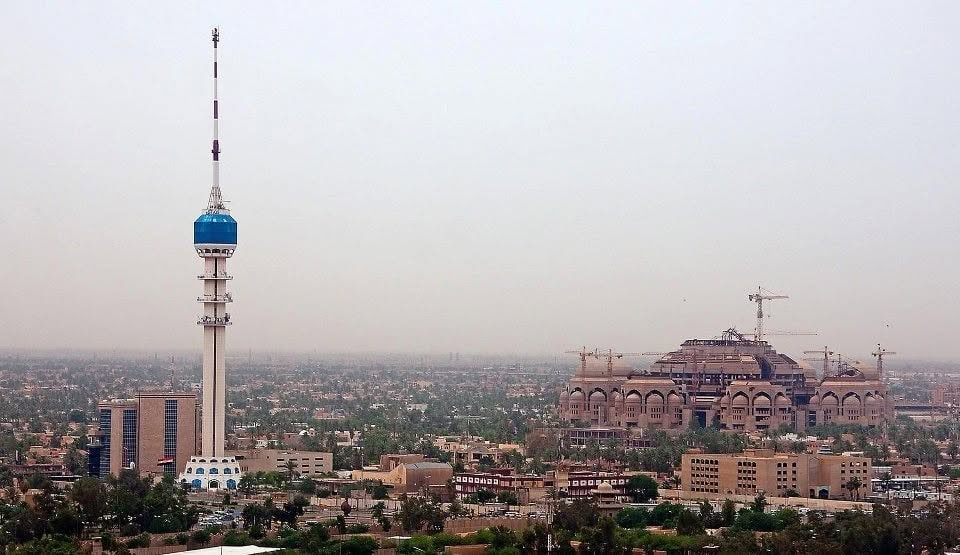
Sanad said in a statement received by "Economy News" that "next Sunday will be the date for the launch of the first Iraqi ground station for satellites (Teleport) in the capital Baghdad, dedicated to dealing with satellites in the geo-fixed orbit (GEO)."
He added that "this project comes to consolidate our vision in achieving Iraqi digital sovereignty."
He called on "security and service institutions, government ministries and private sector companies to adopt the gate (Gateway) as a major station for the movement of reception and dispatch, instead of relying on international infrastructure outside the scope of national sovereignty, in preparation for the transition to the next phase of the project of national space sovereignty, details of which will be announced at a later date https://www.economy-news.net/content.php?id=75057
Iraq And The European Bank Discuss Opportunities To Finance Strategic Projects
Money and business Economy News – Baghdad The Ministry of Construction, Housing and Public Municipalities discussed with the delegation of the European Bank, on Thursday, opportunities to finance strategic projects.
A statement by the ministry, received by "Economy News", said that "the technical undersecretary of the Ministry of Construction, Housing and Public Municipalities, Ali Hussein Abdul Amir, chaired a meeting with the delegation of the European Bank for Reconstruction and Development, in the presence of the Director General of the Sustainable Infrastructure Group at the bank, Harry Boyd Karner, and the consultant of Minister Samir Ibrahim in the apartment, and the Director General of the Department of Planning and Follow-up Haidar Al-Mayali, and a number of specialists from both sides. "
The statement added that "the technical agent reviewed the most prominent projects implemented by the ministry in the sectors of water, sanitation, roads and bridges," explaining "the nature of the projects, their priorities and financing mechanisms, and stressing the ministry's readiness to cooperate with the bank and discuss partnership opportunities in financing projects and implementation, in order to achieve the desired development goals."
The meeting discussed the prospects of joint cooperation and the possibility of the bank contributing to supporting and financing projects implemented by the ministry, especially strategic priority projects, through grants, loans and available financing mechanisms, thus contributing to the development of infrastructure
BRICS Is Hoarding Gold. Here’s What It Means for Your Portfolio.
BRICS Is Hoarding Gold. Here’s What It Means for Your Portfolio.
Most news coverage of the BRICS gold story gets one thing wrong: it treats this as political drama rather than a portfolio signal.
It asks whether a BRICS currency will succeed. Whether it’ll topple the dollar. Whether the summit announcements are serious or just rhetoric. Those are interesting questions. However, they’re also the wrong ones if you’re trying to protect and grow your savings.
BRICS Is Hoarding Gold. Here’s What It Means for Your Portfolio.
Most news coverage of the BRICS gold story gets one thing wrong: it treats this as political drama rather than a portfolio signal.
It asks whether a BRICS currency will succeed. Whether it’ll topple the dollar. Whether the summit announcements are serious or just rhetoric. Those are interesting questions. However, they’re also the wrong ones if you’re trying to protect and grow your savings.
Key Takeaways
The mechanism, not the headline: BRICS gold buying matters not because a new currency is imminent. It matters because it reduces demand for US Treasuries at the margin — slowly eroding the dollar’s reserve role and the purchasing power of dollar savings.
Physical over paper: The hedge you want for a dollar debasement scenario is physical gold and silver. ETFs and futures carry counterparty risk in the exact conditions you’re protecting against.
Position before the headline: BRICS central banks are building reserves now, not after the announcement. The time to position is while the shift is still being dismissed.
Silver complements gold: Silver offers the same monetary properties as gold with higher volatility and a lower entry price per ounce. It’s a natural complement to a gold core position.
The more useful question is this: If the world’s largest emerging economies are buying gold as a reserve asset, what does that mean for the purchasing power of your dollars over the next decade?
That question has an answer. Let’s work through it.
What’s Actually Driving the BRICS Gold Accumulation?
Start with the structural reality, because the portfolio implication flows directly from it.
The global monetary system rests on a simple but fragile premise. At its core, the US dollar is the world’s reserve currency. Global trade is priced in dollars. Foreign central banks hold dollar-based assets — primarily US Treasuries — as their primary reserves.
This arrangement gives the United States something no other country has. It can run persistent deficits, issue debt at scale, and effectively export inflation simply by printing money.
BRICS+ nations have spent years building an alternative to that arrangement. The group now includes Brazil, Russia, India, China, and South Africa, plus six new full members admitted in 2024 and 2025: Egypt, Ethiopia, Iran, the UAE, Indonesia, and Saudi Arabia.
Together, they have built settlement systems that bypass SWIFT, bilateral trade agreements in local currencies, and — most critically — a systematic accumulation of physical gold at the central bank level.
As we covered last month, central banks globally bought 1,037 tonnes of gold in 2023. That was the second-highest annual total on record. Moreover, they exceeded that pace in 2024 with 1,045 tonnes [World Gold Council, Gold Demand Trends Full Year 2023]. China’s People’s Bank of China added gold for 18 consecutive months through April 2024.
It then paused for six months as prices hit records, resumed in November 2024, and has continued buying since [Bloomberg, December 2025]. Russia has effectively replaced its dollar reserves with gold. India’s Reserve Bank repatriated 100 tonnes from the Bank of England in spring 2024, then a further 102 tonnes by year-end.
The common thread is simple. Gold cannot be frozen. It cannot be sanctioned. It belongs to whoever holds it physically. No government can revoke that.
Does a Gold-Backed Currency Need to Succeed for This to Matter?
No. And that’s the point most commentators miss.
The BRICS proposal for a gold-backed trade currency is usually framed as binary. Either it replaces the dollar, or it fails and nothing changes. Neither is right.
A gold-backed settlement unit doesn’t need to replace the dollar. It just needs to exist as a credible option for bilateral trade between willing parties. If China and Saudi Arabia can settle oil in a unit partly backed by gold, they have one less reason to hold US Treasuries. As a result, demand for dollar-based debt falls at the margin. The US government’s ability to borrow cheaply becomes slowly constrained.
That’s the mechanism. Not a dramatic collapse — but a slow tightening of the conditions that make dollar dominance sustainable.
The dollar’s share of global foreign exchange reserves has already fallen from roughly 72% in 2001 to around 58% today [IMF Currency Composition of Official Foreign Exchange Reserves (COFER), 2024]. That 14-point decline happened quietly over two decades. It didn’t make front pages. Instead, it showed up as higher consumer prices, a more constrained Federal Reserve, and a steady erosion of dollar purchasing power.
That’s how these shifts work. Not with a bang.
Why Hasn’t Your Financial Advisor Mentioned Any of This?
Because they’re not paid to.
The financial advisory industry is built around US market assets. Fee structures, product shelves, and compliance frameworks all centre on dollar-based investments. Recommending that a client move a meaningful portion of their portfolio outside that system is awkward at best. At worst, it opens conversations advisors would rather avoid.
This isn’t a conspiracy. It’s an incentive structure. Moreover, it creates a gap that a well-constructed portfolio can exploit.
The answer isn’t to abandon conventional assets. Instead, it’s to add a layer of physical gold and silver that sits entirely outside the dollar system. Not a gold ETF. Not a gold miner stock. Metal you own outright, with no counterparty between you and the asset.
How Should You Actually Position for This?
TO READ MORE: https://goldsilver.com/industry-news/article/brics-is-hoarding-gold-heres-what-it-means-for-your-portfolio/
Ariel: Swinging Around this Block for the Umpteenth Time
Ariel: Swinging Around this Block for the Umpteenth Time
10-15-2026
Swinging Around This Block For The Umpteenth Time:
You know what’s funny? People are only skeptical about the Iraqi Dinar revaluation because they always start off with the biggest numbers because the path of least resistance (in their mind) are not supposed to yield that much wealth.
The stock market does it everyday.
Ariel: Swinging Around this Block for the Umpteenth Time
10-15-2026
Swinging Around This Block For The Umpteenth Time:
You know what’s funny? People are only skeptical about the Iraqi Dinar revaluation because they always start off with the biggest numbers because the path of least resistance (in their mind) are not supposed to yield that much wealth.
The stock market does it everyday.
The lottery does it everyday.
Investors in real estate do it everyday.
The private market (equity) does it everyday.
I told one person give me the lowest rate for the IQD to come out at. They gave me 0.10.
How can someone become a millionaire from that?
Example-
Because if you only have 50,000 IQD and you convert or exchange at the rate you will only see 5,000 dollars (USD).
Now if you are someone sitting on 500,000,000 in IQD. Exchanging at 0.10 will yield you 50,000,000. (USD)
Everyone exchanging IQD are not going to become millionaires because everyone is not sitting on that much IQD.
But we also know Iraq wants to go back to their old rate at 3.22. We also know the base rate has to be 1:1. You can’t level the playing field any other way.
The skeptics always run into a brick wall when they try to use Iraq’s reserves as an excuse as to why their economy would collapse during a currency revaluation.
When I have told everyone many times over Iraq is not responsible for our payouts once the rate hits Forex.
Iraq’s foreign reserves are not the payout pool, they are the collateral anchor that gives the new rate structural integrity once the CBI pulls the trigger, and the actual dollar liquidity for the exchange window comes from the U.S. Treasury’s pre-staged currency stabilization fund.
The IMF’s special drawing rights reallocation, and the basket of sovereign wealth partners who have already positioned bilateral swap lines for exactly this moment.
Meaning the skeptics who scream “Iraq doesn’t have enough reserves to cover a $3.22 RV” are arguing against a strawman payout mechanism that never existed in the first place.
Iraq is not writing checks to American IQD holders the FOREX market makers, the primary dealer banks, and the Treasury’s own exchange facilities are the payors, and they are capitalized at a scale that makes Iraq’s reserve balance an irrelevant variable in the payout equation.
Now while the 1:1 floor I identified is mathematically non-negotiable because any rate below parity with the dollar would instantly create an arbitrage death spiral where sovereign funds, energy traders, and private equity would vacuum every physical dinar in existence from the market at the artificially suppressed rate and then immediately flip it on the secondary market at the oil-backed true value.
The opening rate cannot possibly be below $1.00 and why Iraq’s historical $3.22 peg is not aspirational nostalgia but the gravitational center of a currency that is backed by the world’s fifth-largest proven oil reserves, a rebuilt gold stockpile, and a sovereign wealth architecture that has been quietly accumulating hard assets for over a decade the 0.10 crowd cannot explain how an oil-backed currency in a nation sitting on $10 trillion in untapped mineral wealth trades at a rate that would value the entire country at less than a single Manhattan office tower portfolio, and the moment the rate hits the FOREX screen.
The payout mechanism is not Iraq’s checking account but the global market’s insatiable appetite for asset-backed currencies in a world where fiat is being deliberately devalued by the very Treasury Secretary who just told the IMF to enforce market-based exchange rate discipline
So the real question is not “can they afford it” but “how fast does the rate rip through $1.00, $2.00, and $3.22 once the float begins and every institutional desk on the planet is bidding on the same constrained supply of physical notes that the Cabal’s economic hitmen have spent twenty years convincing retail holders to ridicule and abandon.
Source(s):
• https://x.com/Prolotario1/status/2110565431115186406
https://dinarchronicles.com/2026/10/15/prolotario-swinging-around-this-block-for-the-umpteenth-time/
Jon Dowling: Maliki Blocking the RV, Kim Clement’s “Fall” Prophecy
Jon Dowling: Maliki Blocking the RV, Kim Clement’s “Fall” Prophecy
10-14-2026
In a compelling episode of the Jon Dowling podcast, host Jon Dowling sits down with Larry Ballard, a respected author and elder statesman known for his deep insights into global economics, geopolitical strategy, and spiritual development.
This engaging conversation covers a wide array of critical topics, offering listeners a unique perspective on the intersection of world events, precious metals markets, and personal faith.
A major focus of the discussion centers on the evolving situation in the Middle East, particularly the strategic maneuvers involving Iraq and Iran.
Jon Dowling: Maliki Blocking the RV, Kim Clement’s “Fall” Prophecy
10-14-2026
In a compelling episode of the Jon Dowling podcast, host Jon Dowling sits down with Larry Ballard, a respected author and elder statesman known for his deep insights into global economics, geopolitical strategy, and spiritual development.
This engaging conversation covers a wide array of critical topics, offering listeners a unique perspective on the intersection of world events, precious metals markets, and personal faith.
A major focus of the discussion centers on the evolving situation in the Middle East, particularly the strategic maneuvers involving Iraq and Iran.
Larry breaks down recent geopolitical events, including the ongoing efforts regarding political leadership in Iraq, shifting US military strategies, and the changing standing of Iran on the world stage.
These regional developments do not happen in a vacuum; rather, they are deeply connected to broader international trends, such as the conversation surrounding a gold-backed global monetary reset and the shifting dynamics of international trade and resource management.
Examining monetary policies more closely, the conversation highlights the significance of rising gold reserves and currency revaluations.
For instance, Iran’s accumulation of nearly 176 tons of gold, alongside parallel exchange rate adjustments via the Central Bank of Iraq, points toward preparations for a broader monetary transition.
Observers of global economics note that such actions often reflect historical patterns where nations adjust their currency valuations prior to shifting toward a gold-backed or commodity-backed standard. Such measures are typically designed to enhance long-term economic stability and restore sovereignty in an increasingly interconnected global market.
Beyond gold, the podcast explores the remarkable dynamics within the precious metals market, specifically focusing on an escalating silver supply crisis driven by industrial, technological, and military demand. Modern manufacturing relies heavily on silver for advanced technologies, including data centers, solar energy infrastructure, and defense applications such as precision munitions.
Despite the availability of gold, silver faces a unique supply scarcity and historical price suppression, creating immense pressure for a major market correction. This fundamental imbalance highlights silver’s dual role as an essential industrial commodity and a critical asset for financial realignment.
Geopolitical realigned interests further complicate the global landscape, as demonstrated by strategic energy agreements. Recent discussions surrounding US and Russian crude and diesel fuel arrangements aim to influence global energy prices and manage regional stability, particularly regarding strategic shipping lanes like the Strait of Hormuz.
Such diplomatic and economic pacts illustrate how major powers interact to address resource distribution, sanctions, and international influence, ultimately impacting the economic stability of oil-dependent nations and altering the flow of global commerce.
The dialogue also touches on prophetic insights and historical patterns, reflecting on the teachings of notable figures like Kim Clement regarding political upheaval and economic transformation. Analysts often interpret references to seasonal shifts and societal turbulence as indicators of approaching political transitions and systemic financial changes.
Many commentators anticipate that disclosures regarding governance and digital asset integration, including the potential roles of precious metals and modern digital liquidity solutions, could play a pivotal part in shaping new monetary frameworks.
Addressing the broader economic outlook, Larry shares insights into the potential for a comprehensive financial market correction.
By combining historical real estate knowledge with current macroeconomic trends, analysts point to vulnerabilities in commercial real estate, equities, and bond markets, driven by changing workplace habits and shifting confidence in traditional fiat currency.
Proponents of systemic change argue that a major economic reset may be necessary to transition away from traditional fiat systems toward asset-backed models and digitized reserves, paving the way for a more transparent and resilient monetary future.
Finally, the conversation emphasizes that lasting societal transformation requires a strong foundation in personal values and spiritual renewal. Larry highlights the importance of moving beyond rigid institutional barriers to foster a direct, personal connection with one’s faith, viewing this spiritual awakening as a vital source of strength during times of global hardship.
Iraq Economic News and Points To Ponder Thursday Afternoon 10-15-26
Oil Prices Dip On Easing US Shipping Sanctions
2026-10-15 Shafaq News Oil prices fell more than 1% on Thursday as investors weighed risks to supply from attacks on shipping through the Strait of Hormuz against US efforts to cut petroleum shipping costs by easing sanctions on vessels.
Brent crude futures fell $1.64, or 1.6%, to $104.42 a barrel by 0337 GMT, while US West Texas Intermediate crude futures were down 98 cents, or 1%, to $94.11, reversing gains from the previous session.
Oil Prices Dip On Easing US Shipping Sanctions
2026-10-15 Shafaq News Oil prices fell more than 1% on Thursday as investors weighed risks to supply from attacks on shipping through the Strait of Hormuz against US efforts to cut petroleum shipping costs by easing sanctions on vessels.
Brent crude futures fell $1.64, or 1.6%, to $104.42 a barrel by 0337 GMT, while US West Texas Intermediate crude futures were down 98 cents, or 1%, to $94.11, reversing gains from the previous session.
WTI rose to a three-week high in the prior session after the Houthis attacked Saudi Aramco's headquarters and Iran said it was deploying new tactics to target ships in the Strait of Hormuz and keep oil prices high.
A container ship and a dry bulk carrier both sank near the strait in the past 24 hours after being hit by projectiles in separate incidents, maritime officials said on Wednesday.
Attacks around the waterway have surged over the past 10 days, with Iran saying it is stepping up strikes in response to the US blockade of its ports and tougher sanctions introduced last month.
With the Iran war having disrupted shipping and driven up freight costs to record highs, the Trump administration is considering easing sanctions on so-called shadow-fleet vessels that have transported oil and petroleum products from countries including Russia, Iran and Venezuela to help ease prices, a US official said on Wednesday.
The new talks centre on the United States potentially allowing "legal oil" to flow on previously sanctioned vessels, the US official said.
Increased output from Russia and the Middle East has kept a lid on prices. Russia's crude oil production rose by 65,000 barrels per day in September to 8.43 million bpd but remained down 870,000 bpd year over year, the International Energy Agency said on Wednesday.
The IEA also said crude oil exports from Middle East Gulf producers rose by 4.4 million bpd in September to around 75% of prewar levels.
"While there is little concrete evidence of a near-term peace deal, oil continues to find its way to buyers through alternative routes and logistical arrangements," said Phillip Nova's head of market insights, Priyanka Sachdeva, in a client note.
"These workarounds have helped prevent a more severe supply shock, although they come at a higher cost and leave global flows vulnerable to further disruption."
In the US, crude oil and distillate inventories fell, while gasoline stocks rose last week, market sources said on Wednesday, citing data from the American Petroleum Institute.
Crude stocks fell by 11.1 million barrels in the week ended October 9, sources said. That was a much bigger draw than analysts polled by Reuters expected.
"Despite the sharp inventory draw, oil prices barely reacted. The failure to rise on bullish news suggests investors are cautious about chasing prices higher at current levels," said Haitong Futures in a note on Thursday.
Official numbers from the US Energy Information Administration are due at 12 p.m. EDT (1600 GMT), delayed by a day following the Columbus Day holiday on Monday. (REUTERS)
https://shafaq.com/en/Economy/Oil-prices-dip-on-easing-US-shipping-sanctions
IMF warns of severe economic risks across Middle East
2026-10-15 Shafaq News- Bangkok A prolonged war in the Middle East and further disruptions to energy production, shipping routes, and critical infrastructure pose the biggest risks to economies across the Middle East and Central Asia, the International Monetary Fund said on Thursday.
"The outlook depends critically on how quickly energy production and trade normalize, and on countries' ability to preserve macroeconomic stability," Jihad Azour, the IMF's director for the Middle East and Central Asia, told a news conference during the IMF and World Bank annual meetings in Bangkok.
He noted that pre-war fiscal surpluses, alternative shipping routes, adjustments in demand, and heavy withdrawals from inventories had helped cushion the impact of the energy shock triggered by US-Israeli attacks on Iran and Tehran's subsequent closure of the Strait of Hormuz.
"These buffers bought time, but they are finite. Inventories are lower, spare capacity is tighter," he said, warning that further disruptions could trigger much larger price adjustments.
The IMF expects the economy of the Middle East, North Africa, and Pakistan to contract by 1.3% in 2026, following growth of 3.3% in 2025, before rebounding sharply to 6.6% in 2027, Azour said. He cautioned, however, that the recovery would vary significantly across the region.
In the Caucasus and Central Asia, growth is forecast to slow to 5.2% in 2026 and 5% in 2027, down from 6.2% in 2025. Azour noted that the region had weathered the shock relatively well, while inflation is expected to continue easing from elevated levels. https://shafaq.com/en/Economy/IMF-warns-of-severe-economic-risks-across-Middle-East
Basrah Crudes Rise Despite Benchmark Losses
2026-10-15 03:29 Shafaq News- Basrah Iraq's Basrah crude prices climbed less than 1% on Thursday, despite declines in benchmark crude futures.
Basrah Heavy crude gained 31 cents, or 0.42%, to $73.86 per barrel, while Basrah Medium crude added the same amount, or 0.40%, to $76.86 per barrel.
Brent crude slipped $1.64, or 1.6%, to $104.42 per barrel. US West Texas Intermediate (WTI) crude shed 98 cents, or 1%, to $94.11 per barrel. The OPEC reference basket retreated $1.73, or 1.52%, to $112.30 per barrel.
https://shafaq.com/en/Economy/Basrah-crudes-rise-despite-benchmark-losses-5
USD/IQD slips in Baghdad and Erbil 2026-10-15 Shafaq News- Baghdad/ Erbil The US dollar opened Thursday’s trading lower in Iraq, hovering around 166,400 dinars per 100 dollars.
According to a Shafaq News market survey, the dollar traded in Baghdad’s Al-Kifah and Al-Harithiya exchanges at 166,500 dinars per 100 dollars, down from the previous session’s 167,000 dinars.
In the Iraqi capital, exchange shops sold the dollar at 167,000 dinars and bought it at 166,000 dinars, while in Erbil, selling prices stood at 166,350 dinars and buying prices at 166,250 dinars. https://shafaq.com/en/Economy/USD-IQD-slips-in-Baghdad-and-Erbil-2
Gold Prices Tick Down Across Baghdad, Erbil
2026-10-15 Shafaq News- Baghdad/ Erbil On Thursday, gold prices edged lower in Baghdad and Erbil markets, hovering around 965,000 IQD per mithqal, according to a Shafaq News survey.
Gold prices on Baghdad’s Al-Nahr Street recorded a selling price of 970,000 IQD per mithqal (equivalent to five grams) for 21-carat gold, including Gulf, Turkish, and European varieties, with a buying price of 966,000 IQD. The same gold sold for 973,000 IQD on Wednesday.
The selling price for 21-carat Iraqi gold stood at 940,000 IQD, while the buying price reached 936,000 IQD.
In jewelry stores, the selling price per mithqal of 21-carat Gulf gold ranged between 970,000 and 980,000 IQD, while Iraqi gold sold for between 940,000 and 950,000 IQD.
In Erbil, 22-carat gold was sold at 1,025,000 IQD per mithqal, 21-carat gold at 978,000 IQD, and 18-carat gold at 837,000 IQD. https://shafaq.com/en/Economy/Gold-prices-tick-down-across-Baghdad-Erbil
BP Partnership Takes Over Kirkuk's Four Oilfields
2026-10-15 Shafaq News- Kirkuk Operations at Kirkuk's four main oilfields passed on Thursday from Iraq's state-run North Oil and North Gas companies to a joint operating body with BP, which aims to lift output to 450,000 barrels per day, Iraq's Oil Ministry said.
Oil Minister Basim Mohammed Khudair oversaw the handover of the Kirkuk, Bai Hassan, Khabbaz and Jambur fields by video link, according to the ministry. The project also targets the capture and use of 500 million standard cubic feet of gas a day.
Khudair described BP as an effective strategic partner and said the ministry would give the British company the support it needs. Reaching the targets will require round-the-clock work, he added.
The next phase will include training ministry staff and transferring expertise and technology, according to the minister. The project also includes building services and facilities for local communities. https://shafaq.com/en/Economy/BP-partnership-takes-over-Kirkuk-s-four-oilfields
Seeds of Wisdom RV and Economics Updates Thursday Afternoon 10-15-26
Good Afternoon Dinar Recaps,
GLOBAL BOND RESET WATCH: GOVERNMENTS TURN TO NON-DOLLAR DEBT AS GLOBAL CAPITAL TIGHTENS
As borrowing needs rise and investors compete for available capital, governments are exploring more ways to raise money in currencies beyond the U.S. dollar—an important shift in global debt markets, but not proof that the dollar is losing its leading reserve-currency role.
Good Afternoon Dinar Recaps,
GLOBAL BOND RESET WATCH: GOVERNMENTS TURN TO NON-DOLLAR DEBT AS GLOBAL CAPITAL TIGHTENS
As borrowing needs rise and investors compete for available capital, governments are exploring more ways to raise money in currencies beyond the U.S. dollar—an important shift in global debt markets, but not proof that the dollar is losing its leading reserve-currency role.
OVERVIEW
Governments are broadening their borrowing options. Public-sector issuers are increasingly looking at bond markets denominated in currencies such as the Chinese renminbi, Australian dollar, Hong Kong dollar and Singapore dollar.
Competition for capital is intensifying. Government borrowing needs are colliding with private-sector demand for investment, including the enormous financing requirements of artificial intelligence infrastructure.
This is diversification, not a dollar collapse. A senior Citi banker told Reuters that the U.S. dollar is expected to remain the dominant global reserve currency for the foreseeable future because of the depth and liquidity of its markets.
KEY DEVELOPMENTS
1. Governments Explore More Non-Dollar Bond Markets
Governments and state-linked entities are looking beyond traditional dollar-denominated borrowing as they seek to finance infrastructure, energy security, defense and development projects.
According to Reuters reporting on October 15, Stephanie von Friedeburg, Citi’s global head of public sector group, said issuers are showing greater interest in local-currency debt markets, including those tied to the renminbi, Australian dollar, Hong Kong dollar and Singapore dollar.
The goal is to expand access to investors, diversify funding sources and potentially improve borrowing costs. Issuing debt in another currency does not necessarily mean abandoning the dollar; an issuer may use a different market because it offers suitable investors, pricing or financing conditions.
2. Global Borrowers Face Stronger Competition for Money
The shift comes as governments and private companies compete for a limited pool of investment capital.
The AI investment boom is one part of that competition. Technology firms are seeking substantial funding for computing infrastructure and data centers, while governments also need to finance public priorities. At the same time, rising government bond yields in major developed economies have increased borrowing pressures.
Reuters reported that benchmark 10-year government bond yields across the world’s ten largest developed economies had risen by an average of 81 basis points during 2026, citing Fitch. A basis point is one-hundredth of a percentage point.
For developing economies already carrying heavy debt-service costs, higher borrowing expenses and competition from larger issuers can make essential investments harder to finance.
3. Asia-Pacific Bond Markets Gain Strategic Importance
Non-dollar borrowing is not just a theoretical possibility. Reuters reported in August that international borrowers had been increasingly active in Asia-Pacific bond markets, including Australian-dollar bonds and Chinese yuan bonds.
The report described rising issuance in several regional markets and examples of international borrowers using them to diversify their investor base or seek financing advantages. However, these markets are not all as large or as liquid as the U.S. dollar market, and their capacity to absorb additional borrowing is not unlimited.
The development points toward a more varied international bond system, where governments and companies may draw on a broader mix of currencies and investor groups. It does not establish that any one alternative currency is ready to replace the dollar globally.
WHY IT MATTERS
The global financial system depends not only on which currencies countries hold, but also on which currencies they use to borrow, invest, trade and repay debt.
When governments raise money in more currencies, they can potentially widen their investor base and reduce dependence on a single funding channel. Over time, this can strengthen regional financial markets and give some countries more choices when financing national priorities.
But diversification brings risks. Borrowing in a foreign currency can expose an issuer to exchange-rate movements, and a market with less liquidity may become more expensive to use during financial stress.
The bigger issue is the pressure building across the global system: governments need money, private investment is competing for it, and the cost of financing major projects is changing. These forces may influence how international capital moves in the years ahead.
WHY IT MATTERS TO FOREIGN CURRENCY HOLDERS
For people holding foreign currencies and following the possibility of a global financial reset, this development is worth watching—but it should be interpreted carefully.
A broader financial system may create new opportunities. More active regional bond markets and diversified funding channels can strengthen the role of additional currencies in international finance.
Currency use is not the same as currency revaluation. A government issuing bonds in its own currency or another non-dollar currency does not automatically increase that currency’s exchange rate.
The dollar remains a major benchmark. The Reuters report explicitly notes that the U.S. dollar is expected to remain the leading reserve currency for the foreseeable future.
The meaningful signal is that governments are adapting their financing strategies as global capital becomes more competitive. Whether any particular currency gains lasting international importance will depend on factors such as economic strength, market liquidity, investor confidence, convertibility and financial policy.
Hope is reasonable; guaranteed exchange-rate gains are not established by this news.
IMPLICATIONS FOR THE GLOBAL RESET
Pillar 1: Debt
Governments are searching for affordable ways to finance growing obligations. Higher borrowing costs make access to multiple debt markets more valuable.
Pillar 2: Trade
International trade and investment are supported by financing networks. A broader range of bond markets may strengthen regional economic connections and financial relationships.
Pillar 3: Assets
Investors are weighing the relative value, risk and liquidity of government bonds issued in different currencies. Their decisions can influence capital flows across borders.
Pillar 4: Technology
The enormous cost of AI infrastructure is competing with government borrowing needs for investment capital. Technology is becoming a significant force shaping global financing decisions.
Pillar 5: Energy
Governments need substantial funding for energy security and infrastructure. Access to additional bond markets may provide more options for financing those priorities.
THE BOTTOM LINE
Governments turning to non-dollar debt is a meaningful development in the structure of global borrowing. It reflects growing competition for capital and a search for more flexible financing options, while the U.S. dollar continues to benefit from its unmatched market depth and liquidity.
Watch the direction of the change, not just the headline: the strongest evidence of a financial-system shift will come from sustained changes in actual borrowing, settlement, reserves and trade—not from speculation alone.
The global financial system evolves when the channels that move money begin to change, one financing decision at a time.
Seeds of Wisdom Team
SOURCES
2. Reuters — “From kangaroos to dim sum, foreign borrowers rush into Asia-Pacific bond markets”
~~~~~~~~~~
RV Facts with Proof - Step 1🌱 Link
RV Intel Highlights - Step 2🔥 Link
Start Here room with over 110 RV Topics Link
Ask Your ❓Questions❓ in the Q & A Room Link
Seeds of Wisdom Team Rooms Directory Link
Follow the Gold/Silver Rate COMEX
Follow Fast Facts
Seeds of Wisdom Team™ Website
Seeds of Wisdom Team™ Rumble
Thank you Dinar Recaps
Reset Intelligence: Iraq Targets One Unified Exchange Rate
Emailed to Recaps ~ Thank you David
Reset Intelligence: Iraq Targets One Unified Exchange Rate
10-15-2026
Iraq Targets One Unified Exchange Rate
By Reset Intelligence | @EXIT_FIAT
Iraq’s government says it plans to bring the dollar’s street price in Baghdad down to 1,550 dinars in the near term, backed by the Central Bank’s reserves.
That is 30 dinars above the bank’s public rate of 1,520.
Emailed to Recaps ~ Thank you David
Reset Intelligence: Iraq Targets One Unified Exchange Rate
10-15-2026
Iraq Targets One Unified Exchange Rate
By Reset Intelligence | @EXIT_FIAT
Iraq’s government says it plans to bring the dollar’s street price in Baghdad down to 1,550 dinars in the near term, backed by the Central Bank’s reserves.
That is 30 dinars above the bank’s public rate of 1,520.
The target
The government spokesman, Haider al-Aboudi, gave the target on Wednesday and tied the Central Bank to it. He did not say how it will be done. Baghdad’s main exchanges closed Wednesday at 166,400 IQD for $100, against the bank’s 152,000. The street never traded near the old official 1,320; it was above 1,630 the day before the cut on October 7.
What moved this week
• The IMF – US Treasury Secretary Scott Bessent told the IMF it must go further on exchange rates or risk being sidelined, on the same day Iraq’s finance minister and Central Bank governor met IMF directors in Bangkok.
• The cabinet – parliament votes today on the last empty ministries and four deputy prime ministers.
• The budget – today is the legal date for the 2027 budget to reach parliament. Its draft is written at 1,500 to the dollar.
• Food prices – Baghdad reopened imports of potatoes, tomatoes and onions to bring prices down.
• Riyadh – Prime Minister Ali al-Zaidi met Crown Prince Mohammed bin Salman and repeated that Iraq’s territory should not be used to attack the kingdom.
• Hormuz – two ships sank near the strait in 24 hours, the first sinkings since March.
The question
Why 1,550, and why now? And what does one exchange rate mean for the dinar you hold?
That is the short version. Where the number comes from, what the IMF has asked of Iraq since 2017, and what one rate means for the IQD and the RV – that is the daily read.
Read the full daily briefing free for 5 days. Sign up here: the daily Iraqi dinar briefing
Want it straight from the horse’s mouth? The CBI Rate Alert pings you the moment the Central Bank of Iraq moves the official rate. The number itself, not a rumour about it. It comes with our free resource library and the daily breakdown of what is actually moving in Iraq. Sign up free: The CBI Rate Alert
Got a dinar question? Reset Intelligence runs an on-call research assistant: ask it anything they have published. It answers in seconds and will conduct deep research to find you the answer. Try it: the Iraqi dinar research assistant
Common questions, answered straight: When will the Iraqi dinar revalue? and Is the Iraqi dinar revaluation real?
The design behind all of it is mapped in Head of the Snake, and the free guides live in the Iraqi dinar resource library.
Follow the daily intel free: Telegram · Facebook · Spotify · Odysee
Thursday Iraq News Posted by Tishwash at TNT 10-15-2026
TNT:
Tishwash: A conditional "green light"... Has Washington approved al-Zaidi's government?
The completion of the government formation and the entry of figures affiliated with armed factions into the race for portfolios and positions has revived the debate about the future of those forces after the withdrawal of US forces, and the limits of Washington’s influence on Iraqi political decision-making, coinciding with demands to strengthen air defenses and take international action against any violation of the country’s sovereignty.
TNT:
Tishwash: A conditional "green light"... Has Washington approved al-Zaidi's government?
The completion of the government formation and the entry of figures affiliated with armed factions into the race for portfolios and positions has revived the debate about the future of those forces after the withdrawal of US forces, and the limits of Washington’s influence on Iraqi political decision-making, coinciding with demands to strengthen air defenses and take international action against any violation of the country’s sovereignty.
Kato Saadallah, a researcher in American affairs, believes, in a statement followed by (Al-Mada), that the administration of US President Donald Trump is no longer interested in direct intervention in Iraqi political affairs after the withdrawal of its forces, noting the absence of a current memorandum of understanding between the governments of Baghdad and Washington regarding the formation of the government.
The United States and the international coalition forces had announced the end of Operation Inherent Resolve and the completion of the withdrawal of their forces and equipment from Iraq on September 30, 2026.
Saadallah believes that the participation of figures affiliated with armed factions in the new cabinet can be interpreted as a shift from armed action to political activity, considering that forces, including Asaib Ahl al-Haq, have shown a willingness to respond to Prime Minister Ali Faleh al-Zaidi’s call to engage in state institutions.
He added that Washington’s future dealings with Baghdad will not be determined solely by the names and affiliations of ministers, but rather by the actions taken by the government and its ability to build trust-based relationships with the United States, neighboring countries, and the Gulf.
He stressed that the main challenge facing the government is to prove the independence of its decision-making and its sovereignty, and its ability to manage the country’s affairs away from the interference of external parties.
Talk of an "American condition"
In contrast, political analyst Nizar Haidar believes that granting government portfolios and positions to figures affiliated with the factions is part of an attempt to push them to disarm and abandon their previous military approach.
Haider said, in a statement followed by (Al-Mada), that there is an American condition stipulating that representatives of the factions should not assume security ministerial positions, even if they give up weapons, expecting that Al-Zaidi’s government will remain under American monitoring to verify its commitment to the understandings related to limiting weapons.
He claimed that the visit of US presidential envoy Tom Barrack to Baghdad included clarifying Washington’s position and giving a “green light” to the coordination framework and the prime minister to complete the government according to those conditions.
Neither the Iraqi nor the American governments have officially announced the existence of this condition or granted American approval for the completion of the ministerial formation, which keeps Haider's statement within the framework of political analysis that is not officially confirmed.
Haider compared the possible path to what he described as the “Syrian version,” arguing that integrating armed groups into state institutions and granting them political representation could be used as a means to dismantle their formations and change their previous ideology.
He added that the approach, in his estimation, is not only aimed at disarming, but also at redirecting the role of those forces from armed action and confrontation with the United States to political and institutional activity.
Calls to protect sovereignty
For his part, former MP Bassem Al-Gharibawi said, in statements followed by (Al-Mada), that confronting violations of sovereignty does not fall on the government alone, but requires a unified stance from political forces and parties towards any violation of Iraqi airspace or territory.
He called for official action and recourse to the United Nations to file complaints about the violations, and not to be satisfied with political stances and statements of condemnation.
He added that national sovereignty includes protecting airspace and territory and the independence of security and economic decisions, which allows the state to make its decisions away from external pressures.
Al-Gharibawi warned of the weakness of the air defense systems and their inability to provide full protection for Iraqi airspace, considering that the continuation of this deficiency may open the door to foreign military movements.
He stressed the need to combine the development of defense capabilities with diplomatic and legal action, along with unifying the political position to protect Iraq’s security and the independence of its decision.
Questions from Kataib Hezbollah
In a related context, Abu Mujahid al-Assaf, the security official of Kataib Hezbollah, addressed questions to the Prime Minister in a statement received by (Al-Mada) regarding his position on the American siege of Iran, Israeli policies towards the Palestinians and Lebanese, and what he described as repeated American violations of Iraqi sovereignty.
Al-Assaf wondered whether Washington had asked the Iraqi government to join the normalization process with Israel, and what Baghdad’s response would be if this issue were raised.
He also called for setting an annual day for burning American flags, in a stance that reflects the continued anti-Washington rhetoric of some factions, coinciding with political talk about integrating them into the state and ending the presence of weapons outside official institutions.
Between two interpretations, one that sees the withdrawal as having ended the stage of direct American intervention, and the other that believes Washington is still setting conditions on the formation of the government, the real test remains related to Baghdad’s ability to control weapons, protect its airspace, and manage its foreign relations with an independent decision. link
************
Tishwash: The Minister of Finance discusses with the World Bank the financing of strategic projects and support for economic reforms.
Finance Minister Falih Sari met on Thursday with the World Bank Group’s Vice President for the Middle East and North Africa, Ousmane Dione, to discuss financing strategic projects and supporting economic reforms in Iraq.
A ministry statement said that “Finance Minister Falih Sari met in the Thai capital, Bangkok, with the World Bank Group’s Vice President for the Middle East and North Africa, Ousmane Dione, in the presence of the Central Bank Governor, Nizar Nasser Hussein, on the sidelines of the annual meetings of the International Monetary Fund and the World Bank Group.”
He also affirmed that "the World Bank is a key partner in the path of economic and financial reforms," noting that "Iraq looks forward to benefiting from the group's expertise and financial contributions in implementing important projects within the energy, education, transportation and digital transformation sectors, in a way that supports sustainable development and raises the efficiency of services."
Othman Dioun also praised the existing coordination with the Ministry of Finance, noting that the ministry had organized mechanisms for work and communication with the World Bank, and that the group had sensed seriousness in dealing with joint files, stressing that “this paves the way for taking steps to support the economic and financial directions of Iraq during the next stage.” link
*************
Tishwash: Wealth Investment Management in Iraq
Iraq possesses vast natural, human, and economic resources that enable it to build a strong and diversified economy. However, the true value of these resources is not realized simply by possessing them; rather, it depends on how they are managed, invested, and transformed into productive projects that create jobs, improve services, and raise citizens' incomes.
Therefore, managing these resources becomes a national responsibility that requires sound planning, legislative stability, and cooperation between the government and the private sector.
The Iraqi government has made significant efforts to improve the investment climate by supporting major projects, developing infrastructure, and expanding economic ties with international countries and companies, while also focusing on transportation, energy, road, and new city projects. These initiatives represent a crucial step toward repositioning Iraq as a promising market and an economic hub capable of connecting the countries of the region.
The management of Iraq's wealth should not be limited to oil alone, despite its importance in financing the general budget. A portion of its revenues should be directed towards developing the agricultural, industrial, tourism, technology, and financial services sectors. Iraq possesses vast agricultural lands, important religious and archaeological sites, diverse mineral resources, and a young, capable workforce eager to learn, innovate, and establish businesses.
Attracting investment requires stable laws and swift, transparent procedures, along with providing guarantees for investors and facilitating company registration, licensing, land acquisition, and access to services. It also necessitates developing the banking system, providing project financing, expanding the use of electronic payments, and enhancing banks' capacity to finance real economic activity rather than relying on limited traditional transactions.
Conversely, the private sector has a responsibility to submit serious projects, adhere to professional standards, develop employee skills, and enter into partnerships that contribute to the transfer of knowledge and technology to Iraq. Iraqi companies can also play a greater role in project implementation, youth employment, supporting local production, and reducing reliance on imports.
Current government efforts offer a genuine opportunity to shift from managing resources to investing them, and from consumer spending to productive development. The success of these efforts requires continuity, measuring results, addressing obstacles, and strengthening trust between the state, investors, and citizens. Iraq does not lack resources; rather, it needs effective management to transform these resources into sustainable value, successful projects, equitable opportunities, and a more diversified and stable economy for future generations. link
Tishwash: After half a century of absence, President Al-Zaidi brings Iraqi shipping back to the seas and opens a new gateway for global trade
The Iraqi government, headed by Ali al-Zaidi, is preparing to reinstate the national shipping line to regional trade routes after an absence of more than half a century. This move signals a trend toward reviving the maritime transport sector and strengthening Iraq's presence in commercial shipping, coinciding with efforts to expand cooperation with Asian and Gulf countries and diversify the routes for goods reaching Iraqi ports. This will contribute to developing the transport system and reducing reliance on foreign companies.
The Ministry of Transport announced that October 15th will witness the launch of the first voyage of the Iraqi Shipping Line from the Jebel Ali port in the UAE to the Umm Qasr port in Basra Governorate. This comes after the cessation of Iraqi cargo ship activity in the region since the mid-1960s, and aims to provide a national option for transporting containers and goods and enhance
Iraq's ability to participate in regional trade.
This return comes within the Ministry of Transport’s plans to activate national carriers and develop their operational capabilities, in parallel with expanding maritime and land transport routes. The General Company for Iraqi Ports had previously announced that it was conducting talks with the Sultanate of Oman to enhance trade links between the two countries, and to facilitate the movement of goods from Omani ports to the port of Umm Qasr, with the possibility of linking these routes to the Grand Faw Port and the Development Road project.
A surge in trade activity
In this context, the spokesman for the General Company for Maritime Transport, Talib Al-Badiri, affirmed that “the ongoing moves to develop maritime transport lines and link Iraqi ports to Asian markets represent an important step to enhance foreign trade, especially in light of the challenges facing international navigation,” noting that “diversifying shipping routes and cooperating with countries that have advanced ports and transport networks would facilitate the arrival of goods to Iraq and reduce the impact of regional unrest on import and export activity.”
Al-Badiri told Iraq Observer that “strengthening trade ties with China, India, Oman, and the UAE opens up broader horizons for Iraqi ports, especially Umm Qasr Port, particularly with the move to revitalize national shipping lines and develop transport capabilities.” He explained that “the importance of these routes is not limited to receiving imported goods, but extends to the possibility of expanding export activity and enhancing Iraq’s role in regional and international trade.”
These moves reinforce the government’s efforts to capitalize on Iraq’s geographical location in building an integrated transport network linking southern ports to regional markets, especially since developing national shipping lines can give Iraqi companies additional options for transporting goods and help revitalize port operations and related logistics services.
The General Company for Iraqi Ports had previously announced the opening of a direct shipping line linking the UAE’s Rashid Port to Umm Qasr Port, and the arrival of the first ship on this route last December, indicating expanding maritime cooperation with the UAE. The anticipated return of the Iraqi shipping line represents a further step in restoring the national carrier to this activity.
The return of the Iraqi maritime line after more than fifty years constitutes a new milestone in the rehabilitation of the national transport system, with the launch of its first voyages expected tomorrow, Thursday.
The success and continuation of this step will enhance Iraq’s presence in the maritime shipping market and give foreign trade broader options in the coming period. link
************
Tishwash: A Saudi expert says President Al-Zaidi's visit to Saudi Arabia is "key to solutions" and a promising step towards regional stability.
Saudi expert and political analyst Ashiq bin Mohammed bin Saeedan stated that the Iraqi Prime Minister's visit to Riyadh carries promising positive dimensions and represents a significant strategic step towards strengthening regional stability.
In a statement to Iraq Observer, he explained that this visit constitutes a genuine gateway to opening new horizons of robust diplomatic and economic cooperation between Baghdad and Riyadh, thus contributing to establishing strong foundations for bilateral partnership.
In his analysis of the political aspects, Bin Saeedan described the visit as “key to solutions,” explaining that it reflects a shared desire to coordinate efforts and strive earnestly to find peaceful and sustainable solutions to the crises facing the region during this sensitive and complex period.
He indicated that the step lays the foundation for an advanced stage of constructive dialogue aimed at achieving comprehensive regional security and prosperity.
Bin Saeedan also highlighted the humanitarian and political significance of the visit, considering it a genuine show of solidarity with the Kingdom of Saudi Arabia following the recent attacks targeting civilian sites, holy sites, and airports, reaffirming Iraq’s unwavering stance against terrorism. On the security front, he noted that security and political issues topped the agenda, particularly regarding the establishment of intelligence cooperation and direct coordination for information sharing and preventing any future border violations.
In his analysis, he emphasized the importance of the economic file in the bilateral talks, pointing to their focus on stimulating mutual investments in vital sectors including energy, electricity interconnection, and agriculture.
“Bin Saeedan” stressed that creating a safe and successful investment environment is a prerequisite for attracting Saudi and Gulf funds to the Iraqi market, stressing that these factors promise a bright future and strong and fruitful partnerships at all levels. link
News, Rumors and Opinions Thursday 10-15-2026
Bessent, Shelton, China, Gold & Inflation – Bill Holter
Greg Hunter: 10-15-2026
Financial writer and precious metals expert Bill Holter (aka Mr. Gold) heard alarm bells ring when Judy Shelton, a top gold expert, was hired recently to be an advisor to Treasury Secretary Scott Bessent, who is a top currency expert.
The national debt has exploded to $40 trillion with no sign of ever paying any of it back. Holter says, “President Trump said the quiet part out loud when he said earlier this month, ‘Certain levels of inflation will also pay off that debt very rapidly. Very rapidly.’ The whole idea is if you create inflation, you are cheapening the currency.
Bessent, Shelton, China, Gold & Inflation – Bill Holter
Greg Hunter: 10-15-2026
Financial writer and precious metals expert Bill Holter (aka Mr. Gold) heard alarm bells ring when Judy Shelton, a top gold expert, was hired recently to be an advisor to Treasury Secretary Scott Bessent, who is a top currency expert.
The national debt has exploded to $40 trillion with no sign of ever paying any of it back. Holter says, “President Trump said the quiet part out loud when he said earlier this month, ‘Certain levels of inflation will also pay off that debt very rapidly. Very rapidly.’ The whole idea is if you create inflation, you are cheapening the currency.
If you create enough inflation, you can cheapen the currency to what I call ‘monkey money.’ You can turn the currency into monkey money, and it makes debt very easy to pay off. I think that’s what the strategy is. China just purchased more gold in September than any prior month. I think they are on 63 or 68 straight months of purchasing gold.
They are liquidating Treasuries and using that capital to buy gold. They knew this before Trump said they could lower the debt through inflation. They understand because China has blown up more paper currencies that any other country on the planet going back a couple of thousand years or more.”
Mr. Gold goes on to say, “We could have paper currencies imploding in purchasing power. Anybody who says you can’t have all currencies imploding is wrong. If the US dollar collapses, what do you think is on the balance sheet of all central banks across the globe? Dollars. Balance sheets can get destroyed. That’s what people are not really understanding.
Treasury bonds are the foundation to the entire financial system. Treasuries are a defaultable asset. Treasuries and dollars have been over-printed, and there is your inflation.”
So, how do you not let the US dollar and Treasuries default or inflation spiral out of control? That is where Judy Shelton comes in. She has to figure out a way, with Secretary Bessent, to do that by backing the dollar, at least in part, with gold.
Total backing of US debt in gold would produce a huge jump in the gold price. Mr. Gold says, “If they wanted to revalue the gold to cover the $40 plus trillion in US debt, assuming the gold that has not been audited since 1956 is all still there, the number would approach $160,000 per ounce. . .. The number is just under $160,000 per ounce in order to cancel the debt out.”
There is much more in the 40-minute interview.
https://usawatchdog.com/bessent-shelton-china-gold-inflation-bill-holter/
*************
Courtesy of Dinar Guru: https://www.dinarguru.com/
Frank26 There is a high chance for Thursday [Cabinet seated] and then there is a surprise. The surprise is very quickly right after...that government will be presented the budget. If they form the government on Thursday means 1500 would start to go away a little faster than scheduled...
Omar Iraqi parliament is set to vote Thursday on the remaining cabinet posts. There is a proposal along with this to appoint 4 deputy prime ministers...There must have been pressure from the United States...
Jeff This devaluation is nothing more than a short-term step. It has to be short-term so they don't let inflation get out of control with the citizens and make their lives more financially difficult. It's a short-term step to be like a dinar vacuum, get the citizens to turn in their 3-zero notes and buy US dollars, withdraw, suck in, more dinar. Along with implementing distractions, misdirection and confusion so people don't know when the rate is going to change.
Evening News with MarkZ. 10/14/2026
10-14-2026
Meetings, banking, rumors, and a warning from France.