
Holly Celiano: Latest RV Updates, XRP News, Trump-Xi Financial Developments as of 25th September 2026
Holly Celiano: Latest RV Updates, XRP News, Trump-Xi Financial Developments as of 25th September 2026
6-25-2026
Navigating the intersections of international diplomacy, blockchain innovation, and evolving monetary policy requires a close look at how current events are reshaping our global landscape.
A recent comprehensive video briefing hosted by Holly Celiano offers a fascinating deep dive into these exact themes, breaking down everything from high-level geopolitical summits to the technical upgrades modernizing decentralized finance. Whether you are tracking macroeconomic trends or keeping an eye on the latest software developments in the digital asset space, this analysis provides valuable context for the shifting financial paradigms ahead.
Holly Celiano: Latest RV Updates, XRP News, Trump-Xi Financial Developments as of 25th September 2026
6-25-2026
Navigating the intersections of international diplomacy, blockchain innovation, and evolving monetary policy requires a close look at how current events are reshaping our global landscape.
A recent comprehensive video briefing hosted by Holly Celiano offers a fascinating deep dive into these exact themes, breaking down everything from high-level geopolitical summits to the technical upgrades modernizing decentralized finance. Whether you are tracking macroeconomic trends or keeping an eye on the latest software developments in the digital asset space, this analysis provides valuable context for the shifting financial paradigms ahead.
The video begins by examining the recent summit between US President Donald Trump and Chinese President Xi Jinping. Rather than producing major structural breakthroughs, the summit was characterized more as a diplomatic gesture focused on optics.
Discussions spanned key geopolitical issues, including Taiwan and Iran, alongside a temporary trade truce extension and a nod to renewed panda diplomacy. This trade truce extension acts as a tactical pause, pushing the deadline out to January 10, 2027.
By granting both nations additional time to negotiate complex challenges such as tariffs and technology restrictions, the delay suggests that neither side is currently ready for full confrontation or immediate resolution, prioritizing stability and image management instead.
Transitioning from international relations to technology, the discussion shifts toward major updates within the cryptocurrency sphere, specifically focusing on the XRP Ledger (XRPL).
Ongoing software improvements are actively aiming to enhance banking functionalities and transactional batch processing, reflecting broader advancements that are preparing digital infrastructure for a new financial system. These XRPL upgrades signal significant financial innovation in decentralized networks. By enabling private banking networks and decentralized exchanges (DEXs) to implement lending facilities analogous to traditional systems like LIBOR and SOFR, these tools successfully bridge the gap between traditional finance and blockchain technology, potentially accelerating institutional adoption.
Furthermore, the integration of batch transaction processing serves as a vital catalyst for boosting efficiency and scalability. The upgrade allows thousands of automated, AI-approved Know Your Customer (KYC) transactions to run in batches every second.
This directly addresses historical limitations in blockchain transaction throughput and compliance, both of which are essential for scaling decentralized finance (DeFi) to meet enterprise demands. Compounding these technical leaps is a wave of regulatory clarity.
The impending full implementation of the stablecoin-governing “Genius Act” on January 1, 2027, follows earlier congressional actions and swift rule-making by bodies like the SEC, CFTC, and DTCC. This momentum underscores rapid government efforts to legitimize crypto markets, reducing uncertainty for institutional participants.
Finally, the video addresses the current status of Tier 1 and Tier 2 funding related to currency revaluation (RV). While the briefing highlights that these funds are successfully in place, it issues an important reminder that the funds are not yet liquid or accessible. This crucial distinction between funding status and actual liquidity urges stakeholders to exercise patience, helping temper expectations and avoid premature speculation about immediate financial impacts.
Rob Cunningham: In the Past 5 Days
Rob Cunningham: In the Past 5 Days
9-26-2026
In The Past 5 Days
SAUDI & China split on Payments
GREENLAND unites w America
SEC launches PROJECT CRYPTO
CFTC releases CLARITY FAQs
Rob Cunningham: In the Past 5 Days
9-26-2026
In The Past 5 Days
SAUDI & China split on Payments
GREENLAND unites w America
SEC launches PROJECT CRYPTO
CFTC releases CLARITY FAQs
TREASURY heralds GENIUS
CHINA President Xi visits DC
TRUMP signals IRAN Agreement
IRAQ moves to full sovereignty
SUPREME Court supports TRUMP on SS/Voter Role eligibility authentication.
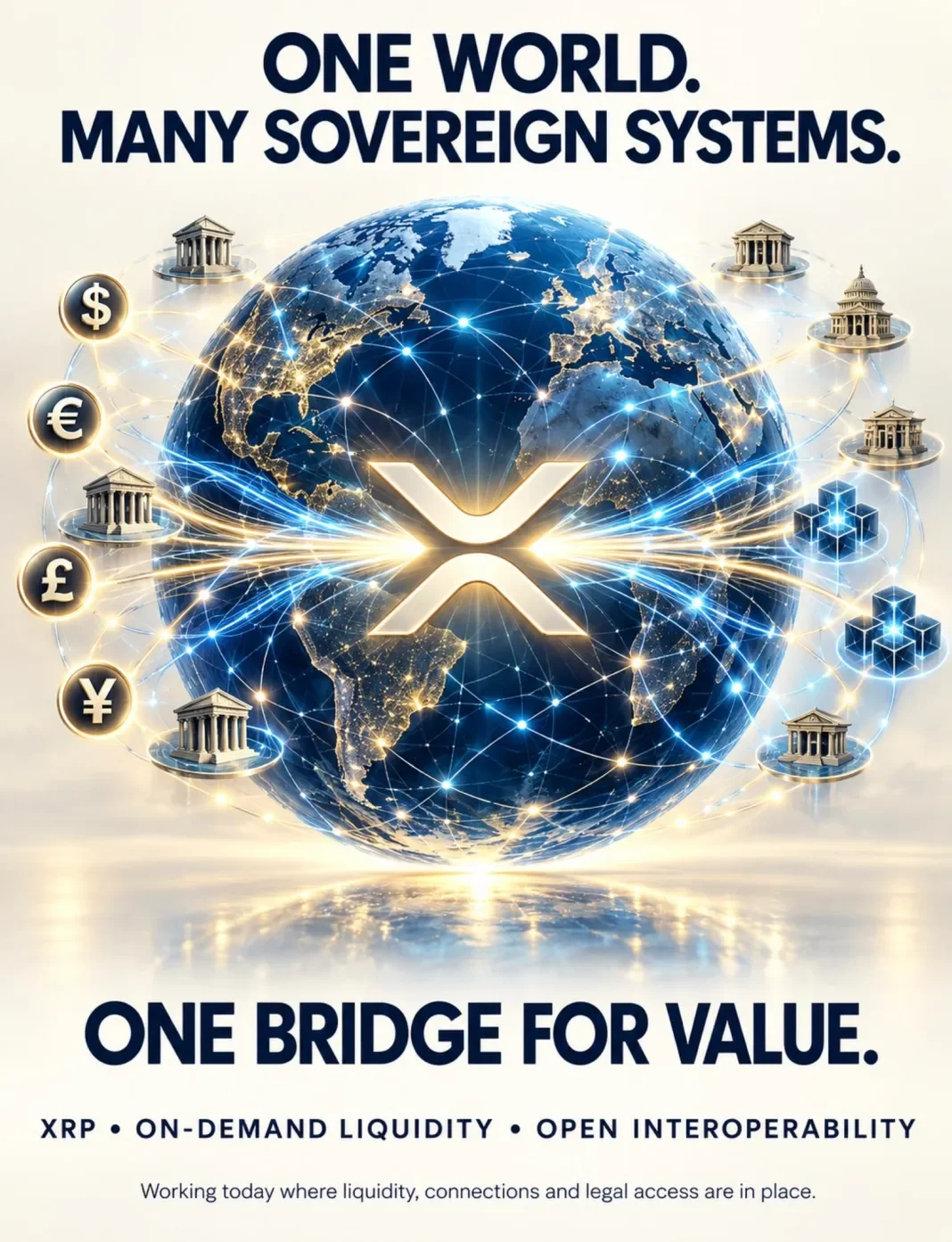
What does this imply for XRP?
A: Taken together, these developments strengthen the case for XRP’s potential role as neutral, global bridge liquidity. They point toward a world with more regulated digital dollars, clearer rules for digital asset markets, and continued demand to move value between sovereign payment systems.
That is the setting in which XRP’s ability to bridge currencies and networks becomes more economically relevant.
The strong implications are:
More viable payment corridors. Saudi Arabia’s reported departure from mBridge leaves open how it will approach future cross-border digital payments. It increases the strategic importance of interoperable options without prescribing one.
Less friction for institutional use. The SEC–CFTC Project Crypto effort and Treasury’s GENIUS Act implementation address the rules institutions need before building and scaling digital asset services. That can expand the market for XRPL infrastructure, RLUSD, and XRP liquidity.
Greater value in a neutral bridge. If sovereign nations retain different currencies, laws, and preferred networks, they still need a way to exchange value across those boundaries. XRP’s opportunity grows with the number and volume of those exchanges.
A clear shift from speculation to utility. The meaningful demand driver will be repeat payment and settlement flow that uses XRP for global liquidity. More flow, more corridors, and more capital committed to serving the entire world should change how the market values XRP.
So the plain spoken answer is: these pieces together make XRP’s use case more relevant and potentially much larger.
They do not lead to a higher price from headlines alone; it’s the economic forces that come when changing rules and relationships turn into sustained cross-border volume.
Source(s):
• https://x.com/KuwlShow/status/2103681066334572982
https://dinarchronicles.com/2026/09/26/rob-cunningham-in-the-past-5-days/
Iraq Economic News and Points To Ponder Saturday Afternoon 9-26-26
Saudi Arabia: Threats To International Navigation Could Affect Global Economy
Arab and International Saudi Foreign Minister Faisal bin Farhan said on Saturday evening that the Kingdom supports the Iraqi government in the file of limiting arms to the state and enhancing the country's sovereignty and security, pointing out the importance of Iraqi territory not to be a starting point for aggression against neighboring countries.
Saudi Arabia: Threats To International Navigation Could Affect Global Economy
Arab and International Saudi Foreign Minister Faisal bin Farhan said on Saturday evening that the Kingdom supports the Iraqi government in the file of limiting arms to the state and enhancing the country's sovereignty and security, pointing out the importance of Iraqi territory not to be a starting point for aggression against neighboring countries.
In his speech to the United Nations General Assembly in New York, bin Farhan said that Saudi Arabia and the countries of the region have been subjected to "brute Iranian attacks," stressing that the security of the Gulf region is an integral part of the security of the region and the world.
Efforts to restore security in the region cannot be based on hegemony and the imposition of influence, he said, stressing that any arrangements related to the security of the region should be comprehensive and sustainable.
He warned that the dangers that threaten international navigation may affect the global economy, stressing the importance of ensuring freedom of navigation in all international waterways, calling for the importance of the return of the Strait of Hormuz to work before the war without imposing fees, pointing out that the restoration of global supply chains is a joint responsibility.
The Saudi minister also stressed the need for the region to be free of weapons of destruction and the subjection of peaceful nuclear facilities to international control.
https://www.economy-news.net/content.php?id=74373i
Finance Reviews The 2027 Budget In Preparation For Sending It To The Council Of Ministers
Money and business Economy News - Baghdad Finance Minister Faleh Sari chaired a meeting of the budget preparation committee on Saturday to review the draft federal budget for 2027 and complete its requirements, in preparation for sending it to the Council of Ministers during the coming period.
The Ministry of Finance said in a statement that "Sari chaired the meeting immediately after his return from New York, to follow up the stages of preparing the draft budget and review its paragraphs and complete the procedures and requirements associated with them."
The statement added that the Minister of Finance directed to "continue to work at an accelerated pace and complete the reviews and procedures related to the budget paragraphs according to the specified times."
He pointed out that the meeting comes within the efforts of the ministry to complete the draft federal budget for 2027 and prepare it for presentation to the Council of Ministers in preparation for the completion of constitutional and legislative procedures
https://www.economy-news.net/content.php?id=74356
Iraq Imports First Gasoline Batch Through Syria
2026-09-25 03:07 Shafaq News- Baghdad Iraq has begun importing its first batch of gasoline through Syria, an Iraqi oil source told Shafaq News on Friday, with the first shipments arriving at the Syrian port of Baniyas for onward transport by tanker truck.
Loading onto the trucks has begun ahead of their departure for Iraq, the source said, adding that the quantities, the supplier, and the route into the country would become clear once the transport is complete.
Baghdad and several Iraqi provinces have faced a gasoline shortage for weeks, after a brief easing last month, with long queues at filling stations and dozens of outlets closing. Earlier this month, Oil Minister Basim Mohammed Khudair said the ministry was working to fix the shortfall and that new shipments would arrive soon.
Read more: Iraqi panel proposes Kurdistan fuel overhaul amid shortages
https://shafaq.com/en/Economy/Iraq-imports-first-gasoline-batch-through-Syria
Syria Begins First Gasoline Shipments To Iraq
2026-09-25 Shafaq News- Damascus Syria Petroleum Company said Friday it had begun sending the first gasoline shipments through Syrian ports toward border crossings into Iraq.
Three tankers loaded with fuel have arrived at Syrian ports, and the first, carrying about 32,000 tons of gasoline, has been unloaded, while the other two await their turn, the company's institutional communication director, Safwan Sheikh Ahmed, said in a statement.
Loading onto trucks began on September 22, with two convoys dispatched so far: the first of 10 tankers and the second of 55, and the ports and technical crews are ready to raise capacity to 150 tanker trucks a day once more become available to complete the transport across the border into Iraq.
https://shafaq.com/en/Economy/Syria-begins-first-gasoline-shipments-to-Iraq
SOMO tenders 2M crude barrels for October
2026-09-25 Shafaq News- Baghdad Iraq’s state oil marketer SOMO has launched a tender to sell two million barrels of Basrah Heavy crude for loading between October 1 and 7, according to a document seen by Reuters on Friday.
Bids are due by noon Baghdad time on September 28, the document showed.
The offer follows another SOMO tender announced on September 23 for two million barrels of Basrah Heavy to be loaded between September 27 and 30 through a ship-to-ship transfer off Oman, outside the Strait of Hormuz.
Iraq, OPEC’s second-largest producer, has used alternative crude-loading arrangements as shipping through the Strait of Hormuz has been disrupted by regional conflict.
Read more: No exit but Hormuz: Iraq's economic vulnerability exposed
https://shafaq.com/en/Economy/SOMO-tenders-2M-crude-barrels-for-October
Basrah Heavy, Medium Fall ~10%
2026-09-Shafaq News- Basra Iraq’s Basrah Heavy and Basrah Medium crude grades ended the week down about 10%, after both fell $8.57 per barrel in the latest trading session.
Basrah Heavy dropped 9.56% in the latest session to $81.07 per barrel, ending the week $9.20 lower, or 10.19%, from $90.27 at the start of the week.
Basrah Medium also fell $8.57, or 9.22%, to $84.37 per barrel, posting a weekly loss of $9.20, or 9.83%, from $93.57.
In global markets, Brent crude settled at $104.32 per barrel on Friday, down $2.28, or 2.1%, while US West Texas Intermediate fell $2.20, or 2.3%, to $92.41, according to Reuters. Oil prices declined as markets weighed prospects for a US-Iran truce against continuing concerns over attacks on Saudi Arabia and regional supply disruptions.
https://shafaq.com/en/Economy/Basrah-Heavy-Medium-fall-10
Gold Prices Hold Steady In Baghdad, Erbil
2026-09-Shafaq News- Baghdad/ Erbil On Saturday, Gold Prices Hovered Around 950,000 IQD Per Mithqal In Baghdad And Erbil Markets, Holding Steady, According To A Shafaq News Market Survey.
Gold Prices On Baghdad's Al-Nahr Street Recorded A Selling Price Of 945,000 IQD Per Mithqal (Equivalent To Five Grams) For 21-Carat Gold, Including Gulf, Turkish, And European Varieties, With A Buying Price Of 941,000 IQD. The Same Gold Had Sold For 945,000 IQD On Thursday.
The Selling Price For 21-Carat Iraqi Gold Stood At 915,000 IQD, With A Buying Price Of 911,000 IQD.
In Jewelry Stores, The Selling Price Per Mithqal Of 21-Carat Gulf Gold Ranged Between 945,000 And 955,000 IQD, While Iraqi Gold Sold For Between 915,000 And 925,000 IQD.
In Erbil, 22-Carat Gold Was Sold At 990,000 IQD Per Mithqal, 21-Carat Gold At 945,000 IQD, And 18-Carat Gold At 809,000 IQD. https://shafaq.com/en/Economy/Gold-prices-hold-steady-in-Baghdad-Erbil-6
Seeds of Wisdom RV and Economics Updates Saturday Afternoon 9-26-26
Good Afternoon Dinar Recaps,
GLOBAL BOND RESET WATCH: RECORD-HIGH YIELDS PUT DEBT MARKETS AND CURRENCIES UNDER PRESSURE
Surging government-bond yields across major economies are exposing the growing connection between sovereign debt, inflation, interest rates, trade and currency stability.
Good Afternoon Dinar Recaps,
GLOBAL BOND RESET WATCH: RECORD-HIGH YIELDS PUT DEBT MARKETS AND CURRENCIES UNDER PRESSURE
Surging government-bond yields across major economies are exposing the growing connection between sovereign debt, inflation, interest rates, trade and currency stability.
OVERVIEW
U.S. Treasury yields have reached multi-decade highs, with the 10-year yield touching 5.2297%, its highest level since 2007, while the 30-year yield reached 5.5252%, its highest since 2004.
Japan's 10-year yield also reached a multi-decade high, touching 3.121%, while several major central banks have raised rates or signaled concern about persistent inflation.
A new China-U.S. trade development adds another layer to the financial picture: Beijing says the Trump-Xi summit produced an eight-point consensus that includes a reported $30 billion reciprocal tariff-reduction arrangement and a new AI dialogue.
KEY DEVELOPMENTS
1. U.S. Treasury Yields Reach Levels Not Seen in Years
The global bond market remains under significant pressure.
The U.S. benchmark 10-year Treasury yield reached 5.2297%, its highest level since 2007, while the 30-year Treasury yield climbed to 5.5252%, the highest since 2004.
The move came even as oil prices eased somewhat, showing that bond-market concerns have become broader than the immediate movement in energy prices. Investors remain concerned about inflation and the possibility of additional Federal Reserve interest-rate increases.
Higher Treasury yields matter throughout the financial system because U.S. government bonds influence borrowing costs for governments, businesses, households and investors around the world.
2. Japan and Other Major Economies Face Rising Borrowing Costs
The pressure is not limited to the United States.
Japan's 10-year government-bond yield reached 3.121%, a level not seen since 1996. Reuters also reported that five of the Group of 10's most influential central banks had raised rates during September, while the others had either signaled potential increases or warned about rising inflation.
This creates an increasingly important global dynamic: governments are facing higher financing costs at the same time that debt levels remain elevated.
Higher yields can therefore affect both monetary policy and fiscal policy, particularly as governments refinance existing debt at higher interest rates.
3. China-U.S. Trade Talks Add a Potential Counterweight
A significant development since the earlier market reporting came from the conclusion of Chinese President Xi Jinping's visit to Washington.
China said on September 26 that the United States and China had reached an eight-point consensus, including a reported $30 billion reciprocal tariff-reduction arrangement, the creation of a trade council and the launch of a new dialogue on artificial intelligence.
The two countries also agreed to extend outcomes from earlier talks and continue discussions, while maintaining a broader trade truce.
This is important for global markets because lower trade barriers could reduce some of the uncertainty surrounding international commerce. However, the announcement does not eliminate the broader pressures facing global bond markets.
Instead, the two developments illustrate the competing forces currently shaping the financial system: higher borrowing costs and inflation pressure on one side, and efforts to reduce trade friction on the other.
4. Bond Yields Are Increasingly Connected to Currencies
Higher U.S. yields can influence international capital flows because investors compare returns across major currencies and bond markets.
Reuters reported that expectations for additional Federal Reserve tightening were helping support the dollar, while the yen strengthened after Japan and the United States reaffirmed their commitment to currency stability.
This creates a direct connection between government debt, interest rates and currency markets.
When interest-rate expectations change significantly in one major economy, capital can move across borders in response, creating additional pressure on other currencies and financial markets.
WHY IT MATTERS
The bond market is one of the most important foundations of the global financial system.
Government bonds influence interest rates, borrowing costs, investment decisions, currency values and capital flows. When yields rise sharply across several major economies at the same time, the effects can extend well beyond bond investors.
The current situation is particularly significant because several forces are interacting simultaneously:
Persistent inflation concerns + elevated energy prices + higher interest rates + large government borrowing needs = greater pressure on global debt markets.
At the same time, the reported China-U.S. tariff agreement introduces a potentially stabilizing factor for international trade by reducing some trade friction between the world's two largest economies.
WHY IT MATTERS TO FOREIGN CURRENCY HOLDERS
For foreign currency holders, rising bond yields matter because interest-rate differences can influence currency demand and international capital flows.
A currency connected to a country with relatively high interest rates can attract capital seeking higher returns, while currencies facing lower relative yields can come under pressure.
But currency movements are influenced by many factors, including economic growth, inflation, trade balances, central-bank policy, government finances and investor confidence.
The important Global Reset connection is therefore not that today's bond-market move guarantees a currency revaluation. Rather, it demonstrates how the underlying financial conditions that determine currency values are continuing to change.
IMPLICATIONS FOR THE GLOBAL RESET
Pillar 1: Debt
Higher bond yields increase the cost of refinancing government debt. Over time, persistent increases in borrowing costs can make debt management an increasingly important part of national economic policy.
Pillar 2: Trade
The reported China-U.S. tariff-reduction arrangement could reduce some trade friction between the world's two largest economies. Continued negotiations could influence global supply chains, investment and international commerce.
Pillar 3: Assets
Government bonds remain a benchmark for pricing many other financial assets. When long-term yields rise, investors reassess the relative value of equities, real estate, corporate debt and other investments.
Pillar 4: Energy
Oil prices remain an important part of the inflation picture. Even though crude prices eased during the latest trading session, oil remained above $100 a barrel, keeping energy-related inflation concerns relevant to bond markets.
THE BOTTOM LINE
The latest bond-market moves show that global debt markets are entering a period in which inflation, interest rates and government borrowing costs are increasingly interconnected.
The new China-U.S. trade understanding provides a potentially important counterweight by offering a path toward lower tariff pressure and greater economic cooperation, but it does not remove the underlying challenges confronting global bond markets.
For Global Reset watchers, the bigger issue is the gradual restructuring of the financial environment itself: governments, central banks, currencies, trade systems and investors are all adjusting to a world of higher debt costs and changing international relationships.
The bigger story is not simply that bond yields are rising—it is that the foundations upon which currencies, debt, trade and global capital flows operate are being reshaped as the world financial system evolves.
Seeds of Wisdom Team
Newshounds News™ Exclusive
SOURCES
Reuters — "Bond yields hit multi-decade highs despite oil pullback"
Reuters — "China, US agree to $30 billion tariff cut, AI dialogue during Xi visit, Beijing says"
~~~~~~~~~~
Seeds of Wisdom Team RV Currency Facts Youtube and Rumble
Newshound's News Telegram Room Link
RV Facts with Proof Links Link
RV Updates Proof links - Facts Link
Start Here room with Most Asked Questions Link
Follow the Gold/Silver Rate COMEX
Follow Fast Facts
Seeds of Wisdom Team™ Website
Thank you Dinar Recaps
America Keeps Threatening the Lenders It Can't Afford to Lose
America Keeps Threatening the Lenders It Can't Afford to Lose
Notes From the Field By James Hickman (Simon Black / Sovereign Man) September 24, 2026
Late last week, Congress and the White House established a new law authorizing the President to impose tariffs of up to 100% on any country that ranks among the five biggest buyers of Russian oil or gas.
This law had broad, bi-partisan support and passed by a whopping 86-11 margin in the otherwise deadlocked Senate, and 262-159 in the House of Representatives.
America Keeps Threatening the Lenders It Can't Afford to Lose
Notes From the Field By James Hickman (Simon Black / Sovereign Man) September 24, 2026
Late last week, Congress and the White House established a new law authorizing the President to impose tariffs of up to 100% on any country that ranks among the five biggest buyers of Russian oil or gas.
This law had broad, bi-partisan support and passed by a whopping 86-11 margin in the otherwise deadlocked Senate, and 262-159 in the House of Representatives.
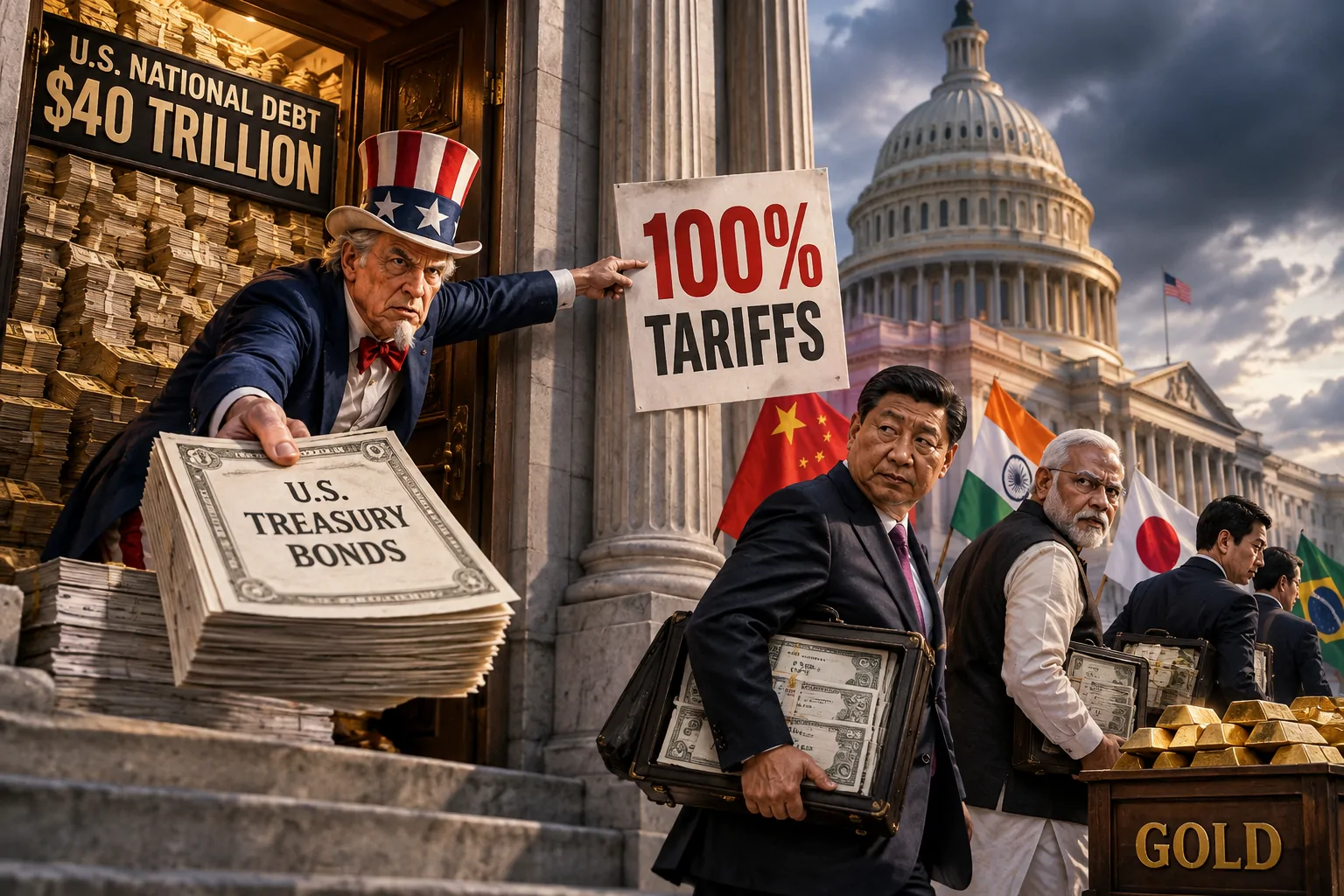
Their big idea is to penalize anyone who supports Russia economically by buying their oil & gas, and that specifically singles out China and India— the biggest buyers of Russian crude.
In fairness, India and China aren’t buying Russian oil to help prop up Putin or assist him in winning the war. They don’t really care. They just like the fact that Russian oil is REALLY cheap right now. It’s a good deal, and they like scoring good deals for their country.
At the moment there is no international law preventing anyone from buying Russian oil & gas; this restriction is something the US wants to impose in order to force Russia into a peace over Ukraine.
And it may very well be a good idea in terms of bringing an end to the war in Ukraine. We make no judgment on the moral implications.
Unfortunately the world is not so black and white, especially when you have a $40 trillion national debt. When your fiscal situation is in such dire straits, you have to weight the pro’s and con’s.
And the con’s are numerous: given its gargantuan national debt and the need to borrow an ADDITIONAL $2 trillion per year just to finance the budget deficit and stay afloat, the US government has to rely on foreign creditors more than ever.
In short, America desperately needs cash-rich foreigners to continue buying US government bonds.
It’s a bit difficult to shove this rule down their throats and tell foreign countries, “We will force you to stop buying cheap Russian oil,” yet simultaneously ask those same countries to loan you hundreds of billions of dollars.
The strangest part is that this is nothing new.
Back in February 2022, days after Russia invaded Ukraine, the US and its allies froze about $300 billion of the Russian central bank's reserves.
Again, whether it was justified is beyond the point. US government bonds had long been considered the safest asset on earth. But every central banker on the planet learned that day that US Treasury bonds were only safe as long as their country stayed on America's good side.
That’s why foreign governments and central banks have been quietly diversifying away from US government bonds and buying gold... because no other government can freeze the physical gold in their own vaults.
In fact, for the first time in decades, the world's central banks now hold more gold than they hold US Treasury securities.
China in particular has cut its Treasury holdings in half since 2013, and they're now at their lowest level since 2008.
Japan, the biggest foreign lender of all, has seen its Treasury holdings fall every month since April.
At peak (in 2011), foreigners owned nearly half of all marketable US Treasury bonds. Now foreigners’ share of Treasury securities is down to just over 30%.
That’s a fairly slow burn over 15 years; it’s not panic selling. But it’s a clear and obvious trend.
These same foreign nations have also been openly discussing how to rely less on the US financial system.
The BRICS countries, led by China, India, Russia, and Brazil, met in Delhi earlier this month and agreed to settle more of their trade in their own currencies.
This is a big deal; if India starts accepting Chinese yuan, or Russia accepts Indian rupee, these nations by definition won’t need to hold as many US dollars. And a decline in demand for US dollars translates into less demand to hold dollar-denominated assets like US government bonds.
Xi Jinping arrived at the White House yesterday, and he came to negotiate on trade as the leader of one of America's three largest creditors.
China has serious leverage; even though they have been selling their Treasury bonds slowly over time, they still own a ton of them. And if Xi wanted to, he could dump them in a heartbeat and cause a complete collapse of the bond market. Interest rates would skyrocket.
To be clear, such a move would wound China as well. But America would be hurt the most. It’s a nuclear option he could exercise, and it gives him real negotiating power.
America seems to think it’s still the 1990s when everyone was begging to buy US government bonds... which is exactly what gave them the leverage to be able to weaponize the US dollar.
That is simply no longer the world we live in. US finances are incredibly weak. And every time America tries to flex its US dollar power over the financial system, more foreign lenders walk away.
It’s not clear to me if anyone in Washington even understands this reality. No one seems to be questioning, “Will this action increase or decrease foreigners’ demand to buy US dollars and US government bonds?”
And I doubt anyone is really doing any real analysis to weight the benefits of, say, peace in Ukraine, against the potential costs of losing more foreign lenders.
By the way, if you’re thinking, “Big deal, America can finance its own deficits,” it cannot.
The entirety of ALL net private savings in the US, i.e. the total amount that corporations and households manage to save, is only about $2.2 trillion each year. The budget deficit for FY2026 is projected to be about $2.1 trillion.
So basically the US economy would need to dump 95% of its total net savings into US government bonds, leaving just $100 billion to finance EVERYTHING ELSE in the economy, from data centers to mortgages to every other investment.
This is why the US needs foreigners so much. When you burn up that much money, you can’t afford to turn away any lender.
If they keep alienating foreigners, there will essentially be only one lender remaining— and that’s the Federal Reserve, which has the ability to create money out of thin air.
We all saw how that works during the pandemic, when the Fed created roughly $5 trillion to finance all of the debt-fueled government bailouts. The result of that money creation was 9% inflation.
This is why we continue to write that real assets make so much sense.
The Fed can create money by the trillion, and the government can borrow to oblivion. Neither can print an ounce of gold or a barrel of oil. And that’s why real assets tend to hold their value, and often climb, exactly when paper money is falling apart.
Owning a piece of the companies that produce real assets— metals, energy, productive technology— is a great way to protect yourself from higher prices and inflation.
To your freedom, James Hickman Co-Founder, Schiff Sovereign LLC
P.S. Since 2022, Schiff Sovereign's investment research service, Strategic Assets, has focused on exactly those companies: the metals, energy, food, and ships an economy actually runs on.
A company gets featured only when it is already profitable, carries little or no debt, and trades cheap against the cash it is generating. Two precious metals producers on our research list are up more than 300% and nearly 400%, and earlier this year we locked in gains of more than 10x on a small silver producer.
Right now we are giving away a free sample issue so you can see what's inside.
Saturday Iraq News Posted by Tishwash at TNT 9-26-2026
TNT:
Tishwash: Iraqi Dinar Strengthens Against US Dollar Following Prime Minister's US Visit
At a Glance
The Iraqi dinar has strengthened against the US dollar, with 100 US dollars trading at 157,000 dinars.
Iraqi Prime Minister Ali Faleh Al-Zaidi met with US financial institutions, banks, and President Donald Trump in New York and Washington.
Oil exports have rebounded near normal levels to 4.5 million barrels daily, bolstered by stabilizing financial conditions
TNT:
Tishwash: Iraqi Dinar Strengthens Against US Dollar Following Prime Minister's US Visit
At a Glance
The Iraqi dinar has strengthened against the US dollar, with 100 US dollars trading at 157,000 dinars.
Iraqi Prime Minister Ali Faleh Al-Zaidi met with US financial institutions, banks, and President Donald Trump in New York and Washington.
Oil exports have rebounded near normal levels to 4.5 million barrels daily, bolstered by stabilizing financial conditions.
Channel8 sources note that expanding electronic platform access for traders and steady US dollar inflows are critical factors supporting the currency.
The Iraqi dinar registered notable gains against the US dollar following a high-level diplomatic and economic tour by Prime Minister Ali Faleh Al-Zaidi to the United States.
Key Financial Developments and Economic Drivers
Official Engagements: Prime Minister Al-Zaidi, accompanied by the ministers of finance and electricity, held pivotal discussions with US financial institutions to build active economic partnerships and reinforce national monetary stability.
Oil Export Recovery: With production reaching 4.5 million barrels per day and exports exceeding 70 million barrels last month, oil revenues have largely stabilized following disruptions tied to the regional conflict with Iran.
Market Perspectives: Erbil currency market spokesperson Keify Khoshnaw told Channel8 that while dinar strength depends heavily on dollar liquidity, market volatility may persist through the end of the month amid ongoing coalition footprint adjustments.
FYI
The Central Bank of Iraq manages monetary policy and regulates foreign currency exchange through electronic platforms designed to streamline trade financing and stabilize market exchange rates. link
************
Tishwash: Al-Zidi discusses with the head of the Middle East Institute the path of economic and financial reforms
Prime Minister Ali al-Zaidi received Stuart Jones, President of the Middle East Institute for Research and Studies, at his residence in New York on Thursday, on the sidelines of his participation in the 81st session of the United Nations General Assembly
During the meeting, regional and international developments were discussed, along with the economic and financial reforms being pursued by Iraq, and the government's efforts to enhance the investment environment, support the national economy, and diversify sources of income
Stuart Jones praised the Iraqi government’s success in implementing its anti-corruption policies, addressing financial issues, and advancing the economic reform process that supports the move towards a more efficient economy and stimulates investment climates in Iraq, thereby enhancing opportunities for development, economic partnership, and investment with major companies. link
Tishwash: Under the patronage of Al-Zaidi, Iraq hosts a roundtable for American and Iraqi banks.
Prime Minister Ali al-Zaidi affirmed on Friday that the government looks forward to an effective partnership with American financial institutions and banks, which will contribute to the development of the Iraqi banking sector.
The Prime Minister's Media Office stated in a press release that, "Under the patronage and in the presence of Prime Minister Ali al-Zaidi, the Permanent Mission of Iraq to the United Nations in New York hosted a roundtable discussion on Thursday, Baghdad time, for representatives of a group of American banks and financial institutions, along with a number of officials and specialists in economic and financial affairs, and representatives of Iraqi banks."
According to the statement, the Prime Minister emphasized in his remarks that "Iraq is witnessing a new phase of economic transformation and financial and banking reform," noting that "the weakness of the Iraqi banking system in recent years was partly linked to its limited openness and integration with the international banking system, particularly with American banks."
Al-Zaidi called on American banks and financial institutions to participate in building a new economic future for Iraq, stressing that "the entry of American banks into the Iraqi market will represent a qualitative leap in developing the banking sector, strengthening its relationship with the global financial system, and enhancing the efficiency of financial and investment transactions."
He stated that "Iraq is currently facing a new economic phase, producing approximately 4.5 million barrels of oil per day. The government's policy aims to increase production levels to 10 million barrels per day, as part of a vision to maximize resources and utilize them for development and economic diversification."
Al-Zaydi also emphasized Iraq's openness to American and international companies and banks, and the government's efforts to provide an attractive investment environment and offer necessary facilities to investors. He noted that "American banks have ample opportunities to participate in the Iraqi economy and finance projects and investments across various sectors."
He continued, "The government also looks forward to an effective partnership with American financial institutions and banks, which will contribute to developing the Iraqi banking sector and more effectively integrating the Iraqi economy into the global financial and economic system."
He explained that "the government has established a clear roadmap for economic, financial, and banking reform, and has begun a comprehensive reform plan for state-owned banks. This plan aims to enhance their efficiency, raise the level of governance and compliance, and establish a banking sector capable of meeting the demands of the modern economy."
He affirmed that "the anti-corruption and public funds protection measures are moving in the right direction, as the government is working to strengthen the systems and procedures that ensure the protection of state funds and raise the level of transparency and governance." link
*************
Tishwash: The Foreign Minister will visit Washington at the end of this month to continue discussions on developing cooperation.
Foreign Minister Fuad Hussein meets with US Assistant Secretary of State for Near Eastern Affairs Donald Blome.
Discussing developments in the security situation in the Middle East region and its repercussions on the countries of the region.
The meeting took place on the sidelines of the 81st session of the United Nations General Assembly in New York.
The Foreign Minister said during the meeting, which took place on the sidelines of the 81st session of the United Nations General Assembly in New York, according to a statement from the Ministry of Foreign Affairs, that “Iraq was among the countries most affected by the tensions and conflicts between the United States and Iran and the accompanying security and economic repercussions,” stressing “the importance of sparing Iraq and the region further repercussions resulting from the escalation of tensions.”
The Foreign Minister notes Iraq’s continued support for international efforts aimed at reaching an understanding between the United States and Iran that would contribute to ensuring the security and freedom of navigation in the Strait of Hormuz.
Fuad Hussain praises the diplomatic efforts being made by Pakistan, Qatar and the United States in this regard.
The Foreign Minister indicated his upcoming visit to Washington at the end of this month to complete discussions on developing cooperation between the two countries in the political, security and economic fields.
He stressed the importance of continued cooperation between the Central Bank of Iraq and the US Treasury Department in combating money laundering and promoting compliance with international banking standards.
The meeting addressed the new sanctions that the US administration intends to impose on Iran and their potential repercussions on Iraq, as well as the course of security and military cooperation between the two countries and the transition to a future phase that focuses on advice, training and intelligence cooperation, in conjunction with completing the procedures for ending the mission of the international coalition in Iraq.
Both sides emphasized "the importance of continuing the partnership in the field of combating terrorism and enhancing Iraqi capabilities in this area." link
News, Rumors and Opinions
KTFA:
Clare: Under the Patronage of Prime Minister Ali Faleh Al-Zaidi, Iraq’s Permanent Mission to the United Nations Hosts Roundtable for Representatives of U.S. and Iraqi Banks
Under the patronage and in the presence of Prime Minister Ali Faleh Al-Zaidi, Iraq’s Permanent Mission to the United Nations in New York hosted a roundtable for representatives of a number of U.S. banks and financial institutions, as well as officials and specialists in economic and financial affairs and representatives of Iraqi banks.
In his remarks, the Prime Minister affirmed that Iraq is entering a new phase of economic transformation and financial and banking reform.
KTFA:
Clare: Under the Patronage of Prime Minister Ali Faleh Al-Zaidi, Iraq’s Permanent Mission to the United Nations Hosts Roundtable for Representatives of U.S. and Iraqi Banks
Under the patronage and in the presence of Prime Minister Ali Faleh Al-Zaidi, Iraq’s Permanent Mission to the United Nations in New York hosted a roundtable for representatives of a number of U.S. banks and financial institutions, as well as officials and specialists in economic and financial affairs and representatives of Iraqi banks.
In his remarks, the Prime Minister affirmed that Iraq is entering a new phase of economic transformation and financial and banking reform.
He noted that the weakness of Iraq’s banking system in recent years was due in part to its limited openness to and engagement with the international banking system, particularly U.S. banks.
The Prime Minister called on U.S. banks and financial institutions to participate in building a new economic future for Iraq, stressing that the entry of U.S. banks into the Iraqi market would represent a qualitative shift in the development of the banking sector, strengthen its ties with the global financial system, and enhance the efficiency of financial and investment transactions.
The Prime Minister stated that Iraq is now entering a new economic phase. It currently produces approximately 4.5 million barrels of oil per day, while the government’s policy aims to raise production levels to 10 million barrels per day as part of a vision focused on maximizing resources, directing them toward development, and diversifying the economy.
Prime Minister Al-Zaidi also affirmed Iraq’s openness to U.S. and international companies and banks, as well as the government’s efforts to provide an attractive investment environment and the necessary facilitation for investors. He noted that U.S. banks have broad opportunities to participate in the Iraqi economy and finance projects and investments across various sectors. The government also looks forward to an effective partnership with U.S. financial institutions and banks that contributes to developing Iraq’s banking sector and integrating the Iraqi economy more effectively into the global financial and economic system.
The Prime Minister explained that the government has established a clear starting point for economic, financial, and banking reform and has begun implementing a comprehensive reform plan for state-owned banks.
The plan is intended to enhance their efficiency, strengthen governance and compliance, and establish a banking sector capable of meeting the requirements of a modern economy. He also affirmed that measures to combat corruption and protect public funds are moving in the right direction, as the government works to strengthen systems and procedures that safeguard state funds and raise standards of transparency and governance.
Media Office of the Prime Minister
September 25, 2026
************
Clare: The Central Bank of Iraq mandates new procedures for import transfers from banks.
9/24/2026
Al-Mustaqilla obtained a document issued by the Central Bank of Iraq, which includes a new executive mechanism to regulate foreign financial transfers for import purposes, and link them to customs declaration procedures and the prior payment of fees and tax deposits.
According to the document, issued by the Banking Supervision Department on September 24, 2026 and addressed to all licensed banks, the procedures come in implementation of paragraph four of Cabinet Resolution No. 413 of 2026, and with reference to the letter from the Ministry of Finance/General Authority of Customs.
The mechanism requires banks to ensure that all financial transfers allocated for imports are subject, before the transfer process is completed, to declaration or "pre-statement" and the pre-payment of customs duties and tax deposits through the ASYCUDA system.
The Central Bank also mandated that banks continue to include the pre-statement number in the data of external financial transfers, and link it electronically to the banking transfer system, in order to allow for matching the transfer with the pre-statement and accurately monitoring the import process.
The document reveals that the pre-clearance procedures will include all external transfers, whether financed from the banks’ own balances or from the balances reinforced by the Central Bank of Iraq, while the Central Bank is responsible for providing the General Authority of Customs with data on those transfers.
The instructions also included standardizing the coding of foreign transfers, which allows differentiation between transfers for importing goods and merchandise and transfers for shipping, insurance and services related to imported goods.
Under the mechanism, banks will follow up on financial transfers related to goods to be imported, as well as deal in accordance with applicable decisions and instructions with importers whose goods have not entered or whose import process has not been completed.
One of the important measures included in the document is obligating banks to obtain SWIFT verification of transfers before the initial approval of the preliminary statement, which enhances the matching process between the financial transfer and the import transaction.
The mechanism also stipulated the adoption of an electronic system for refunding customs duties and tax deposits previously collected in the event of a transfer being rejected or the import not being carried out in whole or in part, in coordination between the General Authority of Customs, the General Authority of Taxes and the Accounting Department in the Ministry of Finance.
However, the document stipulated that in cases of total or partial non-import, the funds that were transferred must be returned first, and confirmation must be provided from the bank that executed the financial transfer.
The Central Bank called on the Ministry of Finance, the General Authority of Customs, the General Authority of Taxes, and all banks to organize an explanatory media campaign before the date of implementation of the new procedures.
These instructions refer to tightening the linking of funds allocated for imports with customs and tax data, with the aim of raising the level of conformity and tracking between external transfer and the actual import of goods. LINK
Courtesy of Dinar Guru: https://www.dinarguru.com/
Jeff They're completely telling you, October moving forward, they're sovereign and international...The only way Iraq can be financially sovereign is to have full control over their own money, to have all their OPEC dollars back in their possession. They have to have full control of their money system...reserves, everything. I can't stress that enough.
Jeff As we get closer to September 30th, with the full withdrawal of US forces, do you see Iraq overall transitioning from a war era to a bilateral business era? I do. For example, PM Zaidi...signing/massing business economic trade agreements. Plus they have all these new taxes coming forward. They have the prepaid transit fees coming forward on October 1st. Major things happening as we get close to this date of September 30th at which US troops will be completely out of Iraq...
Ariel The digital Dinar (dIQD) is ready. The CBI’s digital Dinar (dIQD) is already designed to work on a permissioned ledger (meaning only trusted banks can touch it). When the new rate is announced, your paper IQD will be instantly convertible into digital Dinar (dIQD) at the new rate.
************
Something Is About To Break...Here's Why
George Gammon: 9-26-2026
Warren Buffet is selling~ here is why.
MilitiaMan & Crew: The Truth About the Port of Fall & UN Speech: Iraqi Dinar Update
MilitiaMan & Crew: The Truth About the Port of Fall & UN Speech: Iraqi Dinar Update
9-25-2026
The Crew: Samson, PompeyPeter, Petra, Daytrader, Sunkissed, GIGI and Militia Man
No drama. No intrigue. No songs and dances. Just straight, factual news that I read and interpret to the best of my ability after being an avid Dinar investor and insanely obsessed Dinarian for over 15 years.
Follow MM on X == https://x.com/Slashn
MilitiaMan & Crew: The Truth About the Port of Fall & UN Speech: Iraqi Dinar Update
9-25-2026
The Crew: Samson, PompeyPeter, Petra, Daytrader, Sunkissed, GIGI and Militia Man
No drama. No intrigue. No songs and dances. Just straight, factual news that I read and interpret to the best of my ability after being an avid Dinar investor and insanely obsessed Dinarian for over 15 years.
Follow MM on X == https://x.com/Slashn
Be sure to listen to full video for all the news……..
Iraq Economic News and Points To Ponder Saturday Morning 9-26-26
Iraqi Dinar Strengthens Against Us Dollar Following Prime Minister's Us Visit
Ahmed Mohammed At a Glance
The Iraqi dinar has strengthened against the US dollar, with 100 US dollars trading at 157,000 dinars.
Iraqi Prime Minister Ali Faleh Al-Zaidi met with US financial institutions, banks, and President Donald Trump in New York and Washington.
Iraqi Dinar Strengthens Against Us Dollar Following Prime Minister's Us Visit
Ahmed Mohammed At a Glance
The Iraqi dinar has strengthened against the US dollar, with 100 US dollars trading at 157,000 dinars.
Iraqi Prime Minister Ali Faleh Al-Zaidi met with US financial institutions, banks, and President Donald Trump in New York and Washington.
Oil exports have rebounded near normal levels to 4.5 million barrels daily, bolstered by stabilizing financial conditions.
Channel8 sources note that expanding electronic platform access for traders and steady US dollar inflows are critical factors supporting the currency.
The Iraqi dinar registered notable gains against the US dollar following a high-level diplomatic and economic tour by Prime Minister Ali Faleh Al-Zaidi to the United States.
Key Financial Developments and Economic Drivers
Official Engagements: Prime Minister Al-Zaidi, accompanied by the ministers of finance and electricity, held pivotal discussions with US financial institutions to build active economic partnerships and reinforce national monetary stability.
Oil Export Recovery: With production reaching 4.5 million barrels per day and exports exceeding 70 million barrels last month, oil revenues have largely stabilized following disruptions tied to the regional conflict with Iran.
Market Perspectives: Erbil currency market spokesperson Keify Khoshnaw told Channel8 that while dinar strength depends heavily on dollar liquidity, market volatility may persist through the end of the month amid ongoing coalition footprint adjustments.
FYI
The Central Bank of Iraq manages monetary policy and regulates foreign currency exchange through electronic platforms designed to streamline trade financing and stabilize market exchange rates. https://channel8.com/english/news/66318
The Arms Embargo Hinges On Three Issues... Will Washington Impose Sanctions On Iraq?
2026-09-25 | SumerianNews - A political figure announced that a member of the Tafawuq parliamentary blocFaisal Al-IssawiThe issue of restricting weapons depends on three matters, while imposing [a ban/restrictions] is ruled out.USSanctions onIraq.
He saidAl-IssawiIn a statement to the program "Openly" which is broadcast on satellite TVSumerian"Security issues, including the presence of certain factions and their weapons, have an impact on the overall situation," he said, adding that "matters will not escalate to sanctions, and America will not impose sanctions on..."Iraq"
He considered thatUS"It is involved in numerous regional issues and does not want to drag Iraq into another crisis, but it will use pressure tactics, including internal ones, to exert pressure on certain parties," he noted, adding that "the political forces, including the factions, ultimately agree on the goal of regulating the weapons file."
He stated that "the disagreement regarding the restriction of weapons revolves around the timing, mechanisms, and terminology, issues that require internal dialogue," explaining that "there is an opinion within some circles that responding to demands related to weapons regulation should be met with tangible Western steps toward Iraq, particularly in the economic, service, and investment sectors."
Regarding the lawPopular Mobilization ForcesAl-Issawi said that his bloc has "observations on some details of the text, including those related to structures and administrations," stressing "the right of political forces to discuss and amend texts withinHouse of RepresentativesHe stressed
that “unless the Popular Mobilization Forces Law is passed, there will be no regulatory step after it,” considering that “the passage of the law represents the first point from which the rest of the steps related to regulating the weapons file must begin.” https://www.alsumaria.tv/news/politics/577049/حصر-السلاح-متوقف-على-ثلاث-قضايا-هل-ستفرض-واشنطن-عقوبات-على-العراق؟
Qi Mastercard Purchases Abroad Stopped Since Sept. 19, Company Source Says
BAGHDAD — Cardholders with Qi Mastercard cards have been unable to make purchases abroad since Sept. 19 because of system upgrades, a source at the company told 964media, confirming at least part of the complaint that Iraqi cards were failing overseas. Qi’s Visa cards continue to work outside Iraq.
“Development work is currently underway at the company, and because these upgrades took place directly on the system, there has been some disruption for all Qi Mastercard users,” said the source, who asked not to be named.
“They were working normally, and users could make purchases abroad before Sept. 19, but purchases have now stopped, while Visa cards issued by Qi continue to work normally outside Iraq.”
Withdrawals, payments and transfers inside Iraq are working on both, including personal, savings, employee, pension, business and gaming cards. No date was given for restoring the service.
Qi is one of Iraq’s main card issuers, widely used to pay public salaries, pensions and welfare benefits. Qi Visa cards carry a monthly limit of 6 million dinars on purchases abroad, about $4,500 at the official rate at which card spending overseas is settled. International ATM withdrawals are capped at 500,000 dinars a month for most cardholders, about $380, split into withdrawals of 200,000, 200,000 and 100,000 dinars, and at 650,000 dinars for employee and pension cards.
The source said Visa cards may also fail abroad if the limit has been reached, international use has not been enabled, the card has not been activated or the balance is insufficient.
The Trade Bank of Iraq denied on Tuesday that its own cards had been suspended, after former lawmaker Majid Shankali said Iraqis abroad, including students, retirees and travellers, had been unable to use cards issued by Iraqi banks for several days.
The disruption began on the day the Central Bank said its reserves were sufficient to settle card transactions, finance trade and supply travellers with dollars at the official rate, amid a widening gap between the official rate of 1,320 dinars to the dollar and a parallel market that reached about 1,602 at the weekend. Using a card abroad is currently the cheapest way for Iraqis to buy dollars. https://en.964media.com/52965/
Iraq Prime Minister's Office And Kuwait Joint Statement
المكتب الإعلامي لرئيس الوزراء 🇮🇶 @IraqiPMO Translated from Arabic Iraqi-Kuwaiti Joint Statement •••••••••• Based on the outcomes of the meeting between the Prime Minister of Iraq, Mr. Ali Falih Al-Zaidi, and His Highness the Crown Prince of the State of Kuwait, Sheikh Sabah Khaled Al-Hamad Al-Mubarak Al-Sabah, on the sidelines of the 81st session of the United Nations General Assembly in New York, and proceeding from the two brotherly countries' keenness to enhance bilateral relations and address outstanding files in a spirit of brotherhood, good neighborliness, and shared interests,
the two sides agreed on the following:
1- Forming a joint Iraqi-Kuwaiti working team tasked with reviewing the outstanding files, developing a roadmap for addressing them, and submitting its joint recommendations to the leaderships of the two countries within a period not exceeding (thirty days).
2- The team shall hold its meetings alternately between Baghdad and Kuwait on a continuous basis until the completion of its work.
The two sides affirm their full support for the team's work and their keenness to accomplish its mission, in a manner that contributes to closing the outstanding files and opening a new phase of cooperation and partnership between the two brotherly countries, serving the interests of the Iraqi and Kuwaiti peoples.
Rate this translation: · Sep 25, 2026 https://x.com/IraqiPMO/status/2103603851123159142
Seeds of Wisdom RV and Economics Updates Saturday Morning 9-26-26
Good Morning Dinar Recaps,
IRAN RESET WATCH: U.S. REJECTS 7-DAY HORMUZ PLAN AS OIL AND GLOBAL MARKETS REMAIN ON EDGE
The reported U.S. rejection of Iran’s seven-day proposal keeps the Strait of Hormuz at the center of global energy, trade and financial-market uncertainty.
Good Morning Dinar Recaps,
IRAN RESET WATCH: U.S. REJECTS 7-DAY HORMUZ PLAN AS OIL AND GLOBAL MARKETS REMAIN ON EDGE
The reported U.S. rejection of Iran’s seven-day proposal keeps the Strait of Hormuz at the center of global energy, trade and financial-market uncertainty.
OVERVIEW
Iran has proposed a seven-day pathway that would halt regional fighting, reopen the Strait of Hormuz and restart broader negotiations, including discussions involving its nuclear program.
The United States has reportedly rejected the proposal, according to a Wall Street Journal report cited by Reuters, although Tehran was still awaiting an official U.S. response as of September 26.
Hormuz remains a major pressure point for the global economy, with disruption to the waterway affecting oil transportation, shipping costs, inflation expectations and financial markets.
KEY DEVELOPMENTS
1. Iran Puts a Seven-Day Hormuz Roadmap on the Table
Iranian Foreign Minister Abbas Araghchi said Tehran had delivered its proposal to the United States through intermediaries.
Under the plan, the process would begin if Washington accepted the proposal. Initial steps would include a ceasefire and changes to the U.S. blockade and sanctions position. The Strait of Hormuz would then reopen within the seven-day timetable, followed by broader negotiations.
The proposal would also revive discussions involving Iran’s nuclear program, making the plan broader than simply reopening the waterway.
2. Washington Is Reported to Have Rejected the Proposal
A Reuters report published September 26 said Iran was awaiting a U.S. response after the Wall Street Journal reported that President Donald Trump had rejected the proposal.
The distinction is important: the reported rejection has been attributed to unnamed U.S. officials, while Iranian officials continued to await Washington’s formal response. This means the seven-day plan should be viewed as a diplomatic proposal rather than an agreement.
3. Hormuz Remains a Financial Pressure Point
The Strait of Hormuz is one of the world's most important energy shipping corridors. Continued disruption has forced oil producers and shipping companies to find alternative ways to move crude.
Reuters reported that ship-to-ship transfers near Oman have expanded as producers attempt to keep exports moving despite the conflict. The workaround has helped maintain oil flows, but at a much higher transportation cost, with tanker freight rates rising sharply.
That creates a broader economic chain reaction: geopolitical tension → energy disruption → higher transportation costs → inflation pressure → interest-rate pressure → currency and capital-flow effects.
WHY IT MATTERS
The Strait of Hormuz has become more than a regional security issue. It is now directly connected to energy prices, international trade, shipping costs, inflation and financial-market expectations.
When the world's energy supply routes become more expensive or uncertain, the effects can spread through the global economy. Higher energy and transportation costs can influence inflation, while inflation can affect central-bank policy and interest rates.
At the same time, countries and companies are being forced to develop alternative transportation and settlement arrangements to keep international commerce moving.
The Hormuz situation demonstrates how geopolitical events can accelerate changes in the infrastructure supporting global trade and finance.
WHY IT MATTERS TO FOREIGN CURRENCY HOLDERS
For foreign currency holders, the important issue is not that the Hormuz situation guarantees a currency revaluation. It does not.
The significance is that energy prices, inflation, interest rates and international capital flows all influence the environment in which currencies are valued.
A prolonged disruption could increase pressure on countries that depend heavily on imported energy. Conversely, a durable diplomatic agreement that restores normal shipping could reduce some of that pressure.
The seven-day proposal therefore represents a potential turning point to watch, rather than proof that a financial reset or currency revaluation is about to occur.
IMPLICATIONS FOR THE GLOBAL RESET
Pillar 1: Trade
Continued disruption around Hormuz is forcing energy producers and shipping companies to redesign transportation routes and develop costly alternatives. This highlights how geopolitical events can reshape the infrastructure underlying global trade.
Pillar 2: Debt
Higher energy and transportation costs can contribute to inflation and increase pressure on governments and central banks. If higher inflation keeps interest rates elevated, the cost of servicing government debt can become an even greater issue.
Pillar 3: Energy
Energy security is becoming increasingly interconnected with financial stability. The effort to keep oil moving through alternative routes demonstrates how critical energy infrastructure is to the functioning of the global economy.
Pillar 4: Technology
The expansion of ship-to-ship transfers and alternative logistics networks shows how global commerce is adapting to disruption. Over time, similar pressures can encourage greater investment in digital tracking, automated logistics and new forms of financial settlement.
THE BOTTOM LINE
Iran's seven-day Hormuz proposal is a significant diplomatic development, but it remains a proposal rather than a completed agreement.
The reported U.S. rejection means the immediate uncertainty surrounding the Strait continues, while markets remain sensitive to the effects on oil, shipping, inflation and global trade.
For Global Reset watchers, the larger lesson is that energy security, geopolitical relationships and financial stability are becoming increasingly interconnected.
The bigger story is not simply whether the Strait of Hormuz reopens—it is how every major disruption is pushing nations, markets and businesses to rethink the infrastructure that supports the global financial system.
Seeds of Wisdom Team
Newshounds News™ Exclusive
SOURCES
Reuters — "Iran awaits US response on Strait of Hormuz plan after Trump reportedly rejects deal"
Reuters — "Iran ready to reopen Strait of Hormuz if US eases military pressure and lifts blockade"
~~~~~~~~~~
🌱 A Message to Our Currency Holders🌱
If you’ve been holding foreign currency for many years, you were not foolish.
You were not wrong to believe the global financial system would change.
What failed was not your patience — it was the information you were given.
For years, dates, rumors, and personalities replaced facts, structure, and proof. “This week” predictions created cycles of hope and disappointment that were never based on how currencies actually change.
That is not your failure.
Our mission here is different: • No dates • No rates • No hype • No gurus
Instead, we focus on:
• Verifiable developments • Institutional evidence
• Global financial structure • Where countries actually sit in the process
Currency value changes only come after sovereignty, trade, banking, settlement systems, and fiscal coordination are in place. History and institutions confirm this sequence.
You will see silence. You will see denials. That is not delay — that is discipline.
Protect your identity. Organize your documents. Verify everything.
Never hand your discernment to anyone who cannot show proof.
You deserve truth — not timelines.
Seeds of Wisdom Team
Newshounds News
~~~~~~~~~~
Seeds of Wisdom Team RV Currency Facts Youtube and Rumble
Newshound's News Telegram Room Link
RV Facts with Proof Links Link
RV Updates Proof links - Facts Link
Start Here room with Most Asked Questions Link
Follow the Gold/Silver Rate COMEX
Follow Fast Facts
Seeds of Wisdom Team™ Website
Thank you Dinar Recaps
FRANK26…8-25-26….Z PUBLIC ANNOUNCEMENT
KTFA
Friday Night Video
FRANK26…8-25-26….Z PUBLIC ANNOUNCEMENT
This video is in Frank’s and his team’s opinion only
Frank’s team is Walkingstick, Eddie and Omar in Iraq and guests
Playback Number: 605-313-5163 PIN: 156996#
KTFA
Friday Night Video
FRANK26…8-25-26….Z PUBLIC ANNOUNCEMENT
This video is in Frank’s and his team’s opinion only
Frank’s team is Walkingstick, Eddie and Omar in Iraq and guests
Playback Number: 605-313-5163 PIN: 156996#