
Is the Five-Cent Coin Next to Go?
Is the Five-Cent Coin Next to Go?
Discover why the U.S. nickel costs 13 cents to make and whether the five-cent coin is headed for the same fate as the recently retired penny.
September 08, 2026
The penny may be history at the U.S. Mint, but the debate over small change is far from over. In November 2025, the United States stopped producing pennies for general circulation after more than 230 years. As we discussed in The End of the U.S. Penny and What It Means for You, one of the biggest reasons was simple economics: A penny cost significantly more than one cent to manufacture. Now the same question is being asked about the nickel.
Is the Five-Cent Coin Next to Go?
Discover why the U.S. nickel costs 13 cents to make and whether the five-cent coin is headed for the same fate as the recently retired penny.
September 08, 2026
The penny may be history at the U.S. Mint, but the debate over small change is far from over. In November 2025, the United States stopped producing pennies for general circulation after more than 230 years. As we discussed in The End of the U.S. Penny and What It Means for You, one of the biggest reasons was simple economics: A penny cost significantly more than one cent to manufacture. Now the same question is being asked about the nickel.
When Five Cents Costs More than Five Cents
The nickel has been part of U.S. currency since 1866. The coin is made of 75 percent copper and 25 percent nickel, materials that have become increasingly expensive.
Rising metal prices, along with labor and other production expenses, have made the coin costly for the U.S. Mint to manufacture. In fiscal year 2025, producing and distributing one nickel cost 13.31 cents. In other words, the government spent more than two-and-a-half times the coin’s face value to put a nickel into circulation.
Ordinarily, a government can earn revenue when the face value of money exceeds the cost of producing it. However, when the government loses money because a coin costs more to produce than its face value, economists call it negative seigniorage.
Negative seigniorage is not new. Historically, the United States has responded to this type of problem in two ways. It can stop producing a denomination, as it did with the half-cent in 1857 and the penny in 2025, or it can change the materials used to manufacture a coin. The government removed silver from many coins in 1965, for example, and changed the penny to a mostly zinc composition in 1982.
Could the Nickel Get a Makeover?
For now, lawmakers appear more interested in reducing the nickel’s production cost than eliminating the coin. The Common Cents Act has gained bipartisan support in Congress. In addition to establishing consistent rules for rounding cash transactions after the penny’s demise, versions of the legislation would give the Treasury greater flexibility to change the nickel’s composition.
One possibility would be a nickel with an inner zinc layer and an outer nickel layer. Any redesigned coin would need to cost less to produce while continuing to work in vending machines, coin-counting equipment, and other systems that depend on a coin’s size, weight, and other characteristics.
That makes changing a coin more complicated than simply choosing a cheaper metal. Businesses have equipment and processes built around existing currency. A redesigned nickel that created problems for vending machines or payment equipment could move costs from the government to private businesses.
Another proposal called for suspending production of pennies and nickels for 10 years while studying how rounding cash purchases to the nearest dime would affect consumers. That proposal has not advanced as far as the Common Cents Act.
Why Losing the Nickel Would Be Different
Eliminating the penny means cash purchases can be rounded to the nearest five cents. Eliminating the nickel would mean the dime becomes the smallest regularly available coin, potentially requiring cash totals to be rounded to the nearest 10 cents.
An analysis cited by Newsweek estimated that if cash purchases were rounded to the nearest dime, consumers could face nearly $56 million in annual net rounding costs.
The effect would also not be distributed equally. Digital purchases would continue to be calculated to the exact cent, while a cash-paying customer might have to pay a rounded amount.
That distinction matters because consumers do not use payment methods equally. Federal Reserve data show that cash accounts for 14 percent of consumer payments. Older adults, rural consumers, and households with lower incomes tend to make more cash payments than other groups.
TO READ MORE: https://www.mheducation.com/highered/blog/2026/09/is-the-five-cent-coin-next-to-go
News, Rumors and Opinions Saturday 9-19-2026
Ariel: We are in the Home Stretch
9-18-2026
Do You All Know What Just Happened?
We Are In The Home Stretch
This comes off the announcement by The Ministry of Finance in Iraq how declared September 30th to be financial sovereignty day.
Ariel: We are in the Home Stretch
9-18-2026
Do You All Know What Just Happened?
We Are In The Home Stretch
This comes off the announcement by The Ministry of Finance in Iraq how declared September 30th to be financial sovereignty day.
No more SEC roadblocks. For years, the SEC has been the gatekeeper of the old financial system, making sure only the elite could play in the big leagues. Now? They’re stepping aside and letting the new system take over.
“Financial sovereignty” specifically means termination of the IMF Article XIV consultation status and the end of the U.S. Treasury’s OFAC supervised “program rate” mechanism.
Once sovereignty is declared, the CBI is no longer legally bound to the artificial peg maintained for war reparations and debt restructuring.
Now with this recent development I can understand how that can occur not only for Iraq but other countries as well.
DTCC’s October launch on Ripple provides the plumbing for instant settlement of IQD-denominated oil contracts.
Previously, the artificial rate was maintained to prevent dollar-denominated oil revenues from being instantly converted to dinars at a true market rate (which would have exposed the undervaluation).
The “program rate” was a scam. For years, the D********e and their bankster buddies kept the Dinar artificially low so they could buy it cheap and control Iraq’s oil. Now? That scam is over.
The real value is about to be revealed. When Iraq declares financial sovereignty, they’re free to set their own exchange rate. That means the real value of the Dinar backed by oil, gold, and Iraq’s natural resources is about to be unleashed.
Diana: Now Move ON-CHAIN …. The @SECGov just created an OFFICIAL exemption ALLOWING qualifying platforms to trade tokenized versions of U.S.-listed stocks through new BLOCKCHAIN-based market structures. … Take a REAL U.S. stock ….. Represent it ON-CHAIN ……Trade it through qualifying Diana: MASSIVE: SEC OFFICIALLY RELEASES Its Innovation Exemption — U.S. STOCKS Can tokenized infrastructure under the SEC exemption …….TRADITIONAL FINANCE IS COMING ON-CHAIN.
Watch on X: https://twitter.com/i/status/2100573920676167947
US Securities and Exchange Commision: TODAY: The SEC issued an order granting temporary, conditional exemptive relief to Tokenized Securities Venues from the definition of “exchange” in the Exchange Act to trade tokenized NMS stock using innovative permissioned automated market makers and liquidity pools.
Source(s):
• https://x.com/Prolotario1/status/2100603042630434982
https://dinarchronicles.com/2026/09/17/prolotario-we-are-in-the-home-stretch/
Courtesy of Dinar Guru: https://www.dinarguru.com/
Frank26 Everything will be sovereign on the 30th of September...It's pointing in one direction. It's not pointing north, south, east or west, it's pointing towards the sovereignty of the monetary reform of Iraq...IMO everything will be sovereign on the 30th of this month...so will their currency... 1310 is not a sovereign position...
Stephen The only things we don't have in front of us is new notes ready to go. Some parliamentary members have said this is already done and completed. The CBI is saying, no it's not. So you have a lot of conflicting information. I believe it is intentional misinformation. Kuwait did a very similar thing before they added value to their currency too. So this is not to be unexpected. We're seeing a lot of that happen.
Mnt Goat Article: “AL-YAKTI TOLD ULTRA IRAQ: BAGHDAD AND THE REGION REACHED AN UNDERSTANDING ON THE BUDGET, OIL, AND ASYCUDA.” The Oil and Gas Law is one of the five main issues we were told last September 2025 by my CBI contact, just over a year already could/has held up the reinstatement...We get a sense that all are now agreeing on the issues and they can go forward with the law to parliament now.
************
Iraq Just Met With Rothschild - Here’s Why
The Dinar Den: 9-18-2026
Saturday Iraq News Posted by Tishwash at TNT 9-19-2026
TNT:
Tishwash: Urgent | In response to the rising dollar exchange rate, the Central Bank of Iraq reassures the local market: Starting Sunday, several measures will be implemented to meet foreign currency needs.
An informed source stated on Thursday that the Central Bank of Iraq will begin, starting next Sunday, to expand the scope of import financing and increase the support provided to banks, in line with actual commercial needs.
The source said the move aims to facilitate financing for necessary imports and accommodate a wider range of commercial goods, noting that the central bank continues to monitor market developments and take the necessary measures to ensure the smooth flow of foreign trade financing and meet the legitimate demand for foreign currency
TNT:
Tishwash: Urgent | In response to the rising dollar exchange rate, the Central Bank of Iraq reassures the local market: Starting Sunday, several measures will be implemented to meet foreign currency needs.
An informed source stated on Thursday that the Central Bank of Iraq will begin, starting next Sunday, to expand the scope of import financing and increase the support provided to banks, in line with actual commercial needs.
The source said the move aims to facilitate financing for necessary imports and accommodate a wider range of commercial goods, noting that the central bank continues to monitor market developments and take the necessary measures to ensure the smooth flow of foreign trade financing and meet the legitimate demand for foreign currency link
Tishwash: Al-Zaidi returns to America next week... a speech in New York and a meeting with Trump
Government spokesman Haider al-Aboudi said on Thursday (September 17, 2026) that Prime Minister Ali al-Zaidi will go to the United States next week, explaining that al-Zaidi will deliver a speech before the United Nations General Assembly in New York, and will meet with US President Donald Trump and a number of heads of state.
Government spokesman Haider al-Aboudi stated in an interview with journalist Sadiq al-Shammari, which was followed by 964 Network : “Prime Minister Ali al-Zaidi is preparing to head to America in the middle of the week to participate in the United Nations General Assembly as a representative of the Republic of Iraq.
He will deliver the speech of the Iraqi people before the world, which carries the message of a state that has dealt with complex issues and opened up with confidence to the world, and conveyed a message that the Iraqi state will not be part of the axes of conflict and will not align itself unilaterally with anyone.”
Al-Aboudi added that “the government has maintained the balance stipulated in its program, which does not allow aggression against neighboring countries, and the Prime Minister will review the measures taken by the government in this matter, as well as matters related to the economic relations that link Iraq with the world.”
Al-Aboudi continued, “The visit schedule that has been prepared includes many meetings with the heads of Arab and foreign states, and there will also be a meeting with His Excellency President Donald Trump to review the features and prospects of the relationship between Baghdad and Washington, which began in mid-July when it was translated into 48 memoranda of understanding and agreements between the two countries in the fields of energy and investment.”
Al-Aboudi concluded, “The Prime Minister will also meet with the American Chamber of Commerce to review the files and sustain the economic relationship between the two sides.” link
************
Tishwash: Warnings to al-Zaydi before heading to Washington: Avoid the "siege scenario" and handle issues with America rationally.
The imam and preacher of the Abu Hanifa al-Nu’man Mosque, Abdul Wahab al-Samarrai, warned on Friday of the repercussions of the withdrawal of the US-led international coalition forces from Iraq at the end of September, hinting at the possibility of reimposing economic sanctions on Baghdad similar to those that were tightened in the 1990s.
Al-Samarrai said in his Friday sermon: “We have sent a message to our government and its president stating that this people and country are a trust placed in their hands, and part of that trust is to prioritize the interests of the country and its people over the interests of groups and individuals.”
He added, "Some are talking about economic sanctions and recalling the days of the embargo. We remind officials that the Imam is likened in Islam to a shepherd, and he should lead the flock to safety, not to destruction, and not gamble with the fate of the country or prioritize the desires of the part over the whole." He stressed that "the Iraqi people are tired and have not tasted prosperity, and are suffering from a lack of services and a lack of medicine."
For his part, the Imam and Friday preacher of Najaf, Sadr al-Din al-Qubanchi, addressed the upcoming visit of Prime Minister Ali Faleh al-Zaidi to the United States next Sunday to participate in the work of the United Nations General Assembly, stressing that “any political or security disturbance in Iraq will trigger a crisis in the entire region and destabilize the global economy, so the issues must be dealt with rationally.” link
Tishwash: A US official: The military withdrawal from Iraq will be completed on September 30.
A US military official confirmed on Friday that the military withdrawal from Iraq will be completed by September 30th, noting that the withdrawing forces will be redeployed to Jordan and other countries in the region.
ABC News quoted a US military official in a report translated by the Iraqi News Agency (WAA), stating that "the US military withdrawal from Iraq is ongoing and will be completed by September 30th, with the remaining hundreds of troops in the north of the country being redeployed to Jordan and other countries in the region."
The official added that "US forces will leave the remaining positions in the Kurdistan Region, and military equipment, including air defense systems, will be withdrawn," pointing out that "the counter-terrorism base in Erbil has lost its importance with the decline of the ISIS threat."
The official added that "Washington and Baghdad may negotiate a new bilateral security cooperation agreement after the withdrawal is complete."
The network noted that "the United States and Iraq had agreed in 2024 to gradually end the international coalition's mission, following the decline of the ISIS threat," explaining that "US forces withdrew from most of their bases in Iraq last year, maintaining only a limited presence in the Kurdistan Region."
The report further indicated that "Washington continues to monitor security developments in the region, particularly those related to attacks that might target its interests in other countries," emphasizing that "the anticipated withdrawal represents the end of the current US military mission in Iraq." link
MilitiaMan & Crew: The 2026 Economic Outlook: What’s Really Happening with the Dinar
MilitiaMan & Crew: The 2026 Economic Outlook: What’s Really Happening with the Dinar
9-18-2026
The Crew: Samson, PompeyPeter, Petra, Daytrader, Sunkissed, GIGI and Militia Man
No drama. No intrigue. No songs and dances. Just straight, factual news that I read and interpret to the best of my ability after being an avid Dinar investor and insanely obsessed Dinarian for over 15 years.
Follow MM on X == https://x.com/Slashn
MilitiaMan & Crew: The 2026 Economic Outlook: What’s Really Happening with the Dinar
9-18-2026
The Crew: Samson, PompeyPeter, Petra, Daytrader, Sunkissed, GIGI and Militia Man
No drama. No intrigue. No songs and dances. Just straight, factual news that I read and interpret to the best of my ability after being an avid Dinar investor and insanely obsessed Dinarian for over 15 years.
Follow MM on X == https://x.com/Slashn
Be sure to listen to full video for all the news……..
Iraq Economic News and Points To Ponder Saturday Morning 9-19-26
The Dollar Is Besieging The Dinar... Washington Continues To Use Its Tools To Weaken The Iraqi Currency
Information / Report The Iraqi economy has recently been experiencing financial and monetary instability, clearly manifested in the successful surges in the exchange rate of the US dollar against the Iraqi dinar in local markets. This sudden rise was not a coincidence, but rather the result of a complex interplay between external pressures and emergency domestic monetary policies that disrupted the balance of supply and demand.
The Dollar Is Besieging The Dinar... Washington Continues To Use Its Tools To Weaken The Iraqi Currency
Information / Report The Iraqi economy has recently been experiencing financial and monetary instability, clearly manifested in the successful surges in the exchange rate of the US dollar against the Iraqi dinar in local markets. This sudden rise was not a coincidence, but rather the result of a complex interplay between external pressures and emergency domestic monetary policies that disrupted the balance of supply and demand.
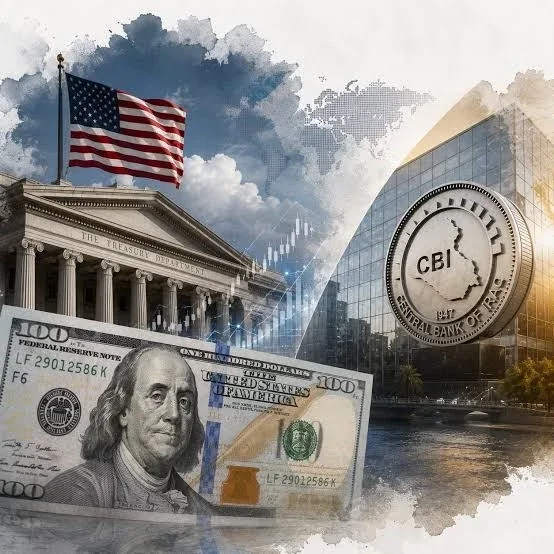
This crisis is caught between tightened international controls on money transfers and local government decisions aimed at regulating foreign currency holdings, which have indirectly revived the parallel (black) market.
Against this complex backdrop, four key factors explain the roots of the current surge: the impact of US sanctions on neighboring countries and their impact on intra-regional trade; the reduction of travelers' cash allowances and the curtailment of some international money transfer channels; and suspicions of deliberate speculation by certain profit-driven banking institutions.
In this context, economist Dirgham Muhammad Ali identified on Saturday the real reasons behind the new rise in the exchange rate of the dollar against the Iraqi dinar, while calling on the Central Bank to take urgent measures to control the parallel market and inject hard currency.
Mohammed Ali told Al-Maalomah News Agency that "the current rise is due to a number of direct and indirect reasons, most notably the tightening of US sanctions on Iran, which has caused an increase in demand for the dollar to finance direct trade."
He added that "among the other reasons is the decision to reduce the exchange quota for travelers from (3000) dollars to (2000) dollars, which led to a shortage of cash supply in the parallel market as a result of patients and tourists turning to it to complete their needs for foreign currency."
Mohammed Ali continued, “The third and important factor is the withdrawal of Al-Taif Bank, which was a vital gateway for the entry of dollars through the Western Union network,” noting at the same time that “the fourth reason may be a deliberate and planned process of raising the exchange rate to achieve huge profits for unpunished banks.”
He called on the Central Bank to conduct a genuine review of the mechanisms for injecting dollars into the market, otherwise the issue of the rising exchange rate will continue sharply, harming the citizen.
For its part, the “Eco Iraq Observatory” has observed a rapid rise in the exchange rate of the dollar in the parallel market against the Iraqi dinar, noting that the current rise is due to several factors, including fears of possible American sanctions against Iraq.
The observatory said in a statement seen by Al-Maalomah that “the current rise is not related to one factor, but rather comes as a result of the intersection of several economic, financial and psychological factors,” indicating that “among the most prominent of these are the speculations in the parallel market, which are active from time to time, taking advantage of the high demand for the dollar and the decline in its supply.”
He added that "concerns and speculations related to the post-September 30th deadlines, and what is being discussed regarding the issue of restricting weapons to the state, along with talk of American sanctions or possible measures," explaining that "this increases the state of uncertainty in the market and pushes some traders to increase the demand for the dollar."
“Another reason is the decline in confidence in the banking sector from time to time, which represents an additional factor in increasing the demand for the dollar,” Eko Iraq explained, referring to the crisis of Al-Taif Bank and the imposition of guardianship over it by the Central Bank of Iraq on September 3rd.
The Eco-Iraq Observatory called on the Central Bank of Iraq to “closely monitor developments in the exchange market and take appropriate measures to curb speculation and maintain market stability, thereby contributing to strengthening confidence in the Iraqi dinar and the banking sector.” End/25
The Dollar Fuels Post-September 30th Fears... Speculation And Potential Sanctions Put Pressure On The Iraqi Dinar
Last updated: September 19, 2026
The Independent/- The Iraqi exchange market has entered a new phase of tension as the end of September approaches, after the selling price of the dollar in some Baghdad markets exceeded the 160,000 dinar mark for every 100 dollars on Saturday, September 19, 2026, in a movement that reflects the widening gap between the official price and the parallel market, and the rising demand for the US currency amid a state of economic and political uncertainty.
The rise comes in conjunction with the monitoring by the “Eco Iraq” Observatory of an acceleration in the prices of the dollar, attributing this to a set of overlapping factors that cannot be reduced to one reason, foremost among them speculation and the high demand for the dollar, in addition to fears related to what may happen after September 30 and the increasing talk about the possibility of imposing American sanctions or taking new financial measures.
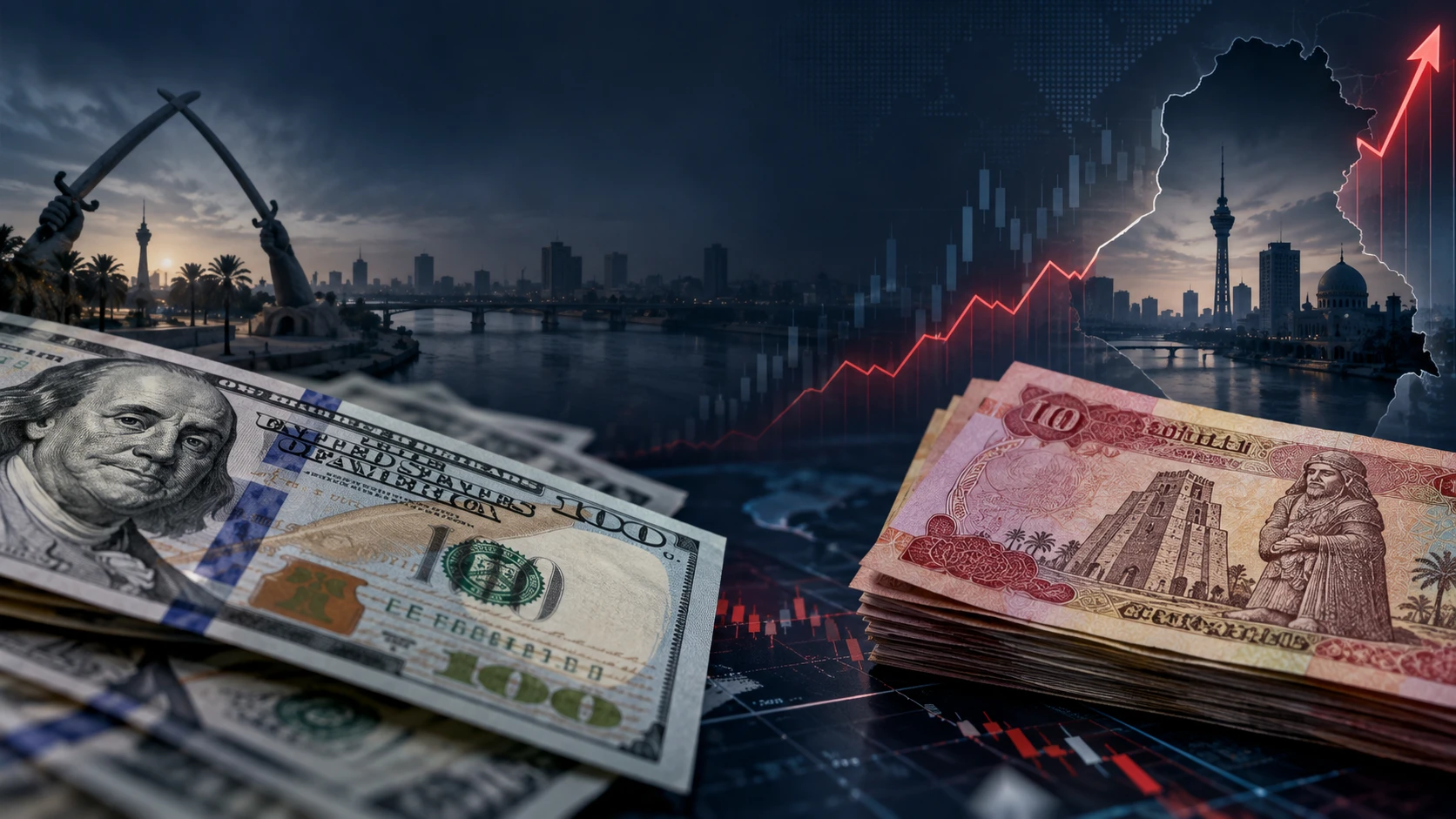
The price movements of recent days indicate that psychological factors have become a clear influence on the market. On September 14, the Al-Kifah and Al-Harithiya exchanges recorded a rate of approximately 156,500 dinars per 100 dollars, before prices gradually increased, reaching levels approaching or exceeding 160,000 dinars in Baghdad exchange bureaus this past Saturday.
This rapid move does not necessarily mean a change in the official exchange rate of the dinar, as the central bank's official policy remains separate from the parallel market exchange rate. The central bank also denied, last June, rumors circulating about a change in the dinar's exchange rate and warned against relying on documents or news not issued through its official channels.
The Market Is Buying Dollars In Anticipation Of The Unknown.
The main problem at the current stage is that the market does not necessarily wait for the decision to occur in order to react to it, but rather begins to price in its probabilities in advance.
With increasing talk in recent days about the issue of restricting weapons to the state, the future of the relationship between Baghdad and Washington after the end of September, and the possibility of expanding sanctions related to financial networks dealing with Iran, some traders, speculators, and liquidity holders have begun to hedge by increasing demand for the dollar.
This type of demand is not entirely related to an actual commercial need for foreign currency, but also includes what can be described as "fear demand"; that is, buying dollars in anticipation of its future rise.
The more expectations spread that the dollar might rise further, the more people want to buy it, and the expectations themselves become an additional factor pushing the price upwards.
September 30th... A Political Date That Becomes A Factor In The Currency Market
Concerns are particularly focused on September 30, due to its connection with sensitive political and security issues being discussed in Iraq, especially the issue of weapons control and the future of the security relationship with the United States.
The newspaper Al-Akhbar, in a report published on September 18, quoted a recent Iraqi government official regarding American messages and the possibility of using economic tools if no progress is made on the weapons control file. However, the same report indicated that the Prime Minister's financial advisor denied the existence of any currently declared American plan to halt dollar shipments due to the file not being completed by September 30.
Here A Distinction Must Be Made Between A Political Possibility That Is Being Discussed And An Official, Declared American Decision
As of September 19, 2026, no official announcement appears in the public data reviewed by the U.S. Treasury Department specifying September 30 as the date for cutting off dollar shipments to Iraq or imposing comprehensive economic sanctions on the Iraqi state.
But Washington is already tightening its measures against networks it considers linked to Iran or assisting sanctioned entities. On September 10, the US Treasury Department announced new measures against networks it said support Kataib Hezbollah and Hezbollah and help Iran circumvent sanctions.
This means that market concerns are not entirely unfounded, but at the same time they do not constitute evidence of a comprehensive or automatic US decision that will be issued on September 30.
Al-Taif Bank Brings The Trust File Back To The Forefront
Another factor that puts pressure on customer behavior is trust in the banking sector.
On September 3, the Central Bank of Iraq announced the imposition of guardianship over Al-Taif Islamic Bank for Investment and Finance.
Following growing concern among depositors, the central bank confirmed that imposing receivership does not mean the bank is bankrupt, but rather represents a precautionary supervisory measure to protect the rights of depositors and ensure the stability of banking operations.
On September 8, the Central Bank reiterated that the rights of depositors at Al-Taif Bank are protected, and that it is working with the appointed trustee to regulate withdrawals and fulfillment of financial obligations in a gradual and organized manner.
Despite these assurances, any crisis involving a bank or customer deposits could have a psychological impact on the market, especially in an economy where a large portion of transactions and liquidity are kept outside the banking system.
When confidence declines, some money holders tend to hold onto cash dollars as a hedge, which increases demand for them in the parallel market.
Speculators Get Involved
The role of speculation is no less important than the political factor.
The rapid rise in prices creates an opportunity for speculators to buy and resell the dollar, anticipating continued appreciation. With increased demand, price movements may begin to deviate from fundamental economic factors and become driven, for a time, by expectations, rumors, and the behavior of traders.
Therefore, the mere spread of unconfirmed news about “cutting off dollars to Iraq” or “sanctions after September 30” may prompt some traders to buy, even before verifying the news.
In this case, the market is faced with a recurring cycle:
Spreading fears drives up dollar purchases, increased demand raises the price, and the rising price reinforces the belief that there is a dangerous development, so new buyers enter the market.
Can The Dollar Continue To Rise?
The course of events in the coming days will largely depend on the news and official decisions that will be issued from Baghdad and Washington, in addition to the ability of the Central Bank of Iraq to manage the demand for foreign currency and contain speculation.
If no broad new US measures emerge, and concerns related to the period after September 30th subside, it is possible that some of the precautionary demand for the dollar will decrease.
However, if new sanctions are imposed on Iraqi financial institutions, companies, or networks, or if restrictions on dollar transactions are expanded, pressure on the parallel market may increase, especially if this is accompanied by widespread speculative activity.
But it is also important to distinguish between sanctions that target specific individuals, companies, or banks and any action that affects Iraq’s access to the dollar as a country; these are entirely different levels of action and should not be treated as one thing.
The Central Bank Faces A Confidence Test.
The current battle is not only related to the volume of dollars in circulation, but also to confidence.
The market needs clear and quick messages that reduce the space for rumors and clarify the truth about what is happening regarding foreign transfers, dollar shipments, and any changes that may occur in the banking system.
Conversely, continued conflicting news and a lack of quick clarifications may give speculators more room to move the market.
Between the potential sanctions, the post-September 30 obligations, and the crisis of confidence that appears from time to time in some banks, it seems that the dollar in Iraq is not only pricing in the current realities, but also in the fear of the next scenario.
Therefore, the question the market is watching now is not just: What is the price of the dollar today?
But What Will Happen After September 30th?
The answer, so far, has not come in the form of a decisive official decision from Washington or Baghdad, while the market has already preempted everyone and
begun pricing in the fears. https://mustaqila.com
Seeds of Wisdom RV and Economics Updates Saturday Morning 9-19-26
Good Morning Dinar Recaps,
AI FINANCIAL RESET: IMF WARNS EUROPE'S AI BOOM COULD STRAIN ENERGY, CAPITAL AND ECONOMIC BALANCE
THE IMF SAYS ARTIFICIAL INTELLIGENCE COULD BOOST EUROPEAN PRODUCTIVITY, BUT RAPID AI EXPANSION COULD ALSO INCREASE PRESSURE ON ENERGY GRIDS, CAPITAL MARKETS, LABOR MARKETS AND EUROPE'S STRATEGIC TECHNOLOGY POSITION.
Good Morning Dinar Recaps,
AI FINANCIAL RESET: IMF WARNS EUROPE'S AI BOOM COULD STRAIN ENERGY, CAPITAL AND ECONOMIC BALANCE
THE IMF SAYS ARTIFICIAL INTELLIGENCE COULD BOOST EUROPEAN PRODUCTIVITY, BUT RAPID AI EXPANSION COULD ALSO INCREASE PRESSURE ON ENERGY GRIDS, CAPITAL MARKETS, LABOR MARKETS AND EUROPE'S STRATEGIC TECHNOLOGY POSITION.
OVERVIEW
AI is becoming an economic infrastructure issue. The IMF estimates that artificial intelligence could raise European productivity by about 1% over the next five years, but the benefits and costs are unlikely to be distributed evenly across countries, regions and workers.
Energy is becoming part of the AI equation. European data centers already consume roughly 3% of the continent's electricity, and the IMF expects demand to rise substantially as AI expands. It is calling for greater investment in cross-border electricity grids and deeper integration of Europe's energy markets.
The financial system will have to support the transition. The IMF is urging Europe to deepen integration of its capital, labor and energy markets while investing in its own AI industry, highlighting how technology, infrastructure, investment and financial markets are becoming increasingly interconnected.
KEY DEVELOPMENTS
1. AI Could Increase European Productivity — But the Gains May Be Uneven
The IMF presented a background paper to European Union finance ministers meeting in Dublin on September 18–19. The paper estimates that AI could lift European productivity by approximately 1% over five years.
That potential productivity increase is significant because higher productivity can influence economic growth, business investment and the ability of economies to generate output with existing resources.
However, the IMF also warned that the benefits will not necessarily be shared equally.
Around 60% of workers in advanced European economies are employed in occupations highly exposed to AI. Some workers could become more productive through AI tools, while others could face displacement as routine tasks become automated.
The result could be a more uneven economic landscape unless investment, education and labor-market policies keep pace with technological change.
2. Electricity Is Becoming a Financial Issue
One of the most important connections in the IMF analysis is the relationship between AI and energy.
AI systems require enormous computing capacity, and that computing capacity requires data centers. The IMF estimates that European data centers already account for roughly 3% of the continent's electricity consumption, with demand expected to rise as AI adoption expands.
Major technology hubs including Frankfurt, London, Amsterdam, Paris and Dublin are already facing pressure on local power networks from data-center growth.
The IMF therefore recommends investment in cross-border grid infrastructure and deeper integration of Europe's energy market.
This creates an important financial connection: AI investment requires electricity; electricity requires infrastructure; infrastructure requires capital; and capital allocation increasingly depends on functioning financial markets.
3. Europe Is Being Pressured to Deepen Its Capital Markets
The IMF's concerns extend beyond technology itself.
Europe's capital, labor and energy markets remain more fragmented than a fully integrated single market would be. The IMF says completing the EU single market could help spread the benefits of AI more evenly and improve the ability of European economies to invest and innovate.
That means the AI transition is also becoming a capital-market challenge.
Companies need access to investment capital to develop AI systems. Governments need financing for energy and digital infrastructure. Workers need training and adjustment programs. And financial markets need sufficient depth and efficiency to direct savings toward those investments.
In this sense, AI is creating another reason for Europe to examine how its financial system moves capital across borders.
4. Strategic Technology Dependence Has Become a Financial Consideration
The IMF also warned that Europe could develop another form of strategic dependence because the United States and China currently dominate the development of major AI models.
The issue is broader than technology.
If a region depends heavily on outside technology for an increasingly important part of its economy, it can also become dependent on foreign investment, foreign suppliers, foreign computing infrastructure and external intellectual property.
The IMF therefore argues that Europe needs significant investment in its own AI industry.
This does not mean Europe must isolate itself from global technology markets. Rather, the issue identified by the IMF is whether Europe has sufficient domestic capacity to participate competitively in an increasingly technology-driven global economy.
5. AI Is Connecting Technology, Energy, Capital and Currency Infrastructure
The broader significance of this development is the way several financial-system components are beginning to converge.
AI requires computing infrastructure.
Computing infrastructure requires electricity.
Electricity requires grids and long-term investment.
Investment requires functioning capital markets.
And productive, competitive economies ultimately contribute to the economic foundations supporting their currencies and financial systems.
The Irish Presidency's official description of the September 18–19 ECOFIN meeting reflects this broader connection. The meeting brought together EU finance ministers and central-bank governors to discuss financial stability, competitiveness, investment, financial innovation and AI, with the IMF participating in discussions about AI's potential effects on productivity and economic growth.
WHY IT MATTERS
The AI transformation is increasingly moving beyond the technology sector and into the underlying infrastructure of the economy.
Europe's challenge is not simply whether companies adopt AI. It is whether the region can build enough electricity generation and grid capacity, investment capital, skilled workers, digital infrastructure and domestic technology capacity to support that adoption.
That makes AI part of a much larger economic transition involving technology, energy, capital markets, productivity and financial infrastructure.
The financial reset is not only about currencies — it is also about the infrastructure that determines how economies create, move and allocate value.
WHY IT MATTERS TO FOREIGN CURRENCY HOLDERS
Readers hold foreign currency with the hope that it may increase in value if major changes occur in the global monetary system.
Developments such as AI investment, energy infrastructure, capital-market integration and changes in economic productivity can influence the long-term strength and usefulness of currencies.
That does not mean AI signals a currency revaluation or guarantees a Global Reset event.
Instead, it provides another example of why the foundation of the financial system deserves attention.
Hope, not hype. Follow the infrastructure, investment and evidence.
IMPLICATIONS FOR THE GLOBAL RESET
Pillar 1: Technology
AI is becoming a major component of economic infrastructure. Countries and regions that develop computing capacity, digital systems, skilled workforces and domestic technology industries may have greater ability to participate in the next phase of global economic development.
Pillar 2: Energy
The AI expansion creates another reason for reliable and affordable electricity. Data centers, grids and energy markets are becoming increasingly important to financial and technological competitiveness.
Pillar 3: Capital
AI requires enormous investment. Deeper capital markets can help channel savings into technology, infrastructure and business expansion.
Pillar 4: Economic Integration
The IMF's message to Europe is that fragmented markets can make it harder to spread investment and productivity gains. Greater integration of energy, labor and capital markets could change how efficiently capital moves throughout the region.
Pillar 5: Currencies
Currency strength ultimately rests on economic foundations that include productivity, investment, trade, financial markets and confidence in institutions.
AI does not independently determine currency values, but the infrastructure built around AI can become part of the broader economic foundation supporting future financial systems.
RUMOR SAFETY REMINDER
This development is not an announcement of a currency revaluation, a new global currency or a specific Global Reset date.
The IMF's discussion concerns productivity, investment, energy infrastructure, labor markets, capital markets and technological competitiveness.
For currency holders, the important lesson is to distinguish documented financial-system development from speculation about future currency events.
THE BOTTOM LINE
The IMF's warning highlights something that is easy to overlook: the AI transformation is also an infrastructure transformation.
Europe may gain productivity from artificial intelligence, but realizing those gains requires electricity, grids, investment capital, skilled workers, digital infrastructure and competitive domestic technology capacity.
That creates a broader chain:
AI → Energy → Infrastructure → Capital → Productivity → Financial Systems → Currencies
The Global Reset story continues to develop through these underlying systems. The foundation can change long before the headlines do.
Seeds of Wisdom Team
Newshounds News™ Exclusive
SOURCES
~~~~~~~~~~
🌱 A Message to Our Currency Holders🌱
If you’ve been holding foreign currency for many years, you were not foolish.
You were not wrong to believe the global financial system would change.
What failed was not your patience — it was the information you were given.
For years, dates, rumors, and personalities replaced facts, structure, and proof. “This week” predictions created cycles of hope and disappointment that were never based on how currencies actually change.
That is not your failure.
Our mission here is different: • No dates • No rates • No hype • No gurus
Instead, we focus on:
• Verifiable developments • Institutional evidence
• Global financial structure • Where countries actually sit in the process
Currency value changes only come after sovereignty, trade, banking, settlement systems, and fiscal coordination are in place. History and institutions confirm this sequence.
You will see silence. You will see denials. That is not delay — that is discipline.
Protect your identity. Organize your documents. Verify everything.
Never hand your discernment to anyone who cannot show proof.
You deserve truth — not timelines.
Seeds of Wisdom Team
Newshounds News
~~~~~~~~~~
Seeds of Wisdom Team RV Currency Facts Youtube and Rumble
Newshound's News Telegram Room Link
RV Facts with Proof Links Link
RV Updates Proof links - Facts Link
Start Here room with Most Asked Questions Link
Follow the Gold/Silver Rate COMEX
Follow Fast Facts
Seeds of Wisdom Team™ Website
Thank you Dinar Recaps
5 Steps To Master Your Money
5 Steps To Master Your Money
Simple strategies to help fund your future.
Fidelity Viewpoints
Key takeaways
Define clear goals and make a plan to help guide your financial decisions.
Set up automatic transfers to help boost your savings and keep you on track.
Build up your emergency savings to cover unexpected essential expenses
5 Steps To Master Your Money
Simple strategies to help fund your future.
Fidelity Viewpoints
Key takeaways
Define clear goals and make a plan to help guide your financial decisions.
Set up automatic transfers to help boost your savings and keep you on track.
Build up your emergency savings to cover unexpected essential expenses
Taking control of your finances isn’t just about cutting down on expenses and increasing your savings. It’s also about opening yourself up to more options. With the right financial foundation, you have more freedom to make choices, take risks, and move forward with confidence.
Whether you're just starting out, navigating a life change, or planning for retirement, these 5 key steps can help you stay on track for your goals—on your terms.
1. Make a plan
Creating a financial plan starts with naming your goals. If you haven’t identified your goals and set up steps to help you achieve them, then you won’t have a plan to return to if you start to go off track.
There’s no one-size-fits-all approach to planning, but the great thing is a plan can grow and flex with you as your needs change. In your 20s, your goal may be paying off student loans and starting to save.
In your 30s and 40s, saving for a home or boosting retirement contributions might take center stage. Nearing retirement? It may be time to shift from saving to thinking about creating a plan to turn your savings into an income stream.
Planning can feel overwhelming at the start, but naming a goal can help the path become clearer. Breaking down big goals into bite-sized steps can make them feel more achievable. To help with this, consider asking yourself:
What’s the goal? Examples include paying down debt, saving for short-term goals like a wedding or a down payment, and saving for retirement.
What’s your savings number? How much money do you need to meet your goal?
What’s your timeline? Knowing when you’ll need the money can help you come up with a savings schedule.
How will you achieve it? Consider allocating a certain amount of each paycheck toward the goal.
Not sure whether to prioritize paying down debt or saving and investing for another goal? Find balance with our step-by-step guide.
2. Boost your savings
Once your goals are defined and your plan is set in motion, it’s time to supercharge your savings. Automation can be a game-changer. Consider your workplace retirement plan: Contributions are deducted before your paycheck hits your account, making it one of the most effective automated savings tools.
You can apply this principle to other goals too. By setting up automatic transfers to savings or debt repayment accounts, you “pay yourself first” and reduce the temptation to spend that money elsewhere. This strategy also helps you stay consistent, even when the market fluctuates or life gets busy.
Investing is another way to help your money work harder for you. Strategic investing, aligned with your goals and timeline, can potentially help you reach milestones faster than parking those savings in cash.
There are options for every type of investor including hands-off accounts, where an investment manager chooses and manages your investments for you and hands-on accounts, where you choose and manage your own investments. You can set up recurring investments and take advantage of automation for your investment accounts too.
Ready to learn more? Take a quick quiz to figure out which account might be right for you.
3. Diversify your assets
Diversification is an important part of smart investing. It means spreading your money across different investment types, which can help you manage risk according to your goals. Whether you're conservative or aggressive in your approach, choosing the right investment mix—also known as asset allocation—is key
CHART: https://www.fidelity.com/learning-center/personal-finance/master-your-money
t’s possible that you could have a very different asset allocation for a goal that is a few years away compared to one that is still decades away. As an example, someone saving for a short-term goal might choose a more conservative mix, while longer-term goals like retirement may benefit from a more aggressive strategy.
Everyone’s situation is their own, and we all have our preferences. You want to balance risk and reward in a way that feels good for your timeline and comfort level.
If you’re looking to do more, another strategy to consider is asset location, which is a way to help you manage the tax liability of building your wealth. This where you place investments in accounts that offer the most tax advantages. Asset location can be complicated, but a financial professional can help you figure out if it’s worth exploring.
4. Have a pivot plan
Life can be unpredictable. Whether it’s a job loss, inheritance, divorce, or early retirement, having a plan for curve balls helps you stay resilient. Planning for change doesn’t mean expecting the worst—it means being ready for anything.
It can be easier to do this if you take the time to imagine and plan for the pivots life could bring: the good, the not-so-good, and everything in between.
CHART: https://www.fidelity.com/learning-center/personal-finance/master-your-money
You can plan for different scenarios by asking yourself how you might feel if one of these pivots happened. How prepared would you feel if you lost your job? Or if you received an inheritance you weren’t expecting? Then you’ll want to come up with a savings number that will help you feel more comfortable no matter what happens.
Start by building emergency savings with 3–6 months (or more, depending on what helps you feel secure) of essential expenses in an account that is liquid and easily accessible, such as a high-yield savings account. Then, consider additional savings for specific scenarios.
If you’re thinking about turning a side hustle into a full-time gig, what amount of cushion would help make taking that leap more comfortable?
Insurance and estate planning are also part of a solid pivot strategy. Reviewing your coverage and updating your documents can help to ensure you’re protected no matter what life throws your way.
TO READ MORE: https://www.fidelity.com/learning-center/personal-finance/master-your-money
FRANK26….9-18-26….BANKING REFORMS
Friday Night Video
FRANK26….9-18-26….BANKING REFORMS
This video is in Frank’s and his team’s opinion only
Frank’s team is Walkingstick, Eddie and Omar in Iraq and guests
Playback Number: 605-313-5163 PIN: 156996#
Friday Night Video
FRANK26….9-18-26….BANKING REFORMS
This video is in Frank’s and his team’s opinion only
Frank’s team is Walkingstick, Eddie and Omar in Iraq and guests
Playback Number: 605-313-5163 PIN: 156996#
Ariel: The September 30th Ignition Sequence (and more)
Ariel: The September 30th Ignition Sequence
9-18-2026
Sept-30th: The Ignition Sequence (What You Need To Look For)
Post-September 30 Sovereignty Window → 2027 Budget Submission —Ground Assessment
I. WHAT SEPTEMBER 30 ACTUALLY DELIVERS
The Ministry of Finance’s declaration of financial sovereignty is not a ceremonial gesture. It is a legal severance. Specifically, it terminates the artificial program rate the managed peg that has kept IQD suppressed since the reconstruction era. That program rate was never a market rate.
Ariel: The September 30th Ignition Sequence
9-18-2026
Sept-30th: The Ignition Sequence (What You Need To Look For)
Post-September 30 Sovereignty Window → 2027 Budget Submission —Ground Assessment
I. WHAT SEPTEMBER 30 ACTUALLY DELIVERS
The Ministry of Finance’s declaration of financial sovereignty is not a ceremonial gesture. It is a legal severance. Specifically, it terminates the artificial program rate the managed peg that has kept IQD suppressed since the reconstruction era. That program rate was never a market rate.
It was an administrative fiction maintained through the Treasury Reserve Account structure at the New York Fed, where Iraq’s dollar-denominated oil receipts were held and drip-fed back at the engineered exchange rate.
II. THE 2027 BUDGET —MECHANICS
The projected size is 200 trillion dinars ($174.7 billion) but that dollar figure is calculated at the current program rate. If the IQD revalues to a market-reflective rate before the budget passes, that nominal dinar figure stays roughly stable but the dollar equivalent shifts dramatically. That’s the whole point.
The budget has to be denominated in real-value IQD, not program-rate IQD, because once the program rate get a reassessment on September 30, every contract, every salary, every customs receipt denominated in the old rate becomes legally incoherent.
The 2027 budget at 200 trillion dinar is not a hope number. It’s a math equation. Oil revenue floor + non-oil customs receipts (live October 1) + gold reserve backing + gas development revenue projections + World Bank institutional support = the rate the budget can sustain.
If that equation yields a rate that’s lower than the hopium crowd wants, that’s what publishes. If it yields a rate that reflects Iraq’s actual sovereign asset position oil, gas, gold, and a functioning non-oil revenue stream for the first time in twenty years then the number is real.
October 15 is what we need to look between from the 30th. Not September 30. September 30 removes the chain. October 15 reveals what was underneath it.
Read Full Article:
https://www.patreon.com/Prolotario1/posts/sept-30th-what-169847296
https://dinarchronicles.com/2026/09/17/prolotario-the-september-30th-ignition-sequence/
Ariel: Further Clarification for September 30th
9-18-2026
September 30 ends the program rate legally. October 1 through October 14 is the window where the Ministry of Finance builds the 2027 budget using the new valuation methodology one backed by oil, gas, and gold reserves instead of the artificial peg. October 15, they submit that budget to Parliament.
You Have To Understand This Basic Thing
This is the real anchor. The budget must reflect a real exchange rate because Iraq’s national budget is calculated in dinars. If they submit a budget based on the old program rate while simultaneously declaring sovereignty and forex integration, the numbers are fraudulent on their face. The budget has to be built on what the currency is actually worth on international markets.
How I Think This Is Going To Go
September 30: Legal authority to end artificial rate sovereignty declaration.
October 1-14: Build 2027 budget on real reserves-backed valuation
October 15: Submit revalued budget to Parliament first official document with new rate.
October (ongoing): DTCC tokenization on Ripple goes live parallel settlement infrastructure.
Post-October 15: CBI activates forex integration with already-built infrastructure international market recognizes new rate.
The Sequence Forces Transparency: (IMO)
• End program rate (Sept 30)
• Let the currency discover market value through forex integration (Oct 1-14)
• Submit a budget based on that discovered real value (Oct 15)
The SEC’s five-year Innovation Exemption issued today matters here because it opens the door for tokenized settlement and with DTCC beginning Ripple tokenization in October, Iraqi oil contracts could settle on blockchain infrastructure that bypasses the traditional SWIFT/Fed Wire system. That’s not a side note. That’s the rails the new IQD international settlement could actually run on.
Ariel: Do You All Know What Just Happened? We Are In The Home Stretch
This comes off the announcement by The Ministry of Finance in Iraq how declared September 30th to be financial sovereignty day. No more SEC roadblocks.
For years, the SEC has been the gatekeeper of the old financial system, making sure only the elite could play in the big leagues. Now? They’re stepping aside and letting the new system take over.
"Financial sovereignty" specifically means termination of the IMF Article XIV consultation status and the end of the U.S. Treasury's OFAC supervised "program rate" mechanism.
Once sovereignty is declared, the CBI is no longer legally bound to the artificial peg maintained for war reparations and debt restructuring. Now with this recent development I can understand how that can occur not only for Iraq but other countries as well.
DTCC's October launch on Ripple provides the plumbing for instant settlement of IQD-denominated oil contracts. Previously, the artificial rate was maintained to prevent dollar-denominated oil revenues from being instantly converted to dinars at a true market rate (which would have exposed the undervaluation).
The "program rate" was a scam. For years, the Deep State and their bankster buddies kept the Dinar artificially low so they could buy it cheap and control Iraq’s oil. Now? That scam is over. The real value is about to be revealed. When Iraq declares financial sovereignty, they’re free to set their own exchange rate. That means the real value of the Dinar backed by oil, gold, and Iraq’s natural resources is about to be unleashed.
CryptoEmpress: Yeah this is actually a big one. SEC just gave tokenized U.S. stocks a real on-chain lane. Not some whitepaper. Actual exemption. That’s the regulator saying “fine, do it.” Then you’ve got DTCC’s tokenization service dropping in October with Ripple already in that group. That’s the settlement layer people have been screaming about for years. The Iraq Sept 30 thing is still the hopium layer. Coalition out, sovereignty talk, all that. Cool calendar date. Doesn’t automatically mean the dinar rips and oil starts settling in IQD overnight. That’s the part everyone always jumps on too fast.
What’s not hopium:
🔺stocks can move on-chain now •
🔺DTCC is weeks away, not “someday”
🔺the old “you can’t settle this on a blockchain” excuse just got weaker
If the dinar story hits, this is the plumbing that would make it work. If it doesn’t, the same rails still matter. Either way the infrastructure is getting built. That’s the part that’s actually happening
Source(s):
• https://x.com/Prolotario1/status/2100641294397624618
https://dinarchronicles.com/2026/09/17/prolotario-further-clarification-for-september-30th/
Russia’s Digital Ruble Is Here — The Real Shift Isn’t the Currency, It’s the System Underneath It
Russia’s Digital Ruble Is Here — The Real Shift Isn’t the Currency, It’s the System Underneath It
Lynette Zang: 9-18-2026
Russia’s digital ruble has moved into a major new phase, with large banks and retailers now required to support the infrastructure while individual use remains voluntary.
Lynette Zang breaks down what changed on September 1, why the central bank account structure matters, and the bigger question investors should be asking: what can this new monetary rail be made to do later?
Russia’s Digital Ruble Is Here — The Real Shift Isn’t the Currency, It’s the System Underneath It
Lynette Zang: 9-18-2026
Russia’s digital ruble has moved into a major new phase, with large banks and retailers now required to support the infrastructure while individual use remains voluntary.
Lynette Zang breaks down what changed on September 1, why the central bank account structure matters, and the bigger question investors should be asking: what can this new monetary rail be made to do later?
Chapters:
00:00 Russia’s Digital Ruble and the Question of Control
00:33 What Actually Changed on September 1
01:05 Cash, Bank Deposits and Digital Rubles
01:30 Your Bank App Is Only the Doorway
02:04 Is the Digital Ruble Voluntary?
02:33 Russia Is Building the Infrastructure
03:06 Why Monetary Infrastructure Matters
03:39 How the Digital Ruble Works 04:10 Russia Crosses a Major CBDC Threshold
04:51 Why Other CBDCs Struggled With Adoption
05:27 Availability Does Not Create Demand
06:02 Russia Is Building Around the Choice
06:38 A Digital Ruble Is Not a Savings Account
07:07 Does This Mean Total Control?
07:44 Smart Contracts and Future Capabilities
08:17 The Next Stage of the CBDC Experiment
08:50 The Architecture Underneath Your Money
09:19 How Voluntary Does Adoption Need to Be?
09:50 What Could This Monetary Rail Do Later?
10:24 Sovereignty Begins With What You Own
Iraq Economic News and Points To Ponder Friday Afternoon 9-18-26
Cabinet Reviews Fuel Subsidy, Lawmaker Says
2026-09-17 Shafaq News- Baghdad Iraq’s Council of Ministers is reviewing recent decisions to remove fuel subsidies for some sectors amid efforts to address fuel shortages across the country, a member of parliament’s Oil, Gas and Natural Resources Committee said on Thursday.
Cabinet Reviews Fuel Subsidy, Lawmaker Says
2026-09-17 Shafaq News- Baghdad Iraq’s Council of Ministers is reviewing recent decisions to remove fuel subsidies for some sectors amid efforts to address fuel shortages across the country, a member of parliament’s Oil, Gas and Natural Resources Committee said on Thursday.
Mohammed Al-Nuaimi told Shafaq News that a delegation from the committee visited the Oil Products Distribution Company to discuss shortages of gasoline and kerosene. “The crisis is on its way to being resolved,” he said.
Al-Nuaimi said the Cabinet’s recent decisions to remove fuel subsidies had caused new supply problems, adding that ministers were considering revising the measures for some sectors.
The Cabinet had decided to remove subsidies on petroleum product prices for various sectors starting Sept. 1, while maintaining subsidized prices for gasoline, diesel, kerosene and liquefied petroleum gas supplied to citizens.
Iraq’s Oil Products Distribution Company said the price increases apply to government institutions and other sectors but not to fuel supplied directly to citizens, which remains available at subsidized prices.
Last week, Diyala Provincial Council member Rashad Al-Tamimi said fuel shortages in the eastern province would be fully resolved this week after weeks of supply problems and long queues at filling stations. He said the council had coordinated with oil product distribution officials to restore supplies across the province.
Iraq faced renewed shortages of gasoline and gasoil, a fuel widely used by heavy vehicles. The Oil Ministry previously attributed the shortages to delayed shipments after the Iran-US conflict disrupted tanker movements, adding pressure to a gap between domestic production and demand. The ministry said new shipments would arrive soon, with daily gasoline consumption at about 33 million liters and rising to around 38 million liters during periods of higher demand.
Read more: Fuel shortages keep Iraqi motorists in long lines
https://www.shafaq.com/en/Economy/Cabinet-reviews-fuel-subsidy-lawmaker-says
USD/IQD Nears 160,000 Amid Speculation
2026-09-17 Shafaq News- Baghdad/ Erbil The US dollar climbed further against the Iraqi dinar on Thursday, nearing 160,000 dinars per $100 in Baghdad as an economist pointed to uncertainty, speculation and political rhetoric as factors driving demand in the parallel market.
According to a Shafaq News market survey, the dollar closed at 159,500 dinars per $100 at Baghdad’s Al-Kifah and Al-Harithiya exchanges, up from 158,800 dinars in morning trading.
In Baghdad’s exchange shops, the dollar was selling at 160,000 dinars per $100 and buying at 159,000.
In Erbil, the dollar also rose, with exchange shops selling $100 for 159,100 dinars and buying it for 159,050.
Economist Ali Daadoush told Shafaq News that “irresponsible” remarks by some politicians and non-specialists, combined with uncertainty and speculation, were increasing demand for dollars in the parallel market.
He said part of the market’s cash-dollar supply also comes from travelers, travel companies and exchange firms linked to citizens purchasing foreign currency at the official rate for travel, medical treatment, study and other purposes approved by the Central Bank of Iraq (CBI).
Daadoush said that supply had also declined because traders and importers held fewer dollars abroad amid delays in official transfers used to finance imports of goods and services.
The rising exchange rate, he said, could feed into domestic prices because Iraq relies heavily on imported goods, increasing the risk of imported inflation alongside higher customs duties and taxes.
Daadoush said he did not expect CBI to intervene directly in the parallel market, noting that official foreign transfers are conducted through the banking system.
He said the CBI could instead use forward guidance to reassure traders, importers and the wider market about the continued flow of cash dollars through regular shipments.
https://dinarrecaps.squarespace.com/config/pages/5d5227ffceb0a70001072e56
Oil Retreats As Saudi Supply Outlook Improves
2026-09-18 01:10 Shafaq News Oil prices fell for a third day on Friday as easing concerns over Saudi supply disruptions outweighed anxiety about a widening the Middle East conflict amid fresh fighting between Saudi Arabia and Yemen's Houthis.
Brent crude futures fell 79 cents, or 0.75%, to $104 a barrel by 0319 GMT, while US West Texas Intermediate futures fell 70 cents, or 0.69%, to $101.20 a barrel. Both benchmarks closed down about 1% on Thursday.
Brent prices are on track for their first weekly loss in three, down 0.5%, while WTI is set to gain 1.2%.
Markets largely shrugged off concerns about new threats to supplies even as Saudi Arabia and Yemen's Iran-backed Houthis exchanged fresh strikes across their border on Thursday, expanding the Middle East war front.
Earlier this week, prices climbed to close to four-month highs as sources said crude loadings at Saudi Arabia's Red Sea export hub of Yanbu had been suspended and Riyadh cancelled some deliveries to Europe after its East-West pipeline was damaged in an attack last week.
However, prices have cooled off on reports Saudi Arabia was seeking to return about half the capacity of its East-West oil pipeline within days and the nation was offering more crude cargoes to Asian refiners through ship-to-ship transfers off Oman's port of Sohar.
"Recent efforts to restore Saudi export capacity have reduced some of the immediate supply anxiety," said Priyanka Sachdeva, head of market insights at Phillip Nova.
Sources that have spoken to Reuters have given varying estimates of how long it will take to reopen the pipeline and return crude flows to normal.
Oil prices, however, are still up over $100 per barrel as the markets are waiting for evidence of a clear supply improvement, analysts said.
"The key question is whether physical flows can normalise and what could be the timeline. If we see a sustained improvement in Hormuz traffic, some of the geopolitical premium can unwind further," Sachdeva said.
However, transporting oil through the region remains risky.
Iran's Revolutionary Guards Navy said a Togo-flagged oil tanker was struck while attempting to make an "illegal passage" through the Strait of Hormuz on Thursday, Iranian state media said early on Friday.
The US and Iran have held no peace talks since an interim agreement reached in June collapsed within weeks. The war will come up for discussion at the United Nations General Assembly next week, and an Iranian delegation will be able to attend, according to the US State Department. (REUTERS)
https://www.shafaq.com/en/Economy/Oil-retreats-as-Saudi-supply-outlook-improves