Iraq Economic News and Points To Ponder Saturday Morning 9-19-26
The Dollar Is Besieging The Dinar... Washington Continues To Use Its Tools To Weaken The Iraqi Currency
Information / Report The Iraqi economy has recently been experiencing financial and monetary instability, clearly manifested in the successful surges in the exchange rate of the US dollar against the Iraqi dinar in local markets. This sudden rise was not a coincidence, but rather the result of a complex interplay between external pressures and emergency domestic monetary policies that disrupted the balance of supply and demand.
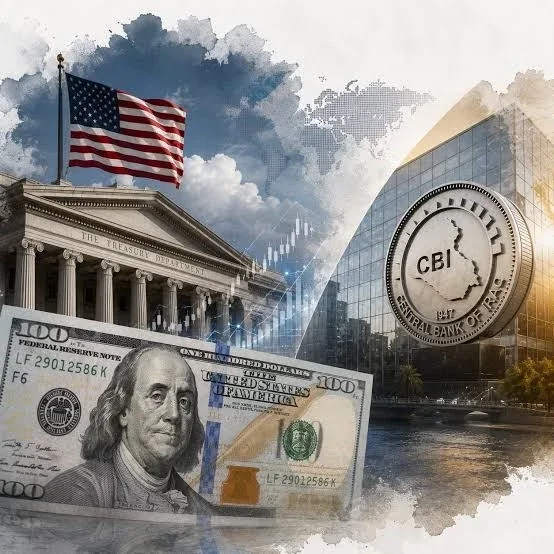
This crisis is caught between tightened international controls on money transfers and local government decisions aimed at regulating foreign currency holdings, which have indirectly revived the parallel (black) market.
Against this complex backdrop, four key factors explain the roots of the current surge: the impact of US sanctions on neighboring countries and their impact on intra-regional trade; the reduction of travelers' cash allowances and the curtailment of some international money transfer channels; and suspicions of deliberate speculation by certain profit-driven banking institutions.
In this context, economist Dirgham Muhammad Ali identified on Saturday the real reasons behind the new rise in the exchange rate of the dollar against the Iraqi dinar, while calling on the Central Bank to take urgent measures to control the parallel market and inject hard currency.
Mohammed Ali told Al-Maalomah News Agency that "the current rise is due to a number of direct and indirect reasons, most notably the tightening of US sanctions on Iran, which has caused an increase in demand for the dollar to finance direct trade."
He added that "among the other reasons is the decision to reduce the exchange quota for travelers from (3000) dollars to (2000) dollars, which led to a shortage of cash supply in the parallel market as a result of patients and tourists turning to it to complete their needs for foreign currency."
Mohammed Ali continued, “The third and important factor is the withdrawal of Al-Taif Bank, which was a vital gateway for the entry of dollars through the Western Union network,” noting at the same time that “the fourth reason may be a deliberate and planned process of raising the exchange rate to achieve huge profits for unpunished banks.”
He called on the Central Bank to conduct a genuine review of the mechanisms for injecting dollars into the market, otherwise the issue of the rising exchange rate will continue sharply, harming the citizen.
For its part, the “Eco Iraq Observatory” has observed a rapid rise in the exchange rate of the dollar in the parallel market against the Iraqi dinar, noting that the current rise is due to several factors, including fears of possible American sanctions against Iraq.
The observatory said in a statement seen by Al-Maalomah that “the current rise is not related to one factor, but rather comes as a result of the intersection of several economic, financial and psychological factors,” indicating that “among the most prominent of these are the speculations in the parallel market, which are active from time to time, taking advantage of the high demand for the dollar and the decline in its supply.”
He added that "concerns and speculations related to the post-September 30th deadlines, and what is being discussed regarding the issue of restricting weapons to the state, along with talk of American sanctions or possible measures," explaining that "this increases the state of uncertainty in the market and pushes some traders to increase the demand for the dollar."
“Another reason is the decline in confidence in the banking sector from time to time, which represents an additional factor in increasing the demand for the dollar,” Eko Iraq explained, referring to the crisis of Al-Taif Bank and the imposition of guardianship over it by the Central Bank of Iraq on September 3rd.
The Eco-Iraq Observatory called on the Central Bank of Iraq to “closely monitor developments in the exchange market and take appropriate measures to curb speculation and maintain market stability, thereby contributing to strengthening confidence in the Iraqi dinar and the banking sector.” End/25
The Dollar Fuels Post-September 30th Fears... Speculation And Potential Sanctions Put Pressure On The Iraqi Dinar
Last updated: September 19, 2026
The Independent/- The Iraqi exchange market has entered a new phase of tension as the end of September approaches, after the selling price of the dollar in some Baghdad markets exceeded the 160,000 dinar mark for every 100 dollars on Saturday, September 19, 2026, in a movement that reflects the widening gap between the official price and the parallel market, and the rising demand for the US currency amid a state of economic and political uncertainty.
The rise comes in conjunction with the monitoring by the “Eco Iraq” Observatory of an acceleration in the prices of the dollar, attributing this to a set of overlapping factors that cannot be reduced to one reason, foremost among them speculation and the high demand for the dollar, in addition to fears related to what may happen after September 30 and the increasing talk about the possibility of imposing American sanctions or taking new financial measures.
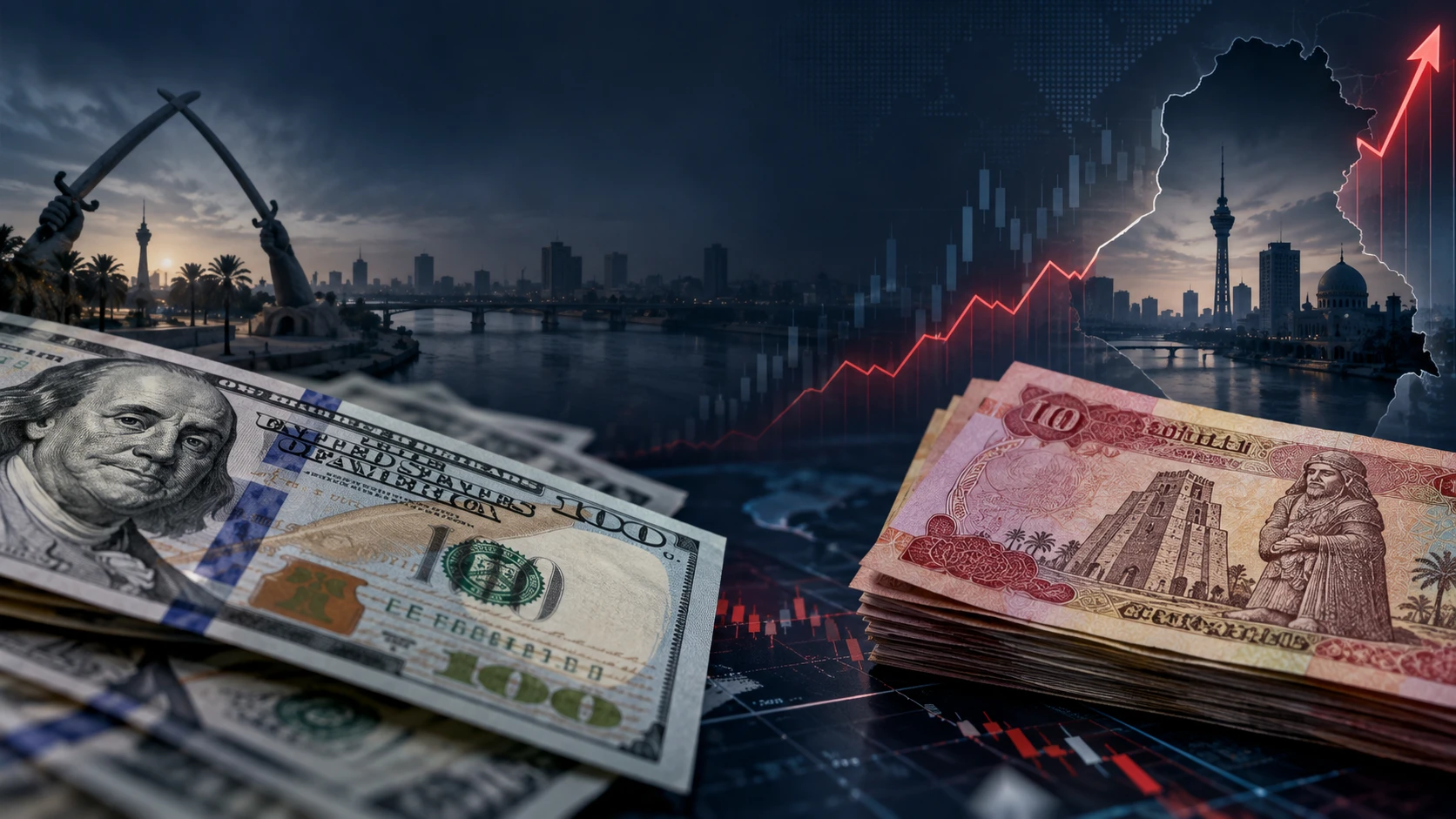
The price movements of recent days indicate that psychological factors have become a clear influence on the market. On September 14, the Al-Kifah and Al-Harithiya exchanges recorded a rate of approximately 156,500 dinars per 100 dollars, before prices gradually increased, reaching levels approaching or exceeding 160,000 dinars in Baghdad exchange bureaus this past Saturday.
This rapid move does not necessarily mean a change in the official exchange rate of the dinar, as the central bank's official policy remains separate from the parallel market exchange rate. The central bank also denied, last June, rumors circulating about a change in the dinar's exchange rate and warned against relying on documents or news not issued through its official channels.
The Market Is Buying Dollars In Anticipation Of The Unknown.
The main problem at the current stage is that the market does not necessarily wait for the decision to occur in order to react to it, but rather begins to price in its probabilities in advance.
With increasing talk in recent days about the issue of restricting weapons to the state, the future of the relationship between Baghdad and Washington after the end of September, and the possibility of expanding sanctions related to financial networks dealing with Iran, some traders, speculators, and liquidity holders have begun to hedge by increasing demand for the dollar.
This type of demand is not entirely related to an actual commercial need for foreign currency, but also includes what can be described as "fear demand"; that is, buying dollars in anticipation of its future rise.
The more expectations spread that the dollar might rise further, the more people want to buy it, and the expectations themselves become an additional factor pushing the price upwards.
September 30th... A Political Date That Becomes A Factor In The Currency Market
Concerns are particularly focused on September 30, due to its connection with sensitive political and security issues being discussed in Iraq, especially the issue of weapons control and the future of the security relationship with the United States.
The newspaper Al-Akhbar, in a report published on September 18, quoted a recent Iraqi government official regarding American messages and the possibility of using economic tools if no progress is made on the weapons control file. However, the same report indicated that the Prime Minister's financial advisor denied the existence of any currently declared American plan to halt dollar shipments due to the file not being completed by September 30.
Here A Distinction Must Be Made Between A Political Possibility That Is Being Discussed And An Official, Declared American Decision
As of September 19, 2026, no official announcement appears in the public data reviewed by the U.S. Treasury Department specifying September 30 as the date for cutting off dollar shipments to Iraq or imposing comprehensive economic sanctions on the Iraqi state.
But Washington is already tightening its measures against networks it considers linked to Iran or assisting sanctioned entities. On September 10, the US Treasury Department announced new measures against networks it said support Kataib Hezbollah and Hezbollah and help Iran circumvent sanctions.
This means that market concerns are not entirely unfounded, but at the same time they do not constitute evidence of a comprehensive or automatic US decision that will be issued on September 30.
Al-Taif Bank Brings The Trust File Back To The Forefront
Another factor that puts pressure on customer behavior is trust in the banking sector.
On September 3, the Central Bank of Iraq announced the imposition of guardianship over Al-Taif Islamic Bank for Investment and Finance.
Following growing concern among depositors, the central bank confirmed that imposing receivership does not mean the bank is bankrupt, but rather represents a precautionary supervisory measure to protect the rights of depositors and ensure the stability of banking operations.
On September 8, the Central Bank reiterated that the rights of depositors at Al-Taif Bank are protected, and that it is working with the appointed trustee to regulate withdrawals and fulfillment of financial obligations in a gradual and organized manner.
Despite these assurances, any crisis involving a bank or customer deposits could have a psychological impact on the market, especially in an economy where a large portion of transactions and liquidity are kept outside the banking system.
When confidence declines, some money holders tend to hold onto cash dollars as a hedge, which increases demand for them in the parallel market.
Speculators Get Involved
The role of speculation is no less important than the political factor.
The rapid rise in prices creates an opportunity for speculators to buy and resell the dollar, anticipating continued appreciation. With increased demand, price movements may begin to deviate from fundamental economic factors and become driven, for a time, by expectations, rumors, and the behavior of traders.
Therefore, the mere spread of unconfirmed news about “cutting off dollars to Iraq” or “sanctions after September 30” may prompt some traders to buy, even before verifying the news.
In this case, the market is faced with a recurring cycle:
Spreading fears drives up dollar purchases, increased demand raises the price, and the rising price reinforces the belief that there is a dangerous development, so new buyers enter the market.
Can The Dollar Continue To Rise?
The course of events in the coming days will largely depend on the news and official decisions that will be issued from Baghdad and Washington, in addition to the ability of the Central Bank of Iraq to manage the demand for foreign currency and contain speculation.
If no broad new US measures emerge, and concerns related to the period after September 30th subside, it is possible that some of the precautionary demand for the dollar will decrease.
However, if new sanctions are imposed on Iraqi financial institutions, companies, or networks, or if restrictions on dollar transactions are expanded, pressure on the parallel market may increase, especially if this is accompanied by widespread speculative activity.
But it is also important to distinguish between sanctions that target specific individuals, companies, or banks and any action that affects Iraq’s access to the dollar as a country; these are entirely different levels of action and should not be treated as one thing.
The Central Bank Faces A Confidence Test.
The current battle is not only related to the volume of dollars in circulation, but also to confidence.
The market needs clear and quick messages that reduce the space for rumors and clarify the truth about what is happening regarding foreign transfers, dollar shipments, and any changes that may occur in the banking system.
Conversely, continued conflicting news and a lack of quick clarifications may give speculators more room to move the market.
Between the potential sanctions, the post-September 30 obligations, and the crisis of confidence that appears from time to time in some banks, it seems that the dollar in Iraq is not only pricing in the current realities, but also in the fear of the next scenario.
Therefore, the question the market is watching now is not just: What is the price of the dollar today?
But What Will Happen After September 30th?
The answer, so far, has not come in the form of a decisive official decision from Washington or Baghdad, while the market has already preempted everyone and
begun pricing in the fears. https://mustaqila.com