
Iraq Economic News and Points To Ponder Thursday Morning 9-17-26
Oil Falls As Saudi Arabia Boosts Oman Supply
2026-09-16 17:29 Shafaq News Oil prices fell on Wednesday after reports that Saudi Arabia was offering additional crude cargoes through Oman eased some concerns about Middle East supply disruptions, while a smaller-than-expected draw in US crude inventories added further downward pressure.
Brent crude futures fell $2.92, or 2.7%, to settle at $105.83 a barrel. US West Texas Intermediate futures fell $3.40, or 3.2%, to close at $102.43.
Oil Falls As Saudi Arabia Boosts Oman Supply
2026-09-16 17:29 Shafaq News Oil prices fell on Wednesday after reports that Saudi Arabia was offering additional crude cargoes through Oman eased some concerns about Middle East supply disruptions, while a smaller-than-expected draw in US crude inventories added further downward pressure.
Brent crude futures fell $2.92, or 2.7%, to settle at $105.83 a barrel. US West Texas Intermediate futures fell $3.40, or 3.2%, to close at $102.43.
Saudi Arabia is offering more loadings of crude oil to Asian refiners via ship-to-ship transfers off Oman's Sohar port, people familiar with the matter said, blunting some of the hit to global supply from attacks on the country's East-West pipeline to the Red Sea.
"News around Saudi Arabia exporting from the Gulf suggests concerns that the disruption could be larger are easing," said UBS analyst Giovanni Staunovo.
Oil prices had gained more than $3 in the previous session after shipping industry sources said crude loadings at Saudi Arabia's Red Sea export hub of Yanbu had been suspended and Riyadh had cancelled some cargo deliveries to European customers. The suspension followed strikes on the East-West pipeline, which feeds the Saudi port of Yanbu.
Yanbu became Saudi Arabia's main outlet for oil exports after Iran began blockading the Strait of Hormuz after US and Israeli attacks on the country at the end of February. Prior to the war, Hormuz was the conduit for one-fifth of the world's oil and liquefied natural gas supply.
Visible vessel passage through the Strait of Hormuz remained in the single digits at four on Tuesday, down from seven a day earlier, preliminary shipping data showed on Wednesday. That was well below the 10-day average of 18.
Oil prices came under further pressure after the US Energy Information Administration on Wednesday reported a smaller-than-expected draw from US crude inventories last week. Crude oil stocks in the top-producing nation fell about 640,000 barrels last week, the EIA data showed, compared to expectations of a 1.62 million barrel draw according to a Reuters poll of energy analysts.
US gasoline and distillate inventories rose last week, EIA data showed. The rise in diesel inventories was bigger than expected, while gasoline stockpiles were expected to have declined last week, according to the Reuters poll.
The data was bearish for oil prices as it showed refined product stockpiles are maintaining themselves and even rising slightly while crude oil declines are flatlining, said John Kilduff, a partner at Again Capital.
Other analysts warned the data has done little to change a market that remains on tenterhooks as violence continues to escalate in the Middle East.
"All in all, today's data did little to sway us away from a long-standing bullish trading stance where buying significant price pullbacks remains much preferable to any attempts to pick a top to this bull market," oil trading advisor Ritterbusch and Associates told clients in a note.
Tensions ratcheted higher in the Middle East as Saudi warplanes pounded Yemen and Iran-backed Houthi fighters launched drones and missiles at Saudi cities. The Houthis, who have swept through Yemeni towns along the Red Sea since last week, said they had launched fresh strikes on Yanbu.
Citi expects near-term escalation in the Middle East to continue supporting crude oil and refined fuel prices before the Strait of Hormuz eventually reopens in the fourth quarter of 2026 with support from regional diplomatic efforts, the bank said in a note.
Diesel has become the top concern in global oil markets as tensions escalated in recent weeks, as the Middle East is a top supplier of both the fuel and the types of crude oil grades best suited for its production. Ukrainian attacks on refineries in Russia, another major diesel supplier, have further tightened the market and sent prices to record highs.
European gasoil futures, a benchmark for diesel prices, settled at a record high on Tuesday. US ultra-low sulfur diesel futures also settled at a record high on Tuesday.
"Europe has lost substantial diesel and jet fuel supply from the Middle East, while ongoing tensions in Eastern Europe have disrupted output at several major Russian refineries and prompted Moscow to restrict fuel exports," said Frank Walbaum, market analyst at Naga.com.
The Russian government has decided to extend restrictions on diesel exports for fuel producers until the end of October, Vedomosti daily reported late on Tuesday, citing two unidentified sources.
"I would expect, unless there is a peace deal or an improvement in the situation in Russia, that diesel prices stay supported," said Staunovo at UBS. (Reuters)
https://www.shafaq.com/en/Economy/Oil-Falls-as-Saudi-Arabia-Offers-More-Crude-Through-Oman
Oil Prices Retreat On New Saudi Oman Route
2026-09-17 01:16 Shafaq News Oil prices eased in Asian trade on Thursday, extending losses on reports of Saudi Arabia offering extra crude cargoes through Oman, which reduced fears of supply disruptions, but stayed above $100 on concerns about the Middle East conflict expanding.
Brent crude futures dropped 19 cents, or 0.2%, to $105.64 a barrel by 0347 GMT, while U.S. West Texas Intermediate futures were down 33 cents, or 0.3%, at $102.10. Both contracts fell about $3 on Wednesday.
"Concerns over supply tightness eased slightly following news that Saudi Arabia would ship cargo via Oman," said Hiroyuki Kikukawa, chief strategist of Nissan Securities Investment, a unit of Nissan Securities.
"Expectations of progress toward easing tensions in the Middle East ahead of U.S.-China summit next week are also capping price gains," he added.
Saudi Arabia is offering more loadings of crude oil to Asian refiners via ship-to-ship transfers off Oman's Sohar port, people familiar with the matter said, blunting some of the hit to global supply from attacks on the Saudi Arabia's East-West pipeline to the Red Sea.
However, some analysts were expecting these flows to only ease a portion of the supply loss from the kingdom's Red Sea port, capping the declines in oil prices.
The pick-up in flows through the Strait of Hormuz "is only partly offsetting lost export barrels following drone attacks that shut Saudi Arabia's East-West pipeline," Saxo Bank analysts said in a note.
Oil prices rose to about four-month highs earlier this week after shipping industry sources said crude loadings at Saudi Arabia's Red Sea export hub of Yanbu had been suspended and Riyadh had cancelled some cargo deliveries to European customers. The suspension followed attacks on the East-West pipeline, which feeds the Saudi port of Yanbu.
Yanbu became Saudi Arabia's main outlet for oil exports after Iran began blockading the Strait of Hormuz after the U.S. and Israel attacked the country at the end of February. Prior to the war, Hormuz was the conduit for one-fifth of the world's oil supply.
Two pumping stations serving the East-West pipeline were damaged in an attack last week, with a repair timeline unclear, according to assessments from three oil and security sources.
Despite the oil price decline on Thursday, worries about the intensifying Middle East war remain.
Saudi warplanes pounded Yemen and Houthi fighters launched drones and missiles at Saudi cities, the Iran-backed movement said on Wednesday, after a lightning advance that has extended Tehran's reach in the Middle East war.
Singapore's DBS Bank assumes in its base case scenario for the fourth quarter that the U.S. war with Iran will dial down and Brent will stabilise in the $85 to $95 range.
"However, under the bear case scenario currently prevailing, with attacks and incidents in Hormuz and Red Sea continuing, prices could spike towards $120/bbl levels before potentially normalising back towards $100/bbl," DBS Bank's head of energy research, Suvro Sarkar, said.
(Reuters) https://www.shafaq.com/en/Economy/Oil-prices-retreat-on-new-Saudi-Oman-route
USD/IQD Exchange Rates Surge In Baghdad, Erbil
2026-09-17 04:01 Shafaq News- Baghdad/ Erbil The US dollar opened higher against the Iraqi dinar in Baghdad and Erbil on Thursday, hovering around 159,000 dinars per $100.
According to a Shafaq News market survey, the dollar traded at 158,850 dinars per $100 at Baghdad’s Al-Kifah and Al-Harithiya central exchanges, up from 157,250 dinars at Wednesday’s open.
In Baghdad’s currency exchange shops, the dollar was selling at 159,250 dinars per $100 and buying at 158,250 dinars.
In Erbil, exchange shops sold $100 for 158,500 dinars and bought it for 158,400 dinars.
https://www.shafaq.com/en/Economy/USD-IQD-exchange-rates-surge-in-Baghdad-Erbil-0-5-0
German Exports To Iraq Hit $669M In Six Months
2026-09-16 10:07 Shafaq News- Baghdad/ Berlin German exports to Iraq rose from $284 million in the first quarter of 2026 to $385 million in the second, bringing the first-half total to about $669 million, according to Germany’s Federal Statistical Office.
Among the products listed, tractors and pharmaceutical products for therapeutic or preventive use led at about $54 million each, followed by blood products, vaccines and immunological preparations at $39 million and passenger vehicles at $37 million.
Packaging machinery accounted for $23 million, electrical control and distribution equipment $22.8 million, and medical and surgical instruments $20.7 million. Centrifuges and filtering or purification machinery totaled $14.4 million, while refrigeration equipment, refrigerators and freezers reached $2.4 million.
https://www.shafaq.com/en/Economy/German-exports-to-Iraq-hit-669M-in-six-months
US: Hormuz oil flows hit 18M barrels
2026-09-16 11:22 Shafaq News- Washington US Energy Secretary Chris Wright, on Wednesday, said oil flows through the Strait of Hormuz had reached a single-day peak of nearly 18 million barrels, while the seven-day average had risen to around 11 million barrels per day.
Preliminary ship-tracking data showed that only four vessels crossed the strait on Tuesday, well below the 10-day average of 18, Reuters reported. Some vessels may have passed through with their tracking systems switched off.
Meanwhile, Iran’s Islamic Revolutionary Guard Corps (IRGC) said on Wednesday that it had shot down a US-made MQ-9 drone over Qeshm Island in the Strait of Hormuz. The US had not immediately confirmed the claim.
The IRGC also said on Tuesday that it had downed three MQ-1 drones over and around the strategic waterway.
https://www.shafaq.com/en/Economy/US-Hormuz-oil-flows-hit-18M-barrels
Seeds of Wisdom RV and Economics Updates Thursday Morning 9-17-26
Good Morning Dinar Recaps,
FED TURNS HAWKISH: FIRST RATE HIKE IN THREE YEARS OPENS A NEW PHASE FOR THE DOLLAR, DEBT AND GLOBAL CURRENCIES
THE FEDERAL RESERVE HAS RAISED INTEREST RATES FOR THE FIRST TIME SINCE 2023 WHILE SIGNALING THAT ANOTHER HIKE COULD FOLLOW, ADDING NEW PRESSURE TO DEBT, BONDS, THE DOLLAR AND GLOBAL CURRENCY FLOWS.
Good Morning Dinar Recaps,
FED TURNS HAWKISH: FIRST RATE HIKE IN THREE YEARS OPENS A NEW PHASE FOR THE DOLLAR, DEBT AND GLOBAL CURRENCIES
THE FEDERAL RESERVE HAS RAISED INTEREST RATES FOR THE FIRST TIME SINCE 2023 WHILE SIGNALING THAT ANOTHER HIKE COULD FOLLOW, ADDING NEW PRESSURE TO DEBT, BONDS, THE DOLLAR AND GLOBAL CURRENCY FLOWS.
OVERVIEW
The Federal Reserve raised its benchmark interest rate by 0.25 percentage point to 3.75%–4.00%, marking its first rate increase in more than three years as inflation remains above the Fed's 2% target.
The Fed's latest projections point to another possible rate increase in 2026, with 16 of the 18 policymakers who submitted rate projections expecting at least one more quarter-point increase before the end of the year.
The significance extends beyond U.S. interest rates. Higher-for-longer borrowing costs can affect Treasury yields, government debt-service costs, the dollar, international capital flows and currencies around the world.
KEY DEVELOPMENTS
1. The Fed Has Begun Raising Rates Again
The Federal Reserve raised the federal funds target range by a quarter percentage point to 3.75%–4.00%, its first increase since July 2023.
The decision reflects continued concern about inflation. The Fed said inflation remains elevated and that the latest policy action is intended to support a more timely return toward its 2% inflation goal.
This marks an important change from the rate-cut expectations that dominated much of the previous monetary-policy cycle.
2. Another Rate Increase Is Now Part of the Outlook
The Fed's September projections show a significant shift in expectations.
Sixteen of the 18 policymakers who submitted projections expect at least one more rate increase during 2026. The median projections also show rates remaining relatively elevated through 2027 before gradual easing resumes later.
That does not guarantee another hike. Monetary policy remains dependent on incoming economic and inflation data.
But the message to financial markets is clear: the Fed is no longer signaling an easy path toward lower interest rates.
3. Inflation and Energy Costs Are Complicating the Picture
The rate increase comes while energy prices remain a major source of inflationary pressure.
The Fed's latest projections raised its expected 2026 inflation rate, with the Personal Consumption Expenditures price index now projected at 3.7% for the year.
The combination of elevated energy prices and persistent inflation creates a difficult policy environment.
Higher energy costs can feed into transportation, manufacturing and consumer prices, while higher interest rates are used to restrain demand and prevent inflation from becoming more persistent.
Energy pressure and monetary tightening are therefore becoming interconnected parts of the same financial story.
4. Higher Rates Increase Pressure on Government Debt
Interest rates matter not only to consumers and businesses but also to governments.
The United States must continually refinance existing debt while issuing new Treasury securities to finance government operations.
When interest rates and Treasury yields remain elevated, the cost of servicing that debt can rise over time.
That creates a larger connection between monetary policy and fiscal policy:
Higher Rates → Higher Borrowing Costs → Higher Debt-Service Expense → Greater Fiscal Pressure
This is one reason the Fed's policy direction matters far beyond the banking system.
5. The Dollar and Global Currencies Enter a New Phase
Changes in U.S. interest rates can influence international capital flows because investors compare returns and risks across currencies and financial markets.
A more restrictive Federal Reserve can support demand for dollar-denominated assets, while higher U.S. yields can affect the relative attractiveness of other currencies and government bonds.
Reuters reported that the dollar strengthened following the Fed decision, while short-term Treasury yields moved higher and longer-term yields showed a more restrained response.
For foreign currency holders, this is an important reminder that currency values are connected to interest-rate differentials, inflation, trade flows, debt levels and investor demand.
WHY IT MATTERS
The Federal Reserve's return to rate increases adds another layer to an already complicated global financial environment.
Energy prices are affecting inflation. Inflation is influencing central-bank policy. Central-bank policy is influencing bond yields and borrowing costs. Those changes then feed into government debt, currencies and international capital flows.
The bigger story is therefore not simply one Fed rate increase.
It is the interaction between inflation, energy, debt, interest rates and currencies that could shape the next stage of the global financial system.
WHY IT MATTERS TO FOREIGN CURRENCY HOLDERS
Readers hold foreign currency with the hopes that it will increase in value when the Global Reset occurs.
The current Fed decision does not announce a currency revaluation, an RV, a reset date or a guaranteed change in the value of any foreign currency.
What it does provide is another piece of evidence showing how the global financial environment continues to change.
Hope is understandable. Evidence is essential.
For currency holders, the important signals to watch include interest-rate differentials, sovereign debt, trade balances, payment-system developments, central-bank policy, commodity flows and changes in international settlement practices.
IMPLICATIONS FOR THE GLOBAL RESET
Pillar 1 — Debt and Bond Markets
Higher interest rates place additional pressure on governments, corporations and consumers carrying debt.
The longer rates remain elevated, the more important refinancing costs and Treasury yields become to the broader financial system.
Pillar 2 — Currencies and Capital Flows
Interest-rate differences between countries can influence where global capital moves.
A stronger dollar can create additional pressure on currencies that face weaker yields or greater economic and financial risks.
Pillar 3 — Energy and Inflation
Energy prices remain an important variable because disruptions to oil supplies can affect transportation, production and consumer prices.
That creates a direct connection between geopolitical events, inflation and central-bank policy.
RUMOR SAFETY REMINDER
A Federal Reserve rate increase is not an announcement of a Global Currency Reset, RV, currency revaluation or specific reset date.
Financial-system changes should be followed through documented policy decisions, official announcements, market data and actual changes in financial infrastructure rather than predictions or guaranteed timelines.
THE BOTTOM LINE
The Federal Reserve has now entered a new phase by raising rates for the first time since 2023, while its latest projections point toward the possibility of another increase before the end of 2026.
The significance goes beyond the Fed itself.
Higher rates can affect Treasury yields, government debt costs, the dollar, international capital flows and currencies around the world.
The global financial system is being shaped by several forces at once — energy costs, inflation, debt, interest rates and changing currency flows.
The next stage of financial-system change may be determined not by one event, but by how these pressures interact.
Seeds of Wisdom Team
Newshounds News
SOURCES
~~~~~~~~~~
🌱 A Message to Our Currency Holders🌱
If you’ve been holding foreign currency for many years, you were not foolish.
You were not wrong to believe the global financial system would change.
What failed was not your patience — it was the information you were given.
For years, dates, rumors, and personalities replaced facts, structure, and proof. “This week” predictions created cycles of hope and disappointment that were never based on how currencies actually change.
That is not your failure.
Our mission here is different: • No dates • No rates • No hype • No gurus
Instead, we focus on:
• Verifiable developments • Institutional evidence
• Global financial structure • Where countries actually sit in the process
Currency value changes only come after sovereignty, trade, banking, settlement systems, and fiscal coordination are in place. History and institutions confirm this sequence.
You will see silence. You will see denials. That is not delay — that is discipline.
Protect your identity. Organize your documents. Verify everything.
Never hand your discernment to anyone who cannot show proof.
You deserve truth — not timelines.
Seeds of Wisdom Team
Newshounds News
~~~~~~~~~~
Seeds of Wisdom Team RV Currency Facts Youtube and Rumble
Newshound's News Telegram Room Link
RV Facts with Proof Links Link
RV Updates Proof links - Facts Link
Start Here room with Most Asked Questions Link
Follow the Gold/Silver Rate COMEX
Follow Fast Facts
Seeds of Wisdom Team™ Website
Thank you Dinar Recaps
9 Ways Retirement Will Be Different in 2026
9 Ways Retirement Will Be Different in 2026
By Cameron Huddleston and Deirdre Shesgreen, AARP
How changes to Social Security, Medicare, 401(k) contributions and more will affect your finances
Retirement may seem like the most stable period of your life, with no work demands, no kids to cart around and lots of free time. But this dynamic new chapter comes with its own twists and turns. Your lifestyle, expectations and finances continue to change. And in 2026, big shifts are coming — from Social Security payments and Medicare expenses to how you save and spend.
9 Ways Retirement Will Be Different in 2026
By Cameron Huddleston and Deirdre Shesgreen, AARP
How changes to Social Security, Medicare, 401(k) contributions and more will affect your finances
Retirement may seem like the most stable period of your life, with no work demands, no kids to cart around and lots of free time. But this dynamic new chapter comes with its own twists and turns. Your lifestyle, expectations and finances continue to change. And in 2026, big shifts are coming — from Social Security payments and Medicare expenses to how you save and spend.
Even if retirement is still a few years away, these changes could affect how you prepare to leave the 9-to-5. Here are nine things affecting retirees’ financial well-being that will be different in the coming year.
More Ways to Benefit
1. Social Security gets COLA boost
Social Security recipients get a 2.8 percent benefit bump in January, when the annual cost-of-living adjustment (COLA) kicks in. The average monthly retirement payment is set to increase by an estimated $56, from $2,015 to $2,071, according to the Social Security Administration (SSA), and the average survivor benefit for a widowed spouse will rise by $52, from $1,867 to $1,919.
The 2026 COLA reflects changes in prices for a set of consumer goods and services from the third quarter of 2024 to the third quarter of 2025, as measured by a federal price index. Inflation ticked up over that time, resulting in a slightly higher increase compared with 2025’s 2.5 percent COLA.
People collecting retirement, family, survivor or Social Security Disability Insurance (SSDI) benefits will see the COLA boost in their January payments. Those receiving Supplemental Security Income (SSI) — a benefit for people with very limited income and assets who are 65 and older, blind or have a disability that is administered by the SSA — will get their first inflation-adjusted payment on Dec. 31.
The COLA’s impact on beneficiaries’ purchasing power will depend largely on inflation trends in 2026. If inflation cools, the 2.8 percent benefit increase could provide retirees with a modest financial cushion. But if prices continue to climb, the COLA may leave beneficiaries struggling to manage their expenses.
2. Medicare premiums up nearly 10%
One cost that will put a dent in the COLA: Medicare premiums. The base rate for Medicare Part B, which covers doctor visits and other outpatient care, is going up by 9.7 percent in 2026, from $185 to $202.90 a month.
Most Medicare enrollees’ premiums are deducted directly from their Social Security payments, so the Part B increase effectively reduces their COLA by $17.90 a month. Premiums are higher for what Medicare considers high earners — in 2026, those are beneficiaries with incomes above $109,000 for individual taxpayers and $218,000 for couples filing jointly.
The annual deductible for Part B is also rising, from $257 in 2025 to $283 in 2026.
People with Medicare Advantage (MA) coverage or Medicare Part D prescription drug plans may see varying costs, as these plans are provided by private insurers. According to Medicare estimates, the average monthly premium for an MA plan will decline by $2.40 a month, from $16.40 in 2025 to $14.00 in 2026.
The average premium for a stand-alone Part D prescription plan is projected to be $34.50 next year, a reduction of $3.81 from 2025. The cap on annual out-of-pocket costs for prescriptions under both Part D policies and drug coverage in MA plans will increase from $2,000 to $2,100.
3. Retirement plan contribution caps rise
The IRS sets annual limits on the amount you can put into an individual retirement account (IRA) or workplace retirement plan, with multiple tiers.
For IRAs, the standard contribution cap for the 2026 tax year is $7,500, up from $7,000 in 2025. The maximum catch-up contribution for savers age 50 and older is going up from $1,000 to $1,100, meaning older adults can sock away up to $8,600 in an IRA in 2026. (You can still make a contribution that counts for 2025 tax purposes — the deadline is April 15, 2026.)
If you have a job-based retirement account, such as a 401(k), 403(b) or Thrift Savings Plan, the 2026 contribution limit for workers age 49 and younger is $24,500, $1,000 more than the 2025 cap. For workplace plans, there are two catch-up levels:
Workers ages 50 to 59 and 64-plus have a catch-up cap of $8,000 in 2026 (up from $7,500 in 2025), for a maximum contribution of $32,500.
The so-called “super catch-up” limit for workers ages 60 to 63 is $11,250 (the same as in 2025), for a total contribution cap of $35,750.
4. Standard tax deduction going up
The IRS increases the standard deduction most years to account for inflation, and this year, Congress juiced it a bit more as part of the “One Big Beautiful Bill” (OBBB) enacted in July. That’s especially meaningful for Americans age 65 and over, who have a bigger standard deduction than younger taxpayers do.
Here are the regular standard deductions for 2025 tax returns (the ones you must file by April 15, 2026):
Married couple filing jointly: $31,500 (up from $29,200 in the 2024 tax year)
Single or married filing separately: $15,750 (up from $14,600)
Head of household: $23,625 (up from $21,900)
And here are the standard deductions for taxpayers age 65-plus:
Married filing jointly (if one or both spouses are 65-plus): $34,700 (up from $32,300 in 2024)
Single or married filing separately: $17,750 (up from $16,550)
Head of household: $25,625 (up from $23,850)
5. Many retirees get a new tax break
Along with the higher standard deduction, the OBBB included a brand-new tax break of up to $6,000 for people age 65 and older that could reduce or fully offset taxes on Social Security income for millions of Americans.
The provision, which AARP supported including in the OBBB, applies to people who are at least 65 at the end of 2025. Qualifying individual taxpayers with a modified adjusted gross income (MAGI) of up to $75,000, and spouses filing jointly with a combined MAGI of up to $150,000, can deduct up to $6,000 each from their taxable income.
The deduction is reduced at higher income levels, up to $175,000 for single filers and $250,000 for couples. Above those thresholds, you are not eligible. It is also temporary — under the OBBB, it is scheduled to sunset after the 2028 tax year.
6. Full retirement age changes
Under a law Congress passed in 1983, full retirement age (FRA) for Social Security — the age at which you become eligible to claim 100 percent of the retirement benefit calculated from your lifetime earnings — has been going up incrementally from 65 to 67, based on year of birth. That drawn-out change is nearly complete.
FRA will settle at 67 for people born in 1960 and after, but for those born in 1959, it’s 66 and 10 months. You’ll reach it in 2026 if you were born from March 2, 1959, through Jan. 1, 1960.
To Read More: https://www.aarp.org/money/retirement/biggest-changes-2026/
Is Iraq Ready To Revalue the Dinar?
Is Iraq Ready To Revalue the Dinar?
The Dinar Den: 9-16-2026
Stephen, an entrepreneur and seasoned investor in the Iraqi currency, provides a detailed analysis of Iraq’s current economic trajectory. The core of this discussion relies on a comprehensive report compiled by an IT systems expert named Kenny.
This meticulously drafted report evaluates Iraq’s systemic readiness for major currency reform, focusing on key structural changes rather than the speculative rumors that often dominate the conversation.
Is Iraq Ready To Revalue the Dinar?
The Dinar Den: 9-16-2026
Stephen, an entrepreneur and seasoned investor in the Iraqi currency, provides a detailed analysis of Iraq’s current economic trajectory. The core of this discussion relies on a comprehensive report compiled by an IT systems expert named Kenny.
This meticulously drafted report evaluates Iraq’s systemic readiness for major currency reform, focusing on key structural changes rather than the speculative rumors that often dominate the conversation.
A major focus of Kenny’s report is the rapid modernization of Iraq’s digital payment frameworks and its broader banking restructuring. For any nation seeking to stabilize or revalue its currency, a robust and secure technological infrastructure is an absolute necessity.
The host explains that Iraq has been systematically upgrading its electronic banking networks, aligning its domestic financial institutions with international standards.
These updates allow for seamless transaction processing and greater financial inclusion, representing the essential technological foundation required to support a modern, globally integrated economy.
In addition to technological upgrades, the report highlights Iraq’s stringent efforts regarding liquidity control and the enforcement of anti-money laundering measures. To regain the trust of international markets and global financial institutions like the International Monetary Fund, the Central Bank of Iraq has implemented rigorous regulatory compliance standards.
By actively mitigating illicit capital flight and managing domestic cash circulation, Iraqi authorities are demonstrating a serious commitment to fiscal discipline. This regulatory shift is a vital step toward stabilizing the economy and ensuring that any future monetary adjustments are sustainable over the long term.
When these various initiatives are viewed collectively, they closely mirror the established pre-currency reform pathways historically taken by other developing nations.
While the video explicitly notes that there has been no official announcement regarding an exchange rate change or immediate revaluation, the convergence of institutional, technological, and regulatory reforms indicates a clear direction of travel.
Iraq is systematically checking the boxes required to transition its economy away from a cash-dominant, isolated system toward a highly regulated, modern financial model capable of handling significant economic shifts.
Despite the growing wave of optimism surrounding these positive economic indicators, Stephen urges his audience to remain grounded and maintain a realistic perspective. Speculative investing in foreign currencies carries inherent risks, and there are never any absolute guarantees when dealing with complex macroeconomic reforms.
While the progress highlighted in Kenny’s report is undeniable and highly encouraging, patience remains a critical asset for observers.
FRANK26….9-16-26….1600
KTFA
Wednesday Night Video
FRANK26….9-16-26….1600
This video is in Frank’s and his team’s opinion only
Frank’s team is Walkingstick, Eddie and Omar in Iraq and guests
Playback Number: 605-313-5163 PIN: 156996#
KTFA
Wednesday Night Video
FRANK26….9-16-26….1600
This video is in Frank’s and his team’s opinion only
Frank’s team is Walkingstick, Eddie and Omar in Iraq and guests
Playback Number: 605-313-5163 PIN: 156996#
Iraq Economic News and Points To Ponder Wednesday Afternoon 9-16-26
Exclusive | News of the dollar cutoff in Iraq fuels speculation and raises the exchange rate
September 16, 2026Last updated: September 16, 2026
The Independent - The Iraqi market has witnessed a new wave of increases in dollar exchange rates in recent days, coinciding with a significant increase in demand for the US currency, amid a state of anxiety fueled by news circulating about the possibility of imposing new restrictions on dollar flows to Iraq in the coming period.
Exclusive | News of the dollar cutoff in Iraq fuels speculation and raises the exchange rate
September 16, 2026Last updated: September 16, 2026
The Independent - The Iraqi market has witnessed a new wave of increases in dollar exchange rates in recent days, coinciding with a significant increase in demand for the US currency, amid a state of anxiety fueled by news circulating about the possibility of imposing new restrictions on dollar flows to Iraq in the coming period.
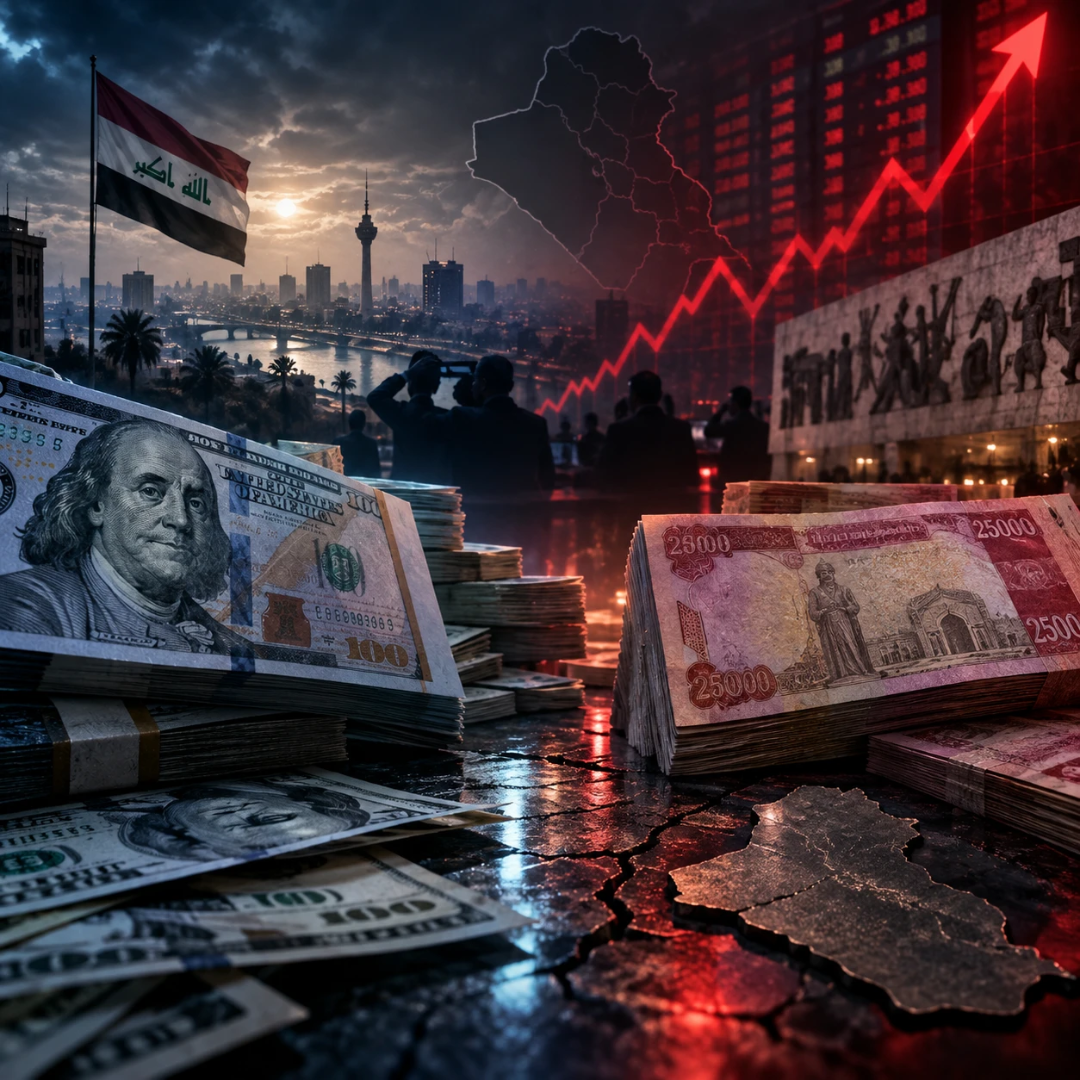
An informed source told the Independent Press Agency that one of the main reasons behind the recent rise in the exchange rate is the news that has spread widely during the past hours and days regarding the possibility of cutting off or restricting the dollar to Iraq, which prompted a number of speculators and dealers to move quickly to buy the American currency.
According to the source, the market has witnessed unusually large withdrawals of dollars in recent days, amid concerns among some traders about a possible shortage in supply if the circulating news turns into actual actions.
He added that the state of anxiety opened the door for speculators to raise prices, as the increased demand in conjunction with the circulating news led to increased pressure on the parallel market and accelerated the movement of the exchange rate.
The source indicated that the mere spread of talk about the possibility of cutting the dollar or tightening restrictions on it was enough to push the market into a state of tension, even before any official decision was announced in this direction.
Conversely, official data published to date does not show any announcement from the Central Bank of Iraq regarding cutting off dollar supplies to Iraq. On the contrary, in June 2026, the Central Bank affirmed its commitment to meeting legitimate demand for dollars within established regulations, while its measures during the year included regulating access to foreign currency, tightening compliance requirements, and reforming the banking sector.
Furthermore, the officially announced restrictions focus on specific banks and companies barred from dealing in dollars, rather than a complete cutoff of dollars to Iraq. The Central Bank clarified in February that institutions on the restricted lists cannot participate in dollar transactions, either directly or indirectly.
These developments reveal the sensitivity of the Iraqi market to any news related to the dollar or the financial relationship with the United States, as unconfirmed news can quickly turn into an actual demand for the currency, and then into speculation that raises prices in the market.
The source believes that the current problem is not only related to the amount of dollars available, but also to the state of fear created by the news circulating about the next stage, which prompted some traders, citizens and speculators to hold onto dollars or increase their purchases in anticipation of any possible measures.
All eyes remain on the coming days to see if official bodies will issue clarifications regarding the circulating news, amid anticipation in the market for any stance that could reduce anxiety and lessen the pace of speculation.
Thus, it appears that news of the possibility of cutting off or restricting the dollar to Iraq has become, in itself, one of the main drivers of the recent jump in the
exchange rate, so far, rather than an official announcement confirming that the dollar has actually been cut off to the country.
https://mustaqila.com/خاص-أخبار-قطع-الدولار-عن-العراق-تشعل-ا/
In Detail... Al-Zaydi's Advisor Reveals To Shafaq News The Features And Challenges Of The 2027 Budget
2026-09-16 07:39 Shafaq News - Baghdad On Wednesday, the Prime Minister’s financial and economic advisor, Mazhar Muhammad Salih, revealed the most prominent features and challenges facing Iraq’s 2027 budget, stressing that its final form is not yet clear, pending the approval of the draft law by the Council of Ministers and its referral to the House of Representatives.
Saleh told Shafaq News Agency that "the full picture of Iraq's 2027 budget is not yet clear, unless the Council of Ministers finishes discussing and approving the draft federal general budget law and refers it to the House of Representatives."
He explained that “initial indicators alone are not sufficient to judge the trends of fiscal policy in the coming year, unless the estimates of revenues and the ceiling of spending, in its operational and investment aspects, and the priorities of programs and projects, especially investment ones, are definitively clarified, as well as the size of the planned deficit and the assumptions regarding the average price of a barrel of oil and the expected export quantities.”
Saleh added that these indicators are of exceptional importance in light of the economic and financial conditions that Iraq is going through, explaining that “any unrealistic estimate of revenues or expenditures can directly affect the size of the deficit and the need for financing, and the state’s ability to continue implementing its investment programs and fulfilling its operational obligations.”
Saleh pointed out that “the initial features indicate that the 2027 budget project was designed, to a large extent, on assumptions closer to the conditions of economic peace and stability, and that some of its indicators and constants mimic the trajectories of a fiscal base year that preceded the war and the Hormuz crisis that erupted on February 28 of this year, and the accompanying disturbances, losses and significant economic damages that Iraq suffered.”
He went on to say that the main challenge is whether a budget based on stability assumptions can accommodate an economy that is still dealing with the repercussions of war and regional unrest and their impact on trade, transport, energy, oil prices, import costs and supply chains.
Saleh pointed out that adopting assumptions closer to peace economics may be understandable from the perspective of maintaining a stable financial path, but it requires, in return, providing financial safety margins to confront unexpected developments, especially since the Iraqi economy still depends to a large extent on oil revenues.
According to Saleh, the continued uncertainty should not lead to abandoning the policy of fiscal discipline, stressing that what is required is not to increase spending simply to confront the effects of the crisis, but rather to direct public spending towards priorities with the greatest economic and developmental impact.
He noted that "the oil assumption remains one of the most important keys to understanding the 2027 budget," explaining that the expected oil price and export volumes represent the basis upon which the budget's ability to finance public spending is built, indicating that the widening gap between the oil assumptions on which the budget was built and the actual reality of the markets increases the pressure on public finances.
According to the government advisor, excessive optimism about oil prices or export volumes may increase the risk of deficits, while excessive conservatism may restrict the financing of necessary spending and public investment, stressing the importance of adopting realistic and conservative oil assumptions, along with developing alternative scenarios to deal with lower prices, reduced export volumes, or higher unexpected expenditures.
He stressed that "the most important aspect of the 2027 budget is the investment spending priorities," explaining that the question is not only about the size of the investment spending, but also about the sectors and projects to which the resources will be directed and the expected economic and social return from them.
Saleh believes that the post-war and post-crisis phase requires directing resources towards sectors capable of restoring economic activity and promoting growth, while giving priority to projects that address the basic bottlenecks in energy, transportation, water, infrastructure and services, as well as projects that can contribute to stimulating the private sector and expanding the production base, noting the need to achieve a balance between investment and operational spending.
He warned that the continued expansion of operating expenses limits the resources available for investment, while an ill-considered reduction in operating spending could affect the ability of state institutions to provide basic services, adding that "the real challenge facing the 2027 budget lies not only in the size of the figures, but also in its ability to withstand changes."
He explained that the initial features of the 2027 budget "will remain subject to change until the Cabinet approves it in its final form," noting that a more accurate reading of its directions will be possible after its approval, by comparing the expected revenues with the spending ceiling, the size of the deficit, oil assumptions, the composition of operational and investment spending, and the priorities of programs and projects.
Saleh concluded by saying that the upcoming budget faces a "difficult equation" which is to maintain fiscal discipline, prevent waste, and provide funding for priority programs, while leaving financial space to address the repercussions of war and regional unrest. He explained that the success of the 2027 budget will not be measured only by the mathematical balance between revenues and expenditures, but also by its ability to manage risks, protect financial stability, and direct limited resources towards priority uses.
Earlier on Wednesday, economist Nabil Al-Marsoumi identified five major obstacles facing Iraq’s budget for next year, while also warning of a financial deficit that could exceed 60 trillion Iraqi dinars.
This statement comes as the Iraqi Ministry of Finance intends to send the draft general budget law for 2027 to the House of Representatives on October 15, according to what Jamal Kojar, a member of the parliamentary finance committee, told Shafaq News Agency on Monday.
The government’s commencement of preparing the 2027 budget comes after two years of the absence of an effective federal budget with approved schedules; as the 2025 budget schedules were not approved, nor was a budget law for 2026 approved, despite the House of Representatives approving the three-year budget law for the years 2023, 2024 and 2025.
The 2025 budget, in its updated form, could not be implemented after its schedules were not approved within the House of Representatives and the fiscal year ended, which prompted the Ministry of Finance to adopt a temporary disbursement mechanism at a rate of 1/12 based on the Financial Management Law to secure salaries and governing expenses.
The 2026 budget was also not approved due to political complexities and economic pressures resulting from regional tensions and energy market volatility, so Iraq continues to manage its spending according to the temporary spending mechanism while awaiting the new federal budget.
https://www.shafaq.com/ar/اقتصـاد/بالتفاصيل-مستشار-الزيدي-يكشف-لشفق-نيوز-ملامح-وتحديات-موازنة-2027
Vance: Traffic Through Strait of Hormuz Has Returned to More Than 50% of Capacity
Iraqi News Agency Wednesday, 9/16/2026 *Follow-up - INA - 9/16/2026 (Iraq Time)
U.S. Vice President J.D. Vance on Wednesday said that traffic through the Strait of Hormuz has returned to more than 50% of its capacity.
Vance told the New York Post, “I agree with the president that the war could end immediately after the midterm elections,” noting that “Iran will continue to lose control of the Strait of Hormuz until the elections.”
He added that “shipping traffic through the Strait of Hormuz has returned to more than 50% of normal levels.”
12 Key Habits for Achieving Financial Freedom
12 Key Habits for Achieving Financial Freedom
Set yourself on the path to saving with these habits
By Matt Danielsson Updated March 06, 2026
Key Takeaways
Set financial goals and create a plan to achieve them.
Make and stick to a budget covering all financial needs.
Pay off credit cards monthly and minimize debt.
Automate savings with an emergency fund and retirement contributions.
U.S. consumers can request a free annual credit report from major agencies.
12 Key Habits for Achieving Financial Freedom
Set yourself on the path to saving with these habits
By Matt Danielsson Updated March 06, 2026
Key Takeaways
Set financial goals and create a plan to achieve them.
Make and stick to a budget covering all financial needs.
Pay off credit cards monthly and minimize debt.
Automate savings with an emergency fund and retirement contributions.
U.S. consumers can request a free annual credit report from major agencies.
Financial freedom means having enough savings, investments, and cash on hand to afford the lifestyle you want for yourself and your family. It also means budgeting to grow a nest egg, allowing you to retire or pursue your dreams. These 12 habits can put you on the right path.
1. Establish Clear Financial Goals
Individuals have different financial goals. Outline your objectives and get specific about amounts and deadlines. Determine your short and long-term lifestyles, how much you need to reach your milestones, and at what age you will be. Count backward from your deadline and establish financial mileposts.
2. Create a Practical Budget
Create a monthly household budget to ensure bills are paid and savings are on track. Maintaining a budget is a routine that reinforces your goals and helps squash the temptation to splurge.
3. Reduce Credit Card Debt
Credit cards and other high-interest consumer loans are toxic to wealth-building. Make it a point to pay off the full balance each month. Student loans, mortgages, and similar loans typically have much lower interest rates, and paying these lower-interest loans on time will build good credit.
4. Automate Your Savings
Pay yourself first. Ideally, emergency and retirement money should come from your account the day you receive your paycheck. You can also choose an automatic deposit into an emergency fund, which can be tapped for unexpected expenses.
Enroll in your workplace retirement plan and capture any employer matching benefit. Tax-advantaged retirement accounts have rules that make it difficult to get your hands on your cash should you suddenly need it, so that account should not be your emergency fund.
5. Begin Your Investment Journey
The magic of compound interest helps you grow your money exponentially. An online brokerage account makes it easy for individuals to learn how to invest, create a manageable portfolio, and make weekly or monthly contributions.
Tip
See Investopedia's choices for Best Online Brokers for Beginners.
6. Monitor and Improve Your Credit Score
Your credit score helps determine the interest rate offered to you when buying a new car or refinancing a home. It also impacts the amount you pay for essentials like car or life insurance premiums. Maintain your payment schedules and check your credit score often to ensure your good habits are paying off.
Important
Consumers in the U.S. are eligible to request a free copy of their credit report annually from the three reporting companies, Equifax, Experian, and TransUnion, at AnnualCreditReport.com.1
7. Master Negotiation Techniques
Many Americans hesitate to negotiate for goods and services. However, small businesses, in particular, may be open to negotiation. Buying in bulk or positioning yourself as a repeat customer provides discounts at larger chain stores.
8. Continue to Educate Yourself Financially
Review relevant changes in tax law to ensure that all adjustments and deductions are maximized each year. Keep up with financial news and developments in the stock market, and do not hesitate to adjust your investment portfolio accordingly.
9. Properly Maintain Your Assets
According to J.P. Morgan, house prices were expected to increase by 3% in 2025.2 Maintaining real estate will help safeguard or even increase its value. Taking good care of other items like cars and lawnmowers helps them last longer and saves money in the long run.
To Read More: https://www.investopedia.com/articles/personal-finance/112015/these-10-habits-will-help-you-reach-financial-freedom.asp
Insiders Buying Gold - Public is Next | Andy Schectman
Insiders Buying Gold - Public is Next | Andy Schectman
Liberty and Finance: 9-16-2026
Andy Schectman warns that tightening global oil supplies could trigger another wave of inflation just as central banks face limited room to respond.
He argues that rising Treasury yields, declining confidence in U.S. debt and increasing gold purchases reflect a broader trend toward what he calls “detreasurization.”
Insiders Buying Gold - Public is Next | Andy Schectman
Liberty and Finance: 9-16-2026
Andy Schectman warns that tightening global oil supplies could trigger another wave of inflation just as central banks face limited room to respond.
He argues that rising Treasury yields, declining confidence in U.S. debt and increasing gold purchases reflect a broader trend toward what he calls “detreasurization.”
Schectman also explains how BRICS nations are building alternative payment infrastructure designed to reduce reliance on Western financial rails without necessarily creating a common currency.
The conversation breaks down the trade-offs between physical precious metals, private vault storage, precious-metals IRAs, tokenized gold and ETFs, with Schectman emphasizing ownership, auditing, and the ability to take possession.
He also discusses the growing adoption of tokenized metals and state-level efforts to facilitate gold and silver transactions as the global monetary system continues to evolve.
INTERVIEW TIMELINE:
0:00 Intro
2:30 Asset price distortion
11:00 BRICS meeting
17:20 Gold storage
30:00 Constitutional money
Ariel: The September 15-30 Window Where it all Converges
Ariel: The September 15-30 Window Where it all Converges
9-16-2026
The Clarity Actual Factuals: The Red Bottom Line
The Clarity Act was never the timer.
The SEC was never waiting on Congress.
The RV was never waiting on the Clarity Act.
Ariel: The September 15-30 Window Where it all Converges
9-16-2026
The Clarity Actual Factuals: The Red Bottom Line
The Clarity Act was never the timer.
The SEC was never waiting on Congress.
The RV was never waiting on the Clarity Act.
All three are moving on executive and agency authority timelines that were set in January 2025 and have been executing on schedule ever since. Congress is a stage. The Senate vote was a scene.
The real operation is already in its final phase, and the man who set it in motion is watching the actors panic over their lines while the director has already called the take.
THE GOLD LEDGER — WHY TRUMP DOESN’T NEED CONGRESS
Donald Trump has the gold. The US Treasury’s gold reserves at Fort Knox, West Point, and Denver approximately 261.5 million troy ounces if the certificates are accurate represent the largest sovereign gold position on the planet.
The Rothschild-managed LBMA paper gold system has been suppressing the physical price through fractional reserve leasing for decades. But paper gold isn’t gold. And when the physical audit hits which Executive Order 13818’s successor provisions have been quietly advancing the paper-to-physical ratio collapses and the true price discovery mechanism reasserts itself.
THE SEPTEMBER 15-30 WINDOW — WHERE IT ALL CONVERGES
Today, September 15, 2026:
– The Clarity Act cloture failed at 49-50. The press is screaming. The crypto markets are twitching. The Senate floor is a circus.
– The SEC’s regulatory framework is proceeding without congressional authorization.
– The 2027 Iraqi budget arrives at the Council of Ministers with redenomination language the currency switch CBI Governor Nizar Nasser Hussein confirmed publicly.
– The new Iraqi currency has been physically in country since early September. Pallets. Planes. Vaulted.
– POTUS posted the escalator clip with the currency exchange window visible in the frame.
– Al-Zaidi’s September 30 sovereignty deadline creates the forcing function.
– Trump stands at the Resolute Desk, Diet Coke sweating, and looks like he’s got somewhere to be.
Read Full Article:
https://www.patreon.com/Prolotario1/posts/clarity-actual-169642373
https://dinarchronicles.com/2026/09/15/prolotario-the-september-15-30-window-where-it-all-converges/
Bruce’s Big Call Dinar Intel Tuesday Night 9-15-26
Bruce’s Big Call Dinar Intel Tuesday Night 9-15-26
Transcribed By WiserNow Emailed To Recaps (INTEL ONLY)
Welcome, everybody, to the big call tonight. It is Tuesday, september 15, and you're listening to the big call. Thanks for tuning in, everybody. Again, all over the globe. Good to have you here. Glad to have you here.
Let's let's move from that point on into where we are on Intel. Now I will say this: it is getting quiet. It's very difficult to get Consistent revelation in terms of intel from our many sources, and even though we're trying every day-and I mean every day, Saturday, Sunday, every day-to get it. Sometimes we get it. Sometimes it's a little light today. I would call it a little bit light.
Bruce’s Big Call Dinar Intel Tuesday Night 9-15-26
Transcribed By WiserNow Emailed To Recaps (INTEL ONLY)
Welcome, everybody, to the big call tonight. It is Tuesday, september 15, and you're listening to the big call. Thanks for tuning in, everybody. Again, all over the globe. Good to have you here. Glad to have you here.
Let's let's move from that point on into where we are on Intel. Now I will say this: it is getting quiet. It's very difficult to get Consistent revelation in terms of intel from our many sources, and even though we're trying every day-and I mean every day, Saturday, Sunday, every day-to get it. Sometimes we get it. Sometimes it's a little light today. I would call it a little bit light.
Yesterday was better. Yesterday was Monday. That's cool. I'm getting some things I can use for tonight, and then you know here we are trying to get more confirmation, but it did not really come in today. So let me bring up where we think we are now.
Redemption Center leaders have only seen now. I don't know about today because we haven't heard, but Sunday, believe it or not, Sunday evening, yes, and Monday, only two currencies were on the screens at the redemption centers, and that was the I'm going to call it South Korean won, which is really the both. It's going to be both North and South Korean.
They should have an actual merge of those two, North and South, kind of like what happened in Vietnam, but the 1w-o1-N is on the screen, and so is the Israeli shekel.
Now everything else we're looking to have added on there, and I think there's, for some reason, the dinar, the dong, some of these that we're all very familiar with are not going to show up probably until the last minute.
I just have a feeling that's why they haven't shown up, and we haven't heard confirmation as to whether they made it to the forex yet. I think I would have heard it if if if those currencies had made it to the forex, which we were looking for Sunday night, but we did not get confirmation that they had made it.
So where does that put us? We know that when they do hit the forex, which could be tomorrow or Thursday. By the way, whenever they do hit, they can hit any particular day of the week.
When they do make it to the forex, the foreign exchange, the forex, we've been told that means it's a lock. Everything is good to go, and we'll be going like immediately after that happens. So that has not occurred yet that we know of.
Now watch tonight after the big call. I tend to get information late. Sometimes I'll get it on a Wednesday, and then I'll have it for Thursday's call or whatever. But right now, as it is, we had heard from three or four different sources that we're looking really strong at the 15, 16, 17. That's today, Wednesday.
Excuse me. Check that, Bruce. Tuesday, Wednesday, Thursday. I'm kind of getting ahead of myself. Tuesday, Wednesday, Thursday, 15, 16,17, of September. So, is today in play? Not at this time. It's too late. What about Wednesday? Yeah, Thursday.
So we know that certain banks in other countries are prepared to do some exchanges on Thursday.
Now, I'm not saying that we are necessarily there, but it's something that I hope to confirm about the timing of this tonight or tomorrow to see if anything's shown up to make us think that we could go.
My gut on this is we're looking at probably if it's going to be this week, which we hope it is, we're probably looking at Thursday possibility of getting notifications tomorrow. Yes, still very possible, and exchanges very possible for Thursday.
If we get notified Thursday, could we go Thursday? Yeah, could we also not go Thursday but go Friday? Yes, depending on when the notifications came in, meaning notifications to us, meaning the 800 numbers.
So I'm just saying that Wednesday and Thursday, and I'm going to add Friday, are in play for this week still. Now we sort of need that dinar, the Iraqi dinar, to show up on the forex, and then we can roll. Now, what else is happening?
Number of arrests in the UK in Europe over 1,200 in the last three days. I'm sure we still have the same thing going on here in this country, but I have no numbers, and I won't get numbers on it until after it's complete, and that's okay. But there is-you can bet that everybody's busy doing on mission, doing what they're supposed to do. Let's talk for a minute about med beds.
Now we know that the med bed centers here in the U.S. are ready to roll. They are ready for us, but what do we need to do first? We need to go in to the exchange location, which is what we call the redemption center. Why do we call it a redemption center?
Because that's where we're redeeming our ZIM notes, which are bearer bonds.
That's what we're doing. That's why it's called a redemption center. Okay, and that's our go-to location to redeem them and to exchange our currencies. That's it. We know that the rates are going to be better at the Redemption Center.
We know that the ZIM is only redeemable at the Redemption Center. We know they're all overseen by Wells Fargo in the United States. Okay, and we also know that we have a contract rate on the Iraqi dinar at the redemption centers, and the contract rate is almost 10 times higher than the rate that the bank screens would have, approximately.
That's a lot more. Now, here's the thing about MedBed, when we go in to the redemption center, you're going in to redeem your currency. If you have a dire need and you're a ZIM holder ready to redeem your ZIM, you are at a higher position to go in for the MedBed appointment. You are in a much higher place if you have a serious, dire physical need.
Okay, and you're a ZIM holder. Why? Because they want you. If you're a ZIM holder, they know you're planning to do projects. They know you're planning to help humanity, and they want you to be around to see those to completion or fruition. They want you to live a long time to see everything come through, and that's why you get priority.
Listen, we're looking to live hundreds of years into the future. Hundreds, plural. We can do that. The technology's there, and we know it's there. We know it works. So, here, here's the thing. All right, when you go in to the Redemption Center and you tell them, "Hey, listen, excuse me, I've got this and that and the other wrong with me. I'm a Zim holder.
They're going to enter some keystrokes on their computer that will let the people know that you are a contender to get into the med beds pretty quickly. I've been hearing five six days for most gym holders who have dire need.
All right, now here's the deal: when you do that, they have your basic information. They've got a phone number for you.
They know basically who you are when you come in under the under the know your customer portion of your segment when you when you're redeeming Zim and you're exchanging currencies, but they also know that since I've told you this, you are to have the ability to refer six people that you know, hopefully personally, that you know of that have a need for the med bed.
They don't have to be zim holders. If they were fine. If not, they don't have to be currency holders at all. But they're people that you know that are either older and not doing very well medically, physically. They've got a dire need.
Make sure you've got a list of six people when you go into the MedBed Center. Those six people they can contact and set up appointments for. So, what do you need to know for to make your list out and type your list out?
The name of the person, the email of the person, if you have it, the cell phone of the person, and maybe a note about their need-just a note about it, not a long description, but just a short phrase about what, what, why you're recommending them.
So name, email, phone number. They can call and or text on that phone, especially if it's a cell phone, right? So why do all that? Because that way they can get in touch with the people and set up appointments with those people.
Now, let the people know on your list about the med beds. Obviously, if you're going to put them on your list, let them know about it because not that many people are aware of it. Not that many people know about them, and you've got to have to do that because if they get a call or they get an email and they go, "What? Who is this from? Who is this from, honey? Who is blah blah blah? Well, you need to inform them and let them know.
Now, I have a few people that want to see me come out of it first before they say they want to go in. So you know what is it? I don't believe in seeing as believing, seeing as knowing. But a lot of people, you know, I want to see how you come out. I want to see what you look like.
I want to see blah blah blah. And then you know, then they say, "Oh yeah, put me in, coach, put me in. So that may or may not be the case. What if you're barely there? You're in a vegetative state, maybe even in a coma.
Whatever the you know some of your referrals, and remember, you get 6123456: Okay, so basically, if you're still breathing, and you can be rolled in or wheeled in in a wheelchair or or a what do you call those things? You real you wheel people in on. You could, yeah, you can get them in there.
Get them in there, and they'll be healed, and they'll be de-aged back to whatever age that they feel is right for them. The cool thing I like about the med beds is not only age regression, taking it back to when you were younger and all that good stuff, but the new aging timeline for you slows way down. In other words, they set this.
My understanding is the latest information we have is they are setting it so that you would age one year for every 15 years of time. One year aging for every 15 years that goes by.
So let's say you bring yourself back to the age of 30. You're essentially, by all aspects, you look like you were at 30. What happens in the next 10 years? All right. Let's look at it this way.
You're only going to age one year for every 15 years of time, so that's not a very good example, is it? So to go from 30 to unless say let's say 100. Let's oh gosh, get through the math now. Let's say seven years go by, or 15 years go by.
Let's make it easy on myself. 15 years go by, and you're 31 now. Another 15 years go by, you're 32. You see, so that in 150 years you will have only aged 10 years, from 30 to 40. That, to me, is that's the ticket, right there. That is fantastic.
Now, the other thing is, this is something. When we go through and we're in the med beds, we're gonna sign an NDA probably before we even go in to the med bed to let us know, hey, you're not to share where you had this done, who helped you, assisted you, any specifics about it. They're going to be under NDA for some period of time.
Now they'll see the differences in you. You won't look quite the same, but they should be able to recognize you, maybe, maybe they won't. Maybe they won't even recognize you. It all depends. There's so many different factors to this.
What if you're if you're 75 or 80 years old, you've got grandkids, and all of a sudden you're younger than their mom in the way you look. I mean, these are issues. These are things you have to think about. You know, for me, it's not a factor.
I don't have any kids or grandkids, so I'm good to go. I'm just going to be hung and playing tennis with Sue, and you know, playing golf with Bob, and doing everything else too, for the you know for rebuild America, rebuild international, and all that. Can't wait!
Can't wait! Now that is the latest information that we've had on it, and those Medbed Centers are ready to go. We've seen, oh, I guess 30 examples by now of military that have gone in and gone out. I have all the stories I've heard them. I'm getting it secondhand, and it's absolutely real. And it it's kind of going to blow you away.
I think it's going to blow a lot of people's minds. Now, when does the public find out about the med beds? I don't know. I've been told 10 days after we start, 15 days after we start using them. I don't know, guys.
The beauty of this is we get to refer people that we know that are in need to go in use the med beds. I'm talking about new limbs in 20 to 30 minutes. I'm talking about a guy. I told you this already.
A guy with one leg and no arms, nothing from the shoulders, one leg, nothing from the other hip, and all limbs redone, everything in 42 minutes, totally done, and so it's it's remarkable technology, and it's finally going to be coming out for us right now. And it's going to be military running the show for a while.
There will be some civilian training, and it's supposedly already going on to train certain people in the civilian world to be knowledgeable enough to assist on this, but when would it be turned over?
When does the technology, you know, when is it going to be in hospitals? It used in hospitals where med beds are already in place, and a lot of them across the country now, they have to wait for that go signal. And you know the public will get their turn and they'll go, but those of us who have Zim and a dire need go first. Now military went first.
Child trafficking victims are already going through it and have been for a while. Thank God, because it should reduce that trauma and hopefully eliminate some memories. I hope, and they'll give them a second shot at a real life. I mean, we're talking children, talking young girls, young boys.
So it's just absolutely ridiculous what's happened. All right, what else is going on that we need to talk about? So be prepared. Do your list.
Make your list for yourself. You know, so that you know what it is you want to try to have done, take that in with you to the MedBed Center. Of course, you'll have 15 minutes or so to talk with an assistant who is entering information into a laptop for you before you slip into the MedBed.
So you have plenty of time to go. Okay, I'm looking at doing this. I'd like this. Blah blah blah. This and that and the other, and then you know, just let it lay it out, lay it out, and that should help you a lot. I mean, I can't wait, guys. You know, I'd rather do the med beds. I'd prefer that way more than all the money from these exchanges and the Zim.
But we'll do both. We'll do both. But the exchange comes first. Listen, I wish I could be in the med bed yesterday. Not gonna happen. Not not at this point, we're going to go exchange first, and then the minute after, which is fine. That's great. Let's do it.
So we're in play for tomorrow and Thursday, and I'm going to add Friday. The you know that we should get it. We should get notified by Thursday. Remember, we had the quote-unquote back wall, which was yesterday, the 14th.
And what happened? Well, we blew right through that back wall, didn't we? So the back wall theory is one that we always roll our eyes on. Like I told you guys last week about it, but I know that they're trying to get this done.
I know President Trump wants this done, and we also heard two other things: one, that the USA Inc. a corporation of the United States, USA Inc. was to be null and void as of today, the 15th.
Now, does that mean we're going to have some announcement on the news about that? I don't think so, but that's what we've heard, and we've also heard that remember how the Clarity Act has been held up in the Senate forever. Some of those people don't want this to go.
All right, but what else? This is what I heard yesterday that President Trump had signed an executive order to allow the Clarity Act to go through, because XRP is the cryptocurrency that is backing, helping to back the value of the U.S. N dollar. Our understanding is that he signed an executive order to that effect? Now, what else?
We also understand he may have signed an executive order regarding voter ID, what was supposed to be in the Save America Act that Congress hasn't done anything on, haven't passed it, and that's important. If we're going to have legitimate, free, and fair elections without interference and cheating, like we've had forever in our country, then that needs to pass.
The Save America Act needs to go through, and I have a feeling that if it doesn't go through pretty quickly, President Trump will take emergency action and put an executive order together to make sure we have voter ID for our midterm elections. Remember, midterms were a question mark, and they still are. Are they going to happen?
All right. Let's see. I think, guys. I really wish I had more information to give you about our timing. That's all I've got right now. I'm trying. Believe me.
Let's hope we get this by Thursday, or I'll have something else to tell you on Thursday.
I think that is everything that we were going to talk about tonight. So let's go ahead and pray the call out after I thank Sue.
Wonderful job tonight. Really enjoyed the teaching, all the commentary. Love your segment. Love Bob's segment. My segment was not the best, but hopefully you guys got something out of the MedBed information, and we'll see where this thing goes.
We're just tracking it. We're tracking it one day at a time. So let's watch for it. Let's keep an eye out, and let's enjoy our lives and hang in there in our Plan A for a while, and then when Plan B comes around for blessing, we'll make all this transition into our new lives, and that'll be fun. That'll be really good. So, thank you, Sue. Thank you, Bob. Thank you, GCK and Doug, your technical help/ support.
Thank you, Jeannie, for your consistent every Tuesday and Thursday night your post to prayer and praise, and thank you, Big Call Universe, for listening for these 15 years that we've been doing the Big Call, and thank you also, Satellite Team, our SAT team, for getting the call out all over the globe, and we appreciate that. So let's pray the call out and see where we go the remainder of this week.
Good night everybody see you on Thursday night !!
Bruce’s Big Call Dinar Intel Tuesday Night 9-15-26 REPLAY LINK Intel Begins 1:22:40
Bruce’s Big Call Dinar Intel Thursday Night 9-10-26 REPLAY LINK Intel Begins 1:04:00
Bruce’s Big Call Dinar Intel Tuesday Night 9-8-26 REPLAY LINK Intel Begins 1:14:00
Bruce’s Big Call Dinar Intel Thursday Night 9-3-26 REPLAY LINK Intel Begins 1:19:19
Bruce’s Big Call Dinar Intel Tuesday Night 9-1-26 REPLAY LINK Intel Begins 1:13:33
Bruce’s Big Call Dinar Intel Thursday Night 8-27-26 REPLAY LINK Intel Begins 1:03:33
https://www.freeconferencecallhd.com/wall/recorded_audio?audioRecordingUrl=https%3A%2F%2Frs0002.freeconferencecall.com%2Fstorage%2FsgetHD%2FHsCgW%2FOGMR
Bruce’s Big Call Dinar Intel Tuesday Night 8-25-26 REPLAY LINK Intel Begins 1:06:20
Bruce’s Big Call Dinar Intel Thursday Night 8-20-26 REPLAY LINK Intel Begins 1:09:20
Bruce’s Big Call Dinar Intel Tuesday Night 8-18-26 REPLAY LINK Intel Begins 1:14:40
https://www.freeconferencecallhd.com/wall/recorded_audio?audioRecordingUrl=https%3A%2F%2Frs0002.freeconferencecall.com%2Fstorage%2FsgetHD%2FHsCgW%2FOGvf
Bruce’s Big Call Dinar Intel Thursday Night 8-13-26 REPLAY LINK Intel Begins 1:04:54
Bruce’s Big Call Dinar Intel Tuesday Night 8-11-26 REPLAY LINK Intel Begins 1:02:00
Bruce’s Big Call Dinar Intel Thursday Night 8-6-26 REPLAY LINK Intel Begins 1:22:22
Bruce’s Big Call Dinar Intel Tuesday Night 8-4-26 REPLAY LINK Intel Begins 1:19:00
Seeds of Wisdom RV and Economics Updates Wednesday Afternoon 9-16-26
Good Afternoon Dinar Recaps,
SAUDI OIL SHIFT: RIYADH REROUTES CRUDE THROUGH OMAN AS PIPELINE DAMAGE REWIRES GLOBAL ENERGY FLOWS
Saudi Arabia is rerouting additional crude through Oman after damage to its East-West pipeline disrupted its Red Sea export route, creating a new test for global energy supply chains, shipping routes and financial stability.
Good Afternoon Dinar Recaps,
SAUDI OIL SHIFT: RIYADH REROUTES CRUDE THROUGH OMAN AS PIPELINE DAMAGE REWIRES GLOBAL ENERGY FLOWS
Saudi Arabia is rerouting additional crude through Oman after damage to its East-West pipeline disrupted its Red Sea export route, creating a new test for global energy supply chains, shipping routes and financial stability.
OVERVIEW
Saudi Arabia is increasing crude shipments to Asian refiners through ship-to-ship transfers off Sohar, Oman. Saudi Aramco has offered Arab Light, Arab Medium and Arab Heavy crude for loading through this alternative route outside the Strait of Hormuz.
The rerouting follows damage to Saudi Arabia's East-West pipeline and the suspension of crude loadings at the Red Sea port of Yanbu. Some European customers have also been notified that September cargoes could be cancelled, while Asian shipments have faced delays.
The global oil market is beginning to adjust to the disruption rather than simply waiting for the pipeline to reopen. Oil prices eased Wednesday as U.S. inventories increased, but Brent remained above $100 a barrel while concerns about Middle Eastern supply continued.
KEY DEVELOPMENTS
1. Saudi Arabia Creates a New Route Through Oman
Saudi Arabia is responding to the pipeline disruption by finding another way to move crude toward Asian customers.
Saudi Aramco has offered several grades of crude for loading through ship-to-ship transfers off Sohar, Oman, which lies outside the Strait of Hormuz.
The development demonstrates how quickly physical energy infrastructure can be reorganized when a traditional export route becomes unavailable.
Instead of relying exclusively on the damaged East-West pipeline to move crude toward the Red Sea, Saudi Arabia is increasingly looking toward alternative maritime arrangements.
This is not simply a change in shipping schedules.
It is a change in the route through which physical energy reaches international markets.
2. The East-West Pipeline Remains a Critical Pressure Point
Saudi Arabia's East-West pipeline was designed to provide an alternative route for moving crude from the kingdom's eastern oil fields toward the Red Sea.
That route became especially important after disruptions around the Strait of Hormuz made alternative export capacity more valuable.
Damage to the pipeline has now forced Saudi Arabia to reconsider how much crude can move through the Red Sea.
Reuters reports that crude loadings at Yanbu have been suspended, while some European customers have been told that September cargoes will be cancelled.
The result is a redistribution of available Saudi crude rather than a simple disappearance of demand.
3. Asian Buyers Are Becoming a Major Focus
The new Oman arrangements are particularly significant because Saudi Arabia is offering crude through Sohar to Asian term buyers.
Asia is a major destination for Middle Eastern crude, making the ability to maintain supplies to Asian refineries especially important.
The move also demonstrates why transportation infrastructure matters so much to the global financial system.
Oil can exist underground in enormous quantities, but it has little value to an overseas refinery unless it can be safely transported from producer to buyer.
That makes pipelines, ports, tankers and maritime chokepoints part of the global financial infrastructure.
4. Oil Prices Are Reacting to Both Risk and Supply Relief
The market response on Wednesday illustrates the complexity of the current situation.
Brent crude fell during the day after reports of Saudi Arabia's additional Oman shipments helped ease some concerns about the scale of the supply disruption.
An increase in U.S. crude inventories also put downward pressure on prices.
Reuters reported Brent at approximately $105.83 per barrel in afternoon trading, while WTI was around $102.51.
The decline does not mean the underlying energy problem has disappeared.
Instead, the market is weighing two competing forces:
Alternative Supply Routes → Reduced Immediate Shortage Risk
versus
Pipeline Damage + Shipping Disruption → Continuing Supply Risk
That tension could keep oil markets unusually sensitive to every new development.
5. The Global Energy Map Is Being Rewritten
The most important development may be the change in the physical map of energy flows.
Saudi Arabia previously relied heavily on its East-West pipeline to move crude toward Yanbu and the Red Sea.
Now, with that route damaged, crude is being redirected through different ports and shipping arrangements.
Other Gulf producers are also seeking ways to move supplies while navigating restrictions and security concerns around the Strait of Hormuz.
This means the current crisis is producing more than a temporary price reaction.
It is forcing energy companies and governments to reconsider which routes, ports and infrastructure are essential to global energy security.
WHY IT MATTERS
The Saudi oil rerouting is important because it shows how a physical disruption can produce a financial response long before the full effect of a supply shortage becomes visible.
When a pipeline is damaged, producers must find another route.
When shipping routes become dangerous, insurance and transportation costs can rise.
When deliveries are delayed or cancelled, buyers must search for alternative supplies.
And when markets become uncertain about future availability, oil prices can become more volatile.
The global energy system is not simply responding to higher prices—it is being forced to reorganize how energy moves.
WHY IT MATTERS TO FOREIGN CURRENCY HOLDERS
Readers hold foreign currency with the hopes that it will increase in value when the Global Reset occurs.
Today's development matters because energy flows influence trade balances, inflation, interest rates and currency values.
Countries that import large quantities of oil can face higher costs when energy prices rise or transportation routes become more expensive.
Oil-producing countries, meanwhile, can experience changes in export revenues and capital flows depending on both production and the ability to deliver crude to international buyers.
However, today's Saudi rerouting does not guarantee any currency revaluation or establish a date for a Global Reset.
The important development is the changing structure of global energy and trade infrastructure.
Watch the infrastructure. Watch the flows. Hope, but don't follow the hype.
IMPLICATIONS FOR THE GLOBAL RESET
Pillar 1 — Energy
Energy security is becoming increasingly connected to financial security.
A pipeline, port or shipping route can become a critical financial asset when it determines whether millions of barrels of oil can reach international markets.
The Saudi response demonstrates that countries may increasingly seek multiple export routes and backup infrastructure to reduce vulnerability to a single chokepoint.
Pillar 2 — Trade and Supply Chains
The shift toward Oman demonstrates how geopolitical disruption can change established trade routes.
Asian refiners may receive crude through different loading arrangements.
European buyers may need to find alternative suppliers.
Shipping companies may adjust routes based on security and availability.
These changes can eventually influence transportation costs, trade balances and inflation.
Pillar 3 — Financial Stability
The connection between energy and finance becomes especially important when oil prices remain elevated.
Higher energy costs can increase inflation.
Higher inflation can influence central-bank decisions.
Higher interest rates can raise borrowing costs.
And higher borrowing costs can place additional pressure on governments and businesses already carrying substantial debt.
The chain is therefore:
Energy Disruption → Trade Adjustment → Inflation Pressure → Interest Rates → Debt Costs → Financial Markets
RUMOR SAFETY REMINDER
⚠️ Saudi Arabia's rerouting of crude through Oman is NOT an announcement of a Global Reset or currency revaluation.
It is a documented response to damage affecting an important Saudi oil-export route.
The financial consequences will depend on how long the pipeline remains disrupted, how much alternative capacity is available, and whether additional shipping or energy infrastructure is affected.
Follow the evidence. Watch the infrastructure. Don't follow the hype.
THE BOTTOM LINE
Saudi Arabia's decision to offer more crude through Oman shows that the global energy system is already adapting to the disruption rather than simply waiting for normal conditions to return.
Today's lower oil prices do not erase the underlying problem. Instead, they show how markets are balancing alternative supply routes, U.S. inventories and continuing geopolitical risks.
The bigger story is not simply where the price of oil goes next—it is how the world's energy producers, buyers and shipping networks are being forced to redesign the routes that keep global commerce moving.
Seeds of Wisdom Team
Newshounds News™ Exclusive
SOURCES
Reuters — "Saudi offers more crude via Oman loading after pipeline attacks, sources say"
Reuters — "Oil slips as Saudi Arabia offers more crude via Oman"
~~~~~~~~~~
Seeds of Wisdom Team RV Currency Facts Youtube and Rumble
Newshound's News Telegram Room Link
RV Facts with Proof Links Link
RV Updates Proof links - Facts Link
Start Here room with Most Asked Questions Link
Follow the Gold/Silver Rate COMEX
Follow Fast Facts
Seeds of Wisdom Team™ Website
Thank you Dinar Recaps