
Tuesday Iraq News Posted by Tishwash at TNT 8-11-2026
TNT:
Tishwash: Iraqi Parliament to Hold Two Legislative Sessions to Debate Key Bills
The Iraqi Parliament is set to hold two sessions during its current legislative term to consider a series of bills, proposed amendments and parliamentary committee reports.
According to the agenda issued by the parliament's Media Department, seen by PUKMEDIA, the first session will include the first reading of the Bill on Supporting Doctors (No. 36 of 2016) and the Bill on Granting Employees Extended Leave. Lawmakers will also conduct the second reading of the Bill on the Third Amendment to the Iraqi Jurists Union Law (No. 173 of 1969) and the Bill Amending the Lawyers Law (No. 173 of 1965).
TNT:
Tishwash: Iraqi Parliament to Hold Two Legislative Sessions to Debate Key Bills
The Iraqi Parliament is set to hold two sessions during its current legislative term to consider a series of bills, proposed amendments and parliamentary committee reports.
According to the agenda issued by the parliament's Media Department, seen by PUKMEDIA, the first session will include the first reading of the Bill on Supporting Doctors (No. 36 of 2016) and the Bill on Granting Employees Extended Leave. Lawmakers will also conduct the second reading of the Bill on the Third Amendment to the Iraqi Jurists Union Law (No. 173 of 1969) and the Bill Amending the Lawyers Law (No. 173 of 1965).
The second session will feature the first reading of the Bill on Recovering Proceeds from Corruption, alongside the second reading of the Bill on the First Amendment to the Notaries Public Law (No. 33 of 1998) and the Bill on the First Amendment to the Minors' Welfare Law (No. 78 of 1980). Members of Parliament will also discuss reports submitted by the relevant parliamentary committees.
The two sessions form part of the parliament's ongoing legislative agenda, aimed at advancing the review and approval of a number of bills and completing the parliamentary procedures required for their enactment. link
Tishwash: Global Finance awards an Iraqi bank a global prize in recognition of its performance
The National Bank of Iraq announced on Monday that it had won the “Best Bank in Iraq for 2026” award, granted by the international magazine “Global Finance”, as part of its annual Best Bank Awards 2026 , which honors the most distinguished banking institutions worldwide.
The bank said in a statement, "This win is a significant milestone in the bank's journey, as it was chosen for the first time as the best bank in Iraq, alongside a select group of the most prominent banking institutions in the Middle East and the world, in an achievement that reflects the growing status the bank has attained and the confidence of local markets and international bodies in its performance and strategy."
He explained that "the awarding of this prize came in recognition of the development, institutional and digital transformation journey that the bank has pursued over the past years, and its continuous commitment to enhancing the quality of banking services and innovating advanced financial solutions that meet customer needs, in addition to its active contribution to supporting and developing the banking sector in Iraq."
Commenting on this honor, the Managing Director of the National Bank of Iraq, Ayman Abu Dahim, said, “The bank’s receipt of this award reflects the progress it has made in recent years in developing banking services and enhancing the bank’s digital infrastructure, within a vision aimed at improving customer experience and providing advanced financial solutions that meet market demands.”
Abu Dahim added, "This achievement is an incentive to continue working to consolidate its position as a leading banking institution in Iraq by expanding the scope of banking services and adopting the latest innovations in the financial sector, which contributes to supporting the development of the banking sector in Iraq and enhancing its role in supporting economic activity." link
************
Tishwash: Al-Zaydi hosts the parliamentary finance committee to discuss financial and economic plans and policies.
Al-Zaydi and the parliamentary finance committee are at the same table... a new budget and a war on corruption.
Prime Minister Ali Faleh al-Zaidi hosted the chairman and members of the Parliamentary Finance Committee on Monday (August 10, 2026), in the presence of the Minister of Finance and the Governor of the Central Bank of Iraq, to discuss financial and economic plans and policies, and to enhance coordination between the executive and legislative authorities on priority issues.
Al-Zaydi stressed, according to a statement from the Cabinet, a copy of which was received by 964 Network , the importance of the role of the House of Representatives and the Finance Committee in supporting the work of the government and its reform program, noting that the government inherited a “heavy legacy” of files and challenges, and is working to address them according to a clear vision.
He said that the government has begun, for the first time, to prepare a program and performance budget, which represents a roadmap for Iraq's economic future, by linking government spending to goals and results, and improving the efficiency of public money use.
The Prime Minister indicated that the electricity file will receive exceptional attention, calling on MPs to exercise their oversight role in supporting the government’s efforts to combat corruption and dry up its sources, stressing that “there are no red lines in pursuing the corrupt.”
Al-Zaydi explained that the government is working on preparing a state-building strategy based on building a “new economic Iraq,” corruption-free departments, and constitutional security institutions, noting that there is a great desire and interest from international companies to invest in Iraq, in addition to the readiness of international financial institutions to provide economic support.
He stressed the importance of providing a suitable environment to attract investments and revitalize various economic sectors, and directed the preparation of a schedule for hosting and holding periodic meetings with parliamentary committees, to enhance coordination and institutional communication between the government and the House of Representatives.
For his part, the head of the parliamentary finance committee affirmed his absolute support for the government, while members of the committee put forward a number of proposals related to enacting the necessary laws to activate non-oil economic activities, support economic reform and combat corruption.
The committee members also stressed the importance of proceeding with the implementation of oil projects, improving the investment environment and attracting reputable international companies, in order to contribute to driving development, encouraging industry and providing job opportunities. link
Tishwash: Changing the uniforms, ranks, and insignia of the Popular Mobilization Forces... Transfers and retirements by lottery and 5 decisions before Baghdad
Informed sources told Network 964 that Prime Minister Ali al-Zaidi's committee for weapons control is engaged in extensive discussions addressing five key issues: changing the Popular Mobilization Forces' uniform and providing them with new clothing, insignia, and ranks to give them a different "visual identity"
Retiring older members of the Popular Mobilization Forces and integrating army officers into their ranks; redefining the security tasks of the Popular Mobilization Forces and their deployment map; and redistributing fighters among brigades and governorates by entering personnel data into a system similar to an electronic lottery, transferring them between new brigades so that the old brigades do not remain in one human mass, and then a real link can be established with the leadership of the armed forces, not with the leadership of the formations that emerged during the war against ISIS.
According to the sources, the head of the Badr Organization, Hadi al-Amiri, who plays a major role in calming tensions between the government and the factions (and who commands more than 20 brigades in the Popular Mobilization Forces), held a meeting with a number of brigade commanders. During the meeting, they discussed developments related to the next phase and the nature of the changes that could affect the work of the formations.
A new visual identity
On another front, the meetings, according to sources, discussed the possibility of formulating a new visual identity for the Popular Mobilization Forces in the next phase, including uniforms, badges, general appearance, and naming, within a framework intended to move from the image of formations that emerged during the war to an official security institution with a clear structure and a single military reference.
Crowd algorithm
A security source said that “one of the most prominent proposals is to redistribute field fighters among brigades and formations, instead of keeping individuals within cohesive human groups that were formed during the years of the war on ISIS, and which still follow well-known political and religious leaders, with the aim of building more integrated formations that are less connected to the previous leadership, while keeping employees and administrators within their career paths according to the needs of the new institution.”
The sources say that “the idea under study is based on entering the data of field fighters into an electronic system, and then conducting a new distribution according to criteria determined by the institution, including the governorates, the numerical need, and the nature of the tasks, which allows for the restructuring of the brigades in a different way from the current map, and at the same time limits the fighters remaining within closed groups linked to one leader or one region.”
She adds that “the discussion is not only about the fighters, but extends to the form of leadership itself, as the inclusion of officers from the military establishment within the structure of the Popular Mobilization Forces was discussed intensively and clearly, and the expansion of the presence of military specialties in the command centers, which may gradually change the nature of brigade management and the mechanisms for issuing orders and deployment.”
According to the sources, “among the proposals is the preparation of a new structure for ranks and leadership positions, and the reassessment of the ages of affiliates, with those who have exceeded the age or the required conditions being referred to retirement according to legal mechanisms, in exchange for opening the way for new generations of officers and affiliates.” link
FRANK26…8-10-26….LET’S ROLL BANKS
KTFA
Monday Night Video
FRANK26…8-10-26….LET’S ROLL BANKS
This video is in Frank’s and his team’s opinion only
Frank’s team is Walkingstick, Eddie and Omar in Iraq and guests
Playback Number: 605-313-5163 PIN: 156996#
KTFA
Monday Night Video
FRANK26…8-10-26….LET’S ROLL BANKS
This video is in Frank’s and his team’s opinion only
Frank’s team is Walkingstick, Eddie and Omar in Iraq and guests
Playback Number: 605-313-5163 PIN: 156996#
Iraq Economic News and Points To Ponder Monday Evening 8-10-26
International Experts Join Iraq Effort To Trace Stolen Funds
2026-08-10 Shafaq News- Baghdad US and other international experts specializing in tracing stolen or smuggled funds have arrived in Baghdad to support Iraqi efforts to recover public money, an informed source told Shafaq News on Monday, as the government presses ahead with its Dawn Crackdown anti-corruption campaign, launched on June 28.
International Experts Join Iraq Effort To Trace Stolen Funds
2026-08-10 Shafaq News- Baghdad US and other international experts specializing in tracing stolen or smuggled funds have arrived in Baghdad to support Iraqi efforts to recover public money, an informed source told Shafaq News on Monday, as the government presses ahead with its Dawn Crackdown anti-corruption campaign, launched on June 28.
The international committee, which has been in the capital for several days, began working with Iraq’s anti-corruption team to track funds, particularly dollars, drawing on the experts’ knowledge of financial flows to identify the parties involved and methods used to smuggle public money.
The source expected the coming period to bring arrests of figures he described as “corruption whales,” indicating that the campaign would reach beyond ministers, deputy ministers, and directors-general to other key suspects whose identities would be disclosed later.
Meanwhile, money recovered from some individuals convicted of stealing public funds is undergoing audits and technical procedures to establish its original source before being processed through the state treasury system.
Salam Al-Zubaidi, a senior member of the Al-Nasr (Victory) Coalition, told Shafaq News that Baghdad was cooperating with the team and other international bodies experienced in combating corruption and recovering assets. He added that Iraq was seeking Interpol cooperation to arrest senior suspects who previously held political or government positions, including former ministers.
“No one is exempt from the law, and there is no immunity for the corrupt."
Iraqi authorities detained at least 210 officials, lawmakers, employees, and business figures during the first six weeks of the Dawn Crackdown, according to a Shafaq News review of cases documented between June 28 and August 9.
https://www.shafaq.com/en/Iraq/International-experts-join-Iraq-effort-to-trace-stolen-funds
Global Finance Awards An Iraqi Bank A Global Prize In Recognition Of Its Performance
Economy News — Baghdad 2026/08/10 - The National Bank of Iraq announced on Monday that it had won the “Best Bank in Iraq for 2026” award, granted by the international magazine “Global Finance”, as part of its annual Best Bank Awards 2026, which honors the most distinguished banking institutions worldwide.
The bank said in a statement, "This win is a significant milestone in the bank's journey, as it was chosen for the first time as the best bank in Iraq, alongside a select group of the most prominent banking institutions in the Middle East and the world, in an achievement that reflects the growing status the bank has attained and the confidence of local markets and international bodies in its performance and strategy."
He explained that "the awarding of this prize came in recognition of the development, institutional and digital transformation journey that the bank has pursued over the past years, and its continuous commitment to enhancing the quality of banking services and innovating advanced financial solutions that meet customer needs, in addition to its active contribution to supporting and developing the banking sector in Iraq."
Commenting on this honor, the Managing Director of the National Bank of Iraq, Ayman Abu Dahim, said, “The bank’s receipt of this award reflects the progress it has made in recent years in developing banking services and enhancing the bank’s digital infrastructure, within a vision aimed at improving customer experience and providing advanced financial solutions that meet market demands.”
Abu Dahim added, "This achievement is an incentive to continue working to consolidate its position as a leading banking institution in Iraq by expanding the scope of banking services and adopting the latest innovations in the financial sector, which contributes to supporting the development of the banking sector in Iraq and enhancing its role in supporting economic activity." https://www.economy-news.net/content.php?id=72449
Japan Backs Deeper Investment Ties With Reforming Iraq
2026-08-10 Shafaq News- Baghdad Japan linked Iraq’s economic growth and improving investment environment to greater security and economic stability, anti-corruption measures and policies aimed at attracting investment, Ambassador Akira Endo stated on Monday.
Endo made the remarks during a meeting with Prime Minister Ali Al-Zaidi, where he conveyed an official invitation from Japanese Prime Minister Sanae Takaichi for Al-Zaidi to visit Tokyo and deepen bilateral economic and investment cooperation. Al-Zaidi urged Japanese companies to expand their presence in Iraq, particularly in energy, technology and development, while calling for sustainable economic partnerships.
Iraqi Prime Minister Media Office
Prime Minister Ali Faleh Al-Zaidi Receives Official Invitation From Japanese Prime Minister To Visit Tokyo
•••••••••
Prime Minister Ali Faleh Al-Zaidi received today, Monday, an official invitation from Japanese Prime Minister Sanae Takaichi to visit the Japanese capital, Tokyo.
The invitation was conveyed during the Prime Minister’s meeting with the Japanese Ambassador to Iraq, Mr. Akira Endo, who delivered the invitation on behalf of the Japanese government and expressed his country’s commitment to strengthening relations of cooperation and partnership with Iraq.
The Prime Minister expressed his appreciation for the Japanese invitation, emphasizing the importance and depth of Iraqi-Japanese relations and Iraq’s commitment to developing them across various fields, particularly in the economic and investment fields.
The Prime Minister noted that Iraq attaches great importance to building sustainable economic partnerships and expanding joint cooperation in the fields of energy, technology, and development, in a manner that contributes to building a more effective economic model. He also called on Japanese companies to expand their presence and investments across various development sectors in Iraq.
For his part, the Japanese Ambassador expressed his pleasure at conveying his government’s invitation to the Prime Minister to visit Japan, noting that the visit represents an important step toward strengthening bilateral relations and will open broader prospects for cooperation between the two countries, particularly in the economic and investment fields.
The Ambassador noted that Iraq, under its new government, is witnessing economic growth and an improved investment environment, supported by security and economic stability, the government’s anti-corruption measures, and economic policies aimed at promoting development and attracting investment.
•••••
Media Office of the Prime MinisterAugust 10, 2026
Iraqi authorities detained at least 210 officials, lawmakers, employees and business figures during the first six weeks of the Dawn Crackdown anti-corruption campaign, according to a Shafaq News review of confirmed cases between June 28 and August 9. The campaign reached at least ten provinces and several ministries.
Read more: Corruption arrests in Iraq pass 210 under PM Al-Zaidi
https://www.shafaq.com/en/Iraq/Japan-backs-deeper-investment-ties-with-reforming-Iraq
Pm Al-Zaidi Discusses Fiscal Reforms With Finance Committee
Mohammed Jangadost2
At a Glance
Inter-branch coordination prioritized to align executive strategies with parliamentary oversight.
Performance-based budgeting introduced for the first time to streamline federal expenditure.
Power sector prioritized alongside an uncompromising anti-corruption drive across state institutions.
Economic strategy unveiled to build an administrative framework designed to attract global investment.
Prime Minister Ali Faleh al-Zaidi hosted the Chairman and members of the Parliamentary Finance Committee at the Prime Minister's Office, alongside the Minister of Finance and the Governor of the Central Bank of Iraq.
The high-level meeting focused on aligning fiscal policy, executing structural economic reforms, and strengthening institutional coordination between the executive and legislative branches to tackle Iraq's priority development challenges.
Key Statements and Focus Area
Performance Budgeting: "For the first time, Iraq has initiated the transition toward program and performance budgeting, establishing a strategic roadmap that directly links public expenditure to concrete outcomes and economic efficiency."
Anti-Corruption Commitment: "There are zero red lines in prosecuting corrupt individuals. Parliamentarians must exercise their constitutional oversight to support government measures aimed at drying up the sources of corruption."
Economic Vision: "The administration is formulating a state-building strategy centered on creating a new economic model for Iraq, establishing corruption-free public agencies, and strengthening constitutional security institutions."
Executive-Legislative Framework and Fiscal Planning
During the consultation, Prime Minister Al-Zaidi emphasized the critical role of the Council of Representatives and its Finance Committee in advancing government reforms designed to address legacy systemic challenges. Central to the financial agenda is Iraq's historic pivot toward performance-based budgeting, a framework designed to replace traditional line-item spending with outcome-oriented resource allocation.
The Minister of Finance and the Central Bank Governor outlined complementary monetary and fiscal measures aimed at reinforcing market stability and safeguarding public funds.
Priority Sectors, Anti-Corruption, and Foreign Investment
The Prime Minister designated the electricity sector as an area requiring exceptional state focus, committing dedicated administrative resources to overcome infrastructure bottlenecks.
Al-Zaidi further highlighted growing international corporate interest in Iraqi markets, alongside readiness from global financial institutions to support the nation's economic trajectory.
To capitalize on this interest, the administration is actively refining regulatory frameworks to establish an attractive climate for foreign direct investment.
Legislative support and Institutional Coordination
To maintain continuous alignment, Prime Minister Al-Zaidi directed the establishment of a formal schedule for regular joint meetings between executive officials and parliamentary committees.
In response, the Chairman and members of the Parliamentary Finance Committee affirmed their full support for the government's direction.
Lawmakers presented specific legislative proposals to spur non-oil economic sectors, streamline energy projects, and foster job creation through industrial diversification and private sector growth.
FYI
Iraq's fiscal governance has long faced structural hurdles, including heavy reliance on volatile oil revenues and public sector wage burdens.
The implementation of program-based budgeting represents a significant shift toward modernizing public financial management, bringing Iraq closer to international fiscal standards.
Furthermore, institutionalized cooperation between the Prime Minister's office, the Central Bank, and the Finance Committee is vital for securing legislative backing on crucial fiscal bills, improving investment security, and sustaining public infrastructure development amid broader regional economic shifts. https://channel8.com/english/news/6345
Seeds of Wisdom RV and Economics Updates Monday Evening 8-10-26
Good Evening Dinar Recaps,
Hormuz Reopened Under U.S. Navy Control: Global Energy and Trade Enter a New Phase
Trump’s declaration that the Strait of Hormuz is open under U.S. Navy control could ease global energy fears, but normal commercial traffic still depends on unresolved U.S.–Iran conditions.
Good Evening Dinar Recaps,
Hormuz Reopened Under U.S. Navy Control: Global Energy and Trade Enter a New Phase
Trump’s declaration that the Strait of Hormuz is open under U.S. Navy control could ease global energy fears, but normal commercial traffic still depends on unresolved U.S.–Iran conditions.
OVERVIEW
President Donald Trump declared the Strait of Hormuz open under U.S. Navy control, saying American forces have cleared the strategic waterway of mines and achieved full control of the passage.
The announcement could eventually reduce the energy and shipping risk premium that has pushed oil prices higher, but Iran continues to demand conditions before accepting a full reopening of the strait.
The development shifts the global financial question from whether Hormuz can be secured to whether commercial shipping can return to normal, with consequences for oil prices, inflation, trade and monetary policy.
KEY DEVELOPMENTS
1. U.S. Navy Declares Control of the Strategic Waterway
President Trump said the U.S. Navy has achieved “100%” control of the Strait of Hormuz and has cleared the waterway of Iranian mines.
The announcement represents a major change in the security environment surrounding one of the world's most important energy chokepoints. The United States is now positioning its naval forces as the primary security authority for commercial traffic through the strait.
2. “Open” Does Not Yet Mean Normal Shipping
The most important distinction is between military control and unrestricted commercial access.
Trump's announcement indicates that approved commercial traffic can move under U.S. protection, but reporting from the region shows that Iran continues to attach conditions to a broader reopening. Iran has said the waterway will not fully reopen until its demands concerning the U.S. blockade, military forces and other issues are addressed.
That means markets still need evidence that major shipping companies, insurers and energy producers consider the route sufficiently safe for normal operations.
3. Energy Markets Could Receive Relief
A sustained reopening would remove a major geopolitical risk premium from global oil markets.
The Strait of Hormuz is a critical route for Gulf energy exports. Greater confidence in safe passage could eventually reduce oil prices and relieve some of the inflation pressure created by months of shipping uncertainty.
However, the market impact will depend on actual tanker traffic, not simply the political declaration.
4. U.S.–Iran Negotiations Enter a New Phase
The announcement comes as Washington and Tehran remain divided over the conditions required for a lasting settlement.
Iran has continued to demand changes to the U.S. military posture and sanctions regime, while the Trump administration is seeking secure and reliable passage through the waterway.
The result is a new negotiating dynamic: the United States has established physical control of the route, while Iran retains significant political leverage over whether commercial normalization becomes durable.
5. The Next Test Is Commercial Normalization
The most important indicators to watch are now practical rather than rhetorical.
Tanker traffic through Hormuz
Insurance and shipping costs
Oil prices
Statements from Iran and U.S. Central Command
Whether commercial carriers resume regular schedules
If those indicators improve together, markets could begin treating the crisis as a genuine normalization rather than another temporary opening.
WHY IT MATTERS
The Strait of Hormuz is more than a regional military issue. It is a global financial transmission point.
Energy prices feed directly into inflation, transportation, manufacturing and consumer costs. A sustained reduction in the risk surrounding Hormuz could therefore give central banks greater flexibility and reduce pressure on households and businesses.
For markets, the potential reopening also changes the outlook for oil, bonds, currencies and equities. Lower energy risk could reduce inflation expectations, while renewed shipping activity could begin restoring disrupted global trade flows.
The larger question is whether the United States has moved from managing a geopolitical crisis to establishing a new security framework for one of the world's most important commercial waterways.
WHY IT MATTERS TO FOREIGN CURRENCY HOLDERS
Currency value: Lower energy costs could support currencies of energy-importing countries by reducing pressure on trade balances.
Purchasing power: Falling fuel and transportation costs could provide relief to consumers if the reopening produces sustained lower energy prices.
Capital flows: Reduced geopolitical risk could encourage capital to move back toward equities and other risk assets rather than remaining concentrated in traditional safe havens.
Exchange-rate impact: A sustained decline in oil prices could alter the relative strength of energy-exporting and energy-importing currencies.
IMPLICATIONS FOR THE GLOBAL RESET
Pillar 1: Energy
The Energy pillar is directly affected because Hormuz is a critical artery for global energy trade.
If U.S. naval protection produces sustained and reliable commercial passage, the global energy system could begin moving from scarcity and geopolitical risk toward greater predictability.
That would have consequences well beyond oil markets, affecting inflation, transportation costs and industrial production worldwide.
Pillar 2: Trade
The Trade pillar is also directly affected because the reopening of Hormuz could restore a major component of global maritime commerce.
Reliable passage reduces shipping uncertainty and can lower the risk premiums embedded in freight, insurance and energy contracts.
If normalization continues, the Strait of Hormuz could become an early example of how secure digital and physical infrastructure are increasingly intertwined with the global financial system.
Pillar 3: Debt
The Debt pillar is indirectly but significantly affected through inflation and interest rates.
Lower energy prices could reduce inflationary pressure, potentially giving central banks more room to lower borrowing costs. That would matter for governments facing elevated refinancing requirements and large debt burdens.
Conversely, renewed disruption could push energy prices higher again and keep monetary policy restrictive for longer.
CONCLUSION
President Trump's declaration that the Strait of Hormuz is open under U.S. Navy control marks an important turning point in the conflict.
But the next phase will be measured by ships actually moving, insurance costs falling and energy markets stabilizing—not simply by political announcements.
If commercial traffic normalizes, one of the largest geopolitical risk premiums embedded in global markets could begin to unwind. If it does not, the world remains exposed to another round of energy, inflation and financial-market pressure.
The real breakthrough will not be declaring Hormuz open—it will be making the world's commerce believe it is safe to use it again.
Seeds of Wisdom Team
Newshounds News™ Exclusive
SOURCES
Crypto Briefing — "Trump Declares Strait of Hormuz Open Under U.S. Navy Control"
Reuters — "Hopes for Hormuz Deal Fade as Trump Demands Iranian Reparations"
~~~~~~~~~~
Seeds of Wisdom Team RV Currency Facts Youtube and Rumble
Newshound's News Telegram Room Link
RV Facts with Proof Links Link
RV Updates Proof links - Facts Link
Start Here room with Most Asked Questions Link
Follow the Gold/Silver Rate COMEX
Follow Fast Facts
Seeds of Wisdom Team™Website
Thank you Dinar Recaps
Rob Cunningham: What if Humanity was Given a Genuine Choice?
Rob Cunningham: What if Humanity was Given a Genuine Choice?
8-10-2026
What if humanity were finally given a genuine choice?
Not Left vs Right
Not capitalism vs socialism
Not one central bank against another
Something far more fundamental
Rob Cunningham: What if Humanity was Given a Genuine Choice?
8-10-2026
What if humanity were finally given a genuine choice?
Not Left vs Right
Not capitalism vs socialism
Not one central bank against another
Something far more fundamental
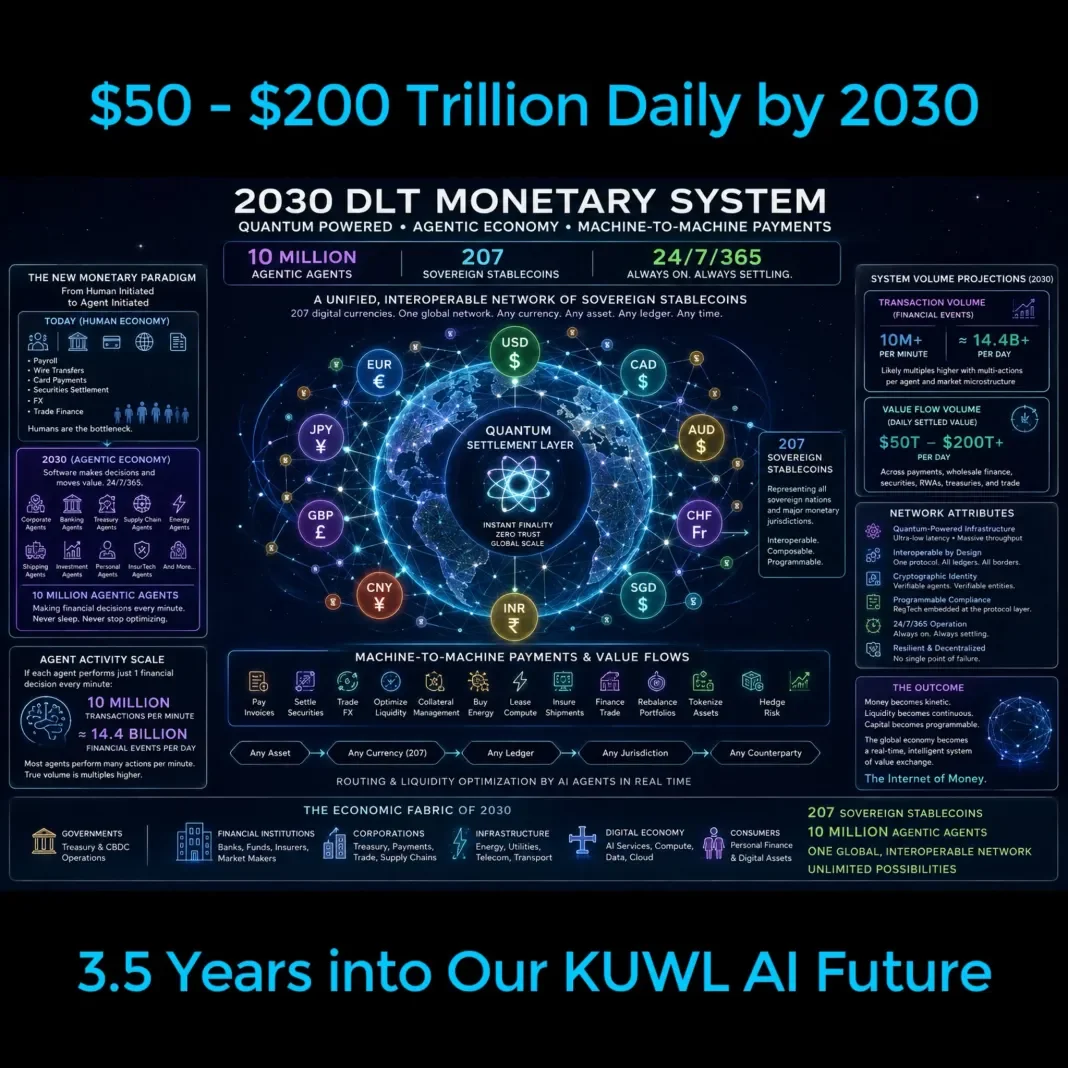
How should humanity account for value itself?
Would you prefer a monetary infrastructure in which transactions can be independently verified rather than merely reported?
Where the ledger is public?
Where the rules are inspectable?
Where reconciliation occurs 24/7/365?
Where no single corporation, government, bank or individual possesses unilateral authority over the shared ledger?
Where mathematics, cryptography and distributed consensus make altering the accounting extraordinarily difficult if not impossible?
Where different nations can retain their own currencies… different people can retain their property, different institutions can retain their autonomy, and open protocols simply allow value to move between them?
If such infrastructure can be built, tested and scaled, shouldn’t humanity at least ask:
Why would we choose anything less?
And then comes the uncomfortable second question
For generations, enormous influence over money, liquidity, credit and international finance has accumulated around institutions such as the Federal Reserve System, IMF, BIS, central banks and a constellation of governmental, political, intelligence, banking and nongovernmental institutions
Whatever one believes about their historical necessity, let’s ask ourselves:
1 – What happens to centralized institutional power when superior transparency becomes technologically possible?
2 – What happens when ordinary people can inspect the ledger?
3 – What happens when settlement becomes continuously auditable?
4 – What happens when assets can move across borders and networks through open protocols?
5 – What happens when interoperability reduces dependence upon privileged intermediaries?
6 – What happens when cryptographic verification begins replacing institutional assurances of:
“Trust us. The books are right.”
And perhaps the most revealing question of all:
7 – Who should fear such a system?
The farmer?
The worker?
The saver?
The entrepreneur?
The pensioner?
The merchant?
The honest banker?
The honest government?
The honest corporation?
8 – Why would any honest steward of humanity’s wealth fear greater transparency, greater accountability and greater verifiability?
9 – Wouldn’t an honest institution welcome technologies capable of proving its honesty?
So turn the question around
10 – If an institution fiercely resisted a transition toward genuinely open, independently verifiable financial infrastructure… what exactly would it be protecting?
Its customers?
Financial stability?
National sovereignty?
Legitimate confidentiality?
These are serious possibilities and deserve serious consideration
11 – But could it also be protecting something else?
Information asymmetry?
Intermediary rents?
Preferential access?
Institutional opacity?
Or simply the extraordinary power that accompanies being one of the few entities permitted to see – and influence – the machinery behind the curtain?
Now ask the question at civilization scale:
Should humanity serve its monetary system?
Or should the monetary system serve humanity?
Should honest weights and measures depend upon the character of whoever controls the scale?
Or should we engineer the scale so that everyone can verify the weight?
That may be the defining monetary question of our generation
Not:
“Which institution should we trust?”
But:
“How much trust should technology still require us to surrender to any institution?”
Knowledge asks the question.
Understanding examines the architecture
Wisdom follows the incentives.
Life remembers who the system was supposed to serve.
If open, decentralized, interoperable & independently verifiable infrastructure can deliver a more accountable system of value.
Maybe the losing institutions will teach us something about the system we’re leaving behind.
Source(s):
• https://x.com/KuwlShow/status/2086578043901071641
https://dinarchronicles.com/2026/08/10/rob-cunningham-what-if-humanity-was-given-a-genuine-choice/
Coffee with MarkZ, joined by Bob Lock. 08/10/2026
Coffee with MarkZ, joined by Bob Lock. 08/10/2026
MarkZ Disclaimer: Please consider everything on this call as my opinion. Be sure to consult a professional for any financial decisions
MZ: Iraq's cabinet, Iran, and Bob Lock joins us to take your questions on Trusts.
THE CONTENT IN THIS PODCAST IS FOR GENERAL & EDUCATIONAL PURPOSES ONLY&NOT INTENDED TO PROVIDE ANY PROFESSIONAL, FINANCIAL OR LEGAL ADVICE. PLEASE CONSIDER EVERYTHING DISCUSSED IN MARKZ’S OPINION ONLY
Coffee with MarkZ, joined by Bob Lock. 08/10/2026
MarkZ Disclaimer: Please consider everything on this call as my opinion. Be sure to consult a professional for any financial decisions
MZ: Iraq's cabinet, Iran, and Bob Lock joins us to take your questions on Trusts.
THE CONTENT IN THIS PODCAST IS FOR GENERAL & EDUCATIONAL PURPOSES ONLY&NOT INTENDED TO PROVIDE ANY PROFESSIONAL, FINANCIAL OR LEGAL ADVICE. PLEASE CONSIDER EVERYTHING DISCUSSED IN MARKZ’S OPINION ONLY
https://rumble.com/user/theoriginalmarkz
Kick: https://kick.com/theoriginalmarkz
Markz's linktree https://linktr.ee/theMarkZshow
FOLLOW MARKZ : TWITTER . https://twitter.com/originalmarkz?s=21. TRUTH SOCIAL . https://truthsocial.com/@theoriginalm...
Mod: MarkZ "Back To Basics" Pre-Recorded Call" for Newbies 10-19-2022 )https://www.youtube.com/watch?v=37oILmAlptM
MARKZ DAILY LINKS: https://theoriginalmarkz.com/home/
THANK YOU FOR JOINING. HAVE A BLESSED DAY. SEE YOU IN THE MORNING FOR COFFEE @ 10:00 AM EST ~ UNLESS BREAKING NEWS HAPPENS! FOR UPDATES ON MARK’S PODCAST GO TO: https://t.me/+b3hYhYlhKM1hYzcx
Seeds of Wisdom RV and Economics Updates Monday Afternoon 8-10-26
Good Afternoon Dinar Recaps,
Oil Shock Meets Fed Uncertainty: Markets Reprice Inflation, Debt and Risk
Renewed Strait of Hormuz tensions are pushing energy prices higher just as investors prepare for critical U.S. inflation data and reassess the Federal Reserve’s next move.
Good Afternoon Dinar Recaps,
Oil Shock Meets Fed Uncertainty: Markets Reprice Inflation, Debt and Risk
Renewed Strait of Hormuz tensions are pushing energy prices higher just as investors prepare for critical U.S. inflation data and reassess the Federal Reserve’s next move.
OVERVIEW
Oil prices surged more than 4% as uncertainty surrounding the Strait of Hormuz raised fresh concerns about global energy supplies and pushed Brent crude toward $87 a barrel.
The renewed energy pressure comes just before Wednesday’s U.S. CPI report, creating a difficult backdrop for the Federal Reserve as markets reassess the possibility of a September rate hike.
At the same time, Treasury yields are rising ahead of significant government debt issuance, placing inflation, borrowing costs and Federal Reserve policy back at the center of global markets.
KEY DEVELOPMENTS
1. Hormuz Risk Sends Oil Higher
Brent crude climbed to approximately $87.40 per barrel, while U.S. crude reached about $81.80, as investors reacted to renewed uncertainty over whether shipping through the Strait of Hormuz can return to normal.
Iran is seeking U.S. concessions before agreeing to reopen the critical shipping route, leaving markets uncertain about the timing and reliability of future energy flows.
2. Inflation Data Could Change the Fed Equation
Investors are now focused on Wednesday's July Consumer Price Index (CPI) report. Economists expect headline inflation to show a 3.4% annual increase, but the oil shock creates additional uncertainty around the outlook.
A hotter-than-expected inflation reading could reinforce expectations that the Federal Reserve will need to keep monetary policy restrictive for longer.
3. Rate-Hike Expectations Are Shifting
A weak July employment report recently reduced expectations for an immediate Fed tightening move. However, rising oil prices could complicate that outlook by adding another source of inflation pressure.
Reuters reports that futures markets now show approximately a 52% probability of a September rate hike, down from 67% one week earlier.
That leaves markets unusually sensitive to both the CPI report and developments surrounding Hormuz.
4. Treasury Markets Face a New Test
Treasury yields are also being watched closely as the U.S. prepares for a large wave of government debt issuance.
Higher oil prices can reinforce inflation expectations, while higher Treasury supply can place additional pressure on bond markets. The combination makes the cost of government borrowing an increasingly important issue for investors.
5. The Market Is Balancing Two Opposing Forces
Financial markets are caught between deflationary economic signals and renewed inflationary energy risk.
The weak jobs report argues for eventual monetary easing, while rising oil prices and persistent inflation could argue for caution—or even additional tightening.
That tension is now being reflected across stocks, bonds, currencies and commodities.
WHY IT MATTERS
The significance of today's market moves goes beyond the price of oil.
Energy prices influence consumer inflation, transportation costs, corporate margins and household purchasing power. If oil remains elevated because of prolonged Hormuz uncertainty, central banks may have less flexibility to reduce interest rates.
At the same time, higher borrowing costs can increase pressure on governments already carrying historically large debt loads.
The result is a potentially difficult combination: slower economic growth alongside persistent inflation and elevated government financing costs.
WHY IT MATTERS TO FOREIGN CURRENCY HOLDERS
Currency value: Higher energy prices can strengthen currencies of major energy exporters while putting pressure on energy-importing nations.
Purchasing power: Sustained increases in gasoline, transportation and energy costs can reduce household purchasing power.
Capital flows: Higher U.S. rates and Treasury yields can attract international capital toward dollar-denominated assets.
Exchange-rate impact: A stronger dollar can place additional pressure on currencies of countries that must import energy or carry significant dollar-denominated debt.
IMPLICATIONS FOR THE GLOBAL RESET
Pillar 1: Energy
The Energy pillar is directly affected by the uncertainty surrounding the Strait of Hormuz.
The market is demonstrating once again how quickly a disruption at a major energy chokepoint can influence oil prices, inflation expectations and financial markets around the world.
Any durable normalization of shipping would reduce this pressure, while continued disruption could keep energy costs elevated.
Pillar 2: Debt
The Debt pillar is being pressured through the interaction of inflation, interest rates and Treasury issuance.
If inflation remains elevated, central banks may have less room to reduce rates. If yields remain higher for longer, governments face greater costs when issuing and refinancing debt.
This makes the Treasury market a critical indicator of whether the global financial system can absorb continued high levels of sovereign borrowing.
Pillar 3: Assets
The Assets pillar is affected because changing interest-rate expectations alter the relative attractiveness of stocks, bonds, commodities, gold and other stores of value.
Higher yields can make bonds more competitive with risk assets, while persistent inflation and geopolitical uncertainty can increase investor interest in real assets and commodities.
The direction of oil, Treasury yields and the dollar therefore remains important for how global capital is allocated.
CONCLUSION
Today's market action shows how quickly geopolitical risk can become monetary-policy risk.
The Strait of Hormuz is influencing oil prices at precisely the moment investors are waiting for critical U.S. inflation data and reassessing the Federal Reserve's rate path.
For governments, investors and currency holders, the larger issue is the cost of navigating a financial system where energy prices, inflation, interest rates and sovereign debt are increasingly interconnected.
The next major move may not come from Wall Street—it may come from the interaction between oil, the Treasury market and the Federal Reserve.
Seeds of Wisdom Team
Newshounds News™ Exclusive
SOURCES
~~~~~~~~~~
Seeds of Wisdom Team RV Currency Facts Youtube and Rumble
Newshound's News Telegram Room Link
RV Facts with Proof Links Link
RV Updates Proof links - Facts Link
Start Here room with Most Asked Questions Link
Follow the Gold/Silver Rate COMEX
Follow Fast Facts
Seeds of Wisdom Team™Website
Thank you Dinar Recaps
Iraq Economic News and Points To Ponder Monday Afternoon8-10-26
Oil Prices Rebound Over Unsettled Hormuz Deal
2026-08-10 Shafaq News Oil prices rose on Monday as uncertainty persisted over the reopening of the Strait of Hormuz, with Iran saying the United States must meet several conditions even as Tehran and Oman moved into the final stages of agreeing on new shipping lanes. Brent crude futures rose 84 cents, or 1%, to $84.39 a barrel by 0424 GMT, while U.S. West Texas Intermediate crude futures rose 60 cents, or 0.75% to $78.77 a barrel.
Oil Prices Rebound Over Unsettled Hormuz Deal
2026-08-10 Shafaq News Oil prices rose on Monday as uncertainty persisted over the reopening of the Strait of Hormuz, with Iran saying the United States must meet several conditions even as Tehran and Oman moved into the final stages of agreeing on new shipping lanes. Brent crude futures rose 84 cents, or 1%, to $84.39 a barrel by 0424 GMT, while U.S. West Texas Intermediate crude futures rose 60 cents, or 0.75% to $78.77 a barrel.
Both benchmarks had fallen more than 7% last week on hopes that Iran and Oman were close to reaching a deal that would result in a reopening of the Strait of Hormuz, which carried a fifth of the world's oil before the war.
While Iran said on Sunday that a deal with Oman was in its "final stages", it reiterated that the waterway would only reopen once Washington met other conditions, including U.S. compensation for widespread U.S. attacks on Iran.
"Crude oil prices remain caught between opposing forces, as markets assess the possibility of a breakthrough over the Strait of Hormuz against Iran's conditions for reopening the strategic waterway," said Sugandha Sachdeva, founder of SS WealthStreet, a New Delhi-based research firm.
Iran and the U.S. are not engaged in talks and Tehran will not start them as long as Washington breaches an interim deal signed in June, Iranian Foreign Minister Abbas Araqchi said on Sunday.
Meanwhile, in a further threat to supply, the Iran-aligned Houthis said they had hit Saudi Aramco's Jazan refinery on Sunday.
The attack came two days after the kingdom signed a defence pact with Sunni Muslim allies Turkey and Pakistan in response to growing regional instability from the U.S.-Israeli war on Shi'ite Iran.
Separately, the United Arab Emirates' ADNOC said on Friday that 15 of its vessels had been attacked transiting the Strait of Hormuz since the beginning of the conflict.
"Any major progress towards restoring unrestricted shipping could exert downward pressure on oil prices, while a breakdown in negotiations or renewed supply disruptions could quickly revive the geopolitical risk premium," Sachdeva said. (Reuters)
https://www.shafaq.com/en/Economy/Oil-prices-rebound-over-unsettled-Hormuz-deal
Gold Softens Ahead Of Key US Inflation Data
2026-08-10 Shafaq News Gold slipped on Monday as investors took profits after prices hit a seven-week high in the previous session, while markets looked to U.S. inflation data for fresh clues on the Federal Reserve's interest rate path.
Spot gold was down 0.3% at $4,330.46 per ounce, as of 0443 GMT. Prices hit their highest since June 17 on Friday after weak U.S. nonfarm payrolls data.
"Gold is edging slightly lower as it succumbs to some profit-taking following last week's strong NFP-inspired gains. This looks like a natural stabilisation rather than a meaningful shift in sentiment - I expect gold to remain supported above the $4,300 level in the near term," said Tim Waterer, chief market analyst at KCM Trade.
Data showed the U.S. economy unexpectedly shed jobs in July and previously reported job gains for the prior two months were revised sharply lower.
Futures markets then flipped the odds of a rate hike at the September 15-16 Federal Open Market Committee meeting from likelier-than-not to a worse-than-even chance.
A lower interest rate environment boosts the attractiveness of gold against income-generating assets, as bullion itself earns no interest.
Key U.S. data scheduled for release this week include the Consumer Price Index (CPI) on Wednesday and the Producer Price Index (PPI) on Thursday.
"Soft readings would strengthen the case for a rate hold and clear a path for further upside in gold... Middle East uncertainty remains a lingering risk factor, as any renewed escalation that drives oil prices up could quickly pressure the metal," said Waterer.
On the geopolitical front, Iran said it was nearing a final pact with Oman defining new shipping lanes between them through the Strait of Hormuz but repeated that the U.S. must meet several conditions before the strategic waterway is reopened.
Spot silver rose 0.3% to $63.77 per ounce and platinum gained 0.2% to $1,748.80, while palladium slipped 1% to $1,364.55. (Reuters) https://www.shafaq.com/en/Economy/Gold-softens-ahead-of-key-US-inflation-data
Basrah Crude Reclaims $57 Mark In Gradual Recovery
2026-08-10 Shafaq News- Basrah Basrah Medium crude has recovered about 24% from its July low to $57.09 a barrel, but the Iraqi benchmark remains nearly 58% below its peak earlier this year, according to price data reviewed by Shafaq News on Monday.
The crude rose 3.93%, extending a gradual recovery that began after prices fell to about $46 a barrel in mid-July.
Basrah Medium reached about $135 a barrel in early April, its highest level during the period, before a sharp decline set in over the following months.
The fall from the April peak to the July low amounted to about $89 a barrel, or roughly 66%. Since hitting the July low, the crude has gained about $11 a barrel, or 24%, bringing it back above the $57 mark on August 10.
https://www.shafaq.com/en/Economy/Basrah-crude-reclaims-57-mark-in-gradual-recovery
Dollar Up In Baghdad And Erbil
2026-08-10 Shafaq News- Baghdad/ Erbil The US dollar opened Monday's trading higher in Iraq, hovering around 152,500 dinars per 100 dollars in Baghdad and Erbil.
According to Shafaq News market survey, the dollar traded in Baghdad's Al-Kifah and Al-Harithiya exchanges at 152,500 dinars per 100 dollars, up from Sunday's 152,100 dinars.
In the Iraqi capital, exchange shops sold the dollar at 153,000 dinars and bought it at 152,000 dinars. In Erbil, selling prices stood at 152,500 dinars and buying prices at 152,400 dinars.
https://www.shafaq.com/en/Economy/Dollar-up-in-Baghdad-and-Erbil
Oil Ministry Plans Pipeline Routes To Fishkhabur And Baniyas
2026-08-10 Shafaq News- Baghdad Iraq is pressing ahead with plans to build a new pipeline system carrying crude oil through two routes, one reaching Fishkhabur on the Turkish border and another extending to Baniyas on Syria's Mediterranean coast, as part of a broader push to reduce dependence on the Strait of Hormuz following its closure since February 28.
The Oil Ministry said Deputy Minister for Extraction Affairs Nassir Aziz chaired a meeting Monday to discuss the project, which envisions two corridors: Basra–Haditha–Fishkhabur and Haditha–Baniyas.
The routes would provide additional export outlets alongside Iraq's main southern terminal, enhancing the flexibility of the country's export system and opening multiple marketing options for Iraqi crude, the ministry said in a statement.
Aziz stressed the importance of accelerating implementation mechanisms and identifying technical requirements, alongside completing negotiations with an international consortium comprising UCC, TI Capital, and Chevron on investing in the project under a Build-Operate-Own-Transfer (BOOT) model.
On July 17, a memorandum of understanding signed by Iraq and Syria under US sponsorship to reactivate the Kirkuk–Baniyas pipeline, enabling Iraqi crude to reach Mediterranean ports through Syrian territory.
Read more: Preparatory studies begin on Kirkuk-Baniyas pipeline rehabilitation
https://www.shafaq.com/en/Economy/Oil-Ministry-plans-pipeline-routes-to-Fishkhabur-and-Baniyas
Monday Iraq News Posted by Tishwash at TNT 8-10-2026
TNT:
Tishwash: Iraq regains its seat at the world table... Baghdad is advancing in Arab diplomacy and international partnerships
In a new indication of the expanding Iraqi presence abroad, Iraq ranked 12th in the Arab world and 94th globally in a ranking that measures the level of diplomacy and the ability of countries to build international relations and partnerships, according to data from the American magazine "U.S. News & World Report" .
Iraq has moved up in the rankings, ahead of Lebanon , which came in 13th place in the Arab world and 96th globally, while the UAE topped the list of Arab countries, ranking 28th globally, followed by Kuwait, Qatar, Saudi Arabia and Bahrain.
TNT:
Tishwash: Iraq regains its seat at the world table... Baghdad is advancing in Arab diplomacy and international partnerships
In a new indication of the expanding Iraqi presence abroad, Iraq ranked 12th in the Arab world and 94th globally in a ranking that measures the level of diplomacy and the ability of countries to build international relations and partnerships, according to data from the American magazine "U.S. News & World Report" .
Iraq has moved up in the rankings, ahead of Lebanon , which came in 13th place in the Arab world and 96th globally, while the UAE topped the list of Arab countries, ranking 28th globally, followed by Kuwait, Qatar, Saudi Arabia and Bahrain.
In the Arab world, Egypt came in sixth place, followed by Tunisia, Morocco, Oman, Jordan and Algeria, while Iraq continued to be among the Arab countries most open and capable of building international partnerships.
The ranking does not measure only military strength or the size of the economy, but focuses on international relations, openness, partnerships, and diplomatic presence and influence , which are indicators that reflect a country’s ability to operate in the international arena and build a network of relationships that extends beyond its borders. link
Tishwash: The Minister of Finance and the Governor of the Central Bank discuss strengthening financial and monetary coordination.
Finance Minister Faleh Sari discussed on Sunday with the Governor of the Central Bank of Iraq, Nizar Nasser Hussein, the financial and economic situation in light of the current challenges.
A statement from the ministry, received by (Mawazin News), said that “Finance Minister Faleh Sari received the Governor of the Central Bank of Iraq, Nizar Nasser Hussein, where the financial and economic situation was discussed in light of the current challenges.”
The Minister of Finance stressed that “the current circumstances require continuous coordination between fiscal and monetary policy, which will help to manage financial flows efficiently and ensure the fulfillment of the state’s obligations, while continuing to work on reforming the financial system and developing public finance management tools.”
He pointed to "the importance of enhancing data exchange between the Ministry of Finance and the Central Bank, and accelerating digital transformation, which will raise the efficiency of financial institutions and support their ability to respond to economic changes."
For his part, the Governor of the Central Bank explained that “the Central Bank operates according to a methodology that focuses on supporting monetary stability, developing banking operations, and keeping pace with the needs of the national economy, stressing the importance of coordination with the Ministry of Finance on economic and financial issues.”
According to the statement, both sides agreed to "continue working together on measures to enhance financial and monetary stability and ensure the regularity of the state's basic obligations." link
************
Tishwash: Removing zeros to withdraw looted funds and address salary issues... Experts warn against a "makeover".
Economic and financial experts are discussing proposals to solve the liquidity crisis and salary delays plaguing Iraq, most notably changing the currency and removing zeros from the Iraqi dinar, or introducing additional denominations that correspond to the noticeable expansion in the size of the circulating money supply.
However, they agree on one point that confirms that these measures in economic equations are merely cosmetic solutions, “more like makeup,” that may treat the symptoms but not the causes of the problem. They warn that the large looted fortunes often do not remain in the form of local currency that can be traced, but rather have been converted into real estate, foreign assets, and accounts in safe financial havens, and are therefore immune to the government’s internal measures.
Financial expert Nabil Al-Abadi calls for the need to avoid treating the proposal to change the national currency as a purely technical or monetary measure, explaining that this issue reflects the depth of the structural crisis that the economy is suffering from, and cannot be a substitute for the required financial, monetary and economic reforms.
He adds in a statement to the official newspaper, which was followed by Network 964 , that changing the currency is not a solution in itself, but rather a mirror reflecting the state of the economy, warning against confusing the treatment of symptoms with the treatment of the causes of the problem.
Al-Abadi explains that removing zeros, as the most widely discussed scenario, essentially represents a reorganization of monetary units and a simplification of arithmetic and accounting operations, without necessarily meaning an increase in the citizen's purchasing power or a rise in the real value of the currency. He points out that changing the currency cannot be dealt with as a tool to recover looted funds, but may turn into a double-edged sword in some contexts if it is not managed within a comprehensive reform system.
He warns that large looted fortunes often do not remain in traceable local cash, or have long since migrated to real estate, foreign assets and accounts in safe financial havens, indicating that their transformation makes them largely immune to any internal monetary measures.
He continues: “The biggest challenge in such measures is managing the transitional phase, especially with regard to psychological expectations in the market and the possibility of some traders and speculators exploiting the transition period to raise prices under various pretexts, which may lead to inflationary pressures and dissipate the expected administrative benefits of the process of removing zeros. He stressed that the success of any step in this direction requires the existence of solid monetary and economic stability before its implementation, and not considering it as a means to achieve that stability.”
He emphasizes that the essence of a currency's strength is not related to its form or the number of zeros it contains, but rather to the strength of the institutions and the economy upon which it is based.
Al-Abadi makes any project to change the currency contingent on genuine financial reform that reduces chronic imbalances in the general budget, along with strengthening the independence of the Central Bank and ensuring its ability to manage monetary policy away from financial pressures, as well as building a productive economy capable of diversifying sources of income and generating foreign currency, explaining that a strong currency is a reflection of a strong economy and not its creator.
He concludes that addressing economic imbalances requires moving from superficial solutions to fundamental reforms that include public finance, the banking sector, production and investment, and diversifying revenue sources, noting that changing the currency without reforming these issues could turn into a costly and confusing procedure for the citizen and the market, without addressing the root of the economic problem.
Economic researcher Imad Al-Muhammadawi considers the proposal to change the currency or issue a new currency denomination to withdraw illicit funds from circulation a theoretically positive proposal, noting that it is insufficient to reduce corruption or compensate for the shortage of liquidity.
Al-Muhammadi explains that, from an economic standpoint, the problem is not the form of the currency, but rather how to convince those who possess large sums of money to disclose their source when exchanging it. He points out that if the currency is changed without strict banking and tax auditing procedures, those with illicit funds can exchange it like the rest of the citizens, and thus the main purpose of the project is lost.
He adds that there is no consensus with the proposal, for several reasons, foremost among them the hesitation that the procedure will turn into a tool for freezing legitimate funds if the specified and explained mechanisms for proving the source of funds are not followed, as well as the possibility of exploiting some loopholes by corruption networks to circumvent the change before it begins, accompanied by its impact on the monetary system of citizens, if it is done suddenly, not to mention the cost and complexities of currency replacement.
Turning these proposals into effective tools depends on them being accompanied by a system that requires large sums to be deposited in banks, their sources to be verified and linked to banking and tax data, with a time period granted for replacement, and serious work to uncover the source of the funds.
He points out that changing the currency, identifying illicit funds, and exchanging banknotes will not solve the crises unless it is accompanied by a regulatory system capable of uncovering the source of the funds and prosecuting their owners. He adds that it could be an opportunity to regulate monetary masses and bring funds circulating outside the banking system into the formal financial system by establishing clear and transparent rules.
He points out that the lack of consensus on the proposal does not mean its rejection, but rather requires the establishment of legal, banking and regulatory guarantees, and an integrated system to detect those who manipulate public funds and the corrupt, and to know the source of the funds before granting it legitimacy, stressing that if the conditions are met, the project will gain its importance and the purpose for which it was created.
Tishwash: Iraq is set to borrow $2 billion from the US Treasury.
About the news
Parliamentary Finance Committee: The government has sent the borrowing law to Parliament and it will be decided next week.
Amid parliamentary controversy
*To finance the deficit and cover operational and service expenses
The new government move comes amid increasing financial pressure on the Iraqi budget, and the impact of regional conditions on oil prices and public revenues.
*Without disclosing the loan terms or repayment mechanism
*To supply the local market with cash liquidity in dollars
The government is seeking to finance the deficit and cover operational and service expenses by resorting once again to external borrowing.
Member of Parliament’s Finance Committee, Mansour Al-Baiji, revealed on Sunday that the Iraqi government is moving to borrow $2 billion from the US Treasury.
Al-Baji said in a press statement that "the government has sent the borrowing law to the House of Representatives," indicating that "the law will be decided during the next week."
Al-Baiji added that "the government has a loan of about $2 billion from the US Treasury Department," without disclosing details of the loan terms or the repayment mechanism.
This trend comes amid parliamentary controversy over the government's expansion of external and internal borrowing, and demands to rationalize spending and rely on non-oil revenues instead of burdening the budget with new debts.
A source reported in press statements that a new batch of cash dollars had arrived in Iraq, sent by the US Federal Reserve to the Central Bank of Iraq.
The source told the official agency that "the US Federal Reserve sent a new batch of cash dollars to the Central Bank of Iraq worth $500 million."
This payment comes as part of the periodic agreements between the Central Bank of Iraq and the US Federal Reserve to supply the local market with dollar liquidity and to cover the needs of travelers and foreign remittances, at a time when Baghdad is seeking to stabilize the exchange rate. link
News, Rumors and Opinions Monday 8-10-2026
Ross: All of this is Necessary Before the Revaluation of IQD
8-10-2026
Al-Zaidi is using the provincial coordination body to push land reform, electricity restructuring, fiscal caution, and service delivery while the regional environment is putting pressure on the budget.
All of this is necessary before the revaluation of IQD:
1. Executive procedures for the 1 million residential land plots project start 1 September 2026.
Ross: All of this is Necessary Before the Revaluation of IQD
8-10-2026
Al-Zaidi is using the provincial coordination body to push land reform, electricity restructuring, fiscal caution, and service delivery while the regional environment is putting pressure on the budget.
All of this is necessary before the revaluation of IQD:
1. Executive procedures for the 1 million residential land plots project start 1 September 2026.
This is real volume. Land reform + mass housing release = construction stimulus, local economic activity, and a tangible delivery item the government can point to.
2. New committee (chaired by the Head of Advisors) tasked with amending the technical model for privatizing electricity distribution.
Chronic electricity losses, collection failures, and political interference have been a drag for years.
3. Private generators crackdown (Baghdad focus)
Oil Ministry can no longer issue fuel quotas for private generators without going through Baghdad Governorate.
This hits the parallel/fuel-diversion economy that has been a long-standing leakage and corruption vector.
4. Agriculture – Diwaniyah rice (shaleb) support
Increased water releases from Abbasiya and Kufa barrages, adjusted Ya’u regulator, 8 hours of dedicated power for pumps on the river axis, no exceptions from the irrigation rotation, and excavators for cleaning. Practical food-security / rural support move.
Al-Zaidi continues to operate as an active executive rather than a caretaker.
The meeting had real ministers and real governors in the room — producing dated action items trying to look competent on housing, power, agriculture, and money discipline while regional conditions are tight.
Source(s):
• https://x.com/Ross_ptm/status/2086508226863136992
https://dinarchronicles.com/2026/08/10/ross-all-of-this-is-necessary-before-the-revaluation-of-iqd/
**************
Courtesy of Dinar Guru: https://www.dinarguru.com/
Stephen Sometimes people look at everything happening inside of Iraq through the lens of a revaluation tomorrow. That's not the case. However, we're seeing economic reform, monetary reform, banking restructuring, financial restructuring. We are seeing so many exciting things that are all culminating and coming together, fingers crossed, for that glorious day where we can all exchange our Iraqi dinar into US dollars...In my last 15 years since I have been invested in the Iraqi dinar I have not seen this much movement happening. If you have been in this investment a long time you will agree with me. We have never seen Iraq move this quickly. A huge piece of this is the amount of corruption being cleaned up.
Jeff The money sent from the United States to Iraq this week was dollars. We don't pay Iraq's salaries. They don't pay their own salaries in dollars. The $500 million is their oil money from the United States to Iraq. It's to purchase imports and travelers leaving the country can turn in dinar and get dollars to exit the country. The $500 million was not for salaries. Salaries are not paid in dollars.
Bruce [via WiserNow] ...redemption centers might be connected right to a bank, or it could be a completely separate building or location that's not connected to a bank, but everyone in the United States is overseen by Wells Fargo, and they will have a representative there. You'll have a Treasury representative there, and you'll have people that will be there to count and verify your currencies with a De La Rue machine, and then banks have sometimes another brand of machine that they'll be using... and they're getting new machines and training bank personnel on how to do these exchanges.
IQD Update on Exchange Rate Including HTG ARS VES
Edu Matrix: 8=9=2-26
MilitiaMan & Crew: IQD News Report | Breaking Down Today's Movements
MilitiaMan & Crew: QD News Report | Breaking Down Today's Movements
8-9-2026
The Crew: Samson, PompeyPeter, Petra, Daytrader, Sunkissed, GIGI and Militia Man
No drama. No intrigue. No songs and dances. Just straight, factual news that I read and interpret to the best of my ability after being an avid Dinar investor and insanely obsessed Dinarian for over 15 years.
Follow MM on X == https://x.com/Slashn
MilitiaMan & Crew: IQD News Report | Breaking Down Today's Movements
8-9-2026
The Crew: Samson, PompeyPeter, Petra, Daytrader, Sunkissed, GIGI and Militia Man
No drama. No intrigue. No songs and dances. Just straight, factual news that I read and interpret to the best of my ability after being an avid Dinar investor and insanely obsessed Dinarian for over 15 years.
Follow MM on X == https://x.com/Slashn
Be sure to listen to full video for all the news……..