
Seeds of Wisdom RV and Economics Updates Wednesday Evening 7-15-26
Good Evening Dinar Recaps,
Cooling U.S. Inflation Reshapes Fed Outlook as Global Markets Reprice Interest Rate Expectations
New inflation data showed U.S. price pressures eased more than expected, reducing expectations of another immediate Federal Reserve rate increase and triggering a broad reassessment across global financial markets.
Good Evening Dinar Recaps,
Cooling U.S. Inflation Reshapes Fed Outlook as Global Markets Reprice Interest Rate Expectations
New inflation data showed U.S. price pressures eased more than expected, reducing expectations of another immediate Federal Reserve rate increase and triggering a broad reassessment across global financial markets.
Overview
U.S. inflation cooled more than economists expected, easing pressure on the Federal Reserve.
Markets sharply reduced expectations for a near-term interest rate increase following the report.
Investors remain cautious as higher energy prices tied to Middle East tensions could still reignite inflation later this year.
Key Developments
1. Inflation Comes in Below Expectations
New economic data showed core inflation posted its smallest monthly increase in more than six years, suggesting underlying price pressures continue to moderate despite ongoing geopolitical uncertainty.
The report strengthened investor confidence that inflation may be moving closer to the Federal Reserve's long-term target.
2. Markets Reprice Federal Reserve Expectations
Following the inflation release, financial markets significantly lowered expectations that the Federal Reserve will raise interest rates at its next policy meeting.
Treasury yields declined, the U.S. dollar weakened against several major currencies, and equity markets responded positively as investors anticipated a less aggressive monetary policy path.
3. Energy Risks Continue to Cloud the Outlook
Despite improving inflation data, policymakers cautioned that higher oil prices resulting from renewed U.S.-Iran tensions could place fresh upward pressure on inflation in the months ahead.
The Federal Reserve is expected to continue monitoring both domestic inflation trends and geopolitical developments before making additional policy decisions.
Why It Matters
Inflation remains one of the most important drivers of global financial markets. Lower inflation reduces pressure on central banks to keep interest rates elevated, helping support borrowing, investment, and economic growth.
However, renewed geopolitical disruptions—particularly involving global energy supplies—could quickly reverse recent progress and force policymakers to maintain tighter monetary conditions for longer.
Why It Matters to Foreign Currency Holders
For foreign currency holders, changes in U.S. monetary policy often influence exchange rates, sovereign debt markets, and capital flows worldwide.
If inflation continues to moderate, central banks may gradually shift toward more accommodative policies, supporting greater financial stability. If energy-driven inflation returns, however, higher interest rates and stronger currency volatility could delay broader monetary adjustments many Global Reset observers continue watching.
Implications for the Global Reset
Pillar 1: Debt
Lower inflation reduces pressure for additional interest-rate increases, easing borrowing costs for governments, businesses, and consumers.
Pillar 3: Assets
Financial markets responded positively as investors adjusted expectations for future Federal Reserve policy, supporting equities while reducing Treasury yields.
Looking Ahead
Markets will closely monitor upcoming inflation reports, employment data, and Federal Reserve communications to determine whether the recent moderation in prices represents a lasting trend or only a temporary improvement.
At the same time, developments in the Middle East remain a major variable, as any sustained increase in energy prices could quickly alter the inflation outlook and central bank policy expectations.
This is not simply about inflation—it reflects the broader transformation of the global financial system as monetary policy, capital flows, and central bank decisions increasingly shape the future of the world economy.
Seeds of Wisdom Team
Newshounds News™ Exclusive
Sources
Reuters — "Stocks rise after soft U.S. inflation reading with Middle East in focus"
U.S. Bureau of Labor Statistics — "Consumer Price Index Summary – June 2026"
~~~~~~~~~~
Seeds of Wisdom Team RV Currency Facts Youtube and Rumble
Newshound's News Telegram Room Link
RV Facts with Proof Links Link
RV Updates Proof links - Facts Link
Start Here room with Most Asked Questions Link
Follow the Gold/Silver Rate COMEX
Follow Fast Facts
Seeds of Wisdom Team™Website
Thank you Dinar Recaps
Fort Knox Standoff: Bessent Says All The Gold Is There, Says America 'Used To Be Backed' By It
Fort Knox Standoff: Bessent Says All The Gold Is There, Says America 'Used To Be Backed' By It
Zero Hedge by Tyler Durden
U.S. Treasury Secretary Scott Bessent has once again assured the public that America's gold reserves remain fully intact, pushing back against years of speculation surrounding the legendary vaults at Fort Knox. In a Fox News interview with Jesse Watters that aired Monday night, Bessent reiterated his standing assurance that every ounce of the nation's bullion is "present and accounted for" - while making no plans to visit the Kentucky depository himself.
Fort Knox Standoff: Bessent Says All The Gold Is There, Says America 'Used To Be Backed' By It
Zero Hedge by Tyler Durden
U.S. Treasury Secretary Scott Bessent has once again assured the public that America's gold reserves remain fully intact, pushing back against years of speculation surrounding the legendary vaults at Fort Knox. In a Fox News interview with Jesse Watters that aired Monday night, Bessent reiterated his standing assurance that every ounce of the nation's bullion is "present and accounted for" - while making no plans to visit the Kentucky depository himself.
"I am happy to say all gold is present and accounted for. The U.S. has the largest pile of gold in the world, over a trillion dollars, at current market value," Bessent told Watters.
His comments come amid renewed calls from lawmakers and gold advocates for a comprehensive, independent audit - the first large-scale public verification since 1974.
But as ZH contributor Phoenix Capital Research notes, Bessent prefaced his comment with something even more interesting...
Treasury Secretary Scott Bessent appeared on Fox News business yesterday. During the conversation with Jesse Waters, he made several key statements.
One of them... "we [the $USD] used to be backed by silver, sometimes gold."
And a few moments later regarding Fort Knox...
"all gold is present and account for... the U.S. has the largest pile of gold in the world, over a $1 trillion at current market value.
Officially, the United States holds the world's largest gold stockpile, valued at more than $1 trillion at current market prices. According to Treasury data, the Fort Knox depository alone contains 147,341,858.382 fine troy ounces of gold - roughly 56% of the federal government's total reserves, and about 59% of the bullion held in the Mint's deep storage. Additional holdings are stored at West Point, Denver, and the Federal Reserve Bank of New York.
Also officially, no gold has left Fort Knox in any significant documented capacity since 1974, aside from limited testing samples. Bessent has said he has no plans to travel to Kentucky himself, pointing instead to the Treasury's annual internal verifications and offering to arrange a visit for any senator who asks.
The U.S. shifted to a pure fiat currency system in the 1970s, ending the requirement to back paper money with gold or silver.
TO CONTINUE AND READ MORE:
Central Banks Now Own More Gold than US Treasuries
Central Banks Now Own More Gold than US Treasuries
VRIC Media: 7-15-2026
At the recent Vancouver Resource Investment Conference (VRIC), Matthew Piepenburg of Von Greer offered a compelling and data-driven analysis of the precious metals markets, central banking policies, and the pervasive issue of currency debasement.
Drawing from his extensive background on Wall Street, Piepenburg illuminated why gold continues to stand as a superior long-term store of value, urging investors to look beyond daily price fluctuations and grasp the profound monetary shifts unfolding globally.
Central Banks Now Own More Gold than US Treasuries
VRIC Media: 7-15-2026
At the recent Vancouver Resource Investment Conference (VRIC), Matthew Piepenburg of Von Greer offered a compelling and data-driven analysis of the precious metals markets, central banking policies, and the pervasive issue of currency debasement.
Drawing from his extensive background on Wall Street, Piepenburg illuminated why gold continues to stand as a superior long-term store of value, urging investors to look beyond daily price fluctuations and grasp the profound monetary shifts unfolding globally.
Piepenburg’s perspective challenges the notion that gold’s relevance is solely tied to immediate market headlines. Instead, he positions gold as an essential asset driven by deep, systemic factors.
Despite short-term volatility, his analysis underscores its inherent value in protecting wealth over extended periods. He meticulously outlines how gold’s trajectory is not a mere speculation but a response to global monetary shifts, the escalating burden of sovereign debt, and a growing erosion of trust in paper assets and fiat currencies, particularly the U.S. dollar.
For those seeking wealth preservation amidst financial uncertainty, Piepenburg’s insights offer a sober look at gold’s enduring role.
A significant portion of Piepenburg’s discussion centers on the intricate actions of central banking entities and their impact on the global financial framework.
He highlights the consistent trend of central banks globally accumulating substantial quantities of gold, an action that speaks volumes about their assessment of future economic stability. This buying trend, he explains, is directly linked to an expansive money supply and the inherent vulnerabilities of fiat currencies.
Piepenburg offers a critical examination of how governmental bodies report inflation, suggesting that official figures may not always capture the full scope of purchasing power erosion.
Furthermore, he delves into the Federal Reserve’s complex “hawk-dove” stance under new leadership, explaining how their policy decisions, though seemingly contradictory, contribute to a broader environment of monetary instability. This ongoing currency debasement erodes the value of traditional paper assets, making the argument for tangible alternatives increasingly potent.
An intriguing aspect of Piepenburg’s presentation is his observation of a significant eastward flow in gold accumulation. He details how countries, particularly in Asia, are steadily increasing their gold reserves, a trend that could fundamentally reshape global financial power dynamics.
This eastward shift isn’t just about accumulation; it’s also influencing the very mechanisms of gold price setting. Piepenburg points to the emergence of new gold trading platforms, notably in China, which signifies a potential rebalancing of influence away from traditional Western financial centers. This development has significant implications for the future of precious metals markets and the global monetary system.
Ultimately, Matthew Piepenburg’s message to investors is one of informed patience and strategic foresight. He emphasizes the critical need to understand the fundamental principles of currency debasement and sustained inflation.
In his view, these are not transient issues but deep-seated challenges within the current monetary design. He strongly advocates for considering physical gold as a cornerstone of an investment strategy, particularly for safeguarding wealth against a deeply unstable monetary system.
His counsel isn’t about short-term gains but about long-term resilience. By appreciating the intricate interplay between central bank actions, sovereign debt, trust in fiat currencies, and global economic shifts, investors can make more informed decisions to protect and grow their assets. Piepenburg’s expert analysis from the VRIC serves as a vital resource for anyone looking to navigate the complex financial landscape with a clearer understanding of gold’s enduring value.
Watch the full video from VRIC Media on YouTube for further insights and information.
MilitiaMan & Crew- IRAQ DINAR UPDATE-Iraq & US Lay Groundwork for New Economic Phase – Washington Visit Update
MilitiaMan & Crew- IRAQ DINAR UPDATE-Iraq & US Lay Groundwork for New Economic Phase – Washington Visit Update
7-15-2026
The Crew: Samson, PompeyPeter, Petra, Daytrader, Sunkissed, GIGI and Militia Man
No drama. No intrigue. No songs and dances. Just straight, factual news that I read and interpret to the best of my ability after being an avid Dinar investor and insanely obsessed Dinarian for over 15 years.
Follow MM on X == https://x.com/Slashn
MilitiaMan & Crew- IRAQ DINAR UPDATE-Iraq & US Lay Groundwork for New Economic Phase – Washington Visit Update
7-15-2026
The Crew: Samson, PompeyPeter, Petra, Daytrader, Sunkissed, GIGI and Militia Man
No drama. No intrigue. No songs and dances. Just straight, factual news that I read and interpret to the best of my ability after being an avid Dinar investor and insanely obsessed Dinarian for over 15 years.
Follow MM on X == https://x.com/Slashn
Be sure to listen to full video for all the news……..
Bruce’s Big Call Dinar Intel Tuesday Night 7-14-26
Bruce’s Big Call Dinar Intel Tuesday Night 7-14-26
Transcribed By WiserNow Emailed To Recaps (INTEL ONLY)
Welcome, everybody. Big call tonight. It's Tuesday, July 14th . Patells de julier. julier, I believe that is what it is, and Bastille Day, if I'm not mistaken, right, Sue? Yes. Yes. And so, bonjour bonsoir to the to our French dismiers over there, or people that are aware of the cateurs de julier. Welcome everybody else that's not aware of the 14th of July, France's essentially Liberation Day, I guess, and so welcome to the big call.
Oh, I've got a lot going on through my mind right now because I just got another call a minute ago. So let's go ahead and do this Let's move into the intel segment. Thank you, Bob, for everything tonight. Let's get into the intel and see where we stand.
Bruce’s Big Call Dinar Intel Tuesday Night 7-14-26
Transcribed By WiserNow Emailed To Recaps (INTEL ONLY)
Welcome, everybody. Big call tonight. It's Tuesday, July 14th . Patells de julier. julier, I believe that is what it is, and Bastille Day, if I'm not mistaken, right, Sue? Yes. Yes. And so, bonjour bonsoir to the to our French dismiers over there, or people that are aware of the cateurs de julier. Welcome everybody else that's not aware of the 14th of July, France's essentially Liberation Day, I guess, and so welcome to the big call.
Oh, I've got a lot going on through my mind right now because I just got another call a minute ago. So let's go ahead and do this Let's move into the intel segment. Thank you, Bob, for everything tonight. Let's get into the intel and see where we stand.
Pretty interesting times right now. Overall, the military is on lockdown, and that means information coming from our military sources. We were getting some pretty steady information. That's all shut down now. We want to just seal that up.
Actually, most, if not all of the redemption centers are all under new NDAs and are being very quiet, very tight-lipped, as far as that goes.
So let's just go back and see where we stand right now. Okay, trying to get this in the order I'd like to present it tonight.
I'll start with this. Let's start with this. President Trump is going to make a nationwide address Thursday night at 9o'clock the same time as the start of the big call in two nights from now. Thursday night, 9o'clock and I thought, well, gee, do we change the time of the call? Do we do this? Do we do that? And I think the answer is we keep our same time.
But everybody that hears tonight's call, if they want, go ahead and record that. I'll probably record it on my DVR, so I'll just have it as if I were watching it live after the big call. I'll go into it, but for a while we didn't count out about this yesterday, but we didn't know what it was going to be about. Well, now I know what it's going to be about
It is he is going to speak to the nation about election fraud and bring up areas of the country probably that had election fraud problems in not only the 2020 elections but also even in the 2024 elections, and so we still have. There's a lot that should be disclosed. It should be sort of a time of disclosure about election fraud.
So I thought, well, if it was going to be about Nasara, if it was going to be about our new currency. If it was going to be about something like Debt Jubilee, we would probably do something different with the big call.
But because I already know what the subject matter is and sort of generally know what he would probably say, I'm going to watch it. But we're going to keep the call at the regular times Thursday night.
Okay, now. here's the other thing:
if certain mainstream news stations decide they do not want to cover this or broadcast this, don't be surprised if some of the liberal media stations are broken into with the emergency broadcast system.
Certain TV networks may be taken over by the EBS if they fail to broadcast this speech Thursday night, just be aware of that.
Okay.
I mean, I'm going to watch it. I'll record it on Newsmax or One America News. Those two are Trump's two favorite, and those are my favorite two news stations. But that's what I'm going to watch it on. I imagine those would be right there with him.
So beware of that.
The other thing that's going on is there is a lot of cleanup going on as of yes as of Monday, which was yesterday. Hello, Bruce.
That should be wrapped up theoretically by noon tomorrow, and this is in 21 cities that I can't enumerate, but 21 cities across the country.
So there's a lot of cleanup taking place, and that's a good thing. And it could continue on, you know, in other areas too. We've had so much; it's going to continue. They're not done yet, but have they done enough to let this go?
We had over the weekend that President Trump and the military gave the green light for this to go, ostensibly this week.
Now we heard the possibility of Monday, Tuesday for notifications. No, but we did hear from a very strong source that it looks really good for us to get notified Wednesday, Thursday, and or Friday even, and then exchange if not if not Thursday, Friday for exchanges then the weekend this weekend for exchanges to start, so we have a little three-day window, 15, 16/17,
Those three days we should receive our notifications and set our appointments and begin getting our exchanges started.
Now we also heard this morning that in about 12 hours the money would start moving, and I said, "Well, who's the money going to move to?
Well, it's supposed to move to bondholders' accounts and to what we used to call intermediary accounts. These are the intermediaries, which were the farm claims, the Indian claims, the fines and penalties. I can't even remember them all. It's been so long since we talked about them.
All of those intermediary accounts sort of find their way between tier three and tier four, and tier three are the bondholders, so that money should be moving into their accounts tonight, and then we would be coming in. I would say not on a true shotgun start, but possibly notified over the next three days: Wednesday, Thursday, Friday.
I don't know that there's anything else urgent that needs to be brought out tonight. I know that, you know, obviously some of you guys are following what's going on in Iran. I know President Trump does not want to bomb out everything they've got. Doesn't want to bomb out their power stations. Doesn't want to, you know, just bomb every little thing that they've got over there. But we know that we can't trust Iran as far as we can throw a bull by the tail, so that's obvious. We've all learned that.
So the question is: Is peace possible?
It could take a while.
Is that something that would hold this up?
Well, we thought we had to have the deal done before we went. I'm not so sure that can be done yet.
There's two ways to go about this. There's just continue to meet to come up with a peace accord that hopefully the Iranians could adhere to. or bomb them into the Stone Age, which we don't really want to do that. Even President Trump doesn't want to do that.
So let's just believe that that they can't come up with some kind of peace accord that will hold up in the Middle East, and we know that certain countries have flown in to meet with President Trump this week, and they're already in.
They're here, and so I don't know exactly what the timing is going to be on that, or who those countries are. I have some idea on some of them, but I don't know the rest of them. So that's important and that's significant. I think now they could be meeting for different reasons. That is possible, but I think it's probably more about the RV, NESARA, GESARA, that kind of thing.
As far as that goes, we have heard that we would get debt relief as far as mortgages and credit card debt, all of that stuff by the end of the month. Well, we're almost halfway tomorrow. Be halfway point through the month, so maybe that will happen right before the end of the month. In that last in that last week of July is possible. t's very possible. So we'll see.
You know that's one we're not going to hold our breath for. But you know that should if we get started this week with our exchanges, our notifications, set appointments, start exchanges by the weekend.
I think it's very possible that we would be getting the NESARA Debt Jubilee that is promised in that in that law.
So let's hope for that. That's a good thing to hope for, and hope is waiting expectantly for something good to happen, and that's what we're that's what that's what we're doing.
Other than that, just keep in mind, when you go into the redemption centers, you don't go to nine different stations. That's another misnomer from two years, three years ago.
It's it's there are three or four different people that'll be helping you through all aspects of the redemption process, and there are different processes in the redemption center, starting with know your customer. You know the picture that they take of you when you first get there. They run it through the database, make sure you're not wanted for some heinous crime or whatever.
You know they'll - you'll get in there. You'll meet the people. They'll talk to you about the currencies that you have. You pony those up. They run those through the duléry (Delarue) machine, and then they tell you know how much you have in each currency. Discuss rates by then. All of that.
Remember, the only rate you should really be concerned about is, and you shouldn't even be concerned about it. What I'm telling you is, the Iraqi dinar, if you have dinar, President Trump has negotiated with Dr. Sinoen Al Shabibi, a rate contract for a rate on the Iraqi dinar act when he was in his first term, and it should be an excellent, excellent high rate, way higher than a bank screen rate would be, like over 10, about 10 times as high, so that would be terrific.
Now, you know, I don't know where the dong is going to be rate wise. I know roughly where it was last time we looked at it, but who knows what it's going to be, and it doesn't matter that much. But you know, Zim is on par with the dollar, so if you understand what on par means, then you're in good shape.
Everything else is-we're just looking forward to getting it started, and then we're looking forward to setting our med bed appointments for those of us that need those. Get into those holographic medical beds, as in hologram, holographic, and yeah, I wish I could do a full rundown on those, but they've kind of asked us not to get into detail on those and to refer to them as medical beds. So they're holographic medical beds. We're not going to talk about them in any detail now, but I am looking forward to getting in myself and everybody else that I've got on my list, and I just want us to all spend some time, but mainly get prepared.
And I look forward to volunteers helping us with Rebuild America and Rebuild International, and getting together with a lot of you regionally. And I think it's going to be super. Going to be a lot of fun. So that's all I have to say for tonight.
I really think that next three days could be really important.
We will have the call at the regular time on Thursday night, but I'm going to go ahead and record President Trump at nine Eastern on Thursday night, because it should be good, and we'll see. Maybe he will drop some kind of code that we can pick up on -
Thursday night, because it should be good, and we'll see. Maybe he'll drop a com, some kind of coded com for us that we can pick up on. But if everything works out, we could very well have our numbers by Thursday. So let's see what what happens. All right, all right. Let's pray the call out first. I want to thank Sue and Bob for a wonderful call tonight. Really great, enjoyed it always.
Let's just pray the call out, and then we'll look forward to a great night and tomorrow, and then we'll look forward to Thursday. Okay. All right, y'all. We look forward to seeing you on Thursday. God bless
Bruce’s Big Call Dinar Intel Tuesday Night 7-7-26 REPLAY LINK Intel Begins 1:3:15
Bruce’s Big Call Dinar Intel Thursday Night 7-9-26 REPLAY LINK Intel Begins 1:10:20
Bruce’s Big Call Dinar Intel Tuesday Night 7-7-26 REPLAY LINK Intel Begins 1:19:00
https://www.freeconferencecallhd.com/wall/recorded_audio?audioRecordingUrl=https%3A%2F%2Frs0002.freeconferencecall.com%2Fstorage%2FsgetHD%2FHsCgW%2FO79O
Bruce’s Big Call Dinar Intel Thursday Night 7-2-26 REPLAY LINK Intel Begins 1:14:14
Bruce’s Big Call Dinar Intel Tuesday Night 6-30-26 REPLAY LINK Intel Begins 1:13:15
Seeds of Wisdom RV and Economics Updates Wednesday Afternoon 7-15-26
Good Afternoon Dinar Recaps,
Iran Threatens Wider Shipping Disruptions as Peace Talks Continue Under Mounting Pressure
Iran warned that additional strategic maritime routes could become targets as military tensions with the United States intensified, placing renewed pressure on global energy markets even as diplomatic negotiations continue.
Good Afternoon Dinar Recaps,
Iran Threatens Wider Shipping Disruptions as Peace Talks Continue Under Mounting Pressure
Iran warned that additional strategic maritime routes could become targets as military tensions with the United States intensified, placing renewed pressure on global energy markets even as diplomatic negotiations continue.
Overview
Iran warned it could disrupt additional shipping corridors beyond the Strait of Hormuz if military pressure continues.
Peace negotiations remain active, but the interim 14-point Memorandum of Understanding (MoU) is under growing strain following renewed military operations.
Oil prices climbed as investors weighed the risk of broader disruptions to global energy supplies.
Key Developments
1. Iran Expands Maritime Warning
Iran's Islamic Revolutionary Guard Corps (IRGC) warned that regional energy exports would either remain available to everyone or to no one, suggesting additional maritime routes could become targets if military operations continue.
Analysts believe the warning extends beyond the Strait of Hormuz and could include the strategically important Bab el-Mandeb Strait, a critical shipping route connecting the Red Sea and Gulf of Aden.
2. Military Pressure Continues Despite Diplomacy
The United States has continued military operations against Iranian targets while maintaining pressure on Tehran's military capabilities. At the same time, Iran has continued threatening retaliation against regional shipping and U.S. interests.
These developments illustrate the fragile balance between ongoing diplomacy and continued military confrontation.
3. Peace Talks Continue but the MoU Is Under Strain
Negotiations have not collapsed. Regional mediators, including Oman, Qatar, and Pakistan, continue working to keep both sides engaged.
However, the 14-point Memorandum of Understanding, which originally established the ceasefire framework and outlined negotiations toward a permanent agreement, has become increasingly fragile. Both governments have accused one another of failing to fully implement commitments, while unresolved disputes over Iran's nuclear program, sanctions relief, and maritime security continue to delay meaningful progress.
Why It Matters
The latest escalation demonstrates how quickly geopolitical tensions can threaten the world's most important energy transportation routes. Any disruption beyond the Strait of Hormuz would affect global oil supplies, shipping costs, inflation, and international trade, increasing uncertainty for businesses and financial markets worldwide.
Although diplomacy continues, renewed military activity reminds investors that the path toward a lasting settlement remains uncertain.
Why It Matters to Foreign Currency Holders
For foreign currency holders following developments surrounding the Global Financial Reset, stability in the Middle East remains an important economic indicator.
Extended conflict could strengthen inflationary pressures, delay interest-rate adjustments, increase volatility across currency markets, and complicate broader efforts to modernize the international financial system. Conversely, successful negotiations could improve market confidence, stabilize energy prices, and support global economic stability.
Implications for the Global Reset
Pillar 1: Debt
Higher energy prices could prolong inflationary pressures, making it more difficult for central banks to reduce interest rates and ease global debt burdens.
Pillar 2: Trade
Any disruption to major shipping corridors threatens international supply chains, increasing transportation costs and slowing global commerce.
Pillar 3: Energy
The Strait of Hormuz and surrounding maritime routes remain among the world's most critical energy corridors. Continued instability could significantly impact global oil and liquefied natural gas supplies.
Looking Ahead
Diplomatic channels remain open despite renewed military activity, with regional mediators continuing efforts to preserve the negotiating process.
The immediate focus remains on protecting international shipping, reducing military escalation, and preserving enough confidence in the existing MoU to allow negotiations on Iran's nuclear program, sanctions relief, and long-term regional security to continue.
This is not just politics—it is global finance restructuring before our eyes.
Seeds of Wisdom Team
Newshounds News™ Exclusive
Sources
~~~~~~~~~~
Seeds of Wisdom Team RV Currency Facts Youtube and Rumble
Newshound's News Telegram Room Link
RV Facts with Proof Links Link
RV Updates Proof links - Facts Link
Start Here room with Most Asked Questions Link
Follow the Gold/Silver Rate COMEX
Follow Fast Facts
Seeds of Wisdom Team™Website
Thank you Dinar Recaps
The Meeting Every Dinar Investor was Waiting for
The Meeting Every Dinar Investor was Waiting for
The Dinar Den: 7-14-2026
The geopolitical landscape of the Middle East is shifting, and for those closely following Iraq’s economic trajectory, a recent high-profile meeting has provided significant food for thought.
In a recent analysis from The Dinar Den, Stephen—a seasoned entrepreneur and long-time observer of Iraqi affairs—delved into the nuances of the Oval Office meeting between U.S. President Donald Trump and Iraqi Prime Minister Al-Zaidi.
The Meeting Every Dinar Investor was Waiting for
The Dinar Den: 7-14-2026
The geopolitical landscape of the Middle East is shifting, and for those closely following Iraq’s economic trajectory, a recent high-profile meeting has provided significant food for thought.
In a recent analysis from The Dinar Den, Stephen—a seasoned entrepreneur and long-time observer of Iraqi affairs—delved into the nuances of the Oval Office meeting between U.S. President Donald Trump and Iraqi Prime Minister Al-Zaidi.
While main stream media often focuses on the optics of such events, Stephen’s breakdown offers a deeper look into what these diplomatic maneuvers mean for Iraq’s sovereignty and its financial future.
One of the primary takeaways from the meeting was the distinction between the public-facing ceremonial segments and the substantive discussions held behind closed doors.
The 30-minute public session served largely as a media event, designed to project a specific image to the global community. However, Stephen emphasizes that the real “heavy lifting” occurred during private consultations.
The rapport between President Trump and Prime Minister Al-Zaidi was notably strong, suggesting a level of personal chemistry that could facilitate closer ties. This relationship indicates a potential increase in U.S. influence over Iraq’s political and economic direction, moving the nation toward a more Western-aligned framework for growth.
The core of the discussions centered on economic cooperation, specifically regarding Iraq’s massive oil and gas reserves. According to the analysis, the strategy involves more than just increasing production; there are active discussions regarding Iraq’s potential departure from OPEC to gain more autonomy over its exports.
Furthermore, strategic pipeline projects through Turkey and Syria were discussed as a means to bypass the Strait of Hormuz. By creating these alternative routes, Iraq aims to insulate its energy exports from regional volatility, positioning itself as a reliable global energy provider and a cornerstone of Middle Eastern economic stability.
President Trump’s rhetoric during the meeting portrayed Iraq not merely as a nation in recovery, but as an emerging regional leader. This shift in perception is vital for international trade and development. By highlighting Iraq’s potential to spearhead economic growth in the Middle East, the U.S. is signaling its support for a modernized Iraqi infrastructure.
This vision includes a diversified economy that leverages its natural resources to foster a robust internal market, potentially transforming the country into a hub for trade and logistics in the region.
For many viewers, the most pressing question involves the Iraqi dinar and the potential for a currency revaluation (RV). Stephen offers a grounded and realistic perspective, urging investors to manage their expectations.
He notes that such a significant monetary shift is rarely a standalone event; rather, it is inextricably linked to legislative progress, such as the long-awaited Hydrocarbon Law (HCL). While the meeting was a major diplomatic success, it does not serve as an immediate trigger for a revaluation. Instead, it serves as a piece of a larger puzzle that includes legislative stability and increased national revenue.
Despite the positive momentum, regional complexities remain a factor. Geopolitical tensions with Iran continue to influence Iraq’s trajectory and regional stability. However, Stephen highlights the significant progress made over the past three months as a strong signal that the nation is moving in the right direction.
By focusing on observable legislative and economic milestones rather than speculative timelines, investors can maintain a more accurate view of Iraq’s development. The consensus from the analysis is one of cautious optimism: the foundation for a prosperous Iraq is being laid, but patience remains the most valuable asset for any observer.
Coffee with MarkZ, joined by Andy Schectman and Zester. 07/15/2026
Coffee with MarkZ, joined by Andy Schectman and Zester. 07/15/2026
MarkZ Disclaimer: Please consider everything on this call as my opinion. Be sure to consult a professional for any financial decisions
MZ: Zaidi is making waves in DC, Iran is busy isolating itself from the Arab world, Andy Schectman joins us to talk macroeconomics, and Zester plays anchor with a crypto chat this morning.
THE CONTENT IN THIS PODCAST IS FOR GENERAL & EDUCATIONAL PURPOSES ONLY&NOT INTENDED TO PROVIDE ANY PROFESSIONAL, FINANCIAL OR LEGAL ADVICE. PLEASE CONSIDER EVERYTHING DISCUSSED IN MARKZ’S OPINION ONLY
Coffee with MarkZ, joined by Andy Schectman and Zester. 07/15/2026
MarkZ Disclaimer: Please consider everything on this call as my opinion. Be sure to consult a professional for any financial decisions
MZ: Zaidi is making waves in DC, Iran is busy isolating itself from the Arab world, Andy Schectman joins us to talk macroeconomics, and Zester plays anchor with a crypto chat this morning.
THE CONTENT IN THIS PODCAST IS FOR GENERAL & EDUCATIONAL PURPOSES ONLY&NOT INTENDED TO PROVIDE ANY PROFESSIONAL, FINANCIAL OR LEGAL ADVICE. PLEASE CONSIDER EVERYTHING DISCUSSED IN MARKZ’S OPINION ONLY
https://rumble.com/user/theoriginalmarkz
Kick: https://kick.com/theoriginalmarkz
Markz's linktree https://linktr.ee/theMarkZshow
FOLLOW MARKZ : TWITTER . https://twitter.com/originalmarkz?s=21. TRUTH SOCIAL . https://truthsocial.com/@theoriginalm...
Mod: MarkZ "Back To Basics" Pre-Recorded Call" for Newbies 10-19-2022 )https://www.youtube.com/watch?v=37oILmAlptM
MARKZ DAILY LINKS: https://theoriginalmarkz.com/home/
THANK YOU FOR JOINING. HAVE A BLESSED DAY. SEE YOU IN THE MORNING FOR COFFEE @ 10:00 AM EST ~ UNLESS BREAKING NEWS HAPPENS! FOR UPDATES ON MARK’S PODCAST GO TO: https://t.me/+b3hYhYlhKM1hYzcx
News, Rumors and Opinions Wednesday 7-15-2026
Note: All intel should be considered as "Rumors" until we receive official announcements ...and “Rates and Dates” could change anytime until we get to the banks/redemption centers.
Majeed KSA: Iraq is Entering a New Phase of Economic Reform
7-15-2026
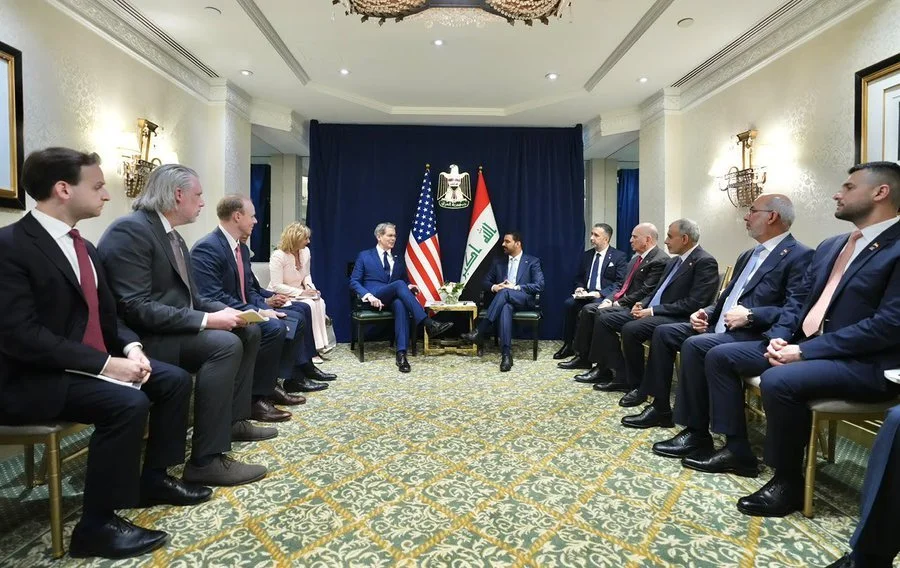
Iraq’s Prime Minister met with US Treasury Secretary Scott Bessent in Washington on Tuesday, saying Iraq is entering “a new phase” of economic reform and state-building. Al-Zaidi said his government is prioritizing:
Note: All intel should be considered as "Rumors" until we receive official announcements ...and “Rates and Dates” could change anytime until we get to the banks/redemption centers.
Majeed KSA: Iraq is Entering a New Phase of Economic Reform
7-15-2026
Iraq’s Prime Minister met with US Treasury Secretary Scott Bessent in Washington on Tuesday, saying Iraq is entering “a new phase” of economic reform and state-building. Al-Zaidi said his government is prioritizing:
overhauling the banking,
insurance,
tax,
customs sectors,
with gains expected next year in energy, investment, and stability
For his part, US Treasury Secretary Scott Bessent reaffirmed Washington’s support for Iraq’s reform agenda and its efforts to shift bilateral ties from security cooperation toward investment, economic development, and private-sector growth.
Zoom News: #BREAKING: Iraqi Prime Minister Ali al-Zaidi met with US Treasury Secretary Scott Bessent in Washington on Tuesday, saying Iraq is entering “a new phase” of economic reform and state-building. Al-Zaidi said his government is prioritizing anti-corruption efforts, placing all weapons under state authority, and overhauling the banking, insurance, tax, and customs sectors, with gains expected next year in energy, investment, and stability - statement For his part, US Treasury Secretary Scott Bessent reaffirmed Washington’s support for Iraq’s reform agenda and its efforts to shift bilateral ties from security cooperation toward investment, economic development, and private-sector growth.
Source(s):
• https://x.com/majeed66224499/status/2077232823119831164
https://dinarchronicles.com/2026/07/14/majeed-ksa-iraq-is-entering-a-new-phase-of-economic-reform/
************
Courtesy of Dinar Guru: https://www.dinarguru.com/
Walkingstick What is the monetary reform trying to do with the currency of Iraq? It is trying to get the currency of Iraq to be at least on par 1 to 1 with the American dollar. If you have an Iraqi dinar in your hand you want it to have purchasing power of at least $1.00. That's the whole purpose...After the 10th we are actually seeing all of these mechanisms come into effect...Many things are trying to get the Iraqi dinar to 1 to 1 with the American dollar.
Militia Man The Washington visit is being framed as the next big catalyst for investment, tech transfer, and deeper global integration — all of which strengthen the fundamentals for long-term REER stability and monetary moves going forward.
Reset Intelligence Iraq's prime minister is in Washington ...He brought his entire economic cabinet and booked 5 days...The finance minister sits with the World Bank, the IMF and the US Treasury, working to clear Iraq off the FATF grey list it landed on last month. The oil minister carries a development fund...to 400 billion dollars...with the proceeds held in US banks ... Every file points the same way - out of Tehran's orbit and into Washington's ...What looks like a handshake is the new financial system being built, and Iraq is the country they are building it on first...When a country is finally let back inside the system, the thing that gets repriced is its currency...
Central Banks Hid MASSIVE Gold Buying! What Happens Next? | Andy Schectman
Liberty and Finance: 7-14-2026
Andy Schectman joins Liberty & Finance to discuss why a sharp selloff in AI stocks could be an early warning sign of broader market instability and why he believes central banks are quietly positioning for a different financial future.
He explains why official data showing just 16 tonnes of central bank gold purchases in the first quarter was challenged by the World Gold Council, which estimated actual purchases were closer to 240 tonnes, highlighting what he sees as a major disconnect between public narratives and underlying demand.
Andy also shares his views on why gold prices have remained subdued despite geopolitical tensions, the surge in COMEX deliveries, and the growing role of new precious metals exchanges in Asia.
The conversation also covers retail precious metals premiums, the bankruptcy of a major bullion dealer, and what investors should look for when buying physical gold and silver.
INTERVIEW TIMELINE:
0:00 Intro
1:26 Stock market decline
14:14 War & gold
21:20 COMEX inventories
27:00 Rosland Capital bankruptcy
Iraq Economic News and Points To Ponder Wednesday Morning 7-15-26
US Investment Dominates Al-Zaidi's Washington Meetings
2026-07-15 02:42 Shafaq News- Washington Iraqi Prime Minister Ali al-Zaidi pressed for expanded US financing and investment in Iraq across a series of meetings in Washington, his media office said on Wednesday.
US Investment Dominates Al-Zaidi's Washington Meetings
2026-07-15 02:42 Shafaq News- Washington Iraqi Prime Minister Ali al-Zaidi pressed for expanded US financing and investment in Iraq across a series of meetings in Washington, his media office said on Wednesday.
Al-Zaidi discussed with Ben Black, chief executive of the US International Development Finance Corporation (DFC), the institution's participation in infrastructure reconstruction and financing partnerships across the energy, transportation, agriculture, digital economy, and services sectors. Black affirmed readiness to enter the Iraqi market and to contribute to the Iraqi Development Fund, a state investment vehicle.
The Iraqi government announced the fund last month at a lower figure. Government spokesman Haidar al-Aboudi said the Council of Ministers had approved a development fund project backed by international guarantees and contributions valued at $150 billion, intended to deliver economic stability through investment.
https://www.shafaq.com/en/Economy/US-investment-dominates-al-Zaidi-s-Washington-meetings
Oil Extends Gains On Iran-US Escalation
2026-07-15 02:03 Shafaq News- Singapore Oil extended gains on Wednesday as President Donald Trump reimposed a naval blockade on all Iranian ports and Tehran launched strikes on U.S. infrastructure in the region.
Brent futures climbed 99 cents, or 1.2%, to $85.72 a barrel at 0400 GMT. West Texas Intermediate futures gained 64 cents, or 0.8%, to $79.98 a barrel.
Oil prices closed up 2% at a one-month high on Tuesday as attacks exacerbated a supply disruption in the Strait of Hormuz, through which about a fifth of the world's oil and liquefied natural gas passed prior to the beginning of the U.S.-Israeli war on Iran.
"While the physical oil market remains adequately supplied, any further escalation involving the Strait of Hormuz or additional sanctions on Iranian exports could quickly tighten market sentiment and add further risk premiums," said Priyanka Sachdeva, senior market analyst at Phillip Nova.
Early on Wednesday, the U.S. also began a fresh round of strikes "to continue degrading Iranian capabilities used to attack commercial shipping in the Strait of Hormuz," the U.S. military said.
Tehran says it has again closed the strait after hostilities between Iran and the U.S. reignited last week, fraying an already fragile truce reached in June after several months of fighting.
"I'll save the energy targets for last, but ultimately we'll hit energy targets," Trump told Fox News in an interview aired Tuesday night on "Special Report with Bret Baier".
Iran's army said early on Wednesday that it had launched drone attacks against U.S. positions at Jordan's Azraq base. There was no immediate comment from the Pentagon.
Iran's Islamic Revolutionary Guard Corps said they targeted weapons and storage facilities in Bahrain and Kuwait. Reuters could not immediately verify the reports.
The flare-up over the last few days has heightened doubts that a memorandum of understanding signed last month would lead to a permanent halt to the war, which has engulfed Iran's neighbors.
"The chances of oil moving back toward $100 in the reasonably near term are still meaningful if hostilities intensify which damages energy infrastructure around the Gulf," Tim Waterer, chief market analyst at KCM Trade said, noting Brent prices could remain at $75-$80 a barrel if diplomatic efforts helped reopen the strait.
"For now, the risk premium is still embedded, but it's not a one-way bet given that there remain incentives for both sides to find a diplomatic solution." (Reuters)
https://www.shafaq.com/en/Economy/Oil-extends-gains-on-Iran-US-escalation
Dollar Slips In Baghdad And Erbil
2026-07-15 03:48 Shafaq News- Baghdad/ Erbil The US dollar opened Wednesday's trading lower in Iraq, hovering around 153,000 dinars per 100 dollars in Baghdad and Erbil.
According to Shafaq News market survey, the dollar traded in Baghdad's Al-Kifah and Al-Harithiya exchanges at 153,300 dinars per 100 dollars, down from Tuesday's 153,700 dinars.
In the Iraqi capital, exchange shops sold the dollar at 153,750 dinars and bought it at 152,750 dinars.
In Erbil, selling prices stood at 153,150 dinars and buying prices at 153,050 dinars.
https://www.shafaq.com/en/Economy/Dollar-slips-in-Baghdad-and-Erbil-7-6
Basra Crude Jumps More Than 8% On Oil Rally
2026-07-15 04:25 Shafaq News- Baghdad Iraq's Basra Heavy and Basra Medium crude posted sharp gains on Wednesday, rising by more than 8% as escalating geopolitical tensions across the region drove global oil prices higher.
Basra Heavy climbed $4.91, or 9.25%, to $57.99 a barrel, while Basra Medium gained the same amount, rising 8.87% to $60.29 a barrel.
The surge coincided with gains in global oil markets. Brent crude futures rose 1.53% to $86.03 a barrel, while US West Texas Intermediate (WTI) crude advanced 1.27% to $80.35.
Regional benchmark crudes also moved higher, with the UAE's Murban crude climbing 4.85% to $81.93 a barrel and Saudi Arabia's Arab Light crude jumping 7.61% to $77.36.
In contrast, the OPEC Reference Basket slipped 1.52% to $75.09 a barrel, while Dubai crude declined to $69.21 a barrel.
https://www.shafaq.com/en/Economy/Basra-crude-jumps-more-than-8-on-oil-rally
Gold Prices Hold Steady In Baghdad And Erbil
2026-07-15 05:10 Shafaq News- Baghdad/ Erbil On Wednesday, gold prices steadied across Baghdad and Erbil, hovering around 860,000 IQD per mithqal, according to a Shafaq News market survey.
Gold prices on Baghdad's Al-Nahr Street recorded a selling price of 864,000 IQD per mithqal (equivalent to five grams) for 21-carat gold, including Gulf, Turkish, and European varieties, with a buying price of 860,000 IQD, unchanged from Tuesday.
The selling price for 21-carat Iraqi gold stood at 834,000 IQD, with a buying price of 830,000 IQD.
In jewelry stores, 21-carat Gulf gold ranged between 865,000 and 875,000 IQD per mithqal, while Iraqi gold sold for between 835,000 and 845,000 IQD.
In Erbil, 22-carat gold was sold at 915,000 IQD per mithqal, 21-carat gold at 874,000 IQD, and 18-carat gold at 749,000 IQD.
https://www.shafaq.com/en/Economy/Gold-prices-hold-steady-in-Baghdad-and-Erbil-4
Seeds of Wisdom RV and Economics Updates Wednesday Morning 7-15-26
Good Morning Dinar Recaps,
UK and US Align on Stablecoin Rules as Cross-Border Digital Finance Moves Forward
The United Kingdom and the United States have announced a joint framework supporting regulated stablecoins for cross-border finance, signaling deeper cooperation on digital payments while U.S. lawmakers continue debating the CLARITY Act.
Good Morning Dinar Recaps,
UK and US Align on Stablecoin Rules as Cross-Border Digital Finance Moves Forward
The United Kingdom and the United States have announced a joint framework supporting regulated stablecoins for cross-border finance, signaling deeper cooperation on digital payments while U.S. lawmakers continue debating the CLARITY Act.
Overview
The UK and U.S. have agreed on key principles governing regulated stablecoins used in cross-border finance.
The framework emphasizes reserve protection, redemption rights, and legal safeguards designed to strengthen confidence in digital payments.
The agreement comes as U.S. lawmakers continue considering the CLARITY Act, legislation that could reshape America's digital asset regulatory framework.
Key Developments
1. UK and US Establish Common Stablecoin Principles
The two governments agreed that properly regulated stablecoins can help modernize cross-border payments, financial settlements, and capital markets. Their joint framework seeks to encourage innovation while reducing regulatory fragmentation between two of the world's largest financial centers.
Officials said internationally aligned standards could improve efficiency while supporting broader adoption of digital financial infrastructure.
2. Reserve Protection Becomes a Central Priority
The agreement calls for stablecoins to be fully backed by high-quality liquid reserves, with clear custody rules and segregation of customer assets.
The framework also emphasizes timely redemption rights and legal protections that would give stablecoin holders priority claims on reserve assets should an issuer become insolvent.
3. CLARITY Act Debate Continues
The joint announcement arrives as lawmakers continue debating the proposed CLARITY Act, which seeks to establish a clearer regulatory framework for digital assets within the United States.
Banking organizations have expressed concerns that unclear provisions could encourage customers to move funds from traditional bank deposits into stablecoins, potentially increasing pressure on smaller financial institutions.
Why It Matters
The agreement reflects a growing international recognition that digital payment systems are becoming an increasingly important part of global finance. Common regulatory standards could reduce uncertainty for businesses, encourage innovation, and improve the efficiency of international payments and settlements.
At the same time, policymakers continue balancing financial innovation with consumer protection and banking system stability as digital assets become more integrated into traditional financial markets.
Why It Matters to Foreign Currency Holders
For foreign currency holders and those following developments surrounding a potential Global Financial Reset, the expansion of regulated stablecoins represents another step toward a more digital and interconnected international financial system.
While stablecoins are not replacing sovereign currencies, their growing use in international payments could accelerate modernization of cross-border settlement systems, influence future payment infrastructure, and complement broader financial reforms taking place around the world.
Implications for the Global Reset
Pillar 1: Technology
Regulated stablecoins support the ongoing modernization of cross-border payment infrastructure, allowing faster, lower-cost international transactions while encouraging financial innovation.
Pillar 2: Trade
More efficient digital payment systems could improve international commerce by reducing settlement times, lowering transaction costs, and strengthening global trade connectivity.
Looking Ahead
Attention will now focus on whether the United States finalizes comprehensive digital asset legislation and whether additional countries adopt similar regulatory standards.
If more major economies coordinate stablecoin regulations, the result could be a more integrated global payment system that supports faster settlement, increased financial innovation, and greater cross-border economic activity.
This is not just politics—it is global finance restructuring before our eyes.
Seeds of Wisdom Team
Newshounds News™ Exclusive
Sources
~~~~~~~~~~
🌱 A Message to Our Currency Holders🌱
If you’ve been holding foreign currency for many years, you were not foolish.
You were not wrong to believe the global financial system would change.
What failed was not your patience — it was the information you were given.
For years, dates, rumors, and personalities replaced facts, structure, and proof. “This week” predictions created cycles of hope and disappointment that were never based on how currencies actually change.
That is not your failure.
Our mission here is different: • No dates • No rates • No hype • No gurus
Instead, we focus on:
• Verifiable developments • Institutional evidence
• Global financial structure • Where countries actually sit in the process
Currency value changes only come after sovereignty, trade, banking, settlement systems, and fiscal coordination are in place. History and institutions confirm this sequence.
You will see silence. You will see denials. That is not delay — that is discipline.
Protect your identity. Organize your documents. Verify everything.
Never hand your discernment to anyone who cannot show proof.
You deserve truth — not timelines.
Seeds of Wisdom Team
Newshounds News
~~~~~~~~~~
Seeds of Wisdom Team RV Currency Facts Youtube and Rumble
Newshound's News Telegram Room Link
RV Facts with Proof Links Link
RV Updates Proof links - Facts Link
Start Here room with Most Asked Questions Link
Follow the Gold/Silver Rate COMEX
Follow Fast Facts
Seeds of Wisdom Team™Website
Thank you Dinar Recaps