
Seeds of Wisdom RV and Economics Updates Friday Morning 4-17-26
Good Morning Dinar Recaps,
Trump’s Iran Ceasefire: Temporary Peace Sparks Global Market Repricing
Short-term de-escalation is shifting energy markets, investor sentiment, and financial system stability signals
Good Morning Dinar Recaps,
Trump’s Iran Ceasefire: Temporary Peace Sparks Global Market Repricing
Short-term de-escalation is shifting energy markets, investor sentiment, and financial system stability signals
Overview
A two-week ceasefire between the United States and Iran, announced by Donald Trump, has triggered an immediate global market reaction, particularly across energy, equities, and bond markets. The announcement came just ahead of a critical deadline tied to the reopening of the Strait of Hormuz, a vital global oil transit route.
The timing reflects heightened geopolitical pressure, with ongoing tensions threatening global energy supply chains and driving volatility in oil prices. Markets had been pricing in escalation risk, making the ceasefire a significant short-term relief event.
Key global players, including the U.S., Iran, and regional intermediaries such as Pakistan, are now central to whether this pause evolves into something more durable. However, deep geopolitical divisions remain unresolved, limiting long-term certainty.
At a broader level, this development highlights how geopolitical risk is increasingly dictating financial market behavior, reinforcing concerns about systemic fragility in the global economic structure.
Key Developments
1. Ceasefire Sparks Immediate Market Repricing
The announcement triggered a rapid shift in global markets as risk expectations eased.
• Oil prices declined sharply as supply disruption fears subsided
• Equity markets rallied globally on improved sentiment
• Bond markets strengthened, reflecting reduced immediate risk
2. Energy Supply Remains Constrained
Despite the ceasefire, structural issues continue to limit supply recovery.
• Infrastructure damage will delay production normalization
• Oil flows may resume, but output levels could remain below pre-conflict levels
• Tighter supply conditions may sustain elevated energy prices
3. Strait of Hormuz Stability Remains Critical
The ceasefire reduces immediate threats to one of the world’s most important energy corridors.
• The Strait of Hormuz handles a significant share of global oil shipments
• Any disruption has instant global inflation and trade implications
• Stability here is essential for restoring market confidence
4. Investor Confidence Improves — With Caution
Markets have responded positively, but uncertainty remains elevated.
• The ceasefire is seen as a potential short-term de-escalation path
• Volatility risks remain tied to future geopolitical developments
• Investors are not fully pricing in long-term peace or stability
Why It Matters
This event demonstrates how geopolitical decisions now directly influence global financial markets, particularly through energy pricing, inflation expectations, and capital flows.
The rapid market reaction underscores the fragility of the current financial system, where even temporary developments can trigger significant shifts in valuation and sentiment.
From a policy standpoint, it highlights the growing challenge for governments and central banks trying to balance economic stability with external geopolitical shocks.
At the global level, it reinforces a broader shift toward a system where political risk is becoming a primary driver of financial outcomes.
Why It Matters to Foreign Currency Holders
• Energy price volatility directly impacts currency strength across major economies
• Oil-exporting nations may experience short-term currency support
• U.S. dollar positioning remains tied to geopolitical influence and stability
• Continued uncertainty could accelerate diversification away from traditional reserve currencies
Implications for the Global Reset
Pillar 1: Energy Control as a Financial Power Lever
Control over key energy routes like the Strait of Hormuz continues to shape global economic influence, trade balances, and currency stability. This reinforces the role of energy in any evolving financial system structure.
Pillar 2: Increasing Visibility of System Fragility
The speed and scale of market reactions highlight a financial system highly sensitive to external shocks, suggesting underlying structural weaknesses that align with broader global reset narratives.
Conclusion
The two-week ceasefire represents more than a temporary geopolitical pause — it is a clear signal of how tightly interconnected global markets and political developments have become.
While the immediate response has been positive, the underlying risks remain unresolved, leaving markets exposed to renewed volatility. The situation underscores the difficulty of maintaining stability in an increasingly complex and reactive global system.
Ultimately, this moment reinforces a critical reality: short-term events are now capable of triggering long-term financial consequences, particularly in a system already under pressure.
The system isn’t just under pressure—it’s being forced toward a decision point where debt, energy, and monetary policy can no longer coexist without consequence.
Seeds of Wisdom Team
Newshounds News™ Exclusive
Sources
Modern Diplomacy — "Trump’s Two-Week Iran Ceasefire: How Investors Are Responding"
Reuters — "Global Markets React to Iran Ceasefire and Oil Price Movements"
~~~~~~~~~~
A Message to Our Currency Holders
If you’ve been holding foreign currency for many years, you were not foolish.
You were not wrong to believe the global financial system would change.
What failed was not your patience — it was the information you were given.
For years, dates, rumors, and personalities replaced facts, structure, and proof. “This week” predictions created cycles of hope and disappointment that were never based on how currencies actually change.
That is not your failure.
Our mission here is different: • No dates • No rates • No hype • No gurus
Instead, we focus on:
• Verifiable developments • Institutional evidence
• Global financial structure • Where countries actually sit in the process
Currency value changes only come after sovereignty, trade, banking, settlement systems, and fiscal coordination are in place. History and institutions confirm this sequence.
You will see silence. You will see denials. That is not delay — that is discipline.
Protect your identity. Organize your documents. Verify everything.
Never hand your discernment to anyone who cannot show proof.
You deserve truth — not timelines.
Seeds of Wisdom Team
Newshounds News™
~~~~~~~~~~
Seeds of Wisdom Team RV Currency Facts Youtube and Rumble
Newshound's News Telegram Room Link
RV Facts with Proof Links Link
RV Updates Proof links - Facts Link
Follow the Gold/Silver Rate COMEX
Follow Fast Facts
Seeds of Wisdom Team™Website
Thank you Dinar Recaps
Iraq Economic News And Points To Ponder Friday Morning 4-17-26
Gold is heading for its fourth weekly gain amid anticipation of a deal on Iran
Money and Business Economy News — Follow-up Gold is on track for its fourth weekly gain after US President Donald Trump expressed optimism that the United States and Iran could reach a permanent ceasefire to end the war that has shaken markets and increased inflation fears.
The precious metal settled near $4,795 an ounce in early trading on Friday, after rising about 1% this week, according to Bloomberg.
Gold is heading for its fourth weekly gain amid anticipation of a deal on Iran
Money and Business Economy News — Follow-up Gold is on track for its fourth weekly gain after US President Donald Trump expressed optimism that the United States and Iran could reach a permanent ceasefire to end the war that has shaken markets and increased inflation fears.
The precious metal settled near $4,795 an ounce in early trading on Friday, after rising about 1% this week, according to Bloomberg. https://www.economy-news.net/content.php?id=67984
The Closure Of The Strait Of Hormuz: A Double Stranglehold On The Stability Of The Iraqi Economy
Dr. Haitham Hamid Mutlaq Al-Mansour Economy News — Baghdad
With the continued closure of the Strait of Hormuz, the repercussions on the structure of the Iraqi economy are becoming increasingly apparent. The stability of the national economy is now almost entirely dependent on a single route for vital revenue flows: oil exports through the southern ports and then via the Strait of Hormuz.
This situation represents a dual dependence on both a single commodity and a single transport route simultaneously, creating a double bottleneck that exacerbates economic fragility.
In normal economies, risks are distributed across multiple sources of income and diverse export channels. However, in Iraq, over 90% of the general budget revenues come from oil, and more than 85% of these exports pass through a single maritime outlet.
With no alternative routes to the Strait of Hormuz, this structure places the economy in a vicious cycle, where production, revenue, and financial stability are tied to the security of a single geographical point outside the state's complete control, effectively making it an external variable that dictates the revenue side of the budget. The danger of this point lies not only in its potential to cause a partial decline in economic activity but also a comprehensive shock.
If the closure of Hormuz continues, Iraq's oil export capacity will plummet, potentially resulting in losses exceeding 2.5 to 3 million barrels per day. Assuming an average price of $90 per barrel, this translates to a direct loss of approximately $245 million daily, or roughly $7 to $9 billion monthly.
This loss is not confined to the oil sector but is immediately transferred to the general budget, which relies on these revenues for nearly 90% of its funding.
The deeper impact of the double bottleneck manifests in what is known in macroeconomics as shock transmission. Following a halt or decline in dollar inflows from oil, a cascade of contractions will occur, beginning with the public budget, then government spending, then the labor market, and finally aggregate demand.
Due to the weakness of the private sector, there is no natural shock-absorbing mechanism, which will amplify the impact of the crisis rather than mitigate it. For this reason, the transmission shock can transform into an economic contraction exceeding 35% of total economic activity.
This bottleneck will not only affect current flows but also investment prospects. Increased risk in one direction raises what is known as the geopolitical risk premium, leading to higher insurance and transportation costs, exchange rate volatility in the absence or scarcity of foreign currency, and consequently, decreased investor confidence.
This means that the mere existence of a single source of revenue imposes a continuous economic cost on the Iraqi economy, further diminishing the contribution of non-oil sectors, which, at best, do not exceed 30% of GDP.
The most serious problem with this model is that it operates in a vicious cycle. The meager oil revenues are not expected to lead to significant diversification of economic activity; rather, they will undoubtedly reinforce reliance on government spending for resource allocation and redistribution, thus exacerbating the weakness of the productive sector and making it even more difficult to break free from this cycle.
Consequently, the bottleneck is no longer a geographical problem (the Strait of Hormuz), but a structural one within the economy itself, which has become stuck at a point where its stability is contingent on external factors.
One of the repercussions of this economic crisis on the monetary sector is its direct impact on the implementation of inflation targeting policies in Iraq, making them more of a theoretical objective than a practical and achievable framework.
Inflation targeting presupposes a central bank capable of controlling the money supply and interest rates within a relatively stable environment in terms of foreign currency inflows. However, in the Iraqi case, monetary stability is primarily determined by oil dollar inflows, not by traditional monetary policy tools.
Following the disruption of oil exports, the central bank faces a double shock: a contraction in the foreign exchange supply coupled with upward pressure on the general price level.
The decline in dollar inflows—which normally range between $8 and $9 billion per month—leads to an immediate imbalance in the exchange market, making the defense of the dinar's value more costly and forcing the central bank to draw on its reserves, estimated at $100 to $110 billion.
As the shock persists, the exchange rate transforms from a stabilizing tool into a source of imported inflation, especially since more than 70% of Iraq's consumption basket is directly or indirectly dependent on imports.
In this context, inflation targeting loses its fundamental requirement: the ability to guide expectations. Inflation in Iraq does not primarily stem from excess domestic demand, which can be curbed by raising interest rates, but rather from external supply shocks linked to the exchange rate and import costs.
When prices rise due to currency depreciation, raising interest rates does not address the underlying cause; instead, it exacerbates the recession, as the economy relies more on government spending than on private credit.
Since government spending itself is shrinking due to declining oil revenues, the economy enters a state of stagflation that is difficult to address with traditional monetary policy tools. This leads to a slowdown in economic growth, which can, in turn, fuel economic recession, higher unemployment rates, and a decline in real GDP.
Even more concerning is the inherently weak transmission channel of monetary policy via interest rates. Bank credit to the private sector barely exceeds 15% of GDP, meaning that interest rate changes do not effectively impact investment or consumption.
Given this limitation, the exchange rate has become the only viable tool, but this tool itself depends on dollar inflows from oil revenues, effectively tying monetary policy back to the cycle of external geopolitical constraints. In other words, the central bank's primary objective is not inflation control, but rather maintaining exchange rate stability, which is itself dependent on an external variable.
Thus, economic and monetary stability in Iraq are no longer separate entities, but rather a single, interconnected system dependent on a crucial external factor: the uninterrupted flow of oil through the Strait of Hormuz.
Any disruption to this flow leads to a rapid economic contraction, while the monetary system loses its ability to simultaneously stabilize prices and the exchange rate, revealing a structural fragility at the very foundation of stability.
Thus, inflation targeting in Iraq transforms from a policy based on internal tools into a variable dependent on the stability of external conditions, thereby losing its independence and undermining its effectiveness.
The problem lies not in the design of the monetary framework, but in the economic structure that makes inflation control contingent on the flow of a single resource through a single channel. Under this structure, sustainable price stability can only be achieved by addressing the root cause of the bottleneck: decoupling monetary stability from the oil export trajectory, diversifying sources of foreign currency, and expanding the productive base.
Otherwise, inflation targeting will remain a fragile objective, vulnerable to collapse with every external shock.
Here, the performance of monetary policy tools in Iraq is organically linked to the Strait of Hormuz, making monetary policy essentially a reflection of the stability of this external geopolitical trajectory rather than a product of independent domestic instruments.
The interest rate, which is supposed to be the primary tool for controlling aggregate demand, loses its effectiveness in an environment where bank credit to the private sector does not exceed 15% of GDP.
Even with an interest rate increase of 2 to 3 percentage points, the impact remains limited because inflation in this case does not stem from excess demand, but rather from the depreciation of the exchange rate and the increased cost of imports. Conversely, this increase leads to higher financing costs in an economy largely dependent on government spending, thus deepening the deflationary effect instead of containing it.
Consequently, the exchange rate becomes the central tool, but simultaneously the most vulnerable. Stabilizing the dinar requires injecting between $200 and $300 million daily into the market, a sum previously covered by current oil revenues.
With these revenues declining, the central bank is forced to finance this injection of funds from its foreign reserves, which range between $100 billion and $110 billion. If withdrawals continue at a rate of $5 billion to $8 billion per month, the reserves could be depleted by up to 30% within six months and by about 50% within a year.
This weakens the ability to defend the exchange rate and opens the door to a depreciation of the currency that could exceed 20% to 30% in a prolonged scenario.
On the other hand, open market operations become less effective in an environment where domestic liquidity is directly linked to oil revenues. Following a decline in these revenues, the central bank no longer faces a cash surplus to withdraw, but rather a shortage of resources, thus diminishing its ability to manage the money supply.
With the economy heavily reliant on government spending, which constitutes more than 45% of GDP, any 30% contraction in this spending translates into an economic contraction that could reach 35%, fundamentally undermining any attempt to use traditional monetary policy tools.
The repercussions of the Strait of Hormuz closure are also evident in Iraq's declining foreign currency reserves, reflecting their transformation from a stabilizing force into a means of financing the deficit amidst a widening gap between revenues and expenditures. Reserves fell by approximately 4.5 trillion dinars ($3.4 billion) in the first two months of 2026, and by 14.2 trillion dinars over four years, indicating a continuous decline.
As a result of the ongoing war, the closure of the Strait of Hormuz, and the lack of an alternative outlet for oil exports, revenues now cover only 25% of the minimum monthly expenditure and less than 13% of the maximum, forcing reliance on reserves to cover a deficit that could reach 8 trillion dinars per month.
Thus, the trajectory of reserves is now determined more by external geographical factors than by price fluctuations, making them vulnerable to rapid depletion and revealing a structural fragility in the economy, which depends on a single resource and a single channel for its flow.
Given these circumstances, the shock quickly translates into price levels, as over 70% of domestic consumption relies on imports, meaning any currency devaluation directly impacts inflation. Without effective monetary policy tools, inflation rates could rise rapidly, not due to monetary expansion, but rather to disruptions in foreign currency flows.
In this sense, monetary policy tools in Iraq not only lose their effectiveness but also become dependent on a single external variable: the continued flow of oil through a limited geographical route.
When this route is disrupted, the ability of monetary policy to perform its traditional functions is also disrupted, transforming it from a tool for regulation and stability into a tool for crisis management.
This occurs in an economy that relies heavily on a single resource for its revenues and on a single outlet for over 85% of its exports, making its monetary stability hostage to a geopolitical equation rather than a product of economic policy. Therefore, policymakers must work to develop flexible oil export policies at the short, medium, and long-term levels, each according to its specific timeline, to diversify oil export routes and reduce dependence on the Strait of Hormuz.
MilitiaMan and Crew: IRAQ DINAR UPDATE-Non-Oil Revenues-LPG-CBI Capital Adequacy-Regulatory Control-REER when Prudent
MilitiaMan and Crew: IRAQ DINAR UPDATE-Non-Oil Revenues-LPG-CBI Capital Adequacy-Regulatory Control-REER when Prudent
4-16-2026
The Crew: Samson, PompeyPeter, Petra, Daytrader, Sunkissed, GIGI and Militia Man
No drama. No intrigue. No songs and dances. Just straight, factual news that I read and interpret to the best of my ability after being an avid Dinar investor and insanely obsessed Dinarian for over 15 years.
Follow MM on X == https://x.com/Slashn
MilitiaMan and Crew: IRAQ DINAR UPDATE-Non-Oil Revenues-LPG-CBI Capital Adequacy-Regulatory Control-REER when Prudent
4-16-2026
The Crew: Samson, PompeyPeter, Petra, Daytrader, Sunkissed, GIGI and Militia Man
No drama. No intrigue. No songs and dances. Just straight, factual news that I read and interpret to the best of my ability after being an avid Dinar investor and insanely obsessed Dinarian for over 15 years.
Follow MM on X == https://x.com/Slashn
Be sure to listen to full video for all the news……..
FRANK26…4-16-26….THE EVIDENCE
KTFA
Thursday Night Video
FRANK26…4-16-26….THE EVIDENCE
This video is in Frank’s and his team’s opinion only
Frank’s team is Walkingstick, Eddie and Omar in Iraq and guests
Playback Number: 605-313-5163 PIN: 156996#
KTFA
Thursday Night Video
FRANK26…4-16-26….THE EVIDENCE
This video is in Frank’s and his team’s opinion only
Frank’s team is Walkingstick, Eddie and Omar in Iraq and guests
Playback Number: 605-313-5163 PIN: 156996#
Seeds of Wisdom RV and Economics Updates Thursday Evening 4-16-26
Good Evening Dinar Recaps,
Global Financial Stress Builds as War, Inflation, and IMF Warnings Converge
Energy shocks, rising inflation, and mounting debt pressures signal increasing strain on the global financial system.
Good Evening Dinar Recaps,
Global Financial Stress Builds as War, Inflation, and IMF Warnings Converge
Energy shocks, rising inflation, and mounting debt pressures signal increasing strain on the global financial system.
Overview
Developments in the last 24 hours show intensifying pressure across global markets, driven by war-related energy disruptions, rising inflation, and increasing reliance on financial support systems. These signals point toward a fragile global environment where structural financial shifts become more likely.
Key Developments
1. IMF Warns of Energy Shock Impact on Global Growth
The International Monetary Fund cautioned that the ongoing conflict is creating a major energy shock, particularly impacting Asia due to its dependence on imported fuel. Growth projections are being revised downward while inflation is rising, highlighting a tightening economic environment.
2. Federal Reserve Signals Inflation Pressures from War
U.S. Federal Reserve officials confirmed that the conflict is already pushing inflation higher, with rising energy costs feeding into food, travel, and industrial prices. This adds pressure to maintain tighter monetary policy, increasing the risk of prolonged high interest rates.
3. Oil Market Disruptions Create Pricing Instability
Global oil markets are experiencing severe dislocations, with physical prices surging while futures markets remain disconnected. This pricing gap reflects uncertainty and instability in supply expectations, a condition that can disrupt global trade and financial planning.
4. Rising Demand for IMF Support Signals Debt Stress
More countries, particularly in Africa, are turning to the IMF for assistance as fuel costs rise, aid declines, and fiscal pressures increase. The growing reliance on external funding suggests widening sovereign debt vulnerabilities across developing economies.
Why It Matters
The combination of energy disruption, inflation persistence, and rising debt dependence reflects a system under strain. Historically, these factors often lead to policy intervention, currency volatility, and shifts in financial structure.
Why It Matters to Foreign Currency Holders
Increased likelihood of currency fluctuations across global markets
Potential acceleration toward alternative settlement systems and regional trade blocs
Rising importance of diversification across currencies and asset classes
Implications for the Global Reset
Pillar 1: Monetary System Pressure
Persistent inflation and economic uncertainty may force central banks into difficult policy decisions, balancing growth risks against inflation control, potentially leading to new monetary strategies.
Pillar 2: Sovereign Debt and Global Dependence Shift
As more nations seek IMF support, the global system may move toward restructured debt frameworks and conditional financial alliances, reshaping global economic influence.
Closing Insight
The current environment reflects layered financial stress rather than isolated shocks. War-driven inflation, energy instability, and rising debt burdens are aligning in ways that often precede system-wide financial transitions.
War-driven energy shocks and rising inflation are tightening global liquidity, pushing the financial system closer to a breaking point.
Seeds of Wisdom Team
Newshounds News™ Exclusive
Sources
Reuters — "IMF warns Asia vulnerable to war-induced energy shock"
Reuters — "Fed's Williams warns war is driving up inflation pressures"
~~~~~~~~~~
Seeds of Wisdom Team RV Currency Facts Youtube and Rumble
Newshound's News Telegram Room Link
RV Facts with Proof Links Link
RV Updates Proof links - Facts Link
Follow the Gold/Silver Rate COMEX
Follow Fast Facts
Seeds of Wisdom Team™Website
Thank you Dinar Recaps
There Is No "Fair Share" — There Is Only “More”
There Is No "Fair Share" — There Is Only “More”
Notes From the Field By James Hickman (Simon Black / Sovereign Man) April 16, 2026
In April 1971, Keith Richards loaded his family and his Bentley onto a cross-Channel ferry and drove south until he hit the Mediterranean. He rented a 19th-century villa called Nellcôte on a hillside above Villefranche-sur-Mer, and converted the basement into a recording studio.
There Is No "Fair Share" — There Is Only “More”
Notes From the Field By James Hickman (Simon Black / Sovereign Man) April 16, 2026
In April 1971, Keith Richards loaded his family and his Bentley onto a cross-Channel ferry and drove south until he hit the Mediterranean. He rented a 19th-century villa called Nellcôte on a hillside above Villefranche-sur-Mer, and converted the basement into a recording studio.

Over the following year the rest of the Rolling Stones rotated through the house and nearby properties to record the double album that became Exile on Main St., while staying deliberately out of reach of the British tax authorities.
The top marginal income tax rate in Britain at the time was 75%, and a surcharge on the highest earners pushed the effective rate on the wealthiest past 90%.
Three years later, under Denis Healey's 1974 budget, the top rate on earned income would climb to 83% and the rate on investment income would reach 98%.
Britain would spend the rest of the decade watching capital flee and begging the IMF for emergency loans.
David Bowie, Rod Stewart, Michael Caine, Sean Connery, and a long line of less famous wealthy Britons eventually ran the same arithmetic as the Stones and reached a similar conclusion. Capital left the country in every form it could fit into, including bonds, businesses, luxury cars, and rock stars.
But politicians never learn.
Senator Cory Booker of New Jersey has backed legislation that would push the top federal income-tax rate to 43%.
Senator Chris Van Hollen of Maryland is pushing a version that lands at 49%.
Both men describe it, as they always do, as wealthy Americans finally paying their "fair share."
What exact percent is their fair share? Are we to believe they will be satisfied at 43% or 49%?
As always, that phrase is deliberately left undefined.
Never-mind that the top 1% of filers already paid 40.4% of all federal income taxes in 2022 while the bottom 50% paid roughly 3%.
They are also conveniently ignorant of the fact that raising the top marginal rate doesn’t actually raise revenue at all.
Since the end of the Second World War, U.S. federal tax revenue has averaged around 17% to 18% of GDP, dipping toward 15% in deep recessions and climbing near 20% in booms. The swings track the business cycle, not tax policy.
The top marginal rate, over that same stretch, has been all over the map: 91% under Eisenhower, 28% under Reagan by 1988, 39.6% under Clinton, 37% today. Yet regardless of whether tax rates were 91% or 37%, the IRS always collects around 17% of GDP.
The conclusion is obvious: if the government wants to collect more tax revenue, they should focus on setting the right conditions for an economic boom. In short, make the pie bigger for EVERYONE, and hence the government’s slice will grow as well.
Making the pie bigger isn’t that hard, either. America’s private economy is legendary. All Congress has to do is get out of the way. Attempt to run a balanced budget. Restore credibility. Make it easier for businesses and individuals to be productive. REMOVE idiotic laws instead of creating new ones.
But they’re not interested in any of those things.
Congress has documented evidence of hundreds of billions of dollars in fraud. Yet they do nothing. They have also pledged to do nothing about Social Security— which is set to run out of money in six years.
The regulatory code in the Land of the Free already runs over 188,000 pages. Yet they expand it every session.
This is the opposite of what they should be doing. And instead of figuring out how to live within their means, they just demand more resources... even though it never works.
Britain tried its 98% tax experiment in the 1970s and spent a decade regretting it.
Ironically the current Labour government has forgotten that painful lesson; they recently abolished the 110-year-old "non-dom" regime, and more than 10,000 millionaires have already left the country.
In the United States, Elizabeth Warren's Ultra-Millionaire Tax proposal does not just impose a wealth tax. It bundles her wealth tax with an additional 40% exit tax on anyone who renounces US citizenship.
You do not create a 40% tollbooth at the border unless you fully expect people to try to walk through it.
These are not serious ideas to grow an economy. Rather, they are insidious policies designed to trap people in a system which steals their prosperity. That is why a Plan B makes so much sense.
To your freedom, James Hickman Co-Founder, Schiff Sovereign LLC
Reset Intelligence: Eleven Days on the Clock
Reset Intelligence: Eleven Days on the Clock
4-16-2026
Reset Intelligence @EXIT_FIAT
Iraq’s current Prime Minister signed a contract with Ernst and Young on Tuesday.
Three days after the new president took the oath.
Final-stage audit on the two state banks every future budget, HCL transfer, and exchange rate has to run through.
Reset Intelligence: Eleven Days on the Clock
4-16-2026
Reset Intelligence @EXIT_FIAT
Iraq’s current Prime Minister signed a contract with Ernst and Young on Tuesday.
Three days after the new president took the oath.
Final-stage audit on the two state banks every future budget, HCL transfer, and exchange rate has to run through.
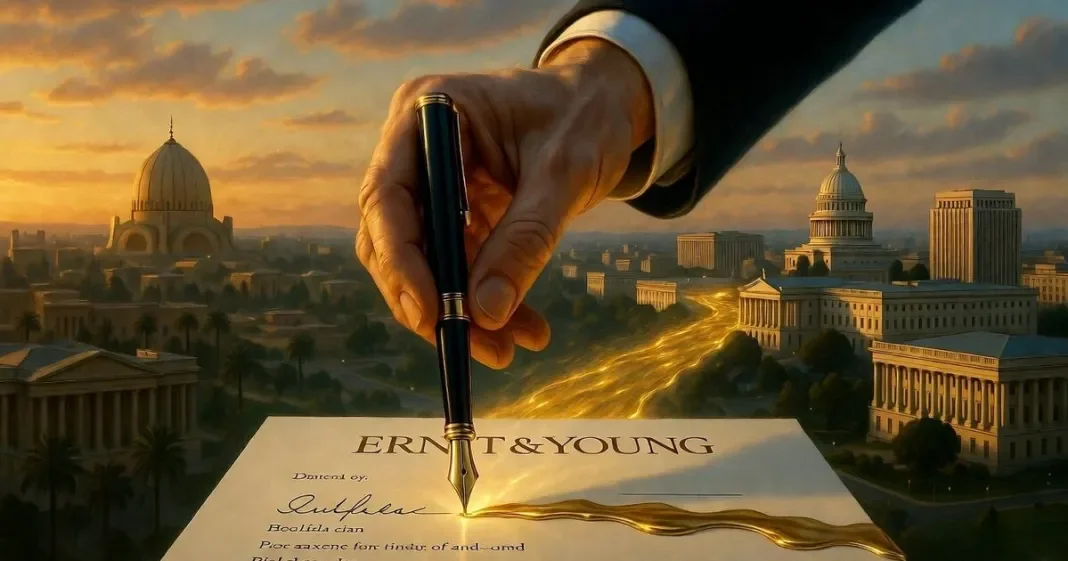
The council statement used three words: transparency, governance, international standards.
That language has one audience.
Same afternoon, three files opened inside a ten-block radius of the Treasury building.
• Venezuela’s central bank reopened to US finance for the first time since 2019.
• Israel and Lebanon sat at the State Department for the first time since 1993.
• Syria walked out of the World Bank with a banking annex mirroring Iraq’s.
Eleven days on the clock.
The audition is public.
Which deadline do you think Washington is watching more carefully?
Eleven days until Iraq nominates a prime minister.
Or four days until the last legal Iranian crude shipment into India closes.
Both run out in the same week.
Why did Syria walk out of the World Bank this week with a banking annex built on Iraq’s architecture?
Damascus chose Baghdad’s playbook over its own.
What does that tell you about which country is running the regional reset?
Eleven days until Iraq names a PM.
Four days until the last Iranian oil window closes.
$435 million a day in damage under a blockade CENTCOM just called “fully implemented.”
Same day, Treasury reopened Venezuela’s central bank for the first time in seven years.
Sudani signed a Big Four audit on Iraq’s two state banks the same afternoon.
This isn’t a caretaker talk.
It’s campaign language.
Who is he auditioning for?
The Venezuela template closed the oil step in February.
• This week it closed the banking step.
• Iraq closed that step eleven months ago.
Same playbook. Different chapters.
First direct Israel-Lebanon talks since 1993.
First reopening of Venezuela’s central bank since 2019.
Syria mirroring Iraq’s blueprint at the World Bank.
Source(s):
• https://x.com/EXIT_FIAT/status/2044382598370349203
• https://x.com/EXIT_FIAT/status/2044552128468029733
https://dinarchronicles.com/2026/04/16/reset-intelligence-eleven-days-on-the-clock/
The Real Reason France Took All Its Gold Back from the U.S.
The Real Reason France Took All Its Gold Back from the U.S. | Andy Schectman & Michelle Makori
Miles Franklin Media: 4-15-2026
Michelle Makori, President & Editor-in-Chief, Miles Franklin Media, sits down with Andy Schectman, Founder & CEO of Miles Franklin Precious Metals, to break down why France quietly took its gold back from the U.S. and what it signals about trust, the dollar, and the global financial system.
Gold may still be trading below $5,000, but according to Schectman, the real story isn’t price – it’s what’s happening beneath the surface.
The Real Reason France Took All Its Gold Back from the U.S. | Andy Schectman & Michelle Makori
Miles Franklin Media: 4-15-2026
Michelle Makori, President & Editor-in-Chief, Miles Franklin Media, sits down with Andy Schectman, Founder & CEO of Miles Franklin Precious Metals, to break down why France quietly took its gold back from the U.S. and what it signals about trust, the dollar, and the global financial system.
Gold may still be trading below $5,000, but according to Schectman, the real story isn’t price – it’s what’s happening beneath the surface.
From central banks accelerating gold purchases to rising geopolitical fractures, systemic financial risks, and growing concerns around digital infrastructure, this conversation explores whether the world is already moving toward a new monetary order.
In this episode of The Real Story with Michelle Makori:
Why France repatriated its gold from the U.S.
The global trend of central bank gold accumulation
Declining trust in the U.S. financial system
Why “price is a tool of misdirection”
Gold vs Treasuries: the real shift in capital flows
Private credit risks and systemic fragility
AI, cybersecurity threats, and financial system vulnerability
Why gold is being positioned as a neutral reserve asset
What could trigger a full monetary reset
00:00 Introduction
03:19 France Took All Its Gold Back from the U.S.
04:59 Repatriation Trend Since 2017
12:51 Munich Trust Collapse Data
17:01 Paper Price Vs Physical Flow
23:20 What Breaks The System
29:53 Petrodollar And Oil Fallout
35:50 Inflation Supply Shock
37:15 Dollar Trust Erodes
39:46 Private Credit Time Bomb
43:28 AI Cyber Risk Summit
53:47 Commodities Replace 60/40
57:44 Media Misses Delivery Signal
01:01:03 Gold Price Targets Wrap
Seeds of Wisdom RV and Economics Updates Thursday Afternoon 4-16-26
Good Afternoon Dinar Recaps,
BRICS Accelerates Dollar Shift as Russia Settles 60% of Trade in Local Currency
Rising local currency settlements signal a strategic move away from dollar dominance and toward a multipolar financial system
Good Afternoon Dinar Recaps,
BRICS Accelerates Dollar Shift as Russia Settles 60% of Trade in Local Currency
Rising local currency settlements signal a strategic move away from dollar dominance and toward a multipolar financial system
Overview
New data indicates that Russia has settled approximately 60% of its foreign trade in local currency, marking a significant shift away from the U.S. dollar. This trend reflects a broader BRICS-led push toward de-dollarization, with growing implications for global trade flows, currency stability, and financial system structure.
Key Developments
1. Russia Reaches 60% Local Currency Trade Settlement
Russia confirmed that 60% of its foreign trade transactions are now settled in rubles or partner currencies, a notable increase from 54.2% in 2025. This marks a record level of non-dollar trade activity, driven largely by sanctions and strategic realignment.
2. Regional Trade Partners Drive Currency Shift
A significant portion of this transition is tied to BRICS partners China and India, where bilateral trade increasingly bypasses the dollar. Additionally, currency usage diversification, including the UAE dirham, highlights a broadening settlement network outside traditional systems.
3. Import Data Shows Rapid Expansion of Ruble Usage
Recent figures show:
54% of imports from Asia settled in rubles (up from 49.9%)
70% from the Americas, 82% from Africa, and 69.3% from Europe
These numbers indicate a rapid scaling of local currency adoption across multiple regions, not just within BRICS.
4. Sanctions Continue to Reshape Global Trade Behavior
Western sanctions have accelerated alternative financial infrastructure, pushing Russia and its partners to develop parallel systems for trade settlement. This shift is contributing to a fragmentation of the global financial order.
Why It Matters
The move toward local currency settlements represents a structural challenge to dollar dominance. As more trade bypasses the dollar, global demand for USD could gradually decline, impacting U.S. borrowing power and financial influence.
Why It Matters to Foreign Currency Holders
Potential for currency realignment and shifting valuations
Increased importance of emerging market currencies in trade settlement
Growing role of regional financial systems over centralized global ones
Implications for the Global Reset
Pillar 1: Monetary System Transition
The rise in local currency settlements suggests a gradual evolution toward a multi-currency global system, reducing reliance on a single reserve currency.
Pillar 2: Geoeconomic Realignment
Trade relationships are increasingly shaped by political alliances and regional blocs, signaling a shift toward fragmented but interconnected financial ecosystems.
Closing Insight
Russia’s move is not an isolated event but part of a broader strategic trend among BRICS nations. While not yet replacing the dollar, these developments indicate a steady rebalancing of global financial power.
As Russia pushes 60% of its trade into local currencies, the global financial system inches closer to a multipolar currency reality.
Seeds of Wisdom Team
Newshounds News™ Exclusive
Sources
Watcher.Guru — "BRICS Country Settled 60% of Trade in Local Currency"
Reuters — "Russia increases use of ruble in foreign trade settlements"
~~~~~~~~~~
Seeds of Wisdom Team RV Currency Facts Youtube and Rumble
Newshound's News Telegram Room Link
RV Facts with Proof Links Link
RV Updates Proof links - Facts Link
Follow the Gold/Silver Rate COMEX
Follow Fast Facts
Seeds of Wisdom Team™Website
Thank you Dinar Recaps
Iraq Economic News And Points To Ponder Thursday Afternoon 4-16-26
The Conflict Between Maliki And Sudani Continues, And The Option Of A Third Candidate Resurfaces, Awaiting A Deal To Balance Interests
Special Report – One News 4/16/2026 The crisis surrounding the selection of a prime minister within the Coordination Committee is heading toward a more complex negotiation process, following initial understandings that link the decision to a two-thirds majority within the Shia political bloc.
This means that any candidate needs the support of eight out of twelve leaders to secure their appointment, a condition that opens the door to further rounds of negotiations before a final agreement can be reached.
The Conflict Between Maliki And Sudani Continues, And The Option Of A Third Candidate Resurfaces, Awaiting A Deal To Balance Interests
Special Report – One News 4/16/2026 The crisis surrounding the selection of a prime minister within the Coordination Committee is heading toward a more complex negotiation process, following initial understandings that link the decision to a two-thirds majority within the Shia political bloc.
This means that any candidate needs the support of eight out of twelve leaders to secure their appointment, a condition that opens the door to further rounds of negotiations before a final agreement can be reached.
These understandings emerged against the backdrop of the postponement of the Committee's meeting until next Saturday, amidst the ongoing division between the camps of Nouri al-Maliki and Mohammed Shia al-Sudani, with each side attempting to strengthen its position within the power-sharing equation.
According to available information, the understandings reached between the two leading candidates, Maliki and al-Sudani, stipulate that if either of them obtains the two-thirds majority, the other parties will automatically join them, thus granting them a consensus within the Committee.
However, finalizing this agreement still requires additional time to ensure the distribution of responsibilities among the various political forces.
In contrast, several political forces have adopted a neutral stance, including the Design Alliance, the Victory Coalition, and the Virtue Party. It is estimated that these parties will support the candidate who can offer political guarantees regarding gains and representation within the next government.
The coordination framework remains limited to three main options for resolving the crisis: maintaining al-Maliki's candidacy, renewing al-Sudani's term, or pursuing a third candidate, likely close to one of the two main parties, in an attempt to defuse the current polarization. https://1news-iq.net/صراع-المالكي-والسوداني-مستمر-وخيار-ا/
EXCLUSIVE: CF Adopts Two-Thirds Rule For Iraq’s Premiership Race
2026-04-16 Shafaq News- Baghdad Iraqi Shiite leaders have agreed on a mechanism to select the country’s next prime minister, centering on a two-thirds majority rule, a source within the Coordination Framework (CF) told Shafaq News on Thursday.
Under the emerging formula, any candidate securing the backing of eight out of 12 senior Shiite leaders would effectively achieve consensus, paving the way for the remaining factions to align and complete the required two-thirds support.
The proposal comes as negotiations within the CF, Iraq’s largest parliamentary bloc, continue to shape the government formation process. A CF meeting initially scheduled for Wednesday was postponed after several Framework leaders boycotted the session.
Earlier this week, Iraq’s State of Law Coalition rejected reports that its leader, former Prime Minister Nouri al-Maliki, might withdraw his candidacy for the premiership. Coalition member Zuhair al-Jalabi conveyed to Shafaq News that al-Maliki “has not and will not step aside for any of the names circulating in the media,” describing such claims as inaccurate.
The remarks came after Qusay Mahbuba of the Reconstruction and Development Coalition (Al-Imaar wal-Tanmiya), led by caretaker Prime Minister Mohammed Shia al-Sudani, suggested that al-Maliki could step aside in favor of Basim al-Badri, raising questions over whether such a move would signal a political exit or risk fracturing the CF.
Under Iraq’s post-2003 power-sharing system, the presidency is held by a Kurd, the premiership by a Shiite, and the speakership by a Sunni Arab. Parliament elected Nizar Amedi as president on April 11, triggering the constitutional process to name a prime minister. According to Article 76 of the constitution, the CF has 15 days from that date to nominate its candidate, after which the designated prime minister has 30 days to form a government and secure parliamentary confidence.
Read more: Al-Maliki sounds different this time — the world is not convinced yet
https://www.shafaq.com/en/Iraq/EXCLUSIVE-CF-adopts-two-thirds-rule-for-Iraq-s-premiership-race
An American Magazine Reports That The Dominance Of Shiite Leaders Over The Iraqi State Is "Fragile" And Based On Sectarianism And Armed Groups Like The Popular Mobilization Forces
Baghdad – One News 4/16/2026 Foreign Affairs magazine reported that the dominance of Shiite leaders over the Iraqi state is “fragile” and based on sectarian power-sharing and armed groups such as the Popular Mobilization Forces.
She noted that Iraqi Shiite leaders are deeply concerned about the collapse of the country's fragile political system, given the escalating challenges.
She added that the Iraqi government refused to rein in the factions during the war between the United States and Iran, representing a shift from its previous efforts to contain these groups.
She noted that more groups in Iraq may show a willingness to exert military and political pressure on the United States to reduce or end its presence in the country, while sectarian and political tensions will deepen between Shiites on one side, and Sunnis and Kurds on the other. https://1news-iq.net/مجلة-أميركية-هيمنة-قادة-الشيعة-على-الد/
The Reconstruction And Development Coalition Calls For A Strong Government And Emphasizes Meeting The Aspirations Of The Iraqi People
Baghdad – One News 4/15/2026 The leadership body of the Reconstruction and Development Coalition held its periodic meeting today, Wednesday, chaired by Secretary-General Mohammed Shia Al-Sudani, to discuss the latest developments in the political scene in the country.
During the meeting, the coalition stressed the importance of completing the constitutional steps to move towards forming a strong national government with full powers, capable of continuing strategic service and economic programs, and confronting the challenges facing the Iraqi state.
The participants stressed that the priority of the next government should be to meet the aspirations of citizens in the areas of construction and development, with the need to secure the support of political forces, foremost among them the coordination framework, in order to ensure unity of decision and to prioritize the higher interests of Iraq.
The coalition also stressed the need to respect the will of the voters, which was manifested in the broad participation in the elections, stressing that the process of forming the government must reflect the aspirations of the Iraqis, contribute to strengthening Iraq’s international standing, developing its foreign relations, extending state authority, and enabling the armed forces to enforce the law and monopolize weapons, while giving priority to national sovereignty.
https://1news-iq.net/ائتلاف-الإعمار-والتنمية-يدعو-لحكومة-ق/
Special Report: How to Buy & Sell Iraqi Dinar
Special Report: How to Buy & Sell Iraqi Dinar
Edu Matrix: 4-16-2026
Special Report: How to Buy & Sell Iraqi Dinar - Most people don’t realize this—but yes, you can legally buy foreign currencies like the Iraqi dinar, Vietnamese dong, and other exotic currencies right here in the United States and have them shipped directly to your home.
But before you invest, there are critical details you need to understand that could save you thousands of dollars.
Special Report: How to Buy & Sell Iraqi Dinar
Edu Matrix: 4-16-2026
Special Report: How to Buy & Sell Iraqi Dinar - Most people don’t realize this—but yes, you can legally buy foreign currencies like the Iraqi dinar, Vietnamese dong, and other exotic currencies right here in the United States and have them shipped directly to your home.
But before you invest, there are critical details you need to understand that could save you thousands of dollars.
In this video, we break down how legal currency dealers operate in the U.S., including well-known companies like SafeDinar, US First Exchange, Currency Liquidator, and Xchange of America.
You’ll learn what it really means for a company to be registered as a Money Services Business and why that does NOT guarantee the same level of oversight as traditional banks.
We also explain one of the biggest mistakes investors make—assuming exotic currencies like the Iraqi dinar will suddenly increase in value overnight. The truth is, currency values are driven by economic fundamentals, central bank policy, and global trade—not speculation or online hype.
If you’ve ever wondered whether buying Iraqi dinar is a smart investment, this video gives you a clear, honest breakdown. We cover how pricing works, why dealers charge markups, and how the buyback process can impact your ability to recover your money.
You’ll also learn how to verify if a currency dealer is legitimate and trustworthy by checking registration with FinCEN and reviewing ratings with the Better Business Bureau. These simple steps can help protect you from costly mistakes.
For those looking for safer alternatives, we discuss traditional ways to invest in foreign currencies, including ETFs, international funds, and regulated brokerage options that offer better liquidity and oversight.
Finally, we answer one of the most important questions: How easy is it to sell back Iraqi dinar or other exotic currencies?
The answer may surprise you—and it’s something every investor needs to understand before making a purchase.
On this channel, we explore currency investing from a real-world perspective, including physically holding currency as part of a broader strategy. But we also believe in making informed decisions, understanding risks, and avoiding costly hype.