
Swisher1776: Iraq Finalizes Financial Infrastructure as Rate-dependent Systems Go Live
Swisher1776: Iraq Finalizes Financial Infrastructure as Rate-dependent Systems Go Live
Swisher1776 @swisher1776
IQD RV: IRAQ FINALIZES FINANCIAL INFRASTRUCTURE AS RATE-DEPENDENT SYSTEMS GO LIVE
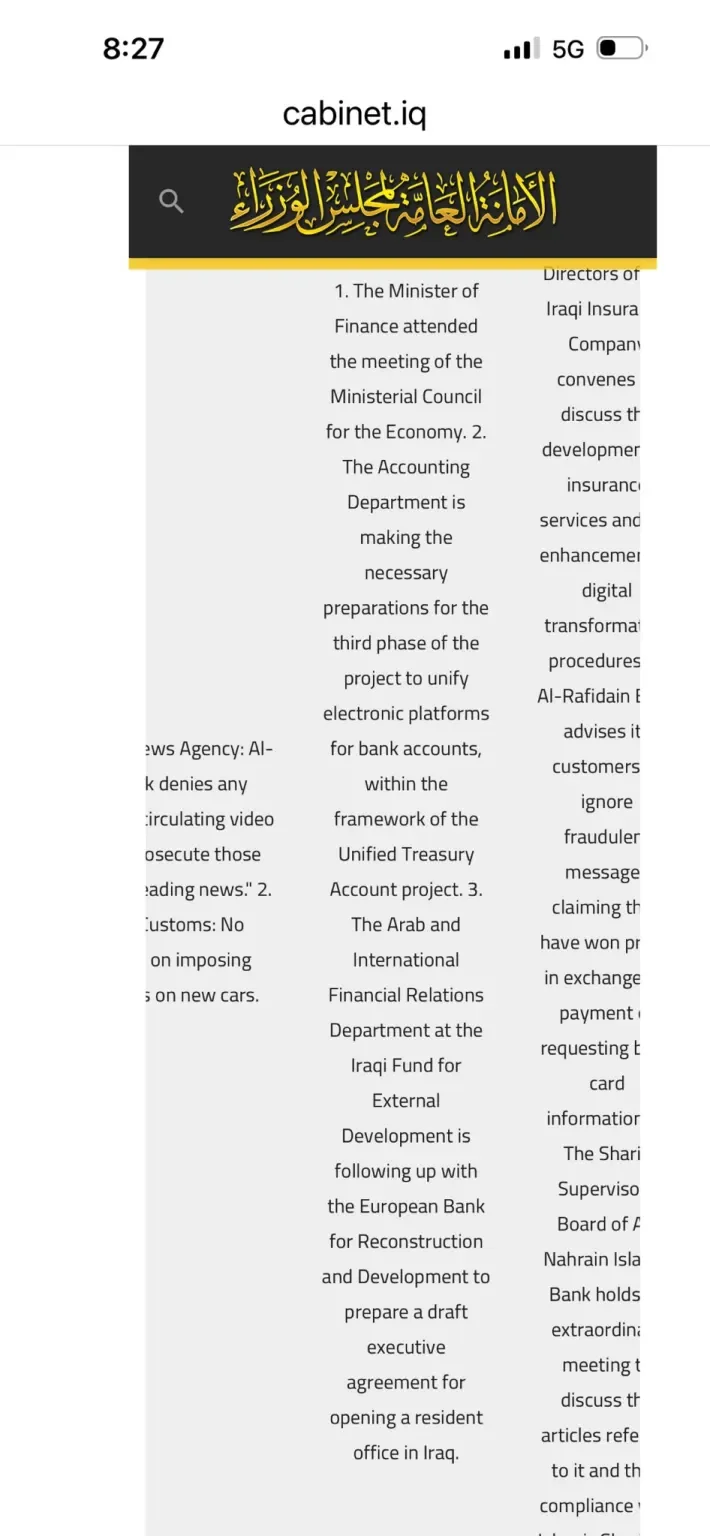
Minister of Finance attended the Ministerial Council for the Economy
→ Signals active coordination on liquidity, treasury execution, and currency-linked decisions.
Phase III of the Unified Treasury Account (UTA) initiated
→ Final phase to unify all electronic banking platforms for government accounts under one system.
Swisher1776: Iraq Finalizes Financial Infrastructure as Rate-dependent Systems Go Live
Swisher1776 @swisher1776
IQD RV: IRAQ FINALIZES FINANCIAL INFRASTRUCTURE AS RATE-DEPENDENT SYSTEMS GO LIVE
Minister of Finance attended the Ministerial Council for the Economy
→ Signals active coordination on liquidity, treasury execution, and currency-linked decisions.
Phase III of the Unified Treasury Account (UTA) initiated
→ Final phase to unify all electronic banking platforms for government accounts under one system.
Accounting Department preparing system-wide integration
→ Ensures real-time reconciliation, centralized settlement, and rate consistency across ministries.
Customs & border crossings held a joint meeting
→ Discussed implementation of new pricing mechanisms and the advance customs declaration system.
Advance customs declaration system moving forward
→ Requires a stable and reliable currency valuation for trade and tariff calculations.
Arab & International Financial Relations Department coordinating externally
→ Follow-up with the European Bank for Reconstruction and Development (EBRD) to prepare executive agreements.
Digital transformation across ministries emphasized
→ Automation of procedures, unified accounts, and reduced cash dependency.
WHY THIS MATTERS
These steps are execution-level actions, not planning discussions.
You do not: unify treasury systems,
lock in customs pricing, or integrate international financial frameworks
unless the currency reference is finalized or imminently deployable.
This is the system lining up before the rate is allowed to move.
Preparation
Integration
Execution
Ariel : Can you See the Changes Incoming?
Ariel : Can you See the Changes Incoming?
12-30-2025
Can You See The Changes Incoming?
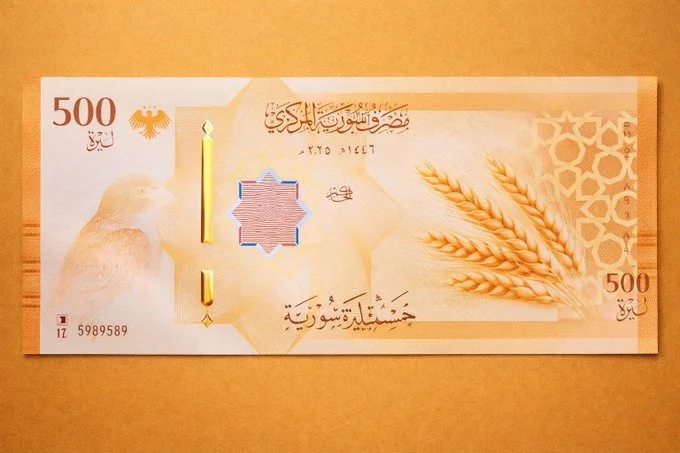
Quote: “The serial number 589 on these notes, often interpreted through the lens of COMEX Rule 589, serves as a subtle nod to the mechanisms governing silver futures trading limits, which activate during extreme volatility or supply disruptions.
This rule, designed to halt trading when price fluctuations exceed thresholds, underscores ongoing silver market strains where physical shortages have intensified due to industrial demand and investor hoarding.
Ariel : Can you See the Changes Incoming?
12-30-2025
Can You See The Changes Incoming?
Quote: “The serial number 589 on these notes, often interpreted through the lens of COMEX Rule 589, serves as a subtle nod to the mechanisms governing silver futures trading limits, which activate during extreme volatility or supply disruptions.
This rule, designed to halt trading when price fluctuations exceed thresholds, underscores ongoing silver market strains where physical shortages have intensified due to industrial demand and investor hoarding.
Such shortages historically precede major currency reforms, as nations seek to realign their monetary systems with asset-backed stability, distancing from fiat vulnerabilities.”
Do You See The Writing On The Wall?
For Iraq, observing these developments, it reinforces the urgency of their own preparations, as silver’s role in industrial and monetary applications ties into global resets, paving the way for asset-backed currencies that could elevate undervalued ones like the dinar.
BRICS News: JUST IN: Syria officially unveils new currency under leadership of President Ahmad al-Sharaa.
Source(s): https://x.com/Prolotario1/status/2005778252829245545
https://dinarchronicles.com/2025/12/29/ariel-prolotario1-can-you-see-the-changes-incoming/
**************
Ariel : Iraqi Dinar Update – The Monetary Shift of the Ages
12-30-2025
Iraq Dinar Update: Big Moves Being Made (The Monetary Shift Of The Ages)
On Your Mark Get Set And Go
Listen, I’ve been watching this Iraqi financial saga unfold for years, and right now, in late December 2025, things feel different like the pieces are finally snapping into place after decades of false starts. The same can be said for many of you.
The Finance Minister showing up at that high-level Economic Council meeting isn’t just routine; it’s a clear signal of top-down coordination on liquidity and currency policies.
Folks when the big players gather like this, they’re not chatting about the weather they’re aligning on how to handle flows that could support a more stable, internationally viable dinar.
It’s the kind of quiet move that precedes real change, and most folks miss how these sessions set the tone for everything downstream.
Phase III of the Unified Treasury Account rolling out? That’s huge, people. We’re talking about the final push to merge every government banking platform into one seamless electronic system. No more fragmented accounts bleeding efficiency or inviting mischief.
This integration means real-time tracking across ministries, uniform settlements, and a foundation that screams “we’re ready for prime time.” Governments don’t invest this heavily in unifying their treasury unless they’re confident the underlying currency can handle the scrutiny it’s like building a high-speed rail before launching the trains.
You all should be very excited about where we are. This process is coming to a close people.
The accounting teams gearing up for full integration tells you this isn’t theoretical anymore. They’re prepping for instant reconciliation and rate consistency everywhere, which eliminates those nasty discrepancies that plague emerging economies.
Think about it: in a world where cash still dominates, shifting to this level of centralized control reduces leakages and builds trust. But it only works if the currency benchmark is solid otherwise, why bother with such precision?
Read Full Article: https://www.patreon.com/posts/iraq-dinar-big-146953350
Seeds of Wisdom RV and Economics Updates Tuesday Afternoon 12-30-25
Good Afternoon Dinar Recaps,
Small Island Could Disrupt China’s Rare Earths Supremacy
Japan tests seabed mining to reduce dependence on Chinese minerals
Good Afternoon Dinar Recaps,
Small Island Could Disrupt China’s Rare Earths Supremacy
Japan tests seabed mining to reduce dependence on Chinese minerals
Overview
Japan is preparing to test deep-sea mud near Minamitorishima for rare earth extraction.
Rare earths are essential for EVs, microchips, fighter jets, and advanced radar systems.
China dominates roughly two-thirds of global rare-earth output and has used export restrictions as geopolitical leverage.
The U.S. and Pacific allies are working to diversify supply chains, but progress is expected to take years.
Key Developments
Mining trial scheduled for January 11–February 14, 2026, targeting 350 metric tons of rare-earth-rich mud per day from ~6,000 meters depth.
Seawater separation and continuous environmental assessments will occur on Minamitorishima before transport to Japan’s mainland for refining.
The Japanese government has invested ~40 billion yen ($256 million) since 2018 for seabed mining initiatives.
Chinese navy ships were observed near Minamitorishima, highlighting geopolitical tensions.
If successful, full-scale mining could begin as early as February 2027.
Japan-U.S. agreement on critical minerals extraction and stockpiling strengthens allied supply chain cooperation, though financial details remain unspecified.
Why It Matters
Rare earths are now a strategic resource underpinning technology, military systems, and industrial capacity. Japan’s efforts to secure domestic sources reduce vulnerability to Chinese export controls and strengthen regional supply chain resilience. This initiative signals how control of critical minerals is becoming a decisive factor in global influence, mirroring the leverage once held by oil-producing nations.
Why It Matters to Foreign Currency Holders
Foreign currency holders must pay close attention to rare earth and critical mineral supply chains because these resources are now central to economic resilience and currency stability. Rare earths are indispensable to high-tech industries, including EVs, renewable energy, semiconductors, and defense systems, making them a foundation of global demand.
Because China dominates global refining and processing, any disruptions, export restrictions, or geopolitical leverage can impact global trade balances, inflation expectations, and industrial output, directly affecting currency valuations worldwide.
For holders of foreign currencies, sudden supply shifts can increase market volatility and risk premia, especially for countries heavily dependent on imported minerals. As Japan and the U.S. diversify supply and invest in alternative sources, currencies tied to strategic mineral exporters may fluctuate in value, making awareness of these developments crucial for hedging, reserves management, and long-term risk planning.
Implications for the Global Reset
Pillar: Resource Sovereignty Strengthens Currency Leverage
Nations with domestic control over critical minerals gain influence over trade flows, technological standards, and economic resilience.
Pillar: Critical Minerals as Strategic Infrastructure
Seabed mining and diversification efforts embed rare earths into national industrial and financial planning, shaping future multipolar trade and currency systems.
This is not just environmental policy — it’s global finance restructuring before our eyes.
Seeds of Wisdom Team
Newshounds News™ Exclusive
Sources
Newsweek – “Small Island Could Disrupt China’s Rare Earths Supremacy”
China Briefing – China’s Rare Earth Elements: What Businesses Need to Know
American Geosciences Institute – What are Rare Earth Elements and Why Are They Important?
CSIS – China’s New Rare Earth and Magnet Restrictions Threaten U.S. Defense Supply Chains
~~~~~~~~~~
Commodities Signal Stress as Policy Distorts Price Discovery
Tariffs, rate expectations, and geopolitical risk drive uneven repricing
Overview
Commodity markets experienced heightened volatility as policy uncertainty disrupted pricing signals
Energy, metals, and agricultural commodities reacted unevenly to shifting trade and monetary expectations
Tariff policies and geopolitical tensions continued to distort supply chains and settlement assumptions
Investors increasingly treated commodities as policy hedges rather than pure demand assets
Key Developments
Precious metals retreated sharply from record highs as exchanges raised margin requirements
Energy prices remained volatile amid geopolitical uncertainty and uneven demand expectations
Industrial metals reflected slowing growth signals while supply constraints persisted
Tariff policies and trade restrictions continued to influence commodity flows and pricing
Market participants reduced leverage, amplifying short-term price swings across contracts
Why It Matters
Commodity volatility is signaling policy interference, not demand collapse. When pricing is driven by tariffs, sanctions, and margin adjustments rather than fundamentals alone, markets become less efficient and more reactive.
This environment favors physical control, balance-sheet strength, and strategic reserves. Commodities are increasingly treated as monetary and geopolitical instruments, not just inputs to growth.
Volatility reflects stress in settlement assumptions — a hallmark of systems in transition.
Why It Matters to Foreign Currency Holders
For foreign currency holders, commodity volatility directly impacts inflation expectations, trade balances, and reserve strategy. Sudden price swings complicate fiscal planning and weaken currencies dependent on commodity imports.
Conversely, nations with energy security, domestic resource backing, or diversified reserve assets gain resilience. In reset terms, commodities are reasserting their role in currency credibility, not just economic output.
Implications for the Global Reset
Pillar: Policy Distorts Price Discovery
Intervention-driven markets reprice faster and less predictably.
Pillar: Resources Anchor Monetary Confidence
Control of commodities strengthens currency durability during transition.
This is not just politics — it’s global finance restructuring before our eyes.
Seeds of Wisdom Team
Newshounds News™ Exclusive
Sources
Reuters — “Commodities buffeted by policy shifts as markets look toward 2026”
Reuters — “Precious metals slide after margin hikes trigger profit-taking”
~~~~~~~~~~
🌱 A Message to Our Currency Holders🌱
If you’ve been holding foreign currency for many years, you were not foolish.
You were not wrong to believe the global financial system would change.
What failed was not your patience — it was the information you were given.
For years, dates, rumors, and personalities replaced facts, structure, and proof. “This week” predictions created cycles of hope and disappointment that were never based on how currencies actually change.
That is not your failure.
Our mission here is different: • No dates • No rates • No hype • No gurus
Instead, we focus on:
• Verifiable developments • Institutional evidence
• Global financial structure • Where countries actually sit in the process
Currency value changes only come after sovereignty, trade, banking, settlement systems, and fiscal coordination are in place. History and institutions confirm this sequence.
You will see silence. You will see denials. That is not delay — that is discipline.
Protect your identity. Organize your documents. Verify everything.
Never hand your discernment to anyone who cannot show proof.
You deserve truth — not timelines.
Seeds of Wisdom Team
Newshounds News
~~~~~~~~~~
Seeds of Wisdom Team RV Currency Facts Youtube and Rumble
Newshound's News Telegram Room Link
RV Facts with Proof Links Link
RV Updates Proof links - Facts Link
Follow the Gold/Silver Rate COMEX
Follow Fast Facts
Seeds of Wisdom Team™ Website
Thank you Dinar Recaps
Iraq Economic News and Points To Ponder Tuesday Afternoon 12-30-25
Experts: Automation And Fair Tax Collection Are Key To Economic Reform
Baghdad: Shukran Al-Fatlawi Economic experts have praised the Ministerial Council for the Economy's call to enhance electricity collection, review current tariffs, and adopt automation across all government sectors. These experts believe this approach represents a reform path that encourages more efficient consumption. They also described automated bill collection as the cornerstone of any genuine reform, whether in the electricity sector or other sectors, due to its potential for transparency, reduced corruption, and less waste of public funds.
Experts: Automation And Fair Tax Collection Are Key To Economic Reform
Baghdad: Shukran Al-Fatlawi Economic experts have praised the Ministerial Council for the Economy's call to enhance electricity collection, review current tariffs, and adopt automation across all government sectors. These experts believe this approach represents a reform path that encourages more efficient consumption. They also described automated bill collection as the cornerstone of any genuine reform, whether in the electricity sector or other sectors, due to its potential for transparency, reduced corruption, and less waste of public funds.
Economic researcher and academic Dr. Kazem Eidan considered electricity billing to be a social, regulatory, and reformative responsibility that reduces waste, as well as establishing the principle of fairness in the distribution of burdens, to create a state of balance to ensure the continuity of service and improve quality.
Sustainability And Fairness
Eidan added, in an interview with Al-Sabah, that strengthening tax collection, reviewing the current tariff, and adopting automation in all sectors is an interconnected reform path, and none of its elements can be separated from the other, if the services sector is to be sustainable and fair.
It is noted that the Ministerial Council for the Economy called for strengthening electricity collection, reviewing the current tariff, and adopting automation in all government sectors.
Reducing Waste
Eidan continued, saying that the current tariff does not encourage rationalizing consumption, but rather contributes to perpetuating waste. He pointed out the need to adopt the principle of fairness in collection, meaning protecting those with limited income with a tariff that differs from factory and project owners, in a way that ensures that costs are accurately calculated and made closer to reality. He noted that this requires more awareness campaigns about the importance of collection in improving electricity and ensuring sustainability.
The spokesperson stressed the need to avoid imposing financial burdens on citizens without any tangible return, noting that reform requires fairness and transparency, especially for those with limited income, in order to create a state of balance.
Global Procedure
For her part, economic researcher Suhad al-Shammari explained that government taxation is a standard practice in all countries worldwide, based on the services the state provides to its citizens. She pointed out that attempts by some to abolish government taxes and the entire tax collection system do not serve the country's best interests. Speaking to Al-Sabah newspaper, al-Shammari stated that electricity billing is one of the most important sources of budget revenue, expressing her regret that it has not been fully understood and its implications have not been clarified. She emphasized the need to explain the role of electricity billing in bolstering budget funds and increasing revenues to serve the public good.
Dual Payment Mechanism
Al-Shammari stressed the need to eliminate the dual payment system for electricity, which relies on both government-provided power and private generators, to ease the burden on ordinary citizens. She also emphasized the importance of different payment mechanisms for the industrial and public sectors.
It's worth noting that the Ministry of Electricity recently announced that 58% of the supplied power is uncontrolled and uncollected. Ministry spokesperson Ahmed Moussa stated that Prime Minister Mohammed Shia'a al-Sudani and Minister of Electricity Ziad Ali Fadhil are holding ongoing meetings to oversee the electricity sector's preparedness for peak demand periods, both winter and summer.
He explained that these meetings focus on load balancing, addressing the needs of load centers and central and peripheral areas, and resolving bottlenecks in the electricity grid. All of these issues are under continuous review by the Prime Minister, the Minister of Electricity, and ministry staff.
Controlling Losses
He added that "the Prime Minister focused in his continuous meetings on the issue of collecting electricity fees, controlling loads, and regulating violations on distribution networks in agricultural and informal areas in a systematic manner, while reviewing electricity supply hours and energy returns, whether produced, consumed, or distributed," explaining that "the volume of losses in electrical energy is large, and the ministry bears large sums for its production and transmission," noting that "the Prime Minister stressed the need to take measures to limit these losses."https://alsabaah.iq/125680-.html
Graff Gas: A Giant Global Reserve
Walid Khalid Al-Zaidi It is impossible for those in charge of the oil and energy sector to remain detached from the optimal investment of all elements of the national economy, especially in utilizing free gas fields or associated gas from crude oil extraction operations.
This is because our country's energy resources have created a genuine need for this vital strategic element, which the world is currently vying for. For decades, and until recently, this national wealth was unjustifiably neglected in various regions of Iraq's vast and resource-rich land.
The realities of contemporary global crises have demonstrated the importance of exploiting this resource as a national imperative that must be fully utilized through promising plans.
Gas fields are spread across wide areas with varying reserve capacities, including fields in southern Iraq such as the Al-Gharraf oil field, which contains enormous gas reserves. This makes it a crucial starting point for a comprehensive national oil industry, which will positively impact the electricity sector. Furthermore, it is a vital element in Iraq's economic strategy and overall development.
This field possesses exceptional potential that can contribute to boosting national gas production, which is relied upon as fuel to operate various production units and power plants in Iraq.
The Ministry of Oil’s programs for investing in gas and relying on it as fuel for industrial projects are clear, but there are promising opportunities to enhance them, improve their reality, remove all obstacles to their growth, and make them an economy in their own right and an important complement to oil production, and to enter into giant projects with strategic dimensions that would put Iraq at the forefront of the growing international economy map in the foreseeable future, not the distant future.
The economic challenges that Iraq has witnessed over the past two decades have led the government, represented by the Ministry of Oil, to seek to develop the Al-Gharraf field and increase its production to achieve economic stability and energy self-sufficiency by exploiting the associated gas in this field, which was first discovered in (1984) through oil exploration in southern Iraq, specifically northwest of Al-Rifai district in Dhi Qar Governorate, at a distance of (5) kilometers.
It contains huge quantities of associated gas, which has been estimated by experts from giant international companies specializing in the field of gas at approximately (50) trillion cubic feet. If plans to access this quantity are strengthened, it will contribute an important role in covering a large part of the needs of the country's power plants and could save huge sums of money allocated as funds to purchase gas from foreign sources.
Therefore, it has become necessary to expedite the timetables set for the implementation of the project works or at least adhere to them and fully exploit the field and not be satisfied with a modest percentage of work, as well as using horizontal drilling techniques to increase production and develop associated gas processing plants.
It is among the most important projects that the Ministry of Oil announced could be operational at the beginning of the year (2027) as a giant investment project after it entered an advanced and direct implementation stage with the actual installation and installation of specialized equipment as a strategic achievement of the highest priority in the national economy.
It will be invested within the approved designs and enhance fuel supplies to the national grid and stabilize the energy system in all regions of Iraq. https://alsabaah.iq/125761-.html
Intensifying Efforts To Raise Iraq's Credit Rating
Economic 2025/12/30 Baghdad: Hussein Thaghab The government has intensified its efforts to achieve the highest international credit rating, given the importance of this step in gaining the confidence of international investors, facilitating the attraction of foreign investments, reducing borrowing costs, and enhancing confidence in the national economy.
The process of raising the credit rating contributes to supporting structural reforms and enhancing the ability to obtain financing from international institutions. It is an important indicator of the state’s ability to meet its obligations, which encourages sustainable economic development.
A few days ago, Fitch Ratings confirmed in its latest report that it had maintained Iraq’s sovereign rating at “B-” with a stable outlook, reflecting international confidence in the Iraqi economy’s ability to maintain its financial and credit stability despite current global and regional challenges.
In this regard, economic expert Alaa Fahd believes that the country needs investment, especially foreign investment, at the present stage, to carry out infrastructure projects and major projects, stressing the need to create a suitable environment for investment, whether legal, legislative, economic, or financial, by providing financial and banking facilities.
Government Efforts
In an interview with Al-Sabah, Fahd expressed his hope that investment contracts would be free from corruption, as this would raise Iraq’s credit rating. He noted that the country is currently rated B- according to the latest report from the international credit rating agency Fitch, which confirmed that Iraq is a “stable environment.”
He explained that stability paves the way for a higher rating by creating a conducive financial environment, combating corruption, and establishing a suitable legislative framework to support investments. He emphasized that the steps taken by the government and the Central Bank, in cooperation with international financial institutions, to attract investment, particularly in sectors that generate profits and economic savings, such as the Development Road, the Faw Port, and also investment in the oil sector and manufacturing industries, as well as investment in the housing sector, economic cities, smart cities, and the banking sector, have contributed to achieving this rating.
Classification.
Ways Of Cooperation
The spokesperson added that many countries have greatly benefited from foreign investment, emphasizing the importance of providing government support and finding avenues for cooperation to ensure investment becomes a driving force in Iraq, as many other countries have achieved, making the country an attractive investment environment by eliminating bureaucracy.
In this context, Dr. Maitham Adham Al-Zubaidi, Vice President of the Competition and Monopoly Council, stated that attracting investment to Iraq requires addressing the structural factors that influence investor decisions, primarily reforming the banking system, ensuring exchange rate stability, and establishing clear monetary policy. He pointed out that these factors play a crucial role in building confidence and providing a predictable financial environment.
Al-Zubaidi told Al-Sabah that reform remains incomplete unless it is complemented by strengthening governance and transparency, especially in the Iraq Stock Exchange, by protecting shareholders’ rights, ensuring disclosure, and transforming the market into a real tool for financing companies and not just a limited trading platform with an economic concentration in the banking sector to the exclusion of other sectors.
He pointed out that simplifying administrative procedures is a necessity of no less importance, as the multiplicity of granting bodies and licensing committees and the conflict of classifications of economic activities constitute a burden on the investor.
Pivotal Steps
He added that unifying activity classification systems among licensing and business registration bodies and regulatory authorities, such as the ISIC4 system, is a pivotal step toward reducing overlaps, preventing conflicting interpretations, and building a unified government economic data portal accessible to the public.
This portal will accurately serve investors and feasibility study makers. He emphasized that infrastructure, particularly in communications and transportation networks, forms the foundation upon which any economic activity rests, and its development requires liberalizing competition and preventing monopolies, along with effective regulation that ensures a level playing field.
By linking these three paths within a clear governance framework, Iraq can transition from an economy that repels investment to one that is attractive and sustainable. https://alsabaah.iq/125760-.html
For current and reliable Iraqi news please visit: https://www.bondladyscorner.com
News, Rumors and Opinions Tuesday 12-30-2025
Silver Anticipates Fiat Currencies Dying – John Rubino
By Greg Hunter’s USAWatchdog.com
Analyst and financial writer John Rubino has been warning of a currency crisis.
On Friday, we saw a record high price spike for silver that produced a record high price for the white metal. Meanwhile, we saw record high prices for gold on the same day. This has never happened before, and that shows the currency crisis long predicted is here.
Rubino says, “Currencies are pouring into real money in anticipation of the existing fiat currencies dying.
Silver Anticipates Fiat Currencies Dying – John Rubino
By Greg Hunter’s USAWatchdog.com
Analyst and financial writer John Rubino has been warning of a currency crisis.
On Friday, we saw a record high price spike for silver that produced a record high price for the white metal. Meanwhile, we saw record high prices for gold on the same day. This has never happened before, and that shows the currency crisis long predicted is here.
Rubino says, “Currencies are pouring into real money in anticipation of the existing fiat currencies dying.
That is a whole different thing and on a much bigger scale because the numbers are grossly inflated after 70 years of a credit super cycle. So, what we have seen so far is really just the beginning.
Gold and silver have had huge runs, but they are doing it when things are more or less still normal.
Precious metals are starting to soar in anticipation of something abnormal coming. Right now, this is a bigger gold than silver story because gold is the money we go back to when national currencies fail.
Silver is a more complex story because it is also an industrial metal. There are new industries that are using more and more silver, and there is just not enough silver to satisfy that demand.”
Rubino contends the silver price spike will bring on a lot of volatility. Rubino points out, “That is pretty much a lock. Silver is probably going to bounce around a lot in the next week or so. . .. All the silver is being stashed away, and when they run out, they say we will just pay you cash for these futures contracts.
If that happens, that is basically the end of paper exchanges. We will just totally stop trusting them. Why would anybody want a long futures contract on an exchange that just defaults . . ..
This is another big thing that might happen in the coming weeks. When you see prices move like this, an awful lot of bad things become possible. . .. There are a lot of shorts out there that just went massively underwater on Friday. . .. Somebody big has a lot of losses. . ..
It’s like Warren Buffett says, ‘You only know who has been swimming naked when the tide goes out. Well, the tide has gone out for silver, and now we are going to find out who was unwisely short that market in the past week.”
Rubino sees silver resetting to at least $200 per ounce in the not-too-distant future.
Gold will also reset to at least $10,000 per ounce.
Rubino says the next big trend is Big Tech players buying actual silver mines and bypassing metal exchanges altogether. Rubino says, “Big Tech players are going to go out and get silver now, so they are set for the next few years. Yes, some of them are starting to buy silver mines. In the mining sector, this is one of the big changes we will see coming soon.
Maybe Tesla buys First Majestic or some mine like that. Tesla buys a big silver mining company with multiple silver mines to guarantee silver supply going forward. . .. Google, Meta or Microsoft can pay insane amounts of money for commodities if they need to.
It’s inventory building and panic buying in some cases. . .. All roads lead to higher precious metals right now. The only way it doesn’t is if there is a global nuclear war that extinguishes civilization. Take that out of the equation, and everything points to weaker currencies and higher precious metals prices.”
There is more in the 49-minute interview.
https://usawatchdog.com/silver-anticipates-fiat-currencies-dying-john-rubino/
Courtesy of Dinar Guru: https://www.dinarguru.com/
Frank26 Question: "So [Iraq] is not in the WTO yet? Are they?" You want it on a document. You want it on a piece of paper. You can wait for that. But if you was to say, Frank, have they done everything they need to do to be a member of the WTO? The answer is yes. That's why we have an article where the WTO says, 'come, welcome. You're a member now. You did everything.' Did Iraq, did Sudani, say, 'Thank you. We'll be there next Tuesday." No. Iraq didn't say jack, why? It's waiting for the new exchange rate.
Jeff Are they hiding anything from us? Absolutely...That's where I'm going to put my focus next. I would recommend you do the same as well. They give us a lot of details about Mark Savaya, Trumps envoy to Iraq...They told us he would be going there after Christmas. Then on Christmas Day, the 25th, they told us he would be going there in early January...Notice how they're going way out of their way to hide the date from us. They also told us on Monday of last week that his efforts of going there would be the 'next stage'. That means around when Iraq is going international. Again, I want you to realize they're hiding the date from us. That's no a coincidence...
************
German Manufacturing Imploding, Silver Storm Is Upon Us, Sound Money Is The Only Way
X22 Report: 12-30-2025
Germany has followed the [CB]/[WEF] green new scam and now the manufacturing jobs imploding. Germany will struggle in 2026.
The debt in the US is made up of fraud, its most likely in the trillions.
There a silver storm approaching and the gap between gold and silver will close as the [CB] loses control.
Sound money is the only way.
Tuesday Coffee with MarkZ. 12/30/2025
Tuesday Coffee with MarkZ. 12/30/2025
Some highlights by PDK-Not verbatim
MarkZ Disclaimer: Please consider everything on this call as my opinion. People who take notes do not catch everything and its best to watch the video so that you get everything in context. Be sure to consult a professional for any financial decisions
Member: Good morning Mr Mark Z and ALL of YOU here
Member: Only 2 days until the new year….fingers crossed it’s a great one.
Tuesday Coffee with MarkZ. 12/30/2025
Some highlights by PDK-Not verbatim
MarkZ Disclaimer: Please consider everything on this call as my opinion. People who take notes do not catch everything and its best to watch the video so that you get everything in context. Be sure to consult a professional for any financial decisions
Member: Good morning Mr Mark Z and ALL of YOU here
Member: Only 2 days until the new year….fingers crossed it’s a great one.
Member: Is the rollercoaster ride coming to a stop finally ? I’m ready to get off the ride now and move forward!!!
Member: TNT Tony says within 72 hours- any truth to this?
MZ: We will soon find out. Are we hopeful? Are we hearing many rumors that this is accurate? Yes. So it could be….Stay calm
Member: Just read that the Iranian CBI governor just stepped down because ot their currency collapse. Will others follow suit?
MZ: “Surge of Economic pain pushes Iranians to the streets” their currency is in complete freefall and collapse. The government leaders in Iran are ducking and hiding. So yes I think more will follow suit.
MZ: They have people dropping left and right from their government. Including the Central Bank Governor and employees. Iranian people are protesting in the streets. When your currency falls -people take to the streets.
Member: Syria has taken away 2 zeros. Is it possible Iraq will do that?
MZ: Iraq says they will first lift the purchasing power and then delete the zeros….a very different approach.
Member: Mark, What is your take on many countries announcing the release of new currency. Is it RV related? I am still waiting on the US to announce asset backed currency
MZ: I very much think it is RV related. Many countries are announcing currency changes right now.
Member: I wonder- do we need a public announcement that the US is GOLD backed before we RV?
Member: Banks in Budapest, Hungary, will be closed for 4 days from January 1st to the 4th. They are getting ready for some changes
Member: Syria, Bank of England, Japan and Sri Lanka, ALL issuing and getting ready to issue new bank notes... This tells me there is a reset coming without telling me there is a reset coming!
MZ: There is no bond update yet. I know group people are finally back in position today. They had been traveling over the weekend. They had some meetings yesterday and have more this afternoon. It will probably be pretty late this evening before I get an update on that front.
MZ: So I will give that update in the morning unless it is just break away awesome news. I wouldn’t care if it was midnight….But, I am not expecting that type of news.
Member: I am so sick of talk, talk, talk…..we need some ACTION!
Member: Is Trump in charge of the reset?
MZ: Many think he is….but I do not.
MZ: In Iraq: “ The House of Representatives bell rings to mark the start of the new session for the election of the second deputy speaker of Parliament” they are getting positions sat and sworn in. They are moving forward.
MZ: “Iraq’s Digital Transformation: 859 Government Entities adopt E-Governance” They said in their “White Papers “ that this was necessary for them to raise their purchasing power and remove their zeros.
Member: I talked with a Florida exchange about taking the dinar and dong….and they said we will not need a phone number- to just come in unless we were a whale.
MZ: Just make certain they verify your currency right there in front of your eyes.
Member: I believe if the bank does verify you currency on site…I think taking a few notes and seeing how the process goes is ideal first
Member: I will wait for the 800 numbers to know I am going to the best place with the best trained personnel……but you are all free to do what you want.
Member: Thanks Mark and Mods….Hope everyone has a great day today.
Lewis Hermes joins the stream today. Please listen to the replay for his information and opinions.
THE CONTENT IN THIS PODCAST IS FOR GENERAL & EDUCATIONAL PURPOSES ONLY&NOT INTENDED TO PROVIDE ANY PROFESSIONAL, FINANCIAL OR LEGAL ADVICE. PLEASE CONSIDER EVERYTHING DISCUSSED IN MARKZ’S OPINION ONLY
FOLLOW MARKZ : TWITTER . https://twitter.com/originalmarkz?s=21. TRUTH SOCIAL . https://truthsocial.com/@theoriginalm...
Mod: MarkZ "Back To Basics" Pre-Recorded Call" for Newbies 10-19-2022 ) https://www.youtube.com/watch?v=37oILmAlptM
MARKZ DAILY LINKS: https://theoriginalmarkz.com/home/
Note from PDK: Please listen to the replay for all the details and entire stream….I do not transcribe political opinions, medical opinions or many guests on this stream……just RV/currency related topics.
ZESTER'S LINK TREE: https://linktr.ee/CrazyCryptonaut
THANKS FOR JOINING. HAVE A BLESSED DAY! SEE YOU ALL TUESDAY THROUGH THURSDAY EVENINGS FOR NEWS @ 7:00 PM EST ~ UNLESS BREAKING NEWS HAPPENS! FROM NOW ON NO MORE NIGHTLY PODCASTS ON MONDAYS AND FRIDAYS
“Tidbits From TNT” Tuesday 12-30-2025
TNT:
Cutebwoy: The Iraqi Parliament elects Haibet Al-Halbousi as the speaker
Today, INA - BAGHDAD
The Iraqi Parliament elected Haibet Al-Halbousi as its Speaker for the sixth session on Monday.
The Parliament's Media Office stated in a press release received by the Iraqi News Agency - INA that "Parliament elected Haibet Al-Halbousi as its Speaker for its sixth session."
The statement added that "MP Haibet Al-Halbousi received 208 votes, while MP Salim Al-Issawi received 66 votes, and MP Amer Abdul-Jabbar received 9 votes. There were 26 invalid ballots.
TNT:
Cutebwoy: The Iraqi Parliament elects Haibet Al-Halbousi as the speaker
Today, INA - BAGHDAD
The Iraqi Parliament elected Haibet Al-Halbousi as its Speaker for the sixth session on Monday.
The Parliament's Media Office stated in a press release received by the Iraqi News Agency - INA that "Parliament elected Haibet Al-Halbousi as its Speaker for its sixth session."
The statement added that "MP Haibet Al-Halbousi received 208 votes, while MP Salim Al-Issawi received 66 votes, and MP Amer Abdul-Jabbar received 9 votes. There were 26 invalid ballots.
Tishwash: Iraq ranks 29th globally and third in the Arab world among the banks with the best reserves.
Iraq ranked 29th globally out of 50 countries, and third in the Arab world, among the best central banks in terms of hard currency reserves, according to Visual Capitalist, a website specializing in markets, technology, energy and the global economy.
The website stated in a report seen by Shafaq News Agency that the central bank's reserves serve as the state's financial shield, as they consist of foreign currencies, gold, and other liquid assets, and play a pivotal role in stabilizing currencies and overcoming financial crises, noting that the size of these reserves determines the extent of the economies' resilience in the face of shocks and their impact on global markets.
According to the report, Iraq ranked 29th globally in terms of the largest reserves of foreign currency and gold, with a total of $100.691 billion.
Globally, China topped the list with reserves of $3.456 trillion, followed by Japan in second place with $1.231 trillion, then the United States in third place with $910.037 billion, Switzerland in fourth place with $909.366 billion, followed by India in fifth place with $643.043 billion, and then Russia in sixth place with $597.217 billion.
In the Arab world, Saudi Arabia ranked first with reserves of $463.870 billion, followed by the UAE in second place with $237.931 billion, then Iraq in third place, Libya in fourth place with $92.894 billion, Algeria in fifth place with $83 billion, Qatar in sixth place with $53.987 billion, Kuwait in seventh place with $50.728 billion, while Egypt ranked eighth with $44.921 billion. link
************
Tishwash: Iranian central bank governor resigns amid currency devaluation
Iran's semi-official news agency Nour News quoted an official in the Iranian president's office on Monday as saying that Central Bank Governor Mohammad Reza Farzin had resigned from his post.
The official added that Iranian President Masoud Pezeshkian is considering Farzin's resignation request.
Iranian traders and shop owners staged protests for the second day in a row on Monday due to the national currency's plunge to a new record low against the US dollar. link
************
Tishwash: Angry protests erupt in central Tehran, with slogans "going beyond the economy".
The Iranian capital, Tehran, witnessed widespread local protests against the sharp and unprecedented decline in the value of the local currency, as the exchange rate of the US dollar exceeded the 1.4 million Iranian rial mark (140,000 tomans).
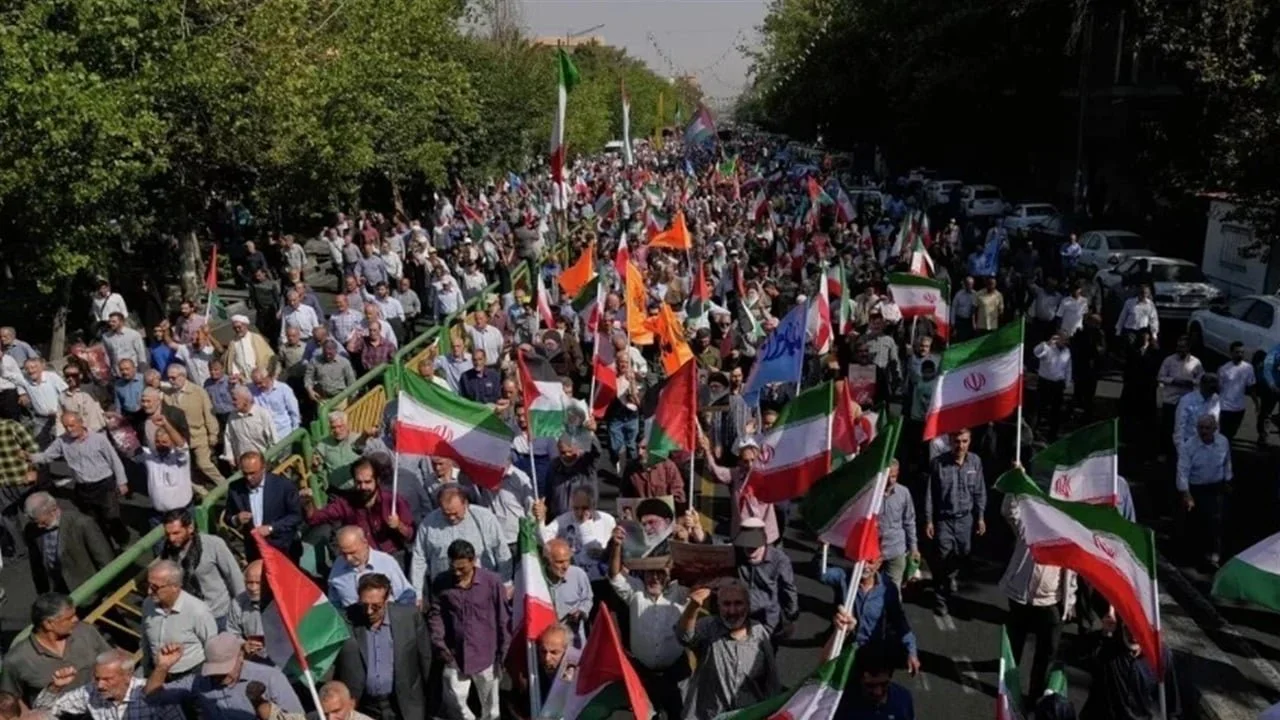
Iranian media outlets, as reported by Kalemeh News, stated that the increasing pressure on the economic situation of businessmen and traders led to the outbreak of two protests in the heart of the capital, Tehran, specifically in the Shahchar shopping center and Lalehzar Street, where the demands focused on denouncing the sharp fluctuations in the exchange rate and its devastating impact on wholesale and retail prices.
According to the Fars News Agency, which is close to the authorities, the number of protesters reached about 200 people, but it indicated that there were small groups that infiltrated the merchants and chanted slogans that the agency described as going beyond economic demands, in an indication that the chants had turned towards a political direction.
The agency linked these moves to calls by Maryam Rajavi, leader of the opposition group Mujahedin-e Khalq, accusing the organization, which it described as having ties to the United States and Israel, of trying to exploit the economic situation to shake social stability and destabilize the political system in the country, amid the continued suffering of the Iranian economy from the weight of international sanctions. link
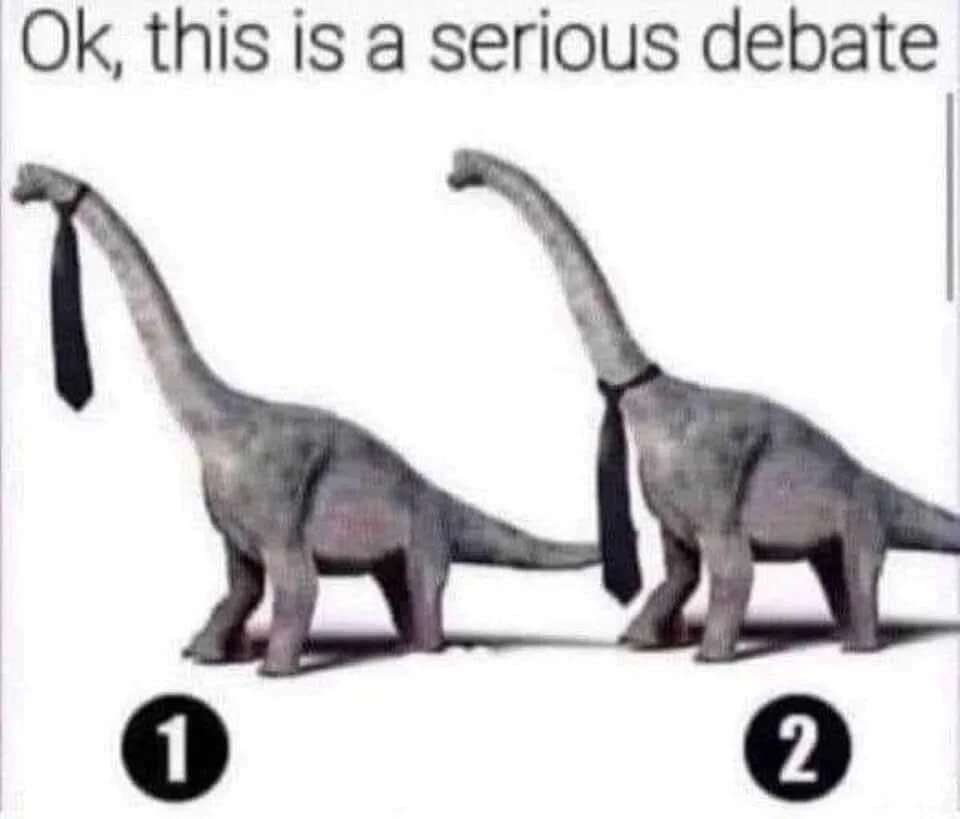
Mot: ... While Waiting for the ""Wee Folks""!!!!

Mot: serious it is - dino necktie
Seeds of Wisdom RV and Economics Updates Tuesday Morning 12-30-25
Good Morning Dinar Recaps,
Trump and Netanyahu Signal Strategic Alignment as Middle East Peace Framework Advances
Florida meeting underscores security, disarmament, and regional normalization priorities
Good Morning Dinar Recaps,
Trump and Netanyahu Signal Strategic Alignment as Middle East Peace Framework Advances
Florida meeting underscores security, disarmament, and regional normalization priorities
Overview
U.S. President Donald Trump and Israeli Prime Minister Benjamin Netanyahu signaled near-total strategic alignment following a closed-door meeting in Florida
Both leaders emphasized peace through strength, tying disarmament of militant groups to regional stability
Iran, Hamas, and Hezbollah were identified as remaining destabilizing forces
Expansion of the Abraham Accords was confirmed as an active objective
Netanyahu announced President Trump will receive a prestigious Israeli honor traditionally awarded to Israelis, recognizing his role in advancing peace and security
Key Developments
Trump stated Hamas has been given a short timeline to disarm, warning consequences if commitments are not met
Netanyahu praised Trump’s record as Israel’s strongest ally, crediting joint coordination for regional breakthroughs
Netanyahu confirmed Trump will be awarded a major Israeli honor, typically reserved for Israeli citizens, acknowledging his contributions to Israel’s security and regional diplomacy
Both leaders confirmed ongoing discussions on Gaza governance, West Bank outcomes, and post-conflict security
Trump warned Iran against rebuilding weapons capabilities, signaling readiness to act if red lines are crossed
The Abraham Accords were described as expanding “fairly quickly,” with Saudi normalization still on the table
Trump confirmed openness to bilateral engagement with Iran — conditional on behavior
Why It Matters
The award announcement was not ceremonial — it was symbolic signaling. By granting a traditionally Israeli-only honor to an American president, Israel publicly reinforced long-term strategic alignment and continuity of policy, regardless of political cycles.
This reinforces confidence that the peace framework discussed is not provisional, but intended to be durable. Symbolism matters in diplomacy — especially when it aligns with enforceable commitments.
Why It Matters to Foreign Currency Holders
For foreign currency holders, Middle East stability directly impacts energy pricing, trade routes, sovereign risk premiums, and reserve confidence.
Public recognition of leadership continuity reduces geopolitical uncertainty premiums embedded in currencies. When peace frameworks appear durable — not personality-driven — capital reallocation accelerates and volatility compresses.
In reset terms, symbolic commitments often precede structural ones.
Implications for the Global Reset
Pillar: Diplomatic Continuity Anchors Stability
Stable alliances reduce geopolitical shock risk.
Pillar: Peace Enables Capital Normalization
Durable agreements allow markets to price risk forward instead of defensively.
This is not just politics — it’s global finance restructuring before our eyes.
Seeds of Wisdom Team
Newshounds News™ Exclusive
Sources
YouTube — “President Trump and the Prime Minister of Israel Deliver Remarks”
Reuters — “Trump, Netanyahu signal alignment on Gaza, Iran and regional security”
~~~~~~~~~~
Iran’s Currency Collapse Sparks Protests as Monetary Stress Intensifies
Rial depreciation exposes limits of sanctions resilience and domestic stability
Overview
Iran experienced renewed protests as the national currency fell sharply in value
The Iranian rial’s decline accelerated inflation and reduced household purchasing power
Public unrest highlighted growing stress between monetary instability and social tolerance
Currency weakness reflected sanctions pressure, reserve constraints, and structural imbalances
Key Developments
The Iranian rial slid to new lows against major currencies, triggering street protests
Rising prices for food, fuel, and basic goods intensified public frustration
Authorities cited external sanctions and market speculation as contributing factors
Currency intervention measures failed to restore confidence or stabilize exchange rates
Protests underscored the link between currency credibility and political stability
Why It Matters
Currency collapse is rarely just a financial event — it is a confidence crisis. Iran’s situation illustrates how prolonged sanctions, limited reserve flexibility, and restricted access to global settlement systems eventually surface in domestic instability.
When currencies lose credibility, governments face shrinking policy options. Monetary tools become less effective, capital controls tighten, and social pressure rises. Iran’s experience highlights the cost of isolation in a system increasingly defined by interoperability and trust.
Why It Matters to Foreign Currency Holders
For foreign currency holders, Iran’s currency collapse is a cautionary example of how geopolitical isolation accelerates monetary fragility. Currencies dependent on restricted trade, constrained reserves, or politicized settlement systems face amplified repricing risk during stress.
Conversely, currencies supported by diversified reserves, trade access, and functional payment rails retain stability even under pressure. In reset terms, access matters as much as assets.
Implications for the Global Reset
Pillar: Currency Confidence Equals Social Stability
When money fails, unrest follows.
Pillar: Isolation Increases Repricing Risk
Systems outside global settlement frameworks face sharper adjustments.
This is not just politics — it’s global finance restructuring before our eyes.
Seeds of Wisdom Team
Newshounds News™ Exclusive
Sources
Reuters — “Iran protests erupt as currency slide fuels inflation anger”
Reuters — “Iran’s rial hits new lows amid sanctions pressure”
~~~~~~~~~~
Critical Minerals: The New Oil of the Global Reset
Green transition accelerates a new era of resource power politics
Overview
Critical minerals are replacing oil as the primary strategic resource in the global economy
China dominates rare earth production and processing, creating geopolitical leverage
Demand for lithium, cobalt, and nickel is accelerating sharply under net-zero mandates
Supply concentration and export controls are emerging as tools of state power
Key Developments
Global demand for lithium is projected to rise more than 400% by 2040, driven by EVs and renewable energy infrastructure
China controls approximately 60% of rare earth production and nearly 90% of global processing capacity
The United States remains fully import-dependent for several critical minerals
Export restrictions on minerals like gallium and germanium have already demonstrated economic shock potential
Australia has positioned itself as a strategic supplier, leveraging lithium and rare earth reserves through new alliances
Calls are growing for new governance frameworks to prevent exploitation, supply coercion, and inequality
Why It Matters
The global shift toward clean energy is not eliminating geopolitical competition — it is relabeling it. Critical minerals now underpin industrial power, military readiness, and technological leadership. Control over extraction and processing is becoming a decisive factor in global influence, echoing the oil-dominated power structures of the 20th century.
Without new governance models, the energy transition risks replicating the same imbalances it claims to solve — substituting carbon dependence with mineral dependence, and emissions inequality with extraction inequality.
Why It Matters to Foreign Currency Holders
Foreign currency holders are increasingly exposed to the geopolitical risks of mineral dependence. Nations controlling critical minerals can influence global trade pricing, reserve currency valuations, and access to high-demand technologies.
A disruption in supply chains—whether through export controls, trade disputes, or production bottlenecks—can ripple through global markets, affecting currency stability, inflation expectations, and purchasing power. Diversification in reserves, awareness of strategic mineral dependencies, and monitoring shifts in resource control are becoming essential for safeguarding value in a multipolar financial landscape.
Implications for the Global Reset
Pillar: Resource Control Drives Currency and Trade Power
Nations controlling strategic inputs gain leverage over settlement, trade terms, and capital flows.
Pillar: Supply Chains Are Becoming Monetary Infrastructure
Critical minerals are no longer commodities — they are embedded in currency stability, industrial policy, and sovereign resilience.
This is not just environmental policy — it’s global finance restructuring before our eyes.
Seeds of Wisdom Team
Newshounds News™ Exclusive
Sources
Modern Diplomacy — “How Critical Minerals Became the New Oil”
International Energy Agency — “The Role of Critical Minerals in Clean Energy Transitions”
~~~~~~~~~~
Global Markets Mixed as Stocks Stall and Currency Pressure Builds
Year-end uncertainty exposes fragility beneath surface stability
Overview
Global equity markets ended the session mixed as investors weighed slowing momentum against policy uncertainty
Currency markets reflected ongoing pressure on the U.S. dollar, while risk-sensitive currencies remained volatile
Bond yields stayed elevated, reinforcing concerns over debt sustainability and fiscal stress
Precious metals pulled back from record highs, underscoring liquidity strain rather than demand collapse
Key Developments
U.S. equities softened in holiday-thinned trading as investors reassessed 2026 growth expectations
European and Asian markets showed uneven performance, signaling regional divergence rather than synchronized recovery
The U.S. dollar remained under pressure amid expectations of rate cuts and expanding deficits
Bond markets continued to reflect sensitivity to debt issuance and long-term fiscal positioning
Risk appetite weakened as traders prioritized balance-sheet preservation over upside exposure
Why It Matters
This market behavior reflects transition, not panic. Mixed performance across equities, currencies, and bonds suggests capital is repositioning rather than exiting. Liquidity is becoming selective, favoring assets with structural support while penalizing those dependent on leverage and sentiment.
Markets are no longer reacting to headlines alone — they are responding to policy credibility, debt trajectories, and system readiness. That shift marks a late-stage transition phase rather than a cyclical correction.
Why It Matters to Foreign Currency Holders
For foreign currency holders, mixed markets signal repricing risk, not immediate collapse. When currencies weaken alongside equities and bonds, it reflects uncertainty over long-term purchasing power rather than short-term volatility.
Currencies tied to high debt loads, fiscal expansion, or policy ambiguity face sustained pressure. Those supported by disciplined monetary policy, reserve diversification, and stable trade positioning gain relative durability as capital becomes more selective.
In reset terms, currencies are being evaluated on structure, not momentum.
Implications for the Global Reset
Pillar: Capital Selectivity Increases
Liquidity favors resilience over speculation as systems transition.
Pillar: Currency Credibility Replaces Growth Narratives
Markets price balance-sheet strength ahead of economic optimism.
This is not just politics — it’s global finance restructuring before our eyes.
Seeds of Wisdom Team
Newshounds News™ Exclusive
Sources
Reuters — “Global markets slip as investors reassess growth and policy outlook”
Reuters — “Tenuous peace between Trump and $30 trillion U.S. bond market”
~~~~~~~~~~
Seeds of Wisdom Team RV Currency Facts Youtube and Rumble
Newshound's News Telegram Room Link
RV Facts with Proof Links Link
RV Updates Proof links - Facts Link
Follow the Gold/Silver Rate COMEX
Follow Fast Facts
Seeds of Wisdom Team™ Website
Thank you Dinar Recaps
Iraq Economic News and Points To Ponder Tuesday Morning 12-30-25
An Economic Expert Identifies 5 Pillars For Strengthening Iraq's Economic Power.
Time: 2025/12/19 21:22:08 Readings: 135 times {Economic: Al-Furat News} On Friday, economist Salah Nouri identified five key pillars for strengthening Iraq's economic power, stressing that the success of economic programs and the path to international development is linked to combating corruption in contracts and implementation.
An Economic Expert Identifies 5 Pillars For Strengthening Iraq's Economic Power.
Time: 2025/12/19 Readings: 135 times {Economic: Al-Furat News} On Friday, economist Salah Nouri identified five key pillars for strengthening Iraq's economic power, stressing that the success of economic programs and the path to international development is linked to combating corruption in contracts and implementation.
Nouri told Al-Furat News Agency that "economic strength lies in local production that competes with imported goods, especially agricultural and animal production," noting that "the Iraqi environment is historically an agricultural country and the elements of agricultural production can be provided, provided that the water problem is solved at the present time."
He added that "the second pillar depends on enhancing industrial production through public-private partnership contracts, as well as encouraging small and medium enterprises by supporting them with soft loans while ensuring the monitoring and regulation of these projects."
Nouri stressed "the importance of accelerating the completion of the electrical power infrastructure and utilizing the natural gas associated with oil extraction," while also calling for "reconsidering the size of the operational budget and streamlining spending, especially unjustified privileges in light of the financial crisis."
The economist stressed that "the success of these programs, in addition to the International Development Road project, depends primarily on combating corruption in contracting and implementation processes."
From... Ragheed https://alforatnews.iq/news/خبير-اقتصادي-يحدد-5-ركائز-لتعزيز-القوة-الاقتصادية-في-العراق
2026...Expectations And Surprises
Yasser Al-Mutawalli In just a few days, the clock will tick away, announcing the end of one year and the beginning of a new one. The year 2026 is just around the corner.
Experts' predictions are often based on indicators and signs of economic phenomena and the changes that occur to them. These predictions are often correct and accurate, and sometimes they intersect with unforeseen surprises.
According to the indicators shown to us, and within the economic framework that constitutes the specialization of this page and my professional interest, the general picture points to a future that promises a real breakthrough in achieving an important aspect of economic reform.
The current government has taken steps and made beginnings with a clear imprint, characterized by particular importance in launching a major development program that will restore the Iraqi economy to its former glory, strength, and status.
In the service sector, any observer can witness the realization of a number of service projects on the ground, without the trouble of evaluation or controversy, forming the nucleus of a primary infrastructure that we desperately need, in support of upcoming strategic projects, such as bridges and overpasses, paving of main and secondary streets, and others.
As for diversifying the economy and sources of funding, actual steps have begun, even if some of them are limited to initialing agreements with major international companies investing in the implementation of strategic projects, most notably the Development Road project, in addition to other promising projects.
Within the sub-sectors of economic reform, the banking sector is witnessing today a tireless effort to correct the course of banks, enabling them to provide the requirements of development, including meeting the needs of investment companies for advanced financial services.
In terms of international, regional and Arab economic relations, Iraq has opened up to extensive exchange and cooperation deals, reflecting the improvement in its economic position and its increasing involvement in its regional and international environment.
The above is but one aspect of many that cannot be fully addressed in this article. However, this achievement provides a solid foundation upon which the next government can build to continue the journey, adopt the important projects whose foundations have been laid, and ultimately achieve the desired economic reform and sustainable development.
I must also mention a crucial indicator upon which we can build a better future: human capital, the cornerstone of development and progress. Alongside this, the health sector has witnessed a significant victory, marked by the successful implementation of the health insurance program for the first time in our country, although we still need more hospitals and advanced medical services.
As for the surprises that may be imposed by international events and changes, they are naturally beyond our control, but the duty remains to deal with them in accordance with the interest of the country and its people.
Beyond that, it is the responsibility of the new and anticipated government to turn expectations into realities on the ground, so that the citizen may enjoy the bounty and wealth of his country. All we need is sound management of public funds, and the rest will happen automatically. https://alsabaah.iq/125679-.html
Experts: Liquidity Is Under Control, Reforms Are Necessary
Baghdad: Hussein Thagab and Imad Al-Imara Economic experts have downplayed concerns about financial risks threatening the reality of public spending in the country, stressing that what the state’s monthly liquidity is witnessing does not amount to a “financial gap” in the scientific and precise sense, but rather reflects mainly the effects of fluctuating crude oil prices in global markets, in addition to the limited non-oil resources.
They pointed out that the financial situation remains within manageable limits, but requires genuine structural reforms to prevent a recurrence of crises and enhance financial stability in the medium and long term. Experts believe that talk of a fiscal gap is often misunderstood, as a gap implies a persistent structural deficit between revenues and expenditures, whereas the current situation is linked to temporary fluctuations in monthly cash flows. These fluctuations stem from the nature of a rentier economy and its near-total dependence on oil, making public finances vulnerable to changes in global markets.
In this context, the Prime Minister's financial advisor, Dr. Mazhar Muhammad Salih, affirmed that the fluctuations in monthly liquidity cannot be classified as a genuine financial gap, but rather reflect temporary imbalances linked to the volatility of oil revenues and the weak contribution of non-oil revenues to financing the general budget.
In an interview with Al-Sabah newspaper, he explained that managing this situation requires a high degree of realism in financial decision-making and swift action, avoiding reactive or temporary solutions that could lead to deeper imbalances in the long run.
The Essence Of Financial Stability
Saleh pointed out that maintaining financial stability at this stage necessitates controlling and prioritizing operational spending to ensure it is directed towards the state's essential obligations, primarily salaries for employees and retirees, social safety nets, and critical service and security sectors. He emphasized that rationalizing or postponing some non-essential expenditures does not mean reducing the state's role, but rather aims to protect financial and social equilibrium and prevent financial pressures from spreading to broader segments of society.
He added that any financial solution must balance the requirements of monetary stability with the social dimension, warning that ill-considered decisions could create inflationary or social effects that would be difficult to contain later.
Maximizing Resources And Improving Tax Collection
The financial advisor emphasized that maximizing financial resources is a complementary approach to controlling spending. This can be achieved by improving the efficiency of tax collection and the collection of outstanding dues, along with developing tax administration and expanding the tax base without overburdening low-income earners. He explained that strengthening non-oil revenues has become a strategic necessity to reduce the vulnerability of public finances to oil price fluctuations.
He also indicated the possibility of resorting to domestic borrowing within carefully considered limits and using short-term instruments, provided that this does not lead to liquidity pressures or create inflationary waves. At the same time, he emphasized the importance of activating the investment of underutilized government assets and transforming them into productive resources, thereby contributing to supporting public finances and achieving sustainable revenues in the medium term.
Diagnosing The Structural Problem
For his part, financial expert Alaa al-Fahd explained that Iraq's financial problem has been identified for years and stems from the rentier nature of its economy and its excessive reliance on oil revenues, making the country highly vulnerable to any rise or fall in crude oil prices on global markets. He emphasized that this structural problem requires reforms that go beyond temporary or patchwork solutions.
Al-Fahd told Al-Sabah: “The current stage calls for adopting urgent and immediate reforms to deal with the current challenges, in addition to future strategic reforms aimed at diversifying the revenue basket and reducing dependence on oil, as well as reducing government spending as much as possible without affecting social or productive investment spending.”
Strategic Projects
As A Safety Valve
Al-Fahad pointed out that the major projects adopted by the government, including the Grand Faw Port and the Development Road project, as well as the revitalization of the agricultural and industrial sectors, represent a crucial pillar for mitigating the impact of any potential financial crisis. He explained that these projects not only provide direct revenues but also contribute to addressing chronic economic bottlenecks, creating job opportunities, and stimulating local production chains that enhance the added value of the national economy.
He added that investing in agriculture and industry represents a strategic option to transform the economy from a rentier, consumer-based economy to a productive one, thus ensuring more stable and less volatile sources of income.
Permanent Sources Of Revenue
The financial expert stressed that the current financial situation does not pose a direct threat to the country’s stability, but that the continuation of the situation as it is without radical treatment may lead to unacceptable confusion, in light of the one-sided economy, weak government coordination, and the disruption of many sectors that are supposed to be key drivers of growth and permanent sources of revenue.
He pointed out that the next government bears a double responsibility in finding real solutions to the problems of the economy, by adopting clear policies to move towards diversifying financial revenues, while avoiding resorting to unstudied internal or external debt, due to the future burdens it places on public finances.
Digital Transformation As A Reform Tool
Al-Fahad pointed out that automating taxes and customs, and transitioning to electronic collection systems, are pivotal reform tools for the next phase, given their role in increasing revenues, reducing waste and corruption, and improving financial transparency. He emphasized that these measures, along with activating productive sectors, can contribute to achieving sustainable financial and economic prosperity.
He concluded by emphasizing that the current financial situation is still under control, but managing the next phase requires courageous decisions and gradual and well-thought-out reforms, stressing that the search for real solutions is no longer an option, but an inevitable necessity to ensure economic and social stability in the country. https://alsabaah.iq/125458-.html
Experts: Iraq Achieves Financial Balance That Boosts Global Market Confidence
Economic Baghdad: Hussein Thagab and Imad Al-Imara Economic experts and specialists have downplayed the risks of Iraq’s internal and external public debt, stressing that its ratio is still within the safe international standard range, and that the strength of the foreign currency reserves has contributed to the stability of Iraq’s financial situation.
The opinions of experts and specialists in economic affairs were consistent with the assurances of the Prime Minister’s financial advisor, Dr. Mazhar Muhammad Saleh, who indicated that “only $3 billion of the remaining debts to the Paris Club will be settled by 2028, and that 47% of the internal debt remains within the investment portfolio of the Central Bank of Iraq, and is covered as cash liquidity or cash liabilities at a rate exceeding 100% in foreign currency thanks to the strength of Iraq’s foreign reserves.”
Debt Repayment Mechanism
Saleh told Al-Sabah: “There is an amount of less than $6 billion of external debt being withdrawn and spent on projects in the liberated areas, from loans provided by international development funds, all of which will also be paid in the current decade, in addition to an external debt of about $9 billion that will be paid gradually in the next decade.”
He explained that the federal general budget sets a precise mechanism for settling external debts and their due dates on an annual level with a high degree of regularity, which has made Iraq’s credit rating more stable at the B level during the last ten years.
He added that the external public debt does not exceed, in all circumstances, between 7 and 8% of the gross domestic product, which is within the safe international standard range that allows the public debt to the output to be 60%, noting that the fluctuations in the price of oil, the main resource for the general budget, between 2014 and recently, and other external factors, led to government borrowing from the local banking market, which led to an increase in the internal public debt to about 92 trillion Iraqi dinars.
Investment Portfolio
The government advisor explained that 47% of the internal debt remains within the investment portfolio of the Central Bank of Iraq, and it is covered as cash liquidity or cash liabilities at a rate of more than 100% in foreign currency thanks to the strength of Iraq’s foreign reserves. He stressed that the total internal and external public debt as a percentage of GDP remains within the safe international standard range and does not exceed 35% to 40% of the country’s GDP under any circumstances.
Saleh emphasized the positive role played by monetary policy in what is called “monetary adjustment”, by facilitating the acceptance of bonds, bills or treasury bills under which public finances borrowed through market operations and absorbing them within the investment portfolio of the Central Bank of Iraq at a rate of approximately 47%, which greatly increased the liquidity of the economy.
And The Expansion Of The Monetary Base.
Real Assets
Saleh pointed out that the public finances authority, sooner or later, must begin accepting a strict and joint reform program between it as the financial authority and in conjunction with the monetary authority to gradually extinguish the internal public debt by linking that debt and exchanging it for real, productive government assets, or those capable of becoming productive, that generate high-value chains that help diversify the national economy, extinguish the debt at the same time, and support sustainable development.
Saleh called for the adoption of an economic model for swapping public debt for real government assets, by undertaking the Equity Acquisition process and the productive operation of distressed real government assets and converting them into joint-stock companies in a major partnership model between the state and the private sector, explaining that in this way the public debt can be gradually exchanged for those shares tradable in the capital markets, and the negative financial shocks that generated and accumulated that debt can be transformed.
Towards A Productive Force.
Enhancing Production Capabilities
In the same context, Alaa Fahd, a member of the media team at the Central Bank of Iraq, stated that the issue of debt is not an exceptional case specific to Iraq alone, as even major countries like the United States have internal and external debts, and it is often considered the most frequently used financial tool.
In Economic Growth.
Fahd explained to Al-Sabah that borrowing is not a problem in itself when it is directed towards investment spending because it creates income and job opportunities and enhances production capabilities. He pointed out that the internal debt, which currently amounts to about 91 trillion dinars, can be dealt with in a considerable part because it is owed to government banks owned by the state, which makes it less dangerous. However, the continued reliance on borrowing is a warning bell that calls for serious treatment.
He stressed that the solution lies in diversifying non-oil revenues and not being satisfied with a single resource, in addition to enhancing electronic collection of taxes and customs, and opening the way for investments and partnerships with the private sector to reduce pressure on public finances, calling for the revitalization of stalled sectors such as agriculture, industry, transportation and communications, and negotiating with OPEC Plus to increase Iraq’s oil quota in line with its production capacity. https://alsabaah.iq/124145-.html
For current and reliable Iraqi news please visit: https://www.bondladyscorner.com
MilitiaMan: IQD News Update-Iraq's 2025 Reform Path to Global Integration
MilitiaMan: IQD News Update-Iraq's 2025 Reform Path to Global Integration
12-29-2025
The Crew: Samson, PompeyPeter, Petra, Daytrader, Sunkissed, GIGI and Militia Man
Follow MM on X == https://x.com/Slashn
Be sure to listen to full video for all the news……..
MilitiaMan: IQD News Update-Iraq's 2025 Reform Path to Global Integration
12-29-2025
The Crew: Samson, PompeyPeter, Petra, Daytrader, Sunkissed, GIGI and Militia Man
Follow MM on X == https://x.com/Slashn
Be sure to listen to full video for all the news……..
FRANK26….12-29-25…….THE THREE
KTFA
Monday Night Video
FRANK26….12-29-25…….THE THREE
This video is in Frank’s and his team’s opinion only
Frank’s team is Walkingstick, Eddie in Iraq and guests
Playback Number: 605-313-5163 PIN: 156996#
KTFA
Monday Night Video
FRANK26….12-29-25…….THE THREE
This video is in Frank’s and his team’s opinion only
Frank’s team is Walkingstick, Eddie in Iraq and guests
Playback Number: 605-313-5163 PIN: 156996#