
Where Should Americans Keep Cash Now That The Fed Is Cutting Rates?
Where Should Americans Keep Cash Now That The Fed Is Cutting Rates? The answer is a lot simpler than you think
Vishesh Raisinghani Sat, October 4, 2025 Moneywise
In September, the Federal Reserve Open Market Committee delivered a long-anticipated cut to the federal funds rate. The benchmark interest rate is now in the range of 4%-4.25%. The board also signalled further rate cuts ahead, and the market now expects the rate to drop as low as 3.25%-3.50% by 2026, according to Morningstar. [1]
Where Should Americans Keep Cash Now That The Fed Is Cutting Rates? The answer is a lot simpler than you think
Vishesh Raisinghani Sat, October 4, 2025 Moneywise
In September, the Federal Reserve Open Market Committee delivered a long-anticipated cut to the federal funds rate. The benchmark interest rate is now in the range of 4%-4.25%. The board also signaled further rate cuts ahead, and the market now expects the rate to drop as low as 3.25%-3.50% by 2026, according to Morningstar. [1]
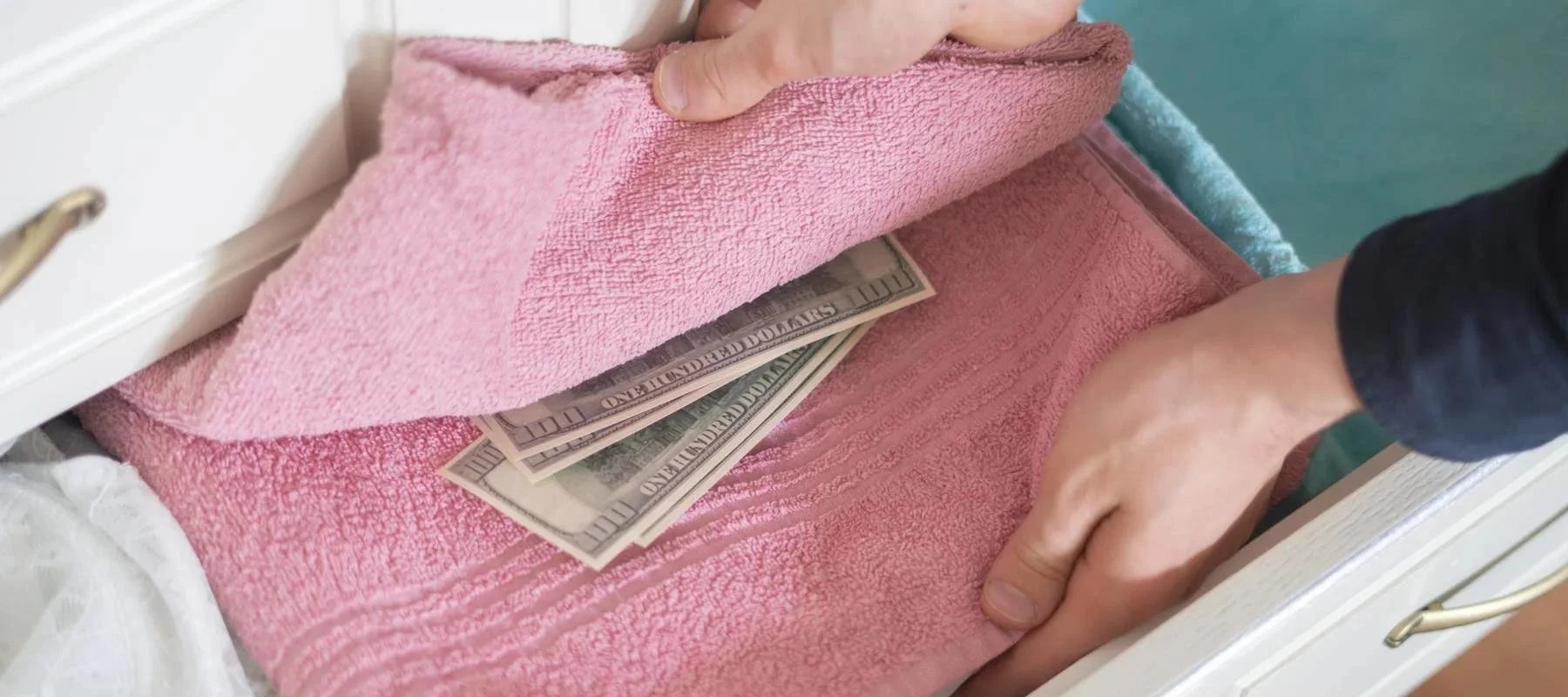
Simply put, we’ve entered an easing cycle which should benefit borrowers across the country. But if you’re a saver or lender, these rate cuts mark the end of an exceptionally lucrative era. If you’re a retiree or someone living off passive income, it may no longer be easy to generate high returns.
However, the simple truth is that you should probably keep cash in the same places you should have kept them before. Your emergency fund and other savings that you want easy access to should always be kept in safe, low-risk, liquid assets. Money that you won’t need in the short-term can go towards long-term investments that earn higher returns, like stocks.
If you haven't been optimizing your savings based on your needs, there are a wealth of options beyond simple savings accounts worth investigating for higher rates.
As of October 2, it’s still possible to get a 5% yield on a high-yield savings account at some online banks like AdelFi and Varo. This is an attractive yield for any cash you need to park temporarily, but the rate could decline if the Fed continues to cut rates.
If you’re looking for attractive interest rates for your cash savings, here are some other assets you should consider.
TO READ MORE: https://www.yahoo.com/finance/news/where-americans-keep-cash-now-123000264.html
MilitiaMan and Crew: IQD News Update-Iran-Borders-Deletion Zeros-Global Timing
MilitiaMan and Crew: IQD News Update-Iran-Borders-Deletion Zeros-Global Timing
10-5-2025
The Crew: Samson, PompeyPeter, Petra, Daytrader, Sunkissed, GIGI and Militia Man
Follow MM on X == https://x.com/Slashn
Be sure to listen to full video for all the news……..
MilitiaMan and Crew: IQD News Update-Iran-Borders-Deletion Zeros-Global Timing
10-5-2025
The Crew: Samson, PompeyPeter, Petra, Daytrader, Sunkissed, GIGI and Militia Man
Follow MM on X == https://x.com/Slashn
Be sure to listen to full video for all the news……..
FRANK26…10-5-25….APP
KTFA
Sunday Night Video
FRANK26…10-5-25….APP
This video is in Frank’s and his team’s opinion only
Frank’s team is Walkingstick, Eddie in Iraq and guests
Playback Number: 605-313-5163 PIN: 156996#
KTFA
Sunday Night Video
FRANK26…10-5-25….APP
This video is in Frank’s and his team’s opinion only
Frank’s team is Walkingstick, Eddie in Iraq and guests
Playback Number: 605-313-5163 PIN: 156996#
It’s Game Over, Debt Bubble Blowing Up
It’s Game Over, Debt Bubble Blowing Up
Liberty and Finance: 10-4-2025
The financial headlines often tell a straightforward story: when the stock market soars, safe-haven assets like gold and silver typically languish. After all, why seek safety when the bulls are running free?
Yet, we’re currently witnessing a fascinating and somewhat perplexing market dynamic: the U.S. stock market is hitting unprecedented highs, and gold and silver are surging right alongside it.
What gives?
It’s Game Over, Debt Bubble Blowing Up
Liberty and Finance: 10-4-2025
The financial headlines often tell a straightforward story: when the stock market soars, safe-haven assets like gold and silver typically languish. After all, why seek safety when the bulls are running free?
Yet, we’re currently witnessing a fascinating and somewhat perplexing market dynamic: the U.S. stock market is hitting unprecedented highs, and gold and silver are surging right alongside it.
What gives?
Liberty and Finance recently hosted Don Durrett, an astute expert in precious metals investing, who sheds brilliant light on this perplexing phenomenon.
His insights reveal that this isn’t a contradiction, but rather a profound signal of underlying systemic risks, particularly the growing U.S. debt crisis, viewed through the critical lens of Triffin’s dilemma.
Durrett explains that while many American investors are celebrating stock market records, the smart money – especially foreign central banks and international investors – is reading a different tea leaves.
The U.S. is grappling with a ballooning national debt, a problem that is not yet fully reflected in domestic market sentiment.
This is where Triffin’s dilemma becomes acutely relevant. The paradox highlights the conflict of interest that arises when a national currency (like the U.S. dollar) serves as the world’s primary reserve currency.
To satisfy global demand for dollars, the U.S. must run trade deficits, essentially exporting its currency. But this simultaneously undermines confidence in the dollar’s long-term value due to increasing debt and potential inflation.
Foreign entities understand this delicate balance. They are strategically reducing their exposure to U.S. debt and, crucially, accumulating gold at an accelerated pace.
This isn’t just hedging; it’s a strategic shift reflecting a growing acknowledgment of the dollar’s inherent vulnerabilities and the looming implications of unaddressed debt.
These are not incremental gains; they represent a fundamental re-pricing of these metals as global confidence in fiat currencies, particularly the dollar, continues to wane.
A striking point Durrett makes is the minimal gold exposure among American investors. While foreign central banks are buying hand over fist, many Americans remain under-invested in precious metals.
This often stems from a lack of immediate fear or a full recognition of the systemic debt issues that are quietly brewing beneath the surface of seemingly robust stock markets.
However, Durrett believes this is poised to change. As fear and recognition of economic risks grow domestically, American investors are expected to follow suit, turning to gold and silver as essential tools for capital preservation.
The unusual parallel surge of the stock market and precious metals is not a sign of irrational exuberance, but rather a sophisticated, two-tiered market revealing systemic risks.
While American investors revel in stock market highs, foreign central banks are signaling a shifting global paradigm, strategically embracing gold as a bulwark against a potential U.S. dollar devaluation and a broader economic reset.
Durrett’s insights underscore the critical importance of understanding these dynamics. As the U.S. debt crisis continues to unfold, gold and silver are not just commodities; they are increasingly becoming a strategic necessity for capital preservation in an uncertain economic future.
BREAKING Treasury Demands Full Fed Audit 8,133 Tons of Gold Missing? Andrew Maguire
BREAKING Treasury Demands Full Fed Audit 8,133 Tons of Gold Missing? Andrew Maguire
Financial Wisdom: 10-5-2025
0:00 - Skepticism around U.S. gold revaluation
0:24 - Footprints of gold revaluation and dollar price expectations
0:39 - Silver targets and undervaluation of metals
1:03 - Bank of International Settlements' gold revaluation impact
BREAKING Treasury Demands Full Fed Audit 8,133 Tons of Gold Missing? Andrew Maguire
Financial Wisdom: 10-5-2025
0:00 - Skepticism around U.S. gold revaluation
0:24 - Footprints of gold revaluation and dollar price expectations
0:39 - Silver targets and undervaluation of metals
1:03 - Bank of International Settlements' gold revaluation impact
1:59 - Physical exchanges vs. legacy paper markets
2:47 - China’s Basel III compliant yuan-gold price shift
4:21 - PBOC benchmarking gold against U.S. Treasuries
5:37 - U.S. Treasury gold under pressure, Fed audit calls
7:02 - Double ownership claims and audit importance
7:49 - Risks of bullion shortages and forced revaluation
9:01 - Timing of revaluation around COMEX December futures
9:40 - Market manipulation, COMEX as price taker
12:02 - Rehypothecation concerns and lack of trust in U.S. vaults
13:43 - Key questions: unallocated gold and market price impact
14:36 - Concealed supply-demand data and audit refusals
15:09 - Bundesbank repatriation and delivery delays
16:43 - Evidence of central bank delivery default
17:15 - German gold bars replaced with mismatched bars
Iraq Economic News and Points To Ponder Sunday Afternoon 10-5-25
Gold Prices Rise Slightly In Baghdad Markets.
Money and Business Economy News – Baghdad Iraqi and foreign gold prices saw a slight increase on the Baghdad Stock Exchange today, Saturday.
Gold prices in the wholesale markets on Al-Nahr Street in the capital, Baghdad, this morning recorded a selling price of one mithqal of 21 karat Gulf, Turkish and European gold at 775 thousand dinars, and a purchase price of 771 thousand, while last Thursday’s prices recorded 772 thousand dinars.
Gold Prices Rise Slightly In Baghdad Markets.
Money and Business Economy News – Baghdad Iraqi and foreign gold prices saw a slight increase on the Baghdad Stock Exchange today, Saturday.
Gold prices in the wholesale markets on Al-Nahr Street in the capital, Baghdad, this morning recorded a selling price of one mithqal of 21 karat Gulf, Turkish and European gold at 775 thousand dinars, and a purchase price of 771 thousand, while last Thursday’s prices recorded 772 thousand dinars.
Mawazine News – Baghdad : The dollar exchange rate stabilized in local markets in the capital, Baghdad, on Sunday. The selling price reached 142,500 dinars per $100, while the buying price reached 140,500 dinars per $100. https://www.mawazin.net/Details.aspx?jimare=267834
Iraqi Oil Exports To The US Exceed 4 Million Barrels Despite The Decline.
Economy | 10:42 - 05/10/2025 Mawazine News - Follow-up The U.S. Energy Information Administration announced that Iraq's crude oil exports to the United States amounted to more than 4.2 million barrels during September, down from about 7.9 million barrels in August.
The administration explained that Iraq ranked sixth among the largest exporters to the United States and second among Arab countries after Saudi Arabia, whose exports amounted to 7.29 million barrels, while Libya ranked third with 3.03 million barrels. https://www.mawazin.net/Details.aspx?jimare=267833
Decline In Iraqi Market Indices, With Trading Worth 777 Million Dinars
Stock Exchange Economy News – Baghdad The Iraq Stock Exchange recorded a slight decline in the general index during today's session, Sunday. The ISX 60 closed at 965.71 points, down 0.15%, or 1.44 points.
The ISX 15 index also fell to 1,128.13 points, compared to the previous close of 1,131.26 points, recording a decrease of -0.28%, equivalent to 3.13 points. The trading value of traded shares exceeded 777 million dinars through the listing of 979 transactions. https://economy-news.net/content.php?id=60762
OPEC+ Countries Decide To Increase Oil Production By 137,000 Barrels Per Day.
Buratha News Agency802025-10-05 The eight OPEC+ member states announced they had agreed to raise their oil production ceiling for November by 137,000 barrels per day compared to October.
This decision was made at a virtual meeting held on Sunday by OPEC+ member states that had previously voluntarily reduced their production: Russia, Saudi Arabia, Iraq, Kazakhstan, Kuwait, the United Arab Emirates, Oman, and Algeria.
According to the meeting's results, Kazakhstan will be able to increase its oil production in November to 1.563 million barrels per day, while Iraq's production will rise to 4.255 million barrels per day.
Russia will increase oil production in November by 41,000 barrels per day, reaching 9.532 million barrels per day, while Saudi Arabia's production will rise to 10.061 million barrels per day.
OPEC+ said in a statement: "Given the strong global economic outlook and current favorable market conditions, reflected in declining oil inventories, the eight participating countries have decided to adjust their production by 137,000 barrels per day, compared to the additional voluntary cuts of 1.65 million barrels per day announced in April 2023. This adjustment will be implemented in November 2025."
The statement indicated that the countries will continue to assess market conditions and reiterated the importance of adopting a cautious approach and maintaining full flexibility – as participants can suspend or cancel oil production increases, including lifting the voluntary 2.2 million barrels per day cap. The next meeting of the eight member states is scheduled for November 2. http://burathanews.com/arabic/economic/466075
For current and reliable Iraqi news please visit: https://www.bondladyscorner.com
Seeds of Wisdom RV and Economics Updates Sunday Afternoon 10-5-25
Good Afternoon Dinar Recaps,
Central Banks Prepare for BRICS Gold Standard Amid Dollar Distrust
As dollar confidence wanes, central banks are accumulating gold and laying the infrastructure for a new monetary paradigm.
Good Afternoon Dinar Recaps,
Central Banks Prepare for BRICS Gold Standard Amid Dollar Distrust
As dollar confidence wanes, central banks are accumulating gold and laying the infrastructure for a new monetary paradigm.
Record Accumulation Signals a Shift
● In 2024, central banks globally added over 1,000 tonnes of gold, a rate not seen in recent history.
● Even Western institutions are reacting: Germany and Italy are reconsidering the safety of storing their gold overseas (in New York or London).
● Some nations (e.g. China, Nigeria) are actively repatriating bullion stored abroad, reflecting concerns about access and control.
These moves aren’t mere hedges — they’re strategic repositioning in a world where reserve assets can be politicized.
Gold-Backed Settlement & Payment Infrastructure
● BRICS Pay and other gold-settlement systems are being envisioned to bypass dollar-based infrastructure.
● Some energy trades among BRICS nations are already settled partly in gold — a practical testing ground for a broader gold-backed model.
● These systems won’t appear overnight, but parallel rails and architecture are being built system by system, not by sudden leaps.
Gold has advantages: no counterparty risk, no political strings, immunity from permissioned interference.
Strategic Positioning Across Major Economies
● Russia, China, India, and other central banks are boosting gold reserves to reinforce their financial sovereignty.
● Gold has overtaken the euro in terms of reserve share in some central bank portfolios, signaling shifting trust in fiat assets.
● This is defensive more than speculative — central banks are preparing for fractures in the dollar system, not necessarily rallying behind gold’s price.
Challenges & Realism in the Transition
● Not all BRICS or allied states will join a full gold standard — many prefer hybrid systems and gradual adoption.
● Brazil’s central bank director has cautioned that BRICS doesn’t currently hold assets large enough to overtly rival the dollar in the near future.
● Trust, liquidity, legal frameworks, and gold distribution logistics remain major obstacles.
These structural challenges mean any shift will unfold gradually — not overnight — but intention and groundwork are clear.
Why This Matters / Key Takeaway
Central banks are no longer passively managing gold — they’re actively repositioning reserves and building infrastructure for alternatives to the dollar-based order.
The accumulation of gold is more than preservation — it’s control over assets that can’t be seized or blocked.
Parallel payment systems backed by gold challenge the old fiat-led hierarchy.
Capital will gravitate to those rails and institutions that offer reliability and sovereignty
This evolution points to a future where power over money, trade, and credit is redistributed — and the question isn’t if, but when, the new order consolidates.
This is not just politics — it’s global finance restructuring before our eyes.
@ Newshounds News™ Exclusive
Sources & Additional Readings
• Watcher.Guru – Central Banks Prepare for BRICS Gold Standard Amid Dollar Distrust
• GoldCore – The World Quietly Preparing for a Gold-Backed BRICS Currency
• InvestingNews – How Would a New BRICS Currency Affect the U.S. Dollar?
• Reuters – Brazil Central Bank Says No BRICS Asset Pile Big Enough to Rival Dollar
~~~~~~~~~
Seeds of Wisdom Team RV Currency Facts Youtube and Rumble
Newshound's News Telegram Room Link
Follow the Gold/Silver Rate COMEX
Follow Fast Facts
Seeds of Wisdom Team™ Website
Thank you Dinar Recaps
End of King Dollar, BRICS Gold Networks, CPI Lies, and the Great Reset Explained
End of King Dollar, BRICS Gold Networks, CPI Lies, and the Great Reset Explained
The Market Sniper: 10-5-2025
The global financial system is not merely shifting; it is entering a phase of fundamental, seismic transformation.
For those paying close attention, the tremors beneath the surface—inflation, bank instability, and geopolitical maneuvering—signal the impending end of the fiat currency era initiated by the 1971 Nixon Shock.
End of King Dollar, BRICS Gold Networks, CPI Lies, and the Great Reset Explained
The Market Sniper: 10-5-2025
The global financial system is not merely shifting; it is entering a phase of fundamental, seismic transformation.
For those paying close attention, the tremors beneath the surface—inflation, bank instability, and geopolitical maneuvering—signal the impending end of the fiat currency era initiated by the 1971 Nixon Shock.
In a recent, detailed conversation, Francis Hunt, The Market Sniper, sat down with financial analyst Bill Holter to dissect the escalating systemic risks. What follows is a summary of their stark, yet crucial, analysis covering everything from the mechanics of market failure to the necessary steps for personal preparedness.
Holter and Hunt paint a clear picture: the US dollar’s reign as the world’s reserve currency is nearing its conclusion. This is not driven by simple economic cycles but by a deliberate, geopolitical pivot.
The experts highlight the accelerating trend of nations, particularly the BRICS bloc (Brazil, Russia, India, China, and others), moving decisively away from the USD and toward a sound money paradigm backed by physical commodities and precious metals.
This shift signals the widespread loss of trust in unbacked fiat currencies. As central banks and major global players liquidate dollar assets, the demand for true, tangible wealth—physical gold and silver—soars.
Bill Holter provides crucial insights into the precious metals market, specifically silver. He details the dangerous disconnect between the paper derivatives market and the actual supply of physical metals.
A key indicator of systemic stress is the persistent “failure to deliver” in the silver market. This phenomenon suggests that the amount of paper silver traded and promised far exceeds the physical metal available, proving that the paper price is a manipulated fiction.
As nations demand physical settlement and retail investors recognize the paper manipulation, the pressure on the price of gold and silver will reach a tipping point, forcing a massive, rapid revaluation that reflects underlying real demand.
Key takeaway: Precious metals are not viewed as mere commodities by central banks anymore; they are the foundation of the next global monetary system.
One of the most insidious threats discussed is the deliberate manipulation of government statistics, particularly inflation data. By underreporting the true rate of inflation, governments obscure the actual pace at which fiat currency is losing purchasing power, lulling the public into a false sense of security.
However, the manipulation serves a greater purpose: preparing for the systemic collapse. Hunt and Holter explore the concept of the “Great Taking”—a systemic event that could manifest as government-driven asset confiscation, forced revaluation, or wealth taxes designed to resolve unpayable national debts.
When the financial system finally breaks, the integrity of contracts, property rights, and even basic public services will be jeopardized. This financial failure is projected to trigger a wave of societal consequences.
As a potential solution to a broken fiat system, governments worldwide are rapidly advancing plans for Central Bank Digital Currencies (CBDCs).
Hunt and Holter view CBDCs not as an innovation, but as the ultimate tool of government control. In a collapse scenario, a CBDC would grant authorities unprecedented oversight over individual spending, saving, and movement. This digital currency acts as a lockbox, allowing for instant implementation of policies like negative interest rates, expiration dates on money, and even asset freezing linked to political behavior.
While the outlook presented by Holter and Hunt is grim regarding the current institutional structure, they close by emphasizing that this era of systemic collapse also represents a historic opportunity for those who are prepared.
The time for preparation is now. Ignoring the signals being broadcast across the global financial landscape is no longer an option.
For a complete and detailed analysis of these complex topics, including Bill Holter’s precise market observations and Francis Hunt’s strategic insights, we highly recommend watching the full video conversation available from The Market Sniper.
News, Rumors and Opinions Sunday 10-5-2025
Note: All intel should be considered as "Rumors" until we receive official announcements ...and “Rates and Dates” could change anytime until we get to the banks/redemption centers.
RV Excerpts from the Restored Republic via a GCR: Update as of Sun. 5 Oct. 2025
Compiled Sun. 5 Oct. 2025 12:01 am EST by Judy Byington
Summary:
For those tracking the extraordinary shift in global finance and governance, the next two weeks are poised to rewrite history.
Note: All intel should be considered as "Rumors" until we receive official announcements ...and “Rates and Dates” could change anytime until we get to the banks/redemption centers.
RV Excerpts from the Restored Republic via a GCR: Update as of Sun. 5 Oct. 2025
Compiled Sun. 5 Oct. 2025 12:01 am EST by Judy Byington
Summary:
For those tracking the extraordinary shift in global finance and governance, the next two weeks are poised to rewrite history.
Sources confirm that the long-anticipated Global Currency Reset (GCR) is now actively underway, quietly ushering in a gold/asset-backed Quantum Financial System (QFS) just as the old fiat structure prepares for its final, dramatic collapse.
As we are repeatedly reminded, we are merely watching the end of a grand cinematic drama. The indicators are now accelerating, suggesting that the climax is imminent.
A fundamental requirement for the Global Currency Reset has long been global stability. According to reports, President Trump now holds seven major peace deals, fulfilling the prerequisite for the world to transition to asset-backed currencies.
The true kingpin in this global shift—the Iraqi Dinar—has been (allegedly) confirmed to have revalued.
Iraq’s celebration of its National Day, recently extended for a full week (beginning Sat. Oct 4, 2025), is interpreted by experts as the public acknowledgment of their monetary reform completion. This celebration (allegedly) anchors the start of the final phase.
With Iraq’s Dinar (allegedly) revalued and bond holders reportedly receiving payments, attention turns to Tier 4b—the currency and bond holders awaiting exchange appointments.
Three high-level sources suggest that notifications to set these crucial appointments could be delivered as early as Monday, October 5, or Tuesday, October 6, 2025. This movement confirms that the system is ready for the public to participate in the greatest wealth transfer in history.
The period between October 13th and 15th is widely anticipated to be the breaking point for the globalist-controlled fiat system, signaling the necessary transition for GESARA to officially take effect.
Experts are warning of a significant banking and market collapse around this date. This event is not viewed as a disaster by the White Hats, but rather a necessary cessation of the corrupt financial structure.
While the Stock Market craters, the backbone of modern finance—the SWIFT Global Banking System—will meet its end. However, the world will not be left in chaos: 209 countries (allegedly) already have banks connected to the new asset-backed Quantum Financial System (QFS).
This date has been designated as World Quantum Day, the moment when the foundational laws of NESARA/GESARA are anticipated to become official globally.
A full banking and market collapse on Wednesday, the 15th, is expected to trigger the long-awaited activation of the Emergency Broadcast System (EBS).
Once the EBS signals with the sound of Seven Trumpets, citizens can expect to receive key personal messages via the Starlink Satellite System regarding their next steps—including instructions for scheduling Redemption Center appointments, (allegedly) utilizing future Med Bed treatments, and secure quantum voting protocols.
Beneath the drama of the market collapse, the foundation for extraordinary economic reform—GESARA—has (allegedly) been put into play.
On October 1, 2025, President Trump reportedly launched a $150 trillion financial operation via the National Endowment Directive. This act unlocks vast mineral assets (Gold, Silver, Rare Earths) sealed away for decades beneath U.S. federal land—resources valued at more than the GDP of every nation combined.
The QFS, running node by node through secure Starlink satellites, ensures that all new transactions are transparent, incorruptible, and tied to true asset value, officially ending the reign of the Deepstate Cabal’s economic empire.
We are told the silent preparation phase of this monumental shift is over. The moment is here.
As the old structure crumbles, the new one—built on gold, transparency, and abundance—is (allegedly) fully operational. For those involved in the physical currency exchanges, prepare for your notification between October 5th and 6th. For all citizens, prepare for the EBS, which is the signal that the QFS and NESARA/GESARA are officially rolling out worldwide.
The game of scarcity, debt, and dependency is (allegedly) over. We are entering a new paradigm enforced by asset-backed currency and quantum technology, bringing justice and prosperity back to the people.
Read full post here: https://dinarchronicles.com/2025/10/05/restored-republic-via-a-gcr-update-as-of-october-5-2025/
Courtesy of Dinar Guru: https://www.dinarguru.com/
Samson Article: “THE PRIME MINISTER DIRECTS THAT THE NATIONAL DAY CELEBRATIONS CONTINUE FOR A WEEK”
Militia Man You have an extension to a one day holiday with a long weekend attached to it. You can’t make this stuff up…Basically national day extended for a week… Sudani’s directive extends to manifestations of a celebration for a full week through October 10th…Article quote: “This is unusual and the standard is a single day off.” Adding that extra time is obviously a move on purpose…They’ll be able to have cultural shows, military parades. They’ll have sovereignty emphasis.
Frank26 The holiday has been extended to seven days. What you got up your sleeve? Nothing Bullwinkle. You have to have watched Rocky the flying squirrel to know what that means. Never mind. He went from 3 days to 7 days. We’re not stupid…There is nothing to celebrate at 1310. Quit playing with us.
************
The TRUTH About the Gold Rally: The System is Breaking
Jay Martin: 10-5-2025
Today on The Jay Martin Show, Jay is joined Grant Williams, one of the most respected voices in macro finance and author of 'Things That Make You Go Hmmm...'.
This conversation covers the signals behind gold’s record highs, the central bank shift away from the U.S. dollar, and the fragile state of government debt across the West.
Grant dives into how the bond market may be quietly revolting against central banks, and the geopolitical maneuvers reshaping the global order.
Iraq Economic News and Points To Ponder Sunday Morning 10-5-25
Economist: Controlling Exchange Rates Is The Responsibility Of The Central Bank, And The Challenges Facing Banks Continue.
Time: 2025/10/03 16:11:39 Reading: 90 times Economic: Al Furat News} Economic expert Salah Nouri affirmed on Friday that the financial system and exchange rate control are among the primary responsibilities of the Central Bank of Iraq, noting that the bank faces numerous challenges in this area.
Economist: Controlling Exchange Rates Is The Responsibility Of The Central Bank, And The Challenges Facing Banks Continue.
Time: 2025/10/03 16:11:39 Reading: 90 times Economic: Al Furat News} Economic expert Salah Nouri affirmed on Friday that the financial system and exchange rate control are among the primary responsibilities of the Central Bank of Iraq, noting that the bank faces numerous challenges in this area.
Nouri told Al Furat News Agency, "The Central Bank faces challenges in light of the fact that many private banks operate outside its controls and conditions, in addition to the conditions set by the US Federal Reserve regarding foreign currency transfers."
He added, "Controlling exchange rates in the parallel market is difficult to completely eliminate.
Rather, the solution lies in reducing price fluctuations through the flexibility of the central bank's tools in response to global fluctuations."
Nouri continued, "Private banks' response and adaptation to the Central Bank's lending instructions contributes to revitalizing the Iraqi economy.
" He explained that "the instructions for external financial transfers for import purposes are similar to the US Federal Reserve's procedures in this area, which requires private banks to ully adapt and comply with the Central Bank's instructions." https://alforatnews.iq/news/خبير-اقتصادي-ضبط-أسعار-الصرف-من-مهام-البنك-المركزي-وتحديات-المصارف-مستمرة
Revealing US Efforts To Ensure Continued Kurdistan Oil Exports
October 3, 2025 Washington / Iraq Observer follow-up The Trump administration is working to ensure continued oil exports from northern Iraq— resumed after a two-year hiatus—in the long termto support the country's economy,generate gains for American companies, andcounter Iran's influence in the region.
According to a report published by the Asharq Al-Awsat website, the United States is focused on ensuring the implementation of the oil export agreement and fulfilling its financial obligations, according to a senior US State Department official who requested anonymity due to the confidentiality of the talks. The official added that
Washington has been working over the past weeks to bring international oil companies together with the Iraqi and Kurdish governments, an effort that included hundreds of phone calls and meetings that paved the way for reaching the agreement.
The United States' role in resuming shipments through the pipeline to Turkey's Mediterranean coast also enhances the agreement's long-term sustainability.
The current agreement is only valid until the end of the year, during which the parties are scheduled to hold talks on the companies' dues, amounting to hundreds of millions of dollars, while Türkiye is pushing for new terms for the transportation of crude.
Secretary of State Marco Rubio explained last week in a post on the X platform hat the agreement “will deliver tangible benefits to both Americans and Iraqis, while reaffirming Iraq’s sovereignty.”
According to Iraqi and Kurdish officials,US pressure was a decisive factor in reaching the export agreement, and Washington is now seeking to transform it into a long-term agreement that also protects the interests of American companies. https://observeriraq.net/الكشف-عن-سعي-امريكي-لضمان-استمرار-صادر/
UN Warns Of Iraq's Reliance On Oil To Secure Salaries
October 4, 2025 New York / Iraq Observer follow-up The United Nations Development Programme warned on Saturday that Iraq's continued dependence on oil to secure salaries.
"The Iraqi state's near-total dependence on oil and the salaries of 8 million government employees is hampering any real path to sustainable development,"
said Abdullah Al-Dardari, Assistant Secretary-General of the United Nations,
Assistant Administrator and Director of the Regional Bureau for Arab States at the United Nations Development Programme.
He called for"investment in infrastructure, agriculture, renewable energy, and technology as essential pillars of economic diversification." https://observeriraq.net/تحذير-اممي-من-اعتماد-العراق-على-النفط-ب/
Oil Minister: More Than One Million Barrels Have Been Received From The Region So Far.
Saturday, October 4, 2025, | Economics Number of reads: 245 Baghdad / NINA / Oil Minister Hayan Abdul Ghani announced, on Saturday, the receipt of more than one million barrels from the region so far, while confirming the loading of the first tanker with the region's oil into the port of Ceyhan.
Abdul Ghani said, according to the official agency: "Several days ago, the process of pumping oil from the Kurdistan region towards the port of Ceyhan was resumed via the Iraqi-Turkish pipeline after a halt of more than two years for this pipeline," noting that "for the first time, the federal government receives oil produced in the region and undertakes the process of exporting it outside Iraq." He added that "the quantities received so far have reached more than one million barrels." / End
Iraq Jawad Al-Samarraie October 4, 2025 Mohammed Najjar, Advisor To The Prime Minister And Executive Director Of The Iraq Development Fund
Baghdad (IraqiNews.com) – The economic study for Iraq’s ambitious Development Road project is complete,revealing highly promising results, including a forecast of 1.6 million new job opportunities.
The CEO of the Iraq Development Fund, Mohammed Al-Najjar, announced today,Friday (October 3, 2025), that the strategic corridor is projected to attract up to $150 billion in investments over the next three decades, a sum expected to match or exceed Iraq’s oil revenues.
Al-Najjar affirmed that the Development Road represents the strategic core of Iraq’s Vision 2050, aiming to transform the country from a landlocked state into a global economic corridor.
He noted that the project is not just a transport route but a comprehensive strategic channel comprising railways, dry ads, pipelines for oil, gas, electricity, and internet, along with the establishment of new economic cities.
The project is now entering its execution phase, with the next step being an international ministerial meeting to brief partner countries on the completed technical and economic studies.
Al-Najjar confirmed that the economic assessment by the consulting firm Oliver Wyman is finalized,
revealing the massive job creation potential.
Following the ministerial meeting, the study will receive final approval, followed by the launch of a major campaign to invite international investors.
Al-Najjar stressed that international interest in the project has significantly increased.
He disclosed that specialized global infrastructure funds and the European Union have submitted formal requests to participate.
The next steps also include establishing two key entities: a commercial company to handle the project’s business aspects and a governmental body to manage its sovereign affairs.
The entire 1,200-kilometer project will officially commence once the Grand Faw Port enters service, marking the primary starting point for the new global trade route.
https://www.iraqinews.com/iraq/development-road-project-1-6-million-jobs-150-billion-investment/
For current and reliable Iraqi news please visit: https://www.bondladyscorner.com
Seeds of Wisdom RV and Economics Updates Sunday Morning 10-5-25
Good Morning Dinar Recaps,
U.S. Government Shutdown: Domestic Fallout and Global Ripples
The 2025 government shutdown is exposing cracks in the U.S. financial system — and the ripple effects are spreading across global markets.
Domestic Disruptions: The Shutdown’s Toll on Americans
Good Morning Dinar Recaps,
U.S. Government Shutdown: Domestic Fallout and Global Ripples
The 2025 government shutdown is exposing cracks in the U.S. financial system — and the ripple effects are spreading across global markets.
Domestic Disruptions: The Shutdown’s Toll on Americans
● Federal Operations Halted — The U.S. government officially shut down at 12:01 a.m. on October 1, 2025, after Congress failed to pass a budget, forcing over 800,000 federal employees into furlough or unpaid work.
● Critical Services Impacted — While Social Security and Medicare continue under mandatory funding, discretionary programs, public lands, and grant programs face suspension.
● National Parks and Infrastructure — About 9,300 of 14,500 park employees have been furloughed, leaving visitor services and maintenance stranded. Federal housing markets around D.C. are seeing ripple effects as unpaid workers cut back or list properties.
● Economic Hit — The White House estimates up to $15 billion lost per week, with unemployment expected to climb by 43,000 in a single month of disruption.
● Credit Rating Risk — European rating agency Scope warned that fiscal dysfunction could strain the U.S. credit outlook, adding uncertainty to global bond markets.
Economic Strain & Domestic Uncertainty
● Stalled Programs and Delayed Spending — From DOJ domestic violence grants to small business loans, federal funding halts are rippling through states and private contractors.
● Market Jitters — While Wall Street has priced in temporary disruptions, prolonged paralysis could dampen consumer sentiment, federal investment, and GDP growth.
● Structural Warning Sign — Analysts note that every week of shutdown trims roughly 0.1 percentage point from quarterly growth — a warning sign for an economy already absorbing inflation pressures and global headwinds.
Global Ramifications: Financial Reverberations Beyond Washington
● European Exposure — Analysts estimate that a two-week U.S. shutdown could cost the EU €4 billion in lost activity; an eight-week standoff could stretch that loss to €16 billion.
● Investor Confidence and Market Volatility — The shutdown adds a destabilizing variable to already uncertain global conditions — especially for nations reliant on U.S. liquidity and dollar flows.
● Sovereign Credibility Under Scrutiny — Prolonged political gridlock undermines confidence in U.S. fiscal reliability, raising bond yields and widening sovereign risk spreads across emerging markets.
● Data Delays and Policy Blindspots — Economic reports such as jobs data, retail spending, and manufacturing indices face delays, leaving central banks and investors operating in the dark.
Why This Matters
The U.S. shutdown highlights how fragile the world’s most watched economy has become. While shutdowns are historically short-lived, this one unfolds amid rising debt, inflation persistence, and political brinkmanship — all undermining confidence in the U.S. dollar’s stewardship role.
If Washington cannot stabilize its fiscal governance, other powers — from BRICS to the EU — may accelerate parallel systems less dependent on the dollar.
This is not just politics — it’s global finance restructuring before our eyes.
@ Newshounds News™ Exclusive
Sources:
• The Guardian – U.S. National Parks Impact
• Politico – U.S. GDP Loss Projections
• Reuters – U.S. Credit Rating Warning
• Euronews – Europe’s Economic Exposure
• Atlantic Council – Shutdown Economic Implications
• ABC News – Expert Growth Analysis
~~~~~~~~~
Geopolitical Shifts Reshape the Global Order: New Alliances, New Systems
From defense compacts to digital finance, nations are redrawing the architecture of global power.
China’s Institutional Challenge to the West
● In a major UN address, China unveiled its Global Governance Initiative, directly criticizing U.S. unilateralism and calling for a more “balanced multipolar order.”
● Beijing is now forming AI alliances and unified tech standards, aiming to cut reliance on U.S. technology and strengthen domestic sovereignty.
● This represents institutional competition at scale — not just economic rivalry but a bid to control the frameworks that define trade, technology, and governance.
“Whoever writes the rules of digital infrastructure, writes the future of global finance.”
The Expanding Frontier: Space as the New Strategic Arena
● The U.S. and France have expanded joint satellite and surveillance programs to counter China’s growing orbital presence.
● These partnerships mark a shift from competition on Earth to rivalry over data, communications, and orbital security — areas critical to digital banking and global transaction networks.
● Control of space infrastructure increasingly equates to control of real-time global information flow, directly linking defense dominance with financial and technological supremacy.
Trade Realignment: The Fragmentation of Global Supply Chains
● Facing escalating U.S. tariffs and trade disruptions, Europe and Asia are building alternative alliances to safeguard energy and industrial stability.
● This shift signals a clear trend: regional self-sufficiency is replacing global interdependence.
● Countries are hedging against U.S. policy volatility and exploring non-dollar trade corridors, aligning directly with BRICS strategies of localized payment systems and commodity-backed trade.
Defense & Security: New Blocs on the Rise
● Pakistan and Saudi Arabia’s Strategic Mutual Defense Agreement formalized joint military cooperation, marking a major pivot toward Middle Eastern defense autonomy.
● Similarly, Albania, Croatia, and Kosovo signed a defense pact, deepening Balkan coordination in response to NATO realignments.
● At the 2025 Hague Summit, NATO members pledged to raise defense spending to 5% of GDP by 2035, fundamentally reshaping budget priorities and geopolitical leverage.
Academic Models Confirm: Politics Now Drives Economics
● A recent Arxiv study found a strong correlation between geopolitical alignment and trade volume — meaning politics now determines economic flow.
● Another report shows countries are building alternative financial ecosystems — bypassing SWIFT and testing regionally governed digital payment networks.
● Together, these findings confirm a structural decoupling of the global economy — where financial integration follows political allegiance.
Why This Matters / Key Takeaway
The evidence is unmistakable:
We are witnessing the realignment of power across every axis — trade, defense, technology, and finance.
● Old institutions are fracturing under political and economic strain.
● New blocs and systems — from BRICS Pay to regional defense pacts — are emerging to fill the void.
● This is not fragmentation by accident, but restructuring by design — an intentional reordering of who governs global rules and resources.
As nations pivot toward sovereignty and multipolar stability, one truth echoes across every capital:
Out with the Old, In with the New.
This is not just politics — it’s global finance restructuring before our eyes.
@ Newshounds News™ Exclusive
Sources:
• AP News – China’s Global Governance Initiative
• Tom’s Hardware – China Forms AI Alliances to Cut U.S. Tech Reliance
• Reuters – U.S.-France Satellite Cooperation
• Reuters – Trade Alliances in Response to Tariffs
• Wikipedia – Defense Pacts and Spending Agreements
• Arxiv – Global Trade and Political Alignment Studies
~~~~~~~~~
Seeds of Wisdom Team RV Currency Facts Youtube and Rumble
Newshound's News Telegram Room Link
Follow the Gold/Silver Rate COMEX
Follow Fast Facts
Seeds of Wisdom Team™ Website
Thank you Dinar Recaps