
Seeds of Wisdom RV and Economic Updates Sunday Afternoon 8-10-25
Good Afternoon Dinar Recaps,
US Targets India, Brazil & South Africa, Yet BRICS Stands for Unity
BRICS — Brazil, Russia, India, China, and South Africa — has become a focal point of economic and geopolitical tensions with the United States. While U.S. measures target several key BRICS markets, the alliance continues to project resilience.
Good Afternoon Dinar Recaps,
US Targets India, Brazil & South Africa, Yet BRICS Stands for Unity
BRICS — Brazil, Russia, India, China, and South Africa — has become a focal point of economic and geopolitical tensions with the United States. While U.S. measures target several key BRICS markets, the alliance continues to project resilience.
Right now, U.S.-Brazil tariffs have surged to 50%, and secondary sanctions loom over India’s Russian oil trade. Yet, despite these pressures, BRICS stands for unity — at least for now.
Origins and Purpose of BRICS
The BRICS concept, coined in 2001 by Goldman Sachs economist Jim O’Neill, was envisioned as a platform for deeper economic cooperation among leading emerging economies. Today, BRICS also aims to create alternatives to Western-led financial systems.
Operationally, the group focuses on:
Resolving regional disputes
Advocating financial reform at global institutions like the World Bank and IMF
Coordinating through the BRICS Interbank Cooperation Mechanism
U.S. Tariff Pressure on BRICS Members
Brazil: Facing 50% U.S. tariffs, justified by Washington over human rights concerns tied to former president Jair Bolsonaro’s case. Brazil has resisted U.S. pressure, with President Lula preparing a formal response.
India: Threatened with secondary sanctions due to Russian crude imports of 1.7 million barrels per day. The U.S. aims to push India toward greater market access concessions or revised energy procurement policies.
Economic Resilience Despite Sanctions
Brazil: The real remains strong, buoyed by attractive near-15% yields drawing international investors.
South Africa: Despite 30% U.S. tariffs, the rand benefits from the central bank’s pursuit of a lower 3% inflation target, attracting capital inflows.
India: The Reserve Bank of India has allowed greater flexibility in the rupee’s exchange rate while benefiting from lower domestic inflation.
Strategic Implications
BRICS’ ability to maintain cohesion under U.S. economic targeting will be tested in the months ahead. The group’s unity is further influenced by the stability of U.S.-China trade relations, with critical diplomatic deadlines — including August 12 — potentially reigniting tensions.
This moment will determine whether BRICS can sustain its founding principle of providing a counterweight to Western financial dominance, or whether national interests will override collective solidarity.
@ Newshounds News™
Source: Watcher.Guru
~~~~~~~~~
Seeds of Wisdom Team RV Currency Facts Youtube and Rumble
Newshound's News Telegram Room Link
Follow the Roadmap
Follow the Timeline
Seeds of Wisdom Team™ Website
Thank you Dinar Recaps
“Tidbits From TNT” Sunday 8-10-2025
TNT:
Tishwash: The Central Bank to Al-Maalouma: Our measures for banks are necessary, but not strict.
A member of the Central Bank's Board of Directors, Ahmed Brihi, confirmed today, Saturday, that the standards set by the bank to reform the banking sector are not strict or prohibitive, but rather aim to protect banks from collapse and ensure the safety of depositors' funds, in addition to preserving Iraq's international financial relations.
Brihi said in a statement to Al-Maalouma Agency, “The banking reform standards approved by the Central Bank related to private banks are not strict measures as promoted, but rather are necessary steps aimed at ensuring financial stability and preventing banks from collapsing.”
TNT:
Tishwash: The Central Bank to Al-Maalouma: Our measures for banks are necessary, but not strict.
A member of the Central Bank's Board of Directors, Ahmed Brihi, confirmed today, Saturday, that the standards set by the bank to reform the banking sector are not strict or prohibitive, but rather aim to protect banks from collapse and ensure the safety of depositors' funds, in addition to preserving Iraq's international financial relations.
Brihi said in a statement to Al-Maalouma Agency, “The banking reform standards approved by the Central Bank related to private banks are not strict measures as promoted, but rather are necessary steps aimed at ensuring financial stability and preventing banks from collapsing.”
He added, "A number of private banks faced circumstances that disrupted their financial operations, which required the Central Bank to establish regulatory standards to protect them and depositors' funds."
He pointed out that "these standards also take into account the importance of maintaining the Central Bank's international financial relations, which represent a decisive factor in Iraq's monetary and financial stability." link
Tishwash: The Central Bank of Iraq's fines on banks and financial companies exceed 66 billion.
The Central Bank of Iraq announced on Saturday that fines imposed on banks and non-banking institutions (exchange companies) amounted to more than 66 billion Iraqi dinars during the first half of 2025.
Statistics from the bank showed that “the fines imposed on banks and financial companies during the past six months, starting from January/November until the end of last June, amounted to 66 billion, 210 million, and 955 thousand dinars,” indicating that “the fines also included 77 administrative penalties for these banks and non-banking institutions, distributed between warnings, alerts, and grace periods.”
The bank stated that, "These fines decreased from the same period last year, which amounted to 181 billion, 842 million, and 854 thousand dinars, while the penalties amounted to 151, distributed between warnings, cautions, and grace periods."
The bank did not name the banks subject to the fines or administrative penalties. There are approximately 51 private banks, including 23 private commercial banks and 28 private Islamic banks. link
************
Tishwash: Al-Sudani announces decisive steps to reform Iraqi banks and restore confidence in the financial sector.
Prime Minister Mohammed Shia al-Sudani affirmed on Sunday the continuation of the comprehensive banking reform process through three basic steps, emphasizing the need for implementation to be based on a balanced vision that takes into account the specificities of Iraqi reality and ensures enhanced confidence in the banking sector.
A statement issued by his office, received by Al-Mada, said, "Al-Sudani was briefed on the latest developments related to the banking reform paper, particularly those related to private banks, appreciating the efforts made by the Central Bank of Iraq in preparing the document, which aims to enhance financial stability, achieve transparency, and raise the efficiency of the banking sector."
The statement indicated that "the Prime Minister paid special attention to the observations contained in the letter from the Iraqi Private Banks Association dated August 3, which included challenges facing local banks in implementing some provisions of the document, particularly those related to capital increase requirements, the adoption of a strategic partner, the costs of contracting with foreign companies, as well as the binding timelines. Accordingly, Al-Sudani called for adopting a participatory and consultative approach between the Central Bank and Iraqi banks by forming joint technical committees to review reform requirements and ensure their compatibility with the national financial and economic reality, in a manner that maintains a balance between reform requirements and the capabilities of local banks and protects the interests of investors and workers in this vital sector."
Al-Sudani explained that "the three approved steps begin with opening an expanded dialogue between the Central Bank and the banks to clarify the technical aspects of the document and discuss possible implementation mechanisms and their gradual progression.
This includes taking into account the specificity of the Iraqi reality when applying international standards, while committing to reform in principle and formulating standards in a manner that enhances confidence in the banking sector. This is followed by reassuring the banking community through clear messages that the goal of reform is empowerment, not exclusion, and that the doors of discussion remain open to serve the national economy."
For his part, banking expert Majid Abdul Hamid told Al-Mada that "the document represents a necessary step to raise the efficiency of the banking sector and improve the business environment in Iraq, but its success depends on gradual implementation and linking each stage to a clear support plan." He explained that the immediate implementation of some provisions, such as increasing capital or requiring a strategic partner, could place small banks under significant financial pressure, which requires granting them appropriate periods of time to adapt.
Economist Ayad Al-Rawi explained to Al-Mada that "banking reform is part of a broader economic reform, and that raising technical standards for banks will boost the confidence of depositors and investors. However, he warned that the lack of effective communication with the public could lead to unjustified fears and sudden withdrawals of deposits."
He stressed that "gradualness and transparency in announcing measures will be key to the success of reform, calling for a supportive legislative and financial environment to reduce risks to the local market."
As the government continues its path of banking reform, the stakes remain on the ability of the relevant parties to balance adherence to international standards with their adaptation to Iraqi market conditions, thus preserving the sector's stability and enhancing its role in financing development and supporting the national economy. link
Mot: . OK!!! --- Bringing OUT the ""RV Clock""
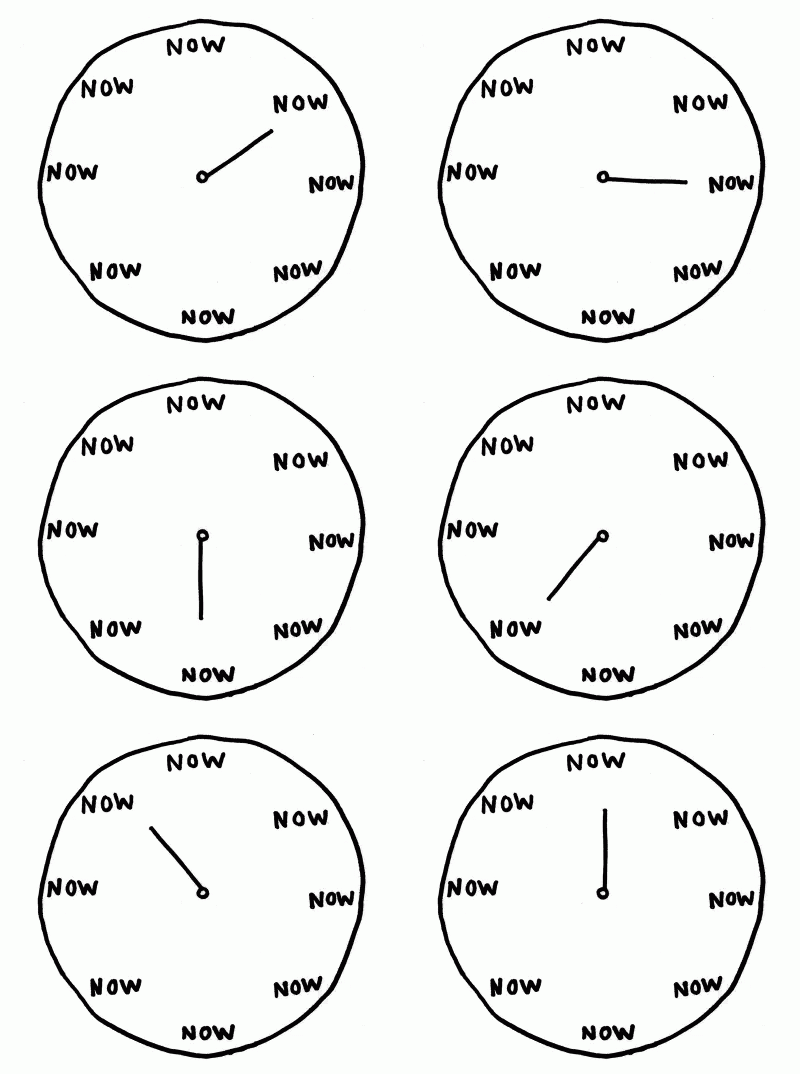
Mot: .. can ya sing um????

News, Rumors and Opinions Sunday 8-10-2025
KTFA:
Frank26: "FINANCIAL TECHNOLOGY IN THE CBI!!!".......F26
An international delegation discusses digital currency legislation and financial market development with Al-Mashhadani.
SNIPPET:
Mahmoud Al-Mashhadani
On Friday, August 8, 2025, Iraqi Parliament Speaker Mahmoud al-Mashhadani discussed digital currency legislation and financial market development with an international delegation.
KTFA:
Frank26: "FINANCIAL TECHNOLOGY IN THE CBI!!!".......F26
An international delegation discusses digital currency legislation and financial market development with Al-Mashhadani.
SNIPPET:
Mahmoud Al-Mashhadani
On Friday, August 8, 2025, Iraqi Parliament Speaker Mahmoud al-Mashhadani discussed digital currency legislation and financial market development with an international delegation. LINK
Clare: Mobilization to pass the Popular Mobilization Law.. A message to 183 Shiite MPs: This may be your last chance.
8/9/2025
State of Law Coalition, led by Nouri al-Maliki, warned on Friday evening against postponing the Popular Mobilization Forces (PMF) law to the next parliamentary session, asserting that the lack of political consensus and the refusal of some blocs to attend were behind the law's stalled passage in the House of Representatives.
"The real reason behind the failure to pass the Popular Mobilization Forces law is the absence of Sunni and Kurdish representatives, which led to the breaking of the legal quorum and the lack of the political agreement required for its approval," coalition spokesman Aqil al-Fatlawi told Shafaq News Agency.
He pointed out that "the 183 Shiite MPs are required to attend the session in support of this segment of the population, which has made enormous sacrifices in defense of Iraq," adding that "absence from the vote is a clear failure of the Popular Mobilization Forces as a national security institution."
Al-Fatlawi acknowledged the existence of "a clear American role in influencing some political blocs linked to Washington institutions, which contributed to delaying the law," stressing that "these influences are beginning to have a direct impact on the decisions and actions of MPs within Parliament."
He explained that "postponing the Popular Mobilization Law to the next parliamentary session will complicate its passage, due to the lack of clarity regarding the nature of future political alliances." He noted that "the law does not target any particular group. There are approximately 30 Sunni MPs with tribal militias that benefit from its provisions, and therefore its passage serves all parties."
He concluded by saying, "We are anticipating what happens after the Arbaeen pilgrimage. A decisive session may be held, but it will be the last opportunity to pass the law during this parliamentary session."
This position coincides with the US State Department's confirmation that Washington opposes legislation in Iraq that would "transform it into a state subservient to Iran," threatening to impose sanctions on financial entities linked to armed groups.
The Popular Mobilization Forces (PMF) were established in Iraq in mid-2014 under the "sufficiency jihad" fatwa issued by the country's top Shiite authority, Ayatollah Ali al-Sistani, following the fall of Mosul to ISIS. Thousands of fighters from armed factions, some of which were active before the fatwa, participated in its formation. Its primary role at the time was to repel the extremist group's rapid advance across large areas of northern and western Iraq.
In November 2016, the Iraqi parliament voted on a law legalizing the Popular Mobilization Forces (PMF) as a security institution within the armed forces. However, the law lacked clear organizational details, opening the door to repeated calls for its legal restructuring and reformulation. LINK
************
Courtesy of Dinar Guru: https://www.dinarguru.com/
Militia Man Iraq has all the natural resources. They have what's called inputs and outputs. They're going to make money coming and going. That's the way it works. Iraq is very fortunate to have her natural resources to be able to pull this off. The world knows that, especially the stakeholders who have been doing this for over 20 years...You've not seeing anybody back off and say, we're not investing in Iraq.
Frank26 [Iraq boots-on-the-ground report] FIREFLY: Speaker of the House of Parliament and international experts discussed the importance of the digital currency...He was talking about how Iraq is all in on this and making the investment of Iraq ready for global and international markets. FRANK: Yeah, the whole world is waiting...Tell that idiot all we need is a new exchange rate.
CRASH INCOMING: 40% Market Concentration Triggers Everything Bubble Risk
Taylor Kenny: 8-9-2025
Over 40% of the S&P 500 is now concentrated in just 10 companies, a dangerous setup that we’ve only seen before the Great Depression.
This is how market euphoria ends, not with a warning, but with a sudden, brutal crash that takes everyone by surprise.
CHAPTERS:
0:00 S&P 500
3:00 The Great Depression
4:25 Euphoria Indicator
7:16 Why the Divergence?
10:11 Smart Money Knows
Iraq Economic News and Points To Ponder Sunday Morning 8-10-25
The Iraq Stock Exchange Ended The Week With Significant Gains
Money and Business Economy News – Baghdad The Iraq Stock Exchange announced, on Saturday, that it recorded strong gains in stock indices during the first week of August 2025, which witnessed the organization of five trading sessions from Sunday (August 3) to Thursday (August 7).
The market stated in its weekly report that the number of shares traded during this period exceeded 5 billion shares, with a financial value exceeding 16 billion Iraqi dinars.
The Iraq Stock Exchange Ended The Week With Significant Gains
Money and Business Economy News – Baghdad The Iraq Stock Exchange announced, on Saturday, that it recorded strong gains in stock indices during the first week of August 2025, which witnessed the organization of five trading sessions from Sunday (August 3) to Thursday (August 7).
The market stated in its weekly report that the number of shares traded during this period exceeded 5 billion shares, with a financial value exceeding 16 billion Iraqi dinars.
The ISX60 closed at 960.27 points, up 8.16% from 881.94 points at the start of the week, while the ISX15 rose 5.20% from 1,068.87 points to 1,127.47 points.
The number of contracts executed for buying and selling shares of listed companies reached 6,797 contracts during the week. https://economy-news.net/content.php?id=58569
The Central Bank Of Iraq Imposes Fines On Banks And Institutions Amounting To More Than 66 Billion Dinars
Banks Economy News – Baghdad The Central Bank of Iraq announced on Saturday that fines imposed on banks and non-banking institutions (exchange companies) amounted to more than 66 billion Iraqi dinars during the first half of 2025.
Statistics from the bank showed that "fines imposed on banks and financial companies during the past six months, starting from January/November until the end of last June, amounted to 66 billion, 210 million, and 955 thousand dinars," indicating that "the fines also included 77 administrative penalties for these banks and non-banking institutions, distributed between warnings, alerts, and grace periods."
The bank stated that, "These fines are down from the same period last year, which amounted to 181 billion, 842 million, and 854 thousand dinars, while penalties amounted to 151, distributed between warnings, cautions, and grace periods."
The bank did not name the banks subject to the fines or administrative penalties. There are approximately 51 private banks, including 23 private commercial banks and 28 private Islamic banks. https://economy-news.net/content.php?id=58562
Kurdistan Fields Recover, Producing More Than 200,000 Barrels Per Day
Energy Economy News – Baghdad The economic observatory Echo Iraq revealed on Saturday that the Kurdistan Region's oil production has exceeded 200,000 barrels per day.
The observatory reported that the oil fields in the region that were bombed have resumed operations, and their daily production has increased to more than 200,000 barrels. It noted that the most prominent producing fields include: Sheikhan, Tawke, Bashkabir, Khormala, and Sarsink.
He explained that "the region and Baghdad have not yet reached an agreement on resuming oil exports due to disagreements over the wages of companies operating in the region," adding that "resolving the crisis requires a meeting between the three parties involved or the payment of the companies' wages, which the federal government rejects."
Earlier, the observatory observed a decline in oil production in the Kurdistan Region from 280,000 barrels per day to just 81,000 barrels, following a series of explosive drone attacks targeting oil facilities between July 14 and 17, 2025, particularly in the Dohuk and Erbil regions. https://economy-news.net/content.php?id=58552
Basra Crude Oil Suffers Weekly Losses Of More Than 6%
economy | 10:38 - 09/08/2025 Mawazine News – Baghdad Basra crude oil prices recorded a significant weekly loss of more than 6%. The prices were as follows:
- Basra Heavy crude closed in the last trading session yesterday, Friday, down 87 cents to reach $64.73 per barrel, recording a weekly loss of $4.55, equivalent to 6.57%.
- Basra Medium crude closed in the same session down 87 cents to reach $67.98, recording a weekly loss of $4.35, equivalent to 6.01%. https://www.mawazin.net/Details.aspx?jimare=264774
For current and reliable Iraqi news please visit: https://www.bondladyscorner.com
It’s Not Glamorous, but This Is How Most Americans Actually Become Millionaires
It’s Not Glamorous, but This Is How Most Americans Actually Become Millionaires
John Csiszar Sat, August 9, 2025 GOBankingRates
You may be surprised to find out that about 18% of Americans are millionaires, translating to roughly 25 million individuals, according to a report by Wealth Management USA. And while there are plenty of ways to accumulate a seven-digit net worth, some avenues are more common than others.
Many millionaires start their own business or invest in real estate to earn their riches, while others imply inherit the money. But the number one way that Americans become millionaires is actually within reach of average workers, provided they start early and stick to their plan.
It’s Not Glamorous, but This Is How Most Americans Actually Become Millionaires
John Csiszar Sat, August 9, 2025 GOBankingRates
You may be surprised to find out that about 18% of Americans are millionaires, translating to roughly 25 million individuals, according to a report by Wealth Management USA. And while there are plenty of ways to accumulate a seven-digit net worth, some avenues are more common than others.
Many millionaires start their own business or invest in real estate to earn their riches, while others imply inherit the money. But the number one way that Americans become millionaires is actually within reach of average workers, provided they start early and stick to their plan.
Here’s the “boring” path to riches that doesn’t involve starting a business, investing in real estate or inheriting the money.
Consistent Investing
Want the “easy” way to a million dollars? Continually invest on a regular basis.
According to a report from Morningstar, investors who have $1 million or more in their Fidelity 401(k) accounts consistently invest, typically every two weeks or every month. They don’t trade in and out of aggressive investments, like leveraged ETFs, but instead simply sock away their money on a regular basis into their “boring” investments.
What’s the Secret?
There are a number of reasons why consistent investing is the “easy” path to $1 million. First, regularly adding money to your investments regardless of the market environment ensures that you’ll get an average price. You’ll be buying more stock when prices are low and less when prices are high. You won’t be putting all your money in either at the absolute bottom or at the peak — but since the long-term trend of the market is up, getting that “average” price provides a significant return.
Second, by consistently investing in “boring” options like mutual funds, 401(k) funds or high-quality stocks, you won’t be taking on excess risk. With automated contributions coming out of your paycheck or bank account, you won’t get tempted to chase the latest investment fad, a mistake that costs many novice investors their entire bankroll.
As preservation of capital is half the battle when it comes to building wealth, automatically contributing to relatively “boring” investments can help protect your bankroll over the long run.
The third reason why consistent investing works is a simple one. If you continually add money to your account, you’ll have more money in it.
TO READ MORE: https://www.yahoo.com/finance/news/no-1-way-americans-become-150405344.html
Seeds of Wisdom RV and Economic Updates Sunday Morning 8-10-25
Good morning Dinar Recaps,
Bo Hines Steps Down from White House Crypto Council, Moves to Private Sector
Washington, D.C. – The U.S. crypto policy landscape is losing one of its most visible leaders. Bo Hines, who rose to head the Presidential Council of Advisers for Digital Assets in late 2024, has announced his departure after less than a year in the role. The move marks a shift for the Trump administration’s push to position the United States as a global blockchain hub, raising questions about whether its momentum can be sustained.
Good Morning Dinar Recaps,
Bo Hines Steps Down from White House Crypto Council, Moves to Private Sector
Washington, D.C. – The U.S. crypto policy landscape is losing one of its most visible leaders. Bo Hines, who rose to head the Presidential Council of Advisers for Digital Assets in late 2024, has announced his departure after less than a year in the role. The move marks a shift for the Trump administration’s push to position the United States as a global blockchain hub, raising questions about whether its momentum can be sustained.
Key Points
Hines was appointed in December 2024 by President Donald Trump and worked closely with David Sacks to advance U.S. crypto leadership.
His departure, effective August 9, 2025, is driven by a return to the private sector, though he plans to remain active in supporting the digital asset industry.
Patrick Witt, the current deputy director, is widely expected to take over, though no official confirmation has been made.
A Short but Impactful Tenure
Hines’ exit comes just weeks after the release of the council’s flagship regulatory report on digital assets. In a statement, he called his time in the role “the honor of a lifetime” and expressed gratitude to the crypto community for its support.
During his tenure, Hines spearheaded several initiatives, including close coordination with the White House’s AI & Crypto Czar, David Sacks. His work was central to the administration’s broader pro-innovation agenda.
Policy Legacy: Ambition Meets Constraints
One of Hines’ hallmark projects was the Strategic Bitcoin Reserve Initiative. Signed into policy by President Trump in January 2025, the plan created a national BTC reserve and crypto stockpile, prohibiting state sales and requiring budget-neutral acquisitions.
To expand reserves, Hines proposed a novel approach: revaluing U.S. gold reserves (currently recorded at $42.22 per ounce versus a spot price around $3,400) and converting part of the updated value into bitcoin. While potentially transformative, the recommendation has yet to be implemented. Critics have also noted the slow pace of BTC accumulation under the plan.
Looking Ahead
Hines leaves behind a mixed legacy—political momentum bolstered by the passage of the Genius Act, but several strategic initiatives remain incomplete. His successor will face the challenge of advancing these policies while navigating regulatory, fiscal, and political hurdles.
Whether under Patrick Witt or another appointee, the future of America’s ambition to lead the global crypto industry will hinge on converting bold proposals into measurable outcomes.
@ Newshounds News™
Source: CoinTribune
~~~~~~~~~
Crypto Debanking Persists Despite Trump’s Pro-Crypto Push
Washington, D.C. – Despite President Donald Trump’s pro-crypto policies and campaign promises, U.S. banks continue to close accounts for crypto firms, a practice widely associated with “Operation Chokepoint.” Industry leaders say the debanking trend remains deeply entrenched, creating significant challenges for the sector.
Key Points
Ongoing Debanking: U.S. banks are still cutting off crypto companies, often without explanation, despite federal pro-crypto rhetoric.
Unicoin Impact: Unicoin CEO Alex Konanykhin reports that his company and subsidiaries have been debanked by multiple major banks.
Potential Policy Shift: President Trump is preparing an executive order to identify and penalize banks engaged in debanking.
Regulatory Uncertainty: Experts warn that meaningful reform will depend on the final wording of regulations and laws.
A Practice That Won’t Go Away
After Trump’s election, many in the crypto community expected an end to restrictive banking practices. However, recent warnings from industry figures suggest otherwise. Andreessen Horowitz partner Alex Rampell recently described the latest wave of restrictions as “Operation Chokepoint 3.0,” targeting fintech and crypto apps through higher fees and barriers to fund transfers.
Konanykhin confirmed that Unicoin has been impacted first-hand, losing accounts with Citibank, Chase, Wells Fargo, City National Bank of Florida, and TD Bank over the years—four of them in 2025 alone. “This suggests that Chokepoint is a large-scale nationwide operation,” he said, noting that Unicoin is a publicly reporting company with six years of audited financials and over 4,000 shareholders.
Economic Impact on U.S. Crypto
Konanykhin described the debanking campaign as “highly disruptive and damaging,” depriving crypto firms of essential banking services and suppressing U.S. competitiveness in the global digital asset market.
On Thursday, Bloomberg reported that President Trump plans to sign an executive order directing federal banking regulators to identify and penalize institutions engaged in debanking. The order would also require certain banks to reinstate unlawfully denied clients.
Konanykhin expressed optimism:
“The President knows the pain of de-banking first-hand and seems determined to stop this form of economic warfare against American businesses.”
He added that ending the practice could help U.S. crypto achieve global prominence, likening its potential influence to Hollywood in entertainment or Silicon Valley in technology.
The Role of Regulation
While political intent is clear, regulatory outcomes remain uncertain. Elizabeth Blickley, a partner at Fox Rothschild’s Tax Controversy & Litigation Practice, stressed that change will hinge on the final language of rules and laws.
She cited the Genius Act, recently signed into law, which gives the Federal Reserve’s Stablecoin Certification Review Committee 180 days to design a regulatory framework. However, she cautioned that many bills never progress in Congress and that resulting regulations could face legal challenges from multiple fronts.
“A regulation may facially comply with the President’s request or a law passed, yet have little application or disproportionate impacts based solely on word-choice,” Blickley said.
For now, she believes banks will maintain a risk-averse approach toward crypto until new regulations clearly reduce perceived risks:
“It’s all about making risk-averse entities and people feel like crypto is less of a risk.”
@ Newshounds News™
Source: Cointelegraph
~~~~~~~~~
Tether & Circle Now Hold More U.S. Debt Than Several Nations
Two of the world’s largest stablecoin issuers, Tether (USDT) and Circle (USDC), have quietly emerged as major players in the U.S. Treasury market — now holding more U.S. government debt than Germany, South Korea, and the UAE combined.
Fueled by rising global adoption and the recent GENIUS Act, which legitimized stablecoin use, the sector’s total market cap of $270 billion could soar to $2 trillion by 2028. Tether currently holds over $100 billion in Treasury bills, ranking as the 18th-largest holder worldwide, while Circle’s $45–$55 billion portfolio pushes the combined total beyond those of several advanced economies.
Stablecoins, once niche crypto tools, are increasingly integrated into cross-border payments and institutional finance, with transaction volumes already rivaling Visa. Industry experts say their growing demand for U.S. debt could help stabilize Treasury markets and reinforce dollar dominance.
However, skeptics warn of potential financial stability risks if confidence in issuers falters, and banking lobbyists caution about possible impacts on deposits and lending. Still, the emergence of stablecoin issuers as heavyweight U.S. debt buyers marks a pivotal shift — with liquidity power now partly concentrated in the hands of crypto-native institutions.
@ Newshounds News™
Source: BeInCrypto
~~~~~~~~~
Seeds of Wisdom Team RV Currency Facts Youtube and Rumble
Newshound's News Telegram Room Link
Follow the Roadmap
Follow the Timeline
Seeds of Wisdom Team™ Website
Thank you Dinar Recaps
MilitiaMan and Crew: Iraq Dinar News- Oil Exports-Government Reforms
MilitiaMan and Crew: Iraq Dinar News- Oil Exports-Government Reforms
8-9-2025
The Crew: Samson, PompeyPeter, Petra, Daytrader, Sunkissed, GIGI and Militia Man
Welcome back to our channel! In today’s video, we dive deep into the current economic landscape of Iraq, focusing on several key developments that are shaping the nation’s future.
MilitiaMan and Crew: Iraq Dinar News- Oil Exports-Government Reforms
8-9-2025
The Crew: Samson, PompeyPeter, Petra, Daytrader, Sunkissed, GIGI and Militia Man
Welcome back to our channel! In today’s video, we dive deep into the current economic landscape of Iraq, focusing on several key developments that are shaping the nation’s future.
Topics Covered:
The Iraqi Dinar: Understanding its value and the implications of recent fluctuations on both local and international markets. Iraq has value to impact them!
Ministry of Planning's New Project: We explore the Ministry of Planning's initiative to link electronic fingerprints, enhancing security and efficiency in public services.
Fighting corruption inclusive! Oil Exports from the Kurdistan Region: The impact of oil flow through the Ceyhan Pipeline will benefit Iraq, regional partners and most of all the people of Iraq!
Prime Minister Sudani's Commitment: An analysis of Sudani's emphasis on reform and his pledge to combat corruption within government sectors.
Minister of Finance's Salary Resettlement Initiative: Insight into the Minister of Finance's plans to streamline and ensure timely salary payments for public employees. Think Rafidain and Rasheed Banks.
Tensions Over Oil Agreements: We discuss the regional government's accusations of violating oil agreements with Baghdad and the implications for national unity and economic stability.
Shrinkflation is here and the Economy is Broken: John Rubino
Shrinkflation is here and the Economy is Broken
Liberty and Finance: 8-8-2025
A pivotal moment is unfolding in the precious metals space, according to John Rubino, as outlined in a recent video from Liberty and Finance. Rubino asserts that the long-awaited bull market for mining stocks is finally underway, driven by gold’s dramatic price surge and the strategic actions of key industry players.
Rubino explains that royalty and streaming companies, benefiting immensely from gold’s robust performance, are now flush with cash. This financial windfall is not sitting idle; these powerful entities are aggressively deploying capital into high-leverage deals across the mining sector.
Shrinkflation is here and the Economy is Broken
Liberty and Finance: 8-8-2025
A pivotal moment is unfolding in the precious metals space, according to John Rubino, as outlined in a recent video from Liberty and Finance. Rubino asserts that the long-awaited bull market for mining stocks is finally underway, driven by gold’s dramatic price surge and the strategic actions of key industry players.
Rubino explains that royalty and streaming companies, benefiting immensely from gold’s robust performance, are now flush with cash. This financial windfall is not sitting idle; these powerful entities are aggressively deploying capital into high-leverage deals across the mining sector.
This strategic capital deployment, Rubino asserts, is the definitive signal that the mining stock bull market, anticipated by many for years, has unequivocally begun.
However, Rubino’s insights extend beyond just precious metals, painting a broader picture of economic shifts and looming dangers.
He issues a stark warning about the rising political popularity of government price controls, which he describes as a dangerous form of “shrinkflation on steroids.” Such controls, Rubino argues, are not merely economic interventions but market distortions that inevitably erode quality across the economy, creating a façade of affordability while actual value diminishes.
Underlying these economic trends is a profound erosion of public trust. Rubino highlights a growing disillusionment with traditional institutions, ranging from main stream media to monetary authorities.
As faith wanes in the reliability and integrity of these pillars, individuals and investors are increasingly seeking refuge in tangible wealth.
Rubino points to a clear and accelerating shift into real assets like gold, farmland, and energy, as people fundamentally distrust fiat currencies and the systems backing them. This flight to real assets is a direct consequence of a world grappling with perceived institutional failures and economic uncertainties.
Rubino’s analysis paints a picture of a critical juncture, where a burgeoning bull market in mining stocks plays out against a backdrop of potential economic distortions and a broad flight from traditional financial assets.
For a deeper dive into these vital insights and the implications for your portfolio, viewers are encouraged to watch the full video from Liberty and Finance.
News, Rumors and Opinions Saturday 8-9-2025
KTFA:
Clare: Al-Sudani: Four Iraqi government ministers referred to the judiciary.
8/9/2025
Prime Minister Mohammed Shia al-Sudani announced on Saturday that four ministers in the current federal government he heads have been referred to the judiciary for proven negligence in their duties.
This came in a speech he delivered during the first conference on government performance evaluation, under the slogan "Performance Evaluation: A Path to Government Reform and Excellence."
KTFA:
Clare: Al-Sudani: Four Iraqi government ministers referred to the judiciary.
8/9/2025
Prime Minister Mohammed Shia al-Sudani announced on Saturday that four ministers in the current federal government he heads have been referred to the judiciary for proven negligence in their duties.
This came in a speech he delivered during the first conference on government performance evaluation, under the slogan "Performance Evaluation: A Path to Government Reform and Excellence."
In his speech, Al-Sudani said, "Four ministers were referred to the judiciary due to indications and suspicions of corruption that accompanied their performance."
He added, "The investigation was conducted by those ministers, and the negligence and shortcomings were proven. We approved the results of that investigation and sent them to the Integrity Commission, which is now before the judiciary for a decision."
Al-Sudani also complained about partisan quotas in his government, saying: "It is natural for quotas to lead to dysfunction and failure in work."
The conference included the results of the work of the Higher Committee for Performance Evaluation and its subcommittees, which worked to implement the government's program commitment to monitoring and continuing the process of examining and evaluating the performance of officials. LINK
************
Clare: Al-Sudani: Unfortunately, most political forces have obstructed the process of implementing the ministerial reshuffle.
8/9/2025
Prime Minister Mohammed Shia al-Sudani accused unnamed political forces in the current federal government he heads on Saturday of obstructing a cabinet reshuffle of six ministries.
This came in a speech he delivered during the first conference on government performance evaluation, under the slogan "Performance Evaluation: A Path to Government Reform and Excellence."
In his speech, Al-Sudani said that the evaluation results revealed that six ministries were in need of a ministerial reshuffle, adding: "Our government is a coalition government composed of political forces, and in order to carry out this reshuffle, we must first consult with them. Unfortunately, most political forces opposed the process of carrying out this reshuffle."
He pointed out that the evaluation results for six ministries clearly indicated weak performance, adding that some political blocs had presented far fewer replacements than those presented, in a clear attempt to obstruct this process. LINK
************
Clare: Al-Sudani reveals the results of the government performance evaluation and emphasizes reform and the fight against corruption.
8/9/2025
Prime Minister Mohammed Shia al-Sudani affirmed on Saturday that the government has made reforming and upgrading state institutions a central goal since the beginning of its work, emphasizing that implementing the government's program cannot be achieved without effective and successful tools.
During a government performance evaluation conference, Al-Sudani indicated that a mechanism has been put in place to evaluate the country's top leadership after the government assumes its duties, without resorting to any hasty decisions.
He explained that a special committee, comprised of university professors and experts, conducted a transparent evaluation of the performance of general managers, advisors, and ministers. He noted that he personally supervised the committee's work.
He added that the committee was committed to ensuring integrity and impartiality in its evaluation, avoiding any bias or capriciousness, and that its report resulted in the dismissal of some officials and the confirmation of others.
The Prime Minister explained that the committee conducted 1,135 evaluations, leading to the dismissal of 41 general managers, and that the process of evaluating officials prompted them to follow up on projects on the ground.
Al-Sudani stated that the evaluation committee recommended including six ministers in the cabinet reshuffle, stressing that the government had not hesitated to implement the cabinet reshuffle included in the government program.
He pointed out that some political forces had proposed replacements of a much lower standard than the ministers who had been evaluated.
The Prime Minister also affirmed that the government addressed indicators of financial and administrative corruption immediately, without waiting for the results of the assessment. He explained that four ministers had been referred to the judiciary due to indicators and suspicions surrounding their performance.
He explained that the negligent parties had been identified, the results of the investigation into the ministers had been approved, and they were being presented to the judiciary.
Al-Sudani stressed that one of the negative indicators of the political process is the quota system in appointing key leaders in ministries.
He called on everyone not to exploit government websites for electoral or political purposes, stressing the government's commitment to implementing reforms and achieving tangible results for citizens.LINK
Courtesy of Dinar Guru: https://www.dinarguru.com/
Frank26 When you look at this whole monetary reform, it's an RI (reinstatement) of the value from 2003 but the Minister of Planning and the Minister of Finance back in 2012 were told by the GOI that $3.22 will not be enough due to inflation, you have to add at least 20% to that figure. That was 2012. You see why I don't believe in $3.22? IMO Alaq is planning the truthful seed that your exchange rate outside of Iraq is going to grow past the RI $3.22...[Iraqi citizens] will have purchasing power...These are exciting times.
Mnt Goat ...substantial increase in the IQD will not happen until the currency of Iraq is once again traded on FOREX and the other global currency exchanges. This is an event that will be a culmination of decades of monetary reforms, events that we have witnessed... This event of reinstatement is NOT GOING TO HAPPEN unless the US Treasury gives its approval...One of these conditions is to remove the PMF... Popular Mobilization Forces (PMF) law, which empowers armed groups linked to Iran and terrorist organizations from Iraq...This condition is a critical order from the US to Iraq...I believe all us investors in the IQD should be paying lots of attention to what is going on in this area... I assure you this topic is going to be resolved one way or the other, meaning Iraq will remove the PMF from Iraq...or it will suffer severe sanctions and reprimands of all sorts.
************
"It's Starting NEXT WEEK! Gold & Silver Prices Will Soar DRAMATICALLY" – Rafi Farber
Finance Log: 8-9-2025
Farber’s analysis focuses not on broad policy trends but on the mechanical architecture of the market, specifically, the repo markets and how they interact with bank funding, brokerage margin debt, and collateralized trading positions.
As reverse repos dry up and available liquidity in the overnight markets tightens, the pressure intensifies on a highly leveraged trading ecosystem.
If dollar liquidity seizes up even briefly, institutions will be forced to sell securities to cover their exposures. This isn’t theory—it’s how the market is built.
And once these sales begin, they will spread rapidly across stocks, bonds, and even commodities. That’s where the Federal Reserve comes back in.
Unlike past cycles, the Fed now understands the margin of delay it has before a liquidity freeze becomes a full-blown panic.
In 2008, intervention took months. In 2019, it took weeks. In 2020, just days. This time, it will be hours.
Once new stimulus floods the system to stabilize funding markets, real assets will respond immediately. Gold will break through resistance levels, moving swiftly as the dollar weakens.
But it is silver that may exhibit the most extreme price action, benefiting from both monetary revaluation and rising practical utility in a world where trust in fiat currency continues to decline.
Iraq Economic News and Points To Ponder Saturday Afternoon 8-9-25
Ministry Of Planning: More Than 700 Trillion Dinars Is The Expected Revenue In The Development Plan.
Buratha News Agency 25-08-09 The Ministry of Planning announced, today, Saturday, that the total revenues expected to be achieved during the five-year development plan period 2024-2028 will amount to about (710) trillion dinars, as the official spokesman for the Ministry, Abdul Zahra Al-Hindawi, stated to the official agency, that “the largest proportion of these revenues will come from the oil sector, as it is expected that oil revenues will amount to about (631) trillion dinars, while non-oil revenues are estimated at about (79) trillion dinars.”
Ministry Of Planning: More Than 700 Trillion Dinars Is The Expected Revenue In The Development Plan.
Buratha News Agency 25-08-09 The Ministry of Planning announced, today, Saturday, that the total revenues expected to be achieved during the five-year development plan period 2024-2028 will amount to about (710) trillion dinars, as the official spokesman for the Ministry, Abdul Zahra Al-Hindawi, stated to the official agency, that “the largest proportion of these revenues will come from the oil sector, as it is expected that oil revenues will amount to about (631) trillion dinars, while non-oil revenues are estimated at about (79) trillion dinars.”
Al-Hindawi added, "The five-year plan estimated the investments required to achieve the targeted economic growth rate, which amounts to (4.24%) during its implementation period, at more than (241) trillion dinars," indicating that "the plan will see government sectors contribute about (157) trillion dinars of these investments, compared to (84) trillion dinars representing the contribution of the private sector."
He also explained that "the largest proportion of capital formation will be in the oil sector at 27.4%, followed by the housing ownership sector at 22.5%, then social development services at 20.8%. In contrast, the water and electricity sector will constitute 8.6%, while the share of the manufacturing sector will reach approximately 7.8% of the total planned capital formation."
https://burathanews.com/arabic/economic/463843
Central Bank Governor: We Are Working To Stabilize Prices
August 9, 2025 Central Bank Governor Ali Mohsen Al-Alaq: We are working to stabilize prices and eliminate inflation.
Baghdad - Hakim Al-Shammari Amid the profound economic transformations Iraq is undergoing, the Central Bank of Iraq is leading the way with major reform initiatives that touch the core of the financial and monetary system. From electronic payments to regulating monetary policy, expanding financial inclusion, and setting new standards for banking governance—all issues are now under the microscope of public opinion and those interested in economic affairs.
As the government begins taking serious steps to reduce reliance on paper money and promote a culture of digital payments, attention is turning to the institution leading this change: the Central Bank of Iraq.
In this extensive interview, the Governor of the Central Bank of Iraq, Ali Mohsen Al-Alaq, opens his office and his vision to discuss the challenges facing the financial system, digitization plans, the fight against monetary corruption, and Iraq's position on the regional and international financial map.
What has changed? Where do the banks stand? How is the fight against speculation and fraud being fought? And what is the future of the Iraqi dinar? We are asking many questions today, awaiting answers as profound as the anticipated transformation.
□ What are the Central Bank of Iraq's priorities in the next phase to maintain the stability of the Iraqi dinar?
The primary objective of central banks is to maintain the stability of the general price level by targeting inflation. This is what the Central Bank of Iraq seeks to achieve through the use of available monetary policy tools, including liquidity sterilization tools to control liquidity levels in the markets.
The most important tool is the process of strengthening banks’ foreign currency balances with their senders abroad to finance foreign trade needs, in addition to meeting other customer requests in various foreign currencies.
This bank has sought to make a qualitative leap in terms of technological construction, governance, and control of transfer operations, in addition to establishing a cash sales system to control sales operations.
It also provides electronic payment tools, including credit and debit cards, through banks and electronic payment companies in Iraq, to facilitate payment transactions inside and outside Iraq.
The Central Bank issued other tools that contribute to controlling liquidity to maintain the stability of inflation rates, namely the securities it issues with maturities of (14, 182) days and interest rates of (4 percent and 5.5 percent) respectively.
The Central Bank of Iraq is also focusing on improving the banking system and encouraging citizens to use cards and banking services instead of cash, thus easing pressure on the informal market. It is also working to strengthen money transfer systems and monitor financial transactions to prevent money laundering and currency smuggling.
In this context, the Central Bank of Iraq is placing increasing importance on developing the banking sector's infrastructure and encouraging citizens and institutions to transact through formal banking channels with the aim of reducing the size of the informal economy and promoting financial inclusion.
Furthermore, coordination between the Central Bank and the government is underway to ensure that inflationary pressures are not created that would negatively impact monetary stability.
Finally, in the coming period, the Central Bank is moving towards maintaining the stability of the local currency through a combination of technical measures, effective oversight, and structural reforms in the financial sector.
□ How does the central bank assess the impact of current monetary policies on inflation and unemployment?
The Central Bank of Iraq seeks to achieve economic stability through monetary policy tools, such as interest rate control, liquidity management, and exchange rate controls. To assess the effectiveness of these policies, the Bank conducts regular analysis of their impact on inflation and unemployment rates.
Inflation data indicates that it declined to 2.6 percent in 2024, compared to 4.4 percent in 2023.
The unemployment rate decreased by 3 percent, reaching 14 percent in 2024, compared to 16.5 percent in 2022. This is due to the Central Bank of Iraq's adoption of monetary policies that led to trade financing at the official exchange rate to control imported inflation and raised the policy interest rate to control liquidity levels, which directly impacts inflation.
□ What measures is the Central Bank taking to promote financial inclusion in Iraq?
The Central Bank of Iraq has established a new administrative structure in all operating banks under the name of the “Financial Inclusion Department” pursuant to our circular No. 2025, which includes the operating regulations for the Financial Inclusion Department in banks.
The Central Bank is in the process of establishing an administrative structure under the name of Financial Inclusion in all non-banking financial institutions and preparing operating regulations for these structures.
The first national strategy for financial inclusion in Iraq (2025-2029) was prepared in cooperation with a number of international organizations. The strategy was launched on May 25, 2025. Work will be done to achieve the objectives of this strategy by forming diverse working groups to achieve the expected results.
The Central Bank of Iraq organizes periodic events and awareness workshops, such as the Arab Week for Financial Inclusion, which includes financial awareness campaigns and workshops in coordination with all banking and non-banking financial institutions.
It also sponsors and participates in international exhibitions, as well as in specialized exhibitions in the financial sector and digital financial transformation. It also cooperates with educational institutions to raise the level of financial inclusion.
Targeting financially deprived, rural, and remote areas by establishing teams to measure the extent of financial services access to these areas.
□ How would you describe the current relationship between the Central Bank of Iraq and the US Treasury?
The relationship between the Central Bank of Iraq and the US Treasury Department is characterized by ongoing cooperation and coordination to ensure Iraq's compliance with international standards for combating money laundering and terrorist financing.
The bank recently held several meetings with the US Treasury Department and the Federal Reserve to discuss financial reforms and enhancing transparency in the banking system. US authorities praised Iraq's steps in this direction, particularly with regard to developing financial transfer mechanisms and strengthening oversight of dollar movements.
□ What is Iraq's position on the recent restrictions imposed on dollar transfers? Are there steps being taken to reduce reliance on the dollar?
There are no restrictions on dollar transfers, as evidenced by the steady increase in bank balances in US dollars.
For the first time, in other currencies such as the Euro, Jordanian Dinar, Indian Rupee, Chinese Yuan, Saudi Riyal, and others.
In addition to the expanding network of foreign correspondents for banks operating in Iraq, this has contributed to increasing the options and channels available to all transfer requesters.
*- How do you respond to criticisms directed at the currency auction mechanism as a means of money laundering or currency smuggling?
The Central Bank has faced these criticisms for years, without any evidence. Therefore, it has taken serious steps to regulate foreign exchange transactions, including establishing an electronic platform and auditing transfers by international companies specializing in this field. Furthermore, the bank recently ended the foreign currency buying and selling window, transferring responsibility for transfers directly to banks and their senders.
There is a great demand from Iraqi banks and branches of foreign banks to participate in the strengthening operations, as the number of banks has increased to 22 banks, and the number of participating companies has reached 5923 companies by the end of the first quarter of this year, 2025, with a number of transfer operations amounting to 46,762 transfers.
*- What are the recent reforms to the dollar sales system to ensure transparency and prevent exploitation?
The electronic platform for verifying transfers was created by international companies specialized in this field.
*- Are you thinking of canceling the currency auction or replacing it with a more modern mechanism and linking it to the banking system?
The foreign exchange buying and selling window was discontinued, and responsibility for remittances was transferred directly to banks and their senders. This was completed in early 2024.
*- What is your assessment of the resilience of the Iraqi banking system in light of the recurring economic and political crises?
The Iraqi banking system has faced recurring challenges stemming from the economic and political crises that have plagued the country in recent years. These challenges include its reliance on a rentier economy, as the banking system remains heavily dependent on state funding, making it vulnerable to fluctuations in oil prices.
Furthermore, private banks are weak, lacking the capacity to play an effective developmental role in the economy.
Furthermore, there is a lack of public trust, reflected in low levels of financial inclusion. Furthermore, political and geopolitical unrest has impacted remittances and international transactions.
Despite all these challenges, there are strengths in favor of the banking system, represented by the regulatory reforms witnessed in recent years, represented by the development of banking oversight systems and the gradual implementation of international compliance standards for combating money laundering and terrorist financing. In addition, government support, as state-owned banks dominate the banking sector, provides it with relative stability during times of crisis. In addition, the digital transformation, the adoption of electronic payment systems, and the improvement of digital infrastructure have contributed to reducing the use of cash and increasing transparency.
Based on the above, the resilience of the Iraqi banking system can be classified as moderate. The sector has some resilience against crises, but it faces structural challenges that require deep and sustained reforms. Reforming the banking sector is a cornerstone of Iraq's economic development path.
This requires an integrated strategic vision and close cooperation between the Central Bank and other financial institutions, as well as the public and private sectors.
*- How can the central bank contribute to stimulating the real economy, not just the monetary aspect?
The Central Bank of Iraq has contributed significantly to promoting economic development, creating job opportunities, and achieving prosperity in Iraq by providing basic financial support to small, medium, and large enterprises in various sectors (such as agriculture, industry, housing, trade, healthcare, education, tourism, and transportation) through its initiatives that amounted to more than (13) trillion dinars with the aim of financing various economic activities and supporting all segments of society.
*- What is the bank's plan regarding the digital transformation of the banking sector over the next five years?
The Central Bank of Iraq is working to implement its strategic plans for digital transformation in the banking sector, which aim to develop the digital infrastructure and enhance the efficiency and security of financial services.
The plan includes several projects and initiatives, most notably the Instant Payment Project to enhance the efficiency of financial transfers effectively and instantly, and the establishment of a regulatory sandbox at the bank to encourage secure experimentation with financial technologies and meet the requirements for launching services safely and quickly.
The plan also includes the National Payment Network Project to enhance the national digital payments infrastructure, and the National Unified Electronic Payment Gateway to enhance the digital transformation of government collection processes.
The plan also includes working with relevant entities and in cooperation with relevant international organizations and bodies to study the preparation of a draft law regulating virtual assets, digital currencies, and cryptocurrencies within a legislative oversight framework.
*- Is there any intention to issue an Iraqi digital currency or join international initiatives in this field?
The Central Bank of Iraq is monitoring international and regional developments related to central bank digital currencies (CBDCs) and is currently preparing a specialized study to assess various dimensions related to them, including the impact on monetary policy, the efficiency of electronic payment systems, financial inclusion, and technical and legislative infrastructure requirements. It also prioritizes monitoring global experiences and leveraging best practices, while maintaining a gradual and systematic approach. LINK
For current and reliable Iraqi news please visit: https://www.bondladyscorner.com
Seeds of Wisdom RV and Economic Updates Saturday Afternoon 8-9-25
Good Afternoon Dinar Recaps,
BRICS Members vs Partners: 2025 Expansion & Power Shift
The BRICS bloc now operates under a two-tier system designed to manage its rapid growth, distinguishing between full members with decision-making power and partner nations with limited participation. This framework, introduced after the October 2024 Kazan summit, reflects the organization’s push to expand influence while maintaining operational control.
Good Afternoon Dinar Recaps,
BRICS Members vs Partners: 2025 Expansion & Power Shift
The BRICS bloc now operates under a two-tier system designed to manage its rapid growth, distinguishing between full members with decision-making power and partner nations with limited participation. This framework, introduced after the October 2024 Kazan summit, reflects the organization’s push to expand influence while maintaining operational control.
Two-Tier Membership Structure
Full BRICS Members: Possess complete decision-making authority, equal stakes in the New Development Bank ($100 billion authorized capital), and participation in all key meetings, including the annual summit and Foreign Ministers’ sessions.
Partner Countries: Engage in specific projects and collaborative initiatives but lack voting rights and formal decision-making powers. Their role serves as a probationary phase toward possible full membership.
Current BRICS Membership
The bloc now includes eleven full members:
The original five: Brazil, Russia, India, China, South Africa.
New members: Egypt, Ethiopia, Iran, United Arab Emirates, Saudi Arabia, Indonesia (joined January 2025).
This expansion sets a precedent for the BRICS Partnership Pathway, allowing prospective members to first engage as partners before full integration.
Full Members Hold Veto Power
Unanimous approval is required for major decisions, including admitting new members.
Any single full member can block policy changes or expansion, making consensus both a strategic strength and a potential obstacle.
BRICS Partner Countries
The current partner list includes:
Belarus, Bolivia, Cuba, Kazakhstan, Malaysia, Thailand, Uganda, Uzbekistan.
These nations can attend certain BRICS meetings.
They may endorse bloc declarations when aligned with BRICS’ positions.
Their status allows evaluation by full members on political alignment, economic compatibility, and strategic benefit before possible membership.
Geopolitical Drivers Behind Expansion
Russia and China: Advocate aggressive enlargement, positioning BRICS as a counterweight to Western-led institutions.
Russia’s 2022 invasion of Ukraine and resulting sanctions have driven Moscow toward building new alliances.
China views BRICS as a platform to expand global influence across emerging markets.
India and Brazil: Favor a measured approach, leveraging BRICS as a neutrality tool rather than an explicitly anti-Western bloc.
Concerns persist over China’s growing dominance within the organization.
The Strategic Balancing Act
The future of BRICS’ expansion hinges on:
Maintaining cohesion among ideologically diverse members.
Ensuring the partnership model remains an effective gateway for integration without diluting decision-making efficiency.
If managed well, the member-partner distinction could enable BRICS to grow its global footprint while preserving internal stability in an increasingly competitive geopolitical landscape.
@ Newshounds News™
Source: Watcher.Guru
~~~~~~~~~
Seeds of Wisdom Team RV Currency Facts Youtube and Rumble
Newshound's News Telegram Room Link
Follow the Roadmap
Follow the Timeline
Seeds of Wisdom Team™ Website
Thank you Dinar Recaps