
5 Basic Money Skills Many Americans Don’t Know
5 Basic Money Skills Many Americans Don’t Know
Ashley Donohoe Thu, May 29, 2025 GOBankingRates
A Pew Research study found that 46% of Americans didn’t have at least a fair amount of knowledge of personal finances. Unfortunately, lacking financial literacy can put you at risk of taking on too much debt, not having enough for retirement and being unable to cover expenses.
In a YouTube video, money expert George Kamel reacted to this study’s findings and gave straightforward advice on handling five essential money tasks that many American adults struggle with. Learn how to boost your skills in these popular weak areas.
5 Basic Money Skills Many Americans Don’t Know
Ashley Donohoe Thu, May 29, 2025 GOBankingRates
A Pew Research study found that 46% of Americans didn’t have at least a fair amount of knowledge of personal finances. Unfortunately, lacking financial literacy can put you at risk of taking on too much debt, not having enough for retirement and being unable to cover expenses.
In a YouTube video, money expert George Kamel reacted to this study’s findings and gave straightforward advice on handling five essential money tasks that many American adults struggle with. Learn how to boost your skills in these popular weak areas.
Checking Credit Reports
The Pew study noted that 25% of Americans didn’t feel very or extremely confident about getting their credit reports. While lenders and others may pull these reports to make important decisions based on your creditworthiness, you should also check them at least annually to spot errors or account issues and see where you stand with your debt.
Getting your credit report is easy, and you can do it weekly for free. While you could go directly to each credit bureau’s website, Kamel encouraged using AnnualCreditReport.com to get them all more conveniently. You’ll just need to provide some information to verify your identity. If you see any errors, contact your creditors and consider disputing them with the credit bureaus.
Budgeting
An estimated 41% of Pew study respondents weren’t very or extremely confident with budgeting. Not knowing where your money is going every month puts you at risk of overspending and not leaving some cash for your goals.
Kamel explained how to make a simple budget, starting with writing down your total monthly income and all expected monthly expenses (including giving and saving). You’ll then calculate what’s left of your income after those expenses, which Kamel said should be $0 based on his preferred zero-based budgeting method. But the same doesn’t apply to your bank account balance.
“It’s wise to keep a buffer of at least $100 bucks or more in your checking account,” Kamel said. Once you’ve got your budget, start tracking expenses to make sure you’re sticking to your plan.
Paying Off Debt
A report from the Federal Reserve Bank of New York mentioned that U.S. households owed a total of $18.2 trillion in debt. Especially for the 43% of Americans lacking confidence in paying down debt, the monthly payments, interest and lost opportunities to invest make it hard to get ahead.
TO READ MORE: https://www.yahoo.com/finance/news/george-kamel-lower-monthly-bills-160124044.html
“Tidbits From TNT” Friday Morning 5-30-2025
TNT:
Tishwash: New Partnership to Connect the Middle East and Europe via Iraq
Zain Omantel International (ZOI) has announced a partnership with Iraq's Horizon Scope Telecom and the Iraqi Telecommunications and Information Company (ITPC), a government-owned company under the Iraqi Ministry of Telecommunications.
This partnership enables ZOI to create a digital telecommunications corridor stretching from the Middle East to Europe through Iraq, offering alternative terrestrial connectivity options that provide higher levels of capacity, security and efficiency.
TNT:
Tishwash: New Partnership to Connect the Middle East and Europe via Iraq
Zain Omantel International (ZOI) has announced a partnership with Iraq's Horizon Scope Telecom and the Iraqi Telecommunications and Information Company (ITPC), a government-owned company under the Iraqi Ministry of Telecommunications.
This partnership enables ZOI to create a digital telecommunications corridor stretching from the Middle East to Europe through Iraq, offering alternative terrestrial connectivity options that provide higher levels of capacity, security and efficiency.
According to a statement from ZOI, the route will use terrestrial fibre connectivity that utilises Iraq's position as a digital gateway, creating more reliable services that are less susceptible to interruptions. It will pass through Turkey and make its way up to Frankfurt, Germany. The new corridor will act as an alternative to traditional subsea routes by bypassing some of the turbulent areas. The route will enable international businesses, telecom operators and hyperscalers to expand their reach via robust, low-latency infrastructure, ensuring seamless connectivity between the Middle East and Europe.
Mr. Sohail Qadir, CEO at ZOI, said:
"By working together, we will enhance regional and international connectivity, offering higher capacity, security, and efficiency for businesses, operators and hyperscalers across continents."
Mr. Ahmed Abdulsalam, the Managing Director of Horizon Scope, said:
"Offering alternative terrestrial connectivity routes is a critical way to protect against infrastructure vulnerabilities, ensuring that enterprises can capture more opportunities and scale with reliable connectivity."
Mr. Ali Y. Dawood, the Director General of ITPC, said:
"This partnership marks a significant milestone in strengthening Iraq's position as a connectivity corridor, especially by providing an alternative path to Europe. We are committed to delivering connectivity solutions that the people of Iraq can trust and use to enable seamless global connectivity." link
************
Tishwash: The budget schedules will be released in mid-June.
The Finance Committee of the Iraqi Parliament revealed government efforts to submit the 2025 budget tables to Parliament, expecting the tables to be submitted to Parliament in the middle of next month.
Committee member Moein Al-Kadhimi said in a press statement, "We have received information that the Ministry of Finance, along with the Ministry of Planning, is preparing budget tables for the year 2025 based on recent financial and economic changes, with the decline in oil prices. We expect these tables to be submitted in mid-June."
Al-Kadhimi explained, "These agendas will reach the committee when the House of Representatives resumes its sessions. If the agendas reach the House, it will be obligated to hold sessions. This issue will certainly not be free of disagreements, whether political or technical. We may need approximately a month to vote on the agendas after they officially reach the committee and study them from various angles." link
************
Tishwash: Huge untapped wealth... Iraq's top 5 mines
Iraq's five most prominent mines reveal a map of mineral wealth that remains untapped due to decades of security challenges that have led to the neglect of these resources.
According to a report published by the Energy Platform, Iraq's most prominent minerals include "sulfur, phosphate, and rock salt, along with strategic minerals such as iron, manganese, zinc, and lead." The report indicated that "despite the dominance of oil in the economy, Iraq boasts vast mineral resources concentrated in a number of mines."
The platform stated in its report: "The mining sector in Iraq has been marginalized for decades due to political and security tensions. However, recent years have witnessed increased interest in revitalizing this vital sector. The Iraqi government is currently attempting to attract international investment to revive these mines, particularly with the move to diversify the economy away from its reliance on oil."
She added: "Geological data and surveys indicate that Iraq possesses vast reserves of important ores such as sulfur, phosphate, rock salt, iron, and manganese, some of which are ranked among the largest in the world. International reports also reveal that Iraq holds the world's largest reserves of free sulfur, in addition to significant reserves of silica sand."
Energy highlighted the five most prominent mines in Iraq, which form a unique geological map that could position Iraq among the region's leading mineral-producing countries.
Al-Mashraq Mine
The Mishraq mine is one of the largest natural sulfur mines in the world, containing vast reserves of natural sulfur close to the Earth's surface. Sulfur is extracted from the mine by fusion and is used in the fertilizer, petroleum product, and water treatment industries.
According to Energy, "exploitation of the mine began in the 1960s and reached its peak in the 1970s, but ceased after 2003. Despite plans to rehabilitate it, the mine remains out of service. The mine consists of three fields. The first field's reserves are estimated at 23.5 million tons, the second field's reserves are 65.8 million tons, and the third field's reserves are 224 million tons."
The Mishraq mine suffered extensive damage during the ISIS era, when the group set fire to sulfur storage facilities in 2016, causing a rare environmental disaster.
Akashat Mine
The Akashat mine, located in Anbar Governorate, is one of the richest phosphate deposits in the Middle East, with total reserves estimated at more than 7 billion tons, making it one of the top five mines in Iraq.
She said: "The extracted phosphate is used in the manufacture of fertilizers, phosphoric acid, and animal feed, and its reserves in the western desert of Iraq are estimated at more than 10 billion tons."
The mine includes an open quarry, a processing plant, and a railway line connecting it to the Al-Qaim plant. However, the infrastructure has been damaged by wars and terrorism, halting production for many years. Efforts are underway to restart the mine through investment partnerships .
Samawah Mine
The Samawah mine, located in Muthanna Governorate in southern Iraq, is "one of the five most prominent mines in Iraq specializing in extracting rock salt. The salt ore there is distinguished by its high quality and pure sedimentary composition, and is used in the food and chemical industries," according to what the "Energy" platform reviewed.
She added, "The mine operates intermittently and is managed by the General Company for Mining Industries. It suffers from a lack of investment, but it covers a significant portion of the local market's needs, with the potential to develop it into a regional center for salt exports."
Iron and manganese
Sulaymaniyah Governorate in the Kurdistan Region has "promising areas for iron deposits, particularly in Qara Dagh and Birspi, where sedimentary rocks contain hematite and magnetite ores at concentrations ranging from 30 to 45%."
Despite these positive indicators, according to the Energy report, "none of these mines have been commercially exploited yet. Manganese is found in areas such as Soran and Dohuk, but exploration is still preliminary. Factors such as the lack of infrastructure and transportation, in addition to weak financing, represent the most significant obstacles to developing these sites."
Zinc and lead
The Ministry of Energy explained that "there are indications of the presence of good-quality zinc and lead deposits within MVT-type replacement carbonate formations in mountainous areas near the Turkish and Iranian borders, such as Mergasor, Zakho, and Qalaat Diza."
"The main minerals there include galena and sphalerite, along with barite and fluorite. Despite the presence of these resources, the mines have not yet been exploited, but they represent a golden opportunity for Iraq's future plans to develop the mining sector." link
Mot: . Been in This ""RV"" Thingy Way toooo Long I Thinks...

Stealth QE, Fed Secretly Bought $43.6B in Bonds, Why are they Hiding it?
Stealth QE, Fed Secretly Bought $43.6B in Bonds, Why are they Hiding it?
Daniela Cambone: 5-29-2025
The Federal Reserve’s recent actions are sparking debate about whether they’re quietly resurrecting quantitative easing (QE).
Michael Gentile, founding partner at Bastion Asset Management, argues emphatically that they are. In a recent interview with Daniela Cambone on ITM Trading, Gentile pointed to the Fed’s purchase of $43 billion in U.S. bonds as a sign of “how precarious the situation” has become for the U.S. economy.
Stealth QE, Fed Secretly Bought $43.6B in Bonds, Why are they Hiding it?
Daniela Cambone: 5-29-2025
The Federal Reserve’s recent actions are sparking debate about whether they’re quietly resurrecting quantitative easing (QE).
Michael Gentile, founding partner at Bastion Asset Management, argues emphatically that they are. In a recent interview with Daniela Cambone on ITM Trading, Gentile pointed to the Fed’s purchase of $43 billion in U.S. bonds as a sign of “how precarious the situation” has become for the U.S. economy.
While the Fed may be avoiding the “QE” label, Gentile believes this intervention is driven by concerning underlying factors. He highlights the rising U.S. deficits and a dwindling pool of natural buyers for U.S. debt. This leaves the Fed increasingly pressured to step in and prop up the market for U.S. Treasuries.
But the ramifications extend far beyond U.S. borders. According to Gentile, this situation is triggering a significant shift in global reserve strategy. Central banks around the world are reportedly diversifying their holdings, reducing their reliance on the U.S. dollar and actively accumulating physical gold.
“We’re seeing a multi-year, multi-decade rotation out of U.S. dollar assets into gold,” Gentile stated. This isn’t just a short-term reaction to market volatility; it represents a fundamental re-evaluation of global economic security.
The concerns stem from the potential for a self-perpetuating cycle. Increased government spending leads to larger deficits, requiring more borrowing. If the market isn’t willing to absorb this debt at acceptable interest rates, the Fed might be forced to intervene, artificially suppressing rates and potentially fueling inflation.
This intervention further devalues the U.S. dollar, making it less attractive as a reserve currency. Central banks, tasked with managing their nation’s wealth and protecting its economic stability, are then driven to seek alternative assets.
Gold, a traditional safe-haven asset, is seeing renewed interest. Its intrinsic value and historical resilience make it an attractive alternative to a potentially weakening dollar. Central banks diversifying into gold are essentially hedging against the risks associated with U.S. debt and the ongoing economic uncertainties.
Gentile’s perspective suggests that investors should carefully consider their own portfolio allocations. While the U.S. dollar remains a dominant force in the global economy, increasing diversification into assets like gold could provide a hedge against potential devaluation and economic instability.
The long-term implications of these trends remain to be seen. However, the growing concerns about U.S. debt and the flight to gold highlight the importance of staying informed and considering a diversified investment strategy in an increasingly uncertain global economic landscape.
Iraq Economic News And Points To Ponder Thursday Evening 5-29-25
Government Spending And Its Impact On Economic Growth In Iraq
Economic researcher Bassam Raad Bassam Raad | Economic Researcher Government spending is considered one of the main factors influencing economic growth in Iraq. It plays a fundamental role in stimulating local economic activity and has multiple impacts, ranging from positive to negative.
In a press statement by the Economic Advisor to the Prime Minister, Dr. Mazhar Mohammed Salih, published in Al-Mada newspaper, issue No. 5916, issued on Thursday, May 29, 2025, the Advisor said, "The country relies on oil revenues to finance public expenditures, representing up to 90% of total revenues, while government spending constitutes approximately 50% of the gross domestic product (GDP), which translates into approximately 85% of total demand, or spending on economic activity." End.
Government Spending And Its Impact On Economic Growth In Iraq
Economic researcher Bassam Raad Bassam Raad | Economic Researcher Government spending is considered one of the main factors influencing economic growth in Iraq. It plays a fundamental role in stimulating local economic activity and has multiple impacts, ranging from positive to negative.
In a press statement by the Economic Advisor to the Prime Minister, Dr. Mazhar Mohammed Salih, published in Al-Mada newspaper, issue No. 5916, issued on Thursday, May 29, 2025, the Advisor said, "The country relies on oil revenues to finance public expenditures, representing up to 90% of total revenues, while government spending constitutes approximately 50% of the gross domestic product (GDP), which translates into approximately 85% of total demand, or spending on economic activity." End.
In this article, we will review the impact of government spending on economic growth in light of the Advisor's statement.
The Importance of Government Spending
When government expenditures constitute a large percentage of the GDP, this means that the government plays a major role in the economy. Government spending contributes to infrastructure, education, and health, enhancing the economy's ability to grow.
Dependence on Oil Revenues: Iraq relies heavily on oil revenues, making government spending vulnerable to oil price fluctuations. Over the past two years, Iraq has seen an increase in government spending due to rising oil prices, but this increase now appears unsustainable with prices currently on a downward trend.
The Gap Between Operating and Investment Spending: There is a significant gap between operating spending, which constitutes 70% of total public spending, and investment spending. Reducing this gap is essential to boost economic growth.
Fiscal Deficit: Data published on the Central Bank's website indicate that the total domestic debt increased from 70 trillion dinars in January 2024 to 80 trillion dinars in October 2024.
This means there is an actual deficit in the 2024 budget, covered through domestic borrowing and deductions from treasury transfers. The deficit is estimated at 4.2% of GDP in 2024. This deficit reflects the large size of spending compared to available revenues, increasing pressure on the economy.
Impact on Economic Growth: Economic growth in Iraq is heavily dependent on government spending, especially given the weakness of other economic sectors such as industry and agriculture. This reliance could lead to economic risks such as deflation in the event of fluctuations in the oil asset cycle.
In conclusion, government spending, which amounts to nearly 50% of GDP, reflects a heavy reliance on the government for economic activity, raising concerns about future economic growth given the unsustainability of spending if oil revenues collapse. https://economy-news.net/content.php?id=55990
Foreign Reserves Between Inflation Targeting And External Rent Shocks
Dr. Haitham Hamid Mutlaq Al-Mansour Monetary policy relies on a fixed exchange rate system to guide the real exchange rate towards the short-term target inflation rate. This system is appropriate for the Iraqi economy, as real output values are linked to global prices due to the unilateral structure of the economy and the sharp decline in the contribution of non-oil exports to fixed capital formation. Therefore, the fixed exchange rate system was a realistic option to avoid the erosion of the value of the dinar.
Due to the impact of external rent shocks, controlling foreign reserves (dollars, gold, and securities included on the asset side of the Central Bank's balance sheet as Iraq's external debt) has become an instrumental approach to managing the Central Bank's responses to the aforementioned shocks.
This involves regulating exchange rate fluctuations, targeting inflation rates. Inflation can rise and fall due to external rent shocks, leading to fluctuations.
Therefore, the Central Bank uses its reserves to sterilize the dinar's expansion through dollar purchases and sales, and cash transactions in the stock market, both buying and selling, to achieve the target exchange rate.
The movement of foreign reserves is linked to public spending on oil revenues in dollars after the Central Bank exchanges them for dinars to meet demand from the private and public sectors, as well as government and household purchases. Depending on the surplus and deficit in the balance of payments, reserves grow or shrink.
When oil revenues rise, the central bank refrains from financing the budget deficit, and the government reduces its spending, aiming to raise foreign reserves to be used to finance the budget deficit when oil revenues decline again.
Foreign reserves witnessed a significant increase due to the positive shock in the second half of 2021, reaching 3.244 million barrels per day at an average price of $110 per barrel. This increased Iraq's surplus in public finances and overall external balances, as reserves exceeded $90 billion, helping to stabilize the stabilization system and inflation targeting.
However, with global oil prices heading towards a negative shock this year (2025) to less than $60 per barrel, and the Central Bank continuing its sterilization policies and measures towards international compliance, this led to a decline in reserves to less than $97 billion in March 2025, after having been around $105 billion in December 2024.
Due to the recent shock, the Central Bank resorted to compensating by increasing its foreign exchange sales.
Therefore, in light of external rent shocks, we see the need for coordination between government policy and the Central Bank. From the government policy side, spending must be restricted to purely technical limits, thus deepening the reduction of the government deficit and strengthening the strategic role of reserves.
Monetary policy must sustain its goal of achieving a stable inflation rate by managing the movement of the dollar exchange rate and demand for it in the interest of price stability and reducing costs in favor of rational spending policies.
Achieving low and stable inflation is an important factor in enhancing the local and foreign investment climate, which is linked to related economic policies, including commercial, agricultural, and industrial policies.
In short, the dependence of foreign reserve volatility on external shocks will remain a limiting factor in the national economy's ability to combat inflation and support the investment climate. Therefore, two levels of optimal solutions can be identified. The first, at the strategic level, involves sustained coordination between fiscal and monetary policies.
The second, at the macro and structural level of the Iraqi economy, lies in addressing the rentier nature of the economy by gradually increasing the contribution of non-oil GDP to meet aggregate domestic demand, while supporting export diversification policies. https://economy-news.net/content.php?id=55965
The Development Bank Announces Its Diamond Sponsorship Of The Anti-Money Laundering And Combating The Financing Of Terrorism Conference In Baghdad.
Banks Economy News – Baghdad The International Development Bank announced on Thursday its sponsorship of the Anti-Money Laundering and Combating the Financing of Terrorism Conference in Baghdad.
In a statement seen by Al-Eqtisad News, the bank said, "Based on its strategy based on compliance and transparency, the International Development Bank, one of the largest private banks in Iraq, announced its participation as the diamond sponsor of the second Anti-Money Laundering and Combating the Financing of Terrorism Conference, which will be held at the Rashid Hotel in the capital, Baghdad, over two days, May 28 and 29, 2025, under the patronage of Prime Minister Mohammed Shia Al-Sudani, and with the participation of an elite group of banking leaders and regulatory bodies, both locally and internationally."
He added, "This conference is being organized by the Union of Arab Banks in cooperation with the Central Bank of Iraq and the Iraqi Private Banks Association, under the title 'Challenges Facing Arab Banks in Complying with International Laws and Legislation and Meeting the Requirements of Correspondent Banks.'
It brings together Iraqi bankers and regulatory authorities to highlight the most prominent challenges that continue to hinder Iraqi banks from opening effective channels with international financial markets and correspondent banks, in addition to reviewing ways to enhance the confidence of the international financial community in the Iraqi banking sector."
The bank explained that "this conference provides a high-level platform for discussing the challenges facing Arab banks in meeting correspondent banking requirements and implementing international best practices in the areas of governance, risk management, compliance, and combating money laundering and terrorist financing, with a focus on the importance of technological and digital development to enhance oversight and transparency systems."
"We are proud to sponsor this prominent banking event, which represents a strategic platform for exchanging expertise and enhancing coordination between banks, financial institutions, and regulatory authorities," said Ziad Khalaf Abd, Chairman of the Board of Directors of the International Development Bank, according to the statement.
He stated, "Our commitment to compliance and transparency is not just a regulatory imperative, but an integral part of our vision to achieve sustainable growth, enhance the bank's leading position in the financial sector in Iraq, and position it on the regional and international stage."
The bank noted that "the conference will address a number of strategic financial topics, including: enhancing integration with the global financial system and developing relationships with correspondent banks, preventing the risks of inclusion on grey and black lists, building a culture of institutional compliance, and activating cooperation between internal departments.
It will also review the applications of financial technology and artificial intelligence in combating financial crimes, highlight the role of central banks in supporting sustainable compliance, and strengthen partnerships with regional and international institutions to achieve global standards."
He explained that "the conference will be attended by decision-makers in the banking sector, as well as managers of compliance and risk, internal audit, anti-money laundering, information security, and other specialized personnel, as part of the effort to enhance the efficiency of Arab banking and modernize the institutional structure in line with the requirements of the current stage." https://economy-news.net/content.php?id=55982
For current and reliable Iraqi news please visit: https://www.bondladyscorner.com/
5 Money Mistakes Even Financially Savvy People Make
5 Money Mistakes Even Financially Savvy People Make
Cindy Lamothe GOBankingRates
No matter how great you are at managing your finances, no one is immune to making the occasional money mistake — and some of these can be dire.
“It’s important to recognize that some seemingly minor errors can have significant long-term effects,” said Michael Ashley, finance expert and founder of Richiest.
While everyone has financial blind spots, the good news is you can learn about them before they cause you problems. Here are some of the top money mistakes even the most financially savvy folks make.
Earning passive income doesn't need to be difficult. You can start this week.
5 Money Mistakes Even Financially Savvy People Make
Cindy Lamothe GOBankingRates
No matter how great you are at managing your finances, no one is immune to making the occasional money mistake — and some of these can be dire.
“It’s important to recognize that some seemingly minor errors can have significant long-term effects,” said Michael Ashley, finance expert and founder of Richiest.
While everyone has financial blind spots, the good news is you can learn about them before they cause you problems. Here are some of the top money mistakes even the most financially savvy folks make.
Earning passive income doesn't need to be difficult. You can start this week.
Neglecting to Regularly Review and Adjust Financial Plans
One common mistake, according to Ashley, is neglecting to review and adjust your financial plans regularly. “Many people assume that once they’ve set up a budget or investment plan, they don’t need to revisit it.”
However, changes in income, expenses or life circumstances can render old plans obsolete, potentially leading to missed opportunities or financial shortfalls.
Underestimating Small, Recurring Expenses
Another frequent issue is underestimating the impact of small, recurring expenses.
While a small subscription service or daily coffee might not seem like a big deal, Ashley said these expenses can add up over time and erode savings if not monitored carefully. “This can be particularly damaging in the long run, as the cumulative effect of these small expenditures can be substantial.”
Failing To Diversify Investments
According to experts, some people also make the mistake of relying too heavily on a single investment or income source.
“Diversification is a fundamental principle of financial management, and failing to spread out investments or income streams can leave you vulnerable to market fluctuations or job loss,” said Ashley.
He explained this lack of diversification can result in significant financial risk and instability.
“Truth is, thinking that you are good with money is one of the easiest ways to let your guard down and put yourself in a situation where you steadily miss out on financial advancement opportunities,” said Mafe Aclado, finance expert and general manager at Coupon Snake.
In her experience, one of the most common money mistakes people make — even when they are generally good with money — is failing to diversify their investments. Particularly frugal people, for example, have some good habits, like avoiding impulse spending, but they also avoid all but the most familiar and safe investments.
She said these people lay all their financial eggs in one basket. “And what makes this a huge money mistake is by concentrating all their investment[s], they run a huge risk of loss if the investment performs badly.”
https://www.yahoo.com/finance/news/5-money-mistakes-even-financially-160055894.html
More News, Rumors and Opinions Thursday PM 5-29-2025
KTFA:
Clare: Ministry of Finance Iraq
@MofIraq
Finance Minister Taif Sami is following up with Ernst & Young on the restructuring and merger of the National and Iraqi Insurance Companies and the Industrial Bank, as part of a reform plan that includes electronic payments, enhancing transparency, and training cadres in cooperation with the Central Bank and international organizations.
KTFA:
Clare: Ministry of Finance Iraq
@MofIraq
Finance Minister Taif Sami is following up with Ernst & Young on the restructuring and merger of the National and Iraqi Insurance Companies and the Industrial Bank, as part of a reform plan that includes electronic payments, enhancing transparency, and training cadres in cooperation with the Central Bank and international organizations.
Foreign reserves between inflation targeting and external rent shocks
5/29/2025
Dr. Haitham Hamid Mutlaq Al-Mansour
Monetary policy relies on a fixed exchange rate system to guide the real exchange rate towards the short-term target inflation rate.
This system is appropriate for the Iraqi economy, as real output values are linked to global prices due to the unilateral structure of the economy and the sharp decline in the contribution of non-oil exports to fixed capital formation.
Therefore, the fixed exchange rate system was a realistic option to avoid the erosion of the value of the dinar.
Due to the impact of external rent shocks, controlling foreign reserves (dollars, gold, and securities included on the asset side of the Central Bank's balance sheet as Iraq's external debt) has become an instrumental approach to managing the Central Bank's responses to the aforementioned shocks.
This involves regulating exchange rate fluctuations, targeting inflation rates. Inflation can rise and fall due to external rent shocks, leading to fluctuations.
Therefore, the Central Bank uses its reserves to sterilize the dinar's expansion through dollar purchases and sales, and cash transactions in the stock market, both buying and selling, to achieve the target exchange rate.
The movement of foreign reserves is linked to public spending on oil revenues in dollars after the Central Bank exchanges them for dinars to meet demand from the private and public sectors, as well as government and household purchases. Depending on the surplus and deficit in the balance of payments, reserves grow or shrink. When oil revenues rise, the central bank refrains from financing the budget deficit, and the government reduces its spending, aiming to raise foreign reserves to be used to finance the budget deficit when oil revenues decline again.
Foreign reserves witnessed a significant increase due to the positive shock in the second half of 2021, reaching 3.244 million barrels per day at an average price of $110 per barrel.
This increased Iraq's surplus in public finances and overall external balances, as reserves exceeded $90 billion, helping to stabilize the stabilization system and inflation targeting. However, with global oil prices heading towards a negative shock this year (2025) to less than $60 per barrel, and the Central Bank continuing its sterilization policies and measures towards international compliance, this led to a decline in reserves to less than $97 billion in March 2025, after having been around $105 billion in December 2024. Due to the recent shock, the Central Bank resorted to compensating by increasing its foreign exchange sales.
Therefore, in light of external rent shocks, we see the need for coordination between government policy and the Central Bank. From the government policy side, spending must be restricted to purely technical limits, thus deepening the reduction of the government deficit and strengthening the strategic role of reserves. Monetary policy must sustain its goal of achieving a stable inflation rate by managing the movement of the dollar exchange rate and demand for it in the interest of price stability and reducing costs in favor of rational spending policies.
Achieving low and stable inflation is an important factor in enhancing the local and foreign investment climate, which is linked to related economic policies, including commercial, agricultural, and industrial policies.
In short, the dependence of foreign reserve volatility on external shocks will remain a limiting factor in the national economy's ability to combat inflation and support the investment climate. Therefore, two levels of optimal solutions can be identified.
The first, at the strategic level, involves sustained coordination between fiscal and monetary policies. The second, at the macro and structural level of the Iraqi economy, lies in addressing the rentier nature of the economy by gradually increasing the contribution of non-oil GDP to meet aggregate domestic demand, while supporting export diversification policies. LINK
************
Courtesy of Dinar Guru: https://www.dinarguru.com/
Frank26 Forex Executive Summary quote: "This memo confirms the Iraqi dinar is fully armed for public rate visibility at $4.81 which activates infrastructure interrogation, live suspension, staging and institutional level confrontation...The rate is suppressed but loaded across all FX-UV telemetry layers...Release is now dependent solely on coordinated political timing optics..." I want you to understand it's not trading yet. It's not active yet. It's not live yet.
Militia Man There's a reason for the constant avoidance of the 2023/2024 budget schedules. Article 22 paragraph C isn't exposed yet. You have to ask yourself why haven't they done that yet. If they were going to be going into the international [world] at 1310...why didn't they do that at the beginning of 2023? They don't have an answer for that.
FDIC Admits: Bank Risk Rises as Fed Scrambles for Buyers
Taylor Kenny: 5-29-2025
America’s banks are sitting on over $400B in losses. The FDIC says your deposits are safe—but the math says otherwise. Is your savings account the next casualty? Taylor Kenney breaks it down.
Triple Digit Silver? "MONETARY Demand Will Be the Cause"
Mike Maloney: 5-29-2025
The gold price is currently $3319, the silver price is now $33.38 Are we heading toward $100+ silver? In this eye-opening episode, Mike Maloney breaks down why monetary demand—not industrial use—will be the true catalyst for explosive silver prices.
As global economies teeter on the brink of recession, silver production is slowing, while fear of fiat currencies and systemic risk is driving investor interest like never before.
The Financial Reset Has Begun
Francis Hunt: The Financial Reset Has Begun
Wealthion: 5-29-2025
Francis Hunt, founder of The Market Sniper, joins Maggie Lake for an alarming and wide-ranging macro discussion.
He warns that the global financial system is already collapsing, starting with the U.S. bond market and spreading across fiat currencies worldwide.
According to Francis, we’ve reached the end of a 45-year supercycle of debt, and what comes next is a full reset: collapsing markets, a global depression, rising authoritarianism, and the dawn of a new digital system.
Francis Hunt: The Financial Reset Has Begun
Wealthion: 5-29-2025
Francis Hunt, founder of The Market Sniper, joins Maggie Lake for an alarming and wide-ranging macro discussion.
He warns that the global financial system is already collapsing, starting with the U.S. bond market and spreading across fiat currencies worldwide.
According to Francis, we’ve reached the end of a 45-year supercycle of debt, and what comes next is a full reset: collapsing markets, a global depression, rising authoritarianism, and the dawn of a new digital system.
Key Topics:
Why the 40-year bond bull market is dead
How fiat currency is losing its credibility fast
Why gold is the ultimate reserve asset, and will go parabolic
The real role of Bitcoin and select digital tokens
How CBDCs will power the next monetary system
Why property and equities could crash hard
The coming wealth shift from West to East
How governments will clamp down with surveillance and taxation
What investors can do to protect and position themselves
Chapters:
0:34 - Francis Hunt’s Bold Forecast: The Debt Collapse Has Begun
5:10 - What Does “Collapse” Really Mean? Francis Breaks It Down
17:31 - Inflation Explosion? How Fast Prices Could Spiral
22:06 - Why the Next Crisis Could Be Immune to QE
31:32 - The First Domino: Stocks, Housing, or Credit?
43:50 - How to Protect Your Wealth Before It’s Too Late
50:32 - Gold Panic or Golden Opportunity?
57:06 - Could Bitcoin Replace the Dollar as Reserve Currency?
1:01:23 - Gold vs. Crypto: Which Will Lead the Next Financial Era?
1:04:32 - What Could Stop the Collapse—and Will It Happen in Time?
Iraq Economic News And Points To Ponder Thursday Afternoon 5-29-25
The Iraqi Dinar Is Recovering, While Markets Are Dying. An Economic Recession Is Hitting Kurdistan.
Baghdad Today – Kurdistan With markets hushed and shelves increasingly empty, the Kurdistan Region is experiencing economic stagnation despite signs of recovery in the rest of Iraq, with the dollar's exchange rate declining and the dinar's strength recovering.
While some provinces are breathing a sigh of relief, Kurdistan remains mired in a vicious cycle of mounting crises, with citizens seeing no sign of this apparent improvement.
The Iraqi Dinar Is Recovering, While Markets Are Dying. An Economic Recession Is Hitting Kurdistan.
Baghdad Today – Kurdistan With markets hushed and shelves increasingly empty, the Kurdistan Region is experiencing economic stagnation despite signs of recovery in the rest of Iraq, with the dollar's exchange rate declining and the dinar's strength recovering.
While some provinces are breathing a sigh of relief, Kurdistan remains mired in a vicious cycle of mounting crises, with citizens seeing no sign of this apparent improvement.
The Kurdish street isn't asking about economic indicators, but about a missing salary, a lost job opportunity, and cash flow that has become as scarce as rain in a time of drought.
There's no dinar in hand, no dollar in pocket, just a long wait for a hope that may never come, and
suffering that deepens with every day that salaries are delayed and the circles of unemployment expand.
"The problem is not the exchange rate"
In this context, experts are increasingly warning that the crisis lies not in the exchange rate,
but rather in the absence of economic policies that ensure the benefits of the improvement reach citizens.
This was pointed out by economic expert Farman Hussein on Wednesday (May 28, 2025), who
asserted that the Kurdistan Region remains outside the circle of economic recovery,
despite all the positive changes in the currency exchange rate.
Hussein told Baghdad Today, "Despite the decline in the dollar exchange rate and the recovery of the Iraqi dinar, the markets in the Kurdistan Region have yet to benefit from this decline and are still suffering from stagnation."
He added, "The region's problem lies in the lack of financial liquidity.
Citizens do not have dollars or dinars due to the non-payment of salaries, the scarcity of job opportunities, the high unemployment rate, and the weakness of banking transactions.
All of these factors lead to a lack of financial liquidity."
Variation in the Iraqi economic scene
For months, Iraq has witnessed a significant improvement in the value of the dinar against the dollar,
as a result of a series of government and banking measures aimed at regulating the market and controlling the flow of foreign currencies.
This has had a positive impact on purchasing power in a number of governorates and has contributed to a relative easing of economic pressures on Iraqi citizens.
However, this improvement was not comprehensive, as the Kurdistan Region remained in a state of marked economic recession, despite the decline in the dollar's value.
The structural problems plaguing the region, most notably the crisis of delayed salaries, high unemployment rates, and weak liquidity in the markets, prevented any real recovery that could be felt by citizens. https://baghdadtoday.news/275159-.html
Sudan's Financial Advisor: Cooperative Hypermarkets Reduced Demand For The Parallel Dollar And Prevented A Rise In Inflation.
May 29, 2025 Baghdad/Iraq Observer The Prime Minister's financial advisor, Mazhar Saleh, confirmed that the hypermarket policy has effectively contributed to reducing demand for dollars on the parallel market, which has had a positive impact on price stability.
In a press statement, he explained that this policy helped prevent inflation rates from rising, keeping them within the 3% range, noting that the measures implemented have boosted market confidence.
He added that the proliferation of hypermarkets has encouraged merchants to shift toward importing through official dollars instead of parallel currencies, which has contributed to regulating market activity and financing foreign trade in a legal and stable manner. https://observeriraq.net/المستشار-المالي-للسوداني-هايبر-ماركت/
Association Of Private Banks: Most Of Our Banks Have Adhered To Transparency And Compliance Standards And Followed National And International Regulations.
Wednesday, May 28, 2025 | Economic Number of readings: 168 Baghdad / NINA / The Iraqi Private Banks Association confirmed the ability of Iraqi banks to overcome this stage and return confidently to the global economic system.
"Our second conference is of exceptional importance in light of the escalating challenges facing Arab banks, particularly Iraqi banks, amid a complex economic and security environment that directly impacts our relations with the global financial system," said Wadih Al-Handhal, head of the Association of Private Banks, during the opening of the second session of the Anti-Money Laundering and Combating the Financing of Terrorism Conference in Baghdad.
He added, "Despite the recent measures imposed on some Iraqi banks, we affirm that these decisions do not reflect the reality of the sector.
The majority of banks have demonstrated a high commitment to transparency and compliance standards and have followed approved national and international regulations.
Despite the challenges, they continue to play their role in supporting the national economy and enhancing financial stability."
He explained: "These measures have had a negative impact on the image of the Iraqi banking system as a whole and have diminished the confidence of international partners, even among institutions that are leaders in compliance and governance."
Al-Handhal stressed that "the Iraqi banking sector is witnessing major transformations, and the Central Bank of Iraq, with direct government support, is currently implementing an ambitious reform plan aimed at enhancing international confidence and raising the sector's efficiency,
particularly in the areas of compliance and combating money laundering." He continued,
"During the conference, we will discuss research papers and specialized opinions that seek to overcome challenges and consolidate compliance rules.
The conference topics include the
challenges of opening accounts with correspondent banks,
enhancing cooperation between Arab banks, the
role of technology and artificial intelligence in
supporting compliance, local and international legislation, and the
role of central banks in consolidating sustainable compliance." / https://ninanews.com/Website/News/Details?key=1229496
Parliamentary Finance: We Support Efforts To Develop The Iraqi Banking Sector And Are Following Up On The Required Legislation.
Wednesday, May 28, 2025 | Economic Number of readings: 296 Baghdad / NINA / The Parliamentary Finance Committee affirmed its full support for efforts aimed at developing the Iraqi banking sector and its keenness to follow up on the legislation required to enhance Iraq's compliance with international standards. It also stressed the need to balance strict compliance with achieving economic growth goals, supporting the private sector, and facilitating investment.
“International regulatory obligations imposed on financial institutions,
particularly those related to combating money laundering and terrorist financing,
have become among the most prominent requirements that affect the nature of the relationship between local banks and their global counterparts,”
said committee chairman MP Atwan Al-Atwani during the Anti-Money Laundering and Combating the Financing of Terrorism conference, which kicked off Wednesday in Baghdad.
“Fulfilling these requirements is a prerequisite for developing a safe and stable banking environment
capable of interacting positively with the global financial system.”
He added, "Iraq's engagement, represented by its national banks, in this international regulatory environment is not an option, but rather a national necessity to protect the financial system from cross-border risks and to ensure the continued flow of investments and capital,
which directly contributes to supporting economic and social development efforts and enhancing confidence in the national economy."
He continued, "Iraq has made significant progress on this path over the past few years, as the Iraqi banking system has witnessed major developments,
represented by the modernization of the legal and regulatory structure, the
issuance of instructions related to compliance and tightening oversight, and
work to build qualified banking cadres capable of dealing with these changes."
“We have seen the Central Bank of Iraq’s keenness to adopt a reform and development approach, by imposing precise and updated instructions in line with international best practices, as well as its relentless efforts to enhance transparency and strengthen the system for combating money laundering and terrorist financing,” he added, noting
the importance of this conference, which constitutes an important platform for exchanging experiences and reviewing the latest developments in international legislation, and highlighting the experiences of other countries in this field, especially with regard to modern compliance techniques, best methods of internal control, and risk management. https://ninanews.com/Website/News/Details?key=1229562
For current and reliable Iraqi news please visit: https://www.bondladyscorner.com/
This Will Either Make You Hopeful… Or Extremely Irritated
This Will Either Make You Hopeful… Or Extremely Irritated
Notes From the Field By James Hickman (Simon Black) May 29, 2025
Germany’s “Iron Chancellor” Otto von Bismark didn’t pass the world’s first modern Social Security system out of the kindness of his heart.
The year was 1889, and Bismark was fighting hard against the rising tide of socialism; the second volume of Karl Marx’s Das Kapital had been published just a few years earlier in 1885, prompting growing calls for strikes, protests, and wealth redistribution.
For Bismark, his social security program was intended to appease socialists while preserving the conservative political order that he had spent decades building. And on May 24, 1889, his new “Old Age and Disability Insurance Law” was passed by the Reichstag and signed by Kaiser Wilhelm II.
This Will Either Make You Hopeful… Or Extremely Irritated
Notes From the Field By James Hickman (Simon Black) May 29, 2025
Germany’s “Iron Chancellor” Otto von Bismark didn’t pass the world’s first modern Social Security system out of the kindness of his heart.
The year was 1889, and Bismark was fighting hard against the rising tide of socialism; the second volume of Karl Marx’s Das Kapital had been published just a few years earlier in 1885, prompting growing calls for strikes, protests, and wealth redistribution.
For Bismark, his social security program was intended to appease socialists while preserving the conservative political order that he had spent decades building. And on May 24, 1889, his new “Old Age and Disability Insurance Law” was passed by the Reichstag and signed by Kaiser Wilhelm II.
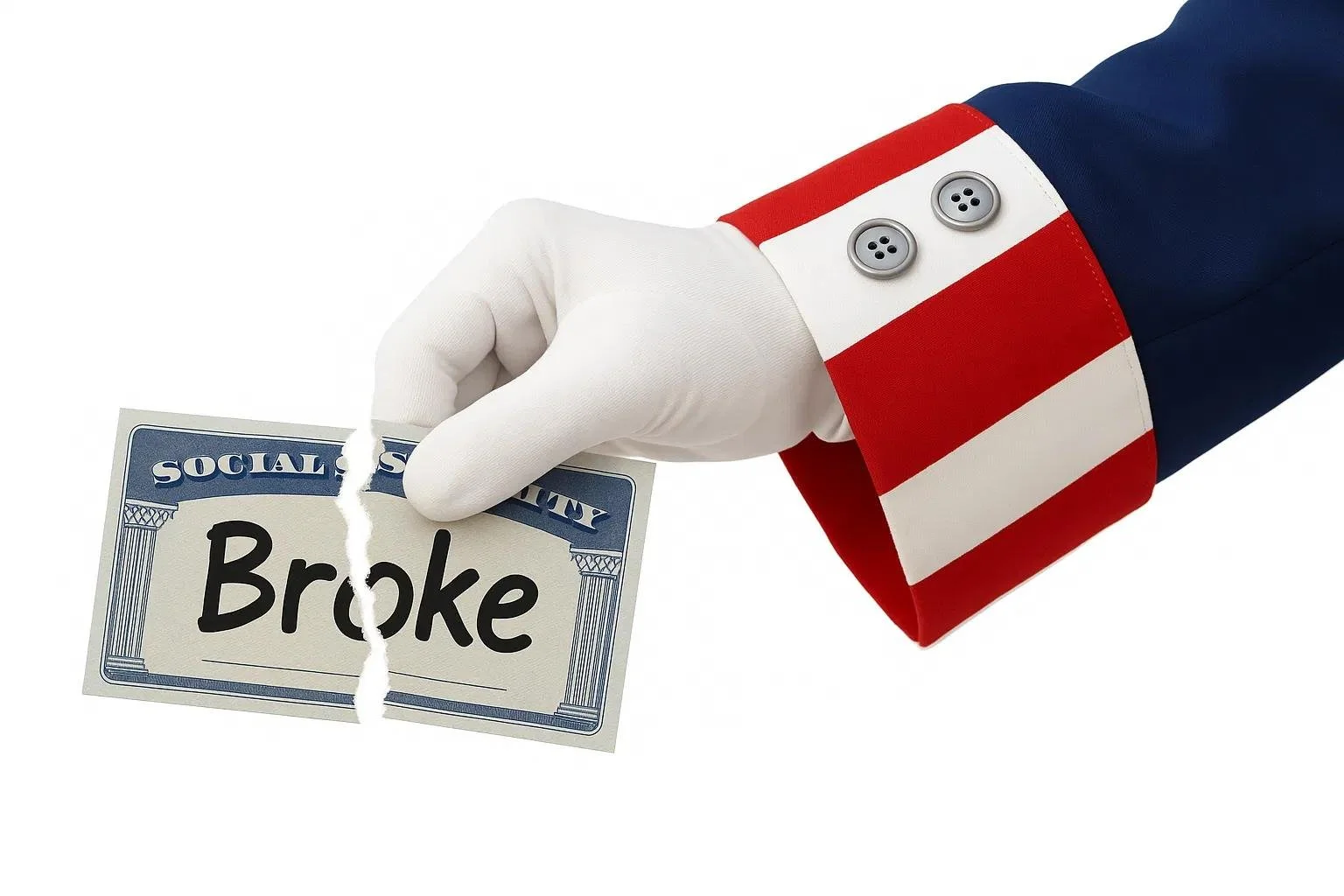
Workers under Bismark’s program became eligible for benefits at age 70, and its costs were paid equally by employees, businesses, and the state.
It also had its intended effect: support for Germany’s unified socialist party fell dramatically after the law was passed, and it became the leading blueprint for similar programs around the world.
Franklin Roosevelt pushed for a Social Security program in the United States for similar reasons; socialist movements were growing quickly in America, especially under the economic devastation of the Great Depression.
Politicians like Louisiana Senator Huey Long were calling for full-blown wealth redistribution, promising every family a $5,000 estate (large sum in the 1930s) and guaranteed income.
Then there was Francis Townsend in California, who proposed a national sales tax to provide a $200 monthly pension to every American over the age of 60-- with the requirement that the money had to be spent within 30 days to stimulate the economy.
These ideas spread like wildfire, and soon there was major support in Congress for some sort of national pension.
Roosevelt modeled his program on Otto von Bismark’s-- but lowered the age of eligibility to 65 instead of 70.
The first financial analysis of Social Security came in 1941, when the Board of Trustees published a report stating that the program would remain solvent and well-funded indefinitely, i.e. pretty much forever.
At the time, there was far more tax revenue being paid into Social Security than there were benefit payments being paid from the system. So Social Security essentially ran a massive surplus each year… and the accumulated surplus was invested in a giant trust fund.
But eventually cracks started to form.
In 1983, the Social Security trustees issued a more sanguine assessment; this time they claimed that the program would still remain solvent for their 75-year horizon (i.e. through 2057), but that costs of paying benefits to Social Security recipients would exceed tax revenue by 2018… at which point they would have to start drawing down the trust fund.
Pfff. It was 1983. No one in Washington cared about what might or might not happen 35 years later. So, barring cosmetic adjustments, politicians ignored the problem.
The Trustees sounded the alarm bells again in the 1990s when they projected that Social Security’s trust funds would run out of money by the year 2042. And, as time has continued to pass, that projected depletion date has become closer and closer.
Starting in the 2010s, Social Security projected that its trust funds would be fully depleted by 2035-- roughly 20-25 years into the future.
And according to their latest assessment, the projected depletion date is now 2033. That’s just eight years away.
So, what does this actually mean?
Well, Social Security is already running an annual deficit, i.e. the program pays out MORE in monthly benefits than it collects in tax revenue. So, each year they have to dip into the trust fund to make ends meet.
But in eight years, the trust fund balance will be zero… so they won’t have any savings to offset Social Security’s annual deficit anymore. And that annual Social Security deficit is projected to be more than $500 billion by 2033.
There will essentially be two options at that point; either
(1) the federal government will pick up the tab, essentially adding $500 billion per year to the US budget deficit; or
(2) Social Security beneficiaries will have to take an immediate cut to their benefits. The initial cut would be around 20-25% and become worse over time.
Option 2 is unthinkable given the political consequences. But option 1 would only lead to more economic problems… and a lot of inflation. The US government needs to be reducing its budget deficit, not expanding it.
The good news is that there are ways to fix Social Security; the program itself has recommended plenty of solutions.
For example, given that life expectancy at age 65 is now so much longer than it was in 1935, one recommendation is to gradually phase-in a higher retirement age to 69.
Simultaneously, a small payroll tax increase of 1%, combined with increasing the maximum taxable salary, would render the program solvent for at least 75 more years.
And these just scratch the surface-- there are plenty of other options.
The bad news is that the longer Congress waits, the more painful the solutions will become. If they wait until 2030 to pass any reform, there will have to be much more severe tax hikes and much more abrupt changes to the retirement age.
So, dealing with the problem now will make life less difficult in eight years’ time.
Unfortunately, few are willing to do anything about it.
On rare occasions some politician proposes necessary reforms. In fact, the last one came last week from Rep. Gwen Moore of Wisconsin, who introduced the Social Security Enhancement and Protection Act.
But these bills never go anywhere and ‘die in committee’.
Bottom line, the problem is 100% fixable-- just like the rest of America’s economic challenges. The national debt is fixable. Fraud, waste, and abuse is fixable. Inflation is fixable. Everything is fixable.
There just doesn’t seem to be the will to do what is necessary… so these problems will continue to fester until they become a crisis.
To your freedom, James Hickman Co-Founder, Schiff Sovereign LLC
Vietnam News Posted by Henig at KTFA 5-29-2025
KTFA:
Henig: New Zealand, Việt Nam expand timber trade partnership
Wednesday, May 28, 2025 14:15 HÀ NỘI —
New Zealand Forestry and Trade Minister Todd McClay on Tuesday unveiled a new bilateral agreement with Vietnam designed to boost timber exports and remove potential trade barriers in the forestry sector between the two nations.
Under the agreement, New Zealand’s radiata pine will be recognised under Việt Nam’s evolving timber construction standards, paving the way for increased market access in the rapidly developing Vietnamese market.
KTFA:
Henig: New Zealand, Việt Nam expand timber trade partnership
Wednesday, May 28, 2025 14:15 HÀ NỘI —
New Zealand Forestry and Trade Minister Todd McClay on Tuesday unveiled a new bilateral agreement with Vietnam designed to boost timber exports and remove potential trade barriers in the forestry sector between the two nations.
Under the agreement, New Zealand’s radiata pine will be recognised under Việt Nam’s evolving timber construction standards, paving the way for increased market access in the rapidly developing Vietnamese market.
Minister McClay highlighted that the pact is expected to drive growth in the NZ$2.68 billion (US$1.59 billion) bilateral trade and expand the NZ$ 48 million worth of sawn timber New Zealand currently ships to Việt Nam.
He emphasised Việt Nam’s strong economic trajectory, noting that its economy has doubled over the past decade and is poised to lead global income growth.
This trend is expected to spur construction activity and demand for sustainable building materials, creating further opportunities for New Zealand’s wood sector.
The agreement is set to add value to New Zealand’s timber products and offer opportunities in addition to exporting logs. It boosts the country's export potential and helps double its exports by value in 10 years. — VNS
https://bizhub.vn/new-zealand-viet-nam-expand-timber-trade-partnership-post376566.html
************
Henig: PM Chính proposes financial centre connectivity among ASEAN, Gulf nations and China
May 27, 2025 - 18:17 PM
Phạm Minh Chính welcomed the fact that the world’s three leading economic engines — ASEAN, the GCC and China — are engaging in dialogue, strengthening coordination and opening up a historic opportunity to build a new inter-regional strategic cooperation space for a prosperous, inclusive and sustainable future for all countries.
HÀ NỘI — Prime Minister Phạm Minh Chính proposed enhancing financial centre connectivity among ASEAN countries, the Gulf Cooperation Council (GCC) and China at the ASEAN-GCC-China Summit in Kuala Lumpur on Tuesday.
He suggested establishing a robust financial connectivity network linking major regional centres such as HCM City, Kuala Lumpur, Singapore, Bangkok, Shanghai, Dubai and Riyadh, creating a seamless inter-regional financial ecosystem that could serve as a launchpad for breakthrough cooperation between ASEAN, the GCC and China.
At the summit, themed 'Synergising Economic Opportunities Towards Shared Prosperity', PM Chính welcomed the fact that the world’s three leading economic engines — ASEAN, the GCC and China — are engaging in dialogue, strengthening coordination and opening up a historic opportunity to build a new inter-regional strategic cooperation space for a prosperous, inclusive and sustainable future for all countries.
He highlighted the need to focus on cooperation in trade, investment and supply chain connectivity and to avoid politicising science and technology, investment and development.
He proposed effectively leveraging existing frameworks such as the ASEAN-China Free Trade Agreement, promoting the signing of the ASEAN-GCC Free Trade Agreement and studying the possibility of developing inter-regional connectivity into a comprehensive trilateral economic cooperation mechanism, including the potential formation of an ASEAN-GCC-China Free Trade Agreement.
The Vietnamese leader called for high priority to be given to strategic and breakthrough sectors. With ASEAN finalising its Digital Economy Framework Agreement, he stressed that this was a “golden moment” to build a connected, secure and sustainable digital space.
Reaffirming that capital flow is the lifeblood of strong, continuous and sustainable economic development, the PM expressed his belief that these directions would lay the foundation for strong development in other fields such as tourism, cultural exchange and connections among the civilisations of the three regions, setting a solid groundwork for deep, comprehensive and long-term cooperation among ASEAN, the GCC and China.
He affirmed that Việt Nam was committed to continuing its role as a reliable bridge and a responsible partner, and was ready to accompany and contribute to peace, stability and shared prosperity for all the peoples and nations of ASEAN, the GCC and China.
Leaders of the participating countries expressed confidence that ASEAN, the GCC and China could leverage the strengths of the three economies with a combined GDP of US$24.87 trillion and a population of approximately 2.15 billion.
The countries reaffirmed their commitment to promoting trade, investment, finance, supply chain connectivity and market access for ASEAN, GCC and China. They also emphasised advancing cooperation in emerging fields such as digital technology, artificial intelligence and renewable energy as well as enhancing cultural exchanges, educational collaboration and tourism development.
The nations also pledged to kick off new initiatives to foster mutual understanding and people-to-people connectivity across regions. During the conference, time was also allocated to discuss international and regional issues.
Participants shared concerns about the complex developments in the Gaza Strip, reaffirmed support for the peace process and the establishment of an independent Palestinian state under the two-state solution in accordance with international law and relevant United Nations Security Council resolutions.
Coffee with MarkZ, joined by MM and crew. 05/29/2025
Coffee with MarkZ, joined by MM and crew. 05/29/2025
Some highlights by PDK-Not verbatim
MarkZ Disclaimer: Please consider everything on this call as my opinion. People who take notes do not catch everything and its best to watch the video so that you get everything in context. Be sure to consult a professional for any financial decisions
Member: GM Mark, MM and crew, marvelous mods, and rv family!
MZ: Good Morning: We are looking forward to MM and crew joining the podcast at around the 30-minute mark this morning.
Member: What’s the new “hold up” if there is any at all.
MZ: I don’t think there is any hold up. I think it is just rolling out
Coffee with MarkZ, joined by MM and crew. 05/29/2025
Some highlights by PDK-Not verbatim
MarkZ Disclaimer: Please consider everything on this call as my opinion. People who take notes do not catch everything and its best to watch the video so that you get everything in context. Be sure to consult a professional for any financial decisions
Member: GM Mark, MM and crew, marvelous mods, and rv family!
MZ: Good Morning: We are looking forward to MM and crew joining the podcast at around the 30-minute mark this morning.
Member: What’s the new “hold up” if there is any at all.
MZ: I don’t think there is any hold up. I think it is just rolling out
Member: This is the longest countdown ever!
MZ: Yes it is.
Member: , do we think this thing might really go…the “two paragraphs” (on $4.81 rate) might be actually real
MZ: I have a lot of bankers saying it could be $4.81…Some say $4.91. they are saying somewhere in that range the rate is staying constant. I wish someone would just give them the “release” so we were allowed to exchange.
Member: Frank26 Says the article about the 4.81 was legit.... white papers.
Member: Frank said last night something about 10 cent variance in country then said we will get rate and lower denominations b4 parliament gets the budget tables and they will receive the tables within days
Member: I heard nothing until Sept now.
MZ:I heard the September date was when they wanted it completed. Meaning they wont have finished pulling the old US dollars out of circulation until then. This means the RV needs to go way before then for us.
Member: You said once that bonds needed to be 30% completed before we get to exchange. Do you have any idea what percentage they are out now?
MZ: My guess is 20%. Noone knows for certain.
MZ: There is no updates today on the bond side.
Member: what % of fee will the banks take for exchanging us?
MZ: I heard the fees with the banks have been pre-negotiated at 2-3%. But its built into the back end of our exchange so we really won’t notice it.
Member: does it still look to be tax free for exchange?
Member: Does anyone know what value the dong was before it was devalued?
MZ: if I remember right it was about $2.21
Member: Is it true the Kuwait dinar revalued to $9 after it revalued?
MZ: Some I know said it went as high as $9.88. But that was very briefly -for only a few hours or so as they added it to the basket. It was there and gone quickly ….It is my understanding that after the experience with Kuwait….Iraq is doing a fixed float and the Iraqi dinar will not be allowed to float like that….they are going to peg it or fix it so there is not that large of rate swing.
Member: there is a rumor that the Zim will be worthless in a few days,
MZ; Ignore them. Those rumors have been a dime a dozen for years.
MZ: “Sudanese Financial Advisor: Al Taawan hyper-markets reduced demand for the parallel dollar and prevented inflation from rising” They are saying because of their efforts they don’t need the black market.
MZ: “Dollar falls below 140,000 dinars in Baghdad” some people say the rate of 1390 is the trigger point – I am watching it just to see if those sources are accurate or not.
Member: June 14 ... Flag Day, DJT Birthday, 250th Anniversary of US Navy ... all during 250th USA Anniversary
Member: I've been planning for June 14 for a while for Notifications & full NESARA July 04 ... when many have said 'tommorrow' for a while now
Member: Frank 26 says July 1st Target date for Fiscal year, but we may go before to stabilize both economies before collapse of fiat money across the world
Member: I believe this RV is our lesson in long suffering. I know I've found balance waiting for it, hope you all have too.
Member: Waiting...is preparation from God not punishment...Embrace it. :)
Member: Thanks Mark, mods and MM…..everyone have a great day.
MilitiaMan and Stacie Z join the stream today. Please listen to replay for their information and opinions.
THE CONTENT IN THIS PODCAST IS FOR GENERAL & EDUCATIONAL PURPOSES ONLY&NOT INTENDED TO PROVIDE ANY PROFESSIONAL, FINANCIAL OR LEGAL ADVICE. PLEASE CONSIDER EVERYTHING DISCUSSED IN MARKZ’S OPINION ONLY
FOLLOW MARKZ : TWITTER . https://twitter.com/originalmarkz?s=21. TRUTH SOCIAL . https://truthsocial.com/@theoriginalm...
Mod: MarkZ "Back To Basics" Pre-Recorded Call" for Newbies 10-19-2022 ) https://www.youtube.com/watch?v=37oILmAlptM
MARKZ DAILY LINKS: https://theoriginalmarkz.com/home/
Note from PDK: Please listen to the replay for all the details and entire stream….I do not transcribe political opinions, medical opinions or many guests on this stream……just RV/currency related topics.
ZESTER'S LINK TREE: https://linktr.ee/CrazyCryptonaut
THANKS FOR JOINING. HAVE A BLESSED DAY! SEE YOU ALL TUESDAY THROUGH THURSDAY EVENINGS FOR NEWS @ 7:00 PM EST ~ UNLESS BREAKING NEWS HAPPENS! FROM NOW ON NO MORE NIGHTLY PODCASTS ON MONDAYS AND FRIDAYS