
Your Debt is about to Get a lot More Expensive
Your Debt is about to Get a lot More Expensive
Heresy Financial: 5-27-2025
The financial landscape is shifting, and according to Heresy Financial, if you have debt, you need to pay attention. A confluence of factors is pointing towards a significant spike in interest rates, impacting everything from mortgages to national borrowing. Understanding these forces is crucial for both borrowers and investors alike.
The 10-year Treasury yield serves as a crucial benchmark for various interest rates, particularly mortgages. It reflects the market’s expectation of future inflation and economic growth. As the 10-year yield rises, so too will the cost of borrowing. This correlation is particularly evident in the mortgage market, where rates often track Treasury benchmarks closely.
Your Debt is about to Get a lot More Expensive
Heresy Financial: 5-27-2025
The financial landscape is shifting, and according to Heresy Financial, if you have debt, you need to pay attention. A confluence of factors is pointing towards a significant spike in interest rates, impacting everything from mortgages to national borrowing. Understanding these forces is crucial for both borrowers and investors alike.
The 10-year Treasury yield serves as a crucial benchmark for various interest rates, particularly mortgages. It reflects the market’s expectation of future inflation and economic growth. As the 10-year yield rises, so too will the cost of borrowing. This correlation is particularly evident in the mortgage market, where rates often track Treasury benchmarks closely.
Heresy Financial points to a worrying trend of rising rates coupled with increasing volatility in the bond market. This signifies uncertainty and anxiety about the future, driving investors to demand higher returns for lending their money. This, in turn, translates into higher borrowing costs for everyone.
The bond market is driven by the interplay of sellers and buyers. When demand for bonds is high, prices rise, and yields (interest rates) fall. However, if sellers dominate, bond prices fall, and yields rise. Currently, the market seems to be shifting towards a seller-dominated environment, putting upward pressure on interest rates.
The analysis suggests a “breakout” scenario for interest rates, implying a significant and sustained increase. This is a stark warning for borrowers, as higher interest payments can quickly strain budgets and erode financial stability.
A major contributing factor to the rising rate environment is the exploding national debt. The government needs to borrow vast sums of money to finance its spending, increasing the supply of bonds in the market. This increased supply dilutes demand and pushes yields higher.
The question posed is critical: Would you lend money to an entity with a rapidly growing debt pile? As the national debt balloons, investors become increasingly wary of the government’s ability to repay its obligations, demanding higher interest rates as compensation for the perceived risk.
We’ve enjoyed a long period of low interest rates, but the debt cycle is showing signs of reversing. This means the era of cheap borrowing is coming to an end, and individuals, businesses, and the government will face higher financing costs.
Heresy Financial draws parallels between the current Federal Reserve strategy and that of the 1970s. Just as then, the Fed is attempting to combat inflation, but the effectiveness of their tools is debatable, and the potential for unintended consequences is a real concern.
The idea of “growing out of the debt” through increased economic output is often floated as a solution. However, the analysis challenges this notion, highlighting flaws in the growth plan and questioning whether the economic growth generated is sustainable or even sufficient to offset the debt burden.
One of the factors hindering economic growth is overregulation. Excessive and burdensome regulations can stifle innovation, discourage investment, and ultimately slow down economic activity, making it harder to “grow out” of the debt.
The core issue is unsustainable government spending. Meaningful change requires a fundamental shift towards fiscal responsibility, prioritizing balanced budgets and debt reduction.
The article expresses skepticism that the next administration, regardless of political affiliation, will effectively address the debt crisis. The challenges are immense, and the political will to make the necessary tough choices may be lacking.
For investors, this changing landscape means bracing for volatility. Rising interest rates can negatively impact bond prices, and the overall economic uncertainty can weigh on stock markets. Diversification and a focus on long-term investment strategies are crucial in navigating these turbulent times.
The message is clear: the era of cheap debt is fading. Rising interest rates, driven by ballooning national debt and evolving market dynamics, are poised to impact everyone. Now is the time to understand these forces, adjust your financial strategies, and prepare for a more expensive borrowing environment. For investors, vigilance and a well-diversified portfolio are key to weathering the potential storm.
With The Penny Going Away, What Should You Do With The Ones In Your Coin Jar?
With The Penny Going Away, What Should You Do With The Ones In Your Coin Jar?
Mike Snider and Daniel de Visé, USA TODAY Sun, May 25, 2025
Learn to love your coins.
That’s the message from Kevin McColly, CEO of Coinstar, the company behind those coin-cashing machines you see in supermarkets. American consumers made only 16% of their payments in cash in 2023, according to the Federal Reserve. A 2022 Pew survey found that two-fifths of consumers never use cash at all.
President Donald Trump has ordered the Treasury to stop minting pennies because their production cost exceeds their value. (Intriguingly, the same is true of nickels.)
With The Penny Going Away, What Should You Do With The Ones In Your Coin Jar?
Mike Snider and Daniel de Visé, USA TODAY Sun, May 25, 2025
Learn to love your coins.
That’s the message from Kevin McColly, CEO of Coinstar, the company behind those coin-cashing machines you see in supermarkets. American consumers made only 16% of their payments in cash in 2023, according to the Federal Reserve. A 2022 Pew survey found that two-fifths of consumers never use cash at all.
President Donald Trump has ordered the Treasury to stop minting pennies because their production cost exceeds their value. (Intriguingly, the same is true of nickels.)
Many Americans regard both nickels and pennies as more nuisance than currency. The typical household is sitting on $60 to $90 in neglected coins, enough to fill one or two pint-size beer mugs, according to the Federal Reserve. Americans throw away millions of dollars in coins every year, literally treating them like trash.
Why do we treat coins like trash? McColly thinks we should change the way we think about coins.
To state the obvious, coins are worth money. Coinstar converts $3 billion in coins into spendable cash every year, one coin jar at a time. The average jar yields $58 in buying power.
Most of us don’t realize how much our coins are worth. Thus, a trip to a coin-exchange kiosk (or a bank, or credit union) can yield a pleasant surprise.
“People underestimate the value of their jar by about half,” McColly said. “It’s a wonderfully pleasurable experience. People have this sensation of found money.”
Certain groups of Americans – lower-income households, and those over 55 – still use plenty of cash, the Fed found, along with people who prefer to shop in person.
Coins aren't clutter, they're currency
As for the rest of us, McColly thinks it is time for a paradigm shift. Don’t think of your coins as clutter. Think of them as recyclables.
“They’re metal,” he said, in case we needed a reminder. “And they have a long and useful life.”
The Treasury still mints more than 5 billion coins a year, although the figure is dropping, according to the journal CoinNews.
“Those are just natural resources coming out of the Earth,” McColly said: Copper-plated zinc for pennies, copper-nickel alloys for nickels, dimes and quarters.
His point: If Americans got serious about gathering up their idle coins and “recycling” them into the monetary system, the Mint wouldn’t have to make so many new ones.
Granted, McColly has a vested interest. His company collects a small cut of the coins that consumers deposit.
“You can go to your own bank or credit union and not pay any fee,” said Kimberly Palmer, personal finance expert at NerdWallet. Both NerdWallet and Bankrate offer tip sheets on exchanging coins for cash. Most banks will take an account holder's coins for free, Bankrate reports, but not all, and you may need to roll the coins yourself.
“I think that a lot of people probably do have hidden coins stashed around their home, and it can be worth their time to go and collect them,” Palmer said.
McColly notes that Coinstar generally waives its fee if the depositor chooses to trade in coins for a retail gift card, rather than cash.
He is not alone in forecasting a future for the penny, the nickel, and their more profitable kin.
“We’ve been much slower than parts of Europe and Asia to adopt mobile payments and contactless credit cards,” said Ted Rossman, a senior industry analyst at Bankrate.
The pandemic delivered a timely reminder of how much we still rely on cash: Consumers and business owners sat on their coins amid a global shutdown, seeding an actual coin shortage
“It kind of froze the whole system,” Rossman said.
Retiring coins: Where does it end?
While Trump has only instructed the Mint to stop making pennies, some voices have urged America to stop using them.
The Common Cents Act, introduced on April 30 by a bipartisan group of lawmakers, would round cash transactions to the nearest five cents.
“The penny is outdated and inefficient and no longer serves the needs of our economy,” said Sen. Kirsten Gillibrand, the New York Democrat.
But the bill could push the nation down a slippery slope.
TO READ MORE: https://www.yahoo.com/news/penny-going-away-ones-coin-023835550.html
Seeds of Wisdom RV and Economic Updates Monday Evening 5-26-25
Good Evening Dinar Recaps,
MORGAN STANLEY PREDICTS 10% DROP IN US DOLLAR — SEES BOOST FOR RISK ASSETS AND S&P 500
Morgan Stanley has issued a bold mid-year forecast: the U.S. dollar is headed for a major decline, which could act as a tailwind for equities, crypto, and other risk-on assets.
CIO Mike Wilson: “Dollar to Fall Another 10% Into 2026”
In an interview with Bloomberg Television, Chief Investment Officer Mike Wilson said:
“Our forecast for the dollar… is for another 10% decline, continuing into next year. That’s another reason the S&P 500 will be hard-pressed to correct more than 10%.”
Good Evening Dinar Recaps,
MORGAN STANLEY PREDICTS 10% DROP IN US DOLLAR — SEES BOOST FOR RISK ASSETS AND S&P 500
Morgan Stanley has issued a bold mid-year forecast: the U.S. dollar is headed for a major decline, which could act as a tailwind for equities, crypto, and other risk-on assets.
CIO Mike Wilson: “Dollar to Fall Another 10% Into 2026”
In an interview with Bloomberg Television, Chief Investment Officer Mike Wilson said:
“Our forecast for the dollar… is for another 10% decline, continuing into next year. That’s another reason the S&P 500 will be hard-pressed to correct more than 10%.”
The call is based largely on Morgan Stanley’s projection of 175 basis points in Fed rate cuts over the next year.
📉 If realized, this would deepen pressure on the greenback and stimulate broader asset markets.
Even with Fewer Rate Cuts, Dollar Still Going Down
Wilson emphasized that even if the Fed doesn’t cut rates as aggressively:
“The direction of travel is still south for the dollar… particularly against the yen, euro, and pound — economies with less room to cut in a slowdown.”
This shift could:
Weaken the dollar globally
Make U.S. exports more competitive
Push investors toward commodities, stocks, and crypto
Why This Matters for Investors
A falling U.S. dollar tends to:
Support higher stock prices (especially in large caps and tech)
Provide upside to Bitcoin, XRP, and other crypto assets
Drive flows into emerging markets and commodities
With dollar strength waning, traders and institutions may rotate heavily into risk-on trades to front-run 2026 macro shifts.
Bottom Line
Morgan Stanley’s call is clear: rate cuts are coming, the dollar is weakening, and risk assets are positioned to benefit.
As the greenback loses steam, expect crypto and equities to surge — especially if the Fed confirms the pivot in coming months.
@ Newshounds News™
Source: Daily Hodl
~~~~~~~~~
FLORIDA TO SCRAP CAPITAL GAINS TAX ON BITCOIN, XRP, AND STOCKS — A GAME-CHANGER FOR CRYPTO IN AMERICA
In a bold move that could reshape U.S. crypto policy, Florida has introduced legislation to eliminate state capital gains tax on Bitcoin, XRP, and traditional stocks, sending bullish signals across the markets.
State-Level Tax Break Could Supercharge Crypto Adoption
Backed by Governor Ron DeSantis and Florida’s GOP leadership, the bill would:
Remove capital gains tax at the state level for profits from crypto and stock investments
Increase investor returns, making Florida more attractive to crypto traders and fintech firms
Position the state as a potential crypto capital of the U.S.
🔸 Federal capital gains tax still applies — only Congress can change that.
Markets React: BTC and XRP Climb
In the 24 hours following the announcement:
Bitcoin (BTC) rose 2.4%, trading near $109,835
XRP jumped 2.2% to $2.34
📊 Growth Trends:
Asset 30-Day 3-Month
BTC +16.55% +19.6%
XRP +5.42% +2.71%
Some analysts predict Bitcoin could hit $135,000 if this momentum continues.
In Sync With Trump’s National Pro-Crypto Push
This legislation mirrors President Trump’s federal crypto agenda:
Advocates pro-blockchain policies
Has support across 27 Republican-led states
Could inspire a wave of similar tax reform bills
Mixed Public Response
Supporters say:
Could make Florida the #1 crypto-friendly state
Will attract VCs, builders, and high-net-worth investors
Critics argue:
Might complicate filings and cause clashes with federal tax rules
Risks regulatory confusion across state-federal lines
hy It Matters: This Could Spark Nationwide Crypto Tax Reform
If Florida’s bill passes:
Other GOP-led states may follow suit
Federal lawmakers may face increased pressure to modernize crypto tax policy
Could create a more unified, investor-friendly U.S. crypto landscape
Bottom Line
Florida isn’t just tweaking its tax code—it may be igniting the next phase of U.S. crypto regulation. Whether you’re holding BTC, XRP, or just watching the policy tide, this bill deserves your full attention.
@ Newshounds News™
Source: Coinpedia
~~~~~~~~~
Seeds of Wisdom Team RV Currency Facts Youtube and Rumble
Newshound's News Telegram Room Link
Follow the Roadmap
Follow the Timeline
Seeds of Wisdom Team™ Website
Thank you Dinar Recaps
2008 on Steroids: Global Financial Reset, Millions of Retirements at Risk
2008 on Steroids: Global Financial Reset, Millions of Retirements at Risk
Daniela Cambone: 5-26-2025
"What’s coming up is gonna destroy millions—tens of millions—of retirees’ retirements if they are not careful,” warns Chris Vermeulen, founder and chief investment officer at TheTechnicalTraders.com.
In an interview with Daniela Cambone, he lays out a highly bearish outlook for financial markets, forecasting a severe economic downturn that he believes could rival or surpass the 2008 financial crisis.
“To me, it looks like a stage four, which is a financial reset—kind of like the tech bubble, the 2008 financial crisis."
2008 on Steroids: Global Financial Reset, Millions of Retirements at Risk
Daniela Cambone: 5-26-2025
"What’s coming up is gonna destroy millions—tens of millions—of retirees’ retirements if they are not careful,” warns Chris Vermeulen, founder and chief investment officer at TheTechnicalTraders.com.
In an interview with Daniela Cambone, he lays out a highly bearish outlook for financial markets, forecasting a severe economic downturn that he believes could rival or surpass the 2008 financial crisis.
“To me, it looks like a stage four, which is a financial reset—kind of like the tech bubble, the 2008 financial crisis."
Vermeulen predicts the S&P 500 could decline by as much as 47–55%, echoing the scale of past collapses. He also sees gold as a critical indicator of systemic risk and growing investor fear.
"We're seeing a big movement into gold because you're getting out of the financial system. You're holding physical assets." Watch the full video to learn how you can better protect your portfolio.
Chapters:
00:00 A reset will occur in all asset classes
2:19 Gold is the prophet
4:22 S&P will fall 40%
5:32 Will the housing market collapse?
8:10 Cash is the safest place
11:37 Gold's super cycle
17:32 34% pullback in gold
22:49 Not enough supply for gold
More News, Rumors and Opinions Monday PM 5-26-2025
KTFA:
Clare: The Iraqi Parliament Presidency calls for extraordinary sessions during the legislative recess.
5/26/2025
The Parliament's Presidency held its regular meeting on Monday to discuss a number of issues on its agenda. It also decided to call on MPs to hold extraordinary sessions during the legislative recess.
The presidency stated in a statement received by Shafaq News Agency, "The meeting focused on the entitlements related to the upcoming elections, as the presidency discussed ways to create the appropriate legislative and political environment to ensure fair and transparent elections that enhance citizens' confidence in the democratic process and meet their aspirations at this critical stage."
KTFA:
Clare: The Iraqi Parliament Presidency calls for extraordinary sessions during the legislative recess.
5/26/2025
The Parliament's Presidency held its regular meeting on Monday to discuss a number of issues on its agenda. It also decided to call on MPs to hold extraordinary sessions during the legislative recess.
The presidency stated in a statement received by Shafaq News Agency, "The meeting focused on the entitlements related to the upcoming elections, as the presidency discussed ways to create the appropriate legislative and political environment to ensure fair and transparent elections that enhance citizens' confidence in the democratic process and meet their aspirations at this critical stage."
The statement added, "The Presidency has called on members of the House of Representatives to prepare to hold extraordinary sessions during the second month of the current legislative recess, with the aim of completing important legislation and fulfilling constitutional and legislative requirements relevant to the current phase." LINK
Clare: The Sudanese Ministry of Finance directs the Ministry of Finance to prepare the budget tables for approval, amounting to 140 trillion dinars.
5/26/2025
The Finance Committee of the Iraqi Parliament revealed on Monday that Prime Minister Mohammed Shia al-Sudani directed the Ministry of Finance to prepare budget tables in preparation for its approval.
Committee member Moeen Al-Kadhimi told Shafaq News Agency, "Last week, Al-Sudani directed the Ministry of Finance to prepare the 2025 budget schedules in preparation for its approval by the Council and sending it to Parliament."
Al-Kadhimi added, "The Ministry of Finance prepared the investment side of the budget months ago, amounting to 25 trillion dinars. The Ministry of Finance is currently expected to complete the operational side of the budget, estimated at approximately 115 trillion dinars."
He explained that "the budget tables amount to 140 trillion dinars, which will be sufficient to run the state during the remaining months of the year, including salaries for employees and retirees, social welfare, other aspects, oil extraction costs, and ongoing investment projects."
The Finance Committee member continued: "It has become imperative for the Ministry of Finance to prepare the budget tables, approve them in the Council of Ministers, and submit them to the House of Representatives next June." LINK
************
Clare: The government and the Parliamentary Finance Committee discuss preparations for the 2025 budget schedules.
5/26/2025
Prime Minister Mohammed Shia Al-Sudani received today, Monday, the head of the Parliamentary Finance Committee, Atwan Sayed Hassan Al-Atwani.
A statement from the Prime Minister's Office, a copy of which was received by {Euphrates News}, stated that "during the meeting, the latest preparations for the 2025 budget schedules were reviewed, as well as the mechanisms and plans to ensure the financing of salaries and expenditures, according to sectors and activities during the current year.
" Al-Sudani stressed "the government's keenness to ensure that the budget includes its priorities in implementing its schedules; in order to complete the sections of the government program, especially those related to providing services and completing projects, to achieve the aspirations of citizens in all Iraqi governorates." LINK
*************
Courtesy of Dinar Guru: https://www.dinarguru.com/
Sandy Ingram Development Road Project...$17 billion project is an ongoing infrastructure development connecting Asia with Europe by establishing a network of railways, roads, ports and cities. Iraq will be changed by the DRP in 3 major ways: 1. Diversification of Revenue beyond oil... 2. Job creation...this employment surge will increase household incomes and stimulate domestic consumption, all of which point to a higher IQD value. 3. Transportation infrastructure enhancement will reduce shipping times between Asia and Europe making Iraq a competitive alternative to traditional routes like the Suez Canal. [Post 1 of 2....stay tuned]
Sandy Ingram Here's the 3 ways the Development Road Project will increase the IQD's value. 1. Higher fees from transit fees and trade will help to increase Iraq's foreign currency reserves. This will provide a substantial foundation for the IQD. 2. Economic diversification and infrastructure improvements can attract foreign investments increasing demand for the IQD and potentially leading to currency appreciation. 3. A more balanced economy with multiple revenue streams can stabilize prices, contributing to a stronger and more stable currency. It will also satisfy the IMF's recommendations for diversified revenue for a stronger Iraqi economy. [Post 2 of 2]
IT'S TOO LATE: A Financial CRISIS is Spreading RAPIDLY! - Andy Schectman
Financial Wisdom: 5-26-2025
0:00 - Global bond market distress and 20-year U.S. Treasury auction failure
1:06 - U.S. fiscal irresponsibility and stealth QE by the Fed
2:00 - Japan’s yield issues and gold’s reaction to monetary policy
2:39 - Gold rising despite higher interest rates
3:30 - Declining international demand for U.S. treasuries
4:07 - Commodities favored over sovereign debt amid global uncertainty
5:02 - Shift toward Bretton Woods III and asset-backed systems
5:34 - Record gold deliveries on COMEX and rising demand for physical metals
6:24 - U.S. debt sustainability concerns and GDP projections
7:43 - Fed’s quiet QE and collapsing confidence in treasuries
8:42 - Gold defying expectations amid rising rates
9:56 - Strong demand in Asia and China’s growing influence on gold
10:27 - China's long-term silver accumulation strategy
So What Happens To America’s 114 Billion Pennies Once The US Stops Making Them?
So What Happens To America’s 114 Billion Pennies Once The US Stops Making Them?
Chris Isidore, CNN Sun, May 25, 2025
The American penny isn’t going anywhere anytime soon.
The US Treasury Department announced Thursday that it plans to start winding down production of the one-cent coin it has been minting for more than 230 years. But the penny will still remain legal tender, and will still be in use at thousands of retailers around the country for sometime to come.
“If we look at the experience in Canada, for the first year after they stopped making pennies, there’s really no change in transactions,” Jeff Lenard, spokesperson for the National Association of Convenience Stores, told CNN. Convenience stores do more cash transactions than any other group, about 32 million a day, or about 20% of the total number of purchases by their customers, Lenard said.
So What Happens To America’s 114 Billion Pennies Once The US Stops Making Them?
Chris Isidore, CNN Sun, May 25, 2025
The American penny isn’t going anywhere anytime soon.
The US Treasury Department announced Thursday that it plans to start winding down production of the one-cent coin it has been minting for more than 230 years. But the penny will still remain legal tender, and will still be in use at thousands of retailers around the country for sometime to come.
“If we look at the experience in Canada, for the first year after they stopped making pennies, there’s really no change in transactions,” Jeff Lenard, spokesperson for the National Association of Convenience Stores, told CNN. Convenience stores do more cash transactions than any other group, about 32 million a day, or about 20% of the total number of purchases by their customers, Lenard said.
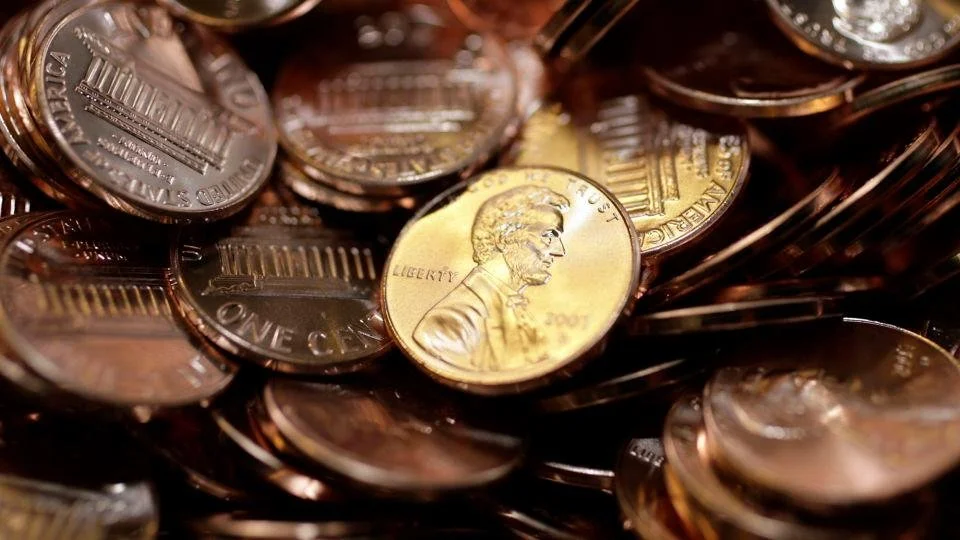
The National Retail Federation, which represents most major US store chains as well as thousands of small retailers, also said it anticipates its members will use pennies even after production stops at some point early next year, although it does anticipate that many will round cash transactions to the nearest nickel once the supply of pennies at banks starts to run short.
“Retailers’ primary goal is serving customers and making this transition as seamless as possible,” said Dylan Jeon, senior director of government relations for NRF.
There are an estimated 114 billion pennies currently in circulation, but they are “severely underutilized” according to the Treasury department. Many are at home in coin jars or junk drawers, or some other forgotten location gathering dust.
The math says that all those pennies could fill a cube roughly 13 stories high. Many people don’t even take them as change, tossing them into the leave-a-penny-take-a-penny dishes at store checkouts.
Lenard said the large number of pennies in circulation means that retailers won’t necessary run out of them for a while. But eventually stores won’t be able to get new rolls of pennies from their banks and will start rounding transactions up or down to the nearest nickel. The decision when to do that will rest with each retailer, not official government policy.
TO READ MORE: https://www.yahoo.com/news/happens-america-114-billion-pennies-113050465.html
Iraq Economic News And Points To Ponder Monday Afternoon 5-26-25
Al-Sudani Chairs A Meeting Of The Supreme Committee For The Re-Evaluation And Re-Formation Of The Boards Of Directors Of State Banks
Monday, May 26, 2025 | Politics Number of reads: 204 Baghdad / NINA / Prime Minister Mohammed Shia Al-Sudani chaired a meeting on Monday of the Higher Committee for the Re-Evaluation and Re-Formation of the Boards of Directors of Government Banks and the Central Bank of Iraq.
The Prime Minister's Media Office stated: "The meeting approved a set of recommendations, and discussions took place on the topics included in the committee's agenda, which focused on evaluating the performance of the boards of directors of government banks and the Central Bank, as part of reform efforts in the banking and financial sector, and emphasizing the effectiveness of boards of directors, as they constitute a fundamental pillar in the financial and banking reform process."
Al-Sudani Chairs A Meeting Of The Supreme Committee For The Re-Evaluation And Re-Formation Of The Boards Of Directors Of State Banks
Monday, May 26, 2025 | Politics Number of reads: 204 Baghdad / NINA / Prime Minister Mohammed Shia Al-Sudani chaired a meeting on Monday of the Higher Committee for the Re-Evaluation and Re-Formation of the Boards of Directors of Government Banks and the Central Bank of Iraq.
The Prime Minister's Media Office stated: "The meeting approved a set of recommendations, and discussions took place on the topics included in the committee's agenda, which focused on evaluating the performance of the boards of directors of government banks and the Central Bank, as part of reform efforts in the banking and financial sector, and emphasizing the effectiveness of boards of directors, as they constitute a fundamental pillar in the financial and banking reform process."
Al-Sudani stressed the importance of boards of directors taking the initiative in developing strategies and visions that guide the work of government banks, and enhancing the principle of transparency and accountability within them, and the need for these boards to evaluate the challenges and financial risks facing banks, in addition to the importance of strengthening relations with various government agencies and the private sector, which contributes to the implementation of financial and development policies that support the local economy. /End N https://ninanews.com/Website/News/Details?key=1229134
Al-Sudani Directs The Ministry Of Finance To Prepare Budget Tables For Approval
Money and Business Economy News – Baghdad The Finance Committee of the House of Representatives revealed on Monday that Prime Minister Mohammed Shia al-Sudani has directed the Ministry of Finance to prepare budget tables in preparation for its approval.
Committee member Moeen Al-Kazemi said, "Last week, Al-Sudani directed the Ministry of Finance to prepare the 2025 budget tables in preparation for its approval by the Council and its submission to Parliament."
Al-Kadhimi added, "The Ministry of Finance prepared the investment side of the budget months ago, amounting to 25 trillion dinars. The Ministry of Finance is currently expected to complete the operational side of the budget, estimated at approximately 115 trillion dinars."
He explained that "the budget tables amount to 140 trillion dinars, which will be sufficient to run the state during the remaining months of the year, including salaries for employees and retirees, social welfare, other aspects, oil extraction costs, and ongoing investment projects."
The Finance Committee member continued: "It has become imperative for the Ministry of Finance to prepare the budget tables, approve them in the Council of Ministers, and submit them to the House of Representatives next June." https://economy-news.net/content.php?id=55862
Al-Sudani: Bank Boards Of Directors And The Central Bank Are A Fundamental Pillar Of Financial And Banking Reform
Banks Economy News – Baghdad Prime Minister Mohammed Shia al-Sudani affirmed on Monday the effectiveness of the boards of directors of government banks and the Central Bank of Iraq, noting that they constitute a fundamental pillar in the financial and banking reform process.
The Prime Minister's media office stated in a statement, seen by Al-Eqtisad News, that "Prime Minister Mohammed Shia al-Sudani chaired the meeting of the Higher Committee for the Re-evaluation and Re-formation of the Boards of Directors of Government Banks and the Central Bank of Iraq."
The statement added that "the meeting approved a set of recommendations, and discussions took place on the topics on the committee's agenda, which focused on evaluating the performance of the boards of directors of government banks and the Central Bank as part of reform efforts in the banking and financial sector, and emphasizing the effectiveness of the boards of directors, as they constitute a fundamental pillar in the financial and banking reform process."
According to the statement, Al-Sudani stressed "the importance of boards of directors taking the lead in developing strategies and visions that guide the work of government banks, and promoting the principles of transparency and accountability within them.
He also stressed the need for these boards to assess the financial challenges and risks facing banks, in addition to the importance of strengthening relations with various government agencies and the private sector, which would contribute to the implementation of financial and development policies that support the local economy."
https://economy-news.net/content.php?id=55864
Al-Sudani: Bank Boards Of Directors And The Central Bank Are A Fundamental Pillar Of Financial And Banking Reform
Banks Economy News – Baghdad Prime Minister Mohammed Shia al-Sudani affirmed on Monday the effectiveness of the boards of directors of government banks and the Central Bank of Iraq, noting that they constitute a fundamental pillar in the financial and banking reform process.
The Prime Minister's media office stated in a statement, seen by Al-Eqtisad News, that "Prime Minister Mohammed Shia al-Sudani chaired the meeting of the Higher Committee for the Re-evaluation and Re-formation of the Boards of Directors of Government Banks and the Central Bank of Iraq."
The statement added that "the meeting approved a set of recommendations, and discussions took place on the topics on the committee's agenda, which focused on evaluating the performance of the boards of directors of government banks and the Central Bank as part of reform efforts in the banking and financial sector, and emphasizing the effectiveness of the boards of directors, as they constitute a fundamental pillar in the financial and banking reform process."
According to the statement, Al-Sudani stressed "the importance of boards of directors taking the lead in developing strategies and visions that guide the work of government banks, and promoting the principles of transparency and accountability within them. He also stressed the need for these boards to assess the financial challenges and risks facing banks, in addition to the importance of strengthening relations with various government agencies and the private sector, which would contribute to the implementation of financial and development policies that support the local economy."
https://economy-news.net/content.php?id=55864
In Support Of The Local Economy, Al-Sudani Calls For Strengthening The Principle Of "Transparency" Within Government Banks
Economy | 03:59 - 05/26/2025 Mawazine News – Baghdad Prime Minister Mohammed Shia Al-Sudani chaired a meeting on Monday of the Higher Committee for the Re-Evaluation and Re-Formation of the Boards of Directors of Government Banks and the Central Bank of Iraq.
A statement from Al-Sudani's office received by Mawazine News stated that "the meeting approved a set of recommendations, and discussions took place on the topics on the committee's agenda, which focused on evaluating the performance of the boards of directors of government banks and the Central Bank, as part of reform efforts in the banking and financial sector, and emphasizing the effectiveness of boards of directors, as they constitute a fundamental pillar in the financial and banking reform process."
He stressed "the importance of boards of directors taking the lead in developing strategies and visions that guide the work of government banks, and enhancing the principle of transparency and accountability within them.
He also stressed the need for these boards to assess the financial challenges and risks facing banks, in addition to the importance of strengthening relations with various government agencies and the private sector, which contributes to the implementation of financial and development policies that support the local economy." https://www.mawazin.net/Details.aspx?jimare=261927
For current and reliable Iraqi news please visit: https://www.bondladyscorner.com/
Bessent Sends a Global Warning, US Currency Crash Begins, and Dire Debt Sell-off Ahead
Bessent Sends a Global Warning, US Currency Crash Begins, and Dire Debt Sell-off Ahead
Sean Foo: 5-25-2025
A cloud of uncertainty hangs over the US economy following a controversial interview with Treasury Secretary Scott Bessent, fueling fears about the future of the dollar and the nation’s financial stability.
Bessent’s remarks, coupled with the looming possibility of a massive government investment in an ambitious missile defense system, have sent ripples of unease through financial markets.
Bessent Sends a Global Warning, US Currency Crash Begins, and Dire Debt Sell-off Ahead
Sean Foo: 5-25-2025
A cloud of uncertainty hangs over the US economy following a controversial interview with Treasury Secretary Scott Bessent, fueling fears about the future of the dollar and the nation’s financial stability.
Bessent’s remarks, coupled with the looming possibility of a massive government investment in an ambitious missile defense system, have sent ripples of unease through financial markets.
In a startling revelation during the interview, Secretary Bessent downplayed the potential consequences of a significant USD devaluation. When pressed about the impact on global markets and American citizens, he reportedly stated that such a scenario was “acceptable” and that he held no significant concerns over the potential collapse of US bonds.
These statements have been met with swift condemnation from economists and market analysts. Critics argue that a substantial devaluation of the dollar could trigger runaway inflation, erode purchasing power for American consumers, and destabilize international trade.
The lack of apparent concern regarding US bonds, long considered a safe haven asset, raises serious questions about the Treasury’s long-term economic strategy.
Adding fuel to the fire is the impending debate over funding the “Golden Dome Missile Defense Shield,” a proposed initiative that could cost upwards of a trillion dollars.
The project, characterized by some as a “wild idea,” aims to create a comprehensive, technologically advanced missile defense system covering the entire United States.
While proponents argue that the Golden Dome is crucial for national security in an increasingly volatile world, critics contend that it’s a fiscally irresponsible project that will further burden the already strained US economy.
They question the effectiveness of such a large-scale system and argue that the resources could be better allocated to addressing pressing domestic issues like infrastructure and healthcare.
The coming weeks and months will be critical as Congress debates the Golden Dome proposal and analysts closely scrutinize the Treasury’s monetary policy. The future of the dollar and the stability of the US economy hang in the balance.
It remains to be seen whether Secretary Bessent’s seemingly nonchalant attitude towards devaluation will be vindicated, or whether it will prove to be a costly gamble with the economic wellbeing of the nation. Investors and citizens alike will be watching closely, hoping for clarity and a responsible path forward.
News, Rumors and Opinions Monday 5-26-2025
Note: All intel should be considered as "Rumors" until we receive official announcements ...and “Rates and Dates” could change anytime until we get to the banks/redemption centers.
RV Excerpts from the Restored Republic via a GCR: Update as of Mon. 26 May 2025
Compiled Mon. 26 May 2025 12:01 am EST by Judy Byington
Global Currency Reset:
Judy Note: Dates on start of Tier4b (Us, the Internet group) have been very confusing Fulford maintains that Redemption Centers began processing live appointments on Fri. 23 May, while Nesara Gesara QFS on Telegram say Sat. 14 June through Tues. 17 June was Tier4b and the General Public Rollout of the Global Currency Reset.
Note: All intel should be considered as "Rumors" until we receive official announcements ...and “Rates and Dates” could change anytime until we get to the banks/redemption centers.
RV Excerpts from the Restored Republic via a GCR: Update as of Mon. 26 May 2025
Compiled Mon. 26 May 2025 12:01 am EST by Judy Byington
Global Currency Reset:
Judy Note: Dates on start of Tier4b (Us, the Internet group) have been very confusing Fulford maintains that Redemption Centers began processing live appointments on Fri. 23 May, while Nesara Gesara QFS on Telegram say Sat. 14 June through Tues. 17 June was Tier4b and the General Public Rollout of the Global Currency Reset.
Sun. 25 May 2025 Ben Fulford: Specialized Redemption Centers have shifted from standby to activation mode. A limited number of insiders and military personnel have been called in to redeem Dinar, Dong, and historic bonds. Since early June, centers are staffed 24/7 on rotating shifts. The funds for redemptions are already in place in QFS accounts. According to two sources inside the Treasury as of May 23, 2025, Redemption Centers will begin processing live appointments under full GESARA protocol
~~~~~~~~~~~~
Sun. 25 May 2025 BREAKING INTEL: TIER 1–5 STRUCTURE EXPOSED — THE HIDDEN ENGINE BEHIND THE GLOBAL CURRENCY RESET (GCR 2025) …WH Grampa on Telegram
You’ve heard about the Global Currency Reset. But no one told you how it actually works. The truth is layered — structured — and you’re already part of it, whether you realize it or not.
While fiat empires crumble and globalist banks collapse, a new monetary framework is rising — built in encrypted briefings, silent war rooms, and sovereign-aligned networks far outside the public eye. This is the Tiered Redemption System — the skeleton behind the GCR.
It’s not based on age. Not wealth. Not fame. It’s based on awareness. On frequency. On consciousness. This is how it’s structured:
Tier 1 — Central banks, sovereign treasuries, and legacy financial dynasties. IMF. BIS. World Bank. Federal Reserve. . They’re not the enemy — they’re infrastructure holders being forced to flip the switch. Liquidity can’t flow until they trigger the valves.
Tier 2 — Private banks, multinational trusts, religious financial networks. Think UBS, Credit Suisse, Vatican Bank. These are the distributors, not creators. They masked, moved, and monetized stolen assets for decades. Now they’re being forced to redeem — or be dismantled.
Tier 3 — Historical bondholders, royal families, and “whale-class” asset holders. Their holdings date back generations — railroad bonds, stolen gold, ancient trusts. They’ve held it all. Now they’re under military command. Their redemption is underway under sealed oversight.
Tier 4A — Alliance insiders. Military-connected operatives. White Hats embedded in strategic banking, logistics, and ops teams. They’ve already begun the process — not for profit, but for mission execution.
Tier 4B — YOU. The awakened digital soldiers. The citizen researchers. The patriots aligned with truth and sovereignty. You are not last. You are not forgotten. You are the bridge between darkness and mass awakening. Once Tier 3 clears and Tier 4A stabilizes, you go live.
Tier 5 — The unaware public. The masses still asleep. For them, GCR will look like “miraculous policy shifts” or new government programs. But they won’t realize what really happened. Not yet.
This structure is not theoretical — it’s operational. Redemption codes are being issued. Liquidity pathways are mapped.
The GCR is not about money. It’s about energy. Tier placement is not reward or punishment — it’s alignment. Tier 1 built the system. Tier 2 moved it. Tier 3 held the keys. Tier 4 breaks the silence. Tier 5 wakes up last.
You’re not watching a financial event. You’re living through a consciousness-based reallocation of planetary wealth.
Tiers are not status. They are stages. And your time is coming. Prepare for the shift. Stay alert for codes. And never forget — you were never at the bottom. You were The Plan.
~~~~~~~~~~
Fiduciary Advisor vs. Wealth Manager
Those looking for Wealth Managers may want to consider a Fiduciary Advisor as well. A Wealth Manager and a Fiduciary Advisor are both professionals who provide financial advice and management services, but there are some differences between them. …Dinar Recaps.
1. Scope of Services:
Wealth Manager: A Wealth Manager typically offers comprehensive financial planning and investment management services. They may assist clients with a wide range of financial needs, including investment planning, retirement planning, tax planning, estate planning, and risk management.
Fiduciary Advisor: A fiduciary advisor is specifically obligated to act in the best interests of their clients at all times. While they may also offer comprehensive financial planning services, their primary focus is on providing advice and recommendations that are solely in the client’s best interest.
2. Fiduciary Duty:
Wealth Manager: While many wealth managers strive to act in their clients’ best interests, they may not be legally bound to do so in all situations. Some wealth managers may operate under a suitability standard, which requires them to recommend products that are suitable for the client’s financial situation, but not necessarily the best option available.
Fiduciary Advisor: A Fiduciary Advisor is held to a higher standard of care known as the Fiduciary Duty. This means they are legally obligated to always act in the best interests of their clients, putting their clients’ interests ahead of their own and avoiding conflicts of interest.
3. Compensation Structure:
Wealth Manager: Wealth managers may be compensated through a variety of fee structures, including asset-based fees, hourly fees, or commissions on product sales. Some wealth managers may receive commissions for selling certain financial products, which can create potential conflicts of interest.
Fiduciary Advisor: Fiduciary Advisors often operate on a fee-only basis, meaning they are compensated solely through fees paid by their clients. This fee structure minimizes conflicts of interest, as Fiduciary Advisors do not receive commissions or incentives for recommending specific products.
4. Regulatory Oversight:
Wealth Manager: Wealth Managers may be subject to regulatory oversight depending on their jurisdiction and the services they offer. However, regulatory requirements may vary, and not all wealth managers may be held to the same standards of conduct.
Fiduciary Advisor: Fiduciary Advisors are typically held to stricter regulatory standards, particularly if they are registered investment advisors (RIAs) in the United States. RIAs are regulated by the Securities and Exchange Commission (SEC) or state securities regulators and are required to adhere to fiduciary standards.
In summary, while both Wealth Managers and Fiduciary Advisors provide financial advice and management services, Fiduciary Advisors are held to a higher standard of care and are legally obligated to act in their clients’ best interests at all times. Choosing between the two depends on individual preferences, investment needs, and the level of trust and confidence desired in the advisor-client relationship.
Read full post here: https://dinarchronicles.com/2025/05/26/restored-republic-via-a-gcr-update-as-of-may-26-2025/
Courtesy of Dinar Guru: https://www.dinarguru.com/
Frank26 [Iraq boots-on-the-ground report] FIREFLY:
Sammy says we are soon to expect to hear that the official rate has matched that of the official CBI rate. That will be our first key, that will be our first clue...Soon after watch for those new lower notes they were threatening you with... FRANK: Things are moving exactly as they should. This is very exciting. I can't believe they told you that [that they'll come out with new currency if the citizens don't bring in their 3 zero notes to the bank]...
Militia Man 2023 Article quote: "...Because the project to delete the zeros still exists [Alaq] says when this is done correctly we can expect Iraq to become a strong dinar that is considered a store of value and perhaps even stronger than the dinar that was before 1980." That's the expectation of this - before 1980. That's coming from the Central Bank of Iraq.
************
FRANK26….5-25…25…ALOHA
5-25-2025
Iraq dinar intel starts about minute 18:00
Iraq Economic News And Points To Ponder Monday Morning 5-26-25
No Seriousness In Limiting The Acquisition Of Dollar Remittances." Parliamentary Action Against The National Bank.
Economy 2025-05-24 | 05:05 2,466 views Alsumaria News – Local revealed The Parliamentary Finance Committee on Saturday that the Central Bank of Iraq is not serious about curbing foreign banks' control of including Al-Ahly Bank. dollar remittances, member Finance Committee Hussein Mounes told Sumaria News, "The Iraqi banking system was founded on a very flawed foundation, as
banks are integrated exchanges and therefore do not meet any international standards that qualify them to be correspondent banks."
He explained that "the Central Bank was not keen on upgrading these banks in order to raise their classification so that they would be qualified to deal with international banks."
No Seriousness In Limiting The Acquisition Of Dollar Remittances." Parliamentary Action Against The National Bank.
Economy 2025-05-24 | 05:05 2,466 views Alsumaria News – Local revealed The Parliamentary Finance Committee on Saturday that the Central Bank of Iraq is not serious about curbing foreign banks' control of including Al-Ahly Bank. dollar remittances, member Finance Committee Hussein Mounes told Sumaria News, "The Iraqi banking system was founded on a very flawed foundation, as
banks are integrated exchanges and therefore do not meet any international standards that qualify them to be correspondent banks."
He explained that "the Central Bank was not keen on upgrading these banks in order to raise their classification so that they would be qualified to deal with international banks."
He added, "The Central Bank resorted to easy solutions, as usual, and did not pursue real strategic solutions,
such as resorting to regional and foreign banks and
relying on them as they are classified in the currency auction and remittances." He explained that
"the Central Bank undertook four rounds of reforms that did not achieve any tangible results in raising the status of our local banks.
Rather, the international sanctions on our banks increased due to the Central Bank's mismanagement."
He stated that "the Finance Committee sought to amend the banking law in the hope that Iraqi banks would have a percentage or share with foreign banks operating in Iraq,
in order to raise their efficiency and share in the profits or interest and to present the names of these banks internationally, but the Central Bank did not respond to the proposals to amend the law."
He explained that "foreign banks publish their profits on their official pages,
but there are other invisible profits that come from taking advantage of the exchange rate difference,
which are side transactions that do not appear in the final accounts of banks as financial institutions."
He explained that "the committee called for limiting the benefits these banks receive,
but we have not seen any seriousness from the Central Bank in resolving this issue," stressing the
"need for a real roadmap to reform the banking system and classify our local banks." He explained that
"the number of banks that control the currency sales and remittance window is five,
the most prominent of which is Al-Ahly, in addition to Kuwaiti and Emirati banks, and
there are Turkish banks that will enter the market soon."
https://www.alsumaria.tv/news/economy/527389/لا-جدية-للحد-من-الاستحواذ-على-حوالات-الدولار-تحرك-برلماني-تجاه-المصرف
Joint Statement Of The Central Bank Of Iraq And The Central Bank Of Tunisia
May 25, 2025 In the context of strengthening bilateral relations and consolidating cooperation between the Republic of Iraq and the Republic of Tunisia,
His Excellency the Governor of the Central Bank of Iraq, Mr. Ali Mohsen Al-Alaq,
met in the Iraqi capital, Baghdad,with His Excellency the Governor of the Central Bank of Tunisia, Mr. Fathi Zuhair Al-Nouri, on the sidelines of the conference:
“Iraq’s National Strategy for Financial Inclusion 2025-2029: Vision and Diagnosis,”
organized by the Central Bank of Iraq.
During the meeting, a memorandum of cooperation and coordination was signed between the Central Bank of Iraq and the Central Bank of Tunisia,
expressing both sides' commitment to
developing joint frameworks and
consolidating the principles of banking integration,
in light of the development of economic relations between the two brotherly countries.
The memorandum stipulates enhancing cooperation in several areas, most notably:
• Banking supervision and risk management in line with international standards.
• Enhancing and expanding the use of electronic payment systems with the aim of supporting financial inclusion.
• Supervising payment systems and exchanging expertise on developing their technical infrastructure.
• Exchange of information and expertise in the areas of financial innovation, cybersecurity, and combating money laundering and terrorist financing.
This visit provided an opportunity for both parties to discuss financial issues of mutual interest and explore opportunities for joint cooperation in developing the banking sector's infrastructure,
particularly with regard to modernizing and developing electronic payment systems and financial services.
This reflects both sides' commitment to
strengthening channels of dialogue and
technical and regulatory cooperation with their counterparts
in the region, the Arab world, and internationally.
Through this partnership, the two sides affirmed their continued efforts to
keep pace with developments in international banking and
build strategic cooperative relations that contribute to
achieving financial stability and
supporting economic growth between the two brotherly countries.
https://cbi.iq/news/view/2900
Advisor To The Prime Minister: Providing Small Loans Provides Employment Opportunities Of No Less Than 60%
Economy May 23, 2025, 11:39 Baghdad - INA - Amna Al-Salami Advisor to the Prime Minister, Mazhar Mohammed Salih, confirmed today, Friday, that providing small loans absorbs and provides employment opportunities of no less than 60%.
He explained that the loans expand the activity of small businesses and increase their contribution to the country's gross domestic product.
Advisor to the Prime Minister, Mazhar Mohammed Salih, told the Iraqi News Agency (INA):
"Within the framework of administrative reform and combating bureaucracy, which are principles of the government's approach, the factor of
simplifying procedures is the first priority in maximizing resource management and economic activity to achieve promising sustainable development in accordance with our country's development goals." He added,
"Prime Minister Mohammed Shia al-Sudani's directive to simplify microfinance grants undoubtedly carries significant benefits at both the individual and economic levels, as
many microfinance programs target marginalized or emerging groups, such as women and housewives, contributing to their integration into the economy." Saleh explained that
"these loans are highly effective financial levers for employment and mobilizing labor market actors, as
they facilitate the start-up of private projects for young people and skilled craftsmen and women, opening the door to entrepreneurship."
He noted that they "help generate a stable source of income for individuals and their families, and reduce poverty and unemployment rates by empowering individuals economically.
Therefore, these microfinance loans are a cornerstone of the financial inclusion policy and one of its goals of eliminating unemployment and achieving development and income equality as much as possible."
He explained that "loans
play a significant role in employment policy and
affect the balance of the labor market, by
absorbing and providing employment opportunities that constitute no less than 60% of available job opportunities, not to mention their role in
raising growth rates in the gross domestic product," noting that
"they play a role in expanding the activity of small enterprises, which increases their contribution to the country's gross domestic product." https://www.ina.iq/234862--60.html
For current and reliable Iraqi news please visit: https://www.bondladyscorner.com/
Seeds of Wisdom RV and Economic Updates Monday Morning 5-26-25
Good Morning Dinar Recaps,
PETER SCHIFF WARNS TRUMP’S ‘BIG, BEAUTIFUL BILL’ WILL TRIGGER ECONOMIC COLLAPSE, OBLITERATE THE DOLLAR
Renowned economist and gold advocate Peter Schiff has issued a dire warning about President Donald Trump’s “Big, Beautiful Bill,” calling it a ticking time bomb for the U.S. economy. In a flurry of posts on X (formerly Twitter), Schiff lambasted the legislation as a fiscal disaster that could obliterate the U.S. dollar and trigger a sovereign debt crisis.
Good Morning Dinar Recaps,
PETER SCHIFF WARNS TRUMP’S ‘BIG, BEAUTIFUL BILL’ WILL TRIGGER ECONOMIC COLLAPSE, OBLITERATE THE DOLLAR
Renowned economist and gold advocate Peter Schiff has issued a dire warning about President Donald Trump’s “Big, Beautiful Bill,” calling it a ticking time bomb for the U.S. economy. In a flurry of posts on X (formerly Twitter), Schiff lambasted the legislation as a fiscal disaster that could obliterate the U.S. dollar and trigger a sovereign debt crisis.
“A Fiscal Nuke in Disguise”
Schiff minced no words, labeling the bill as a continuation of the same reckless policies that led to America’s economic decline. He warned that instead of Making America Great Again, the bill could be the "straw that breaks the camel’s back."
“It may usher in a long-overdue dollar & sovereign debt crisis,” Schiff declared.
No Deficit Cuts, Just More Spending
The bill spans 1,116 pages, yet Schiff points out none of them reduce the deficit. In fact, he says the legislation bloats government spending and masks its true cost through accounting gimmicks.
“Only two House Republicans had the courage to vote against this monstrosity,” he wrote. “It’s a total fraud and a betrayal.”
Tax Cuts or Hidden Tax Hike?
Despite Trump touting the bill as a historic tax cut, Schiff says the real cost of government is total spending, not the tax rate.
“This bill increases spending, so it’s a tax hike, not a tax cut,” he stated, predicting rising inflation and interest rates as the eventual burden on taxpayers.
Medicaid Cuts Won’t Stick
Schiff also took aim at the bill’s alleged cuts to Medicaid, calling them a deceptive talking point. He noted the reductions don’t take effect for five years—if ever—and will likely be rolled back under political pressure.
Supporters Push Back
While Schiff is sounding the alarm, backers of the bill argue it brings clarity to tax policy and aims to resolve structural problems inherited from previous administrations. They see it as a roadmap to economic stability—but Schiff warns that stability can’t come from denial and debt
As the political divide over U.S. fiscal policy deepens, Schiff’s warnings add to growing fears that America’s debt-fueled economy is heading toward a breaking point.
@ Newshounds News™
Source: Bitcoin.com
FYI: This is exactly what we need to bring in the New Gold-backed Quantum Financial System
~~~~~~~~~
CAN BRICS TOPPLE THE US DOLLAR? BRAZIL CENTRAL BANK DIRECTOR SAYS NOT IN THIS DECADE
Despite rising momentum behind BRICS’ de-dollarization agenda, Brazil’s Central Bank Deputy Governor Nilton David has cast serious doubt on the bloc’s ability to dethrone the U.S. dollar anytime soon. Speaking during a recent webcast, David broke down the myths vs. reality of BRICS’ financial influence—and his conclusion was blunt:
“No BRICS Asset Strong Enough to Replace the Dollar”
David, who also serves as Director of Monetary Policy, acknowledged BRICS' efforts to promote local currencies in trade, but said the alliance lacks a credible alternative to the greenback.
“There are no stronger BRICS-denominated assets or currencies that can replace the U.S. dollar,” he stated, adding,
“I don’t think that will change over the coming decade.”
Bitcoin? Not the Answer Either
When asked if Bitcoin could disrupt the dollar’s dominance, David dismissed it outright.
“It’s a speculative currency by nature,” he said, emphasizing Brazil’s $340 billion in FX reserves are in dollars because the greenback is far more stable than crypto assets.
BRICS Facing Limitations
While BRICS has made headlines for challenging Western financial hegemony, David said the alliance still lacks the depth, liquidity, and trust required to rival the dollar on a global scale.
“The push for local currency trade is real, but it won’t ‘nail the coffin’ on the dollar,” he noted.
He further questioned whether BRICS could ever serve as a true counterweight to the West, citing financial and structural limitations.
Bottom Line: De-dollarization May Be Inevitable—But It Won’t Be Fast
As speculation grows about a BRICS-led global shift, Brazil’s central bank sees no immediate threat to the U.S. dollar’s supremacy. While alternative trading mechanisms may gain ground, a full-scale dethroning of the greenback appears decades away—if at all.
@ Newshounds News™
Source: Watcher.Guru
~~~~~~~~~
Seeds of Wisdom Team RV Currency Facts Youtube and Rumble
Newshound's News Telegram Room Link
Follow the Roadmap
Follow the Timeline
Seeds of Wisdom Team™ Website
Thank you Dinar Recaps