
What A Fed Rate Hike Could Mean For Gold And Silver Prices
What A Fed Rate Hike Could Mean For Gold And Silver Prices
MoneyWatch: Managing Your Money
By Angelica Leicht September 14, 2026 / 1:07 PM EDT / CBS News
Gold and silver investors have had to contend with some sharp price moves so far in 2026. Gold, for example, surpassed $5,500 per ounce early this year, but has since retreated significantly from that record high, with the price of gold sitting closer to $4,275 per ounce as of mid-September.
Silver, on the other hand, has also experienced sizable price swings as investors have responded to shifting expectations for inflation, interest rates and the economy.
What A Fed Rate Hike Could Mean For Gold And Silver Prices
MoneyWatch: Managing Your Money
By Angelica Leicht September 14, 2026 / 1:07 PM EDT / CBS News
Gold and silver investors have had to contend with some sharp price moves so far in 2026. Gold, for example, surpassed $5,500 per ounce early this year, but has since retreated significantly from that record high, with the price of gold sitting closer to $4,275 per ounce as of mid-September.
Silver, on the other hand, has also experienced sizable price swings as investors have responded to shifting expectations for inflation, interest rates and the economy.
And those price movements could become even more pronounced in the days ahead. The Federal Reserve meets September 15 and 16, and persistent inflation has increased the possibility of another rate hike.
That prospect matters for precious metals investors because changes in interest rates can quickly alter where investors put their money and how much they're willing to pay for assets such as gold and silver.
Still, the outcome isn't as simple as higher rates automatically leading to lower precious metals prices. Gold and silver are being pulled by several competing forces right now, and the Fed's decision is only one of them.
So, if the central bank does raise rates this week, what could it actually mean for gold and silver prices — both immediately and in the months that follow? That's what we'll examine below.
What a Fed rate hike could mean for gold and silver prices
If the Fed raises rates at its September meeting, gold and silver prices could face some short-term pressure, as higher interest rates tend to make other interest-bearing options, such as bonds and savings products, more attractive. Gold and silver assets don't pay interest, though, so some investors may be less willing to hold them when they can earn higher returns elsewhere.
A rate hike could also boost the U.S. dollar, which can create another challenge for precious metal prices. Gold and silver are priced in dollars, so when the dollar strengthens, the precious metals become more expensive for buyers using other currencies. That can reduce demand for gold and silver and put additional downward pressure on prices.
Still, a rate hike doesn't guarantee that gold and silver prices will fall. Investors often adjust their portfolios before the Fed actually makes a move, so some of the impact of the potential September rate hike could already be reflected in today's prices.
So, if the Fed raises rates as expected, the bigger price reaction may hinge on what policymakers say about whether more hikes are likely in the coming months.
Other factors could keep gold prices elevated — even if rates rise. For example, if inflation remains high or concerns about the economy or geopolitical conflicts increase, investors may continue buying gold as a way to diversify their portfolios and protect against uncertainty. Strong demand from central banks and other large buyers could provide additional support.
Silver could react somewhat differently. Like gold, it can be affected by interest rates, the dollar and investor demand. But silver is also used heavily in manufacturing and technologies such as solar panels and electronics.
That means its price is tied, in part, to the strength of the global economy and industrial demand. If higher rates slow economic activity, weaker industrial demand could put additional pressure on silver.
So, a Fed hike would likely be a headwind for both precious metals, but it wouldn't be the only factor determining where prices go next. The Fed's outlook for future rates, along with inflation, the dollar, economic conditions and demand for precious metals, could ultimately have a bigger impact than the upcoming rate decision alone.
What should gold and silver investors watch after the Fed meeting?
TO READ MORE: https://www.cbsnews.com/news/what-fed-rate-hike-means-for-gold-silver-prices-september-2026/?intcid=CNI-00-10aaa3a
Rob Cunningham: Why the New DLT Monetary System Could Soar Soon
Rob Cunningham: Why the New DLT Monetary System Could Soar Soon
9-21-2026
WHY THE NEW DLT (Distributed Ledger Technology)MONETARY SYSTEM COULD SOAR – SOON!
My KUWL Optics: We could be approaching the moment when years of preparation become visible adoption.
Consider the potential convergence:
• Regulatory clarity unlocks institutional commitment.
Rob Cunningham: Why the New DLT Monetary System Could Soar Soon
9-21-2026
WHY THE NEW DLT (Distributed Ledger Technology)MONETARY SYSTEM COULD SOAR – SOON!
My KUWL Optics: We could be approaching the moment when years of preparation become visible adoption.
Consider the potential convergence:
• Regulatory clarity unlocks institutional commitment.
• SEC + CFTC resolve gives innovators confidence to build.
• Accelerating ETF inflows bring fresh demand.
• DTCC tokenization connects established markets with new infrastructure.
• A potential $100 trillion stock-tokenization opportunity creates enormous incentive to modernize.
• Improving sentiment and market strength could amplify the momentum.

The economic attraction is straightforward:
Faster settlement. Less friction. More productive collateral. Verifiable ownership. Capital working around the clock.
When these catalysts converge, institutions gain compelling reasons to deploy – and markets gain compelling reasons to anticipate what comes next.
Clear rules → Capital commitment → Real deployment → Demonstrated utility → Expanding adoption.
The strongest upside belongs to infrastructure – and assets – whose actual use creates sustained demand.
Could that momentum outweigh an unfavorable Fed headline? In this scenario, absolutely.
Markets can reprice the opportunity well before adoption reaches maturity.
My bullish read: the distance between “interesting technology” and “essential financial infrastructure” could close faster than the majority expect.
No guarantees. No promises. No solicitation.
Just sharing my KUWL Optics – and why the road ahead looks exceptionally bright – to me.
Source(s):
• https://x.com/KuwlShow/status/2101750482217959802
MilitiaMan & Crew: Daily IQD News |Why the US Hasn't Mined Tungsten in a Decade
MilitiaMan & Crew: Daily IQD News |Why the US Hasn't Mined Tungsten in a Decade
9-20-2026
IQD news starts about minute 4:50 or so
The Crew: Samson, PompeyPeter, Petra, Daytrader, Sunkissed, GIGI and Militia Man
No drama. No intrigue. No songs and dances. Just straight, factual news that I read and interpret to the best of my ability after being an avid Dinar investor and insanely obsessed Dinarian for over 15 years.
MilitiaMan & Crew: Daily IQD News |Why the US Hasn't Mined Tungsten in a Decade
9-20-2026
IQD news starts about minute 4:50 or so
The Crew: Samson, PompeyPeter, Petra, Daytrader, Sunkissed, GIGI and Militia Man
No drama. No intrigue. No songs and dances. Just straight, factual news that I read and interpret to the best of my ability after being an avid Dinar investor and insanely obsessed Dinarian for over 15 years.
Follow MM on X == https://x.com/Slashn
Be sure to listen to full video for all the news……..
Seeds of Wisdom RV and Economics Updates Monday Afternoon 9-21-26
Good Afternoon Dinar Recaps,
YEN RESET WATCH: JAPAN'S CURRENCY DEFENSE MOVES INTO FOCUS AS BOJ RATE HIKE FAILS TO LIFT THE YEN
JAPAN'S YEN HAS WEAKENED DESPITE A BANK OF JAPAN RATE HIKE, PUTTING CURRENCY INTERVENTION, INTEREST-RATE DIFFERENTIALS AND GLOBAL CAPITAL FLOWS BACK IN THE SPOTLIGHT.
Good Afternoon Dinar Recaps,
YEN RESET WATCH: JAPAN'S CURRENCY DEFENSE MOVES INTO FOCUS AS BOJ RATE HIKE FAILS TO LIFT THE YEN
JAPAN'S YEN HAS WEAKENED DESPITE A BANK OF JAPAN RATE HIKE, PUTTING CURRENCY INTERVENTION, INTEREST-RATE DIFFERENTIALS AND GLOBAL CAPITAL FLOWS BACK IN THE SPOTLIGHT.
OVERVIEW
The Bank of Japan raised its policy rate to 1.25% on September 18, the highest level in 31 years, but the yen weakened rather than strengthening after the decision.
Reports that Japanese officials conducted currency-market rate checks have increased attention on possible intervention, as the yen fell about 2% last week and remains under pressure.
The yen's weakness is part of a much larger global monetary shift, as the Federal Reserve, ECB and BOJ have all moved toward tighter policy, changing the interest-rate and capital-flow landscape.
KEY DEVELOPMENTS
1. BOJ raises rates, but the yen moves lower
The Bank of Japan raised its benchmark policy rate from 1.00% to 1.25%, its highest level in 31 years.
The increase was widely expected, however, and the yen did not receive the boost that might normally accompany a rate increase. Two BOJ policymakers opposed the decision, while the central bank's guidance did not provide a strong signal that additional increases would come quickly.
The yen subsequently weakened, illustrating an important feature of today's currency markets: a rate increase by itself does not guarantee a stronger currency. Investors also evaluate the pace of future increases, inflation, economic growth and the interest-rate gap with other major economies.
2. Reported rate checks put intervention back in focus
Following the BOJ decision, the Nikkei newspaper reported that Japanese officials had conducted rate checks in the foreign-exchange market.
A rate check involves authorities asking financial institutions for current currency quotes to assess market conditions. Traders often view the action as a possible preliminary step toward direct intervention, although a rate check does not mean intervention has occurred.
The development is significant because Japan has already demonstrated that it is willing to intervene when it believes excessive currency volatility threatens economic stability. Investors are therefore watching closely for any further official action.
3. The yen is caught between competing global rate forces
Japan is not adjusting monetary policy in isolation. The Federal Reserve and European Central Bank have also raised interest rates this month, creating a broad shift in global monetary conditions.
That makes the yen's situation particularly important. Even with Japan raising rates, the relative difference between Japanese and overseas interest rates can continue to influence where investors place capital.
Currency markets therefore become a transmission mechanism between central-bank policy and global investment flows. When investors reassess the relative return available in different countries, money can move across borders, affecting currencies, government bonds and financial markets.
WHY IT MATTERS
The yen is one of the world's major currencies, and Japan is one of the largest holders and investors in global financial assets. Changes in Japanese monetary policy can therefore extend beyond Japan's borders.
A weaker yen can affect trade competitiveness, imported inflation, Japanese investment decisions and international capital flows. Meanwhile, changes in Japanese government-bond yields can influence the attractiveness of domestic versus overseas investments.
The current situation also demonstrates why currency markets cannot be viewed independently from interest rates. The value of a currency reflects a constantly changing combination of monetary policy, economic conditions, investor expectations and capital movements.
The bigger story is therefore not simply whether Japan intervenes. It is how central banks are increasingly managing currencies within a rapidly changing global interest-rate environment.
WHY IT MATTERS TO FOREIGN CURRENCY HOLDERS
For foreign currency holders, the yen provides an important example of why currency movements can be complicated.
Japan has raised interest rates, yet the yen weakened. That shows that a currency's direction is determined by more than one policy decision. Relative interest rates, market expectations, capital flows and government intervention can all influence the outcome.
For those holding foreign currencies while watching for a future change in value, the evidence is more useful than predictions. A currency can experience significant movement without that movement representing a formal revaluation.
The current yen story is therefore another reminder to watch the financial foundation—central-bank policy, bond markets, trade and capital flows—rather than relying on specific reset-date claims.
IMPLICATIONS FOR THE GLOBAL RESET
Pillar 1 — Currencies
The yen's weakness despite a BOJ rate increase demonstrates how major currencies respond to differences in monetary policy and investor expectations. Possible intervention adds another layer to the currency equation.
Pillar 2 — Interest Rates
The BOJ, Federal Reserve and ECB have all moved toward tighter monetary conditions. Their different policy paths can alter global yield comparisons and influence international capital allocation.
Pillar 3 — Capital
Japan's monetary-policy changes matter beyond its borders because Japanese investors participate heavily in international financial markets. Changes in domestic yields can affect decisions about whether capital remains in Japan or moves overseas.
Pillar 4 — Bonds
Japanese government bonds are becoming more important as the BOJ moves away from decades of exceptionally low interest rates. Higher domestic yields can change the relative attractiveness of Japanese and foreign debt.
Pillar 5 — Global Financial Stability
Currency intervention demonstrates that governments and central banks remain active participants in global financial markets. Coordinated or unilateral currency actions can transmit changes through exchange rates, bond markets and international capital flows.
RUMOR SAFETY REMINDER
Japan's current intervention watch is not an announcement of a global currency revaluation or a specific Global Reset date.
A reported rate check is also not the same thing as confirmed currency intervention. What has been documented is a weaker yen, a BOJ rate increase and reports of official rate checks that have increased market attention to the possibility of further action.
HOPE, NOT HYPE. FOLLOW THE EVIDENCE.
THE BOTTOM LINE
Japan's yen has entered another period in which interest rates, currency policy and international capital flows are closely connected. The BOJ's move to a 1.25% policy rate shows that Japan's monetary system continues to evolve, while the yen's subsequent weakness demonstrates that higher rates do not operate in isolation.
For the broader financial system, Japan's experience is important because it shows how central-bank decisions in one major economy can interact with monetary policy in the United States and Europe, influencing currencies and capital movements around the world.
The global financial system is evolving not through one dramatic reset, but through the constant reshaping of the rates, currencies, bonds and capital flows that connect it together.
A currency's story is never just about the currency. Follow the interest rates, the bonds, the capital and the policy decisions behind the exchange rate—and the larger financial transformation becomes easier to see.
Seeds of Wisdom Team
Newshounds News™ Exclusive
SOURCES
~~~~~~~~~~
Seeds of Wisdom Team RV Currency Facts Youtube and Rumble
Newshound's News Telegram Room Link
RV Facts with Proof Links Link
RV Updates Proof links - Facts Link
Start Here room with Most Asked Questions Link
Follow the Gold/Silver Rate COMEX
Follow Fast Facts
Seeds of Wisdom Team™ Website
Thank you Dinar Recaps
Iraq Economic News and Points To Ponder Monday Afternoon 9-21-26
Parliamentary Warning Of A Severe Financial Crisis
Information/Baghdad... Ali Shaalan, a member of the State of Law Coalition, confirmed on Sunday that Iraq is suffering from a severe financial crisis at the moment, pointing to the need to pay attention to the economic challenges facing the country.
Al-Daraji told Al-Maalouma that “the economic reality clearly indicates the existence of a real financial crisis that requires objective and serious solutions by the concerned authorities to mitigate its effects.”
Parliamentary Warning Of A Severe Financial Crisis
Information/Baghdad... Ali Shaalan, a member of the State of Law Coalition, confirmed on Sunday that Iraq is suffering from a severe financial crisis at the moment, pointing to the need to pay attention to the economic challenges facing the country.
Al-Daraji told Al-Maalouma that “the economic reality clearly indicates the existence of a real financial crisis that requires objective and serious solutions by the concerned authorities to mitigate its effects.”
He added that "the current financial situation requires a thorough review of spending mechanisms and resource management to overcome this crisis and ensure the stability of the country's economic landscape."
Iraq is facing a severe structural financial crisis, which is evident in the 2027 budget project scheduled to be submitted to the House of Representatives on October 15. Operational spending is draining 150 trillion dinars - 100 trillion of which go to salaries and wages - compared to allocating only 50 trillion dinars for investment spending.
The crisis is exacerbated by the adoption of a cautious hedging price for a barrel of oil ranging between $50 and $65, resulting in a projected budget deficit of 64 trillion dinars. To bridge this funding gap, the government is resorting to excessive domestic borrowing of 114 trillion dinars, which poses a real risk to the stability of the banking sector and the country's liquidity. End/25z
Iraq's WTO Accession and National Trade Strategy on Agenda
By John Lee. Iraq's Ministry of Trade has held an expanded meeting with the International Trade Centre (ITC) to discuss cooperation on WTO accession and the preparation of a national trade and investment strategy.
The Ministry was represented by Ghassan Al-Mohammadi, Under-Secretary for Economic Affairs, and Malik Khalaf Al-Durai'i, Director General of the Private Sector Development Directorate. Also present were Maher Hammad Jouhan, Under-Secretary of the Ministry of Planning for Technical Affairs, and Adel Dakhil Muhammad al-Yasiri, head of the National Investment Commission (NIC). ITC's Iraq director, Eric Bouchot, participated via Zoom.
According to the Ministry of Trade, the meeting covered the steps being taken to advance Iraq's accession to the World Trade Organization (WTO), as well as the mechanisms needed to develop the national trade and investment strategy.
Participants also discussed preparations for a National Iraqi Trade and Investment Forum to be held in Baghdad on 28-29 October 2026, which is intended to promote dialogue between the public and private sectors. The forum is expected to draw local, regional, and foreign investors, as well as representatives of the European Union (EU) mission.
From 12 Times To Only Twice... The Iraqi Central Bank Moves To Close The Gateway For Smuggling Dollars By Travelers
Last updated: September 21, 2026 Independent/- Informed sources revealed to the Independent Press Agency a new trend within the Central Bank of Iraq to reorganize the mechanism for granting cash dollars to travelers, by reducing the number of times to benefit from the allocated quota at the official rate to only twice during the year for each citizen, instead of the possibility of obtaining it on a monthly basis.
According to the sources, this move comes as part of a comprehensive review of the “travelers’ dollar” file, after cases of manipulation and exploitation of the mechanism for obtaining foreign currency were detected, particularly through some exchange companies and outlets designated for delivering dollars at airports.
The sources explained that the Central Bank is working to reduce opportunities for repeated exploitation of the official quota, in an attempt to limit the smuggling of dollars and their resale in the parallel market and to take advantage of the price difference between the official rate and the trading rate outside banking channels.
Information indicates that the anticipated measures may include stricter controls to verify the citizen’s actual travel, and linking dollar acquisition processes to an electronic record that prevents repeated use outside the limits that will be determined by the bank.
Tightening Restrictions On Exchange Companies
The new approach comes in conjunction with regulatory measures taken by the Central Bank during the past period against a number of exchange companies, including the withdrawal and cancellation of licenses of companies that violated the applicable instructions.
According to the sources, investigations and oversight revealed irregularities in the mechanism for delivering dollars to travelers, in addition to suspicions related to the exploitation of some outlets designated for selling foreign currency for purposes that do not match the stated purpose of the travelers' window.
This does not mean that all exchange companies are involved in these violations, but the recent measures reflect a growing trend at the Central Bank towards restructuring this sector and tightening control over it.
From 12 Chances To Just Twice
If the new regulations are adopted, citizens will not be able to obtain their dollar quota at the official rate on a monthly basis as is currently the case, but the benefit will be limited to only twice during the year.
If approved, this shift would represent a major change in the policy of distributing cash dollars, as it would significantly reduce the number of annual uses and close the door to frequent travel operations that are primarily aimed at obtaining foreign currency and reselling it.
Reducing Smuggling And The Parallel Market
Banking sources believe that reducing the number of times the quota is granted may contribute to reducing some of the unreal demand for cash dollars, especially if it is accompanied by tightening airport procedures and linking travel data to the banking system.
The move, if implemented, could also reduce the ability of some intermediaries to accumulate large amounts of dollars by using multiple passports or arranging short, frequent trips to obtain the official quota.
Conversely, the potential impact of the decision on the parallel market will depend on the actual demand for dollars and the effectiveness of oversight of -ي/other channels through which cash leaks out of the banking system
Al-Kinani: Washington Has Set 10 Points For The Continued Transfer Of Iraqi Funds
Information/Special... Economic and strategic expert Nasser al-Kinani revealed on Monday that the United States has set ten conditions for the continued transfer of Iraqi funds, including the surrender of weapons. He emphasized that these funds belong to Iraq and are not a US grant.
Speaking to the Information Agency, al-Kinani stated, “The United States has set ten conditions for the continued transfer of funds to Iraq, including the surrender of weapons and other matters, even though these funds are Iraqi and no entity has the right to withhold them from Iraq.”
He added, "Any funds Iraq needs must be requested by the Central Bank of Iraq from the US Federal Reserve for transfer, even though these are Iraqi revenues from oil sales and are not American funds charity or a grant."
He explained that "the solutions are simple; a request can be submitted to the United Nations to confirm that Iraq is not indebted and that controlling Iraqi funds constitutes an infringement on Iraqi sovereignty." He also noted that "the Iraqi negotiator was weak from the beginning and was unable to defend the rights of the Iraqi people."
Al-Kinani pointed out that "an agreement was reached in 2010 to end the transfer of Iraqi funds to the Federal Reserve, and it included three obstacles imposed by the United States, which previous and current Iraqi governments have been unable to overcome."
He added that "the argument that funds were going to entities claiming financial dues from Iraq has ended, especially after the payment of the last amount claimed by Kuwait, which was $1.65 billion." He considered that the absence of other entities claiming financial dues from Iraq eliminates the justifications for continuing to control Iraqi funds.
Qi Card Confirms Limited Payment Disruptions
2026-09-20 Shafaq News- Baghdad Qi Card, an Iraqi electronic payment company, acknowledged limited disruptions to its card services on Sunday, hours after a source reported problems affecting some Iraqi payment cards abroad.
The company described the disruptions as “limited fluctuations,” assuring customers that its cards remain operational inside and outside Iraq and that it was working to resolve the issue as soon as possible.
Qi Card also clarified that fees for using its cards abroad are calculated according to the exchange rate approved by the Central Bank of Iraq (CBI).
Earlier today, a source told Shafaq News that some Iraqi electronic payment cards had stopped working for purchases, online payments and cash withdrawals outside Iraq since Sept. 19. The source cited several possible factors, including higher transaction fees, tighter auditing and monitoring of electronic payments, and concerns over potential US economic sanctions that could affect external financial transactions.
https://www.shafaq.com/en/Economy/Qi-Card-confirms-limited-payment-disruptions
Sometimes This Time Really Is Different
Sometimes This Time Really Is Different
Notes From the Field By James Hickman (Simon Black / Sovereign Man) September 21, 2026
Some time in the middle of the second century AD, on the shores of the extremely picturesque Lake Iznik in modern-day Turkey at the site of the ancient city of Nicaea, a boy named Cassius Dio was born into a locally prominent family. His father was a Roman politician, his mother was Greek, and young Cassius Dio grew up in a bilingual household speaking Greek and Latin at a time when the Roman Empire was at its absolute peak.
Sometimes This Time Really Is Different
Notes From the Field By James Hickman (Simon Black / Sovereign Man) September 21, 2026
Some time in the middle of the second century AD, on the shores of the extremely picturesque Lake Iznik in modern-day Turkey at the site of the ancient city of Nicaea, a boy named Cassius Dio was born into a locally prominent family. His father was a Roman politician, his mother was Greek, and young Cassius Dio grew up in a bilingual household speaking Greek and Latin at a time when the Roman Empire was at its absolute peak.

There was widespread peace and prosperity— so much so that the emperor at the time, Antoninus Pius, spent his entire 20+ year reign without ever coming within 500 miles of a Roman legion.
His was the most peaceful reign the empire ever had. The imperial government busied itself with foreign trade missions, including to Han China; and with perfecting the delivery of clean drinking water across the empire— a feat that wouldn't be repeated until 1804.
In short, the Romans had a 19th century standard of living as far back as the 2nd century AD, and this is the environment of wealth and abundance in which young Cassius Dio grew up.
But by the time he was an adult and had followed in his father's footsteps to become a politician, things had changed.
In the decades between his childhood and adulthood, Rome had taken a turn for the worse. The empire had seen multiple wars, plague, barbarian incursions, and assassinations of several emperors.
At one point the Praetorian Guard had even auctioned off the empire to the highest bidder.
But Cassius Dio knew his history, and he knew that Rome had seen tough times before. There had been the civil war between Julius Caesar and Pompey, the depravity of Caligula, and the insanity of Nero. Yet Rome always came back better and stronger than ever.
So Cassius Dio assumed at first that this time would be no different. Rome was in the midst of difficult times by the 190s and early 200s, but it would recover stronger than ever, just as it had in the past.
It was only later in life, after watching things go from bad to worse that he realized this time actually was different. Rome was not coming back.
And it was at this point that he wrote, rather bitterly in his histories of the empire, "Our history now descends from a kingdom of gold to one of iron and rust."
This is how we opened our Plan B conference this past weekend in Panama City, Panama— with a historical tale. We told the story of Cassius Dio and explained that, yes, dominant superpowers often go through tough times, and they often recover.
France under Louis XIV went through multiple peasant rebellions and a civil war, yet it recovered and maintained its status as a superpower.
The US went through World Wars and financial crises, and also maintained its status as the dominant superpower.
But sometimes superpowers reach a point where this time really is different. Nothing is certain, and recovery is still possible. But it makes perfect sense to prepare for challenging times ahead.
If the US dollar, for example, loses its status as the global reserve currency, there will absolutely be consequences, and the impact will be widely felt. Ditto for the rising US national debt.
The rest of our event focused ways to mitigate those consequences.
We had attendees and speakers from all over the world, which was quite refreshing. We even had the mayor of Panama City open the event, welcoming our guests at dinner on Thursday night, and come again to our farewell dinner on Saturday night.
It was really nice to see someone of influence in government who was bending over backwards to support anything and everything that our members needed.
My friend and partner Peter Schiff was also on stage with me, and he told the audience where he sees serious cracks in the bond market. This has major implications for the US dollar, the prospect for inflation, and the general future of the United States.
Peter and I both agree that not all is lost. I presented some very simple ideas for the US to get back on track, none of which are remotely controversial.
Bottom line, with the prospect of continued productivity growth from AI, robotics, small modular nuclear reactors, and cheap energy, combined with some modicum of fiscal responsibility, the US can still be OK.
But, at least at the moment, there does not seem to be any interest in Congress to rein in spending and stop the explosion of the national debt.
And this is why having a Plan B is so important. It would be completely foolish to believe that a $40 trillion national debt, the looming insolvency of Social Security, $2 trillion annual deficits, and an annual interest bill that mops up 25% of tax revenue will all be consequence-free.
That's why we presented so many options from around the world. We had speakers presenting about second citizenship programs, foreign residency, global real estate, tax planning, multiple options for gold storage, as well as some discussion about tokenization and crypto.
We even had bankers from a well-capitalized private bank opening accounts for people on the spot.
This is important stuff. A good Plan B is like an insurance policy— you don't wait until your house burns down, you get sensible coverage in advance to mitigate specific risks.
The whole point of a Plan B is to be in a position of strength regardless of what happens, or doesn't happen, next. It’s not complicated, but it takes some sensible and deliberate planning.
For more than 15 years we've been providing some of the best research in the world on these topics.
Every month it covers second citizenships, foreign residency, foreign banking, and legal tax strategies, with boots-on-the-ground reports from more than 120 countries and a Rolodex of vetted service providers for when you decide to take action.
To your freedom, James Hickman Co-Founder, Schiff Sovereign LLC
Iraq News Posted by Tishwash at TNT 9-21-2026
TNT:
Tishwash: Al-Zaidi meets Trump in New York ahead of the end of the coalition's mission.
All eyes are on the upcoming visit of Prime Minister Ali Faleh al-Zaidi to New York next Tuesday to participate in the United Nations General Assembly meetings.
During the visit, al-Zaidi is scheduled to meet with US President Donald Trump, at a time when the country is witnessing a withdrawal of coalition forces as the September 30 deadline approaches.
This visit comes at a different political juncture, as the Iraqi diplomatic move intersects with an internal debate about restricting weapons to the state and the future of the American military presence in Iraq.
TNT:
Tishwash: Al-Zaidi meets Trump in New York ahead of the end of the coalition's mission.
All eyes are on the upcoming visit of Prime Minister Ali Faleh al-Zaidi to New York next Tuesday to participate in the United Nations General Assembly meetings.
During the visit, al-Zaidi is scheduled to meet with US President Donald Trump, at a time when the country is witnessing a withdrawal of coalition forces as the September 30 deadline approaches.
This visit comes at a different political juncture, as the Iraqi diplomatic move intersects with an internal debate about restricting weapons to the state and the future of the American military presence in Iraq.
Channel 8 has learned that (Al-Zaidi will visit the United States this week to attend the United Nations General Assembly meeting, where he will deliver Iraq's speech).
The visit's schedule will include meetings with Trump and the heads of several states.
The Zaidi movement embodies the strategic relations between Iraq and those countries.
Al-Zaidi will attend a meeting of the American Chamber of Commerce, as part of efforts to sustain economic and trade relations between the two countries.
September 30th represents an important sovereign milestone, which will move the relationship with Washington towards long-term economic cooperation, according to Haider Al-Aboudi.
Meanwhile, Iraqi Ambassador Krikor Der Hagopian presented his credentials to Trump as Iraq’s resident ambassador extraordinary and plenipotentiary to the United States.
Iraqi Ministry of Foreign Affairs: The presentation of credentials ceremony took place at the White House.
The ambassador conveyed the greetings of the Iraqi government to the US president, and affirmed their pride in his appointment as ambassador to the United States.
Iraq is approaching a pivotal moment in its relationship with the United States, with the government's security advisor, Qasim al-Araji, confirming that the international coalition forces led by Washington will leave the country by the end of September, in accordance with the agreement concluded between Baghdad and Washington in 2024.
While the results of the visit remain contingent on the outcome of the political meetings and contacts, the presence of the arms issue and the relationship with the United States in the Iraqi scene makes the New York visit more than a routine diplomatic stop; it comes at a moment when international obligations intersect with internal questions related to the future of Iraq’s security and sovereign decision-making. link
************
Tishwash: Al-Zaidi will speak at the United Nations about the situation in the region and the sovereignty of Iraq.
The Prime Minister’s Media Office spoke today, Monday, September 21, 2026, about Al-Zidi’s agenda for his participation in the 81st session of the United Nations General Assembly in New York, explaining that he will deliver Iraq’s official speech to present Baghdad’s positions on regional crises, review the government’s steps in the files of economic reform, diversification of income sources, combating corruption, openness to investment, and affirmation of national sovereignty, in addition to holding bilateral talks with leaders and heads of international delegations to build new economic partnerships.
The media office of Al-Zaidi stated in a statement, a copy of which was received by 964 Network , that “Prime Minister Ali Falih Al-Zaidi is heading today, Monday, to New York to participate in the meetings of the 81st session of the United Nations General Assembly, and to deliver Iraq’s speech before the representatives of the member states of the United Nations.”
During his speech, Al-Zaydi will present “Iraq’s positions on regional and international developments and crises, and the Iraqi government’s approach to addressing the economic and developmental challenges that Iraq is overcoming.”
The Prime Minister will present “the strong and prominent steps that Iraq is taking in the paths of economic reform, achieving diversification in sources of income and national output, addressing corruption, opening up to investment, and affirming national sovereignty.”
Al-Zaydi will hold “a series of bilateral meetings and discussions with a number of heads of state, heads of government, and heads of participating delegations, addressing relations between Iraq and those sisterly and friendly countries, and opportunities to build and strengthen economic cooperation, in the interest of common interests.” link
Tishwash: After September 30th... US forces in Baghdad: this is their mission
The head of the parliamentary Reconstruction and Development bloc, Bahaa al-Araji, confirmed on Sunday that American forces will remain in Iraq to protect the American embassy, diplomatic missions and American interests, noting that this is different from the presence of the international coalition.
Al-Araji told Shafaq News Agency that Iraq agreed with the United States that September 30 would be the date for the withdrawal of the international coalition forces, but some do not distinguish between the presence of the US-led international coalition and its withdrawal, and the American presence designated to protect the embassy, diplomatic missions and American interests.
He explained that there is a difference between the presence of the international coalition led by the Americans and their withdrawal, and the American presence to protect diplomatic missions in Iraq.
Regarding the issue of weapons, Al-Araji stressed that "the decision to regulate weapons is an Iraqi decision," emphasizing that "it cannot be done in one day," but rather requires a period of time and dialogue with the armed factions.
Earlier today, Andrew Tabler, a researcher at the Washington Institute and a former official at the US National Security Council, confirmed to Shafaq News Agency that some US forces will remain after September 30 to protect the embassy in Baghdad and the consulate in Erbil, the capital of the Kurdistan Region.
September 30, 2026, is the date set for the end of the international coalition's military presence in Iraq, which some factions use as a basis for linking the future of their weapons to the withdrawal of foreign forces. link
************
Tishwash: Kurdistan Presidency: Baghdad is responsible for protecting oil facilities after September 30
On Monday, the spokesperson for the Kurdistan Region Presidency, Dilshad Shahab, confirmed that the federal government will bear a great responsibility for defending Iraq, including the Kurdistan Region, after September 30, particularly in the airspace, noting that protecting the region's oil facilities is part of this responsibility.
Shahab said in a press conference, attended by a correspondent from Shafaq News Agency, that the protection of oil facilities by air in the Kurdistan Region comes in accordance with the agreement between the regional government and the federal government, noting that a major part of Iraq’s revenues comes from the region.
He explained that the threats to oil facilities in the region have had a significant and negative impact on the Iraqi economy, stressing that the issue is not only related to the Kurdistan Region, but to the Iraqi economy as a whole.
He added that the President of the Kurdistan Region and the regional government made it clear to the federal government that Kurdistan would support the protection of these oil facilities.
He noted the arrival of federal delegations to the Kurdistan Region and to the oil facilities, indicating that there is an agreement in principle with the federal government regarding the protection of the oil facilities, but he clarified that he does not know the remaining military details.
Regarding military support, Shihab said that the support provided by the coalition forces during the past period came within the agreement with the federal government, and that the date for the end of the coalition forces’ mission will come sooner or later, explaining that there is a strategic agreement between Iraq and the United States, which includes a part related to military matters.
He added that it is possible that in the future the coalition forces will not be present in their current form, but military support is not limited to a military presence on the ground.
He continued: "We heard from senior military leaders that Iraq still needs international support because of the many threats in the region," noting that unifying the Peshmerga forces was a prerequisite for the coalition forces to continue their support.
Regarding relations between the Kurdistan Democratic Party and the Patriotic Union of Kurdistan, Shihab said that he is not directly involved in this matter, but he believes that, when comparing the current situation to what it was a month ago, there has been an improvement in relations, with an exchange of views and some meetings, as well as a cessation of mutual media attacks.
Regarding the formation of the Kurdistan Regional Government, Shahab indicated that there was a "good atmosphere," stressing the need to activate the parliament, and considering that the current developments represent "good hope" for the formation of the government.
The September 30th date coincides with the deadlines related to ending the international coalition's military presence in Iraq.
In September 2024, Iraq and the United States agreed to end the military mission of the US-led international coalition against ISIS in Iraq, as part of a phased plan to move the security relationship between the two countries from the framework of the coalition to a bilateral partnership.
The first phase of the mission ended in September 2025, while forces remained in the Kurdistan Region to support operations against the organization in Syria, with the final phase to be completed by the end of September 2026.
The international coalition was formed in 2014 to assist Iraqi forces in confronting ISIS, which at the time controlled large areas of Iraq and Syria. The mission of the coalition forces later shifted primarily to training, advising, and intelligence support, while Baghdad asserts that its forces are now capable of assuming responsibility for security and pursuing the organization's cells. link
Reset Intelligence: The Precipice
Emailed to Recaps: Thank you David
Reset Intelligence: The Precipice
The Precipice
By Reset Intelligence | @EXIT_FIAT
Iran threatened decisive war over the weekend, then did the quiet thing that matters: it sent Washington its terms through Qatar. All three conditions made public ask for money.
And in Baghdad, the central bank stood up in public to defend the price of the dinar as the street pressed 160,000.
Emailed to Recaps: Thank you David
Reset Intelligence: The Precipice
The Precipice
By Reset Intelligence | @EXIT_FIAT
Iran threatened decisive war over the weekend, then did the quiet thing that matters: it sent Washington its terms through Qatar. All three conditions made public ask for money.
And in Baghdad, the central bank stood up in public to defend the price of the dinar as the street pressed 160,000.
The weekend the principals got into position
Strip the sirens off the weekend and look at what the people who own the decisions actually did. Every one of them moved, and none of it was noise.
• Iran’s seven conditions – sent to Washington through Qatari mediators. The three public ones: end the fighting on all fronts, release roughly $6 billion in frozen funds, lift the US naval blockade. Four remain undisclosed. A power threatening decisive war opened the conversation with an invoice.
• The New York table – Trump seats the leaders of all six Gulf states on Tuesday to plan what follows the war, with Tehran’s asking price already delivered.
• The CBI speaks – on Saturday the Central Bank of Iraq defended its official rate by name: reserves sufficient, the street premium blamed on speculation and the exploitation of the geopolitical circumstances. The dollar held just under 160,000 dinars per $100 against the official 131,000, the widest gap on record this year.
• The gag order – Prime Minister al-Zaidi barred his own officials from the press on Saturday, then flew to New York on Sunday for his last Trump meeting before the September 30 withdrawal and sovereignty date.
• The names on the paper – the Washington Institute put in writing that sanctions should be prepared against Maliki and Amiri, the two men whose 47 seats still block disarmament.
• The other lane – Vietnam’s FTSE emerging-market upgrade took effect this morning, and passive funds began buying by rule. Compliance pays. Iraq has been doing the same homework for 2 years.
You are not waiting to see if the new rate drops. You are watching everyone who can see over the edge get into position.
That is the short version, and the short version is public record. What it all points to, how the pieces connect, and what the CBI’s defense of its number actually tells dinar holders is in today’s full briefing.
Read the full daily briefing free for 5 days. Sign up here: the daily Iraqi dinar briefing
Want it straight from the horse’s mouth? The CBI Rate Alert pings you the moment the Central Bank of Iraq moves the official rate. The number itself, not a rumour about it. It comes with our free resource library and the daily breakdown of what is actually moving in Iraq. Sign up free: The CBI Rate Alert
Got a dinar question? Reset Intelligence runs an on-call research assistant: ask it anything they have published. It answers in seconds and will conduct deep research to find you the answer. Try it: the Iraqi dinar research assistant
Common questions, answered straight: When will the Iraqi dinar revalue? and Is the Iraqi dinar revaluation real?
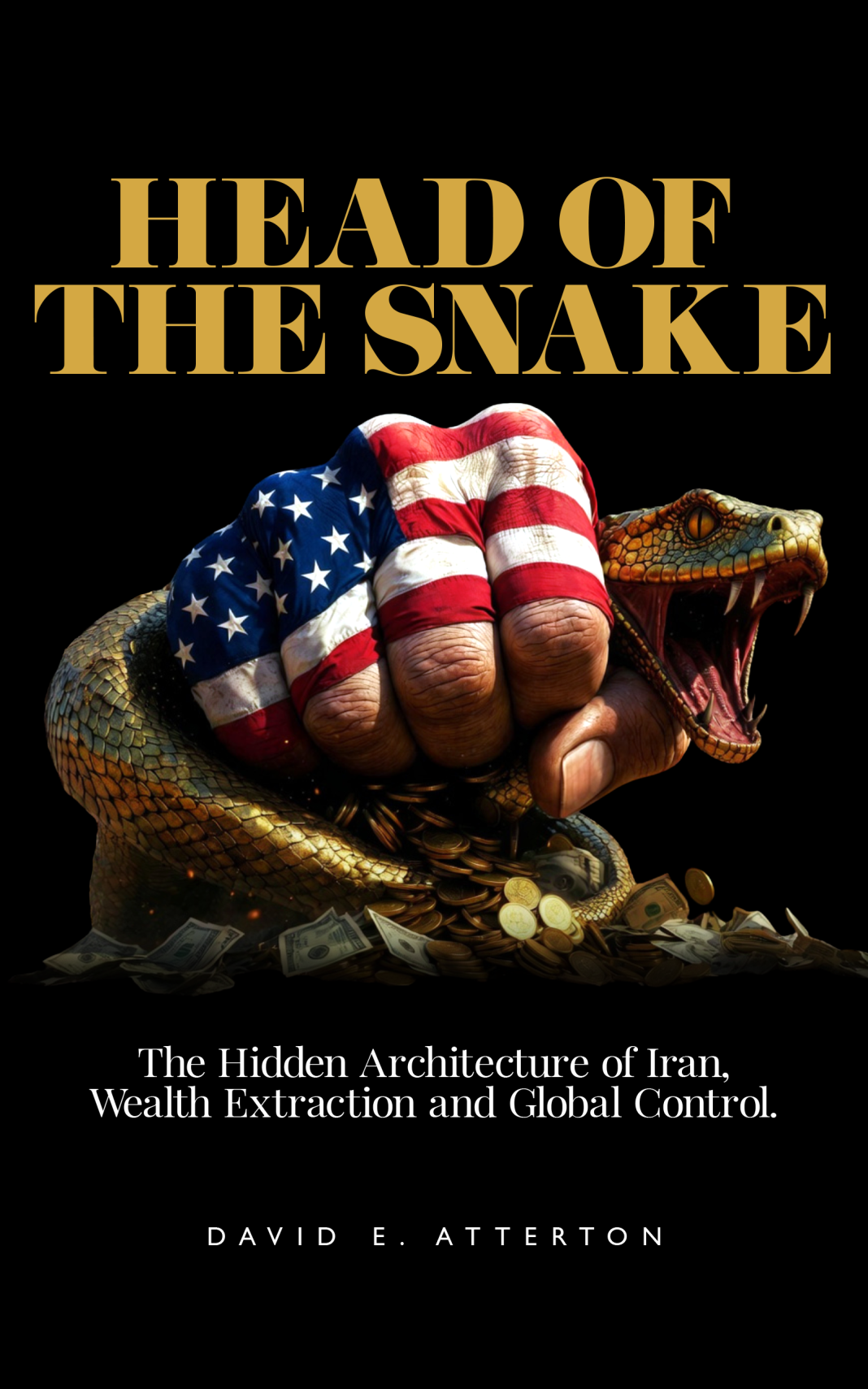
The design behind all of it is mapped in Head of the Snake, and the reference layer is free in the Iraqi dinar resource library.
Follow the daily intel free: Telegram · Facebook · Spotify · Odysee
Seeds of Wisdom RV and Economics Updates Monday Morning 9-21-26
Good Morning Dinar Recaps,
EUROPEAN DIGITAL FINANCE RESET: ECB LAUNCHES BLOCKCHAIN SETTLEMENT SYSTEM AND BEGINS TOKENIZED BOND INVESTING
THE ECB IS BRINGING CENTRAL BANK MONEY DIRECTLY INTO TOKENIZED FINANCIAL MARKETS, CREATING NEW INFRASTRUCTURE FOR DIGITAL SECURITIES, SETTLEMENT AND THE FUTURE OF EUROPEAN FINANCE.
Good Morning Dinar Recaps,
EUROPEAN DIGITAL FINANCE RESET: ECB LAUNCHES BLOCKCHAIN SETTLEMENT SYSTEM AND BEGINS TOKENIZED BOND INVESTING
THE ECB IS BRINGING CENTRAL BANK MONEY DIRECTLY INTO TOKENIZED FINANCIAL MARKETS, CREATING NEW INFRASTRUCTURE FOR DIGITAL SECURITIES, SETTLEMENT AND THE FUTURE OF EUROPEAN FINANCE.
OVERVIEW
The European Central Bank has launched Pontes, a new Eurosystem service that allows wholesale transactions involving tokenized assets to settle in central bank money.
The ECB is also preparing to invest a small portion of its own funds in tokenized securities, initially focusing on euro-denominated public-sector and supranational debt.
The development moves blockchain-based financial infrastructure closer to the core of the traditional banking system, potentially changing how securities are issued, traded, settled and managed across European markets.
KEY DEVELOPMENTS
1. ECB launches Pontes for tokenized financial markets
On September 21, the European Central Bank launched Pontes, a new settlement solution designed to connect distributed-ledger technology platforms with the Eurosystem's existing payment infrastructure.
Pontes allows eligible financial institutions to settle transactions involving tokenized assets using central bank euros rather than relying solely on privately issued stablecoins or tokenized commercial-bank money.
The initial group of participants includes major financial institutions and market infrastructures such as Deutsche Bank, Santander and Clearstream. Additional participants are expected to connect over the coming months.
The ECB describes Pontes as the first step in a broader strategy to make central bank money fit for an increasingly tokenized financial system.
2. The ECB is becoming an investor in tokenized securities
The ECB has also begun preparatory work to invest a small portion of its own funds in tokenized securities.
The initial focus will be on euro-denominated securities issued by euro-area governments, regional governments, agencies and European supranational institutions.
This is significant because the ECB is not merely studying blockchain technology from the sidelines. By becoming an investor, it will gain practical experience with the complete lifecycle of tokenized securities, including trade execution, settlement and portfolio management.
The purchases are expected to settle through Pontes using central bank money.
3. Europe is building the infrastructure around tokenized finance
Tokenization involves representing financial assets as digital tokens recorded on distributed-ledger technology. In theory, the technology can combine multiple stages of a security's lifecycle—issuance, trading, settlement, custody and servicing—into a more integrated digital process.
The ECB says Pontes will expand gradually, with enhanced features and longer operating hours introduced over time. The broader Appia initiative is intended to develop a blueprint for a more integrated tokenized financial ecosystem by 2028.
This means Europe is not treating blockchain simply as a new type of investment technology. It is exploring how the technology could become part of the underlying plumbing of financial markets.
WHY IT MATTERS
Financial systems depend on infrastructure that most people never see: payment rails, settlement systems, clearinghouses, custody arrangements and central-bank money.
Pontes brings one of those foundational elements—central bank settlement money—into the blockchain environment.
That matters because tokenized securities can only become a large-scale part of financial markets if institutions have a reliable way to settle the cash side of those transactions.
The ECB is effectively working to ensure that as financial assets move onto digital ledgers, the euro itself remains connected to that emerging infrastructure.
This is an important distinction between digitalizing financial markets and simply creating new digital assets. The former involves changing how the financial system operates.
WHY IT MATTERS TO FOREIGN CURRENCY HOLDERS
For foreign currency holders, this development is worth watching because the future role of a currency depends partly on the financial infrastructure built around it.
A currency supported by deep capital markets, reliable settlement systems, international liquidity and modern payment infrastructure can remain relevant even as the technology underlying financial transactions changes.
The ECB's move does not announce a euro revaluation, a new exchange rate or a replacement for the U.S. dollar.
But it does demonstrate that Europe is actively building infrastructure designed to keep the euro relevant in an increasingly digital financial system.
For those watching the Global Reset, this is another example of why infrastructure may change long before currency headlines do.
IMPLICATIONS FOR THE GLOBAL RESET
Pillar 1 — Technology
Blockchain and distributed-ledger technology are moving beyond experimentation and into actual financial-market infrastructure. Pontes represents a concrete step toward integrating this technology with central-bank settlement.
Pillar 2 — Payments
The ability to settle tokenized transactions in central bank money creates another pathway for digital financial transactions while keeping the euro connected to the Eurosystem's established payment infrastructure.
Pillar 3 — Assets
Tokenized bonds and other securities could eventually change how financial assets are issued, transferred, settled and managed. The ECB's decision to invest in tokenized securities gives the central bank direct experience with this emerging asset structure.
Pillar 4 — Capital
If tokenized securities become more widely adopted, faster and more automated settlement could change how capital moves through financial markets. The technology could eventually reduce friction between issuance, trading and settlement.
Pillar 5 — Currencies
The euro's future role in digital finance will depend not only on its exchange rate but also on whether it remains embedded in the infrastructure through which international financial assets are transferred and settled.
RUMOR SAFETY REMINDER
The launch of Pontes is not an announcement of a currency revaluation, a Global Reset date or a guaranteed increase in the value of the euro.
It is a documented infrastructure development showing that the ECB is preparing the euro and European financial markets for a more tokenized financial environment.
HOPE, NOT HYPE. FOLLOW THE EVIDENCE.
THE BOTTOM LINE
The ECB's launch of Pontes and its move toward investing in tokenized securities represent a significant shift from studying blockchain technology to building and using financial infrastructure around it.
The larger significance is that central-bank money, digital securities and traditional financial markets are beginning to operate within the same technological framework.
For the Global Reset conversation, the lesson is straightforward: the financial system is evolving from the inside out—and the infrastructure being built today may shape the currencies and markets of tomorrow.
The biggest financial changes do not always arrive as dramatic currency announcements. Sometimes they begin quietly with a new settlement system, a new digital asset structure or a central bank changing the way money moves. Watch the infrastructure, because the infrastructure becomes the system.
Seeds of Wisdom Team
Newshounds News™ Exclusive
SOURCES
~~~~~~~~~~
🌱 A Message to Our Currency Holders🌱
If you’ve been holding foreign currency for many years, you were not foolish.
You were not wrong to believe the global financial system would change.
What failed was not your patience — it was the information you were given.
For years, dates, rumors, and personalities replaced facts, structure, and proof. “This week” predictions created cycles of hope and disappointment that were never based on how currencies actually change.
That is not your failure.
Our mission here is different: • No dates • No rates • No hype • No gurus
Instead, we focus on:
• Verifiable developments • Institutional evidence
• Global financial structure • Where countries actually sit in the process
Currency value changes only come after sovereignty, trade, banking, settlement systems, and fiscal coordination are in place. History and institutions confirm this sequence.
You will see silence. You will see denials. That is not delay — that is discipline.
Protect your identity. Organize your documents. Verify everything.
Never hand your discernment to anyone who cannot show proof.
You deserve truth — not timelines.
Seeds of Wisdom Team
Newshounds News
~~~~~~~~~~
Seeds of Wisdom Team RV Currency Facts Youtube and Rumble
Newshound's News Telegram Room Link
RV Facts with Proof Links Link
RV Updates Proof links - Facts Link
Start Here room with Most Asked Questions Link
Follow the Gold/Silver Rate COMEX
Follow Fast Facts
Seeds of Wisdom Team™ Website
Thank you Dinar Recaps
You asked, we answered: Why Are Central Banks Moving Their Gold Reserves
You asked, we answered: Why Are Central Banks Moving Their Gold Reserves
15 September, 2026
Gold on the move
On 2 September, De Nederlandsche Bank (DNB) announced that it had transferred approximately 86t of gold from New York and Ottawa to London.1 The operation, conducted between March and August 2026, was designed to improve the liquidity and tradability of DNB’s gold reserves and strengthen its preparedness for severe crises.
You asked, we answered: Why Are Central Banks Moving Their Gold Reserves
15 September, 2026
Gold on the move
On 2 September, De Nederlandsche Bank (DNB) announced that it had transferred approximately 86t of gold from New York and Ottawa to London.1 The operation, conducted between March and August 2026, was designed to improve the liquidity and tradability of DNB’s gold reserves and strengthen its preparedness for severe crises.
At first glance, the decision might look like another example of a central bank bringing its gold closer to home. It is more revealing than that. London’s share of Dutch gold reserves rose from 18.1% to 32.1%, surpassing domestic holdings of 30.8% and making London, rather than the Netherlands, the largest single storage location for Dutch gold. The shares held in New York and Ottawa fell to 18.5% each, from 31.3% and 19.7%, respectively.
The mechanics were equally significant. Around 59t was sold in New York and replaced with internationally tradable gold in London. More than 27t of gold was physically transported from North America to DNB’s facility in Zeist, while a similar quantity moved from Zeist to London. This was therefore a strategic reallocation of reserve locations, not simply 86t of bullion being flown across the Atlantic.
The announcement nevertheless highlights a broader shift in central bank thinking on where gold reserves should be stored to balance security, accessibility and liquidity.
From repatriation to location strategy
Gold repatriation is not new.2 In 2000, Germany transferred around 930t from London to Frankfurt, with the Bundesbank subsequently confirming that the gold had been inspected and that some bars were to be recast to meet Good Delivery standard.3 But the issue became much more prominent after the global financial crisis.
Venezuela returned 160t from foreign institutions in 2011–12.4 Germany followed with a second programme, transferring 674t from New York and Paris to Frankfurt between 2013 and 2017.5 The Netherlands moved 122.5t from New York to Amsterdam in 2014,6 while Austria moved 90t from London between 2015 and 2018.7 Later in the decade, Türkiye changed the overseas custody location of part of its gold, while Hungary and Poland moved physical reserves into domestic storage.
The range of countries reviewing or changing their gold storage arrangements has broadened since then. Serbia reportedly returned around 13t between 2021 and 2022.8 India has progressively increased domestic gold holdings since 2022, with the pace of relocation accelerating sharply after March 2023.9 France also changed the geographical distribution of its gold exposure in 2025–26, selling 129t held in New York and acquiring an equivalent quantity of replacement gold in Europe. The Banque de France did not describe the operation as a physical relocation.10
Chart 1: Selected central bank repatriations, strategic relocations and uncompleted proposals since 2000
Dates reflect the announcement or broad programme period. Routes are simplified. Changes in custody position do not always prove physical shipment.
Source: World Gold Council analysis of central bank disclosures and cited public sources
Three waves, but no single motivation
One way to interpret the post-2000 history is through three broad, overlapping waves:
The first wave reflected an early reassessment of reserve location arrangements. Germany’s transfer of around 930t from London to Frankfurt in 2000 showed that the geographical distribution of official gold was already being reconsidered well before repatriation became a prominent geopolitical issue.
In the second wave, from roughly 2011 to 2019, questions of national control and public confidence became more visible. Venezuela presented its decision in terms of greater national control.11 Elsewhere, central banks generally pursued more balanced strategies. Germany wanted half of its reserves in Frankfurt, while Austria also ultimately held half of its gold reserves domestically but retained substantial holdings in London and Switzerland to preserve access to international markets; Poland combined domestic repatriation with a major expansion of its gold reserves.
The third wave is more complex. Heightened geopolitical uncertainty has increased attention on jurisdiction, access during a crisis and exposure to overseas financial infrastructure.12 Yet recent operations by France and DNB show that the answer does not necessarily lie in domestic storage alone. Central banks are increasingly optimising across three considerations: custody risk, physical accessibility and market liquidity.
DNB’s decision captures this evolution particularly well. In 2014, it moved gold from New York to Amsterdam to increase the proportion held domestically. In 2026, it moved gold from North America predominantly to London to make it more readily deployable. These decisions point in different geographical directions, but share the same objective: resilience through a more purposeful distribution of reserves.
Chart 2: Where do you currently vault your gold reserves? (Please select all that apply)
2026 base: All central banks who hold gold (69); advanced economy (16); EMDE (53). Note: Respondents were able to select all options that applied.
Source: World Gold Council, YouGov
What central banks themselves are saying
Our 2026 Central Bank Gold Reserves Survey reinforces this interpretation. The Bank of England remains the most commonly cited vaulting location, used by 57% of respondents, while 49% reported holding at least some gold domestically.
Over the preceding 12 months, 9% of respondents had increased domestic storage, but 10% had diversified their overseas storage locations. Looking ahead, 7% planned to increase domestic storage and 9% expected to diversify further overseas. The latter figure rose from just 2% in the previous survey.
TO READ MORE: https://www.gold.org/goldhub/gold-focus/2026/09/you-asked-we-answered-why-are-central-banks-moving-their-gold-reserves
Iraq Economic News and Points To Ponder Late Sunday Evening 9-20-26
Integrity Calls For The Activation Of Internal Audit And Control In The Implementation Directorates To Protect Public Money
Money and business Economy News – Baghdad The Federal Integrity Commission called for activating the work of auditing and internal control in the implementation directorates to ensure periodic reports on the reality of work in each directorate, which contributes to the preservation of public money and the control of administrative procedures, and reduce the imbalances that may be conducive to the occurrence of corruption cases.
Integrity Calls For The Activation Of Internal Audit And Control In The Implementation Directorates To Protect Public Money
Money and business Economy News – Baghdad The Federal Integrity Commission called for activating the work of auditing and internal control in the implementation directorates to ensure periodic reports on the reality of work in each directorate, which contributes to the preservation of public money and the control of administrative procedures, and reduce the imbalances that may be conducive to the occurrence of corruption cases.
The Authority, in the framework of follow-up of institutional performance; in order to improve it and prevent the fall into the shafts of corruption, worked to form a team from the Department of Prevention; to follow up the reality of work in the Directorate of Implementation of Al-Kadhimiya, where the team monitored a number of observations that included the mechanisms of preservation of executive files and records, procedures for the payment of dues, and the level of digital transformation, as well as the reality of staffing and the service environment provided to the reviewers.
She pointed to the introduction, deterioration and rupture of most of the files and records and not to archive them electronically, which exposes them to damage or the loss of some priorities, and may create an environment for the blackmail of reviewers and the spread of bribery, as well as the limitation of the current electronic procedures to the number of the file, barcodes and the minutes of implementation, stressing the need to work on the comprehensive digital transformation of the work of the Directorate and document the files electronically after its indexing, and the adoption of an electronic mechanism that allows the concerned person or his official agent to see the executive file remotely, to ensure that it is not lost or disappear its priorities, in addition to the use of electronic payment tools.
The Authority, in its report, which sent a copy of it to the Office of the Prime Minister, the General Secretariat of the Council of Ministers and the Ministry of Justice, stressed the need to strengthen the corridors of the Directorate with the guidance boards for the mechanism of completion of the transaction and the required priorities and the amount of the fee; to introduce the reviewers to the procedures in force and ensure the transparency of dealing and speed of completion, as it monitored the lack of clear panels that clarify the mechanism and procedures of the executive dialwork, which leads to confusion of the reviewers and their lack of knowledge of the procedures followed.
The report monitored the existence of a strong momentum for the reviewers in the corridors of the Directorate, and a great difficulty in completing their transactions, as a result of the reality of the building and the small number of employees, as well as the momentum in the Follow-up Division, and the inadequacy of the place to receive the large numbers of reviewers, which may create an environment for the use of bribes, indicating the lack of administrative staff of the judicial outlet, forcing him to carry out archiving work and enter and audit information, and cause momentum and delay in the completion of transactions, and push citizens to review the Directorate more than once.
He also revealed that there is a delay in sending dues to some ministries for more than two months, despite being deducted from employees on a monthly basis, especially the dues (the third Karkh and Tarmiya education), which causes momentum in the directorate, as a result of citizens’ reviews to inquire about them, as well as the delay in the payment of benefits for child expenses by ministries for more than two months, stressing the need for ministries to send financial dues to their employees within the specified dates.
She pointed out that the fifth month's dues have not been paid to the Ministry of Defense until the date of the preparation of the report, which exceeds the number of its files (1000) due to the procedures followed in the Directorate, represented by (analysis, cutting, registration, deportation, downloading and auditing), in addition to the small number of specialized employees, calling for addressing the reasons for the delay and strengthening the staff to ensure the speedy completion of those procedures, and in the side of the procedures followed on the debtors, the report monitored the weakness of coordination between the divisions of the Directorate with regard to the audit of debtors' files and the assurance of payment
https://www.economy-news.net/content.php?id=74113
Parliamentary Finance monitors irregularities in the final accounts: We will host the Office of Financial Supervision
Money and business Economy News – Baghdad The Parliamentary Finance Committee revealed the close hosting of the Federal Financial Supervisory Office and the concerned authorities to discuss irregularities monitored by the Committee in the final accounts for the years from 2012 to 2015.
A member of the committee, MP Dylan Eid al-Ghafoor, said that "the committee recently held a meeting chaired by the Chairman of the Finance Committee, MP Uday Awad al-Tamimi, to discuss the report of the draft law of the final accounts for the fiscal years 2012, 2013, 2014 and 2015, in preparation for submission to the second reading in the House of Representatives."
She added that "the discussions revealed the existence of a number of irregularities in those accounts, and as a result there will be hosting the Federal Office of Financial Control, to identify the irregularities monitored by the Committee and clarify them, in order to complete the project and present it to the House of Representatives and vote on it."
Abdul Ghafoor explained that "the Finance Committee discussed the need to be a close hosting of the Office of Financial Supervision, to provide its observations on the existing violations, provided that in light of this, a report is prepared and submitted to the House of Representatives."
She said that "the report will be submitted to the Council for the purpose of discussing these irregularities within the Finance Committee, and then complete the procedures and vote on them within the House of Representatives."
On the delay of the final accounts, she explained that "there are years since 2012 until now did not discuss the final accounts," stressing that "this is contrary to the law and the law of financial management, as well as legal articles that oblige the government to submit the final accounts to the House of Representatives, and oblige the House of Representatives to discuss and vote on them."
She added that "there is a legal article within the Financial Management Law regulating this aspect, as well as the law of the Office of Financial Supervision and other regulatory laws related to the subject."
Abdul Ghafour said: "The Financial Management Law, the Ministry of Finance Law and the Financial Control Bureau Law are all laws related to the final accounts and the regulation of the financial affairs of the state."
She pointed out that "it is assumed that there is a final account for each budget, because the final accounts clarify how the money was spent, where it was spent, and the extent of commitment to the doors of the budget."
On the law of borrowing, Abdul Ghafour explained that "the objection expressed by the Finance Committee is not related to the law of borrowing itself, but to the project or proposal that exists within the Committee and the need to study before proceeding with it."
She added that "the subject needs to be studied from and studied for the financial feasibility, which was discussed by the Finance Committee," noting that "any borrowing requires knowing the actual need of the state, how to pay it, the size of the financial obligations that will result, and whether the budget can bear these obligations."
She stressed that "the committee discussed the subject and asked to prepare a clear and integrated financial study before proceeding with it https://www.economy-news.net/content.php?id=74107
Volkswagen, Mercedes And BMW Continue To Lose To Global Rivals
Money and business Economy News - Follow-up Germany’s top three automakers continued to lose market share to global rivals in the first half of this year, according to an analysis by consulting firm EY.
The combined total revenue of Volkswagen, Mercedes-Benz and BMW fell to about $325 billion (€284 billion), down 2.9% from a year earlier, EY reported.
In contrast, the other 19 global car groups surveyed by EY recorded a revenue increase of 3.6%, according to the German news agency DPA.
According to the data, this represents the third consecutive decline in revenue for the first half of German automakers.
According to EY’s analysis, 15 car companies recorded an increase in revenue, while the three German groups came in 16th, 17th and 19th, and Tesla achieved the strongest growth rate, followed by Suzuki and Geely.
The weakness of the German car industry is also reflected in profits, with earnings before interest and tax credits for German car manufacturers falling 19 percent to $14.9 billion (€13 billion) in the first half of the year