
MilitiaMan & Crew- IRAQ DINAR UPDATE-Iraq & US Lay Groundwork for New Economic Phase – Washington Visit Update
MilitiaMan & Crew- IRAQ DINAR UPDATE-Iraq & US Lay Groundwork for New Economic Phase – Washington Visit Update
7-15-2026
The Crew: Samson, PompeyPeter, Petra, Daytrader, Sunkissed, GIGI and Militia Man
No drama. No intrigue. No songs and dances. Just straight, factual news that I read and interpret to the best of my ability after being an avid Dinar investor and insanely obsessed Dinarian for over 15 years.
Follow MM on X == https://x.com/Slashn
MilitiaMan & Crew- IRAQ DINAR UPDATE-Iraq & US Lay Groundwork for New Economic Phase – Washington Visit Update
7-15-2026
The Crew: Samson, PompeyPeter, Petra, Daytrader, Sunkissed, GIGI and Militia Man
No drama. No intrigue. No songs and dances. Just straight, factual news that I read and interpret to the best of my ability after being an avid Dinar investor and insanely obsessed Dinarian for over 15 years.
Follow MM on X == https://x.com/Slashn
Be sure to listen to full video for all the news……..
Seeds of Wisdom RV and Economics Updates Wednesday Afternoon 7-15-26
Good Afternoon Dinar Recaps,
Iran Threatens Wider Shipping Disruptions as Peace Talks Continue Under Mounting Pressure
Iran warned that additional strategic maritime routes could become targets as military tensions with the United States intensified, placing renewed pressure on global energy markets even as diplomatic negotiations continue.
Good Afternoon Dinar Recaps,
Iran Threatens Wider Shipping Disruptions as Peace Talks Continue Under Mounting Pressure
Iran warned that additional strategic maritime routes could become targets as military tensions with the United States intensified, placing renewed pressure on global energy markets even as diplomatic negotiations continue.
Overview
Iran warned it could disrupt additional shipping corridors beyond the Strait of Hormuz if military pressure continues.
Peace negotiations remain active, but the interim 14-point Memorandum of Understanding (MoU) is under growing strain following renewed military operations.
Oil prices climbed as investors weighed the risk of broader disruptions to global energy supplies.
Key Developments
1. Iran Expands Maritime Warning
Iran's Islamic Revolutionary Guard Corps (IRGC) warned that regional energy exports would either remain available to everyone or to no one, suggesting additional maritime routes could become targets if military operations continue.
Analysts believe the warning extends beyond the Strait of Hormuz and could include the strategically important Bab el-Mandeb Strait, a critical shipping route connecting the Red Sea and Gulf of Aden.
2. Military Pressure Continues Despite Diplomacy
The United States has continued military operations against Iranian targets while maintaining pressure on Tehran's military capabilities. At the same time, Iran has continued threatening retaliation against regional shipping and U.S. interests.
These developments illustrate the fragile balance between ongoing diplomacy and continued military confrontation.
3. Peace Talks Continue but the MoU Is Under Strain
Negotiations have not collapsed. Regional mediators, including Oman, Qatar, and Pakistan, continue working to keep both sides engaged.
However, the 14-point Memorandum of Understanding, which originally established the ceasefire framework and outlined negotiations toward a permanent agreement, has become increasingly fragile. Both governments have accused one another of failing to fully implement commitments, while unresolved disputes over Iran's nuclear program, sanctions relief, and maritime security continue to delay meaningful progress.
Why It Matters
The latest escalation demonstrates how quickly geopolitical tensions can threaten the world's most important energy transportation routes. Any disruption beyond the Strait of Hormuz would affect global oil supplies, shipping costs, inflation, and international trade, increasing uncertainty for businesses and financial markets worldwide.
Although diplomacy continues, renewed military activity reminds investors that the path toward a lasting settlement remains uncertain.
Why It Matters to Foreign Currency Holders
For foreign currency holders following developments surrounding the Global Financial Reset, stability in the Middle East remains an important economic indicator.
Extended conflict could strengthen inflationary pressures, delay interest-rate adjustments, increase volatility across currency markets, and complicate broader efforts to modernize the international financial system. Conversely, successful negotiations could improve market confidence, stabilize energy prices, and support global economic stability.
Implications for the Global Reset
Pillar 1: Debt
Higher energy prices could prolong inflationary pressures, making it more difficult for central banks to reduce interest rates and ease global debt burdens.
Pillar 2: Trade
Any disruption to major shipping corridors threatens international supply chains, increasing transportation costs and slowing global commerce.
Pillar 3: Energy
The Strait of Hormuz and surrounding maritime routes remain among the world's most critical energy corridors. Continued instability could significantly impact global oil and liquefied natural gas supplies.
Looking Ahead
Diplomatic channels remain open despite renewed military activity, with regional mediators continuing efforts to preserve the negotiating process.
The immediate focus remains on protecting international shipping, reducing military escalation, and preserving enough confidence in the existing MoU to allow negotiations on Iran's nuclear program, sanctions relief, and long-term regional security to continue.
This is not just politics—it is global finance restructuring before our eyes.
Seeds of Wisdom Team
Newshounds News™ Exclusive
Sources
~~~~~~~~~~
Seeds of Wisdom Team RV Currency Facts Youtube and Rumble
Newshound's News Telegram Room Link
RV Facts with Proof Links Link
RV Updates Proof links - Facts Link
Start Here room with Most Asked Questions Link
Follow the Gold/Silver Rate COMEX
Follow Fast Facts
Seeds of Wisdom Team™Website
Thank you Dinar Recaps
Iraq Economic News and Points To Ponder Wednesday Morning 7-15-26
US Investment Dominates Al-Zaidi's Washington Meetings
2026-07-15 02:42 Shafaq News- Washington Iraqi Prime Minister Ali al-Zaidi pressed for expanded US financing and investment in Iraq across a series of meetings in Washington, his media office said on Wednesday.
US Investment Dominates Al-Zaidi's Washington Meetings
2026-07-15 02:42 Shafaq News- Washington Iraqi Prime Minister Ali al-Zaidi pressed for expanded US financing and investment in Iraq across a series of meetings in Washington, his media office said on Wednesday.
Al-Zaidi discussed with Ben Black, chief executive of the US International Development Finance Corporation (DFC), the institution's participation in infrastructure reconstruction and financing partnerships across the energy, transportation, agriculture, digital economy, and services sectors. Black affirmed readiness to enter the Iraqi market and to contribute to the Iraqi Development Fund, a state investment vehicle.
The Iraqi government announced the fund last month at a lower figure. Government spokesman Haidar al-Aboudi said the Council of Ministers had approved a development fund project backed by international guarantees and contributions valued at $150 billion, intended to deliver economic stability through investment.
https://www.shafaq.com/en/Economy/US-investment-dominates-al-Zaidi-s-Washington-meetings
Oil Extends Gains On Iran-US Escalation
2026-07-15 02:03 Shafaq News- Singapore Oil extended gains on Wednesday as President Donald Trump reimposed a naval blockade on all Iranian ports and Tehran launched strikes on U.S. infrastructure in the region.
Brent futures climbed 99 cents, or 1.2%, to $85.72 a barrel at 0400 GMT. West Texas Intermediate futures gained 64 cents, or 0.8%, to $79.98 a barrel.
Oil prices closed up 2% at a one-month high on Tuesday as attacks exacerbated a supply disruption in the Strait of Hormuz, through which about a fifth of the world's oil and liquefied natural gas passed prior to the beginning of the U.S.-Israeli war on Iran.
"While the physical oil market remains adequately supplied, any further escalation involving the Strait of Hormuz or additional sanctions on Iranian exports could quickly tighten market sentiment and add further risk premiums," said Priyanka Sachdeva, senior market analyst at Phillip Nova.
Early on Wednesday, the U.S. also began a fresh round of strikes "to continue degrading Iranian capabilities used to attack commercial shipping in the Strait of Hormuz," the U.S. military said.
Tehran says it has again closed the strait after hostilities between Iran and the U.S. reignited last week, fraying an already fragile truce reached in June after several months of fighting.
"I'll save the energy targets for last, but ultimately we'll hit energy targets," Trump told Fox News in an interview aired Tuesday night on "Special Report with Bret Baier".
Iran's army said early on Wednesday that it had launched drone attacks against U.S. positions at Jordan's Azraq base. There was no immediate comment from the Pentagon.
Iran's Islamic Revolutionary Guard Corps said they targeted weapons and storage facilities in Bahrain and Kuwait. Reuters could not immediately verify the reports.
The flare-up over the last few days has heightened doubts that a memorandum of understanding signed last month would lead to a permanent halt to the war, which has engulfed Iran's neighbors.
"The chances of oil moving back toward $100 in the reasonably near term are still meaningful if hostilities intensify which damages energy infrastructure around the Gulf," Tim Waterer, chief market analyst at KCM Trade said, noting Brent prices could remain at $75-$80 a barrel if diplomatic efforts helped reopen the strait.
"For now, the risk premium is still embedded, but it's not a one-way bet given that there remain incentives for both sides to find a diplomatic solution." (Reuters)
https://www.shafaq.com/en/Economy/Oil-extends-gains-on-Iran-US-escalation
Dollar Slips In Baghdad And Erbil
2026-07-15 03:48 Shafaq News- Baghdad/ Erbil The US dollar opened Wednesday's trading lower in Iraq, hovering around 153,000 dinars per 100 dollars in Baghdad and Erbil.
According to Shafaq News market survey, the dollar traded in Baghdad's Al-Kifah and Al-Harithiya exchanges at 153,300 dinars per 100 dollars, down from Tuesday's 153,700 dinars.
In the Iraqi capital, exchange shops sold the dollar at 153,750 dinars and bought it at 152,750 dinars.
In Erbil, selling prices stood at 153,150 dinars and buying prices at 153,050 dinars.
https://www.shafaq.com/en/Economy/Dollar-slips-in-Baghdad-and-Erbil-7-6
Basra Crude Jumps More Than 8% On Oil Rally
2026-07-15 04:25 Shafaq News- Baghdad Iraq's Basra Heavy and Basra Medium crude posted sharp gains on Wednesday, rising by more than 8% as escalating geopolitical tensions across the region drove global oil prices higher.
Basra Heavy climbed $4.91, or 9.25%, to $57.99 a barrel, while Basra Medium gained the same amount, rising 8.87% to $60.29 a barrel.
The surge coincided with gains in global oil markets. Brent crude futures rose 1.53% to $86.03 a barrel, while US West Texas Intermediate (WTI) crude advanced 1.27% to $80.35.
Regional benchmark crudes also moved higher, with the UAE's Murban crude climbing 4.85% to $81.93 a barrel and Saudi Arabia's Arab Light crude jumping 7.61% to $77.36.
In contrast, the OPEC Reference Basket slipped 1.52% to $75.09 a barrel, while Dubai crude declined to $69.21 a barrel.
https://www.shafaq.com/en/Economy/Basra-crude-jumps-more-than-8-on-oil-rally
Gold Prices Hold Steady In Baghdad And Erbil
2026-07-15 05:10 Shafaq News- Baghdad/ Erbil On Wednesday, gold prices steadied across Baghdad and Erbil, hovering around 860,000 IQD per mithqal, according to a Shafaq News market survey.
Gold prices on Baghdad's Al-Nahr Street recorded a selling price of 864,000 IQD per mithqal (equivalent to five grams) for 21-carat gold, including Gulf, Turkish, and European varieties, with a buying price of 860,000 IQD, unchanged from Tuesday.
The selling price for 21-carat Iraqi gold stood at 834,000 IQD, with a buying price of 830,000 IQD.
In jewelry stores, 21-carat Gulf gold ranged between 865,000 and 875,000 IQD per mithqal, while Iraqi gold sold for between 835,000 and 845,000 IQD.
In Erbil, 22-carat gold was sold at 915,000 IQD per mithqal, 21-carat gold at 874,000 IQD, and 18-carat gold at 749,000 IQD.
https://www.shafaq.com/en/Economy/Gold-prices-hold-steady-in-Baghdad-and-Erbil-4
Seeds of Wisdom RV and Economics Updates Wednesday Morning 7-15-26
Good Morning Dinar Recaps,
UK and US Align on Stablecoin Rules as Cross-Border Digital Finance Moves Forward
The United Kingdom and the United States have announced a joint framework supporting regulated stablecoins for cross-border finance, signaling deeper cooperation on digital payments while U.S. lawmakers continue debating the CLARITY Act.
Good Morning Dinar Recaps,
UK and US Align on Stablecoin Rules as Cross-Border Digital Finance Moves Forward
The United Kingdom and the United States have announced a joint framework supporting regulated stablecoins for cross-border finance, signaling deeper cooperation on digital payments while U.S. lawmakers continue debating the CLARITY Act.
Overview
The UK and U.S. have agreed on key principles governing regulated stablecoins used in cross-border finance.
The framework emphasizes reserve protection, redemption rights, and legal safeguards designed to strengthen confidence in digital payments.
The agreement comes as U.S. lawmakers continue considering the CLARITY Act, legislation that could reshape America's digital asset regulatory framework.
Key Developments
1. UK and US Establish Common Stablecoin Principles
The two governments agreed that properly regulated stablecoins can help modernize cross-border payments, financial settlements, and capital markets. Their joint framework seeks to encourage innovation while reducing regulatory fragmentation between two of the world's largest financial centers.
Officials said internationally aligned standards could improve efficiency while supporting broader adoption of digital financial infrastructure.
2. Reserve Protection Becomes a Central Priority
The agreement calls for stablecoins to be fully backed by high-quality liquid reserves, with clear custody rules and segregation of customer assets.
The framework also emphasizes timely redemption rights and legal protections that would give stablecoin holders priority claims on reserve assets should an issuer become insolvent.
3. CLARITY Act Debate Continues
The joint announcement arrives as lawmakers continue debating the proposed CLARITY Act, which seeks to establish a clearer regulatory framework for digital assets within the United States.
Banking organizations have expressed concerns that unclear provisions could encourage customers to move funds from traditional bank deposits into stablecoins, potentially increasing pressure on smaller financial institutions.
Why It Matters
The agreement reflects a growing international recognition that digital payment systems are becoming an increasingly important part of global finance. Common regulatory standards could reduce uncertainty for businesses, encourage innovation, and improve the efficiency of international payments and settlements.
At the same time, policymakers continue balancing financial innovation with consumer protection and banking system stability as digital assets become more integrated into traditional financial markets.
Why It Matters to Foreign Currency Holders
For foreign currency holders and those following developments surrounding a potential Global Financial Reset, the expansion of regulated stablecoins represents another step toward a more digital and interconnected international financial system.
While stablecoins are not replacing sovereign currencies, their growing use in international payments could accelerate modernization of cross-border settlement systems, influence future payment infrastructure, and complement broader financial reforms taking place around the world.
Implications for the Global Reset
Pillar 1: Technology
Regulated stablecoins support the ongoing modernization of cross-border payment infrastructure, allowing faster, lower-cost international transactions while encouraging financial innovation.
Pillar 2: Trade
More efficient digital payment systems could improve international commerce by reducing settlement times, lowering transaction costs, and strengthening global trade connectivity.
Looking Ahead
Attention will now focus on whether the United States finalizes comprehensive digital asset legislation and whether additional countries adopt similar regulatory standards.
If more major economies coordinate stablecoin regulations, the result could be a more integrated global payment system that supports faster settlement, increased financial innovation, and greater cross-border economic activity.
This is not just politics—it is global finance restructuring before our eyes.
Seeds of Wisdom Team
Newshounds News™ Exclusive
Sources
~~~~~~~~~~
🌱 A Message to Our Currency Holders🌱
If you’ve been holding foreign currency for many years, you were not foolish.
You were not wrong to believe the global financial system would change.
What failed was not your patience — it was the information you were given.
For years, dates, rumors, and personalities replaced facts, structure, and proof. “This week” predictions created cycles of hope and disappointment that were never based on how currencies actually change.
That is not your failure.
Our mission here is different: • No dates • No rates • No hype • No gurus
Instead, we focus on:
• Verifiable developments • Institutional evidence
• Global financial structure • Where countries actually sit in the process
Currency value changes only come after sovereignty, trade, banking, settlement systems, and fiscal coordination are in place. History and institutions confirm this sequence.
You will see silence. You will see denials. That is not delay — that is discipline.
Protect your identity. Organize your documents. Verify everything.
Never hand your discernment to anyone who cannot show proof.
You deserve truth — not timelines.
Seeds of Wisdom Team
Newshounds News
~~~~~~~~~~
Seeds of Wisdom Team RV Currency Facts Youtube and Rumble
Newshound's News Telegram Room Link
RV Facts with Proof Links Link
RV Updates Proof links - Facts Link
Start Here room with Most Asked Questions Link
Follow the Gold/Silver Rate COMEX
Follow Fast Facts
Seeds of Wisdom Team™Website
Thank you Dinar Recaps
Iraq Economic News and Points To Ponder Late Tuesday Evening 7-14-26
Trump Praises Al-Zaidi During His Reception At The White House: This man is the best representative of the Iraqis, and we love Iraq
Washington - One News - 7/15/2026 (Iraq) US President Donald Trump received Iraqi Prime Minister Ali al-Zaidi at the White House, at the start of al-Zaidi’s first official visit to Washington since assuming the premiership.
Trump Praises Al-Zaidi During His Reception At The White House: This man is the best representative of the Iraqis, and we love Iraq
Washington - One News - 7/15/2026 (Iraq) US President Donald Trump received Iraqi Prime Minister Ali al-Zaidi at the White House, at the start of al-Zaidi’s first official visit to Washington since assuming the premiership.
During the reception ceremony, Trump addressed al-Zaidi, saying, “He is a good person who came to his position through elections, and he loves the Iraqi people.”
Al-Zaidi’s visit to Washington comes at the head of a governmental and economic delegation, where he discussed with the US President a number of political, security and economic issues, in addition to discussing ways to strengthen bilateral relations and expand cooperation between the two countries. https://1news-iq.net/ترامب-يشيد-بالزيدي-خلال-استقباله-في-ال/
Government Advisor: The 2027 Budget Will Be Ready On Schedule In October.
Economy News — Baghdad The Prime Minister’s financial advisor, Mazhar Muhammad Salih, revealed that the government will begin preparing the draft federal budget law for 2027 during the month of July, in accordance with the provisions of the Financial Management Law, indicating that the upcoming budget will differ from its predecessors by adopting an economic vision aimed at stimulating investment, empowering the private sector, and establishing sovereign funds to support infrastructure projects, while continuing to address internal debt and reduce financial waste.
On the other hand, Saleh stressed that combating corruption and recovering related funds are a fundamental pillar for enhancing the efficiency of the national economy, reducing investment costs, and supporting the path of sustainable development.
Saleh said in a statement to the official newspaper that the amended Financial Management Law No. (6) of 2019 obliges the Ministry of Finance to begin preparing the draft budget during the month of July, with the draft to be completed in the month of September, and then presented to the Council of Ministers for discussion and approval before being referred to the House of Representatives during the month of October, for the purpose of discussion and legislation.
He added that the 2026 budget was affected by the economic conditions and challenges that accompanied the developments in the Strait of Hormuz, indicating that the deficit is measured by the size of the internal debt, which exceeded 100 trillion dinars, but the government has a clear financial policy to address this issue through reform measures that contribute to strengthening the resource economy and diversifying sources of revenue.
Saleh pointed out that Iraq is still facing the effects of accumulated financial waste since 2003, stressing that the state is moving towards tightening control over public funds and not allowing the waste of any financial resource, in order to enhance financial stability and preserve national wealth.
He explained that the 2027 budget will be distinctive because it is consistent with the government’s economic vision, as it will give more space for private sector participation and includes the establishment of sovereign funds dedicated to financing infrastructure projects, which will support sustainable development and enhance economic growth during the next stage.
Regarding combating corruption and recovering related funds, Saleh stressed that they represent a fundamental pillar for enhancing the efficiency of the national economy, reducing investment costs, and supporting the path of sustainable development, noting that eliminating manifestations of corruption will reflect positively on the financial and economic performance of the state.
The Prime Minister’s financial advisor said that it is difficult to accurately determine the true size of the funds related to corruption, but estimates from governance circles in the international business environment point to what is known as the “cost of Iraq” on projects and investments, which in some cases may reach about 45% of the implementation cost, as a result of multiple factors, most notably extortion and bribery and the resulting decrease in the efficiency of administrative procedures.
He explained that the success of the government's anti-corruption program will gradually contribute to reducing this unproductive cost, bringing the cost of investment closer to its fair levels based on efficiency and integrity, which will enhance the attractiveness of local and foreign investment and reduce the cost of implementing economic and social development projects.
He added that activating the role of oversight and auditing bodies, especially in the planning, implementation and investment spending stages, represents a fundamental pillar for reducing financial waste and establishing standards of transparency and good governance, which supports the path of sustainable development in the country, with the lowest costs and the highest returns and benefits for the national economy.
Saleh pointed out that some circles estimate the amount of money related to corruption at about $300 billion, distributed between real estate, financial and cash money inside and outside Iraq, indicating that recovering these funds is an important factor in alleviating the current financial burdens.
He explained that combating corruption is not limited to recovering funds, but also contributes to improving overall economic performance by reducing costs and increasing the efficiency of implementing economic activities within an environment free from corruption factors, which will positively impact reducing the deficit and public debt directly and indirectly, by enhancing the efficiency of the financial and economic performance of public budgets and the country’s resources in the future. https://www.economy-news.net/content.php?id=71300
International Tensions Threaten Iraqi Markets: Warnings Of Inflation And Rising Import Costs
Baghdad Today – Baghdad Economic expert Abbas Al-Shatri confirmed on Tuesday (July 14, 2026) that successive international crises, whether political, military or economic, are directly reflected in the movement of Iraqi trade, given Iraq’s connection to global markets and its heavy reliance on imports to meet the needs of the local market.
Al-Shatri told Baghdad Today that any disruption to global supply chains or an increase in shipping and insurance costs and fluctuations in energy prices leads to an increase in the prices of imported goods, which is reflected in inflation rates and the purchasing power of citizens, as well as delaying the arrival of goods and raw materials needed for the industrial and commercial sectors.
He explained that Iraq has a network of trading partners in Asia, Europe and neighboring countries, but foreign trade is still concentrated in a limited number of markets, which makes the economy more vulnerable to risks when those countries are exposed to crises, sanctions or political unrest, stressing that diversifying trading partners is a strategic necessity to enhance economic stability.
He added that regional sanctions, depending on their nature and the countries targeted, often lead to disruptions in some import and financial transfer channels, higher transportation costs, as well as the possibility of a temporary shortage of some goods, which raises prices and increases pressure on local markets.
Al-Shatri pointed out that the government’s ability to cope with external shocks depends on the speed of response and the efficiency of economic policies, through diversifying import sources, building a strategic stock of basic commodities, supporting local production, developing alternative trade outlets, in addition to strengthening foreign reserves and maintaining monetary and financial stability.
He stressed that the most likely scenario in the event of escalating international tensions is a continued rise in trade and transportation costs, increased inflationary pressures, and a possible slowdown in business activity in some sectors, coinciding with fluctuations that the oil market may witness, which will be reflected in the state’s public revenues.
He added: The Iraqi economy has the tools to deal with external shocks, but it needs to accelerate economic reform programs, reduce dependence on imports, and expand the local production base, which will enhance the economy's resilience and limit the impact of international crises on Iraqi markets.
The Iraqi economy is closely linked to global markets, whether through the import of goods and raw materials or through the general budget's reliance mainly on oil revenues.
With the rise of international crises and the fluctuation of global supply chains in recent years, there have been repeated calls to diversify trading partners, support local production, and build strategic stockpiles to reduce the impact of external variables on markets and the national economy. https://baghdadtoday.news/303264-.html
Wed. Iraq News Posted by Tishwash at TNT 7-15-2026
TNT:
Tishwash: Hegseth welcomes Al-Zaidi
US Secretary of Defense Pete Hegseth received Prime Minister Ali al-Zaidi at the ministry headquarters.
Prior to that, the Prime Minister held official talks with US President Donald Trump , and Al-Zaidi stressed that Iraq needs a strategic partner the size of the United States to overcome economic challenges.
Trump said his country supports al-Zaidi's government in promoting stability and economic steps.
TNT:
Tishwash: Hegseth welcomes Al-Zaidi
US Secretary of Defense Pete Hegseth received Prime Minister Ali al-Zaidi at the ministry headquarters.
Prior to that, the Prime Minister held official talks with US President Donald Trump , and Al-Zaidi stressed that Iraq needs a strategic partner the size of the United States to overcome economic challenges.
Trump said his country supports al-Zaidi's government in promoting stability and economic steps. link
Tishwash: Al-Aboudi: The Washington visit lays the foundation for a new economic phase in Iraqi-American relations.
Government spokesman Haider al-Aboudi revealed on Tuesday the schedule for Prime Minister Ali Faleh al-Zaidi’s visit to Washington, stating that he will visit Congress and the Treasury Department, as well as American financial institutions.
He also indicated that the meeting between the Prime Minister and the US President today was positive.
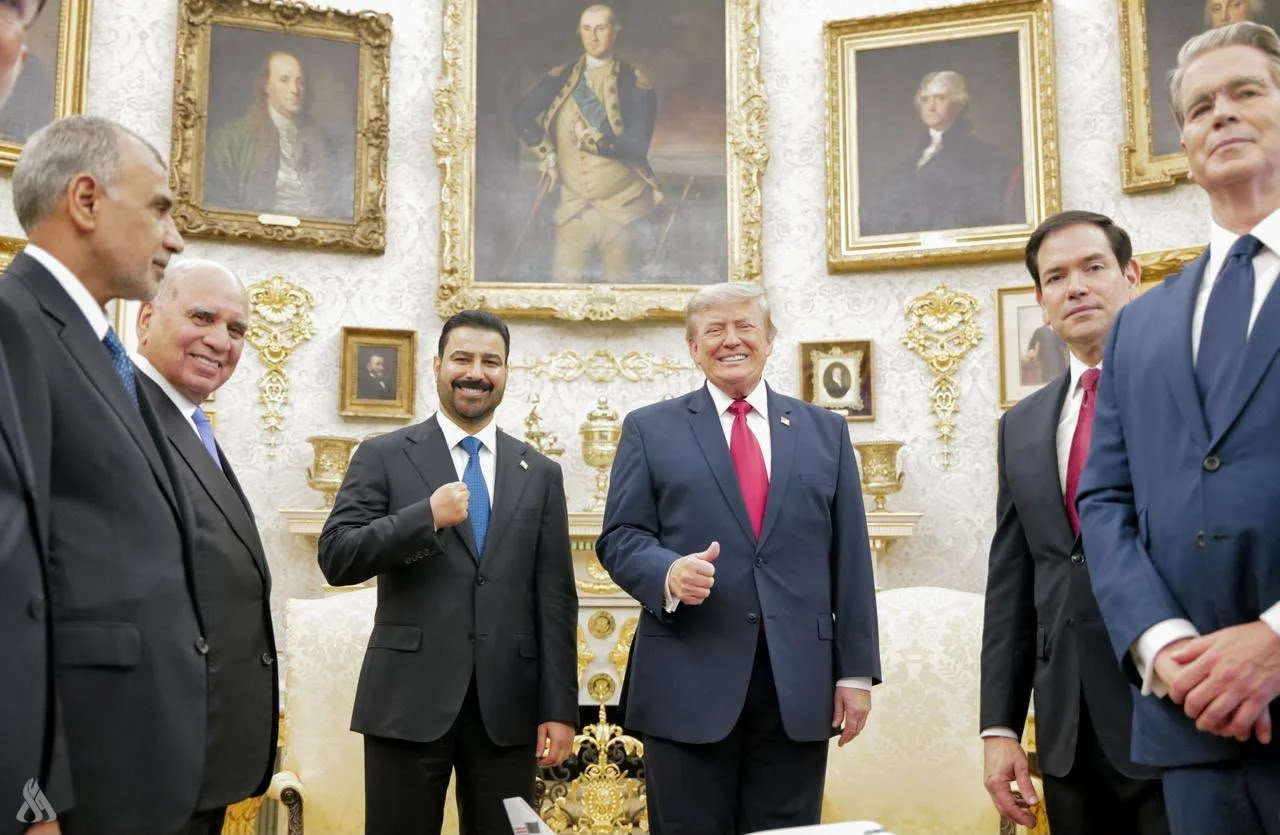
Al-Aboudi said in a statement to the program “The Scene” which is broadcast on Al-Iraqiya News and followed by the Iraqi News Agency (INA): “The visit of the Prime Minister, at the head of a ministerial delegation and businessmen, to the United States is exceptional,” indicating that “the positive event today in Iraqi-American relations is moving from the area of security to the economy and investment.”
He added that “the Iraqi delegation adopts an economic doctrine aimed at securing Iraq’s economic activity and exporting Iraqi oil by creating the largest space for investment and development,” noting that “energy and financial matters were present in the atmosphere of understanding and agreement between the Prime Minister and the US President today.”
He pointed out that “the atmosphere of the meeting between the Prime Minister and the US President today was positive, and all indicators of interaction were present between the two sides,” explaining that “the government’s ministerial program adopted, from the first moment, the strengthening of Iraq’s foreign relations, especially with internationally influential countries, with the aim of growth and economic stimulation.”
He added that “Iraq is far from the axes of conflict, and does not interfere in the affairs of other countries, and the government proceeds from these principles to preserve the interests of the Iraqi state,” stressing that “the economy represents the biggest challenge for the Iraqi state.”
He explained that “what we have observed, and what observers have noted, is that the United States values its partnerships with Iraq,” pointing out that “the government headed by al-Zidi adopts the economy as a fundamental pillar of the relationship with Washington.”
He explained that “we have a date on September 30, after which the American military presence will end, and with it will begin developmental requirements represented by long-term economic partnerships, through stimulating the investment environment and providing stable climates for investment,” noting that “the Iraqi government is moving towards comprehensive reform.”
He stressed that “Al-Zaidi’s visit to Washington represents the most important visit to Iraq over the successive governments since 2003 until now, as it establishes a new page, and does not make security the focus of this relationship, but rather makes the economy the focus of the relationship,” noting that “the warm reception that everyone pointed out reflects the systematic impact of the Iraqi government in dealing with complex issues.”
He noted that “the media coverage of al-Zaidi’s meeting with Trump, in general, was remarkable, as the Iraqi, Arab and foreign press paid great attention to the meeting.”
Regarding the visit schedule, Al-Aboudi explained that “the Prime Minister’s visit schedule began today with a meeting with US President Donald Trump, followed by a visit to the Department of Defense, and there will be other stops including Congress, as well as the Treasury Department, and the US institutions responsible for funding.”
He added that “in the coming hours there will be a reconciliation of views at the level of the Central Bank and financial institutions, and this understanding will culminate in a positive signing for the benefit of Iraqi financial institutions,” stressing that “the visit will witness understandings and meetings that will benefit the Iraqi financial system.link
************
Tishwash: 10 key points from the night of Trump and Al-Zaidi: “No fear…wait for me at the end of the year.”
Network 964 summarizes the top ten points from the live broadcast from the Oval Office during a major half-hour meeting between Iraqi Prime Minister Ali Zaidi and US President Donald Trump, attended by senior officials and international media. The 30 minutes appeared to be filled with surprises, unlike previous summits between Baghdad and Washington.
1 - Trump, at the entrance to the White House, points to al-Zaidi: He won... I love Iraq... For now, that's all I have to say.
2 - Trump's first words to al-Zaidi: You are a handsome young man and a winner in Iraq.
3 - Trump: “I envy al-Zaidi”... He will remain in office for a long time and has accomplished a lot.
4 - Trump remembers Maliki and says to Al-Zaidi: There is a high level of chemistry between us and I was keen for you to win.
5 - Trump: Iraqis' feelings towards me have improved, and thank you to Al-Zaidi.
6 - Al-Zaidi tells Trump: I come to you from the oldest civilization in the world.
7 - Al-Zaidi's first words to Trump: The factions' weapons are now in my possession, and wait for me until the end of the year.
8 - Al-Zaidi complains to Trump about OPEC: I want a bigger share of the world's oil.
9 – Trump tells al-Zaidi something about Iran: Your fear is over... I am the guardian.
10 - Al-Zaidi tells Trump something about Kurdistan: Part of my body is like Basra.
Tishwash: Coinciding with the meeting between al-Zaidi and Trump, Iraq requests an additional shipment of dollars.
Iraqi government spokesman Haider al-Aboudi revealed on Tuesday that the Central Bank of Iraq had submitted a request to obtain an additional tranche of foreign currency (dollars) from the US Federal Reserve, indicating that Prime Minister Ali al-Zubaidi's meeting with US President Donald Trump contributed to framing the relationship between the two countries and moving it from the security sphere to the economic sphere .
Al-Aboudi said, in a statement followed by Al-Sa’a Network, that “the Iraqi delegation in Washington, headed by Prime Minister Ali Al-Zaidi, clarified the course of relations with the United States, and Al-Zaidi’s meeting with President Trump contributed to framing the discussions and understandings within the framework of a strategic relationship built on economic foundations, which clearly confirms that Iraq possesses strategic weight at the regional level .”
He explained that "the decision to restrict weapons to the state is a sovereign decision taken by the Iraqi government headed by Ali al-Zaidi, and that the economy represents the biggest challenge facing Iraq today, especially since the state's oil-dependent revenues have been exposed to great risks as a result of the closure of the Strait of Hormuz and the tensions witnessed in the region ."
He pointed out that "the presence of international forces in Iraq in 2014 came at the request of the Iraqi government, which sought help from its international friends, but the reasons that necessitated the presence of these forces no longer exist today ."
He added that "Iraq is moving towards seeking economic and developmental foundations that serve the higher interests of the state, and on this basis the partnership between Baghdad and Washington is built on the economy, in a way that ensures the sustainability of the relationship between the two countries and moves it from the realm of security to the realm of the economy ."
Al-Aboudi confirmed that "the flow of foreign currency into Iraq has resumed after the reasons that were hindering the continued arrival of foreign currencies have subsided ."
As is well known, the Central Bank of Iraq has an account with the US Federal Reserve, but air transport conditions during the past months hindered the arrival of dollar shipments to the country, before these payments were resumed again link
Iraq Economic News and Points To Ponder Tuesday Afternoon 7-14-26
Washington. Zaidi And Barak Review The Course Of Economic Relations Between The Two Countries
Money and business Economy News — Baghdad Prime Minister Ali al-Zaidi and US President Tom Barak's special envoy on Tuesday stressed the importance of supporting efforts to enhance security and stability in the region, stressing the pivotal role that Iraq can play in bringing views closer.
Washington. Zaidi And Barak Review The Course Of Economic Relations Between The Two Countries
Money and business Economy News — Baghdad Prime Minister Ali al-Zaidi and US President Tom Barak's special envoy on Tuesday stressed the importance of supporting efforts to enhance security and stability in the region, stressing the pivotal role that Iraq can play in bringing views closer.
The Prime Minister's Information Office said that "Al-Zaidi received on Monday evening Baghdad time, at his residence in Washington, D.C., the special envoy of the US President to Iraq, Tom Barrack, and during the meeting they discussed the prospects of joint cooperation between Iraq and the United States of America."
He added: "The meeting also reviewed the course of economic relations between the two countries, and the recent development, and ways to expand the areas of cooperation and partnership."
The statement pointed out that "the meeting dealt with the developments of the situation in the region, and the importance of supporting efforts to strengthen security and stability and reduce levels of tension, and the pivotal role that Iraq can play in bringing views closer and contributing to calming the situation at the regional level."
https://www.economy-news.net/content.php?id=71359
Al-Zaidi calls on Iraqi businessmen in America to invest and return to the reconstruction of the Nineveh Plain
Money and business Economy News — Baghdad Prime Minister Ali al-Zaidi called on Iraqi businessmen in the United States, especially members of the Christian community, to invest in the sectors of education, health and oil industries, and to participate in the reconstruction of the Nineveh Plain.
Al-Zaidi’s invitation came during a meeting at his residence in Washington, D.C., on Monday evening, with a number of representatives of the Iraqi Christian community and Iraqi businessmen residing in the state of Michigan.
The meeting discussed, according to a statement by the Zaidi Office, the situation of the Iraqi community in the United States, the prospects for expanding its participation in development and investment efforts inside Iraq, as well as the opportunities available to Iraqis in the diaspora to contribute to the diversification of the national economy.
Al-Zaidi stressed that the government views the cultural and religious diversity of Iraqi society as a human wealth, both inside the country and in the diaspora, calling on Iraqi businessmen in general and Christians in particular to invest in the sectors of education, health, industries and oil products.
He pointed out that the government is working on plans to increase oil production significantly over the next three years, along with expanding investment opportunities and partnership with foreign companies.
The Prime Minister welcomed the return of Iraqi Christian families to the country and participation in the reconstruction of the Nineveh Plain, stressing the government's commitment to protect the historical presence of Iraqi components and enhance their participation in public and economic life.
The meeting also discussed opportunities to open branches of US banks in Iraq, which contributes to facilitating trade exchange and investment and strengthening economic relations between Baghdad and Washington.
For their part, representatives of the community and businessmen expressed their readiness to enter the Iraqi market and establish partnerships between US companies and the public and private sectors in Iraq, in order to support the diversification of the economy and expand cooperation in various fields. https://www.economy-news.net/content.php?id=71360
International Labor Launches A New Project To Sustain The Green Environment Of Iraq
Money and business Economy News — Baghdad Within the framework of the AFAC partnership funded by the Kingdom of the Netherlands, the International Labour Organization (ILO) has officially launched a new afforestation project within the intensive investment program in Zakho, Kurdistan Region of Iraq.
The project began with an inaugural meeting that brought together the independent Zakho administration, the University of Zakho and other key stakeholders to launch the project, develop coordination mechanisms and agree on the implementation plan.
By planting more than 16,350 trees, the project will provide short-term employment opportunities for community members, contribute to the restoration of the environment, provide greener public spaces, and enhance climate change resilience in the Zakho region.
This initiative reflects the ILO’s commitment to promoting decent work and supporting sustainable environmental and community development. https://www.economy-news.net/content.php?id=71366
Dohuk. The Arrival Of Dutch Equipment In Preparation For The Operation Of The Plastic Waste Recycling Plant
Money and business Economy News – Baghdad The Department of Municipalities of Duhok province announced on Tuesday that the project to establish a plastic waste recycling plant in the Kawashi industrial area of the district of Smil has reached its final stages, while confirming that the equipment of the factory has arrived from the Netherlands in preparation for the start-up.
The Director of the Department of Municipalities of Duhok Governorate, Diyar Bahri, said that "the plastic waste recycling plant, which is being established in the Kawashi industrial area of the province of Smil, west of Duhok province, is one of the joint environmental projects between the Kurdistan Regional Government, the VNG International and the Dutch government, and aims to reduce pollution and create new job opportunities."
He added that "the factory building has been completed in full, while its equipment has arrived from the Netherlands," explaining that "the project will work to collect plastic waste, recycle it and convert it into products used in schools, municipalities and roads, such as chairs, seats, barriers and flower basins, instead of remaining in the environment for decades."
Bahri pointed out that "the project is in line with the program of the Kurdistan Regional Government, which focuses on protecting the environment and reducing pollution through waste management and recycling in modern ways."
He explained that "there is another project being implemented in cooperation with the organization (VNG International) to establish a laboratory specialized in the production of compost fertilizer in accordance with professional standards, in order to benefit from organic waste and turn it into an approved agricultural product."
He pointed out that "the production capacity of the plant in its first phase will reach about 100 tons per year, with plans to increase production in the coming stages through continued cooperation between the Kurdistan Regional Government and the Dutch government."
Bahri stressed that "the project will contribute to reducing the environmental damage caused by plastic waste, and turning it into usable products, as well as achieving economic return and providing new job opportunities in the district of Smil and the province of Duhok https://www.economy-news.net/content.php?id=71380
To Lift The Ban On Airlines. Minister Of Transport Agrees With EU Ambassador To Hold Urgent Meeting
Money and business Economy News – Baghdad The Minister of Transport, Wahab al-Hassani, agreed on Tuesday with the Ambassador of the European Union to Iraq, Clemens Siemtner, to hold a close and urgent meeting at the specialized level between the Iraqi and European sides, to determine and meet the requirements necessary to lift the European embargo imposed on the green bird (Iraqi Airways).
During the meeting, which was attended by the Director of the Cooperation and Projects Department of the European Mission, Vim Rimba, the two sides discussed the basic arrangements for the embargo file, which is a top priority for the Iraqi government in the next phase.
During the talks, the Minister of Transport stressed that accelerating the lifting of the European embargo will strengthen the complementary situation and joint cooperation projects between Iraq and the European Union countries, foremost of which is the "strategic development road" that will link the global trade movement from the east to Europe through Iraqi territory.
For his part, the Ambassador of the European Union praised the keenness of the Iraqi Ministry of Transport and its high seriousness in the success of the task of lifting the ban on airlines, praising the aspirations of the ministry to develop bilateral relations.
The ambassador also stressed the interest of the European Union countries in building partnerships and sustainable cooperation with Iraq in the transport and infrastructure sectors https://www.economy-news.net/content.php?id=71382
Everything Bubble About To Burst! We're Weeks Away | David Jensen
Everything Bubble About To Burst! We're Weeks Away | David Jensen
Liberty and Finance: 7-13-2026
David Jensen joins Liberty and Finance to explain why he believes the global financial system is approaching a critical turning point driven by tightening physical energy supplies and rising interest rates.
He argues that an oil price shock could become the catalyst that unwinds what he calls the "everything bubble" created by decades of loose monetary policy, while also discussing why he expects significant volatility ahead for stocks, bonds, and real estate.
Everything Bubble About To Burst! We're Weeks Away | David Jensen
Liberty and Finance: 7-13-2026
David Jensen joins Liberty and Finance to explain why he believes the global financial system is approaching a critical turning point driven by tightening physical energy supplies and rising interest rates.
He argues that an oil price shock could become the catalyst that unwinds what he calls the "everything bubble" created by decades of loose monetary policy, while also discussing why he expects significant volatility ahead for stocks, bonds, and real estate.
Jensen also shares his outlook on gold and silver, explaining why he believes physical precious metals could benefit as investors seek safe-haven assets during a period of monetary instability.
Throughout the interview, he examines developments in the global oil market, precious metals markets, and shifting geopolitical dynamics that he believes are reshaping the financial landscape.
INTERVIEW TIMELINE:
0:00 Intro
1:10 Oil shock
9:30 Metals market update
15:20 Asia physical exchanges
13:25 Bond collapse
22:30 End of the dollar
26:18 End of precious metals manipulation
30:50 Oil price reset
Seeds of Wisdom RV and Economics Updates Tuesday Afternoon 7-14-26
Good Afternoon Dinar Recaps,
U.S. Inflation Falls Sharply: Markets Reassess Fed Policy as Crypto Awaits Key Inflation Signals
An unexpectedly weak U.S. inflation reading has shifted market expectations, even as Federal Reserve officials caution that future interest rate hikes remain possible if inflation pressures return.
Good Afternoon Dinar Recaps,
U.S. Inflation Falls Sharply: Markets Reassess Fed Policy as Crypto Awaits Key Inflation Signals
An unexpectedly weak U.S. inflation reading has shifted market expectations, even as Federal Reserve officials caution that future interest rate hikes remain possible if inflation pressures return.
Overview
U.S. inflation surprised financial markets, with the monthly Consumer Price Index falling 0.4%, marking the largest monthly decline in six years and coming in well below economist expectations.
Energy prices were the biggest driver, with gasoline and fuel prices falling nearly 9%, helping reduce overall inflationary pressure across the economy.
Despite the encouraging inflation data, Federal Reserve Governor Christopher Waller warned that additional interest rate hikes remain possible if inflation proves persistent, leaving investors closely watching upcoming economic data and future Fed decisions.
Key Developments
1. Inflation Posts Largest Monthly Decline in Six Years
The latest Consumer Price Index showed a 0.4% month-over-month decline, significantly exceeding expectations for a much smaller decrease.
Annual inflation also eased to approximately 3.5%, suggesting that price pressures may be cooling faster than many economists anticipated.
2. Falling Energy Prices Drive Lower Inflation
Gasoline and fuel prices declined by nearly 9%, providing substantial relief for consumers and businesses alike.
Lower energy costs also help reduce transportation and production expenses throughout the economy, easing broader inflationary pressures.
3. Federal Reserve Remains Cautious
Despite improving inflation data, Federal Reserve Governor Christopher Waller cautioned that additional interest rate increases remain possible if inflation moves away from the Fed's long-term 2% target.
His comments remind markets that one favorable inflation report alone is unlikely to determine future monetary policy.
4. Markets Shift Expectations
Following the inflation release, investors began reassessing expectations for future Federal Reserve decisions.
Lower inflation generally supports expectations for easier monetary policy, while continued caution from Fed officials introduces uncertainty regarding the timing of future rate adjustments.
5. Crypto Markets Monitor Inflation and Regulation
Bitcoin and the broader cryptocurrency market continue reacting to both macroeconomic data and geopolitical developments.
At the same time, investors remain focused on progress surrounding the CLARITY Act, which could provide greater regulatory certainty for digital assets while monetary policy continues to influence overall market liquidity.
Why It Matters
Inflation remains one of the most important indicators guiding global financial markets.
A meaningful decline in inflation strengthens the possibility that central banks may eventually shift toward less restrictive monetary policy. However, continued caution from Federal Reserve officials demonstrates that policymakers remain focused on ensuring inflation returns sustainably to target before making significant policy changes.
Why It Matters to Foreign Currency Holders
For foreign currency holders, lower U.S. inflation may influence:
Interest rate expectations, affecting relative currency values.
Capital flows as investors adjust expectations for U.S. monetary policy.
Purchasing power if inflation continues moderating across major economies.
Future Federal Reserve decisions will continue influencing global exchange rates and international investment flows.
Implications for the Global Reset
Pillar 1: Debt
Lower inflation reduces pressure for additional interest rate increases, potentially easing borrowing costs for governments, businesses, and consumers. However, policymakers remain cautious as elevated debt levels continue limiting monetary policy flexibility.
Pillar 2: Assets
Financial markets continue adjusting to changing expectations for interest rates. Lower inflation generally supports equities, bonds, cryptocurrencies, and other risk assets, while uncertainty surrounding future Federal Reserve actions keeps market volatility elevated.
Conclusion
The latest inflation report provided one of the strongest signs yet that price pressures may be moderating across the U.S. economy.
Even so, Federal Reserve officials continue emphasizing that their inflation fight is not yet complete, leaving markets highly sensitive to each new economic report and policy statement.
This is not simply about one inflation report—it reflects the broader transition of the global financial system as central banks balance inflation control, economic growth, and financial market stability during a period of historic structural change.
Seeds of Wisdom Team
Newshounds News™ Exclusive
Sources
Reuters — "Fed's Waller says higher rates possibly needed near term if inflation persists"
CoinGape — "Crypto Market Eyes US CPI as Fed Governor Waller Warns of Rate Hike"
~~~~~~~~~~
Seeds of Wisdom Team RV Currency Facts Youtube and Rumble
Newshound's News Telegram Room Link
RV Facts with Proof Links Link
RV Updates Proof links - Facts Link
Start Here room with Most Asked Questions Link
Follow the Gold/Silver Rate COMEX
Follow Fast Facts
Seeds of Wisdom Team™Website
Thank you Dinar Recaps
Why Central Banks Love a Gold Sell-Off
Why Central Banks Love a Gold Sell-Off
Notes From the Field By James Hickman (Simon Black / Sovereign Man) July 14, 2026
On July 7, Bloomberg published an article with the headline: "Gold's Bull Market Has Ended and Now All Eyes Are on Bears," explaining how many retail investors have headed for the exits.
That same day, the People's Bank of China, the country's central bank, reported its largest monthly gold purchase since 2023.
Why Central Banks Love a Gold Sell-Off
Notes From the Field By James Hickman (Simon Black / Sovereign Man) July 14, 2026
On July 7, Bloomberg published an article with the headline: "Gold's Bull Market Has Ended and Now All Eyes Are on Bears," explaining how many retail investors have headed for the exits.
That same day, the People's Bank of China, the country's central bank, reported its largest monthly gold purchase since 2023.
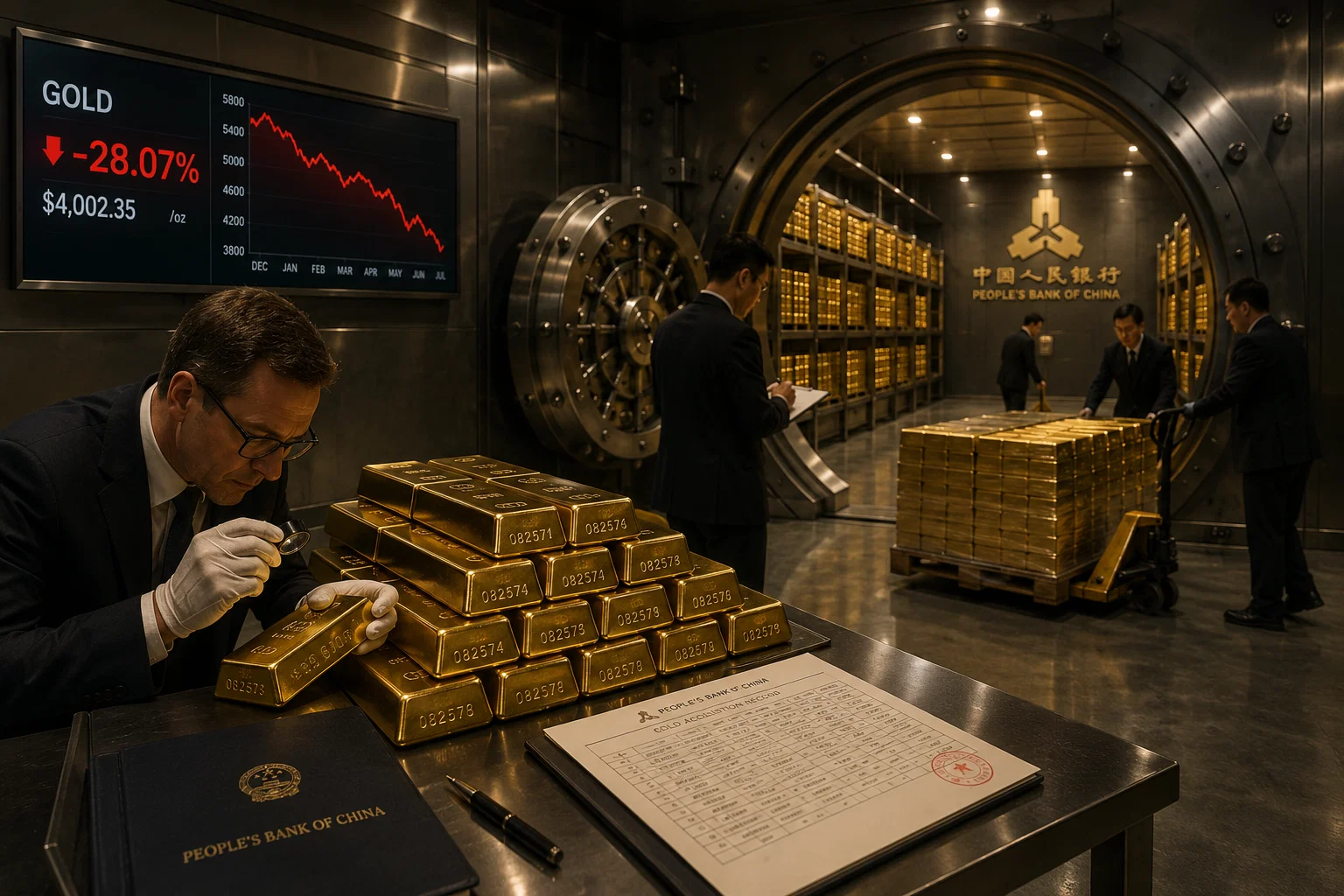
Of course, June marked its twentieth consecutive month of adding gold to its reserves. Central banks are relatively price insensitive. They buy gold as a long term hedge to preserve value, not to trade back for more paper.
But they aren’t stupid either, and this shows they are buying the dip.
Gold peaked at $5,589 per ounce on January 28 and trades around $4,000 today, roughly 28% below the high. The second quarter was gold's worst since 2013. Investors have pulled about $18 billion out of gold ETFs since the peak, much of it late money that piled in during last year's frenzy and bolted the moment momentum broke.
But the price is not the story. The story is what central banks are doing.
Central banks have been the dominant force in gold since 2022, when Russia invaded Ukraine, the US froze $300 billion of Russia's central bank reserves, and every finance ministry on earth learned that dollar assets were not the safe havens they’d believed.
In 2024, central banks bought 1,090 tons of gold, close to an all-time record.
That massive demand made gold expensive. The price nearly doubled from its 2025 low, and central bank buying slowed to 863 tons. That was still higher than historical averages, but down 21% from the year before.
The slowdown was not fading interest; it was price discipline. Central banks are not traders chasing momentum. They are savers accumulating a reserve asset, and like any sensible saver, they buy less when the thing they are saving in gets expensive.
And they speed back up when it goes on sale. In the first quarter of this year central banks bought 244 tons, more than the previous quarter and above the five-year average. China alone has added about 40 tons in the first six months of 2026, compared to just 27 tons in all of 2025. The People's Bank of China bought more gold last month, with the price down nearly 30% from its high, than in any single month of the entire run-up.
The Reason Is Simple: Nothing Has Changed About Why They Buy
The World Gold Council, the industry group that tracks official gold demand, surveyed 76 central banks this year. Seventy-four percent said they expect the dollar's share of global reserves to be lower five years from now.
These are the institutions that actually hold the world's reserves, and they are telling you, on the record, that they plan to keep moving away from the dollar.
None of their reasons went away when the price fell. The US national debt keeps growing by trillions, Congress has no plan beyond borrowing more, and Washington keeps proving it will continue to weaponize the dollar.
A central bank holding dollars is holding the liability of a government that is both overextended and unpredictable. Gold sitting in its own vault carries neither risk.
That calculus was true at $5,589, and it is just as true at $4,000.
A trader who is down 28% has a problem if they are trying to quickly turn a profit, and accumulate more paper dollars.
But a saver who plans to accumulate gold for the next decade just got a better price. That is why the sell-off did not scare away the biggest buyers in the market.
It may be exactly what they were waiting for.
We made this argument to our subscribers of our investment research newsletter, Strategic Assets, in January.
With gold near its all-time high, we said that this was no longer the early stage of a bull market, that a major drawdown was a real possibility, and that it was time to take some profits.
In fact, subscribers who took action on our research locked in gains of more than 950% on a small silver producer and 540% on a gold and silver producer, both in under a year.
Now the sell-off has come for the miners too. Even solid, debt-free producers are trading as much as 50% below their highs from earlier this year.
But again, as nothing had changed about the long term gold thesis, little has changed about the profitability of these companies. They are still wildly profitable at $4,000 gold, which is far above projections they had planned for.
Some of these companies are still pulling gold out of the ground at a cost of just $1,000 an ounce, which is an amazing margin.
So We Are Starting To Buy Again.
It is the same discipline the central banks just demonstrated: slow down when the asset is expensive, step up when it gets cheap, and never confuse a price correction with a change in the story.
Nobody knows where gold trades next month. But the biggest buyers on earth just showed you what they do when gold gets cheaper. They buy more.
To your freedom, James Hickman Co-Founder, Schiff Sovereign LLC
News, Rumors and Opinions Tuesday 7-14-2026
Reset Intelligence: 24 Seats to Washington
7-13-2026
24 Seats to Washington
By Reset Intelligence | @EXIT_FIAT
Iraq’s prime minister just flew to Washington, and the passenger list is the story.
He did not go to talk about oil. He brought the people who run the money.
Reset Intelligence: 24 Seats to Washington
7-13-2026
24 Seats to Washington
By Reset Intelligence | @EXIT_FIAT
Iraq’s prime minister just flew to Washington, and the passenger list is the story.
He did not go to talk about oil. He brought the people who run the money.
Who boards the plane
Monday morning, Prime Minister Ali al-Zaidi lifted off for Washington with a 24-person delegation. On the plane sit the central bank governor, the finance minister and the oil minister. You do not fly the people who run a country’s money and its banks to a meeting that is only about oil. The prize in that room is readmission – Iraq’s money treated as clean enough to let back into the financial system after years held at arm’s length.
What actually backs the dinar
Under Iraqi ground sits 16 trillion dollars in oil, gas and metal, wealth that ranks Iraq 9th on earth. The dinar trades at 1,300 to the dollar for one reason, and it is not economics. That number is frozen in the 2023 budget law, and it only moves when a seated cabinet passes a new budget with a new number for the central bank to announce. Clean the government, seat the cabinet, pass the budget, and the rate can finally answer to the wealth underneath it.
The week in one list
• The delegation – PM al-Zaidi plus the central bank governor, finance minister and oil minister, 24 seats, to Washington this week.
• The route around Hormuz – the Kirkuk-Baniyas pipeline, 530 miles to Syria’s coast, 300,000 barrels a day, carried to the White House while the Strait stays shut.
• The dollar door – OFAC named Ali Ansari, the financier who drained billions from Iran’s Ayandeh Bank. Baghdad closes the leak from the inside, Washington seizes it from the outside.
• The cover – this same month, $114 trillion of US assets begins moving onto new digital rails. The timing is not an accident, and the briefing walks through why.
That is the short version, the moves that are public anyway. The daily briefing is where we connect them: why the delegation composition is the real signal, how the rate actually moves, and what it means for anyone holding the dinar.
Read the full daily briefing free for 5 days. Sign up here: resetintelligence.com
The full documented case is in the book Head of the Snake (25% off with code 25XOFF), and the free guides and scenario reports are in the Resources library.
The reforms were the preparation. This trip is the delivery. The only question history will ask is who saw it while it was actually happening.
https://dinarchronicles.com/2026/07/13/reset-intelligence-24-seats-to-washington/
Courtesy of Dinar Guru: https://www.dinarguru.com/
Frank26 We all know Iraq is going through a financial currency reform but more so we know Iraq is becoming a financial currency hub and they're being prepared to be just that in the Middle East. It's very exciting because we're witnessing it. We can see it.
Reset Intelligence Iraq's prime minister just flew to Washington...His central bank governor is on the plane. So are his finance minister and his oil minister. You do not fly the people who run a country's money to a meeting that is only about oil. The prize... - getting Iraq's money treated as clean enough to let back into the financial system after years held at arm's length.
Ariel Are you all even reading what is coming out of Iraq regarding this upcoming Washington meeting? Do you not see how they are framing this as reaching the end of a long bridge from where they started with monetary reforms from what they are about to accomplish as the tipping point once it concludes? Especially since ASYCUDA is now activated. Monday and throughout that entire week trade agreements will be made that will allow Iraq to finish not only their cabinet but reforms.Quote: “A series of major agreements will be signed in the fields of energy and the economy…. and the rest goes without saying…. and I return to say… before the visit will not resemble what comes after it.”
**************
Ariel: Big Day Today for Iraq and the USA
Big Day Today! Iraq & USA
• Meetings
• Signings
• Partnerships
• Announcements
All Will Lead To What?
Clarity Act!
Save America Act!
You all enjoy the rest of your day. See you in the evening sometime.
Source(s):
• https://x.com/Prolotario1/status/2076609647885123932
https://dinarchronicles.com/2026/07/14/prolotario-big-day-today-for-iraq-and-the-usa/