
Seeds of Wisdom RV and Economics Updates Tuesday Afternoon 7-7-26
Good Afternoon Dinar Recaps,
NATO Summit Opens in Ankara, Focusing on Defense Commitments and Alliance Unity
Leaders from NATO's 32 member nations are meeting in Ankara to strengthen alliance unity, expand defense investment, and address evolving global security challenges amid rising geopolitical uncertainty.
Good Afternoon Dinar Recaps,
NATO Summit Opens in Ankara, Focusing on Defense Commitments and Alliance Unity
Leaders from NATO's 32 member nations are meeting in Ankara to strengthen alliance unity, expand defense investment, and address evolving global security challenges amid rising geopolitical uncertainty.
Overview
NATO leaders convened in Ankara on July 7-8 to coordinate defense priorities and reinforce alliance cohesion.
Defense spending, military production, and continued support for Ukraine are among the summit's top agenda items.
The summit's outcomes could influence global security, government spending, defense industries, and long-term economic stability.
Key Developments
1. NATO Reviews Alliance Strategy
Leaders from all 32 NATO member countries gathered in Ankara under the leadership of Secretary General Mark Rutte to assess progress since the 2025 Hague Summit and establish new strategic priorities for the alliance.
The summit comes at a time of heightened geopolitical uncertainty, making alliance coordination a central focus.
2. Defense Spending Remains a Top Priority
One of the summit's primary objectives is ensuring members continue increasing defense spending commitments.
Several nations are expected to outline new military investment plans as NATO seeks to modernize capabilities while responding to ongoing security threats.
3. Defense Production and Innovation Expand
A parallel NATO Defence Industry Forum is bringing together government officials, military leaders, and private defense companies to accelerate weapons production, technology development, and supply-chain resilience.
The initiative reflects NATO's growing emphasis on strengthening industrial capacity alongside military readiness.
4. Ukraine Support Continues
Alliance leaders are expected to reaffirm continued political, financial, and military support for Ukraine while discussing longer-term regional security planning.
The summit also addresses broader deterrence measures aimed at preserving stability across Europe.
5. Global Markets Watching Geopolitical Signals
Financial markets are monitoring the summit closely because increased defense spending can influence government budgets, industrial production, commodity demand, and long-term fiscal policy.
Investors will also watch for any announcements that could affect energy security, international trade routes, and global geopolitical stability.
Why It Matters
NATO's decisions extend well beyond military affairs. Increased defense investment often reshapes government spending priorities, manufacturing activity, technological innovation, and international alliances—all of which influence the global economic environment.
Why It Matters to Foreign Currency Holders
Currency holders continue watching geopolitical developments because greater global stability generally supports stronger investment confidence, while prolonged international tensions can increase market volatility, influence central bank policies, and affect currency valuations worldwide.
Implications for the Global Reset
Pillar 1 – Trade
Expanded defense manufacturing increases demand across international supply chains, industrial production, advanced technology, and cross-border logistics.
Pillar 2 – Technology
Greater investment in defense innovation accelerates development in cybersecurity, artificial intelligence, communications, and next-generation infrastructure that often spills into civilian financial systems.
Closing Perspective
This is not just about defense—it reflects how geopolitical security, government investment, industrial capacity, and technological modernization continue reshaping the global economic landscape.
Seeds of Wisdom Team
Newshounds News™ Exclusive
Sources
~~~~~~~~~~
Seeds of Wisdom Team RV Currency Facts Youtube and Rumble
Newshound's News Telegram Room Link
RV Facts with Proof Links Link
RV Updates Proof links - Facts Link
Start Here room with Most Asked Questions Link
Follow the Gold/Silver Rate COMEX
Follow Fast Facts
Seeds of Wisdom Team™Website
Thank you Dinar Recaps
Tuesday Iraq News Posted by Tishwash at TNT 7-7-2026
TNT:
Tishwash: The House of Representatives concludes the first reading of the proposed law on combating information technology crimes.
The Iraqi parliament convened its first session of the second legislative term on Monday, 6 July 2026, under the chairmanship of parliament speaker, Haibat al-Halbousi.
According to a statement issued by the parliament's Media Office, the session included the first reading of two bills: the Combating Cybercrimes Bill and the First Amendment to the Law on the Care of Minors.
TNT:
Tishwash: The House of Representatives concludes the first reading of the proposed law on combating information technology crimes.
The Iraqi parliament convened its first session of the second legislative term on Monday, 6 July 2026, under the chairmanship of parliament speaker, Haibat al-Halbousi.
According to a statement issued by the parliament's Media Office, the session included the first reading of two bills: the Combating Cybercrimes Bill and the First Amendment to the Law on the Care of Minors.
In a separate statement, the Media Office announced that the parliament's next session will be held on Thursday, 9 July, at 1:00 p.m.
The agenda will include the swearing-in of several replacement members of parliament, the questioning of the head of the National Investment Commission, and general discussions. link
Tishwash: After a two-year hiatus, the Iraqi government begins preparing the 2027 budget draft.
On Monday, Mazhar Muhammad Salih, advisor to the Iraqi Prime Minister for Financial Affairs, revealed that the Ministry of Finance has begun preparing the draft federal general budget law for 2027, in the first new budget that Iraq has begun preparing after two years without approving a federal budget.
Saleh told Shafaq News Agency that the Ministry of Finance began preparing the draft federal general budget law for 2027 during the month of July, based on the Financial Management Law, and that it will finish its work next September.
He added that the draft bill will then be referred to the Ministerial Council for the Economy for discussion, before being submitted to the Cabinet for approval and sent to the House of Representatives.
He pointed out that it is not possible at the present time to determine the financial size of the federal general budget for 2027, explaining that the total value of the budget will be determined after the Ministry of Finance completes the preparation of the draft law.
The government’s commencement of preparing the 2027 budget comes after two years of not approving a federal budget, as no budget was approved for the years 2025 and 2026, despite the previous government, headed by former Prime Minister Mohammed Shia Al-Sudani, enacting the three-year budget law for the years (2023-2025).
The 2025 budget could not be implemented after its amendment schedules were not approved within the House of Representatives and the time period of the law expired, which prompted the Ministry of Finance to adopt a temporary disbursement mechanism at a rate of (1/12) to secure salaries and mandatory expenses.
The 2026 budget was also not approved, due to the delay in forming the government, the economic repercussions of the regional war, and the fluctuations in energy markets, so Iraq continued to manage its spending according to the temporary spending mechanism. link
************
Tishwash: Al-Zaidi faces a test from the "big players"... Washington awaits proof of seriousness in the corruption and weapons files.
Approximately $300 billion has been smuggled out of Iraq.
Before Prime Minister Ali al-Zaidi arrived in Washington in mid-July, Baghdad found itself facing a sensitive political test: the funeral of former Iranian Supreme Leader Ayatollah Ali Khamenei and several members of his family in Iraq.
The event, which was supposed to be a religious ceremony, quickly transformed into a political issue where the interests of Baghdad, Tehran, and Washington intersected, becoming one of the first hurdles before the anticipated meeting between al-Zaidi and US President Donald Trump.
Although the visit to the White House comes amid signs of improving relations between Baghdad and Washington, serious questions remain about al-Zaidi's ability to implement the commitments outlined in the understandings reached between the two sides in what has become known as the "June Agreement."
Conversely, observers believe that the Prime Minister made significant progress toward the US administration in the past week, after launching a broad campaign to prosecute officials accused of corruption—a move seen as an attempt to demonstrate seriousness in fulfilling the pledges made to Washington.
Iranian pressure and Iraqi hesitation:
A well-informed political source revealed that approving the holding of Khamenei's funeral procession in Iraq on Wednesday was not an easy decision within the government. It was preceded by hesitant discussions before the scales tipped under Iranian pressure, supported by positions from forces within the coordination framework and armed factions.
The source, a member of parliament from one of the major Shiite parties, told Al-Mada on condition of anonymity that "Al-Zaidi realizes this issue could put him in an embarrassing position with Trump during his upcoming visit to Washington."
According to information circulating in political circles, the funeral program has undergone a significant change. Baghdad has been removed from the schedule of ceremonies, which were initially planned for the city of Kadhimiya. The visit will now be limited to Najaf and Karbala, with the possibility that Al-Zaidi will receive the body of the Supreme Leader at Najaf Airport.
Estimates suggest that a large funeral procession in the capital might have turned into anti-American demonstrations, punctuated by chants and slogans targeting the US president, similar to the scenes witnessed during funeral processions in Iran.
US President Donald Trump had expressed clear interest in the funeral processions that began earlier in the week in Iran.
In a press statement, commenting on the scenes showing thousands of participants weeping during the ceremonies, Trump said he was surprised by the scale of the public reaction, adding, "Maybe those were fake tears."
Iranian Foreign Minister Abbas Araqchi arrived in Baghdad for his first visit since the end of the last war in the region, coinciding with the launch of what has become known as "Operation Dawn," which targeted members of parliament and officials accused of corruption last week.
According to leaks following the visit, Araqchi discussed the details of the funeral processions with Iraqi officials, while initial reports indicated that Baghdad would be one of the main stops for the event.
However, the Iraqi committee responsible for organizing the pilgrimage quickly denied this information, before the outlines of the new program, limited to Najaf and Karbala, became clear.
Religious rituals, not political calculations.
In contrast, former diplomat Ghazi Faisal offers a different interpretation of the matter. He believes that Washington, including President Trump, understands that the funeral of the former Iranian Supreme Leader is not an official function of the Iraqi government, but rather falls within the realm of religious and sectarian rituals.
Faisal told Al-Mada, "Al-Zaidi is concerned with running the government, while Khamenei's funeral is part of religious tradition." He added that Baghdad's approval of holding the funeral ceremonies in Najaf and Karbala "is simply a response to religious traditions followed with religious figures, officials, or even ordinary citizens."
Faisal points out that Trump himself announced a week's grace period for Iran to complete the funeral ceremonies, out of respect for the occasion, without exerting pressure related to the negotiations between the two sides.
He believes that what transpired represents a "temporary truce" to allow for the conclusion of the ceremonies before the resumption of negotiations between Washington and Tehran.
The former diplomat concludes that the United States, as a multi-religious and multicultural country, generally views religious and sectarian diversity, and its associated rituals, with respect. This makes it unlikely that the funeral ceremonies, in themselves, will turn into a crisis in official relations between Baghdad and Washington, unless they are accompanied by political messages or stances that transcend their religious dimension.
How is al-Zaidi viewed in Washington now?
Regarding al-Zaidi's image in the United States, Kato Saadallah, a researcher specializing in American affairs, believes that Washington still grants al-Zaidi an important political opportunity, but at the same time links the continuation of this support to his ability to implement genuine reforms.
Saadallah tells Al-Mada that the Prime Minister's visit comes at the invitation of US President Donald Trump and coincides with the celebrations of the 250th anniversary of the founding of the United States. He adds that Trump will be attending the NATO summit in Ankara beforehand and will meet with al-Zaidi upon his return to Washington.
He points out that Trump had previously declared his support for al-Zaidi and the current government, a stance that granted Baghdad significant political leeway. However, according to Saadallah, this support will not be open-ended or unconditional.
He adds that the US president, through his envoy Tom Barrack, informed the Iraqi government of a set of priorities that must be addressed if Baghdad wants to maintain American backing.
Saadallah identifies three main priorities . The first is ending the proliferation of weapons outside state control and disbanding militias and armed factions, thereby restoring the state's monopoly on the use of force.
The second priority is combating corruption, which, according to the researcher, is the issue Trump focuses on more than any other, based on the conviction that corruption is the gateway through which all other Iraqi crises stem.
The third priority is halting the smuggling of hard currency and closing the channels that drain Iraq's financial reserves and fuel financial networks linked to foreign entities. Is "Operation Dawn" enough? Saadallah believes that the recent campaign launched by al-Zaidi against a number of those accused of corruption represents an important step, but it still requires further evidence.
link
Presidential advisor: Funds recovered from corrupt individuals will contribute to reducing the deficit gap and financing projects.
The Prime Minister’s financial advisor, Mazhar Muhammad Salih, confirmed on Tuesday that the funds recovered from corrupt individuals represent exceptional revenues that cannot be relied upon in preparing public budgets, while noting that these funds will contribute to reducing the deficit gap and financing projects.
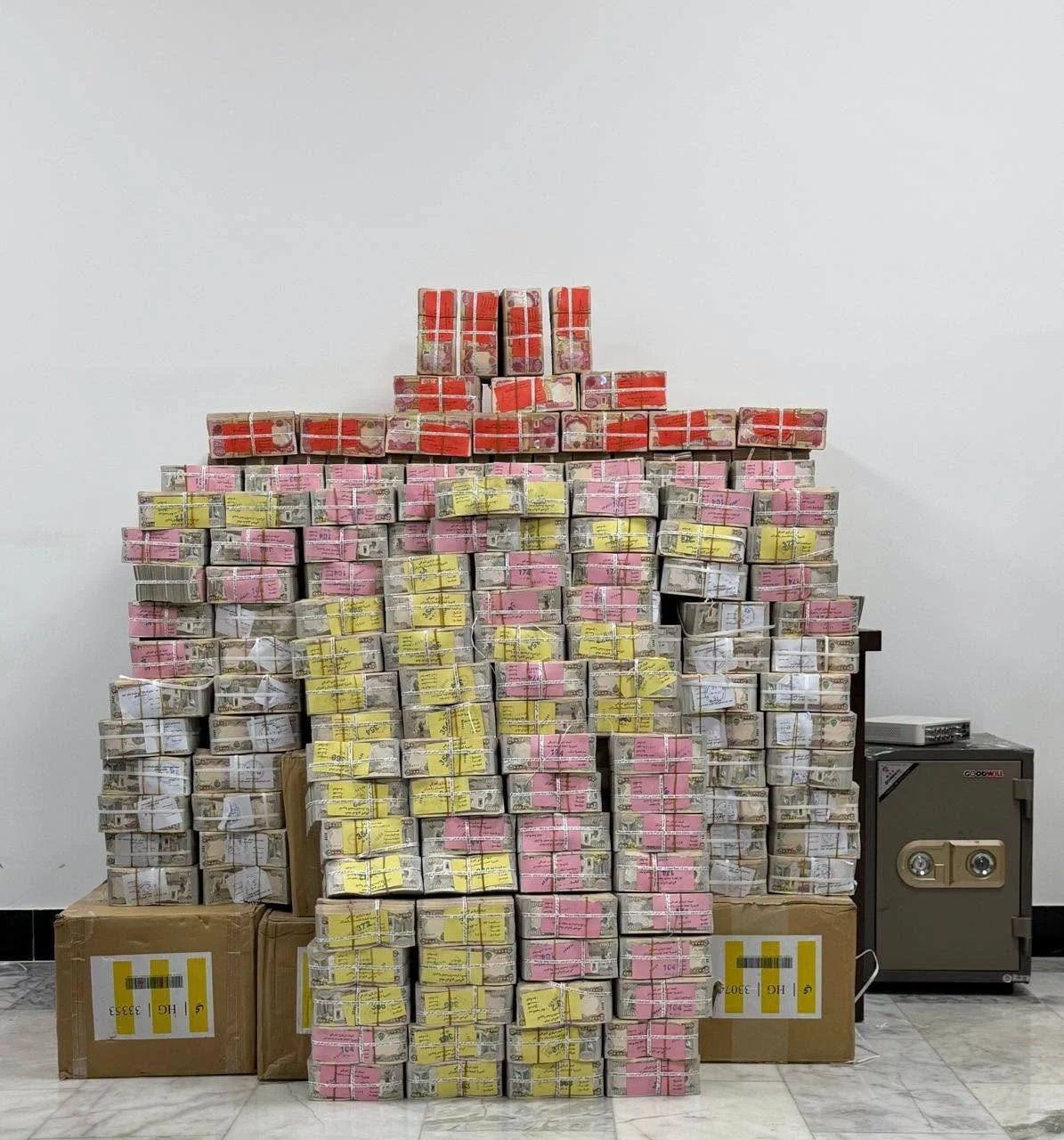
Saleh said in statements followed by Al-Mirbad that “the funds recovered from the corrupt are important and non-recurring exceptional revenues, as they cannot necessarily and permanently be relied upon in preparing public budgets, but they constitute an important source of revenue in financial planning.”
He continued: “These funds are often directed towards bridging the deficit gap or financing specific projects that directly affect the lives of individuals, or strengthening the country’s financial reserves, and not towards building the annual budget within a long-term fiscal policy, because that is linked to the ceilings and capabilities of fiscal policy within the framework of preparing and implementing public budgets.”
He stressed that "recovering corruption funds is important because it reduces financial waste, supports the public treasury, and enhances the confidence of citizens, investors, and the international financial community in the country's economic system," noting that "the funds recovered from corrupt individuals represent an important support tool for the national economy, but they are not necessarily a complete substitute for the general budget, as this depends on the size and ceilings of public spending." link
***************
Tishwash: Amid anti-corruption campaigns and efforts to recover stolen funds, for the first time in months, currency traders in Iraq are seeing the dollar fall to 152,000 Iraqi dinars
Currency markets in Iraq opened this morning (Tuesday) with a further decline in the exchange rate of the US dollar against a relative recovery of the Iraqi dinar.
Exchange bureaus in both the Kifah and Harithiya exchanges in Baghdad recorded a rate of 152,700 Iraqi dinars per 100 US dollars.
In Erbil, the dollar was offered at the Sheikh Allah market at the opening price of 152,650 dinars, and it was sold at the same price in Sulaimaniyah.
This relative decline is the first of its kind in months, as the dollar had approached 160,000 dinars in recent weeks, putting pressure on markets and traders.
Experts attribute this relative recovery to the strong anti-corruption campaigns led by Iraqi Prime Minister Ali Faleh al-Zubaidi, which have resulted in the arrest of dozens of corrupt officials and the recovery of billions of dinars from them. link
Seeds of Wisdom RV and Economics Updates Tuesday Morning 7-7-26
Federal Reserve Policy in Focus as Markets Watch for the Next Move
Investors are closely monitoring Federal Reserve signals as easing inflation and resilient markets shape expectations for future interest rate decisions.
Overview
Financial markets remain focused on the Federal Reserve as investors evaluate whether policymakers will keep interest rates unchanged in the coming months.
Recent economic data points to moderating inflation and steady economic growth, strengthening expectations that the Fed may maintain a patient approach.
Any shift in Federal Reserve policy could significantly influence borrowing costs, the U.S. dollar, global capital flows, and investment markets.
Good Morning Dinar Recaps,
Federal Reserve Policy in Focus as Markets Watch for the Next Move
Investors are closely monitoring Federal Reserve signals as easing inflation and resilient markets shape expectations for future interest rate decisions.
Overview
Financial markets remain focused on the Federal Reserve as investors evaluate whether policymakers will keep interest rates unchanged in the coming months.
Recent economic data points to moderating inflation and steady economic growth, strengthening expectations that the Fed may maintain a patient approach.
Any shift in Federal Reserve policy could significantly influence borrowing costs, the U.S. dollar, global capital flows, and investment markets.
Key Developments
1. Markets Expect a Patient Federal Reserve
Recent inflation data has continued to show signs of moderation while economic growth remains relatively resilient. As a result, investors increasingly believe the Federal Reserve may have room to leave interest rates unchanged until clearer evidence emerges that inflation is either accelerating again or moving sustainably toward its long-term target.
2. Interest Rate Expectations Are Driving Market Sentiment
Expectations surrounding future Fed decisions continue to influence Treasury yields, equity markets, and the U.S. dollar. Lower expectations for additional rate hikes have helped support stock prices while easing pressure on businesses and consumers facing higher borrowing costs.
3. Federal Reserve Communications Become the Market's Focus
With major inflation data largely behind them, investors are now paying close attention to speeches from Federal Reserve officials and upcoming policy communications. Any indication that policymakers are becoming more hawkish or dovish could quickly shift market expectations.
4. Global Markets Continue Watching U.S. Monetary Policy
Because the U.S. dollar remains the world's primary reserve currency, Federal Reserve decisions extend well beyond the United States. Central banks, international investors, and global financial institutions continue adjusting investment strategies based on expectations for U.S. interest rates and monetary policy.
Why It Matters
Federal Reserve policy influences nearly every major financial market. Interest rates affect consumer borrowing, business investment, government debt financing, currency values, and global capital flows. Even small changes in market expectations can produce significant movements across stocks, bonds, commodities, and foreign exchange markets.
Why It Matters to Foreign Currency Holders
Those following global currency developments continue watching Federal Reserve policy because U.S. interest rates influence the relative strength of the dollar against other currencies. A stable or less aggressive Fed could reduce upward pressure on the dollar while encouraging greater international capital movement into alternative assets and emerging markets.
Implications for the Global Reset
Pillar 1 – Debt
Federal Reserve interest rate decisions directly affect government borrowing costs, corporate financing, and consumer debt. A more patient monetary policy could ease financial pressures while supporting broader economic stability.
Pillar 3 – Assets
Expectations for lower interest rates often support equities, bonds, precious metals, and digital assets as investors adjust portfolios based on changing monetary conditions and future liquidity expectations.
Closing Thoughts
While no policy changes have been announced, financial markets are increasingly focused on what the Federal Reserve says next rather than what it has already done. Future communications will help determine whether current optimism surrounding inflation and economic growth can be sustained throughout the remainder of the year.
This is not just about interest rates—it reflects how central bank policy continues to influence global capital flows, asset valuations, and confidence in the international financial system.
Seeds of Wisdom Team
Newshounds News™ Exclusive
Sources
~~~~~~~~~~
Seeds of Wisdom Team
Newshounds News
Seeds of Wisdom Team RV Currency Facts Youtube and Rumble
Newshound's News Telegram Room Link
RV Facts with Proof Links Link
RV Updates Proof links - Facts Link
Start Here room with Most Asked Questions Link
Follow the Gold/Silver Rate COMEX
Follow Fast Facts
Seeds of Wisdom Team™ Website
Thank you Dinar Recaps
Iraq Economic News and Points To Ponder Late Monday Evening 7-6-26
The Iraqi Parliament Confirms Its Readiness To Legislate The Oil And Gas Law.
Shafaqna Iraq - Parliamentary statements confirmed that there is a trend within the House of Representatives to legislate the oil and gas law, in addition to working on developing non-oil resources and reducing dependence on the public sector.
Member of Parliament, Youssef Al-Kalabi, announced the readiness of Parliament to legislate laws supporting the national economy, foremost among them the oil and gas law, calling for the activation of the suspended clauses to maximize state revenues outside the oil sector, while praising the recent Cabinet decisions and describing them as having put its finger on the “source of the problem.”
The Iraqi Parliament Confirms Its Readiness To Legislate The Oil And Gas Law.
Shafaqna Iraq - Parliamentary statements confirmed that there is a trend within the House of Representatives to legislate the oil and gas law, in addition to working on developing non-oil resources and reducing dependence on the public sector.
Member of Parliament, Youssef Al-Kalabi, announced the readiness of Parliament to legislate laws supporting the national economy, foremost among them the oil and gas law, calling for the activation of the suspended clauses to maximize state revenues outside the oil sector, while praising the recent Cabinet decisions and describing them as having put its finger on the “source of the problem.”
Al-Kalabi said in a speech during the first economic conference entitled “ Iraq After Oil”: “The recent decisions of the Council of Ministers have begun to put their finger on the root of the problem.”
He pointed out that “previous decisions regarding component cranes, spare parts orders, and granted exceptions contributed to removing the real and serious private sector from the circle of competition in favor of groups that depend on other personalities.”
He then added that “the House of Representatives sees a need for a genuine revolution in the oil sector and its alternatives,” revealing that “more than 16 articles were drafted by Parliament in the previous session to maximize state revenues outside the oil sector, in cooperation with members of the Finance Committee.” He expressed his regret that 12 of those proposals were not implemented or acted upon.
Te MP stressed that “the post-oil era requires two essential steps; the first is to expedite the enactment of the oil and gas law, given that the processes of extracting, marketing, exporting and developing oil are still subject to old laws that are outdated and no longer useful.”
He also explained that “the second step lies in developing non-oil imports and reducing the labor market’s dependence on the public sector as much as possible.”
Al-Kalabi added that “the House of Representatives is fully prepared to legislate these laws.”
He then pointed out that “the government program of the Prime Minister, which was voted on by Parliament, includes important clauses that give priority to enacting the oil and gas law, and opening the labor market to the serious and genuine private sector to be a key partner in economic development.” https://iraq.shafaqna.com/
Middle East: Al-Zaidi's Government Moves Towards Opening Files On Ministers, Governors, And Directors-General, While Tracking Their Money And Properties
Baghdad - One News - 7/06/2026 Middle East Monitor reported that the Iraqi government is preparing to launch the second phase of its anti-corruption campaign, in a move that expands the scope of prosecutions to include ministers, governors, directors-general, and current and former officials, while simultaneously tracking funds, real estate, and investments linked to those suspected of involvement inside and outside Iraq.
The website indicated that the new phase includes opening files in the Ministries of Health, Oil and Electricity, in addition to completing the procedures for the “Where did you get this?” bill to strengthen the prosecution of illicit enrichment; the step comes within the government’s efforts to expand accountability, recover public funds and prosecute those involved without exception.
https://1news-iq.net/ميدل-إيست-حكومة-الزيدي-تمضي-نحو-فتح-ملف/
Al-Kalabi: The Recent Cabinet Decisions Have Put Their Finger On The "Source Of The Problem" In The Private Sector
Baghdad - WAA - Hassan Al-Fawaz Member of Parliament, Youssef Al-Kalabi, affirmed the readiness of Parliament to legislate laws that support the national economy, foremost among them the oil and gas law, calling for the activation of the suspended clauses to maximize state revenues outside the oil sector, while praising the recent Cabinet decisions and describing them as having put its finger on the "source of the problem".
Al-Kalabi said in a speech during the first economic conference entitled “Iraq After Oil,” which was attended by a correspondent from the Iraqi News Agency (INA): “The recent decisions of the Council of Ministers have begun to address the root causes of the problem,” noting that “previous decisions related to the components of cranes, spare parts orders, and granted exceptions contributed to removing the real and serious private sector from the circle of competition in favor of groups that depend on other personalities.”
He added that "the House of Representatives sees a need for a genuine revolution in the oil sector and its alternatives," revealing that "more than 16 articles were drafted by Parliament in the previous session to maximize state revenues outside the oil sector, in cooperation with members of the Finance Committee." He expressed his regret that 12 of those proposals were not implemented or acted upon.
The MP stressed that “the post-oil phase requires two basic steps; the first is to expedite the enactment of the oil and gas law, as the processes of extracting, marketing, exporting and developing oil are still subject to old laws that are outdated and no longer useful,” indicating that “the second step lies in developing non-oil imports, and reducing the labor market’s dependence on the public sector as much as possible.”
Al-Kalabi continued, “The House of Representatives is fully prepared to legislate these laws,” noting that “the government program of the Prime Minister, which was voted on by Parliament, includes important clauses that give priority to legislating the oil and gas law, and opening the labor market to the serious and genuine private sector to be a key partner in economic development.” https://ina.iq/ar/economie/267483-.html
The Value Of The Seized Items In The Adnan Al-Jumaili Case Has Risen To 127 Billion Dinars And 24 Million Dollars
Baghdad - One News - 7/06/2026 Judge Diaa Jaafar, the investigating judge of the Central Anti-Corruption Criminal Court, announced the seizure of new sums of money worth (25) billion Iraqi dinars, as well as the seizure of one million dollars, in addition to gold jewelry estimated at about (5) kilograms, within the framework of the ongoing investigations into the case of the accused Undersecretary of the Ministry of Oil for Liquidation Affairs, Adnan Al-Jumaili, who is detained, and the parties involved with him.
Judge Jaafar explained that the total amount of money seized had increased to (127) billion Iraqi dinars and (24) million dollars, in addition to the seizure of real estate, vehicles and other gold jewelry.
He stressed that investigations and the pursuit of those involved are ongoing, until all necessary legal procedures in the case are completed. https://1news-iq.net/ارتفاع-قيمة-المضبوطات-في-قضية-عدنان-ال/
Dawn Crackdown To Include Iraqi Corrupt Ministers And Governors
2026-07-06 / 00:59 Shafaq News- Baghdad Iraq's Dawn Crackdown (Sawlat al-Fajr) anti-corruption campaign will extend to ministers, directors-general, current and former lawmakers, and provincial governors in its next phase, to be carried out in more than three batches, MP Abdullah al-Khaigani told Shafaq News on Monday.
Prime Minister Ali al-Zaidi, Supreme Judicial Council President Faiq Zaidan, and the security forces executing the operations have agreed to pursue corrupt figures without targeting any political group at the expense of another, al-Khaigani said. The operations will cover all Iraqi provinces.
Inside the investigation, a senior government source told Shafaq News that the detainees held under the Dawn Crackdown are being questioned daily under strict secrecy measures that bar visits from political parties, lawyers, and outside contacts.
Specialized teams from the Anti-Corruption Court and the Federal Integrity Commission oversee the process. The measures are intended to prevent leaks that could allow suspects to flee the country, conceal evidence, or influence proceedings.
Legal procedures for a second phase are already complete, covering corruption files in the health, oil, and electricity ministries, and tracing funds, properties, and investment projects linked to officials in the United States, Europe, and Turkiye. A new list of accused individuals is being prepared alongside a review of an illicit enrichment bill.
The Federal Integrity Commission confirmed that arrest warrants are being executed in accordance with the law and under judicial supervision. New files that may implicate additional figures continue to be opened, judicial sources said, as part of broader efforts to recover public funds and pursue suspects inside and outside Iraq.
The arrest campaign launched at dawn on June 28, targeting political officials, lawmakers, and businessmen. Al-Zaidi described it during a Council of Ministers session as the first phase of broader measures to recover public funds, tasking oversight bodies with receiving indications of corruption or negligence across state institutions. On Saturday, he called on Iraqis to report corruption and directed that financial rewards be paid to informants.
Read more: Iraq detains top officials in anti-corruption sweep: What we know so far
https://shafaq.com/en/Iraq/Dawn-Crackdown-to-include-Iraqi-corrupt-ministers-and-governors
Central Bank Of Iraq: Domestic Currency Issued Rose To 112.9 Trillion Dinars By The End Of April
2026-07-02 04:03 Shafaq News - Baghdad Data from the Central Bank of Iraq, released on Thursday, showed that the volume of currency issued in the country rose to 112.896 trillion dinars from the beginning of 2025 until April 2026.
According to data seen by Shafaq News Agency, the total currency issued during the past year amounted to 99.799 trillion dinars, and 13.097 trillion dinars were added to it during the first four months of this year.
The net currency in circulation outside banks rose to 104.542 trillion dinars, after reaching 92.560 trillion dinars at the end of 2025, registering an increase of 11.982 trillion dinars.
The currency held by banks also increased to 8.354 trillion dinars by the end of April 2026, compared to 7.239 trillion dinars at the end of 2025, an increase of 1.115 trillion dinars.
These indicators point to the growth in the volume of issued and circulating currency in the Iraqi economy during the first months of 2026, coinciding with an increase in circulating cash liquidity and a rise in the volume of cash held by the banking sector.
Seeds of Wisdom RV and Economics Updates Monday Evening 7-6-26
Good Evening Dinar Recaps,
Wall Street Near Record Highs as Lower Oil Prices and Cooling Inflation Lift Investor Confidence
U.S. stock markets remain near record highs as declining oil prices, easing inflation pressures, and expectations for a more patient Federal Reserve continue to support investor optimism. With corporate earnings season beginning, markets are looking for confirmation that economic growth remains resilient.
Good Evening Dinar Recaps,
Wall Street Near Record Highs as Lower Oil Prices and Cooling Inflation Lift Investor Confidence
U.S. stock markets remain near record highs as declining oil prices, easing inflation pressures, and expectations for a more patient Federal Reserve continue to support investor optimism. With corporate earnings season beginning, markets are looking for confirmation that economic growth remains resilient.
Overview
Major U.S. stock indexes continue trading near record highs as investor confidence strengthens.
Lower oil prices and moderating inflation are reducing pressure on the Federal Reserve to raise interest rates.
Corporate earnings, inflation data, and upcoming Federal Reserve communications will likely determine whether the rally can continue.
Key Developments
1. Wall Street Maintains Record Momentum
The Dow Jones Industrial Average continues to trade near record highs, while the S&P 500 and Nasdaq Composite remain well supported by strong investor confidence and improving economic sentiment. Market participation has also broadened beyond technology, with gains spreading across multiple sectors.
2. Falling Oil Prices Ease Inflation Concerns
Oil prices have retreated following OPEC+ production increases and the gradual normalization of shipping through the Strait of Hormuz. Lower energy costs are helping reduce inflation expectations while easing pressure on businesses and consumers.
3. Investors Expect a More Patient Federal Reserve
With inflation moderating and recent economic data showing signs of slower growth, investors increasingly believe the Federal Reserve may delay additional interest rate increases. Expectations for a more measured monetary policy have supported both equity markets and bond prices.
4. Earnings Season Becomes the Next Major Test
Attention is shifting toward second-quarter corporate earnings, where investors will look for evidence that companies continue delivering strong profits despite higher borrowing costs. Technology companies remain a major focus, but broader participation across healthcare, industrials, and financials is encouraging investors.
5. Economic Data Will Drive Market Direction
Upcoming inflation reports, Federal Reserve meeting minutes, and speeches from Fed officials are expected to shape expectations for the remainder of the year. Positive economic data could extend the current rally, while renewed inflation pressures could increase market volatility.
Why It Matters
Financial markets are responding to improving economic conditions as lower energy prices help reduce inflation while resilient corporate performance supports investor confidence. The combination of stable growth and moderating inflation creates a more favorable environment for businesses, consumers, and financial markets.
Why It Matters to Foreign Currency Holders
Federal Reserve policy continues to influence global currency values, interest rates, and international capital flows. Any shift toward a slower pace of monetary tightening can affect the U.S. dollar, precious metals, and investment opportunities across global markets.
Implications for the Global Reset
Pillar 1 – Debt
Moderating inflation may reduce pressure for higher interest rates, influencing government borrowing costs, debt servicing, and overall financial stability.
Pillar 5 – Energy
Lower oil prices and improving global energy supplies are helping stabilize inflation while supporting broader economic growth and market confidence.
Future Outlook
Investors will closely monitor upcoming corporate earnings, inflation reports, and Federal Reserve communications to determine whether the current market rally has additional room to advance. Continued moderation in inflation combined with resilient earnings could strengthen confidence that the economy is achieving a more balanced and sustainable expansion.
This is not just about rising stock prices—it reflects how stabilizing energy markets, moderating inflation, and expectations for more predictable monetary policy are strengthening confidence across the global financial system.
Seeds of Wisdom Team
Newshounds News™ Exclusive
Sources
Reuters – Global Markets: Stocks Rise as Oil Falls and Investors Await Fed Signals
Modern Diplomacy – Can US Stocks Extend Their Rally as Chip Shares Rebound and Oil Prices Fall?
~~~~~~~~~~
Seeds of Wisdom Team RV Currency Facts Youtube and Rumble
Newshound's News Telegram Room Link
RV Facts with Proof Links Link
RV Updates Proof links - Facts Link
Start Here room with Most Asked Questions Link
Follow the Gold/Silver Rate COMEX
Follow Fast Facts
Seeds of Wisdom Team™Website
Thank you Dinar Recaps
Trader Who Saw 1987, 2000 & 2008 Warns: ‘I Can See a Collapse Coming Now’ | Todd ‘Bubba’ Horwitz
Trader Who Saw 1987, 2000 & 2008 Warns: ‘I Can See a Collapse Coming Now’ | Todd ‘Bubba’ Horwitz
Miles Franklin Media: 7-6-2026
Michelle Makori, President & Editor-in-Chief of Miles Franklin Media, speaks with Todd “Bubba” Horwitz, Founder & Chief Market Strategist at BubbaTrading.com, who warns that he sees another major market collapse forming after 47 years of trading through historic booms and busts.
Horwitz says the warning signs are everywhere – from overvalued markets and AI-driven job losses to a housing market he says looks “almost an instant replay” of 2008. He argues the Fed has “destroyed true capitalism,” predicts the 10-year Treasury yield could hit 6%, and warns stocks could face a 40% to 60% decline.
Trader Who Saw 1987, 2000 & 2008 Warns: ‘I Can See a Collapse Coming Now’ | Todd ‘Bubba’ Horwitz
Miles Franklin Media: 7-6-2026
Michelle Makori, President & Editor-in-Chief of Miles Franklin Media, speaks with Todd “Bubba” Horwitz, Founder & Chief Market Strategist at BubbaTrading.com, who warns that he sees another major market collapse forming after 47 years of trading through historic booms and busts.
Horwitz says the warning signs are everywhere – from overvalued markets and AI-driven job losses to a housing market he says looks “almost an instant replay” of 2008. He argues the Fed has “destroyed true capitalism,” predicts the 10-year Treasury yield could hit 6%, and warns stocks could face a 40% to 60% decline.
Horwitz also explains why he would be buying physical gold and silver now, why he believes paper gold resembles a “Ponzi scheme,” and why Bitcoin could still have upside despite near-term downside risk.
He and Michelle also discuss America’s 250th anniversary, the erosion of free enterprise, socialism, debt, inflation, and whether the country is “melting down from within.”
In this episode of The Real Story with Michelle Makori:
Why Horwitz sees a 40% to 60% market decline ahead
Housing warning signs and echoes of the 2008 crisis
AI, layoffs, and why some jobs may never return
Physical gold, silver, Bitcoin, and the risk in paper markets
The Fed, true capitalism, socialism, and America at 250
00:00 Coming Up
01:26 Introduction
04:03 Overvaluation
06:32 Jobs Data Breakdown
11:22 Debt Limits Fed Pushback
16:02 Housing Echoes 2008
18:34 What Triggers The Crash
21:23 Rotation Or Head Fake
29:32 Where To Put Fresh Cash
34:15 Gold Holds Key Floor
34:22 Investor Psychology Basics
35:09 Bitcoin Entry Strategy
36:49 CME Goes 24/7 38:12 Volatility And Liquidity
40:04 Gold Manipulation Debate
41:56 Spoofing Reality Check
44:19 Paper Gold Ponzi Claim
49:37 Inflation Math Wake Up
55:26 America At 250 Crossroads
01:04:06 Closing Thoughts
Every Fiat Currency Has Failed. Every Single One.
Every Fiat Currency Has Failed. Every Single One.
GoldSilver: 7-6-2026
Every fiat currency in history has failed. 100% of them.
David Morgan on why the dollar is no different — and what governments do when the debt gets this bad.
In this conversation, GoldSilver's Maggie Lake sits down with David Morgan — founder of The Morgan Report and one of the most respected voices in precious metals — as the dollar slides and gold and silver move higher.
Every Fiat Currency Has Failed. Every Single One.
GoldSilver: 7-6-2026
Every fiat currency in history has failed. 100% of them.
David Morgan on why the dollar is no different — and what governments do when the debt gets this bad.
In this conversation, GoldSilver's Maggie Lake sits down with David Morgan — founder of The Morgan Report and one of the most respected voices in precious metals — as the dollar slides and gold and silver move higher.
David explains why most investors are watching the wrong number, why debt is the real story behind today's move, and the four options governments have when the debt gets out of control.
None of them are good for your savings. You'll learn:
Why you should be watching the dollar — not the gold price
Why debt — not inflation — is the real problem
The 4 things governments do when debt gets this bad
How financial repression is already happening to your savings
Why the new Fed chair cannot fix a $40 trillion deficit
Why central banks now hold gold instead of US paper
Seeds of Wisdom RV and Economics Updates Monday Afternoon 7-6-26
Good Afternoon Dinar Recaps,
U.S. Labor Market Cools as Weak Jobs Report Reshapes Federal Reserve Expectations
A weaker-than-expected June employment report has strengthened expectations that the Federal Reserve may pause interest rate increases, as slower hiring points to a cooling labor market despite a stable unemployment rate.
Good Afternoon Dinar Recaps,
U.S. Labor Market Cools as Weak Jobs Report Reshapes Federal Reserve Expectations
A weaker-than-expected June employment report has strengthened expectations that the Federal Reserve may pause interest rate increases, as slower hiring points to a cooling labor market despite a stable unemployment rate.
Overview
U.S. employers added only 57,000 jobs in June, roughly half of economists' forecasts.
Financial markets sharply reduced expectations for a near-term Federal Reserve rate hike.
Investors are now focused on upcoming Fed meeting minutes for guidance on future monetary policy.
Key Developments
1. Hiring Slows More Than Expected
The U.S. economy added 57,000 new jobs in June, well below expectations, while payroll gains for previous months were also revised lower. The slower pace of hiring suggests labor demand is beginning to soften after several years of strong employment growth.
2. Unemployment Rate Remains Low
The unemployment rate edged down to 4.2%, although much of the decline reflected fewer people participating in the labor force rather than stronger hiring. Overall, labor market conditions remain relatively stable despite slowing job creation.
3. Markets Reduce Rate Hike Expectations
Following the report, traders significantly lowered expectations that the Federal Reserve will raise interest rates at its next policy meeting. Investors increasingly believe policymakers have less urgency to tighten monetary policy if the economy continues to moderate.
4. Dollar Weakens as Treasury Yields Ease
The employment report pushed Treasury yields lower while the U.S. dollar weakened against several major currencies. Financial markets interpreted the softer labor data as reducing inflationary pressure and lowering the likelihood of additional monetary tightening.
5. Attention Turns to the Federal Reserve
Investors are now awaiting the release of the Federal Reserve's meeting minutes for further insight into policymakers' views on inflation, employment, and future interest rate decisions.
Why It Matters
Employment remains one of the Federal Reserve's most closely watched economic indicators. Slower hiring could reduce inflation pressures while allowing policymakers greater flexibility in balancing economic growth with price stability.
Why It Matters to Foreign Currency Holders
Federal Reserve policy influences the value of the U.S. dollar and global currency markets. Any shift toward fewer interest rate increases can affect exchange rates, precious metals, international investment flows, and expectations surrounding future monetary policy.
Implications for the Global Reset
Pillar 1 – Debt
A slower labor market may reduce inflation pressures and influence future interest rate decisions, affecting government borrowing costs, debt servicing, and broader financial conditions worldwide.
Pillar 3 – Assets
Changing expectations for Federal Reserve policy continue to impact the U.S. dollar, bonds, gold, and other financial assets as investors reposition portfolios based on future monetary policy.
Future Outlook
Upcoming Federal Reserve communications and additional employment reports will determine whether the recent slowdown represents a temporary pause or the beginning of a broader economic moderation. Markets will continue watching inflation and labor market data closely as expectations for future interest rate decisions evolve.
This is not just about employment—it reflects how labor market conditions influence monetary policy, financial markets, and the broader direction of the global economy.
Seeds of Wisdom Team
Newshounds News™ Exclusive
Sources
Reuters – US Job Growth Misses Expectations in June; Unemployment Rate Falls to 4.2%
Reuters – Fed Seen Less Likely to Raise Rates as Job Growth Slows
~~~~~~~~~~
Seeds of Wisdom Team RV Currency Facts Youtube and Rumble
Newshound's News Telegram Room Link
RV Facts with Proof Links Link
RV Updates Proof links - Facts Link
Start Here room with Most Asked Questions Link
Follow the Gold/Silver Rate COMEX
Follow Fast Facts
Seeds of Wisdom Team™Website
Thank you Dinar Recaps
Iraq Economic News and Points To Ponder Late Sunday Evening 7-5-26
Iraq Promises Rewards For Reporting Stolen Public Funds
Baghdad (IraqiNews.com) – Iraqi Prime Minister Ali al-Zaidi urged citizens on Saturday to report stolen public funds, promising rewards for those who assist in recovering embezzled money as part of a national crackdown on corruption.
Al-Zaidi called on all people to disclose public assets and finances gained via corruption offenses and to participate in exposing, retrieving, and returning them to the state, according to a statement released by the Prime Minister’s Office (PMO).
Iraq Promises Rewards For Reporting Stolen Public Funds
Baghdad (IraqiNews.com) – Iraqi Prime Minister Ali al-Zaidi urged citizens on Saturday to report stolen public funds, promising rewards for those who assist in recovering embezzled money as part of a national crackdown on corruption.
Al-Zaidi called on all people to disclose public assets and finances gained via corruption offenses and to participate in exposing, retrieving, and returning them to the state, according to a statement released by the Prime Minister’s Office (PMO).
In accordance with the law, whistleblowers will be awarded a satisfying cash percentage, according to the statement.
The Iraqi government launched a countrywide anti-corruption campaign last week known as “Operation Dawn.” Al-Zaidi ordered the crackdown, which has resulted in the arrests of several lawmakers and senior officials, as well as the recovery of millions of dollars, gold, luxurious cars, and real estate.
Iraqi security forces began the massive campaign following judicial orders, targeting dozens of current and former government officials.
The step, which included lifting parliamentary immunity and overnight raids in Baghdad’s Green Zone, is based on confessions and investigations into the major arrest of Adnan al-Jumaili, a deputy oil minister accused of corruption.
The Iraqi Prime Minister’s legal advisor, Munir Haddad, said last week that the number of suspects continues to increase as investigations with the arrested ones are ongoing.
Some of the suspects attempted to leave the country or seek a safe haven in Iraqi Kurdistan, but Kurdish authorities have shown cooperation and handed over eight suspects so far.
The offenses being investigated include both typical embezzlement and money laundering.
https://www.iraqinews.com/iraq/iraq-promises-rewards-for-reporting-stolen-public-funds/
Iraq Pushes For Higher OPEC+ Oil Quota As 2027 Capacity Review Looms
Berlin – Seven OPEC+ members decided on Sunday to again raise oil production quotas as Gulf countries reel from the Middle East war.
Ministers from key OPEC+ countries Saudi Arabia, Russia, Iraq, Kuwait, Kazakhstan, Algeria, and Oman met virtually on Sunday and “decided to implement a production adjustment of 188 thousand barrels per day,” a statement from the organisation said, adding that “this adjustment will be implemented in August 2026”.
Gulf countries had to cut output after the near-paralysis of the Strait of Hormuz orchestrated by Iran during the war in the Middle East, which blocked their oil exports for several months.
Between the first quarter of 2026 and May, combined production by Saudi Arabia, Iraq, and Kuwait — three of the seven countries raising their quotas — fell by some six million barrels per day, OPEC data have shown.
But on June 17, Tehran and Washington signed a memorandum of understanding, committing themselves to removing obstacles to maritime traffic in the Strait of Hormuz for the duration of talks following the signature.
Giovanni Staunovo, a commodity analyst at the Swiss bank UBS, told AFP that “for now, production is probably still below” OPEC+’s targets.
– Time-consuming restart –
Since the memorandum of understanding was signed, ship transport in the region has slowly recovered, with oil prices dropping sharply to levels comparable to those seen before the war in anticipation of a gradual return to normal.
Oil supplies through this shipping lane may already have exceeded ten million barrels a day, according to a US official quoted by the Bloomberg agency.
But the oil currently leaving the strait has up to now been sitting in tankers or storage facilities, said Saxo Bank analyst Ole Hansen, adding that “shut-in production takes time to restart”.
“Assuming shipping continues to normalise, July will show an improvement with August probably being the month where the pickup accelerates,” he told AFP.
– Cohesion at stake –
“For next year, everybody is anticipating a surplus,” Jorge Leon, an analyst at Rystad Energy, told AFP.
Rebuilding the inventories that countries tapped during the conflict should help absorb the flows at first, but producers may face a strong downward pressure on prices later on.
And OPEC+, already weakened by the departure of the United Arab Emirates from the group in May, will have to manage sliding prices while members will push for production increases.
Iraq, in particular, has asked the cartel to raise production quotas to make up for the shortfall it incurred during the war in the Middle East, the Iraqi Oil Ministry said in late June.
But Hansen said the need for a higher quota “is not imminent” as production volumes are still far from their pre-conflict levels.
“Iraq’s request may become part of the 2027 capacity review, where production baselines will be examined,” he added.
At the end of the year, the OPEC+ is indeed due to reassess members’ quotas based on their ability to produce more, which could become a thorny issue.
https://www.iraqinews.com/iraq/iraq-pushes-for-higher-opec-oil-quota-as-2027-capacity-review-looms/
Iraq Signs Halliburton Deal To Boost Oil And Gas Production
Baghdad – Iraq’s government and US oil services giant Halliburton signed a deal Sunday to manage two oil fields in the country’s south, as Baghdad looks to boost production.
The state-owned “Basra Oil Company has signed a joint management contract with the American company Halliburton for the Bin Omar and Sinbad oil fields” in Basra province, said the Iraqi oil ministry’s media office.
Iraqi Oil Minister Bassem Khodeir said the deal with Halliburton aligns with the government’s plans to “boost oil and gas production capacity.”
He added that Iraq aims to boost oil output at the Bin Omar field by 150,000 barrels per day (bpd) within five years, along with 300 million cubic feet of associated gas.
Production at the Sinbad oil field should increase by 80,000 to 100,000 bpd.
Baghdad’s new government, led by Prime Minister Ali Al-Zaidi, has urged the OPEC oil cartel to increase Iraq’s oil production quota, taking into account the damage done to its industry from past conflicts and the recent Middle East war.
Like other oil producers, Iraq, a founding member of OPEC, was greatly affected by the US-Iran conflict, as it is hugely dependent on oil exports, which make up about 90 percent of its budget revenues.
The new contract with Halliburton was signed prior to Zaidi’s upcoming visit to Washington later this month.
Zaidi, who only recently took office with the blessing of the United States, hopes to attract more US investment to Iraq, which urgently needs to revive its economy, especially after revenue losses caused by the halt of oil exports during the Middle East war.
https://www.iraqinews.com/iraq/iraq-signs-halliburton-deal-to-boost-oil-and-gas-production/
Chief Justice Faiq Zidan Orders Major Overhaul Of Iraqi Judiciary
Baghdad (IraqiNews.com) – The Supreme Judicial Council of Iraq has enacted an expansive administrative overhaul across the federal judiciary following a series of executive decrees issued on Sunday, July 5, 2026. Authorized by the President of the Council, Judge Faiq Zidan, these fundamental structural realignments include high-level reassignments, the rotation of key leadership benches, and the deployment of twelve senior judges to the federal appellate court.
Legal observers consider this judicial restructuring to be one of the most comprehensive institutional reorganizations in recent years, explicitly designed to maximize institutional efficiency, optimize administrative oversight, and enhance institutional performance across provincial jurisdictions.
According to official court documentation obtained by IraqiNews.com, Judge Zidan authorized the immediate assignment of twelve prominent judges to serve as temporary delegates within the Federal Court of Cassation under the explicit statutory provisions of the Judicial Organization Law.
Simultaneously, the Supreme Judicial Council formalized a crucial executive change within the national prosecution apparatus by assigning Judge Adel Khudhair Abbas to officially assume the responsibilities of Chief of Public Prosecution. Prior to this landmark appointment, Judge Abbas served as a leading member of the Judicial Oversight Commission, bringing extensive institutional evaluation experience to the state’s highest prosecutorial office.
The judicial decrees also introduced targeted structural changes within the provincial court leadership of Babylon, Saladin, and Anbar provinces, replacing several outgoing officials with experienced appellate jurists to lead regional judicial headquarters. Under these new directives, the Deputy President of the Babylon Appeals Court, Hamid Mahdi Thomas, has been elevated to officially run the Babylon Appeals Court.
In a parallel move, the Deputy President of the Saladin Appeals Court, Walid Ahmed Kurdi, was advanced to manage the Saladin Appeals Court. Finally, the Deputy President of the Anbar Appeals Court, Ali Daij Jariyan, received a direct assignment to take full operational control of the Anbar Appeals Court, concluding a highly strategic institutional rotation within Iraq’s judicial hierarchy.
https://www.iraqinews.com/iraq/iraq-supreme-judicial-council-faiq-zidan-overhaul-reassignments-2026/
Chief Justice Faiq Zidan Orders Major Overhaul Of Iraqi Judiciary
Baghdad (IraqiNews.com) – The Supreme Judicial Council of Iraq has enacted an expansive administrative overhaul across the federal judiciary following a series of executive decrees issued on Sunday, July 5, 2026. Authorized by the President of the Council, Judge Faiq Zidan, these fundamental structural realignments include high-level reassignments, the rotation of key leadership benches, and the deployment of twelve senior judges to the federal appellate court.
Legal observers consider this judicial restructuring to be one of the most comprehensive institutional reorganizations in recent years, explicitly designed to maximize institutional efficiency, optimize administrative oversight, and enhance institutional performance across provincial jurisdictions.
According to official court documentation obtained by IraqiNews.com, Judge Zidan authorized the immediate assignment of twelve prominent judges to serve as temporary delegates within the Federal Court of Cassation under the explicit statutory provisions of the Judicial Organization Law.
Simultaneously, the Supreme Judicial Council formalized a crucial executive change within the national prosecution apparatus by assigning Judge Adel Khudhair Abbas to officially assume the responsibilities of Chief of Public Prosecution. Prior to this landmark appointment, Judge Abbas served as a leading member of the Judicial Oversight Commission, bringing extensive institutional evaluation experience to the state’s highest prosecutorial office.
The judicial decrees also introduced targeted structural changes within the provincial court leadership of Babylon, Saladin, and Anbar provinces, replacing several outgoing officials with experienced appellate jurists to lead regional judicial headquarters. Under these new directives, the Deputy President of the Babylon Appeals Court, Hamid Mahdi Thomas, has been elevated to officially run the Babylon Appeals Court.
In a parallel move, the Deputy President of the Saladin Appeals Court, Walid Ahmed Kurdi, was advanced to manage the Saladin Appeals Court. Finally, the Deputy President of the Anbar Appeals Court, Ali Daij Jariyan, received a direct assignment to take full operational control of the Anbar Appeals Court, concluding a highly strategic institutional rotation within Iraq’s judicial hierarchy.
https://www.iraqinews.com/iraq/iraq-supreme-judicial-council-faiq-zidan-overhaul-reassignments-2026/
Seeds of Wisdom RV and Economics Updates Monday Morning 7-6-26
Good Morning Dinar Recaps,
OPEC+ Boosts Oil Production as Falling Energy Prices Lift Global Markets
OPEC+ has agreed to increase oil production for a fifth consecutive month as shipping through the Strait of Hormuz continues to recover, helping push crude prices lower. The decline in energy prices has improved investor confidence, eased inflation concerns, and strengthened expectations that the Federal Reserve may have greater flexibility on interest rates.
Good Morning Dinar Recaps,
OPEC+ Boosts Oil Production as Falling Energy Prices Lift Global Markets
OPEC+ has agreed to increase oil production for a fifth consecutive month as shipping through the Strait of Hormuz continues to recover, helping push crude prices lower. The decline in energy prices has improved investor confidence, eased inflation concerns, and strengthened expectations that the Federal Reserve may have greater flexibility on interest rates.
Overview
OPEC+ will increase oil production by 188,000 barrels per day beginning in August as global energy markets stabilize.
Lower oil prices and improving Gulf shipping are easing inflation pressures and supporting stock market gains.
Investors are now turning their attention toward Federal Reserve policy and second-quarter corporate earnings.
Key Developments
1. OPEC+ Expands Oil Production Again
Seven OPEC+ members—including Saudi Arabia, Russia, Iraq, Kuwait, Kazakhstan, Algeria, and Oman—agreed to raise production by 188,000 barrels per day beginning in August. The increase continues the gradual reversal of production cuts introduced during the 2023 global banking turmoil and reflects improving market conditions.
2. Strait of Hormuz Recovery Supports Energy Supplies
Shipping through the Strait of Hormuz continues to normalize following the U.S.-Iran ceasefire and ongoing diplomatic efforts. Although vessel traffic remains below pre-conflict levels, the reopening of this critical energy corridor has helped restore confidence in global oil supplies.
3. Oil Prices Fall as Supply Improves
Brent crude has retreated to roughly pre-conflict levels near $72 per barrel, reflecting increased production, recovering exports, softer demand from China, and improving shipping conditions. Analysts believe the market may face a period of short-term oversupply if current trends continue.
4. Lower Energy Prices Boost Wall Street
Falling oil prices helped lift investor sentiment as the Dow Jones Industrial Average reached another record while the S&P 500 and Nasdaq continued advancing. Lower fuel costs are easing inflation expectations, reducing pressure on consumers and businesses alike.
5. Federal Reserve and Earnings Become the Next Focus
With inflation moderating, investors are closely watching upcoming Federal Reserve meeting minutes, economic data, and second-quarter earnings reports. Strong corporate earnings combined with stable inflation could provide additional support for financial markets during the second half of the year.
Why It Matters
Energy prices remain one of the largest drivers of global inflation and economic growth. As oil markets stabilize, businesses benefit from lower transportation and production costs while consumers gain relief through reduced fuel prices, creating more favorable conditions for economic expansion.
Why It Matters to Foreign Currency Holders
Lower oil prices often influence inflation, interest rate expectations, and currency valuations worldwide. A more stable energy market also supports global trade and financial confidence, factors closely monitored by investors following international monetary developments.
Implications for the Global Reset
Pillar 2 – Trade
The continued reopening of the Strait of Hormuz and expanding oil production improve global supply chains, strengthen international trade, and reduce disruptions across one of the world's most important shipping corridors.
Pillar 5 – Energy
Higher OPEC+ production and recovering Gulf exports increase global energy supplies, helping stabilize oil prices while supporting long-term energy security and economic recovery.
Future Outlook
Markets will now focus on whether improving energy supplies continue to moderate inflation without slowing economic growth. Upcoming Federal Reserve communications and corporate earnings reports will provide important signals about the strength of the U.S. economy during the second half of the year.
If oil prices remain stable and earnings continue to outperform expectations, investor confidence could strengthen further despite ongoing geopolitical uncertainties.
This is not just about oil prices—it reflects how improving energy security, recovering global trade, and moderating inflation are working together to support broader economic stability and financial market confidence.
Seeds of Wisdom Team
Newshounds News™ Exclusive
Sources
Al Jazeera – OPEC+ Countries Say They Will Expand Monthly Oil Production
Modern Diplomacy – Can U.S. Stocks Extend Their Rally as Chip Shares Rebound and Oil Prices Fall?
~~~~~~~~~~
🌱 A Message to Our Currency Holders🌱
If you’ve been holding foreign currency for many years, you were not foolish.
You were not wrong to believe the global financial system would change.
What failed was not your patience — it was the information you were given.
For years, dates, rumors, and personalities replaced facts, structure, and proof. “This week” predictions created cycles of hope and disappointment that were never based on how currencies actually change.
That is not your failure.
Our mission here is different: • No dates • No rates • No hype • No gurus
Instead, we focus on:
• Verifiable developments • Institutional evidence
• Global financial structure • Where countries actually sit in the process
Currency value changes only come after sovereignty, trade, banking, settlement systems, and fiscal coordination are in place. History and institutions confirm this sequence.
You will see silence. You will see denials. That is not delay — that is discipline.
Protect your identity. Organize your documents. Verify everything.
Never hand your discernment to anyone who cannot show proof.
You deserve truth — not timelines.
Seeds of Wisdom Team
Newshounds News
~~~~~~~~~~
Seeds of Wisdom Team RV Currency Facts Youtube and Rumble
Newshound's News Telegram Room Link
RV Facts with Proof Links Link
RV Updates Proof links - Facts Link
Start Here room with Most Asked Questions Link
Follow the Gold/Silver Rate COMEX
Follow Fast Facts
Seeds of Wisdom Team™Website
Thank you Dinar Recaps
Monday Iraq News Posted by Tishwash at TNT 7-6-2026
TNT:
Tishwash: Integrity Commission: The next step in the funds recovery case holds many surprises.
The Integrity Commission has stated that the upcoming phase of the asset recovery file holds many surprises. Abbas Mutab, Director General of the Recovery Department at the Federal Integrity Commission, told the official newspaper that "the Commission has managed to recover approximately half of the accused individuals who fled Iraq compared to the previous period, in addition to a very good percentage of the funds recovered from abroad."
He emphasized "the significant cooperation with Interpol and law enforcement agencies," adding that "there is a problem with cooperation with other countries regarding the extradition of some accused individuals, and the differences in laws between Iraq and other countries. What is applied on the ground in Iraq cannot be applied in other countries.
TNT:
Tishwash: Integrity Commission: The next step in the funds recovery case holds many surprises.
The Integrity Commission has stated that the upcoming phase of the asset recovery file holds many surprises. Abbas Mutab, Director General of the Recovery Department at the Federal Integrity Commission, told the official newspaper that "the Commission has managed to recover approximately half of the accused individuals who fled Iraq compared to the previous period, in addition to a very good percentage of the funds recovered from abroad."
He emphasized "the significant cooperation with Interpol and law enforcement agencies," adding that "there is a problem with cooperation with other countries regarding the extradition of some accused individuals, and the differences in laws between Iraq and other countries. What is applied on the ground in Iraq cannot be applied in other countries.
Moreover, the funds that fled Iraq have become intertwined with the economies of other countries, which necessitates a file to study the case, follow up on it, gather evidence, and implement it to prove that these funds belong to Iraq."
Mutab explained that "the upcoming phase of the asset recovery file for this year holds many surprises, whether in terms of large sums of money or accused individuals who fled the country years ago, and that these efforts are being carried out with the support of the head of the Integrity Commission and the head of the Supreme Judicial Council." lin
Tishwash: Targeting 150,000 barrels per day, Iraq signs a contract with Halliburton to manage the Bin Omar and Sindbad oil fields.
The Iraqi Ministry of Oil announced on Sunday the signing of an integrated management contract for the Bin Omar and Sindbad oil fields in Basra Governorate between the Basra Oil Company and the American company Halliburton, as part of the government's plans to develop the energy sector.
Oil Minister Bassem Mohammed Khudair Al-Abadi, during his sponsorship of the signing ceremony, said that this five-year contract comes in implementation of the ministry’s strategy aimed at increasing production capacities of oil and associated gas in cooperation with reputable international companies.
The minister explained that the target during the contract period is to raise crude oil production rates in the “Ben Omar” field to reach 150,000 barrels per day, in addition to investing 300 million standard cubic feet (MMcf) per day of associated gas.
Al-Abadi added that production rates in the “Sindbad” field will also witness development to reach between 80,000 and 100,000 barrels per day, with an increase in the capacity of associated gas invested from 240 to 260 million standard cubic feet per day, stressing that these projects will provide great flexibility to equip the country’s electricity production stations.
The Minister of Oil affirmed that the Ministry is committed to strengthening its partnerships with major international companies, particularly American ones, and overcoming all obstacles to achieve development goals, praising the long experience of Halliburton, which has been operating in Iraq since 2003. link
************
Tishwash: "Omoda and Jaiko": Iraqis are experiencing growth by international standards and deserve advanced cars that are subject to strict oversight.
Omoda and Jaeco Motors affirmed their confidence in the Iraqi market, noting that Iraqis are experiencing growth by international standards and deserve advanced cars that are subject to strict oversight, while pledging to provide after-sales services, smart technologies, and an advanced experience that meets the aspirations of customers in global markets.
The company said in a statement that "the automotive sector in Iraq is witnessing an accelerated phase of transformation, with the official announcement of the entry of the Omoda and Jaico brands into the local market," indicating that "this expansion is not limited to introducing new models only, but comes within a strategy supported by Jameel Motors, the independent international distributor of cars, which has decades of experience in managing distribution operations, supply chains and after-sales services in a number of global markets."
She explained that “Omoda and Gaiko were able, in a short period of time, to attract the attention of followers of the automotive sector, thanks to their rapid pace of expansion in global markets. Over the past three years, the two brands have recorded a number of outstanding indicators, including the delivery of more than 1.1 million vehicles worldwide, a presence in 70 international markets, and entering a new market at a rate of one market every 16 days, as well as opening 1,364 showrooms and sales centers at a rate of one new facility per day, in addition to expanding into 20 European markets, making them one of the fastest growing brand groups in the European continent.”
She pointed out that "the global growth of the two brands depends on an integrated system of research, development and manufacturing based on the industrial and engineering capabilities of the Chery Group," explaining that "the production of Omoda and Jaico vehicles is characterized by the use of modern manufacturing technologies and smart production systems, along with strict quality control procedures in various stages of manufacturing."
She emphasized that "the vehicles undergo intensive testing aimed at ensuring high levels of durability and reliability, while the modern engineering structure, advanced safety systems and smart communication technologies contribute to providing an advanced user experience that meets the aspirations of customers in global markets." link
************
Tishwash: China appoints an ambassador extraordinary to Iraq, and he begins his duties in Baghdad.
The new ambassador of the People’s Republic of China to Iraq, Xiang Bo, arrived in the capital Baghdad on Saturday to take up his post and officially begin his duties as Beijing’s 22nd ambassador to the country.
Upon his arrival, the new Chinese ambassador was received by representatives of the Protocol Department of the Iraqi Ministry of Foreign Affairs, along with members of the diplomatic mission from the Chinese embassy.
Xiang Bo emphasized in press statements that China and Iraq are two countries with ancient civilizations, linked by a long history of friendly communication, and that joint cooperation between the two countries has yielded fruitful results in various fields.
The new ambassador considered his assignment to his duties as placing upon him the responsibility to join forces with those concerned in various fields in order to implement the important agreements between the leaderships of the two countries, stressing the importance of raising the strategic Chinese-Iraqi partnership relations and practical cooperation to new levels. lin
Tishwash: Recent arrests freeze negotiations to complete Ali al-Zaidi's government
The Lebanese newspaper An-Nahar reported on Saturday that the recent wave of arrests targeting a number of parliamentarians and political figures in Iraq has hampered negotiations to complete the formation of the government and brought the issue of vacant ministries to a standstill.
The newspaper quoted political and parliamentary sources as saying that "political forces were preparing to resolve the issue of the nine vacant ministries, namely: Defense, Interior, Planning, Higher Education, Immigration, Reconstruction, Youth, Labor, and Culture, with the start of the new legislative session at the beginning of July."
The sources added that "the arrest campaign led to an almost complete halt in communications between the leaders of the political blocs, which postponed the understandings related to completing the ministerial cabinet of Prime Minister Ali al-Zidi."
According to the newspaper, "the arrests, which included influential political figures, created a new crisis of confidence among political forces, and rearranged their priorities from completing government entitlements to dealing with the legal and political repercussions resulting from those measures." link
************
Tishwash: Exclusive: No ministerial appointments accepted, and the formation of al-Zidi's cabinet postponed until after Washington.
The Shiite Coordination Framework, on Saturday, linked the completion of the ministerial formation of Prime Minister Ali Faleh al-Zaidi’s government to the results of his upcoming visit to the United States, stressing that the vacant ministries will not be decided before his return from Washington.
MP Amer Al-Fayez, a leader in the coordination framework, told Shafaq News Agency that the House of Representatives will resume its work with the start of the new legislative session, with its first regular session to be held next Monday, but the vote on the new ministers will be postponed to a later stage.
Al-Fayez explained that Al-Zidi will submit the names of candidates for the vacant ministerial portfolios after completing his political consultations, noting that the vote on the government cabinet "will not take place before the Prime Minister's visit to the United States, but rather after his return, due to the continued disagreements and obstacles related to the names of some of the candidates."
He added that a number of political blocs "are still working on completing their internal requirements and finalizing their candidates for ministries," which has delayed the completion of the government at the present time.
The leader in the coordination framework confirmed that nine ministries remain vacant in Al-Zidi’s government, denying any discussion within the framework or the House of Representatives regarding the creation of new ministries or the cancellation of others.
These developments coincide with al-Zaidi's anticipated visit to Washington in mid-July, at the invitation of US President Donald Trump, which is seen as a pivotal moment in shaping the relationship between Baghdad and Washington.
According to information obtained earlier by Shafaq News Agency, Al-Zaidi will discuss economic and investment files during the visit, most notably the release of frozen Iraqi financial guarantees in the United States estimated at about $30 billion, in addition to security and political files related to the future of cooperation between the two countries. link