Final signing at the White House... Al-Zaidi to launch a "second Iraq" in mid-July
TNT:
Tishwash: Final signing at the White House... Al-Zaidi to launch a "second Iraq" in mid-July
Barak's plan: Baghdad as the heart of a "new Middle East"
Ali al-Zaidi is close to setting a political precedent that could make him one of the fastest Iraqi prime ministers to reach the White House after assuming office.
His anticipated visit to Washington in mid-July is not seen as a mere protocol visit, but rather as an attempt to inaugurate a new phase in the relationship between Baghdad and Washington, more than two decades after the 2003 regime change in Iraq.
TNT:
Tishwash: Final signing at the White House... Al-Zaidi to launch a "second Iraq" in mid-July
Barak's plan: Baghdad as the heart of a "new Middle East"
Ali al-Zaidi is close to setting a political precedent that could make him one of the fastest Iraqi prime ministers to reach the White House after assuming office.
His anticipated visit to Washington in mid-July is not seen as a mere protocol visit, but rather as an attempt to inaugurate a new phase in the relationship between Baghdad and Washington, more than two decades after the 2003 regime change in Iraq.
Political assessments suggest that the visit represents an opportunity to restructure the relationship between the two countries on different foundations, transcending the legacy of past years and opening the door to broader cooperation on energy, economic, and security issues.
However, according to observers, this path will not be without obstacles, given the continued influence of Iran and armed factions in the Iraqi landscape.
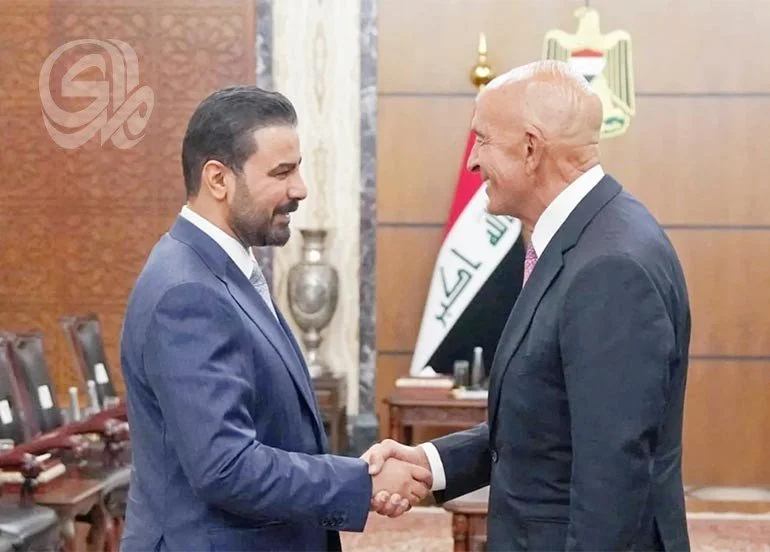
The Iraqi government announced last Monday that al-Zaidi would visit Washington in mid-July at the invitation of US President Donald Trump, shortly after US envoy Tom Barrack's visit to Baghdad, which was accompanied by leaks that sparked widespread interest regarding issues of weapons, corruption, and the future relationship between the two sides.
Academic and political analystMohammed Naanaa believes that Tom Barrack's meeting with al-Zaidi was a crucial step in preparing for the anticipated visit.
Naanaa told Al-Mada that the details of the visit were discussed during the meeting, including the issues mentioned in the Prime Minister's office statement. These issues pertain to the complete disarmament of Iraqis, the consolidation of all armed groups under the command of the Commander-in-Chief of the Armed Forces, the expansion of the American presence in Iraq, particularly for companies operating in the southern oil fields, and the granting of significant licenses to Starlink.
He added that these indicators, in his opinion, reflect an Iraqi alignment with the American vision for the future of the relationship between the two countries. He considers al-Zaidi's visit to be pivotal and the culmination of a series of contacts, dialogues, and reciprocal visits led by Barrack and the US Chargé d'Affaires in Baghdad, leading to what he describes as "the final signing of the new relationship between the two sides."
But Naanaa believes this path will not be without its challenges. He argues that any stability Tehran achieves will prompt it to revitalize its influence within Iraq, and that armed factions may return to exert greater pressure on the power structure, either directly or through their political representatives in parliament and the government.
The researcher emphasizes that Iraq should consider what it stands to gain from this burgeoning relationship, which is expected to culminate in the White House meeting on July 15. He stresses the importance of securing clear American support in three key sectors: banking, energy, and defense. According to Naanaa, Baghdad needs American assistance in acquiring air defense systems to protect the country, and support that will help liberalize the Iraqi monetary system, reduce exchange rate volatility, and mitigate the impact of the parallel dollar on citizens' livelihoods.
Furthermore, assistance is needed to resolve the gas import crisis for electricity generation through alternative solutions, including floating power platforms. The issues of weapons and sovereignty were also discussed. During their recent meeting in Baghdad, al-Zaidi and Barak emphasized the importance of building a strong and mutually beneficial Iraqi-American partnership.
According to the official statement, the two sides discussed a shared vision for building a "brighter, terrorism-free" future, implementing plans for complete disarmament, dissolving all armed groups and formations operating outside the authority of the state, and ensuring that weapons are solely in the hands of the state and that full sovereignty is established.
They also stressed the need to keep Iraq out of regional conflicts and prevent its territory from being used by any party to threaten security and stability in the region, emphasizing the urgent need to fully achieve these goals.
Iraq at the heart of a new Middle East.
Former diplomat Ghazi Faisal, however, views the visit from a broader perspective that transcends the bilateral relationship between Baghdad and Washington.He tells Al-Mada that the new American initiative, which emerged after Tom Barrack was assigned the Iraq portfolio, is based on major strategic projects, including strengthening coordination and economic integration between Iraq and Syria, ultimately aiming to build a nucleus of regional cooperation that may later include Cairo, Amman, and Beirut, in addition to Baghdad and Damascus.
Faisal believes the region is facing a new phase, especially after what he calls the "historic agreement" to resolve long-standing crises with Iran dating back to 1979. He considers this agreement a precursor to a new Middle East map based on development rather than wars and conflicts.
He adds that Iraq is at the heart of these transformations, and that al-Zaidi's visit could be a starting point for the country's transition from the security, political, and economic chaos that has accompanied the post-2003 era to building a truly democratic state.
He emphasizes that the visit could lay the foundation for deeper economic and investment relations, because, as he describes it, investment is what creates jobs and stimulates the economy, while currently, about 75% of the budget goes to salaries at the expense of development and investment.
Faisal also expects the United States to support Iraq's efforts to combat corruption within ministries, banks, and companies, and to pursue networks involved in smuggling and money laundering.
He points out that the environment created by armed factions and financial corruption in recent years has driven companies and investors to leave Iraq or freeze their projects, which necessitates providing new security and political guarantees to restore confidence in the Iraqi economy.
The visit he concludes, represents an opportunity to review the mistakes made by Washington and Iraqi political parties over the past two decades, and to move Iraq from a failing and declining state to a more stable one, better able to integrate into its regional environment. According to political sources who spoke to Al-Mada, Tom Barrack only arrived in Baghdad after Washington received initial positive signals regarding several demands it had previously conveyed to the Iraqi government.
The sources describe Barrack's visit as pivotal in the course of Iraqi-American relations, considering it the foundation for a new phase, distinct from the period following 2003, based on clear commitments and mutual interests. The most prominent American demands, according to these sources, include the disarmament of all armed factions without exception, preventing their participation in the government, and completing the integration of the Popular Mobilization Forces (PMF) into official security institutions after removing leaders affiliated with armed factions.
The sources indicate that these issues are still under discussion and have not yet been definitively resolved.
The American demands also include closing more than ten banks accused of smuggling dollars and involvement in money laundering, restructuring other financial institutions, expanding anti-corruption measures, and opening the door to broad American and Gulf investments.
According to sources, Washington links the success of these measures to the influx of major investments that Baghdad needs in the energy, infrastructure, and services sectors.
If these conditions are not met, Barak informed Iraqi officials, according to the same sources, that "all options are open," and that the United States will act in accordance with its interests.
Compared to his predecessors, if the visit takes place as scheduled, al-Zaidi will be one of the fastest Iraqi prime ministers to reach the White House.
Only Nouri al-Maliki rivals him in this regard, having visited Washington four times during two terms, with his first visit coming just two months after assuming the premiership. In contrast, Mohammed Shia al-Sudani waited about 17 months before meeting former US President Joe Biden, amid American reservations and internal complications.
For his part, Ahmed al-Yassiri, an Iraqi political analyst residing in Australia, believes that focusing on the speed or timing of the visit does not reflect its true importance.
He tells Al-Mada that al-Zaidi did not request the visit, but rather received an invitation from the US administration. Therefore, linking its significance to the time elapsed since his assumption of office is inaccurate.
He adds that the visit's true importance lies in providing the Iraqi political system with American backing during a sensitive regional period, and in restructuring the relationship between Baghdad and Washington amidst the ongoing transformations in the region, particularly concerning the Iranian issue and the redrawing of security and political alliances.
Al-Yassiri, who also heads the Arab-Australian Center for Strategic Studies, believes the visit will also exert internal pressure on the Iraqi government to present a realistic program regarding investment and the entry of American companies, in addition to ensuring the continued flow of Iraqi funds and preventing the country from being exposed to the risks of US sanctions.
He emphasizes that these issues will shape the features of the next phase, regardless of al-Zaidi's ability to achieve quick results or immediate breakthroughs.
Political support or practical results?
Munqith Dagher, Middle East and North Africa director and a member of the board of directors of Gallup International, views the visit as more of a message of political support than an exceptional event.
He tells Al-Mada that the visit carries a ceremonial dimension for al-Zaidi and represents an American attempt to demonstrate its support for the Iraqi Prime Minister, especially since Washington—in his estimation—played a key role in his rise to power through Tom Barrack.
Dagher believes the timing might have been better had it been delayed slightly, but he acknowledges that American motives dictated the visit's timing. He adds that it wouldn't be a negative development if al-Zaidi succeeds in using the opportunity to raise important Iraqi issues and secure greater American support on vital matters.
He concludes by saying that the true measure of the visit will depend on its actual outcomes: will it remain within the realm of protocol and political messaging, or will it become a starting point for genuine progress on the outstanding issues between Baghdad and Washington? link
Iraq Economic News and Points To Ponder Wednesday Afternoon 6-17-26
Iraq's Basrah Crude Falls Over 3%
2026-06-17 Shafaq News- Basrah Iraq's two Basrah crude grades fell more than 3% on Wednesday, widening the discount against Arab producer benchmarks and pushing Basrah Heavy toward the $50 threshold.
Basrah Heavy dropped $2.05, or 3.83%, to $51.45 per barrel, while Basrah Medium declined $2.05, or 3.69%, to $53.55 per barrel.
Iraq's Basrah Crude Falls Over 3%
2026-06-17 Shafaq News- Basrah Iraq's two Basrah crude grades fell more than 3% on Wednesday, widening the discount against Arab producer benchmarks and pushing Basrah Heavy toward the $50 threshold.
Basrah Heavy dropped $2.05, or 3.83%, to $51.45 per barrel, while Basrah Medium declined $2.05, or 3.69%, to $53.55 per barrel.
Saudi Arab Light traded at $85.28 per barrel, Kuwait Export Crude at $94.84, the UAE's Murban at $71.81, and Qatar Land at $75.81, leaving both Basrah grades at least $18 below the cheapest Arab benchmark in Wednesday's session.
Brent crude fell to $78.71 per barrel, while West Texas Intermediate (WTI) declined to $75.71 per barrel.
https://www.shafaq.com/en/Economy/Iraq-s-Basrah-crude-falls-over-3
Oil Prices Dip Post US-Iran Pact
2026-06-17 Shafaq News Oil prices inched lower on Wednesday, extending the previous session's declines as investors assessed the U.S.-Iran peace deal, though uncertainty over the full resumption of shipping through the Strait of Hormuz limited further falls.
Brent crude futures dipped 16 cents, or 0.2%, to $78.80 a barrel by 0340 GMT, while U.S. West Texas Intermediate fell 25 cents, or 0.3%, to $75.80 a barrel.
Both benchmarks fell about 5% for a second straight session on Tuesday to stand at three-month lows, on hopes that a U.S.-Iran deal would allow oil flows through the Strait.
"Markets are broadly stripping out the embedded geopolitical risk premium in oil prices," said Priyanka Sachdeva, senior market analyst at Phillip Nova.
"That said, the path toward normalisation remains far from straightforward. While political agreements may be progressing, physical tanker traffic through the Strait has yet to fully recover."
The deal would provide for the United States to lift its blockade of Iran's ports, while Tehran would allow oil tanker traffic through the Strait, effectively blocked since U.S. and Israel strikes on February 28.
"Oil markets retreated on expectations the Strait of Hormuz would reopen following the peace agreement, but traders held off further selling pending details," said Hiroyuki Kikukawa, chief strategist of Nissan Securities Investment.
Before the closure, about a fifth of global crude oil and liquefied natural gas supplies flowed through the Strait.
Details of the interim peace deal began to emerge on Tuesday, with President Donald Trump saying it would rule out a nuclear weapon for Tehran and a U.S. official saying it would allow Iran to sell oil upon signing.
The memorandum of understanding, not yet public, extends by another 60 days a tenuous ceasefire agreed in April, so as to allow room for talks toward a permanent truce.
Still, industry officials say a full return to pre-war production and refining levels is likely to take weeks, months or even years.
Israel has distanced itself from both the April ceasefire and the latest U.S.-Iran pact, fuelling uncertainty about whether it will hold.
Israeli drone strikes targeted three vehicles in southern Lebanon on Tuesday, killing at least four and wounding others, Lebanon's National News Agency said, prompting a rare public rebuke from Trump.
China's crude oil throughput fell 9.1% in May on the year to its lowest in almost four years, data showed, also signalling that refiners were starting to draw on stockpiles amid the Iran war.
The American Petroleum Institute report showed U.S. crude stocks fell 8.3 million barrels in the week ended June 12, the sources said.
It exceeded expectations for a draw of 4.6 million barrels, with official numbers due from the Energy Information Administration at 10:30 a.m. ET (1430 GMT) on Wednesday.
(Reuters) https://www.shafaq.com/en/Economy/Oil-prices-dip-post-US-Iran-pact
Foreign Reserves In Iraq Shrink By $1.1B In One Week
2026-06-17 Shafaq News- Baghdad Iraq's foreign reserves fell 1.43% during the final week of May, extending their decline in the second quarter of 2026, according to data released by the Central Bank of Iraq.
Holdings stood at 118.947 trillion Iraqi dinars ($76.25B) on May 28, down 1.728 trillion dinars ($1.11B) from 120.675 trillion dinars ($77.36B) a week earlier. The figures also showed a broader monthly decline, with reserves reaching 127.152 trillion dinars ($81.51B) in April compared with 130.443 trillion dinars ($83.62B) in March.
Gold remained one of the main components of the country’s official reserves, with assets valued at 32.973 trillion dinars ($21.14B). https://www.shafaq.com/en/Economy/Foreign-reserves-in-Iraq-shrink-by-1-1B-in-one-week
USD/IQD Inches Higher At The Closure
2026-06-17 Shafaq News- Baghdad/ Erbil The US dollar closed Wednesday’s trading higher in Iraq, hovering around 156,200 dinars per 100 dollars.
According to Shafaq News market survey, the dollar traded in Baghdad's Al-Kifah and Al-Harithiya exchanges at 156,250 dinars per 100 dollars, up from the morning session’s 156,000 dinars.
In the Iraqi capital, exchange shops sold the dollar at 156,750 dinars and bought it at 155,750 dinars, while in Erbil, selling prices stood at 155,700 dinars and buying prices at 155,650 dinars.
The former Director General of the Central Bank of Iraq (CBI), Mahmoud Dagher, told Shafaq News on Wednesday that expectations of a potential devaluation of the Iraqi dinar amid economic pressures and existing debt obligations are contributing to higher demand for the US dollar and pushing up its exchange rate in the local market.
“Statements and leaks related to the Central Bank's policies or possible changes to the exchange rate often fuel speculation in the market.”
Dagher explained that such reports typically create uncertainty and encourage economic actors to increase their holdings of US dollars, placing additional pressure on the local currency and affecting market prices. “Expectations of a weaker dinar frequently trigger a broader shift among individuals and businesses toward converting savings into foreign currency.” https://www.shafaq.com/en/Economy/USD-IQD-inches-higher-at-the-closure
Gold Prices Trend Upward In Baghdad And Erbil
2026-06-17 Shafaq News- Baghdad/ Erbil On Wednesday, gold prices hovered around 950,000 IQD per mithqal in Baghdad and Erbil markets, according to a survey by Shafaq News Agency.
Gold prices on Baghdad's Al-Nahr Street recorded a selling price of 948,000 IQD per mithqal (equivalent to five grams) for 21-carat gold, including Gulf, Turkish, and European varieties, with a buying price of 944,000 IQD. The same gold had sold for 943,000 IQD on Tuesday.
The selling price for 21-carat Iraqi gold stood at 918,000 IQD, while the buying price reached 914,000 IQD.
In jewelry stores, the selling price per mithqal of 21-carat Gulf gold ranged between 950,000 and 960,000 IQD, while Iraqi gold sold for between 920,000 and 930,000 IQD.
In Erbil, 22-carat gold was sold at 997,000 IQD per mithqal, 21-carat gold at 951,000 IQD, and 18-carat gold at 815,000 IQD. https://www.shafaq.com/en/Economy/Gold-prices-trend-upward-in-Baghdad-and-Erbil
IEA Projects 8M Bpd Supply Surge By 2027
2026-06-17 Shafaq News- Paris The International Energy Agency (IEA) said on Wednesday that the global oil market is expected to gradually recover from the disruption caused by the closure of the Strait of Hormuz, while warning of a significant supply surplus in 2027.
In its monthly oil market report, the Paris-based agency said the temporary agreement between the United States and Iran, which includes reopening the Strait of Hormuz and lifting US restrictions on Iranian ports, would help restore Gulf oil flows.
International Energy Agency – On X LINK
The IEA estimated that the recent conflict disrupted more than 14 million barrels per day (bpd) of Middle Eastern oil production, adding that Iranian exports are expected to fully resume once US restrictions are lifted.
The agency's preliminary outlook for 2027 projects global oil supply growth of around 8 million bpd, far outpacing expected demand growth of less than 2 million bpd.
According to the report, oil flows through the Strait of Hormuz began to recover in early June, driven by an increase in ship-to-ship transfers in the Gulf of Oman, lifting total Middle East supplies to around 12 million bpd from 9.6 million bpd in May. https://www.shafaq.com/en/Economy/IEA-projects-8M-bpd-supply-surge-by-2027
Hamas Reports Progress In Talks On Gaza Ceasefire Second Phase
2026-06-17 Shafaq News- Gaza The discussions with mediators and representatives of the Peace Council had produced broad agreements and significant progress toward completing the implementation of the Gaza ceasefire agreement and moving to its second phase, Hamas stated on Wednesday.
The group’s spokesperson Hazem Qassem said the talks addressed several key issues, including the entry of the National Committee into the Gaza Strip, the deployment of international forces, and the issue of Palestinian weapons.
“The discussions approached the weapons issue through a logical framework acceptable to all parties,” he added, clarifying that Hamas continues to hold meetings with mediators and Peace Council representatives, including Nikolay Mladenov, to finalize discussions and establish a framework for implementing the ceasefire agreement.
Qassem stressed that Hamas was demonstrating “flexibility and positivity” in addressing the various issues under discussion, to reach agreements that prioritize the interests of Palestinians in Gaza. He also said the movement's objectives include ending the “genocide” in Gaza, facilitating the delivery of humanitarian assistance, and beginning reconstruction efforts.
On Sunday, Hamas announced that it had submitted the response of Palestinian factions to a roadmap proposed by Mladenov, while reiterating its demand for a full Israeli withdrawal from the Gaza Strip.
Mladenov presented a 15-point roadmap on May 21 to implement a Gaza plan proposed by US President Donald Trump. The roadmap outlines mechanisms related to Gaza’s future, including reconstruction, disarmament, Israeli withdrawal, the role of an international stabilization force, and the rebuilding of the police apparatus.
The proposal also calls for the implementation of measures promised at the start of the ceasefire, including humanitarian aid, fuel deliveries, border crossings, and shelter provisions, as well as commitments contained in the Sharm El-Sheikh understandings, before advancing to the next stage.
Trump unveiled a 20-point plan on September 29, 2025, aimed at ending the war in Gaza. The proposal includes the release of Israeli hostages, the disarmament of Hamas, a phased Israeli withdrawal, the formation of a technocratic government, and the deployment of an international stabilization force.
The first phase of the plan entered into force on October 10, 2025. Hamas says it has fulfilled its obligations under the agreement, while accusing Israel of violations and of delaying the transition to the second phase.
Read more: Gaza Ceasefire - Phase 1: What we know so far
https://www.shafaq.com/en/Middle-East/Hamas-reports-progress-in-talks-on-Gaza-ceasefire-second-phase
Seeds of Wisdom RV and Economics Updates Wednesday Evening 6-17-26
Good Evening Dinar Recaps,
The Firm’s Q &A Saturday Night Call
WHEN: 📅 Saturday Night
6:00 PM Pacific
8:00 PM Central
9:00 PM Eastern
WHERE: The Firm Q &A Room on Telegram, LINK
Good Evening Dinar Recaps,
The Firm’s Q &A Saturday Night Call
WHEN: 📅 Saturday Night
6:00 PM Pacific
8:00 PM Central
9:00 PM Eastern
WHERE: The Firm Q &A Room on Telegram, LINK

Previous Calls: Listen Here
🐸 Leap Into The Fun! 🐸
Got a question?
Got a topic?
Got something that has you scratching your head?
Jump into the Firm Q&A Room and let's talk about it! LINK
Every week we explore topics, share ideas, chase a few rabbit holes, and occasionally test RJax's timer skills.
Bring your questions for the Saturday Night Call and help shape the discussion.
You never know where the conversation will go once Jester gets curious, Skyedancer sees a connection, and Q3 starts answering.
So leap in, join the fun, and let's learn together!
🐸 Questions Welcome
🎙 Saturday Night Call
💬 Q&A Room Open All Week
~~~~~~~~~~
Seeds of Wisdom Team RV Currency Facts Youtube and Rumble
Newshound's News Telegram Room Link
RV Facts with Proof Links Link
RV Updates Proof links - Facts Link
Start Here room with Most Asked Questions Link
Follow the Gold/Silver Rate COMEX
Follow Fast Facts
Seeds of Wisdom Team™Website
Thank you Dinar Recaps
The Dollar’s REPLACEMENT is Being Launched (It’s Closer Than You Think)
The Dollar’s REPLACEMENT is Being Launched (It’s Closer Than You Think)
Taylor Kenny: 6-16-2026
China and Saudi Arabia's mBridge payment system could challenge dollar dominance and accelerate the shift toward a new global monetary order.
The global financial system is currently undergoing a transformative period that could redefine how nations conduct trade and manage reserves.
The Dollar’s REPLACEMENT is Being Launched (It’s Closer Than You Think)
Taylor Kenny: 6-16-2026
China and Saudi Arabia's mBridge payment system could challenge dollar dominance and accelerate the shift toward a new global monetary order.
The global financial system is currently undergoing a transformative period that could redefine how nations conduct trade and manage reserves.
At the heart of this transition is “Project mbridge,” a collaborative initiative involving China, Saudi Arabia, the UAE, Thailand, and Hong Kong. This digital currency payment network is designed to facilitate cross-border transactions using Central Bank Digital Currencies (CBDCs), effectively creating a sophisticated alternative to the traditional, dollar-centric SWIFT messaging system.
For decades, the U.S. dollar has maintained its status as the world’s primary reserve currency, bolstered significantly by the petrodollar agreement.
However, recent economic shifts—including persistent inflation and rising geopolitical tensions—have prompted many nations to seek greater financial sovereignty.
By moving toward alternative infrastructures, these countries aim to insulate themselves from the potential weaponization of the global financial system and reduce their reliance on a single currency for international trade.
A significant development in this narrative is Saudi Arabia’s increasing engagement with the mbridge project. As the Kingdom explores the possibility of pricing oil trade in currencies other than the dollar, or even physical gold, the historical influence of the petrodollar appears to be evolving.
This shift is fueling what some analysts describe as an “alternative financial systems arms race,” where nations are rapidly building independent payment networks to secure their economic interests.
The geopolitical stakes are clearly high, highlighted by the fact that even major international institutions have had to navigate complex pressures regarding their involvement in these new digital frameworks.
While the emergence of these systems offers potential improvements in transaction speed and global inclusivity, it also brings up complex questions regarding the future of privacy and government oversight.
As countries experiment with CBDCs, there are growing debates about the balance between digital efficiency and individual autonomy. Furthermore, critics point out that while a total collapse of the dollar is not necessarily imminent, the ongoing trend toward de-dollarization and the strengthening of gold reserves suggests a fundamental change in the global financial order is underway.
As we look toward the future, the rise of digital infrastructure and the renewed interest in tangible assets reflect a broader desire for stability.
Many experts suggest that during times of economic uncertainty and currency fluctuations, individuals might consider diversifying their personal holdings by exploring physical precious metals like gold and silver. These assets have historically served as a hedge against systemic risk and inflationary pressures.
CHAPTERS:
00:00 The Dollar’s Biggest Threat Yet
00:58 Why Dollar Dominance Matters
03:49 Project MBridge: China, Saudi Arabia & CBDCs
04:19 SWIFT, CIPS & the Financial Arms Race
07:39 The Petrodollar Is Being Chipped Away
08:36 Saudi Arabia, China, Oil & Gold Settlement
13:16 CBDCs and “Absolute Control”
16:09 Central Banks Choose Gold Over Treasuries
Seeds of Wisdom RV and Economics Updates Wednesday Afternoon 6-17-26
Good Afternoon Dinar Recaps,
G7 Launches Critical Minerals Alliance to Reduce Dependence on China
New partnership aims to strengthen supply chains, boost strategic resource security, and reshape global trade as nations reduce reliance on Chinese critical minerals.
Good Afternoon Dinar Recaps,
G7 Launches Critical Minerals Alliance to Reduce Dependence on China
New partnership aims to strengthen supply chains, boost strategic resource security, and reshape global trade as nations reduce reliance on Chinese critical minerals.
Overview
G7 leaders have agreed to create a coordinated critical minerals alliance to reduce dependence on China for rare earth elements and other strategic resources.
The initiative focuses on strengthening supply chains for industries including defense, semiconductors, electric vehicles, artificial intelligence, and renewable energy.
The alliance signals a broader shift toward economic security, with governments treating critical minerals as strategic national assets rather than ordinary commodities.
Key Developments
1. G7 Sets New Diversification Targets
The Group of Seven announced plans to reduce dependence on any single supplier of rare earths and permanent magnets to below 60% by 2030, with a longer-term goal of reducing that figure to 50% as quickly as practical.
The first phase will prioritize lithium and nickel, with additional strategic minerals expected to be added over time.
2. New Monitoring Platform Will Track Supply Risks
The alliance will establish a coordination platform to improve information sharing, identify potential shortages, and respond more quickly to supply disruptions.
The International Energy Agency (IEA) will assist by providing market analysis and early warning reports to help governments anticipate risks before they impact manufacturing and global trade.
3. Major Investment Push Across the Supply Chain
G7 nations also committed to encouraging investment across the full supply chain—from mining and refining to processing, manufacturing, and recycling.
Nearly 200 critical mineral projects have already been announced during 2026, representing tens of billions of dollars in planned investment designed to build more resilient supply networks.
Why It Matters
Critical minerals have become one of the most important strategic resources in the global economy. They are essential for advanced defense systems, semiconductor manufacturing, electric vehicles, renewable energy infrastructure, artificial intelligence, and modern communications technology.
By reducing dependence on China, G7 nations hope to strengthen economic resilience, protect key industries from geopolitical disruptions, and improve long-term supply chain security
Why It Matters to Foreign Currency Holders
For those watching the Global Financial Reset, this development reflects a continuing shift toward economic blocs built around strategic resources instead of simply financial markets.
As countries invest heavily in domestic production, regional partnerships, and secure supply chains, global trade patterns may continue moving away from decades of globalization. These changes could influence commodity pricing, industrial competitiveness, capital flows, and eventually the long-term role of reserve currencies as nations increasingly prioritize resource security alongside monetary stability.
Implications for the Global Reset
Pillar 1: Assets
Critical minerals are becoming strategic reserve assets, much like gold and energy reserves, as governments compete for long-term control of essential resources.
Pillar 2 : Trade
The alliance highlights the ongoing restructuring of global supply chains, with trusted trading partners becoming increasingly important as nations seek to reduce geopolitical risk.
Looking Ahead
The success of this initiative will depend on whether G7 countries can transform policy commitments into operational mining, processing, and manufacturing capacity over the coming years.
If successful, the alliance could significantly reduce China's dominance in critical minerals while accelerating the emergence of new regional trade networks and strategic investment partnerships. These developments are likely to play an increasingly important role in the evolving global economic landscape.
This is not just about mining—it is about who controls the building blocks of tomorrow's global economy.
Seeds of Wisdom Team
Newshounds News™ Exclusive
Sources
Reuters — "G7 launches critical minerals alliance to reduce dependence on China"
Modern Diplomacy — "G7 Launches Critical Minerals Alliance to Reduce Dependence on China"
~~~~~~~~~~
Seeds of Wisdom Team RV Currency Facts Youtube and Rumble
Newshound's News Telegram Room Link
RV Facts with Proof Links Link
RV Updates Proof links - Facts Link
Follow the Gold/Silver Rate COMEX
Follow Fast Facts
Seeds of Wisdom Team™Website
Thank you Dinar Recaps
Wed. Iraq News Posted by Tishwash at TNT 6-17-2026
TNT:
Tishwash: The government announces the purpose of al-Zaidi's visit to Washington
Government spokesman Haider Al-Aboudi confirmed on Tuesday that Prime Minister Ali Faleh Al-Zaidi's visit to Washington aims to strengthen the Iraqi-American partnership, noting that economic, trade and investment issues will be at the forefront of the visit's agenda.
Al-Aboudi said in a press statement: “The Prime Minister, Ali Faleh Al-Zaidi, will pay an official visit to Washington in mid-July with the aim of establishing the necessary momentum to strengthen the Iraqi-American partnership and elevate it to an effective level within the framework of the strategic relationship between the two countries, in accordance with the principle of common interests of the two friendly peoples.”
TNT:
Tishwash: The government announces the purpose of al-Zaidi's visit to Washington
Government spokesman Haider Al-Aboudi confirmed on Tuesday that Prime Minister Ali Faleh Al-Zaidi's visit to Washington aims to strengthen the Iraqi-American partnership, noting that economic, trade and investment issues will be at the forefront of the visit's agenda.
Al-Aboudi said in a press statement: “The Prime Minister, Ali Faleh Al-Zaidi, will pay an official visit to Washington in mid-July with the aim of establishing the necessary momentum to strengthen the Iraqi-American partnership and elevate it to an effective level within the framework of the strategic relationship between the two countries, in accordance with the principle of common interests of the two friendly peoples.”
He added, “Based on the priorities of the Iraqi government and its ministerial program, which has gained the confidence of the House of Representatives, economic, trade and investment files will be at the forefront of the axes of the anticipated visit as the cornerstone of the path of bilateral cooperation,” noting that “the government seeks to expand the horizons of strategic partnership with international companies and stimulate the investment environment in a way that contributes to achieving direct benefits for the Iraqi economy and enhances internal stability.”
Al-Aboudi continued, “Within the framework of this stability, which is based on economic foundations and flexible management of the variables of the current stage, the Iraqi government is proceeding with addressing the issue of unregulated weapons and working to restrict their possession and use to the state and its competent institutions, as they are constitutionally authorized to make the sovereign decision in this field.”
Prime Minister Ali Faleh al-Zaidi received in his office the US President’s Special Envoy, Tom Barrack, and discussed with him the Iraqi government’s shared commitment to establishing a strong and mutually beneficial US-Iraqi partnership capable of fulfilling the aspirations of Iraqis for a future of sovereignty, security and prosperity, and providing tangible benefits to both the Iraqi and American peoples. link
************
Tishwash: Ending the "militias" and the relationship between Erbil and Baghdad are on the table for Masoud Barzani and Tom Barrack
Kurdish leader Masoud Barzani discussed with US President’s Special Envoy for Iraq and Syria, Tom Barak, on Tuesday, ways to enhance stability in Iraq and the Kurdistan Region. While Barak stressed the need for Baghdad to restrict weapons to the state and end the influence of “militias,” Barzani pointed to the importance of the federal government’s commitment to the principles of partnership, balance, and consensus within the framework of the constitution.
A statement from Barzani’s headquarters, received by Shafaq News Agency, stated that Masoud Barzani received Ambassador Tom Barrack at the Salahaddin resort. During the meeting, Barrack emphasized that Iraq and the region need stability, and that the Kurdistan Region plays an important and essential role in the present and future, while expressing his admiration for the development and progress witnessed in the Kurdistan Region, describing it as exemplary.
For his part, Barzani stressed that the Kurdistan Region has always been a stabilizing factor, and that it supports dialogue and diplomatic solutions to all of Iraq’s and the region’s problems, noting that the Kurdistan Region has never been part of the problems, but has always been unfairly harmed by the consequences of wars and conflicts in the region.
Barzani also stressed the need for the Middle East to move towards a stable situation that brings prosperity to the region's inhabitants.
In another part of the meeting, the importance of joint work and coordination between the Kurdistan Region and the new Iraqi government was highlighted.
The US envoy spoke about the need for stability in the Iraqi political system and the protection of the state’s role in controlling unofficial armed forces, reiterating his country’s support for the Iraqi federal prime minister in the process of restricting weapons to the state and ending the influence of militias, as stated in the statement.
Regarding the new Iraqi government, Barzani affirmed his support for Prime Minister Ali al-Zubaidi, stressing the need for everyone to learn from the mistakes of the past and to work on the basis of the principles of partnership, balance, and consensus, and within the framework of the constitution.
In another part of the meeting, views were exchanged on the situation in the region and its equations, and the two sides agreed to work together according to common priorities to enhance the stability of Iraq and the Kurdistan Region, and to build a long-term strategic friendship in economic aspects and to encourage investment. link
*************
Tishwash: The fluctuation in the dollar's exchange rate is linked to the mechanisms of the central bank and has no relation to political agreements.
A currency exchanger in Erbil markets revealed that the main reason behind the recent rise in the dollar exchange rate is due to the scarcity of hard currency offered in the markets, denying that the matter has any connection to political understandings or agreements.
Money exchanger Mam Sayed explained in an exclusive statement to Kurdistan 24 on Tuesday, June 16, 2026, that the decline in the amount of dollars offered by the Central Bank of Iraq has directly impacted prices. He pointed out that the scarcity of foreign currency in the markets is linked to the Central Bank's sales mechanism in Baghdad. He also noted the existence of unconfirmed rumors about the Central Bank's intention to adjust the official exchange rate to 142,000 dinars per 100 dollars, which has contributed to increased volatility and instability in the parallel market.
Regarding the role of Erbil markets in price movements, Mam Sayed stressed that "this situation is not related to Erbil markets, but rather the procedures followed in Baghdad are the main cause of the current state of confusion."
Regarding price levels, Al-Sarraf explained that the trading of the past 24 hours witnessed sharp fluctuations; as the exchange rate yesterday morning reached 154,000 dinars per 100 dollars, while the price currently ranges between 155,700 and 156,000 dinars.
He also revealed that commercial activity and market demand are currently concentrated almost entirely on the Iranian Toman, while trading in other currencies such as the Euro, the British Pound, and the Chinese Yuan has witnessed a significant decline and near-total stagnation.
The money changer pointed out the difficulty of predicting the course of exchange rates in the coming days, given the continued scarcity of dollars and the uncertainty regarding the duration of this situation.
For his part, Mazhar Muhammad Salih, the Iraqi Prime Minister's economic advisor, had previously told Kurdistan 24 that the current financial difficulties are directly linked to regional tensions and the closure of the Strait of Hormuz. He explained that approximately 85% of Iraq's oil was exported daily through this strait, meaning that the disruption of this vital waterway has severely limited the government's financial capabilities.
Ali al-Zidi’s advisor denied rumors that spoke of a government intention to reduce the value of the local currency, stressing: “The Iraqi government has no plans at the moment to raise the exchange rate of the dollar, but rather all efforts are focused on finding alternative mechanisms and overcoming the current financial crisis.”
The clarifications from Mazhar Muhammad Salih come in response to what local media outlets have been reporting in recent days regarding the federal government's intention to raise the exchange rate of the dollar against the dinar to confront the current economic and financial challenges. link
Tishwash: Speculation and Scarcity Drive Iraqi Dinar Lower as Baghdad Rejects Devaluation Fears
While the closure of the Strait of Hormuz chokes oil revenue, currency markets in Erbil and Baghdad grapple with a dollar shortage and a wave of disruptive rumors.
In the bustling corridors of Erbil's currency bazaar, the rhythmic exchange of notes has taken on a frantic pace as the U.S. dollar climbs sharply against the Iraqi dinar. On Tuesday, the local market was defined by a volatile mix of genuine scarcity and a feverish wave of speculation, leaving traders and citizens alike struggling to find firm footing in an increasingly unstable financial landscape.
The immediate source of the tremor appears to be a sudden tightening of dollar liquidity originating in Baghdad. Mam Sayid, a prominent currency exchanger in Erbil's bazaar, told Kurdistan24 on Tuesday that the primary driver behind the dollar's surge is a physical shortage of the currency.
While the Central Bank of Iraq (CBI) continues to sell dollars, Sayid noted that the pace is depleting national reserves at a concerning rate.
The resulting anxiety is manifesting in sharp price fluctuations.
According to Sayid's 24-hour market update, the exchange rate moved from approximately 154,000 IQD per $100 on Monday morning to as high as 156,000 IQD by Tuesday.
This rapid depreciation has been further fueled by a persistent rumor that the Central Bank intends to raise the official exchange rate to 142,000 IQD, a move that would effectively codify a devaluation of the national currency.
Sayid was emphatic that the disruption is a product of policy uncertainty in the capital rather than local conditions in the Kurdistan Region.
The fiscal squeeze is undeniable, and its roots are deeply anchored in the region's geopolitical volatility. Iraq's financial health is inextricably tied to its oil exports, and the recent conflict has dealt a staggering blow to the state's revenue streams.
Mazhar Mohammed Salih, a senior economic advisor to Iraqi Prime Minister Ali al-Zaidi, recently provided Kurdistan24 with a stark assessment of the crisis.
He explained that the ongoing closure of the Strait of Hormuz, the maritime chokepoint through which 85 percent of Iraq's oil once flowed daily, has severely restricted the government's financial capacity.
However, Salih moved decisively to quell the market's worst fears. In an interview with Kurdistan24, he categorically denied reports that the government plans to officially devalue the dinar to offset the revenue shortfall.
"At this stage, the Iraqi government has no plans to raise the value of the dollar," Salih stated, characterizing reports of an impending hike as baseless.
He noted that the administration is instead aggressively pursuing alternative economic mechanisms to navigate the current fiscal crunch without resorting to a policy-led increase in exchange rates.
Despite these official reassurances, the psychology of the bazaar often moves faster than the directives from the Prime Minister's office.
In a highly dollarized economy like Iraq's, rumors of a pending rate change often become self-fulfilling prophecies.
Traders, anticipating a more expensive dollar tomorrow, hoard their current holdings today, thereby strangling supply and driving prices up in a classic speculative loop.
The shift in market demand also reflects broader regional alignments. Mam Sayid revealed that while the dollar dominates the conversation, demand among traders has become concentrated on the Iranian toman.
Meanwhile, traditional trading in other major international currencies, such as the euro, the British pound, and the Chinese yuan, has effectively stalled. This stagnation in non-dollar trading highlights the unique, almost singular importance of the U.S. currency to Iraq's domestic stability and its ability to pay for essential imports.
The implications for the average Iraqi are significant.
A rising dollar translates directly into higher costs for imported goods, from basic foodstuffs to electronics and medicine, eroding the purchasing power of families already strained by the wider regional conflict.
For the al-Zaidi government, the challenge is twofold: they must manage a genuine liquidity crisis born of suppressed oil exports while simultaneously conducting a war of words against the rumors that threaten to unanchor the currency.
As the markets wait for a definitive sign of stability, predicting the dinar's trajectory remains a difficult task for even the most seasoned observers.
For Mam Sayid and his fellow traders in Erbil, the immediate future is a waiting game. Until the underlying scarcity is resolved and the "142,000" rumor is fully exorcised from the public consciousness, the Iraqi dinar will likely remain at the mercy of the prevailing winds blowing from Baghdad and the volatile waters of the Gulf. link
Iraq Economic News and Points To Ponder Late Tuesday Evening 6-16-26
Oil Prices Fall On Uncertainty Over Hormuz Reopening
2026-06-16 Shafaq News Oil prices extended losses on Tuesday, as markets weighed prospects for resumption of supply through the key Strait of Hormuz against shaky physical market drivers and a lack of details from a preliminary deal to end the Iran war.
By 0436 GMT, Brent crude futures fell 25 cents, or 0.3%, to $82.92 a barrel and U.S. West Texas Intermediate inched down 9 cents, or 0.1%, to $80.66 a barrel.
Oil Prices Fall On Uncertainty Over Hormuz Reopening
2026-06-16 Shafaq News Oil prices extended losses on Tuesday, as markets weighed prospects for resumption of supply through the key Strait of Hormuz against shaky physical market drivers and a lack of details from a preliminary deal to end the Iran war.
By 0436 GMT, Brent crude futures fell 25 cents, or 0.3%, to $82.92 a barrel and U.S. West Texas Intermediate inched down 9 cents, or 0.1%, to $80.66 a barrel.
On Monday, oil prices fell nearly 5% to their lowest close since March 4, after U.S. President Donald Trump said a memorandum of understanding was signed to end the U.S.-Israeli war with Iran, though full details have not been made public.
The hostilities led to the closure of the Strait of Hormuz that typically carried one-fifth of the world's oil supply before the conflict.
Some analysts expect a resumption of supply soon via the Strait, with other factors weighing down physical market prices.
"From here, it likely takes several weeks for tanker flow to be restored," Morgan Stanley analysts said in a client note.
"We see 50% of production back by September, and 80% by December, slightly faster than before."
A broad range of indicators had signaled weakness in physical oil markets in recent weeks, they added.
"High U.S. exports and low China imports are the key drivers (and) in the short term (i.e. next weeks) they do not seem to come to an end just yet."
China's crude imports slumped 29% in May to their lowest in eight years, extending a dramatic decline for the world's importer, with its liftings of Saudi Arabia crude expected to also fall in July.
Early indications are that the U.S.-Iran deal would reopen the blockaded Strait of Hormuz and extend a ceasefire for 60 days, allowing negotiators to tackle difficult issues such as the future of Iran's nuclear programme.
On Monday, Iranian President Masoud Pezeshkian called the U.S.-Iran pact an "important step" toward stopping the fighting but cautioned a final agreement for a lasting truce "has yet to take shape".
But with full details yet to emerge and a permanent truce still to be reached, overall price weakness is limited.
Suvro Sarkar, the head of DBS Bank's energy research, said the deal's first phase, encompassing the Geneva signing of an extension of the 60-day ceasefire, was easy, would buy time and kick the "nuclear can" down the road.
But the second phase, to be watched most closely by markets for its physical impact, is the phased reopening of the Strait of Hormuz and the wind-down of the US naval blockade on Iranian ports and vessels, he added.
"Anything other than a clean simultaneous unlock will mean renewed volatility in oil prices," Sarkar said. "Given the trust deficit so far, it will be interesting to see how this plays out over the next couple of weeks."
On Monday, a senior Iranian official said Iran would freeze its nuclear activity until a final agreement, and refrain from further uranium enrichment or expansion of nuclear facilities.
Reuters https://www.shafaq.com/en/Economy/Oil-prices-fall-on-uncertainty-over-Hormuz-reopening
Iraq's Petroleum Product Exports Fall 16% In Q1 2026
2026-06-16 Shafaq News- Baghdad Iraq's petroleum product exports totaled 2.35 million tonnes in the first quarter of 2026, down nearly 16% from 2.80 million tonnes during the same period last year, according to data released on Tuesday by the State Oil Marketing Organization (SOMO).
The exports consisted of 2.12 million tonnes of fuel oil and 234,503 tonnes of naphtha, while no sulfur exports were recorded during the January-March period.
Iraq, OPEC's second-largest oil producer, relies on crude oil exports for about 90% of federal revenue. According to government accounts through April, oil revenues reached 26.121 trillion Iraqi dinars (about $17B), accounting for 84% of the country's total income of 31.163 trillion dinars (about $20B) during the first four months of 2026.
https://www.shafaq.com/en/Economy/Iraq-s-petroleum-product-exports-fall-16-in-Q1-2026
Iraqi Crude Among Top Losers On US-Iran Deal Hopes
2026-06-16 Shafaq News- Basrah Iraq's Basrah crude posted sharp losses on Tuesday, ranking among the steepest decliners in global oil markets as optimism over a preliminary US-Iran agreement pressured prices.
Basrah Heavy dropped $4.64, or 7.98%, to $53.50 per barrel, while Basrah Medium fell by the same amount, losing 7.70% to settle at $55.60 per barrel.
Globally, Brent crude eased 0.31% to $82.92 per barrel, and US West Texas Intermediate (WTI) slipped 0.11% to $80.66 per barrel.
The Organization of the Petroleum Exporting Countries (OPEC) basket declined 6.52% to $91.68 per barrel. Omani crude on the Dubai Energy Exchange also fell 7% to $81.91 per barrel, as wait-and-see sentiment spread across regional markets. https://www.shafaq.com/en/Economy/Iraqi-crude-among-top-losers-on-US-Iran-deal-hopes
Two Tankers Receive 4M Barrels Of Iraqi Crude At Basra Ports
2026-06-16 Shafaq News- Basra Two oil tankers, a Greek and an Emirati tanker, are currently being loaded with a combined four million barrels of Iraqi crude at southern ports in Basra as part of the resumption of crude oil exports, an Iraqi ports source told Shafaq News on Tuesday.
This development follows the preliminary understanding between Iran and the United States announced on Sunday, which led to the reopening of the Strait of Hormuz to maritime traffic after intermittent disruptions linked to the conflict involving Iran, the United States, and Israel.
Hormuz, the strategic maritime corridor, has been largely shut since February 28 following the US–Israel war on Iran, disrupting energy flows and prompting Gulf producers, including Iraq, which routes roughly 95% of its oil exports through the waterway, to scale back shipments.
Turkiye Rejects Extending Kirkuk-Ceyhan Oil Pipeline Agreement
2026-06-16 Shafaq News- Ankara Ankara refuses to extend the existing Kirkuk-Ceyhan oil pipeline agreement under current conditions, Reuters reported on Tuesday, citing a senior Turkish official.
Iraq requested at least a one-year extension to allow more time for negotiations on a replacement deal.
Ali Nizar, head of Iraq’s State Organization for Marketing of Oil (SOMO), said Iraq has exported about 12 million barrels of crude oil through its southern ports since the beginning of June.
The current Kirkuk-Ceyhan pipeline agreement is due to expire on July 27, ending a framework that has regulated oil exports between Iraq and Turkiye for decades. Both sides continue to discuss a draft agreement that would govern export operations through the route in the coming period.
https://www.shafaq.com/en/Economy/Turkiye-rejects-extending-Kirkuk-Ceyhan-oil-pipeline-agreement
Seeds of Wisdom RV and Economics Updates Wednesday Morning 6-17-26
Good Morning Dinar Recaps,
Europe's Gas Market Survives Hormuz Shock, but Long-Term Demand Decline Looms
The recent Strait of Hormuz disruption tested Europe's energy resilience, but the greater challenge may be adapting to a future of declining natural gas demand.
Good Morning Dinar Recaps,
Europe's Gas Market Survives Hormuz Shock, but Long-Term Demand Decline Looms
The recent Strait of Hormuz disruption tested Europe's energy resilience, but the greater challenge may be adapting to a future of declining natural gas demand.
Overview
Europe successfully weathered the Strait of Hormuz disruption by diversifying liquefied natural gas (LNG) imports and relying on expanded energy infrastructure.
Although the U.S.-Iran peace framework is expected to restore shipping, lingering production losses in Qatar and global LNG competition could affect supply for years.
Analysts now believe Europe's biggest energy challenge is no longer supply security—but steadily declining demand driven by electrification and decarbonization.
Key Developments
1. Europe Withstood a Major Global LNG Supply Shock
The temporary closure of the Strait of Hormuz disrupted nearly 20% of global LNG trade, causing European natural gas prices to surge by approximately 31% and increasing the European Union's collective gas bill by nearly 48%. Despite these pressures, Europe avoided widespread shortages by increasing LNG imports from the United States, Algeria, and Nigeria while relying on expanded storage and pipeline networks.
2. Diversified Energy Infrastructure Prevented a Crisis
Years of investment in LNG import terminals, cross-border pipelines, storage facilities, and interconnectors allowed natural gas supplies to move efficiently throughout Europe. New regasification terminals across the Baltic, Adriatic, and Aegean regions further strengthened Europe's ability to respond to supply disruptions.
3. Long-Term Demand Decline May Become the Bigger Story
While supply security has improved, researchers project that European natural gas demand could decline between 30% and nearly 50% by 2040, depending on energy prices and climate policies. Electrification, renewable energy expansion, improved efficiency, and decarbonization efforts are expected to steadily reduce gas consumption across power generation, industry, and residential heating.
Why It Matters
The Hormuz crisis demonstrated that Europe's energy system is significantly more resilient than during previous supply shocks, including the aftermath of Russia's invasion of Ukraine. Diversified supply sources and stronger infrastructure have reduced the risk of widespread shortages during geopolitical disruptions.
However, Europe's energy debate is evolving. Instead of asking whether enough gas is available, policymakers are increasingly focused on whether natural gas will remain economically competitive as renewable energy, battery storage, nuclear power, and electrification continue expanding.
Why It Matters to Foreign Currency Holders
Energy remains one of the largest drivers of global inflation, monetary policy, and economic growth. Greater stability in Europe's gas market could ease inflationary pressures and influence future interest-rate decisions by major central banks.
For those following the Global Financial Reset, this transition reflects the ongoing restructuring of global energy systems. As nations diversify supply chains and modernize infrastructure, energy security continues to play a central role in shaping currencies, trade, and long-term investment flows.
Implications for the Global Reset
Pillar 1: Energy
The Hormuz crisis confirmed that energy diversification and resilient infrastructure are becoming essential pillars of national and economic security. Countries continue investing in multiple supply sources to reduce dependence on any single region.
Pillar 2: Trade
Europe's increasing reliance on U.S. LNG while gradually reducing Russian energy imports illustrates the continued realignment of global trade relationships and strategic energy partnerships.
Looking Ahead
Several developments will determine Europe's long-term energy outlook:
Normalization of LNG shipments through the Strait of Hormuz
Recovery of Qatar's LNG production capacity
Growth in U.S. LNG exports to Europe
Future competition from Asian LNG buyers
Continued expansion of renewable energy and electrification
European policies aimed at reducing fossil fuel consumption
While Europe's ability to withstand supply disruptions has improved dramatically, the next major challenge may be managing a gradual decline in natural gas demand rather than responding to future shortages.
This is not just an energy story—it's global finance restructuring before our eyes.
Seeds of Wisdom Team
Newshounds News™ Exclusive
Sources
Modern Diplomacy — "Europe Gas Market Survives Hormuz Shock but Long-Term Demand Decline Looms"
Reuters — Coverage of European energy markets, LNG trade, and the Strait of Hormuz disruption.
~~~~~~~~~~
🌱 A Message to Our Currency Holders🌱
If you’ve been holding foreign currency for many years, you were not foolish.
You were not wrong to believe the global financial system would change.
What failed was not your patience — it was the information you were given.
For years, dates, rumors, and personalities replaced facts, structure, and proof. “This week” predictions created cycles of hope and disappointment that were never based on how currencies actually change.
That is not your failure.
Our mission here is different: • No dates • No rates • No hype • No gurus
Instead, we focus on:
• Verifiable developments • Institutional evidence
• Global financial structure • Where countries actually sit in the process
Currency value changes only come after sovereignty, trade, banking, settlement systems, and fiscal coordination are in place. History and institutions confirm this sequence.
You will see silence. You will see denials. That is not delay — that is discipline.
Protect your identity. Organize your documents. Verify everything.
Never hand your discernment to anyone who cannot show proof.
You deserve truth — not timelines.
Seeds of Wisdom Team
Newshounds News
~~~~~~~~~~
Seeds of Wisdom Team RV Currency Facts Youtube and Rumble
Newshound's News Telegram Room Link
RV Facts with Proof Links Link
RV Updates Proof links - Facts Link
Follow the Gold/Silver Rate COMEX
Follow Fast Facts
Seeds of Wisdom Team™Website
Thank you Dinar Recaps
MilitiaMan & CREW IRAQ DINAR UPDATE-"Hush-Major Convergences-Cabinet, ASYCUDA, Iran Deal & Iraqi Skies Reopen"
MilitiaMan & CREW IRAQ DINAR UPDATE-"Hush-Major Convergences-Cabinet, ASYCUDA, Iran Deal & Iraqi Skies Reopen"
6-16-2026
The Crew: Samson, PompeyPeter, Petra, Daytrader, Sunkissed, GIGI and Militia Man
No drama. No intrigue. No songs and dances. Just straight, factual news that I read and interpret to the best of my ability after being an avid Dinar investor and insanely obsessed Dinarian for over 15 years.
Follow MM on X == https://x.com/Slashn
MilitiaMan & CREW IRAQ DINAR UPDATE-"Hush-Major Convergences-Cabinet, ASYCUDA, Iran Deal & Iraqi Skies Reopen"
6-16-2026
The Crew: Samson, PompeyPeter, Petra, Daytrader, Sunkissed, GIGI and Militia Man
No drama. No intrigue. No songs and dances. Just straight, factual news that I read and interpret to the best of my ability after being an avid Dinar investor and insanely obsessed Dinarian for over 15 years.
Follow MM on X == https://x.com/Slashn
Be sure to listen to full video for all the news……..
Iraq Economic News and Points To Ponder Tuesday Evening 6-16-26
Al-Zaydi's Advisor Told Kurdistan 24: There Are No Plans To Raise The Dollar Exchange Rate.
Erbil (Kurdistan24) – An advisor to the Iraqi Prime Minister denied all reports circulating about the government's intention to raise the exchange rate of the dollar against the dinar to address the current financial crisis. He indicated that although the closure of the Strait of Hormuz has significantly harmed the country's revenues, the government will not resort to increasing the dollar's value.
Al-Zaydi's Advisor Told Kurdistan 24: There Are No Plans To Raise The Dollar Exchange Rate.
Erbil (Kurdistan24) – An advisor to the Iraqi Prime Minister denied all reports circulating about the government's intention to raise the exchange rate of the dollar against the dinar to address the current financial crisis. He indicated that although the closure of the Strait of Hormuz has significantly harmed the country's revenues, the government will not resort to increasing the dollar's value.
The Iraqi Prime Minister's economic advisor, Mazhar Muhammad Salih, told Kurdistan 24 that Iraq's current financial challenges are directly linked to regional conflicts and tensions, as well as the closure of the Strait of Hormuz. He explained that approximately 85% of Iraq's oil was exported daily through this strait to global markets, and therefore, the disruption of this vital waterway has significantly reduced the government's financial capabilities.
Ali al-Zidi’s advisor denied rumors that the government wanted to adjust the exchange rate, saying: “At this stage, the Iraqi government has no plans to raise the dollar exchange rate. Rather, all efforts and discussions are focused on finding alternative mechanisms to overcome this current situation.”
These statements by Mazhar Muhammad Salih come after reports circulated by some Iraqi media outlets in the past few days, indicating the federal government’s intention to raise the exchange rate of the dollar against the dinar again as a step to confront the current challenges and financial crisis.
Speculation And Scarcity Drive Iraqi Dinar Lower As Baghdad Rejects Devaluation Fears
While the closure of the Strait of Hormuz chokes oil revenue, currency markets in Erbil and Baghdad grapple with a dollar shortage and a wave of disruptive rumors
ERBIL (Kurdistan24) - In the bustling corridors of Erbil's currency bazaar, the rhythmic exchange of notes has taken on a frantic pace as the U.S. dollar climbs sharply against the Iraqi dinar. On Tuesday, the local market was defined by a volatile mix of genuine scarcity and a feverish wave of speculation, leaving traders and citizens alike struggling to find firm footing in an increasingly unstable financial landscape.
The immediate source of the tremor appears to be a sudden tightening of dollar liquidity originating in Baghdad. Mam Sayid, a prominent currency exchanger in Erbil's bazaar, told Kurdistan24 on Tuesday that the primary driver behind the dollar's surge is a physical shortage of the currency.
While the Central Bank of Iraq (CBI) continues to sell dollars, Sayid noted that the pace is depleting national reserves at a concerning rate.
The resulting anxiety is manifesting in sharp price fluctuations.
According to Sayid's 24-hour market update, the exchange rate moved from approximately 154,000 IQD per $100 on Monday morning to as high as 156,000 IQD by Tuesday.
This rapid depreciation has been further fueled by a persistent rumor that the Central Bank intends to raise the official exchange rate to 142,000 IQD, a move that would effectively codify a devaluation of the national currency.
Sayid was emphatic that the disruption is a product of policy uncertainty in the capital rather than local conditions in the Kurdistan Region.
The fiscal squeeze is undeniable, and its roots are deeply anchored in the region's geopolitical volatility. Iraq's financial health is inextricably tied to its oil exports, and the recent conflict has dealt a staggering blow to the state's revenue streams.
Mazhar Mohammed Salih, a senior economic advisor to Iraqi Prime Minister Ali al-Zaidi, recently provided Kurdistan24 with a stark assessment of the crisis.
He explained that the ongoing closure of the Strait of Hormuz, the maritime chokepoint through which 85 percent of Iraq's oil once flowed daily, has severely restricted the government's financial capacity.
However, Salih moved decisively to quell the market's worst fears. In an interview with Kurdistan24, he categorically denied reports that the government plans to officially devalue the dinar to offset the revenue shortfall.
"At this stage, the Iraqi government has no plans to raise the value of the dollar," Salih stated, characterizing reports of an impending hike as baseless.
He noted that the administration is instead aggressively pursuing alternative economic mechanisms to navigate the current fiscal crunch without resorting to a policy-led increase in exchange rates.
Despite these official reassurances, the psychology of the bazaar often moves faster than the directives from the Prime Minister's office.
In a highly dollarized economy like Iraq's, rumors of a pending rate change often become self-fulfilling prophecies.
Traders, anticipating a more expensive dollar tomorrow, hoard their current holdings today, thereby strangling supply and driving prices up in a classic speculative loop.
The shift in market demand also reflects broader regional alignments. Mam Sayid revealed that while the dollar dominates the conversation, demand among traders has become concentrated on the Iranian toman.
Meanwhile, traditional trading in other major international currencies, such as the euro, the British pound, and the Chinese yuan, has effectively stalled. This stagnation in non-dollar trading highlights the unique, almost singular importance of the U.S. currency to Iraq's domestic stability and its ability to pay for essential imports.
The implications for the average Iraqi are significant.
A rising dollar translates directly into higher costs for imported goods, from basic foodstuffs to electronics and medicine, eroding the purchasing power of families already strained by the wider regional conflict.
For the al-Zaidi government, the challenge is twofold: they must manage a genuine liquidity crisis born of suppressed oil exports while simultaneously conducting a war of words against the rumors that threaten to unanchor the currency.
As the markets wait for a definitive sign of stability, predicting the dinar's trajectory remains a difficult task for even the most seasoned observers.
For Mam Sayid and his fellow traders in Erbil, the immediate future is a waiting game. Until the underlying scarcity is resolved and the "142,000" rumor is fully exorcised from the public consciousness, the Iraqi dinar will likely remain at the mercy of the prevailing winds blowing from Baghdad and the volatile waters of the Gulf.
Summary
Iraq’s dinar has slipped as a dollar shortage and rumors of a rate hike hit markets. While Prime Minister Ali al-Zaidi's advisor denied devaluation plans, citing the Strait of Hormuz closure as the root fiscal cause, speculation has driven exchange rates toward 156,000 IQD per $100.
Finance Minister: We Are Proceeding With The Implementation Of A Package Of Reforms Aimed At Maximizing Non-Oil Revenues.
Time: 2026/06/16 15:23:39 {Economic: Al-Furat News} Finance Minister, Faleh Sari, confirmed on Tuesday the continuation of implementing a package of reforms aimed at maximizing non-oil revenues.
The media office of the Minister of Finance stated in a statement received by Al-Furat News that “the Minister of Finance, Falih Sari, received today, Tuesday, the Assistant Secretary-General of the United Nations Development Programme (UNDP), and the Regional Director for Arab States, Abdullah Al-Dardari.”
He added that "during the meeting, the government's priorities for the next stage were reviewed in light of the current economic challenges."
According to the statement, the minister affirmed that "the ministry is proceeding with the implementation of a package of reforms and measures aimed at maximizing non-oil revenues, developing financial management, and advancing automation projects and the shift towards program and performance budgeting, in order to enhance spending efficiency and raise the level of financial performance."
He pointed to "the importance of partnership with international institutions in supporting development programs, and benefiting from technical expertise in implementing the government's economic and financial priorities."
For its part, the United Nations Development Programme delegation welcomed the “establishment of the Financial Stability Board,” expressing “the Programme’s readiness to support the Iraqi Development Fund and contribute to supporting development projects through local funds in the southern governorates and liberated areas, in a way that contributes to improving the service situation and supporting development opportunities in those areas.”
https://alforatnews.iq/news/وزير-المالية-ماضون-بتنفيذ-حزمة-إصلاحات-تهدف-لتعظيم-الإيرادات-غير-النفطية
Easy Money Or Postponed Reform? An Expert Warns Against Treasury Transfers Becoming A Permanent Cover For The Government's Deficit.
Baghdad Today – Baghdad Economic expert Ziad Al-Hashemi warned on Monday (June 16, 2026) against continuing to rely on the treasury transfer discount mechanism as a means of financing the government's financial deficit, considering that it has turned from a temporary financial tool to address crises into a means that contributes to postponing economic reforms and perpetuating waste and financial corruption.
Al-Hashemi said in a statement followed by “Baghdad Today”, that discounted treasury transfers are originally a financial procedure used in many countries around the world to provide liquidity when needed, but their use in Iraq has become so frequent that it raises concerns about its repercussions on financial stability and economic reform.
He explained that the Ministry of Finance resorts to issuing treasury bills to obtain the necessary liquidity to finance salaries and public expenditures when revenues decline, especially oil revenues, as some banks purchase these bills before their ownership is transferred to the Central Bank, which undertakes to pay their value.
He added that Iraqi governments, during periods of high oil prices and increased revenues, have become accustomed to expanding public spending and appointments without building sustainable solutions to financial imbalances, noting that the decline in revenues later pushes them to look for quick sources of funding instead of adopting reform measures to address the causes of the deficit.
He believed that the central bank’s continued provision of financing to the government through discounting treasury bills gives it a wide margin to overcome its financial crises without having to implement real reforms related to controlling spending, combating corruption, and reducing financial waste.
Al-Hashemi stressed that one of the keys to financial reform is strengthening the independence of the central bank and enabling it to make its monetary decisions away from government financial pressures, allowing it to refuse to finance the deficit repeatedly and pushing governments to look for more sustainable economic solutions.
He pointed out that closing the door to "easy financing" will force governments to reconsider spending priorities, maximize non-oil revenues, and improve the efficiency of public finance management, instead of continuing to rely on temporary financing tools.
He warned that continuing the current approach could lead to the entrenchment of problems of corruption, administrative inefficiency and financial waste, noting that financial resources and reserves should be managed in a way that achieves economic stability and preserves the rights of future generations, rather than being turned into a means of addressing recurring financial imbalances without radical reform. https://baghdadtoday.news/301419-.html
Gold Prices Rise In Baghdad And Erbil
2026-06-16 Shafaq News- Baghdad/ Erbil Gold edged higher in Baghdad and Erbil on Tuesday, hovering around 940,000 IQD per mithqal, according to Shafaq News market survey.
Wholesale prices on Baghdad's Al-Nahr Street recorded a selling price of 943,000 IQD per mithqal (equivalent to five grams) for 21-carat gold, including Gulf, Turkish, and European varieties, with a buying price of 939,000 IQD, up from Monday's 935,000 IQD.
The selling price for 21-carat Iraqi gold stood at 913,000 IQD, with a buying price of 909,000 IQD.
In jewelry stores, the selling price per mithqal of 21-carat Gulf gold ranged between 945,000 and 955,000 IQD, while Iraqi gold sold for between 915,000 and 925,000 IQD.
In Erbil, 22-carat gold was sold at 995,000 IQD per mithqal, 21-carat gold at 950,000 IQD, and 18-carat gold at 814,000 IQD. https://www.shafaq.com/en/Economy/Gold-prices-rise-in-Baghdad-and-Erbil-0
Dollar Rises In Baghdad, Stabilizes In Erbil
2026-06-16 Shafaq News- Baghdad/ Erbil The US dollar opened Tuesday’s trading mixed in Iraq, hovering around 155,000 dinars per 100 dollars.
According to Shafaq News market survey, the dollar traded in Baghdad's Al-Kifah and Al-Harithiya exchanges at 154,900 dinars per 100 dollars, up from the previous session’s 154,200 dinars.
In the Iraqi capital, exchange shops sold the dollar at 155,500 dinars and bought it at 154,500 dinars, while in Erbil, selling prices stood at 153,850 dinars and buying prices at 153,750 dinars.
https://www.shafaq.com/en/Economy/Dollar-rises-in-Baghdad-stabilizes-in-Erbil-4
Who Owns the Federal Reserve?
Who Owns the Federal Reserve?
How the Fed Remains Independent
By Kimberly Amadeo Updated on October 2, 2024
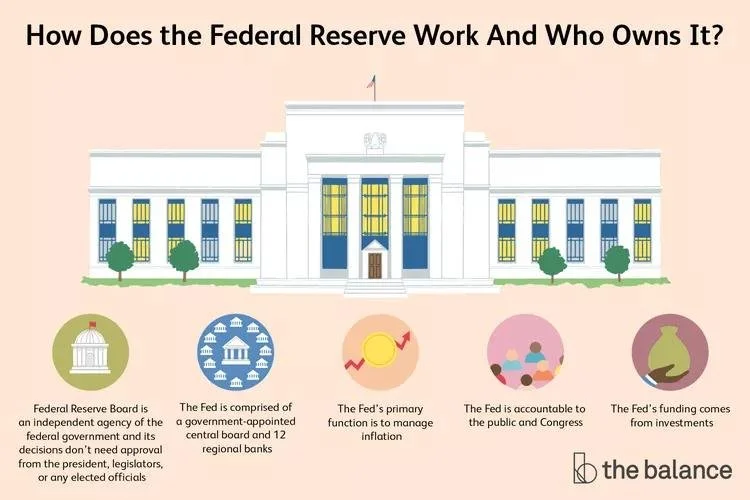
The Federal Reserve is the central bank of the United States. Its decisions affect the U.S. economy and, therefore, the world. This position makes it the most powerful actor in the global economy. It is not a company or a government agency. Its leader is not an elected official, which makes it seem highly suspicious to many people, because it is not subject to either voters or shareholders.1
Learn how the Federal Reserve works, who actually owns it, and how they are held accountable.
Who Owns the Federal Reserve?
How the Fed Remains Independent
By Kimberly Amadeo Updated on October 2, 2024
The Federal Reserve is the central bank of the United States. Its decisions affect the U.S. economy and, therefore, the world. This position makes it the most powerful actor in the global economy. It is not a company or a government agency. Its leader is not an elected official, which makes it seem highly suspicious to many people, because it is not subject to either voters or shareholders.1
Learn how the Federal Reserve works, who actually owns it, and how they are held accountable.
Who Owns the Federal Reserve?
The Federal Reserve is an independent entity established by the Federal Reserve Act of 1913. At that time, President Woodrow Wilson wanted a government-appointed central board, but Congress wanted the Fed to have 12 regional banks to represent America's diverse regions. The compromise meant that the Fed has both.2
Congress and the Fed
The president and Congress must approve all members of the Federal Reserve Board of Governors, but the board members' terms deliberately don't coincide with those of elected officials. The president appoints the Federal Reserve chair, currently Jerome Powell.3 Congress must approve the president's appointment. The chair must report on the Fed's actions to Congress.4
Congress can alter the statutes governing the Fed. For example, the Dodd-Frank Wall Street Reform and Consumer Protection Act limited the Fed's powers. It required the Government Accountability Office (GAO) to audit the emergency loans the Fed made during the 2008 financial crisis. It also required the Fed to make public the names of banks that received any emergency loans or TARP funds. The Fed must get Treasury Department approval before making emergency loans, as it did with Bear Stearns and AIG.5
Note
The Fed's Board is an independent agency of the federal government, but its decisions don't have to be approved by the president, legislators, or any elected official.
Funding
Equally as important, the Fed does not receive its funding from Congress. Instead, its funds come from its investments. It receives interest from U.S. Treasury notes it acquired as part of open market operations. It receives interest on its foreign currency investments. Its banks receive fees for services provided to commercial banks. These include check clearing, funds transfers, and automated clearinghouse operations.
The Fed also receives interest on loans it makes to its member banks. It uses these funds to pay its bills, then turns any "profit" over to the U.S. Treasury Department.6
Bank Members
The 12 regional Federal Reserve banks are set up similarly to private banks. They store currency, process checks, and make loans to the private banks within the area that they regulate. These banks are also members of the Federal Reserve banking system. As such, they must maintain reserve requirements. In return, they can borrow from each other at the fed funds rate when needed. As a last resort, they can also borrow from the Fed's discount window at the discount rate.7
To be a member of the Federal Reserve system, commercial banks must own shares of stock in the 12 regional Federal Reserve banks. But owning Federal Reserve bank stock is nothing like owning stock in a private company. It can't be traded and doesn't give the member banks voting rights. These pay out dividends, mandated by law to be 6%.8 But the banks must return all profits, after paying expenses, to the U.S. Treasury.6
Why the Fed Must Remain Independent
Note
The Fed's monetary policy can do its job better when it is shielded from short-term political influence. It must be free to set expectations, especially about inflation. It cannot do that when its leaders are worried about being fired by an elected official.
Fed chairs are predominantly well-respected academic economists.9 Their expertise is in public policy, finance, and central banking. They are valued for that expertise, not for charisma, a large fan base, or public speaking skills. They are accustomed to an environment where ideas are rationally discussed, debated, and evaluated.
How the Fed Is Held Accountable
Although it is independent, the Fed is still accountable to the public and to Congress. The Fed can best guide expectations if it is transparent about its actions. It must also clearly communicate its reasons for its actions.
The Fed communicates through frequent and detailed reports. First, the Fed chair and other board members testify frequently before Congress. Second, the Fed submits to Congress a detailed Monetary Policy Report twice per year. Third, the Federal Open Market Committee (FOMC) publishes a statement after each meeting. It also provides detailed meeting minutes three weeks later. Verbatim transcripts are available five years later.10
How the Fed Works
The Fed's primary function has been to manage inflation. It has a variety of tools to accomplish that.
To Continue To Read More: https://www.thebalancemoney.com/who-owns-the-federal-reserve-3305974