
Seeds of Wisdom RV and Economics Updates Saturday Afternoon 4-4-26
Good Afternoon Dinar Recaps,
Jobs Report Signals Cooling Labor Market as Wage Pressures and Participation Shift
Latest employment data reveals subtle but important changes in labor strength, wage growth, and economic momentum
Good Afternoon Dinar Recaps,
Jobs Report Signals Cooling Labor Market as Wage Pressures and Participation Shift
Latest employment data reveals subtle but important changes in labor strength, wage growth, and economic momentum
Overview
The latest U.S. jobs report shows a labor market that remains resilient on the surface, but with clear signs of slowing beneath. Job creation continues, yet hiring momentum is easing, wage growth is stabilizing, and participation trends are shifting.
These changes suggest the economy may be entering a late-cycle phase, where labor strength begins to soften—an important signal for monetary policy, debt markets, and the broader financial system.
Key Developments
1. Job Growth Continues but Slows
The economy added jobs in the latest report, but below prior months’ pace, indicating cooling demand for labor.
- Hiring gains remain positive, avoiding contraction signals
- Downward revisions to previous months suggest softer trends
- Employers becoming more selective and cautious
Why it matters: Slower job growth is often an early indicator of economic deceleration, especially when paired with tighter financial conditions.
2. Unemployment Rate Edges Higher
The unemployment rate ticked up slightly, reflecting loosening labor conditions.
- Increase driven by more entrants into the workforce
- Some sectors showing early layoffs or reduced hiring
- Signals a shift from tight labor to balanced conditions
Why it matters: Even small increases can signal a turning point in labor market strength, which directly impacts consumer spending.
3. Wage Growth Moderates
Wage gains showed signs of stabilizing, easing pressure on inflation.
- Year-over-year wage growth slowing
- Reduced urgency for aggressive interest rate hikes
- Employers gaining more leverage in hiring negotiations
Why it matters: Wage moderation is a key factor in central bank policy decisions, particularly for inflation control.
4. Labor Force Participation Improves
More individuals are entering or re-entering the workforce, increasing labor supply.
- Participation gains help ease labor shortages
- Expands the available workforce without overheating wages
- Reflects household response to economic pressure
Why it matters: Higher participation can delay recession signals, but also indicates financial strain on households.
Why It Matters
This report highlights a transition phase rather than a collapse:
Labor demand is cooling, but not contracting
Wage pressures easing, reducing inflation risk
Workforce supply increasing, shifting market balance
Economic momentum slowing gradually, not abruptly
The labor market is often the last pillar to weaken in an economic cycle—making these shifts especially significant.
Why It Matters to Foreign Currency Holders
A cooling labor market could lead to policy easing, impacting the strength of the U.S. dollar
Slower wage growth may reduce inflation, affecting interest rate differentials globally
Economic softening can trigger capital flow adjustments across currencies
Labor shifts often precede larger financial system changes
Implications for the Global Reset
Pillar 1: Monetary Policy Transition
As labor conditions soften, central banks may shift from tightening to easing, reshaping global liquidity conditions.
Pillar 2: Economic Slowdown Signals
The labor market turning point suggests the system is entering a late-cycle phase, where debt, growth, and policy pressures converge.
Closing Perspective
The labor market is no longer accelerating—it is stabilizing and beginning to soften.
When job growth slows, wages ease, and participation rises simultaneously, it signals a shift in economic momentum that can ripple across markets, currencies, and global financial systems.
This is not just employment data — it’s a signal of where the economy goes next.
Seeds of Wisdom Team
Newshounds News™ Exclusive
Sources
~~~~~~~~~~
Seeds of Wisdom Team RV Currency Facts Youtube and Rumble
Newshound's News Telegram Room Link
RV Facts with Proof Links Link
RV Updates Proof links - Facts Link
Follow the Gold/Silver Rate COMEX
Follow Fast Facts
Seeds of Wisdom Team™Website
Thank you Dinar Recaps
Iraq Economic News And Points To Ponder Saturday Afternoon 4-4-26
Iraq Loses 3,500 MW As Iran Gas Supplies Drop
2026-04-04 Shafaq News- Baghdad A sharp drop in Iranian gas supplies has cut Iraq’s electricity generation by about 3,500 megawatts, the Electricity Ministry said on Saturday, attributing the decline to the ongoing US-Israeli war on Iran.
Ministry spokesperson Ahmed Moussa told Shafaq News that imports have fallen to around five million cubic meters per day —down from 19 million previously— while Iraq typically needs about 30 million cubic meters daily, making the current supply “very low.”
Iraq Loses 3,500 MW As Iran Gas Supplies Drop
2026-04-04 Shafaq News- Baghdad A sharp drop in Iranian gas supplies has cut Iraq’s electricity generation by about 3,500 megawatts, the Electricity Ministry said on Saturday, attributing the decline to the ongoing US-Israeli war on Iran.
Ministry spokesperson Ahmed Moussa told Shafaq News that imports have fallen to around five million cubic meters per day —down from 19 million previously— while Iraq typically needs about 30 million cubic meters daily, making the current supply “very low.”
The decline follows a complete halt in Iranian gas exports in March, which knocked more than 3,000 megawatts offline after reported Israeli strikes targeted facilities linked to Iran’s South Pars gas field —part of the world’s largest offshore reserve shared with Qatar— and energy infrastructure in Asaluyeh. Limited flows later resumed, helping stabilize production at around 14,000 megawatts.
Iraq continues to face chronic electricity shortages despite its oil wealth, with demand typically reaching 50,000–55,000 megawatts during peak summer months, compared to current production of about 27,000–28,000 megawatts. Iranian gas covers roughly 40% of the country’s fuel needs and supports nearly one-third of its electricity generation.
https://www.shafaq.com/en/Economy/Iraq-loses-3-500-MW-as-Iran-gas-supplies-drop
Read more: Energy war nears Iraq: Oil infrastructure faces rising threat
Iraq Imports $350M+ In US Agricultural Goods In 2025
2026-04-04 Shafaq News- Baghdad/ Washington US agricultural exports to Iraq totaled $357 million in 2025, according to data released by the US Department of Agriculture.
Combined agricultural and livestock exports reached $375.04 million. Over the past three years, average annual exports stood at $330.12 million, reflecting a compound annual growth rate of 10.7% between 2016 and 2025.
Exports to Iraq included a wide range of products, notably rice, soybeans, meat, poultry, nuts, spices, sauces, baked goods, as well as processed foods and dairy products.
https://www.shafaq.com/en/Economy/Iraq-imports-350M-in-US-agricultural-goods-in-2025
Dollar Drops In Baghdad, Rises In Erbil
2026-04-04 Shafaq News- Baghdad/ Erbil The US dollar closed Saturday’s trading mixed in Iraq, hovering around 154,500 dinars per 100 dollars.
According to a Shafaq News market survey, the dollar traded in Baghdad's Al-Kifah and Al-Harithiya exchanges at 154,600 dinars per 100 dollars, down from the morning session’s 154,750 dinars.
In the Iraqi capital, exchange shops sold the dollar at 155,000 dinars and bought it at 154,000 dinars, while in Erbil, selling prices stood at 154,750 dinars and buying prices at 154,650 dinars.
https://www.shafaq.com/en/Economy/Dollar-drops-in-Baghdad-rises-in-Erbil-6
Dollar Edges Higher In Baghdad And Erbil
2026-04- Shafaq News- Baghdad/ Erbil The US dollar opened Saturday’s trading higher in Iraq, nearing 155,000 dinars per 100 dollars, according to a survey by Shafaq News Agency.
The dollar traded in Baghdad's Al-Kifah and Al-Harithiya exchanges at 154,750 dinars per 100 dollars, up from 154,400 dinars recorded last Thursday.
In the Iraqi capital, exchange shops sold the dollar at 155,250 dinars and bought it at 154,250 dinars, while in Erbil, selling prices stood at 154,550 dinars per 100 dollars and buying prices at 154,400 dinars.
https://www.shafaq.com/en/Economy/Dollar-edges-higher-in-Baghdad-and-Erbil-6
Gold Prices Rise In Baghdad And Erbil Markets
2026-04-04 Shafaq News- Baghdad/ Erbil On Saturday, gold prices hovered around 1.02 million IQD per mithqal in Baghdad and Erbil markets, continuing their upward trend, according to a survey by Shafaq News Agency.
Gold prices on Baghdad's Al-Nahr Street recorded a selling price of 1,018,000 IQD per mithqal (equivalent to five grams) for 21-carat gold, including Gulf, Turkish, and European varieties, with a buying price of 1,014,000 IQD. The same gold had sold for 1,005,000 IQD on Thursday.
The selling price for 21-carat Iraqi gold stood at 988,000 IQD, with a buying price of 984,000 IQD.
In jewelry stores, the selling price per mithqal of 21-carat Gulf gold ranged between 1,020,000 and 1,030,000 IQD, while Iraqi gold sold for between 990,000 and 1,000,000 IQD.
In Erbil, 22-carat gold was sold at 1,075,000 IQD per mithqal, 21-carat gold at 1,027,000 IQD, and 18-carat gold at 880,000 IQD.https://www.shafaq.com/en/Economy/Gold-prices-rise-in-Baghdad-and-Erbil-markets-0
Iran Spares Iraq From Strait Of Hormuz Blockade
2026-04-04 Shafaq News- Tehran Iran’s Khatam Al-Anbiya, the unified command of the country’s military forces, on Saturday excluded Iraq from restrictions linked to the Strait of Hormuz, underlining the “close ties” between the two neighbors.
In a statement, spokesperson Ebrahim Zolfaghari clarified that the closure policy targets only Iran’s “adversarial states,” pointing to Tehran’s respect for Iraqi sovereignty. He also underscored shared public sentiment between the two countries, noting that the Iranian people were not isolated while referencing supportive positions from Baghdad.
Earlier today, US President Donald Trump gave Iran 48 hours to reopen the Strait of Hormuz or reach an agreement, warning that “all Hell will reign down” if Tehran fails to comply. He has repeatedly threatened strikes on Iranian infrastructure, including power plants, if shipping through the strait —one of the world’s most vital oil routes— remains disrupted.
Iran’s Supreme Leader Mojtaba Khamenei previously urged armed forces to continue operations linked to the “Strait of Hormuz closure front,” framing the move as part of Iran’s response to the ongoing US-Israeli war. He also expressed appreciation for Iraqis’ support of Iran during the current conflict.https://www.shafaq.com/en/Middle-East/Iran-spares-Iraq-from-Strait-of-Hormuz-blockade
Washington Strips Iran’s Soleimani Relatives Of Permanent Residency
2026-04-04 Shafaq News- Washington The United States revoked the residency of two relatives of late Iranian commander Qassem Soleimani, the US State Department reported on Saturday, citing political and security concerns.
Soleimani, the former commander of the Islamic Revolutionary Guard Corps’ (IRGC) Quds Force, was killed alongside Popular Mobilization Forces (PMF) deputy chief Abu Mahdi Al-Muhandis in a US airstrike near Baghdad International Airport in January 2020.
In a post on X, Secretary of State Marco Rubio wrote that Hamideh Soleimani Afshar and her daughter had been living in the United States on green cards before federal agents took them into custody and placed them in deportation proceedings.
Describing Afshar as a relative of Soleimani, he portrayed her as a supporter of Iran’s government, which has reportedly backed attacks against US personnel while referring to Washington as the “Great Satan.”
Secretary Marco Rubio : Until recently, Hamideh Soleimani Afshar and her daughter were green card holders living lavishly in the United States. Afshar is the niece of deceased Iranian Major General Qasem Soleimani. She is also an outspoken supporter of the Iranian regime who celebrated attacks on Americans and referred to our country as the "Great Satan." This week, I terminated both Afshar and her daughter's legal status and they are now in ICE custody, pending removal from the United States. The Trump Administration will not allow our country to become a home for foreign nationals who support anti-American terrorist regimes. LINK
In a later statement, the US State Department confirmed the deportation, noting that Rubio also revoked the permanent residency of Ali Larijani’s daughter, the former secretary of the Iranian Supreme National Security Council, who was recently killed in an Israeli strike in Tehran.
$13 Billion Bank Run Accelerates Turmoil in Private Credit Market
$13 Billion Bank Run Accelerates Turmoil in Private Credit Market
Lena Petrova: 4-3-2026
The private credit market, a behemoth of the US financial system with assets totaling $1.8 trillion, is grappling with an unprecedented crisis.
Characterized by a sudden and massive surge in investor withdrawal requests, this sector is facing a severe liquidity crunch.
$13 Billion Bank Run Accelerates Turmoil in Private Credit Market
Lena Petrova: 4-3-2026
The private credit market, a behemoth of the US financial system with assets totaling $1.8 trillion, is grappling with an unprecedented crisis.
Characterized by a sudden and massive surge in investor withdrawal requests, this sector is facing a severe liquidity crunch.
At the forefront of this crisis is Blue Owl Capital, one of the largest private credit firms, which has been forced to impose limits on redemptions. Investors have been clamoring to pull out significant portions of their investments, with withdrawal requests reaching as high as 22% in one major fund and over 40% in a tech-focused fund within a single quarter.
Private credit funds play a vital role in the financial ecosystem by lending directly to companies that often find it challenging to secure traditional bank financing. These loans are then packaged into investment products that offer higher yields to investors but come with limited liquidity.
The structure of private credit funds is such that they function smoothly under stable economic conditions. However, they are prone to faltering when a large number of investors attempt to exit their investments simultaneously, akin to a bank run.
The current crisis has been precipitated by a combination of factors, including rising interest rates, economic uncertainties, the technological disruptions caused by AI, and geopolitical tensions such as the war in Iran. These factors have heightened investor anxiety, triggering a wave of mass withdrawal requests.
Despite efforts to modernize the private credit market through tokenization – the process of turning illiquid loans into digital assets for easier trading – the fundamental liquidity problem remains unresolved. The underlying loans continue to be illiquid, and the large-scale redemption demands are straining the system.
The crisis is not confined to Blue Owl Capital; several major firms in the private credit industry are restricting redemptions, effectively locking billions of dollars in funds. This stress test has exposed the sector’s core vulnerability: its limited liquidity in the face of mass investor exits.
The unfolding situation poses significant risks not only to the private credit sector but potentially to the broader US economy and financial markets, given the sector’s close ties to the banking system. The future outcomes remain uncertain. If market conditions stabilize, the crisis may subside. However, continued pressure could force funds to sell assets at losses or maintain withdrawal restrictions, exacerbating financial instability.
The private credit sector’s liquidity constraints, coupled with its growing size, make this a critical development to monitor in the coming months. As the situation continues to evolve, it will be crucial to watch for signs of further stress or potential resolutions.
For further insights and information on this developing story, watch the full video from Lena Petrova, which provides a deeper dive into the complexities of the private credit crisis and its potential implications.
The private credit crisis is a significant financial event with far-reaching implications. As investors, financial analysts, and policymakers watch the situation closely, it is clear that the coming months will be critical in determining the outcome of this crisis.
Will the sector weather the storm, or will it succumb to the pressures of liquidity constraints? Only time will tell.
Seeds of Wisdom RV and Economics Updates Saturday Morning 4-4-26
Good Morning Dinar Recaps,
Debt Market Stress, Private Credit Cracks, and Treasury Selling Signal Deeper System Shifts
New financial fault lines are emerging beneath the surface of global markets as liquidity, debt demand, and alternative lending face rising pressure
Good Morning Dinar Recaps,
Debt Market Stress, Private Credit Cracks, and Treasury Selling Signal Deeper System Shifts
New financial fault lines are emerging beneath the surface of global markets as liquidity, debt demand, and alternative lending face rising pressure
Overview
The last 24 hours reveal a less visible—but potentially more dangerous—layer of financial stress building beneath headline geopolitical events. While energy shocks dominate attention, capital markets themselves are starting to strain, particularly in private credit, sovereign debt demand, and liquidity conditions.
These developments point to a structural shift in how money flows, risk is priced, and debt is financed globally—all core pillars of a potential global financial reset.
Key Developments
1. Private Credit Market Showing Early Signs of Crisis
A fast-growing shadow lending sector is now under pressure as investors begin pulling capital and firms move to limit withdrawals.
Redemption caps signal tightening liquidity
Rising risk of loan defaults and weaker returns
Potential for a “rolling credit crisis” if conditions worsen
Why it matters: Private credit has become a major replacement for bank lending. Any disruption could tighten global financing quickly.
2. Foreign Demand for U.S. Debt Weakening
Recent activity shows foreign central banks reducing exposure to U.S. Treasuries, signaling a shift in global reserve behavior.
Indicates diversification away from dollar-based assets
Adds pressure to U.S. borrowing costs
Reinforces trend toward a multi-polar currency system
Why it matters: Demand for U.S. debt is a core pillar of the current financial system. Weakening demand signals long-term structural change.
3. Treasury Market Liquidity Showing Fragility
Even the world’s most critical financial market is showing sensitivity to volatility.
Liquidity conditions deteriorate quickly under stress
Treasuries remain central to global collateral and pricing systems
Elevated volatility continues into 2026 market conditions
Why it matters: When Treasury liquidity weakens, it impacts interest rates, currencies, and global stability simultaneously.
4. Geopolitical Conflict Amplifying Financial Instability
Ongoing conflict is now directly feeding into financial system stress and volatility.
Inflation pressures remain elevated
Borrowing costs rising globally
Financial institutions preparing for extended instability
Why it matters: Financial stress is becoming interconnected across sectors, increasing the risk of system-wide disruption.
Why It Matters
These are not isolated issues—they are deep structural signals shaping the next phase of global finance:
Credit creation shifting outside traditional banking
Sovereign debt demand weakening
Liquidity becoming more fragile
Capital flows fragmenting globally
This suggests a transition from a centralized financial system toward a more distributed and uncertain structure.
Why It Matters to Foreign Currency Holders
For those watching a potential reset:
A decline in Treasury demand could pressure the U.S. dollar long-term
Credit stress may trigger repricing of currencies and global assets
Alternative systems gain traction when traditional liquidity tightens
Financial shocks historically accelerate monetary system transitions
Implications for the Global Reset
Pillar 1: Debt Saturation & Sovereign Strain
With foreign buyers stepping back, governments face increasing difficulty financing debt sustainably.
Pillar 2: Structural Shift in Credit Creation
Stress in private credit highlights the need to rethink how capital is created and distributed globally.
Closing Perspective
This is not just market volatility—it’s a shift in the plumbing of global finance.
When debt demand weakens, liquidity tightens, and credit systems strain at the same time, it signals more than a cycle—it signals transition.
This is not just politics — it’s global finance restructuring before our eyes.
Seeds of Wisdom Team
Newshounds News™ Exclusive
Sources
~~~~~~~~~~
A Message to Our Currency Holders
If you’ve been holding foreign currency for many years, you were not foolish.
You were not wrong to believe the global financial system would change.
What failed was not your patience — it was the information you were given.
For years, dates, rumors, and personalities replaced facts, structure, and proof. “This week” predictions created cycles of hope and disappointment that were never based on how currencies actually change.
That is not your failure.
Our mission here is different: • No dates • No rates • No hype • No gurus
Instead, we focus on:
• Verifiable developments • Institutional evidence
• Global financial structure • Where countries actually sit in the process
Currency value changes only come after sovereignty, trade, banking, settlement systems, and fiscal coordination are in place. History and institutions confirm this sequence.
You will see silence. You will see denials. That is not delay — that is discipline.
Protect your identity. Organize your documents. Verify everything.
Never hand your discernment to anyone who cannot show proof.
You deserve truth — not timelines.
Seeds of Wisdom Team
Newshounds News
~~~~~~~~~~
Seeds of Wisdom Team RV Currency Facts Youtube and Rumble
Newshound's News Telegram Room Link
RV Facts with Proof Links Link
RV Updates Proof links - Facts Link
Follow the Gold/Silver Rate COMEX
Follow Fast Facts
Seeds of Wisdom Team™Website
Thank you Dinar Recaps
Iraq Economic News And Points To Ponder Saturday Morning 4-4-26
Suspension Of Passenger And Trade Traffic In "Shalamja"
Money and Business Economy News — Baghdad The head of the security committee in the Basra Provincial Council, Aqeel Al-Fariji, announced on Saturday a complete suspension of travel and trade operations at the Shalamcheh land border crossing, following an air strike on vital facilities on the Iranian side.
Al-Fariji said that "the movement of travelers and trade exchange operations through the Shalamcheh border crossing between Iran and Iraq have been completely disrupted, after the passport building on the Iranian side was hit by an air strike."
Suspension Of Passenger And Trade Traffic In "Shalamja"
Money and Business Economy News — Baghdad The head of the security committee in the Basra Provincial Council, Aqeel Al-Fariji, announced on Saturday a complete suspension of travel and trade operations at the Shalamcheh land border crossing, following an air strike on vital facilities on the Iranian side.
Al-Fariji said that "the movement of travelers and trade exchange operations through the Shalamcheh border crossing between Iran and Iraq have been completely disrupted, after the passport building on the Iranian side was hit by an air strike."
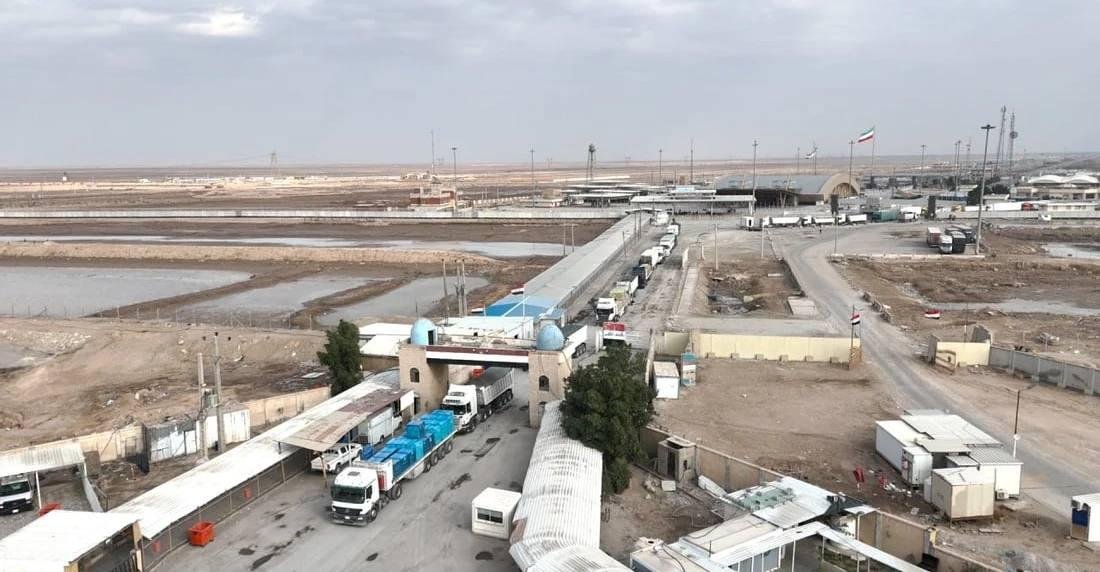
Al-Fariji added that "the specialized authorities are awaiting security reports to assess the situation on the ground," stressing that "if any danger continues to threaten the safety of work at the crossing, activity will not be resumed and will remain suspended until further notice."https://www.economy-news.net/content.php?id=67490
Iranian Parliamentarian: Imposing Fees On Ships In The Strait Of Hormuz Is Being Seriously Considered, And Hostile Countries Will Pay The Most.
Money and Business Economy News — Follow-up A member of the National Security Committee in the Iranian Parliament confirmed that securing the Strait of Hormuz entails costs, noting that imposing fees on passing ships is now being seriously considered, and that hostile countries should pay a higher price.
Amid the war and regional developments, the Iranian parliament is seeking to activate new tools in the fields of maritime security and economics. Among the most prominent of these measures is the proposal to impose fees on ships passing through the Strait of Hormuz, a strategic waterway whose security has been ensured for years at Iran's expense. However, the issue of making its users bear some of the costs is now being seriously considered.
Reza Mohseni Thanavi, a member of the National Security Committee in the Iranian Parliament, told Rouydad 24 that a number of projects are being studied by the deputies within the National Security and Foreign Policy Committee, most of which deal with issues related to the current situation in the country, regional developments, the repercussions of the war, and recent events.
Given its geopolitical importance and its ongoing role in international trade and maritime traffic, the Strait of Hormuz has always been of interest to regional and international naval powers. For this reason, global powers have consistently sought to consolidate their position in the Gulf by establishing military bases in or around the strait.
A member of the National Security Committee in Parliament revealed that one of the main axes of these projects is the issue of the Strait of Hormuz and imposing fees on passing ships, which was supposed to be implemented previously within a specific legal framework, but it was not activated for various reasons, while it has now been seriously included on the agenda.
Mohseni Thanavi added that there are other issues also on the table, including reconsidering some international commitments, the legal use of nuclear energy capabilities in line with the country’s needs, and reviewing regional approaches. These are files on the agenda of the National Security Committee and some other committees in Parliament.
Regarding the reasons for imposing fees on the Strait of Hormuz, he explained that a large part of the strait and its extensive coastline fall under Iran's jurisdiction, and therefore, ensuring the security of this waterway is its responsibility, which entails significant costs. He added that previously, Iran bore the costs of insuring all ships, but it has now been decided that each ship must pay a transit fee.
In response to a question about whether all countries would pay transit fees, he noted that in the absence of a comprehensive and clear law to regulate the management, monitoring and provision of services in the Strait of Hormuz, it has not yet been precisely determined which countries would be subject to these fees, but that hostile countries would bear greater costs.
In explaining the project's details, he clarified that the first phase involves Iran and Oman imposing fees to ensure safe navigation in the strait. The second phase addresses environmental pollution issues, given the potential damage to the marine environment caused by heavy ship traffic.
He pointed out that the third phase relates to maritime pilotage services, where ships will benefit from guidance services to ensure safe passage, in exchange for paying specific fees, stressing that these procedures are in place in many international straits and channels around the world.
Regarding the impact of this move on regional relations, he said that some countries in the region have shown positions that he described as harmful to the goals of the United States and Israel, and have cooperated with them in various fields, and have even put their capabilities and lands at their service.
The Iranian parliamentarian added that tensions have reached their peak at present, and that Iranian forces are protecting and managing the Strait of Hormuz with high efficiency, considering that talk about imposing fees could lead to an escalation of tensions or war does not carry much meaning, in light of the hostile parties using their full capabilities, in contrast to Iran taking appropriate measures in response.
Regarding the future of this project in the event of a ceasefire or the start of negotiations, he said that his country does not currently intend to enter into negotiations with Israel or any party seeking to repeat previous scenarios.
He concluded by emphasizing the need for a comprehensive review of regional policies, noting that if what he described as a decisive victory is achieved in this war, it will be necessary to reconsider regional issues, foreign policy, security, and even the nature of relations with neighboring countries, thus paving the way for the adoption of a new doctrine in the region. https://www.economy-news.net/content.php?id=67493
Turkish Exports To Iraq Declined By 17% At The Beginning Of 2026
Money and Business Economy News — Baghdad Recent trade data released on Saturday revealed significant shifts in trade between Iraq and Turkey during the first two months of 2026, with Turkish exports declining by 17%, amid remarkable growth in Iraqi exports to Turkey.
According to the figures, the total value of Turkish exports reached $1.4 billion, down from $1.74 billion recorded in the same period of 2025. Last February saw a sharp decline, with trade flows settling at $661 million compared to $900 million in the previous year.
Sector divergence: Fruits gain, iron loses
Despite the overall decline, certain Turkish sectors achieved a surge in their sales to the Iraqi market; exports of "fruits and nuts" jumped to $200 million, sales of "precious metals" doubled to reach $100 million, while the "clothing" sector recorded strong growth of about $98 million.
In contrast, other sectors suffered heavy losses; exports of “iron and steel” fell from $94 million to $45 million, and exports of “electrical machinery” and “plastics” declined by nearly 50%.
Recovery Of Iraqi Exports
On the opposite bank, Iraqi exports to Turkey rebounded by 41%, rising from $67 million to $95 million, driven by the "fuel" sector, which jumped to $37 million, and the "mineral raw materials" sector, which recorded $5.7 million.
Chronic Trade Deficit
For his part, economist Manar Al-Obaidi commented on these figures and percentages, saying that despite the relative improvement in Iraqi export figures, the trade balance still leans heavily in favor of Ankara, as the Iraqi trade deficit still exceeds the $1.3 billion mark.https://www.economy-news.net/content.php?id=67488
European Finance Ministers Are Calling For A Tax On Energy Companies' Profits Due To The Iran War.
Money and Business Economy News — Follow-up Five EU finance ministers, in a letter to the European Commission on Saturday, called for a tax on the windfall profits of energy companies in response to soaring fuel prices caused by the Iran war.
The finance ministers of Germany, Italy, Spain, Portugal and Austria issued this joint appeal in a letter, in which they said, according to Reuters, that "this measure will signal that we are united and capable of taking action."
They wrote that this "will also send a clear message that those who benefit from the consequences of war must play their part in easing the burden on the general public."
Oil and gas prices have risen sharply since the start of the US and Israeli strikes on Iran on February 28, causing a price shock similar to the energy crisis Europe experienced after Russia's invasion of Ukraine in 2022, even though EU countries now get more energy from renewable sources.
In the letter to EU Climate Commissioner Wopke Hoekstra, the ministers referred to a "similar emergency levy in 2022 to address rising energy prices."
They continued: "Given the current market distortions and financial constraints, the European Commission must quickly develop a similar EU-wide contribution instrument based on a solid legal foundation."
The letter did not mention any details about the level of tax on exceptional profits proposed by the ministers, or which companies would be subject to it.
European gas prices have risen by more than 70 percent since the start of the US-Israeli war with Iran on February 28.
MilitiaMan and Crew: IRAQ DINAR UPDATE-Iraq Ready for Integration-Clear it is!
MilitiaMan and Crew: IRAQ DINAR UPDATE-Iraq Ready for Integration-Clear it is!
4-3-2026
The Crew: Samson, PompeyPeter, Petra, Daytrader, Sunkissed, GIGI and Militia Man
No drama. No intrigue. No songs and dances. Just straight, factual news that I read and interpret to the best of my ability after being an avid Dinar investor and insanely obsessed Dinarian for over 15 years.
Follow MM on X == https://x.com/Slashn
Be sure to listen to full video for all the news……..
MilitiaMan and Crew: IRAQ DINAR UPDATE-Iraq Ready for Integration-Clear it is!
4-3-2026
The Crew: Samson, PompeyPeter, Petra, Daytrader, Sunkissed, GIGI and Militia Man
No drama. No intrigue. No songs and dances. Just straight, factual news that I read and interpret to the best of my ability after being an avid Dinar investor and insanely obsessed Dinarian for over 15 years.
Follow MM on X == https://x.com/Slashn
Be sure to listen to full video for all the news……..
Seeds of Wisdom RV and Economics Updates Friday Afternoon 4-3-26
Good Afternoon Dinar Recaps,
Energy Shock, Rising Debt Costs, and Food Inflation Converge
New Data Reveals Expanding Pressure Across the Global Financial System
Good Afternoon Dinar Recaps,
Energy Shock, Rising Debt Costs, and Food Inflation Converge
New Data Reveals Expanding Pressure Across the Global Financial System
Overview
Global food prices rising again, reversing prior declines
Oil supply fears pushing energy costs higher
Government debt costs surging alongside yields
Economic pressure spreading across multiple sectors simultaneously
Key Developments
1. Food prices jump as energy crisis spreads into supply chains
New data shows global food prices rose 2.4% in March, marking a second consecutive increase after months of decline.
Sugar prices up 7%
Vegetable oils up 5%
Fertilizer and transport costs rising sharply
The driver:
Energy disruption tied to ongoing conflict and shipping constraints
Energy costs are now directly feeding into global food inflation
2. Oil supply tightening raises risk of deeper shortages
Analysts warn that global oil stockpiles are falling toward critical levels:
Inventories could drop to operational minimum levels within weeks
Potential 14 million barrels/day supply shortfall
Oil prices already surged above $109–$111 per barrel
Even if supply resumes, recovery could take months—not days
3. Rising yields increase pressure on government finances
Governments are beginning to feel the impact of higher borrowing costs:
Debt servicing costs rising rapidly
In France, monthly borrowing costs (~€300M) are now exceeding fuel tax gains
Additional subsidies and aid increasing fiscal strain
Higher yields are canceling out revenue gains—tightening budgets globally
4. Economic strain spreading across multiple systems at once
We are now seeing simultaneous pressure across key pillars:
Energy → driving inflation
Food → increasing cost of living globally
Debt → raising systemic financial risk
This is no longer isolated volatility—it is multi-system stress
Why It Matters
Energy shocks ripple into food, transport, and manufacturing
Rising debt costs limit government response options
Inflation pressures are re-accelerating globally
This combination historically signals deeper financial instability
Why It Matters to Foreign Currency Holders
Currency stability depends on energy, inflation, and debt dynamics
Rising costs weaken purchasing power globally
Shifts in reserve strategy may accelerate under pressure
These conditions often precede currency realignment cycles
Implications for the Global Reset
Pillar 1: Energy as the Core Driver of Economic Stability
Control of energy supply now directly impacts inflation and growth
Energy disruptions are reshaping global financial flows
Pillar 2: Debt System Under Increasing Strain
Rising yields are exposing unsustainable fiscal models
Governments face less flexibility to stabilize economies
This is where structural cracks begin to widen
Closing Perspective
What we are seeing now is a rare convergence of pressures:
Energy shortages
Food inflation
Rising debt costs
Each of these alone can strain the system—together, they create compounding stress across the global economy.
This is how systemic shifts begin—not suddenly, but through accumulating pressure points.
Seeds of Wisdom Team
Newshounds News™ Exclusive
Sources
The Guardian — Food prices spike as energy costs surge amid conflict
MarketWatch — Global oil stockpiles could hit critically low levels
~~~~~~~~~~
Seeds of Wisdom Team RV Currency Facts Youtube and Rumble
Newshound's News Telegram Room Link
RV Facts with Proof Links Link
RV Updates Proof links - Facts Link
Follow the Gold/Silver Rate COMEX
Follow Fast Facts
Seeds of Wisdom Team™Website
Thank you Dinar Recaps
News Posted by Tishwash at TNT 4-3-2026
TNT:
Tishwash: Trump condemns attacks on Kurdistan and affirms Washington's support for protecting Iraq's security.
On Wednesday evening (April 1, 2026), the President of the Kurdistan Region, Nechirvan Barzani, received a phone call from US envoy Tom Barrack, who conveyed a message of solidarity from US President Donald Trump following the recent attacks targeting the region.
Trump strongly condemned the drone attack that targeted President Barzani's house in Duhok, stressing Washington's full support for protecting the security and stability of Iraq and the Kurdistan Region. Barzani expressed his appreciation for the US positions and assistance.
TNT:
Tishwash: Trump condemns attacks on Kurdistan and affirms Washington's support for protecting Iraq's security.
On Wednesday evening (April 1, 2026), the President of the Kurdistan Region, Nechirvan Barzani, received a phone call from US envoy Tom Barrack, who conveyed a message of solidarity from US President Donald Trump following the recent attacks targeting the region.
Trump strongly condemned the drone attack that targeted President Barzani's house in Duhok, stressing Washington's full support for protecting the security and stability of Iraq and the Kurdistan Region. Barzani expressed his appreciation for the US positions and assistance.
The Kurdistan Region Presidency stated in a statement received by 964 Network that “His Excellency Mr. Nechirvan Barzani, President of the Kurdistan Region, received this evening (Wednesday, April 1, 2026), a telephone call from Mr. Tom Barrack, Special Envoy of US President Donald Trump to Syria and US Ambassador to Turkey.”
The statement continued, “Mr. Barak conveyed a message from President Donald Trump, in which he strongly condemned the attacks targeting the Kurdistan Region, and the drone attack that targeted the home of President Nechirvan Barzani in Duhok. President Trump expressed his solidarity with His Excellency, and his condolences to the families of the martyrs, wishing a speedy recovery to the wounded.”
He added that “in the phone call, Mr. Barack affirmed President Trump’s and the United States’ full support for protecting the security and stability of Iraq and the Kurdistan Region. For his part, President Nechirvan Barzani thanked him for the call, expressing his appreciation for America’s positions and assistance to Iraq and the Kurdistan Region.”
He pointed out that “the repercussions of the war formed another axis of communication in the region. link
************
Tishwash: The World Bank expresses "deep concern" over the economic consequences of the war.
World Bank Managing Director Pascal Donohoe expressed "deep concern" about the impact of the war in the Middle East on the global economy, at a time when a number of countries were already in a difficult situation due to a series of global crises.
"We are very concerned about the consequences this will have in terms of inflation, jobs and food security, and that is why we are preparing to provide assistance" to countries that request it, Donohue told AFP.
The Washington-based organization pays particular attention to the situation in African and Asian countries, which are especially vulnerable to rising energy prices and supply shocks.
He added, "We are consulting with several governments and countries to understand their needs, and I expect we will have more information in the coming weeks."
The World Bank, in particular, will have to use its spring meetings, to be held in Washington from April 12 to 17, "to assess the scale of the potential response."
Donohue said that currently "we are seeking to identify the available funds and interventions that may be necessary to help countries deal with the short-term effects of the war in Iran."
As part of these efforts, the World Bank on Wednesday issued a joint statement with the International Monetary Fund and the International Energy Agency announcing the creation of a "coordination group to ensure the most effective response" by these institutions to the ongoing crisis.
It is an initiative that can be expanded to include other institutions with the aim of providing expertise in different fields. link
************
Tishwash: Oil companies are withdrawing from Iraq, deeming it high-risk.
International oil companies, including BP , have begun evacuating foreign staff from their sites in Basra and Kirkuk, as security threats escalate in the country.
Politico reported on Thursday (April 2, 2026) that companies described Iraq as a "high-risk environment" due to the increasing number of rocket and drone attacks targeting vital facilities and Western interests.
The report indicated that the evacuation was part of precautionary measures to protect employees, while maintaining operational processes at a minimum through local staff.
This move comes after a series of evacuations that began in March, involving foreign employees at oil fields in southern Iraq, following drone incidents inside production sites.
Hundreds of workers from American and European companies have also gradually left their posts, amid fears that energy facilities could become direct targets in the ongoing conflict.
These developments coincide with an escalation of attacks inside Iraq, which have targeted oil fields and facilities, military sites, and diplomatic missions.
Despite continued production, the reduction in foreign presence raises concerns about declining investments and a slowdown in field development, at a time when Iraq is almost entirely dependent on oil revenues.
The Iraqi government had previously affirmed its commitment to keeping the country out of the conflict, stressing that Iraq "is not a party to the conflict" and refuses to be drawn into it.
However, developments on the ground, and the evacuation of foreign companies, reflect the magnitude of the challenge in shielding Iraq from the repercussions of regional escalation. link
Tishwash: A coalition of 40 countries threatens Iran with harsh sanctions if it does not reopen the Strait of Hormuz.
International pressure is mounting on Iran as some 40 countries lead a move to immediately reopen the Strait of Hormuz, in a scene reflecting growing global concern over the choking of the world's most important energy artery.
British Foreign Secretary Yvette Cooper's remarks reveal a sharp tone, as she considered that Tehran is "holding the global economy hostage," at a time when Western countries are moving towards coordinating new sanctions if the shutdown continues.
The crisis is deepening as shipping traffic has plummeted by 93% since the outbreak of the war in the Middle East, according to data from Kpler. This has led to sharp increases in oil and gas prices, especially since approximately 20% of global supplies pass through the street. The limited transit figures – only about 225 tankers since the start of the conflict – demonstrate the extent of the disruption to global supply chains, with only a few ships, mostly Iranian or Asian, continuing to pass through.
International positions on how to handle the crisis are divergent. US President Donald Trump is pushing for direct intervention to protect the strait, calling on the countries that benefit from it to “seize and secure it,” while French President Emmanuel Macron warns against any military action, describing it as unrealistic and fraught with serious risks. This divergence reflects a Western division regarding the limits of possible escalation.
Regional and international actors have become involved in the crisis, with the Gulf Cooperation Council calling for a UN mandate authorizing the use of “all means” to ensure navigation, while Italy is pushing for the establishment of a humanitarian corridor to avert a potential global food crisis. Meanwhile, China blames the United States and Israel, arguing that their military operations are the root cause of the disruption to shipping, further deepening the international divide over the narrative of the crisis.
Alternative economic moves, such as Iraq resorting to exporting oil via Syria, reveal the beginning of a temporary redrawing of the energy map, while Iran pledged to allow some tankers, in a move that suggests attempts to contain the escalation without making a full concession link
Seeds of Wisdom RV and Economics Updates Friday Morning 4-3-26
Good Morning Dinar Recaps,
Brazil Boosts Gold Reserves While Trimming Dollar Exposure
BRICS Nations Accelerate Diversification as Global Reserve Strategy Evolves
Good Morning Dinar Recaps,
Brazil Boosts Gold Reserves While Trimming Dollar Exposure
BRICS Nations Accelerate Diversification as Global Reserve Strategy Evolves
Overview
Brazil added 42.8 tons of gold in late 2025
Gold reserves jumped 33%, signaling strategic repositioning
U.S. dollar share dropped to 72%, continuing a multi-year decline
BRICS nations collectively expanding gold holdings
Global reserve system showing early signs of diversification
Key Developments
1. Brazil significantly increases gold holdings
Brazil’s Central Bank made a decisive move by purchasing 42.8 tons of gold between September and November 2025, raising total reserves to 172.4 tons.
Gold now represents 7.19% of Brazil’s reserves
It has become the second-largest reserve asset after the dollar
This reflects a clear shift toward hard assets amid global uncertainty
2.Dollar exposure steadily declines—but remains dominant
Despite diversification, the U.S. dollar still holds the majority share of Brazil’s reserves:
80.42% (2022) → 72% (2025)
Decline has been consistent year after year
Other currencies gaining ground include:
Euro (6.60%)
Chinese renminbi (5.94%)
This is not a sudden exit from the dollar—but a measured rebalancing strategy
3.BRICS nations expand gold accumulation strategy
Brazil’s move aligns with a broader trend across BRICS:
Combined BRICS gold holdings now exceed 6,000 tonnes
Represent roughly 20–21% of global gold reserves
Over 50% of global gold purchases (2020–2024) came from BRICS central banks
Major holders include:
Russia (~2,300+ tonnes)
China (~2,200+ tonnes)
India (~880 tonnes)
Gold is increasingly being treated as a neutral reserve asset outside the dollar system
4.Diversification driven by geopolitical and economic uncertainty
Brazil’s Central Bank confirmed its strategy is based on:
Rising geopolitical tensions
Economic uncertainty in global markets
Need for stronger reserve stability
It also expanded holdings in:
Renminbi, euro, and South Korean won
This reflects a broader move toward multi-currency reserve systems
5.Future BRICS currency concepts gaining attention
BRICS nations are also exploring:
A “Unit” settlement system
Proposed structure: 40% gold-backed, 60% local currencies
While still in development, this signals:
Long-term planning for alternative trade settlement systems
The shift is gradual—but increasingly coordinated
Why It Matters
Gold accumulation signals declining trust in fiat-only reserves
Central banks are preparing for potential currency volatility
Diversification reduces dependence on any single currency system
This is a strategic hedge—not a sudden financial reset
Why It Matters to Foreign Currency Holders
Currency values are influenced by reserve composition shifts
Gold-backed positioning may strengthen financial resilience
Dollar dominance remains—but is slowly being diluted
The system is evolving, not collapsing
Implications for the Global Reset
Pillar 1: Return to Hard Assets
Gold is regaining importance as a core reserve foundation
Central banks are hedging against fiat risk
Pillar 2: Multi-Currency Reserve System Emerging
Movement toward diversified currency baskets
Reduced reliance on a single global reserve currency
This reflects a transition toward a more balanced global system
Closing Perspective
Brazil’s actions highlight a measured but meaningful shift in global finance.
The dollar remains dominant, but the steady rise of gold and alternative currencies shows that central banks are preparing for a more diversified future.
The reset, when it comes, is not sudden—it is being built step by step through policy decisions like these.
Seeds of Wisdom Team
Newshounds News™ Exclusive
Sources
Watcher.Guru — Brazil Cuts Dollar Holdings, Adds 42 Tons of Gold as BRICS Push Grows
Central Bank of Brazil — Annual Report on International Reserves (March 31, 2026)
~~~~~~~~~~
🌱A Message to Our Currency Holders🌱
If you’ve been holding foreign currency for many years, you were not foolish.
You were not wrong to believe the global financial system would change.
What failed was not your patience — it was the information you were given.
For years, dates, rumors, and personalities replaced facts, structure, and proof. “This week” predictions created cycles of hope and disappointment that were never based on how currencies actually change.
That is not your failure.
Our mission here is different: • No dates • No rates • No hype • No gurus
Instead, we focus on:
• Verifiable developments • Institutional evidence
• Global financial structure • Where countries actually sit in the process
Currency value changes only come after sovereignty, trade, banking, settlement systems, and fiscal coordination are in place. History and institutions confirm this sequence.
You will see silence. You will see denials. That is not delay — that is discipline.
Protect your identity. Organize your documents. Verify everything.
Never hand your discernment to anyone who cannot show proof.
You deserve truth — not timelines.
Seeds of Wisdom Team
Newshounds News
~~~~~~~~~~
Seeds of Wisdom Team RV Currency Facts Youtube and Rumble
Newshound's News Telegram Room Link
RV Facts with Proof Links Link
RV Updates Proof links - Facts Link
Follow the Gold/Silver Rate COMEX
Follow Fast Facts
Seeds of Wisdom Team™Website
Thank you Dinar Recaps
Iraq Economic News And Points To Ponder Friday Morning 4-3-26
Spacex Is Targeting A Valuation Exceeding $2 Trillion In Its Initial Public Offering.
Money and Business Economy News - Follow-up Bloomberg reported on Thursday, citing sources familiar with the matter, that Elon Musk's SpaceX has raised its target valuation for its initial public offering to more than $2 trillion, setting the stage for what could become the largest IPO ever.
The report stated that SpaceX and its advisors are presenting this figure to potential investors in its initial public offering.
Spacex Is Targeting A Valuation Exceeding $2 Trillion In Its Initial Public Offering.
Money and Business Economy News - Follow-up Bloomberg reported on Thursday, citing sources familiar with the matter, that Elon Musk's SpaceX has raised its target valuation for its initial public offering to more than $2 trillion, setting the stage for what could become the largest IPO ever.
The report stated that SpaceX and its advisors are presenting this figure to potential investors in its initial public offering.
Starbase, Texas-based SpaceX recently filed confidential filings for its initial public offering with the U.S. Securities and Exchange Commission and aims to launch its shares on the market later this year. SpaceX has not yet responded to Reuters' request for comment.
This request comes after SpaceX merged with Musk's AI startup XAI in a deal that valued the space rocket manufacturer at $1 trillion and the developer of the AI chatbot, GROOC, at $250 billion.
Musk, the world's richest person, runs a huge business empire that includes electric cars at Tesla, space launch vehicles, satellite broadband internet, artificial intelligence, and social media.https://www.economy-news.net/content.php?id=67444
FAO: Global Food Prices Rise In March To Highest Level Since Last December
Money and Business Economy News - Follow-up The United Nations Food and Agriculture Organization (FAO) said on Friday that global food prices rose in March to their highest level since December, marking a second consecutive monthly increase.
The FAO Food Price Index, which tracks changes in a basket of globally traded food commodities, averaged 128.5 points in March, up 2.4% from its revised level in February.
In a separate report, the Food and Agriculture Organization (FAO) slightly raised its forecast for global cereal production in 2025 to a record high of 3.036 billion tons. This would be 5.8% higher year-on-year.https://www.economy-news.net/content.php?id=67451
Gold Prices Fall By More Than 3.5% After Trump's Speech
Money and Business Economy News - Follow-up Gold prices reversed course to fall more than 3.5% on Thursday, ending a four-day winning streak, after US President Donald Trump said the United States would continue its war with Iran in the coming weeks.
Spot gold fell 3.51% to $4,591.47 an ounce by 06:29 GMT, while U.S. gold futures dropped 3.97% to $4,622.10.
Prices rose by more than 1% to their highest level since March 19, before Trump's remarks, according to Reuters.
In a televised address to the nation, Trump said the United States would strike Iran "very hard" within the next two to three weeks and return it to the "Stone Age," adding that the United States' strategic objectives in the conflict were nearing completion.
Brent crude prices rose by more than 4%, while US 10-year Treasury yields and the dollar index rose, negatively impacting the dollar-denominated metal.
The precious metal fell 11% in March, its worst monthly loss since 2008, after the outbreak of the Iran war on February 28, which led to higher oil prices and increased inflationary pressures, casting a shadow of uncertainty over the Federal Reserve’s (the US central bank) monetary policy path.
As for other precious metals, silver fell 2.9% to $72.95 in spot trading, platinum dropped 1.8% to $1,928.26, and palladium declined 1.4% to $1,451.85. https://www.economy-news.net/content.php?id=67419
The Minister of Finance has directed that the accounting and banking departments continue operating to complete the payment of employee salaries.
Money and Business Economy News – Baghdad Finance Minister Taif Sami directed on Wednesday that work continue in the accounting and banking departments to complete the payment of employee salaries for the month of March.
Sami told the Iraqi News Agency, as reported by "Economy News," "We have directed the continued operation of the accounting and banking departments to complete the payment of employee salaries for the month of March in the remaining spending units." https://www.economy-news.net/content.php?id=67395
Oil Jumps 11% As Trump Escalates War With Iran
2026-04-03 Shafaq News U.S. oil prices settled more than 11% higher and Brent soared nearly 8% on Thursday in volatile trading, as traders worried about prolonged disruptions to oil supply the day after President Donald Trump said the United States would continue attacks on Iran.
Brent crude futures closed $7.87, or 7.78%, higher at $109.03 a barrel. U.S. West Texas Intermediate crude futures rose $11.42, or 11.41%, at $111.54 per barrel, settling at their biggest absolute price rise since 2020.
Both benchmarks remained below highs near $120 a barrel touched earlier in the conflict.
Trump said military operations would be intensified, but did not specify a timeline for ending hostilities. He gave no details on any steps that could lead to a reopening of the Strait of Hormuz
"We're going to hit them extremely hard over the next two to three weeks," Trump said. "We're going to bring them back to the Stone Ages, where they belong."
Iran is drafting a protocol with Oman to monitor traffic in the strait, an Iranian foreign ministry official said, after a Bloomberg report.
Iran has effectively shut down the narrow waterway through which a fifth of global oil and liquefied natural gas is shipped, in retaliation for U.S.-Israeli strikes that began on February 28. Reopening it has become a priority for governments around the world as energy prices soar.
"The real question on traders' minds is that if Iran's oil infrastructure is possibly now at risk, and with more damage in the area now very likely, even if left intact the restart of oil flows in the region (is) now looking to be delayed further," said Dennis Kissler, senior vice president of trading at BOK Financial.
WTI, which typically trades below Brent, was pricing nearly $3 over Brent as the U.S. contract was trading for May deliveries, while the Brent contract was trading for June deliveries. WTI's premium over the global benchmark was the highest in a year.
"Market's expectation is that if (the) Strait of Hormuz opens up in (a) couple of weeks this risk premium will immediately go down," said John Kilduff, Partner at Again Capital.
Federal Reserve Bank of Dallas President Lorie Logan said on Thursday that a swift war resolution may mean economic impact could be pretty moderate, adding that the economic outlook was uncertain due to the crisis. The United States has some buffers to impacts from the war, Logan said.
Brent crude prices could average $95 a barrel in the base case and $130 a barrel in the bull case in the second half of the year, Citi said, while oil prices could climb to between $120 and $130 a barrel in the near-term, JP Morgan said. Prices could rise above $150 if the Strait remains closed into the middle of May, JP Morgan added.
U.S. oil rigs, an indicator of future output, rose by two to 411 this week, energy services firm Baker Hughes said. An increase in prices for oil to be delivered in future months has producers considering adding more rigs, but they have cautioned that they would like to see the higher prices hold for longer to do so.
Front-month WTI traded at its largest-ever premium over the second-month and seventh-month contract on Thursday.
TALKS ON REOPENING HORMUZ
Britain is hosting a virtual meeting of around 40 countries to discuss options for reopening the Strait of Hormuz. The United States is not due to attend.
OPEC+, meanwhile, is likely to weigh a further oil output increase on Sunday, sources said. This would position members to add more barrels should the Strait of Hormuz reopen but is not likely to meaningfully increase supply before then.
In Russia, Ukraine's strikes on port infrastructure, pipelines and refineries have reduced export capability by 1 million barrels per day, or a fifth of total capacity, sources say, enough to set the stage for imminent production cuts.
The head of the International Energy Agency also said that supply disruptions would start to affect Europe's economy in April, after the region had previously been shielded by cargoes contracted before the start of the war.(Reuters)
https://www.shafaq.com/en/Economy/Oil-jumps-11-as-Trump-escalates-war-with-Iran
The Next Collapse Is Already Forming | George Gammon
The Next Collapse Is Already Forming | George Gammon
Lynette Zang: 4-3-2026
Lynette Zang is joined by George Gammon to discuss a “perfect storm” that looks eerily similar to 2008—but with even bigger risks beneath the surface.
Private credit, hidden leverage, and a fragile system could all collide at once.
When credit stops flowing, everything changes. This is what you need to understand before it happens—and why being prepared matters now more than ever.
The Next Collapse Is Already Forming | George Gammon
Lynette Zang: 4-3-2026
Lynette Zang is joined by George Gammon to discuss a “perfect storm” that looks eerily similar to 2008—but with even bigger risks beneath the surface.
Private credit, hidden leverage, and a fragile system could all collide at once.
When credit stops flowing, everything changes. This is what you need to understand before it happens—and why being prepared matters now more than ever.
Chapters:
0:00 Introduction to George Gammon & Mission
0:29 Stagflation Fears vs What Really Matters
1:40 Why the Labor Market Is the Key Signal
2:36 Lessons from 2008: Inflation → Deflation
4:12 Oil Shock = Hidden Tax on Consumers
5:02 Central Bank Mistakes & Rate Hikes Before Crashes
5:58 Private Credit = The New Subprime Crisis
7:23 Red Flags: Funds Halting Withdrawals
9:00 “Toxic Assets” Being Repriced to Zero
10:00 The Ponzi Scheme Phase Explained
13:16 Liquidity Crisis & Investor Lockouts
15:45 Why Money & Credit Flow Is Everything
18:12 What Actually Caused the 2008 Collapse
20:13 Why This Time Feels Similar (But Different)
21:31 Passive Investing & Retirement Flows Driving Markets
24:22 Unemployment Trigger That Could Crash Markets
25:24 AI Job Losses & Economic Impact
26:35 UBI, Inflation & Government Response
29:22 Deflation vs Credit Collapse
30:47 How Private Credit Was Created After 2008
33:11 Shadow Banking & Regulatory Loopholes
35:12 Can the System Be Fixed? (Gold vs Government)
38:28 Why Government Power Keeps Expanding
42:12 Social Movements, Money System & Control
49:09 Derivatives Risk & $7 Quadrillion Exposure
51:12 Why Crises Create Massive Dollar Demand
53:54 Currency vs Real Purchasing Power
56:21 Are We Heading Toward GFC 2.0?
58:06 How to Prepare & Find Opportunity
59:42 Final Advice: Protect Wealth & Stay Ready
1:00:42 Where to Follow George Gammon