Suspension Of Passenger And Trade Traffic In "Shalamja"
Money and Business Economy News — Baghdad The head of the security committee in the Basra Provincial Council, Aqeel Al-Fariji, announced on Saturday a complete suspension of travel and trade operations at the Shalamcheh land border crossing, following an air strike on vital facilities on the Iranian side.
Al-Fariji said that "the movement of travelers and trade exchange operations through the Shalamcheh border crossing between Iran and Iraq have been completely disrupted, after the passport building on the Iranian side was hit by an air strike."
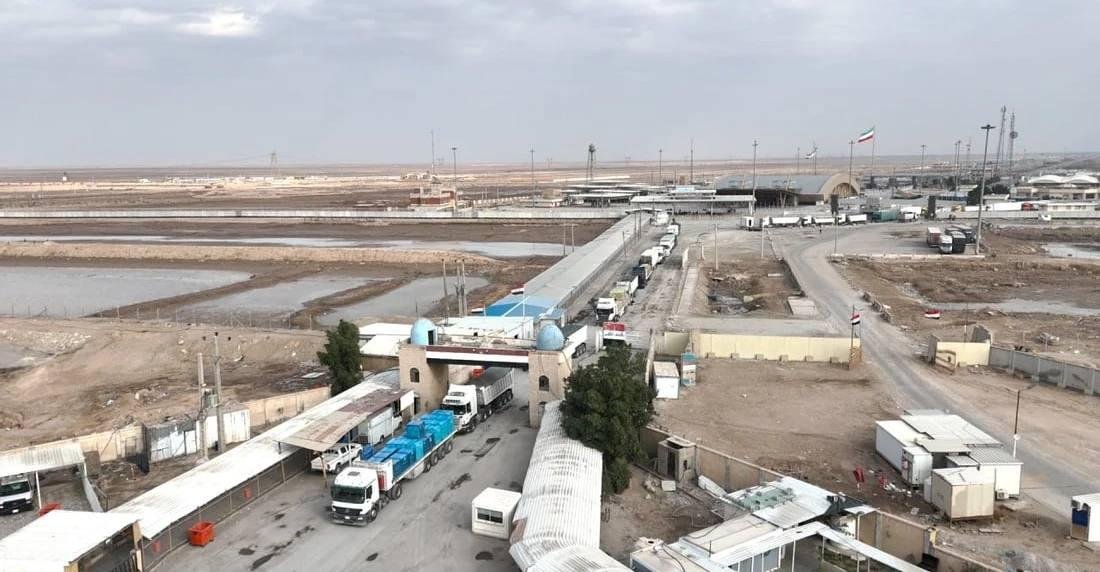
Al-Fariji added that "the specialized authorities are awaiting security reports to assess the situation on the ground," stressing that "if any danger continues to threaten the safety of work at the crossing, activity will not be resumed and will remain suspended until further notice."https://www.economy-news.net/content.php?id=67490
Iranian Parliamentarian: Imposing Fees On Ships In The Strait Of Hormuz Is Being Seriously Considered, And Hostile Countries Will Pay The Most.
Money and Business Economy News — Follow-up A member of the National Security Committee in the Iranian Parliament confirmed that securing the Strait of Hormuz entails costs, noting that imposing fees on passing ships is now being seriously considered, and that hostile countries should pay a higher price.
Amid the war and regional developments, the Iranian parliament is seeking to activate new tools in the fields of maritime security and economics. Among the most prominent of these measures is the proposal to impose fees on ships passing through the Strait of Hormuz, a strategic waterway whose security has been ensured for years at Iran's expense. However, the issue of making its users bear some of the costs is now being seriously considered.
Reza Mohseni Thanavi, a member of the National Security Committee in the Iranian Parliament, told Rouydad 24 that a number of projects are being studied by the deputies within the National Security and Foreign Policy Committee, most of which deal with issues related to the current situation in the country, regional developments, the repercussions of the war, and recent events.
Given its geopolitical importance and its ongoing role in international trade and maritime traffic, the Strait of Hormuz has always been of interest to regional and international naval powers. For this reason, global powers have consistently sought to consolidate their position in the Gulf by establishing military bases in or around the strait.
A member of the National Security Committee in Parliament revealed that one of the main axes of these projects is the issue of the Strait of Hormuz and imposing fees on passing ships, which was supposed to be implemented previously within a specific legal framework, but it was not activated for various reasons, while it has now been seriously included on the agenda.
Mohseni Thanavi added that there are other issues also on the table, including reconsidering some international commitments, the legal use of nuclear energy capabilities in line with the country’s needs, and reviewing regional approaches. These are files on the agenda of the National Security Committee and some other committees in Parliament.
Regarding the reasons for imposing fees on the Strait of Hormuz, he explained that a large part of the strait and its extensive coastline fall under Iran's jurisdiction, and therefore, ensuring the security of this waterway is its responsibility, which entails significant costs. He added that previously, Iran bore the costs of insuring all ships, but it has now been decided that each ship must pay a transit fee.
In response to a question about whether all countries would pay transit fees, he noted that in the absence of a comprehensive and clear law to regulate the management, monitoring and provision of services in the Strait of Hormuz, it has not yet been precisely determined which countries would be subject to these fees, but that hostile countries would bear greater costs.
In explaining the project's details, he clarified that the first phase involves Iran and Oman imposing fees to ensure safe navigation in the strait. The second phase addresses environmental pollution issues, given the potential damage to the marine environment caused by heavy ship traffic.
He pointed out that the third phase relates to maritime pilotage services, where ships will benefit from guidance services to ensure safe passage, in exchange for paying specific fees, stressing that these procedures are in place in many international straits and channels around the world.
Regarding the impact of this move on regional relations, he said that some countries in the region have shown positions that he described as harmful to the goals of the United States and Israel, and have cooperated with them in various fields, and have even put their capabilities and lands at their service.
The Iranian parliamentarian added that tensions have reached their peak at present, and that Iranian forces are protecting and managing the Strait of Hormuz with high efficiency, considering that talk about imposing fees could lead to an escalation of tensions or war does not carry much meaning, in light of the hostile parties using their full capabilities, in contrast to Iran taking appropriate measures in response.
Regarding the future of this project in the event of a ceasefire or the start of negotiations, he said that his country does not currently intend to enter into negotiations with Israel or any party seeking to repeat previous scenarios.
He concluded by emphasizing the need for a comprehensive review of regional policies, noting that if what he described as a decisive victory is achieved in this war, it will be necessary to reconsider regional issues, foreign policy, security, and even the nature of relations with neighboring countries, thus paving the way for the adoption of a new doctrine in the region. https://www.economy-news.net/content.php?id=67493
Turkish Exports To Iraq Declined By 17% At The Beginning Of 2026
Money and Business Economy News — Baghdad Recent trade data released on Saturday revealed significant shifts in trade between Iraq and Turkey during the first two months of 2026, with Turkish exports declining by 17%, amid remarkable growth in Iraqi exports to Turkey.
According to the figures, the total value of Turkish exports reached $1.4 billion, down from $1.74 billion recorded in the same period of 2025. Last February saw a sharp decline, with trade flows settling at $661 million compared to $900 million in the previous year.
Sector divergence: Fruits gain, iron loses
Despite the overall decline, certain Turkish sectors achieved a surge in their sales to the Iraqi market; exports of "fruits and nuts" jumped to $200 million, sales of "precious metals" doubled to reach $100 million, while the "clothing" sector recorded strong growth of about $98 million.
In contrast, other sectors suffered heavy losses; exports of “iron and steel” fell from $94 million to $45 million, and exports of “electrical machinery” and “plastics” declined by nearly 50%.
Recovery Of Iraqi Exports
On the opposite bank, Iraqi exports to Turkey rebounded by 41%, rising from $67 million to $95 million, driven by the "fuel" sector, which jumped to $37 million, and the "mineral raw materials" sector, which recorded $5.7 million.
Chronic Trade Deficit
For his part, economist Manar Al-Obaidi commented on these figures and percentages, saying that despite the relative improvement in Iraqi export figures, the trade balance still leans heavily in favor of Ankara, as the Iraqi trade deficit still exceeds the $1.3 billion mark.https://www.economy-news.net/content.php?id=67488
European Finance Ministers Are Calling For A Tax On Energy Companies' Profits Due To The Iran War.
Money and Business Economy News — Follow-up Five EU finance ministers, in a letter to the European Commission on Saturday, called for a tax on the windfall profits of energy companies in response to soaring fuel prices caused by the Iran war.
The finance ministers of Germany, Italy, Spain, Portugal and Austria issued this joint appeal in a letter, in which they said, according to Reuters, that "this measure will signal that we are united and capable of taking action."
They wrote that this "will also send a clear message that those who benefit from the consequences of war must play their part in easing the burden on the general public."
Oil and gas prices have risen sharply since the start of the US and Israeli strikes on Iran on February 28, causing a price shock similar to the energy crisis Europe experienced after Russia's invasion of Ukraine in 2022, even though EU countries now get more energy from renewable sources.
In the letter to EU Climate Commissioner Wopke Hoekstra, the ministers referred to a "similar emergency levy in 2022 to address rising energy prices."
They continued: "Given the current market distortions and financial constraints, the European Commission must quickly develop a similar EU-wide contribution instrument based on a solid legal foundation."
The letter did not mention any details about the level of tax on exceptional profits proposed by the ministers, or which companies would be subject to it.
European gas prices have risen by more than 70 percent since the start of the US-Israeli war with Iran on February 28.