
Iraq Economic News and Points To Ponder Monday Morning 2-2-26
The Iraqi Dinar Continues To Recover Against The Dollar In Baghdad Markets.
Money and Business Economy News – Baghdad The Iraqi dinar continued its gradual improvement against the US dollar in Baghdad markets on Monday, recording a new decline in exchange rates compared to yesterday's trading.
Baghdad markets witnessed a decrease in the exchange rate of the US dollar against the Iraqi dinar, as part of a gradual recovery of the local currency in recent days.
The Iraqi Dinar Continues To Recover Against The Dollar In Baghdad Markets.
Money and Business Economy News – Baghdad The Iraqi dinar continued its gradual improvement against the US dollar in Baghdad markets on Monday, recording a new decline in exchange rates compared to yesterday's trading.
Baghdad markets witnessed a decrease in the exchange rate of the US dollar against the Iraqi dinar, as part of a gradual recovery of the local currency in recent days.
The dollar exchange rate in the local market reached about 148,000 dinars per 100 dollars, recording an additional decline compared to yesterday’s price of 149,300 dinars per 100 dollars in the Al-Kifah exchange. https://economy-news.net/content.php?id=65242
IMF Managing Director: We Expect Global Inflation To Fall To 3.8% This Year
Money and Business Economy News - Follow-up The head of the International Monetary Fund predicted on Monday that global inflation would fall to 3.8% this year and to 3.4% in 2027 as demand declines and energy prices fall.
Kristalina Georgieva said in a speech at a forum in Dubai that global growth has maintained its level "remarkably" despite profound shifts in geopolitical conditions, trade policies, technology and demographics, according to Reuters. https://economy-news.net/content.php?id=65234
Iraq Records An Increase In Accumulated Domestic Debt To 89 Trillion Dinars
Money and Business Economy News – Baghdad The economic advisor to the Prime Minister, Mazhar Muhammad Salih, announced that Iraq's accumulated domestic debt has risen to 89 trillion dinars.
According to the official newspaper, Mazhar Muhammad Saleh said that the solutions adopted by the financial authority, within the framework of the government program, are aimed at diversifying sources of income and reducing dependence on external loans, in parallel with proceeding with the path of economic reform through the restructuring of government banks, stressing that the state is moving towards consolidating the philosophy of partnership with the private sector.
Saleh revealed that Iraq’s external public debt amounts to only $13 billion, while the accumulated internal public debt has risen to about 89 trillion dinars, stressing that there is a governmental direction to transform this “internal” debt from a financial burden into an opportunity for development and investment, but he acknowledged that the escalating pressures of servicing the internal debt may negatively affect the standard of living of citizens.
He added that “under the influence of fluctuations in the oil asset cycle, and the escalation of geopolitical pressures in energy belt regions since the middle of last year, along with the slowdown in global economic growth and the rise in levels of uncertainty in international real investment – whose growth is a strategic factor in energy demand – the financial situation in Iraq has faced major challenges, given its dependence on oil export revenues of nearly 88%.”
The Prime Minister’s economic advisor explained that “in this context, the accumulated domestic public debt over the years has increased to about 89 trillion Iraqi dinars (equivalent to about 67 billion dollars) at the end of 2025, an increase of nearly 6% compared to 2024,” attributing this increase mainly to the public finances’ reliance on domestic borrowing from government banks to finance the temporary budget deficit resulting from the decline in oil prices and the fluctuation of oil revenues.
He explained, "This path has produced tangible effects on the liquidity of the economy, as the continuation of the fiscal deficit and the recourse to internal financing, in conjunction with the rise in government expenditures, would deepen the actual deficit in the budget and leave negative effects on economic growth," indicating that "this problem is exacerbated in light of the limited non-oil revenues, which have become close in size to the costs of servicing the debt itself, if this path is not addressed radically."
He added, "Moreover, increased investment in government debt instruments has become more attractive to government banks than lending to the private sector, which limits the role of credit in stimulating productive activity. In addition, the rising pressures of servicing domestic debt may negatively affect the standard of living of citizens if it begins to burden price support programs and social welfare networks."
Saleh explained that “in contrast, Iraq’s external debt is only about $13 billion, which is a low level compared to the gross domestic product. International creditors appreciate Iraq’s ability to meet its external obligations thanks to the strength of its foreign reserves and its financial stability, which has contributed to giving it a stable and promising credit rating.”
He revealed that “based on this, the solutions adopted by the financial authority, within the framework of the government program, are aimed at diversifying sources of income and reducing dependence on external loans, in parallel with proceeding with the path of economic reform through restructuring government banks, improving the efficiency of the financial sector, and enhancing transparency and accountability in public finance management through digital governance and expanding digital financial inclusion.”
The economic advisor pointed out that "there are clear trends to transform internal public debt from a financial burden into opportunities for development and productive investment in real assets, through adopting the philosophy of partnership between the state and the private sector, especially in the real sectors with high productivity, which is expected to form one of the axes of the economic program for the next stage." https://economy-news.net/content.php?id=65239
In The Presence Of The Framework Delegation, Al-Sudani And Barzani Affirmed Their Commitment To Completing The Formation Of The Government.
Economy News – Baghdad Prime Minister Mohammed Shia al-Sudani and Kurdistan Democratic Party leader Masoud Barzani affirmed on Monday their commitment to completing the formation of the government in accordance with the results of the parliamentary elections.
A statement from his media office, received by “Al-Eqtisad News”, stated that “Al-Sudani met in Erbil with the President of the Kurdistan Democratic Party, Masoud Barzani, in the presence of the accompanying Coordination Framework delegation, which included the Secretary-General of the Badr Organization, Hadi Al-Amiri, the President of the Al-Asas Coalition, Mohsen Al-Mandalawi, and the Secretary-General of the Framework, Abbas Radhi.”
He noted that "the meeting discussed the upcoming constitutional entitlements, foremost among them the election of the President of the Republic, in order to proceed with completing the formation of the government in accordance with the results of the parliamentary elections."
He explained that "the meeting addressed the current developments in the region, the situation in Syria, and the importance of unifying the Iraqi national political discourse regarding these changes and events, in order to strengthen Iraq's position and its supreme national interests." https://economy-news.net/content.php?id=65250
Dollar Declines In Baghdad And Erbil
2026-02-02 Shafaq News– Baghdad/ Erbil The US dollar opened Monday’s trading lower in Iraq, hovering around 149,000 dinars per 100 dollars.
According to a Shafaq News market survey, the dollar traded in Baghdad's Al-Kifah and Al-Harithiya exchanges at 149,000 dinars per 100 dollars, down from the previous session's 149,400 dinars.
In the Iraqi capital, exchange shops sold the dollar at 149,500 dinars and bought it at 148,500 dinars, while in Erbil, selling prices stood at 148,900 dinars and buying prices at 148,700 dinars. https://www.shafaq.com/en/Economy/Dollar-declines-in-Baghdad-and-Erbil
Gold Prices Fall In Baghdad And Erbil Markets
2026-02-02 Shafaq News– Baghdad/ Erbil On Monday, gold prices hovered around one million IQD per mithqal in Baghdad and Erbil markets, marking a sharp decline from the previous session, according to a survey by Shafaq News Agency.
Gold prices on Baghdad's Al-Nahr Street recorded a selling price of 970,000 IQD per mithqal (equivalent to five grams) for 21-carat gold, including Gulf, Turkish, and European varieties, with a buying price of 965,000 IQD. The same gold had sold for 997,000 IQD on Sunday.
The selling price for 21-carat Iraqi gold stood at 940,000 IQD, while the buying price reached 936,000 IQD.
In jewelry stores, the selling price per mithqal of 21-carat Gulf gold ranged between 970,000 and 980,000 IQD, while Iraqi gold sold for between 940,000 and 950,000 IQD.
In Erbil, 22-carat gold was sold at 1.059 million IQD per mithqal, 21-carat gold at 1.012 million IQD, and 18-carat gold at 865,000 IQD. https://www.shafaq.com/en/Economy/Gold-prices-fall-in-Baghdad-and-Erbil-markets-1-8
Oil Prices Plunge On Signs Of US-Iran De-Escalation
2026-02-02 Shafaq News Oil prices fell 4% on Monday as U.S. President Donald Trump said over the weekend Iran was "seriously talking" with Washington, signalling de-escalation with an OPEC member after risks of a military strike drove prices to multi-month highs.
Brent crude futures were down $2.81, or 4.1%, to $66.51 per barrel at 0325 GMT. U.S. West Texas Intermediate crude fell $2.70, or 4.1%, to $62.51 per barrel.
Both contracts dropped sharply from the previous sessions, when Brent touched a six-month high and WTI was hovering near its highest since late September on mounting tensions between the United States and Iran.
Trump has repeatedly threatened Iran with intervention if it does not agree to a nuclear deal or continues killing protesters. The persistent threats have underpinned oil prices throughout January, said Priyanka Sachdeva, an analyst at Phillip Nova.
"The recent pullback has also been reinforced by renewed strength in the U.S. dollar, which typically makes dollar-denominated oil more expensive for non-U.S. buyers, further weighing on prices," Sachdeva said.
On Saturday Trump told reporters Iran was "seriously talking," hours after Tehran's top security official Ali Larijani said arrangements for negotiations were underway.
Trump's comments, along with reports that the naval forces of Iran's Revolutionary Guards have no plans to carry out live-fire exercises in the Strait of Hormuz, are signs of de-escalation, said IG market analyst Tony Sycamore.
"The crude oil market is interpreting this as an encouraging step back from confrontation, easing the geopolitical risk premium built into the price during last week's rally and prompting a bout of profit-taking," he said.
OPEC+ agreed to keep its oil output unchanged for March at a meeting on Sunday. In November they froze further planned increases for January through March 2026 because of seasonally weaker consumption.
"Geopolitical risks mask a fundamentally bearish oil market," Capital Economics said in a January 30 note. "The historical example of last year's 12-day war (between Israel and Iran), and a well-supplied oil market, will still bear down on Brent crude prices by end-2026." (Reuters) https://www.shafaq.com/en/Economy/Oil-prices-plunge-on-signs-of-US-Iran-de-escalation
MilitiaMan and Crew: IQD News Update-Global Trade-WTO-USA-Political Noise-Digital
MilitiaMan and Crew: IQD News Update-Global Trade-WTO-USA-Political Noise-Digital
2-1-2026
The Crew: Samson, PompeyPeter, Petra, Daytrader, Sunkissed, GIGI and Militia Man
Follow MM on X == https://x.com/Slashn
Be sure to listen to full video for all the news……..
MilitiaMan and Crew: IQD News Update-Global Trade-WTO-USA-Political Noise-Digital
2-1-2026
The Crew: Samson, PompeyPeter, Petra, Daytrader, Sunkissed, GIGI and Militia Man
Follow MM on X == https://x.com/Slashn
Be sure to listen to full video for all the news……..
Dollar Collapse, this is Why Global Money is Fleeing the US
Dollar Collapse, this is Why Global Money is Fleeing the US
Lena Petrova: 2-1-2026
In a recent episode of the World Affairs and Context podcast, Lena Petrova sat down with Larry McDonald, a New York Times best-selling author and founder of the Bear Traps Report, to discuss the recent decline in the US dollar and its implications on the global economy.
The conversation was enlightening, offering insights into the complex dynamics driving the dollar’s downtrend and the shifting landscape of financial markets.
Dollar Collapse, this is Why Global Money is Fleeing the US
Lena Petrova: 2-1-2026
In a recent episode of the World Affairs and Context podcast, Lena Petrova sat down with Larry McDonald, a New York Times best-selling author and founder of the Bear Traps Report, to discuss the recent decline in the US dollar and its implications on the global economy.
The conversation was enlightening, offering insights into the complex dynamics driving the dollar’s downtrend and the shifting landscape of financial markets.
According to Larry, the dollar’s decline is not a short-term phenomenon but rather a consequence of long-term fiscal irresponsibility, political sanctions, trade conflicts, and the global transition from a uni-polar to a multi-polar world.
The US government’s actions, including bipartisan sanctions and property confiscations, have alienated global trading partners, prompting them to reduce their reliance on the dollar. This trend is evident in the increasing diversification of global reserves away from the dollar.
Larry highlights that there are internal divisions within the US government regarding the dollar’s future. A faction within the government advocates for a weaker dollar to rebalance global trade, support the rust belt, and help repay the enormous national debt via debt monetization.
Essentially, debt monetization involves keeping interest rates below inflation, thereby inflating away debt over time. This concept is often misunderstood, but Larry clarifies that inflation reduces the real value of debt, making it a viable strategy for managing the US’s substantial debt burden.
The podcast discussion touches on the migration of capital from financial assets, particularly US treasuries and growth stocks like the MAG7, into hard assets such as gold, copper, and other commodities.
This shift is driven by skepticism toward US fiscal policy and a weakening dollar. Central banks globally are increasing gold reserves as a hedge against dollar risk, further underscoring the declining confidence in the dollar.
Despite the weak dollar, the US stock market has shown remarkable resilience. Larry attributes this to capital flowing away from mega-cap tech growth stocks toward international and value equities, signaling a broadening market trend.
However, he expresses concern about an emerging AI bubble, fueled by speculative valuations, massive capital expenditures, and rising memory chip costs. This bubble could potentially hamper sustainable returns and lead to a market correction.
The discussion also highlights recent moves by European pension funds exiting US treasuries due to concerns about US fiscal stability and political uncertainty.
This reinforces the theme of global capital reallocating away from traditional dollar-denominated safe havens. As investors become increasingly wary of the dollar’s stability, they are diversifying their portfolios into alternative assets.
Larry offers a nuanced perspective on the future of the dollar and gold. While the dollar is under pressure, a complete collapse is unlikely due to the US’s geopolitical power and military strength.
He foresees a scenario where inflation resurges later in the year, prompting the Federal Reserve to tighten monetary policy, which would strengthen the dollar once again. Thus, the dollar’s decline is a complex, ongoing process with potential reversals, rather than an inevitable collapse.
In conclusion, the dollar’s decline is a multifaceted issue driven by a combination of factors, including fiscal irresponsibility, political sanctions, and global economic shifts.
As the global economy continues to evolve, investors must stay informed and adapt to the changing landscape. For further insights and information, watch the full video from Lena Petrova, where she delves deeper into the complexities of the dollar’s decline and its implications for the global economy.
Seeds of Wisdom RV and Economics Updates Sunday Afternoon 2-1-26
Good Afternoon Dinar Recaps,
Historic Silver Price Collapse: What Caused It and What Comes Next
Silver’s unprecedented drop exposes deeper structural strain in global markets and raises questions about futures, liquidity, and accountability.
Good Afternoon Dinar Recaps,
Historic Silver Price Collapse: What Caused It and What Comes Next
Silver’s unprecedented drop exposes deeper structural strain in global markets and raises questions about futures, liquidity, and accountability.
Overview
Silver recently experienced one of the largest single-day percentage drops in history, briefly falling more than 30% in 24 hours after a year of parabolic price gains that drove it above record nominal highs.
This violent move wasn’t merely a technical correction — it reflected fundamental supply-demand imbalances, forced liquidations triggered by futures market mechanics, and a deep disconnect between paper contracts and physical metal availability.
Key Developments
1. Parabolic Rally Meets Margin Hikes and Forced Liquidations
After a dramatic rally throughout late 2025 and early 2026, silver prices climbed above $110 per ounce amid surging industrial demand for green energy and electronics inputs.
To contain extreme volatility, the CME Group raised margin requirements on COMEX silver futures several times, culminating in a cumulative increase of nearly 50% in a short period.
These margin hikes forced heavily leveraged traders to liquidate positions, triggering cascading stop-loss orders and sharp price decline — a classic deleveraging event.
2. Structural Physical Shortage Underlies Market Stress
Independent data shows a growing physical shortage of silver:
Lease rates (the cost to borrow physical metal) spiked dramatically, signaling scarcity.
Above-ground inventories in London and COMEX vaults have been falling sharply for years, with LBMA stockpiles down nearly 40% since 2021.
Physical premiums in some global markets (e.g., Japan and the UAE) have traded far above COMEX prices, reflecting real shortages of available metal.
Physical production faces structural limits: mining output has lagged demand for five consecutive years, creating a cumulative supply deficit approaching 800 million ounces as of late 2025.
3. Paper vs. Physical Disconnect Strains Price Discovery
Silver’s market structure now shows signs of “backwardation” — where spot prices exceed future prices — a rare condition indicating buyers want immediate physical metal rather than future delivery.
Meanwhile, COMEX registered inventories (metal available for delivery) have dwindled even as open interest (paper claims) remains high, pointing to a disconnect between what the market promises and what it can deliver.
4. Manipulation Allegations Resurface but No Confirmed Criminal Probes
Sharp moves like the recent crash reignite long-standing claims that major bullion banks and institutional players use concentrated net short positions, algorithmic selling, and other tactics in futures markets to suppress prices. Historical enforcement actions against spoofing and manipulation in precious metals markets lend context to these concerns.
However, as of now:
There is no confirmed U.S. criminal investigation specifically targeting recent silver pricing actions or COMEX handling of contract delivery failures;
No major bullion banks have been publicly charged over the 2025–26 price moves;
Regulatory bodies like the Commodity Futures Trading Commission (CFTC) and CME have not opened a public criminal probe into silver futures behavior.
Current regulatory focus has been on risk management (e.g., raising margin requirements) rather than punitive enforcement.
Why It Matters
Silver’s drop exposes a fragile market framework:
A parabolic price arc built on leveraged futures rather than physical supply,
Eroding inventories at major exchanges,
Sharp divergence between paper contracts and true metal availability,
Rising industrial demand that physical mine output cannot satisfy.
This dynamic threatens the integrity of the price-discovery mechanism that underpins global commodity markets.
Why It Matters to Foreign Currency Holders
Precious metals like silver are often viewed as safe-haven assets and hedges against currency debasement. Severe volatility and structural imbalances in silver markets can:
Trigger rapid reallocations in portfolios,
Influence inflation expectations and hedge demand,
Alter correlations between metals, currencies, and risk assets.
If confidence in futures pricing mechanisms erodes further, capital flows may shift toward tangible assets and away from paper instruments — a trend that can ripple across FX and commodity markets.
Implications for the Global Reset
Pillar 1 – Paper-to-Physical Disconnect Signals Structural Fragility
The silver market highlights the risks inherent in derivatives-heavy financial systems where paper claims far exceed underlying real assets. Systemic stress in one corner of global finance can presage broader imbalances.
Pillar 2 – Markets Are Repricing Risk and Storage
Backwardation and physical scarcity reflect a broader shift toward real asset value over leveraged price speculation — a dynamic that often precedes monetary and reserve system adjustments during transitional economic eras.
This is not just a correction — it is a systemic stress test revealing deep fractures between promises and deliverables in global commodity markets.
Seeds of Wisdom Team
Newshounds News™ Exclusive
Sources
FXStreet — Silver supply squeeze analysis showing structural deficits and lease-rate spikes.
CFTC/CME margining and forced liquidation events reported in year-end liquidation narratives.
~~~~~~~~~~
China’s Global South Strategy: The Quiet Campaign to Undermine U.S.-Led Alliances
Beijing expands influence through infrastructure, technology, and soft power—reshaping global power without firing a shot.
Overview
China is executing a long-term strategy aimed at counterbalancing U.S.-led alliances such as NATO, AUKUS, and the Quad by cultivating influence across the Global South. Rather than direct confrontation, Beijing relies on economic integration, technological expansion, military modernization, and alternative institutions to weaken Western dominance and accelerate the shift toward a multipolar world order.
Key Developments
1. Economic Power as Strategic Leverage
At the core of China’s outreach is the Belt and Road Initiative (BRI), which links developing nations to Chinese capital through infrastructure, ports, digital networks, and energy projects. These investments provide alternatives to Western financial institutions while deepening economic dependence on Beijing. China has refined this approach with “small but beautiful projects” to reduce backlash over debt concerns while maintaining influence.
2. Building Counter-Alliances Outside the West
China is strengthening non-Western security and political groupings, particularly the Shanghai Cooperation Organisation (SCO). By coordinating security positions and expanding membership, Beijing positions the SCO as a counterweight to NATO while reinforcing partnerships with Russia, Iran, and Central Asian states to circumvent sanctions and dilute Western leverage.
3. Military Modernization Without Direct Conflict
Beijing has shifted from “near-water defense” to open-sea protection, rapidly expanding its blue-water navy, hypersonic missile programs, cyber warfare capabilities, and artificial intelligence integration. These developments are designed to raise the cost of Western containment—especially in Taiwan and the South China Sea—without provoking outright war.
4. Gray-Zone Tactics and Cyber Influence
China increasingly employs gray-zone operations, including cyber activities, economic coercion, and information influence campaigns. These actions weaken adversaries incrementally, disrupting infrastructure and political cohesion while remaining below the threshold of open military confrontation.
5. Reframing Global Power as North vs. South
Diplomatically, China presents itself as the champion of the Global South, redefining global tensions not as East versus West, but as North versus South. Beijing emphasizes “non-interference,” partnership, and development, positioning its governance model as an alternative to Western conditional aid and political pressure.
Why It Matters
China’s strategy challenges the foundations of the post-World War II international system. By offering economic lifelines, security partnerships, and monetary alternatives, Beijing is steadily eroding Western influence in regions once dominated by U.S. and European institutions.
Why It Matters to Foreign Currency Holders
As China promotes local-currency trade, monetary diplomacy, and reduced dollar dependence, the long-term implications for the global reserve system are significant. A successful multipolar shift would weaken dollar dominance, elevate regional currencies, and potentially accelerate currency realignments tied to a broader global financial reset.
Implications for the Global Reset
Pillar 1 – Financial System Rebalancing
China’s push for alternative payment systems, local-currency settlements, and non-Western financial institutions directly challenges dollar hegemony and accelerates fragmentation of the global monetary order.
Pillar 2 – Power and Alliance Realignment
As supply chains, security arrangements, and development financing increasingly align with Beijing rather than Washington, global influence shifts away from traditional Western blocs toward a more decentralized, multipolar framework.
This is not just diplomacy—it’s a slow-motion restructuring of global power, finance, and sovereignty.
Seeds of Wisdom Team
Newshounds News™ Exclusive
Sources
Modern Diplomacy — How China Courts the Global South to Counter U.S. Alliances
Council on Foreign Relations — China’s Growing Influence in the Global South
~~~~~~~~~~
Dollar Has Further to Fall as BRICS Builds a Parallel Financial System
Gold accumulation, CBDCs, and non-dollar trade signal accelerating erosion of dollar dominance.
Overview
The U.S. dollar is facing mounting structural pressure as the BRICS alliance accelerates development of a parallel financial system designed to operate outside Western control. Recent dollar weakness, historic central bank gold accumulation, and the rollout of BRICS-linked digital settlement tools are reinforcing concerns that global reserve dynamics are shifting faster than markets previously anticipated.
Currency strategists increasingly agree the dollar’s decline is not cyclical, but structural — driven by policy uncertainty, sanctions risk, and the emergence of viable alternatives to dollar-based trade and settlement.
Key Developments
1. Dollar Weakness Signals Structural Stress
The U.S. dollar fell to a four-year low this week, sliding roughly 3% in a single week against major currencies. Analysts at ING project an additional 4–5% decline through 2026, citing policy uncertainty and changing global investment behavior. Market consensus now centers on direction, not whether the dollar weakens further.
2. Gold Replaces Dollars in Central Bank Portfolios
BRICS nations have accumulated more than 6,000 metric tons of gold, representing approximately 21% of global central bank reserves. Russia and China alone hold over 4,600 tons combined. In 2025, foreign central banks’ gold holdings surpassed U.S. Treasury holdings in value for the first time in nearly three decades — a milestone signaling a structural reallocation away from dollar assets.
Gold prices surged above $5,500 per ounce in January 2026, reinforcing gold’s renewed role as a neutral reserve asset amid sanctions risk and fiscal concerns in the United States.
3. BRICS Settlement Tools Move From Theory to Reality
Late in 2025, BRICS launched a pilot digital settlement unit known as the “Unit”, backed 40% by physical gold and 60% by BRICS national currencies. The system was designed specifically to bypass Western clearing mechanisms for cross-border trade.
In parallel, BRICS Pay, a CBDC-based settlement network, is scheduled for expanded rollout throughout 2026. India, chairing BRICS this year, is proposing the interlinking of member CBDCs to streamline trade and tourism payments across BRICS+ economies.
4. Dollar Share of Global Reserves Continues to Decline
The dollar’s share of global foreign exchange reserves has fallen from 58.2% in 2024 to approximately 56.9% in early 2026. Russia and China now settle most bilateral trade in rubles and yuan, while Brazil and India increasingly price commodities in local currencies to avoid dollar exposure.
Meanwhile, the mBridge platform — involving China, Hong Kong, Saudi Arabia, Thailand, and the UAE — has already processed RMB 387.2 billion ($55 billion) in transactions, with 95% settled in digital yuan, proving that large-scale alternatives to dollar settlement are already operational.
5. Policy Uncertainty Accelerates Capital Flight
Currency strategists point to heightened policy volatility in Washington as a key driver of the dollar’s weakness. Abrupt shifts in trade and geopolitical posture have increased hedging behavior, reduced Treasury exposure among European pension funds, and accelerated capital flows into non-dollar assets.
Eleven of nineteen emerging-market currencies tracked by Oxford Economics gained more than 1% against the dollar this month, underscoring the breadth of the shift.
Why It Matters
What was once dismissed as “de-dollarization rhetoric” is now manifesting through measurable reserve reallocations, operational payment systems, and coordinated BRICS policy action. The dollar’s decline reflects eroding confidence in U.S. fiscal sustainability and the growing cost of weaponized finance.
Why It Matters to Foreign Currency Holders
As gold-backed settlement units, CBDCs, and local-currency trade expand, holders of foreign currencies may benefit from revaluation dynamics tied to a multipolar monetary system. These developments align with long-term expectations of currency realignment as the dollar’s reserve premium weakens.
Implications for the Global Reset
Pillar 1 – Monetary System Transition
The rise of gold-backed digital settlement tools and CBDC interoperability directly challenges the dollar-centric reserve framework that has governed global finance since Bretton Woods.
Pillar 2 – Trade and Power Realignment
As BRICS bypass Western intermediaries, trade flows increasingly reflect geopolitical alignment rather than dollar necessity, reshaping global influence and reducing the effectiveness of sanctions-based enforcement.
This is not a dollar crash — it’s a controlled unwind of monetary dominance decades in the making.
Seeds of Wisdom Team
Newshounds News™ Exclusive
Sources
Watcher.Guru — Dollar Has Further to Fall While BRICS Builds Parallel System
Bank for International Settlements (BIS) — mBridge and the Future of Cross-Border CBDC Payments
~~~~~~~~~~
Seeds of Wisdom Team RV Currency Facts Youtube and Rumble
Newshound's News Telegram Room Link
RV Facts with Proof Links Link
RV Updates Proof links - Facts Link
Follow the Gold/Silver Rate COMEX
Follow Fast Facts
Seeds of Wisdom Team™ Website
Thank you Dinar Recaps
Iraq Economic News and Points To Ponder Sunday Afternoon 2-1-26
Dollar Drops In Baghdad And Erbil Markets
2026-02-01 Shafaq News– Baghdad/ Erbil The US dollar closed Sunday’s trading lower in Iraq, hovering around 148,000 dinars per 100 dollars. According to a Shafaq News market survey, the dollar traded in Baghdad's Al-Kifah and Al-Harithiya exchanges at 148,350 dinars per 100 dollars, down from the opening session’s 149,400 dinars.
In the Iraqi capital, exchange shops sold the dollar at 148,750 dinars and bought it at 147,750 dinars, while in Erbil, selling prices stood at 148,050 dinars and buying prices at 147,850 dinars.
Dollar Drops In Baghdad And Erbil Markets
2026-02-01 Shafaq News– Baghdad/ Erbil The US dollar closed Sunday’s trading lower in Iraq, hovering around 148,000 dinars per 100 dollars. According to a Shafaq News market survey, the dollar traded in Baghdad's Al-Kifah and Al-Harithiya exchanges at 148,350 dinars per 100 dollars, down from the opening session’s 149,400 dinars.
In the Iraqi capital, exchange shops sold the dollar at 148,750 dinars and bought it at 147,750 dinars, while in Erbil, selling prices stood at 148,050 dinars and buying prices at 147,850 dinars.
https://www.shafaq.com/en/Economy/Dollar-drops-in-Baghdad-and-Erbil-markets
Iraq Boosts Fuel Self-Sufficiency With Launch Of FCC Unit
2026-02-01 Shafaq News– Baghdad Iraq is set to secure 4,200 cubic meters of high-octane gasoline for the domestic market after commissioning the Fluid Catalytic Cracking (FCC) unit at the South Refineries Company, the Ministry of Oil announced on Sunday.
According to a statement from the ministry, Hussam Hussein Wali, the director general of the company, noted that the unit entered final operation on January 31 as part of Iraq’s drive toward self-sufficiency in refined petroleum products.
Iraqi caretaker Prime Minister Mohammed Shia al-Sudani previously affirmed that Iraq targets exports of oil derivatives to global markets by 2030.
In November, Iraq formally halted fuel imports after achieving self-sufficiency in gasoline, diesel, and kerosene, under a directive by Al-Sudani. The order instructed the Oil Ministry to regulate domestic consumption and channel surplus production toward exports.
Iraq, OPEC’s second-largest producer, continues to rely heavily on imports due to challenges such as security threats, political instability, aging infrastructure, and resource depletion. Gas flaring and opaque contracts further complicate its energy sector, driving higher demand for refined oil products.
Read more: Why doesn't Iraq export petroleum derivatives?
https://www.shafaq.com/en/Economy/Iraq-boosts-fuel-self-sufficiency-with-launch-of-FCC-unit
Gold Prices Fall In Baghdad And Erbil Markets
2026-02-01 Shafaq News– Baghdad/ Erbil On Sunday, gold prices hovered around one million IQD per mithqal in Baghdad and Erbil markets, marking a sharp decline from the previous session, according to a survey by Shafaq News Agency.
Gold prices on Baghdad's Al-Nahr Street recorded a selling price of 996,000 IQD per mithqal (equivalent to five grams) for 21-carat gold, including Gulf, Turkish, and European varieties, with a buying price of 992,000 IQD. The same gold had sold for 1.040 million IQD on Saturday.
The selling price for 21-carat Iraqi gold stood at 966,000 IQD, while the buying price reached 962,000 IQD.
In jewelry stores, the selling price per mithqal of 21-carat Gulf gold ranged between 995,000 and 1.005 million IQD, while Iraqi gold sold for between 965,000 and 975,000 IQD.
In Erbil, 22-carat gold was sold at 1.125 million IQD per mithqal, 21-carat gold at 1.075 million IQD, and 18-carat gold at 922,000 IQD. https://www.shafaq.com/en/Economy/Gold-prices-fall-in-Baghdad-and-Erbil-markets-6-7
Iraqi Oil Exports To US Slide To 83,000 Bpd
2026-02-01 Shafaq News– Baghdad/ Washington Crude oil exports from Iraq, OPEC’s second-largest producer, to the United States fell to 83,000 barrels per day (bpd) over the past week from 251,000 bpd a week earlier, according to data released Sunday by the US Energy Information Administration.
The EIA figures showed the decline amounted to 168,000 bpd week on week.
Overall, average US crude oil imports from ten major suppliers stood at 4.908 million bpd, down 677,000 bpd from 5.585 million bpd recorded the previous week.
Canada ranked as the largest crude supplier to the United States during the week, with average imports of 3.813 million bpd, followed by Saudi Arabia at 370,000 bpd, Mexico at 216,000 bpd, and Colombia at 128,000 bpd. US crude imports averaged 119,000 bpd from Ecuador, 94,000 bpd from Venezuela, 43,000 bpd from Brazil, 41,000 bpd from Nigeria, and 1,000 bpd from Libya. Daily US oil consumption stands at around 20 million barrels, making it the world’s largest oil consumer. https://www.shafaq.com/en/Economy/Iraqi-oil-exports-to-US-slide-to-83-000-bpd
Iraq Lowers Customs Import Value Estimates By 25%
2026-02-01 Shafaq News– Baghdad Iraq’s General Authority of Customs at the Ministry of Finance approved on Sunday a 25% reduction on the average import values recorded in the ASYCUDA customs system.
According to the authority, the directive aims to strike a balance between maximizing state revenues and easing customs procedures at border points.
In January, the Iraqi government raised customs tariffs, setting rates between 5% and 30% across multiple brackets. The increases were applied to the full customs tariff schedule, which includes 99 chapters and around 16,400 internationally adopted tariff items.
Several Iraqi provinces, including the capital Baghdad, have witnessed angry protests against the government’s decision to impose new taxes and fees, as well as the enforcement of customs tariffs on imported goods.
Read more: Delayed reform or fiscal shock? Iraq’s tax measures test state capacity
https://www.shafaq.com/en/Economy/Iraq-lowers-customs-import-value-estimates-by-25
Iraq Continues To Suspend Its Oil Production Increases
Time: 2026/02/01 14:01:43 Readings: 165 times {Economic: Al-Furat News} Reuters reported on Sunday that Iraq, as an active member of the OPEC+ alliance, will maintain its decision to suspend oil production increases for March 2026, in a move aimed at preserving the stability of global crude prices, amid Brent crude reaching about $71 a barrel, its highest level in six months.
The eight producing countries – Saudi Arabia, Russia, the United Arab Emirates, Kazakhstan, Kuwait, Iraq, Algeria and Oman – had raised production quotas by about 2.9 million barrels per day during the period from April to December 2025, before freezing any increases from January to March 2026 due to weak seasonal consumption.
Iraq produces a portion of roughly half of the global oil output covered by the OPEC+ alliance, giving it a significant role in market stability. The OPEC+ meeting is scheduled for Sunday at 1:30 PM GMT, while the Joint Ministerial Monitoring Committee will convene to review performance without the authority to make new production decisions.
Oil prices received additional support due to production disruptions in Kazakhstan, while the United States continues to monitor the Iranian situation, including oil sanctions on Tehran and potential military pressure options, amid readiness on both sides to enter into possible dialogue. LINK
“Tidbits From TNT” Sunday 2-1-2026
TNT:
Tishwash: Source: Al-Sudani, Al-Amiri, and Al-Mandalawi are visiting Erbil today, Sunday.
A high-level source in the Kurdistan Democratic Party revealed on Sunday (February 1, 2026) that there is intensive political activity to resolve the issue of the presidency, stressing adherence to the existing agreement with the Patriotic Union of Kurdistan and not going to break the understanding between the two parties.
The source told Baghdad Today in a special statement that “what has been agreed upon so far is not to cancel the existing agreement, and it is likely that tomorrow will witness a visit by Hadi al-Amiri, Prime Minister Mohammed Shia al-Sudani, and Acting Speaker of Parliament Mohsen al-Mandalawi to Erbil, to resolve the issue of the presidency with the Kurdistan Democratic Party, within the existing agreement with the Patriotic Union of Kurdistan.”
TNT:
Tishwash: Source: Al-Sudani, Al-Amiri, and Al-Mandalawi are visiting Erbil today, Sunday.
A high-level source in the Kurdistan Democratic Party revealed on Sunday (February 1, 2026) that there is intensive political activity to resolve the issue of the presidency, stressing adherence to the existing agreement with the Patriotic Union of Kurdistan and not going to break the understanding between the two parties.
The source told Baghdad Today in a special statement that “what has been agreed upon so far is not to cancel the existing agreement, and it is likely that tomorrow will witness a visit by Hadi al-Amiri, Prime Minister Mohammed Shia al-Sudani, and Acting Speaker of Parliament Mohsen al-Mandalawi to Erbil, to resolve the issue of the presidency with the Kurdistan Democratic Party, within the existing agreement with the Patriotic Union of Kurdistan.”
The source explained that "this visit is moving within the framework of coordination, which does not prefer that the Kurdish component bring two candidates, but rather one compromise candidate, in order to ensure ease in the appointment of the presidency and ease in completing the process of forming the next government," considering that "unifying the Kurdish position within the parliament will be a decisive factor in the session to elect the president and stabilize the political process in the next stage."
It is worth noting that the parliamentary session scheduled for today, Sunday (February 1, 2026), to elect the president of the republic is taking place amidst a clear political deadlock regarding the Kurdish issue.
This comes after weeks of dispute between the Kurdistan Democratic Party (KDP) and the Patriotic Union of Kurdistan (PUK) over the presidential candidate, with multiple names still being put forward within the Kurdish political sphere.
Meanwhile, the Coordination Framework prefers to resolve the issue with a single consensus candidate to ensure the stability of the new government formation process. This complexity, coupled with the nomination of Nouri al-Maliki for prime minister and escalating regional and international pressure, has transformed the presidency from a largely ceremonial position into an additional political hurdle requiring a comprehensive settlement among Shia, Kurdish, and Sunni forces alike. link
************
Tishwash: An economist reveals urgent solutions to address the financial crisis and secure employee salaries.
Economic expert Ahmed Al-Tamimi revealed today, Saturday (January 31, 2026), a number of urgent solutions required to confront the financial crisis that Iraq is going through, and to ensure the regular disbursement of employee salaries.
Al-Tamimi said in a press statement that “the current financial crisis, which has directly impacted the delay in releasing employee salaries, requires immediate government measures and real structural reforms to prevent it from worsening in the coming period.”
He explained that “the delay in salaries is not only due to the decline in cash liquidity, but is the result of accumulations that have continued for years, due to the almost complete dependence on oil revenues, in contrast to the weak diversification of income sources and the decline in non-oil revenues.”
He added that “continuing this approach will increase pressure on the general budget, unless action is taken quickly to rearrange spending priorities, control operating expenses, and secure employee salaries as a top priority to maintain social stability.”
Al-Tamimi pointed out that “among the urgent solutions is activating the tools of fiscal policy in coordination with the Central Bank, improving liquidity management in government banks, as well as accelerating the reform of the tax system and expanding the collection base, in a way that does not burden those with limited income.”
He stressed that “confronting the current crisis requires a clear political will to combat waste and financial corruption, enhance transparency in the management of public funds, and support productive sectors, especially industry and agriculture, to alleviate pressure on the public treasury and create sustainable financial resources.”
Al-Tamimi concluded his remarks by stressing that “any further delay in addressing the issues will exacerbate the repercussions of the crisis,” calling on the government to take swift and well-considered decisions that ensure the regular disbursement of salaries and restore confidence in the state’s financial situation.
The country is currently experiencing increasing financial pressures that have affected the salaries of employees in a number of government institutions, amid challenges related to declining liquidity and the general budget's heavy reliance on oil revenues.
These developments come at a time when calls are mounting for urgent financial and structural reforms to ensure economic stability and secure the state’s basic obligations, foremost among them employee salaries. link
************
Tishwash: Explosions rocked several Iranian cities: What are the reasons? Authorities explain
Iranian authorities announced that the sounds and explosions heard on Saturday in the cities of Qasr-e Shirin, Ahvaz, Bandar Abbas, and southern Tehran were due to different and unrelated causes.
The authorities confirmed that these explosions are not related to any exceptional security developments, and that the general situation is stable.
Local sources in Qasr-e Shirin, in the west of the country, reported that the loud sounds heard this morning were the result of pre-planned military maneuvers and exercises carried out by the Islamic Republic of Iran Army, as part of periodic programs aimed at raising the level of combat readiness.
She confirmed that these exercises ended according to the schedule, and that the situation in the city is completely normal and does not warrant concern.
In the southwestern city of Ahvaz, the head of the city's fire and safety services organization announced that an explosion occurred inside a residential complex in the Kianshahr area, as a result of a gas leak, killing four people.
He explained that emergency teams rushed immediately to the scene of the incident to control it and secure the area, and the competent authorities began investigating its circumstances.
In Bandar Abbas, the capital of Hormozgan province in southern Iran, the province's Director General of Crisis Management, Mehrdad Hassanzadeh, explained that the loud noise reported in some parts of the city was caused by an incident inside a residential building on Moallem Street, stressing that the incident had no security implications.
He added that ambulance and fire crews began relief work immediately upon receiving the report.
The authorities urged citizens not to be swayed by rumors and to obtain information from official sources, stressing that the safety of citizens is a priority and that the relevant authorities are monitoring all incidents in accordance with the approved legal and procedural frameworks.
Iranian authorities have denied any security or military incidents in the cities of Parand and Rabat Karim, southwest of Tehran, after reports circulated of explosions being heard and heavy smoke seen in some areas.
The administrative official of Rabat Karim, Reza Aghaali Khani, explained in an official statement that the rising smoke was not caused by any security or military incident, indicating that its source was due to fires that broke out in dry reed plants on the banks of the Shur River.
The official added that such fires sometimes occur as a result of negligence or the actions of some unknown people, and that the authorities are closely monitoring the situation and taking precautionary measures to prevent the recurrence of such fires and to protect the environment.
Meanwhile, the public relations department of Iran’s Islamic Revolutionary Guard Corps denied on Saturday claims of the assassination of naval commander Admiral Ali Reza Tangsiri.
In the same context, the Revolutionary Guard's naval force denied what was being circulated regarding its headquarters in Hormozgan province being attacked by a drone, stressing that none of the force's buildings were destroyed, and that the news published in this context is baseless.
The Public Relations Department of the Revolutionary Guard explained that the methodology of spreading rumors followed by the “Terror Alarm” account in security and military issues has known precedents, considering that the aforementioned Israeli account works as an operational arm of the Mossad, within the framework of psychological warfare.
She pointed out that the same account had previously claimed the assassination of Quds Force commander Brigadier General Ismail Qaani, which proved to be false.
The Guard noted that “given the psychological operation being carried out by Trump, the dissemination of assassination rumors by Terror Alarm takes on greater significance.”
This comes amid the US threat to launch an attack on Iran, which Tehran insists will be met with an unprecedented response. link
Mot: Being the Designated Driver is Great !!!

Mot: As We Move Forward!!!!

Seeds of Wisdom RV and Economics Updates Sunday Morning 2-1-26
Good Morning Dinar Recaps,
A ‘Republican New Deal’ Signals Regime Change at the Federal Reserve
Trump’s Fed pick and Hamiltonian revival point to a production-first economic reset.
Good Morning Dinar Recaps,
A ‘Republican New Deal’ Signals Regime Change at the Federal Reserve
Trump’s Fed pick and Hamiltonian revival point to a production-first economic reset.
Overview
President Trump’s nomination of Kevin Worsh to the Federal Reserve is being framed as a fundamental shift away from Wall Street–driven monetary policy.
Administration officials argue the Fed has suppressed growth to protect financial markets at the expense of workers.
A renewed emphasis on tariffs, industrial policy, and Treasury authority echoes Alexander Hamilton’s “American System.”
Manufacturing investment and domestic production are cited as early evidence of a structural economic shift.
Key Developments
1. Kevin Worsh Nomination Signals ‘Regime Change’ at the Fed
Kevin Worsh, President Trump’s nominee to lead the Federal Reserve, has openly criticized the central bank’s role in asset inflation, emergency bailouts, and money creation. He rejects the long-held assumption that higher wages cause inflation, instead placing blame on excessive liquidity and Wall Street rescues. Worsh has called for restoring the Fed to a narrower mandate and shifting crisis intervention back to the Treasury.
2. Treasury–Fed Power Balance Moves Toward Fiscal Authority
Worsh and Treasury Secretary Scott Bessent are aligned in arguing that the Federal Reserve has exceeded its historical role by acting as a capital allocator and de facto fiscal authority. Both support returning responsibility for emergency lending and capital deployment to the Treasury, reviving the constitutional balance envisioned in early U.S. economic policy.
3. Hamiltonian Economics Revived on the Global Stage
At the World Economic Forum in Davos, U.S. Trade Ambassador Jamieson Greer explicitly invoked Alexander Hamilton’s Report on Manufactures, advocating tariffs, subsidies, and industrial protection to secure economic sovereignty. The speech challenged globalization and signaled a return to national development strategies over transnational financial integration.
4. Manufacturing Investment Accelerates Across the U.S.
Administration officials cite approximately $18 trillion in announced domestic and foreign investment tied to tariffs, deregulation, and reshoring incentives. Reported developments include expanded steel production, new heavy equipment plants, revived critical-materials processing, and factory restarts not seen in decades. These projects are presented as evidence that production, not financial speculation, is driving growth.
Why It Matters
This shift reframes economic success away from asset prices and toward wages, output, and industrial capacity. If sustained, it represents a break from four decades of finance-led growth and central-bank dominance, replacing it with a production-centered national economic strategy.
Why It Matters to Foreign Currency Holders
Structural changes in U.S. monetary and fiscal policy affect global liquidity, reserve currency dynamics, and capital flows. A reduced role for Federal Reserve emergency intervention and a greater reliance on Treasury-led growth may:
Alter global demand for dollars
Pressure existing debt and currency relationships
Precede broader realignments in exchange rates and valuation mechanisms
Such transitions historically accompany periods of monetary reset.
Implications for the Global Reset
Pillar 1: Central Banking Power Is Being Reined In
The proposed shift limits the Fed’s ability to support global markets during crises, forcing nations and institutions to adjust to a less interventionist dollar system.
Pillar 2: Production Replaces Financialization
By prioritizing manufacturing, infrastructure, and wages, the U.S. model moves closer to a multipolar economic framework where value is tied to output rather than leverage.
Closing Insight
This is not an argument over interest rates — it is a struggle over who controls economic destiny.
This is not just policy reform — it is an attempt to restore the American System in a post-globalization world.
Seeds of Wisdom Team
Newshounds News™ Exclusive
Sources
Youtube -- "Trump vs. Wall Street: The "Republican New Deal" Begins"
Transcript and remarks from U.S. administration officials, cabinet meeting statements, and public speeches referenced in the provided material
World Economic Forum (Davos) remarks by U.S. Trade Ambassador Jamieson Greer on Hamiltonian economic principles
~~~~~~~~~~
The New Colonialism: Energy, Minerals, and the Return of Resource Empire
Rare earths, green energy, and financial leverage revive old imperial dynamics under modern disguise.
Overview
Colonialism has not disappeared but evolved into subtler forms centered on resource extraction, finance, and technology.
The global shift toward green energy and advanced weapons has intensified competition for rare minerals.
Resource-rich nations remain economically constrained despite vast natural wealth.
Financial systems, debt structures, and processing chokepoints reinforce modern dependency.
Key Developments
1. From Fossil Fuels to Rare Minerals
While 20th-century geopolitics revolved around oil and hydrocarbons, the 21st century is defined by competition over lithium, cobalt, nickel, copper, and rare earth elements. These minerals are essential for renewable energy systems, electric vehicles, digital technology, and modern weapons. Control over these inputs increasingly determines industrial competitiveness and geopolitical power.
2. The Persistence of the ‘Resource Curse’
Countries holding the largest mineral reserves — including Congo, Chile, and Indonesia — remain among the poorest globally. This paradox is often attributed to currency distortion, overreliance on commodity exports, and weak diversification. However, historical and structural factors reveal deeper causes rooted in foreign ownership, external political interference, and enforced dependency.
3. Financial and Monetary Levers Replace Direct Rule
Modern resource dominance is maintained through conditional lending, debt dependency, and monetary subordination. IMF and World Bank programs often require austerity, privatization, and trade liberalization, limiting domestic industrial development. Dollar- and euro-based pricing systems further expose resource economies to external interest rate shocks and currency instability.
4. Processing Bottlenecks Create New Imperial Chokepoints
Even where extraction occurs locally, processing remains concentrated elsewhere. China dominates rare mineral refining, battery manufacturing, and component supply chains, allowing it to control prices and availability. These industrial chokepoints function much like colonial ports once did — determining who can participate competitively in global markets.
5. Geopolitical Realignment Through ‘Friend-Shoring’
Supply chains increasingly double as security alliances. Western nations pursue strategic resource partnerships to counter Chinese dominance, while sanctions and selective relief are used as bargaining tools. Resource-rich nations are pressured to align with competing power blocs, trading sovereignty for market access and financial survival.
Why It Matters
The green transition and digital economy depend on uninterrupted access to strategic minerals. Without structural reform, the pursuit of sustainability risks entrenching a new form of imperial extraction — one that replaces armies with contracts, and colonies with balance sheets.
Why It Matters to Foreign Currency Holders
Resource control and processing dominance shape currency strength, trade balances, and long-term valuation. Nations unable to control extraction or processing face:
Persistent trade deficits
Chronic currency weakness
External debt dependence
These dynamics often precede currency realignments, debt restructuring, or broader monetary resets as systems strain under structural imbalance.
Implications for the Global Reset
Pillar 1: Resource Sovereignty as Monetary Power
Control over energy and minerals increasingly underpins currency credibility and national economic independence.
Pillar 2: Multipolar Competition Replaces Globalization
As supply chains fragment into rival blocs, the post-Cold War globalization model gives way to strategic nationalism and managed trade — hallmarks of a systemic reset.
Closing Insight
Empire did not vanish — it adapted.
This is not just a struggle for minerals — it is a battle over sovereignty, currency power, and who controls the future of the global economy.
Seeds of Wisdom Team
Newshounds News™ Exclusive
Sources
Modern Diplomacy — The New Colonialism: Energy, Minerals, and the Return of Resource Empire
World Bank — Minerals for Climate Action: The Mineral Intensity of the Clean Energy Transition
~~~~~~~~~~
🌱 A Message to Our Currency Holders🌱
If you’ve been holding foreign currency for many years, you were not foolish.
You were not wrong to believe the global financial system would change.
What failed was not your patience — it was the information you were given.
For years, dates, rumors, and personalities replaced facts, structure, and proof. “This week” predictions created cycles of hope and disappointment that were never based on how currencies actually change.
That is not your failure.
Our mission here is different: • No dates • No rates • No hype • No gurus
Instead, we focus on:
• Verifiable developments • Institutional evidence
• Global financial structure • Where countries actually sit in the process
Currency value changes only come after sovereignty, trade, banking, settlement systems, and fiscal coordination are in place. History and institutions confirm this sequence.
You will see silence. You will see denials. That is not delay — that is discipline.
Protect your identity. Organize your documents. Verify everything.
Never hand your discernment to anyone who cannot show proof.
You deserve truth — not timelines.
Seeds of Wisdom Team
Newshounds News
~~~~~~~~~~
Seeds of Wisdom Team RV Currency Facts Youtube and Rumble
Newshound's News Telegram Room Link
RV Facts with Proof Links Link
RV Updates Proof links - Facts Link
Follow the Gold/Silver Rate COMEX
Follow Fast Facts
Seeds of Wisdom Team™ Website
Thank you Dinar Recaps
Iraq Economic News and Points To Ponder Sunday Morning 2-1-26
Parliamentary Confirmation Of The Need To Postpone Economic Decisions Until The Formation Of The Next Government.
Money and Business Economy News – Baghdad Amid escalating controversy over recent decisions regarding financial deductions or tax additions, several members of the House of Representatives affirmed that the current government, as a caretaker government, is constitutionally restricted and does not have the authority to make decisions with a direct economic impact on citizens' livelihoods. While they stressed that the economic reform file and the approval of the 2026 budget are among the priorities of the next government, they indicated that there is no real financial crisis.
Parliamentary Confirmation Of The Need To Postpone Economic Decisions Until The Formation Of The Next Government.
Money and Business Economy News – Baghdad Amid escalating controversy over recent decisions regarding financial deductions or tax additions, several members of the House of Representatives affirmed that the current government, as a caretaker government, is constitutionally restricted and does not have the authority to make decisions with a direct economic impact on citizens' livelihoods. While they stressed that the economic reform file and the approval of the 2026 budget are among the priorities of the next government, they indicated that there is no real financial crisis.
In this context, MP Ghaith Al-Kalabi, from the Al-Asas bloc, said that “the decisions issued by the Economic Ministerial Council are not within the powers of a caretaker government, which is a government that must be bound by the laws and legislation in force, with the need to take into account the living conditions of citizens,” considering that some of these decisions are a constitutional violation, according to the MP.
Al-Kalabi explained that the current government is constitutionally restricted and unable to take financial measures or make significant economic changes, and does not have the legal authority to infringe upon citizens' living or educational rights. He indicated that the House of Representatives represents the constitution and will not allow the powers or acquired rights of citizens to be taken away, stressing full solidarity with the people's demands.
The MP rejected the notion of using citizens as a means to address economic shortcomings, stating that Parliament categorically rejects these decisions and calls for waiting until the new government is formed to assess the economic situation, particularly regarding the approval of the 2026 budget.
He emphasized that there is no genuine financial crisis. Al-Kalabi further explained that a large segment of the population faces real financial obligations, including loans, the need for treatment for chronic illnesses, and reliance on private hospitals. This makes these decisions unacceptable under the current circumstances, and he called for postponing any economic measures until the new government officially assumes its duties.
For his part, MP Haider Ali, representing the Faili Kurds, affirmed that “the selection of the President of the Republic in today’s session will contribute to accelerating the formation of the new government,” indicating that “the next government will begin its work and implement its government program, which will focus primarily on economic reforms and addressing financial issues, foremost among them the 2026 budget.”
For his part, MP Hussein Al-Batat said that this session will see a clear focus on a number of important aspects, most notably adherence to the timelines for forming parliamentary committees and selecting their chairpersons, as the formation of committees represents the actual launch of the work of the House of Representatives.
Al-Batat added that a proposal has been submitted stipulating that an MP should be a member of only one committee, in accordance with their area of expertise, noting that this measure would serve the public interest and focus efforts on a specific area.
He explained that one of the important issues that should be placed on the agenda of the sixth session of the House of Representatives is the issue of recording the attendance and absence of representatives, especially during the sessions in which laws are voted on, and the necessity of their remaining until the end of the session, as their absence leads to the lack of a quorum and the postponement of the approval of laws, stressing the need to address this problem during the current session. https://economy-news.net/content.php?id=65201
The Central Bank Of Iran Is Distributing The 500,000 Toman Note Through The Banking Network, Featuring 11 Security Features.
Banks Economy News — Follow-up The Central Bank of Iran announced that the distribution of the 500,000 toman note (equivalent to 5 million rials), which was printed in advance, will begin in the banking network starting from February 1, 2026.
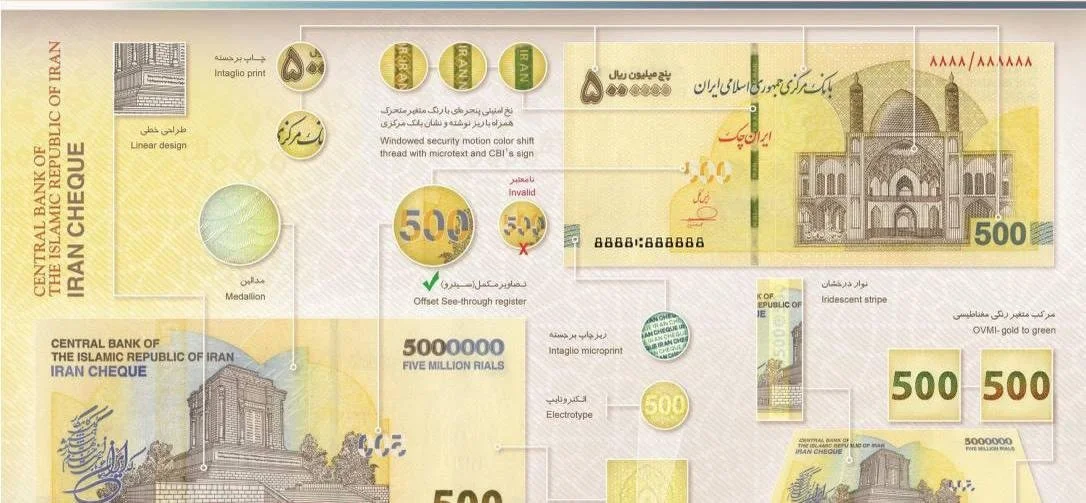
This step comes within the framework of managing and regulating cash transactions and facilitating financial transactions, with the aim of speeding up the completion of cash transactions, as the Central Bank has begun distributing this new category in banks within the banking network in the country. https://economy-news.net/content.php?id=65213
German Central Bank Warns Of Risks To The Dollar’s Global Status
The German central bank has warned that the US dollar’s position as the world’s reserve currency could come under question as early as this year.
According to the annual report of Germany’s Federal Financial Supervisory Authority (BaFin), the dollar may face funding pressures, geopolitical shocks, and the growing politicization of institutions. The report expressed concern about the risk of liquidity shortages stemming from geopolitical tensions, describing this as a particularly serious threat.
BaFin Chairman Mark Branson stated, “There remains a risk that markets may begin to question the US dollar’s role as the world’s reserve currency.”
He warned that radical attempts to politicize institutions could undermine the effectiveness of international cooperation, especially during economic or financial crises.
This warning follows the dollar’s worst single-day decline in nearly a year. The dollar index, which measures the currency’s performance against a basket of major peers, recorded its sharpest drop since last April on Tuesday.
The decline came after US President Donald Trump announced a sweeping global tariff agenda https://ina.iq/en/economy/45158-german-central-bank-warns-of-risks-to-the-dollars-global-status.html
Dollar Faces Weekly Loss As Geopolitical Tensions Weigh On Markets
The dollar is headed for its second consecutive weekly loss on Friday as global tensions escalate and pressure on U.S. assets increases.
Tariff threats on countries that trade oil with Cuba have heightened international uncertainty, weakening demand for U.S. assets and contributing to downward pressure on the dollar. The White House announced that President Donald Trump signed an executive order to impose tariffs on nations supplying oil to Cuba, adding to recent geopolitical strains involving Iran, Venezuela, Greenland, and Europe.
Reports that Trump is considering potential strikes against Iran have driven up oil prices, adding further pressure on the dollar index (DXY).
Meanwhile, a bipartisan Senate agreement has offered some hope of averting a partial U.S. government shutdown, and Japanese data showed that inflation in Tokyo slowed but remained within the central bank’s target range.
The dollar index, which measures the U.S. currency against a basket of other major currencies, rose 0.2% to 96.35, trimming its weekly decline to about 1.1%.
In currency markets, the euro fell 0.2% to $1.194, the yen weakened 0.17% to 153.39 against the dollar, and the pound sterling slipped 0.1% to $1.3791. https://ina.iq/en/economy/45153-dollar-faces-weekly-loss-as-geopolitical-tensions-weigh-on-markets.html
Gold And Silver Plunge Sharply In Global Markets
Precious metal prices declined sharply in global markets during spot trading on Friday, with gold falling by more than 8% to drop below $5,000 an ounce.
Silver also recorded a steep decline, plunging by more than 20% in spot trading to below $90 an ounce, marking one of its largest single-day drops in recent years.
The sell-off comes amid heightened volatility in global markets, driven by shifts in investor demand and broader financial market movements. https://ina.iq/en/economy/45159-gold-and-silver-plunge-sharply-in-global-markets.html
Oil Prices Fall More Than 1%
Oil prices fell by more than 1% on Friday, retreating from multi-month highs, although they remained on track for their strongest gains in years as risk premiums rose on concerns that a potential U.S. attack on Iran could disrupt supplies.
Brent crude futures fell 91 cents to $69.80 a barrel, after settling up 3.4% in the previous session at their highest level since July 31. The March contract expires later on Friday, while the more actively traded April contract slipped $1.07 to $68.52 a barrel. Source: Al Arabiya https://ina.iq/en/economy/45150-oil-prices-fall-more-than-1.html
Weekly Crude Prices Edge 5% Higher Amid Geopolitical Risks, US Supply Disruptions
Oil prices are on track for a weekly gain on Friday, supported by escalating geopolitical tensions, severe weather-related supply disruptions in the US and heightened uncertainty surrounding sanctions and trade policy, although the rally lost momentum toward the end of the week as fresh supply prospects capped further upside.
International benchmark Brent crude traded at $68.53 per barrel at 2.46 p.m. local time (1146 GMT), up 4.8% from last Friday's close of $65.40.
US benchmark West Texas Intermediate (WTI) rose 5.1% to $64.33 per barrel, compared with $61.20 a week earlier.
The main driver of the rise was the sharp escalation in geopolitical risks centered on the Middle East. Tensions between the US and Iran significantly lifted risk premiums, as Washington's increasingly aggressive rhetoric and the deployment of US naval assets raised fears of potential supply disruptions.
Iran's pledge to respond forcefully to any attack, combined with its role as the Organization of Petroleum Exporting Countries' (OPEC) fourth-largest producer, kept markets focused on the risk of disruptions to regional oil flows throughout the week.
Ongoing coordination between US and Israeli military officials further reinforced perceptions of rising regional instability.
Prices also found strong support from supply disruptions in the US, where extreme cold weather severely curtailed crude production, refinery operations and exports, particularly along the Gulf Coast.
The National Weather Service reported snow depths exceeding 50 centimeters in parts of the country, while wind chill temperatures plunged to as low as minus 31 degrees Celsius, highlighting the severity of the cold wave. Adverse weather conditions brought crude oil exports from the US Gulf Coast close to a standstill, tightening near-term supply.
Market estimates indicated that around 2 million barrels per day of oil supply were temporarily taken offline over the weekend.
Officials warned that the cold wave, affecting roughly two-thirds of the US, could persist in the coming days, raising concerns that supply disruptions may last longer than initially anticipated.
These outages were reflected in falling inventories, with data from the US Energy Information Administration showing that commercial crude oil stocks declined by about 2.3 million barrels last week, reinforcing expectations of a tighter market in the world's largest oil-consuming country.
Monetary policy developments further supported the market. Comments suggesting that progress in the US fight against inflation has been uneven kept expectations for policy easing alive.
The Federal Reserve held its benchmark interest rate steady at 3.5%-3.75% at its first Federal Open Market Committee meeting of the year, in a decision approved by a 10-2 vote.
Expectations that lower interest rates later in the year could stimulate economic activity continued to underpin oil demand.
Geopolitical risks were also influenced by Washington's latest sanctions move targeting Cuba. US President Donald Trump signed an executive order declaring a national emergency and authorizing tariffs on countries supplying oil to the island, a step intended to protect US national security and foreign policy interests by restricting energy flows to Havana, which has already faced critical shortages due to halted Venezuelan shipments and a suspension of Mexican deliveries.
This escalation lifted geopolitical risk premiums and added upward support to prices.
However, markets also weighed the potential impact of these tariffs on global economic activity, with analysts warning that heightened trade barriers could dampen growth and weaken oil demand, exerting downward pressure on prices.
China's public rejection of the tariffs and its support for Cuba further underscored broader geopolitical and trade frictions, creating mixed signals for oil markets.
Gains were also capped by mounting expectations of rising supply, particularly from Venezuela.
Venezuelan lawmakers enacted sweeping reforms to the country's hydrocarbon laws, significantly reducing the state's oil monopoly and opening the sector to greater private and foreign participation. The reform lowers taxes and royalties, grants private producers operational autonomy and allows disputes to be settled in international or US courts.
On the same day the law was signed, the US Treasury Department issued a general license easing several sanctions on Venezuelan crude, allowing US companies to lift, transport and refine Venezuelan-origin oil. These developments reinforced expectations of increased Venezuelan output over time, easing near-term supply concerns.
Additional pressure came from progress toward restarting production at Kazakhstan's Tengiz field and the normalization of export capacity through the Caspian Pipeline Consortium. Strong non-OPEC supply growth continued to weigh on the medium-term outlook, fueling concerns that global oil markets could slip into surplus later in the year.
Lingering uncertainty over US trade policy and the absence of any expected changes to production levels at the upcoming OPEC+ meeting also limited upside momentum, prompting some profit-taking toward the end of the week despite sustained geopolitical risks.
SOURCE: Anadolu Agency https://ina.iq/en/economy/45168-weekly-crude-prices-edge-5-higher-amid-geopolitical-risks-us-supply-disruptions.html
Seeds of Wisdom RV and Economics Updates Saturday Afternoon 1-31-26
Good Afternoon Dinar Recaps,
BRICS Quietly Rewrites the Plumbing of Global Money
CBDC settlement corridors signal a structural shift away from dollar-dominated rails — without forming a single currency.
Good Afternoon Dinar Recaps,
BRICS Quietly Rewrites the Plumbing of Global Money
CBDC settlement corridors signal a structural shift away from dollar-dominated rails — without forming a single currency.
Overview
BRICS nations are advancing cross-border payment settlement systems using CBDCs and blockchain-based platforms.
India is emerging as a central architect through the RBI’s push for CBDC interoperability.
The strategy avoids a shared BRICS currency while reducing reliance on SWIFT and Western financial infrastructure.
Capital controls remain embedded by design, reinforcing sovereign monetary authority.
Key Developments
1. RBI Pushes BRICS CBDC Settlement to the 2026 Agenda
India’s Reserve Bank has formally urged that BRICS payment settlement frameworks be prioritized at the 2026 summit. Officials emphasize resilience, cost efficiency, and strategic autonomy rather than overt de-dollarization. The RBI has positioned CBDC-enabled payment corridors as the only viable solution to slow, expensive cross-border settlement systems that still dominate global trade.
2. mBridge Model Shapes the Architecture — Without Monetary Union
BRICS payment infrastructure mirrors the BIS Innovation Hub’s mBridge design. Domestic CBDC ledgers remain sovereign and ring-fenced, while a neutral bridge layer enables payment-versus-payment foreign exchange settlement. This structure eliminates settlement risk while deliberately avoiding a supranational currency, shared reserves, or pooled monetary authority.
3. De-Swifting Progress Confirmed by BRICS Officials
At the July 2025 Rio Summit, Belarus and other participants confirmed support for a multi-level settlement system integrating innovative payment instruments with security safeguards. While full replacement of SWIFT is not imminent, secure links between Russia’s SPFS and partner systems are progressing incrementally, signaling a clear long-term trajectory.
4. Capital Controls Are Embedded by Design
India’s e-rupee remains a direct RBI liability, and its lack of full capital-account convertibility shapes the system’s limits. CBDC corridors are expected to permit non-resident access only within tightly defined parameters. Offshore circulation of the e-rupee is explicitly assumed to be prohibited, reinforcing sovereign control even as interoperability expands.
Why It Matters
Global finance is shifting from currency dominance to infrastructure dominance. Control over settlement rails — not just reserve status — determines who sets the rules of trade, liquidity, and sanctions enforcement. BRICS is not attempting a sudden dollar replacement; instead, it is quietly building parallel rails that reduce dependency on Western-controlled systems over time.
Why It Matters to Foreign Currency Holders
For those holding foreign currencies in anticipation of revaluation, these developments signal structural preparation rather than headline announcements. CBDC settlement corridors provide the technical foundation for future currency realignments by:
Enabling direct settlement between sovereign currencies
Reducing friction that suppresses true market valuation
Allowing controlled liquidity release when political conditions align
Infrastructure always comes before repricing.
Implications for the Global Reset
Pillar 1: Settlement Infrastructure Comes First
Before currencies can revalue, they must move efficiently, securely, and independently. BRICS CBDC corridors address this prerequisite directly.
Pillar 2: Sovereignty Without Chaos
By rejecting a shared currency and embedding capital controls, BRICS nations preserve domestic stability while still participating in a multipolar settlement environment — a critical balance for any global reset scenario.
Closing Insight
This is not a rebellion against the dollar — it is an exit from dependence.
This is not just monetary innovation — it is the slow, deliberate rewiring of global finance beneath the surface.
Seeds of Wisdom Team
Newshounds News™ Exclusive
Sources
Watcher.Guru — The BRICS Settlement Push and Its Monetary Consequences
Bank for International Settlements — mBridge Project Overview
~~~~~~~~~~
Europe Eyes Its Crisis War Chest for Defense
ESM’s €500 billion fund may be repurposed as Europe retools security financing amid geopolitical strain.
Overview
The European Stability Mechanism (ESM) is considering using its €430+ billion crisis fund to finance defense spending.
ESM Managing Director Pierre Gramegna proposed low-stigma credit lines without harsh reform conditions.
The move reflects Europe’s shifting security posture following the Ukraine war and evolving U.S.–EU relations.
Smaller euro zone nations, especially near Russia, could benefit most from the proposal.
Key Developments
1. ESM Crisis Fund Repositioned for Defense Financing
Pierre Gramegna confirmed that the ESM’s unused lending capacity — originally designed to stabilize economies during the euro zone debt crisis — could be redirected to provide defense loans. The fund currently holds more than €430 billion in firepower, giving Europe a ready-made financing tool at a time of rapidly rising military expenditures.
2. Loans Without Austerity Conditions
Unlike past ESM rescue programs, Gramegna emphasized that defense-related credit lines would not require strict economic reforms. This approach aims to eliminate the political stigma traditionally associated with ESM assistance, making it easier for financially stable but budget-constrained countries to seek support.
3. Security Pressures Drive Policy Rethink
Gramegna cited Europe’s changing relationship with the United States and heightened threats from Russia as catalysts for rethinking defense funding. Since Russia’s invasion of Ukraine, European governments — particularly in the Baltics — have sharply increased defense spending, straining national budgets and exposing limits of existing EU fiscal frameworks.
4. Structural and Political Hurdles Remain
Any deployment of ESM funds would require approval from member states and policy shifts, particularly from Germany. The ESM was not designed for frequent use, and loans would be limited to euro zone members, excluding countries such as Poland. Still, Gramegna suggested that joint applications could further reduce stigma and accelerate adoption.
Why It Matters
Europe is quietly transforming financial crisis tools into permanent strategic instruments. Using the ESM for defense blurs the line between fiscal stabilization and security policy, signaling a future where financial architecture is mobilized to support geopolitical objectives — not just economic emergencies.
Why It Matters to Foreign Currency Holders
For currency holders watching global realignment, this move reinforces a key pattern: sovereign debt mechanisms are being retooled ahead of monetary repricing. Defense-backed credit expansion:
Alters sovereign risk profiles
Pressures existing debt ceilings
Increases the likelihood of future fiscal and monetary restructuring
Such shifts historically precede currency resets, revaluations, or system-wide policy overhauls.
Implications for the Global Reset
Pillar 1: Crisis Tools Become Permanent Infrastructure
The ESM’s evolution mirrors a broader trend where “emergency” mechanisms quietly become standing facilities within a restructured global financial system.
Pillar 2: Defense, Debt, and Currency Are Converging
As defense spending is increasingly financed through supranational mechanisms, national currencies become more tightly linked to collective fiscal policy — a prerequisite for deeper monetary realignment in Europe.
Closing Insight
What began as a bailout fund may soon function as Europe’s defense bank.
This is not just military financing — it is financial architecture adapting to a multipolar world.
Seeds of Wisdom Team
Newshounds News™ Exclusive
Sources
Modern Diplomacy — ESM Chief Proposes Using €500 Billion Crisis Fund for European Defense
Reuters — Europe’s bailout fund could help finance defense spending, ESM chief says
~~~~~~~~~~
Zelensky Pitches Bigger Truce Than Trump’s Winter Energy Ceasefire
Kyiv offers a broader pause in Russia-Ukraine hostilities as severe winter hardships mount and Washington claims a short energy-sector halt.
Overview
Ukrainian President Volodymyr Zelensky proposed a more expansive truce to Moscow than the limited pause U.S. President Donald Trump said Russia had agreed to on energy infrastructure.
Trump announced that Putin had agreed to halt strikes on Ukraine’s energy grid for about a week during severe cold, though Kyiv did not confirm an official ceasefire.
Zelensky insists on a longer and more substantive-limited truce — ideally a 30-day unconditional pause — rejecting short “theatrical” proposals that lack credibility.
Russia’s leadership has floated brief pauses tied to festive dates or limited targets, but Ukraine and its allies are pushing for broader and enforceable terms.
Key Developments
1. Zelensky Offers Broader Conditions for Peaceful Pause
According to reporting, Zelensky publicly framed a truce proposal that goes beyond Trump’s announcement regarding energy-sector strikes. He framed this offer as an “opportunity, not an agreement,” while affirming that if Russia ceases attacks on energy infrastructure, Ukraine will reciprocate in kind.
2. Trump’s Claimed Window Reflects Extreme Humanitarian Pressures
President Trump publicly stated that Putin had agreed to a brief pause on attacks against Ukrainian energy infrastructure — a gesture timed with frigid winter conditions that are worsening civilian hardship. Russia had not officially confirmed the ceasefire at the time of reporting.
3. Zelensky Rejects Short “Theatrical” Truces — Pushes 30-Day Model
Earlier reporting shows that Zelensky dismissed Russia’s three-day ceasefire proposal as insincere and insufficient, while supporting a 30-day ceasefire framework aligned with the U.S.’s model of a longer unconditional pause.
4. Trust Deficit in Temporary Ceasefires Remains High
Ukraine’s leadership has expressed skepticism toward brief pauses offered by Moscow, citing a history of violations. Kyiv and Western partners argue that short truce windows can be exploited and do not create substantive progress toward peace.
Why It Matters
The conflict’s humanitarian dimension — especially during winter darkness and extreme cold — adds urgency to ceasefire negotiations. A broader truce proposal from Kyiv signals Helsinki-style pragmatism aimed at relieving civilian suffering while pressing Moscow on enforceable terms. It also highlights a growing diplomatic rift between Ukraine’s approach and external mediators’ limited-scope proposals.
Why It Matters to Foreign Currency Holders
Large geopolitical conflicts with shifting negotiation dynamics affect global risk sentiment, safe-haven demand, and sovereign debt pricing across regions. Major shifts in war-pause negotiations can influence:
Market volatility and FX safe-haven flows
Risk premia on European and emerging markets assets
Long-term capital repositioning toward defense-heavy government spending
These macro pressures often precede structural reset narratives in global capital markets.
Implications for the Global Reset
Pillar 1: War Diplomacy as Financial Centrality
Peace negotiations and their framing influence investor confidence and fiscal burden sharing — both of which are vital inputs to any paradigm shift in monetary regimes.
Pillar 2: Geopolitical Risk Repricing
Unresolved conflicts create persistent risk premia. Moves toward a credible ceasefire reduce risk spreads — a necessary precursor for stable currency and debt repricing.
Closing Insight
What appears on the surface as a humanitarian pause in hostilities is actually a strategic recalibration of diplomatic leverage — with Kyiv pushing for substantive terms while external actors weigh political and military realities.
This is not just a ceasefire proposal — it is a test of political credibility in wartime negotiations.
Seeds of Wisdom Team
Newshounds News™ Exclusive
Sources
~~~~~~~~~~
Seeds of Wisdom Team RV Currency Facts Youtube and Rumble
Newshound's News Telegram Room Link
RV Facts with Proof Links Link
RV Updates Proof links - Facts Link
Follow the Gold/Silver Rate COMEX
Follow Fast Facts
Seeds of Wisdom Team™ Website
Thank you Dinar Recaps
Iraq Economic News and Points To Ponder Saturday Afternoon 1-31-26
An Economic Expert Reveals A Roadmap For Freeing Iraqi Funds From The Grip Of The US Federal Reserve.
Money and Business Economy News – Baghdad On Friday, economist Nabil Al-Marousmi revealed several solutions and proposals to free Iraqi funds from the control of the US Federal Reserve.
Al-Marsoumi said in a post followed by “Al-Ahd News”: “The United States has effectively controlled Iraqi oil revenues since 2003 through its management via the Federal Reserve. The United Nations had provided legal protection for these funds under Resolution 1483, until it was terminated in 2011, following the implementation of Security Council Resolution 1956.”
An Economic Expert Reveals A Roadmap For Freeing Iraqi Funds From The Grip Of The US Federal Reserve.
Money and Business Economy News – Baghdad On Friday, economist Nabil Al-Marousmi revealed several solutions and proposals to free Iraqi funds from the control of the US Federal Reserve.
Al-Marsoumi said in a post followed by “Al-Ahd News”: “The United States has effectively controlled Iraqi oil revenues since 2003 through its management via the Federal Reserve. The United Nations had provided legal protection for these funds under Resolution 1483, until it was terminated in 2011, following the implementation of Security Council Resolution 1956.”
He added that "the US president issued Executive Order 13303 to protect Iraqi funds, an order that remains in effect today despite some amendments." He explained that "the objectives of US protection of Iraqi funds are to safeguard them from compensation claims by companies and individuals, as well as to prevent the seizure of Iraqi assets in cases filed since the 1990s.
" He emphasized that "despite the expiration of many of the legal reasons that necessitated this financial arrangement, Iraq remains subject to strict financial oversight by Washington, which differs from the usual procedures in the international banking system."
Al-Marsoumi pointed out that “most oil-producing countries deposit their money in the US Federal Reserve because oil is sold in dollars, but Iraq suffers from complete dependence on oil revenues without alternative resources,” explaining that “this means that the problem is not in depositing money with the US Federal Reserve, but rather in the restrictions imposed on the ability to dispose of it freely, unlike what other countries enjoy.”
He continued: “It is known that there are cases filed against Iraq by dozens or hundreds of companies that were harmed by Iraq’s invasion of Kuwait, and representatives of Iraq did not attend the court sessions at the time to defend or reduce the compensations, and therefore the courts issued default judgments for very high amounts.”
He noted that “linking the issue of protecting Iraqi funds from prosecution to America gives Washington great influence over Baghdad, and resolving the crisis requires a political decision, as happened with Greece and Argentina, by employing a reputable law firm that is given full powers, whose task will be to accurately inventory the cases filed against Iraq and how much money has been awarded in judgments.”
Al-Marsoumi concluded that “Iraq is unable to resort to the courts because the judgments have become final, so a deal can be reached with the beneficiaries to drop the lawsuits in exchange for giving them a percentage of the money, which is called buying the debts, and most likely they will accept because they will get money instead of waiting and possibly not getting anything.” https://economy-news.net/content.php?id=65137
Why Is Gold Jumping To Record Levels As The US Dollar Falls?
Money and Business Economy News - Follow-up Gold prices recorded a sharp and unprecedented jump, exceeding the level of $5,600 per ounce, after a daily rise of more than $300, in one of the most violent price movements in global markets, coinciding with the decline of the US dollar to its lowest levels in about 4 years.
This remarkable rise came after statements by US President Donald Trump in which he expressed his satisfaction with the decline in the value of the dollar, which the markets interpreted as a clear indication that the current US administration prefers the currency to remain weak, prompting investors to intensify their bets on gold as a safe haven.
Historical Inverse Relationship Between Gold And The Dollar
Historical data shows a clear inverse relationship between gold and the US dollar, as the precious metal is priced globally in dollars. This means that a decline in the value of the US currency against major currencies makes gold less expensive for holders of other currencies, which leads to an increase in global demand for it, and consequently, higher prices.
According to market traders, the recent upward surge was not solely due to technical factors, but was driven by a change in political and monetary expectations regarding the future of the dollar.
Political Messages Reshape Market Expectations
Analysts believe that Trump’s statements carried indirect messages to the markets, indicating that the White House does not see a strong dollar as a priority at the present stage, but rather believes that a weak currency may serve economic and trade objectives, especially in light of the escalating competition with China.
Trump had indicated in his statements that rival countries, especially China, deliberately devalue their currencies, making trade competition unfair, which was understood as an indication that Washington would accept policies that contribute to weakening the dollar in order to enhance the competitiveness of American exports in global markets.
A Weak Dollar: Trade Gains And Monetary Risks
A weaker dollar usually makes U.S. exports more attractive in terms of price, which supports the manufacturing sector and reduces the trade deficit. However, this policy carries risks related to the erosion of the currency's purchasing power, which prompts investors to seek safer hedging instruments.
In this context, investors have begun to redirect an increasing portion of their investment portfolios towards gold, amid expectations that pressure on the dollar will continue in the coming period.
Silver Enters The Spotlight
The momentum was not limited to gold alone, as silver prices recorded a remarkable rise of nearly 60% since the beginning of this year, in a performance that is considered one of the strongest among the different asset classes.
Analysts attribute this rise to the return of what is known in the markets as "Debasement Trade," that is, betting on the erosion of the value of paper currencies, and the trend towards precious metals as a store of value and a means of hedging against monetary risks.
Are We Witnessing A Shift In Investor Behavior?
Recent developments are raising increasing questions about whether markets are entering a new phase, in which confidence in paper currencies is declining in favor of gold and silver, especially in light of escalating trade tensions and the increasing use of monetary policies as an economic tool.
Observers believe that what is happening in the precious metals markets may not be a temporary wave, but rather a reflection of a deeper shift in investors' expectations regarding the future of the dollar and the global monetary system. https://economy-news.net/content.php?id=65141
Fiscal And Monetary Policies: Between Divergence And Unified Vision
Economy News – Baghdad Economic expert Dr. Haitham Hamid Mutlaq Al-Mansour
An analysis of the Iraqi economy at the macro level clearly reveals that the failure to coordinate government and monetary policy, in terms of both objectives and tools, only confirms its persistent structural crises stemming from weak governance. It is evident that the deep imbalances in the macroeconomy are an inevitable consequence of the divergence and absence of a unified strategic vision.
The two policies operate in isolation, and the dominant fiscal policy tools, centered on oil revenues and their consumption, taxes, deficits, and public debt, undermine the effectiveness of monetary policy. This over-reliance has contributed to weakening economic diversification, exacerbating financial fragility, and linking economic stability to the volatility of global markets.
This rentier model has led to a decline in the effectiveness of monetary policy, liquidity management, inflation control, and exchange rate stability, thus transforming monetary policy into a defensive rather than a proactive one. Furthermore, budget instability inevitably leads to liquidity volatility, weakened monetary planning, and a loss of forecasting tools.
Consequently, the central bank becomes subservient to public finances instead of leading them, forcing it to finance deficits and prop up the exchange rate to fund salaries, thereby jeopardizing its independence. In this scenario, monetary policy becomes subordinate to public finances.
As specialists know, the expansion of salaries and subsidies, weak tax collection, chronic budget deficits, and rentierism compel the central bank to constantly intervene to protect the dinar rather than manage growth. In such cases, monetary policy becomes reactive rather than developmental. Alternatively, inaction would lead to increased inflation, exchange rate volatility, declining confidence in the Iraqi dinar, capital flight, and the erosion of savings.
Therefore, we see that most government spending methods for fiscal policy are economically inefficient, as they rely on current spending represented by salaries, government subsidies, fluctuating revenues, and recurring government fiscal deficits, which generates conflicting objectives and continuous pressure on monetary policy.
Unified Vision Of The Two Policies
Hence the importance and necessity of building a unified vision that ensures coordination in objectives and tools, and strategic harmony between fiscal and monetary policy in setting economic priorities and selecting implementation methods. This guarantees that public resources are directed towards achieving stability, growth, and sustainable development, avoiding conflicting and fragmented decisions.
The unified vision derives its importance from its ability to enhance macroeconomic stability, reduce the risks of inflation and monetary imbalances, increase the efficiency of public resource utilization, and bolster investor and market confidence. It also ensures the sustainability of medium- and long-term policies.
One of the manifestations of the lack of a unified vision, clearly evident in the reality of the Iraqi economy, is the existence of fiscal expansion coupled with monetary tightening.
This is further compounded by short-term spending objectives at the expense of long-term monetary goals, and a conflict between stimulating demand, controlling liquidity, and curbing inflation. Additionally, there is a duplication of economic decisions, which weakens the effectiveness of public policies.
Foundations for building a unified vision
To unify strategic objectives, the two policies should agree on a set of central goals, including:
Price stability, fiscal sustainability, support for real growth, and enhancement of employment and purchasing power.
Linking oil spending to clear development plans.
Coordinating reserve management with fiscal policy.
Directing spending towards productive sectors.
Aligning the exchange rate with development goals.
This transforms economic policy from crisis management to development management.
Obstacles to achieving coordination between the two policies
Iraq suffers from fundamental obstacles that hinder coordination between the two policies and reinforce the divergence between them, which together constitute real challenges for the decision-maker, the most important of which are:
The fragility of the financial and banking system, the weakness of financial inclusion, the limited productive credit, and the control of government banks over employment levels will all lead to disruption of monetary policy transmission channels.
The absence of a national strategic framework and the lack of a comprehensive economic vision linking the budget, monetary policy, development plans, and public debt management result in fragmented policies and conflicting priorities.
The imbalance in the structure of public spending, the volatility of public revenues, and the reliance on fluctuating sources, especially oil revenues, lead to instability in the general budget and make it difficult for the central bank to build long-term monetary policies under the dominance of public finances.
Weak institutional coordination between the Ministry of Finance, the Central Bank and other relevant ministries.
The cumulative interaction of obstacles means that these obstacles do not operate in isolation, but rather interact with each other, such that: rent-seeking + financial dominance + weak institutions + political pressures = a chronic structural imbalance in economic coordination. This renders partial reforms insufficient without a comprehensive and fundamental overhaul.
Corruption and systematic waste have deepened in the allocation of resources and their deviation from their true economic course.
Thus, economic policy in Iraq is regressing from being a long-term strategy and using the rentier tool for spending to ensure short-term stability, which is reflected socially in the management of poverty as temporary solutions such as the food ration card, government employment and social welfare, and the end result is the sustainability of structural poverty and the growth of consumer culture.
All the above points pose real challenges to government policy towards transforming it from a state of divergence to a state of coordination.
Effective economic policy comes as a long-term strategy aimed at achieving diversification of income and exports through coordination between fiscal and monetary policies, to address the imbalance in priorities through an economic government that rebuilds long-term policies that support the rentier economy with more diversification, deepen development, achieve stable and diversified growth, and create job opportunities, through the development of non-oil sectors to build a productive and diversified economy that reduces corruption and raises productivity. https://economy-news.net/content.php?id=65170
Seeds of Wisdom RV and Economics Updates Saturday Morning 1-31-26
Good Morning Dinar Recaps,
Warsh Nomination Sparks Market Volatility — Fed Independence in Focus
Trump’s pick for Fed chair sends ripples through markets and reserve currency sentiment
Good Morning Dinar Recaps,
Warsh Nomination Sparks Market Volatility — Fed Independence in Focus
Trump’s pick for Fed chair sends ripples through markets and reserve currency sentiment
Overview
President Donald Trump announced his nomination of Kevin Warsh as the next Chair of the U.S. Federal Reserve, setting off mixed market reactions and renewed discussion about U.S. monetary direction. Warsh’s nomination — coming amid broader economic uncertainty and a weak dollar environment — has implications for confidence in central bank independence and the global monetary hierarchy.
Key Developments
Trump Picks Warsh for Fed Leadership:
President Trump formally nominated former Fed Governor Kevin Warsh to succeed Jerome Powell as Fed Chair, a move that lifts months of speculation and signals potential changes in monetary policy direction.
Uneasy Market Reaction:
Financial markets reacted with volatility — U.S. stock futures dipped, the U.S. dollar initially weakened then regained ground, and precious metals such as gold and silver saw significant price swings.
Political and Confirmation Risks:
Warsh’s nomination now faces Senate confirmation, with some lawmakers signaling conditional support and others raising concerns over Federal Reserve independence and ongoing investigations tied to the outgoing chair.
FX & Asset Impacts:
Early move reaction included a strengthening dollar and rising U.S. yields — suggesting traders view Warsh as less dovish than market expectations — while precious metals corrected sharply on the news.
Why It Matters
The Fed Chair controls the world’s most influential central bank, and leadership changes directly shape interest rate expectations, liquidity conditions, and global dollar sentiment. Warsh’s nomination during a period of structural currency competition makes this more than a U.S. domestic story — it’s a signal to global markets about Washington’s economic priorities.
Why It Matters to Foreign Currency Holders
Leadership bias toward higher rates or monetary discipline supports dollar strength in the near term.
Signs of political influence on central banking can weaken long-term dollar credibility in reserve portfolios.
Rapid repricing in metals and FX markets reflects sensitivity to U.S. policy changes that feed broader currency reallocation trends.
Implications for the Global Reset
Pillar 1 — Institutional Trust Under Test:
Warsh’s nomination raises questions about central bank independence — a foundational pillar of modern reserve confidence.
Pillar 2 — Reallocation Pressure:
Markets reassessing risk & reserves (FX, gold, commodities) may accelerate structural shifts in global finance.
This is more than a chair change — it’s a directional moment in monetary hierarchy.
Seeds of Wisdom Team
Newshounds News™ Exclusive
Sources
~~~~~~~~~~
Central Bank Gold Pivot: A Structural Monetary Reset Signal
Major reserve managers accelerate gold accumulation as trust in fiat wanes
Overview
Central banks worldwide are dramatically increasing gold holdings, indicating a structural reassessment of reserve management. This shift — coming at a time of dollar weakness, geopolitical fragmentation, and rising geopolitical risk — aligns with deeper systemic realignment in global monetary frameworks.
Key Developments
Gold Accumulation Surpasses Treasuries:
Recent research shows central banks actively rebalancing reserves toward gold even as U.S. Treasury holdings shrink, signaling reduced reliance on dollar-denominated assets.
Persistent Multi-Country Buying:
Multiple central banks — including those in Poland, Kazakhstan, and Turkey — have increased gold reserves over extended periods, highlighting an ongoing strategic hedging trend rather than opportunistic buying.
Long-Term Reserve Shifts:
Institutional commentary underscores that gold’s share in official reserves is rising as the dollar’s influence recedes — potentially reversing decades of dollar dominance in reserve allocation.
Safe-Haven Demand Amid Risk:
With macro uncertainty high — including political pressure on leading central banks and inflation risk — gold is increasingly seen not just as a hedge but as a core reserve asset with systemic importance.
Why It Matters
A coordinated pivot by central banks toward gold — historically a foundation of monetary trust — points to growing skepticism about fiat supremacy and the durability of a dollar-centric system. This trend also reinforces narratives around de-dollarization and multipolar monetary architecture.
Why It Matters to Foreign Currency Holders
Rising gold holdings reduce exposure to dollar risk in official portfolios.
Commodity-anchored reserve strategies support alternative currency frameworks.
Gold’s enhanced role can precede recalibration of global liquidity and FX hierarchies.
Implications for the Global Reset
Pillar 1 — Reserve System Reconfiguration:
Central bank behavior is a leading indicator of shifts in global monetary order — and gold accumulation ahead of fiat confirms structural change.
Pillar 2 — Multipolar Monetary Stability:
Gold backing stabilizes confidence where fiat credibility is questioned, supporting a multi-anchor reserve architecture.
This is not a temporary hedge — it’s a strategic foundation for future monetary systems.
Seeds of Wisdom Team
Newshounds News™ Exclusive
Sources
EBC Financial Group — “Why Central Banks Are Buying Gold: The Shift From Treasuries”
Khaleej Times — “Central banks’ gold rush signals reset in monetary policy”
~~~~~~~~~~
🌱 A Message to Our Currency Holders🌱
If you’ve been holding foreign currency for many years, you were not foolish.
You were not wrong to believe the global financial system would change.
What failed was not your patience — it was the information you were given.
For years, dates, rumors, and personalities replaced facts, structure, and proof. “This week” predictions created cycles of hope and disappointment that were never based on how currencies actually change.
That is not your failure.
Our mission here is different: • No dates • No rates • No hype • No gurus
Instead, we focus on:
• Verifiable developments • Institutional evidence
• Global financial structure • Where countries actually sit in the process
Currency value changes only come after sovereignty, trade, banking, settlement systems, and fiscal coordination are in place. History and institutions confirm this sequence.
You will see silence. You will see denials. That is not delay — that is discipline.
Protect your identity. Organize your documents. Verify everything.
Never hand your discernment to anyone who cannot show proof.
You deserve truth — not timelines.
Seeds of Wisdom Team
Newshounds News
~~~~~~~~~~
Seeds of Wisdom Team RV Currency Facts Youtube and Rumble
Newshound's News Telegram Room Link
RV Facts with Proof Links Link
RV Updates Proof links - Facts Link
Follow the Gold/Silver Rate COMEX
Follow Fast Facts
Seeds of Wisdom Team™ Website
Thank you Dinar Recaps