
Iraq Economic News and Points To Ponder Monday Morning 6-30-25
From The Central Bank: Initial Indications Of An Impending Economic Recession In Iraq
Baghdad Today – Baghdad Economic expert Manar Al-Obaidi revealed on Thursday (June 26, 2025) that the Central Bank of Iraq recorded a 4% decline in total US dollar sales during the first five months of 2025, compared to the same period in 2024. He warned that this decline could be an early indicator that the Iraqi market is entering a recession.
From The Central Bank: Initial Indications Of An Impending Economic Recession In Iraq
Baghdad Today – Baghdad Economic expert Manar Al-Obaidi revealed on Thursday (June 26, 2025) that the Central Bank of Iraq recorded a 4% decline in total US dollar sales during the first five months of 2025, compared to the same period in 2024. He warned that this decline could be an early indicator that the Iraqi market is entering a recession.
Al-Obaidi said, in a clarification followed by "Baghdad Today," that "the Central Bank's total dollar sales amounted to $31.5 billion during the first five months of 2025, a decrease of approximately $1.3 billion compared to sales during the same period in 2024, which amounted to $32.9 billion."
He pointed out that "the decline was primarily concentrated in cash dollar sales, which fell by 17%,
reaching only $1.3 billion compared to $1.55 billion last year, while dollar sales via the "Currency Balances Enhancement" mechanism saw a 38% increase, reaching $30.2 billion, compared to $21.9 billion in the corresponding period."
Al-Abidi added, "The direct foreign transfer mechanism, previously used under what is incorrectly known as the 'auction,' has completely halted this year, after recording $9.4 billion in the same period in 2024."
He explained that "dollar sales used to settle international payments via electronic cards declined from $1 billion in January to just $261 million in May, due to restrictions imposed by the Central Bank and the inability of some banks to complete settlements."
Al-Obaidi emphasized that "this decline in sales, despite the decline in the exchange rate on the parallel market, reflects a decline in commercial demand and economic activity, which increases the likelihood of an economic recession, especially with inflation rates falling to 1.1% in April 2025, the lowest level in years." https://baghdadtoday.news/277366-.html
The Central Bank Concludes A Course On Basic Standards For Detecting Counterfeit Currency.
June 29, 2025 The Central Bank of Iraq's Basra branch concluded the "Basic Standards for Detecting Counterfeit Currency" course. The course, organized by the Central Bank's Banking Studies Center, lasted three days, from June 23-25, 2025.
The course was attended by 13 government and private banks from the southern governorates.
It also covered key aspects related to recent developments in detecting counterfeit currency and its basic standards.
For their part, the participants praised the training courses organized by the Central Bank of Iraq for their significant impact on developing their job performance. Central Bank of Iraq Media Office June 29, 2025 https://cbi.iq/news/view/2921
Iraq Seeks To Reduce Gas Flaring To Zero.
Energy The Ministry of Oil announced on Wednesday the government's efforts to
increase associated gas investment rates and
reduce flaring rates,
achieving zero flaring, while also
increasing liquefied natural gas production and exports to
generate additional revenue for the state treasury.
“The government and the ministry are keen to
increase the investment rates of associated gas from oil fields and work to
reduce gas flaring to low levels, leading to
zero flaring in the next few years,
in addition to
increasing the production and export rates of liquefied gas to
generate additional revenues for the state treasury,” said Ezzat Saber Ismail, Undersecretary of the Ministry of Gas Affairs, during a leadership meeting for the gas sector, attended by heads of relevant companies and departments at the ministry’s headquarters.
He added, "The gas investment sector has achieved advanced levels of production, as national companies have been able to raise gas investment quantities to 71%, through the implementation of a number of projects that aim to achieve the Ministry's plans in this regard."
He pointed to "the interest the gas sector receives from Prime Minister Mohammed Shia al-Sudani and Oil Minister Hayan Abdul-Ghani al-Sawad," expressing his hope that
"the ministry will achieve its goals through projects implemented by national companies in cooperation with specialized international companies, particularly in the Maysan, Buzurgan, Gharraf, and Nasiriyah fields in Dhi Qar, Artawi, Nahr Bin Omar, and the integrated gas project with Total in Basra, in addition to the projects of the fifth licensing rounds."
The Undersecretary of the Ministry stressed the
"need to enhance liquefied natural gas storage capacity by
accelerating the implementation of ongoing and planned projects in a number of governorates,
in order to strengthen the integrated infrastructure of this sector,
which has witnessed significant achievements in projects to
increase production, storage, export capacities, and distribution outlets." He explained that
"the Ministry has recently succeeded in implementing a number of gas pipeline projects to power plants, which aim to achieve high flow rates in the transport and pumping of gas."
The statement added, "The meeting included a review of the
projects being implemented within the ministry's programs and plans, the
percentages of completion achieved, dry and liquid gas production rates,
storage energy projects, the pipeline network, and
gas transportation to power plants, in addition to the topics included on the agenda."
views 143 Added 06/25/2025 - https://economy-news.net/content.php?id=56606
The Dollar Continues To Decline In Baghdad Markets.
Economy | 11:54 - 06/29/2025 Mawazine News - Baghdad - The US dollar exchange rate witnessed a slight decline in Baghdad's local markets on Sunday.
The dollar price fell on the Al-Kifah and Al-Harithiya stock exchanges to 141,250 Iraqi dinars for every $100, while yesterday, Saturday, it recorded 141,300 dinars for every $100.
The selling prices in the exchange sector in Baghdad's local markets also recorded stability, as the selling price reached 141,300 Iraqi dinars for every $100, and the buying price reached 140,800 dinars for every $100. https://www.mawazin.net/Details.aspx?jimare=263230
For current and reliable Iraqi news please visit: https://www.bondladyscorner.com/
Seeds of Wisdom RV and Economic Updates Monday Morning 6-30-25
Good Morning Dinar Recaps,
The End of Bank Branches: How Europe’s Digital Euro and Stablecoins Are Reshaping Finance
The financial world is undergoing a radical digital shift—and physical bank branches are quickly becoming obsolete.
Banking Faces a Digital Reckoning
The slow disappearance of local bank branches across Europe reflects a much deeper transformation. Digitalization, AI, and automation are now reshaping how we work, shop, and save—leaving traditional banking struggling to keep pace.
Good Morning Dinar Recaps,
The End of Bank Branches: How Europe’s Digital Euro and Stablecoins Are Reshaping Finance
The financial world is undergoing a radical digital shift—and physical bank branches are quickly becoming obsolete.
Banking Faces a Digital Reckoning
The slow disappearance of local bank branches across Europe reflects a much deeper transformation. Digitalization, AI, and automation are now reshaping how we work, shop, and save—leaving traditional banking struggling to keep pace.
▪️ In Germany, over 560 branches were closed in 2023 alone, a 2.8% drop.
▪️ This is part of a decades-long contraction: from nearly 60,000 branches in the 1990s to just 18,933 today.
▪️ High rents, shrinking populations, and the dominance of e-commerce have hit brick-and-mortar services hard.
The quiet death of Germany’s bank branches is just one symptom of this evolution—but it's a global story now playing out in real time.
Deutsche Bank: Leading the Downsizing
In March, Deutsche Bank announced a wave of layoffs and branch closures.
“We are witnessing a fundamental transformation in the German banking sector,” said CEO Christian Sewing.
▪️ The bank will cut 2,000 jobs and shutter a “significant number” of branches this year.
▪️ Client consultations are moving to video calls and digital platforms, trading human interaction for efficiency.
This paradigm shift threatens the personal trust built through face-to-face banking—once considered the bedrock of retail finance.
Crushed by Policy, Not Just Progress
Technological change is not the only culprit. The European Central Bank’s (ECB) ultra-loose monetary policy has had devastating effects:
▪️ More than a decade of negative interest rates crushed banks’ ability to earn profit through traditional lending.
▪️ Banks were squeezed by regulatory costs, penalty interest, and flattened yield curves.
▪️ The ECB’s moves helped heavily indebted Eurozone countries like Spain, Italy, and France—but at the expense of private banks and savers.
The branch closures, layoffs, and pivot to digital aren’t just market-driven—they are also policy-driven.
Stablecoins and the Digital Euro: The Final Blow?
The next major disruption comes from stablecoins and the proposed digital euro—two innovations that could sideline banks entirely.
▪️ Stablecoins, pegged to fiat currencies, offer fast, low-cost global payments—no need for banks or wire transfers.
▪️ DeFi (Decentralized Finance) lets users transact via smart contracts, bypassing traditional credit and payment systems.
▪️ As adoption spreads, the need for checking accounts, branches, and bank-issued cards may vanish.
The digital euro, being developed by the ECB, may deliver the final push:
▪️ It’s programmable, blockchain-based, and bypasses commercial banks entirely.
▪️ Retail customers could hold digital euros directly in digital wallets—making bank intermediaries irrelevant.
▪️ Bank branches, long seen as hubs of trust and cash access, could become completely redundant.
A New Financial Era
Europe's digital currency ambitions and the rise of decentralized technologies signal a permanent departure from legacy banking infrastructure. In this new landscape:
Banking becomes faster—but more impersonal.
Traditional financial institutions lose control.
Retail customers migrate to central bank-backed platforms.
The local branch, once a staple of every town square, may soon be no more than a memory.
@ Newshounds News™
Source: ZeroHedge
~~~~~~~~~
US Dollar Faces Historic Stress Test as BIS Issues Dire Warning on Global Fragility
The U.S. dollar, long considered the world’s most reliable safe haven, is facing a historic credibility crisis as global financial trust deteriorates. Amid rising policy turbulence in Washington, the Bank for International Settlements (BIS) has issued a stark warning on the fragility of the global economic order.
BIS: “New Era of Heightened Uncertainty”
At the BIS Annual General Meeting in Basel on June 29, General Manager Agustín Carstens declared that a once-promising recovery is now faltering.
“The global economy has entered a new era of heightened uncertainty,” Carstens warned, noting a reversal from earlier optimism driven by easing inflation and modest growth.
The catalyst: U.S. policy chaos. A sudden pivot toward broad-based tariffs and aggressive fiscal expansion has shocked global markets—undermining confidence and weakening the dollar’s standing.
Dollar Depreciates as Yields Rise—An Alarming Signal
“The US dollar depreciated even as government bond yields rose—an extraordinary, troubling combination,” Carstens stated.
▪️ Typically, rising yields strengthen the dollar.
▪️ This time, however, investors fled the currency, shaken by erratic policy shifts and unpredictable rhetoric from Washington.
▪️ Market volatility soared, and the dollar’s safe-haven image cracked.
Carstens added that discussions about penalizing foreign holders of U.S. securities, challenges to central bank independence, and legal system uncertainty further deepened the crisis.
Structural Risks and Global Fragility
Carstens emphasized that the world’s financial system was already under stress:
Weak productivity growth
Unsustainable fiscal positions
The rise of unregulated non-bank financial institutions (NBFIs)
Now, tariff-driven trade fragmentation is making matters worse, fueling inflation and limiting economic flexibility.
“These measures often fail to achieve intended goals and instead deepen structural challenges,” Carstens warned.
He called for credible reforms aimed at:
▪️ Reducing trade barriers
▪️ Improving regulatory clarity
▪️ Investing in public infrastructure to support sustainable growth
A Call for Financial Reform in the Digital Age
Carstens also turned his focus to emerging technological threats and opportunities:
“Major innovations like the entry of big tech into finance, central bank digital currencies, and artificial intelligence are challenging and reshaping the financial system.”
He warned that unregulated innovation could magnify systemic risk, particularly if NBFIs continue to operate without proper oversight.
To meet this moment, Carstens proposed a new global financial architecture built on:
▪️ Tokenized central bank reserves
▪️ Government bonds integrated into digital ecosystems
▪️ Stronger oversight parity between banks and non-banks
The goal: restore trust, increase transparency, and future-proof global finance.
Conclusion: A Turning Point for the Dollar
As market dynamics shift and investor confidence wanes, the dollar’s status as a global safe haven is being seriously questioned for the first time in decades. The BIS’s warning is clear: without serious reform, the world may be heading into a prolonged era of economic instability and fragmentation.
The dollar isn’t just facing market pressure—it’s confronting a global reckoning of trust.
@ Newshounds News™
Source: Bitcoin.com
~~~~~~~~~
Seeds of Wisdom Team RV Currency Facts Youtube and Rumble
Newshound's News Telegram Room Link
Follow the Roadmap
Follow the Timeline
Seeds of Wisdom Team™ Website
Thank you Dinar Recaps
“Tidbits From TNT” Monday Morning 6-30-2025
TNT:
Tishwash: A significant decline in the volume of foreign loans, and Iraq is in the green side in international credit standards.
Iraq's external financial policy has improved its global credit rating, with external debt declining to approximately $10 billion. Despite the rise in domestic debt, economists assert that it poses no risk, thanks to the government's ability to set interest rates and schedule repayments.
The Iraqi government's foreign financial policy appears to be improving, as evidenced by a decline in foreign borrowing rates. This decline raises Iraq's global credit rating, which is based on the size of the debt and the country's ability to repay interest.
TNT:
Tishwash: A significant decline in the volume of foreign loans, and Iraq is in the green side in international credit standards.
Iraq's external financial policy has improved its global credit rating, with external debt declining to approximately $10 billion. Despite the rise in domestic debt, economists assert that it poses no risk, thanks to the government's ability to set interest rates and schedule repayments.
The Iraqi government's foreign financial policy appears to be improving, as evidenced by a decline in foreign borrowing rates. This decline raises Iraq's global credit rating, which is based on the size of the debt and the country's ability to repay interest.
Economist Abdul Rahman Al-Mashhadani says, "The decline in external debt is a positive indicator, and it is not measured in this year, but rather over the past three years, when it fell to less than $30 billion, putting Iraq in the green."
Meanwhile, figures show an increase in the value of domestic debt, which the government has borrowed from financial institutions to finance projects and cover the financial deficit in the annual budgets. However, economic readings confirm that domestic loans do not pose a risk, given that the government determines the interest rate and carefully sets the repayment schedule. However, they remain within the framework of debt that must be repaid. Based on this, the Parliamentary Finance Committee emphasizes the need to deal with the available financial liquidity.
Finance Committee member Moein Al-Kadhimi said, "Based on what the government has at its disposal, it must act within its limits. This way, there is no budget deficit, there is ongoing funding for projects, and no new projects are initiated, while simultaneously funding the operating budget."
The size of foreign loans amounts to approximately $10 billion, which currently places Iraq at a (B-) rating, given that the size of foreign loans for 2023 exceeded $20 billion. This means that this decline is attributed to the government's good handling of foreign loan repayments, placing Iraq at a better credit rating than before. link
************
Tishwash: Kurdistan employees' salaries will be paid within the next two days.
An informed government source revealed, today, Sunday (June 29, 2025), that the federal government will pay May salaries to Kurdistan employees within the next two days.
The source told Baghdad Today, "The federal government will pay the salaries of the region's employees within the next two days, even before the oil agreement is finalized, for humanitarian purposes."
He added, "If an oil agreement is reached between Baghdad and Erbil, the audit and accounting department of the federal Ministry of Finance will review the lists sent by the regional Ministry of Finance, and within days, will release the June salaries."
He pointed out that "the federal government delegation pledged that the region's salaries would be paid monthly, along with those of employees in other Iraqi governorates, without a single day's delay, subject to the oil agreement and the delivery of 50% of domestic revenues, provided they are digitally deposited into the Ministry of Finance's bank account daily." link
************
Tishwash: Iraq's trade landscape: The private sector accounts for the largest share of imports.
The Central Bank of Iraq announced, on Saturday, statistics on the volume of Iraq's imports for the first quarter of 2025.
The bank stated in its statistics that "Iraq's imports amounted to $21 billion and 363 million," indicating that "imports included both the government and private sectors."
He added that "government sector imports amounted to $1.377 billion, while private sector imports amounted to $19.985 billion."
He pointed out that "government imports included consumer imports, capital imports, petroleum product imports, other government imports, and currency printing," while "private sector imports included consumer imports and capital imports." link
Tishwash: You Can Visit between 1 and 5 PM....

Mot: and Another Way to Look at it!!

Iraq Economic News and Points To Ponder Sunday Afternoon 6-29-25
Iraqi Dollar Smuggling 'Turns Regional' Amid High Iranian Demand For Greenbacks
Iraq / Economy Amwaj.media An Iraqi man counts US dollar bank notes in Baghdad on May 4, 2020. (Photo via Getty Images) Jun. 24, 2025 The story: Iraq has recently been riled by reports of a multi-billion dollar cash smuggling scheme allegedly orchestrated by Iran and its allies. Apparently aiming to circumvent US sanctions, the controversy has sharpened attention to Iran’s extensive regional shadow economies in Iraq. Emerging shortly before the recent attacks on Iran by Israel and the US, the crisis has led to intense scrutiny on ties between Tehran and Iraqi armed groups.
Iraqi Dollar Smuggling 'Turns Regional' Amid High Iranian Demand For Greenbacks
Iraq / Economy Amwaj.media An Iraqi man counts US dollar bank notes in Baghdad on May 4, 2020. (Photo via Getty Images) Jun. 24, 2025 The story: Iraq has recently been riled by reports of a multi-billion dollar cash smuggling scheme allegedly orchestrated by Iran and its allies. Apparently aiming to circumvent US sanctions, the controversy has sharpened attention to Iran’s extensive regional shadow economies in Iraq. Emerging shortly before the recent attacks on Iran by Israel and the US, the crisis has led to intense scrutiny on ties between Tehran and Iraqi armed groups.
The coverage: Dollar smuggling from Iraq to Iran, and between other regional countries, has been a well known practice in Iraqi banking and political circles for over a decade.
● However, citing Iraqi and US sources, a recent Wall Street Journal report has drawn attention to the claimed scale, ingenuity and organization of the enterprise—and Iran’s allegedly central role in orchestrating it.
● A reported arbitrage scheme has apparently involved Iran-linked smugglers acquiring large quantities of Mastercard and Visa prepaid debit cards.
Leveraging Iraq's informal dual exchange rates, couriers are reported to have withdrawn greenbacks at the official rate at ATMs primarily in Jordan, Turkey and the United Arab Emirates (UAE).
● The couriers are claimed to then return to Iraq and use ubiquitous money exchange kiosks to convert the cash to dinars at the higher unofficial exchange rate.
● As a result of these alleged activities, cross-border card transactions reportedly surged from 50M USD to 1.5B USD monthly between early 2023 and Apr. 2023, generating an estimated 450M USD in profits in 2023 alone.
https://flo.uri.sh/visualisation/12677369/embed?auto=1
The reactions in Iraqi media and on social networks have broadly been one of frustration, with critics leveling anger at Iran’s armed allies—and at Iraqi and international regulators for seemingly turning a blind eye to the trade.
● As anger mounts, one Iraqi political observer speculated in a post to Twitter/X that the funds may be used in Iran to pay pensions to government beneficiaries.
Other Iraqi outlets noted how the currency trade, exacerbated by recent regional instability, has weakened the Iraqi dinar.
● One Iraqi analyst told Erbil-based Rudaw that exchange rate spikes “hit ordinary people the hardest,” as they drive up the prices of staple goods and services.
The context/analysis: The alleged profiteering from Iraq’s effectively dual exchange rates appears to be the latest evolution in a longstanding pattern of sanctions evasion schemes by Iran and its regional allies.
● Prepaid cards are particularly attractive for such schemes because they offer anonymity, require minimal identity verification, provide global reach through payment networks and allow for discreet transport as alternatives to large volumes of cash.
Earlier currency smuggling schemes in Iraq were reportedly scaled dramatically through the Qi Card salary distribution system. Partnered with Visa and Mastercard, the network serves millions of government employees, including members of the Popular Mobilization Units (PMU).
● Thousands of PMU employees receive state salaries through Qi Cards, with some commanders reportedly seizing subordinates' payment cards, or creating fake identities to obtain additional payouts. https://datawrapper.dwcdn.net/hTN42/14/
In late 2022, the US Treasury and Federal Reserve clamped down on allegedly fraudulent wire transfers from several Iraqi banks amid concern over dollar smuggling.
● Those new restrictions are believed to have forced Iraqi armed groups to pivot to prepaid debit cards and the exploitation of regional banking networks.
Adding to the controversy, both Mastercard and Visa have allegedly profited significantly from the current alleged scheme, reportedly earning collectively around 120M USD through transaction fees of 1% to 1.4% on cross-border transactions.
● Both Mastercard and Visa have been accused of delaying enforcement calls for action from the US Treasury for months. This is claimed to have allowed transactions to continue, ranging from 400M USD to 1.1B USD monthly until early 2025.
Adding to the rising awareness of the problem, anecdotal reports have suggested long lines of Iraqis at ATMs in regional countries withdrawing large amounts of cash.
● However, such reports have been apparently dismissed by Iraqi officials as negligible and blamed on “criminal gangs.”
Central Bank of Iraq (CBI) Governor Ali Al-Allaq in April stated that
his institution was targeting the “Visa and Mastercard card problem abroad,” although he emphasized that the crisis stemmed from “misunderstandings.”
State-owned banks in Iraq
Agricultural Cooperative Bank of Iraq Founded: 1935
Alnahrain Islamic Bank Founded: 2012
Bank of Iraq Founded: 1948
Industrial Bank of Iraq Founded: 1941
Rafidain Bank Founded: 1941
Rasheed Bank Founded: 1988
Trade Bank of Iraq Founded: 2004
Source: News agencies • Collated by: Amwaj.media
The future: The apparent dollar smuggling enterprise has seemingly fallen off Washington's radar for now,
as attention has shifted to the renewed outbreak of conflict between Iran and Israel
—and more recently the US bombing of Iranian nuclear sites.
● Yet, the effects on Iraq’s banking sector may be long-lasting, as seen in a broader tightening of oversight over the financial sector.
● Regulatory institutions have implemented monthly caps of 300M USD on all cross-border transactions and limited individual cardholders to 5,000 USD monthly.
The US Treasury's blacklisting of three Iraqi card issuers and the blocking of over 200,000 apparently fraudulent cards represent the most significant enforcement actions against allegedly Iran-linked illicit financial networks to date.
● However, the historical pattern of adaptation suggests that new loopholes will likely emerge and be exploited for as long as there is high demand for US dollars.
Nevertheless, the controversy over the prepaid debit cards has accelerated banking sector reform in Iraq, with comprehensive regulatory changes scheduled for implementation beginning in early 2026.
● The CBI has announced reforms that include unified regulatory frameworks, enhanced anti-money laundering capabilities and mandatory compliance with international standards.
https://amwaj.media/en/media-monitor/iraqi-dollar-smuggling-claimed-to-turn-regional-amid-high-iranian-demand-for-gree
For current and reliable Iraqi news please visit: https://www.bondladyscorner.com/
Seeds of Wisdom RV and Economic Updates Sunday Afternoon 6-29-25
[⚠️ Suspicious Content] Good Afternoon Dinar Recaps,
USA No Longer Default Market: BRICS Attracts Global Capital By Watcher Guru | June 2025 Global capital is shifting. The U.S. is losing its traditional grip as the world’s default investment hub, with institutional funds now flowing steadily toward BRICS nations. As the U.S. Dollar Index (DXY) dropped to the 96 range early Thursday, a report from Bank of America revealed that exposure to dollar-based assets is at its lowest level since 2005.
Good Afternoon Dinar Recaps,
USA No Longer Default Market: BRICS Attracts Global Capital
By Watcher Guru | June 2025
Global capital is shifting. The U.S. is losing its traditional grip as the world’s default investment hub, with institutional funds now flowing steadily toward BRICS nations. As the U.S. Dollar Index (DXY) dropped to the 96 range early Thursday, a report from Bank of America revealed that exposure to dollar-based assets is at its lowest level since 2005.
BRICS Rising: Global Investors Shift Capital South
▪️ Countries like China, India, Brazil, and South Africa are now attracting capital once destined for the U.S.
▪️ The U.S. dollar's weakening position is making assets in the global south more appealing, especially in the face of recent Trump-imposed tariffs.
▪️ Investors are eyeing early-stage growth in BRICS nations, seeking better returns than U.S. Treasuries or bonds.
The global investment spotlight has moved to the BRICS bloc, where developing markets are benefiting from macro shifts—especially amid growing skepticism toward U.S. monetary dominance.
USA Still Leads, But BRICS Is Catching Up
▪️ The U.S. remains the strongest financial player, but institutional clients are now diversifying away from dollar dominance.
▪️ In 2025, for the first time in two decades, major global investors “went all-in” on non-U.S. assets.
This trend marks a major inflection point in financial history—particularly as China and India move to internationalize the yuan and rupee, respectively.
China alone has drawn $17 billion in foreign inflows, capitalizing on the dollar’s weakening global influence.
The De-Dollarization Era Has Momentum
The de-dollarization movement continues to accelerate as BRICS expands both its economic influence and financial ecosystems.
▪️ BRICS+ aims to solidify a multipolar financial world, weakening the U.S. dollar’s role as the sole reserve currency.
▪️ Dozens of countries, including allies and neutral states, are now watching BRICS as a credible financial alternative.
Unless addressed, this trend could reshape the world’s financial order over the next two decades, and further dilute U.S. influence in global markets.
“The White House needs to act swiftly to maintain leadership on the global financial curve,” the article concludes.
@ Newshounds News™
Source: Watcher Guru
~~~~~~~~~
Seeds of Wisdom Team RV Currency Facts Youtube and Rumble
Newshound's News Telegram Room Link
Follow the Roadmap
Follow the Timeline
Seeds of Wisdom Team™ Website
Thank you Dinar Recaps
Global Currency Status IQD EUR GBP JPY CHF BRICS
Global Currency Status IQD EUR GBP JPY CHF BRICS
Edu Matrix: 6-29-2025
Global Currency Status IQD EUR GBP JPY CHF BRICS In this week’s global currency update (June 27, 2025), we break down which currencies are gaining ground and why.
From the euro and British pound hitting multi-year highs, to the safe-haven surge of the Swiss franc and Japanese yen, the global currency shift is in full motion.
Global Currency Status IQD EUR GBP JPY CHF BRICS
Edu Matrix: 6-29-2025
Global Currency Status IQD EUR GBP JPY CHF BRICS In this week’s global currency update (June 27, 2025), we break down which currencies are gaining ground and why.
From the euro and British pound hitting multi-year highs, to the safe-haven surge of the Swiss franc and Japanese yen, the global currency shift is in full motion.
We also explore the latest on BRICS currency plans—how these nations are accelerating their push to de-dollarize—and what that could mean for the global economy.
Plus, get an important update on Iraq’s dinar and its steady progress toward currency stability and reform. Which currencies are expected to rise next?
Watch now to find out which foreign currencies are forecasted to climb against the U.S. dollar in the coming weeks and months.
Don’t miss this essential insight for investors, currency watchers, and global economy enthusiasts. Subscribe for more weekly financial updates and smart money moves!
Seeds of Wisdom RV and Economic Updates Sunday Morning 6-29-25
[⚠️ Suspicious Content] Good Morning Dinar Recaps,
Senate Passes Trump’s “Big, Beautiful Bill” With 51–49 Vote By Coinpedia | June 2025
In a dramatic late-night session, the U.S. Senate narrowly approved President Donald Trump’s signature tax and spending legislation—dubbed the “Big, Beautiful Bill”—by a razor-thin 51–49 margin. The bill marks a cornerstone of Trump’s second-term agenda, with sweeping implications for tax policy, defense, energy, healthcare, and even cryptocurrency regulation.
Good Morning Dinar Recaps,
Senate Passes Trump’s “Big, Beautiful Bill” With 51–49 Vote
By Coinpedia | June 2025
In a dramatic late-night session, the U.S. Senate narrowly approved President Donald Trump’s signature tax and spending legislation—dubbed the “Big, Beautiful Bill”—by a razor-thin 51–49 margin. The bill marks a cornerstone of Trump’s second-term agenda, with sweeping implications for tax policy, defense, energy, healthcare, and even cryptocurrency regulation.
Two GOP Senators Break Ranks
The bill passed with only two Republican senators—Thom Tillis and Rand Paul—voting against it, citing concerns over spending levels and government overreach.
Vice President JD Vance was on standby to cast a tie-breaking vote, though his intervention wasn’t needed. The tight margin highlights growing intra-party divides, even as Trump’s influence over the GOP remains strong.
On Truth Social, Trump criticized Senator Tillis and vowed to back a primary challenger in 2026, signaling an ongoing campaign to reshape the Republican Party around his core policy objectives.
What’s in Trump’s “Big, Beautiful Bill”?
The wide-reaching legislation includes several hallmark provisions:
✅ Permanent extension of the 2017 tax cuts
✅ Elimination of taxes on tips and overtime pay
✅ $150 billion in new defense and border security funding
✅ $5 trillion increase to the federal debt ceiling
✅ Cuts to Medicaid and SNAP, with a new $25 billion rural Medicaid fund (2028–2032)
✅ Repeal of green energy tax credits
✅ Phase-out of SALT (State and Local Tax) deductions
✅ Sale of 1.2 million acres of federal land
The mix of tax relief, spending boosts, and entitlement cuts has generated both praise from fiscal conservatives and criticism from progressive lawmakers.
Crypto Regulation Tied to Legislative Package
One of the bill’s more consequential side developments could soon affect U.S. crypto markets.
A proposed merger of the GENIUS Act and the CLARITY Act—two major crypto bills currently in progress—has gained new traction in the House of Representatives. These bills aim to establish a stablecoin framework (GENIUS Act) and market structure clarity for digital assets (CLARITY Act).
“This could be the most important moment for U.S. crypto policy since the SEC’s early actions,” said one policy analyst tracking the legislation.
House leadership is reportedly considering packaging the crypto bills together to ensure passage before the August recess, possibly delivering a major win for President Trump’s pro-crypto agenda.
Looking Ahead
With the Senate now on board, the bill heads to the House of Representatives, where Republicans hold a majority. If passed, it could lead to one of the most significant fiscal overhauls in recent U.S. history—and potentially reshape the global view of America’s crypto leadership.
@ Newshounds News™
Source: Coinpedia
~~~~~~~~~
Ripple Co-Founder Chris Larsen Claims XRP Is a ‘Better Bitcoin’
By Crypto News Flash | June 2025
Ripple’s co-founder Chris Larsen has reignited the long-standing debate in the crypto community by claiming that XRP was designed to outclass Bitcoin in core metrics such as speed, efficiency, and energy usage.
Speaking on the “When Shift Happens” podcast, Larsen praised Bitcoin’s foundational role while insisting that XRP was engineered to be a next-generation improvement over it.
XRP: Built to Surpass Bitcoin
▪️ XRP was developed with the specific intent of improving upon Bitcoin’s transaction speed, cost-effectiveness, and environmental footprint.
▪️ Larsen noted that XRP’s architecture came from a team of “really, really smart people” and was intended to be more efficient without losing the decentralization ethos of blockchain technology.
“We wanted to build a system that addressed Bitcoin’s limitations—faster settlement, lower energy, and long-term scalability,” Larsen explained.
He admitted that XRP still has limitations, but stressed that its core value has remained intact through consistent development and community support.
Criticism of Stellar and Ethereum
Larsen took aim at Stellar Lumens, co-founded by former Ripple executive Jed McCaleb, accusing the project of lacking direction and predictability.
▪️ He referenced McCaleb’s 50% token burn and a history of “constant changes, airdrops, and impulsive pivots” as a red flag for institutional trust.
▪️ “Successful currencies are built on stability, not sudden directional shifts,” Larsen remarked.
On Ethereum, Larsen questioned the long-term dedication of its community, implying it lacks the consistent loyalty seen among XRP and Bitcoin holders.
Will Ripple Go Public? ‘Not Yet,’ Says Larsen
While many in the industry speculate about Ripple's IPO potential, Larsen pushed back on the idea—citing the bureaucratic red tape and short-term market manipulation by misinformed retail sellers.
▪️ Ripple President Monica Long also echoed this sentiment recently, saying the company doesn’t need external capital and is focused on strategic acquisitions instead.
▪️ Ripple’s latest purchase of prime brokerage firm Hidden Road for $1.25 billion further confirms that strategy.
Analysts: XRP Price Could Surge
The comparison between XRP and Bitcoin is being mirrored by top analysts:
Charles Shrem predicts Bitcoin’s dominance is being actively challenged.
Edoardo Farina, founder of Alpha Lions Academy, believes XRP’s growth trajectory is more realistic than Bitcoin’s.
Dustin Layton estimates a 23x return is possible, projecting XRP could hit $52 by year-end.
Zach Rector places a nearer-term target at $15.
“You’d have to be insane to think Bitcoin at $106K is a better investment than XRP,” Farina claimed.
As the SEC case nears closure and Ripple refocuses on global expansion, the firm appears poised to position XRP not only as a better Bitcoin in function—but perhaps soon, in adoption and valuation.
@ Newshounds News™
Source: CryptoNewsFlash
~~~~~~~~~
Seeds of Wisdom Team RV Currency Facts Youtube and Rumble
Newshound's News Telegram Room Link
Follow the Roadmap
Follow the Timeline
Seeds of Wisdom Team™ Website
Thank you Dinar Recaps
“Tidbits From TNT” Sunday Morning 6-29-2025
TNT:
Tishwash: Stay tuned... an expanded meeting will be held tomorrow in Baghdad to discuss the re-export of the region's oil.
Iraqi parliament member Sherwan Dubardani confirmed on Saturday that a delegation from the Kurdistan Region, headed by the Minister of Natural Resources, had arrived in Baghdad. He explained that the capital would host an expanded meeting tomorrow between the Kurdistan delegation and the federal government to discuss the re-export of the region's oil.
"The Kurdish delegation is currently holding a meeting, and an expanded meeting between Erbil and Baghdad is expected to be held tonight or tomorrow, Sunday, to discuss the region's oil file," Dubardani said in a statement monitored by Al-Masry.
TNT:
Tishwash: Stay tuned... an expanded meeting will be held tomorrow in Baghdad to discuss the re-export of the region's oil.
Iraqi parliament member Sherwan Dubardani confirmed on Saturday that a delegation from the Kurdistan Region, headed by the Minister of Natural Resources, had arrived in Baghdad. He explained that the capital would host an expanded meeting tomorrow between the Kurdistan delegation and the federal government to discuss the re-export of the region's oil.
"The Kurdish delegation is currently holding a meeting, and an expanded meeting between Erbil and Baghdad is expected to be held tonight or tomorrow, Sunday, to discuss the region's oil file," Dubardani said in a statement monitored by Al-Masry.
Kurdish media outlets quoted political sources regarding the upcoming meeting, stating that it will include Deputy Prime Minister Fuad Hussein, the Iraqi Oil Minister, a representative from the Iraqi State Oil Marketing Organization (SOMO), the Kurdistan Regional Government's Minister of Natural Resources, and a delegation from the region heading to Baghdad.
She pointed out that "a joint statement on the outcomes of the meeting is expected to be issued after its conclusion." link
Tishwash: Sharp fluctuations in the value of the Iranian currency amid regional tensions between Tehran and Tel Aviv.
Iranian markets have witnessed sharp fluctuations in the Iranian toman's exchange rate over the past few days, directly influenced by the escalating geopolitical tensions between Iran and Israel. The US dollar's exchange rate against the toman reached 9 million tomans at the height of talk of a possible direct war, after it had been expected to reach 10 million.
But with signs of calm and de-escalation between the two sides, the value of the toman has risen again, amidst a state of uncertainty that has gripped the market.
Decrease in trading volume and warnings against risk
"We sold the dollar for 7.6 million dinars, but we didn't buy back because of the price fluctuations," Kawa Yahya, an exchange office owner, told a Kurdistan 24 reporter. "The price had risen to 9 million tomans this morning due to the escalation, but later dropped to 7 million, which represents a difference of nearly 2 million in a very short period."
Money changers confirmed that toman banknotes are becoming less available in the market, and that daily trading volume has fallen to approximately 60% compared to previous levels.
Conditional optimism and expectations of more volatility
For his part, Shawan Muhammad, an exchange office owner, said, "After the calm, the toman began to regain some of its value, but its fate remains uncertain. There is talk of an impending agreement between the United States and Iran, and if it actually materializes, the toman will regain its strength. So far, Tehran has not conceded its interests, so we expect the market to remain volatile."
Observers believe that any new security or political unrest among the countries of the region would immediately impact the toman's exchange rate and trading volume in the Iranian market.
Despite the lack of stability, approximately 10 billion tomans are still traded daily, a source of concern for traders who face significant financial risks amid the lack of clear guarantees regarding the future of the Iranian currency. link
************
Tishwash: An economist warns of the continued dominance of the dollar in Iraqi-Chinese trade.
Data from the Chinese Customs Authority showed a significant increase in the value of Chinese exports to Iraq during the first five months of 2025, increasing by 9.5% compared to the same period in 2024. The value of these exports reached $7.4 billion, compared to $6.77 billion during the same period last year, according to a report by economic expert Manar Al-Obaidi.
Al-Abidi explained that this growth is driven by increased exports from a number of sectors, most notably:
Electrical and mechanical appliances : accounted for 24% of total exports and achieved a growth rate of 11.46%.
Electronics : represented 15% of exports and increased by 29.3%.
Clothing : accounted for 7.6% of total exports and increased by 21%.
Cars and spare parts : Its share reached 7.2% and recorded the highest growth rate of 35%.
In contrast, Iraqi exports to China declined by 5.77% during the same period, reaching $15.2 billion compared to $16.14 billion in 2024, and are almost entirely limited to petroleum products.
Despite the decline, the trade balance between the two countries remains in Iraq's favor, with a trade surplus of $7.7 billion during the first five months of 2025, down from $9.37 billion during the same period the previous year.
Al-Obaidi pointed out that "this surplus remains fragile, as it is almost entirely tied to Iraq's oil exports to China in terms of quantity and price. Any decline in the value or volume of these exports could lead to a shrinkage of the surplus or its transformation into a deficit, which necessitates diversifying Iraq's export base by boosting exports of raw materials and local goods."
Although annual trade between Iraq and China exceeds $54 billion, financial transactions between the two sides continue to be conducted in the US dollar, whether for oil sales or imports.
Al-Obaidi called for "the establishment of a direct financial and trade exchange platform between Iraq and China, similar to what other countries have done, such as the recent agreement between China and Turkey to adopt local currencies in trade exchanges."
He promised that "reducing dependence on the dollar represents a strategic step towards enhancing financial independence and increasing the effectiveness of bilateral trade."
It should be noted that this data represents direct Chinese exports to Iraq and does not include goods exported to other countries, particularly the UAE, and then re-exported to the Iraqi market. link
Mot: . First Teenage Rebellion
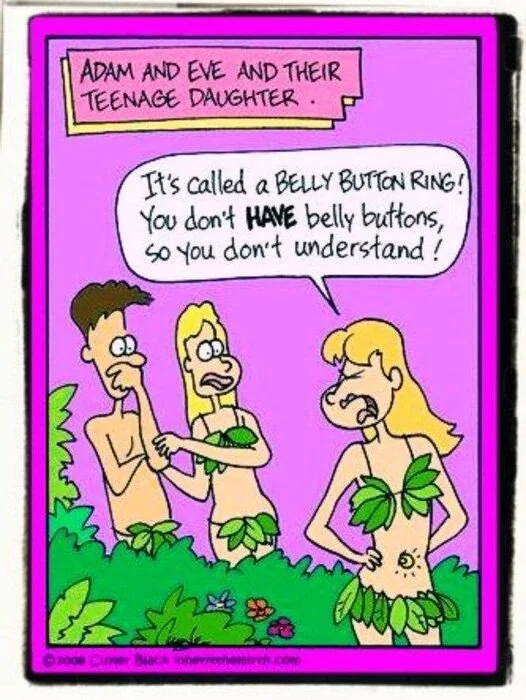
Mot: .. as mom sees it

Hundreds of Indicators Pointing to a Global Recession
Hundreds of Indicators Pointing to a Global Recession
Commodity Culture: 6-28-2025
Renowned financial analyst Henrik Zeberg recently joined Jesse Day on Commodity Culture to deliver a stark warning about the global economic outlook.
In a compelling discussion, Zeberg asserts that a global recession is not just a possibility, but an unavoidable certainty, culminating in a deflationary bust that most market participants will fail to anticipate.
Hundreds of Indicators Pointing to a Global Recession
Commodity Culture: 6-28-2025
Renowned financial analyst Henrik Zeberg recently joined Jesse Day on Commodity Culture to deliver a stark warning about the global economic outlook.
In a compelling discussion, Zeberg asserts that a global recession is not just a possibility, but an unavoidable certainty, culminating in a deflationary bust that most market participants will fail to anticipate.
Central to Zeberg’s thesis is the prediction of an imminent “blow-off top” in the broad market. This euphoric, final surge, he argues, will precede a dramatic and unexpected deflationary downturn. Zeberg meticulously outlined the specific indicators he is closely monitoring that underpin this contrarian view, suggesting that the current economic trajectory is far more precarious than widely acknowledged.
The “deflationary bust” is highlighted as a particularly insidious threat, precisely because its arrival is expected to blindside the majority of investors and policymakers.
Beyond the broader market, Zeberg also provided his detailed outlook on the future of gold and gold mining stocks, offering insights into their potential performance in a rapidly shifting economic landscape. The discussion further delved into the potential ripple effects of former President Trump’s tariff policies, analyzing how they might impact global trade and economic stability.
Perhaps one of the most memorable moments of the conversation was Zeberg’s candid assessment of the US dollar’s standing in the current global financial landscape, famously asking whether it remains “the prettiest mare at the glue factory of fiat currencies.”
This provocative statement encapsulates his skepticism about the long-term strength of the world’s reserve currency amidst unprecedented monetary policies.
Zeberg’s comprehensive analysis offers a compelling, albeit unsettling, counter-narrative to much of the prevailing market optimism. For investors and individuals keen to understand the full scope of Zeberg’s predictions, including the specific indicators and his nuanced arguments, the full video discussion on Commodity Culture provides invaluable insights.
It’s a critical watch for anyone looking to navigate the challenging economic waters ahead with a more informed perspective.
Iraq Economic News and Points To Ponder Saturday Afternoon 6-28-25
Al-Sudani: The Government's Approach Is Based On Continuing The Path Of Building Iraq.
Local Prime Minister Mohammed Shia al-Sudani affirmed on Saturday that the government's approach is based on completing the path of reform and continuing the path of building Iraq, in loyalty to the pure blood of the martyrs.
The Prime Minister's media office said in a statement that "Prime Minister Mohammed Shia al-Sudani received members of the Loyalty to the Martyrs Association, which represents the families of Iraqi martyrs from several governorates."
Al-Sudani: The Government's Approach Is Based On Continuing The Path Of Building Iraq.
Local Prime Minister Mohammed Shia al-Sudani affirmed on Saturday that the government's approach is based on completing the path of reform and continuing the path of building Iraq, in loyalty to the pure blood of the martyrs.
The Prime Minister's media office said in a statement that "Prime Minister Mohammed Shia al-Sudani received members of the Loyalty to the Martyrs Association, which represents the families of Iraqi martyrs from several governorates."
According to the statement, al-Sudani stated that "the value of sacrifice and martyrdom in our society and history laid the foundation for all the changes that occurred later, which extended to the confrontation with terrorism, just as it laid the foundation for the stability, social peace and economic development that we enjoy today."
The Prime Minister pointed out that "dealing with the families of martyrs must be based on the values they represent to society in terms of determination and dignity, and not out of sympathy," stressing that "the government's approach is based on completing the path of reform and continuing the path of building Iraq, in loyalty to the pure blood of the martyrs that were shed before and after 2003, which aimed for a better future."
Al-Sudani stressed that "the government is working to strengthen social cohesion in light of the developments taking place in the region, while preserving the legacy of the martyrs and striving to build a powerful Iraq that is inclusive of all communities." https://economy-news.net/content.php?id=56735
Iraq's Imports Amounted To $21 Billion In The First Quarter Of 2025.
Money and Business Economy News – Baghdad The Central Bank of Iraq announced on Saturday that Iraq's imports for the first quarter of 2025 amounted to more than $21 billion.
The bank stated in its statistics that "Iraq's imports amounted to $21 billion and 363 million," indicating that "imports included both the government and private sectors."
He added, "Government sector imports amounted to $1.377 billion, while private sector imports amounted to $19.985 billion."
The bank indicated that "government imports included consumer imports, capital imports, petroleum product imports, other government imports, and currency printing," while "private sector imports included consumer imports and capital imports." https://economy-news.net/content.php?id=56727
Babylon receives the file for becoming Iraq's industrial capital.
Saturday, June 28, 2025 Economic Number of readings: 92 Hillah/ NINA / Babylon Governor Adnan Fayhan Al-Dulaimi announced today, Saturday, the receipt of the Babylon file as the industrial capital of Iraq, to begin working with the federal government and create the necessary legislation and laws to officially declare Babylon the industrial capital of Iraq.
Fayhan said, “We meet today at a pivotal moment in Babylon’s history, to proudly announce the “Babylon, the Industrial Capital of Iraq” file, noting that this major national project restores Babylon’s leadership position not only in history and civilization, but also in the economy, production and industry.
He pointed out that Babylon, with its strategic location, distinguished human resources, and advanced infrastructure, is capable of being an integrated national industrial center and a strong competitor in various fields such as manufacturing industries, construction materials, food industries, energy, and others.
He explained that since taking over the management of the province, we have worked to develop and support industrial projects due to their importance in increasing national production and providing job opportunities for young people, stressing that this file would not have seen the light of day without the true cooperation between the public and private sectors, in addition to the deep belief that Iraq's renaissance begins with its provinces, and that sustainable development can only be achieved through an integrated vision and seriousness in implementation.
Al-Dulaimi pointed out that the local government in Babylon is proceeding with all determination to prepare the investment environment and provide facilities for industrialists and investors, in order to transform this announcement into realistic projects that create job opportunities and revive the national economy. /End https://ninanews.com/Website/News/Details?key=1237926
The Dollar Recorded A New Decline As The Stock Exchange Closed In Baghdad.
Stock Exchange The dollar price fell in Baghdad markets on Saturday afternoon, as the stock exchange closed at the beginning of the week.
The dollar exchange rate fell at the close of trading on the Al-Kifah and Al-Harithiya stock exchanges, recording 141,100 dinars per $100. This morning, it reached 141,300 dinars per $100.
Selling prices at exchange offices in Baghdad's local markets declined, with the selling price reaching 142,000 dinars for $100, while the buying price reached 140,000 dinars for $100. https://economy-news.net/content.php?id=56731
Iraqi Oil Prices In Global Markets
Economy | 09:26 - 06/28/2025 Mawazine News - Baghdad - Iraqi oil prices recorded a slight increase during daily trading on the global market on Saturday.
Basra Medium crude oil recorded $68.53 per barrel, while heavy crude oil recorded $65.53 per barrel, with a change of +1.11 for both.
The data also showed global oil prices, with British Brent crude recording $67.77 per barrel, while US West Texas Intermediate crude oil recorded $65.52 per barrel, with a change of +0.4 and +0.28, respectively. https://www.mawazin.net/Details.aspx?jimare=263177
Iraq, In Cooperation With The World Bank, Is Taking Steps To Address The Problem Of Air Pollution.
Local | 06/28/2025 Mawazine News - Follow-up: The Ministry of Environment announced, on Saturday, funding projects worth more than $58 million to combat pollution and confront climate change in Iraq. It also indicated that there is a proposed project with the World Bank to address the problem of air pollution in Baghdad, and indicated the existence of international cooperation to strengthen central laboratories and water and air monitoring programs.
Ministry of Environment spokesman Louay Al-Mukhtar said in a press statement that "the government has approved funding for the Integrated Management of Persistent Organic Pollutants and Contaminated Sites project at a value of $18.5 million for the years 2025-2031, in addition to the $40 million project to enhance resilience to climate change, which focuses on agricultural development and strengthening agricultural patterns in three governorates."
He added, "The Council of Ministers also approved a set of strategies in various fields, most notably the National Pollution Reduction Strategy, the National Adaptation Plan, and the National Mitigation Plan."
He pointed out that "the ministry has other important projects with United Nations organizations regarding strengthening national reserves and combating desertification, as well as initiatives to support afforestation inside and outside cities."
He continued, "The ministry's cooperation with UN organizations also includes implementing projects to strengthen and develop central laboratories, develop a water resources monitoring program, and strengthen air quality monitoring systems." He indicated that "there is a proposed project with the World Bank to address the problem of air pollution in Baghdad." https://www.mawazin.net/Details.aspx?jimare=263185
For current and reliable Iraqi news please visit: https://www.bondladyscorner.com/
Seeds of Wisdom RV and Economic Updates Saturday Afternoon 6-28-25
[⚠️ Suspicious Content] Good Afternoon Dinar Recaps,
Serbia Confirms Strong Interest in Joining BRICS at 2025 Summit By Watcher.Guru | June 2025
As the 17th BRICS Summit approaches, Serbia has officially reaffirmed its intention to join the expanding BRICS alliance. The summit will take place on July 6–7 in Rio de Janeiro, Brazil, and could mark a pivotal moment for the bloc’s next wave of expansion.
Good Afternoon Dinar Recaps,
Serbia Confirms Strong Interest in Joining BRICS at 2025 Summit
By Watcher.Guru | June 2025
As the 17th BRICS Summit approaches, Serbia has officially reaffirmed its intention to join the expanding BRICS alliance. The summit will take place on July 6–7 in Rio de Janeiro, Brazil, and could mark a pivotal moment for the bloc’s next wave of expansion.
Serbian Prime Minister: “It Is of Strategic Interest”
Serbian Prime Minister Duro Macut made the country’s position clear, stating that:
“We consistently advocate the need to deepen cooperation with our traditional partners and friends. The BRICS countries are the most important players on the world stage, and the development of strong, mutually beneficial relations with them is of a strategic interest to us.”
Serbia formally submitted its application to join BRICS in 2023, when the alliance last opened its doors for expansion.
BRICS Expansion: Who’s In—and Who’s Waiting
In 2024, BRICS added 13 new “Partner Countries”, including:
Algeria, Belarus, Bolivia, Cuba, Indonesia, Kazakhstan, Malaysia, Nigeria, Thailand, Turkey, Uganda, Uzbekistan, and Vietnam.
While Serbia was not included in that group, it remains among the 23 countries that have formally applied to join the bloc. An additional 22 countries have expressed informal interest, reflecting the growing global momentum around BRICS.
Balancing BRICS and the EU
In a noteworthy diplomatic move, PM Macut also reiterated Serbia’s parallel ambition to join the European Union:
“Serbia continues its path towards membership in the European Union,” he stated in a recent interview with foreign media.
Serbia continues to navigate complex post-Yugoslav geopolitics, including past sanctions, while seeking stronger ties with both Eastern and Western alliances.
Decision Expected in July—But Not Guaranteed
Whether Serbia will be invited to join BRICS will likely be decided during the July summit in Brazil. The BRICS expansion process is consensus-driven, meaning all existing member states must agree to admit new countries.
A key question remains: What value can Serbia bring to BRICS that strengthens the bloc's collective influence?
As the BRICS alliance seeks to redefine the global geopolitical landscape—especially amid rising tensions with Western institutions—Serbia's bid could serve as a strategic pivot between Europe and the multipolar order BRICS envisions.
@ Newshounds News™
Source: Watcher Guru
~~~~~~~~~
Seeds of Wisdom Team RV Currency Facts Youtube and Rumble
Newshound's News Telegram Room Link
Follow the Roadmap
Follow the Timeline
Seeds of Wisdom Team™ Website
Thank you Dinar Recaps