Seeds of Wisdom RV and Economic Updates Thursday Afternoon 6-26-25
Good Afternoon Dinar Recaps,
BRICS Inspires 15 African Nations to Adopt Homegrown Payment System
By Watcher.Guru | June 2025
Africa is now taking a decisive step toward de-dollarization, inspired by the BRICS bloc. A group of 15 African countries has turned to the Pan-African Payments and Settlements System (PAPSS)—a homegrown payment network that allows trade settlements in local currencies, bypassing the US dollar entirely.
Good Afternoon Dinar Recaps,
BRICS Inspires 15 African Nations to Adopt Homegrown Payment System
By Watcher.Guru | June 2025
Africa is now taking a decisive step toward de-dollarization, inspired by the BRICS bloc. A group of 15 African countries has turned to the Pan-African Payments and Settlements System (PAPSS)—a homegrown payment network that allows trade settlements in local currencies, bypassing the US dollar entirely.
Key Highlights:
▪️ 15 African nations, including Kenya, Malawi, Tunisia, and Zambia, are using PAPSS to settle trade.
▪️ 150+ commercial banks are now connected to PAPSS.
▪️ The system can cut foreign exchange costs from 10–30% down to just 1%.
▪️ PAPSS leverages regional currencies like the Nigerian naira, Ghanaian cedi, and South African rand.
▪️ Estimated $5 billion in savings in FX costs if scaled across Africa.
PAPSS: Africa’s Answer to the US Dollar
PAPSS—created to enable real-time gross settlement of cross-border transactions—is becoming the financial backbone of intra-African trade. It reduces reliance on USD, which traditionally dominated African trade deals due to lack of direct currency convertibility.
With BRICS as its model, PAPSS aims to shift African economies toward currency sovereignty. It eliminates the need for costly third-party currencies and reinvests saved foreign exchange into local development.
“A trade worth $200 million in USD could cost up to 30% in FX fees. PAPSS drops that to just 1%.”
A Growing Threat to USD Dominance
The Pan-African system mirrors the BRICS vision: creating a multipolar financial world with decentralized currency power. In fact, BRICS itself is exploring a similar platform, aligning closely with PAPSS to reduce reliance on Western-led financial systems.
As more countries across Africa adopt PAPSS, the pressure on the U.S. dollar’s international dominance will only increase. Combined with BRICS initiatives, the global financial structure is pivoting toward regional cooperation and currency independence.
The Big Picture:
Africa’s use of PAPSS is a quiet revolution that could become one of the most significant economic stories of the decade. By bypassing the dollar, reducing transaction costs, and increasing autonomy, Africa is joining a global movement toward local currency empowerment—one spearheaded by BRICS and now embraced continent-wide.
The future of trade may not revolve around the dollar, but around locally-led, digitally connected networks like PAPSS.
@ Newshounds News™
Source: Watcher Guru
~~~~~~~~~
Seeds of Wisdom Team RV Currency Facts Youtube and Rumble
Newshound's News Telegram Room Link
Follow the Roadmap
Follow the Timeline
Seeds of Wisdom Team™ Website
Thank you Dinar Recaps
Iraq Economic News and Points To Ponder Thursday Morning 6-26-25
With The Stability Trilogy, Monetary Policy Tames Inflation And Protects Citizens' Pockets.
Time: 2025/06/25 10:54:42 Reading: 795 times {Economic: Al Furat News} The Prime Minister's financial advisor, Mazhar Muhammad Salih, confirmed that the monetary policy, whose objectives under the Iraqi Central Bank Law No. 56 of 2004 include reducing the growth in inflation rates to a stable path.
Speaking to Al Furat News Agency, he pointed out that "this policy was able to control demand levels and additional spending power in the economy, by sterilizing local liquidity by providing foreign currency at a stable official exchange rate for the dinar not exceeding 1,320 dinars per dollar, and on a scale that led to weakening the effects of the parallel market and reducing it to financing the country's foreign trade."
With The Stability Trilogy, Monetary Policy Tames Inflation And Protects Citizens' Pockets.
Time: 2025/06/25 10:54:42 Reading: 795 times {Economic: Al Furat News} The Prime Minister's financial advisor, Mazhar Muhammad Salih, confirmed that the monetary policy, whose objectives under the Iraqi Central Bank Law No. 56 of 2004 include reducing the growth in inflation rates to a stable path.
Speaking to Al Furat News Agency, he pointed out that "this policy was able to control demand levels and additional spending power in the economy, by sterilizing local liquidity by providing foreign currency at a stable official exchange rate for the dinar not exceeding 1,320 dinars per dollar, and on a scale that led to weakening the effects of the parallel market and reducing it to financing the country's foreign trade."
Saleh explained that "this came as a result of the cancellation of the foreign currency window at the beginning of this year and the adoption of the principle of foreign exchange bolstering to finance the country's foreign trade, praising the successes of this shift in terms of financing speed and compliance."
He added, "The success of the price defense policy adopted by the trade policy contributed to the remarkable spread of central markets in cooperation with the private sector, which reflected in the price moderation of these market components in a competitive manner, ensuring the stability of essential goods for citizens and others."
He explained that "the three policies, in combination, have had a positive impact on economic policy in promoting stability in citizens' cash income, with remarkable success over the past two years, as annual inflation growth did not exceed 3%, which is within the normal acceptable range for estimating annual price base growth in the country." LINK
Al-Araji Confirms To A US Official That The Iraqi Government Believes In Dialogue And Diplomacy To Resolve Outstanding Issues
Politics Number of reads: 266 Baghdad / NINA / National Security Adviser, Qasim Al-Araji, received on Wednesday the US Chargé d'Affaires in Baghdad, Stephen Fagin.
During the meeting, according to a statement by the advisory, they reviewed the regional situation and developments and welcomed the recent calm in the region.
Fagin praised the role of the Iraqi government and the measures taken by the security services to protect embassies and diplomatic missions, appreciating the role of the Iraqi security services and their high professionalism.
Fagin also praised the role of the Iraqi government in repatriating its citizens from Al-Hawl camp and rehabilitating them despite the circumstances the region is going through.
For his part, Al-Araji stressed that the Iraqi government believes in dialogue and resolving outstanding problems through dialogue and diplomacy, expressing the Iraqi government's welcome to the ceasefire, to restore stability to the region and the world.
Al-Araji pointed out that Iraq has good and balanced relations with all countries and has commonalities with neighboring countries, expressing his hope for establishing peace, stopping the war and lifting the siege on Gaza. /End https://ninanews.com/Website/News/Details?Key=1237454
Central Bank Of Iraq: Foreign Exchange Reserves Sufficient To Cover 13 Months Of Imports
Money and Business The Central Bank revealed on Wednesday that Iraq's foreign currency reserves are sufficient to cover 13 months of imports.
The bank said in a report that "import coverage is often viewed as a measure of the number of months that imports could be sustained if all foreign currency inflows were to cease," noting that "the global standard used is for reserves to cover all imports for six months."
He added, "The ratio of foreign reserves to imports has decreased from 16 months at the beginning of 2024 to 13 months at the beginning of 2025," indicating that "despite the decrease in the ratio, Iraq's reserves will still cover imports for 13 months if Iraq does not receive foreign currency revenues." https://economy-news.net/content.php?id=56631
With The Stock Exchange Closed, A New Price For The Dollar Was Announced In Baghdad And Erbil.
Stock Exchange The US dollar exchange rate fell against the Iraqi dinar on Wednesday in Baghdad and Erbil as the stock exchange closed.
Exchange rates in Baghdad: Selling rate: 142,250 dinars per $100. Buying rate: 140,250 dinars per $100.
Exchange rates in Erbil: Selling price: 141,000 dinars per $100. Buying price: 140,950 dinars per $100.
https://economy-news.net/content.php?id=56637
After The Iran-Israel War, Global Oil Prices Recover
Economy | - 06/25/2025 Mawazine News - Oil prices rose on Wednesday as the ceasefire between Iran and Israel was assessed to be holding, but remained near multi-week lows amid prospects of uninterrupted crude flows.
Brent crude futures rose 85 cents, or 1.3 percent, to $67.99 a barrel, while U.S. West Texas Intermediate (WTI) crude gained 87 cents, or 1.4 percent, to $65.24.
Brent and WTI settled on Tuesday at their lowest levels since June 10 and June 5, respectively, before Israel launched a surprise attack on key Iranian military and nuclear facilities on June 13.
Oil prices lost about $4 per barrel on Tuesday as the ceasefire between the two sides was announced. Overall, oil prices have lost $10 per barrel over the past two days. https://www.mawazin.net/Details.aspx?jimare=263050
Gold Prices Fall In Baghdad Markets And Stabilize In Erbil
Economic Number of readings: 136 Baghdad / NINA / The prices of foreign and Iraqi gold decreased on Wednesday in the local markets of the capital, Baghdad, and stabilized in Erbil.
The selling prices of gold, in the wholesale markets on Al-Naher Street in the capital, Baghdad, this morning, for one Mithqal of 21 karat Gulf, Turkish and European gold, were recorded at 660 thousand dinars, and the purchase price was 656 dinars.
The selling price of one Mithqal of 21 karat Iraqi gold was recorded at 630 thousand dinars, and the purchase price was 626 thousand.
As for the prices of gold in goldsmiths, the selling price of one Mithqal of 21 karat Gulf gold ranges between 660 thousand and 670 thousand, and the selling price of one Mithqal of Iraqi gold is between 630 thousand and 640 thousand dinars.
As for gold prices in Erbil, they recorded stability, as 22 karat gold was sold for 690 thousand dinars, 21 karat gold was sold for 660 thousand dinars, and 18 karat gold was sold for 565 thousand dinars. / End
https://ninanews.com/Website/News/Details?key=1237467
For current and reliable Iraqi news please visit: https://www.bondladyscorner.com/
Seeds of Wisdom RV and Economic Updates Thursday Morning 6-26-25
Good Morning Dinar Recaps,
U.S. Regulator Orders Fannie Mae, Freddie Mac to Consider Crypto in Mortgage Risk Assessments
By Cointelegraph | June 2025
In a major development for crypto adoption in real estate, the Federal Housing Finance Agency (FHFA) has directed Fannie Mae and Freddie Mac to begin evaluating cryptocurrency as an asset class in their single-family mortgage loan risk assessments.
Good Morning Dinar Recaps,
U.S. Regulator Orders Fannie Mae, Freddie Mac to Consider Crypto in Mortgage Risk Assessments
By Cointelegraph | June 2025
In a major development for crypto adoption in real estate, the Federal Housing Finance Agency (FHFA) has directed Fannie Mae and Freddie Mac to begin evaluating cryptocurrency as an asset class in their single-family mortgage loan risk assessments.
Crypto Assets May Soon Count Toward Mortgage Applications
FHFA Director William J. Pulte issued the directive in a formal letter this week, stating the government-sponsored enterprises (GSEs) must:
“Prepare a proposal for consideration of cryptocurrency as an asset for reserves in their respective single-family mortgage loan risk assessments, without conversion of said cryptocurrency to U.S. dollars.”
This marks the first time U.S. housing authorities have opened the door to counting crypto holdings as qualifying assets for mortgage applications, a move that could reshape risk models and eligibility standards for millions of Americans.
Eligibility Limited to Regulated Crypto Holdings
The guidance includes a critical restriction:
Only cryptocurrencies that are:
▪️ Evidenced and stored on U.S.-regulated centralized exchanges
▪️ Subject to all applicable federal laws and compliance standards
will be considered under the new proposal.
This standard excludes unhosted wallets and decentralized platforms, underscoring regulators’ desire for traceability and compliance within the financial system.
Aligns With Trump Administration’s Pro-Crypto Agenda
Director Pulte noted that the shift toward crypto inclusion follows “significant studying” by the agency and aligns with Donald Trump’s stated goal of making the U.S. the “crypto capital of the world.”
The FHFA has been overseeing Fannie Mae and Freddie Mac since both were placed into conservatorship following the 2008 financial crisis. These institutions have since played a central role in stabilizing the mortgage market by buying loans from private lenders, which frees up capital for more lending.
Part of a Broader Crypto Integration Trend
This development is just the latest sign of crypto gaining traction in traditional finance. Recent headlines include:
▪️ JPMorgan’s plans to let select wealth clients use Bitcoin ETFs as collateral
▪️ Circle’s USDC stablecoin being approved as eligible collateral for futures trading starting next year
▪️ Crypto-backed mortgages becoming more common, with firms like Ledn enabling clients to leverage Bitcoin and Ether to purchase real estate without liquidating holdings
“Many Bitcoin holders have already used their digital assets as collateral to purchase property,” said Mauricio Di Bartolomeo, co-founder of Ledn.
Bottom Line:
The FHFA’s crypto guidance for Fannie Mae and Freddie Mac marks a pivotal turning point. If implemented, it could allow crypto-savvy borrowers to leverage their digital assets directly for homeownership, without having to convert to cash—a key win for holders, and another step toward mainstream crypto integration.
Let me know if you'd like a shortened Telegram version or a mobile-friendly newsletter layout.
@ Newshounds News™
Source: Cointelegraph
~~~~~~~~~
Russia Declares Digital Ruble Mandatory for Major Banks and Retailers
By The Coin Tribune | June 2025
Russia is no longer testing its central bank digital currency (CBDC)—it is mandating it. In a sweeping shift, Moscow has ordered that the digital ruble become a compulsory component of its financial and commercial infrastructure, marking a new era of centralized monetary control and programmable currency.
Key Directives:
▪️ By September 1, 2026, all major Russian banks and retailers generating over 120 million rubles (~$1.9 million USD) must support digital ruble payments.
▪️ Full implementation by 2028, eventually reaching nearly all businesses.
▪️ Goal: Strengthen state control over domestic financial flows and reduce reliance on foreign payment systems.
From Pilot to Policy: A Tectonic Monetary Shift
What began as a controlled experiment is now a national directive. The Bank of Russia has released a structured rollout plan:
2026: Largest banks and high-revenue retailers begin integration.
2027: Obligations expand to all licensed banks and businesses with revenue above 30 million rubles.
2028: Mandatory use reaches nearly the entire commercial sector, excluding only very small enterprises.
Russia’s plan to shift its entire economic infrastructure toward the digital ruble reflects not just a technical evolution, but a political statement. The digital currency is not merely a payment tool—it’s a state-controlled, programmable financial system that could track, restrict, or block transactions in real time.
“The obligation is clear, calibrated, progressive, and relentless.”
A Tool of Power—Not Just Progress
This move is as ideological as it is economic. In the face of Western sanctions, Moscow sees the digital ruble as a pathway to financial sovereignty and geopolitical insulation. But critics warn it comes at a steep cost:
▪️ Unlike decentralized cryptocurrencies like Bitcoin, the digital ruble is traceable, programmable, and blockable.
▪️ It offers the state unprecedented control over private financial behavior.
▪️ Universal QR codes issued by Russia’s National Payment Card System will serve as the primary interface for consumers and merchants.
Though officials cite efficiency and modernization, the real power lies in surveillance and regulation—a far cry from the decentralization ethos of blockchain technology.
Delayed Launch, Strategic Calculations
Originally scheduled for July 2025, the launch has been postponed to mid-2026, not only due to technical adjustments but to manage institutional resistance and political friction. The central bank is walking a fine line between ensuring adoption and avoiding systemic disruption.
Bottom Line:
Russia is embarking on one of the world’s most ambitious national CBDC rollouts—not by suggestion, but by decree. This isn't just about embracing digital currency; it's about building a monetary firewall, one that empowers the state and potentially restricts individual freedom.
As the digital ruble becomes mandatory, Russia is redefining the role of money in society—and raising questions globally about the future of financial autonomy in an era of programmable currency.
@ Newshounds News™
Source: Cointribune
~~~~~~~~~
Seeds of Wisdom Team RV Currency Facts Youtube and Rumble
Newshound's News Telegram Room Link
Follow the Roadmap
Follow the Timeline
Seeds of Wisdom Team™ Website
Thank you Dinar Recaps
MilitiaMan & Crew: Iraq Dinar News Update-Monetary Policy-Private Sector-World Bank
MilitiaMan & Crew: Iraq Dinar News Update-Monetary Policy-Private Sector-World Bank-
6-25-2025
The Crew: Samson, PompeyPeter, Petra, Daytrader, Sunkissed, GIGI and Militia Man
Be sure to listen to full video for all the news……..
MilitiaMan & Crew: Iraq Dinar News Update-Monetary Policy-Private Sector-World Bank-
6-25-2025
The Crew: Samson, PompeyPeter, Petra, Daytrader, Sunkissed, GIGI and Militia Man
Be sure to listen to full video for all the news……..
“Tidbits From TNT” Thursday Morning 6-26-2025
TNT:
Tishwash: Central Bank: Iraq's foreign exchange reserves are sufficient to cover 13 months of imports.
The Central Bank revealed on Wednesday that Iraq's foreign currency reserves are sufficient to cover 13 months of imports.
The bank said in a report seen by Shafaq News Agency that "import coverage is often viewed as a measure of the number of months that imports could be sustained if all foreign currency inflows were to cease," noting that "the global standard used is for reserves to cover all imports for a period of six months."
TNT:
Tishwash: Central Bank: Iraq's foreign exchange reserves are sufficient to cover 13 months of imports.
The Central Bank revealed on Wednesday that Iraq's foreign currency reserves are sufficient to cover 13 months of imports.
The bank said in a report seen by Shafaq News Agency that "import coverage is often viewed as a measure of the number of months that imports could be sustained if all foreign currency inflows were to cease," noting that "the global standard used is for reserves to cover all imports for a period of six months."
He added, "The ratio of foreign reserves to imports has decreased from 16 months at the beginning of 2024 to 13 months at the beginning of 2025," indicating that "despite the decrease in the ratio, Iraq's reserves will still cover imports for 13 months if Iraq does not receive foreign currency revenues." link
Tishwash: Half a year without an actual budget... Where have the government's plans gone
Amid the financial and economic challenges facing the country, the 2025 budget file continues to stir controversy within political and parliamentary circles, amid a state of anticipation and growing public concern.
Despite more than half a year having passed since the start of the fiscal year, the budget schedules remain absent from the halls of Parliament, reflecting a state of government confusion and a lack of seriousness in dealing with one of the country's most important financial and strategic issues. This delay comes at a time when the Iraqi public is witnessing increasing pressure to improve services, implement stalled projects, and meet citizens' basic needs.
Meanwhile, the ambiguity surrounding the date for submitting the schedules is paralyzing the legislative and oversight process concerned with setting priorities and ensuring the fair and efficient distribution of resources.
* Violation of laws
and regarding this issue, member of the Parliamentary Finance Committee, Hussein Mounes, confirmed that the government is still not serious about sending the budget tables to the House of Representatives.
In an interview with Al-Maalouma News Agency, Mounes said, “The government violated the Financial Management Law by delaying the submission of the 2025 general budget schedules, considering this a disregard for the role of the House of Representatives and its oversight and legislative work.”
He added, "The Iraqi government is not serious about sending the tables to the House of Representatives, expressing his surprise at the government's failure to send the budget law tables to the House, despite six months having passed since the start of the fiscal year." link
**************
Tishwash: Masrour Barzani: Baghdad will send a delegation to the Kurdistan Region to resolve the salary issue.
Kurdistan Regional Government Prime Minister Masrour Barzani announced on Wednesday that the crisis of halting funding for salaries of public sector employees in the region is on its way to being resolved, and that he had communicated with the Chief Justice of the Supreme Judicial Council, Faiq Zidan, and Prime Minister Mohammed Shia al-Sudani in this regard.
This came during a press conference held today in Erbil, where Masrour Barzani addressed the conflict in the region, saying, "The announcement of a ceasefire between Israel and Iran is in the interest of all countries in the region, and we hope it will be a step toward restoring peace and stability throughout the region."
He added, "We in the Kurdistan Region have done our best to stay out of this war and chaos, and we must express our gratitude to Prime Minister Mohammed Shia al-Sudani, who has sought to spare Iraq from entering this conflict."
Regarding the issue of salaries, the Prime Minister of the Kurdistan Region stated, "For the past two months, the salaries of Kurdistan Region employees have not been paid legally, which is considered an unconstitutional measure. We believe it is unacceptable to link the salaries of Kurdistan Region employees to any political dispute or conflict."
He stressed that "we will not give up any constitutional right of the people of the Kurdistan Region in any way, and we will continue to defend it," adding that "during the past period, there was not a day when we were not busy searching for a solution to this crisis."
Masrour Barzani continued, "We have been in contact with officials. Yesterday, I spoke with the head of the Supreme Judicial Council and the prime minister, and I assured them that we are keen to move towards resolving this crisis. They welcomed this and announced their readiness to send a delegation within the next two days to address the salary issue."
The Prime Minister of the Kurdistan Regional Government spoke about the suspension of Kurdistan's oil exports, saying that because of this, "the Iraqi economy and the Kurdistan Region's economy have incurred losses exceeding $25 billion, and to date, the federal government has not compensated the citizens of the Kurdistan Region for these losses."
He stressed that "to resume Kurdistan's oil exports, an agreement must be reached with all parties, especially with the oil companies operating in the region, which are demanding guarantees for extraction costs."
Masrour Barzani continued, "We were waiting for a ruling from the Federal Supreme Court in Iraq that would benefit the salaries of Kurdistan Region employees, but the court was dissolved with the resignation of a number of members. Now we are pinning our hopes on the Supreme Judicial Council in Iraq to resolve the salaries issue."
The KRG Prime Minister continued, "If an agreement is not reached with the Iraqi government to resolve the salary issue, we will resort to internal revenues, reducing expenses, or any other means possible to secure the financial rights owed to the people of the Kurdistan Region, according to our capabilities." He added, "However, I am optimistic about reaching a radical solution with the federal government on this matter." link
**
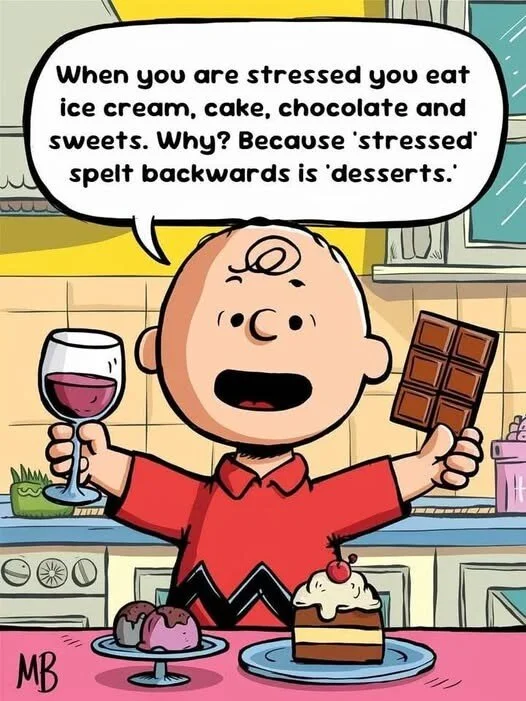
Mot: . Today!! -- ole ""Mot"" will Advise on Handling ""Stress""

Iraq Economic News and Points To Ponder Wednesday Afternoon 6-25-25
The IMF Mission Commends The Central Bank Of Iraq.
June 25, 2025 The International Monetary Fund (IMF) mission, led by Jean-Guillaume Poulain, which met with the Central Bank of Iraq (CBI) from May 4 to 13, 2025, commended the CBI's work in several areas. It confirmed that the CBI has made progress in absorbing excess liquidity by increasing the issuance of short-term debt instruments (CBI drafts and Islamic certificates of deposit), adjusting subscription limits for banks in CBI auctions, and improving liquidity forecasting tools and practices.
The statement issued by the International Monetary Fund stated that the mission commended the efforts of the Central Bank of Iraq to successfully transition to the new trade finance system, indicating that commercial banks now process trade finance transactions entirely through their relationships with correspondent banks.
The IMF Mission Commends The Central Bank Of Iraq.
June 25, 2025 The International Monetary Fund (IMF) mission, led by Jean-Guillaume Poulain, which met with the Central Bank of Iraq (CBI) from May 4 to 13, 2025, commended the CBI's work in several areas. It confirmed that the CBI has made progress in absorbing excess liquidity by increasing the issuance of short-term debt instruments (CBI drafts and Islamic certificates of deposit), adjusting subscription limits for banks in CBI auctions, and improving liquidity forecasting tools and practices.
The statement issued by the International Monetary Fund stated that the mission commended the efforts of the Central Bank of Iraq to successfully transition to the new trade finance system, indicating that commercial banks now process trade finance transactions entirely through their relationships with correspondent banks.
The Central Bank of Iraq has achieved significant progress by transitioning to the new system for financing foreign trade through correspondent banking channels, instead of relying on the daily dollar auction.
This development has contributed to enhancing banks' compliance with international transparency requirements, such as
OFAC regulations and others, and improving their relationships with global correspondent banks.
This step has resulted in
narrowing the gap between the official dollar price and its parallel price, indicating relative success in
curbing illegal speculation and
reducing currency leakage.
The foreign exchange management methodology has become more effective compared to the past,
especially with the Central Bank of Iraq continuing to take complementary measures, such as requiring traders to submit genuine import invoices and simplifying procedures for obtaining hard currency for legitimate importers.
In parallel, the mission welcomed the progress made in the use of digital technology and the Iraqi authorities' intention to implement a comprehensive reform of the banking sector, calling for its completion to be accelerated without delay.
The Iraqi government, with technical support from the International Monetary Fund and other international bodies, has begun implementing initial steps to reform government banks, including
auditing the quality of assets,
estimating the size of non-performing loans, and
developing a draft plan to restructure the two largest government banks (Rafidain and Rashid) financially and administratively.
The Iraqi financial sector has also witnessed an increasing trend towards digitization and the adoption of modern financial technology, whether in electronic payment services or the launch of banking platforms via the Internet and mobile phones.
The International Monetary Fund believes that these
technical improvements, along with
steps to enhance cybersecurity in banks,
promote financial inclusion,
expand private banking activity, and
restructure government banks,
will
enhance the efficiency of financial services and
increase foreign correspondents' confidence in the Iraqi banking sector.
The report also noted the
expansion of private banks' activity in trade finance and small business financing, with expectations of
further increases if obstacles are removed.
Initiatives to
enhance financial inclusion,
modernize electronic payment systems, and
reduce reliance on cash in the economy
are also crucial to strengthening banking depth.
The Central Bank of Iraq launched a national financial inclusion strategy during the first half of 2025.
The report also included important recommendations to enhance financial stability and facilitate the transfer of monetary policy effects to the real sector, including: reducing the phenomenon of dollarization, in which Iraq has made significant progress over the past two years;
the importance of accelerating the completion of the
comprehensive restructuring plan for banks to enhance their solvency; the importance of
strengthening corporate governance for banks,
developing digital infrastructure and cybersecurity for the financial sector;
strengthening the role of private banks in financing economic development; and
continuing to improve anti-money laundering and counter-terrorism financing procedures.
It is also important for the Central Bank of Iraq to continue increasing the issuance of short-term securities to ensure better management of excess liquidity. Central Bank of Iraq Media Office https://cbi.iq/news/view/2916
The Central Bank Sponsors The Launch Of The Al-Fursan Entrepreneurship Program.
June 25, 2025 The Central Bank of Iraq hosted a celebration announcing the launch of the "Fursan" program, an Iraqi-inspired initiative under the direct sponsorship of His Excellency the Governor of the Central Bank of Iraq.
The program serves as a realistic investment program for entrepreneurs, aiming to create real opportunities for youth and enhance the role of the private sector in developing the national economy.
In his speech at the ceremony, His Excellency the Governor of the Central Bank of Iraq, Mr. Ali Mohsen Al-Alaq, emphasized that the Central Bank of Iraq has prioritized supporting projects related to the youth segment, which contributes to the local economy with products and services that contribute to raising the gross domestic product, ensuring an effective role in this regard.
In light of the recent reforms, the Iraqi banking sector can also focus on supporting income-generating small and medium-sized enterprises that directly support the private sector.
The "Fursan" program helps participants access investment opportunities and obtain soft loans for those who qualify. The program also provides a safety net that ensures the continuity of promising projects and prevents their failure.
These projects serve as incentives for innovative youth and create new job opportunities
that contribute to sustainable economic and social development in Iraq.
A group of young people presented their projects, highlighting the products they offer and their assessment of market demand and available potential, with the hope that other entrepreneurs will join them in the future. Central Bank of Iraq Media Office June 25, 2025 https://cbi.iq/news/view/2917
An Economist Points To A Decline In Liquidity And The Loss Of Thousands Of Jobs In Iraq.
Economy 2025-06-25 |Source: Alsumaria News 3,726 views Alsumaria News - Economist Ahmed Abdul Rabbah revealed on Wednesday the reasons behind the ban on a number of local Iraqi banks from receiving foreign transfers. He emphasized that the continued ban on 32 Iraqi banks from dealing in dollars not only leads to a decline in liquidity but also threatens the loss of thousands of jobs at these banks.
Ahmed Abdul Rabbo told Sumaria News that the banks operating in the country that handle remittances are Iraqi in terms of registration and establishment, but some of these banks hold majority ownership stakes in foreign investors, which gives them advantages over local banks.
The economic expert attributes the deprivation of a number of local banks from foreign transfers to
their lack of banking relationships with global correspondent banks such as JP Morgan and Citibank,
unlike banks owned by foreign investors, which maintain extensive correspondent banking networks.
He pointed out that those banks in which foreigners hold significant stakes continue to dominate the remittance sector, benefiting from their global network of relationships. He explained,
"I find it essential for the Central Bank of Iraq to diversify the basket of currencies used in emittances by adopting alternative currencies such as the Emirati dirham, the Chinese yuan, and the euro.
I also call on the Central Bank to guarantee a number of Iraqi banks that adhere to international standards, in order to facilitate the opening of accounts for them with international banks such as Citibank and JPMorgan."
He added that the US sanctions imposed on 32 Iraqi banks remain, in his view, unjust and illogical, as they disrupt the structure of the banking system, negatively impact opportunities for competition and growth, limit the liquidity of these banks, and leave them vulnerable to bankruptcy.
The continued ban on dollar transactions for 32 Iraqi banks not only leads to a decline in liquidity, according to the expert, but also threatens the loss of thousands of jobs at these banks, whether they have been closed or restricted in their operations. It also deepens the crisis of confidence in these banks as intermediary institutions.
This situation has forced many companies and individuals to deal only with "dominant" banks, reducing the opportunities for local banks in the market.
The economic expert noted that if
reform efforts continue and international standards are fairly applied,we may witness a real decline in the role of the black market and a gradual return of committed local banks to competition on a more equitable basis.
https://www.alsumaria.tv/news/economy/531261/اقتصادي-يؤشر-أمرًا-يؤدي-إلى-انخفاض-السيولة-وفقدان-آلاف-الوظائف-في-العر
For current and reliable Iraqi news please visit: https://www.bondladyscorner.com/
Some “Iraq International News” Posted by Clare at KTFA 6-25-2025
KTFA:
Clare: IMF: Iraq has made progress in transitioning to a new system for financing foreign trade.
6/25/2025
The International Monetary Fund (IMF) mission considered that the Central Bank of Iraq has achieved "significant progress" by transitioning to a new system for financing foreign trade.
A statement issued by the bank quoted the mission as confirming that "the Central Bank of Iraq has made progress in absorbing excess liquidity by increasing the issuance of short-term debt instruments (central bank transfers and Islamic certificates of deposit), adjusting subscription limits for banks in central bank auctions, and improving liquidity forecasting tools and practices."
KTFA:
Clare: IMF: Iraq has made progress in transitioning to a new system for financing foreign trade.
6/25/2025
The International Monetary Fund (IMF) mission considered that the Central Bank of Iraq has achieved "significant progress" by transitioning to a new system for financing foreign trade.
A statement issued by the bank quoted the mission as confirming that "the Central Bank of Iraq has made progress in absorbing excess liquidity by increasing the issuance of short-term debt instruments (central bank transfers and Islamic certificates of deposit), adjusting subscription limits for banks in central bank auctions, and improving liquidity forecasting tools and practices."
The statement added, "The mission commended the Central Bank of Iraq's efforts to successfully transition to the new trade finance system," noting that commercial banks now process trade finance transactions entirely through their relationships with correspondent banks.
According to the mission, "the Central Bank of Iraq has made significant progress by transitioning to a new system for financing foreign trade through correspondent banking channels, instead of relying on the daily dollar auction."
According to the statement, the mission indicated that "this development has contributed to enhancing banks' compliance with international transparency requirements, such as OFAC regulations and others, and improving their relationships with global correspondent banks."
The statement added that this step resulted in narrowing the gap between the official dollar exchange rate and its parallel exchange rate, indicating relative success in curbing illegal speculation and reducing currency leakage.
The statement continued, citing the IMF mission, that "the methodology for managing foreign exchange has become more effective than before, especially with the Central Bank of Iraq continuing to implement complementary measures such as requiring traders to submit genuine import invoices and simplifying procedures for obtaining hard currency for legitimate importers." LINK
************
Clare: The IMF mission commends the Central Bank of Iraq.
June 25, 2025
The International Monetary Fund (IMF) mission, led by Jean-Guillaume Poulain, which met with the Central Bank of Iraq (CBI) from May 4 to 13, 2025, commended the CBI's work in several areas. It confirmed that the CBI has made progress in absorbing excess liquidity by increasing the issuance of short-term debt instruments (CBI drafts and Islamic certificates of deposit), adjusting subscription limits for banks in CBI auctions, and improving liquidity forecasting tools and practices.
The statement issued by the International Monetary Fund stated that the mission commended the efforts of the Central Bank of Iraq to successfully transition to the new trade finance system, indicating that commercial banks now process trade finance transactions entirely through their relationships with correspondent banks.
The Central Bank of Iraq has achieved significant progress by transitioning to the new system for financing foreign trade through correspondent banking channels, instead of relying on the daily dollar auction. This development has contributed to enhancing banks' compliance with international transparency requirements, such as OFAC regulations and others, and improving their relationships with global correspondent banks.
This step has resulted in narrowing the gap between the official dollar price and its parallel price, indicating relative success in curbing illegal speculation and reducing currency leakage. The foreign exchange management methodology has become more effective compared to the past, especially with the Central Bank of Iraq continuing to take complementary measures, such as requiring traders to submit genuine import invoices and simplifying procedures for obtaining hard currency for legitimate importers.
In parallel, the mission welcomed the progress made in the use of digital technology and the Iraqi authorities' intention to implement a comprehensive reform of the banking sector, calling for its completion to be accelerated without delay.
The Iraqi government, with technical support from the International Monetary Fund and other international bodies, has begun implementing initial steps to reform government banks, including auditing the quality of assets, estimating the size of non-performing loans, and developing a draft plan to restructure the two largest government banks (Rafidain and Rashid) financially and administratively.
The Iraqi financial sector has also witnessed an increasing trend towards digitization and the adoption of modern financial technology, whether in electronic payment services or the launch of banking platforms via the Internet and mobile phones.
The International Monetary Fund believes that these technical improvements, along with steps to enhance cybersecurity in banks, promote financial inclusion, expand private banking activity, and restructure government banks, will enhance the efficiency of financial services and increase foreign correspondents' confidence in the Iraqi banking sector.
The report also noted the expansion of private banks' activity in trade finance and small business financing, with expectations of further increases if obstacles are removed. Initiatives to enhance financial inclusion, modernize electronic payment systems, and reduce reliance on cash in the economy are also crucial to strengthening banking depth. The Central Bank of Iraq launched a national financial inclusion strategy during the first half of 2025.
The report also included important recommendations to enhance financial stability and facilitate the transfer of monetary policy effects to the real sector, including: reducing the phenomenon of dollarization, in which Iraq has made significant progress over the past two years; the importance of accelerating the completion of the comprehensive restructuring plan for banks to enhance their solvency; the importance of strengthening corporate governance for banks, developing digital infrastructure and cybersecurity for the financial sector; strengthening the role of private banks in financing economic development; and continuing to improve anti-money laundering and counter-terrorism financing procedures.
It is also important for the Central Bank of Iraq to continue increasing the issuance of short-term securities to ensure better management of excess liquidity.
Central Bank of Iraq
Media Office
https://cbi.iq/news/view/2916
Clare: Nearly $1 billion in international funding for Iraq to implement a massive transportation project.
6/25/2025
The World Bank announced on Wednesday that it had approved $930 million in financing to improve railway performance in Iraq, boost domestic trade, create jobs, and support economic diversification. The bank confirmed that the project will be completed in 2037 and will include eight Iraqi governorates .
The bank stated in a statement received by Shafaq News Agency, "Under this financing, the Iraq Railways Extension and Modernization (IREM) project will modernize the railway infrastructure and services between Umm Qasr Port in southern Iraq and Mosul in northern Iraq, contributing to reducing travel and transportation time, increasing freight volume, as well as improving infrastructure and sustainable transportation services and providing them to users and passengers ."
He added, "The Middle East is witnessing a significant boom in the development of regional railways, which enhances trade routes within the region and with Asia and Europe, and contributes to enhancing connectivity services and driving economic growth in the region. These regional initiatives include the Iraq Development Road , which was announced in May 2023 with the aim of transforming Iraq into a pivotal transportation hub by linking the Gulf region with Iraq, all the way to the Turkish border and from there to Europe ."
The bank also noted that, "Once connectivity to existing ports and infrastructure is enhanced, this route could significantly increase trade flows within Iraq and across the region. Given that Iraq's railway sector suffers from limited connectivity, poor repair and maintenance services, and a lack of funding, investments in the existing railway network are considered an essential first step towards enhancing connectivity at the national and regional levels ."
In this regard, the World Bank's Regional Director for the Middle East, Jean-Christophe Carré, said, according to the statement, "As Iraq transitions from reconstruction to development, enhancing trade and connectivity services can stimulate economic growth, create new job opportunities, and reduce dependence on oil. This project is of great importance in transforming Iraq into a regional transportation hub and achieving the goals of Iraq's development path, which are improving connectivity services, diversifying economic activity, and raising growth rates ."
He stressed that "the project will expand and modernize the railways in Iraq by rehabilitating and modernizing 1,047 kilometers of existing railway lines linking Umm Qasr Port to Mosul via Baghdad, in addition to supporting the modernization of the fleet of locomotives and train cars, renovating the maintenance workshop in Baiji, and purchasing the necessary equipment and spare parts. The project will also work to enhance private sector capital participation in the establishment of dry ports and logistics service centers that provide sustainable, highly skilled job opportunities. The project will also enhance railway safety by implementing a comprehensive safety management system, modernizing infrastructure, improving railway crossings, implementing community awareness campaigns, enhancing emergency preparedness, and training workers ."
The project will also include technical assistance to improve the institutional performance of the Iraqi General Railway Company, develop an action plan for railway sector reform, and identify opportunities for private sector participation. Additionally, the project will provide training programs for Iraqi General Railway Company employees and support women's participation in the sector, according to the statement .
He stressed that "the Iraqi General Railway Company will implement the project under the supervision of the Ministry of Transport. To support successful and rapid implementation, an international company will be contracted within the framework of the project to manage capital expenditures and support the Iraqi General Railway Company in its efforts to build institutional capacity to manage large capital expenditure programs and manage the implementation of project contract packages.
The project will also prioritize active participation by citizens and local communities, and establish a community-led planning and monitoring mechanism that enables citizens to receive regular updates on progress and express their opinions and feedback on implementation ."
He pointed out that "by 2037, the renovated railway line is expected to transport 6.3 million tons of domestic freight, 1.1 million tons of exports/imports, and 2.85 million passengers, including unpackaged primary commodities (such as grains or construction materials) and containerized goods (such as industrial and consumer goods). The railway will cross eight Iraqi governorates, enhancing integration across the federal Republic of Iraq and benefiting nearly 17 million people ."
The World Bank statement noted that "the project will shift freight traffic from trucks to trains, significantly reducing damage to roads and lowering annual maintenance costs. The project will create more than 3,000 full-time construction jobs over seven years. Once railway operations and sector-wide expansion work commence, the project is expected to create 21,900 jobs annually by 2024. " LINK
************
Clare: Iraq faces a "golden opportunity" following the regional truce. Will it capitalize on it?
6/25/2025
Following the cessation of the 12-day war between Israel and Iran, Iraq has a "golden opportunity" to assume a pivotal role in the region. It can capitalize on the regional calm to reduce tensions, develop a new vision for its national security, and strengthen international and trade relations. This will have an initial impact on the Iraqi economy, according to observers.
However, translating this calm into real economic gains, according to observers, remains contingent on the Iraqi government's ability to accompany it with radical internal reform that ensures the rule of law and frees economic decision-making from the grip of militias. Otherwise, it will be little more than a truce that deprives Iraq of the opportunity to advance.
positive effects
In this context, the Prime Minister's financial advisor, Mazhar Mohammed Salih, said, "Regional calm in the Middle East, particularly among Iraq's neighbors, could have a direct and profound positive impact on the Iraqi economy."
Saleh explained to Shafaq News Agency, "The Gulf states, Turkey, and Iran may increase their investments in Iraq in the areas of infrastructure, energy, transportation, and agriculture, and provide Iraq with the opportunity for stability, especially to implement its geo-economic project, the 'Development Road' project."
He continued, "In addition to attracting Arab and foreign investments to operate in the industrial economic cities linked to the development project, we are working with minimal risk and the highest degree of stability. All of these factors are linked to the degree of stability in regional security and its repercussions on our country."
He asserts that "the more attractive and stable the investment environment becomes for foreign investors, the more costs will decrease as profit opportunities grow."
Saleh points out that "one of the best foreign investment opportunities, in addition to the development path, is competition for joint investment in natural resource sites (except for the oil and gas industry), as this is a promising vital field for investors."
"golden opportunity"
This is also the view expressed by Hussein Al-Sa'bari, the deputy chairman of the parliamentary investment committee, who said, "The regional situation has calmed down following the cessation of the war between Iran and Israel, and relations between Arab and regional states have become closer. Therefore, the Iraqi government must capitalize on this atmosphere to become a hub and a link between the parties, in order to ensure regional development."
Al-Sa'bari told Shafaq News Agency, "The current situation represents an opportunity for political development and international and commercial relations, which requires Iraq to assume its primary role in the region and capitalize on this golden opportunity."
Economic researcher Ahmed Eid agrees with Hussein Al-Saabari, stating that "the regional de-escalation between Iran and Israel presents an opportunity to reduce tensions in the region, which will initially have a positive impact on the Iraqi economy through reduced insurance and transportation costs, improved market sentiment, and relative stability in the dinar exchange rate. It may also contribute to reducing financial pressures on the general budget and boosting temporary investor confidence."
conditional economic gains
However, Eid noted in an interview with Shafaq News Agency that "translating this calm into real economic gains remains contingent on the Iraqi government's ability to accompany it with effective internal reform. External stability is important, but it cannot compensate for the rampant corruption in all Iraqi state institutions, which devours investment opportunities, paralyzes projects, and undermines the business environment."
He continued, "As for an increase in investments or a reduction in financial risks in Iraq as a result of this calm, yes, relatively speaking, but that depends on two factors: the duration of the stability and the extent to which investors are convinced that this calm is not temporary, and the second is the Iraqi government's ability to keep pace with this calm with internal reforms, such as improving the business environment and reducing security and militia interference."
He explains, "If this is achieved, regional calm could reduce Iraq's credit rating risks, thus encouraging some hesitant Gulf, Turkish, or Iranian investments, and enhancing opportunities for debt refinancing or obtaining international loans at lower interest rates."
strategic opportunities
Eid asserts that "Iraq possesses clear strategic opportunities, represented by expanding trade with neighboring countries (Turkey, Iran, and the Gulf), and attracting investments in renewable energy, particularly from European and Gulf companies that are monitoring the situation."
He added, "As well as reviving postponed projects such as the Basra-Turkey railway line or the Grand Faw Port, and utilizing Iraq as a transit corridor between the Gulf and Europe via the 'Development Road' project, and revitalizing the religious tourism sector and attracting visitors from Iran and the Gulf without security concerns."
Accordingly, Eid says, "External political stability is a necessary condition for attracting capital, but it is insufficient unless accompanied by internal reforms that guarantee the rule of law and free economic decision-making from the grip of armed groups. Any regional calm without radical internal reform will be nothing more than a temporary truce that deprives Iraq of the opportunity to rise."
A New Vision for National Security
The regional truce is not limited to economics, as military expert Alaa Al-Nashou explains, "The region is exposed to rapidly evolving events amid regional and international tensions, which requires Iraq to develop a new vision for its national security."
Al-Nashou explained to Shafaq News Agency, "Countries around the world rely on security capabilities, which include intelligence, accurate information, control, command, information security, facilities, and personnel. All of this enhances the country's national security. Therefore, Iraq needs a security vision related to a balanced foreign policy for the sake of common interests, and a rejection of interference and submission to any state."
The military expert asserts that "Iraq must build a future based on real security foundations that are linked to securing Iraqi society by strengthening cooperation with Arab, regional, and international national security." LINK
Seeds of Wisdom RV and Economic Updates Wednesday Afternoon 6-25-25
Good Afternoon Dinar Recaps,
BIS: Stablecoins Fail as Money, Call for Strict Limits on Their Role
By Cointelegraph | June 2025
The Bank for International Settlements (BIS) has issued a sharp critique of stablecoins, asserting they fail to meet key monetary standards and pose risks to financial integrity and sovereignty.
According to the newly released BIS Annual Economic Report 2025, stablecoins fall short of three essential criteria that define money in a modern financial system: “singleness,” “elasticity,” and “integrity.”
Good Afternoon Dinar Recaps,
BIS: Stablecoins Fail as Money, Call for Strict Limits on Their Role
By Cointelegraph | June 2025
The Bank for International Settlements (BIS) has issued a sharp critique of stablecoins, asserting they fail to meet key monetary standards and pose risks to financial integrity and sovereignty.
According to the newly released BIS Annual Economic Report 2025, stablecoins fall short of three essential criteria that define money in a modern financial system: “singleness,” “elasticity,” and “integrity.”
“Stablecoins perform poorly when assessed against the three tests for serving as the mainstay of the monetary system,” the BIS wrote.
Rather than functioning as true money, stablecoins are described as “digital bearer instruments” that more closely resemble financial assets.
Three Failures: Singleness, Elasticity, and Integrity
• Singleness: Central bank-issued money is accepted at par and universally trusted. In contrast, stablecoins are issued by private entities and often trade at fluctuating rates, undermining monetary uniformity.
• Elasticity: Traditional banking systems allow for liquidity expansion as needed. By contrast, the BIS noted, stablecoins require full upfront payment, making them a “strict cash-in-advance setup” ill-suited for absorbing market shocks or handling high-volume payments.
• Integrity: The report raised the most serious concerns about financial crime.
Stablecoins, especially those used with unhosted wallets on public blockchains, were flagged as vulnerable to money laundering, sanctions evasion, and terrorist financing.
“Stablecoins have significant shortcomings when it comes to promoting the integrity of the monetary system,” the BIS warned.
Stablecoins Should Play a Limited Role
Despite recognizing the appeal of stablecoins—particularly for cross-border transactions and lower fees—the BIS advised that their role in the financial system be strictly limited and tightly regulated.
“Society can re-learn the historical lessons about the limitations of unsound money,” the report cautioned.
“Bold action by central banks and other public authorities can push the financial system along the right path.”
Market Impact and Crypto Reactions
Following the BIS report, Circle (CRCL)—issuer of USDC—saw its stock drop over 15%, closing at $222 on Tuesday after hitting a record high of $299 the day before.
The crypto community responded critically.
Jim Walker, chief economist at Aletheia Capital, remarked:
“The BIS is hysterical in its opposition to crypto. The first criterion—being backed by a central bank—should make it a laughing stock given the historical failures of those institutions.”
Tokenization Praised
Not all digital finance was dismissed. The BIS praised tokenization as a “transformative innovation”, calling it a promising path for next-generation monetary infrastructure.
Rather than replacing the financial system, tokenization was described as building upon it—a nuanced but important distinction from the harsh critique of stablecoins.
@ Newshounds News™
Source: Cointelegraph
~~~~~~~~~
GENIUS Act May Be Tied to CLARITY Bill in the U.S. House: A Turning Point for Crypto Regulation
By Coinpedia | June 2025
The U.S. House of Representatives is considering merging two landmark crypto bills—the recently passed GENIUS Act and the CLARITY Act—into a single legislative package that could reshape digital asset regulation across the United States.
“Together, these two bills could finally bring the structure and national guidelines the crypto industry has long demanded.”
What’s Happening?
▪️ The GENIUS Act (Government-Enacted National Infrastructure for Uniformity in Stablecoins) passed the Senate on June 17 with a 51–23 vote—marking the first major crypto bill to clear the chamber.
▪️ In the House, Republican Majority Whip Tom Emmer is now leading efforts to tie the GENIUS Act to the CLARITY Act (Digital Asset Market Clarity Act of 2025), which has already cleared the House Financial Services Committee and awaits a full vote.
Emmer believes passing both bills together is the only way to bring “a full and unified framework” to the U.S. crypto ecosystem.Why the CLARITY Act Matters
The CLARITY Act would clearly define how digital assets are categorized—such as securities vs. commodities—and outline federal rules for usage, trading, and issuance of crypto tokens across all 50 states.
Currently, crypto firms face a patchwork of conflicting state regulations, slowing innovation and increasing compliance costs. By creating one national rulebook, the combined legislation would unlock a simpler, safer environment for businesses and consumers alike.
Trump’s Push for Quick Passage
Former President Donald Trump has publicly urged the House to pass the GENIUS Act as-is, without adding the CLARITY Act. His supporters argue that swift action is needed to give stablecoin issuers regulatory clarity.
But critics, including Democratic lawmakers, see political risks. Trump has ties to World Liberty Financial, a stablecoin project, and some allege he stands to benefit personally if the law passes in its current form.
Political Pushback: The COIN Act
In response, Senator Adam Schiff introduced the COIN Act (Curbing Officials’ Income and Nondisclosure) on June 23, aiming to prevent presidents, vice presidents, and senior officials from profiting through crypto while in office or shortly after.
Schiff’s proposal adds another layer of complexity—and raises questions about whether crypto regulation can proceed without addressing potential political conflicts of interest.
What Most People Don’t Know
If passed, the merged bills could eliminate the need for crypto startups to navigate 50 different legal systems, significantly lowering the barrier to entry for innovation in the U.S.
For users, this could mean wider access to digital assets, fewer transaction barriers, and greater consumer protections—all under one consistent national framework.
Bottom Line:
The merging of the GENIUS and CLARITY Acts represents a critical moment for crypto legislation in the U.S. While support is growing for comprehensive regulation, political tensions and personal interests could complicate the path forward.
@ Newshounds News™
Source: Coinpedia
~~~~~~~~~
Seeds of Wisdom Team RV Currency Facts Youtube and Rumble
Newshound's News Telegram Room Link
Follow the Roadmap
Follow the Timeline
Seeds of Wisdom Team™ Website
Thank you Dinar Recaps
Trust Lost in Banking System and US Dollar
Trust Lost in Banking System and US Dollar
Liberty and Finance: 6-25-2025
In a recent interview with Liberty and Finance, Dr. Mark Thornton painted a stark picture of the global economic landscape, highlighting a pervasive and growing distrust in fiat currencies, with the U.S. dollar at the forefront.
This erosion of confidence, he argues, is directly fueling a resurgent interest in gold as a stable and reliable monetary asset, an interest that extends from individual investors to powerful central banks.
Trust Lost in Banking System and US Dollar
Liberty and Finance: 6-25-2025
In a recent interview with Liberty and Finance, Dr. Mark Thornton painted a stark picture of the global economic landscape, highlighting a pervasive and growing distrust in fiat currencies, with the U.S. dollar at the forefront.
This erosion of confidence, he argues, is directly fueling a resurgent interest in gold as a stable and reliable monetary asset, an interest that extends from individual investors to powerful central banks.
Dr. Thornton’s analysis points to a confluence of factors contributing to this seismic shift. At the heart of the matter lies a deepening skepticism towards government fiscal policies and the inherent inflationary nature of fiat systems. He asserts that both everyday citizens and institutional players are recognizing the vulnerability of paper money to the ravages of inflation, the consequences of unchecked government spending, and the looming specter of broader economic instability.
“Confidence in traditional banking is eroding,” Dr. Thornton stated, attributing this decline to a trifecta of issues: an overabundance of regulation that stifles innovation and creates inefficiencies, a persistent pattern of fiscal irresponsibility from governments, and the Federal Reserve’s ongoing adherence to inflationary monetary policies.
These factors, he contends, are systematically undermining the trust that underpins the value of fiat currencies like the dollar.
Beyond domestic concerns, Dr. Thornton also shed light on the geopolitical dimensions of this monetary recalibration. He suggested that international conflicts are frequently rooted in battles over monetary control, with nations like China and Russia actively working to challenge and ultimately undermine the dominance of the U.S. dollar in the global financial system.
This strategic maneuvering, driven by a desire for greater economic sovereignty, further bolsters the appeal of gold as an alternative store of value, independent of any single nation’s monetary policy.
Despite the challenging prognosis for fiat currency systems, Dr. Thornton’s outlook is not entirely without hope.
He expressed a degree of optimism regarding the potential for a transition towards a more robust and stable economic future, one underpinned by sound money principles.
In his view, the increasing embrace of gold and silver as monetary assets represents a crucial step in this direction.
“A shift toward sound money—especially gold and silver—could offer a more stable economic future,” he concluded, emphasizing that these precious metals have historically served as anchors of value during times of economic uncertainty.
For those seeking a deeper understanding of these complex economic dynamics and Dr. Mark Thornton’s insightful perspectives, the full video interview is available on Liberty and Finance. It offers a compelling exploration of why the age-old allure of gold may be poised to reclaim its position as the ultimate arbiter of value in a world increasingly wary of paper promises.
Seeds of Wisdom RV and Economic Updates Wednesday Morning 6-25-25
Good Morning Dinar Recaps,
India Reveals New Details About BRICS Currency: Launch Still Years Away
By Watcher Guru | June 2025
The much-anticipated BRICS common currency, once touted as an imminent challenger to the U.S. dollar, remains far from launch. Despite attention-grabbing announcements and mock-ups from leaders like Russian President Vladimir Putin, new statements from Indian officials reveal the project is still in its infancy.
Good Morning Dinar Recaps,
India Reveals New Details About BRICS Currency: Launch Still Years Away
By Watcher Guru | June 2025
The much-anticipated BRICS common currency, once touted as an imminent challenger to the U.S. dollar, remains far from launch. Despite attention-grabbing announcements and mock-ups from leaders like Russian President Vladimir Putin, new statements from Indian officials reveal the project is still in its infancy.
BRICS Currency Still in 'Very Early Stage'
India’s Sherpa and Secretary of Economic Relations, Dammu Ravi, has publicly acknowledged that the development of a BRICS currency is “at a very early stage.”
“The discussions are still in their nascent steps and have a long way to go for the formation,” Ravi stated.
Despite the BRICS bloc—Brazil, Russia, India, China, and South Africa—floating the idea as early as 2023, real progress remains limited. Ravi’s remarks suggest that a BRICS currency may take years—if not decades—to become reality.
Challenges Ahead: Framework, Consensus, and Central Bank
The formation of a common currency within a multi-nation bloc like BRICS is a consensus-based effort, meaning all member nations must agree on every element—from economic frameworks to geopolitical implications.
Key requirements still missing include:
▪️ A unified policy framework
▪️ A functioning central monetary authority or central bank
▪️ Clear guidelines for currency management and cross-border transactions
This level of coordination across five (or more) sovereign economies is complex and unprecedented.
Geopolitical Catalyst: U.S. Sanctions Sparked the Idea
The original push for a BRICS currency stemmed from a growing backlash against U.S. sanctions, particularly those impacting developing nations. The BRICS bloc began exploring alternatives to the dollar-dominated financial system, with currency independence seen as a strategic defense mechanism.
While the White House’s use of economic sanctions prompted this movement, U.S. policymakers shouldn’t dismiss the potential threat—even if the currency launches decades from now.
“Even if it is launched after 25 years, it still poses a threat to the U.S. dollar’s global supremacy,” the report notes.
A Symbol vs. Substance—For Now
At the 16th BRICS Summit in Kazan, Putin publicly showcased a mock-up BRICS banknote, sparking media speculation that the project was nearing launch. However, this now appears to have been more symbolic than substantive.
Despite over two years of discussion, the BRICS currency remains in the conceptual phase. India’s remarks signal that public hype may be running far ahead of institutional readiness.
Bottom Line:
While the idea of a BRICS currency continues to grab headlines and stir speculation, officials now admit the project is still in the brainstorming phase. The dream of challenging dollar dominance remains alive—but reality is still far over the horizon.
@ Newshounds News™
Source: Watcher Guru
~~~~~~~~~
Seeds of Wisdom Team RV Currency Facts Youtube and Rumble
Newshound's News Telegram Room Link
Follow the Roadmap
Follow the Timeline
Seeds of Wisdom Team™ Website
Thank you Dinar Recaps
“Tidbits From TNT” Wednesday Morning 6-25-2025
TNT:
Tishwash: IMF: Iraq has made progress in transitioning to a new system for financing foreign trade.
The International Monetary Fund (IMF) mission considered that the Central Bank of Iraq has achieved "significant progress" by transitioning to a new system for financing foreign trade.
A statement issued by the bank quoted the mission as confirming that "the Central Bank of Iraq has made progress in absorbing excess liquidity by increasing the issuance of short-term debt instruments (central bank transfers and Islamic certificates of deposit), adjusting subscription limits for banks in central bank auctions, and improving liquidity forecasting tools and practices."
TNT:
Tishwash: IMF: Iraq has made progress in transitioning to a new system for financing foreign trade.
The International Monetary Fund (IMF) mission considered that the Central Bank of Iraq has achieved "significant progress" by transitioning to a new system for financing foreign trade.
A statement issued by the bank quoted the mission as confirming that "the Central Bank of Iraq has made progress in absorbing excess liquidity by increasing the issuance of short-term debt instruments (central bank transfers and Islamic certificates of deposit), adjusting subscription limits for banks in central bank auctions, and improving liquidity forecasting tools and practices."
The statement added, "The mission commended the Central Bank of Iraq's efforts to successfully transition to the new trade finance system," noting that commercial banks now process trade finance transactions entirely through their relationships with correspondent banks.
According to the mission, "the Central Bank of Iraq has made significant progress by transitioning to a new system for financing foreign trade through correspondent banking channels, instead of relying on the daily dollar auction."
According to the statement, the mission indicated that "this development has contributed to enhancing banks' compliance with international transparency requirements, such as OFAC regulations and others, and improving their relationships with global correspondent banks."
The statement added that this step resulted in narrowing the gap between the official dollar exchange rate and its parallel exchange rate, indicating relative success in curbing illegal speculation and reducing currency leakage.
The statement continued, citing the IMF mission, that "the methodology for managing foreign exchange has become more effective than before, especially with the Central Bank of Iraq continuing to implement complementary measures such as requiring traders to submit genuine import invoices and simplifying procedures for obtaining hard currency for legitimate importers." link
*****************
Tishwash: Al-Sudani: "Made in Iraq" is a national project we are counting on.
Prime Minister Mohammed Shia al-Sudani inaugurated, on Wednesday, the Construction Cooperation Center (Construction Basket), which was implemented by the General Company for Construction Materials Trade at the Ministry of Trade, in partnership with the private sector.
During the opening ceremony, Al-Sudani emphasized that the project contributes to providing building materials at competitive prices and convenient installments to citizens, particularly targeted groups such as retirees, those covered by the social security network, martyrs' families, and employees.
The Prime Minister praised the efforts of the Ministry of Trade and those behind the project, considering the "Made in Iraq" concept a working method for restoring prestige to national industry, given the "real revolution" the construction sector is witnessing, both through state projects and at the investment level.
Al-Sudani directed a coordination workshop to be held among relevant authorities to establish a mechanism enabling citizens to obtain loans and building permits, while also securing the construction materials they need to build a home.
He pointed out that the government has adopted a cooperative approach, with public sector participation, to control commodity prices, starting with food items through the "hypermarket" project, and now in the construction sector through the "construction basket."
He explained that the project provides construction materials in accordance with Iraqi standard specifications and supports housing projects by granting investment licenses for approximately one million housing units, in addition to initiatives by the Housing Fund and the Real Estate Bank.
He explained that sovereign guarantees for the private sector focused on industrial sectors, with facilities for investors in constructing various factories. He emphasized the continuation of work with the Federation of Industries and Contractors, and the empowerment of the private sector as a partner in meeting market needs and providing job opportunities.
Al-Sudani concluded by pointing out the need to extend this experience to other governorates, starting with Nineveh and Basra. link
*************
Tishwash: Integrity: Iraq joins Beijing's Clean Silk Road Initiative
The Federal Integrity Commission announced, on Tuesday (June 24, 2025), Iraq's accession to the "Beijing Clean Silk Road Initiative," indicating that this comes in implementation of Article (3/6) of the Memorandum of Understanding concluded between the Commission and the National Oversight Commission of the People's Republic of China.
In a statement received by Mawazine News, the Commission stated that "the cooperation and coordination between the Commission and the Embassy of the People's Republic of China in Baghdad culminated in joining the initiative after completing the procedures," explaining that this will contribute to strengthening international relations and highlighting the Commission's efforts, endeavors, activities, and achievements in the field of combating corruption.
It noted the confirmation of the National Oversight Commission of the People's Republic of China of its readiness to enhance cooperation and joint work with the Commission in the field of combating corruption and law enforcement, to build a Clean Silk Road.
She noted the Commission's welcome and announcement that Iraq has become the eighteenth country to join the initiative, which aims to enhance transparency, financial and intellectual cooperation, develop governance and laws, and promote oversight and legal awareness. It also aims to establish a closer network for cooperation in the field of justice and law enforcement, exchange expertise and information, develop human resources, pursue fugitives, and reject safe havens for fugitives and illicit assets.
The Commission added that the initiative calls for the signing of bilateral treaties on extradition and mutual legal assistance, based on international agreements, and the exchange of information and expertise between relevant anti-corruption agencies. It also calls for launching highly effective anti-corruption cooperation, promoting self-discipline, legal awareness, and a sense of responsibility, and enacting laws to combat corruption and combat bribery, with the aim of creating a sound relationship between governments and companies. link
Mot: Soooooooo -- How HOT is it!!! -- Today!!!!