
Seeds of Wisdom RV and Economic Updates Wednesday Morning 6-18-25
Good Morning Dinar Recaps,
Stablecoins May Help Cut U.S. Debt, Says Treasury Secretary Bessent
U.S. Treasury Secretary Scott Bessent has publicly endorsed the growing role of stablecoins in strengthening the American economy—and even helping reduce the national debt.
In a recent post on X (formerly Twitter), Bessent said that a booming stablecoin market could generate sustained demand for U.S. Treasury bonds, which in turn would lower government borrowing costs.
Good Morning Dinar Recaps,
Stablecoins May Help Cut U.S. Debt, Says Treasury Secretary Bessent
U.S. Treasury Secretary Scott Bessent has publicly endorsed the growing role of stablecoins in strengthening the American economy—and even helping reduce the national debt.
In a recent post on X (formerly Twitter), Bessent said that a booming stablecoin market could generate sustained demand for U.S. Treasury bonds, which in turn would lower government borrowing costs.
Stablecoin Growth Could Reach Trillions—and Bring Down Borrowing Costs
▪️ According to a new Citigroup report, the stablecoin market could expand to $3.7 trillion by 2030 in a high-growth scenario, or at minimum reach $1.6 trillion under more conservative projections.
▪️ Bessent echoed this forecast, noting that U.S.-backed stablecoins alone could exceed $2 trillion by 2028, especially if supportive legislation—like the GENIUS Act—continues to move forward.
▪️ Most major stablecoins, including Tether (USDT) and USDC, are backed by U.S. Treasury bonds, meaning issuers must purchase government debt to collateralize their tokens.
“This increased demand for Treasury securities will drive down interest rates on federal debt,” Bessent wrote, calling it a ‘win-win-win’ for the government, private issuers, and consumers.
GENIUS Act: A Legislative Boost to the Stablecoin Sector
▪️ On June 12, the U.S. Senate passed the GENIUS Act by a 68–30 vote, marking a historic step toward comprehensive stablecoin regulation.
▪️ The act is designed to create clear, secure rules for stablecoin issuance and compliance, boosting trust in the sector and enabling further growth both domestically and globally.
▪️ Bessent emphasized that this legal clarity could be the catalyst needed to make the U.S. a global hub for stablecoin development, while reinforcing the dominance of the U.S. dollar in digital finance.
Why This Matters
▪️ The U.S. national debt currently exceeds $35 trillion, and interest payments are one of the fastest-growing components of the federal budget.
▪️ If stablecoin expansion results in sustained buying of Treasury bonds, the government could see a long-term reduction in debt service costs.
▪️ This scenario would embed U.S. debt instruments more deeply into the digital asset ecosystem, further stabilizing the financial system and anchoring the U.S. dollar’s role in global markets.
Right now, the total stablecoin market stands at roughly $255 billion, but with new laws and Treasury support, it could evolve into one of the most significant financial innovations of the decade.
@ Newshounds News™
Source: Crypto Times
~~~~~~~~~
U.S. Senate Passes GENIUS Act in Historic Stablecoin Milestone
In a major breakthrough for crypto regulation, the U.S. Senate passed the GENIUS Act on Tuesday, establishing the country’s first legislative framework for payment stablecoins. The bill passed with a strong bipartisan vote of 68–30, signaling growing congressional consensus on the future of digital finance.
This marks the first time comprehensive crypto legislation has cleared the Senate, and it now heads to the House for consideration.
GENIUS Act: A Defining Moment for U.S. Crypto Policy
▪️ The GENIUS Act is designed to provide clear rules for dollar-backed stablecoins, a rapidly expanding part of the crypto economy.
▪️ Senate Banking Chair Tim Scott (R-S.C.) called the legislation “a product of principled, bipartisan leadership,” adding:
“With the GENIUS Act, we’re bringing clarity to a sector that’s been clouded by uncertainty.”
▪️ Eighteen Democrats joined most Republicans to push the bill through after weeks of procedural hurdles and cross-party negotiations.
Legislative Journey Marked by Friction and Compromise
▪️ Though the bill sailed through the Senate Banking Committee this spring with bipartisan support, it stalled in early May when a group of crypto-friendly Democrats pulled support, citing a breakdown in negotiations.
▪️ Sen. Ruben Gallego (D-Ariz.), a lead Democratic negotiator, celebrated the final deal:
“This is proof of what can be achieved through honest negotiations and a willingness to work across the aisle.”
▪️ A new compromise bill emerged after two weeks of intense talks, paving the way for the landmark vote.
Industry Impact and Bipartisan Support in the House
▪️ House Financial Services Chair French Hill (R-Ark.) welcomed the Senate passage, saying:
“It brings lawmakers one step closer to creating a functional regulatory framework.”
▪️ While the House advanced its own version—the STABLE Act—in April, it has yet to come to the floor. However, Hill noted strong interest in pushing forward quickly to align with Senate progress.
Criticism and Political Tensions Around Trump Ties
▪️ Some Democrats expressed concern about conflicts of interest involving former President Donald Trump, noting the absence of provisions to prevent him from profiting off stablecoin regulations.
▪️ Sen. Jeff Merkley (D-Ore.) criticized the final bill:
“Passing the GENIUS Act without strong anti-corruption measures stamps a Congressional seal of approval on President Trump selling access to the government for personal profit.”
▪️ The initial plan to allow floor amendments was scrapped by Senate Majority Leader John Thune (R-S.D.) to avoid last-minute complications, including controversial proposals like the Credit Card Competition Act.
What’s Next: Market Structure Legislation Still Pending
▪️ The stablecoin bill is part of a larger Republican and Trump administration effort to establish clear crypto rules before August.
▪️ The broader Digital Asset Market Clarity Act, which would determine how regulatory power is split between the SEC and CFTC, has made slower progress but cleared two key House committees last week.
Conclusion:
The Senate’s passage of the GENIUS Act represents a historic win for the crypto industry, marking a shift from regulatory ambiguity to legislative clarity. With the House now expected to take up the measure, stablecoin oversight could soon become the first officially codified area of U.S. crypto law.
@ Newshounds News™
Source: The Hill
~~~~~~~~~
BRICS Bank to Disburse Loans in National Currencies, Reducing U.S. Dollar Dependence
The New Development Bank (NDB), also known as the BRICS Bank, is moving forward with plans to issue loans in national currencies, a major step toward reducing reliance on the U.S. dollar and strengthening local financial sovereignty among member nations.
The initiative aims to center regional currencies in cross-border financing and make the bank more resilient against external financial pressures.
A Strategic Response to Western Sanctions
▪️ The shift was confirmed by Russian Deputy Foreign Minister Sergey Ryabkov, who attributed the move to sanctions imposed by the White House on several developing countries.
▪️ Ryabkov stated that Russia is working closely with NDB to promote lending and repayment in national currencies, positioning the bank as a more attractive and autonomous lender for emerging economies.
“Sanctions pressure from Western countries still impedes the normal functioning of the bank on the territory of the Russian Federation,” Ryabkov noted.
Dilma Rousseff’s Role in Overhauling BRICS Lending Framework
▪️ The bank’s president, Dilma Rousseff, has been tasked with leading the transition. According to Ryabkov, she is actively implementing measures to expand financing in national currencies and develop new investment tools.
▪️ He emphasized that these steps are aimed at aligning the NDB’s operations with BRICS’ larger vision of a fair, non-discriminatory global financial system.
“The management of NDB... takes necessary steps for BRICS Bank to meet its goals on a fair and non-discriminatory basis,” Ryabkov said.
Trade Wars and Tariffs Fuel the Push for Independence
▪️ Ryabkov also criticized ongoing tariffs and trade wars, stating that these measures have disrupted the flow of global trade and undermined multilateral cooperation.
▪️ He said BRICS nations are united in their view that Western-imposed economic barriers hinder progress toward sustainable development goals.
“Such measures undermine the multilateral trade system,” Ryabkov warned, reiterating BRICS’ call for more inclusive and balanced global finance.
What This Means for Emerging Economies
▪️ By enabling billions in loans to be disbursed and repaid in national tenders, the BRICS Bank is not only insulating member economies from geopolitical pressure—but also increasing the strength and utility of local currencies.
▪️ The move may encourage greater adoption of national currencies in regional trade and investment, positioning BRICS as a serious counterbalance to the dollar-dominated financial order.
▪️ Although no timeline has been announced, the shift signals a deeper financial realignment as the BRICS alliance continues its push for monetary multipolarity.
@ Newshounds News™
Source: Watcher.Guru
~~~~~~~~~
Seeds of Wisdom Team RV Currency Facts Youtube and Rumble
Newshound's News Telegram Room Link
Follow the Roadmap
Follow the Timeline
Seeds of Wisdom Team™ Website
Thank you Dinar Recaps
“Tidbits From TNT” Wednesday Morning 6-18-2025
TNT:
Tishwash: Investment in Kurdistan and Iraq is on the agenda of Nechirvan Barzani's meeting with Emirati diplomats.
Kurdistan Region President Nechirvan Barzani discussed investment opportunities in the Kurdistan Region and Iraq on Tuesday with the Chargé d'Affairs of the UAE Consulate General in the Kurdistan Region, Sheikha Bashir Farhan.
A statement issued by the Kurdistan Region Presidency, received by Shafaq News Agency, stated that, "On Tuesday, June 17, 2025, the President of the Kurdistan Region, Nechirvan Barzani, received Sheikha Bashir Farhan, the Chargé d'Affairs of the Consulate General of the United Arab Emirates in the Kurdistan Region, and discussed with her relations between Kurdistan and the Emirates."
TNT:
Tishwash: Investment in Kurdistan and Iraq is on the agenda of Nechirvan Barzani's meeting with Emirati diplomats.
Kurdistan Region President Nechirvan Barzani discussed investment opportunities in the Kurdistan Region and Iraq on Tuesday with the Chargé d'Affairs of the UAE Consulate General in the Kurdistan Region, Sheikha Bashir Farhan.
A statement issued by the Kurdistan Region Presidency, received by Shafaq News Agency, stated that, "On Tuesday, June 17, 2025, the President of the Kurdistan Region, Nechirvan Barzani, received Sheikha Bashir Farhan, the Chargé d'Affairs of the Consulate General of the United Arab Emirates in the Kurdistan Region, and discussed with her relations between Kurdistan and the Emirates."
The statement added, "During the meeting, Barzani congratulated Sheikha on assuming her position," expressing "his hope for her success and affirming the support and assistance of the relevant authorities in the Kurdistan Region to enable her to carry out her duties to the fullest extent possible."
For her part, the Emirati official conveyed the greetings and appreciation of the UAE President, Mohammed bin Zayed Al Nahyan, and her country's leadership to Barzani, stressing "the UAE's desire to develop and strengthen relations with the Kurdistan Region," according to the statement.
He pointed out that "the meeting addressed Emirati job and investment opportunities in Iraq and the Kurdistan Region, in addition to the latest developments in the region." link
Tishwash: Parliamentary source: Al-Mandlawi is the prime suspect in the 2024 budget manipulation case
An informed parliamentary source revealed, on Wednesday, the involvement of First Deputy Speaker of Parliament Mohsen Al-Mandalawi in the case of tampering with the 2024 budget tables, indicating that there is a large financial difference of up to 15 trillion dinars between the tables sent by the government and those voted on by Parliament.
The source, who preferred to remain anonymous, told Al-Maalouma Agency, “The parliamentary investigations into the tampering with the 2024 budget tables were obstructed by the direct intervention of Mohsen Al-Mandalawi, who exploited his position as acting Speaker of Parliament at the time to pressure the investigation, due to his direct involvement in the case.”
He explained that "the investment committee asked the Finance Committee to provide it with all documents related to the financial tables, and the Finance Committee responded and provided what was requested, but the investigations were stalled and their results have not yet been revealed."
The source stressed that "manipulating the schedules represents a serious violation, especially in light of the absence of final accounts, which opens the door to unaccountable financial transfers and gives multiple parties the opportunity to act without real oversight."
It is noteworthy that economic experts had previously warned of the danger of manipulating budget schedules, given the lack of transparency and the failure to submit final accounts, which reinforces fears of systematic financial corruption within state institutions. link
************
Tishwash: Al-Sudani's advisor reveals to "Tariq Al-Shaab" the procedures for dividing "Rafidain" into two banks.
The Iraqi banking sector continues to suffer from chronic deterioration and weakness due to accumulated financial failures, weak capital, and a host of other factors, hampering its vital role in supporting the national economy.
There is no doubt about the importance of reforming and developing the banking sector in Iraq, including Rafidain Bank, which constitutes the cornerstone of the country's financial system and government payments system.
Conditions for successful structuring
Although this step is necessary, experts emphasize the need to implement it cautiously and gradually, while enhancing governance and transparency to avoid the risks of rapid privatization and prevent any political influence in the new management of the bank or elsewhere, thus ensuring the restoration of confidence among investors and citizens alike.
How is it structured?
In this regard, the Prime Minister's Financial Advisor, Dr. Mazhar Mohammed Salih, stated that Rafidain Bank—one of the largest commercial government banks in Iraq—has previously suffered from accumulated failures that have posed a significant obstacle to its development, despite its status as the backbone of the government payments system.
In an interview with "Tariq Al-Shaab," Saleh said, "Government and individual financial transactions have become largely intertwined, at a time when the bank suffers from weak capital, a near-total reliance on government liquidity, and limited international banking relationships."
He pointed out that Rafidain Bank "alone accounts for approximately 60% of total banking assets in Iraq, which reflects its significant size and the importance of its reform within a broader framework for developing the country's banking sector."
He explained that "the study currently being prepared by Ernst & Young is moving towards separating the bank into two independent entities. The first, called Rafidain 1, will be a joint-stock bank open to citizen participation, with the government's stake remaining below 25%, to avoid transforming it into a mixed-sector or fully private sector."
He explained that "Rafidain 1" will be effectively integrated into the national and international banking environment, will be managed in partnership with a strategic banking partner (international or regional), and will rely on modern digital and financial technology. It will also work to finance foreign trade and enhance domestic investment, representing a qualitative shift in the structure of the Iraqi banking sector, which suffers from isolation between government and private banks.
He added, "The goal is to establish a bank that complies with international standards, is free from money laundering issues, and keeps pace with technological developments, thus contributing to improving the banking environment in Iraq."
traditional Mesopotamia
The second entity, according to Saleh, will maintain the "traditional Rafidain Bank" as a fully state-owned bank, exclusively concerned with government financial operations. It will be the official banking arm of the state, responsible for managing the unified treasury account and all government payments.
He explained that "Rafidain 1, which will be privatized through a guaranteed process, will be completely separate from Rafidain 2, and will deal with the banking market and citizens as a major joint-stock company, with a strategic banking partner." He noted that "the details of the capital, number of branches, size of assets, and the transformation mechanism will be precisely determined within the comprehensive study being prepared by the consulting firm, which is expected to be completed and submitted by the end of this year."
Private sector involvement
For his part, economic expert Ahmed Abdul Rabbo stressed that "the restructuring of Rafidain Bank represents a crucial step in the process of reforming the Iraqi banking sector, but it requires careful and gradual implementation to avoid any negative repercussions."
In an interview with "Tariq Al-Shaab," Abd Rabbo explained that "successful restructuring must begin with comprehensive administrative and technical reforms, clearing the public budget of accumulated burdens, and strengthening the principles of governance and transparency." He emphasized the need to "gradually involve the private sector without relinquishing the state's strategic control over the bank."
He warned of "the risks of rapid or random privatization, or selling assets for less than their true value, as well as maintaining government influence within the bank's new management, all of which could undermine reform goals rather than achieve them."
He continued that the success of this process "will contribute to restoring confidence in the banking sector, enhance the attraction of local and foreign investment, and improve the efficiency of the financial system as a whole." However, he cautioned that "any errors in implementation could lead to financial or social crises that would be difficult to contain later." link
Mot: Sure Miss those simpler days.

Mot: I've Had Enough – Sooooo

MilitiaMan & Crew: Iraq Dinar Update-End To Cash-Maximization of Non-Oil Revenues-Banking Reforms-International Trade
MilitiaMan & Crew: Iraq Dinar Update-End To Cash-Maximization of Non-Oil Revenues-Banking Reforms-International Trade
6-17-2025
The Crew: Samson, PompeyPeter, Petra, Daytrader, Sunkissed, GIGI and Militia Man
Be sure to listen to full video for all the news……..
MilitiaMan & Crew: Iraq Dinar Update-End To Cash-Maximization of Non-Oil Revenues-Banking Reforms-International Trade
6-17-2025
The Crew: Samson, PompeyPeter, Petra, Daytrader, Sunkissed, GIGI and Militia Man
Be sure to listen to full video for all the news……..
Iraq Economic News And Points To Ponder Tuesday Evening 6-16-25
A Parliamentary Bloc Calls For A Permanent Meeting Of The Crisis Cell To Address Developments In The Region.
Tuesday, June 17, 2025, | Politics Number of reads: 210 Baghdad / NINA / The parliamentary opposition bloc criticized what it described as the absence of representatives of the blocs representing the governorates from the emergency session to discuss the violation of Iraqi airspace, while demanding a permanent convening of the crisis cell to address any developments in the region.
A Parliamentary Bloc Calls For A Permanent Meeting Of The Crisis Cell To Address Developments In The Region.
Tuesday, June 17, 2025, | Politics Number of reads: 210 Baghdad / NINA / The parliamentary opposition bloc criticized what it described as the absence of representatives of the blocs representing the governorates from the emergency session to discuss the violation of Iraqi airspace, while demanding a permanent convening of the crisis cell to address any developments in the region.
The head of the bloc, MP Amer Abdul Habbar, said in a press conference on Tuesday, that "the session held to discuss the violation of Iraqi airspace did not achieve quorum, as the number of attendees reached only 75 representatives, and there were no representatives of the Kurdish blocs, the blocs of the central and southern governorates, and the blocs of the western governorates, but rather the presence of only individuals to discuss a sensitive issue that affects the country's sovereignty, security and stability."
He added, "Since last year, we have submitted an official request to form a secret operations room headed by the Commander-in-Chief of the Armed Forces and with the participation of all security agencies and formations, including those affiliated with the security services and those not affiliated, for the necessity of having a national decision that takes into account the interest of Iraq, and spares the country the risk of entering into military and security conflicts." https://ninanews.com/Website/News/Details?Key=1234931
The Dollar Declines In Iraq After An Earlier Rise.
Economy | 06/17/2025 Mawazine News - Baghdad - The dollar exchange rate witnessed a decline against the dinar in local markets. It fell on the Al-Kifah and Al-Harithiya stock exchanges to 143,250 Iraqi dinars for every $100, while yesterday morning, Monday, it recorded 143,850 dinars for every $100.
Selling prices in exchange shops in local markets in Baghdad also declined, as the selling price reached 144,250 Iraqi dinars for every $100, and the buying price reached 142,250 dinars for every $100. https://www.mawazin.net/Details.aspx?jimare=262691
Gold Temporarily Fell 1.2% After A Sharp Rise.
Tuesday, June 17, 2025 | Economic Number of reads: 177 Baghdad / NINA / Gold prices fell by more than 1% during today's trading, as investors turned to profit-taking after the precious metal approached its highest levels in eight weeks.
Spot gold fell 1.2% to $3,392.86 per ounce, after reaching its highest level since April 22 earlier in the session. The yellow metal had risen by more than 1% on Friday. US gold futures fell 1% at settlement, recording $3,417.30 per ounce.
As for the rest of the precious metals, silver prices stabilized at $36.33 per ounce, while platinum rose 2% to $1,252.57, and palladium rose 0.8% to $1,036.10 per ounce. / End https://ninanews.com/Website/News/Details?key=1234872
Brent Crude Futures Rose 1.6%.
Tuesday, June 17, 2025 09:47 | Economic Number of reads: 176
Baghdad/ NINA / Global oil market prices rose more than 2% today (Tuesday).
Brent crude futures rose $1.17, or 1.6%, to $74.4 a barrel.
US West Texas Intermediate crude rose $1.34, or 1.87%, to $73.11. https://ninanews.com/Website/News/Details?key=1234874
Economist: Targeting Oil Facilities Could Raise The Price Of A Barrel To $130.
Today 12:18 Information / Baghdad.. International economics professor Nawar Al-Saadi warned on Tuesday that an escalation in military tensions between Iran and the Zionist entity, with the exchange of strikes shifting from limited scope to direct targeting of vital infrastructure, could push the world toward one of the most serious economic crises in decades.
Al-Saadi told Al-Maalouma News Agency that "the targeting of a gas platform by the Zionist entity and Iran's response by bombing a refinery in Haifa represent a dangerous indicator of the potential outbreak of a strategic assets war in which energy facilities, including oil and gas, become key targets in the conflict."
He added that "global energy security will be the first to pay the price," noting that "the Strait of Hormuz, over which Iran has geographic control, passes more than 25% of global oil exports."
He explained that "any actual threat to this vital waterway, whether through closure, bombing, or naval mines, would cause a market shock that could send oil prices to nearly $130 per barrel if navigation were partially disrupted."
He explained that "this price jump will put significant pressure on the economies of importing countries, particularly in Asia and Europe, and will push toward a new global inflationary wave
that could weaken purchasing power and lead to an economic slowdown that could reach the point of recession if the conflict continues."
He pointed out that "the repercussions of the escalation will impact global supply chains,
particularly in the transportation and heavy industry sectors, due to rising fuel and logistics costs,
which threatens a shortage of basic commodities and a decline in global production."
He stressed that "the Gulf states will not be immune from the impact, despite their relative distance from the geography of the confrontation," noting that their energy facilities remain vulnerable to potential missile or electronic attacks, which would deepen the supply crisis.
As for Iraq, he noted, "The impact will be twofold.
While it may benefit in the short term from higher oil prices,
it could face a real problem if the Strait of Hormuz is closed or export routes are disrupted,
particularly given the Ceyhan pipeline's closure and its current reliance on the Gulf as the sole conduit for its oil exports."
He concluded by saying, "The transformation of the conflict into a full-scale war on energy infrastructure will not remain confined to its security or political scope, but may cause a global economic shock deeper than that caused by the Ukraine war, with the potential to redraw the map of alliances and centers of economic influence in the world." End 25/S
https://almaalomah.me/news/101672/economy/اقتصادي:-استهداف-منشآت-النفط-قد-يرفع-سعر-البرميل-إلى-130-دول
For current and reliable Iraqi news please visit: https://www.bondladyscorner.com/
Iraq Economic News And Points To Ponder Tuesday Afternoon 6-16-25
Iraq’s Foreign Exchange Reserves Decline
Iraq Amr Salem June 17, 2025 The Central Bank of Iraq. Photo: INA Baghdad (IraqiNews.com) – The Central Bank of Iraq (CBI) revealed on Tuesday that the country’s foreign exchange reserves declined in May 2025.
Official data released by the CBI indicated that the country’s reserves of foreign exchange reached 126 trillion Iraqi dinars ($96.9 billion) on May 31 compared to 127.32 trillion Iraqi dinars ($97.94 billion) on May 1, Shafaq News reported.
Iraq’s Foreign Exchange Reserves Decline
Iraq Amr Salem June 17, 2025 The Central Bank of Iraq. Photo: INA Baghdad (IraqiNews.com) – The Central Bank of Iraq (CBI) revealed on Tuesday that the country’s foreign exchange reserves declined in May 2025.
Official data released by the CBI indicated that the country’s reserves of foreign exchange reached 126 trillion Iraqi dinars ($96.9 billion) on May 31 compared to 127.32 trillion Iraqi dinars ($97.94 billion) on May 1, Shafaq News reported.
Iraq’s foreign exchange reserves declined from 127.51 trillion Iraqi dinars ($98.089 billion) in April.
The country’s foreign exchange reserves amounted to 130.34 trillion Iraqi dinars ($100.27 billion) in 2024, down from 145.25 trillion Iraqi dinars ($111.73 billion) in 2023.
The director of the Investment Department in the CBI, Mohammed Younis,
revealed earlier in June that foreign reserves surpassed $100 billion.
Iraq’s foreign reserves are managed in accordance with thoroughly planned policies
based on
highly secure standards and
invested in safe financial products
that yield appropriate returns, according to Younis.
The CBI disclosed last month that its
official reserves fell by more than 11 trillion Iraqi dinars ($8.39 billion) in a single year.
Foreign reserves provide comprehensive coverage of the monetary base,
as well as financial indicators including trade and foreign obligations.
Iraq, the world’s fifth-largest oil producer,
can quickly and effectively increase its foreign exchange reserves
due to consistent international financial flows.
https://www.iraqinews.com/iraq/iraqs-foreign-exchange-reserves-decline/
Iraq Seeks A Balance That Avoids Escalation Between Iran And Israel.
June 17, 2025 Baghdad (AFP) - Iranian drones and missiles, as well as Israeli fighter jets, are crossing Iraqi airspace, a situation that is forcing Baghdad to redouble its efforts to maintain a delicate balance and prevent the country from slipping into a new regional conflict.
"There is a great risk that the escalation will spread to Iraq," political analyst Sajjad Jiyad told AFP.
Iraq has long been an arena for regional conflicts, which is currently raising concerns that it could slide into the throes of war between Iran and Israel.
US forces are stationed in Iraq as part of the US-led international coalition fighting ISIS. However, armed Iraqi groups affiliated with the Iranian-led "Axis of Resistance" are also present, and have previously targeted US forces.
During US President Donald Trump's first presidential term in 2020, a US drone killed Major General Qassem Soleimani, commander of the Quds Force of the Iranian Revolutionary Guard Corps, in Baghdad.
Amid the ongoing conflict between Iran and Israel, the country that receives the largest amount of US military aid, attention is turning to these Iraqi armed factions that have so far remained uninvolved.
But for how long?
Political analyst Tamer Badawi believes that "the more Iran struggles to maintain its firepower in the face of Israel, the greater the likelihood of involvement" of pro-Iranian Iraqi armed groups.
He added, "Iran is trying to spare its network collateral damage by keeping its regional allies on alert. However, this position could change."
A senior Iraqi security official told AFP that "everyone" within the pro-Iranian Iraqi camp "is cooperating with the government to keep Iraq out of the conflict."
- American "response"? -
Baghdad has been working for years to reconcile its strong alliance with its neighbor, Iran, a regional heavyweight with which it shares a long border and political, economic, and cultural ties, and its strategic and military partnership with Washington, which opposes Iran's nuclear program.
At dawn on Friday, Israel launched a large-scale attack, targeting military and nuclear sites in Iran in particular. Iran responded hours later with missile and drone strikes against the Jewish state. The exchange of fire between the two countries continues and expands.
The Iraqi government called on Washington to "prevent" Israeli aircraft "from repeatedly violating Iraqi airspace and carrying out attacks" on Iran.
The violation of Iraqi airspace angered pro-Iranian Iraqi factions, who accused US forces in Iraq of allowing it.
While the Secretary-General of the Hezbollah Brigades, Abu Hussein al-Hamidawi, affirmed in a statement on Sunday that Iran "does not need any military support from anyone to deter the criminal Zionist entity," he said, "We are closely monitoring the movements of the American enemy army in the region."
He added, "If America intervenes in the war, we will act directly against its interests and bases spread throughout the region without hesitation."
"We once again call on the Iraqi government to protect US diplomatic missions and military personnel present in the country at the request of the Iraqi government," a US official told AFP.
He added, refusing to reveal his name, "Iraq will be more stable and sovereign through its energy independence and distancing itself from harmful Iranian influence," referring to the import of Iranian gas to power Iraq's power plants.
The official also condemned the "violent and destabilizing" activities carried out by "Iran-backed militias."
Sajad Jiyad believes that “if Iran confirms that the United States (…) supports Israel in its attacks against Iran, this could prompt pro-Iranian elements inside Iraq to target the US embassy or consulate in Erbil, or US forces and the Ain al-Assad base,” where the international coalition is stationed in western Iraq to combat ISIS.
This could lead to a "US response inside Iraq, targeting these pro-Iranian groups, as well as a direct attack from Israel."
- "The Godfather" -
Tensions escalated in Iraq when war broke out in the Gaza Strip following the unprecedented attack launched by Hamas against Israel on October 7, 2023. Iraqi armed factions loyal to Iran claimed responsibility for launching dozens of missiles and drones at sites in Iraq and Syria where US troops were deployed as part of the international coalition. Washington responded by bombing sites belonging to these factions.
These same groups, part of what is known as the "Islamic Resistance in Iraq," claimed responsibility for launching drones at targets in Israel. The Israeli military intercepted most of these drones, before one killed two Israeli soldiers in the occupied Syrian Golan Heights in October 2024.
Tamer Badawi believes that the Iraqi armed factions loyal to Iran "retain the ability to target Israel from western Iraq" or even "target American interests in Jordan."
However, Iraq is preparing to hold parliamentary elections at the end of this year, motivating the political class, including armed factions represented by parliamentarians, to strive to maintain stability.
A leader in the Iraqi armed factions told AFP, "We do not deny that some parties have recently become involved in political activity. It is the nature of battle that preparations are sometimes made, and it is not normal to carry a sword throughout the battle."
He added, "There is a period when the sword must be in its sheath, but that does not mean abandoning the weapon or fearing confrontation."
He pointed out that Iraqi factions consider Iran their "spiritual father," adding, "We will not leave our father to fight the battle alone." He continued, "The United States, France, and Britain stand openly with Israel... so why don't we support the Islamic Republic?" LINK
For current and reliable Iraqi news please visit: https://www.bondladyscorner.com/
Seeds of Wisdom RV and Economic Updates Tuesday Morning 6-17-25
Good Morning Dinar Recaps,
Ripple v. SEC Stalls Again as Appeal Put on Hold — Here’s What’s Holding It Up
The U.S. Securities and Exchange Commission (SEC) has requested to extend the pause in its high-profile legal battle with Ripple Labs, with the next court update scheduled for August 15.
In a joint filing submitted on June 16, both parties asked the Second Circuit Court of Appeals to maintain the current hold, citing an unresolved district court issue—despite reaching a formal settlement agreement last month.
Good Morning Dinar Recaps,
Ripple v. SEC Stalls Again as Appeal Put on Hold — Here’s What’s Holding It Up
The U.S. Securities and Exchange Commission (SEC) has requested to extend the pause in its high-profile legal battle with Ripple Labs, with the next court update scheduled for August 15.
In a joint filing submitted on June 16, both parties asked the Second Circuit Court of Appeals to maintain the current hold, citing an unresolved district court issue—despite reaching a formal settlement agreement last month.
What Began as a Billion-Dollar Dispute Edges Toward Resolution
▪️ This case, launched in 2020, centers around the SEC’s accusation that Ripple illegally raised $1.3 billion through unregistered XRP sales.
▪️ A partial ruling in 2023 provided clarity: XRP sales to retail investors were not securities, but institutional sales were found to have violated securities laws.
▪️ In May 2024, the two sides reached a settlement in principle, finalized in writing on May 8. Under the agreement:
Ripple will pay $50 million to the SEC.
The remaining $75 million from a previous penalty will be returned to Ripple.
The injunction blocking certain Ripple activities would be dissolved.
Settlement Hits a Wall in District Court
▪️ The agreement cannot move forward without district court approval to revise its earlier judgment.
▪️ Both parties submitted a motion requesting an indicative ruling—a legal signal from the court that it would consider modifying the judgment.
▪️ On May 15, the court denied this motion, citing a failure to meet the standard of “exceptional circumstances.”
▪️ In response, the SEC and Ripple filed a renewed motion on June 12, hoping to meet the court’s threshold. No ruling has been issued yet.
Appeals Paused, Legal Uncertainty Grows
▪️ As the legal process stalls, the SEC has asked the appeals court to continue the pause, promising an update by August 15.
▪️ The delay prolongs regulatory uncertainty as crypto firms, investors, and policymakers await further clarity on the application of U.S. securities law to digital assets.
▪️ With billions in crypto markets still in a legal grey area, this case remains a bellwether for how token sales and crypto company operations may be judged going forward.
A Waiting Game With Major Implications
While a path to resolution appears to be forming, the final outcome hinges on court approval of the settlement terms. For now, both the appeals and the Ripple-SEC agreement remain in limbo—with industry-wide consequences hanging in the balance.
@ Newshounds News™
Source: CryptoNews
~~~~~~~~~
Cardano Founder Confirms Full XRP Package in the Works Around Glacier Airdrop, XRP DeFi, and RLUSD
Charles Hoskinson has confirmed that a comprehensive XRP ecosystem integration is underway within the Cardano network, including support for the Glacier Airdrop, XRP-powered DeFi, and possible RLUSD stablecoin adoption.
The announcement signals a major shift toward cross-chain collaboration and potentially heals long-standing tensions between the Cardano and XRP communities.
Glacier Airdrop and XRP Wallet Support on Lace
▪️ A core piece of this initiative is the Glacier Airdrop, now expected in Q4 2025, which will distribute Midnight tokens—used for Cardano’s privacy-focused sidechain—to retail users across multiple chains, including XRP holders.
▪️ Hoskinson emphasized this effort is built around “cooperative economics,” prioritizing community participation over VC allocations.
▪️ The airdrop will reportedly reach over 37 million wallets, marking one of the largest cross-chain community rewards attempted in the blockchain space.
▪️ Additionally, Cardano’s Lace wallet is preparing to add native XRP support, following its successful Bitcoin integration in Lace v1.22 this past April.
“This is part of our effort to turn Lace into a true multi-chain asset manager, bridging Cardano to wider ecosystems,” Hoskinson said.
XRP DeFi Integration in Cardano’s Ecosystem
▪️ The Cardano team is actively developing infrastructure to bring XRP into its DeFi environment, focusing on:
Cross-chain liquidity pools
Decentralized exchanges (DEXs)
Leveraging XRP’s speed and cost-efficiency
▪️ While still early-stage, Hoskinson suggested that Midnight, Cardano’s zero-knowledge sidechain, may play a key role as a DeFi layer for XRP, potentially offering enhanced yield opportunities.
Talks Underway for RLUSD on Cardano
▪️ In what could be a milestone for stablecoin interoperability, Ripple’s RLUSD may soon expand beyond the XRP Ledger, with discussions underway about integrating it into the Cardano network.
▪️ Hoskinson confirmed these conversations are in their early stages but said both parties “see real value” in bringing RLUSD to Cardano’s ecosystem.
The move would expand RLUSD’s user base
It would also boost liquidity and stability within Cardano DeFi platforms
Toward a Real XRP–Cardano Partnership
Hoskinson’s comments mark the most direct effort yet to bridge the XRP and Cardano ecosystems, historically viewed as separate and even adversarial within crypto discourse.
▪️ The proposed “XRP package” includes:
Glacier Airdrop eligibility for XRP holders
Lace wallet XRP support
DeFi connectivity via Midnight
Potential RLUSD cross-chain deployment
Though still in development, this initiative could bring two of crypto’s largest communities closer than ever—and lay the foundation for shared infrastructure, liquidity, and growth.
@ Newshounds News™
Source: The Crypto Basic
~~~~~~~~~
What Happens if BRICS Currency Prevails — and Why Is India Worried?
The proposed BRICS currency—championed by China and Russia—is gaining momentum as the alliance prepares for its possible launch. A mock-up bill displayed by President Putin at the last BRICS summit confirmed that plans for a new tender to rival the U.S. dollar are active and advancing.
But as excitement builds, one member is signaling sharp resistance: India. New Delhi has expressed open concerns about the impact such a currency could have on its economy—and its place in the global financial system.
India Breaks Ranks Over De-Dollarization
▪️ India is the only BRICS member to publicly oppose the de-dollarization agenda promoted by China and Russia.
▪️ This comes after former U.S. President Donald Trump warned of potential economic consequences for nations drifting away from the U.S. dollar.
▪️ While Brazil remains cautious, India has made it clear that it favors maintaining ties with Western financial institutions, rather than embracing a BRICS-led currency model.
China’s Leverage and the Belt and Road Factor
▪️ China's Belt and Road Initiative (BRI) plays a pivotal role in its influence over smaller BRICS and Global South nations.
With billions invested in ports, railways, and infrastructure, Beijing already holds significant financial sway.
A successful BRICS currency would only solidify China’s economic dominance across Southeast Asia and Africa.
▪️ India is particularly concerned that such a shift would give China further power to shape trade policies across the region, leaving India at a strategic disadvantage.
Rupee Vulnerability and Asymmetrical Trade
▪️ If the BRICS currency succeeds, the Indian rupee could face increased instability, especially if regional trade begins to shift away from dollar benchmarks.
▪️ India-China trade has long been imbalanced, and ongoing border disputes have only heightened mistrust.
Indian policymakers fear that China could weaponize a BRICS currency to tip economic dynamics further in its favor.
“India recognizes the BRICS currency as a potential vehicle for Chinese dominance—not just economically, but geopolitically,” analysts note.
Modi’s Balancing Act: Contain China, Preserve Western Ties
▪️ Under Prime Minister Narendra Modi, India is pursuing a strategy to limit China’s financial rise while preserving its role within the BRICS framework.
▪️ India views continued alignment with Western financial systems as a buffer against Chinese overreach.
▪️ The government’s stance reflects a broader objective: to maintain balance in Southeast Asia and ensure that no single power—especially China—dictates the region’s financial architecture.
What’s at Stake
▪️ A successful BRICS currency could reshape global finance, potentially undermining the dollar’s dominance.
▪️ But for India, the cost could be economic instability and geopolitical disadvantage.
A BRICS tender led by China threatens to shift the region’s center of gravity, with India forced into a reactive, rather than proactive, role.
For now, India is pushing back, hoping to reshape the conversation before a BRICS currency becomes reality.
@ Newshounds News™
Source: Watcher.Guru
~~~~~~~~~
Seeds of Wisdom Team RV Currency Facts Youtube and Rumble
Newshound's News Telegram Room Link
Follow the Roadmap
Follow the Timeline
Seeds of Wisdom Team™ Website
Thank you Dinar Recaps
“Tidbits From TNT” Tuesday Morning 6-17-2025
TNT:
Tishwash: Banking expert: The success of the economy requires national cooperation between the government and the Central Bank.
Banking expert Dr. Nabil Al-Abadi emphasized that "Iraq's economic future begins with reforming its financial system, and this represents the most important step toward building a modern, diversified, and stable Iraqi economy."
Al-Abadi said in a statement seen by Al-Masry on Tuesday, "Economic success requires national cooperation between the government, the Central Bank, banks, the private sector, and the international community."
TNT:
Tishwash: Banking expert: The success of the economy requires national cooperation between the government and the Central Bank.
Banking expert Dr. Nabil Al-Abadi emphasized that "Iraq's economic future begins with reforming its financial system, and this represents the most important step toward building a modern, diversified, and stable Iraqi economy."
Al-Abadi said in a statement seen by Al-Masry on Tuesday, "Economic success requires national cooperation between the government, the Central Bank, banks, the private sector, and the international community."
He explained that "success in this path will have a tremendous multiplier effect on all aspects of the Iraqi economy, as it has contributed to attracting investment, revitalizing the private sector, creating jobs, integrating the informal economy, and combating corruption."
He explained that "the overall strategic importance of this approach lies in supporting economic diversification, as Iraq's economic vision to move away from oil cannot be implemented without a strong banking system that directs funding toward productive sectors—agriculture, industry, tourism, and technology—and contributes to attracting foreign direct investment. link
Tishwash: Parliamentary Finance: The government is determined to prepare the financial budget schedules.
The Parliamentary Finance Committee confirmed on Thursday that the government is working on preparing budget schedules that are in line with the country's financial reality.
Committee member Atwan Al-Atwani said in a statement followed by Lakma News that "the committee discussed with the Prime Minister the preparation of the budget, and stressed the need for it to arrive before the end of the year to give legal status to government spending, both operational and investment."
He added, "The government is determined to prepare budget schedules in line with the current financial reality, given the increase in operating spending and the need for investment spending to finance projects. We look forward to the budget being presented to the House of Representatives in the coming days."
Al-Atwani pointed out that "the government is keen to secure salaries despite the annual financial deficit," noting that "the government is taking serious steps to provide alternatives to financing the budget other than oil to ensure additional resources." link
************
Tishwash: Iraq warns of an escalation of the war and the closure of the Strait of Hormuz: Damage will affect the global economy.
Foreign Minister Fuad Hussein explained that the current conflict between Iran and Israel will cause significant damage to the global economy, especially if it extends to the Strait of Hormuz. During a phone call with his British counterpart, David Lammy, Hussein emphasized that Israel is violating Iraqi airspace and that the international community must take action to prevent these violations.
Deputy Prime Minister and Minister of Foreign Affairs Fuad Hussein received a call from his British counterpart to discuss developments in the regional crisis and ways to de-escalate the situation.
On Monday, June 16, 2025, Deputy Prime Minister and Minister of Foreign Affairs Fuad Hussein received a phone call from British Foreign Secretary David Lammy, during which they discussed rapid regional developments and ways to avoid escalation.
During the call, the British minister affirmed his country's support for Iraq's stability and the need to keep it neutral from any attacks or conflicts. He emphasized the importance of controlling the situation and preventing any interference by what he described as "armed groups" in the ongoing conflict. He explained that Britain has not participated in any military operations, and that it is in ongoing contact with France and Germany to coordinate positions, in addition to consulting with the American side on developments in the war.
Minister Lammy also stressed the need to return to the negotiating table regarding the nuclear program, warning of the danger of any attacks on American or British forces deployed in the region, regardless of the perpetrator. He added that the United Kingdom believes that diplomatic solutions are the only way to avoid further escalation, praising Iraq's role in this regard despite the sensitivity of its geographical location and the complexities of the regional situation.
For his part, Mr. Fuad Hussein expressed his gratitude to his British counterpart for this communication, emphasizing the importance of the British role in calming the situation, whether through European tripartite cooperation (Britain, France, and Germany) or through coordination with the United States.
The Foreign Minister pointed out that the continuation of the war would have serious repercussions for the region and the world, explaining that "there are no victors in this war," and that its continuation could cause major economic crises, particularly if it extends to the Strait of Hormuz, which could lead to a global economic crisis.
Fuad Hussein affirmed that Israel continues to violate Iraqi airspace, and that these violations constitute a blatant violation of Iraqi sovereignty and international law. He emphasized the need for the international community to take serious steps to halt these violations and work to contain the conflict.
For his part, Minister Lammy noted that closing the Strait of Hormuz would create a severe economic crisis for Britain and Europe and would lead to higher inflation rates. He emphasized the need for joint action to avoid further deterioration and resolve this crisis through political and diplomatic solutions. link
Mot: .. Yeppers!! -- the 4th is Right around da Corner... Be Aware!!!

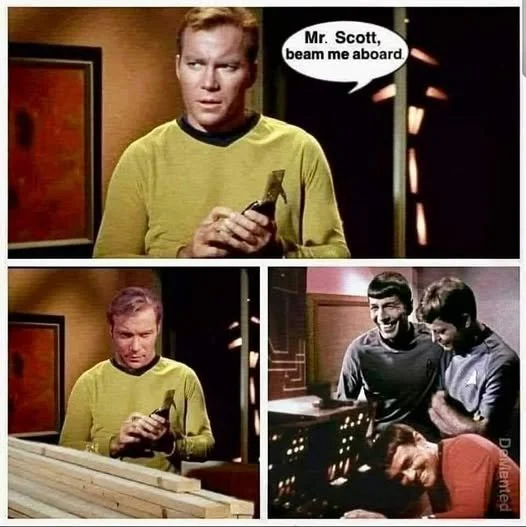
Mot: NOT Funny!! -- Mr. Scott!! -- NOT Funny
MilitiaMan & Crew: IQD Update-Baghdad Reforms-Taxes Customs ASYCUDA-5 Million Units-Integrating Factories-Exchange Rate
MilitiaMan & Crew: IQD Update-Baghdad Reforms-Taxes Customs ASYCUDA-5 Million Units-Integrating Factories-Exchange Rate
6-16-2025
The Crew: Samson, PompeyPeter, Petra, Daytrader, Sunkissed, GIGI and Militia Man
Be sure to listen to full video for all the news……..
MilitiaMan & Crew: IQD Update-Baghdad Reforms-Taxes Customs ASYCUDA-5 Million Units-Integrating Factories-Exchange Rate
6-16-2025
The Crew: Samson, PompeyPeter, Petra, Daytrader, Sunkissed, GIGI and Militia Man
Be sure to listen to full video for all the news……..
Iraq Economic News And Points To Ponder Monday Evening 6-16-25
Building Smart Cities Is A Qualitative Leap In The Capital's Reality
June 14, 2025 Governorates - Al-Zaman correspondents Baghdad Mayor Ammar Musa affirmed the need to move forward with implementing a vision he described as comprehensive, to bring about a qualitative shift in the capital's reality.
This came during his participation in the Iraqi Cities Conference, noting that the Baghdad Municipality has adopted the development of smart services in the city's infrastructure. In a speech during the conference, which was organized by the Federation of Iraqi Chambers of Commerce, in cooperation with the International Chamber of Commerce, and with the participation of the Arab Smart Cities Forum, Musa said, as followed by (Al-Zaman) yesterday, that "Baghdad is committed to urban development paths and sustainable city concepts."
Building Smart Cities Is A Qualitative Leap In The Capital's Reality
June 14, 2025 Governorates - Al-Zaman correspondents Baghdad Mayor Ammar Musa affirmed the need to move forward with implementing a vision he described as comprehensive, to bring about a qualitative shift in the capital's reality.
This came during his participation in the Iraqi Cities Conference, noting that the Baghdad Municipality has adopted the development of smart services in the city's infrastructure. In a speech during the conference, which was organized by the Federation of Iraqi Chambers of Commerce, in cooperation with the International Chamber of Commerce, and with the participation of the Arab Smart Cities Forum, Musa said, as followed by (Al-Zaman) yesterday, that "Baghdad is committed to urban development paths and sustainable city concepts."
Signing Ceremony
The Mayor of Baghdad sponsored the signing ceremony of the infrastructure contract for 11,000 housing units in the New Sadr City project, in line with the government program's directions. Yesterday's statement referred to (the signing of the infrastructure implementation contract for the construction of 11,000 housing units in the New Sadr City project), indicating that (the signing of the contract comes after successive stages of implementing this project).
The statement added that (more than 30 specialized companies were attracted, and a solid Chinese company with extensive experience in implementing infrastructure was selected), noting that (the Projects Department of the Baghdad Municipality and the Chinese company signed the contract as part of the first step to launch housing projects, within the framework of increasing the number of housing units and expanding them towards the outskirts, with the aim of addressing the housing problem).
Baghdad Municipality is planning to build 20 pedestrian bridges in the capital, distributed among densely populated areas. Baghdad Municipality spokesperson, Uday Al-Jandil, said in a statement yesterday that "the Projects Department will soon implement a plan to maintain 10 pedestrian bridges, 7 of which are in Rusafa and 3 in Karkh," indicating that "maintenance work will begin in the coming days, pursuant to the formation of a specialized committee to determine maintenance needs, which have been referred to a specialized company for rehabilitation and reconstruction."
For its part, the Ministry of Planning discussed the challenges facing the Social Fund for Development projects in Sulaymaniyah Governorate, with the participation of representatives of the World Bank and relevant authorities, to discuss the administrative and technical challenges hindering the implementation of its projects, and to expedite contracting and procurement procedures.
Sulaymaniyah Deputy Governor for Technical Affairs, Ahmed Ali Ahmed, emphasized the importance of the Social Fund for Development in supporting local development efforts, expressing his hope to find solutions to the multiple challenges that he emphasized affect the speed and efficiency of project implementation in Sulaymaniyah, including administrative procedures, technical and financial conditions, as well as economic and environmental conditions.
In turn, the Director of the Social Fund for Development, Hazem Ahmed Saleh, explained that the meeting comes as part of the Fund's commitment to implementing projects and improving services by developing real solutions that expedite work and reactivate stalled contracts. Sabah Jundi Mansour, the Fund's supervisor, stated that the service projects implemented in various areas play an effective role in improving infrastructure.
In a related development, the Baghdad Water Directorate, affiliated with the Ministry of Construction and Housing, is moving towards establishing additional complexes to improve distribution among the population.
“The maximum energy we produce is in line with the global standard for water consumption per person, which ranges between 250 and 300 liters per day per person, and the amount may increase to 350 liters per citizen per day,” said the director general of the directorate, Hekmat Abdul Majeed Hamid, in a statement followed by Al-Zaman yesterday.
He pointed out that “the amount of water produced is distributed among the population, but the challenge lies in the fairness of distribution and the difference in population densities between the Karkh and Rusafa areas.”
In Najaf, Governor Yousef Gnawi laid the foundation stone for a project to build a 3,000 cubic meter water complex in the city of Al-Mundhir and Al-Ridha, at the site of the Al-Mundhir district water complex. Gnawi said in a speech during the ceremony yesterday that "the project comes within the ongoing efforts to strengthen the water infrastructure in the governorate and improve the level of water services provided to residents," adding that "it contributes to supporting the water system in the region and meeting the needs of citizens and residential complexes located within the aforementioned geographical area."
Warsi Gnawi and the head of the provincial council, Hussein Al-Issawi, laid the foundation stone for the project to establish a training stadium and develop the Kufa Sports Club stadium.
During the ceremony, Gnawi stressed, “The Najaf administration is keen to advance the sports sector by establishing and rehabilitating stadiums and sports facilities,” noting that “these projects constitute part of supporting the sports and youth movement and strengthening its role in society.”
He continued, “The project includes the establishment of a modern training stadium with high technical specifications, in addition to rehabilitating the front facade of the Kufa Sports Club stadium, to a level befitting Najaf sports and its history,” as he put it.
Security Duties
Karbala Police Directorate Media Officer Colonel Engineer Ihsan Youssef Al-Asadi confirmed that "the External Road Protection Department in the Directorate carried out a number of security duties to enhance security and provide protection for pilgrims arriving in Karbala, in accordance with the directives of Governor Nassif Al-Khattabi."
Al-Asadi explained to Al-Zaman correspondent yesterday that "these measures or duties included securing the three external axes as well as setting up temporary checkpoints, which contributed to the arrest of a number of violators, in addition to securing the pilgrims' cities and organizing the passage of pilgrims in cooperation with traffic checkpoints within the framework of the joint effort to protect lives and property."
Youssef pointed out that "the security forces were able to provide first aid to a number of people injured as a result of a traffic accident, which reflects the concern of these security forces for the humanitarian aspect in addition to the security tasks assigned to them." Al-Asadi stressed the continuation of these security measures to ensure the safety of pilgrims and citizens alike." LINK
Basra Crude Achieves Significant Weekly Gains
Time: 2025/06/14 Reading: 450 times {Economic: Al Furat News} Basra crude posted significant weekly gains as global oil prices rose amid escalating tensions in the Middle East.
Basra Heavy crude closed the final session on Friday up $4.34 to $70.07, posting weekly gains of $8.24, or 13.33%.
Basra Medium crude closed the last session up $3.34 to $72.87, posting weekly gains of $8.19, or 12.66%. Globally, Brent and Texas Intermediate crude oils posted gains on a weekly basis.
Brent crude closed up $4.87 to $74.23, while US crude closed up $4.94 to $72.98. LINK
Gold Prices Rise In Baghdad And Erbil
Saturday, June 14, 2025, 11:47 AM | Economic Number of reads: 361 Baghdad / NINA / The prices of "foreign and Iraqi" gold witnessed a significant increase in the local markets in the capital, Baghdad, and Erbil, on Saturday morning.
The selling price of one mithqal of 21-karat Gulf, Turkish, and European gold in the wholesale markets on Al-Nahr Street in Baghdad, this morning, reached 700,000 dinars, while the purchase price reached 696,000 dinars.
The selling price of one mithqal of 21-karat Iraqi gold reached 670,000 dinars, while the purchase price reached 666,000 dinars.
As for gold prices in jewelry stores, the selling price of one mithqal of 21-karat Gulf gold ranged between 700,000 and 800,000 dinars, while the selling price of one mithqal of Iraqi gold ranged between 670,000 and 680,000 dinars.
In Erbil, the selling price of a mithqal of 22-karat gold reached about 736,000 dinars, and 21-karat gold reached 703,000 dinars, while 18-karat gold recorded about 602,000 dinars per mithqal. https://ninanews.com/Website/News/Details?key=1234299
For current and reliable Iraqi news please visit: https://www.bondladyscorner.com/
The Final Rally Before a Massive Crash & Global Reset: Henrik Zeberg
The Final Rally Before a Massive Crash & Global Reset: Henrik Zeberg
Wealthion: 6-16-2025
Henrik Zeberg joins Maggie Lake to issue a bold and urgent warning: the global economy has already hit the iceberg, and a massive crash may be just months away.
But first, he says, markets could soar in a final liquidity-fueled rally, creating one last chance to prepare before everything changes.
Henrik lays out his thesis for why we’re nearing the end of this business cycle, why central bank and fiscal stimulus might backfire, and why the next crisis could end the U.S. dollar’s dominance in a global monetary reset.
The Final Rally Before a Massive Crash & Global Reset: Henrik Zeberg
Wealthion: 6-16-2025
Henrik Zeberg joins Maggie Lake to issue a bold and urgent warning: the global economy has already hit the iceberg, and a massive crash may be just months away.
But first, he says, markets could soar in a final liquidity-fueled rally, creating one last chance to prepare before everything changes.
Henrik lays out his thesis for why we’re nearing the end of this business cycle, why central bank and fiscal stimulus might backfire, and why the next crisis could end the U.S. dollar’s dominance in a global monetary reset.
Key topics:
Why Henrik says the housing market has already frozen, and what that means
How $4.5 trillion in global liquidity is fueling a dangerous blow-off top
What could trigger a deflationary bust followed by a stagflation crisis
Will the U.S. dollar lose its global reserve status?
The long-term opportunity Henrik sees in AI, tech, and innovation
Chapters:
00:37 - Zooming Out: The Macro Picture
02:38 - Will the Recession Be Global?
06:28 - Stocks Surging into Trouble?
08:41 - Are Investors Too All-In?
13:34 - What Pops the Blow-Off Top?
15:46 - Does a Two-Tier Economy Buy Time?
18:30 - Gold’s Rally—Safe Haven or Hype?
20:40 - How High Can Crypto Fly?
26:01 - Recession or Something Darker?
31:00 - Why Commodities Spike in a Slump
32:25 - Can Fiscal Firepower Save Us?
34:11 - Global Teamwork—or Fragmentation?
37:13 - What Keeps You Up at Night?
40:45 - Where Do You Hide Your Money?
46:55 - Wildcards That Flip the Script
48:05 - Wealthion’s Golden Nugget: The Best Bets for the Next Decade?
49:44 - Can a Doomster Be an Optimist?
Iraq Economic News And Points To Ponder Monday Afternoon 6-16-25
Baghdad Begins Steps To Reform The Tax And Customs System.
Economic 06/16/2025 Baghdad: Dania Haider As part of ongoing efforts to enhance economic stability and develop non-oil resources, relevant institutions have begun taking practical steps to reform the customs and tax system to keep pace with development requirements.
The amendment of customs prices is part of this comprehensive reform vision. With the aim of protecting national products and supporting local industrial sectors, while simultaneously taking into account citizens' living conditions and exempting essential goods from any additional burdens.
Baghdad Begins Steps To Reform The Tax And Customs System.
Economic 06/16/2025 Baghdad: Dania Haider As part of ongoing efforts to enhance economic stability and develop non-oil resources, relevant institutions have begun taking practical steps to reform the customs and tax system to keep pace with development requirements.
The amendment of customs prices is part of this comprehensive reform vision. With the aim of protecting national products and supporting local industrial sectors, while simultaneously taking into account citizens' living conditions and exempting essential goods from any additional burdens.
• Developing non-oil revenues is a necessity.
Academic and public finance expert Dr. Ahmed Hithal told Al-Sabah that "given the high reliance on oil to finance the gross domestic product (GDP), exceeding 65%,and to cover the general budget by up to 92%, efforts to develop non-oil revenues become an urgent strategic necessity that contributes to achieving economic stability."
He pointed out that "increasing customs duties as a revenue-boosting tool could contribute to this trend, provided it is designed within a comprehensive economic vision that takes into account the nature of the Iraqi market and current production conditions, ensuring the achievement of objectives without negatively impacting trade flows."
He added, "Theoretically, increasing customs duties could increase non-oil revenues, but this impact depends on market flexibility, import volume, and importers' ability to comply with payment."
He continued, "According to the Laffer Curve, achieving optimal tax and duty rates is essential to avoid any adverse effects, such as traders' reluctance to import, customs evasion, or increased smuggling through informal ports.
This makes improving collection efficiency and expanding the customs basea more effective option than simply raising rates."
Hathal emphasized that "successful tax reform is not measured solely by raising rates, but rather by achieving fairness and efficiency in collection, so that low-income groups do not bear additional burdens through higher prices of imported goods.
This is where the importance of automating the customs system through the ASYCUDA program becomes clear.
This represents a fundamental step in enhancing transparency, reducing evasion and corruption, and expanding the tax base, ensuring social justice through a fair and equitable distribution of burdens."
He added, The successful implementation of the ASYCUDA system, which contributed to increasing customs revenues by more than 50% without the need for price increases, reflects the significant potential to enhance the efficiency of the state's financial management.
This achievement also represents a promising starting point for implementing a broader package of economic and customs reforms aimed at building a financial system that supports local production and diversifies sources of income away from excessive reliance on indirect taxes."
He noted that "the recent customs amendments, while a positive step toward convergence with global standards, achieving their full impact requires in-depth study that takes into account the economic differences between Iraq and neighboring countries, as well as the need to develop a flexible and comprehensive customs policy that keeps pace with national income levels and enhances local production."
He concluded by emphasizing that "maximizing non-oil revenues should be based on improving collection efficiency, reducing tax evasion, and expanding the tax base through automation and effective governance, in addition to stimulating productive sectors, to achieve balanced development that ensures economic justice and enhances long-term financial stability."
• Keeping pace with global economic developments
Economic expert Dr. Ikram Abdel Aziz explained to Al-Sabah that "the decision, which is based on adopting new customs price lists for goods and commodities, came in implementation of Cabinet Resolution No. 270 of 2025, which entered into force as of June 1, 2025."
She explained that this decision represents an important step towards keeping pace with real global customs prices, while maintaining the percentages specified in the Customs Tariff Law as they are. She added that
this step carries within it many considerations that support modern financial trends and serve customs declarations and invoices submitted to banks for financial transfer purposes. Dr. Ikram emphasized that
the customs price increase did not include goods directly related to citizens' basic needs,
such as food and other essential goods, in line with the state's policy of caring for social segments.
Regarding increasing revenues, the expert explained that "maximizing revenues through customs duties depends on the mechanisms for determining duties, which are linked to the course of fiscal policy and its directions, taking into account the social and economic dimensions resulting from them.
This is in addition to the role of monitoring procedures and the sound management of border crossings in ensuring the achievement of the desired returns, thus contributing to enhancing the state's revenues without harming the economic security of society."
She pointed out that "tax reform represents an important and successful step towards enhancing revenues and achieving social justice, especially in light of the heavy reliance on oil revenues, which constitute approximately 90% of budget funding, while tax revenues currently do not exceed 2% of GDP, a modest rate compared to international standards. In this context, she stressed the importance of "providing a reliable database that includes all entities and individuals working in various economic activities, given that the success of tax reform depends primarily on documenting actual incomes."
She also emphasized the need to raise exemption limits for the poorest segments to protect them from any negative impacts that may result from the reforms.
Dr. Ikram added, "Tax reform is extremely important, but it should not impose a heavy burden on taxpayers.
It aims to enhance citizen confidence in tax institutions and encourage voluntary compliance." She also emphasized the need to "implement good governance in the management of tax revenues to ensure increased productivity of public spending, which contributes to achieving justice and accelerating the pace of development and economic growth."
In the context of comprehensive economic reforms, Dr. Ikram explained that these reforms represent part of the state's direction within the framework of the government's economic reform program, where work is underway on eight tax-related reform packages, alongside other reform tracks encompassing various productive and service sectors of the national economy."
• Support the national product
For his part, economic expert Dr. Duraid Al-Anzi believes that "customs duties should be imposed according to a specific mechanism, based on gradually escalating taxes on foreign goods until they are removed from the Iraqi market, in exchange for supporting domestic products to enable them to access foreign markets."
Al-Anzi emphasized "the importance of tax reform, which should focus on imposing taxes in a balanced manner on both foreign and domestic goods, taking into account the size of local production and its ability to meet market needs.
Imposing broad taxes could lead to higher prices in local markets, which would negatively impact citizens." He also noted that "60 to 70 percent of industrial products could be manufactured locally if full support was provided."
• Gradual and controlled reforms
The Prime Minister's Financial Advisor, Dr. Mazhar Mohammed Saleh, told Al-Sabah that "customs authorities play a crucial role in protecting the economy within the framework of fiscal policy,
particularly in supporting domestic production, without restricting trade flows, but rather by directing them toward the most effective and important commodities in economic development activity."
He added that "raising tariffs or customs duties does not necessarily mean restricting imports or closing markets, but can be used as a regulatory tool aimed at reducing the problems of commodity dumping and protecting local industries, in addition to enhancing the state's general revenues."
Saleh explained that "the overall economic objectives of amending customs tariffs are to create a fair competitive environment that does not prevent the entry of foreign products or impede free trade.
Higher customs tariffs can be imposed on luxury or non-essential goods,
while maintaining low or zero tariffs on basic goods and raw materials used in the production process."
He pointed out that "such policies contribute to encouraging local production and rationalizing luxury consumption, without compromising basic commercial activity, while seeking to direct imports toward what achieves the greatest benefit and productivity for the national economy as a whole."
Saleh emphasized that "what is most important in this context is that the adjustment of customs duty rates be gradual, allowing markets to adapt to the changes, while ensuring that duties are applied precisely and selectively rather than across the board."
He concluded his remarks by emphasizing that "raising customs tariffs, if done rationally, transparently, and with good governance,does not conflict with free market principles.
Rather, it is consistent with smart policies that regulate trade and support economic development,
without imposing arbitrary restrictions on the movement of goods entering Iraqi markets." https://alsabaah.iq/116001-.html
Iraq Warns Of Possible Oil Price Surge To $300 Per Barrel
Iraq Amr Salem June 15, 2025 Oil tankers and Iranian speedboats in the Strait of Hormuz.
Baghdad (IraqiNews.com) – The Iraqi Minister of Foreign Affairs, Fuad Hussein, warned on Saturday that the Strait of Hormuz might be closed due to the Israel-Iran confrontation, causing the global market to lose millions of barrels of oil per day and a price increase of between $200 and $300 per barrel.
Hussein’s remarks took place during his phone conversation with the German Minister of Foreign Affairs, Johann Wadephul, during which he mentioned that if military operations between Iran and Israel continue, the global market will lose approximately five million barrels per day produced by Iraq and the Gulf States, according to a statement issued by the Iraqi Foreign Ministry.
The Iraqi foreign minister stressed that the Israel-Iran confrontation
will cause an unexpected spike in oil prices,
aggravating the worldwide inflation issue and
harming the economy of both oil producers and importers, particularly Iraq.
During different phone calls with foreign ministers in the region as part of Iraq’s diplomatic effort to address the rapid developments in the Middle East,
Hussein emphasized the gravity of Israel’s military assault on Iran, as well as the serious violation of international law and neighboring countries’ sovereignty, most notably Iraq.
Hussein urged the international community to reject the Israeli violations, emphasizing that continued military escalation does not serve regional stability but instead threatens to spark a large-scale conflict with serious security and economic consequences for the region and the world.https://www.iraqinews.com/iraq/iraq-warns-of-possible-oil-price-surge-to-300-per-barrel/
For current and reliable Iraqi news please visit: https://www.bondladyscorner.com/