
“Tidbits From TNT” Tuesday Morning 6-3-2025
TNT:
Tishwash: Central Bank: Liquidity is available, and our reserves exceed $100 billion
The Central Bank confirmed on Monday that liquidity is fully available, while indicating that reserves have exceeded $100 billion.
Mohammed Younis, Director General of the Bank's Investment Department, told the Iraqi News Agency (INA): "Liquidity is fully available, whether in Iraqi dinars or US dollars, and there is no shortage in this regard." He pointed out that "the Central Bank's reserves have exceeded $100 billion, in addition to Iraq's large gold reserves, exceeding 163 tons."
Younis added that "the Central Bank is not an investment entity, but rather is concerned with managing Iraq's foreign exchange reserves," explaining that "the goal of these reserves is not to make profits, but rather to ensure reasonable returns."
TNT:
Tishwash: Central Bank: Liquidity is available, and our reserves exceed $100 billion
The Central Bank confirmed on Monday that liquidity is fully available, while indicating that reserves have exceeded $100 billion.
Mohammed Younis, Director General of the Bank's Investment Department, told the Iraqi News Agency (INA): "Liquidity is fully available, whether in Iraqi dinars or US dollars, and there is no shortage in this regard." He pointed out that "the Central Bank's reserves have exceeded $100 billion, in addition to Iraq's large gold reserves, exceeding 163 tons."
Younis added that "the Central Bank is not an investment entity, but rather is concerned with managing Iraq's foreign exchange reserves," explaining that "the goal of these reserves is not to make profits, but rather to ensure reasonable returns."
He continued, "The reserves are managed according to well-thought-out policies based on high safety standards, and are invested in safe financial instruments that generate acceptable returns." He emphasized that "Iraq is on a good economic path." link
Al-Sudani and the Islamic Union Parliamentary Committee stress the importance of approving the oil and gas law.
Iraqi Prime Minister Mohammed Shia al-Sudani received a delegation from the Kurdistan Islamic Union Party's parliamentary bloc on Tuesday. The meeting discussed vital issues related to the relationship between the federal government and the Kurdistan Region.
During the meeting, the two parties emphasized the "need to find radical solutions, within the framework of the constitution and the law, regarding the Kurdistan Regional Government's financial obligations, based on the provisions of the budget law and the Federal Court's decision."
The importance of passing the oil and gas law was also emphasized, according to a statement from the Prime Minister's Office, referring to one of the most contentious issues between Baghdad and Erbil in years.
Al-Sudani explained that the government "is keen to meet citizens' aspirations and monitor their affairs throughout Iraq, based on its legal and constitutional responsibilities and the priorities and needs of citizens."
During the meeting, "a number of national issues and topics were discussed, as well as the government's implementation of its service and economic program."
For their part, members of the Kurdistan Islamic Union parliamentary bloc pointed to "the importance of the strengthening of security and social stability, coupled with a comprehensive economic and urban renaissance," praising "the government's efforts in service-related issues and tangible reforms, and their positive impact on the lives of citizens across the country."
This comes as the Coordination Framework also affirmed the federal government's commitment to guaranteeing the rights of all citizens, noting at the same time that the enactment of the oil and gas law represents the core of the solution between Baghdad and Erbil.
The Iraqi constitution devotes two articles to the issue of oil and gas, Articles 111 and 112, without addressing how the country's oil policy will be formulated. This was left to the issuance of the Oil and Gas Law, which, after two decades and the current Iraqi government's pledge to issue it within six months, remains unclear when it will be issued. link
****************
Tishwash: After the dollar stabilizes, the Sudanese Central Bank directs that price manipulators be held accountable (document)
Prime Minister Mohammed Shia al-Sudani issued an "important" directive today, Monday (June 2, 2025), to the departments responsible for combating economic crime to pursue and hold accountable those who manipulate prices, especially owners of food, medicine, bakeries and ovens.
According to a letter issued by the Prime Minister's Office, received by "Baghdad Today", al-Sudani's directive "comes after Iraqi markets witnessed a noticeable stability in the exchange rate of the US dollar against the Iraqi dinar, at a time when some weak-willed people still insist on selling goods at the previous prices, which witnessed a significant increase during the period of the decline in the value of the dinar against the dollar."
He stressed that "this manipulation directly harms the citizen and requires decisive government intervention to impose oversight and enforce the law."
text of the document
May God's peace, mercy, and blessings be upon you.
M/Directive
In view of the stability of exchange rates (the dollar versus the Iraqi dinar), it was observed that some companies, merchants, and weak-willed individuals were exploiting prices or keeping them as they were without regard for market stability, especially food and medicine owners, bakeries, and ovens, due to their failure to adjust the selling prices of items that citizens need on a daily basis. There is no clear oversight role by the economic departments to follow up on these cases. After the Prime Minister - Commander-in-Chief of the Armed Forces was informed of the above content, His Excellency ordered the following:
The departments responsible for combating economic crime shall monitor and hold accountable those who manipulate prices and take the necessary legal measures against them.
Coordination with the Ministries of Trade, Agriculture, and Health to ensure the stability of the price ratio of items that affect the lives of citizens on a regular basis. link
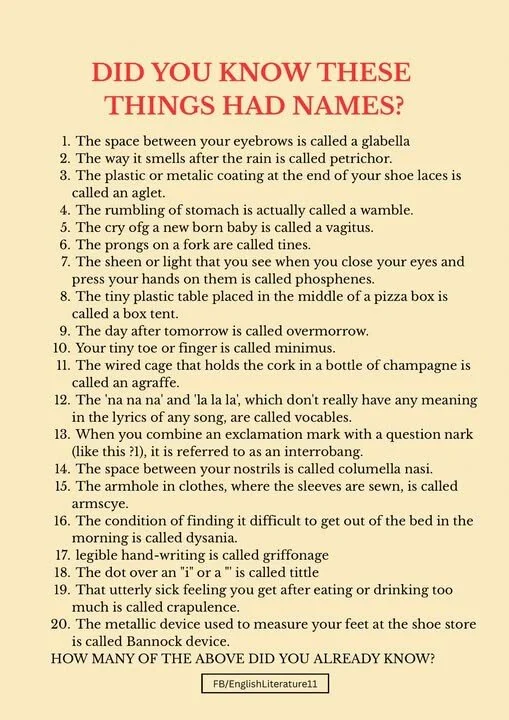
Mot: .... Did You Know!!!!

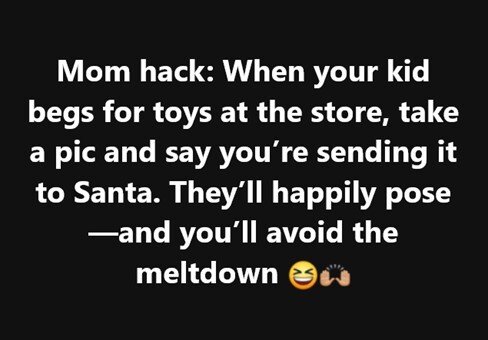
Mot: Yet another ole ""Mot"" tip on Raising the ""Wee Folks""
The MM&C Iraq Dinar Update-Global ASYCUDA system-Pricing Changes-Taxation-Purchasing Power-Energy-WB
The MM&C Iraq Dinar Update-Global ASYCUDA system-Pricing Changes-Taxation-Purchasing Power-Energy-WB
6-2-2025
The Crew: Samson, PompeyPeter, Petra, Daytrader, Sunkissed, GIGI and Militia Man
Be sure to listen to full video for all the news……..
The MM&C Iraq Dinar Update-Global ASYCUDA system-Pricing Changes-Taxation-Purchasing Power-Energy-WB
6-2-2025
The Crew: Samson, PompeyPeter, Petra, Daytrader, Sunkissed, GIGI and Militia Man
Be sure to listen to full video for all the news……..
Iraq Economic News And Points To Ponder Monday Afternoon 6-2-25
Central Bank: Liquidity Is Available And Our Reserves Have Exceeded $100 Billion
The Central Bank of Iraq confirmed on Monday that liquidity is fully available in both local and foreign currencies, revealing that foreign reserves have exceeded $100 billion, in addition to possessing a gold reserve exceeding 163 tons.
Muhammad Younis, Director General of the Bank's Investment Department, told the Iraqi News Agency (INA), "Liquidity is fully available, whether in Iraqi dinars or US dollars, and there is no shortage in this regard," noting that "the Central Bank's reserves have exceeded $100 billion."
Central Bank: Liquidity Is Available And Our Reserves Have Exceeded $100 Billion
The Central Bank of Iraq confirmed on Monday that liquidity is fully available in both local and foreign currencies, revealing that foreign reserves have exceeded $100 billion, in addition to possessing a gold reserve exceeding 163 tons.
Muhammad Younis, Director General of the Bank's Investment Department, told the Iraqi News Agency (INA), "Liquidity is fully available, whether in Iraqi dinars or US dollars, and there is no shortage in this regard," noting that "the Central Bank's reserves have exceeded $100 billion."
Younis explained that "Iraq also has a large gold reserve of more than 163 tons," indicating that "the Central Bank is not an investment entity, but rather is concerned with managing foreign exchange reserves according to well-thought-out policies and high security standards."
He pointed out that "the goal of these reserves is not to make profits, but rather to ensure reasonable returns through safe financial instruments," stressing that "Iraq is on a good economic path." https://www.radionawa.com/all-detail.aspx?jimare=41960
Al-Sudani Directs The Removal Of All Obstacles Hindering The Tax Reform Process
Monday, June 2, 2025 | Economic Number of reads: 327 Baghdad / NINA / - Prime Minister Mohammed Shia Al-Sudani issued a number of directives regarding tax reform during his visit to the General Tax Authority, today, Monday.
Al-Sudani directed, according to a statement by his media office, to remove all obstacles hindering the tax reform process. He also directed the Higher Committee for Tax Reform to prepare unified designs for model buildings for the Authority and its branches across Iraq, provided that the Ministry of Finance allocates the necessary lands.
The Prime Minister also directed to contact specialized international companies to submit bids related to the comprehensive tax system, while directing the Higher Commission for Coordination between Governorates to allocate technical employees, engineers and specialists in tax issues to work in the branches of tax units in the governorates.
He directed the Ministry of Communications to complete the network connection of the General Tax Authority and its branches in order to facilitate tax accounting, in addition to directing to resolve all problems related to employees in order to remove any obstacles to the work of the Authority.
The Prime Minister visited the General Tax Authority today, Monday, during which he toured the Authority's headquarters to review its work mechanisms. He met with the employees working there, the citizens who reviewed it, and the lawyers representing the companies.
Al-Sudani was briefed on a number of problems related to the tax sector and its workers, most notably the lack of infrastructure and the Ministry of Finance's weak follow-up of this Authority, starting with the failure to provide the amounts of notifications that could provide tax revenues, its delay in dealing with the issue of automation, and the lack of a main contracting party to conclude contracts with foreign companies specialized in this matter, as well as the problem of routine communication between the General Tax Authority and the Ministry of Finance, and other problems and obstacles facing the Authority that require the Ministry to pay the necessary attention to this vital institution.
He pointed out that there is a weakness in dealing with the reform packages developed by the Higher Committee for Tax Reform approved by the Prime Minister, and that they cannot be implemented due to some obstacles from within the Authority or by other official bodies. / End https://ninanews.com/Website/News/Details?key=1231375
Oil Prices Rise Despite Increased OPEC+ Supplies
Time: 2025/06/02 Read: 2,115 times {Economic: Al Furat News} Oil prices rose by more than $1 per barrel in trading on Monday, after the OPEC+ group decided to increase production in July at the same pace it has adopted over the past two months, in line with market expectations.
Brent crude futures rose to $64.44 per barrel, after ending Friday's session down 0.9%. US West Texas Intermediate crude also rose 2.8% to $62.54, after a slight decline of 0.3% in the previous session.
However, both crudes ended last week down more than 1%.
This price surge follows a decision by the Organization of the Petroleum Exporting Countries (OPEC) and its allies on Saturday to increase production by 411,000 barrels per day in July, marking the third consecutive monthly increase. The group, known as OPEC+, seeks to regain market share and enforce discipline on members who have exceeded their production quotas.
The group was expected to consider raising production at a higher rate, but the decision was in line with expectations. LINK
Gold Prices Rise In Baghdad And Erbil Markets
Monday, June 2, 2025 | Economic Number of reads: 176 Baghdad/ NINA / The prices of "foreign and Iraqi" gold rose in the local markets on Monday, in Baghdad and Erbil.
The selling price of one mithqal of Gulf, Turkish and European gold, 21 carats, in the wholesale markets on Al-Naher Street this morning was 667 thousand dinars, and the purchase price was 663 thousand dinars.
The selling price of one mithqal of 21 carat Iraqi gold was 637 thousand dinars, and the purchase price was 633 thousand dinars.
In goldsmiths' shops, the selling price of one mithqal of 21 carat Gulf gold ranged between 670 thousand and 680 thousand dinars, while the selling price of one mithqal of Iraqi gold ranged between 640 thousand and 650 thousand dinars.
In Erbil, gold prices also witnessed a rise, as the sale of 24 karat gold reached 765 thousand dinars, 22 karat gold reached 700 thousand dinars, 21 karat gold reached 670 thousand dinars, and 18 karat gold reached 575 thousand dinars. / End https://ninanews.com/Website/News/Details?key=1231347
The Dollar's Price Rose Against The Dinar In Local Markets
Monday, June 2, 2025, | Economic Number of readings: 124 Baghdad / NINA / The price of the dollar rose against the dinar, Monday afternoon, in the markets of Baghdad and Erbil, with the closing of the stock exchange.
The price of the dollar witnessed a rise in the Al-Kifah and Al-Harithiya stock exchanges, recording 141,700 dinars for every $100, while this morning
it recorded 141,300 dinars for every $100. The selling price rose in exchange shops in the local markets in Baghdad, recording 142,750 dinars for every $100, while the purchase price reached 140,750 dinars for every $100.
In Erbil, the dollar also recorded a rise, as the selling price reached 141,550 dinars for every $100, and the purchase price reached 141,450 dinars for every $100. /End https://ninanews.com/Website/News/Details?key=1231403
For current and reliable Iraqi news please visit: https://www.bondladyscorner.com/
Final Bull Leg Underway Before Market Collapses in Global Bust
Final Bull Leg Underway Before Market Collapses in Global Bust
Commodity Culture: 6-2-2025
David Hunter, renowned strategist and market forecaster, recently joined Jesse Day on Commodity Culture for a compelling discussion about the current state of the global economy and what lies ahead.
While many analysts are already bracing for a downturn, Hunter’s perspective offers a more nuanced, albeit ultimately dire, outlook: he believes we’re headed for one last, significant leg up in the broad market before experiencing a global bust of unparalleled magnitude.
Final Bull Leg Underway Before Market Collapses in Global Bust
Commodity Culture: 6-2-2025
David Hunter, renowned strategist and market forecaster, recently joined Jesse Day on Commodity Culture for a compelling discussion about the current state of the global economy and what lies ahead.
While many analysts are already bracing for a downturn, Hunter’s perspective offers a more nuanced, albeit ultimately dire, outlook: he believes we’re headed for one last, significant leg up in the broad market before experiencing a global bust of unparalleled magnitude.
In the interview, Hunter articulated his belief that the market still has room to run on the upside. He cited factors such as persistent liquidity in the system and lingering inflationary pressures as fuel for a final surge. However, he cautioned that this bullish phase is merely a prelude to something far more devastating.
Hunter attributes this impending collapse to a confluence of factors: unprecedented levels of global debt, reckless monetary policies, and a distorted financial system.
He believes that when the inevitable turning point arrives, the resulting deleveraging and economic contraction will shake the foundations of the global economy.
Given his bleak outlook, Hunter also discussed potential strategies for protecting wealth during the anticipated market crash. He emphasized the importance of diversifying assets and considering alternative investments that are less correlated with the broader market.
David Hunter’s forecast presents a sobering perspective on the future of the global economy. While acknowledging the potential for a final market rally, he underscores the urgent need for investors to prepare for an unprecedented economic collapse. By understanding the potential risks and strategically repositioning assets, investors can navigate the coming storm and potentially protect their wealth during one of the most challenging economic periods in history.
The key takeaway? Prepare now, because the window of opportunity may be closing.
Iraq Economic News And Points To Ponder Monday Morning 6-2-25
They Made Half A Billion In A Year... E-Cards Become A "Dollar Smuggler" After The Remittance Loophole Was Closed In Iraq.
Economy 2025-06-01 | 6,035 views Alsumaria News-Politics revealed The Wall Street Journal on Sunday details that led to the reduction of withdrawal and spending limits on electronic cards outside Iraq, and the suspension of many of them.
The newspaper pointed to a jump of approximately 3,000% in MasterCard and Visa card transactions in Iraq, as armed factions and entities smuggling dollars to Iran resorted to these cards after losing the financing loophole through import remittances. The newspaper stated, "Just two years ago, the Iraqi market represented marginal value for Visa and Mastercard, generating less than $50 million per month in cross-border transactions at the beginning of 2023.
They Made Half A Billion In A Year... E-Cards Become A "Dollar Smuggler" After The Remittance Loophole Was Closed In Iraq.
Economy 2025-06-01 | 6,035 views Alsumaria News-Politics revealed The Wall Street Journal on Sunday details that led to the reduction of withdrawal and spending limits on electronic cards outside Iraq, and the suspension of many of them.
The newspaper pointed to a jump of approximately 3,000% in MasterCard and Visa card transactions in Iraq, as armed factions and entities smuggling dollars to Iran resorted to these cards after losing the financing loophole through import remittances. The newspaper stated, "Just two years ago, the Iraqi market represented marginal value for Visa and Mastercard, generating less than $50 million per month in cross-border transactions at the beginning of 2023.
However, this value exploded to nearly $1.5 billion in April of the same year, an increase of nearly 2,900% in a short period."
The newspaper notes that what has changed, according to American and Iraqi officials and documents, is that armed factions have been extracting dollars through these cards, via the Visa and MasterCard payment networks,
after the US Treasury Department closed a major loophole used to fraudulently obtain dollars via foreign money transfers.
The newspaper explained that the factions had found a plan to use electronic payment cards after this loophole was closed, but the Treasury informed the card-issuing companies that armed groups were involved in using these cards.
It took the companies months to reduce financial transactions, and these transactions declined,
but remained between $400 million and $1.1 billion per month until the beginning of this year.
The Central Bank even recently set a maximum of $300 million per month to control these payments.
The newspaper explains that because of the existence of an official and an unofficial rate, people would
purchase electronic cards and withdraw them in dollars outside Iraq in other Middle Eastern countries at the official rate.
They would then send the funds back to Iraq to be converted into dinars at the market rate,
earning profits of up to 21%.
The result was a thriving trade for powerful Iraqi factions.
The newspaper confirms that Visa and MasterCard generated profits from these transactions ranging between 1% and 1.4%.
Iraqi cardholders participating in the scheme are estimated to have generated profits of approximately $450 million in 2023 alone, while foreign cards alone generated $120 million.
Revenues are estimated to have grown by 60% in 2024.
The newspaper says that in recent days, the Treasury Department has formally requested that the Central Bank of Iraq block more than 200,000 cards held by militia members due to fraud concerns.
Meanwhile, Federal Reserve and Treasury officials have begun asking Visa and Mastercard to explain the increase in transactions in Iraq in 2023 and have held regular meetings on the Iraqi market, including with officials from the Central Bank of Iraq in 2024 and early this year.
Card companies began taking concrete action in March.
https://www.alsumaria.tv/news/economy/528261/ربحوا-نصف-مليار-في-عام-البطاقات-الالكترونية-تتحول-الى-مهرّب-دولار-بعد
Mogadishu Refinery Find Triggers Iraq’s Hunt For $100B In Lost Global Assets
Iraq Jawad Al-Samarraie May 30, 2025 AL Rafidain Bank branch in London, opened in 1954
Baghdad (IraqiNews.com) – A startling revelation at the Arab Summit in Baghdad this May has jolted Iraq into confronting a forgotten legacy:
a sprawling international portfolio of properties and investments, potentially worth at least $100B,
that has languished in neglect and obscurity for two decades.
The unexpected news of a large, Iraqi-built oil refinery still standing in Mogadishu, Somalia, has served as a dramatic wake-up call, triggering a renewed effort to trace and potentially reclaim these vast, squandered national assets.
The ghost refinery in Mogadishu, constructed in 1978 under a bilateral agreement and largely forgotten by Iraqi officialdom since 2003, was brought back to Baghdad’s attention by Somali President Hassan Sheikh Mohamud.
He informed Iraqi Prime Minister Mohammed Shia Al Sudani that the facility merely requires technical rehabilitation to become operational – a timely prospect as Somalia begins exploring offshore oil.
This single revelation underscored a much larger, more complex issue:
Iraq’s dozens of lost properties scattered across three continents.
During its oil-boom years in the 1970s and 1980s,
Iraq strategically invested its wealth globally, acquiring an estimated 50 significant assets.
These included luxury palaces and real estate in prime European locations like Cannes, France, Spain, the UK, and Italy; agricultural ventures such as tea, rice, rubber, and tobacco farms in Malaysia, Sri Lanka, and Vietnam; and diverse holdings in Africa, from tourist islands and agricultural factories in Mozambique and Nigeria to the aforementioned Somali refinery.
This was a policy of extending economic and diplomatic influence.
However, following the 2003 regime change, this global portfolio fell into disarray.
Iraq’s Parliamentary Integrity Committee previously revealed to news agencies that
crucial ownership documents were stolen or destroyed.
Some properties were illicitly transferred to individuals or shell companies linked to the former regime,
while others simply vanished from official oversight, becoming a forgotten treasure.
Early attempts at recovery highlighted the dangers.
In 2012, an Iraqi Foreign Ministry delegation dispatched to Mozambique to inspect a state-owned asset,
believed to be a palace on a tourist island, received direct threats from an armed group controlling the site, forcing their immediate withdrawal.
The incident underscored the formidable challenges beyond mere legal claims.
The Mogadishu refinery news has now spurred the Iraqi government into decisive action.
Specialized legal and technical committees have been formed, and the Ministries of Oil, Foreign Affairs, and Justice are tasked with a coordinated global effort.
This includes attempting to re-register properties, settle outstanding tax issues,
and verify any remaining documentation.
Legal experts suggest Iraq could pursue claims through the International Court of Justice (ICJ)
or negotiate bilateral agreements with host nations.
They also stress the necessity of pursuing individuals and entities involved in the illicit appropriation of these assets, potentially through international arrest warrants via INTERPOL if sufficient evidence is available.
For a nation facing ongoing economic challenges and heavily reliant on oil exports, the potential recovery or proper investment of these assets, valued around $100B,represents a monumental financial opportunity.
Economists believe even partial success could generate sustainable revenue streams, offering a vital diversification away from almost exclusive dependence on crude oil exports for its budget.
However, the path to reclamation is fraught with obstacles.
Experts caution that some assets may now be subject to statute of limitations in their host countries,
or may have been legally acquired by other parties during Iraq’s two-decade absence from active management.
Furthermore, concerns exist about potential internal political interference derailing recovery efforts,
especially if assets are now linked to influential figures or complex, decades-old contracts that would be difficult to unwind without triggering intricate legal disputes.
Despite these challenges, the surprise rediscovery of the Mogadishu refinery has ignited a new sense of urgency and hope.
The Iraqi government’s renewed commitment, if pursued with transparency, international cooperation, and persistence, could potentially unlock billions in national wealth that has lain dormant across the globe for far too long, offering a much-needed boost to its economic future.
5. Image Alt Text Suggestions:
* “Archival photo of the Iraqi-built oil refinery in Mogadishu, Somalia”
* “Map highlighting locations of potential lost Iraqi assets across Europe, Asia, and Africa”
* “Somali President Hassan Sheikh Mohamud”
* “Iraqi Prime Minister Mohammed Shia Al Sudani”
* “Graph or visual representing the estimated $90 billion value of Iraq’s forgotten assets”
* “A dilapidated historic building representing a neglected Iraqi asset abroad”
https://www.iraqinews.com/iraq/iraqi-government-hunts-forgotten-global-assets-saddam-era/
For current and reliable Iraqi news please visit: https://www.bondladyscorner.com/
Seeds of Wisdom RV and Economic Updates Monday Morning 6-2-25
Good Morning Dinar Recaps,
Stablecoin Market Capitalization Surpasses $250 Billion Amid Accelerating Regulatory Momentum
The stablecoin market has officially crossed the $250 billion milestone, marking a pivotal moment in the evolution of crypto-finance. Analysts attribute this surge to a combination of regulatory clarity and growing adoption of decentralized finance (DeFi) applications.
“Crossing $250 billion marks a turning point,” said Hank Huang, CEO of Kronos Research. “Stablecoins are no longer experimental, they’re essential.”
Good Morning Dinar Recaps,
Stablecoin Market Capitalization Surpasses $250 Billion Amid Accelerating Regulatory Momentum
The stablecoin market has officially crossed the $250 billion milestone, marking a pivotal moment in the evolution of crypto-finance. Analysts attribute this surge to a combination of regulatory clarity and growing adoption of decentralized finance (DeFi) applications.
“Crossing $250 billion marks a turning point,” said Hank Huang, CEO of Kronos Research. “Stablecoins are no longer experimental, they’re essential.”
According to CoinGecko, the total stablecoin market cap currently stands at $250.3 billion, with $245.5 billion of that backed by U.S. dollar-pegged stablecoins. Among these, Tether’s USDT leads with over $153 billion in market cap, followed by Circle’s USDC at $60.9 billion.
What’s Fueling Stablecoin Growth?
Two primary forces are behind this momentum: regulatory progress and the rapid expansion of DeFi.
The GENIUS Act—short for Guiding and Establishing National Innovation for U.S. Stablecoins Act—recently advanced in the U.S. Senate with backing from President Donald Trump. This legislation aims to provide a clear legal framework for dollar-pegged stablecoins, requiring:
Full reserves backed by U.S. dollars or highly liquid assets
Annual audits for issuers with more than $50 billion in market cap
Oversight and inclusion of foreign issuers
Shortly after, Hong Kong passed its own stablecoin bill on May 21, introducing a licensing regime for fiat-backed stablecoin issuers seeking regional access.
This global regulatory clarity has opened the door for traditional finance (TradFi) institutions to join the stablecoin space. A group involving JPMorgan, Bank of America, CitiGroup, and Wells Fargo is reportedly in discussions to launch a joint stablecoin project.
DeFi’s Role in the Rise of Stablecoins
Meanwhile, the DeFi sector has continued its ascent since 2024, thanks to the growing appeal of DEXs, cross-chain trading, staking, and other applications. According to DefiLlama, DeFi currently holds over $113.17 billion in Total Value Locked (TVL).
Just last month, DEXs captured 25% of all global spot trade volume, a record share compared to centralized exchanges. This is a “clear paradigm shift from centralized to decentralized,” said Hashed CEO Simon Kim.
What Lies Ahead for Stablecoins?
Looking forward, Kronos Research CEO Huang believes the stablecoin market could double in size by 2026. The issuer landscape may soon expand beyond USDT and USDC, making room for Trump-aligned USD1 and potential bank-issued tokens.
The path ahead is shaping up to be one of innovation, mainstream integration, and regulatory legitimacy, setting the stage for stablecoins to play a foundational role in the next chapter of the global financial system.
@ Newshounds News™
Source: The Block
~~~~~~~~~
What Happens If BRICS Currency Succeeds?
The BRICS alliance is preparing to launch a new currency in an effort to shift away from the US dollar-dominated financial system. As emerging economies adopt a more self-first stance—much like Trump’s "America First" policy—they are placing their own currencies and economic priorities ahead of global dependency on Western financial structures.
These nations are growing increasingly skeptical of the recklessness of US foreign policy, and a successful BRICS currency could become the ultimate act of economic self-determination.
Here’s What Will Happen If BRICS Currency Becomes a Success
If a BRICS-backed currency launches and gains global acceptance, the financial world we know today could be relegated to history. While the US dollar would not go down without a fight, a coordinated effort by developing nations to abandon it could leave the White House and the Federal Reserve with few options—either comply with a new economic order or risk global irrelevance.
A multipolar world would likely emerge, led by an alternative financial ecosystem distinct from the IMF, SWIFT, and other Western-controlled institutions. Countries historically sanctioned by the US could find new lifelines in trade, leading to economic revival and political realignment.
Consequences for the US Dollar
Should the BRICS currency succeed, the US dollar would weaken, particularly in the foreign exchange (forex) markets. A weaker USD would likely fuel domestic inflation, as the Federal Reserve struggles to export demand for the dollar abroad. Moreover, the US government’s leverage to impose economic sanctions would diminish dramatically, eroding its global influence over trade and finance.
In essence, the rise of a BRICS currency would signal the decline of dollar hegemony and the beginning of a new era in global economics.
@ Newshounds News™
Source: Watcher.Guru
~~~~~~~~~
Seeds of Wisdom Team RV Currency Facts Youtube and Rumble
Newshound's News Telegram Room Link
Follow the Roadmap
Follow the Timeline
Seeds of Wisdom Team™ Website
Thank you Dinar Recaps
“Tidbits From TNT” Monday Morning 6-2-2025
TNT:
Tishwash: Minister of Finance Discusses Support for Development Projects in Iraq with World Bank
Minister of Finance Taif Sami discussed with the World Bank Representative to Iraq on Sunday enhancing cooperation to support development projects.
The ministry said in a statement received by the Iraqi News Agency (INA): "Minister of Finance Taif Sami Mohammed received the World Bank Representative to Iraq and his accompanying delegation to discuss plans to enhance cooperation to support development projects by leveraging the technical and financial support provided by the Bank in implementing strategic projects to stimulate economic growth, especially in the areas of infrastructure and human development."
TNT:
Tishwash: Minister of Finance Discusses Support for Development Projects in Iraq with World Bank
Minister of Finance Taif Sami discussed with the World Bank Representative to Iraq on Sunday enhancing cooperation to support development projects.
The ministry said in a statement received by the Iraqi News Agency (INA): "Minister of Finance Taif Sami Mohammed received the World Bank Representative to Iraq and his accompanying delegation to discuss plans to enhance cooperation to support development projects by leveraging the technical and financial support provided by the Bank in implementing strategic projects to stimulate economic growth, especially in the areas of infrastructure and human development."
The statement added, "The two parties discussed developing the private sector and encouraging investment as the primary driver of sustainable economic growth, in addition to the need to support financial reforms to achieve stability and growth."
The statement explained that "the Bank Representative expressed his commitment to continuing to support Iraq in achieving its development goals and enhancing its ability to confront economic and development challenges." link
Tishwash: Japanese Ambassador: We seek to support the investment environment in Iraq and attract international companies
Japanese Ambassador to Iraq, Akira Endo, announced on Monday that more than $21 billion has been allocated to support economic cooperation projects in Iraq since 2003, stressing his country's continued efforts to support the investment environment in Iraq and attract international companies.
In a speech during the signing of an agreement between the Iraq Development Fund and the Japan Cooperation Center, attended by an Iraqi News Agency (INA) correspondent, the Japanese Ambassador to Iraq said: "Since 2003, the Japanese government has implemented economic cooperation projects in Iraq totaling more than $21 billion.
Japan has become the largest donor of aid to Iraq in recent years, primarily through Japanese yen loans for infrastructure development in various fields such as electricity, water, sanitation, and oil." The ambassador emphasized that "Japan has consistently provided assistance alongside the Iraqi people to support their efforts in building the country," adding, "In order to further develop economic relations between Japan and Iraq, we look forward to Iraq's continued efforts to improve the investment environment, including strengthening the implementation of relevant laws and regulations, and continuing to enhance transparency in business practices, particularly with regard to attracting foreign companies, including Japanese companies."
He pointed out that "the JCCME has been working for more than a decade to promote trade and investment between Japan and Iraq through activities aimed at enhancing Japanese companies' understanding of Iraq, such as organizing annual Iraqi business seminars, sending delegations to key sectors in Iraq, and organizing training programs in Japan for Iraqi officials."
He continued, "On the other hand, given the priorities of the Iraq Development Fund, the six areas it identified—education, agriculture, housing, digital transformation, manufacturing and food security, and the environment—represent precisely the areas that the Iraqi government has prioritized under the leadership of Prime Minister Mohammed Shia al-Sudani. These are also areas where Japanese expertise can have a sustainable and meaningful impact on Iraq's future." He noted that "this signing is a pivotal step that comes at a critical time, as it will contribute to strengthening relations between the private sectors in Japan and Iraq by providing and exchanging information, and supporting, promoting, and coordinating the work of companies." link
************
Tishwash: The parliamentary investment committee calls for breaking the legislative "stalemate" and passing important "accumulating" laws.
The Parliamentary Development and Investment Committee called for breaking the legislative deadlock to pass and address dozens of important laws that have accumulated and directly impact citizens' lives. The committee emphasized the importance of fulfilling the government's commitments under the ministerial program and budget-related spending plans.
Hussein Al-Sa'bari, deputy chairman of the parliamentary Development and Investment Committee, said, "More than 140 draft laws, including new ones and amendments to existing laws, are still pending in parliamentary committees and require a vote by parliament."
He added, "Many of these laws have been discussed by the relevant committees and are ready to be included on the agendas of the plenary sessions," noting that "these projects relate to vital aspects that impact the lives of citizens and various state sectors."
He explained that "the most prominent of these laws is the Popular Mobilization Law, in addition to projects related to higher education, the basis for granting certificates, and other legislation of a service and administrative nature ."
He pointed out that "the upcoming parliamentary sessions are of particular importance as they will determine the fate of a large number of pieces of legislation, eagerly awaited by citizens and state institutions alike." He explained that "delaying the passage of these laws could negatively impact the work of ministries and disrupt the provision of services."
Al-Sa'bari noted that "there is an increasing number of calls for regular and intensive parliamentary sessions to ensure that the legislative deadlock that accompanied previous periods is overcome and to fulfill the government's commitments under the ministerial program and spending plans linked to the general budget."
He explained that "Parliament's legislative agenda also includes strategic laws such as the Oil and Gas Law, the Civil Service Law, and the Social Security Law, as well as laws related to administrative reform and oversight of government performance." link
Mot: Just Asking When

Mot: . Bet We ALL can Guess Who This ""Dude"" is!! -- Huh!!!

Iraq Economic News And Points To Ponder Sunday Afternoon 6-1-25
Al-Sudani Stresses The Necessity Of Cooperation Between Iraq And The United States Based On The Strategic Framework Agreement And Memoranda Of Understanding, Coordination, And Consultation Between The Two Sides
Sunday, June 1, 2025 21:05 | Politics Number of readings: 25 Baghdad / NINA / Prime Minister Mohammed Shia Al-Sudani stressed the necessity of cooperation between Iraq and the United States based on the Strategic Framework Agreement, memoranda of understanding, coordination and consultation between the two sides.
Al-Sudani Stresses The Necessity Of Cooperation Between Iraq And The United States Based On The Strategic Framework Agreement And Memoranda Of Understanding, Coordination, And Consultation Between The Two Sides
Sunday, June 1, 2025 21:05 | Politics Number of readings: 25 Baghdad / NINA / Prime Minister Mohammed Shia Al-Sudani stressed the necessity of cooperation between Iraq and the United States based on the Strategic Framework Agreement, memoranda of understanding, coordination and consultation between the two sides.
A statement by the Prime Minister's Office said that Al-Sudani received, on Sunday, the Chargé d'Affaires of the US Embassy, Steven Fagin, on the occasion of assuming his duties.
Al-Sudani congratulated Fagin, wishing him success in his mission and working to develop relations in a way that achieves the common benefit and interests of both countries.
Al-Sudani stressed the necessity of cooperation between Iraq and the United States based on the Strategic Framework Agreement, memoranda of understanding, coordination and consultation between the two sides, especially in the fields of economy, investment, security, energy, education, investment and private sector activities.
For his part, Fagin pointed to the importance of bilateral relations between the two countries, and the US government's support for partnership with Iraq at various levels and fields, praising the government's efforts to accelerate development and urban renaissance, stressing the work to enable American companies to enter the investment and partnership arena in Iraq. /End https://ninanews.com/Website/News/Details?key=1231246
Government Advisor: Iraq's Stability Depends On Energy Markets And Geopolitical Conditions.
Time: 2025/06/01 Read: 1,230 times {Economic: Al Furat News} The Prime Minister's economic advisor, Mazhar Mohammed Saleh, confirmed the close cooperation between monetary and fiscal policies in addressing the global challenges resulting from the oil price shock.
Saleh told Al-Furat News: "This cooperation aims to defend the stability of the national economy and ensure public spending through good reserves and optimal management of domestic debt, ensuring sustainable stability and development."
He explained that "this economic path remains dependent on the future movements of energy markets and the geopolitical situation in the world, especially in the energy belts, whether in the Gulf or the Mediterranean region, which are responsible for approximately 40% of global oil demand, in addition to the Russia-Ukraine oil belt and the development of the war in that region, which constitutes the backbone of Europe in oil and gas supplies, and the resulting impact on the level of global demand and the trend towards improvement in oil and gas prices."
The advisor stated that "the bet on this economic cooperation extends until the end of the current fiscal year 2025," stressing that "the next phase will witness major financial reforms, most notably controlling public spending in line with the priorities of the government's program, particularly in the services and infrastructure budget, and securing salaries, pensions, and social care."
He explained that "more than 8 million citizens in Iraq receive government income, which in turn impacts the household income of approximately 35 to 40 million citizens, making this income the primary source of government spending within the country." LINK
US Embassy: Working To Encourage US Companies To Invest And Partner In Iraq
Time: 2025/06/01 20:59:12 Reading: 60 Times
Prime Minister Mohammed Shia al-Sudani received today, Sunday, the Chargé d'Affaires of the US Embassy, Mr. Stephen Fagin, on the occasion of his assumption of his duties.
His Excellency congratulated Mr. Fagin, wishing him success in his mission and working to develop relations to achieve mutual benefit and interests for both countries.
Mr. Al-Sudani emphasized the necessity of cooperation between Iraq and the United States based on the Strategic Framework Agreement and the memoranda of understanding, coordination, and consultation between the two sides, particularly in the areas of economy, investment, security, energy, education, investment, and private sector activities.
For his part, Mr. Fagin highlighted the importance of bilateral relations between the two countries and the US government's support for partnerships with Iraq at various levels and in various fields. He praised the government's efforts to accelerate development and urban renaissance, and emphasized the need to encourage American companies to invest and partner in Iraq. LINK
Al-Haymas: Environmental And Social Standards Guidelines Enhances Transparency In All Economic Sectors
Money and Business Economy News – Baghdad Chairman of the Iraqi Securities Commission, Faisal Al-Humais, confirmed on Sunday that the launch of a guide to environmental, social, and corporate governance standards for companies will enhance transparency in the operations of companies across all economic sectors, including vital sectors such as telecommunications, industry, tourism, hotels, and others.
On the sidelines of the guide's launch ceremony, Al-Humais said in a statement reported by the official news agency and reviewed by Al-Eqtisad News, "The guide was launched in cooperation with the International Finance Corporation and with financial support from the Kingdom of the Netherlands."
He added, "This guide will have a significant impact on the application of transparency by companies in the Iraqi Stock Exchange.
It is, of course, an extension of the Central Bank's work when it launched the Governance Guide for Financial Institutions Listed on the Iraqi Stock Exchange. However, this guide will be more comprehensive for all sectors, whether the communications sector, the industrial sector, the tourism and hotel sector, or others."
He continued, "The implementation of the guide will have a positive impact on the operations and trading of the Iraqi Stock Exchange, as investors will receive comprehensive information with greater transparency to support their investment decisions. It will be fully implemented within the next year." https://economy-news.net/content.php?id=56093
For current and reliable Iraqi news please visit: https://www.bondladyscorner.com/
“Tidbits From TNT” Sunday 6-1-2025
TNT:
Tishwash: Including the Popular Mobilization Law... 140 draft laws await parliament's vote
The Parliamentary Investment and Development Committee revealed that there are more than (140) draft laws, including new legislation and amendments to existing laws, that are still awaiting a vote in the House of Representatives.
The committee's vice-chair, Hussein Al-Sa'bari, said, "A large number of these projects have completed their discussions within the relevant committees and are ready for inclusion on the agenda of the general sessions."
He pointed out that "many of them concern vital sectors that affect citizens' lives."
TNT:
Tishwash: Including the Popular Mobilization Law... 140 draft laws await parliament's vote
The Parliamentary Investment and Development Committee revealed that there are more than (140) draft laws, including new legislation and amendments to existing laws, that are still awaiting a vote in the House of Representatives.
The committee's vice-chair, Hussein Al-Sa'bari, said, "A large number of these projects have completed their discussions within the relevant committees and are ready for inclusion on the agenda of the general sessions."
He pointed out that "many of them concern vital sectors that affect citizens' lives."
He explained that "among the most prominent laws proposed are the Popular Mobilization Forces Law, legislation related to higher education, particularly the "Basis for Granting Certificates," in addition to service and administrative laws."
For his part, member of the Parliamentary Legal Committee, Muhammad Anouz, added that the legislative priorities also include the Anti-Narcotics Law and the Retirement Law, which needs to be amended to ensure.. link
Tishwash: Parliamentarian: Extraordinary sessions will be held after Eid to approve important service laws
MP Hussein Al-Saabari revealed, on Saturday, that the House of Representatives intends to hold extraordinary sessions after the Eid Al-Adha holiday, to compensate for previous sessions that were not held due to the lack of quorum.
Al-Saabari said in a statement to the Al-Maalouma Agency, that “the House intends to discuss a number of important laws during these sessions, most notably the Popular Mobilization Law, the budget schedules, and the Ministry of Education Law.”
He called on members of the House of Representatives to "commit to attendance and not be absent from upcoming sessions," calling on "political blocs to urge their representatives to perform their legislative role in a way that serves the public interest."
Al-Saabari pointed out that “the holding of extraordinary sessions represents an important opportunity to correct the course of legislative performance and compensate for the delay in passing laws that directly affect the lives of citizens,” noting that “serious political will and cooperation between blocs will be the decisive factor in the success of these sessions and achieving tangible results.”
It is noteworthy that the House of Representatives had previously called for holding emergency sessions during the legislative recess in order to vote on important laws link
************
Tishwash: Al-Sudani to a member of Congress: It is necessary to build a comprehensive vision for Iraq that keeps pace with economic transformation and development.
Prime Minister Mohammed Shia al-Sudani received today, Saturday, Senator Jacky Rosen, a member of the Armed Forces Committee and the Foreign Relations Committee in the US Congress, and her accompanying delegation, in the presence of the Chargé d'Affaires of the US Embassy in Iraq.
A statement from his office, a copy of which was received by {Euphrates News}, stated that: “The meeting discussed the overall Iraqi-American relations and ways to strengthen them in a way that serves common interests, Iraq’s progress in economic recovery, and confirms regional stability.”
Al-Sudani pointed to "the importance of deepening relations with the United States in various fields, continuing bilateral dialogue based on mutual respect, and affirming Iraq's sovereignty and shared values, within the framework of the agreements and strategic partnership between the two friendly countries."
He also highlighted the "need to build a comprehensive vision for Iraq in light of the scale of the economic and developmental transformation taking place in Iraq."
For her part, Senator Rosen affirmed her country's "commitment to building sustainable relations with Iraq," praising "the progress being witnessed in Baghdad and other Iraqi cities, and the Iraqi government's ability to avoid regional conflicts, which underscores Iraq's pivotal role and its growing importance in the region." link
Mot: . Doggone It!!! --- Wont Sleep Tonight Wondering !!!!~~

Mot: What is the Space Between Your Eyebrows Called??? - HUH??
Iraq Economic News And Points To Ponder Sunday Morning 6-1-25
Mogadishu Refinery Find Triggers Iraq’s Hunt For $100B In Lost Global Assets
Iraq Jawad Al-Samarraie May 30, 2025 AL Rafidain Bank branch in London, opened in 1954
Baghdad (IraqiNews.com) – A startling revelation at the Arab Summit in Baghdad this May has jolted Iraq into confronting a forgotten legacy: a sprawling international portfolio of properties and investments, potentially worth at least $100B, that has languished in neglect and obscurity for two decades.
Mogadishu Refinery Find Triggers Iraq’s Hunt For $100B In Lost Global Assets
Iraq Jawad Al-Samarraie May 30, 2025 AL Rafidain Bank branch in London, opened in 1954
Baghdad (IraqiNews.com) – A startling revelation at the Arab Summit in Baghdad this May has jolted Iraq into confronting a forgotten legacy: a sprawling international portfolio of properties and investments, potentially worth at least $100B, that has languished in neglect and obscurity for two decades.
The unexpected news of a large, Iraqi-built oil refinery still standing in Mogadishu, Somalia, has served as a dramatic wake-up call, triggering a renewed effort to trace and potentially reclaim these vast, squandered national assets.
The ghost refinery in Mogadishu, constructed in 1978 under a bilateral agreement and largely forgotten by Iraqi officialdom since 2003,
was brought back to Baghdad’s attention by Somali President Hassan Sheikh Mohamud.
He informed Iraqi Prime Minister Mohammed Shia Al Sudani that the facility merely requires technical rehabilitation to become operational – a timely prospect as Somalia begins exploring offshore oil.
This single revelation underscored a much larger, more complex issue: Iraq’s dozens of lost properties scattered across three continents.
During its oil-boom years in the 1970s and 1980s, Iraq strategically invested its wealth globally, acquiring an estimated 50 significant assets.
These included luxury palaces and real estate in prime European locations like Cannes, France, Spain, the UK, and Italy; agricultural ventures such as tea, rice, rubber, and tobacco farms in Malaysia, Sri Lanka, and Vietnam; and diverse holdings in Africa, from tourist islands and agricultural factories in Mozambique and Nigeria to the aforementioned Somali refinery.
This was a policy of extending economic and diplomatic influence.
However, following the 2003 regime change, this global portfolio fell into disarray.
Iraq’s Parliamentary Integrity Committee previously revealed to news agencies that crucial ownership documents were stolen or destroyed.
Some properties were illicitly transferred to individuals or shell companies linked to the former regime,
while others simply vanished from official oversight, becoming a forgotten treasure.
Early attempts at recovery highlighted the dangers.
In 2012, an Iraqi Foreign Ministry delegation dispatched to Mozambique to inspect a state-owned asset, believed to be a palace on a tourist island, received direct threats from an armed group controlling the site, forcing their immediate withdrawal.
The incident underscored the formidable challenges beyond mere legal claims.
The Mogadishu refinery news has now spurred the Iraqi government into decisive action.
Specialized legal and technical committees have been formed, and the Ministries of Oil, Foreign Affairs, and Justice are tasked with a coordinated global effort.
This includes attempting to re-register properties, settle outstanding tax issues,
and verify any remaining documentation.
Legal experts suggest Iraq could pursue claims through the International Court of Justice (ICJ) or negotiate bilateral agreements with host nations.
They also stress the necessity of pursuing individuals and entities involved in the illicit appropriation of these assets,
potentially through international arrest warrants via INTERPOL if sufficient evidence is available.
For a nation facing ongoing economic challenges and heavily reliant on oil exports, the potential recovery or proper investment of these assets, valued around $100B, represents a monumental financial opportunity.
Economists believe even partial success could generate sustainable revenue streams,
offering a vital diversification away from almost exclusive dependence on crude oil exports for its budget.
However, the path to reclamation is fraught with obstacles.
Experts caution that some assets may now be subject to statute of limitations in their host countries,
or may have been legally acquired by other parties during Iraq’s two-decade absence from active management.
Furthermore, concerns exist about potential internal political interference derailing recovery efforts,
especially if assets are now linked to influential figures or complex, decades-old contracts that would be difficult to unwind without triggering intricate legal disputes.
Despite these challenges, the surprise rediscovery of the Mogadishu refinery has ignited a new sense of urgency and hope.
The Iraqi government’s renewed commitment, if pursued with transparency, international cooperation, and persistence,
could potentially unlock billions in national wealth that has lain dormant across the globe for far too long, offering a much-needed boost to its economic future.
5. Image Alt Text Suggestions:
* “Archival photo of the Iraqi-built oil refinery in Mogadishu, Somalia”
* “Map highlighting locations of potential lost Iraqi assets across Europe, Asia, and Africa”
* “Somali President Hassan Sheikh Mohamud”
* “Iraqi Prime Minister Mohammed Shia Al Sudani”
* “Graph or visual representing the estimated $90 billion value of Iraq’s forgotten assets”
* “A dilapidated historic building representing a neglected Iraqi asset abroad”
https://www.iraqinews.com/iraq/iraqi-government-hunts-forgotten-global-assets-saddam-era/
Starting Tomorrow, Payment Cards From These Banks Will Be Suspended Abroad.
Economy 2025-05-31 | 07:22 16,893 views Alsumaria News – Economic Economic expert Munar al-Obaidi confirmed on Saturday that a large number of electronic payment cards issued by Iraqi banks will no longer work outside Iraq as of June 1.
This is due to changes in the mechanisms used to enhance the balances of these cards with global companies such as Visa and Mastercard. told Al-Obaidi Sumaria News,
"Cards belonging to government banks will continue to operate normally, and cards belonging to private banks that have accounts with US correspondent banks outside the country will remain active."
He added, "The problem lies with cards issued by banks that do not have accounts with US banks, as
they are currently unable to top up their card balances, which leads to the cessation of their operations abroad."
Al-Obaidi pointed out that "the Central Bank of Iraq is currently working on activating a temporary mechanism in cooperation with the Trade Bank of Iraq (TBI) to strengthen the balances of these banks until they open accounts in American banks," stressing that "the final solution will come when these banks complete their procedures with their correspondent banks in the United States."
According to Al-Obaidi, What's going on?
"Since the end of 2022, payment cards have become one of the tools used to expel foreign currency from Iraq, especially given the price gap between the parallel market and the official dollar exchange rate, which has put significant pressure on foreign exchange reserves."
According to the expert, estimates indicate that "foreign spending via cards has reached approximately $10-12 billion annually, a significant figure that has directly impacted the currency market."
Central Bank Decision
Under pressure from this, the Central Bank of Iraq decided to amend its operating procedures.
Iraqi banks are now required to replenish their card balances in dollars exclusively through US correspondent banks, to ensure transparency and monitor the flow of funds.
However, because many private banks do not currently have such accounts, their cards will not be valid outside Iraq until further notice.
Al-Abidi confirmed that Is there a solution soon?
"banks are working to open accounts with US correspondent banks, but until that happens, the problem will remain."
He called on citizens to "verify the type of card and the issuing bank, especially for those who rely on it for travel or online shopping abroad."
https://www.alsumaria.tv/news/economy/528202/بدءاً-من-الغد-بطاقات-الدفع-لهذه-المصارف-تتوقف-خارج-البلاد
A Clear Monopoly And Binding Commissions." Observers Warn Of Arab Banks' Dominance Of Currency Sales.
Economy 2025-05-31 | 04:38 1,940 views Alsumaria News – Economic Economist Mahmoud Dagher confirmed on Saturday that Arab banks' takeover of the currency exchange window portends an economic catastrophe. ,”
Dagher told Sumaria News “Arab banks have come to dominate the currency sales window and foreign money transfer operations in Iraq, noting that “this came as a result of the series of US sanctions known as deprivation,
which Iraq strictly adhered to due to the great influence of the United States in the global financial system.”
He explained that “the new reality has opened the way for banks with foreign capital, some with Arab contributions, to work intensively in the field of money transfers,
especially after a number of Iraqi banks withdrew from this activity as a result of the sanctions,
which led to a vacuum in the arena that these banks exploited to their advantage.”
Dagher explained that "only two or three banks currently control money transfer operations,
which amounted to approximately $80 billion in 2024, which represents a severe concentration in the remittance market."
He noted that "this concentration has led to the emergence of a clear monopoly, as these banks now
control trade and import financing operations in Iraq and impose commissions as they see fit, which has negatively impacted diversity and competition within the banking sector."
He explained that "the state is aware of the seriousness of this situation and is moving toward reforming the banking sector," warning that "any reform must be calm and thoughtful to avoid the creation of powerful financial blocs that monopolize transfer operations." He stated, "The reform process cannot succeed if it is undertaken hastily or without taking into account market balance.
The goal must be to redistribute banking efforts more broadly and prevent a limited number of banks from monopolizing the market." https://www.alsumaria.tv/news/economy/528178/احتكار-واضح-وعمولات-ملزمة-مراقبون-يحذرون-من-هيمنة-مصارف-عربية-على-بيع
For current and reliable Iraqi news please visit: https://www.bondladyscorner.com/
Seeds of Wisdom RV and Economic Updates Sunday Morning 6-1-25
Good Morning Dinar Recaps,
Ripple Presents XRP, RLUSD to Replace SWIFT’s Outdated Payment System
XRP is powering Ripple’s bold challenge to SWIFT’s outdated payment system, offering blazing-fast, low-cost, and transparent cross-border transactions through blockchain and stablecoin innovation.
Ripple Unveils XRP Solution While SWIFT Struggles With Outdated Payment Rails
Ripple shared in a blog post on May 28 that blockchain technology and the digital asset XRP could resolve many long-standing issues in cross-border payments, especially those linked to the Society for Worldwide Interbank Financial Telecommunication (SWIFT) network.
Good Morning Dinar Recaps,
Ripple Presents XRP, RLUSD to Replace SWIFT’s Outdated Payment System
XRP is powering Ripple’s bold challenge to SWIFT’s outdated payment system, offering blazing-fast, low-cost, and transparent cross-border transactions through blockchain and stablecoin innovation.
Ripple Unveils XRP Solution While SWIFT Struggles With Outdated Payment Rails
Ripple shared in a blog post on May 28 that blockchain technology and the digital asset XRP could resolve many long-standing issues in cross-border payments, especially those linked to the Society for Worldwide Interbank Financial Telecommunication (SWIFT) network.
The company emphasized the fragility of traditional rails, where outdated systems still rely on manual processes:
“Most cross border payments still rely on manual processes. A typo in an account number, an incorrect SWIFT code or incomplete payment instructions can all cause a transaction to fail.”
“Failed payments don’t just waste time, they also incur costs, create operational headaches and can strain relationships with partners or customers awaiting funds. Reducing manual touchpoints and increasing automation are key to minimizing these risks,” Ripple noted.
Ripple highlighted that these legacy systems, dependent on multiple intermediaries and correspondent banks, suffer from delays, errors, and lack of transparency. Payments often pass through up to five institutions before reaching the recipient—causing uncertainty and racking up fees.
This system, Ripple argued, is incompatible with the demands of modern global commerce. Issues like inconsistent messaging standards, foreign exchange markups, and regulatory complexity add to the inefficiencies and risks of international transactions.
Ripple Payments: A Blockchain-Based Alternative
In response, Ripple introduced its Ripple Payments platform—a blockchain-based system built as a modern, scalable solution to replace SWIFT’s outdated rails.
“Ripple Payments offers a cross-border stablecoin payment solution that is a modern alternative to traditional cross border payment rails,” the company explained.
Ripple’s solution uses XRP and the Ripple USD stablecoin (RLUSD) to enable fast, reliable, and affordable payments across borders. It provides real-time settlement, fee transparency, and lower operational risks, backed by a global payout network covering over 90% of the world’s foreign exchange markets.
While concerns about digital asset regulation remain, Ripple and other blockchain advocates argue that distributed ledger technology (DLT) is key to building a more efficient, inclusive, and future-ready financial infrastructure.
@ Newshounds News™
Source: Bitcoin News
~~~~~~~~~
BRICS, Euro, & Bitcoin: Why US Dollar Opposition Has Never Been Greater
It’s been a challenging year for the United States, marked by rising macroeconomic pressures and geopolitical tension. Now, the future of the US dollar as the global reserve currency appears more uncertain than ever. With BRICS, the euro, and Bitcoin gaining momentum, opposition to the greenback has never been greater.
Euro, Bitcoin, & BRICS: Can the US Dollar Withstand All Three?
The BRICS alliance has made no secret of its ambition to challenge the dollar’s dominance, but it’s not alone in 2025. Bitcoin has emerged as a hedge against fiat volatility, while Europe is asserting the euro’s international potential more forcefully.
US Vice President JD Vanec recently asserted that Bitcoin does not compete with the US dollar. However, that stance was undermined by a report from Standard Chartered Bank, which projected that Bitcoin is poised to grow stronger as confidence in the dollar wanes.
This adds to the growing pressure on the Western currency. With BRICS ramping up de-dollarization, the euro vying for more global relevance, and Bitcoin rising to an all-time high, the challenges facing the dollar have reached a historic level.
Christine Lagarde Eyes Euro’s Global Role
In a recent report, European Central Bank President Christine Lagarde stated that the shifting geopolitical landscape could present the perfect moment for the euro to increase its international influence. She emphasized the opportunity for the euro to become a stronger competitor on the global stage, further eroding the dominance of the greenback.
Meanwhile, the BRICS coalition is continuing its long-term campaign to de-dollarize—favoring local currencies and regional trade. This strategy has only accelerated amid rising tariffs and protectionist policies from the US.
Bitcoin: Catalyst or Competitor?
Perhaps the most intriguing element is the role of Bitcoin. Ironically, the US itself has played a pivotal role in pushing the cryptocurrency to new heights—culminating in a record-breaking price this year. But as Bitcoin's utility and appeal expand, it increasingly stands as a viable alternative to the US dollar, potentially undermining the very currency that helped boost its value.
With BRICS, the euro, and Bitcoin gaining global traction, the US dollar faces a perfect storm of competition unlike anything in recent history.
@ Newshounds News™
Source: Watcher.Guru
~~~~~~~~~
Seeds of Wisdom Team RV Currency Facts Youtube and Rumble
Newshound's News Telegram Room Link
Follow the Roadmap
Follow the Timeline
Seeds of Wisdom Team™ Website
Thank you Dinar Recaps