
What Do Grown Children Really Owe Their Loving Parents?
What Do Grown Children Really Owe Their Loving Parents?
by Patrick A. Coleman Updated: May 23, 2023 Originally Published: Jan. 29, 2019
Children once owed parents labor and a legacy. Today, intergenerational debt is harder (and more emotionally taxing) to calculate.
Wondering what we owe our parents, whether emotionally or financially, is a modern philosophical luxury. Historically, children provided an early return on investment, working family farms, picking up industrial jobs, or, at the minimum, helping to raise other children. But much is given and little is expected from most children raised in 21st-century America.
What Do Grown Children Really Owe Their Loving Parents?
by Patrick A. Coleman Updated: May 23, 2023 Originally Published: Jan. 29, 2019
Children once owed parents labor and a legacy. Today, intergenerational debt is harder (and more emotionally taxing) to calculate.
Wondering what we owe our parents, whether emotionally or financially, is a modern philosophical luxury. Historically, children provided an early return on investment, working family farms, picking up industrial jobs, or, at the minimum, helping to raise other children. But much is given and little is expected from most children raised in 21st-century America.
For the most part, we do not ask kids to marry into alliances or assume titles or even, sadly, take over family businesses. This likely constitutes progress, but it confuses the ledger. Where the calculation of what was owed used to be a fairly simple, pay-it-forward list of social norms, modern arithmetic has become complicated, specifically for grown children, who are expected to live independent lives but also to demonstrate some fealty to their forebears.
With more independence and fewer expectations, what we owe our parents or our children’s grandparents is now calculated in man-hours and long-term investments. Do we owe them a call? Do we owe them Thanksgiving? Do we owe them weekends? Do we owe them end of life care? Do we owe them financial support? Do we owe them grandchildren?
Or do we owe them nothing?
The answers to this endless litany of questions seem to arise ad hoc, influenced by different ethnic, economic, and interpersonal experiences. We all find our own way. But, now, researchers and psychologists seem to have found some consistency in how people arrive at their answers that speak to a broader, emerging understanding of what is owed. Americans seem to believe that parents, by dint of being parents, deserve a relationship.
The question often becomes what kind of relationship. Modern philosophers have attempted to solve the conundrum by classifying four theories of what they call filial obligation: Debt Theory, Friendship Theory, Gratitude Theory and Special Goods Theory.
Debt Theory posits a simple if sometimes emotionally fraught transaction where children provide caring for parents only to the extent that they were cared for as a child. Friendship Theory suggests adult children only owe parents the same amount of care that they would owe a very good and close friend.
Gratitude Theory suggests that children care for parents because they are motivated by gratitude for selfless and benevolent child-rearing. Finally, Special Goods Theory suggests that children are obligated to offer only what they can uniquely offer — love or specific care in most cases — in direct exchange for what the parent has or currently offers (think: inheritance), but unlike in Debt Theory, this transaction is constant and open-ended.
Modern arithmetic has become complicated, specifically for grown children, who are expected to live independent lives but also to demonstrate some fealty to their forebears.
At the heart of all of these theories of familial obligation is some kind of emotional relationship. Whether it’s a feeling of closeness or obligation, this implies that these are not straight economic transactions. Transactions and economic reasoning may underpin parent-child relationships, but logic doesn’t crowd out emotion.
An interesting way to consider how emotional and economic reason can tangle is provided by the empirical economists Gary Becker and Nigel Tomes who created an economic model of wealth transmission based on the idea of capital investment.
To continue reading, please go to the original article here:
https://www.fatherly.com/life/what-grown-children-owe-parents-friendship-and-phone-call
10 Ridiculously Things People Would Do With $5 Billion
10 Ridiculously Things People Would Do With $5 Billion
June 4, 2023 by Claire Conway
Money can be a powerful tool, allowing us to achieve our dreams and desires. But what happens when someone is given an excessive amount of money and is asked to spend it in the dumbest way possible? This was the question posed in an online forum, and the answers were nothing short of ridiculous. From giant statues of themselves to private islands with volcanoes, people came up with some of the most extravagant and impractical ideas for spending $5 billion.
10 Ridiculously Things People Would Do With $5 Billion
June 4, 2023 by Claire Conway
Money can be a powerful tool, allowing us to achieve our dreams and desires. But what happens when someone is given an excessive amount of money and is asked to spend it in the dumbest way possible? This was the question posed in an online forum, and the answers were nothing short of ridiculous. From giant statues of themselves to private islands with volcanoes, people came up with some of the most extravagant and impractical ideas for spending $5 billion.

1. Build a Giant Statue of Themselves
One user said they would construct a 200-foot statue of themselves in the center of a city. They would also hire people to worship the statue and throw rose petals at their feet. This idea screams narcissism, but it’s not surprising that someone with $5 billion to burn would be egotistical enough to make it happen.
2. Cover a Yacht in Gold
Another user said they would purchase a yacht and have it entirely covered in gold. It’s hard to say if this is more about flaunting wealth or just trying to create a blinding distraction on the water. Either way, it’s a ridiculous and ostentatious idea.
3. Build a Castle Made Entirely of Ice Cream
One user suggested they would build a castle entirely out of ice cream, including the walls, floors, and furniture. It’s hard to imagine how this would work practically, and the idea of a melting castle made out of frozen dessert sounds like a nightmare for both the builder and the clean-up crew.
4. Create a Life-Size Replica of the Titanic and Sink It
To continue reading, please go to the original article here:
https://investedwallet.com/dumb-things-with-5-billion-dollars/
Memorial Day Tribute
Memorial Day Tribute
Posted by JDTolle at KTFA From Dinar Recaps Archives
Memorial Day, originally called Decoration Day, is a day of remembrance for those who have died in service of the United States of America. Over two dozen cities and towns claim to be the birthplace of Memorial Day. While Waterloo N.Y. was officially declared the birthplace of Memorial Day by President Lyndon Johnson in May 1966, it’s difficult to prove conclusively the origins of the day.
Regardless of the exact date or location of its origins, one thing is clear – Memorial Day was borne out of the Civil War and a desire to honor our dead.
Memorial Day Tribute
Posted by JDTolle at KTFA From Dinar Recaps Archives
Memorial Day, originally called Decoration Day, is a day of remembrance for those who have died in service of the United States of America. Over two dozen cities and towns claim to be the birthplace of Memorial Day. While Waterloo N.Y. was officially declared the birthplace of Memorial Day by President Lyndon Johnson in May 1966, it’s difficult to prove conclusively the origins of the day.
Regardless of the exact date or location of its origins, one thing is clear – Memorial Day was borne out of the Civil War and a desire to honor our dead.
It was officially proclaimed on 5 May 1868 by General John Logan, national commander of the Grand Army of the Republic, in his General Order No. 11. “The 30th of May, 1868, is designated for the purpose of strewing with flowers, or otherwise decorating the graves of comrades who died in defense of their country during the late rebellion, and whose bodies now lie in almost every city, village and hamlet churchyard in the land,” he proclaimed.
The date of Decoration Day, as he called it, was chosen because it wasn’t the anniversary of any particular battle. On the first Decoration Day, General James Garfield made a speech at Arlington National Cemetery, and 5,000 participants decorated the graves of the 20,000 Union and Confederate soldiers buried there.
The first state to officially recognize the holiday was New York in 1873. By 1890 it was recognized by all of the northern states. The South refused to acknowledge the day, honoring their dead on separate days until after World War I (when the holiday changed from honoring just those who died fighting in the Civil War to honoring Americans who died fighting in any war).
It is now observed in almost every state on the last Monday in May with Congressional passage of the National Holiday Act of 1971 (P.L. 90 – 363). This helped ensure a three day weekend for Federal holidays, though several southern states have an additional separate day for honoring the Confederate war dead: January 19th in Texas; April 26th in Alabama, Florida, Georgia, and Mississippi; May 10th in South Carolina; and June 3rd (Jefferson Davis’ birthday) in Louisiana and Tennessee.
Red Poppies
In 1915, inspired by the poem “In Flanders Fields,” Moina Michael replied with her own poem:
We cherish too, the Poppy red
That grows on fields where valor led,
It seems to signal to the skies
That blood of heroes never dies.
She then conceived of an idea to wear red poppies on Memorial day in honor of those who died serving the nation during war. She was the first to wear one, and sold poppies to her friends and co-workers with the money going to benefit servicemen in need.
Later a Madam Guerin from France was visiting the United States and learned of this new custom started by Ms. Michael. When she returned to France she made artificial red poppies to raise money for war orphaned children and widowed women.
This tradition spread to other countries. In 1921, the Franco-American Children’s League sold poppies nationally to benefit war orphans of France and Belgium. The League disbanded a year later and Madam Guerin approached the VFW for help.
Shortly before Memorial Day in 1922 the VFW became the first veterans’ organization to nationally sell poppies. Two years later their “Buddy” Poppy program was selling artificial poppies made by disabled veterans. In 1948 the US Post Office honored Ms. Michael for her role in founding the National Poppy movement by issuing a red 3 cent postage stamp with her likeness on it.
National Moment of Remembrance
The “National Moment of Remembrance” resolution was passed on Dec 2000 which asks that at 3 p.m. local time, for all Americans “To voluntarily and informally observe in their own way a Moment of remembrance and respect, pausing from whatever they are doing for a moment of silence or listening to ‘Taps.”
Here are the number of casualties in each U.S. war:
Civil War: Approximately 620,000 Americans died. The Union lost almost 365,000 troops and the Confederacy about 260,000. More than half of these deaths were caused by disease.
World War I: 116,516 Americans died, more than half from disease.
World War II: 405,399 Americans died.
Korean War: 36,574 Americans died.
Vietnam Conflict: 58,220 Americans died. More than 47,000 Americans were killed in action and nearly 11,000 died of other causes.
Operation Desert Shield/Desert Storm: 148 U.S. battle deaths and 145 non-battle deaths.
Operation Iraqi Freedom: 4,422 U.S. service members died.
Operation New Dawn: 66 U.S. service members died.
Operation Enduring Freedom: 2,318 U.S. service members have died as of May 12, 2014.
In remembrance of all those who gave the last full measure of devotion for this great nation and the freedoms we all enjoy today.
Red Skelton Explains "The Pledge of Allegiance"
Top 6 Richest People in the World You’ve Never Heard of
Top 6 Richest People in the World You’ve Never Heard of
Andrew Lisa Fri, May 19, 2023
You know Bezos and Buffett and Bloomberg and Musk. You know Page, Brin, Gates, Zuckerberg, the Kochs and the Waltons. But the most famous names among the global elite aren't the world's only billionaires -- or even necessarily the most interesting of the bunch.
According to Forbes, the world is home to nearly 3,000 people who need three commas to measure their wealth. America's 735 billionaires alone hoard a combined $4.7 trillion in personal fortune.
Top 6 Richest People in the World You’ve Never Heard of
Andrew Lisa Fri, May 19, 2023
You know Bezos and Buffett and Bloomberg and Musk. You know Page, Brin, Gates, Zuckerberg, the Kochs and the Waltons. But the most famous names among the global elite aren't the world's only billionaires -- or even necessarily the most interesting of the bunch.
According to Forbes, the world is home to nearly 3,000 people who need three commas to measure their wealth. America's 735 billionaires alone hoard a combined $4.7 trillion in personal fortune.
Although you haven't heard of most of them, they pull the levers of global influence just like the tech rock stars who are household names. Some of them are self-made men and women. Others were born into the aristocracy. All, however, are among the wealthiest and most powerful people on Earth -- yet many remain obscure and relatively unknown by the average person working for a wage.
The following list of unsung billionaires is proof that rich doesn't always mean famous. Keep reading to meet the richest people you've never heard of.
Francoise Bettencourt Meyers Net worth: $87.9 billion
You know Oprah, Dolly, Queen Bey and at least three Kardashians, but Francoise Bettencourt Meyers could lose their fortunes in her couch cushions. As the richest woman in the world, she's reportedly a low-key person who shuns the spotlight, so you might not have heard of the French heiress -- but her grandfather's company will undoubtedly ring a bell.
Bettencourt Meyers and her family inherited the L'Oreal empire, and they still own a 33% share today. She has sat on the corporation's board since 1997 and chairs its family holding company, but she's also a skilled pianist, an academic who has published more than half a dozen books on the Bible and Greek mythology, and a philanthropist who funded the repair of the fire-damaged Notre Dame Cathedral.
Gianluigi Aponte Net worth: $31.2 billion
A Neopolitan sea captain by training, it was only natural that Gianluigi Aponte broke into the shipping industry in 1970. He and his wife started a company with just one vessel that moved cargo between Europe and Africa, but today, there's a good chance that Gianluigi Aponte had a hand in getting some of the stuff you own to your house.
To continue reading, please go to the original article here:
https://finance.yahoo.com/news/top-6-richest-people-world-110023414.html
From Londinium Comes A Message Of Hope
From Londinium Comes A Message Of Hope
Information Briefing #186 by whitehatauxiliaries May 18, 2023
Interesting developments in the Elders Saga. Real world!
The Chinese Elders, US Treasury, and UN, along with the World Bank are now close to agreeing phased steps for initial releases.
1. First Projects are being phased for Africa. Greatest need!
2. London will become the Epicenter for Elders’ Financing and control, as well as both their UN and Commonwealth proliferation.
From Londinium Comes A Message Of Hope
Information Briefing #186 by whitehatauxiliaries May 18, 2023
Interesting developments in the Elders Saga. Real world!
The Chinese Elders, US Treasury, and UN, along with the World Bank are now close to agreeing phased steps for initial releases.
1. First Projects are being phased for Africa. Greatest need!
2. London will become the Epicenter for Elders’ Financing and control, as well as both their UN and Commonwealth proliferation.
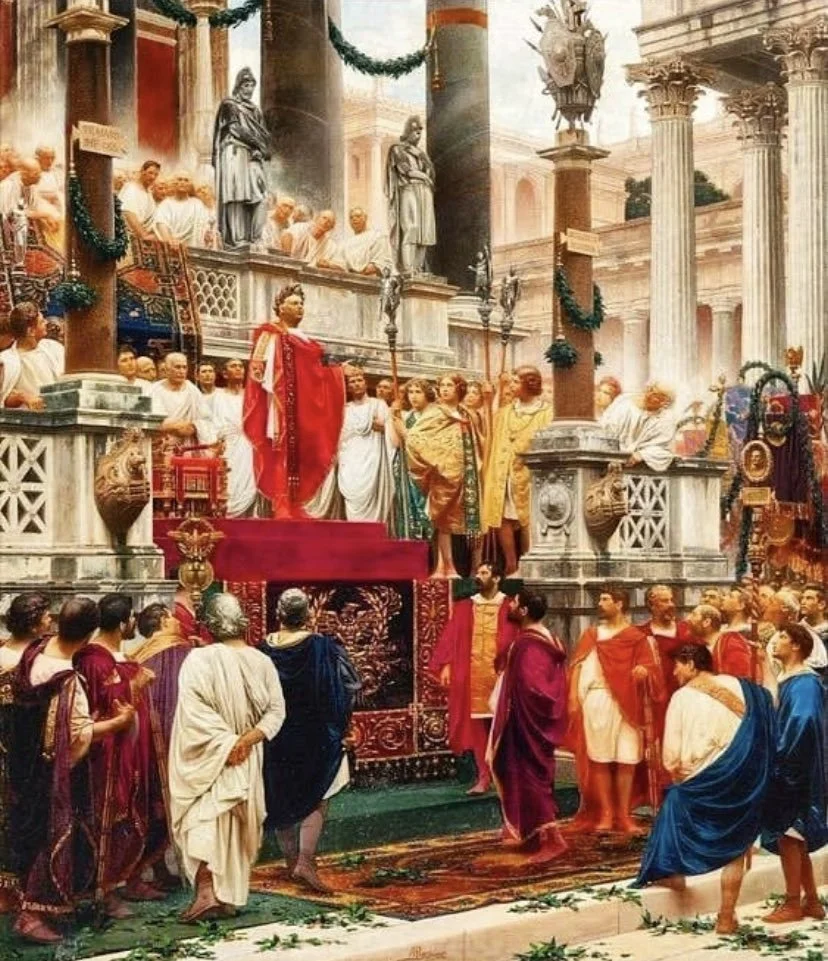
https://whitehatauxiliaries.files.wordpress.com/2023/05/emperor.jpeg
3. We will assess Crypto holdings. No more can be said until done.
4. A sizeable Global operation is phased to grow once adequate London Infrastructure has been accomplished and funded to cope with the needs forecast. We will be using our existing US Partner Operations to coordinate with the US Treasury and UN. All is yet to be signed off and will take time. US Treasury links is the point of interest. As is the parallel UN. Elders already have key UN roles. As do the Chinese.
While details cannot be publicized, it’s progressing. A step at a time and a huge historical investment.
Trust is earned. Hard earned. NY has been bypassed for Fiscal control. The British Trust wins.
The first steps towards Global rebalancing and a better world. Relationship Banking. Hope for Africa. British Ethics to protect all. British Managed Wealth for the Common People. Zionist shielded.
Green shoots.
Stay tuned. WHA S*P*Q*R*
https://whitehatauxiliaries.com/2023/05/18/information-briefing-186/
The 5 Most Insulting Gifts To Give Mom On Mother's Day
The 5 most insulting gifts to give Mom on Mother's Day (and what to give her instead)
Let's just say if you're thinking "bidet," you need to read this.
Rick Broida Tue, May 9, 2023
In this article: Mother's Day Gift Ideas
Guys. Lean in a second. You're shopping for Mother's Day, right? Your heart's in the right place. You want to show her your love and appreciation. Good for you. Just one problem: You're going to screw it up. That thing you think Mom wants? No. I speak from experience: I've had a mom for 54 years and a mother of my children for 22. So learn from my mistakes and avoid the following gifts — no matter how well-intentioned — at all costs. (Don't worry; I've also shared what to get her instead.)
The 5 Most Insulting Gifts To Give Mom On Mother's Day
The 5 most insulting gifts to give Mom on Mother's Day (and what to give her instead)
Let's just say if you're thinking "bidet," you need to read this.
Rick Broida Tue, May 9, 2023
In this article: Mother's Day Gift Ideas
Guys. Lean in a second. You're shopping for Mother's Day, right? Your heart's in the right place. You want to show her your love and appreciation. Good for you. Just one problem: You're going to screw it up. That thing you think Mom wants? No. I speak from experience: I've had a mom for 54 years and a mother of my children for 22. So learn from my mistakes and avoid the following gifts — no matter how well-intentioned — at all costs. (Don't worry; I've also shared what to get her instead.)
Most insulting Mother's Day gift #1: A traditional vacuum cleaner
Seriously? You're going to give Mom more household chores?! This is the classic Mother's Day blunder, the idea that she's just there to clean the house (and needs better tools to do it). No, dummy; why don't you get off the couch and grab a broom yourself? That would be a nice gift right there.
What to get instead: A robot vacuum
Now we're talking. It may not be the most glamorous gift, but anything that can take sweeping and mopping off the chore list is sure to be appreciated. Need help choosing one? Here's our list of the best robot vacuums of 2023. Alternately, here's a quick recommendation for a popular model that happens to be on sale:
Dreametech D10 Plus Robot Vacuum and Mop with Self-Emptying Base
Set it and forget it: The D10 Plus will automatically clean the floors as often as Mom wants, plus it can empty 45 days' worth of debris into its floor dock. Mopping requires a little more manual intervention, but it's still way easier than hauling out a bucket. $350 at Amazon
Most insulting Mother's Day gift #2: A fitness tracker
OK, we're kind of split on this one, because it depends on the circumstances. If Mom has never mentioned a fitness tracker (such as a Fitbit), then we don't want to be there when she unwraps it. The implication: She's imperfect, she needs to exercise more, etc. Now, if she has dropped hints about wanting one of these, it's totally fine. Here's our list of the best fitness trackers to buy in 2023. But, if this is coming out of the blue, go a different way.
What to get instead: An item tracker
To continue reading, please go to the original article here:
https://www.yahoo.com/lifestyle/most-insulting-mothers-day-gifts-204135366.html
How Many Billionaires Are in the World?
How Many Billionaires Are in the World?
For most people, it’s hard to imagine having a million dollars, let alone a billion. However, not only has the number of billionaires increased this year, but there has also been a few shake-ups amongst the lineup of the richest people in the world. Though the heaviest concentration of billionaires is in the United States, people who have amassed a billion-dollar fortune can be found throughout the world, and the numbers may shock you.
How Many Billionaires Are in the World?
For most people, it’s hard to imagine having a million dollars, let alone a billion. However, not only has the number of billionaires increased this year, but there has also been a few shake-ups amongst the lineup of the richest people in the world. Though the heaviest concentration of billionaires is in the United States, people who have amassed a billion-dollar fortune can be found throughout the world, and the numbers may shock you.
How Many Billionaires Are There in the World in 2023?
There are 2,640 billionaires as of May 2023, according to Forbes. However, only 140 people were in the exclusive billion-dollar club back in 1987. Meaning that while achieving billionaire status is a very big deal, but it is not as difficult as it once was. Today, there are more than 19 times the amount of billionaires in the world than in 1987.
By far, most of the world’s billionaires are from the United States, however, there are several more across the globe. Here is an international breakdown of billionaires globally:
United States: 735 China, including Hong Kong: 495 India: 169 Germany: 126 Russia: 105
The Richest Billionaires in the World
Now that you know how many billionaires are in the world, you’re probably wondering who is the wealthiest. While it’s easy to group them into the same super-elite category, some billionaires are a lot wealthier than others.
Of the 10 richest people on the planet, eight reside in the U.S. and the other two are in France. Some are self-made individuals, while others are grouped under a family empire.
While the title of the richest person in the world went back and forth between Elon Musk and Jeff Bezos for the last few years, this year shows Bernard Arnault and his family in the top spot. Here’s a look at ten of the richest billionaires in the world:
1. Bernard Arnault and Family Net worth: $206 billion Location: France
Based in Paris, 74-year-old Bernard Arnault helms luxury goods company LVMH — its 70 luxury brands include Louis Vuitton, Marc Jacobs, Christian Dior, Tiffany & Co. and Bulgari. His net worth skyrocketed from $72 billion in 2018 to $158 billion in 2022. His wealth grew once again to $206 billion in 2023, earning him the current top spot on the billionaires list.
2. Elon Musk Net worth: $169 billion Location: U.S.
Musk’s net worth has ebbed and flowed in recent years. While still an incredible amount of money, the 51-year-old founder of six companies was worth just $24.6 billion in 2020. He is the CEO of Tesla and owns 23% of Tesla shares, between stock and options. He also owns the rocket firm SpaceX and the social media platform Twitter.
More From Your Money: Choose a high-interest saving, checking, CD, or investing account from our list of top banks to start saving today.
To continue reading, please go to the original article here:
https://www.gobankingrates.com/money/wealth/how-many-billionaires-are-in-the-world/
Controlling Your Attention: The Most Important Skill of the 21st Century and How to Do It
Controlling Your Attention: The Most Important Skill of the 21st Century and How to Do It
Written By Joshua Becker ·
“In this information-rich, time-poor society, attention has become our most important resource.” —Mihaly Csikszentmihalyi
Bruce Lee is credited with once saying, “The successful warrior is the average man, with laser-like focus.”
I tend to think he is right and maybe now more than ever. Especially as our attention spans, all around the world, shrink.
In a world where distractions abound, both big and small, the greatest skill we can personally hone is the control of our attention. In fact, the ability to keep focus amid ever-increasing distractions may just be the greatest determining factor of success in the 21st Century.
Controlling Your Attention: The Most Important Skill of the 21st Century and How to Do It
Written By Joshua Becker ·
“In this information-rich, time-poor society, attention has become our most important resource.” —Mihaly Csikszentmihalyi
Bruce Lee is credited with once saying, “The successful warrior is the average man, with laser-like focus.”
I tend to think he is right and maybe now more than ever. Especially as our attention spans, all around the world, shrink.
In a world where distractions abound, both big and small, the greatest skill we can personally hone is the control of our attention. In fact, the ability to keep focus amid ever-increasing distractions may just be the greatest determining factor of success in the 21st Century.
Our attention is the driving force that shapes our lives. It is what creates wisdom from our past experiences and helps us make the most out of the skills we’ve developed, the education we’ve experienced, and the talents we’ve accumulated.
It is our attention that puts these assets to work, allowing us to make the most of our potential.
Only with focused attention do we make the most out of these strengths. Ultimately, it’s where we direct our attention that shapes the direction of our path and how effectively we reach our goals and what we accomplish with the one life that we have to live.
This is why controlling your attention is so important.
Here’s How to Do It:
1. Simplify Your Environment.
Simplicity is the stepping stone to clarity. A cluttered environment, whether physical or digital, results in a cluttered mind.
By minimizing the unnecessary, we remove visual noise and make room for focused attention.
This doesn’t just mean owning fewer possessions, but also decluttering our online spaces.
2. Practice Mindfulness.
Mindfulness is the art of being fully present. It’s a skill that trains your brain to focus on the here and now, preventing it from being hijacked by past regrets or future anxieties.
Simple mindfulness exercises can be a great starting point. So can religious rituals like prayer, meditation, and spiritual reading.
To continue reading, please go to the original article here:
We’re Done With “Gradually”. We’ve Now Reached The “Suddenly” Part
We’re Done With “Gradually”. We’ve Now Reached The “Suddenly” Part
April 24, 2023 By Simon Black – Sovereign Man.com
By the summer of 1563, all of Britain had plunged into chaos over religion and the Reformation. King Henry VIII broke away from the Catholic church back in the 1530s, sparking a near civil war within the kingdom. Protestants killed Catholics, Catholics killed protestants, and extreme social tensions lasted for decades.
Universities were at the heart of this conflict; rather than focus on real subjects like science and mathematics, students and professors became radical social activists and turned their schools into ideological echo chambers. Sound familiar?
We’re Done With “Gradually”. We’ve Now Reached The “Suddenly” Part
April 24, 2023 By Simon Black – Sovereign Man.com
By the summer of 1563, all of Britain had plunged into chaos over religion and the Reformation. King Henry VIII broke away from the Catholic church back in the 1530s, sparking a near civil war within the kingdom. Protestants killed Catholics, Catholics killed protestants, and extreme social tensions lasted for decades.
Universities were at the heart of this conflict; rather than focus on real subjects like science and mathematics, students and professors became radical social activists and turned their schools into ideological echo chambers. Sound familiar?
One of the few students who actually wanted to learn was a Scottish teenager named John Napier; Napier had been enrolled at the University of St. Andrews at the time, but he quickly realized that he would never learn a damn thing in that environment. So he dropped out… and started traveling in search of a real education.
No one quite knows exactly where he went or what he did. But when he returned to Scotland eight years later as a young man, Napier had become an intellectual giant.
You might not have ever heard of him, but John Napier was truly one of the great minds of his era. And modern science owes a tremendous debt to his work… in particular his development of logarithms.
If it’s been a few years since you studied math (or ‘maths’ for my British friends), logarithms are the inverse of exponential functions.
Simple example: we know that 102 (or 10 squared) = 10 x 10 = 100. So, the number 10 raised to the power of 2 equals 100.
The inverse of that is to say that the ‘base 10’ logarithm of 100 = 2. Or in mathematical terms, 100 log10 = 2
Napier devised an entire system of logarithms. And this was actually a tremendous leap forward in mathematics, because logarithms made it so much easier for scientists and researchers to calculate solutions to complex problems.
One of the many important applications to come out of Napier’s work is the concept of ‘logarithmic decay,’ which models many real world phenomena.
The idea behind logarithmic decay is that something declines very, very slowly at first.
But, over a long period of time, the rate of decline becomes faster… and faster… and faster.
If you look at it on a graph, logarithmic decay basically looks like a horizontal line that almost imperceptibly arcs gently downwards. But eventually the arc downward becomes steeper and steeper until it’s practically a vertical line down.

Logarithmic decay is like how Hemingway famously described going bankrupt in The Sun Also Rises-- “Gradually, then suddenly.”
In fact logarithmic decay is a great way to describe social and financial decline. Even the rise and fall of superpowers are often logarithmic in scale. The Kingdom of France in the 1700s infamously fell gradually… then suddenly.
We can see the same logarithmic decay in the West today, and specifically the United States.
The deterioration of government finances has been gradual, then sudden. Social conflict, censorship, and the decline in basic civility has been gradual, then sudden. Even the loss of confidence in the US dollar has been gradual… and is poised to be sudden.
Back in 2009 when I started Sovereign Man, I spoke a lot about ideas that were highly controversial at the time.
I suggested that Social Security’s trust funds would run out of money. That the US government would eventually be buried by its gargantuan national debt. That the US dollar would eventually lose its international reserve dominance. That inflation and social conflict would rise.
The main thesis, quite simply, was that the US was in decline. And whenever I spoke at events, I used to talk about logarithmic decay, saying:
“As a civilization in decline, you never really know quite where you are on the curve. You could be way over here on the horizontal line, at the very beginning of the decline… or you could be standing on the precipice about to hit the vertical slide down.”
Well, now we have a much better idea of where we are on that logarithmic decay curve. Because these ideas about the national debt, inflation, social security, social conflict, etc. are no longer theories. Nor are they even remotely controversial.
Just last week, US Speaker of the House Kevin McCarthy said in a speech that “America’s debt is a ticking time bomb”. Social Security’s looming insolvency is now openly discussed in Washington and regularly reported in the Wall Street Journal.
We’ve all seen with our own eyes (and even experienced) inflation, social divisions, and censorship.
And as for the dollar, we continue to see a multitude of cracks in its dominance. Most notably, Saudi Arabia is considering a plan to sell oil not just in US dollars, but also in Chinese yuan.
Plus the international development bank of the BRICS nations (Brazil, Russia, India, China, and South Africa) announced earlier this month that they will start moving away from the dollar.
Is it any surprise? The US government is weeks away from defaulting on its national debt over the latest debt ceiling debacle. And yet the guy who shakes hands with thin air refuses to negotiate a single penny in spending cuts to help reduce trillions of dollars in future deficit spending.
The whole world is watching in utter disbelief at the astonishing level of incompetence that has infected the highest levels of America’s once hallowed institutions, including news media, big business, and the government itself.
America-- and the West by extension-- really are on the precipice of that logarithmic decay curve… the part where the horizontal line becomes a vertical line down.
It has taken years… even decades to reach this point, gradually. We’re now at the “suddenly” part.
Now, it’s important to note that the outcome is far from inevitable. Plenty of declining superpowers in the past have pulled themselves out of a tailspin, at least temporarily.
Aurelian’s reforms helped re-establish Rome’s dominance in the late 200s after nearly a century of chaos. The declining Ottoman Empire recovered substantially during the Tanzimat period in the 1800s. King Charles III of Spain made many successful reforms to revive his crumbling empire in the 1700s.
There are many historical precedents for recovery, so all is not lost. But at the moment there is little evidence to suggest any major change on the horizon.
I’m not saying this to be alarmist. Quite the contrary, in fact. Because one of the key pillars of our thinking here at Sovereign Man is that, despite the ineptitude of our governments, we as individuals have the tools, power, and freedom to solve these problems for ourselves… and even prosper doing so.
Simple example: Social Security’s trust funds will run out of money within a decade, and this will be a huge problem for literally tens of millions of people who depend on the progam.
However there are numerous tools available to solve this problem; a more robust and powerful retirement structure like a self-directed, solo 401(k) plan, for example, allows you to set aside up to $73,500 per year for your retirement.
Similarly, if you expect a government with deteriorating finances to raise taxes (which they almost always do), you can take completely legal steps to reduce what you owe.
If you anticipate inflation continuing, you can arrange your investments to capitalize on the surge in real assets, like minerals, energy, and productive technology.
You can also take steps to diversify geographically, even internationally, to reduce risks to your family’s freedom.
These solutions barely scratch the surface of the plentiful options at your disposal. All it takes is a sensible understanding of the problem… plus the willingness to take action.
And rational, informed action is always a better option than despair.
To your freedom, Simon Black, Founder Sovereign Man
Coolidge’s Fiscal Triumph
Coolidge’s Fiscal Triumph
By: Amity Shlaes and Rushad Thomas
Don’t be fooled by recent reports that deficits are narrowing. The federal debt is on course to skyrocket over the next decade. Recovery or recession, it seems, Americans and their government don’t care much about the federal debt. We certainly aren’t paying our debt down. Congressional Budget Office Director Douglas Elmendorf even noted recently that “payments by the government have been quite low.” Could America ever find a leader who might cut our debt? There’s reason for hope. We at least have a model from history. There was once a president who stared down big government and won the battle for control of the debt. That president was Calvin Coolidge.
Coolidge’s Fiscal Triumph
By: Amity Shlaes and Rushad Thomas
Don’t be fooled by recent reports that deficits are narrowing. The federal debt is on course to skyrocket over the next decade. Recovery or recession, it seems, Americans and their government don’t care much about the federal debt. We certainly aren’t paying our debt down. Congressional Budget Office Director Douglas Elmendorf even noted recently that “payments by the government have been quite low.” Could America ever find a leader who might cut our debt? There’s reason for hope. We at least have a model from history. There was once a president who stared down big government and won the battle for control of the debt. That president was Calvin Coolidge.
The thirtieth president was a rare treasure; a politician who didn’t just talk the talk, but actually walked the walk when it came to fiscal discipline. In 1923, the year Calvin Coolidge entered the White House, the Federal Government spent $3.14 billion. By 1928, his last full year in office, the Feds spent $2.96 billion. Calvin Coolidge, a president who left office more than eighty years ago, is the last chief executive to have cut the size of government.
In outlining his philosophy of governance in his 1925 inaugural address, Coolidge said “I favor the policy of economy, not because I wish to save money, but because I wish to save people.” Coolidge understood that tax revenues represent the hard work and toil of the American people. It was his sacred duty as their president to ensure that the money they sent to Washington was responsibly managed.
He also understood that debt led to inflation, which he abhorred. Responsibility and money he deemed intertwined. “Inflation is repudiation. Deflation is assumption,” he told an audience in Chicago in 1922.
Coolidge was consumed by a desire to cut down on government spending. In a 1924 talk he remarked that “the budget idea, I may admit, is a sort of obsession with me. I believe in budgets. I want other people to believe in them…Do you wonder, then, that at times I dream of balance sheets and sinking funds, and deficits, and tax rates, and all the rest?”
Coolidge wasn’t kidding when he said he obsessed over budgets. Not only did he meet just about every week with his budget bureau director, General Herbert Lord, to discuss the government’s budget, he also campaigned to lower spending in the White House. When the White House Cook Ms. Riley reduced her annual purchases to $9,116.39 in 1927 from $11,667.10 the year before, Coolidge wrote a terse but laudatory note: “very fine improvement.”
The budget wasn’t the only area where Silent Cal starred. “30” insisted that the government continue to pay down the massive debt that was accumulated during the First World War. By 1919, the year after the Great War ended, outstanding Federal debt had ballooned to $27.4 billion from $14.6 billion in 1918.
To continue reading, please go to the original article here:
https://coolidgefoundation.org/news/coolidges-fiscal-triumph/
11 Mottos to Live By
11 Mottos to Live By
Marjorie Kondrack | Apr 21, 2023 HumbleDollar
LIVING BENEATH OUR means is one of the best habits to develop if we want a secure retirement. Like many others, I learned this sort of thrift from my parents and grandparents, who lived through the Great Depression and, by necessity, had to avoid waste.
Not only did our forebearers survive the Great Depression, but also the Second World War came right on its heels. These were years of conserving materials—such as metal, rubber, paper and food—to support the war effort.
11 Mottos to Live By
Marjorie Kondrack | Apr 21, 2023 HumbleDollar
LIVING BENEATH OUR means is one of the best habits to develop if we want a secure retirement. Like many others, I learned this sort of thrift from my parents and grandparents, who lived through the Great Depression and, by necessity, had to avoid waste.
Not only did our forebearers survive the Great Depression, but also the Second World War came right on its heels. These were years of conserving materials—such as metal, rubber, paper and food—to support the war effort.
My mother saved a food ration book from the war that still had some stamps in it. When she shopped, she had to hand the grocer stamps when buying meat, sugar, butter, cooking oil and canned goods. The number of stamps handed over depended on the scarcity of the item purchased. For instance, if bacon was 35 cents a pound, you might have to give the grocer seven stamps.
Once the stamps were used up for the month, people couldn’t buy any more of that food until new stamps were issued the following month. I wonder how many young people today know that, in this land of abundance, food was once rationed, and that thrift in itself can be a source of remarkable household revenue.
Mom also saved a booklet from the war years that gives information about saving or conserving just about everything—food, clothing, house furnishings, appliances, utilities, cars, even insurance. People found artful ways to scrimp on just about everything. Nothing was wasted.
We could all benefit from the advice in this little booklet. Here are 10 of the more memorable passages that appeared at the bottom of the booklet’s pages:
Willful waste makes woeful want.
te nothing. Hoard nothing. Use everything.
Spend what you must and save what you can.
He that eats and saves sets the table twice.
Waste nothing. Hoard nothing. Use everything.
Spend what you must and save what you can.
He that eats and saves sets the table twice.
To continue reading, please go to the original article here: