
Silver’s Next Industrial Boom Could Send Prices to $400 | Aaron Hoddinott & Andy Schectman
Silver’s Next Industrial Boom Could Send Prices to $400 | Aaron Hoddinott & Andy Schectman
Miles Franklin Media: 7-18-2026
Andy Schectman, Founder & CEO of Miles Franklin Precious Metals, sits down with Aaron Hoddinott, Founder & President of Pinnacle Digest, to discuss why he believes the global monetary system is already shifting, why central banks continue accumulating gold, and why silver may be one of the most compelling long-term investment opportunities.
Hoddinott explains why he sees the emergence of a parallel monetary system centered around gold, how de-dollarization is reshaping global finance, and why governments may ultimately choose inflation and a weaker dollar as the path out of mounting debt.
Silver’s Next Industrial Boom Could Send Prices to $400 | Aaron Hoddinott & Andy Schectman
Miles Franklin Media: 7-18-2026
Andy Schectman, Founder & CEO of Miles Franklin Precious Metals, sits down with Aaron Hoddinott, Founder & President of Pinnacle Digest, to discuss why he believes the global monetary system is already shifting, why central banks continue accumulating gold, and why silver may be one of the most compelling long-term investment opportunities.
Hoddinott explains why he sees the emergence of a parallel monetary system centered around gold, how de-dollarization is reshaping global finance, and why governments may ultimately choose inflation and a weaker dollar as the path out of mounting debt.
He also shares why he's been buying physical silver, arguing that growing industrial demand and constrained supply could drive significantly higher prices over the next decade.
The conversation also explores artificial intelligence, reindustrialization, demographics, and productivity, examining how these macro trends could influence inflation, interest rates, and the future of gold and silver in an increasingly uncertain economic landscape.
In this episode of Little by Little:
Why Aaron believes a parallel monetary system is already emerging
Central bank gold buying and the future of the U.S. dollar
Why inflation may remain the only path out of the debt crisis
Aaron's long-term investment thesis for physical silver
How AI, reindustrialization, and demographics could reshape the global economy
00:00 Coming Up
01:24 Introduction
03:12 Guest Origin Story
06:27 IBM AI Reality Check
08:31 Leverage Bubble Warning
13:06 Global Monetary Shift
14:38 Parallel Gold Standard
US Dollar used to be Backed by Silver, US has Largest Gold Stockpile in the World
US Dollar used to be Backed by Silver, US has Largest Gold Stockpile in the World
And We Know : 7-18-2026
The global financial landscape is currently undergoing a structural transformation, defined by shifting monetary policies and a fundamental rethinking of how nations store value.
Recent insights into central banking strategies suggest that we are moving away from a single-currency dominance toward a more complex, collateralized framework. By examining the roles of interest rates, precious metals, and emerging digital payment rails, investors can better understand the forces shaping the economy through 2027 and beyond.
US Dollar used to be Backed by Silver, US has Largest Gold Stockpile in the World
And We Know : 7-18-2026
The global financial landscape is currently undergoing a structural transformation, defined by shifting monetary policies and a fundamental rethinking of how nations store value.
Recent insights into central banking strategies suggest that we are moving away from a single-currency dominance toward a more complex, collateralized framework. By examining the roles of interest rates, precious metals, and emerging digital payment rails, investors can better understand the forces shaping the economy through 2027 and beyond.
The Federal Reserve is signaling a “regime change” in its approach to monetary policy, primarily aimed at neutralizing inflation. Often characterized as a hidden tax on citizens, inflation has forced central banks into a difficult balancing act.
To maintain currency competitiveness in a strained global economy, major nations are engaging in synchronized interest rate hikes. While this is intended to stabilize the dollar, it creates significant headwinds for traditional asset classes, particularly bonds and equities. Experts anticipate a period of heightened market volatility as the global debt situation continues to pressure existing financial structures.
Historically, conventional economic theory suggested that high interest rates were detrimental to gold and silver due to their lack of yield. However, a counterintuitive shift is occurring: precious metals are increasingly viewed as essential “flight-to-quality” assets.
As central banks face mounting monetary volatility, they are aggressively transitioning toward gold as a tier-one reserve asset. This institutional adoption highlights a move toward tangible collateral, providing a safety net in an era where paper currency credibility is being questioned.
Technological advancements are acting as the catalyst for this monetary evolution. Specifically, initiatives like Project Mbridge—backed by the Bank for International Settlements and various international coalitions—are changing how global settlements occur.
By enabling settlements in multiple currencies and assets, including gold and silver, these digital platforms are providing viable alternatives to the current dollar-centric system. This diversification suggests that we are witnessing the beginning of a “de-dollarization” trend, which may ultimately pave the way for gold-backed digital currencies to become the standard for international trade.
For the individual investor, these developments necessitate a more cautious and strategic approach to portfolio management. Because market volatility is expected to persist through 2027, relying solely on traditional market performance may no longer be sufficient.
Financial experts emphasize the importance of diversifying into precious metals to hedge against debt-related systemic risks. While equities remain a component of a balanced portfolio, investors are being encouraged to exercise restraint and look for opportunities to buy during significant market dips rather than chasing short-term rallies.
As the global economy moves toward a hybrid system of blockchain-enabled settlements and gold-backed reserves, understanding the “why” behind these shifts is essential. By staying informed, you can navigate the unpredictability of the coming years with confidence.
Reset Intelligence: Follow the Gold
Reset Intelligence: Follow the Gold
7-16-2026
Follow the Gold
By Reset Intelligence | @EXIT_FIAT
Scott Bessent went on Fox this week and put a number on the American gold. Over $1 trillion, present and accounted for, the largest pile held by any nation on earth. Then he said he has no plans to open the vault and check.
Reset Intelligence: Follow the Gold
7-16-2026
Follow the Gold
By Reset Intelligence | @EXIT_FIAT
Scott Bessent went on Fox this week and put a number on the American gold. Over $1 trillion, present and accounted for, the largest pile held by any nation on earth. Then he said he has no plans to open the vault and check.
The Treasury’s own books still value that same gold at $11 billion. The gap between those two numbers is the story, and this week it stopped being quiet.
The Vault Gets a Number
On July 14 the Treasury Secretary told Fox the gold is present and accounted for and worth more than $1 trillion at current market value. Fort Knox holds 147,341,858 fine troy ounces, about 56% of the federal bullion. The rest sits at Denver, West Point and in the vault under the Fed in Manhattan. The last full physical audit was in 1953. Sceptics asked him to open the doors. He declined.
By law the Treasury still carries that same gold at $42.22 an ounce, a price Congress set in 1973 and never touched. That values the whole national pile near $11 billion. Bessent announced no revaluation. He read the market number out loud and left it there.
The Rails Get a Deadline
Kevin Warsh runs the Fed now. The GENIUS Act put dollar stablecoins under federal control, and the Fed has to publish the rulebook by Saturday. The CLARITY Act reached the House this week. The DTCC is moving $114 trillion of securities onto digital rails. What was background a month ago now runs on a calendar.
What Iraq Carries to the Door
• The delegation – Iraq’s partial government spent this week in Washington asking to be let back inside the dollar system.
• The blueprint – On Wednesday al-Zaidi sat down with World Bank president Ajay Banga and IFC head Makhtar Diop. They did not come with a cheque. They came with a plan: program-based budgets, a restructured banking sector, and a merger of state lenders into a single holding company.
• The lock – Parliament seated 14 of his 23 ministers in May and stalled on the other 9, interior and defence among them. No complete cabinet, no budget. The dinar holds at 1,300 because that number lives in the budget and nowhere else.
• The cash window – The central bank suspended a 2023 circular and let banks pay dollar deposits in cash again from July 15. Iraq was grey-listed by the Financial Action Task Force on June 19.
• The deposits – Iraqi bank deposits fell from about $70.9 billion at the end of last year to $66.8 billion by April, with private savings leading the way down.
The Same Play in Caracas
Venezuela is further down the same road. Its oil money routes into accounts the US Treasury holds, and the State Department decides what flows back to Caracas. Roughly $8 billion of oil revenue in the first 4 months of this year. About $300 million of it actually reached Venezuela. The gold is moving through the same accounts.
A government counts its gold right before it intends to use it. The count is done.
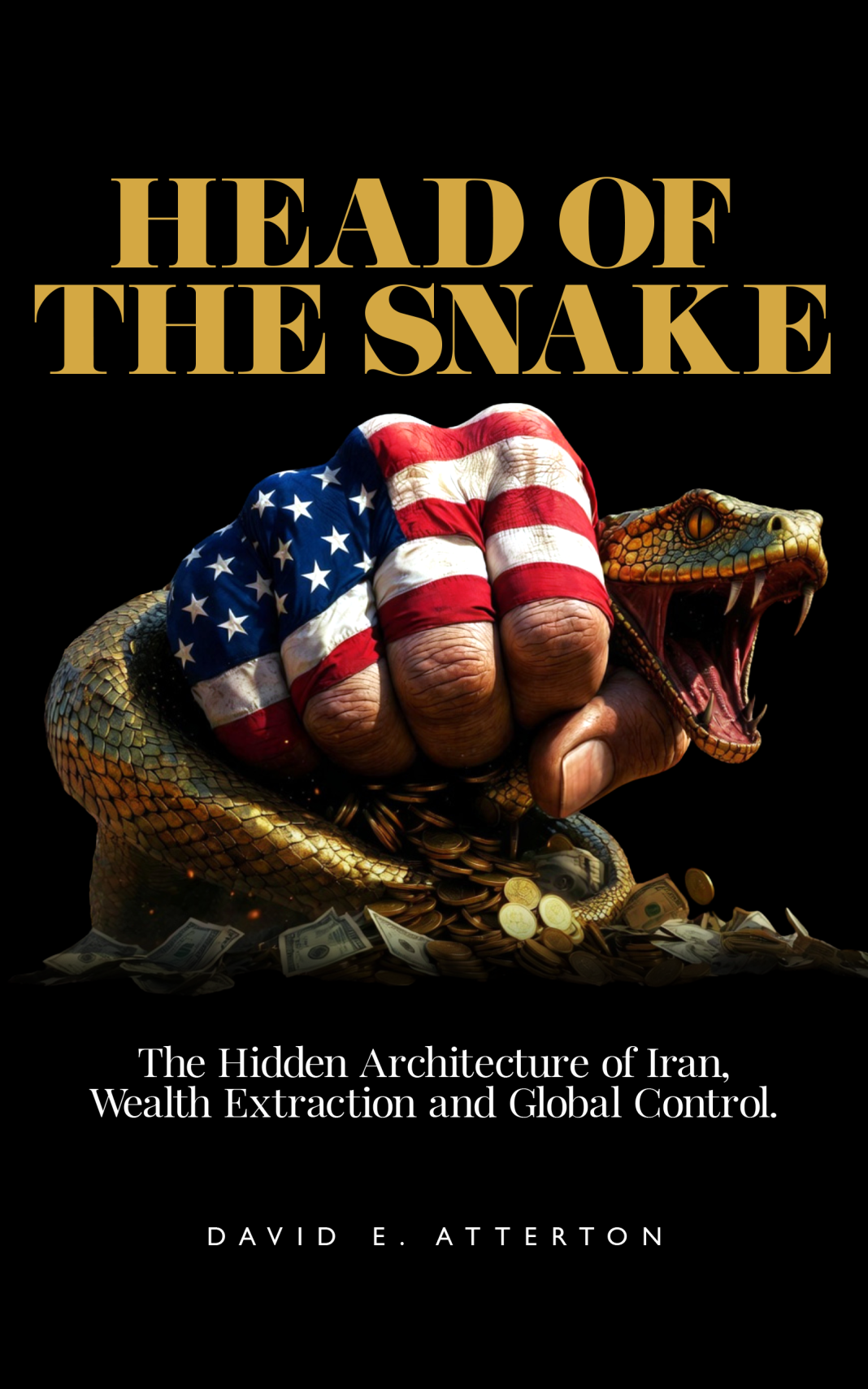
This Is the Short Version
Those are the moves, and they are all on the public record. The daily briefing is where we connect them: what a vault count actually signals, the precedent for this exact play and how it ended last time, and what it means for anyone holding dinar. That runs every weekday.
Read the full daily briefing free for 5 days. Sign up here: resetintelligence.com
The Documentation
Reset Intelligence published the source-level documentation behind the briefings in Head of the Snake. The full 19,500-word documented case. Every claim sourced – Treasury actions, OFAC press releases, parliament records, central bank statements.
25% off all formats with code 25XOFF at checkout: resetintelligence.com/head-of-the-snake
https://dinarchronicles.com/2026/07/16/reset-intelligence-follow-the-gold/
Why Central Banks Love a Gold Sell-Off
Why Central Banks Love a Gold Sell-Off
Notes From the Field By James Hickman (Simon Black / Sovereign Man) July 14, 2026
On July 7, Bloomberg published an article with the headline: "Gold's Bull Market Has Ended and Now All Eyes Are on Bears," explaining how many retail investors have headed for the exits.
That same day, the People's Bank of China, the country's central bank, reported its largest monthly gold purchase since 2023.
Why Central Banks Love a Gold Sell-Off
Notes From the Field By James Hickman (Simon Black / Sovereign Man) July 14, 2026
On July 7, Bloomberg published an article with the headline: "Gold's Bull Market Has Ended and Now All Eyes Are on Bears," explaining how many retail investors have headed for the exits.
That same day, the People's Bank of China, the country's central bank, reported its largest monthly gold purchase since 2023.

Of course, June marked its twentieth consecutive month of adding gold to its reserves. Central banks are relatively price insensitive. They buy gold as a long term hedge to preserve value, not to trade back for more paper.
But they aren’t stupid either, and this shows they are buying the dip.
Gold peaked at $5,589 per ounce on January 28 and trades around $4,000 today, roughly 28% below the high. The second quarter was gold's worst since 2013. Investors have pulled about $18 billion out of gold ETFs since the peak, much of it late money that piled in during last year's frenzy and bolted the moment momentum broke.
But the price is not the story. The story is what central banks are doing.
Central banks have been the dominant force in gold since 2022, when Russia invaded Ukraine, the US froze $300 billion of Russia's central bank reserves, and every finance ministry on earth learned that dollar assets were not the safe havens they’d believed.
In 2024, central banks bought 1,090 tons of gold, close to an all-time record.
That massive demand made gold expensive. The price nearly doubled from its 2025 low, and central bank buying slowed to 863 tons. That was still higher than historical averages, but down 21% from the year before.
The slowdown was not fading interest; it was price discipline. Central banks are not traders chasing momentum. They are savers accumulating a reserve asset, and like any sensible saver, they buy less when the thing they are saving in gets expensive.
And they speed back up when it goes on sale. In the first quarter of this year central banks bought 244 tons, more than the previous quarter and above the five-year average. China alone has added about 40 tons in the first six months of 2026, compared to just 27 tons in all of 2025. The People's Bank of China bought more gold last month, with the price down nearly 30% from its high, than in any single month of the entire run-up.
The Reason Is Simple: Nothing Has Changed About Why They Buy
The World Gold Council, the industry group that tracks official gold demand, surveyed 76 central banks this year. Seventy-four percent said they expect the dollar's share of global reserves to be lower five years from now.
These are the institutions that actually hold the world's reserves, and they are telling you, on the record, that they plan to keep moving away from the dollar.
None of their reasons went away when the price fell. The US national debt keeps growing by trillions, Congress has no plan beyond borrowing more, and Washington keeps proving it will continue to weaponize the dollar.
A central bank holding dollars is holding the liability of a government that is both overextended and unpredictable. Gold sitting in its own vault carries neither risk.
That calculus was true at $5,589, and it is just as true at $4,000.
A trader who is down 28% has a problem if they are trying to quickly turn a profit, and accumulate more paper dollars.
But a saver who plans to accumulate gold for the next decade just got a better price. That is why the sell-off did not scare away the biggest buyers in the market.
It may be exactly what they were waiting for.
We made this argument to our subscribers of our investment research newsletter, Strategic Assets, in January.
With gold near its all-time high, we said that this was no longer the early stage of a bull market, that a major drawdown was a real possibility, and that it was time to take some profits.
In fact, subscribers who took action on our research locked in gains of more than 950% on a small silver producer and 540% on a gold and silver producer, both in under a year.
Now the sell-off has come for the miners too. Even solid, debt-free producers are trading as much as 50% below their highs from earlier this year.
But again, as nothing had changed about the long term gold thesis, little has changed about the profitability of these companies. They are still wildly profitable at $4,000 gold, which is far above projections they had planned for.
Some of these companies are still pulling gold out of the ground at a cost of just $1,000 an ounce, which is an amazing margin.
So We Are Starting To Buy Again.
It is the same discipline the central banks just demonstrated: slow down when the asset is expensive, step up when it gets cheap, and never confuse a price correction with a change in the story.
Nobody knows where gold trades next month. But the biggest buyers on earth just showed you what they do when gold gets cheaper. They buy more.
To your freedom, James Hickman Co-Founder, Schiff Sovereign LLC
Could a US Gold Backed Bond Reshape the Dollar’s Future?
Could a US Gold Backed Bond Reshape the Dollar’s Future?
Kinesis Money: 7-10-2026
In an era defined by record-breaking national debt and fluctuating global confidence in the greenback, the conversation surrounding “sound money” has returned to the forefront of economic debate.
A recent featured video from Kinesis Money, hosted by Rob Kientz of The Freedom Report, dives deep into a provocative proposal: the issuance of a gold-backed U.S. bond, often referred to as a Treasury Trusted Bond (TTB).
Could a US Gold Backed Bond Reshape the Dollar’s Future?
Kinesis Money: 7-10-2026
In an era defined by record-breaking national debt and fluctuating global confidence in the greenback, the conversation surrounding “sound money” has returned to the forefront of economic debate.
A recent featured video from Kinesis Money, hosted by Rob Kientz of The Freedom Report, dives deep into a provocative proposal: the issuance of a gold-backed U.S. bond, often referred to as a Treasury Trusted Bond (TTB).
While the idea of returning to a gold standard—even partially—appeals to many advocates of fiscal discipline, the practical realities of such a move are far more complex. Here is an analysis of the proposal, the mathematical hurdles, and what it means for the future of the U.S. dollar.
The core of this discussion centers on the work of Dr. Judy Shelton, a well known economist and former advisor. Shelton advocates for the U.S. Treasury to issue a limited number of bonds that are redeemable either in their dollar value or in a specific amount of gold.
While Rob Kientz acknowledges the intellectual appeal of Shelton’s proposal, he highlights a staggering obstacle: the sheer scale of the U.S. national debt.
Currently, the U.S. holds the world’s largest official gold reserves (approximately 8,133 tonnes). However, when valued at current market prices, this gold represents only a tiny fraction of the $34+ trillion national debt.
Kientz argues that the “math simply doesn’t work.” For the U.S. to fully back its obligations with gold, the price of the precious metal would need to skyrocket to levels that would likely cause systemic shocks, or the government would need to implement drastic spending cuts that are currently politically unfeasible.
One of the most compelling points raised in the video is the issue of timing. Introducing a gold-backed bond now might actually backfire. Kientz suggests that instead of restoring trust, it could signal to the world that the U.S. is “desperate” to shore up the dollar.
In a climate where BRICS nations (Brazil, Russia, India, China, and South Africa) are already exploring alternatives to the dollar, a move toward gold-backed bonds might accelerate “de-dollarization.” If foreign nations perceive the U.S. gold reserves as insufficient to cover the new bonds, they may choose to dump their existing Treasury holdings even faster, favoring physical gold or other emerging reserve currencies.
Since 2011, global central banks have been purchasing gold at record rates, suggesting that the move away from a purely fiat-based system is already underway.
Despite his skepticism regarding the immediate success of a gold-backed bond system, Kientz notes that Dr. Shelton’s proposal serves an important educational purpose. It forces lawmakers to confront the consequences of modern monetary policy and provides a framework for what “sound money” actually looks like.
However, the conclusion remains sobering: the U.S. likely does not hold enough gold relative to its massive liabilities to make this a viable “quick fix” for the current debt crisis.
If the government cannot easily pivot to a gold-backed system to save the currency, the responsibility for wealth preservation falls on the individual. Kientz concludes that while the TTB is a fascinating concept for national policy, individual investors should look toward securing their own wealth independently.
By holding physical gold and silver, individuals can create their own “personal gold standard,” protecting their purchasing power from the risks of inflation and fiscal instability.
Gold's BIG Reset May Still Be Coming | Andy Schechtman
Gold's BIG Reset May Still Be Coming | Andy Schechtman
Liberty and Finance: 7-10-2026
Despite falling gold and silver prices, Andy Schechtman says physical demand continues to surge as record COMEX deliveries and metal withdrawals paint a very different picture beneath the surface.
He explains why tokenized precious metals, gold-backed Treasury bonds, and the migration toward physical settlement could reshape the global monetary system.
Gold's BIG Reset May Still Be Coming | Andy Schechtman
Liberty and Finance: 7-10-2026
Despite falling gold and silver prices, Andy Schechtman says physical demand continues to surge as record COMEX deliveries and metal withdrawals paint a very different picture beneath the surface.
He explains why tokenized precious metals, gold-backed Treasury bonds, and the migration toward physical settlement could reshape the global monetary system.
Andy also shares what he's hearing at the Rule Symposium, why retail premiums may soon rise again, and why he believes the second half of the year could look dramatically different for precious metals investors.
INTERVIEW TIMELINE:
0:00 Intro
1:38 Silver pullback
5:30 Gold-backed treasury update
15:22 Tokenization of gold
19:00 Rule Symposium
20:50 Rising premiums
Hong Kong Just Launched a Gold System That Could REPRICE Gold
Hong Kong Just Launched a Gold System That Could REPRICE Gold
Taylor Kenny: 7-7-2026
Hong Kong just launched a new gold clearing and settlement system — and it could change the way gold and silver are priced around the world.
CHAPTERS:
00:00 Hong Kong Launches a Gold System That Could Reprice Gold
Hong Kong Just Launched a Gold System That Could REPRICE Gold
Taylor Kenny: 7-7-2026
Hong Kong just launched a new gold clearing and settlement system — and it could change the way gold and silver are priced around the world.
CHAPTERS:
00:00 Hong Kong Launches a Gold System That Could Reprice Gold
00:59 The West’s Paper Gold Pricing Monopoly
01:27 How Rehypothecation Suppresses Gold and Silver Prices
02:56 Banks, Spoofing, and Overnight Price Raids
04:22 Currency Resets, Inflation, and the Dollar’s Decline
05:19 Central Banks Know What’s Coming
06:43 Gold Infrastructure and the Return to Real Money
07:41 BRICS, Gold Corridors, and Oil Settlement
SILVER UNOBTANIUM! Why the Silver Arbitrage Gap Between East and West is Exploding? | Bill Holter
SILVER UNOBTANIUM! Why the Silver Arbitrage Gap Between East and West is Exploding? | Bill Holter
Smart Silver Trends: 7-7-2026
In this video, "Silver Is The Fuse On Gold & The Fuse Is Lit," Bill Holter (aka "Mr. Gold") joins Andrew to discuss the imminent "failure to deliver" in the silver market.
Holter argues that silver has been suppressed since 1975 to support the US dollar and Treasury borrowing.
He explains that the shifting dynamics on the COMEX, where contract buyers are increasingly demanding physical delivery rather than cash settlements, are pushing the derivative-based financial system toward implosion.
SILVER UNOBTANIUM! Why the Silver Arbitrage Gap Between East and West is Exploding? | Bill Holter
Smart Silver Trends: 7-7-2026
In this video, "Silver Is The Fuse On Gold & The Fuse Is Lit," Bill Holter (aka "Mr. Gold") joins Andrew to discuss the imminent "failure to deliver" in the silver market.
Holter argues that silver has been suppressed since 1975 to support the US dollar and Treasury borrowing.
He explains that the shifting dynamics on the COMEX, where contract buyers are increasingly demanding physical delivery rather than cash settlements, are pushing the derivative-based financial system toward implosion.
With silver inventories depleting and physical price premiums rising in Shanghai, Holter suggests the 50-year era of price suppression is ending.
Financial expert Bill Holter argues that the "fuse is lit" for a massive revaluation in precious metals. He explains that silver is currently in a persistent five-year supply deficit that can only be balanced by significantly higher prices.
Holter suggests that silver will act as the catalyst for gold, leading to a breakdown of the fractional reserve financial system.
Silver: Could We Soon Run Out? What You Need To Know | Don Durrett
Silver: Could We Soon Run Out? What You Need To Know | Don Durrett
Liberty and Finance: 7-5-2026
Is the silver market headed toward a genuine supply shortage? In this interview, Don Durrett explains why growing industrial demand, limited mine supply, and tightening inventories could set the stage for a major shift in the silver market.
He also discusses where gold and silver prices may be headed next, what investors should watch for, and why the coming years could be pivotal for precious metals.
Don't miss this in-depth conversation on the risks, opportunities, and key trends shaping the future of gold and silver.
Silver: Could We Soon Run Out? What You Need To Know | Don Durrett
Liberty and Finance: 7-5-2026
Is the silver market headed toward a genuine supply shortage? In this interview, Don Durrett explains why growing industrial demand, limited mine supply, and tightening inventories could set the stage for a major shift in the silver market.
He also discusses where gold and silver prices may be headed next, what investors should watch for, and why the coming years could be pivotal for precious metals.
Don't miss this in-depth conversation on the risks, opportunities, and key trends shaping the future of gold and silver.
The Gold Revaluation Hiding in a Bitcoin Bill
The Gold Revaluation Hiding in a Bitcoin Bill
APMEX: 7-6-2026
A new House bill, H.R. 8957, has reignited talk of gold revaluation — and some are claiming it's imminent. We break down what the bill actually proposes, why it echoes the 1934 Gold Reserve Act, and what a gold revaluation could mean for gold, silver, the dollar, and Treasury markets.
In the evolving landscape of global finance, legislative proposals often spark intense debate regarding the future of the U.S. dollar and our national reserves. One such proposal making waves is H.R. 8957, the American Reserve Modernization Act of 2026.
The Gold Revaluation Hiding in a Bitcoin Bill
APMEX: 7-6-2026
A new House bill, H.R. 8957, has reignited talk of gold revaluation — and some are claiming it's imminent. We break down what the bill actually proposes, why it echoes the 1934 Gold Reserve Act, and what a gold revaluation could mean for gold, silver, the dollar, and Treasury markets.
In the evolving landscape of global finance, legislative proposals often spark intense debate regarding the future of the U.S. dollar and our national reserves. One such proposal making waves is H.R. 8957, the American Reserve Modernization Act of 2026.
This bill suggests exploring the establishment of a strategic Bitcoin reserve. However, to understand the true impact of this proposal, we must look beyond the headlines and examine the historical and economic foundations of how governments manage their assets.
At the heart of the discussion surrounding H.R. 8957 is the fundamental economic principle that “there is no such thing as a free lunch.” Every financial action taken by a government carries inherent costs and potential “second-order effects.”
When evaluating the proposal to acquire Bitcoin, it is essential to consider how these assets would be funded. The bill explores the potential for budget-neutral acquisitions, a concept that often leads analysts back to the Federal Reserve’s gold certificates.
While the idea of revaluing these certificates sounds like a simple accounting maneuver, history warns us that such actions rarely come without a price—specifically, the risk of significant inflationary pressure.
To understand the gravity of H.R. 8957, we must revisit the 1934 Gold Reserve Act and the legacy of the Bretton Woods system.
Historically, when governments have revalued gold, they have effectively expanded the money supply. For instance, increasing the official price of gold from $20.67 to $35 per ounce in the 1930s was a tool used to stimulate the economy, yet it resulted in noticeable inflationary impacts. If the current Federal Reserve were to adjust the official valuation of gold to align with modern market prices—potentially reaching $4,000 per ounce or higher—the injection of liquidity into the system would be massive.
Such a move could significantly weaken the purchasing power of the dollar, potentially driving up the prices of both gold and Bitcoin.
It is vital for investors and citizens alike to maintain a balanced perspective. H.R. 8957 is currently a mandate to study these possibilities, not a definitive action plan to revalue the nation’s gold.
The proposal is an exploration of policy, not an immediate shift in monetary reality. Market enthusiasts should be wary of treating this bill as a guarantee of future price spikes. Gold’s long-term value is driven by fundamental economic indicators—such as interest rates, debt levels, and overall macroeconomic health—rather than temporary accounting adjustments.
For those keeping a close eye on the markets, the key takeaway is to prioritize substance over speculation. True signals regarding the future of your wealth will come from the Federal Reserve’s ongoing monetary policy decisions and their approach to controlling inflation.
Rather than chasing speculative theories about sudden gold revaluations, smart observers should monitor the board’s stance on interest rates and systemic liquidity.
For a deeper dive into these complex economic forces and to explore the historical context of reserve management, we encourage you to watch the full educational video provided by APMEX on YouTube. Understanding the mechanics behind our currency is the first step toward making informed financial decisions in an uncertain economy.
Is a Gold-Backed Monetary Reset Coming on July 4th?
Is a Gold-Backed Monetary Reset Coming on July 4th?
VRIC Media: 7-4-2026
The landscape of global resource investment is undergoing a profound transformation, characterized by shifting geopolitical alliances and a fundamental rethinking of monetary policy.
In a recent interview at the Vancouver Resource Investment Conference (VRIC), industry expert Jennifer Shaigec provided a compelling analysis of these trends, offering a roadmap for investors looking to navigate an increasingly complex economic environment. Her insights cover everything from the rise of “soft nationalization” to the strategic importance of emerging trade corridors.
Is a Gold-Backed Monetary Reset Coming on July 4th?
VRIC Media: 7-4-2026
The landscape of global resource investment is undergoing a profound transformation, characterized by shifting geopolitical alliances and a fundamental rethinking of monetary policy.
In a recent interview at the Vancouver Resource Investment Conference (VRIC), industry expert Jennifer Shaigec provided a compelling analysis of these trends, offering a roadmap for investors looking to navigate an increasingly complex economic environment. Her insights cover everything from the rise of “soft nationalization” to the strategic importance of emerging trade corridors.
One of the most pressing concerns for modern investors is the evolving role of government in resource development. Shaigec points to the rise of what she terms “soft nationalization.” Unlike the overt seizures of the past, this modern iteration is more subtle, involving strategic increases in taxes, royalties, and regulatory hurdles.
By effectively increasing their stake in resource projects, governments are exerting greater control over essential commodities, which inevitably impacts the investment climate. For those in the mining and energy sectors, understanding the political stability and fiscal policy of a host nation has never been more critical.
Perhaps the most intriguing part of the discussion centers on the “Middle Corridor”—a vital trade and resource route spanning Central Asia, Armenia, and Azerbaijan. Historically significant for its Caspian Sea oil reserves, this region is regaining its status as a nexus for energy and mineral transit. Shaigec argues that this corridor is a foundational element of a new global order.
As a theater for the new “great game,” it has become a focal point for geopolitical maneuvering between the U.S., EU, China, Russia, and localized powers. For the astute investor, this region represents both immense opportunity and significant risk, as it lies at the intersection of shifting global influence.
The conversation also pivots to the future of finance, specifically the tension between Central Bank Digital Currencies (CBDCs) and stablecoins.
Shaigec highlights the divergent approaches taken by global institutions and the U.S. government, raising the possibility of a return to gold-backed digital assets. Furthermore, she observes that the European Central Bank is aggressively accumulating gold reserves, potentially signaling a challenge to the long-standing dominance of the U.S. petrodollar.
These moves suggest that gold remains the ultimate hedge in a world where monetary policy is becoming increasingly digitized and experimental.
Ultimately, Shaigec offers a cautionary perspective for those concerned about financial sovereignty. With the proliferation of digitized financial assets and the constant threat of cyber-attacks, the risk of asset volatility—or even modern forms of confiscation—is higher than ever.
Her advice is rooted in classic investment wisdom: true security comes from diversification. She emphasizes the importance of holding physical gold and silver, alongside a strategy of geographic dispersion. By diversifying where one holds assets, investors can protect themselves against localized economic disruptions and the rising tide of global uncertainty.
As the international order continues to realign, staying informed is the first step toward safeguarding your financial future. Whether you are interested in the geopolitics of the Middle Corridor or the potential for a gold-backed monetary transition, there is far more to uncover in the full discussion.