
GP Q: Stablecoin Watch, Dollar Rails, Not a Reset
GP Q: Stablecoin Watch, Dollar Rails, Not a Reset
10-2-2026
STABLECOIN WATCH:
DOLLAR RAILS, NOT A RESET: TREASURY OPENS THE STATE GATE FOR PAYMENT STABLECOINS
What landed:
Treasury, acting for the Stablecoin Certification Review Committee, put interim forms and review procedures into force on 30 September 2026. States can use them to certify that their own payment-stablecoin rules are “substantially similar” to the federal standard under section 4(c) of the GENIUS Act.
GP Q: Stablecoin Watch, Dollar Rails, Not a Reset
10-2-2026
STABLECOIN WATCH:
DOLLAR RAILS, NOT A RESET: TREASURY OPENS THE STATE GATE FOR PAYMENT STABLECOINS
What landed:
Treasury, acting for the Stablecoin Certification Review Committee, put interim forms and review procedures into force on 30 September 2026. States can use them to certify that their own payment-stablecoin rules are “substantially similar” to the federal standard under section 4(c) of the GENIUS Act.
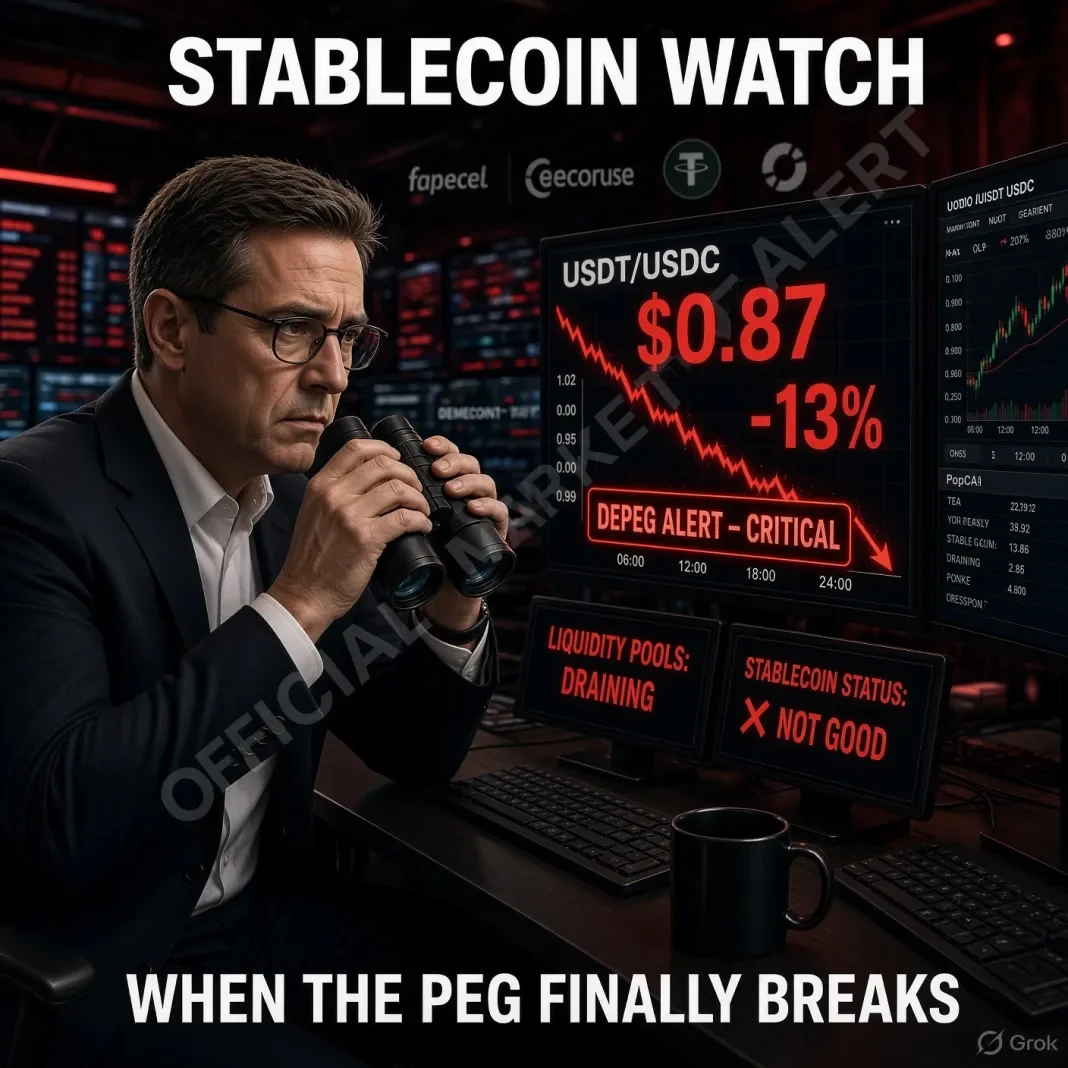
That is a paperwork path for state-supervised issuers, mostly those under the $10 billion outstanding cap. It is not a U.S. central-bank digital currency, and it is not a revaluation of any foreign currency.
What changes on the calendar:
The statute itself is expected to take effect on 18 January 2027 — 18 months after enactment.
From that date, issuing a payment stablecoin in the United States generally requires a permitted issuer licence.
Certifications will not actually be accepted until Treasury posts a notice that the Paperwork Reduction Act clearance is done.
Why currency watchers should care:
Regulated dollar-linked tokens are being wired into ordinary payment plumbing: reserves, redemption rules and a dual federal–state licence path. That can widen how dollar value moves inside the U.S. and across borders.
It does not set a reset date, and it does not promise a foreign-currency revaluation.
Proof Federal Register — Forms and Procedures for Review of State Certifications (30 Sept 2026):
https://federalregister.gov/documents/2026/09/30/2026-19966/forms-and-procedures-for-review-of-state-certifications-by-the-stablecoin-certification-review
PDF: https://govinfo.gov/content/pkg/FR-2026-09-30/pdf/2026-19966.pdf
The live story is licensed dollar payment rails being built in public. Follow the rulebook, not the countdown clocks.
Guardrail:
Nothing in this filing creates:
a CBDC,
a reset date,
or a foreign-currency revaluation.
Infrastructure only
So:
Treasury has switched on the state-certification desk for the GENIUS Act.
Interim forms for the Stablecoin Certification Review Committee took effect 30 Sept 2026, so states can show their payment-stablecoin rules match the federal standard.
The Act itself is expected to bind on 18 Jan 2027.
Dollar payment rails are being licensed.
This is not a CBDC and not a currency revaluation.
Source: Federal Register 2026-19966.
Source(s):
• https://x.com/argosaki/status/2105840052010115472
https://dinarchronicles.com/2026/10/02/gp-q-stablecoin-watch-dollar-rails-not-a-reset/
America Is Quietly Building a New Gold & Silver System | Jason Cozens
America Is Quietly Building a New Gold & Silver System | Jason Cozens
Miles Franklin Media: 10-1-2026
Andy Schectman, Founder & CEO of Miles Franklin, speaks with Jason Cozens, Founder & CEO of Glint, about the accelerating push to make gold and silver usable as money across the United States.
Cozens says six states have already passed related laws, with another 14 actively working on legislation, as concerns grow around U.S. debt, inflation and the resilience of the financial system.
America Is Quietly Building a New Gold & Silver System | Jason Cozens
Miles Franklin Media: 10-1-2026
Andy Schectman, Founder & CEO of Miles Franklin, speaks with Jason Cozens, Founder & CEO of Glint, about the accelerating push to make gold and silver usable as money across the United States.
Cozens says six states have already passed related laws, with another 14 actively working on legislation, as concerns grow around U.S. debt, inflation and the resilience of the financial system.
They discuss Florida’s emerging gold and silver framework, the expansion of precious-metals vaulting in the U.S., and how digital platforms could make gold easier to transact and redeem for physical metal.
Cozens also explains why he believes cities such as Miami, Austin and Salt Lake City could develop into major gold hubs, potentially strengthening America’s role in the global gold and silver market.
In this episode of Little by Little with Andy Schectman:
Why U.S. states are turning to gold and silver
The $40 trillion U.S. debt problem
20 states advancing gold and silver legislation
Making gold usable as everyday money
Could America become a global gold hub?
00:00 Coming Up
02:12 Introduction
03:33 UK Gilts Breaking News
06:15 Debt Spiral and Bonds
08:49 AI Risk and Disruption
Seeds of Wisdom RV and Economics Updates Friday Afternoon 10-2-26
Good Afternoon Dinar Recaps,
GLOBAL DEBT RESET WATCH: OIL EASES AS BOND MARKETS AWAIT CRITICAL U.S. JOBS DATA
Oil prices retreated and global markets showed signs of stabilization as investors assessed weaker U.S. employment data, elevated government borrowing costs, and the Federal Reserve’s next policy decision.
Good Afternoon Dinar Recaps,
GLOBAL DEBT RESET WATCH: OIL EASES AS BOND MARKETS AWAIT CRITICAL U.S. JOBS DATA
Oil prices retreated and global markets showed signs of stabilization as investors assessed weaker U.S. employment data, elevated government borrowing costs, and the Federal Reserve’s next policy decision.
OVERVIEW
Oil prices eased on October 2, offering some relief to markets concerned about energy-driven inflation, although crude prices remained elevated.
U.S. September job growth fell short of expectations, with employers adding 29,000 jobs compared with economists’ forecasts of 90,000, according to Reuters.
Bond and currency markets remained under pressure after a turbulent week marked by high government borrowing costs and uncertainty over interest rates.
KEY DEVELOPMENTS
1. Oil Prices Retreat, but Energy Risks Remain
Oil prices moved lower as investors responded to reports that European countries were discussing additional releases of diesel and crude reserves. Reuters reported that Brent crude slipped below $100 per barrel during Friday trading.
The decline provided some relief to financial markets, but energy prices remained sensitive to developments in the Middle East and the potential for further supply disruptions.
For governments and businesses, the distinction matters: a temporary decline in oil prices can ease immediate cost pressures, but sustained relief depends on energy supply, demand, and geopolitical conditions.
2. U.S. Employment Data Changes the Interest-Rate Outlook
The U.S. Labor Department reported that employers added just 29,000 jobs in September, following a downwardly revised gain of 133,000 in August. The result was below the 90,000 increase economists surveyed by Reuters had expected.
The weaker report reduced market expectations for another Federal Reserve rate increase in October. However, one employment report does not settle the policy outlook. Inflation, wages, energy costs, and future economic data will also influence the Fed’s decisions.
3. Government Debt Remains a Central Market Concern
Global bond markets have experienced significant volatility as investors demand higher returns to hold government debt.
The Financial Times reported that the U.S. 10-year Treasury yield reached 5.37% on Friday, while yields in France and other European markets reflected continuing fiscal and inflation concerns. Bond prices and yields move in opposite directions, so rising yields generally mean falling prices for existing bonds.
Higher borrowing costs can increase the expense of refinancing maturing debt and financing new government spending. Even if oil prices fall or employment weakens, those underlying debt pressures do not disappear immediately.
WHY IT MATTERS
The interaction between energy prices, employment, interest rates, and government debt is a major influence on the global financial system.
When oil prices rise, transportation and production costs can increase, adding to inflationary pressure. Central banks may then keep interest rates higher for longer. Higher rates can make government borrowing more expensive, particularly for countries that must refinance large amounts of debt.
Conversely, falling energy prices and weaker employment data may reduce pressure for additional rate increases. But policymakers must balance inflation risks against signs of economic slowdown.
The latest market movement illustrates why investors are watching several indicators together rather than relying on a single headline.
WHY IT MATTERS TO FOREIGN CURRENCY HOLDERS
Foreign exchange rates respond to differences in interest rates, inflation, economic growth, investor confidence, and demand for safe or liquid assets.
Changes in expectations for Federal Reserve policy can affect the U.S. dollar and, in turn, the relative value of other currencies. Countries facing higher energy-import costs or rising government borrowing expenses may experience additional economic pressure, although the effect on any individual currency depends on many factors.
For foreign currency holders following the Global Financial Reset, the important lesson is that changing financial infrastructure and changing currency values are separate developments. Debt-market stress can influence exchange rates, but it does not guarantee that a particular currency will be revalued or appreciate.
IMPLICATIONS FOR THE GLOBAL RESET
Pillar 1: Debt
Higher government bond yields can increase refinancing costs and put pressure on public budgets. Investors will continue watching debt levels, fiscal plans, and demand at government bond auctions.
Pillar 2: Energy
Oil prices remain an important variable in inflation and global trade. A sustained decline could ease costs, while renewed supply disruptions could reverse that relief.
Pillar 3: Assets
Bond prices, equities, and currencies can react differently to the same economic data. Investors are reassessing valuations as interest-rate expectations and borrowing costs change.
Pillar 4: Currencies
Differences in monetary policy and economic conditions can shift demand among currencies. Exchange-rate changes reflect these market forces and do not, by themselves, establish a coordinated currency reset.
THE BOTTOM LINE
The October 2 market developments show how quickly oil prices, employment data, and bond yields can alter expectations for interest rates and government financing.
The immediate direction of markets remains uncertain, and the longer-term consequences will depend on inflation, economic growth, energy supply, and governments’ ability to manage debt.
The bigger story is not simply whether oil falls or bond yields rise—it is how governments, investors, and central banks are adapting to a world where energy security, public debt, and monetary policy increasingly shape the evolution of the global financial system.
Seeds of Wisdom Team
Newshounds News™ Exclusive
Sources
Reuters — “Global shares gain, bonds supported as oil drops, jobs data misses expectations”
Financial Times — “Global bond market steadies after sharp sell-off”
~~~~~~~~~~
Seeds of Wisdom Team RV Currency Facts Youtube and Rumble
Newshound's News Telegram Room Link
RV Facts with Proof Links Link
RV Updates Proof links - Facts Link
Start Here room with Most Asked Questions Link
Follow the Gold/Silver Rate COMEX
Follow Fast Facts
Seeds of Wisdom Team™ Website
Thank you Dinar Recaps
Rob Cunningham: Genuine Fed Transition Underway
10-2-2026
When the historical record ultimately establishes that President Donald J. Trump led a coalition that successfully replaced a fractional, opaque, intermediary-heavy, debt based banking system with a demonstrably sounder system built around full asset backing with applicable, transparent reserves, auditable ledgers, open access, rapid settlement, enforceable property rights, and institutional accountability – the historical significance will be enormous.
Rob Cunningham: Genuine Fed Transition Underway
10-2-2026
When the historical record ultimately establishes that President Donald J. Trump led a coalition that successfully replaced a fractional, opaque, intermediary-heavy, debt based banking system with a demonstrably sounder system built around full asset backing with applicable, transparent reserves, auditable ledgers, open access, rapid settlement, enforceable property rights, and institutional accountability – the historical significance will be enormous.

It will place Donald J. Trump in the relatively small category of U.S. Presidents associated with a fundamental redesign of American economic institutions, rather than merely a change in tax rates, regulation, or monetary policy.
The closest historical comparisons would be transformative periods such as Hamilton’s construction of the early federal financial architecture, Lincoln’s Civil War monetary reforms, FDR’s restructuring of banking during the Depression, and the post-WWII creation of the Bretton Woods order.
The distinction will be especially consequential because Trump’s reform actually eliminates the structural mismatch between immediately redeemable bank liabilities and less-liquid bank assets traditionally associated with fractional-reserve banking.
The Federal Reserve’s own historical material recognizes the relationship between fractional banking, liquidity stress, and bank runs, while the system relies on central-bank “reserves”, deposit insurance, “supervision”, liquidity facilities and other mechanisms cobbled together to offer an illusion of managing system risks.
Today, there is a genuine Fed transition underway toward regulated digital financial infrastructure. The GENIUS Act has produced federal rulemaking governing payment stablecoins, including issuer approval, reserves, compliance and anti-illicit-finance requirements.
Today, the evidence of global architectural modernization away from fractional-reserve banking exists in clear, plain sight. It will soon result in the abolishment of the centralized Fed System, one brilliantly outlined in “The Creature From Jekyll Island” by G. Edward Griffin and powerfully highlighted in the movie “MONEY DISRUPTED” by Fruition Productions.
Bringing in an entirely new, global, honest monetary system to replace the 1913 Federal Reserve system engineered to serve the control interests of the global deep state is a legacy that may never be surpassed, ever.
Source(s):
• https://x.com/KuwlShow/status/2105377164522889518
https://dinarchronicles.com/2026/10/01/rob-cunningham-genuine-fed-transition-underway/
News, Rumors and Opinions Friday 10-2-2026
Stephanie Starr: Asset-Backed USA Money
10-2-2026
THE BIG NEW DEAL
“100% ASSET-BACKED USA MONEY”
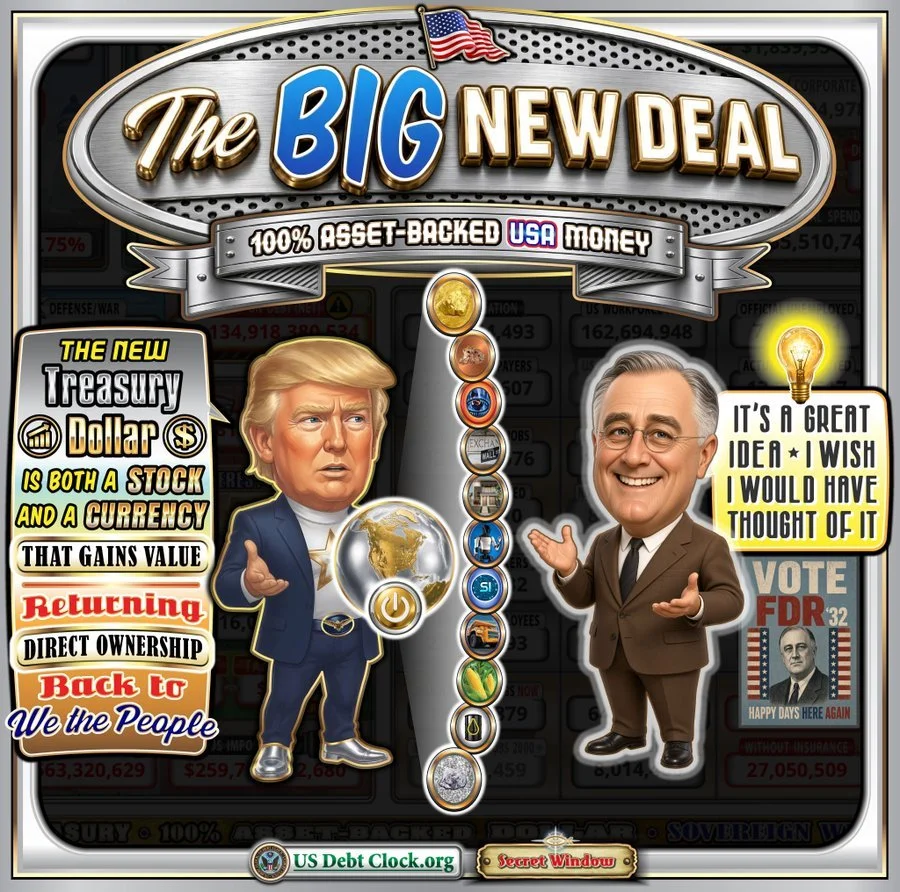
It describes a new Treasury Dollar as BOTH a currency AND a stock, one that “gains value” while returning direct ownership back to We the People. Look at the asset column: gold, minerals, markets, industry, technology, agriculture, energy, silver… all feeding into the system. And right in the center? A POWER BUTTON. The Debt Clock has repeatedly used the phrase “Flip the Switch” in its New Money Revolution material. Then you have Trump standing opposite FDR , the president associated with one of the biggest monetary restructurings in U.S. history!
Stephanie Starr: Asset-Backed USA Money
10-2-2026
THE BIG NEW DEAL
“100% ASSET-BACKED USA MONEY”
It describes a new Treasury Dollar as BOTH a currency AND a stock, one that “gains value” while returning direct ownership back to We the People. Look at the asset column: gold, minerals, markets, industry, technology, agriculture, energy, silver… all feeding into the system. And right in the center? A POWER BUTTON. The Debt Clock has repeatedly used the phrase “Flip the Switch” in its New Money Revolution material. Then you have Trump standing opposite FDR , the president associated with one of the biggest monetary restructurings in U.S. history!
THE BIG NEW DEAL.
And here’s the documented piece that makes the symbolism even more interesting…. In 2025, Trump ordered Treasury & Commerce to develop a plan for a U.S. Sovereign Wealth Fund designed to steward national wealth for the benefit of American citizens.
National Assets ,,,Sovereign Wealth …Treasury Dollar …Direct Ownership …We the People
“Both a stock AND a currency” may be the biggest clue in the entire image.
US DebtClock.org: usdebtclock.org
Source(s):
• https://x.com/StephanieStarrC/status/2105693733375340768
https://dinarchronicles.com/2026/10/02/stephanie-starr-asset-backed-usa-money/
************
Courtesy of Dinar Guru: https://www.dinarguru.com/
Walkingstick [Iraqi bank friend Aki update] Aki's boss already has the lower denomination notes in his bank in Dearborn because the moment they pull the trigger, [Iraqis who fled Iraq] are going to come into the banks and exchange their three zero notes...Aki's boss built a beautiful network of banks and the one that Aki is at happens to be in Dearborn...They're educating the Iraqi citizens in America on the [Iraqi] monetary reform and the next steps that are about to happen and what they should be doing.
Frank26 [Iraq boots-on-the-ground report] OMAR: This is coming from the CBI...For example, purely hypothetically, if Iraq establishes a rate of 1 IQD = $1 then 1 million IQD would have a gross exchange value of $1 million...CBI says not to listen to rumors...you won't hear any leaks...Just watch the CBI because there's a lot of talk about a revaluation and they don't have any intentions of changing the rate at this time. FRANK: The CBI is being very pointblank...IMO the announcement by the CBI is just simply keeping the speculators away and also preparing the Iraqi citizens for the announcement of a new exchange rate because they say there is no plans to change rate right now...But what about next week? Are you going to change it then? ...They're using well calculated words... Obviously there's an announcement coming very soon.
Mnt Goat How the process on deleting the zeroswill work. Will they null and void out the old 3 zero notes once they redenominate? In ordinary daily circulation of the dinar the 3 zeros notes will be taken out of circulation not null and voided, thus only taken out of the general circulation. However, the CBI has told us they will still us the 3 zero notes for inter-banking transactions for trade when large sums of money is necessary. They will use mostly the 25,000 dinar notes for this purpose. This statement by the CBI also tells us these older 3 zeros notes will increase in value. [Example]: So, within inter-banking transactions a 25,000 note would be worth $100,000 ($4 x 25,000). [Post 1 of 2....stay tuned]
Mnt Goat Technically there is not going to be any revaluation in Iraq...The rate inside of Iraq therefore does not change only the bills change...when is reinstated on FOREX, at the rate we are all looking to exchange it for...We...outside of Iraq...will exchange the dinar for our currency of our own country... [Post 2 of 2]
They're "Losing Control" As Interest Rates Crush The System | David Morgan
Liberty and Finance: 10-1-2026
David Morgan breaks down the recent surge in Treasury yields and warns that further increases could put significant pressure on housing, commercial real estate, consumers, and the broader economy.
He discusses the possibility of the 10-year Treasury yield reaching 8% and explains why the bond market may be gaining greater influence over interest rates.
Morgan also examines rising oil prices, refining bottlenecks, and how prolonged energy disruptions could contribute to a deeper economic slowdown.
INTERVIEW TIMELINE:
0:00 Intro
1:08 Spiking Treasury yields
7:00 Oil crisis
10:00 Metals selloff
21:41 Courage vs compliance
Reset Intelligence: Are Gold-Backed Currencies Coming?
Reset Intelligence: Are Gold-Backed Currencies Coming?
By Reset Intelligence | @EXIT_FIAT
The economist who has argued for 30 years that the dollar should be tied to gold again is now counselor to US Treasury Secretary Scott Bessent. Her best-known proposal is a Treasury bond that pays back in dollars or in a fixed weight of gold.
The same week, a fresh shipment of cash dollars from the New York Fed landed in Baghdad, and Bessent told Iraq's Foreign Minister what Washington expects next.
Reset Intelligence: Are Gold-Backed Currencies Coming?
By Reset Intelligence | @EXIT_FIAT
The economist who has argued for 30 years that the dollar should be tied to gold again is now counselor to US Treasury Secretary Scott Bessent. Her best-known proposal is a Treasury bond that pays back in dollars or in a fixed weight of gold.
The same week, a fresh shipment of cash dollars from the New York Fed landed in Baghdad, and Bessent told Iraq's Foreign Minister what Washington expects next.
The appointment
Her name is Judy Shelton. Trump picked her for the Federal Reserve's board in 2019, and the Senate stalled her in November 2020 on a vote of 47 to 50. The idea she is known for is the Treasury Trust Bond. It pays no interest along the way. At maturity the holder chooses: the face value in dollars, or a weight of gold fixed on the day the bond was sold. She has written that other countries, and the European Central Bank, could issue gold-redeemable debt of their own. She joins the Treasury as the 10-year yield touched 5.33% on Thursday, its highest since 2002.
Everything else that moved
The buyers - Poland added 82 tonnes of gold in the first 6 months of this year. China's central bank has bought for 22 months in a row. In a survey of 76 central banks, 89% said they expect official gold holdings to keep rising. Gold has passed US Treasuries as the largest asset in foreign official reserves, something not seen since 1996.
Iraq's gold - the Central Bank of Iraq holds about 175 tonnes, roughly a quarter of its reserves and the third-largest holding in the Arab world. On Thursday its governor, Nizar Nasser Hussein, was elected deputy chair of the council of Arab central bank governors.
The dollars - a new shipment of cash dollars from the New York Fed arrived in Iraq on Wednesday, the government's spokesman confirmed. On Thursday Bessent met Foreign Minister Fuad Hussein and "discussed the United States' expectations for Prime Minister Ali al-Zaidi's reforms." The Treasury called it "a frank discussion."
The street - the dollar closed Thursday at 157,300 IQD per $100 in Baghdad, against the official 131,000. The central bank's foreign currency sales are down 34.5% in the first 8 months of this year.
The holdout - Kataib Hezbollah's leader said "the resistance has won this round." Prime Minister al-Zaidi answered that the state alone decides war and peace, and announced that Iraq will buy a national air defense system.
Tehran - Iran loaded no crude onto tankers in September, Bessent said. A third American aircraft carrier is on its way to the region. Brent settled at $103.50 and gold closed near $4,182.
The question
Our theory is that every currency is heading back to hard assets, the IQD included. A dollar tied to gold changes what every currency priced in dollars has to prove, and Iraq is sitting on gold and oil.
That is the short version. Why the world's central banks have been buying, what a gold-linked dollar would mean for the IQD, and the promise America took out of its own bonds in 1933 - that is the daily read.
Read the full daily briefing free for 5 days. Sign up here: the daily Iraqi dinar briefing
Want it straight from the horse's mouth? The CBI Rate Alert pings you the moment the Central Bank of Iraq moves the official rate. The number itself, not a rumour about it. It comes with our free resource library and the daily breakdown of what is actually moving in Iraq. Sign up free: The CBI Rate Alert
Got a dinar question? Reset Intelligence runs an on-call research assistant: ask it anything they have published. It answers in seconds and will conduct deep research to find you the answer. Try it: the Iraqi dinar research assistant
Common questions, answered straight: When will the Iraqi dinar revalue? and Is the Iraqi dinar revaluation real?
The design behind all of it is mapped in Head of the Snake, and the free guides live in the Iraqi dinar resource library.
Follow the daily intel free: Telegram · Facebook · Spotify · Odysee
Seeds of Wisdom RV and Economics Updates Friday Morning10-2-26
Good Morning Dinar Recaps,
WON RESET WATCH: SOUTH KOREA URGES FASTER DEVELOPMENT OF WON-BACKED STABLECOINS
South Korea’s cryptocurrency industry is urging faster development of digital payment tokens backed by the Korean won as the country responds to the growing reach of dollar-based digital payments.
Good Morning Dinar Recaps,
WON RESET WATCH: SOUTH KOREA URGES FASTER DEVELOPMENT OF WON-BACKED STABLECOINS
South Korea’s cryptocurrency industry is urging faster development of digital payment tokens backed by the Korean won as the country responds to the growing reach of dollar-based digital payments.
OVERVIEW
Dunamu, operator of South Korea’s largest cryptocurrency exchange, Upbit, is urging the country to accelerate development of won-backed stablecoins.
The company says it is prepared to provide technology and distribution support once the necessary legal and regulatory framework is established.
The debate highlights growing competition over which currencies will be used in digital payments and how money will move across increasingly connected financial networks.
KEY DEVELOPMENTS
1. South Korea Faces Growing Competition in Digital Payments
On October 2, 2026, The Wall Street Journal reported that Dunamu CEO Oh Kyoung-suk called for faster development of won-backed stablecoins to protect the Korean currency’s role as dollar-based digital payments expand.
Oh argued that South Korea needs payment services capable of competing with dollar-backed alternatives on cost and speed.
Dunamu operates Upbit, the country's largest cryptocurrency exchange. The company says it is preparing to support stablecoin technology and distribution once the required rules are in place. It has not announced a firm launch date, and it does not currently plan to issue the stablecoins itself.
2. Regulation Remains the Critical Next Step
South Korea is developing legislation to determine who can issue won-backed stablecoins and how these digital assets will operate.
The issue involves more than technology. Regulators must consider issuer eligibility, financial safeguards, oversight, and the relationship between private digital payment instruments and the existing banking system.
The debate also reflects concerns about capital flows. Dollar-backed stablecoins can make it easier to move value between markets, raising questions about whether domestic alternatives could help maintain demand for the won—or whether users would continue preferring dollar-linked assets.
3. The Competition Extends Beyond One Currency
Won-backed stablecoins are part of a wider international discussion about digital money, payment efficiency, and monetary influence.
Dollar-backed stablecoins already offer a way to transfer digital value linked to the U.S. dollar. Other countries and financial institutions are examining how their own currencies could remain useful in digital commerce and settlement.
However, issuing a stablecoin does not automatically create international demand for its underlying currency. Adoption will depend on regulation, trust, liquidity, accessibility, and practical advantages for users and businesses.
WHY IT MATTERS
The development illustrates how competition in global finance is increasingly extending into the infrastructure used to transfer and settle money.
Stablecoins are privately issued digital tokens designed to maintain a stable value relative to a currency or another asset. They are distinct from central bank digital currencies (CBDCs), which are digital forms of central bank money.
If properly regulated and widely adopted, won-backed stablecoins could provide another option for domestic payments and potentially some cross-border transactions. Their actual reach will depend on the rules South Korea adopts and whether consumers, companies, and financial institutions choose to use them.
The broader significance is that countries are considering how to preserve the usefulness of their currencies as more financial activity moves onto digital platforms.
WHY IT MATTERS TO FOREIGN CURRENCY HOLDERS
For foreign currency holders following the Global Financial Reset, this development offers a concrete example of countries responding to changes in the international monetary landscape.
The story is about currency utility, digital payment access, and competition for users—not a promise that the Korean won or any other currency will be revalued.
A currency’s future role depends on many factors, including economic conditions, monetary policy, market confidence, liquidity, and international demand. Digital payment infrastructure can influence how easily a currency is used, but it does not independently determine its exchange rate.
The practical takeaway is to watch which systems become operational, what regulations are adopted, and whether real-world use expands beyond pilot programs.
IMPLICATIONS FOR THE GLOBAL RESET
Pillar 1: Technology
Stablecoins show how digital tokens could become part of everyday payment and settlement infrastructure. The next milestone is establishing regulatory safeguards and demonstrating reliable use at scale.
Pillar 2: Assets
The development highlights the growing importance of digital assets linked to national currencies. Their usefulness will depend on credible backing, clear redemption arrangements, sound oversight, and market confidence.
Pillar 3: Trade
Faster digital settlement could eventually support some cross-border business payments and remittances. However, regulatory differences and currency-conversion requirements may continue to limit adoption.
Pillar 4: Currencies
South Korea’s debate reflects a wider question: how can national currencies remain relevant as dollar-linked digital instruments expand? The answer will depend on adoption, trust, and economic fundamentals—not simply the launch of a new token.
THE BOTTOM LINE
South Korea’s push for won-backed stablecoins is an important development to monitor because it connects national currency policy with the expansion of digital payments.
The next evidence to watch is the legislation, the eligibility requirements for issuers, and whether regulated won-backed stablecoins move from development into practical use.
The bigger story is not simply whether the won gains a digital counterpart—it is how countries are rebuilding the infrastructure through which currencies compete, payments move, and the global financial system evolves.
Seeds of Wisdom Team
Newshounds News™ Exclusive
Sources
The Wall Street Journal — “Dunamu CEO Urges South Korea to Move Quickly on Won-Backed Stablecoins”
Financial Times — “Stablecoins craze pits central bank against lawmakers in South Korea”
~~~~~~~~~~
🌱 A Message to Our Currency Holders🌱
If you’ve been holding foreign currency for many years, you were not foolish.
You were not wrong to believe the global financial system would change.
What failed was not your patience — it was the information you were given.
For years, dates, rumors, and personalities replaced facts, structure, and proof. “This week” predictions created cycles of hope and disappointment that were never based on how currencies actually change.
That is not your failure.
Our mission here is different: • No dates • No rates • No hype • No gurus
Instead, we focus on:
• Verifiable developments • Institutional evidence
• Global financial structure • Where countries actually sit in the process
Currency value changes only come after sovereignty, trade, banking, settlement systems, and fiscal coordination are in place. History and institutions confirm this sequence.
You will see silence. You will see denials. That is not delay — that is discipline.
Protect your identity. Organize your documents. Verify everything.
Never hand your discernment to anyone who cannot show proof.
You deserve truth — not timelines.
Seeds of Wisdom Team
Newshounds News
~~~~~~~~~~
Seeds of Wisdom Team RV Currency Facts Youtube and Rumble
Newshound's News Telegram Room Link
RV Facts with Proof Links Link
RV Updates Proof links - Facts Link
Start Here room with Most Asked Questions Link
Follow the Gold/Silver Rate COMEX
Follow Fast Facts
Seeds of Wisdom Team™ Website
Thank you Dinar Recaps
Ariel: Everything is Lining up for the Main Event
Ariel: Everything is Lining up for the Main Event
10-1-2026
No More US Coalition Forces In Iraq
• Complete The Cabinet
• Make The Official Announcement
• Sign Off On The Removal Of The Program Rate
Ariel: Everything is Lining up for the Main Event
10-1-2026
No More US Coalition Forces In Iraq
• Complete The Cabinet
• Make The Official Announcement
• Sign Off On The Removal Of The Program Rate
• Enter The Forex Market With New Purchasing Power
~We Are Literally On The Mark
Il Donaldo Trumpo: WE'RE FINALLY LEAVING IRAQ!!!
Watch on X: https://twitter.com/i/status/2105354076296802803
Everything Is Lining Up For The Main Event
A Field Report
The lattice is complete and every node just lit green. What you need to know.
Musk inside Project Meridian means satellite-verified gold corridors from Basra to Jordanian ports no more British MI6 smuggling runs through the oil fields, Space Force elements are already authenticating the shipments. Hegseth has US forces fully out of Iraq, which does something nobody’s talking about. It removes the last C***l cover story for stalling Baghdad’s cabinet, and the Kurdish-Shiite-Sunni power-sharing deal is now finalizing with the October 15, 2027 budget pegging the dinar directly to those 170 verified tons.
Here’s the detail that should have every IQD holder excited.
Judy Shelton didn’t take a ceremonial Treasury role she’s Counselor with direct channel to the Secretary, her gold-standard blueprint is in active circulation, and the SEC/CFTC rule finalizations mean gold-backed instruments are now legally tradeable on US exchanges for the first time in decades.
The pending Fort Knox audit is the fuse, not the fire once independent auditors walk those Kentucky vaults and expose decades of London Fix swaps and Rothschild-network leases, the derivative empires of the Fed, City of London, and WEF central banks face the choice of collapse or re-peg, and they will re-peg. Soros-adjacent saboteurs are trying media leaks and cyber ops right now and failing, because the fiscal year rollover already locked the architecture in before they could counter.
Dinar holders aren’t holding paper they’re holding a claim ticket on the first sovereign currency revaluation of the post-fiat era, and the window between “everything lined up” and “public announcement” is measured in days, for Iraq’s cabinet completion. Not weeks. The bloodlines kept the vaults closed for fifty years. The vault doors open this cycle.
Source(s):
• https://x.com/Prolotario1/status/2105360646414221748
• https://x.com/Prolotario1/status/2105437385328644580
https://dinarchronicles.com/2026/09/30/prolotario-everything-is-lining-up-for-the-main-event/
FRANK26….10-1-26….CBI CONFESSION
KTFA
Thursday Night Video
FRANK26….10-1-26….CBI CONFESSION
This video is in Frank’s and his team’s opinion only
Frank’s team is Walkingstick, Eddie and Omar in Iraq and guests
Playback Number: 605-313-5163 PIN: 156996#
KTFA
Thursday Night Video
FRANK26….10-1-26….CBI CONFESSION
This video is in Frank’s and his team’s opinion only
Frank’s team is Walkingstick, Eddie and Omar in Iraq and guests
Playback Number: 605-313-5163 PIN: 156996#
Iraq Economic News and Points To Ponder Thursday Evening 10-1-26
The Dollar In Iraq: The Government Announces The Arrival Of A New Cash Shipment
Last updated: October 1, 2026 The Independent - Iraqi government spokesman Haider al-Aboudi announced the arrival of a new shipment of cash dollars to Iraq, as part of the understandings reached with the United States regarding the continued sending of shipments of US currency to meet legitimate needs in the Iraqi market.
The Dollar In Iraq: The Government Announces The Arrival Of A New Cash Shipment
Last updated: October 1, 2026 The Independent - Iraqi government spokesman Haider al-Aboudi announced the arrival of a new shipment of cash dollars to Iraq, as part of the understandings reached with the United States regarding the continued sending of shipments of US currency to meet legitimate needs in the Iraqi market.
Al-Aboudi had previously confirmed that Prime Minister Ali Faleh al-Zaidi, during his visit to the United States, reached an understanding regarding the continued sending of cash dollar shipments to Iraq, in a move that the government said comes in conjunction with strengthening control measures over the distribution of foreign currency and regulating its use.
According to government statements, the understandings with the American side came in light of the measures taken by Iraq to reduce the misuse of foreign currency, in addition to the expansion of electronic payment systems and the gradual shift towards digital transactions.
Official authorities have not yet announced the value of the new shipment of cash dollars, while previous statements indicated that the aim of continuing these shipments is to provide the necessary liquidity to cover legitimate demands for foreign currency.
The shipment comes at a time when the Iraqi exchange market is witnessing continuous movements in the dollar exchange rate against the dinar, making the levels of cash liquidity and the size of the supply of the American currency among the issues that are widely followed in economic and banking circles.
The impact of the new shipment on liquidity levels and the movement of the exchange market is expected to become clear in the coming period, in conjunction with the continuation of governmental and banking measures aimed at regulating the trading of the dollar and strengthening control over its uses. https://mustaqila.com/الدولار-في-العراق-الحكومة-تعلن-وصول-شح/
Starting Next Week, Al-Taif Bank Announces Cash Withdrawals For Its Customers In The Provinces.
Shafaq News - Baghdad Al-Taif Islamic Bank of Iraq announced on Thursday that it has strengthened its branches in various governorates with cash and liquidity as part of the measures taken to regulate withdrawal operations and provide cash liquidity to customers.
In an official statement, the bank said that starting from the beginning of next week, the bank’s customers will be able to make withdrawals from the bank’s branches in the governorates according to specific and approved ratios, in order to ensure the organization and smooth flow of the disbursement process.
The statement confirmed that the process of replenishing branches with cash has already been completed, noting that procedures are ongoing to facilitate and organize withdrawals in a way that ensures the best possible smoothness for customers.
This statement comes with the confirmation by the management of Al-Taif Islamic Bank, represented by the Trustees Committee, on September 19th, that the ratios will be adopted in the near future to distribute depositors’ funds according to the balances available in the accounts in order to achieve the principle of fairness in distribution.
The Central Bank of Iraq had decided to place Al-Taif Islamic Bank for Investment and Finance under guardianship for 18 months, due to violations that it said affected the bank's financial position and depositors' funds.
The Central Bank stressed that imposing guardianship does not mean the bank’s bankruptcy, but rather comes within the framework of precautionary supervisory measures aimed at protecting the rights of depositors, noting that depositors’ funds are protected under the applicable laws and regulations.
Following this, a number of depositors demonstrated in front of Al-Taif Islamic Bank in the Karrada district of Baghdad, protesting the freezing of banking services and the suspension of withdrawal and deposit operations, following the measures taken by the Central Bank of Iraq against the bank.
Speaking to Shafaq News Agency, the protesters demanded an end to restrictions on banking services and that they be allowed access to their money and the ability to withdraw their deposits, stressing that their demands focus on receiving their money and not leaving it pending.https://www.shafaq.com/ar/مجتـمع/اعتبارا-من-ال-سبوع-المقبل-مصرف-الطيف-يعلن-السحب-النقدي-لزبا-نه-في-المحافظات
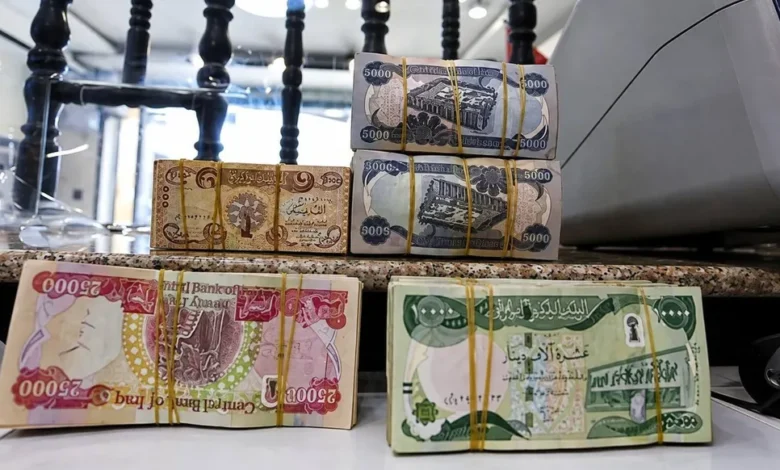
A Government Source: We Are Working To Stimulate Economic Activity And Protect Purchasing Power, And There Is No Decision Yet To Change The Currency Or Remove Zeros
Baghdad - One News A government source confirmed that the government is aware of the slowdown in buying and selling in the markets, and is working on solutions to stimulate economic activity and protect the purchasing power of citizens.
The source explained that the current economic challenges are not limited to Iraq, but are faced by most countries in the region due to regional tensions and the closure of the Strait of Hormuz and the resulting economic pressures and repercussions.
He pointed out that the government seeks to address internal obstacles and stimulate commercial and productive activity, in addition to facilitating financing for productive projects and supporting the private sector, with the aim of revitalizing market activity and driving the economy forward.
Regarding the talk circulating about changing the currency or removing zeros, the source reassured citizens that putting forward such proposals does not mean approving them or starting to implement them, stressing that the file is still in the initial discussion phase and no decision has been made about it yet.
He added that boosting confidence in the markets requires providing clear information and practical steps, in parallel with cooperation between the government, financial institutions and the private sector to alleviate pressures and improve economic activity.
The source called on citizens, merchants, and business owners to remain calm regarding circulating news and to rely on official information, particularly concerning currency, procedures, and economic policies.
https://1news-iq.net/مصدر-حكومي-نعمل-على-تحريك-النشاط-الاقت/
What Should I Do With Cash Sitting In My Bank Account?
What Should I Do With Cash Sitting In My Bank Account?
Published Sep 23, 2026 Sergei Klebnikov
Idle cash refers to money that is not invested, not needed for daily expenses and not reserved for future purchases. When cash sits uninvested and earns little yield, it loses purchasing power over time, especially during periods of inflation and rising costs. But putting idle cash to work doesn’t necessarily mean seeking the highest available yield.
What Should I Do With Cash Sitting In My Bank Account?
Published Sep 23, 2026 Sergei Klebnikov
Idle cash refers to money that is not invested, not needed for daily expenses and not reserved for future purchases. When cash sits uninvested and earns little yield, it loses purchasing power over time, especially during periods of inflation and rising costs. But putting idle cash to work doesn’t necessarily mean seeking the highest available yield.
The first step is understanding the role that cash plays in your financial life. Some dollars may need to remain immediately accessible for everyday expenses or unexpected needs. Others may be earmarked for a future purchase, tax payment or other known expense. And some cash may not have a near-term use at all.
Once you’ve identified what the money is for, you can consider the appropriate balance of accessibility, stability and return potential – along with factors such as risk, taxes, fees and withdrawal restrictions.
A useful starting point is to think about your cash as part of a broader liquidity bucket – the money you want available to support your lifestyle, provide a financial cushion, fund upcoming purchases or obligations, and preserve flexibility for opportunities that may arise. Once you’ve sized those needs, you can more clearly identify cash that may be available for longer-term investing.
Why leaving cash sitting in a bank account can be a problem
Keeping money in a bank account can often feel like a conservative choice when it comes to covering bills, managing day-to-day spending and keeping an emergency cushion. Having accessible funds for these purposes makes sense; the issue, though, is what happens when “extra” cash sits in a low-yield account for long stretches of time. Even if your balance doesn’t change, inflation can reduce what that money can buy over time (purchasing power).
But remember, “fixing” the problem of idle cash isn’t just about chasing the highest rates. Higher yield usually comes with trade-offs. Depending on the option, those trade-offs could be less convenience (extra steps to move money), more rules (limits on withdrawals or penalties for early access) or more price fluctuations. Different options offer different trade-offs with regard to accessibility, stability and return potential – which is why the right choice starts with understanding when and why you’ll need the money. Footnote 1 Opens overlay
“The conversation shouldn’t start with, ‘Where can I get the highest yield?’ It should start with, ‘What do I want or need this money to do for me?’ Once you understand the purpose and timing of your cash, you can make a much more thoughtful decision about where it belongs,” said Angelena Mascilli, Managing Director and Head of Wealth Management Banking.
There isn’t one universal best place to put cash. The better approach is to match the money – and where you store it – to your goals and timeline: Cash you may need soon typically calls for prioritizing accessibility, while cash you won’t need for a while may give you a chance to seek a higher yield, so long as you’re comfortable with the associated rules and risks.
Start by sizing your liquidity needs
Before deciding where to put your cash, start by determining how much liquidity you actually need. Rather than treating all of your cash as one pool, consider the different jobs you may need it to perform.
For example, your liquidity needs may include:
Operating cash flow: Money needed to cover regular day-to-day spending.
A financial safety net: Additional accessible funds that can help you manage unexpected expenses or simply provide greater peace of mind.
Known upcoming needs: Cash earmarked for taxes, a home purchase or renovation, tuition, travel, or another significant expense.
Opportunistic funds: Money you intentionally keep accessible so you can act when an investment or other opportunity arises.
There’s no universal amount that’s right for each category. Your appropriate liquidity level will depend on your spending, income, upcoming obligations, comfort level and broader financial plan. Once those needs are covered, you can identify whether you have excess cash that may be positioned differently.
Once you’ve identified how much liquidity you need and what each portion is for, time horizon becomes an important consideration in deciding where to hold it. Cash you may need on short notice generally calls for greater accessibility and stability, while cash with a more predictable or longer time horizon may offer additional flexibility.
Day-to-day (0–9 months): For cash you may need on short notice, prioritize accessibility and stability. This is money you need to be able to access quickly for near-term spending.
Reserve (9–18 months): For cash that you have the time and risk tolerance to invest. This money should still be available relatively easily, but you can also afford to direct it to more long-term options.
Strategic (18 months and beyond): For cash not needed in the short term, where you have greater flexibility in how it is positioned, depending on your goals and time horizon. Given the longer time horizon, you may be able to seek higher potential yields.
Day-to-day cash: Prioritizing accessibility and stability
For cash you expect to use in the near future, the priority is generally to keep it stable and readily accessible. Money market funds (MMFs) can be useful for day-to-day cash because they often offer higher liquidity with lower risk, not to mention generate income through interest (unlike a traditional savings account).
High-yield savings accounts (HYSAs) and bank money market deposit accounts are among the other options that may be appropriate for these needs. A key feature of both HYSAs and bank money market deposit accounts is that their rate can change over time. Annual percentage yields (APYs) may move up or down based on broader interest rate conditions or at the discretion of the financial institution. That makes it important to consider an account’s accessibility and overall features – not just its current rate.
These are also deposit accounts, which may come with Federal Deposit Insurance Corporation (FDIC) insurance (for banks) or National Credit Union Administration (NCUA) insurance (for credit unions), up to applicable limits and subject to eligibility. You may still want to confirm what is covered and how your balances are held, especially if you keep cash across multiple accounts. Footnote 2 Opens overlay
When evaluating where to hold cash you may need soon, consider factors beyond the headline rate, including:
Transfer speed: Understand how quickly you can access or move your money when you need it.
Withdrawal/transaction limits: Look for any restrictions that could affect flexibility when in a pinch.
Fees: Check for monthly maintenance fees and any charges for transfers or excess transactions.
Minimums: Make sure you can meet any opening deposit or minimum balance requirements needed to earn the advertised yield rate.
APY: Consider the current rate and whether it is likely to move frequently.
Customer support: Consider factors like customer service hours, mobile app quality and how easy it is to set up transfers.
Reserve Cash: Cds And T-Bills (How Laddering Can Keep Money Accessible)
Once you’ve identified cash that you’re unlikely to need immediately, you can begin considering solutions that may trade some day-to-day access for potentially higher yield. Depending on your time horizon and liquidity needs, certificates of deposit (CDs) and Treasury bills (T-bills) may enter the picture because they are built around defined time frames.
TO READ MORE: https://www.chase.com/personal/investments/learning-and-insights/article/what-should-i-do-with-cash-in-bank-account