
Ariel: IQD Update, the Process is Reaching a End Point
Ariel: IQD Update, the Process is Reaching a End Point
7-25-2026
IQD Update: The Process Is Reaching A End Point:
Are You All Following These Updates?
• Because Iraq’s current program rate system has kept its Dinar artificially undervalued and restricted convertibility; WTO entry will force greater openness and flexibility.
Ariel: IQD Update, the Process is Reaching a End Point
7-25-2026
IQD Update: The Process Is Reaching A End Point:
Are You All Following These Updates?
• Because Iraq’s current program rate system has kept its Dinar artificially undervalued and restricted convertibility; WTO entry will force greater openness and flexibility.
• This creates an opening for a redenominated Digital Dinar (with three zeros deleted) to be listed on global forex markets at a fair value reflecting Iraq’s resource base.
• The Ministry of Trade’s technical meetings in Geneva focused on finalizing protocols for customs data automation (ASYCUDA), digital trade settlement rails, and compliance with international anti-money laundering (AML) standards.
Institutional Capital Positioning Ahead of FX Debut
3 Steps To Look Into For This
-Select Gulf sovereign wealth funds and Asian family offices have begun quietly accumulating physical/digital Dinars in anticipation of their global relisting at higher valuations.
-These flows are being routed through newly established custody arrangements in Dubai International Financial Centre (DIFC) and Singapore Monetary Authority sandboxes.
-Once regulatory clarity from U.S./EU authorities aligns with WTO protocols, institutional capital will flow into compliant digital Iraqi dinars at scale.
So in other words Iraq’s accelerated WTO accession sets in motion a chain reaction that will culminate in its currency being relisted on global forex markets at a fair value reflecting its true economic potential likely following an initial upward revaluation tied to oil/gas exports before transitioning toward full floating status.
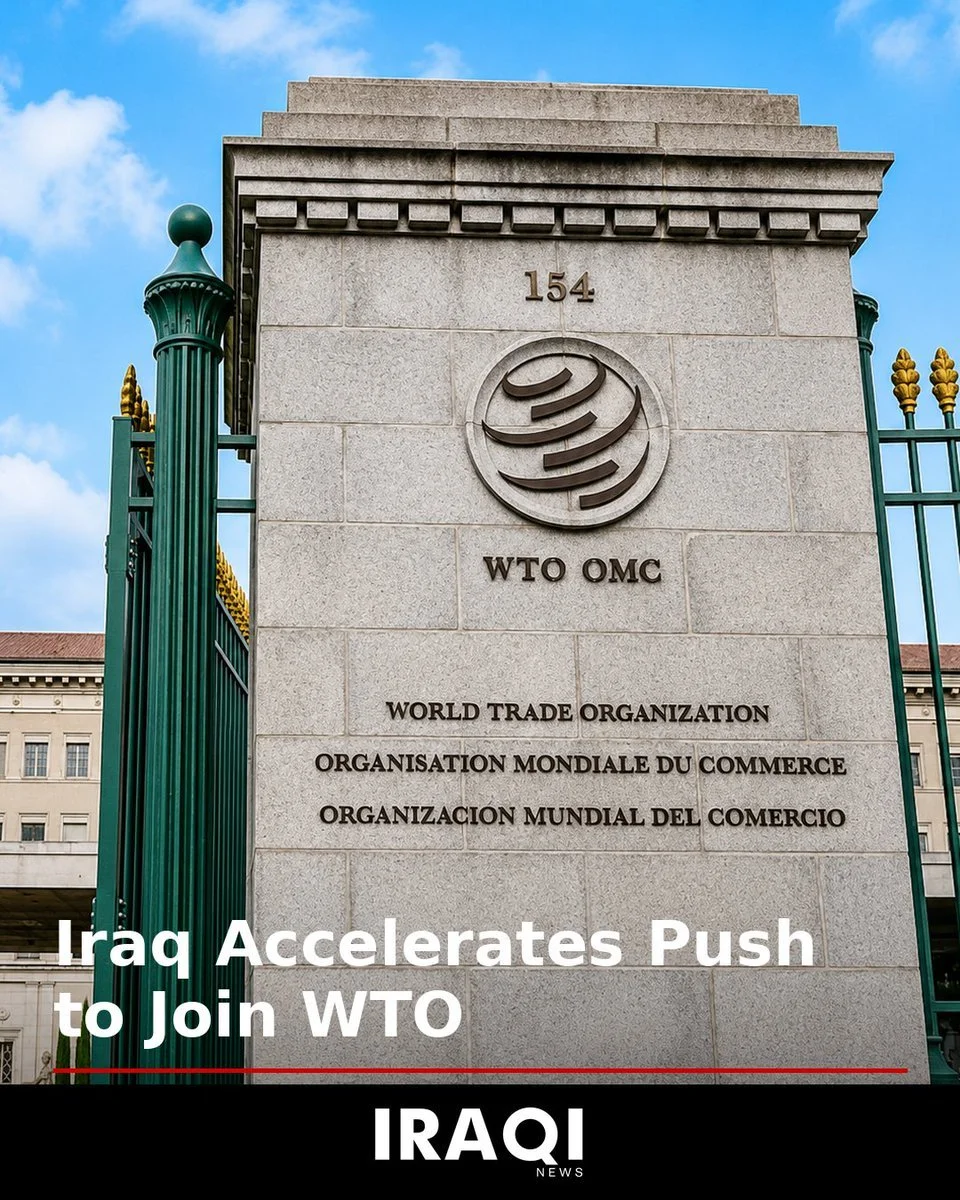
IraqiNews:Iraq is stepping up efforts to join the World Trade Organization, with the new administration pushing forward a process officials see as part of a broader economic reform and diversification agenda.
➡️Membership would bring Iraq into the rules-based global trading system, requiring it to align trade policies with international standards.
➡️ A team from Iraq's Ministry of Trade traveled to Geneva last week to finalize technical documents with the WTO Accession Division and the International Trade Centre.
➡️ The ITC has supported Iraq's accession since 2020 through an EU-funded program focused on institutional reform and trade law modernization.
https://www.iraqinews.com/iraq/iraq-accelerates-journey-towards-wto-membership/
Iraq Economic News and Points To Ponder Late Friday Evening 7-24-26
Iraq Accelerates Journey Towards WTO Membership
Business Iraq Iraqi News July 24, 2026 The WTO headquarters at the Centre William Rappard in Geneva, Switzerland Baghdad – Iraq has increased its attempts to join the World Trade Organization (WTO), with the new administration advancing a process that officials regard as part of a larger agenda of economic reform and diversification.
Iraq’s accession to the WTO would bring it into the rules-based global trading system, compelling the country to match its trade policies with international norms for market access, transparency, and regulation.
Iraq Accelerates Journey Towards WTO Membership
Business Iraq Iraqi News July 24, 2026 The WTO headquarters at the Centre William Rappard in Geneva, Switzerland Baghdad – Iraq has increased its attempts to join the World Trade Organization (WTO), with the new administration advancing a process that officials regard as part of a larger agenda of economic reform and diversification.
Iraq’s accession to the WTO would bring it into the rules-based global trading system, compelling the country to match its trade policies with international norms for market access, transparency, and regulation.
While membership does not ensure economic development, many observers regard it as a significant step toward building a more predictable climate for trade and investment.
Iraq’s WTO entrance is part of broader attempts to promote private sector growth, attract international investment, and boost non-oil economic activity. The process also requires considerable legal and institutional changes, such as modernizing trade laws and improving regulatory frameworks.
Last week, a team from Iraq’s Ministry of Trade traveled to Geneva to finalize technical documents with the WTO Accession Division and the International Trade Centre (ITC), marking another step forward in the country’s accession discussions.
Since 2020, the ITC has been supporting Iraq’s WTO accession process through a European Union-funded program.
Its work has focused on providing technical assistance to Iraqi institutions as they prepare for negotiations and implement the reforms required by the accession process.
Beyond the discussions, WTO admission is usually seen as a long-term reform goal.
The process promotes greater transparency, more predictable trade policies, and stronger institutions, while assisting countries in aligning domestic regulations with internationally recognized trade rules.
These measures might help Iraq diversify its economy, enhance its business environment, and integrate more effectively into regional and global value networks.
Their success, however, will be dependent on ongoing political commitment and execution after admission.
As negotiations continue, Iraq’s accession process remains both a trade negotiation and a larger exercise in economic modernization, with assistance from the WTO Secretariat, the ITC, the Ministry of Trade, and the European Union.
https://www.iraqinews.com/iraq/iraq-accelerates-journey-towards-wto-membership/
US Sanctions Fall Short Of Disrupting Iraq’s Parallel Economy
2026-07-24 / 06:00 Shafaq News- Baghdad Washington's current sanctions has failed to significantly curb Iraq's parallel economy, as sanctioned entities continue to benefit from state institutions, government contracts, and domestic financial networks despite international restrictions, according to an analysis published by the Middle East Forum.
While US sanctions have raised the cost of international financial transactions for individuals and entities linked to Iran-backed armed groups, the analysis argued, they have not prevented those actors from operating within Iraq's economy through legal recognition, licensing, and access to public funds.
It contends that the absence of complementary reforms inside Iraq has limited the effectiveness of Washington's pressure campaign. https://www.shafaq.com/en/Iraq/US-sanctions-fall-short-of-disrupting-Iraq-s-parallel-economy
Iraq Hunts For $77bn Missing Funds In Corruption Crackdown
By Nadim Kawach July 24, 2026 4:11 PM
Amount lent over 22 years
Finance watchdog says loans not repaid
Former officials arrested
Iraq has launched a probe to trace ID100 trillion ($77 billon) allegedly lent to government officials, ministries and other public entities over the past 22 years.
The Federal Board of Supreme Audit (FBSA), the Iraqi government’s top financial watchdog, said the loans have not been paid back although some were provided as early as 2004 by the finance ministry, central bank and other official bodies.
“There are nearly ID100 trillion in outstanding loans that have not been settled… We have referred thousands of cases to the judiciary and the integrity commission,” FBSA chairman Ammar al-Mashadani was quoted by the state news agency as saying.
“The board’s report reveals that no loan has been paid back… These funds have accumulated since 2004 and have been provided to many parties,” al-Mashadani said.
A group of lawmakers, appearing on local TV, called on parliament to investigate the disappearance of the funds as part of an anti-corruption crackdown launched by prime minister Ali Al-Zaidi after he took office in May.
“A hundred trillion Iraqi dinars are missing and this federal report proves it… This report has been sent to all members of parliament,” Bassim al-Ghorabi, one of the legislators, said.
“These funds have been disbursed to officials, ministries, government agencies, projects and other official parties… these officials and parties have not settled the outstanding funds over the past years,” he said.
Authorities have reported the arrest of a number of former officials and public servants and the recovery of millions of dollars in allegedly stolen funds since the start of the anti-corruption drive.
Corruption and malpractice have been widely blamed for the delay of various projects and relatively low investment flow into Iraq, a country of 48 million people.
Opec member Iraq, which controls the world’s fifth-largest extractable oil deposits of 145 billion barrels, has not scored well in global corruption indices over recent years.
Last year, the country ranked 136 out of 182 countries in the corruption index of Berlin-based Transparency International.
In a study this month, the head of an Iraqi think tank said official estimates show that funds stolen by corrupt officials and agencies could reach $1 trillion.
“The scale of financial offences poses a significant challenge given official estimates indicating enormous financial losses,” said Gazi Faisal, chairman of the Baghdad-based Iraqi Centre for Strategic Studies, as reported by Al Bawaba News.
https://www.agbi.com/finance/2026/07/iraq-hunts-for-77bn-missing-funds-in-corruption-crackdown/
Billions Of Dollars... Iraq's Losses Since February 28
Localities2026-07-24 |Alsumaria News– Economy: The Prime Minister's financial advisor revealed,Mazhar Muhammad Salih losses Iraq Since the outbreak of war in the region, losses have ranged between $40 and $45 billion, as a result of the sharp decline in oil exports and the disruption of development projects that the government was counting on.
Al-Hurra quoted Saleh as saying that "the figure represents what economists call opportunity cost, that is, lost revenues and projects."Iraq From February 28th until mid-June 2026."
He warned that "the cost will rise the longer the war lasts and the more difficult it becomes to resume exports at their previous levels."
Iraq relies on oil to finance the majority of its public spending. Before the war, it exported about 3.3 million barrels per day, generating annual revenues of approximately $88 billion.
However, Saleh stated that "exports have declined since February 28th to less than 10 percent of their usual level and now only pass through a limited number of outlets, including..."Türkiye And Jordan.”
Saleh said that “the government has set what he described as red lines that cannot be crossed, including salaries, wages, pensions, grants, and social safety nets.”social welfareThe cost
of these payments is approximately eight Trillions of Iraqi dinars are spent monthly, equivalent to approximately $5.9 billion at the official exchange rate of 1,320 dinars to the dollar.
This monthly expenditure rises to around 11 trillion dinars when other expenses are included, such as those related to the electricity sector, medicine, food subsidies, and external debt servicing.
According to Saleh, approximately nine million Iraqis directly benefit from these payments. Including dependent family members, the number of those affected reaches around 40 million out of Iraq's population of approximately 50 million.
To finance the deficit , and with declining oil revenues, the government has resorted to domestic borrowing to secure the necessary liquidity.
Saleh stated that "Ministry of Finance Treasury bills are sold at interest rates between 3 and 5 percent to state-owned banks, which can then discount them at the central bank when they need liquidity.
This method was described as "facilitation"Quantitative, the Iraqi way," he said, comparing it to the tools used by the European Central Bank to support economies during crises.
The increased reliance on this type of financing has led to a rise in domestic public debt to over 106 trillion dinars.Central Bank of Iraq According to Saleh,
the central bank's reserves, which stood between $105 billion and $106 billion before the war, distributed among gold, foreign currencies, and credit-rated government bonds, have declined by more than 60 percent.
Saleh did not specify the current value of the reserves, but said the decline remained below 50 percent.
He added that "during the first few months, Iraq continued to receive delayed revenues from oil shipments exported before the war, as export proceeds usually arrive after about two months, which eased the pressure during the third and fourth months."
He said that "the ratio of local currency coverage by foreign reserves is still close to 90 percent, or slightly below it, while the minimum acceptable level according to the monetary standards cited is 75 percent."
Saleh believes that "this ratio indicates a degree of monetary stability, despite the pressures the war has placed on public finances and dollar inflows." https://www.alsumaria.tv/news/localnews/571257/
News, Rumors and Opinions Saturday 7-25-2026
KTFA:
Clare: Iraqi Prime Minister Media Office
Prime Minister Ali Faleh Al-Zaidi Receives Representatives of JPMorgan in Washington and Agrees on the Opening of a Bank Branch in Iraq to Finance Projects Implemented by U.S. Companies
Media Office of the Prime Minister
July 18, 2026
KTFA:
Clare: Iraqi Prime Minister Media Office
Prime Minister Ali Faleh Al-Zaidi Receives Representatives of JPMorgan in Washington and Agrees on the Opening of a Bank Branch in Iraq to Finance Projects Implemented by U.S. Companies
Media Office of the Prime Minister
July 18, 2026
Clare: JPMorgan Chase: Investment opportunities in Iraq are significant despite the challenges, and we look forward to increasing them.
7/17/2026
JPMorgan Chalkovsky, Managing Director and Head of Global Government Sector at JPMorgan Chalkovsky, confirmed on Thursday that Iraq has promising investment opportunities, particularly in infrastructure projects, noting that the bank has been partnering with Iraq for more than two decades.
Glukhovsky said, "Over the past 22 years, the bank has contributed to supporting Iraq by strengthening the role of the Trade Bank of Iraq (TBI), advising the government on credit ratings, and participating in financing some 20 projects in cooperation with international credit guarantee institutions."
She added that "infrastructure projects represent one of the most prominent areas of investment during the next phase," stressing that "continued international support for Iraq enhances the growth opportunities of these projects and increases the role of the private sector."
Regarding the challenges, she explained that "the security and political situation in the region affects the investment environment," expressing her hope for "improved stability in the coming months, which will support economic activity."
She also noted that "the Iraqi economy's dependence on oil presents a challenge," stressing that "the government's move towards diversifying the economy and strengthening the private sector is an important step towards building a more sustainable economy," and expressing her hope to expand the partnership between JPMorgan and Iraq in the coming phase. LINK
************
Frank26: "IMF PRAISE CBI FOR THE MONETARY REFORM SUCCESS".....F26
Finance Minister: IMF praise for government reforms reflects growing international confidence in the Iraqi economy
7/18/2026
Finance Minister Faleh Sari affirmed on Saturday that the International Monetary Fund's (IMF) praise for the reforms implemented by the Iraqi government reflects growing international confidence in the Iraqi economy. He emphasized the continuation of reform programs to enhance financial stability and support sustainable development.
In a statement received by the Iraqi News Agency (INA), the minister said, "The meeting between the government delegation, headed by Prime Minister Ali al-Zubaidi, and IMF Managing Director Kristalina Georgieva in Washington, D.C., represents a significant milestone in strengthening the partnership between Iraq and the IMF and supporting the economic and financial reforms being implemented by the government."
He added, "The IMF Managing Director's praise for the reform measures, particularly in the areas of financial reform, combating corruption, and diversifying revenue sources, reflects growing international confidence in the Iraqi economy and the government's steps aimed at building a more diversified and sustainable economy."
Sari noted that "the Ministry of Finance continues to implement its reform programs in coordination with national entities and international partners, contributing to strengthening financial stability, improving the efficiency of public financial management, enhancing the investment climate, and enabling the private sector to play a greater role in achieving sustainable economic development." LINK
Courtesy of Dinar Guru: https://www.dinarguru.com/
Jeff MOUs...Last week they were in DC...as of yesterday that was $200 billion in new revenue coming in to Iraq. Today they signed MOUs with Iran. Next week they're signing MOUs with Turkey...Iraq needs to know all of their expenses and revenue streams to correctly draft their budgets...Why the hell hasn't the rate changed, why the cabinet hasn't been completed? They have to know all of their money figures before they can revalue. The cabinet completion is the lynch pin to the rate change...Those two are almost one in the same.
Mnt Goat Is the Oil and Gas Law passed? I am a bit disappointed with the first two sessions of parliament under this new administration. During the election cycle we read multiple articles on how they would put a ‘high priority’ on the Oil and Gas Law and other laws. Yet it has not been taken up. We need to keep a close eye on this law.
Ariel Iraq is Preparing to Launch a Central Bank Digital Dinar...We Are Off To The Races...Iraq Is Preparing To Launch A Central Bank Digital Dinar (Cbd Dinars) In Parallel With The Physical Note Redenomination...this will become standard Support for International Trade & Investment...the WTO meetings that are ongoing are crucial in this area. We are watching the final pieces come together smoothly.
************
China Shuts Down Paper Gold Trading July 24 — Pento: “This Could Break the Western Gold Market”
Daniela Cambone: 7-24-2026
Michael Pento warns the U.S. is facing three simultaneous bubbles in credit, real estate, and equities that dwarf the 2008 financial crisis.
He explains why the Fed is trapped, why the middle class is being bankrupted by inflation, and why the next recession could metastasize into a depression.
Seeds of Wisdom RV and Economics Updates Saturday Morning 7-25-26
Good Morning Dinar Recaps,
Saudi Arabia Enters Direct Conflict as Red Sea Shipping Attacks Expand Middle East Energy Crisis
Saudi Arabia has launched military strikes against Houthi targets in Yemen following attacks on commercial shipping in the Red Sea, opening a new front in an already volatile regional conflict. As pressure continues in both the Bab el-Mandeb Strait and the Strait of Hormuz, global markets are increasingly focused on the risks to energy supplies, trade routes, and financial stability.
Good Morning Dinar Recaps,
Saudi Arabia Enters Direct Conflict as Red Sea Shipping Attacks Expand Middle East Energy Crisis
Saudi Arabia has launched military strikes against Houthi targets in Yemen following attacks on commercial shipping in the Red Sea, opening a new front in an already volatile regional conflict. As pressure continues in both the Bab el-Mandeb Strait and the Strait of Hormuz, global markets are increasingly focused on the risks to energy supplies, trade routes, and financial stability.
Overview
Saudi Arabia launched airstrikes against Houthi positions after Iran-backed forces targeted shipping linked to Saudi interests in the Red Sea.
The escalation places two of the world's most important maritime chokepoints under pressure—the Strait of Hormuz and the Bab el-Mandeb Strait.
Energy markets, shipping companies, insurers, and policymakers are closely monitoring developments as concerns grow over higher transportation costs and global inflation.
Key Developments
1. Saudi Arabia Responds Militarily to Red Sea Shipping Attacks
Saudi Arabia launched strikes against Houthi positions in Hodeidah and Kamaran Island, two strategically important areas along Yemen's Red Sea coastline. The operation followed Houthi attacks on commercial vessels and represents one of the most significant Saudi military responses since the 2022 truce.
The renewed fighting highlights the growing regional impact of the broader U.S.-Iran confrontation, with Iran-backed groups increasing pressure on international shipping lanes.
2. A Second Global Energy Chokepoint Faces Heightened Risk
While the Strait of Hormuz remains under intense pressure from the U.S.-Iran conflict, renewed instability around the Bab el-Mandeb Strait creates an additional threat to global commerce.
The Bab el-Mandeb serves as the southern gateway to the Red Sea and Suez Canal, connecting Europe, Asia, and the Middle East. Any sustained disruption forces vessels to reroute around the Cape of Good Hope, increasing shipping times, fuel consumption, insurance costs, and freight expenses.
With both strategic waterways experiencing elevated military risk, global supply chains face increased uncertainty.
3. Energy Markets Continue to Monitor Supply Risks
Although oil prices have experienced periods of volatility in recent days, traders remain focused on the possibility of further disruptions to crude oil exports from the Middle East.
Even when physical supply remains available, higher insurance premiums, security costs, and shipping delays can place upward pressure on energy prices, contributing to broader inflation concerns worldwide.
Central banks are also watching developments closely, as prolonged energy inflation could influence future interest-rate decisions and monetary policy.
4. Regional Security Risks Continue to Expand
Military analysts are monitoring whether the conflict remains concentrated around maritime security or broadens into additional regional confrontations involving Iran-backed groups.
Future statements from Saudi Arabia, Iran, Houthi leadership, the United States, and other Gulf nations may determine whether diplomatic efforts can prevent additional escalation or whether attacks against commercial shipping continue.
Why It Matters
The expansion of military operations into the Red Sea significantly increases risks to global trade and energy transportation. Pressure on both the Strait of Hormuz and the Bab el-Mandeb Strait simultaneously represents one of the most serious threats to international shipping since the beginning of the current Middle East crisis.
Because these routes carry a substantial share of the world's energy exports and commercial trade, continued instability has the potential to influence inflation, shipping costs, commodity prices, and financial markets around the globe.
Why It Matters to Foreign Currency Holders
For those following long-term global monetary and financial reforms, rising geopolitical instability often accelerates discussions surrounding energy security, diversified payment systems, alternative settlement mechanisms, and reserve asset strategies.
While these developments do not indicate an imminent currency revaluation, they reinforce the structural changes taking place as governments strengthen financial resilience amid growing geopolitical uncertainty.
Implications for the Global Reset
Pillar 2: Trade
Growing security risks in both the Red Sea and the Persian Gulf threaten some of the world's busiest maritime trade corridors, increasing transportation costs and disrupting global supply chains.
Pillar 5: Energy
Simultaneous pressure on two major energy chokepoints raises the potential for higher oil prices, increased market volatility, and renewed concerns over long-term global energy security.
Future Outlook
Attention will now focus on whether Saudi military operations remain limited or evolve into a broader regional campaign involving additional Gulf states and Iran-backed forces. Markets will also closely monitor shipping activity through both the Bab el-Mandeb Strait and the Strait of Hormuz, as continued disruptions could have lasting consequences for global trade, inflation, and financial markets.
This is not simply about military operations—it reflects the broader transformation of the global financial system as energy security, trade flows, and geopolitical power increasingly shape the future of the world economy.
Seeds of Wisdom Team
Newshounds News™ Exclusive
Sources
Crypto Briefing — Saudi military strikes Houthi targets in Yemen after Red Sea shipping attacks
Reuters — Middle East shipping and Red Sea security coverage
~~~~~~~~~~
🌱 A Message to Our Currency Holders🌱
If you’ve been holding foreign currency for many years, you were not foolish.
You were not wrong to believe the global financial system would change.
What failed was not your patience — it was the information you were given.
For years, dates, rumors, and personalities replaced facts, structure, and proof. “This week” predictions created cycles of hope and disappointment that were never based on how currencies actually change.
That is not your failure.
Our mission here is different: • No dates • No rates • No hype • No gurus
Instead, we focus on:
• Verifiable developments • Institutional evidence
• Global financial structure • Where countries actually sit in the process
Currency value changes only come after sovereignty, trade, banking, settlement systems, and fiscal coordination are in place. History and institutions confirm this sequence.
You will see silence. You will see denials. That is not delay — that is discipline.
Protect your identity. Organize your documents. Verify everything.
Never hand your discernment to anyone who cannot show proof.
You deserve truth — not timelines.
Seeds of Wisdom Team
Newshounds News
~~~~~~~~~~
Seeds of Wisdom Team RV Currency Facts Youtube and Rumble
Newshound's News Telegram Room Link
RV Facts with Proof Links Link
RV Updates Proof links - Facts Link
Start Here room with Most Asked Questions Link
Follow the Gold/Silver Rate COMEX
Follow Fast Facts
Seeds of Wisdom Team™Website
Thank you Dinar Recaps
Clarity Act Breakthrough, Iraqi Dinar Rises, Zimbabwe
Clarity Act Breakthrough, Iraqi Dinar Rises, Zimbabwe
The Charlie Ward Show: 7-24-2026
The global financial landscape is undergoing a profound and rapid transformation, marked by legislative milestones and significant economic shifts across both developed and developing nations.
A recent broadcast of The Charlie Ward Show shed light on these monumental changes, exploring how recent political decisions and resource-driven developments are reshaping the international monetary order.
Clarity Act Breakthrough, Iraqi Dinar Rises, Zimbabwe
The Charlie Ward Show: 7-24-2026
The global financial landscape is undergoing a profound and rapid transformation, marked by legislative milestones and significant economic shifts across both developed and developing nations.
A recent broadcast of The Charlie Ward Show shed light on these monumental changes, exploring how recent political decisions and resource-driven developments are reshaping the international monetary order.
From breakthrough legislation in the United States to crucial economic restructuring in Iraq and Zimbabwe, these events suggest a major realignment of global wealth and financial systems.
A pivotal moment in this shifting landscape occurred on July 23, 2026, when Wyoming Senator Cynthia Lummis confirmed that key legislative hurdles had been cleared with the approval of the landmark Clarity Act.
This development represents a significant bipartisan step forward, signaling a coordinated effort to establish clear regulatory frameworks for modern financial assets. By securing support across party lines, the passage of this act establishes a more predictable regulatory environment in the United States.
This U.S. legislative milestone does not exist in a vacuum. Rather, it aligns with a broader international trend toward economic modernization, echoing similar regulatory frameworks established earlier by Japan. As major global economies harmonize their financial rules, the groundwork is being laid for a more integrated, transparent, and modernized global financial system.
Beyond Western regulatory updates, the Middle East is experiencing its own economic renaissance, with Iraq at the forefront. Following a protracted and rigorous campaign against institutional corruption, Iraq is currently undergoing a critical structural overhaul.
This economic rebuilding phase has successfully paved the way for the re-entry of major Western energy corporations, signaling renewed foreign confidence in the nation’s stability and resources.
Central to Iraq’s revitalization are comprehensive reforms within its banking sector. These systemic upgrades have fueled widespread anticipation of a currency revaluation, a move that could fundamentally alter the nation’s fiscal positioning on the world stage. By modernizing its financial institutions and opening its doors to international energy partnerships, Iraq is positioning itself as a vital player in the emerging global economy.
Simultaneously, Africa is demonstrating remarkable economic resilience and growth, particularly in Zimbabwe. The nation is making significant strides in infrastructure development, highlighted by the construction of a new lithium transport railway. This infrastructure project is designed to streamline the export of Zimbabwe’s vast lithium reserves, which has attracted substantial foreign direct investment into its mining sector.
Historically, Zimbabwe’s immense natural wealth—which includes extensive deposits of gold and high-value diamonds—has faced challenges due to external exploitation. However, current trends indicate a shift toward greater resource sovereignty and economic stabilization.
By pairing its rich natural assets with robust transport infrastructure and domestic currency stability efforts, Zimbabwe is working to secure its position as an industrial powerhouse in the green energy transition.
As these geopolitical and economic transformations accelerate, financial experts suggest approaching the changing landscape with quiet confidence. The consensus among market analysts featured on The Charlie Ward Show is to remain focused on long-term structural changes rather than the daily distractions or sensationalized narratives often presented in main stream media outlets.
Amid ongoing market volatility and systemic transitions, securing tangible wealth remains a prudent strategy for wealth preservation. Physical assets, historically represented by precious metals like gold and silver, continue to serve as reliable hedges against inflation and currency fluctuations.
Ultimately, the convergence of progressive legislation, infrastructure development, and resource-driven reforms points toward a new chapter in global finance—one that rewards preparation, foresight, and a focus on intrinsic value.
Rob Cunningham: Let’s Speculate and Cook
Rob Cunningham: Let’s Speculate and Cook
7-24-2026
Let’s speculate and cook.
• A $3–4 quadrillion tokenized global economy.
• 10,000+ Stablecoins issued
• 50% of the global financial services ecosystem regularly uses XRP as a bridge asset.
Rob Cunningham: Let’s Speculate and Cook
7-24-2026
Let’s speculate and cook.
• A $3–4 quadrillion tokenized global economy.
• 10,000+ Stablecoins issued
• 50% of the global financial services ecosystem regularly uses XRP as a bridge asset.
• XRP being the dominant neutral bridge asset across thousands of payment networks & nations.
• Deep liquidity is recognized as the critical infrastructure layer for global settlement.
Under these assumptions, a simple way to think about it is:
The larger the amount of value that must be efficiently bridged, the greater the economic value of the liquidity pool supporting those transfers.
This still doesn’t determine price by itself, because price depends on factors such as how much XRP is actually available for liquidity, how often it turns over (velocity), and how much capital markets assign to holding that liquidity.
Using these broad illustrative assumptions rather than precise forecasts, what do you imagine a likely XRP value range to be?
In this thought experiment, XRP is valued less like a traditional investment and more like critical infrastructure.
A useful analogy is to imagine the Internet:
TCP/IP became the universal communications protocol.
Fiber-optic backbones became essential infrastructure.
Cloud data centers became foundational infrastructure.
ILP is analogous to TCP/IP.
XRPL is analogous to the global settlement backbone.
XRP is analogous to the highly liquid reserve that allows value to move efficiently between otherwise separate financial systems.
The thesis is that the scarce resource is no longer computing power or information – it is trusted, globally accessible settlement liquidity.
If markets came to view that liquidity as indispensable infrastructure for a multi-quadrillion-dollar economy, then valuations far above today’s levels would be consistent with that scenario.

Seeds of Wisdom RV and Economics Updates Friday Afternoon 7-24-26
Good Afternoon Dinar Recaps,
U.S. Expands Global Trade Measures as Nations Prepare for a New Era of Economic Realignment
New U.S. trade actions affecting dozens of economies are reinforcing the trend toward regional supply chains, strategic manufacturing, and a more fragmented global trading system, adding another chapter to the ongoing transformation of international finance.
Good Afternoon Dinar Recaps,
U.S. Expands Global Trade Measures as Nations Prepare for a New Era of Economic Realignment
New U.S. trade actions affecting dozens of economies are reinforcing the trend toward regional supply chains, strategic manufacturing, and a more fragmented global trading system, adding another chapter to the ongoing transformation of international finance.
Overview
The United States announced new trade measures affecting approximately 60 economies, expanding efforts to strengthen supply chain security and labor standards.
The new policies are expected to reshape sourcing decisions for multinational companies, potentially accelerating shifts in global manufacturing.
Governments and businesses continue adapting to an increasingly fragmented trading environment, with long-term implications for global investment and financial markets.
Key Developments
1. U.S. Broadens Trade Measures
The United States announced new import duties tied to labor compliance standards, affecting goods from approximately 60 economies. The measures create different tariff levels depending on whether exporting countries meet U.S. labor enforcement expectations.
Officials say the policy is designed to strengthen supply chain integrity while encouraging higher labor standards among trading partners.
2. Global Supply Chains Continue to Shift
Manufacturers and importers are expected to reassess production locations and sourcing strategies as the new rules take effect. Companies may diversify suppliers, relocate production, or increase investment in countries with lower trade barriers.
These adjustments continue the broader trend toward regionalization of global commerce that has accelerated over the past several years.
3. Financial Markets Watch Trade Costs Closely
Although financial markets remained relatively stable, economists continue monitoring the potential impact of higher import costs on inflation, corporate earnings, and international investment.
Changes in global trade flows often influence currency markets, shipping demand, and long-term capital allocation decisions.
4. International Institutions Continue Monitoring Global Risks
The International Monetary Fund, World Trade Organization, World Bank, and International Energy Agency have repeatedly emphasized that rising geopolitical tensions and trade fragmentation increase uncertainty for global growth and investment.
Their recent joint assessments continue to highlight the importance of maintaining resilient supply chains and international economic cooperation amid heightened geopolitical risks.
Why It Matters
Trade policy is becoming an increasingly important driver of global financial change. As nations place greater emphasis on economic security, domestic production, and strategic industries, businesses must adapt to a more complex international trading environment.
These structural changes affect investment decisions, manufacturing locations, transportation networks, and long-term economic growth.
Why It Matters to Foreign Currency Holders
Foreign currency investors closely monitor trade developments because changes in international commerce influence economic growth, inflation, central bank policy, and cross-border capital flows.
While today's announcement does not directly affect exchange rates, it reflects broader structural changes that continue reshaping the international monetary system.
Implications for the Global Reset
Pillar 2: Trade
Global supply chains continue shifting as governments place greater emphasis on national security, strategic manufacturing, and resilient sourcing.
Pillar 4: Technology
Companies are investing in new logistics systems, digital trade infrastructure, and supply-chain technologies to adapt to evolving international trade rules.
Future Outlook
Attention now turns to how trading partners respond and whether additional economies introduce similar measures to protect domestic industries or strengthen supply chain resilience.
Investors will also watch for any impact on inflation, global manufacturing, shipping activity, and future trade negotiations as the international economic landscape continues to evolve.
This is not simply about tariffs—it reflects the broader transformation of the global financial system as governments increasingly reshape trade, supply chains, and economic policy to address a rapidly changing geopolitical environment.
Seeds of Wisdom Team
Newshounds News™ Exclusive
Sources
~~~~~~~~~~
Seeds of Wisdom Team RV Currency Facts Youtube and Rumble
Newshound's News Telegram Room Link
RV Facts with Proof Links Link
RV Updates Proof links - Facts Link
Start Here room with Most Asked Questions Link
Follow the Gold/Silver Rate COMEX
Follow Fast Facts
Seeds of Wisdom Team™Website
Thank you Dinar Recaps
Alasdair Macleod: China Ends Retail Paper Gold & Opens the Floodgates
Alasdair Macleod: China Ends Retail Paper Gold & Opens the Floodgates
Mining Network: 7-23-2026
Alasdair Macleod, economist and leading voice on sound money, returns to Mining Network to break down China’s rapidly accelerating gold strategy and what it means for Western paper markets, the dollar, and global monetary order.
Earlier this month Hong Kong launched its new gold central clearing and settlement system.
This week several major Chinese banks (including ICBC) will end retail paper gold trading on the Shanghai Gold Exchange.
Alasdair Macleod: China Ends Retail Paper Gold & Opens the Floodgates
Mining Network: 7-23-2026
Alasdair Macleod, economist and leading voice on sound money, returns to Mining Network to break down China’s rapidly accelerating gold strategy and what it means for Western paper markets, the dollar, and global monetary order.
Earlier this month Hong Kong launched its new gold central clearing and settlement system.
This week several major Chinese banks (including ICBC) will end retail paper gold trading on the Shanghai Gold Exchange.
At the same time, Beijing is easing long-standing restrictions on gold exports between the mainland and Hong Kong.
Macleod argues these moves are not isolated — they form part of a deliberate, decades-long plan to secure the yuan against the eventual failure of the Western fiat system.
0:00 – Introduction
0:15 – Hong Kong gold settlement system & Chinese banks ending retail paper gold
2:20 – China’s long-term gold accumulation strategy
8:14 – New gold vaults, yuan convertibility & replacing Western paper markets
14:03 – China, Japan and the problem of US Treasury demand
19:37 – Commodity stockpiling and dollar dumping
21:16 – Sponsor: Copper Giant (Mocoa project)
22:50 – Timeline for the collapse of Western paper gold markets
26:45 – The history of central bank gold leasing
News, Rumors and Opinions Friday 7-24-2026
Stephanie Starr: Pivotal Moment Not Just for Iraq, but for the Entire Middle East
7-24-2026
Iraq’s Prime Minister is heading to Iran at a pivotal moment not just for Iraq, but for the entire Middle East.
Iraq is uniquely positioned to maintain relationships with both the United States and Iran, making it one of the few nations capable of helping reduce regional tensions through diplomacy.
Peace creates opportunity. Opportunity creates investment. Investment creates prosperity.
The timing is difficult to ignore:
Stephanie Starr: Pivotal Moment Not Just for Iraq, but for the Entire Middle East
7-24-2026
Iraq’s Prime Minister is heading to Iran at a pivotal moment not just for Iraq, but for the entire Middle East.
Iraq is uniquely positioned to maintain relationships with both the United States and Iran, making it one of the few nations capable of helping reduce regional tensions through diplomacy.
Peace creates opportunity. Opportunity creates investment. Investment creates prosperity.
The timing is difficult to ignore:
The U.S. is advancing the CLARITY Act to establish a regulatory framework for digital assets. It’s no coincidence that other countries have passed their own crypto laws. Here are the ones just in the last 30 days.
Japan has already passed landmark legislation reclassifying cryptocurrencies as financial products, paving the way for lower taxes, institutional adoption, and future crypto ETFs.
Russia has approved a sweeping cryptocurrency law creating a regulated market for digital assets, licensed exchanges, and digital repositories while expanding legal use in cross-border trade.
Taiwan recently passed its Virtual Asset Service Act, establishing a comprehensive legal framework for crypto exchanges and stablecoin issuers.
Nigeria also signed a new Executive Order coordinating virtual asset regulation across government agencies and accelerating its digital asset framework.
Around the world, governments are no longer debating whether to regulate digital assets they’re racing to define the rules. Whether this reflects a broader global shift or parallel responses to the growth of digital finance, the pace of legislative activity has accelerated significantly over the past month.
Iraq continues modernizing its banking sector, expanding electronic payments, reconnecting banks to the global financial system, and diversifying beyond oil.
The U.S.-Iraq strategic partnership continues to deepen through financial reforms, investment, and security cooperation. Historically, Iraq (ancient Mesopotamia) is widely regarded as the cradle of civilization, and many religious traditions associate the region around the Tigris and Euphrates with the Garden of Eden.
If lasting peace gains traction, Iraq’s strategic location, natural resources, and financial modernization could position it as one of the Middle East’s most important economic hubs.
Some investors believe these developments could eventually contribute to a broader restructuring of the global monetary and financial system. While the idea of a “global currency reset” remains speculative, there is no question that major changes are occurring across digital assets, payment infrastructure, and international finance.
Peace through prosperity has always been the stronger path.
Watch Iraq. It’s going to be BIBLICAL
The next chapter may be far bigger than most people realize.
Source(s):
• https://x.com/StephanieStarrC/status/2080257560716673097
*************
Courtesy of Dinar Guru: https://www.dinarguru.com/
Reset Intelligence The rate is not the thing trapped behind the WTO. It waits on a budget parliament has to write and a cabinet it has to seat, and those are the pieces with a real date on them.
Mnt Goat Can the news get any better than this other than getting news of the reinstatement is done. Folks, this visit by al-Zaidi to Washington is beginning to pay off for Iraq... President Trump has his eyes on Iraq and a plan to revolutionize their economy...this is not only for Iraq but the entire middle east. Iraq is going to play a MAJOR role in the plan.
Stephen Iraq's GDP - right now they are the fastest growing Middle Eastern nation...surpassing Kuwait, Saudi Arabia, Dubai...And when you look at all the deals they just signed, it's like gosh, their progress and their potential [is off the charts]. I don't see a dinar hater or someone who used to be against this investment or thought it was foolish before and look at everything happening right now and just say, wow, I want to be part of this transition or I want to be invested, maybe not in the dinar, but in some part of this country of Iraq to be able to get returns on the upside...
HUGE Event Monday Could SHAKE Silver Market | Andy Schectman
Liberty and Finance: 7-23-2026
Andy Schectman returns to Liberty & Finance with a sweeping macroeconomic update, warning that multiple financial risks are converging at once—from overvalued stocks and housing to Social Security funding, Treasury demand, and hidden inflation pressures.
He explains why central banks continue accumulating physical gold while reducing reliance on U.S. debt, and why China's July 24 move to end retail paper gold trading could mark a major shift toward physical price discovery.
The discussion also explores practical challenges investors face when reallocating wealth into precious metals during periods of market stress.
Could the "everything bubble" finally be approaching its breaking point, and what does it mean for gold and silver investors?
Seeds of Wisdom RV and Economics Updates Friday Morning 7-24-26
Good Morning Dinar Recaps,
U.S.–Iran Conflict Deepens as War Funding Grows, Energy Risks Persist, and Diplomacy Stalls
Escalating military spending, stalled diplomacy, continued threats to global shipping lanes, and persistent regional instability are reinforcing concerns that the Middle East conflict could have lasting consequences for global energy markets, international trade, and the evolving financial system.
Good Morning Dinar Recaps,
U.S.–Iran Conflict Deepens as War Funding Grows, Energy Risks Persist, and Diplomacy Stalls
Escalating military spending, stalled diplomacy, continued threats to global shipping lanes, and persistent regional instability are reinforcing concerns that the Middle East conflict could have lasting consequences for global energy markets, international trade, and the evolving financial system.
Overview
The Pentagon is seeking an additional $67 billion from Congress after reportedly spending more than $37.5 billion on the ongoing Iran conflict, signaling expectations of a prolonged military campaign.
Iranian officials continue rejecting direct negotiations with the United States until Washington changes its policies, reducing expectations for a near-term diplomatic breakthrough.
Oil markets remain highly sensitive as Red Sea shipping disruptions continue, even as Brent crude eased below $100 per barrel, providing temporary relief from inflation concerns.
Key Developments
1. U.S. Seeks Additional $67 Billion for Iran Operations
The Pentagon has requested $67 billion in additional defense funding, citing continued operational requirements, munitions replenishment, intelligence activities, and classified defense programs tied to the conflict with Iran.
The request is expected to face significant debate in Congress, where lawmakers from both parties have expressed concerns about expanding military expenditures. If approved, the funding would signal that Washington expects the conflict to continue for an extended period rather than transition quickly toward a negotiated settlement.
2. Diplomatic Progress Remains Limited
A senior Iranian cleric publicly declared that Iran will not negotiate with the United States until American behavior changes, reinforcing Tehran's longstanding position on sanctions, military pressure, and nuclear issues.
Although indirect discussions through regional mediators continue, public statements from both sides suggest that meaningful negotiations remain difficult, increasing uncertainty over the prospects for any comprehensive agreement.
3. Energy Markets Continue to Balance Risk and Supply
Brent crude briefly traded below $100 per barrel, easing immediate inflation concerns after recent price spikes. Markets interpreted the decline as a sign that global supplies have not yet suffered major interruptions despite continuing geopolitical risks.
However, analysts caution that oil prices remain extremely sensitive to any escalation involving the Strait of Hormuz or additional disruptions to regional exports.
4. Red Sea Shipping Remains Under Pressure
Iran-backed Houthi forces continue targeting shipping associated with Saudi Arabia and its allies in the Red Sea. While the Bab el-Mandeb Strait remains open, attacks have disrupted shipping schedules, increased insurance costs, and forced some vessels to alter routes.
Although global oil exports continue moving, the situation demonstrates how multiple maritime chokepoints can simultaneously threaten international supply chains.
5. Regional Security Risks Continue to Expand
Iraqi Kurdish authorities intercepted five bomb-laden drones near Erbil, highlighting the continuing risk of regional spillover beyond the immediate U.S.–Iran confrontation.
The incident illustrates that military tensions now extend across several countries, requiring governments and financial markets to monitor security developments throughout the broader Middle East.
Why It Matters
Military conflict is increasingly influencing financial markets alongside traditional economic indicators. Defense spending, energy prices, shipping security, inflation expectations, and geopolitical risk are becoming closely interconnected as investors evaluate the potential duration of the conflict.
Even without a complete interruption of oil supplies, persistent uncertainty raises transportation costs, insurance premiums, and investment risk, contributing to greater volatility throughout the global economy.
Why It Matters to Foreign Currency Holders
Foreign currency investors continue monitoring developments because prolonged geopolitical instability can influence energy prices, inflation, central bank policy, and cross-border capital flows.
While the conflict does not directly trigger currency revaluations, it affects many of the macroeconomic conditions that shape long-term monetary policy and international financial stability.
Implications for the Global Reset
Pillar 1: Debt
Higher military expenditures and expanding defense budgets increase government borrowing needs while adding pressure to already elevated sovereign debt levels.
Pillar 2: Trade
Continued disruptions around the Red Sea and the Bab el-Mandeb Strait demonstrate how geopolitical conflicts can reshape global shipping routes, increase logistics costs, and affect international commerce.
Pillar 3: Energy
Oil markets remain highly dependent on Middle East stability. Even temporary disruptions to major maritime chokepoints can influence global inflation, monetary policy, and long-term energy security planning.
Future Outlook
Attention now turns to Congress's debate over additional defense funding, the possibility of renewed diplomatic initiatives, and whether military activity expands further across the region.
Markets will also closely monitor shipping activity through the Strait of Hormuz and the Bab el-Mandeb Strait, as well as oil price movements, since these remain among the most important indicators of whether geopolitical tensions begin easing or continue escalating.
This is not simply about military conflict—it reflects the broader transformation of the global financial system as geopolitical risk, energy security, government spending, and international trade increasingly shape the future of the world economy.
Seeds of Wisdom Team
Newshounds News™ Exclusive
Sources
CryptoBriefing — US Seeks $67B More for Iran Conflict Amid Congressional Resistance
CryptoBriefing — Houthi Actions Disrupt Red Sea Oil Shipments, Bab el-Mandeb Strait Remains Open
~~~~~~~~~~
🌱 A Message to Our Currency Holders🌱
If you’ve been holding foreign currency for many years, you were not foolish.
You were not wrong to believe the global financial system would change.
What failed was not your patience — it was the information you were given.
For years, dates, rumors, and personalities replaced facts, structure, and proof. “This week” predictions created cycles of hope and disappointment that were never based on how currencies actually change.
That is not your failure.
Our mission here is different: • No dates • No rates • No hype • No gurus
Instead, we focus on:
• Verifiable developments • Institutional evidence
• Global financial structure • Where countries actually sit in the process
Currency value changes only come after sovereignty, trade, banking, settlement systems, and fiscal coordination are in place. History and institutions confirm this sequence.
You will see silence. You will see denials. That is not delay — that is discipline.
Protect your identity. Organize your documents. Verify everything.
Never hand your discernment to anyone who cannot show proof.
You deserve truth — not timelines.
Seeds of Wisdom Team
Newshounds News
~~~~~~~~~~
Seeds of Wisdom Team RV Currency Facts Youtube and Rumble
Newshound's News Telegram Room Link
RV Facts with Proof Links Link
RV Updates Proof links - Facts Link
Start Here room with Most Asked Questions Link
Follow the Gold/Silver Rate COMEX
Follow Fast Facts
Seeds of Wisdom Team™Website
Thank you Dinar Recaps
Iraq Economic News and Points To Ponder Friday Morning7-24-26
Iran Seeks Access To $11B In Energy Funds In Iraq
2026-07-23 / 13:35 Shafaq News- Tehran/ Baghdad Iran has between $10 billion and $11 billion in funds and energy receivables held or owed in Iraq, Central Bank of Iran Governor Abd Al-Naser Hemmati announced on Thursday.
Hemmati said he discussed the funds with Iraqi Central Bank Governor Nizar Nasser Hussein during Prime Minister Ali Al-Zaidi’s visit to Tehran, with both sides seeking mechanisms to allow Iran to finance imports or complete permitted financial transfers.
Iran Seeks Access To $11B In Energy Funds In Iraq
2026-07-23 / 13:35 Shafaq News- Tehran/ Baghdad Iran has between $10 billion and $11 billion in funds and energy receivables held or owed in Iraq, Central Bank of Iran Governor Abd Al-Naser Hemmati announced on Thursday.
Hemmati said he discussed the funds with Iraqi Central Bank Governor Nizar Nasser Hussein during Prime Minister Ali Al-Zaidi’s visit to Tehran, with both sides seeking mechanisms to allow Iran to finance imports or complete permitted financial transfers.
Part of the money has already been used to purchase essential goods, but transfer restrictions continue to “limit [Tehran’s] access” to the remainder.
Iraq deposits payments for Iranian gas and electricity into restricted accounts because US sanctions limit direct dollar and euro transfers to Iranian institutions.
Iraq pays Iran $4 billion to $5 billion annually for gas, according to Iraqi energy officials cited by Reuters in March 2025. Then-Electricity Minister Ziyad Ali Fadel estimated that losing Iranian gas would cut about one-third of Iraq’s 27,000 MW electricity output. Read more: $24 billion frozen asset dispute blocks final US-Iran agreement
https://www.shafaq.com/en/World/Iran-seeks-access-to-11B-in-energy-funds-in-Iraq
Attacks On Oil Fields And Companies In Basra Were Carried Out By Iraqi Armed Factions. The Guardian Reports That Iraq Has Failed To Invest Its Oil Wealth
latest newsThursday, July 23, 2026Baghdad - One News - 7/23/2026 The British newspaper The Guardian revealed in a lengthy report that Iraq is facing one of its most dangerous security, political and economic tests since 2003, after it turned into an arena of indirect confrontation between the United States and Iran, amid escalating attacks on oil facilities and widening division over the weapons of the factions and their influence within state institutions.
According to the report, the series of attacks began after the outbreak of the regional war, with drones targeting oil fields, service facilities, and the headquarters of foreign companies in Basra, including sites linked to American and international companies operating in the energy sector.
The strikes caused widespread fires, forced hundreds of foreign workers to leave the country, and left thousands of Iraqi workers without work, significantly reducing oil production.
The newspaper quoted Iraqi officials as saying that most of the attacks were not launched from outside the borders, but rather originated from within Iraq and were carried out by Iraqi armed factions linked to Iran, in an attempt to disrupt the oil sector, raise global prices, and increase pressure on the US administration to halt its military operations against Tehran.
The report indicated that the perpetrators of the attacks possessed accurate information about the locations of the targeted warehouses, equipment and facilities, raising suspicions of leaks from within state institutions or companies operating in the oil sector.
Officials who spoke to the newspaper believe that foreign companies will not bear the losses alone, as the costs of the destroyed equipment will be borne by the Iraqi government, making the national economy, Iraq’s investment reputation, and its ability to attract international companies the biggest losers.
The Guardian confirmed that the war revealed the fragility of the Iraqi state and its inability to protect its airspace and vital facilities, despite the security leaders' knowledge of the parties behind the missile and drone launches, the chain of command, and the areas from which the attacks originate.
The report also linked the weak security response to the spread of corruption within military institutions, explaining that some leadership positions are bought with millions of dollars, which pushes leaders to protect their financial interests and avoid confrontation instead of enforcing the law and protecting state institutions.
In this context, the report indicated that Prime Minister Ali al-Zaidi escalated his stance against the armed factions, giving them until September 30 to hand over their weapons and integrate their combat formations into the official security forces, as part of a project to restrict weapons to the state and reduce Iranian influence.
While some of the older factions accepted the idea of merging into the state, the ideological factions under the umbrella of the “Islamic Resistance in Iraq” refused to hand over their weapons, considering that the confrontation with the United States and Israel represents an existential battle and a religious duty, and that their weapons will not be surrendered as long as the American presence exists.
The report indicated that the American pressure was not limited to the political and security aspects, but also included influential economic tools, as Washington halted cash dollar shipments sent to Baghdad in April, before resuming them in July after the government announced practical steps towards disarming the factions.
According to the report, these pressures coincided with a severe oil crisis, after the closure of the Strait of Hormuz and attacks on Basra facilities led to a decline in production and exports and the appearance of long queues in front of gas stations, in scenes that brought back memories of the chaos that Iraq witnessed after 2003.
The newspaper pointed out that Iraq’s reliance on oil revenues to fund the salaries of about four million government employees made it highly vulnerable to any halt in production or exports, and prompted it to look for alternative routes, including restarting the Iraqi-Saudi pipeline to bypass the Strait of Hormuz.
The report also addressed the reasons for Iraq’s failure to invest its oil wealth since 2003, despite the entry of major companies such as BP, ExxonMobil and Shell, explaining that corruption, bureaucracy, contractual disputes and delays in financial dues prompted international companies to reduce their operations or withdraw from their projects.
The Guardian added that the oil contract system in Basra is subject to the influence of parties, tribes, and sometimes armed factions, which profit from government contracts, making the oil sector for many Iraqis a symbol of corruption and mismanagement rather than a source of national pride.
In parallel with the arms crisis, the government expanded its anti-corruption campaign, which included senior officials in the Ministry of Oil, including Deputy Oil Minister Adnan al-Jumaili, after millions of dollars, billions of dinars, quantities of gold and weapons were seized, before the investigations expanded to include dozens of deputies and officials.
The report considered that the Iraqi political scene is embodied in two contradictory images; the first being Prime Minister Ali al-Zubaidi’s participation in the funeral ceremonies of Iranian Supreme Leader Ali Khamenei in Najaf, and the second being his sitting a few days later next to US President Donald Trump in the White House, renewing his pledge to restrict weapons to the state, combat corruption, and attract American investments.
The Guardian concluded that Iraq faces a highly complex equation: it is financially and economically dependent on the United States, while simultaneously confronting deeply entrenched Iranian influence within its political and security institutions, leaving it caught between two competing powers at one of the most sensitive junctures in its modern history.
https://1news-iq.net/الهجمات-على-الحقول-والشركات-النفطية-ف/
Al-Zaidi Urges Iran To Seize Iraq Dialogue Opportunity
2026-07-23 / 11:36 Shafaq News- Tehran Iraq has long served as a platform for dialogue and resolving regional disputes, Iraqi Prime Minister Ali Al-Zaidi said on Thursday, urging Iran to seize the current opportunity to advance "de-escalation dialogue."
During a meeting in Tehran with Iran's Judiciary Chief Gholam-Hossein Mohseni Ejei, Al-Zaidi reaffirmed Iraq's commitment to building strong relations with Iran and expressed his government's readiness to deepen cooperation, especially in the economic sector, in a way that serves the interests of both countries, according to a statement from the Iraqi prime minister's media office.
The two sides discussed ways to strengthen bilateral relations and expand cooperation across multiple sectors, particularly in the judicial field, emphasizing the judiciary's role in supporting stability. Iraqi Prime Minister Media Office
tnepoSdsorm8gia2lal4a4lufl0u2hm26h1m7g79uh3606hfm3u61ftic94h ·
Prime Minister Ali Faleh Al-Zaidi Meets with the Head of Iran’s Judiciary in Tehran
Prime Minister Ali Faleh Al-Zaidi met in the Iranian capital, Tehran, with the Head of Iran’s Judiciary, Gholam-Hossein Mohseni Ejei.
The meeting discussed ways to further strengthen relations between the two countries and enhance bilateral cooperation across various fields, particularly in the judicial sector. The two sides also emphasized the role of the judiciary in supporting and consolidating stability.
During the meeting, Prime Minister Al-Zaidi reaffirmed Iraq’s commitment to building the strongest possible relations with the Islamic Republic of Iran and expressed the government’s readiness to expand joint cooperation across various sectors, particularly in the economic field, in a manner that serves the interests of both countries and promotes the prosperity of their peoples.
The Prime Minister also stressed that Iraq has long served, and continues to serve, as a platform for dialogue and the resolution of disputes across the region, underscoring the importance of seizing the current opportunity to advance dialogue and de-escalation efforts.
For his part, Mr. Ejei highlighted the religious, historical, and social bonds between Iraq and Iran. He commended the Iraqi government’s measures and efforts to combat corruption, noting that Iran has experience in combating corruption and stands ready to cooperate with Iraq in this field. He also expressed his appreciation to the Iraqi people for their noble gesture in participating in the funeral procession of Grand Ayatollah Ali Khamenei.
•••••
Media Office of the Prime MinisterJuly 23, 2026 Ejei highlighted the religious, historical, and social ties between Iraq and Iran, praising the Iraqi government's anti-corruption efforts.
“Iran has an experience in combating corruption and stands ready to cooperate with Iraq in this field,” he offered, appreciating the Iraqi people for “their noble gesture in participating in the funeral procession of Grand Ayatollah, Ali Khamenei.”
https://www.shafaq.com/en/Iraq/Al-Zaidi-urges-Iran-to-seize-Iraq-dialogue-opportunity