
RISE OF PETRO YUAN?- China Unveils Bold New Yuan Strategy
RISE OF PETRO YUAN?- China Unveils Bold New Yuan Strategy
Lena Petrova: 7-4-2026
The global financial landscape is currently undergoing a significant period of transition. As international trade patterns shift, discussions regarding the role of the U.S. dollar and the rise of alternative financial frameworks have moved to the forefront of geopolitical analysis.
In a recent, insightful conversation with Lena Petrova, political and economic analyst Einar Tangen dissected China’s evolving strategy, providing a nuanced perspective that moves beyond the typical “East vs. West” narrative often found in main stream media.
RISE OF PETRO YUAN?- China Unveils Bold New Yuan Strategy
Lena Petrova: 7-4-2026
The global financial landscape is currently undergoing a significant period of transition. As international trade patterns shift, discussions regarding the role of the U.S. dollar and the rise of alternative financial frameworks have moved to the forefront of geopolitical analysis.
In a recent, insightful conversation with Lena Petrova, political and economic analyst Einar Tangen dissected China’s evolving strategy, providing a nuanced perspective that moves beyond the typical “East vs. West” narrative often found in main stream media.
At the heart of this discussion is the internationalization of the yuan. Rather than seeking an aggressive, overnight overthrow of the U.S. dollar, Tangen argues that China is architecting a parallel financial system.
This strategic approach is designed primarily to facilitate trade with the Global South, offering nations a viable, secondary option for settlements.
By utilizing sophisticated mechanisms—such as the FIMA repo facility, offshore forex trading pilots, and a phased development plan centered in Shanghai—Beijing aims to lower transaction costs and mitigate risks. Crucially, these steps allow for increased currency utility without exposing the Chinese economy to the destabilizing effects of volatile, short-term “hot money” flows.
This economic pivot does not exist in a vacuum; it is deeply intertwined with changing geopolitical realities. The conversation highlights how factors such as trade sanctions, supply chain realignments, and the shifting priorities of nations in Africa, the Gulf, and beyond have accelerated the need for diversified financial infrastructure.
China’s Belt and Road Initiative (BRI) is framed here as a development-focused model, emphasizing shared growth and infrastructure investment. By prioritizing economic interdependence over zero-sum power dynamics, China is positioning itself as a partner that respects national sovereignty and cultural diversity, appealing to emerging markets that are seeking alternatives to traditional hegemony.
The dialogue also addresses the vulnerabilities currently inherent in the U.S.-led financial system. From the perspective presented in the video, mounting national debt and the perceived “weaponization” of international banking networks have begun to erode global confidence.
As trust in the dollar-centric model fluctuates, China is leveraging digital payment technologies, direct currency swaps, and local currency settlements to empower small and medium-sized enterprises (SMEs) across the globe. This bottom-up approach aims to make international trade more inclusive and resilient for developing nations that often find themselves on the periphery of the existing system.
Ultimately, the discussion serves as a reminder of the human element behind macroeconomic trends. Whether analyzing currency swaps or supply chain logistics, the core objective remains the pursuit of stability and sustainable prosperity.
By advocating for a multipolar global order—one rooted in diplomacy, trust, and mutual respect—the conversation underscores that the shifts in finance are, at their core, a testament to the world’s desire for a more balanced and cooperative geopolitical future.
News, Rumors and Opinions Sunday 7-5-2026
KTFA:
Clare: Iraqi President: We seek a regional security framework, and the resolution of Baghdad and Erbil disputes will be "through the budget."
7/4/2026
Iraqi President Nizar Amidi said on Saturday that there is an opportunity to establish a regional security framework that includes the countries of the region, in which Iraq has a pivotal role, leading to a regional economic recovery.
He pointed out that resolving the disputes between Baghdad and Erbil goes through the budget law and guaranteeing the constitutional rights of the region.
KTFA:
Clare: Iraqi President: We seek a regional security framework, and the resolution of Baghdad and Erbil disputes will be "through the budget."
7/4/2026
Iraqi President Nizar Amidi said on Saturday that there is an opportunity to establish a regional security framework that includes the countries of the region, in which Iraq has a pivotal role, leading to a regional economic recovery.
He pointed out that resolving the disputes between Baghdad and Erbil goes through the budget law and guaranteeing the constitutional rights of the region. LINK
Clare: Al-Zaydi calls on Iraqis to report corruption: in exchange for a lucrative financial reward
7/4/2026
On Saturday, Prime Minister Ali al-Zaidi called on Iraqis to report corruption and directed that generous financial rewards be given to informants.
The Prime Minister’s office said in a statement received by Shafaq News Agency: “ Prime Minister Ali Faleh al-Zaidi calls on all citizens to report assets and public funds obtained from corruption crimes, in order to contribute to uncovering, recovering and returning them to the state, based on legal, moral and national responsibility, and out of his concern for public funds and their protection, in compliance with what was stated in the ministerial program.”
He added: Al-Zaydi has directed that a rewarding financial percentage be given to informants in accordance with the law, in appreciation of their national role, and in support of efforts to combat corruption and protect public funds. The special link for communication through this matter will be announced later. LINK**
***************
Clare: Iraqi ports: Basra port receives second oil tanker in 24 hours via the Strait of Hormuz
7/4/2026
A source in the General Company for Iraqi Ports reported on Saturday that the giant oil tanker (Barbados Prosperity) had arrived at the Basra oil port, where it is scheduled to be loaded with two million barrels of crude oil.
The source told Shafaq News Agency, "This tanker is the second to dock at the port in the past 24 hours, after the arrival of the tanker (Kuwait Prosperity) earlier."
The source added that "two additional oil tankers are expected to arrive in the coming hours, after they crossed the Strait of Hormuz and headed towards Iraqi ports," noting that the shipping movement for export and loading operations is proceeding with high flexibility and according to the schedules set for them. LINK
****************
Courtesy of Dinar Guru: https://www.dinarguru.com/
Frank26 [Iraq boots-on-the-ground report] OMAR: It's not going to be in July. It's a process and we have to have some stability because the whole lot of corruption has been developed. FRANK: No. This corruption has existed since the beginning of time. But for the first time it's gone...It's being eradicated.
Militia Man I'd like to see they have...the cabinet set before they go to Washington. I'd like to see the HCL before they come to Washington. And then I'd like for them to come home and make a big show with the GCC and potentially have a relationship with the Real Effective Exchange Rate for global trade...The data shows powerful things are happening.
Reset Intelligence A currency earns trust by demonstration and demonstrations need witnesses, public trials, a published theft number, seize tally numbers updated daily, a bank that hunts the smugglers instead of processing them. Every piece of this week was arranged to be seen by Iraqis, by Washington and by the markets that will eventually be asked to price the results. The audience is the point.
The July 4th Gold Reset: What's Actually True, What's Noise, and What to Do About It
What Changes: 7-4-2026
The US government values its gold reserves at $42 an ounce — a number unchanged since 1973. Gold trades near $3,200 today. That gap is at the center of one of the loudest financial rumors of the year: a government gold reset on July 4th that supposedly sends gold to $10,000.
In this episode, Mae breaks down what's actually true about this story, the three-question filter for evaluating any financial headline, and the real structural shift happening in the gold market that most coverage is missing entirely. No hype. Just the mechanism, the data, and a calm plan.
Iraq Economic News and Points To Ponder Sunday Morning 7-5-26
Basra Oil Company orders full production at major oil fields
2026-07-04 06:49 Shafaq News- Basra Basra Oil Company has instructed operators at three of Iraq's largest oil fields to restore production and crude exports to full available capacity.
According to an official document, the directive, signed by Operations Director Imad Hassan Lafta, covers the North Rumaila, West Qurna 1, and Artawi oil fields, as well as the Tuba field, which is operated under the South Basra Integrated Division.
Basra Oil Company orders full production at major oil fields
2026-07-04 06:49 Shafaq News- Basra Basra Oil Company has instructed operators at three of Iraq's largest oil fields to restore production and crude exports to full available capacity.
According to an official document, the directive, signed by Operations Director Imad Hassan Lafta, covers the North Rumaila, West Qurna 1, and Artawi oil fields, as well as the Tuba field, which is operated under the South Basra Integrated Division.
Production and pumping operations to the company's storage facilities resumed at normal capacity from 8:00 p.m. on Friday, in line with operational requirements and production plans.
The move comes as optimism grows over improving stability in energy supply chains through the Strait of Hormuz and the Gulf region, amid diplomatic efforts aimed at easing regional tensions and safeguarding international shipping routes.
Read more: Iraq’s oil bottleneck: Abundance trapped by dependency
https://www.shafaq.com/en/Economy/Basra-Oil-Company-orders-full-production-at-major-oil-fields
June 2026 OPEC Output Leaped 3M+ Bpd
2026-07-04 07:53 Shafaq News- Vienna/ Baghdad OPEC oil production rose to 19.34 million barrels per day (bpd) in June, up 3.3 million bpd from the previous month, as Gulf producers restored supplies after disruptions from the effective closure of the Strait of Hormuz, a Reuters survey found on Saturday.
Kuwait and Iran recorded the largest production gains during the month, while Saudi Arabia, Iraq, Nigeria, and Libya also increased crude supplies. The rebound lifted OPEC's output from its lowest monthly level since at least 2000. Even so, production remained well below the group's target level of more than 25 million bpd.
Earlier this week, S&P Global Commodity Insights reported that around 8.3 million barrels of Iraqi crude remain stranded in the strategic maritime gateway, awaiting shipment.
Iraq, OPEC's second-largest producer, exports about 95% of its crude through southern terminals, leaving it particularly vulnerable to disruptions in Gulf shipping. Eco Iraq, an economic affairs observatory, estimated that the closure of Hormuz, which carries around 20% of global oil supplies, had cost the country about 350 million barrels in lost exports by June 20, equivalent to roughly $37.7 billion in revenue.
The Strait of Hormuz has remained largely closed since Feb. 28 after Iran restricted maritime traffic in response to the US-Israeli war. Washington and Tehran later agreed to resume shipping under a memorandum signed in Switzerland on June 17.
Read more: No exit but Hormuz: Iraq's economic vulnerability exposed
https://www.shafaq.com/en/Economy/June-2026-OPEC-output-leaped-3M-bpd
Tanker Influx Floods Iraq’s Basra Oil Export Terminals
2026-07-04 10:26 Shafaq News- Basra Iraq’s Basra oil terminal is preparing for an increase in tanker arrivals, hours after the docking of the vessel “Kuwait Prosperity,” a source at the State Company for Iraqi Ports told Shafaq News on Saturday.
The Barbados Prosperity, a giant crude carrier, will load 2 million barrels of Iraqi oil. Two additional tankers are also expected to reach Iraqi waters in the coming hours after transiting the Strait of Hormuz, en route to Basra’s export terminals.
“Shipping and loading operations are continuing without disruption, in line with planned schedules,” the source noted.
Earlier this week, S&P Global Commodity Insights reported that around 8.3 million barrels of Iraqi crude remain stranded at the strategic maritime gateway, pending shipment.
Iraq, OPEC’s second-largest producer, exports about 95% of its crude through southern terminals, leaving it particularly exposed to disruptions in Gulf shipping. Eco Iraq, an economic affairs observatory, estimated that the closure of the Strait of Hormuz, which carries around 20% of global oil supplies, has cost the country about 350 million barrels in lost exports by June 20, equivalent to roughly $37.7 billion in revenue.
The Strait of Hormuz has remained largely closed since Feb. 28 after Iran restricted maritime traffic in response to the US-Israeli war. Washington and Tehran later reached an understanding to resume shipping under a memorandum signed in Switzerland on June 17.
Read more: No exit but Hormuz: Iraq's economic vulnerability exposed
https://www.shafaq.com/en/Economy/Tanker-influx-floods-Iraq-s-Basra-oil-export-terminals
Iran Exports $214.7M In Goods To Iraq Through Mehran
2026-07-04 12:38 Shafaq News- Tehran Iran exported 609,000 metric tons of goods worth $214.7 million to Iraq through the Mehran border crossing during the first quarter of the current Iranian year, which began on March 21, up 17% from a year earlier.
Cited by Iranian Mehr news agency on Saturday, AIlam Customs Director Sohrab Kamari said exports to Iraq included agricultural products, construction materials such as tiles, ceramics, glass, reinforcing steel, and building stone, as well as cement clinker, iron ore, PVC pipes, and live fish, attributing the increase of demand for construction materials and agricultural products.
Kamari also pointed to a sharp increase in international transit activity through the Mehran crossing, with 31,967 metric tons of transit goods passing through the border point, up 54% year-on-year. The number of transit trucks rose by 476% to 5,991, compared with the corresponding period last year.
https://www.shafaq.com/en/Economy/Iran-exports-214-7M-in-goods-to-Iraq-through-Mehran
Wall Street Journal: Cryptocurrencies Are A Weapon For Tehran And Moscow To Bypass Sanctions
Money and business Economy News - Follow-up Iran, Russia, North Korea and other countries targeted by Western sanctions have doubled their use of virtual currencies to evade U.S. pressure.
According to a newspaper report based on data from crypto flow tracking companies, the three countries and other countries targeted by sanctions dealt with about $100 billion worth of cryptocurrencies in 2025 alone.
According to the Wall Street Journal, the aforementioned increase is equivalent to eight times the volume of transactions witnessed in 2024, noting that Iran, Russia, North Korea and other countries targeted by sanctions have become more sophisticated in how they deal with the cryptocurrency market and the creation of their own digital tokens and cryptocurrency trading platforms to circumvent sanctions.
Western officials and crypto analysis companies said Iran and Russia used cryptocurrencies to buy drones and spare parts for weapons.
Russia has also used these currencies to pay the salaries of seafarers who smuggle its sanctioned crude oil around the world. North Korea used cryptocurrencies to buy fuel and military equipment, according to a report published by the Wall Street Journal titled: “How do rogue countries use cryptocurrencies to evade sanctions?”
The use of cryptocurrencies allows these countries to bypass traditional banks, which play a pivotal role in monitoring sanctions imposed on them by the United States and other Western parties.
Denial and criticism
Western officials accuse Pyongyang of stealing cryptocurrencies through “cybercrimes,” accusations Pyongyang called “absurd slanders” and considered the allegations an extension of Washington’s hostile policy against it.
Kremlin spokesman Dmitry Peskov said Russia considered international sanctions illegal under international law, noting that Moscow had “published and developed alternative mechanisms that allow the economy to function normally.”
The Wall Street Journal said Tehran had not responded to a request for comment.
American action and sanctions
According to the newspaper’s report, Western authorities are struggling to keep up with the situation as digital currencies become increasingly popular in evading sanctions. Although the United States has temporarily suspended sanctions on Iranian oil as it negotiates a possible peace deal with Tehran, it still considers sanctions a key tool to pressure adversaries around the world.
Washington is keeping the option of reimposing sanctions on Iranian oil if the two sides do not reach a peace deal that would end their conflict.
In June, Washington imposed sanctions on four Iranian cryptocurrency trading platforms, including Nobitex, the country’s largest trading platform.
U.S. Treasury Secretary Scott Pissant said the United States had seized a billion dollars in Iranian cryptocurrencies. Nubitex and another sanctioned platform, BitBen, denied facilitating any illegal activities and said their customers were private, while the other two platforms did not respond to requests for comment.
In the UK, authorities in May blacklisted one of the world’s largest cryptocurrency exchanges on suspicion of supporting the Russian government. The platform, HTX, said it would work with authorities to address any concerns.
Resolute control of this market is almost impossible, as a large part of the sector is unregulated and transactions are carried out without revealing the identity of the owners, making it complicated to track
Seeds of Wisdom RV and Economics Updates Sunday Morning 7-5-26
Good Morning Dinar Recaps,
Coinbase CEO Says Crypto, AI, and Constitutional Reform Could Help Address America’s Growing Debt Crisis
Coinbase CEO Brian Armstrong has sparked debate by arguing that America’s rising national debt requires structural reform beyond traditional fiscal policy. He suggested that constitutional changes, technological innovation through AI and robotics, and greater adoption of Bitcoin and blockchain technology could all play a role in strengthening the nation's long-term financial future.
Good Morning Dinar Recaps,
Coinbase CEO Says Crypto, AI, and Constitutional Reform Could Help Address America’s Growing Debt Crisis
Coinbase CEO Brian Armstrong has sparked debate by arguing that America’s rising national debt requires structural reform beyond traditional fiscal policy. He suggested that constitutional changes, technological innovation through AI and robotics, and greater adoption of Bitcoin and blockchain technology could all play a role in strengthening the nation's long-term financial future.
Overview
Brian Armstrong warned that the U.S. national debt has reached levels that threaten long-term fiscal stability.
He proposed constitutional spending reforms while highlighting Bitcoin and emerging technologies as potential long-term solutions.
The comments reflect growing discussions about how digital assets and technological innovation could influence future economic policy.
Key Developments
1. Armstrong Calls for Constitutional Fiscal Reform
Coinbase CEO Brian Armstrong argued that the U.S. Constitution lacks sufficient safeguards to prevent excessive government spending. He suggested future reforms could include limits on federal spending growth or other constitutional mechanisms designed to improve long-term fiscal discipline.
2. National Debt Continues to Rise
Armstrong pointed to the approximately $39 trillion U.S. national debt, noting that interest costs continue to consume a growing share of the federal budget. His comments reflect broader concerns among economists and policymakers about the long-term sustainability of federal borrowing.
3. Bitcoin Presented as a Long-Term Financial Alternative
Armstrong reiterated one of Bitcoin's core investment themes: its fixed supply makes it resistant to inflation caused by expanding government debt and currency creation. He suggested that if fiscal conditions continue to deteriorate, Bitcoin could become an increasingly attractive reserve asset alongside traditional financial instruments.
4. AI and Robotics Could Boost Economic Growth
Beyond cryptocurrency, Armstrong emphasized artificial intelligence and robotics as technologies capable of significantly increasing productivity and economic output. Faster GDP growth, he argued, could improve the nation's debt-to-GDP ratio without relying solely on spending cuts.
5. Alternative Governance Models Discussed
Armstrong also floated the idea of special economic zones or future constitutional amendments that could test new fiscal governance models before broader implementation. While largely conceptual, the proposal reflects growing discussions about modernizing economic policy for the digital age.
Why It Matters
America's growing debt burden remains one of the most significant long-term economic challenges facing financial markets. As debt levels rise, discussions increasingly include digital assets, artificial intelligence, and technological innovation as potential tools to support future economic growth and financial stability.
Why It Matters to Foreign Currency Holders
Many currency investors closely monitor U.S. fiscal policy because the strength of the U.S. dollar influences global reserve currencies, exchange rates, and international capital flows. Continued discussion around Bitcoin, stablecoins, and blockchain-based financial infrastructure reinforces the growing intersection between traditional finance and digital assets.
Implications for the Global Reset
Pillar 1 – Debt
Rising U.S. debt continues to fuel discussions about fiscal sustainability, monetary policy, and potential structural reforms that could reshape the global financial system over the coming decades.
Pillar 4 – Technology
The combination of blockchain technology, artificial intelligence, and digital assets is increasingly being viewed as part of the next generation of financial infrastructure capable of improving productivity, payments, and capital markets.
Future Outlook
While Armstrong's proposals remain personal policy recommendations rather than government initiatives, they reflect a growing conversation about how emerging technologies could help address long-term fiscal challenges. Policymakers, financial institutions, and investors are likely to continue debating the roles of Bitcoin, artificial intelligence, and constitutional reform as public debt continues to expand.
Whether these ideas gain broader political support remains uncertain, but the discussion highlights how digital finance is becoming increasingly intertwined with national economic strategy.
This is not just about cryptocurrency—it reflects a broader debate over how governments may use technology, fiscal reform, and digital financial infrastructure to strengthen long-term economic stability in an era of rising global debt.
Seeds of Wisdom Team
Newshounds News™ Exclusive
Sources
~~~~~~~~~~
🌱 A Message to Our Currency Holders🌱
If you’ve been holding foreign currency for many years, you were not foolish.
You were not wrong to believe the global financial system would change.
What failed was not your patience — it was the information you were given.
For years, dates, rumors, and personalities replaced facts, structure, and proof. “This week” predictions created cycles of hope and disappointment that were never based on how currencies actually change.
That is not your failure.
Our mission here is different:
• No dates • No rates • No hype • No gurus
Instead, we focus on:
• Verifiable developments • Institutional evidence
• Global financial structure • Where countries actually sit in the process
Currency value changes only come after sovereignty, trade, banking, settlement systems, and fiscal coordination are in place. History and institutions confirm this sequence.
You will see silence. You will see denials. That is not delay — that is discipline.
Protect your identity. Organize your documents. Verify everything.
Never hand your discernment to anyone who cannot show proof.
You deserve truth — not timelines.
Seeds of Wisdom Team
Newshounds News
~~~~~~~~~~
Seeds of Wisdom Team RV Currency Facts Youtube and Rumble
Newshound's News Telegram Room Link
RV Facts with Proof Links Link
RV Updates Proof links - Facts Link
Start Here room with Most Asked Questions Link
Follow the Gold/Silver Rate COMEX
Follow Fast Facts
Seeds of Wisdom Team™Website
Thank you Dinar Recaps
Iraq Economic News and Points To Ponder Late Saturday Evening 7-4-26
Al-Shabaki: Washington Is Practicing Political Blackmail Against Iraq
The Information Agency/Baghdad... MP Qusay al-Shabaki confirmed on Saturday that the US administration under President Donald Trump is exerting pressure on Iraq to influence some of the country's sovereign decisions.
Al-Shabaki told the Information Agency that “American interference in the country’s internal affairs is increasing day by day, as it exerts significant pressure on some political forces that prioritize their personal interests over the country’s interests in order to implement Washington’s agendas.” He stressed the need to "prevent such interference in national decision-making, as it does not serve the public interest."
Al-Shabaki: Washington Is Practicing Political Blackmail Against Iraq
The Information Agency/Baghdad... MP Qusay al-Shabaki confirmed on Saturday that the US administration under President Donald Trump is exerting pressure on Iraq to influence some of the country's sovereign decisions.
Al-Shabaki told the Information Agency that “American interference in the country’s internal affairs is increasing day by day, as it exerts significant pressure on some political forces that prioritize their personal interests over the country’s interests in order to implement Washington’s agendas.” He stressed the need to "prevent such interference in national decision-making, as it does not serve the public interest."
He added that "this blackmail practiced by Washington represents clear political pressure aimed at obstructing Iraq's foreign relations with its regional and international environment, and an attempt to impose security and economic dictates that serve American interests at the expense of supreme national interests."
Earlier, Mukhtar Mahmoud, head of the Turkmen Framework Bloc, affirmed that the United States has committed the most heinous wars in the region, noting that it has violated Iraqi national autonomy and targeted security forces and the Popular Mobilization Forces in several provinces. End/25
Alhurra: Al-Zaydi Continues To Pursue Corruption Networks And Personally Leads The Campaign To Recover Looted Funds
Baghdad - One News - 7/04/2026 The US-based Al-Hurra News website reported that Iraqi authorities are continuing to pursue corruption networks, noting that the value of money, real estate, gold, and cars that have been seized or impounded so far amounts to hundreds of millions of dollars.
The website added that the campaign, which began at the start of last week, included the arrest of dozens of government officials, current and former members of parliament, as well as advisors who worked in previous Iraqi governments.
He explained that the investigations focus on tracking the paths of transferring public funds into private assets, including real estate, vehicles and valuable possessions, as part of the pursuit of funds that were looted during the past years….
The website indicated that the investigations are likely to expand in the coming days, with expectations of an increase in the value of the seized items and the number of detainees, and the emergence of confessions that may lead to new names.
https://1news-iq.net/الحرة-الزيدي-يواصل-ملاحقة-شبكات-الفسا/
Prime Minister: We Are Proceeding Steadily And Resolutely In Pursuing The Corrupt, Restoring Rights, And Establishing A State Of Institutions And Justice
Baghdad - One News - 7/04/2026 Prime Minister Ali Faleh al-Zaidi confirmed in a tweet published on his official account on the “X” platform that his government is proceeding firmly and resolutely in pursuing the corrupt, restoring the rights of the state, and establishing a state of institutions and justice, stressing that this approach will not back down no matter how great the challenges or how great the pressures.
Al-Zaydi expressed his deep gratitude to the Iraqi people for their support of the reform process, appreciating the support of the House of Representatives, the Supreme Judicial Council, religious authorities, and the leader of the Shiite National Movement, Muqtada al-Sadr, in addition to the Coordination Framework, the National Political Council, the Kurdistan Democratic Party, the Patriotic Union of Kurdistan, and the rest of the political forces, security and regulatory agencies, tribal sheikhs, journalists and media professionals.
The Prime Minister pointed out that this broad national support confirms that combating corruption is not a battle for the government alone, but a battle for the nation in which everyone unites in defense of public funds, the rule of law, and the future of Iraq. https://1news-iq.net/رئيس-الوزراء-ماضون-بثبات-وحزم-في-ملاحق/
PM:"No Matter the Challenges, We Will Not Back Down from Pursuing Corrupt Officials"
Baghdad - INA - 7/04/2026 Prime Minister Ali Faleh al-Zaidi affirmed on Saturday that the government is committed to pursuing corrupt officials, recovering state funds, and establishing a state based on institutions and justice.
Al-Zaidi stated in a post on the “X” platform, which was monitored by the Iraqi News Agency (INA): “Our government is proceeding, with unwavering resolve, in pursuing corrupt officials, recovering state funds, and establishing a state based on institutions and justice, and it will not back down from this approach, no matter how great the challenges or how intense the pressures.”
He added: “We express our deepest thanks and gratitude to our dear Iraqi people, who have taken a genuine and supportive stance towards the reform process.
We also extend our sincere appreciation to our brothers in the Iraqi Parliament, the Supreme Judicial Council, our great religious authorities, the leader of the Shiite National Movement, His Eminence Sayyid Muqtada al-Sadr, our brothers in the Coordination Framework, the National Political Council, the Kurdistan Democratic Party, the Patriotic Union of Kurdistan, all other forces and parties, the security and oversight agencies, the honorable imams of mosques and places of worship, the sheikhs of our authentic Iraqi tribes, our brothers in the press and media, and all the national forces that stood by the government in its battle against corruption.”
Iraq Recovers $25 Million in Stolen Wealth and Targets $20 Billion in Global Asset Offensive
Stacks of seized Iraqi dinars and US dollars are displayed during a press conference by the Iraqi Federal Commission of Integrity (Nazaha) in Baghdad. The commission announced the recovery of the vast sums of cash, which authorities say had been prepared for money laundering.
The Iraqi Ministry of Justice announced on Saturday the recovery of more than $25 million in misappropriated state funds over a two-year period, alongside the launch of international legal proceedings across five nations to reclaim stolen properties and frozen bank accounts totaling more than $20 billion.
Ministry spokesperson Ahmed Al-Laibi confirmed that the state has secured several landmark victories in international courts, successfully overturning asset freezes and dismissing foreign claims through coordinated efforts with the Federal Integrity Commission under global anti-corruption treaties.
Resolution of High-Profile International Lawsuits
The ministry detailed several prominent international legal disputes that have been resolved in favor of the Iraqi state, neutralizing long-standing financial liabilities inherited from previous administrations.
Key judicial resolutions include:
The United States: A U.S. federal court dismissed a lawsuit brought by the Global Trade Creditors foundation, which sought to enforce a prior judgment against Iraq. The court ruled in Baghdad's favor on the grounds of sovereign immunity, a decision subsequently upheld by the U.S. Court of Appeals.
Jordan: Legal actions successfully overturned all asset freezes previously placed on Iraqi holdings in Jordanian banks. The freezes originated from a 2010 lawsuit demanding $53 million over historical barter contracts connected to the Ministry of Industry and Trade.
Lebanon: Iraqi authorities secured the execution of a domestic judicial formulation in Lebanese courts, enabling the recovery of more than $20.48 billion belonging to the Trade Bank of Iraq.
Targeted Asset Recovery Operations
In addition to large-scale corporate litigation, the Ministry of Justice has successfully repatriated millions of dollars from accounts in regional capital cities and targeted the assets of convicted fugitives.
During the 2025 and 2026 fiscal years, the ministry successfully recovered $3 million in embezzled funds originally belonging to the Municipality of Baghdad (Amanat Baghdad). The capital had been frozen within the Lebanese banking system and has now been transferred to the official account of the Iraqi Embassy in Beirut.
Domestically, judicial authorities finalized rulings to recover more than 332 million dinars from the former director of the Securities Commission. Furthermore, executive procedures are currently underway in Jordan to seize $1.706 billion from a convicted Iraqi fugitive following a favorable ruling in Jordanian courts.
Complexities and Systemic Time Frames
Al-Laibi emphasized that reclaiming state wealth from foreign jurisdictions remains an intricate, long-term operational challenge. Due to the rigorous standards of providing legal proof and the structural differences between the Iraqi judiciary and foreign legal systems, individual asset recovery cases require between 2 to 7 years to achieve full resolution.
The Ministry of Justice reaffirmed that international legal enforcement actions will continue systematically until all identified overseas assets are returned to state control. https://channel8.com/english/news/60887
Ariel: Trump Doesn’t Need to Sign the Clarity Act for XRP Momentum
Ariel: Trump Doesn’t Need to Sign the Clarity Act for XRP Momentum
While We Are On The Subject:
I want To Be Clear On Certain Things
Trump doesn’t need to personally sign this specific bill for XRP momentum.
The administration has already delivered via executive actions, appointments, GENIUS Act (stablecoins), Bitcoin reserve/stockpile moves, and lighter SEC/CFTC posture under new leadership.
Ariel: Trump Doesn’t Need to Sign the Clarity Act for XRP Momentum
While We Are On The Subject:
I want To Be Clear On Certain Things
Trump doesn’t need to personally sign this specific bill for XRP momentum.
The administration has already delivered via executive actions, appointments, GENIUS Act (stablecoins), Bitcoin reserve/stockpile moves, and lighter SEC/CFTC posture under new leadership.
I’m basically saying that these in particular have driven adoption, ETF inflows, and price action without waiting on full legislation. XRP has climbed on regulatory relief signals and broader crypto sentiment alone.
That said, the bill’s passage would supercharge it by removing lingering uncertainty and accelerating capital inflows. As of now (July 2026), it’s cleared House + Senate Banking but stalls on full Senate 60-vote threshold, reconciliation, and timing (odds ~39-50% for 2026 enactment).
But to the broader point regarding the overall bill The CLARITY Act (Digital Asset Market Clarity Act) would deliver the strongest legislative tailwind yet by creating a formal market structure.
Splitting oversight between CFTC (for commodities like Bitcoin, and likely XRP post-decentralization rulings) and SEC (for securities). So people who don’t say we don’t need the Clarity Act are halfway right. But the specifics are needed in that gray area.
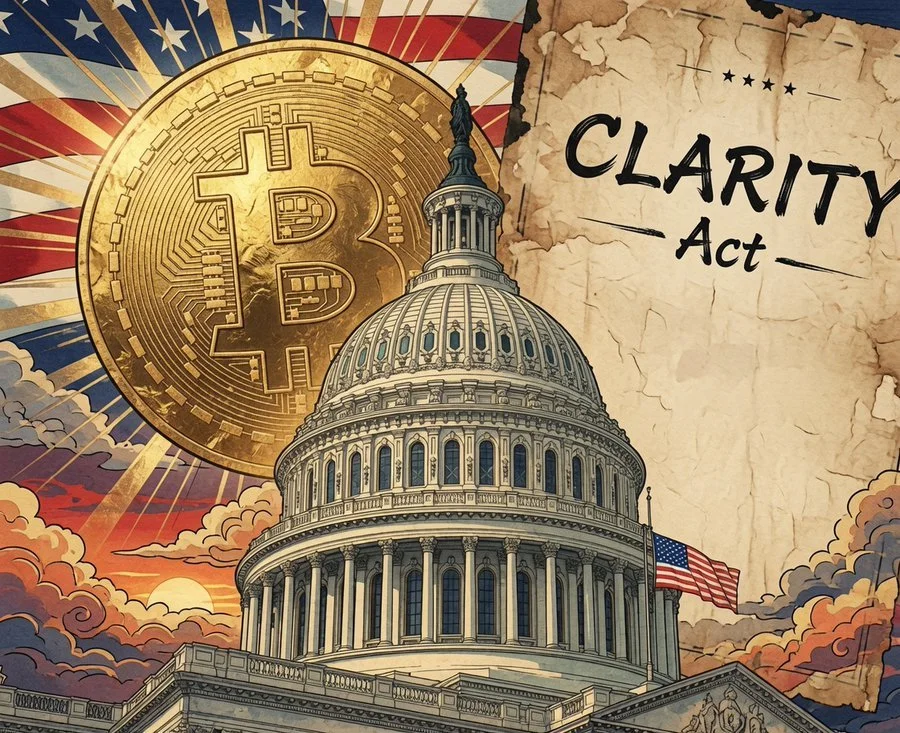
CryptoEmpress: THE CLARITY ACT IS CLOSER THAN EVER TO BECOMING LAW
⚖️ Here’s where things stand…
✅ House passed the CLARITY Act
✅ Senate Banking Committee cleared it 15-9
⏳ Senate floor vote still needs 60 votes
⏳ House and Senate must align the final text
⏳ President signs it into law
Put simply → The bill is closer than it has ever been. Why does this matter? Clear #Bitcoin and crypto rules could unlock the next wave of U.S. adoption . THE FINAL STRETCH FOR BITCOIN AND CRYPTO CLARITY IS HERE
Seeds of Wisdom RV and Economics Updates Saturday Afternoon 7-4-26
Good Afternoon Dinar Recaps,
Revolut to Delist USDT as Regulatory Pressure Reshapes Europe’s Stablecoin Market
Revolut will remove support for Tether’s USDT beginning in July and complete the delisting by the end of August, reflecting the growing impact of Europe's Markets in Crypto-Assets (MiCA) regulation on digital asset platforms. The move underscores how regulatory compliance is increasingly shaping which cryptocurrencies remain available to consumers.
Good Afternoon Dinar Recaps,
Revolut to Delist USDT as Regulatory Pressure Reshapes Europe’s Stablecoin Market
Revolut will remove support for Tether’s USDT beginning in July and complete the delisting by the end of August, reflecting the growing impact of Europe's Markets in Crypto-Assets (MiCA) regulation on digital asset platforms. The move underscores how regulatory compliance is increasingly shaping which cryptocurrencies remain available to consumers.
Overview
Revolut will stop supporting USDT purchases on July 6 and fully delist the stablecoin by August 31, 2026.
Customers who do not withdraw or sell their USDT before the deadline will have their holdings automatically converted into their base currency.
The decision highlights the continued impact of the European Union’s MiCA regulations on stablecoin availability and crypto service providers.
Key Developments
1. Revolut Announces USDT Delisting
Revolut informed customers that USDT purchases will end on July 6, deposits will no longer be accepted after July 30, and the stablecoin will be fully delisted on August 31, 2026. Any remaining balances after the deadline will automatically be converted into each customer's base currency.
2. Regulatory Compliance Drives Decision
Although Revolut did not specify a single regulation, the company cited "regulatory and risk considerations." The fintech company operates under a MiCA Crypto-Asset Service Provider (CASP) license, making compliance with the European Union's digital asset regulations a priority.
3. MiCA Continues to Reshape Stablecoin Markets
USDT has faced increasing restrictions throughout Europe after Tether chose not to align with certain MiCA requirements governing reserve management and issuer oversight. Several major crypto platforms have already reduced or eliminated USDT services for European customers.
4. Competition Among Stablecoins Continues
As USDT availability declines in regulated European markets, MiCA-compliant alternatives such as USDC are expected to gain additional market share. The shift reflects how regulation is increasingly influencing competition within the stablecoin sector.
Why It Matters
Europe's new regulatory framework is transforming the digital asset landscape by favoring fully compliant stablecoins and licensed service providers. Investors should expect continued changes as exchanges, banks, and fintech companies adjust their product offerings to meet evolving regulatory standards.
Why It Matters to Foreign Currency Holders
Stablecoins are becoming an increasingly important bridge between traditional currencies and blockchain-based financial systems. Regulatory changes affecting major stablecoins may influence how investors access digital dollars, transfer value internationally, and participate in tokenized financial markets.
Implications for the Global Reset
Pillar 4 – Technology
MiCA is accelerating the transition toward a more regulated digital financial infrastructure, encouraging the adoption of compliant stablecoins while establishing clearer standards for blockchain-based payments and digital assets.
Future Outlook
As MiCA enforcement continues across the European Union, additional exchanges and financial institutions may further limit support for non-compliant stablecoins. This is likely to strengthen the position of regulated digital dollar alternatives while encouraging issuers to adapt their products to meet international regulatory standards. The long-term result may be a more standardized and institutionally accepted stablecoin ecosystem.
This is not just about one stablecoin—it reflects the broader global shift toward regulated digital payments, stronger oversight of blockchain finance, and the continued modernization of the international financial system.
Seeds of Wisdom Team
Newshounds News™ Exclusive
Sources
~~~~~~~~~~
Seeds of Wisdom Team RV Currency Facts Youtube and Rumble
Newshound's News Telegram Room Link
RV Facts with Proof Links Link
RV Updates Proof links - Facts Link
Start Here room with Most Asked Questions Link
Follow the Gold/Silver Rate COMEX
Follow Fast Facts
Seeds of Wisdom Team™Website
Thank you Dinar Recaps
Is a Gold-Backed Monetary Reset Coming on July 4th?
Is a Gold-Backed Monetary Reset Coming on July 4th?
VRIC Media: 7-4-2026
The landscape of global resource investment is undergoing a profound transformation, characterized by shifting geopolitical alliances and a fundamental rethinking of monetary policy.
In a recent interview at the Vancouver Resource Investment Conference (VRIC), industry expert Jennifer Shaigec provided a compelling analysis of these trends, offering a roadmap for investors looking to navigate an increasingly complex economic environment. Her insights cover everything from the rise of “soft nationalization” to the strategic importance of emerging trade corridors.
Is a Gold-Backed Monetary Reset Coming on July 4th?
VRIC Media: 7-4-2026
The landscape of global resource investment is undergoing a profound transformation, characterized by shifting geopolitical alliances and a fundamental rethinking of monetary policy.
In a recent interview at the Vancouver Resource Investment Conference (VRIC), industry expert Jennifer Shaigec provided a compelling analysis of these trends, offering a roadmap for investors looking to navigate an increasingly complex economic environment. Her insights cover everything from the rise of “soft nationalization” to the strategic importance of emerging trade corridors.
One of the most pressing concerns for modern investors is the evolving role of government in resource development. Shaigec points to the rise of what she terms “soft nationalization.” Unlike the overt seizures of the past, this modern iteration is more subtle, involving strategic increases in taxes, royalties, and regulatory hurdles.
By effectively increasing their stake in resource projects, governments are exerting greater control over essential commodities, which inevitably impacts the investment climate. For those in the mining and energy sectors, understanding the political stability and fiscal policy of a host nation has never been more critical.
Perhaps the most intriguing part of the discussion centers on the “Middle Corridor”—a vital trade and resource route spanning Central Asia, Armenia, and Azerbaijan. Historically significant for its Caspian Sea oil reserves, this region is regaining its status as a nexus for energy and mineral transit. Shaigec argues that this corridor is a foundational element of a new global order.
As a theater for the new “great game,” it has become a focal point for geopolitical maneuvering between the U.S., EU, China, Russia, and localized powers. For the astute investor, this region represents both immense opportunity and significant risk, as it lies at the intersection of shifting global influence.
The conversation also pivots to the future of finance, specifically the tension between Central Bank Digital Currencies (CBDCs) and stablecoins.
Shaigec highlights the divergent approaches taken by global institutions and the U.S. government, raising the possibility of a return to gold-backed digital assets. Furthermore, she observes that the European Central Bank is aggressively accumulating gold reserves, potentially signaling a challenge to the long-standing dominance of the U.S. petrodollar.
These moves suggest that gold remains the ultimate hedge in a world where monetary policy is becoming increasingly digitized and experimental.
Ultimately, Shaigec offers a cautionary perspective for those concerned about financial sovereignty. With the proliferation of digitized financial assets and the constant threat of cyber-attacks, the risk of asset volatility—or even modern forms of confiscation—is higher than ever.
Her advice is rooted in classic investment wisdom: true security comes from diversification. She emphasizes the importance of holding physical gold and silver, alongside a strategy of geographic dispersion. By diversifying where one holds assets, investors can protect themselves against localized economic disruptions and the rising tide of global uncertainty.
As the international order continues to realign, staying informed is the first step toward safeguarding your financial future. Whether you are interested in the geopolitics of the Middle Corridor or the potential for a gold-backed monetary transition, there is far more to uncover in the full discussion.
More Iraq News Posted by Tishwash at TNT 7-4-2026
TNT:
Tishwash: Parliament opens its legislative session with a reading of the cybercrime law.
The Media Department of the House of Representatives published the agenda for the first session of the second legislative term, which will be held on Monday, July 6, 2026, after the end of the legislative holiday.
At the top of the agenda is the controversial Cybercrime Law, which faced mixed reactions when presented to Parliament during previous sessions, leading to the postponement of its reading. link
TNT:
Tishwash: Parliament opens its legislative session with a reading of the cybercrime law.
The Media Department of the House of Representatives published the agenda for the first session of the second legislative term, which will be held on Monday, July 6, 2026, after the end of the legislative holiday.
At the top of the agenda is the controversial Cybercrime Law, which faced mixed reactions when presented to Parliament during previous sessions, leading to the postponement of its reading. link
Tishwash: Prime Minister's Advisor: Iraq succeeds in securing its first international financing with a sovereign guarantee to support the private sector
The advisor to the Prime Minister, Saleh Mahoud Salman, announced today, Thursday, the completion of the first international financing transaction for an Iraqi private sector project with an Iraqi sovereign guarantee. This was achieved in cooperation with the German institution AKA Ausfuhrkredit-Gesellschaft mbH, and in partnership with the German Commerzbank.
This step is considered a significant accomplishment within the government's efforts to support economic reform and enhance the confidence of international financial institutions in the Iraqi economy.
Mahoud explained in a statement received by the Iraqi News Agency (INA) that "this transaction represents the beginning of a new phase in utilizing sovereign guarantees to attract international financing, technology, and investments, which will contribute to enabling the private sector to implement developmental and productive projects with a direct economic impact. It also reflects the success of building partnerships with leading international banking institutions, most notably Commerzbank, one of the most prominent European banks."
He added that "this achievement is the first in a series of development financing projects that are hoped to be implemented during the next phase, which will support the diversification of the national economy, enhance local industry, provide job opportunities, and consolidate partnerships with global financial institutions."
He stressed that “the success of this operation is the result of coordination and cooperation between Iraqi government agencies (the Ministry of Finance and the Trade Bank of Iraq) and international partners,” expressing his appreciation to all Iraqi and international parties that contributed to achieving this accomplishment, which represents a practical step towards expanding financing and investment opportunities in Iraq, and enhancing the presence of international banks and financial institutions in financing Iraqi private sector projects. link
************
Tishwash: A presidential decree has been issued referring the Sudanese president and several members of his former government to retirement.
The President of the Republic issued a presidential decree ordering the retirement of former Prime Minister Mohammed Shia al-Sudani and a number of members of his former government, based on the provisions of the Constitution and the Unified Retirement Law.
According to the information, the decree did not include the ministers who continued to hold their positions within the current government formation, including Foreign Minister Fuad Hussein and Justice Minister Khalid Shawani.
The Republican Decree No. (24) stated that the decision was based on the provisions of Clause (Seventh) of Article (73) of the Constitution, and Clause (First) of Article (14) of the Unified Retirement Law No. (9) of 2014, and based on what was presented by the Prime Minister.
The decree included the referral of each of the following :
Mohammed Shia'a Sabbar Al-Sudani, Prime Minister.
Hayyan Abdul Ghani Abdul Zahra, Deputy Prime Minister and Minister of Oil.
Taif Sami Mohammed, Minister of Finance.
Abdul Amir Kamel Abdullah, Minister of the Interior.
Saleh Mahdi Mutallab, Minister of Health.
Khaled Battal Najm, Minister of Industry and Minerals.
Atheer Dawood Salman, Minister of Trade.
Awn Dhiab Abdullah, Minister of Water Resources.
Ahmed Fakak Ahmed, Minister of Culture, Tourism and Antiquities.
Ahmed Jassim Saber, Minister of Labor and Social Affairs.
Haha, Mustafa Al-Askari, Minister of Environment.
Benkin Abdullah Rikani, Minister of Construction, Housing and Public Municipalities.
· link
************
Tishwash: A leader in the Reconstruction and Development Coalition: Banking system reforms have tightened the noose on the funds of corrupt individuals.
Mashreq Al-Fariji, a leader in the Reconstruction and Development Coalition, confirmed that the reforms adopted by the government of Prime Minister Mohammed Shia Al-Sudani in the banking system and combating money laundering have contributed to narrowing the loopholes that were used to smuggle illicit funds.
Al-Fariji said in a post on the (X) platform that the money of the corrupt is now being stored in houses, farms and concrete walls, after the closure of the roads that were previously used to smuggle or launder money.
He added: "Why is the money of the corrupt hidden in houses, farms, and concrete walls? Because it was Mr. Al-Sudani's government that reformed the banking system and combated money laundering and smuggling, thus narrowing the loopholes that the corrupt were accustomed to using... The rest is up to Mr. Al-Zaidi." link
Tishwash: Government plan to restructure and reduce the number of banks
The Iraqi government is accelerating its steps to restructure the banking sector, as part of a reform plan that extends over the next two years, aimed at building a banking system more integrated with the global financial system, coinciding with the resumption by the United States of dollar shipments to Iraq after a hiatus of several months.
The Prime Minister’s financial advisor, Mazhar Muhammad Saleh, said in an interview followed by (Al-Mada) that the government is currently implementing a roadmap to reform the banking sector in cooperation with international auditing firms, expecting that the next 24 months will witness a major transformation in the sector’s structure.
He explained that the plan includes reducing the number of banks in exchange for increasing their capital, expanding their relationships with global banks, and increasing the number of correspondent banks, considering that these indicators reflect progress in the path of financial reform.
Saleh added that Iraq is moving towards a transition from "geopolitical" to "geoeconomic" status, a transformation that requires a banking system capable of financing economic activity in accordance with governance and transparency standards, after years of the sector being affected by political conditions that hindered its integration into the international financial system.
He pointed out that the restructuring includes strengthening financial compliance and preventing the misuse of funds for purposes other than economic ones, in line with the requirements for combating money laundering and terrorist financing, noting that Iraq seeks to move from the grey list to the white list by adhering to international standards.
Saleh confirmed that the reform program includes merging a number of local banks, liquidating a limited number of them, involving international banks, and adopting international auditing and accounting systems, which will enhance the credit rating, reduce risks, and raise the efficiency of liquidity management.
He explained that the presence of experts from the US Treasury Department and international institutions comes within the framework of technical cooperation to develop the banking sector, and does not affect national sovereignty, stressing that building a transparent banking system is a prerequisite for improving the investment environment and attracting capital.
In a related development, the New York Times reported, in a report followed by (Al-Mada), that the United States has resumed dollar shipments to Iraq after suspending them for months, which was confirmed by the spokesman for the Prime Minister, Haider al-Abudi, along with the financial advisor, Mazhar Muhammad Salih.
The flow of dollars into Iraq is subject to strict monitoring under mechanisms overseen by the US Federal Reserve, as part of measures aimed at ensuring transparency in the movement of funds and preventing their use in money laundering operations or their access to entities subject to sanctions, while the Central Bank of Iraq relies on these transfers to meet market needs and finance import operations. link
News, Rumors and Opinions Saturday 7-4-2026
Note: All intel should be considered as "Rumors" until we receive official announcements ...and “Rates and Dates” could change anytime until we get to the banks/redemption centers.
Excerpts from the GCR Update as of Sat. 4 July 2026
Compiled Thurs. 2 July 2026 12:01 am ET by Patrick DaCosta
Global Currency Reset:
Fri. 3 July 2026 The ISO 20022 Integration and the End of Legacy Banking: According to recent reports from within the Tier 4B and ISO 20022 community, the migration to the new financial ledger has officially overtaken legacy mainframe systems. The integration is characterized as “complete,” signaling a permanent detachment of debt and mortgage ledgers from the traditional central banking grid. As a result, a “zero-out sequence” is currently running, effectively neutralizing old debt structures.
Note: All intel should be considered as "Rumors" until we receive official announcements ...and “Rates and Dates” could change anytime until we get to the banks/redemption centers.
Excerpts from the GCR Update as of Sat. 4 July 2026
Compiled Thurs. 2 July 2026 12:01 am ET by Patrick DaCosta
Global Currency Reset:
Fri. 3 July 2026 The ISO 20022 Integration and the End of Legacy Banking: According to recent reports from within the Tier 4B and ISO 20022 community, the migration to the new financial ledger has officially overtaken legacy mainframe systems. The integration is characterized as “complete,” signaling a permanent detachment of debt and mortgage ledgers from the traditional central banking grid. As a result, a “zero-out sequence” is currently running, effectively neutralizing old debt structures.
Fri. 3 July 2026 NESARA/GESARA and Rainbow Currency: The reveal of NESARA (National Economic Security and Recovery Act) marks a radical departure from the status quo of the Federal Reserve. The core of this transition is the “Jubilee,” or a total forgiveness of debt, including credit cards and mortgages tied to what are described as illigal banking activities. In a move that would fundamentally reorganize the American economy, the act proposes the abolition of the IRS and the total removal of income tax.
Fri. 3 July 2026MarkZ and the Iraqi Progress: During the July 3rd “Coffee with MarkZ” session, featuring guests like Mr. Cottrell and Wade Holder, the discussion focused on the “rollercoaster” of timing regarding the Revaluation (RV). While there is significant debate among sources—some pointing to a July release and others suggesting a September timeline to coincide with troop withdrawals from Iraq—the consensus remains that a massive “clean-up” operation is underway. The intel highlights significant progress in Iraq, where Prime Minister Ali al-Zaidi has reportedly led an anti-corruption crackdown resulting in the recovery of 3 quadrillion dinars from corrupt officials. There are also reports that Iraqi funds previously frozen by the Federal Reserve have been released, sparking speculation that the Dinar rate is being digitally adjusted behind the scenes. While some prominent voices in the community have gone silent—potentially due to Non-Disclosure Agreements (NDAs)—the general sentiment remains optimistic, with many looking toward the 250th anniversary of the United States as a symbolic window for these historic changes to fully manifest.
~~~~~~~~~~~~~~
Fri. 3 July 2026 NESARA/GESARA Revealed …Web3.0 ISO20022 on Telegram
NESARA implements the following changes:
Zeros out all credit card, mortgage, and other bank debt due to i*****l banking and government activities. This is the Federal Reserve’s worst nightmare:
• A “jubilee” or a forgiveness of debt.
• Abolishes the income tax.
• Abolishes the IRS. Employees of the IRS will be transferred into the US Treasury national sales tax area.
• Creates a 14% flat rate non-essential ‘new items only’ sales tax revenue for the government. In other words food and medicine will not be taxed; nor will used items such as old homes.
• Increases benefits to senior citizens.
• Creates a new U.S. Treasury, ‘rainbow currency,’ backed by gold, silver, and platinum precious metals, ending the bankruptcy of the United States initiated by Franklin Roosevelt in 1933.
• Initiates new U.S. Treasury Bank System in alignment with Constitutional Law.
• Eliminates the Federal Reserve System. During the transition period the Federal Reserve will be allowed to operate side by side of the U.S. treasury for one year in order to remove all Federal Reserve notes from the money supply.
• Restores financial privacy
Read full post here: https://dinarchronicles.com/2026/07/04/dinar-chronicles-via-a-gcr-update-as-of-july-4-2026/
************
Courtesy of Dinar Guru: https://www.dinarguru.com/
Militia Man What we're seeing is real change. It's been building. It's been building out better than I've ever seen in my life in the dinar...I still talk about what I believe in because I know what I own. It's building out in our favor.
Boot-On-The-Ground Guru Omar Prime Minister's legal advisor...said the looted funds have exceeded $2 trillion and public trials are anticipated for the corrupt defendants...They are telling us [$2 trillion] equals 3 quadrillion Iraqi dinars to date have been stolen.
Reset Intelligence Parliament votes on the final 9 ministers Sunday July 5, interior and defense included, with Kurdish support consolidated by a fresh PUK alliance. The White House has confirmed it will host the prime minister in mid-July.
Mnt Goat It is going to happen and it is in the plan for Iraq and part of the bigger RESET picture. These larger notes we hold are going to stay legal tender and used for inter-banking transactions of large amounts, when cash is needed. The CBI told us this many times.
The Real Reason Gold Turned This Week, and Who's Quietly Buying | This Week In Focus
Kitco News: 7-4-2026
Gold just closed its worst quarter in more than 13 years, then roared back above $4,100 as the new Fed chair signaled he may ease off. Is the gold selloff over, and is gold a buy now?
This week in focus: what actually turned gold around, why the world's central banks never stopped buying, and what happens next, with Rick Rule, Jeff Sarti, and Chris Vermeulen.
Plus, Kitco goes live from Rick Rule's Natural Resource Investing Symposium in Boca Raton on Monday. Anchor Jeremy Szafron breaks down the week: gold's worst quarter in 13 years and the sharp reversal, the Warsh comment that JPMorgan said sent the debasement trade roaring back, the soft jobs report that cooled Fed rate-hike bets, the AI and chip selloff that rotated money into defensives and gold, why Western ETF selling met relentless central-bank buying, the gold miners priced as if gold were only $3,350, and the signals to watch from here.
Not investment advice, you decide.
CHAPTERS
00:00 The Comeback
00:40 The Turn: Worst Quarter, Then This
01:30 Why the Fed Blinked
04:00 The Buyers Who Never Left
07:00 Silver and the Miners
10:00 What Comes Next
Iraq Economic News and Points To Ponder Saturday Morning 7-4-26
Government Plans To Raise Non-Oil Revenues To 45% In 10 Years
Money and business Economy News – Baghdad The financial adviser to the Prime Minister, the appearance of Mohammed Saleh, on Friday, that the total public debt of Iraq is still within the limits that can be managed according to international standards, pointing out that the government plans aim to raise non-oil revenues to 45% within ten years.
Government Plans To Raise Non-Oil Revenues To 45% In 10 Years
Money and business Economy News – Baghdad The financial adviser to the Prime Minister, the appearance of Mohammed Saleh, on Friday, that the total public debt of Iraq is still within the limits that can be managed according to international standards, pointing out that the government plans aim to raise non-oil revenues to 45% within ten years.
Saleh said that "talk about the entry of the economy in the danger zone when public debt exceeds 40% of public revenues must be read within a set of financial indicators, and not in isolation from them, because international institutions do not adopt this indicator alone, but also look at the ratio of debt to GDP, the cost of debt service, and the ability of the state to generate and sustain revenues."
He added that "the bulk of the Iraqi debt is internal debt, while the decline in external debt in recent years, which makes the real challenge linked to the nature of public revenues, which depends heavily on oil, which makes public finances vulnerable to fluctuations in oil prices in global markets," noting that "any decline in oil prices raises the debt-to-revenue ratio and increases pressure on the general budget, even if the public debt did not witness a significant increase. "
He pointed out that "the external debt to be paid until 2028 does not exceed about $ 9 billion, and in addition to the internal debt, the total debt represents about 36% of GDP, which is still within the limits that can be managed according to international standards that speak of more than 60%."
He added that "this percentage may decrease further if the settlement of the outstanding amounts within the 2004 Paris Club Agreement, which has not been resolved so far, as these obligations belong to about eight countries, including Gulf countries, and it is expected that their deduction will lead to the write-off of at least 80% of those amounts, and perhaps more, in accordance with the terms of the standard agreement."
Saleh explained that "the internal debt exceeded 100 trillion dinars, equivalent to about 80 billion dollars when calculated in foreign currency, which represents the largest part of the total public debt," pointing out that "the impact of internal debt on the financial independence of Iraq remains limited as long as the external debt within the levels can be managed, especially that the external obligations due until 2028 remain relatively limited. "
He stressed that "the continuation of the fiscal deficit and dependence on borrowing, especially in the event of low oil prices, may reduce the flexibility of fiscal policy and increase the need for reform and financing measures," noting that "the International Monetary Fund confirms that the main challenge for Iraq is not the size of debt as much as it is to contain the fiscal deficit and diversify sources of public revenues."
"The current fiscal policy is working to gradually raise the contribution of non-oil revenues to about 45 percent of total public revenues over the next 10 years, compared to the current situation, in which non-oil revenues do not exceed 10% of total revenues," he said.
He explained that "this is achieved through improving tax and customs collection, automating financial systems, expanding the tax base, revitalizing the private sector and investment, and reforming the banking sector," noting that "these measures need time to be fully reflected on the financial reality, but they represent the most sustainable path to address the problem of liquidity, reduce dependence on oil, and enhance the ability of the Iraqi economy to cope with external shocks and achieve long-term financial stability. "
He pointed out that "there are arrears representing the benefits of the private sector of contractors, farmers and others equivalent to the internal debt, and called (arrears), and if it is not possible to pay it will enter into the internal debt category to be settled fundamentally https://www.economy-news.net/content.php?id=70942
Oil Products: No Manipulation Of The Quality Of Gas Oil (Kaz) Equipped For Residential Generators
Locals Economy News – Baghdad The Oil Products Distribution Company denied on Saturday the existence of any quality manipulation (Kaz) equipped for generators within the free quota.
The company said in a statement received by "Economy News" that it "categorically denies the existence of any manipulation of the quality of gas oil (Kaz) equipped for residential generators within the free quota for the months of July and August."
She added that "the inspections are continuing and that the quantities processed within the required specification."
https://www.economy-news.net/content.php?id=70989
Europe Is Worried About The Development Of Artificial Intelligence
Arab and International Economy News - Follow-up Fears are mounting within Europe that the rapid development of artificial intelligence technologies is outpacing regulatory frameworks, at a time when warnings are mounting of the implications for the financial stability and competitiveness of the old continent.
While artificial intelligence is seen as a key driver for boosting productivity and boosting economic growth, regulators and central banks see its risks evolving faster than its rules and regulations, posing unprecedented challenges for policymakers.
Officials in European central banks and regulators said the legislative preparation cycle was no longer able to keep up with the speed of innovation, especially with the emergence of technologies such as proxy artificial intelligence, which open wide economic horizons, but at the same time raise growing concerns about the safety of markets and the financial system.
At the same time, the gap between Europe and the United States in the race for artificial intelligence is widening, as investors see Europe’s dependence on bank financing as limiting the flow of investment to this sector, compared to the United States, which benefits from capital markets in financing giant technology companies, threatening to reduce European competitiveness in one of the most important strategic sectors.
Financial regulation in Europe has struggled to keep pace with the rapid development of artificial intelligence, according to European policymakers, who are grappling with how to support adoption while containing risks to market integrity and stability.
Nikhil Rathi, Chief Executive of the Financial Conduct Authority of Britain, acknowledged that traditional regulatory tools are no longer enough to keep pace with successive developments, stressing that the pace of innovation in artificial intelligence requires regulators to reconsider the methods of setting rules and supervisory mechanisms.
European Central Bank President Christine Lagarde stressed that artificial intelligence represents a great opportunity to boost productivity and support economic growth, but at the same time warned that it carries risks that may be more complex than traditional cybersecurity threats.
Lagarde pointed out that the speed of development of these technologies exceeds the ability of existing protection tools to contain their risks.
Sarah Breden, deputy governor of the Bank of England, warned that the expansion of the use of proxy artificial intelligence technologies within financial markets may increase volatility during periods of crisis, calling for the development of stricter control mechanisms, including automatic stop-trading systems to reduce the risk of any mistakes that may be made by artificial intelligence models.
In parallel with regulatory concerns, investment concerns are also growing, with European officials seeing the continent as required to accelerate its investment in artificial intelligence, boost its own capabilities and maintain its technological sovereignty, without compromising the requirements of financial stability https://www.economy-news.net/content.php?id=70986
Basrah Crudes Lose Up To 10% Weekly
2026-07-04 02:35 Shafaq News- Basrah Iraq's Basrah crudes posted weekly losses of 1.57% and 10.42%, despite a modest rebound in global benchmark prices during the final trading session.
Basrah Heavy slipped 16 cents, or 0.27%, to close at $60.09 per barrel, bringing its weekly decline to 96 cents. Basrah Medium lost $5.16, or 8.28%, to settle at $57.19 per barrel, widening its weekly loss to $5.96.
International benchmark prices ended higher, with Brent gaining 32 cents, or 0.45%, to $72.12 per barrel, while US West Texas Intermediate advanced 9 cents, or 0.13%, to $68.78 per barrel.
https://www.shafaq.com/en/Economy/Basrah-crudes-lose-up-to-10-weekly
Dollar Falls Against Iraqi Dinar In Baghdad And Erbil
2026-07-04 04:10 Shafaq News- Baghdad/ Erbil The US dollar opened Saturday’s trading lower in Iraq, hovering around 154,000 dinars per 100 dollars.
According to Shafaq News market survey, the dollar traded in Baghdad's Al-Kifah and Al-Harithiya exchanges at 154,250 dinars per 100 dollars, down from the previous session’s 154,750 dinars.
In the Iraqi capital, exchange shops sold the dollar at 154,750 dinars and bought it at 153,750 dinars, while in Erbil, selling prices stood at 154,100 dinars and buying prices at 154,000 dinars.
https://www.shafaq.com/en/Economy/Dollar-falls-against-Iraqi-dinar-in-Baghdad-and-Erbil