
Why China Just Overtook The US With The Most Powerful Supercomputer
Why China Just Overtook The US With The Most Powerful Supercomputer
Notes From the Field By James Hickman (Simon Black / Sovereign Man) July 1, 2026
Yao Tongbin was one of the most important scientists in Maoist China. He had earned a doctorate in metallurgy in England, spent three years at a research institute in West Germany, and left it all to return to China in 1957.
He spent he next 11 years building China’s first-ever modern missile program, with unparalleled knowledge and experience he had accumulated in the West.
Why China Just Overtook The US With The Most Powerful Supercomputer
Notes From the Field By James Hickman (Simon Black / Sovereign Man) July 1, 2026
Yao Tongbin was one of the most important scientists in Maoist China. He had earned a doctorate in metallurgy in England, spent three years at a research institute in West Germany, and left it all to return to China in 1957.
He spent he next 11 years building China’s first-ever modern missile program, with unparalleled knowledge and experience he had accumulated in the West.
But when he came home for lunch on the afternoon of June 8, 1968, a gang of thugs from a rival political faction was waiting for him. They beat him to death in his own apartment. He was forty-five years old.
Yao’s crime was that he was educated, expert, and Western-trained— exactly the kind of man that Mao’s Cultural Revolution had taught the country to hate.
From 1966 to 1976, Mao turned China against its own educated class, rooting out political opposition and handing a the power to young revolutionaries.
Professors were dragged before their students in dunce caps and beaten mercilessly. Universities shut their doors. Millions of educated young people were shipped off to work camps. And engineers were ranked near the bottom of the social order.
China spent ten years treating intelligence as a crime, and the country paid the price for a generation.
Meanwhile, over in the West at the same time that Mao's Red Guards were beating engineers to death, American technological geniuses developed the world's first microprocessor and lit up the first nodes of the internet... effectively giving birth to the digital age.
It was a night-and-day difference between the US and China. China was actively, stupidly making itself worse off, while the US was developing the technology that would change the world forever.
America remained the epicenter of technological innovation for decades; in fact, the unofficial ‘scoreboard’ of the world’s most technologically advanced nation was whoever could build the fastest supercomputer.
And the answer was obviously the United States... until Japan shocked the world in 1995 and beat the fastest US supercomputer. America quickly reclaimed the top spot, only to be bested by Japan again in 2002.
The two great technological powers jostled for #1 for the next several years until the unthinkable happened in 2010: China developed the world’s fastest supercomputer.
For the past sixteen years, those three powers— America, Japan, and China, have traded the trophy. And China just retook it from the US again last week.
This is a symbolic, albeit critical competition— especially now as there are so many challenges to America’s economic, military, and geopolitical leadership.
Why is America falling behind? Because of its own soft “Cultural Revolution” driving out competence and rewarding the people who build nothing.
During COVID, the government and media conspired to destroy the careers of anyone who questioned Tony Fauci.
Shortly thereafter, the DEI cult took over. From transgender Bud Light influencers to absurdly woke Disney movies to mandatory diversity quotas in corporate boardrooms... and it went all the way to the most powerful institutions in America.
Joe Biden promised a female running mate as his Vice President, and a black woman as a Supreme Court justice. His obsession with diversity over merit resulted in two extremely unqualified people in some of the nation’s highest offices.
The end result has been predictable across the military, public health, medicine, and the media, institutions that increasingly selected for ideology over competence.
Mao destroyed his most capable people on purpose, and it cost China a generation. America is now doing the same thing to itself in a softer way.
But regardless of the tactics, any country that pushes out people who can design the chips, fly the planes, run the labs, and keep the lights on, is shooting itself in the foot.
Here’s another interesting example—
On a recent, private call for our top-tier Total Access members, we spoke with a really unique American entrepreneur based in Africa who sees this DEI rot every single day.
China, he told us, runs a "full court press" in Africa. The Chinese government fights for its businesses and helps them invest aggressively in the strategic resources that China needs back home. Food production. Energy. Water. Minerals.
Meanwhile, as China rapidly scoops up critical resources and builds relationships on the continent, the US-funded Western NGOs are busy with DEI and climate change initiatives.
He told us about one particular NGO, a group that pulled out of a critical agricultural investment over concerns that there weren’t enough women involved and too much CO2.
The difference in priorities between China and the West could not be more obvious.
Now, none of this means that China takes over the world. America has faced down a rising manufacturing rival before. It absorbed Japan's challenge in the 1980s, and it out-produced and out-innovated the Soviet Union as well.
The United States still commands the deepest capital markets on earth, enormous pools of talent, and a genius for inventing and building that no rival has ever matched.
China's problems, by contrast, are far greater.
It shares borders with fourteen countries, including North Korea, Pakistan, India, and Afghanistan. It doesn’t have trusted relations with a single one of them.
China is the largest oil importer in the world by a wide margin and has astonishingly thin per-capita reserves. It is lean on water and quality farmland. Its regional governments are buried under mountains of debt.
And it is, quite bizarrely, facing a massive demographic crisis of its own making (from years of its idiotic one child policy) while simultaneously and precariously trying to keep a population of 1.4 billion people under strict authoritarian control.
Plus, let’s be honest— a centrally planned economy will not deliver maximum innovation. Yes, America has its own idiots in office. But for every Lizzie Warren and AOC, China has plenty of its own morons in government service who make painfully idiotic decisions.
America’s problems are gargantuan, yes. But at their core, they are completely fixable. Three simple approaches would dramatically move the needle. Quickly.
Cut the federal deficit by reducing obvious fraud and exercising common sense restraint.
Boost economic productivity by eliminating pointless federal and state regulations.
Focus exclusively on merit rather than DEI credentials.
Those three are very simple and straightforward, and they would dramatically move the needle. And that’s before tackling other challenges like Social Security, immigration, and election reform.
China might have temporarily taken the top spot in supercomputing. But this is still America’s race to lose.
The plan is maddeningly simple. Unfortunately, if history is any guide, Congress will probably do nothing until there’s a bad-enough crisis to force them to act. And that’s why it makes so much sense to have a Plan B.
To your freedom, James Hickman Co-Founder, Schiff Sovereign LLC
PS: That conversation with the investor in Africa came from a private call for our Total Access members. Total Access is the top tier of Schiff Sovereign membership, built for those who value global networks of like-minded people.
Members get all of our research — Plan B Confidential, Strategic Assets, along with the deepest second-passport discounts we can negotiate, events, boots-on-the-ground explorations, and a network of people quietly building their own Plan B.
Reset Intelligence: Two Hands on the Dinar
Reset Intelligence: Two Hands on the Dinar
7-1-2026
Two Hands on the Dinar
By Reset Intelligence | @EXIT_FIAT
Iraq has stopped just arresting its corrupt officials and started counting their cash. This week Baghdad opened a dedicated state account to receive every dinar, every dollar and every bar of gold seized in the crackdown that locked down the Green Zone on Sunday.
Reset Intelligence: Two Hands on the Dinar
7-1-2026
Two Hands on the Dinar
By Reset Intelligence | @EXIT_FIAT
Iraq has stopped just arresting its corrupt officials and started counting their cash. This week Baghdad opened a dedicated state account to receive every dinar, every dollar and every bar of gold seized in the crackdown that locked down the Green Zone on Sunday.
The same week, Iran’s foreign minister flew into Baghdad and US and Iranian negotiators sat down in Doha over the Strait of Hormuz. Two hands are working the dinar at once.
The recovery
The arrests were the opening move. The recovery is the one that matters. The government says the net is still widening, with new names surfacing in every interrogation.
• State account – opened to deposit all seized corruption funds; officials call it only the first phase
• Recovered so far – over $107 million tied to the oil-ministry case, including 98 billion dinars and $11 million in cash, plus 70 properties, 21 vehicles and gold
• Under investigation – close to 1,000 officials
• The courts – the former director-general of the tax commission sentenced to 10 years and stripped of 22 properties for money laundering
The squeeze from Tehran
Iran’s foreign minister Abbas Araghchi met the prime minister and the top of the Iraqi state on a visit booked before the raids, warning against any separate arrangement on the Strait of Hormuz. That pressure landed in Doha, where the US and Iran are talking over the strait. Baghdad has set September 30 as the deadline for Iran-backed armed groups to surrender their weapons.
The calendar
Parliament returns July 1. A special session on July 5 is meant to seat the final 9 ministers, including interior and defence. A cleaned, fully formed government then flies to Washington in the middle of the month.
What the people who hoarded it knew
You have been told for years that the dinar is a scam, a dead currency in a broken country. Here is what the people who hoarded it knew that you were told to ignore. They did not stuff their walls with a currency they thought was worthless.
They buried the gold and moved their savings offshore because they expected the dinar to be worth far more in time, and they wanted to be holding it when it was. The corruption was a bet on the upside. The arrests take that bet off them.
The names on the warrant were never the story. What they were guarding is.
That is the read most people miss. The full daily briefing connects it night after night – why pulling the stolen currency back in, cleaning the banks and seating a government before Washington is the exact sequence a country runs in the stretch before it reprices its money, and what that means for anyone holding the dinar. That read is behind the free sign-up.
Read the full daily briefing free for 5 days. Sign up here: resetintelligence.com
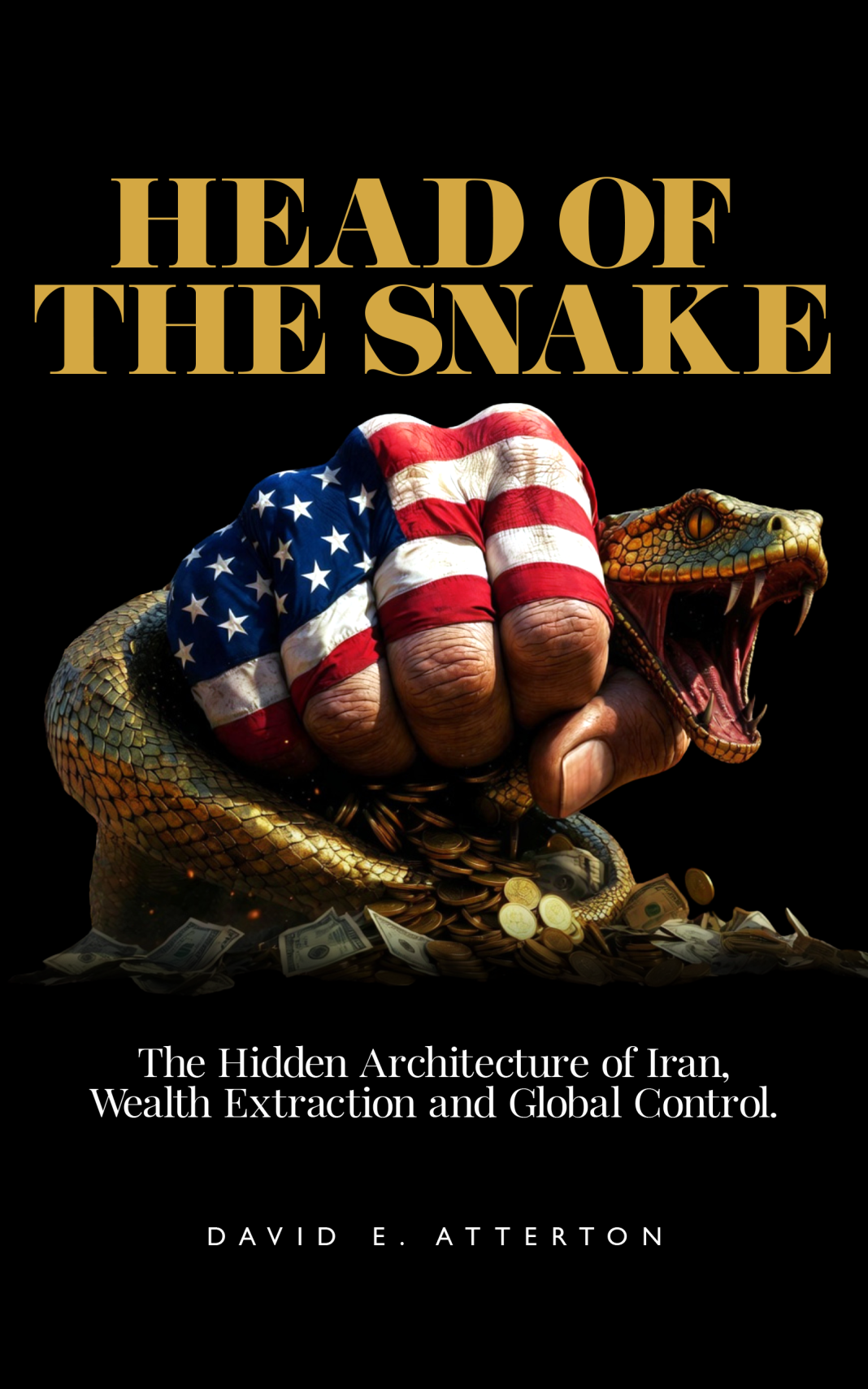
The book that mapped this years before Treasury named the architecture is Head of the Snake, and the free guides and scenario reports are in the resources library.
https://dinarchronicles.com/2026/07/01/reset-intelligence-two-hands-on-the-dinar/
Ariel: Iraq’s Market Transition, Dinar Reality, and Gold Revaluation
Ariel: Iraq’s Market Transition, Dinar Reality, and Gold Revaluation
7-1-2026
Iraq’s Market Transition, Dinar Reality, and Gold Revaluation
Prime Minister Ali al-Zaidi’s interview laying out the shift to a “market economy” with a strong, revalued dinar is the operational language for decoupling from post-2003 dependency hell. It’s the hard pivot away from the artificial program rate that kept Iraq chained to dollar auctions and smuggling networks.
Ariel: Iraq’s Market Transition, Dinar Reality, and Gold Revaluation
7-1-2026
Iraq’s Market Transition, Dinar Reality, and Gold Revaluation
Prime Minister Ali al-Zaidi’s interview laying out the shift to a “market economy” with a strong, revalued dinar is the operational language for decoupling from post-2003 dependency hell. It’s the hard pivot away from the artificial program rate that kept Iraq chained to dollar auctions and smuggling networks.
Trump’s comments on welcoming a weaker USD to enable real Middle East business make perfect sense the old strong-dollar weapon hurt legitimate trade while protecting the financial intermediaries.
Vietnam pushing the same market transition shows the broader BRICS-adjacent realignment away from fiat dominance.
The new CBI Governor coming straight from the AML/TF office is the enforcer. He knows exactly where the leaks were.
Starlink and ASYCUDA give the digital eyes and customs teeth. HCL negotiations are the revenue lock clean oil money, no more KRG gray zones or militia blending.
Gold stacking (170+ tons and growing) is the sound money anchor for Dollar 2.0 mechanics. Judy Shelton has been consistent on gold discipline for years.
Trump’s gold bald eagle image drop is the signal: we’re going back to tangible value that doesn’t erode through printing and endless wars.
The delay? There is none. The featured cleanup is first priority so the revalued dinar (redenomination + strengthening) holds. Iraq knows this.
They stacked gold because they see the writing on the wall: asset-backed systems over fiat sorcery. The artificial rate kept the old networks fat. Removing it for real trade with America forces the structural break. This is fortunate because it prevents a boom-bust that would let the parasites buy back in cheap.
The transition is brutal but necessary corruption exposed, reserves built, rails installed. When it lands, Iraq’s true wealth (oil, gold, diversified revenue) reflects in a dinar that actually works instead of bleeding value.
Read Full Article:
https://www.patreon.com/Prolotario1/posts/full-course-meal-162549782
Iraq Economic News and Points To Ponder Wednesday Afternoon 7-01-26
US Oil Imports From Iraq Drop To 4M In April
2026-07-01 08:30 Shafaq News- Washington US imports of Iraqi crude oil and petroleum products fell sharply in April 2026, dropping to 4.029M barrels from 7.943M barrels in March, according to the US Energy Information Administration (EIA).
Total US oil imports from OPEC member states also declined in April, reaching 37.107M barrels compared to 45.466M barrels the previous month.
US Oil Imports From Iraq Drop To 4M In April
2026-07-01 08:30 Shafaq News- Washington US imports of Iraqi crude oil and petroleum products fell sharply in April 2026, dropping to 4.029M barrels from 7.943M barrels in March, according to the US Energy Information Administration (EIA).
Total US oil imports from OPEC member states also declined in April, reaching 37.107M barrels compared to 45.466M barrels the previous month.
Venezuela led OPEC suppliers to the United States in April with 14.471M barrels, followed by Saudi Arabia at 12.621M barrels. Iraq ranked third at 4.029M barrels, ahead of Algeria at 2.331M barrels, Libya at 1.754M barrels, and Nigeria at 1.370M barrels. Kuwait supplied 322,000 barrels and Gabon 209,000 barrels. The United States recorded no imports from the UAE during the same period. https://www.shafaq.com/en/Economy/US-oil-imports-from-Iraq-drop-to-4M-in-April
Dollar Slips In Baghdad, Rises In Erbil
Shafaq News- Baghdad/ Erbil The US dollar closed Wednesday’s trading mixed in Iraq, hovering around 155,000 dinars per 100 dollars. According to Shafaq News market survey, the dollar traded in Baghdad's Al-Kifah and Al-Harithiya exchanges at 154,950 dinars per 100 dollars, down from the morning session’s 155,100 dinars.
In the Iraqi capital, exchange shops sold the dollar at 155,500 dinars and bought it at 154,500 dinars, while in Erbil, selling prices stood at 154,900 dinars and buying prices at 154,850 dinars.
https://www.shafaq.com/en/Economy/Dollar-slips-in-Baghdad-rises-in-Erbil
Chevron, Iraq Sign West Qurna 2 Confidentiality Deal
2026-07-01 06:23 Shafaq News- Basra Iraq's Basra Oil Company signed a confidentiality agreement with US energy giant Chevron on Wednesday to exchange technical information for evaluating the West Qurna 2 oil field and advancing negotiations on its future development.
Oil Minister Bassem Mohammed Khudair Al-Abadi, who attended the signing ceremony, noted that Russia's Lukoil had withdrawn from developing West Qurna 2, one of Iraq's largest oil fields, while the ministry continues negotiations with Chevron over the field and other projects.
Al-Abadi said the Oil Ministry is expanding opportunities for international energy companies by providing a secure investment environment and removing obstacles to investment. Iraq aims to strengthen its position among the world's leading oil producers and exporters, he added, reaffirming the ministry's commitment to working with international energy companies, which he described as key partners in developing the country's oil and gas sectors.
Foreign investment, he stressed, would create opportunities for Iraqi businesses, generate jobs, and improve infrastructure and public services in nearby communities through corporate social responsibility initiatives.
Discovered in 1973, the field contains more than 13 billion barrels of recoverable reserves and produces between 400,000 and 480,000 barrels per day, accounting for nearly 10% of Iraq's total crude output.
Read more: Russia’s Lukoil turmoil deepens risks for Iraq’s West Qurna-2 oilfield
https://www.shafaq.com/en/Economy/Chevron-Iraq-sign-West-Qurna-2-confidentiality-deal
Strict Directives To Subject Government Vehicles To Strict Inspection On External Roads Inside Iraq
Twilight News – Diyala Security sources said on Wednesday that the competent authorities have received strict directives to stop government vehicles and subject them to a thorough inspection, especially on the main roads and lines linking the central, north and south governorates.
The sources told Shafaq News that these measures have entered into force and include official wheels between the provinces, in order to thwart any attempts to smuggle money or documents, or any other assets that may be linked to files currently under investigation.
This field step comes in conjunction with an escalating anti-corruption campaign launched by the government at dawn last Sunday, and affected officials, deputies and businessmen, which Prime Minister Ali al-Zaidi described as the "first phase" of a broader path to recover public money, directing the regulatory bodies to fully mobilize to receive any indicators related to corruption or institutional failure.
In a related context, the Strategic Center for Human Rights warned on Tuesday morning of misleading campaigns aimed at spreading frustration by claiming that anti-corruption efforts will stop or that they will not reach "large heads," considering those attempts an effort to undermine public confidence in the ongoing government and judicial measures. LINK
Iraq Imports $1.5B Worth Of Fruit And Nuts In 2025
2026-07-01 15:09 Shafaq News- Baghdad Iraq imported $1.541 billion worth of edible fruits, nuts, citrus peel, and melons in 2025, up 23.3% from $1.250 billion a year earlier, according to Trade Map data.
The increase amounted to about $291.5 million year-on-year, with fresh and dried citrus fruits accounting for the largest share of imports at $706.8 million. Bananas followed at $275.2 million, ahead of nuts ($199.2 million), apples, pears, and quinces ($122.7 million), and apricots, cherries, peaches, and plums ($79.1 million).
Iraq ranked among the countries importing more than $1.5 billion worth of fruits and nuts in 2025, as global imports of the products reached $192.68 billion.
The United States remained the world's largest importer with $25.67 billion, followed by China ($20.69 billion), Germany ($16.27 billion), the Netherlands ($10.45 billion), and the United Kingdom ($8.29 billion).
https://www.shafaq.com/en/Economy/Iraq-imports-1-54-billion-worth-of-fruit-and-nuts-in-2025
Seeds of Wisdom RV and Economics Updates Wednesday Afternoon 7-1-26
Good Afternoon Dinar Recaps,
MiCA Crypto Rules Take Full Effect Across Europe, Triggering Major Industry Shakeout
The European Union has fully implemented its Markets in Crypto-Assets (MiCA) regulation, requiring all crypto service providers to hold an approved license or cease operations. The sweeping regulatory framework is expected to reshape Europe's digital asset industry by reducing the number of operating firms while strengthening investor protections and regulatory oversight.
Good Afternoon Dinar Recaps,
MiCA Crypto Rules Take Full Effect Across Europe, Triggering Major Industry Shakeout
The European Union has fully implemented its Markets in Crypto-Assets (MiCA) regulation, requiring all crypto service providers to hold an approved license or cease operations. The sweeping regulatory framework is expected to reshape Europe's digital asset industry by reducing the number of operating firms while strengthening investor protections and regulatory oversight.
Overview
MiCA is now fully in force across the European Union, requiring crypto firms to obtain regulatory authorization to continue operating.
Only about 20% of previously registered firms successfully secured MiCA licenses, creating one of the largest regulatory shakeouts in crypto history.
Licensed exchanges are expected to gain market share as investors migrate toward compliant platforms offering stronger consumer protections.
Key Developments
1. MiCA Enforcement Officially Begins
The European Union's Markets in Crypto-Assets (MiCA) framework officially became fully enforceable on July 1, 2026, ending the transition period for crypto-asset service providers (CASPs). Firms without MiCA authorization are now expected to cease operations or wind down their services within the EU.
2. Majority of Crypto Firms Exit the Market
Of more than 1,200 firms previously operating under national registration systems, only approximately 210–244 obtained MiCA authorization. The result is a dramatic consolidation of the European crypto market as many smaller providers either close, merge, or relocate.
3. Consumer Protection Becomes the Priority
MiCA introduces standardized disclosure requirements, stronger custody rules, operational safeguards, and enhanced regulatory supervision. Investors using licensed exchanges should benefit from greater transparency and accountability compared to the fragmented national systems previously in place.
4. Stablecoin Market Continues to Evolve
Earlier MiCA provisions governing stablecoins have already reshaped the market. Several exchanges removed certain non-compliant stablecoins from European platforms, while MiCA-compliant alternatives are expected to continue expanding throughout the region.
5. Liquidity Shifts Toward Licensed Platforms
With fewer exchanges operating legally, trading activity is likely to concentrate among approved providers. While this may improve regulatory oversight, analysts note it could also temporarily reduce liquidity for smaller cryptocurrencies as markets adjust.
Why It Matters
MiCA represents the world's first comprehensive regulatory framework governing the cryptocurrency industry across a major economic bloc. Rather than prohibiting digital assets, the EU is creating standardized rules intended to increase investor confidence, encourage institutional participation, and establish consistent oversight across all member states.
Why It Matters to Foreign Currency Holders
Although MiCA focuses on digital assets rather than traditional foreign currencies, the regulation reflects the growing integration of digital finance into the global monetary system. As governments establish clearer rules for tokenized assets and stablecoins, digital payment infrastructure continues evolving alongside traditional financial markets that currency investors closely monitor.
Implications for the Global Reset
Pillar 2 – Trade
A unified regulatory framework creates a more consistent digital asset marketplace across Europe, supporting cross-border financial activity and reducing regulatory fragmentation.
Pillar 4 – Technology
MiCA accelerates the institutional adoption of regulated blockchain infrastructure by establishing common standards for digital asset service providers, custody, compliance, and stablecoins throughout the European Union.
Future Outlook
The initial implementation of MiCA is expected to be followed by continued licensing approvals, market consolidation, and increasing institutional participation. As compliant exchanges expand and new regulated products enter the market, Europe may emerge as one of the world's most mature digital asset jurisdictions, potentially influencing how other countries regulate cryptocurrencies in the years ahead.
This is not just about cryptocurrency regulation—it reflects the broader global shift toward integrating digital assets into the regulated financial system through standardized oversight, stronger investor protections, and modern financial infrastructure.
Seeds of Wisdom Team
Newshounds News™ Exclusive
Sources
Crypto Briefing – MiCA crypto regime now fully in force, reshaping the EU market overnight
European Securities and Markets Authority (ESMA) – Markets in Crypto-Assets (MiCA)
~~~~~~~~~~
Seeds of Wisdom Team RV Currency Facts Youtube and Rumble
Newshound's News Telegram Room Link
RV Facts with Proof Links Link
RV Updates Proof links - Facts Link
Start Here room with Most Asked Questions Link
Follow the Gold/Silver Rate COMEX
Follow Fast Facts
Seeds of Wisdom Team™Website
Thank you Dinar Recaps
The Company Behind the Digital Dollar Is Stockpiling Gold
The Company Behind the Digital Dollar Is Stockpiling Gold
Taylor Kenny: 6-30-2026
Tether gold reserves reveal a hard-money warning for digital dollar holders as U.S. debt, stablecoins, and gold collide.
A recent analysis highlights a remarkable maneuver by the company: while they continue to issue digital stablecoins pegged to the US dollar, they are simultaneously diversifying into one of the oldest stores of value in human history—physical gold.
The Company Behind the Digital Dollar Is Stockpiling Gold
Taylor Kenny: 6-30-2026
Tether gold reserves reveal a hard-money warning for digital dollar holders as U.S. debt, stablecoins, and gold collide.
A recent analysis highlights a remarkable maneuver by the company: while they continue to issue digital stablecoins pegged to the US dollar, they are simultaneously diversifying into one of the oldest stores of value in human history—physical gold.
The scale of Tether’s operations is staggering. Currently, the company holds roughly $125 billion in US Treasury debt, placing it in an elite category of holders that exceeds the sovereign reserves of major nations like Germany and Saudi Arabia.
This position isn’t accidental; it has been bolstered by legislation like the 2023 Genius Act, which encourages stablecoins to be backed by Treasury securities.
By continuously issuing digital dollars, Tether creates a consistent, high-volume demand for US government debt. This provides a critical service to a US Treasury market currently strained by the need to borrow money just to cover interest payments on existing debt.
However, it is what Tether does with its profits that demands attention. Instead of reinvesting solely into more debt or traditional financial instruments, the company has been aggressively converting a significant portion of its capital into physical gold.
Furthermore, this gold is not merely sitting idle—reports indicate it is being stored in highly secure, specialized facilities, such as former nuclear bunkers in Switzerland. This pivot suggests that while Tether remains a pillar of support for the US dollar, its leadership is hedging against the long-term stability of the fiat system itself.
The strategic alignment between Tether’s reserves and major financial institutions suggests that these moves are calculated and well-informed. The management of these massive reserves involves key brokers with deep ties to the Federal Reserve and the US Treasury.
When we analyze the overlapping connections between high-level policy decision-makers and corporate financial entities, a clear picture emerges: those at the top of the financial hierarchy may be preparing for a significant shift in monetary policy.
Some analysts suggest that Tether’s gold accumulation isn’t just a corporate reserve policy; it reflects a long-term strategic pivot toward tangible assets. By investing in gold infrastructure and distribution, the company is positioning itself to be insulated from the volatility that often accompanies major cycles of currency devaluation.
The history of finance is littered with examples of governments devaluing fiat currencies and, in some cases, restricting the public’s ability to hold gold.
The current global environment, marked by rising debt and shifting international loyalties, mirrors past eras where fiat assets became increasingly susceptible to policy risks. International observers have even warned that global stablecoin adoption could become a pathway for a controlled devaluation, potentially impacting those who rely exclusively on dollar-based digital assets.
The core lesson for the individual investor is clear: the most effective way to preserve wealth during periods of transition is to hold assets that exist independently of the banking ledger.
While digital stablecoins offer utility and speed, they remain subject to the rules and stability of the underlying monetary system. In contrast, physical gold and silver represent a hedge against the unpredictability of central bank policy.
As the global financial landscape grows increasingly complex, the actions of major institutions like Tether serve as a bellwether for what may lie ahead. While the move toward digital finance continues, the “smart money” is clearly looking toward the foundational stability of precious metals.
For those concerned about potential monetary instability, diversifying one’s portfolio with tangible, physical assets—gold and silver—remains a time-tested strategy for wealth preservation.
CHAPTERS:
00:00 Tether Is Stockpiling Gold in a Swiss Bunker
00:55 The Digital Dollar Company Most Americans Don’t Know
01:24 The GENIUS Act and U.S. Debt Demand
02:19 Why Stablecoins Could Save the Treasury Market
03:16 Tether’s Profits Are Going Into Physical Gold
04:12 Why This Is Bigger Than a Gold-Backed Token
05:07 Tether’s CEO Warns the Monetary System Is Weakening
06:03 The Insiders Connecting Tether to Washington
07:00 What This Means for Your Savings and Retirement
09:45 The 1933 and 1971 Gold Lessons
11:07 Protecting Wealth With Gold and Silver
Wed. Iraq News Posted by Tishwash at TNT 7-1-2026
TNT:
Tishwash: On the way to America
The visit of the Prime Minister to the United States of America is approaching, in response to an official invitation from the US President. The Iraqi delegation is scheduled to head to Washington in mid-July, in an important political and economic stop that is being anticipated by both government circles and business circles.
It is customary in international practice for heads of state and government to include in their foreign visits a select group of leading business figures and heads of influential companies and economic institutions, individuals with a proven track record of achievements and a significant presence in local and global markets.
TNT:
Tishwash: On the way to America
The visit of the Prime Minister to the United States of America is approaching, in response to an official invitation from the US President. The Iraqi delegation is scheduled to head to Washington in mid-July, in an important political and economic stop that is being anticipated by both government circles and business circles.
It is customary in international practice for heads of state and government to include in their foreign visits a select group of leading business figures and heads of influential companies and economic institutions, individuals with a proven track record of achievements and a significant presence in local and global markets.
Government representation is often limited to a small number of officials, while the majority of the delegation consists of economic figures capable of transforming official meetings into tangible investment opportunities and projects that serve the interests of their countries.
These visits gain their importance from the fact that they are not protocol occasions or ordinary diplomatic trips, but rather intensive workshops dedicated to holding meetings and encounters, building partnerships and attracting investments, in order to achieve long-term strategic goals.
Hence, the selection of individuals participating in the economic delegation should be based on criteria of competence, experience, and the ability to represent the Iraqi private sector in a way that reflects its true potential, with a focus on those with successful experiences and existing projects on the ground, who have the ability to build bridges of cooperation with American companies and institutions.
Iraq today needs to seize every opportunity to promote its investment climate and present its development needs to major international companies, particularly in vital sectors that form the cornerstone of sustainable economic growth. Building strategic partnerships with international investors will also contribute to the transfer of expertise and technology, create jobs, and drive development.
The success of a visit is not measured by the number of meetings or statements issued, but rather by the agreements, projects, and real investment opportunities it can yield.
Iraq needs a comprehensive investment revolution to revitalize its economy, pull it out of its stagnation, and open up new horizons. For growth, development, and prosperity. link
***************
Tishwash: After the legislative recess... a bet on finalizing the postponed laws.
MP Hussein Shaker affirmed on Tuesday that the Parliament will resume its work after the legislative recess to proceed with enacting important laws, stressing the need to avoid repeating the political disputes that plagued previous sessions and hampered the legislative body's work.
Shaker told the Information Agency, "The Parliament will work after the legislative recess to enact important laws that represent a priority for the coming period, in line with the requirements of the current phase and the needs of the citizens."
He added, "There is a trend within the Parliament to overcome the obstacles that hindered legislative work during previous sessions and to avoid repeating the scenario of political disputes that negatively impacted the performance of the legislative body and affected the passage of many important laws."
He pointed out that "the next phase requires cooperation among the political blocs to complete the remaining laws and expedite the enactment of laws that serve the public interest and strengthen the work of state institutions."
Shaker emphasized that "the success of the Parliament in performing its legislative and oversight duties requires moving beyond political disputes and focusing on completing the important pending laws, in a way that fulfills the aspirations of citizens and contributes to strengthening political and institutional stability."
Among the stalled laws are the Popular Mobilization Forces Law, the Oil and Gas Law, as well as amendments to the Land Ownership Law and the Federal Supreme Court Law. These laws require overcoming disagreements and prioritizing the national interest in order to be passed. link
***************
Tishwash: Parliament is expected to convene in early July to decide on nine ministerial portfolios in al-Zidi's government.
Member of the Coordination Framework, Uday Abdul-Hadi, predicted on Monday that a session of the Council of Representatives would be held during the first week of July to vote on nine ministerial portfolios in Ali al-Zaidi's government.
Abdul-Hadi told Al-Maalouma, "There is political support for completing the formation of Ali al-Zaidi's government from the forces within the Coordination Framework, in coordination with the other political forces and movements." He anticipated "a session of the Council of Representatives in the first week of July to vote on the candidates for nine ministerial portfolios, in order to complete the remaining cabinet positions."
He added that "next week will witness an important round of political meetings, especially among the forces within the Coordination Framework, to finalize the choices regarding the candidates' names, particularly for the sovereign ministries." He indicated that "expectations point to reaching a comprehensive agreement that will lead to holding the parliamentary session and voting on the candidates for the nine ministerial portfolios." link
**************
Tishwash: Sanad: Iraq has become a regional communications hub and an international data transmission corridor.
Communications Minister Mustafa Sand confirmed on Wednesday that the achievements in the communications sector represent an important milestone that will make Iraq a regional communications hub and an international data transmission corridor, noting the continued work on developing infrastructure and expanding internet services in various parts of the country.
During the opening ceremony of the third edition of the Iraqi Communications Summit, which was attended by a correspondent from Shafaq News Agency, Sand said that since the ministry took over responsibility for the communications sector, it has put in place a plan to develop this sector, which included expanding free internet services in a number of locations, including holy shrines, external roads during the Arbaeen pilgrimage season, border crossings, as well as other places.
He added that the ministry has worked on expanding the fiber optic cable project and increasing internet service capacities, which contributes to improving the quality of service, stressing that what has been achieved so far represents an important milestone that makes Iraq a regional communications hub and an important site for digital transformation, in addition to being an international corridor for data transmission.
The Minister of Communications indicated that the ministry continues to work on developing the infrastructure of the communications sector, expanding fiber optic networks, improving communications services, and supporting the development of internet networks and systems.
On June 25, Sanad announced the signing of an agreement with the Qatari company GBI to market cross-border internet (transit) capacities through the "Road of Civilizations" project, confirming the receipt of the first financial payment in hard currency, in a step aimed at strengthening Iraq's position as a regional and international digital corridor for data traffic. link
Tishwash: Source: Al-Zaidi intends to demand that Jordan hand over businessmen and former officials accused of corruption
An Iraqi political source told the Jordanian newspaper “Khaberni” that Iraqi Prime Minister Ali Faleh al-Zaidi is about to issue official letters to Jordan to hand over businessmen and former officials accused of corruption.
The source, who is close to al-Zaydi's political circle, said that the communications would include businessmen working in the car trade, a potato chip factory, and a private hospital.
The sources indicated that the suspects are required to return tens of millions of dollars, not to mention unspecified quantities of gold, and that Baghdad will formally request the seizure of their assets.
The Iraqi Prime Minister had previously confirmed that the campaign represents a “first phase” in the fight against corruption, stressing the continuation of efforts to recover public funds, and emphasizing that there will be no leniency in protecting the interests of citizens.
The Iraqi News Agency had announced the arrest of 47 defendants, including deputies and officials, in corruption cases, and published the names of 15 of them, citing sources it described as high-ranking. link
***************
Tishwash: Under the auspices of the Minister of Oil... a confidentiality agreement was signed between Basra Oil Company and the American company Chevron.
The Basra Oil Company signed a confidentiality agreement with the American company Chevron on Wednesday to regulate the exchange of information for the purpose of evaluating the West Qurna 2 field and negotiating future agreements.
Oil Minister Basim Mohammed Khudair al-Abadi stated in a press release: "The West Qurna 2 field is a giant oil field, and the Russian company Lukoil withdrew from its development operations."
The minister indicated that the ministry provides ample opportunities for international companies to invest, including the American company Chevron, emphasizing the attractive and secure investment environment and the removal of all obstacles.
He affirmed that Iraq aspires to be a leading nation in oil production and exports, thereby achieving industrial and economic development for the country, and noted the ministry's commitment to the interests of international companies operating in Iraq.
He also emphasized the ministry's adherence to the government's directives regarding the importance of supporting international companies, which are considered partners in developing the oil and gas sectors, and indicated that full support will be provided to ensure the success of these projects and the achievement of the government's objectives.
The minister added that the investment projects being implemented secure job opportunities for local companies, in addition to employing Iraqi workers and developing service infrastructure in areas near the projects through social benefit initiatives.
It is worth noting that the ministry is negotiating with the American company Chevron to implement several projects in addition to the West Qurna 2 field. link
News, Rumors and Opinions Wednesday 7-1-2026
Note: All intel should be considered as "Rumors" until we receive official announcements ...and “Rates and Dates” could change anytime until we get to the banks/redemption centers.
Ariel: The Broader Summer Window
6-30-2026
The Ground Play: Covering The Active Field Of Operations (Iraq & CERN)
ASYCUDA Agreement
The recent technical agreement between Baghdad and the KRG on ASYCUDA (Automated System for Customs Data) is a big quiet win for the sovereignty play. This UNCTAD-backed system has been rolling out in phases since the 2021 deal, with Phase Two kicking hard in 2024-2025.
Note: All intel should be considered as "Rumors" until we receive official announcements ...and “Rates and Dates” could change anytime until we get to the banks/redemption centers.
Ariel: The Broader Summer Window
6-30-2026
The Ground Play: Covering The Active Field Of Operations (Iraq & CERN)
ASYCUDA Agreement
The recent technical agreement between Baghdad and the KRG on ASYCUDA (Automated System for Customs Data) is a big quiet win for the sovereignty play. This UNCTAD-backed system has been rolling out in phases since the 2021 deal, with Phase Two kicking hard in 2024-2025.
As of mid-2026, it’s unifying customs across federal and Kurdish borders, automating declarations, cutting smuggling windows, and forcing electronic payments. Traders have b*****d about higher costs and delays, but the government is holding firm this is the compliance hammer that seals the old paper-and-cash graft pipelines.
The full rollout across border crossings is accelerating. Pre-arrival declarations started late 2025, and the system is now biting into real-time tracking for oil, goods, and currency flows. This directly supports the cashless push by early July no more easy Dubai outflows or militia blending ops.
The new CBI Governor coming from the AML/TF office? That’s not coincidence. He’s the enforcer who knows exactly where the leaks were. Starlink license approval layered on top gives the satellite backbone so remote posts and oil fields can feed data without terrestrial sabotage. This is how you make ISO 20022 actually work on the ground instead of on paper.
The Broader Summer Window – Now to July 17th
This is the grind paying off. The frustration is real as we all have been waiting to get to where we are for a good while now. Im just glad that things are speeding up. Because the machine was embedded deep, but the foundations are locking.
Starlink, ASYCUDA, AML Governor, HCL pressure, gold collateral these are the rails for a sovereign dinar and Dollar 2.0 sound money. Trump’s Versailles signature in the old mandate halls is poetic reversal. The old order is fracturing.
Read Full Article:
https://www.patreon.com/Prolotario1/posts/ground-play-of-162440891
https://dinarchronicles.com/2026/06/30/prolotario-the-broader-summer-window/
*****************
Courtesy of Dinar Guru: https://www.dinarguru.com/
Stephen Someone...reached out to me last week. He was telling me he had a conversation with his branch manager at Chase. He was asking them if they verified currency on site. He goes, no, we don't at this branch. We might need to send it off. And I go, no, no, no, no, no. You don't send your money, your dinar anywhere. You don't let it out of your sight...You're not going to be putting your currency in a paper envelope and trust that it's going to get to its location because that could be a multi-million dollar mistake. There's no reversing that mistake...
Jeff There have been in the past 10 years one or two points where they've been close to revaluing but didn't. The reason why they couldn't? They have too much political instability and corruption. They couldn't get it done. Where we're at right here, with the current government administration, we are witnessing the most overall steps getting completed than ever before in Iraq's history.
Reset Intelligence Iraq quietly opened a dedicated state account to count the cash it is pulling out of the walls and the holes and the offshore accounts of its own political class...Investigators have now recovered over $107 million tied to the oil-ministry case alone, including 98 billion dinars and $11 million in cash, plus 70 properties, 21 vehicles and gold... Close to 1,000 officials are now under investigation. This is not a raid. It is an audit of an entire political class...You have been told for years the dinar is a scam. The people who hoarded it knew better.
BREAKING News Iraq 47 Corruption Suspects Arrested Latest Update
Edu Matrix: 7-1-2026
Iraq's new Prime Minister initiates a well-planned raid on corruption suspects; 47 high-ranking Iraqi officials arrested.
Seeds of Wisdom RV and Economics Updates Wednesday Morning 7-1-26
Good Morning Dinar Recaps,
UN Warns Hormuz Disruption Could Leave Lasting Economic Scars
Although the Strait of Hormuz has reopened and energy markets have stabilized, the United Nations warns that the economic effects of months-long supply disruptions could continue to burden vulnerable economies through higher food prices, transportation costs, and inflation.
Good Morning Dinar Recaps,
UN Warns Hormuz Disruption Could Leave Lasting Economic Scars
Although the Strait of Hormuz has reopened and energy markets have stabilized, the United Nations warns that the economic effects of months-long supply disruptions could continue to burden vulnerable economies through higher food prices, transportation costs, and inflation.
Overview
The United Nations Conference on Trade and Development (UNCTAD) warns that the economic consequences of the Strait of Hormuz disruption will outlast the geopolitical crisis.
While oil prices have largely recovered, transportation, fertilizer, and food costs are expected to remain elevated, particularly for developing nations.
Import-dependent economies face prolonged inflationary pressures that could threaten food security, economic growth, and social stability.
Key Developments
1. Supply Chains Recover More Slowly Than Energy Markets
The reopening of the Strait of Hormuz has restored global energy shipments and helped crude oil prices return closer to pre-conflict levels.
However, UNCTAD notes that shipping networks, logistics operations, and inventory systems require considerably more time to normalize, meaning transportation costs are likely to remain elevated even as fuel prices decline.
2. Food Inflation Remains a Major Concern
According to the report, higher transportation, fuel, and fertilizer costs continue to flow through agricultural production and food distribution networks.
As a result, food prices may remain elevated well after energy markets stabilize, placing additional financial pressure on households worldwide.
3. Developing Nations Face the Greatest Risk
Countries heavily dependent on imported fuel, fertilizers, and food supplies remain especially vulnerable.
Many developing economies have limited fiscal resources to offset rising import costs, leaving governments with fewer options to protect consumers from persistent inflation.
4. Rising Food Costs Could Increase Humanitarian Challenges
UNCTAD warns that sustained increases in food prices could worsen food insecurity, increase malnutrition, and place greater strain on social assistance programs.
Lower-income households are expected to bear the greatest burden as essential living expenses remain elevated.
5. International Cooperation Will Be Critical
The agency believes coordinated international support—including financial assistance, food aid, and investments in stronger supply chains—will be essential to helping vulnerable economies recover.
Without additional support, inflationary pressures could slow economic growth long after shipping through Hormuz has resumed.
Why It Matters
The reopening of the Strait of Hormuz marks only the beginning of the global recovery. While energy markets have responded quickly, broader economic systems—including agriculture, transportation, and international trade—typically recover much more slowly.
The report illustrates how geopolitical disruptions can produce lasting economic consequences that extend well beyond the immediate crisis.
Why It Matters to Foreign Currency Holders
Persistent inflation and uneven economic recovery could place additional pressure on currencies in import-dependent nations while reinforcing the importance of economic resilience and sound fiscal management. Although this does not directly signal foreign currency revaluations, it demonstrates how global supply chain disruptions continue to influence monetary policy, inflation, and exchange-rate stability.
Implications for the Global Reset
Pillar 1 – Debt
Higher food and transportation costs may increase government spending, fiscal deficits, and borrowing needs, particularly across developing economies already facing financial constraints.
Pillar 2 – Trade
The Hormuz disruption highlights the importance of resilient global supply chains, diversified shipping routes, and reduced dependence on strategic maritime chokepoints.
Pillar 3 – Assets
Persistent inflation and geopolitical uncertainty may continue supporting demand for defensive assets, strategic commodities, and other traditional stores of value.
Pillar 4 – Technology
Governments and businesses are expected to accelerate investments in logistics technology, supply chain monitoring, and digital trade infrastructure to improve resilience during future disruptions.
Pillar 5 – Energy
The crisis reinforces the strategic importance of diversified energy supplies, expanded strategic reserves, and continued investment in renewable energy and alternative transportation corridors.
Looking Ahead
Although the immediate threat to global energy supplies has eased, the broader economic recovery is expected to take considerably longer. Policymakers will likely focus on strengthening supply chains, controlling inflation, and supporting vulnerable economies while preparing for future geopolitical disruptions.
This is not just about reopening a critical shipping lane—it reflects the lasting economic impact that geopolitical conflicts can have on global trade, food security, inflation, and the resilience of the international financial system.
Seeds of Wisdom Team
Newshounds News™ Exclusive
Sources
Reuters – UN warns Hormuz disruption could leave lasting economic scars.
Modern Diplomacy – UN Warns Hormuz Disruption Could Leave Lasting Economic Scars
~~~~~~~~~~
🌱 A Message to Our Currency Holders🌱
If you’ve been holding foreign currency for many years, you were not foolish.
You were not wrong to believe the global financial system would change.
What failed was not your patience — it was the information you were given.
For years, dates, rumors, and personalities replaced facts, structure, and proof. “This week” predictions created cycles of hope and disappointment that were never based on how currencies actually change.
That is not your failure.
Our mission here is different: • No dates • No rates • No hype • No gurus
Instead, we focus on:
• Verifiable developments • Institutional evidence
• Global financial structure • Where countries actually sit in the process
Currency value changes only come after sovereignty, trade, banking, settlement systems, and fiscal coordination are in place. History and institutions confirm this sequence.
You will see silence. You will see denials. That is not delay — that is discipline.
Protect your identity. Organize your documents. Verify everything.
Never hand your discernment to anyone who cannot show proof.
You deserve truth — not timelines.
Seeds of Wisdom Team
Newshounds News
~~~~~~~~~~
Seeds of Wisdom Team RV Currency Facts Youtube and Rumble
Newshound's News Telegram Room Link
RV Facts with Proof Links Link
RV Updates Proof links - Facts Link
Start Here room with Most Asked Questions Link
Follow the Gold/Silver Rate COMEX
Follow Fast Facts
Seeds of Wisdom Team™Website
Thank you Dinar Recaps
Iraq Economic News and Points To Ponder Wednesday Morning 7-01-26
Oil Rises As Talks Between Washington And Tehran Stalled, U.S. Inventories Fall
Shafaq News - Baghdad/ Erbil Oil prices rose on Wednesday, helped by fears of continued supply disruptions in the Middle East after talks between the United States and Iran stalled over a final deal to end the war between them.
Brent crude futures rose 33 cents, or 0.45%, to $73.28 a barrel, while U.S. West Texas Intermediate crude rose 34 cents, or 0.49%, to $69.84 a barrel.
Oil Rises As Talks Between Washington And Tehran Stalled, U.S. Inventories Fall
Shafaq News - Baghdad/ Erbil Oil prices rose on Wednesday, helped by fears of continued supply disruptions in the Middle East after talks between the United States and Iran stalled over a final deal to end the war between them.
Brent crude futures rose 33 cents, or 0.45%, to $73.28 a barrel, while U.S. West Texas Intermediate crude rose 34 cents, or 0.49%, to $69.84 a barrel.
The gains also came after data showed U.S. crude oil inventories fell by 6.1 million barrels in the week to June 26, along with declining gasoline inventories, raising supply concerns.
In the political developments, Iran and Qatar announced that Tehran would meet with mediators in Doha instead of holding direct talks with US officials, despite the arrival of US envoy Steve Whitkov and Jared Kushner to the Qatari capital for talks described by Washington as "high-level."
U.S. Vice President J.D. Vance also stressed that the United States will not allow Iran to impose transit fees on passing ships through the Strait of Hormuz, noting that oil flows through the Strait have returned to pre-war levels. LINK
Gold Fell On Rising US Bond Yields And Rising Interest Rate Expectations
Shafaq News - Baghdad/ Erbil Gold prices fell on Wednesday after hitting seven-month lows during the previous session, weighed down by higher U.S. Treasury yields and rising expectations of interest rate hikes by the Federal Reserve.
The price of gold in spot transactions fell 0.7% to $ 3979.41 an ounce, after falling in the previous session to $ 3942.99 an ounce, the lowest level since last November. U.S. gold futures for August delivery fell 1.1 percent to $3,992.70 an ounce.
Gold recorded its largest quarterly decline since 2013 during the second quarter of 2026, and fell for the fourth consecutive month in June, amid growing inflationary fears and high expectations of tightening US monetary policy.
The U.S. dollar and 10-year U.S. Treasury yields rose, adding to pressure on gold by raising the cost of holding the precious metal for investors holding other currencies.
In the same context, the markets expect the Federal Reserve to raise interest rates in September, while investors are waiting for the release of US employment data for June and non-farm payrolls figures to obtain new indicators on the course of monetary policy.
In other precious metals, spot silver fell 1.4 percent to $57.75 an ounce, platinum fell 0.6 percent to $1,542 an ounce, and palladium fell 0.4 percent to $1,199.34 an ounce. LINK
After Baghdad. The Head Of Turkish Intelligence Visits Kirkuk And Discusses With The Governor Joint Files
Twilight News – Kirkuk The governor of Kirkuk, Mehmet Simon Agha, received on Wednesday the head of the Turkish intelligence service Ibrahim Qalan at Kirkuk International Airport, in the first official visit by the Turkish official to the province after the conclusion of his talks in the capital Baghdad.
A local source told "Twilight News" that the head of the Turkish apparatus and his accompanying delegation arrived in the province to hold a series of meetings with the local administration, pointing out that the talks will focus on discussing a number of files of common interest and security and political dimensions between the two sides.
Qalan’s tour of Kirkuk comes hours after high-level meetings he held in Baghdad with senior officials in the federal government, focused on joint security coordination and border and energy files. LINK
Basra Crude Prices Jump By More Than 3% On The Impact Of The Rise Of Global Oil
Shafaq News - Baghdad Iraqi oil prices rose significantly on Wednesday, in conjunction with the gains made by global energy markets. Basra heavy crude rose to $ 62.98 per barrel, achieving an increase of $2.32, or 3.82%, while Basra's medium crude rose to $65.08 a barrel, a growth of 3.70%.
Globally, U.S. West Texas Intermediate crude prices grew to $69.77 a barrel, up 0.39%, and Brent crude futures rose to $73.21 a barrel, a slight increase of 26 cents.
Regionally, Saudi Arabian light crude jumped 3.00% to $78.87 a barrel, while Qatar’s Al Shaheen crude rose 2.87% to $67.84, and UAE’s DAS crude rose 0.33% to close at $66.89 per barrel.
Unlike this upward trend, the OPEC crude basket fell 3.60% to settle at $77.37 a barrel, while Dubai crude maintained its price stability at $79.52 per barrel. LINK
The Dollar Opens Wednesday's Trading On A Decline In Baghdad And Erbil
Shafaq News- Baghdad/ Erbil The exchange rates of the US dollar fell on Wednesday morning in the markets of the Iraqi capital Baghdad and in Erbil, the capital of the Kurdistan region, compared to the closure of transactions on Tuesday.
The correspondent of the agency Shafaq News, that the prices of the dollar fell in the stock exchanges of the struggle and Harthiya in Baghdad, to record 155,100 Iraqi dinars for every 100 dollars, after it had recorded on Tuesday 156,000 dinars against 100 dollars.
Our correspondent added that the selling prices in banking shops in the local markets in Baghdad amounted to 155,500 dinars against 100 dollars, while the purchase price recorded 154,500 dinars against 100 dollars.
In Erbil, the capital of the Kurdistan region, the dollar prices also fell, with the sale price of 154,850 dinars against 100 dollars, while the purchase price recorded 154,750 dinars against 100 dollars. LINK
Strict Directives To Subject Government Vehicles To Strict Inspection On External Roads Inside Iraq
Twilight News – Diyala Security sources said on Wednesday that the competent authorities have received strict directives to stop government vehicles and subject them to a thorough inspection, especially on the main roads and lines linking the central, north and south governorates.
The sources told Shafaq News that these measures have entered into force and include official wheels between the provinces, in order to thwart any attempts to smuggle money or documents, or any other assets that may be linked to files currently under investigation.
This field step comes in conjunction with an escalating anti-corruption campaign launched by the government at dawn last Sunday, and affected officials, deputies and businessmen, which Prime Minister Ali al-Zaidi described as the "first phase" of a broader path to recover public money, directing the regulatory bodies to fully mobilize to receive any indicators related to corruption or institutional failure.
In a related context, the Strategic Center for Human Rights warned on Tuesday morning of misleading campaigns aimed at spreading frustration by claiming that anti-corruption efforts will stop or that they will not reach "large heads," considering those attempts an effort to undermine public confidence in the ongoing government and judicial measures. LINK
80%. Sharp Decline In Iraqi Oil Exports To South Korea
Shafaq News – Baghdad Data from the Korean National Oil Company (KNOC) showed that South Korea’s imports of Iraqi crude oil fell by 80.1% year-on-year in May.
According to the data, Korean imports of Iraqi oil during the said month amounted to about 2.146 million barrels, recording a sharp decline compared to 10.778 million barrels in the same month of 2025, a decrease of 62.2% compared to April of this year, reflecting a significant decline in the volume of Iraqi supplies to the Korean market.
In terms of the arrangement of crude oil suppliers to South Korea during the month of May, the lead was as follows:
Saudi Arabia: 18.839 million barrels.
United States: 15.020 million barrels.
United Arab Emirates: 13.151 million barrels.
Algeria: 3.644 million barrels.
Qatar: 2.782 million barrels.
Iraq: 2.146 million barrels.
Kazakhstan: 2.082 million barrels.
During the first five months of this year (January to May), South Korea’s total imports of Iraqi oil amounted to 31,992 million barrels, a total decrease of 29.9% compared to the same period last year.
The Korean report attributed the decline to Seoul’s tendency to diversify its energy sources and reduce excessive dependence on Middle Eastern oil amid the turmoil in the region, as it boosted imports from the UAE, Algeria, Canada and Africa through alternative shipping routes that avoid the Strait of Hormuz.
Seoul plans to raise its imports of Canadian crude oil to 16 million barrels this year, while considering increasing it to 20 million barrels per year in the long term. LINK
Iraq Economic News and Points To Ponder Tuesday Evening 6-30-26
Eram News: 42 Iraqi Officials Implicated With The "Revolutionary Guard" In Smuggling Iranian Oil Away From Washington's Sanctions
Baghdad - One News - 6/30/2026 Anti-corruption investigations have extended from Baghdad to Kermanshah, Iran, revealing a file involving more than forty Iraqi officials suspected of involvement with Revolutionary Guard officials in smuggling oil and providing transit routes away from US sanctions.
An informed source revealed to Eram News that the investigations are no longer limited to bribery, but are now focused on dismantling a cross-border financial and logistical network.
Eram News: 42 Iraqi Officials Implicated With The "Revolutionary Guard" In Smuggling Iranian Oil Away From Washington's Sanctions
Baghdad - One News - 6/30/2026 Anti-corruption investigations have extended from Baghdad to Kermanshah, Iran, revealing a file involving more than forty Iraqi officials suspected of involvement with Revolutionary Guard officials in smuggling oil and providing transit routes away from US sanctions.
An informed source revealed to Eram News that the investigations are no longer limited to bribery, but are now focused on dismantling a cross-border financial and logistical network.
This prompted Iranian Foreign Minister Abbas Araqchi to travel quickly to Baghdad in an attempt to contain the repercussions of the case before it escalates into a political and legal crisis between the two countries.
These developments coincide with the arrest of dozens of Iraqi officials, most notably Deputy Oil Minister Ali Ma'araj al-Bahadli, whom Washington previously accused of facilitating the smuggling of Iranian oil by mixing it with Iraqi oil.
https://1news-iq.net/إرم-نيوز-42-مسؤولاً-عراقياً-تورطوا-مع-حر/
Iraq Announces Shift To Market Economy, Vows Complete Sovereign Monopoly On Force
Mohammed Jangadost Iraqi Prime Minister Ali Falih Al-Zaidi (right) speaks during an exclusive interview with the pan-Arab daily newspaper Asharq Al-Awsat.
In a comprehensive and wide-ranging interview with Asharq Al-Awsat, Iraqi Prime Minister Ali al-Zaidi laid out a sweeping legislative, military, and economic roadmap intended to fundamentally decouple the country from its post-2003 structural crises.
Al-Zaidi announced an upcoming "National Sovereignty Conference" slated for the end of this year, which will codify the state's exclusive monopoly on violence. Concurrently, he signaled a hard economic break from Iraq's socialist past, declaring an end to International Monetary Fund (IMF) borrowing and a push to revise the country's OPEC oil production quotas.
Dismantling the 'State Within a State'
Addressing the critical security bottleneck that has long plagued Iraqi sovereign independence, Prime Minister Al-Zaidi confirmed that the government has begun actively collecting stockpiles of heavy and medium weaponry from prominent paramilitary factions. Forces including Saraya al-Salam, Asa'ib Ahl al-Haq, and Kata'ib Imam Ali have already begun surrendering various arms assets to official state mechanisms.
"Resistance is a necessity, not a profession," Al-Zaidi stated, adding that the historical pretext for autonomous paramilitary operations has expired. "The government will no longer tolerate or accept the existence of a state within a state."
The Prime Minister emphasized that the true operational challenge goes beyond physical disarmament; it requires completely severing the command-and-control loops between political factions and individual fighters. To formalize this, the year-end National Sovereignty Conference will establish a strict legal framework banning all weapons outside of official state security apparatuses.
Addressing regional security concerns, Al-Zaidi stated that investigative committees have found no evidence linking recent cross-border attacks on Gulf states to Iraqi territory. He noted that commanders have been given strict directives to preemptively neutralize any unauthorized attempt to launch strikes from within Iraq.
[ National Sovereignty Conference ]
[ Paramilitary Disarmament ] [ Regional Security ]
• Sever command loops between factions & fighters • Absolute ban on cross-border strikes
• Surrender of heavy arms to state apparatus • Guarantee neutrality to Gulf neighbors
Institutional Anti-Corruption and Tech-Driven Clawbacks
Characterizing systemic graft as an existential threat to the Iraqi state rather than a mere administrative hurdle, Al-Zaidi described the emergence of a "deviant ideological system" fueled by competitive public looting.
To counter this, the Prime Minister has instructed the Ministry of Finance to open dedicated accounts designed strictly for the repatriation of stolen national capital. In an unprecedented move aimed at restoring public trust, Al-Zaidi announced that he will forgo his official state salary, refuse all diplomatic or corporate gifts, and has barred himself and his cabinet from running for a subsequent term or forming a political party.
Economic Shock Therapy: Moving to a Market Economy
On the economic front, Al-Zaidi outlined a profound philosophical transition away from decades of state-dominated, socialist-era economic frameworks, many of which stem from the outdated legal remnants of the dissolved Revolutionary Command Council.
Economic Metric / Initiative Strategic Action / Current Status
IMF Relations Complete exit; Iraq will no longer enter sovereign borrowing programs.
Liquidity & USD Shipments Fully resolved; cash liquidity issues have been stabilized via recent capital shipments.
Energy & Development Fund Newly established; open to public subscription and direct sovereign wealth investment from Saudi Arabia, the UAE, and Qatar.
The Prime Minister also targeted international energy policies, stating that Iraq’s current OPEC crude export quota fails to account for its massive population size, historical conflicts, or the immense financial toll the nation incurred while combating ISIS. Baghdad will seek a revised, equitable distribution mechanism within OPEC that accurately reflects its domestic economic realities.
Strategic Autonomy in Foreign Policy
Following an official state visit to Washington, the Prime Minister confirmed an upcoming diplomatic tour to Turkey, Saudi Arabia, and Iran, cementing an independent foreign policy that rejects external mandates.
Commenting on relations with the United States, Al-Zaidi noted that while the White House envoy presented no political demands, discussions successfully focused on sweeping away the dense bureaucratic hurdles that had previously frozen the operations of several major American corporations within Iraq. The streamlined regulatory landscape is part of a broader effort to invite Western, European, and Gulf Arab investment funds into the country's newly formed Energy and Development Fund.
"Nothing comes before Iraq for us," Al-Zaidi concluded. "It is in our people's interest to build an outstanding, transparent relationship with the international community based on mutual respect and shared economic development." Iraq Announces Shift to Market Economy, Vows Complete Sovereign Monopoly on Force https://channel8.com/english/news/60725
Al-Kadhimi Opens The File On The “Billion-Dollar Project That Never Became A Stadium”... Saudi Arabia Offered A Major Gift After The Basra Match, But The Dispute Between Eastern And Western Baghdad Turned The Project Into A Lost Opportunity
Baghdad - One News - 6/30/2026 In one of the most detailed accounts of the course of Iraqi-Saudi relations, former Prime Minister Mustafa Al-Kadhimi revealed, during his talk about the period in which he was head of the National Intelligence Service, that the idea of holding the historic match between Iraq and Saudi Arabia in Basra was not just a sports initiative, but came within a political and security track aimed at rebuilding trust between Baghdad and Riyadh after years of estrangement.
According to Al-Kadhimi, he personally presented the idea to Saudi Crown Prince Mohammed bin Salman during meetings held during the government of former Prime Minister Haider al-Abadi, based on his conviction that sports are capable of breaking the political deadlock and bringing people closer together.
Al-Kadhimi recounts that the match turned into a remarkable popular message, after the Basra International Stadium was filled with about 60,000 spectators, while tens of thousands remained outside its walls, amid chants from the fans: “Where are you, Green Team? Why are you late?” He considered that moment to have embodied the Iraqis’ thirst for their Arab depth.
He adds that the echoes of the match prompted the Saudi Crown Prince to contact him, informing him that King Salman would be making a call to then-Prime Minister Haider al-Abadi, and that the Kingdom had decided to present a gift to Iraq in the form of funding the construction of a new sports stadium worth one billion dollars.
But the surprise, according to Al-Kadhimi, is that the project was not hindered by the Saudi side, but rather by internal Iraqi disputes over the location of the stadium; one group insisted on building it in eastern Baghdad, while others insisted on building it in the west, so the initiative ended up being canceled before it saw the light of day.
According to Al-Kadhimi, this narrative represents one of the most prominent accounts linking diplomacy and sports. It offers a new explanation for the failure of a major investment and sports project that could have been a pivotal moment in developing sports infrastructure in Iraq, and it also highlights the impact of internal divisions in disrupting strategic projects.
https://1news-iq.net/الكاظمي-يفتح-ملف-المليار-الذي-لم-يصب/
Parliament Speaker Al-Halbousi Affirms That The Judiciary Will Resolve Corruption Cases And That No Member Of Parliament WillHave Immunity If Legal Charges Are Proven Against Them In The Future
Baghdad - One News - 6/30/2026 Parliament Speaker Hebat al-Halbousi confirmed in an interview with Al Arabiya that lifting the immunity of MPs under investigation does not mean they are guilty of corruption, and that the judiciary has the final say in confirming or denying the charges.
He explained that the arrests of those accused of corruption were carried out simultaneously due to the sensitivity of the operation, and that no clashes occurred between the raiding forces and the security personnel protecting the accused MPs.
Al-Halbousi explained in press statements that the MPs included in Operation Dawn of the Greater Charge against those accused of corruption will appear before the judiciary, and that legal procedures will include everyone and there is no immunity for the corrupt, stressing at the same time that there is an agreement between the government and the political blocs to restrict weapons to the hands of the state, and there will be no weapons outside the framework of the state by the thirty of September.
https://1news-iq.net/الحلبوسي-يؤكد-أن-القضاء-يحسم-قضايا-الف/
GCC Secretary General Visits Baghdad To Discuss Regional Developments And Halt Attacks By Factions On Gulf States
Baghdad - One News - 6/29/2026 A government source reported that the Secretary-General of the Gulf Cooperation Council, Jassim Mohammed Al-Badawi, will arrive in Baghdad on Tuesday afternoon for an official visit to discuss regional developments with Iraqi officials.
The source said that Al-Badawi's talks in Baghdad will address the Gulf states' declaration of support for Iraq in various fields, in addition to discussing security and political issues related to regional escalation.
He added that the meetings will emphasize the need to keep Iraq out of the war zone and to prevent the use of Iraqi territory to launch any attack on the Gulf states, as happened in the past, as part of efforts to stabilize the region and prevent the conflict from escalating. https://1news-iq.net/الأمين-العام-لمجلس-التعاون-يزور-بغداد/