
Iraq Economic News and Points To Ponder Friday Afternoon 6-19-26
Al-Mustaqilla Reveals The Reason For Al-Alaq's Dismissal: Exchange Rate Disputes Behind The Decision
June 18, 2026Last updated: June 18, 2026 Al-Mustaqilla - A source revealed to Al-Mustaqilla that the decision to dismiss the Governor of the Central Bank of Iraq, Ali Al-Alaq, came as a result of a direct dispute over the exchange rate of the Iraqi dinar, after he refused in recent days to proceed with any amendment to the exchange rate against the dollar.
Al-Mustaqilla Reveals The Reason For Al-Alaq's Dismissal: Exchange Rate Disputes Behind The Decision
June 18, 2026Last updated: June 18, 2026 Al-Mustaqilla - A source revealed to Al-Mustaqilla that the decision to dismiss the Governor of the Central Bank of Iraq, Ali Al-Alaq, came as a result of a direct dispute over the exchange rate of the Iraqi dinar, after he refused in recent days to proceed with any amendment to the exchange rate against the dollar.
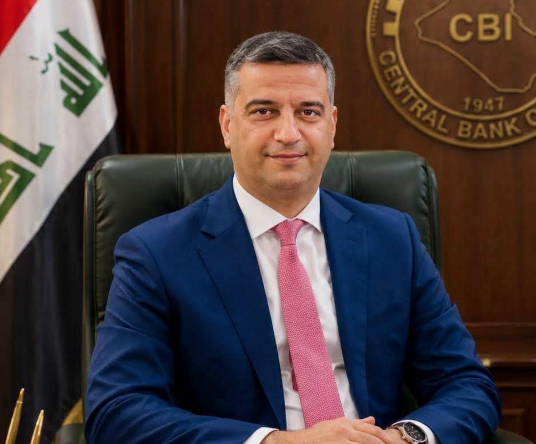
According to the source, Al-Alaq’s stance rejecting any change in the value of the dinar during the recent period constituted a point of contention within decision-making circles, which prompted – according to the information circulating – a decision to dismiss him from his position suddenly, and to replace him today with Nizar Nasser Al-Amiri as the new governor of the Central Bank of Iraq.
In the same context, researcher and consultant in economics and international transport Ziad Al-Hashemi said in a press statement that the file of changing the value of the Iraqi dinar is “being cooked up on a high fire” after the dismissal of the governor of the Central Bank, in an indication of possible moves related to monetary policy and the exchange rate during the next stage.
Given these facts, questions remain about the future of the Central Bank of Iraq’s policy, and whether the next stage will actually witness any change in the dinar’s exchange rate, or whether the matter will remain within the framework of the current monetary balances. https://mustaqila.com/المستقلة-تكشف-سبب-إقالة-العلاق-وخلا/
An Economist Warns Of Dire Economic Consequences From Changing The Dollar Exchange Rate.
{Economic: Al-Furat News} Economic expert Manar Al-Obaidi confirmed that the discussions taking place about the possibility of reducing the value of the Iraqi dinar against the dollar come in light of delicate economic conditions, especially with the decline in government revenues to low levels compared to previous periods, stressing the need to analyze the dimensions of this trend and its effects on the economy and society.
Al-Obaidi explained that supporters of this measure point to a number of potential gains, including reducing government spending denominated in dinars, curbing imports which gives the local product a chance to grow, in addition to protecting cash reserves from depletion, and trying to reduce the gap between the official exchange rate and the parallel market rate.
Conversely, Al-Ubaidi warned of negative repercussions that could outweigh any potential benefits, most notably a loss of confidence in the local currency and an increase in the dollarization of the economy, which would widen the price gap instead of narrowing it.
He also pointed out that exchange rate instability acts as a deterrent to both domestic and foreign investments, which require a stable economic environment to implement their projects.
The economist pointed out that reducing the value of the dinar will automatically lead to an increase in the government's operating expenses as a result of many contracts and services being linked to foreign currency, while also warning of sharp inflationary waves that will lead to an expansion of poverty and damage to vulnerable classes, in addition to creating a recession in the commercial sector, which in turn will contribute to exacerbating unemployment rates.
Al-Obaidi concluded that adjusting the exchange rate alone is not a radical solution, but rather a postponement of a structural crisis that requires comprehensive solutions based on three main axes: reducing inflation in operating expenses, developing non-oil revenues, and correcting the trade imbalance, stressing that any change in the exchange rate should be part of an integrated reform package and not a single tool to reduce expenses only.
https://alforatnews.iq/news/خبير-اقتصادي-يحذر-من-تبعات-اقتصادية-وخيمة-بتغيير-سعر-صرف-الدولار
Al-Karawi: The Concept Of A Mini-Budget For 2026 Has Not Yet Been Proposed.
The Information/Baghdad – MP Mudhar al-Karawi confirmed on Friday that there is no proposal or support so far for the concept of a mini-budget for 2026.
Speaking to Al-Maalouma, al-Karawi said, “All available indicators currently suggest that a budget will not be approved in 2026, especially given the delay in forming a government, which may take additional time.”
He added, “Talking about the possibility of proposing a mini-budget is still premature, and there is no parliamentary movement in this direction at present.” He explained that “proposing the budget is within the government’s purview, after which it will be discussed within the parliamentary finance committee to make the necessary amendments, and then presented for its first and second readings before being voted on in the House of Representatives according to constitutional procedures.”
Al-Karawi pointed out that “so far, there is no proposal or actual movement towards a mini-budget, and the picture remains clear regarding the extent of the financial challenges, as well as the price of a barrel of oil, which is a decisive factor in determining the features of any future budget.”
He concluded by saying, “Current data indicates that things are moving towards the budget being approved during 2027.” End/25
Al-Mustaqilla Reveals: Washington Demands The Suspension Of 8 Iraqi Banks, And Barak Hands Over Secret Names To Al-Zaidi.
June 17, 2026Last updated: June 17, 2026 Al-Mustaqilla News Agency – An informed source revealed to Al-Mustaqilla that US Special Envoy to Syria and Iraq, Tom Barrack, conveyed during his visit to Baghdad an explicit US request to Prime Minister Ali al-Zaidi to suspend at least eight Iraqi banks and take them out of service, following reports indicating their involvement in illegal activities in the foreign exchange market. The same source stated that the US side provided the Iraqi government with specific names, without disclosing them publicly.
Context: File open since 2023
This is not the first time Washington has pressured Baghdad on the banking sector. In July 2023, the US Treasury Department imposed sanctions on fourteen Iraqi banks for allegedly facilitating Iranian dollar transactions. The list was later expanded to include eight additional banks, among them Al-Huda Bank. Specialized reports indicate that 35 out of 72 banks operating in Iraq are now subject to varying degrees of US sanctions.
The Zaidi dilemma
Responding to the American request would mean a decision with direct economic and social repercussions: these banks serve depositors and finance commercial transactions. Ignoring it would complicate relations with Washington at a time when al-Zaidi is preparing to visit the country in July. Currently, al-Zaidi does not have the authority to shut down a bank without legal procedures determined by the Central Bank.
Frequently Asked Questions
Why is Washington demanding the closure of Iraqi banks?
Because of suspicions that they facilitate illegal dollar transfers that ultimately benefit Iran, which is subject to US sanctions.
Have the names of the eight banks been announced?
No. The names were handed over to the Iraqi government confidentially and have not been officially announced yet.
https://mustaqila.com/washington-8-iraqi-banks-shutdown-2026/
Iraq's Reserves Are Slipping... Has The "Financial Cushion" Entered A Danger Zone?
June 17, 2026Last updated: June 17, 2026 Independent/- Official data issued by the Central Bank of Iraq indicates a significant decline in the level of foreign reserves during the second quarter of 2026, amid continued pressure on external liquidity and fluctuations in financial factors related to global markets.
According to the data, foreign reserves on May 28 amounted to about 118.947 trillion dinars, compared to 120.675 trillion dinars on May 21, reflecting a weekly decrease of 1.728 trillion dinars and a decline rate of 1.43%, which indicates the continuation of the downward trend during the month of May.
On a monthly basis, the figures showed that the reserve recorded about 127.152 trillion dinars in April, after it was at 130.443 trillion dinars in March, reflecting a gradual decline over a period of three consecutive months, which raises questions about the dynamics of reserve management at this stage.
Gold as a hedging element
The data showed that the value of gold included in the official reserves amounted to about 32.973 trillion dinars, remaining one of the most prominent components of hedging within the structure of foreign reserves, in light of the fluctuations witnessed by currency prices and global markets.
Economic reading
This decline in reserves reflects a range of potential factors, including:
Changes in foreign exchange flows
Managing external liquidity and settling state obligations
Oil price fluctuations and their impact on dollar revenues
Global financial market conditions and exchange rates
Although reserve levels remain within relatively high ranges compared to previous years, the continued downward trend may constitute a signal that warrants close monitoring, especially given the Iraqi economy's heavy reliance on oil revenues.
6 Trends That Affect the U.S. Economy
6 Trends That Affect the U.S. Economy
Understanding these trends can help you protect your financial future
By Kimberly Amadeo Updated on July 12, 2021
In just a few short months, the COVID-19 pademic decimated the U.S. economy in what was a largely unforeseen crisis—one that will affect the economy for years. Five other trends listed below will continue to affect the U.S., too, because larger forces are at play.
Understanding these six trends could help you can protect your financial future.
6 Trends That Affect the U.S. Economy
Understanding these trends can help you protect your financial future
By Kimberly Amadeo Updated on July 12, 2021
In just a few short months, the COVID-19 pademic decimated the U.S. economy in what was a largely unforeseen crisis—one that will affect the economy for years. Five other trends listed below will continue to affect the U.S., too, because larger forces are at play.
Understanding these six trends could help you can protect your financial future.
1. U.S. Recovery From the Pandemic
In the first quarter of 2020, as COVID-19 began its spread across the U.S., economic growth declined by 5%. This signaled the onset of the 2020 recession. It also ended 128 months of expansion, the longest in U.S. history. In the second quarter, the economy contracted by a record 31.4%.
Quarterly gross domestic product (GDP) had never experienced a drop greater than 10% since record-keeping began in 1947. The economy recovered in the third quarter, expanding by 33.1%. Although a record, it was not enough to offset earlier losses.12
In December 2020, it was forecast that U.S. GDP would contract by 2.4% in 2020 but rise by 4.2% in 2021.3 By the fourth quarter, it had risen 7.0%.4
At the onset of the pandemic, the unemployment rate skyrocketed to 14.7% in April as companies furloughed workers.5 It remained in the double digits through July of that year.6 By the beginning of 2021, however, the unemployment rate had fallen to 6%. By the second month of 2022, it had decreased to 3.8%—very close to the unemployment rate just before the pandemic hit, which was 3.5%.7
2. Interest Rates Are Slowly Rising
As the economy heats up, inflation is heating up, too. The Fed uses interest rates to help control inflation.
In March 2020, the Federal Open Market Committee (FOMC) held an emergency meeting to address the economic impact of the COVID-19 pandemic. It lowered the federal funds rate to near zero, targeting a range of between 0% and 0.25%. The fed funds rate is the benchmark rate for adjustable-rate and short-term loans.89
In September 2020, the FOMC announced it would keep the benchmark rate at that level until inflation reached 2.0% over a long period of time. The Fed's December 16 forecast said that wouldn't occur until at least 2023.103 But it occurred much sooner than that. Supply chain issues, soaring home prices, and volatile oil price fluctuations, among other factors, caused inflation to rise rapidly. By February 2022, inflation had risen 7.9%—the largest jump since 1982.11
The Fed had been taking steps to keep interest rates low on fixed-rate and long-term loans to encourage recovery after the pandemic. It had restarted its quantitative easing (QE) program in 2020 as well, announcing it would purchase $500 billion in U.S. Treasuries and $200 billion in mortgage-backed securities.
It soon expanded QE purchases to an unlimited amount.12 The cost of loans plummeted, with mortgages falling to record-low levels. Such low borrowing costs spurred home prices higher still.13
By its March 2022 meeting, the FOMC couldn't ignore the rapidly rising inflation any longer and announced it would begin selling securities as well as raising the target fed funds rate by 25 basis points, to 0.25% to 0.50%. The FOMC also said it expected to continue raising rates to get inflation under control.14
3. Climate Change Is Causing More Natural Disasters
The U.S. climate is changing as a result of global warming caused by increased greenhouse gases. As the country experiences more hot days, food prices rise. Both corn and soybean yields in the United States plummet precipitously when temperatures rise above 84 degrees Fahrenheit.15
Note
Climate change creates unpredictable and violent storms, droughts, and floods.
Rising sea levels worsen flooding in low-lying towns, threatening the 30% of Americans who live in coastal counties and eight of the world's 10 largest cities.16 Floods have hit U.S. coastal towns three to nine times more often than they did 50 years ago. From 2005 to 2017, sea level rises cost 20 ZIP codes in Florida, Virginia, and South Carolina more than $2 billion.1718
Between 2014 and 2016, the drought in California cost the state an estimated $3.8 billion.19 Almost three-quarters of the losses were in the southern Central Valley. As the drought drags on throughout the American Southwest, climate change worsens the already-dry climate by accelerating water evaporation, resulting in a decades-long "megadrought."20
The frequency of western U.S. forest fires has increased by nearly 400% since 1970. Damaging wildfires have occurred in recent years in places including California, Colorado, and Oregon.2122
4. Financial Markets Control Oil, Gas, and Food Prices
Supply and demand have become less important in controlling prices. Instead, commodities traders set prices for oil, gas, and food, and foreign exchange traders determine the value of the dollar. The speed of transactions has also increased economic volatility. Gas and oil prices rise and fall, depending on investors' moods. This translates to either higher food costs or plummeting commodities prices.
Gold prices hit a new record high in August 2020 and kept rising, hitting new highs again and again. The price of gold topped $1,972 per ounce in March 2022.23
5. The U.S. Is Declining in Global Economic Power
To Continue Reading More: https://www.thebalancemoney.com/top-usa-future-economic-trends-3305666
GOLD, The Reset, and What Really Comes Next
GOLD, The Reset, and What Really Comes Next
Taylor Kenny: 6-18-2026
Join Taylor LIVE for a direct conversation and Q&A on debt, the coming Reset, and why physical gold and silver remain critical wealth preservation tools.
In a recent live broadcast from ITM Trading’s new studio in Phoenix, Arizona, host Taylor Kenney provided a deep dive into the shifting landscape of global finance.
As the world grapples with record-breaking debt levels and fluctuating currency values, Kenney’s discussion highlighted a critical trend: the systemic move away from the US dollar and the strategic accumulation of physical gold by the world’s most powerful financial institutions.
GOLD, The Reset, and What Really Comes Next
Taylor Kenny: 6-18-2026
Join Taylor LIVE for a direct conversation and Q&A on debt, the coming Reset, and why physical gold and silver remain critical wealth preservation tools.
In a recent live broadcast from ITM Trading’s new studio in Phoenix, Arizona, host Taylor Kenney provided a deep dive into the shifting landscape of global finance.
As the world grapples with record-breaking debt levels and fluctuating currency values, Kenney’s discussion highlighted a critical trend: the systemic move away from the US dollar and the strategic accumulation of physical gold by the world’s most powerful financial institutions.
A primary focus of the session was the latest findings from the World Gold Council’s Central Bank Gold Survey. The data paints a clear picture of the future: an overwhelming majority of central banks intend to increase their gold reserves over the next five years. This isn’t merely a minor adjustment in portfolio management; it represents a fundamental pivot in global strategy.
According to Kenney, these institutions are actively seeking to reduce their exposure to dollar-denominated assets. By swapping “paper” promises for tangible wealth, central banks are signaling a lack of long-term confidence in the current fiat system, choosing instead the historical stability and lack of counterparty risk that only gold provides.
The term “monetary reset” often sounds like a sudden, overnight catastrophe, but Kenney clarifies that it is both a process and an event. The “process” is currently underway, fueled by unsustainable levels of global debt and a dwindling trust in fiat currencies that have lost significant purchasing power over the decades.
The “event” occurs when the system can no longer sustain the weight of its own debt, leading to a structural revaluation of assets.
Kenney points to historical precedents where currencies failed due to over-expansion and devalued reserves. For those holding only dollar-denominated assets, the risks are mounting as the world prepares for a new financial architecture.
One of the most compelling analogies used in the discussion compared the decline of the US dollar to the fall of cable TV. Just as streaming platforms replaced traditional cable through convenience and innovation, new payment infrastructures are challenging the dollar’s hegemony.
Kenney highlighted the efforts of China and other BRICS nations to develop alternative payment systems and digital currencies. These innovations are designed to bypass traditional Western financial channels, allowing nations to trade more efficiently and independently. This shift suggests that the dollar’s status as the world’s primary reserve currency is no longer guaranteed, as the “convenience” of the dollar is being replaced by localized, digital-first alternatives.
A significant portion of the live session addressed the tug-of-war between Western and Eastern markets. While Western markets are often dominated by “paper gold”—contracts and ETFs that trade on speculation—the East is focused on the acquisition of physical bullion.
Kenney explained that as physical demand increases globally, particularly from central banks and Eastern consumers, it becomes increasingly difficult for paper markets to manipulate the price of gold. When the physical supply is tied up in private and institutional vaults, the “paper” price must eventually reconcile with the reality of physical scarcity. This makes the ownership of tangible, physical assets more vital than ever for individual investors.
During the Q&A segment, Taylor Kenney addressed practical concerns regarding the use of silver and gold in daily life, the possibility of a gold revaluation in the United States, and the socio-economic impacts of a currency reset. The overarching message was one of preparation and proactive management.
Kenney stressed that while the global macro-environment may feel out of the average person’s control, the choice of which assets to hold is not.
By moving away from a total reliance on digital digits and fiat currency and moving toward physical, tangible assets, individuals can better protect their wealth from the volatility of a resetting global economy.
News, Rumors and Opinions Friday 6-19-2026
Ariel: Iraqi Dinar Update, Connecting to the World through Starlink
6-19-2026
Starlink as the Digital Rail for Currency Reality
Let’s break this down like we’re sitting in a secure room with the maps out. Iraq’s terrain is brutal for traditional infrastructure vast deserts, mountainous north, oil fields vulnerable to sabotage, border zones where old smuggling routes thrived.
Starlink’s low-Earth orbit constellation changes that overnight. Low latency means real-time settlement on ISO 20022 rails. Oil production logs feed directly into banking compliance systems. Remote government outposts process electronic payments without relying on spotty fiber that militias or corrupt officials could cut.
Ariel: Iraqi Dinar Update, Connecting to the World through Starlink
6-19-2026
Starlink as the Digital Rail for Currency Reality
Let’s break this down like we’re sitting in a secure room with the maps out. Iraq’s terrain is brutal for traditional infrastructure vast deserts, mountainous north, oil fields vulnerable to sabotage, border zones where old smuggling routes thrived.
Starlink’s low-Earth orbit constellation changes that overnight. Low latency means real-time settlement on ISO 20022 rails. Oil production logs feed directly into banking compliance systems. Remote government outposts process electronic payments without relying on spotty fiber that militias or corrupt officials could cut.
This directly supports the CBI’s cashless mandate government salaries, taxes, services all electronic by early July. Trillions already moving through e-wallets and POS systems get the backbone they need to scale without leaks.
The new Governor coming from the AML/TF office? (Anti-Money Laundering and Terrorist Financing Office at the Central Bank of Iraq)
That’s the compliance enforcer taking the wheel. The previous guy (Alaq) talking no rate change was likely buying time for the final cleanup. People get frustrated with the slow process because they want the lottery ticket tomorrow, but this is structural surgery.
You can’t revalue or redenominate (dropping zeros) on a leaky ship. Starlink plugs the biggest holes in remote monitoring. Oil fields report accurately, borders track flows, banks enforce AML under U.S. Treasury pressure. This is how you build toward a stronger dinar anchored in real assets instead of endless dollar auctions.
HCL – The Oil Revenue Lock That Makes Everything Fortunate
The Hydrocarbon Law is the sleeping giant everyone overlooks while chasing rate hopium. For years, federal vs. KRG fights over fields, contracts, and revenue sharing kept the books messy. HCL centralizes strategic policy under a Federal Oil and Gas Council while giving regions input ending the independent KRG exports and smuggling that bled federal revenue.
Once passed, budgets stabilize, oil money flows cleaner, and the dinar gets the collateral backbone it needs. Iraq’s 170+ tons of gold isn’t for show. It’s the sound money anchor for the shift back toward asset-backed systems. People will be fortunate because this had to happen first clean revenue, stable production targets (7-8 million bpd capacity), investor confidence.
No more gray zones for militia blending or Dubai outflows. The new Governor’s AML background ensures the law’s implementation has teeth. This is why the process felt slow: you can’t build Dollar 2.0 on quicksand.
Read Full Article:
https://www.patreon.com/Prolotario1/posts/iraqi-dinar-to-161472009
*************
Courtesy of Dinar Guru: https://www.dinarguru.com/
Stephen I've never seen Iraq move at the speed that they are currently moving. The war with Iran accelerated things even quicker with Project Economic Fury led by Treasury Secretary Scott Bessent who is really putting pressure on the country of Iraq to get rid of all the corruption.
Terrence [Central Bank/International Bank Regulator] I can confirm there's multiple auditing companies, or I should say consulting companies, that have been assisting Iraq over the last several years helping them with their reform. I think most of the work is almost done. It's at the review stage right now. The next thing that's critical is that Iraq is supposed to be moving fully digital by June 26th, this month...the I's are dotted and the T's are crossed. They're ready to go, which is really quite remarkable given where they've come from.
Walkingstick [Iraqi Bank friend Aki update] Aki runs a private bank and the owner of this private bank called Aki about 10 days ago and said, 'Pack your bags, we're going to DC.' They're given a full report on what they are doing with the monetary reform of Iraq's currency...Aki's boss is a very powerful man and...his boss...These powerful individuals play a part IMO in the monetary reform of the Iraqi dinar...All Middle Eastern countries agreed, we are going to start the release of the Iraqi lower notes internationally...Aki said Trump made it very clear to us we have to de-dollarize as quickly as possible and stop funding the terrorists. Iraq is going to put their currency out...in an international float based on supply and demand...All of this pretty quickly...It is at least 1 to 1.
Iraqi Dinar Update: Iraq Avoids Sanctions | US Engagement Could Boost IQD Value
Edu Matrix: 6-19-2026
“CBI News and More” Posted by Tishwash at TNT 6-19-2026
TNT:
Tishwash:Al-Zaydi begins removing officials after Barrak's visit... Al-Alaq is out of the Central Bank, according to the framework.
The Iraqi News Agency and the media outlets affiliated with the Coordination Framework leadership continue to broadcast surprising and rapid news regarding the replacement of officials at the top of the pyramid, by orders issued by Prime Minister Ali al-Zaidi.
Minutes after the official news agency reported an order to replace the head of national security, known as Abu Ali al-Basri, who was the head of the infamous Falcons Cell during Nouri al-Maliki's time, media outlets representing the main parties in the Coordination Framework rushed to report the dismissal of the head of the Central Bank of Iraq, Ali al-Alaq, and his replacement by Nizar Nasser, who was the head of the Anti-Money Laundering and Counter-Terrorism Financing Office of the Central Bank.
TNT:
Tishwash:Al-Zaydi begins removing officials after Barrak's visit... Al-Alaq is out of the Central Bank, according to the framework.
The Iraqi News Agency and the media outlets affiliated with the Coordination Framework leadership continue to broadcast surprising and rapid news regarding the replacement of officials at the top of the pyramid, by orders issued by Prime Minister Ali al-Zaidi.
Minutes after the official news agency reported an order to replace the head of national security, known as Abu Ali al-Basri, who was the head of the infamous Falcons Cell during Nouri al-Maliki's time, media outlets representing the main parties in the Coordination Framework rushed to report the dismissal of the head of the Central Bank of Iraq, Ali al-Alaq, and his replacement by Nizar Nasser, who was the head of the Anti-Money Laundering and Counter-Terrorism Financing Office of the Central Bank.
This comes after nearly two days of long and complex discussions held by the Iraqi Prime Minister with Trump's envoy in Baghdad, Tom Barrack.
The Iraqi government and the United States agreed on Tuesday, June 16, 2026, on a package of strategic, security and economic understandings, which focused on the complete disarmament of the factions and the restriction of weapons to the state, and providing security guarantees to protect American investment companies.
This came during a meeting held by Prime Minister Ali Faleh al-Zaidi with the US President’s Special Envoy Tom Barrack in Baghdad, in preparation for the anticipated summit between al-Zaidi and President Donald Trump at the White House in mid-July, amid a joint emphasis on supporting a federal, democratic and unified Iraq. link
**************
Tishwash: Ali Al-Alaq was relieved of his position as Governor of the Central Bank and Nizar Nasser was appointed in his place.
An informed source reported today, Thursday (June 18, 2026), that the Governor of the Central Bank of Iraq, Ali Al-Alaq, has been relieved of his post, and Nizar Nasser has been assigned to manage the Central Bank in his place.
The source told Baghdad Today that "Nizar Nasser has been assigned to manage the Central Bank," noting that "this came after the dismissal of the Governor of the Central Bank of Iraq, Ali Al-Alaq, from his position."
He added that "the decision to dismiss and appoint the new governor has come into effect," indicating that "Nizar Nasser will assume the duties of the governor of the Central Bank during the next phase."
He added that "no official clarifications have yet been issued regarding the reasons for the dismissal or the nature of the changes related to the management of the Central Bank, while an official statement is expected to be issued clarifying the details of the decision and the mechanism for transferring duties." link
Tishwash: The Undersecretary of the Ministry of Finance discusses with the World Bank the priorities of digital transformation and automation of financial operations.
On Thursday, the Undersecretary of the Ministry of Finance, Ali Karim, discussed with a World Bank delegation the priorities of digital transformation and automation of financial work, and mechanisms for developing financial systems in Iraq.
The Ministry of Finance stated in a statement received by “Dijlah News” that “the Undersecretary of the Ministry held an extensive meeting with the World Bank delegation headed by the Regional Director for Digital Transformation and Artificial Intelligence, Michel Rogge, in the presence of a number of Directors General and senior staff in the Ministry.”
The statement added that “the meeting discussed paths of technical cooperation in the areas of digital transformation and automation of financial work, particularly the automation of the tax and customs systems, strengthening cybersecurity, and the organized expansion of the Government Financial Management Information System (IFMIS) project, which contributes to raising performance efficiency and improving the quality of data and services.”
The Undersecretary of the Ministry of Finance affirmed that “digital transformation represents an integrated reform path to support public finance management, simplify procedures, and enhance transparency and governance,” stressing the importance of “implementing projects according to clear priorities and applicable phased plans that are consistent with the requirements of financial reform and the reality of Iraqi institutions.”
For its part, the World Bank delegation affirmed its readiness to continue providing technical and advisory support to the Ministry of Finance in the areas of digital transformation, artificial intelligence and the development of financial systems, in order to contribute to achieving the goals of institutional and financial reform. link
Tishwash: Al-Aboudi: Iraq has completed the requirements for drawing up a development roadmap based on program budgeting.
Government spokesman Haider al-Aboudi affirmed on Wednesday that the government's unwavering vision is based on making the economy and its drivers the primary drivers of the state. He emphasized that the decision to restrict weapons is a cornerstone of national sovereignty, in accordance with the constitution, which prohibits all forms of unregulated weapons. He also indicated the intention to establish strategic floating gas terminals by specialized American companies to secure energy fuel.
Al-Aboudi stated that "the government's unwavering vision is based on making the economy and its drivers the primary drivers of the state to provide a stable environment, a productive economy, and balanced partnerships."
He explained that "the foundations of this environment are becoming tangible through the ministerial program, which leads directly to internal security matters, foremost among them restricting weapons to the state and unifying the security decision-making system under the authority of the Commander-in-Chief of the Armed Forces."
He added that "the government is holding the reins of Iraq's sovereignty in accordance with the constitution, which prohibits all forms of unregulated weapons and empowers the executive authority to manage this issue from a legal perspective, as it is responsible for the highest authority in the country."
Regarding the meeting between the Prime Minister and the US Presidential Special Envoy, Al-Aboudi affirmed that "the government views the meeting from the perspective of the Iraqi-American partnership, which is based on a wealth of general frameworks and detailed pillars."
Concerning the details of investment support and the entry of foreign companies, the government spokesperson explained that "the meetings included discussions on facilitating the entry of American companies, particularly in energy and electricity projects," noting that "indicators were set for the implementation of floating liquefied natural gas (LNG) terminals in Khor Al-Zubair by specialized American companies."
He pointed out that "this terminal is of paramount strategic importance, as it will provide a suitable environment for receiving imported LNG and converting it to the form required by national power generation plants, especially to secure consumption during peak demand periods familiar to Iraqis."
Regarding the Prime Minister's upcoming official visit to the White House at the invitation of the President, Al-Aboudi confirmed that "the visit's agenda includes partnership files and the prospects for strategic cooperation between Baghdad and Washington," clarifying that "the economic and security files represent the two most prominent pillars of this tour."
Al-Aboudi stated that "the decision to restrict weapons to the state is a national Iraqi decision, but the international perspective sees Iraq as proceeding with measures to strengthen the foundations of its sovereignty."
He continued, "Iraq, after a long and arduous journey in which it waged an existential war against terrorism since 2014, requiring all Iraqis to rise up with the help of international friends, is now nearing the end of the international coalition's presence by next September." He emphasized that "with the end of this foreign presence, the requirements for a comprehensive development phase, which the Iraqi people aspire to, will begin."
Al-Aboudi pointed out that "the region is witnessing an overlap of interests and oil and trade resources, and a trend towards resolving crises and building common understandings," explaining that "the countries of the region affect each other due to the overlap of interests and oil and trade resources."
Al-Aboudi concluded by pointing out that “Iraq’s success in completing its requirements through the relevant federal ministries such as oil and finance is to develop a development roadmap that relies on (program budgeting) to ensure the sustainability of financial funding for vital projects.” link
*****************
Tishwash: Economist: The 2026 budget train has left the station... the government is patching up the deficit by borrowing.
Economic expert Basil Al-Obaidi confirmed today, Thursday, that insisting on preparing and approving the general budget at this time is “a form of absurdity” and has no benefit whatsoever, at a time when the country’s financial affairs are being managed by “patchwork” and borrowing from banks.
Al-Ubaidi told Al-Maalomah that "the train has already left the station. Iraq is now staggering at the end of the sixth month, and the bureaucratic processes involved in approving the budget will inevitably hinder and delay it until next September." He added that "a budget approved for only three months of a fiscal year that is nearing its end is worthless."
He added, "The preparation of the budget depends primarily on estimating revenues and expenditures, which is difficult to achieve at the present time, given the significant decline in the country's revenues as a result of the repercussions of the regional crisis and the disruption of export traffic through the Strait of Hormuz."
Al-Obeidi pointed out that "Iraq needs a period of no less than two months to restore some degree of financial stability, pending an improvement in oil revenues and the return of exports to their normal levels, in the event that the Strait of Hormuz is reopened and all the technical and logistical requirements related to pumping Iraqi crude oil to the ports and export outlets are completed."
The economist warned that "the anticipated budget will turn into an arena for political bidding, where it will be bombarded with explosive demands that a short-term budget cannot accommodate, starting with a flood of appointments, bonuses and patchwork, and ending with a conflict over projects."
Al-Ubaidi called on the Cabinet to "preemptively address the crisis and prepare a draft law for an exceptional operational budget for emergencies, to manage the remainder of the year, while postponing the comprehensive budget to 2027," stressing that the upcoming budget must be "real and completely different from its predecessors, which existed only on paper." link
Iraq Economic News and Points To Ponder Friday Morning 6-19-26
Wall Street Journal: Pentagon Seeks $80 Billion In Additional Funding To Cover The Cost Of A War With Iran
Money and Business Economy News - Follow-up The Wall Street Journal, citing informed sources, reported that U.S. Deputy Secretary of Defense Stephen Feinberg told lawmakers in telephone calls this week that the Defense Department needs $80 billion to cover the costs of a war with Iran, in addition to other non-war-related expenses.
Wall Street Journal: Pentagon Seeks $80 Billion In Additional Funding To Cover The Cost Of A War With Iran
Money and Business Economy News - Follow-up The Wall Street Journal, citing informed sources, reported that U.S. Deputy Secretary of Defense Stephen Feinberg told lawmakers in telephone calls this week that the Defense Department needs $80 billion to cover the costs of a war with Iran, in addition to other non-war-related expenses.
The newspaper added that a full supplemental funding request, including funding for the Pentagon as well as non-defense priorities such as agricultural aid and disaster relief, may be sent to lawmakers in the coming days.
Reuters was unable to immediately verify the report. Neither the White House nor the Pentagon could be reached for comment outside of business hours when contacted by Reuters, according to the news agency.
A Pentagon official told Reuters in April that the Iran war cost about $25 billion, providing the first official estimate of the war's costs.
The full cost of the conflict, which Trump initiated in cooperation with Israel on February 28, remains a point of contention in Congress. An initial request for $200 billion in additional funding was met with strong opposition from lawmakers.
In April, White House Budget Office Director Russell Vought told a House Budget Committee hearing that he had no estimates for the cost of the war, as part of his defense of Trump’s request for an annual military budget of $1.5 trillion.
The proposed budget reflects the Republican Party's priorities ahead of the midterm elections in November, as the party tries to maintain control of Congress but faces growing concern from voters about rising living costs, energy prices, and the financial burden of the Iran war. https://www.economy-news.net/content.php?id=70418
Al-Zaydi Issues 5 Directives Regarding The Work Of Border Crossings And Customs
Money and Business Economy News – Baghdad Prime Minister and Commander-in-Chief of the Armed Forces Ali al-Zaidi issued 5 directives concerning the work of border crossings and customs.
These directives came in light of the conference held on 15/6/2026 in the presence of the Prime Minister and Commander-in-Chief of the Armed Forces. The Commander-in-Chief directed the completion of the following procedures:
1- Rotate all employees at border crossings without exception and within (48) hours, and the Border Crossings Authority must submit a position supporting the implementation of the order.
2- Obliging the Ministry of Interior - Border Forces Command to close all gaps and unauthorized land and sea border crossings, while rotating all commanders of brigades and units in the Border Forces Command.
3- All officers, affiliates and employees assigned to work in the Border Ports Authority shall be returned to the Ministry of Interior, and the separation shall be within (48) hours and without exception.
4- Obliging the security and intelligence agencies, including (the Intelligence Service Office, the Internal Intelligence Office, the Customs Police Station, the Explosives Detachment, the Narcotics Division, and the (9k) detachments), to take their role by activating their security and intelligence role within the port and monitoring the non-passage of any prohibited materials or drugs through all border ports and submitting periodic reports directly to the Director of the border port in his capacity as head of the intelligence cell. These agencies bear the legal responsibility in the event of any security breach or illegal crossing.
5- Obliging the employees of the General Authority of Customs to conduct a thorough inspection of all goods entering the country without exception, and not to allow any truck to pass through except after conducting an inspection and verifying the details of the cargo. https://www.economy-news.net/content.php?id=70414
Iraq Receives Notification From The International Transport Federation Confirming Significant Progress In Implementing The TIR System
Money and Business Economy News – Baghdad The Ministry of Transport announced on Friday that Iraq has received notification from the International Transport Federation confirming that it has made significant progress in implementing the TIR system.
The Director of the Land Transport Department of the Technical Department at the Ministry of Transport, Israa Hanoun, stated that “a notification from the International Road Transport Union (IRU) reached the TIR Convention contact point at the Iraqi Ministry of Transport bearing the phrase (Iraq is stealing the offer) in a clear message confirming that Iraq has made high progress in implementing the TIR system during the year 2025.”
Hanoon explained that "the system has been fully operational and seven new international routes have been opened across Iraqi territory within eight months, and more than (1000) international transport operations have been carried out," noting that "the notification also confirms the continued adoption of the TIR system for the movement of goods in transit by land across Iraqi territory, which contributes to enhancing the efficiency and security of international trade and consolidating Iraq's position as an important regional logistics corridor." https://www.economy-news.net/content.php?id=70423
Gold Is Heading For Its Third Weekly Loss Amid A Rising Dollar.
Money and Business Economy News — Follow-up Gold prices edged lower on Friday and are on track for their third consecutive weekly decline, as a stronger dollar and dovish signals from the Federal Reserve weighed on the non-yielding metal.
Spot gold fell 0.5% to $4,189.26 an ounce by 0043 GMT. U.S. gold futures for August delivery dropped 0.9% to $4,207.80.
The dollar remained near its highest level in a year, increasing the cost of gold priced in the US currency for holders of other currencies. https://www.economy-news.net/content.php?id=70409
Bitcoin Continues Its Decline And Is Heading Towards The $60,000 Level.
Money and Business Economy News - Follow-up Bitcoin continued its decline towards the $60,000 level, and this decline is due to increasing concerns about the collapse of the funding mechanism of the company “Strategy”, in addition to concerns about raising interest rates that weaken the demand for high-risk assets.
The largest cryptocurrency had fallen below this level two weeks ago for the first time since late 2024.
The currency, which fell as much as 3.3% to $62,220 on Thursday, has lost about 50% of its value since reaching its highest level in October of that year.
Traders focused their attention on the share price of "Stretch," a subsidiary of "Strategy," which the largest company with Bitcoin holdings uses to fund recent purchases.
The price fell to record lows, making the sale of these securities unprofitable for the company headed by Michael Saylor.
Saylor had sparked market concerns earlier this month by selling a small amount of Bitcoin, after urging its holders for years not to sell their digital currencies. https://www.economy-news.net/content.php?id=70413
Seeds of Wisdom RV and Economics Updates Friday Morning 6-19-26
Good Morning Dinar Recaps,
US-Iran Peace Talks Delayed as Fragile Ceasefire Faces New Test
Negotiations scheduled in Switzerland have been postponed, highlighting lingering mistrust between Washington and Tehran as both sides attempt to transform a temporary ceasefire into a lasting peace agreement.
Good Morning Dinar Recaps,
US-Iran Peace Talks Delayed as Fragile Ceasefire Faces New Test
Negotiations scheduled in Switzerland have been postponed, highlighting lingering mistrust between Washington and Tehran as both sides attempt to transform a temporary ceasefire into a lasting peace agreement.
Overview
Peace negotiations have been delayed, raising new questions about the durability of the recent U.S.-Iran ceasefire.
Major issues remain unresolved, including Iran's nuclear program, sanctions relief, and long-term security arrangements.
Global energy markets continue watching closely, as any setback could once again threaten shipping through the Strait of Hormuz.
Key Developments
1. Switzerland Talks Postponed
Negotiations scheduled to take place at Switzerland's Bürgenstock resort were postponed after U.S. officials cited logistical issues. Vice President JD Vance also canceled plans to attend, while Swiss officials confirmed they remain ready to host future discussions.
Iranian media indicated Tehran wants additional proof that Washington is implementing commitments made under the recently announced 14-point ceasefire framework before moving into more detailed negotiations.
2. Nuclear Issues Remain the Biggest Obstacle
While both countries have agreed to continue discussions, the most difficult issues remain unresolved.
Negotiators must still address Iran's uranium enrichment program, sanctions relief, international inspections, frozen Iranian assets, missile capabilities, and long-term compliance mechanisms.
Iran continues to insist its nuclear program is peaceful, while the United States maintains that preventing Iran from acquiring nuclear weapons remains a central objective.
3. Regional Security Risks Continue
Despite the ceasefire between Washington and Tehran, military operations involving Israel and Hezbollah continue in Lebanon, creating additional uncertainty for the broader peace process.
Analysts warn that continued regional conflict could complicate negotiations and undermine confidence in any long-term agreement.
Why It Matters
The postponement demonstrates that ending active fighting is only the first step toward lasting peace. Financial markets, governments, and businesses remain highly sensitive to developments because stability in the Strait of Hormuz directly affects global oil supplies, inflation, shipping costs, and international trade.
A successful agreement could help stabilize energy prices, improve investor confidence, and reduce geopolitical uncertainty. Conversely, renewed tensions could quickly reverse recent market gains and place fresh pressure on the global economy.
Why It Matters to Foreign Currency Holders
For those following a potential Global Financial Reset, developments in the Middle East remain significant because energy markets influence inflation, interest rates, currency values, and central bank policy worldwide.
A durable peace agreement would likely reduce pressure on oil prices, improve global trade flows, and support greater financial stability. Continued delays or renewed conflict, however, could strengthen safe-haven currencies, increase market volatility, and postpone broader monetary and financial reforms that many investors continue to monitor.
Implications for the Global Reset
Pillar 1 : Debt
Lower energy prices could ease inflation pressures, allowing central banks greater flexibility in future monetary policy.
Pillar 2 : Trade
A fully reopened Strait of Hormuz would strengthen global supply chains, improve shipping reliability, and support international commerce.
Pillar 3 : Assets
Reduced geopolitical risk could encourage investment into productive assets while easing demand for traditional safe-haven investments.
Pillar 4 : Technology
Greater regional stability would support continued investment in infrastructure, logistics, and digital trade systems.
Pillar 5 : Energy
The future of global energy markets remains closely tied to successful implementation of any U.S.-Iran agreement.
Looking Ahead
The coming weeks will determine whether negotiators can move beyond a temporary ceasefire toward a broader diplomatic settlement. Progress will depend on resolving difficult questions surrounding Iran's nuclear activities, sanctions relief, regional security, and implementation of commitments already outlined in the preliminary framework.
Markets will continue watching developments closely, as any progress—or setback—could have immediate consequences for energy prices, inflation expectations, and global financial stability.
This is not just politics—it is global finance restructuring before our eyes.
Seeds of Wisdom Team
Newshounds News™ Exclusive
Sources
Reuters – Coverage of the delayed U.S.-Iran negotiations and regional developments.
Modern Diplomacy – US Iran Peace Talks Delayed as Truce Faces New Uncertainty
~~~~~~~~~~
🌱 A Message to Our Currency Holders🌱
If you’ve been holding foreign currency for many years, you were not foolish.
You were not wrong to believe the global financial system would change.
What failed was not your patience — it was the information you were given.
For years, dates, rumors, and personalities replaced facts, structure, and proof. “This week” predictions created cycles of hope and disappointment that were never based on how currencies actually change.
That is not your failure.
Our mission here is different: • No dates • No rates • No hype • No gurus
Instead, we focus on:
• Verifiable developments • Institutional evidence
• Global financial structure • Where countries actually sit in the process
Currency value changes only come after sovereignty, trade, banking, settlement systems, and fiscal coordination are in place. History and institutions confirm this sequence.
You will see silence. You will see denials. That is not delay — that is discipline.
Protect your identity. Organize your documents. Verify everything.
Never hand your discernment to anyone who cannot show proof.
You deserve truth — not timelines.
Seeds of Wisdom Team
Newshounds News
~~~~~~~~~~
Seeds of Wisdom Team RV Currency Facts Youtube and Rumble
Newshound's News Telegram Room Link
RV Facts with Proof Links Link
RV Updates Proof links - Facts Link
Start Here room with Most Asked Questions Link
Follow the Gold/Silver Rate COMEX
Follow Fast Facts
Seeds of Wisdom Team™Website
Thank you Dinar Recaps
Iraq Economic News and Points To Ponder Thursday Evening 6-18-26
The Coordination Framework Empowers Al-Zaydi To Implement The Barak Plan And Aspires To Greater Positive Cooperation In The Security And Economic Fields
latest news Thursday June 18, 2026 Baghdad - One NewsInformed sources within the coordination framework revealed that Prime Minister Ali al-Zaidi presented details regarding the roadmap of US President's envoy Tom Barak for resolving the factions, and taking broader measures that include cooperation in the fields of security and the economy.
The Coordination Framework Empowers Al-Zaydi To Implement The Barak Plan And Aspires To Greater Positive Cooperation In The Security And Economic Fields
latest news Thursday June 18, 2026 Baghdad - One News Informed sources within the coordination framework revealed that Prime Minister Ali al-Zaidi presented details regarding the roadmap of US President's envoy Tom Barak for resolving the factions, and taking broader measures that include cooperation in the fields of security and the economy.
According to the sources, Al-Zaydi convinced the leaders of the coordination committee of the proposals presented by Barak, which include economic and investment partnerships, which contribute to ending the difficult crises in the electricity file and others.
The sources revealed that a high-level committee will soon be formed, comprising ministers and some experts, to study the proposed partnerships and investment projects that Barak carried, in order to prepare a guarantee paper, in favor of Iraq, that secures for it gains to end its crises in the financial, environmental and energy files.
https://1news-iq.net/الإطار-التنسيقي-يخول-الزيدي-تنفيذ-خري/
Sources Told Lawan News That Ali Al-Alaq Has Been Relieved Of His Position As Governor Of The Central Bank And Nizar Nasser Has Been Appointed In His Place.
https://1news-iq.net/مصادر-لوان-نيوز-إعفاء-علي-العلاق-من-منص/
Sources To “One News”: A New Generation Of Security Leaders In July After The End Of Extensions And The Redistribution Of Positions
latest news Thursday, June 18, 2026 Baghdad - One News - High-ranking security sources told One News that the plan to restructure the military and security establishment led by Al-Zaydi aims to pave the way for young leaders to assume senior positions in the Ministries of Defense and Interior.
The sources explained that the retirement of a large number of officers with the rank of lieutenant general will be accompanied by a process of selecting replacements, according to the criteria of competence, experience and integrity, far from the principle of seniority alone.
They added that the government views the next stage as an opportunity to modernize the security leadership system and introduce more flexible administrative and field methods, in line with the requirements of modern security and the changing challenges facing the country. https://1news-iq.net/مصادر-لـوان-نيوز-جيل-جديد-من-القيادات/
Financial Distress And Patchwork Solutions... Will The Borrowing Crisis And Budget Deficit Trigger The Exposure Of Inherited Corruption Files?
Today 20:19 Information / Report.. The country's financial reality faces a major challenge that is the most important and difficult test to assess the success or failure of the Al-Zaidi government, at a time when government solutions have begun to move towards the option of “borrowing”, amid warnings that it is a patchwork solution that does not address the roots of the financial crisis left by the repercussions of the war in the region and the closure of the Strait of Hormuz.
With the accumulation of the financial crisis, another legislative and economic challenge emerges related to drafting the current year's budget and sending it to Parliament, which observers see as difficult to achieve given the limited time, especially since the government has not yet taken any actual steps towards preparing the budget, amid calls from specialists to rely on immediate solutions by approving a small emergency budget for the remaining months of the year.
In this context, economist Basil al-Ubaidi told Al-Maalomah that "the budget process has already passed. Iraq is now teetering on the brink of collapse at the end of June, and the bureaucratic procedures for approving the budget will inevitably hinder and delay it until next September." He added that "a budget approved for only three months of a fiscal year that is nearing its end is worthless."
Al-Ubaidi pointed out that “preparing the budget depends primarily on estimating revenues and expenditures, which is difficult to achieve at the present time, given the significant decline in the country’s revenues as a result of the repercussions of the regional crisis and the disruption of export traffic through the Strait of Hormuz,” indicating that “Iraq needs a period of no less than two months to restore some degree of financial stability.”
In turn, current MP Mukhtar al-Moussawi told Al-Maalouma that “the success of the current government depends primarily on the path of combating corruption, which has caused a large financial deficit in recent years that has become evident in recent months.”
He added that "there is pressure to re-evaluate all projects implemented in the previous government, especially given indications of significant price and cost overruns, which raises many questions," noting that opening a broad investigation into previous projects would be an important step in combating corruption and revealing the truth about the situation.
Discussions have recently intensified in Iraqi circles regarding the current government's ability to address the legacy of the previous administration and identify the sources of failure and corruption that plunged the country into economic crisis. This is particularly concerning given the absence of clear plans and visions, a deficiency that became even more apparent with recent regional developments and the closure of the Strait of Hormuz.
Despite this anxiety, Iraqis seeing a glimmer of hope for a return to normalcy after months of drought and financial stagnation that have ravaged the markets. (End of page 25)
Economist: The 2026 Budget Train Has Left The Station... The Government Is Patching Up The Deficit By Borrowing.
Information / Special.. Economic expert Basil Al-Obaidi confirmed today, Thursday, that insisting on preparing and approving the general budget at this time is “a form of absurdity” and has no benefit whatsoever, at a time when the country’s financial affairs are being managed by “patchwork” and borrowing from banks.
Al-Ubaidi told Al-Maalomah that "the train has already left the station. Iraq is now staggering at the end of the sixth month, and the bureaucratic processes involved in approving the budget will inevitably hinder and delay it until next September." He added that "a budget approved for only three months of a fiscal year that is nearing its end is worthless."
He added, "The preparation of the budget depends primarily on estimating revenues and expenditures, which is difficult to achieve at the present time, given the significant decline in the country's revenues as a result of the repercussions of the regional crisis and the disruption of export traffic through the Strait of Hormuz."
Al-Obeidi pointed out that "Iraq needs a period of no less than two months to restore some degree of financial stability, pending an improvement in oil revenues and the return of exports to their normal levels, in the event that the Strait of Hormuz is reopened and all the technical and logistical requirements related to pumping Iraqi crude oil to the ports and export outlets are completed."
The economist warned that "the anticipated budget will turn into an arena for political bidding, where it will be bombarded with explosive demands that a short-term budget cannot accommodate, starting with a flood of appointments, bonuses and patchwork, and ending with a conflict over projects."
Al-Ubaidi called on the Cabinet to “preemptively address the crisis and prepare a draft law for an exceptional operational budget for emergencies, to manage the remainder of the year, while postponing the comprehensive budget to 2027,” stressing that the upcoming budget must be “real and completely different from its predecessors, which existed only on paper.” (End of page 25)
The Central Bank Of Iraq: The Document Circulating Regarding A Request To Change The Dinar's Exchange Rate Is Forged.
The Central Bank of Iraq categorically denies the circulating reports regarding any intention to change the exchange rate of the Iraqi dinar.
In the same context, the Central Bank warned against engaging with misleading news, revealing that it had detected a forged document circulating online that falsely claimed the Prime Minister's office had submitted a request to the Finance Committee of the Council of Representatives to change the exchange rate to 1,600 dinars per US dollar.
The Bank urged media outlets and citizens to exercise caution and rely on official and exclusive sources of information issued by the Central Bank of Iraq. Baghdad - Media Office, June 17, 2026 https://cbi.iq/news/view/3225
Seeds of Wisdom RV and Economics Updates Thursday Evening 6-18-26
Good Evening Dinar Recaps,
CLARITY Act Nears Finish Line as Senate Eyes Vote Before July 4
U.S. lawmakers and the White House are pushing to approve landmark crypto legislation that could establish long-awaited regulatory clarity for digital assets while strengthening America's leadership in blockchain innovation.
Good Evening Dinar Recaps,
CLARITY Act Nears Finish Line as Senate Eyes Vote Before July 4
U.S. lawmakers and the White House are pushing to approve landmark crypto legislation that could establish long-awaited regulatory clarity for digital assets while strengthening America's leadership in blockchain innovation.
Overview
Senator Bill Hagerty said the Senate could approve the CLARITY Act before the July 4 congressional recess, although some lawmakers believe a final vote may extend into the August recess.
The legislation would establish clear regulatory authority for digital assets, defining the responsibilities of the SEC and CFTC while creating compliance standards for crypto companies.
Industry leaders believe regulatory certainty could unlock significant institutional investment, encouraging banks, asset managers, and traditional financial firms to expand into digital assets.
Key Developments
1. Senate Push Continues
Senator Bill Hagerty expressed optimism that Congress can complete work on the CLARITY Act before the Independence Day recess. White House crypto advisor Patrick Witt has also supported the July 4 timeline, although Senator Cynthia Lummis has suggested a Senate floor vote before the August recess remains the more likely scenario.
2. Clear Rules for Digital Assets
Supporters say the legislation would clarify the regulatory roles of the Securities and Exchange Commission (SEC) and the Commodity Futures Trading Commission (CFTC), creating a comprehensive framework for digital assets while providing stronger consumer protections and additional tools for law enforcement.
3. Institutional Capital Waiting on Regulation
Industry leaders argue that many institutional investors remain interested in digital assets but are waiting for clear federal regulations before making major allocations. Supporters believe the CLARITY Act could accelerate institutional adoption while encouraging blockchain innovation to remain in the United States.
Why It Matters
The CLARITY Act represents one of the most significant crypto regulatory efforts ever considered by Congress. If enacted, it could reduce legal uncertainty, encourage investment, and establish a more predictable environment for blockchain businesses operating in the United States.
Why It Matters to Foreign Currency Holders
Although focused on cryptocurrency regulation, the legislation reflects a broader effort to modernize America's financial infrastructure. As digital assets, tokenization, and stablecoins become increasingly integrated into the financial system, regulatory clarity could influence future payment systems, cross-border settlements, and the evolving global monetary landscape.
Implications for the Global Reset
Pillar 1: Digital Financial Infrastructure
The CLARITY Act would establish a regulatory foundation for digital assets, supporting the continued development of blockchain-based financial markets and tokenized payment systems.
Pillar 2: Regulatory Competition
As jurisdictions worldwide race to attract digital asset innovation, comprehensive U.S. legislation could strengthen America's competitive position while influencing global standards for crypto regulation.
This is not just cryptocurrency legislation—it represents another step in the modernization of the global financial system.
Seeds of Wisdom Team
Newshounds News™ Exclusive
Sources
CoinGape — "CLARITY Act To Reach Finish Line By July 4, US Senator Says"
FOX Business — "Sen. Bill Hagerty discusses the CLARITY Act and crypto regulation"

The Firm’s Q &A Saturday Night Call
WHEN:
📅 Saturday Night
⏰ 6:00 PM Pacific
⏰ 8:00 PM Central
⏰ 9:00 PM Eastern
WHERE: The Firm Q &A Room on Telegram, LINK
Previous Calls: Listen Here
🚨 Attention: Go to theQ&A Roomto ask your Questions🚨
Is everyone out shopping?
Taking a nap?
What are you curious about?
What topic would you like discussed?
What made you say, "Wait a minute..." this week?
Remember, the only bad question is the one you don't ask.
And if your question sends us down a rabbit hole...
Well, that's half the fun. 🐸
🐸 Leap into the Q&A Roomand let's get the conversation started.
🎤 Join the Q&A Room
🌸Seeds of Wisdom Truth🌸
Directory|Website|Rates
~~~~~~~~~~
Seeds of Wisdom Team RV Currency Facts Youtube and Rumble
Newshound's News Telegram Room Link
RV Facts with Proof Links Link
RV Updates Proof links - Facts Link
Start Here room with Most Asked Questions Link
Follow the Gold/Silver Rate COMEX
Follow Fast Facts
Seeds of Wisdom Team™Website
Thank you Dinar Recaps
Thursday Iraq News Posted by Tishwash at TNT 6-18-2026
TNT:
Tishwash: Iraq Approves Starlink License in Boost to Digital Transformation
The announcement came during a meeting in Baghdad, where the two sides discussed ways to strengthen strategic cooperation and expand partnerships between Iraq and the United States.
Iraqi Prime Minister Ali al-Zaidi and US Special Presidential Envoy to Iraq Tom Barrack on Tuesday welcomed Iraq's decision to approve an operating license for Starlink, paving the way for the satellite internet provider to offer high-speed internet services across the country.
TNT:
Tishwash: Iraq Approves Starlink License in Boost to Digital Transformation
The announcement came during a meeting in Baghdad, where the two sides discussed ways to strengthen strategic cooperation and expand partnerships between Iraq and the United States.
Iraqi Prime Minister Ali al-Zaidi and US Special Presidential Envoy to Iraq Tom Barrack on Tuesday welcomed Iraq's decision to approve an operating license for Starlink, paving the way for the satellite internet provider to offer high-speed internet services across the country.
The announcement came during a meeting in Baghdad, where the two sides discussed ways to strengthen strategic cooperation and expand partnerships between Iraq and the United States, according to a statement from the Prime Minister's Office (PMO).
Both officials praised the licensing decision, describing it as an important step toward advancing Iraq's digital infrastructure and accelerating the country's digital transformation. The move is expected to improve internet accessibility, particularly in remote and underserved areas where traditional broadband services remain limited.
The approval clears the way for Starlink, the satellite internet network developed by Elon Musk's SpaceX, to enter the Iraqi market and provide broadband connectivity through its constellation of low-Earth orbit satellites.
The meeting also highlighted the broader commitment of Baghdad and Washington to deepen cooperation in technology, investment, and economic development.
Starlink is a satellite internet service operated by Starlink Services, LLC, a wholly owned subsidiary of the US aerospace company SpaceX. Unlike conventional internet providers that rely on fiber-optic cables or cellular towers, Starlink delivers broadband internet through thousands of satellites orbiting the Earth at low altitude, enabling high-speed connectivity with lower latency.
The service has expanded rapidly across dozens of countries, providing internet access to households, businesses, emergency responders, and communities in remote locations. Iraq's approval of Starlink's operating license is expected to strengthen the country's digital infrastructure, support e-government initiatives, and improve connectivity for citizens and businesses nationwide. link
************
Tishwash: The Minister of Finance directs the disbursement of dues to contractors in five governorates as part of the first batch.
Finance Minister Faleh Al-Sari directed on Wednesday (June 17, 2026) that the dues of contractors in a number of governorates be disbursed as a first batch.
The ministry stated in a statement received by “Baghdad Today” that “Minister of Finance Faleh Al-Sari has ordered the disbursement of the dues of contractors in the governorates of Basra, Diwaniyah, Najaf, Babylon and Maysan, as part of the first batch of financial dues, with the dues of the other governorates to be disbursed successively and regularly.”
She added that “the head of the Iraqi and Arab Contractors Union, Ali Fakher Al-Sanafi, appreciated the serious approach of Prime Minister Ali Falih Al-Zaidi and Finance Minister Falih Al-Sari in working to disburse the contractors’ outstanding dues that have been delayed for years. He also appreciated the efforts of MP Ali Shaddad for his role in following up on this file, which is related to the progress of Iraq’s economy.”
The ministry noted that “Al-Sanafi explained that adopting the disbursement mechanism in the form of successive and regular installments contributes to settling the issue of dues gradually, and enhances the stability of the work of contracting companies in various governorates.”
She noted that “Al-Sanafi confirmed that the Minister of Finance’s directive came during the meeting that brought them together today, indicating that releasing these dues represents an important step in the process of addressing the outstanding financial dues of contractors.” link
*************
Tishwash: The coordination framework is discussing with al-Zaydi the completion of his government and the results of the visit by Trump's envoy.
The Coordination Framework held its periodic meeting on Wednesday in the presence of the Prime Minister, to discuss the latest political, security and economic developments on the national scene.
According to a statement issued by the media office of the framework, a copy of which was received by Al-Furat News, the attendees listened to a presentation by the Prime Minister on the latest government procedures and files under follow-up. They also discussed the results and outcomes of the visit of US envoy Tom Barrack and the dialogues he held with the government, and emphasized the importance of protecting supreme national interests and strengthening Iraq’s foreign relations in a way that serves its stability and sovereignty.
The statement added, "The coordination framework also discussed the issue of completing the government cabinet, stressing the importance of expediting this process in order to enhance the efficiency of government performance and ensure the completion of the ministerial program requirements and meet the aspirations of citizens."
At the conclusion of the meeting, the Coordination Framework extended its deepest condolences to the Iraqi people and the Arab and Islamic nations on the occasion of the holy month of Muharram, recalling the great values of the revolution of Imam Hussein (peace be upon him) and what it represents of eternal meanings in reform, sacrifice, and defense of truth and justice. link
Tishwash: The Prime Minister's advisor sets a date for the recovery of Iraqi oil.
The financial advisor to the Iraqi Prime Minister, Mazhar Muhammad Salih, stated on Wednesday that the return of Iraqi oil production and exports through the Strait of Hormuz to pre-war levels depends on the implementation of a package of technical and logistical requirements, foremost among them being the clearing of the vital waterway from sea mines.
Saleh told Al-Maalomah that “the Iraqi oil fields that were damaged as a result of the forced shutdown that exceeded three months need a period of time of about a month to be restarted,” noting that “this step remains conditional on the return of the international companies that left the fields during the military operations.”
He added that "the second challenge is securing the arrival of oil tankers to Iraqi ports," noting that this "is entirely dependent on the timeframe required to clear the Strait of Hormuz of mines to ensure the safety of maritime navigation and its return to its former state."
Saleh added that "the oil sector requires a complete rehabilitation of the infrastructure, pipeline networks, and ports to be fully prepared before the actual start of crude oil pumping operations."
He pointed out that "70 percent of Iraqi oil exports are allocated to East Asian markets," stressing that "official contracts are still in place and valid."
Saleh concluded his remarks by stressing that "the restoration of the Iraqi oil sector to its full production and export capacity will not happen suddenly, but will be subject to a gradual and well-thought-out timetable until the stage of full recovery is reached and cash flows for the country are secured."
Iraqi oil exports have shrunk by 90% following recent regional events and the Israeli-American war on Iran. This challenge has revealed a clear governmental failure due to the lack of alternatives and the failure to provide any other outlet for exporting Iraqi oil, on which the state relies as its primary source of revenue to fund its budget and public expenditures. link
***************
Tishwash: The head of the Iraqi Trade Bank emphasizes the importance of partnership with professional media and continuing to raise public awareness.
The Chairman of the Board of Directors of the Trade Bank of Iraq (TBI), Bilal Al-Hamdani, emphasized on Wednesday the importance of partnership with professional media outlets. He noted that regular meetings are held with journalists and media professionals to provide them with accurate economic information, contributing to public awareness, reducing the spread of misinformation, and protecting public opinion from rumors.
In a statement received by Mawazin News, the bank said, "The Chairman of the Board of Directors of the Trade Bank of Iraq (TBI), Bilal Al-Hamdani, met today with a group of journalists, media professionals, and economic experts, in the presence of the bank's Vice Chairman, Sabah Al-Saadi, to discuss the role of economic media and the importance of strengthening communication between financial institutions and professional media outlets."
Al-Hamdani praised "constructive criticism and a free press," stressing that "there is no objection to constructive criticism and the importance of continuing to educate citizens."
He added that "the meeting included several interventions, with journalist Abbas Aboud calling for support for professional media platforms to contribute to raising economic awareness and educating citizens, while journalist Naseer Al-Awam emphasized the importance of opening the bank's doors to the local press and strengthening cooperation with them."
For their part, the press delegation indicated that "Iraq needs more management and planning," noting "the importance of continuously disseminating instructions and decisions, given the bank's high level of public trust." Journalists affirmed that TBI's experience is a successful banking model and that they had presented this assessment to the Prime Minister, praising the bank's high level of public confidence.
Several economic journalists explained that "economic challenges require a professional media discourse," indicating that "the impact of a professional journalist in conveying facts can be more effective than traditional media campaigns by institutions."
It is worth noting that the meeting was attended by representatives from the Iraqi Media Network and the Iraqi Journalists Syndicate, along with a number of newspaper editors, media professionals, and those interested in economic affairs, in a move aimed at strengthening the partnership between the banking sector and professional media. link
Ariel: Iraqi Dinar Update, Do you Know How Historical this is?
Ariel: Iraqi Dinar Update, Do you Know How Historical this is?
Iraqi Dinar Update:
Starlink’s operating license approval in Iraq isn’t some random telecom win. It’s a foundational rail being slammed into place for the bigger monetary sovereignty play. When Prime Minister Ali al-Zaidi and U.S. Special Presidential Envoy Tom Barrack publicly welcomed it, they weren’t just talking faster internet for rural villages.
They were greenlighting the digital backbone that makes modern currency mechanics actually function in 2026.
Ariel: Iraqi Dinar Update, Do you Know How Historical this is?
Iraqi Dinar Update:
Starlink’s operating license approval in Iraq isn’t some random telecom win. It’s a foundational rail being slammed into place for the bigger monetary sovereignty play. When Prime Minister Ali al-Zaidi and U.S. Special Presidential Envoy Tom Barrack publicly welcomed it, they weren’t just talking faster internet for rural villages.
They were greenlighting the digital backbone that makes modern currency mechanics actually function in 2026.
High-speed, low-latency satellite coverage across the country especially in oil fields, border zones, and remote banking outposts means real-time transaction monitoring, electronic payment rollout, and compliance systems that the old paper-and-cash corruption networks can’t hide behind anymore.
Do You Know How Historical This Is?
Iraq’s currency shift isn’t a lottery ticket. It’s a structural realignment. The Central Bank has been pushing full government cashless operations by early July, electronic payments mandates, and cleaning up the dollar auction leaks that bled reserves for years.
Starlink provides the connectivity layer that turns those policy papers into operational reality. Remote oil infrastructure, banking branches, and government ministries can now run on reliable data rails instead of spotty terrestrial networks vulnerable to sabotage or graft.
This directly supports the digital leap I flagged moving trillions through electronic systems, enforcing AML/BSA compliance under U.S. Treasury pressure, and building the infrastructure for any redenomination or rate adjustment.
Doge Designer:BREAKING: Iraq has approved Starlink’s operating license, clearing the way for its satellite internet service to enter the country. Iraqi Prime Minister Ali al-Zaidi and U.S. Special Presidential Envoy for Iraq Tom Barrack welcomed the approval of Starlink’s operating license.
Watch on X: https://twitter.com/i/status/2067225443900817588
Source(s):
• https://x.com/Prolotario1/status/2067366285483143475