
Bendleruschka: Preparing for the QFS, US Gold Reserve Audit and Revaluation
Bendleruschka: Preparing for the QFS, US Gold Reserve Audit and Revaluation
5-31-2026
PREPARING FOR THE QFS «FLIP OF THE SWITCH»: US GOLD RESERVE AUDIT & REVALUATION
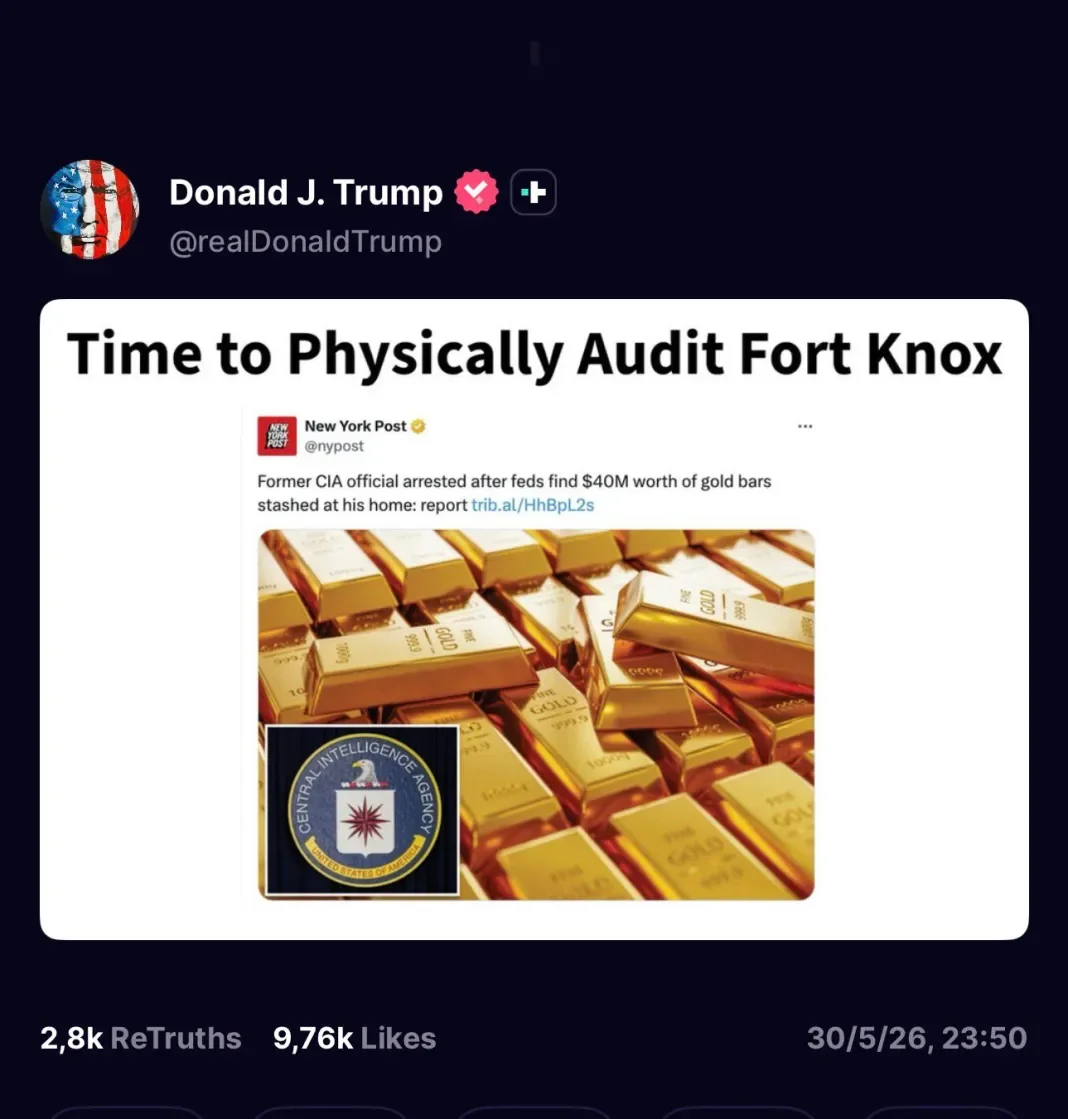
DJT on Truth May 30: «Time to Physically Audit Fort Knox»
Are we finally getting to know the status at Fort Knox?
The gold must be revalued before the new financial system based on the «gold standard» enters into force («flipping the switch»)
Bendleruschka: Preparing for the QFS, US Gold Reserve Audit and Revaluation
5-31-2026
PREPARING FOR THE QFS «FLIP OF THE SWITCH»: US GOLD RESERVE AUDIT & REVALUATION
DJT on Truth May 30: «Time to Physically Audit Fort Knox»
Are we finally getting to know the status at Fort Knox?
The gold must be revalued before the new financial system based on the «gold standard» enters into force («flipping the switch»)
This is also necessary for the global RV (currency revaluation) and for the real XRP price («XRP to the moon»)
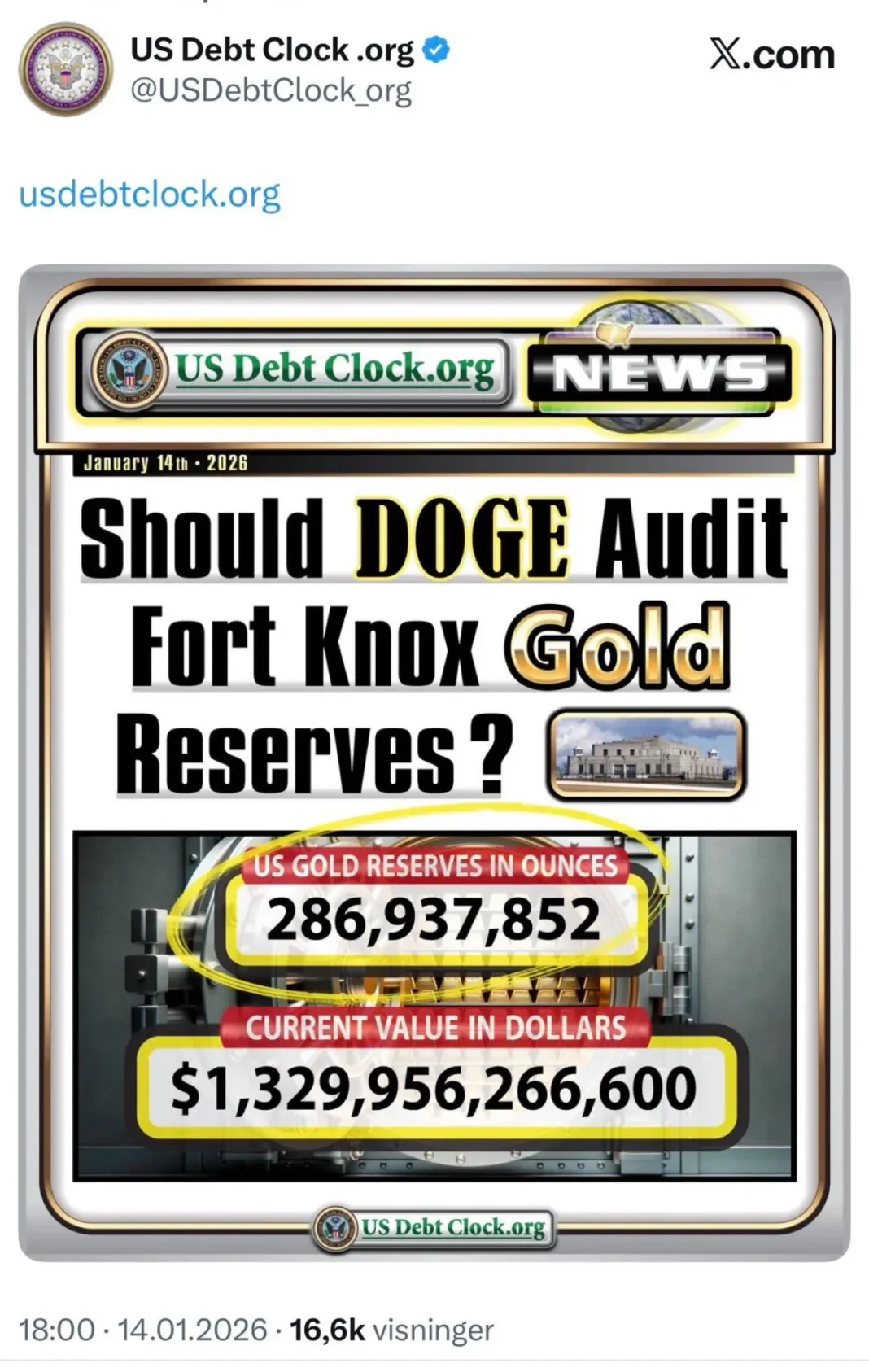
The US Treasury values its gold reserves at a statutory rate of $42.22 per troy ounce, established in 1973, rather than the current market price.
As of today May 31, 2026, the gold spot price is approximately $4,530 – 4,570 USD per troy ounce.
The US is said to hold about 261.5 million troy ounces of gold (equivalent to 8,133 tonnes), so at market value, the reserves are worth roughly $1.18 – 1.20 trillion, while the statutory value is around $11 billion.
US Debt Clock.org: On X
Iraq Economic News and Points To Ponder Sunday Afternoon 5-31-26
Basrah crudes post weekly losses amid global declines
2026-05-30 Shafaq News- Basrah Iraq’s Basrah crude plunged more than 56% over the past week, recording the sharpest losses among major global oil grades.
Basrah Heavy crude fell by $29.31 in its last trading session to $66.07 per barrel, posting a weekly loss of $37.79, or 57.12%, while Basrah Medium crude dropped by $29.31 to settle at $68.17 per barrel, recording a weekly loss of $38.79, or 56.90%.
Basrah crudes post weekly losses amid global declines
2026-05-30 Shafaq News- Basrah Iraq’s Basrah crude plunged more than 56% over the past week, recording the sharpest losses among major global oil grades.
Basrah Heavy crude fell by $29.31 in its last trading session to $66.07 per barrel, posting a weekly loss of $37.79, or 57.12%, while Basrah Medium crude dropped by $29.31 to settle at $68.17 per barrel, recording a weekly loss of $38.79, or 56.90%.
Meanwhile, US West Texas Intermediate crude declined 1.43% to $87.63 per barrel, while Brent crude slipped 1.32% to $91.48. UAE Murban crude also fell 1.42%.
Other crude grades also posted losses, including Russia’s Urals crude, down 4.49%, and Mexico’s benchmark crude, which lost 4.42%. Angolan and Nigerian grades fell between 3% and 3.3%.
https://www.shafaq.com/en/Economy/Basrah-crudes-post-weekly-losses-amid-global-declines
Iraq Power Sector Faces Risks As Iran Gas Output Falls By One-Third
2026-05-30 Shafaq News- Tehran/ Baghdad Iran has lost nearly one-third of its natural gas production capacity after key energy facilities sustained damage during the recent US-Israeli war on the country, a member of the Iranian Parliament’s Energy Committee revealed on Saturday, a development that could affect Iraq’s electricity sector.
Gholam Reza Dehghan Naserabadi told local media that several facilities and production phases in the Asaluyeh area of the South Pars Gas Field, the world’s largest, were damaged during the conflict, causing a sharp decline in output. He noted that Iranian oil and energy authorities are working to rehabilitate the affected sites and restore production to pre-war levels, with reconstruction efforts still ongoing.
The disruption could directly affect Iraq, which relies heavily on Iranian gas to fuel its power stations, with imports accounting for between one-third and 40% of electricity-generation needs, particularly during the summer months when temperatures can reach 50°C and demand surges. Electricity Ministry spokesperson Ahmed Mousa Al-Abadi told Shafaq News in March that interruptions in Iranian gas deliveries had removed more than 3,000 megawatts from the national grid. Although imports later resumed, volumes remained below contracted levels.
Baghdad has accelerated efforts to expand domestic associated-gas production and reduce reliance on foreign supplies, though officials acknowledge that achieving energy self-sufficiency will take years. Last month, Electricity Minister Ali Saadi Wahib pledged to pursue practical solutions to the country’s chronic power shortages.
Read more: Iraq power 2026: War on Iran collapses the grid ahead of peak summer
Iraqi Imports From Turkiye Climbs To $820M+ In April
2026-05-30 Shafaq News- Baghdad/ Ankara Iraq ranked eighth among Turkiye’s top importers in April, with imports rising to $829 million from $659 million in March, the Turkish Statistical Institute (TURKSTAT) reported on Saturday.
Germany remained Turkiye’s largest export market, with $2.113 billion, followed by the United States at $1.59 billion and the United Kingdom at $1.453 billion. Italy ranked fourth with imports worth $1.356 billion, then Spain at $1.039 billion, France at $1.012 billion, and the United Arab Emirates at $840 million.
According to the report, manufactured goods, agricultural products, fisheries, mining, and quarrying products accounted for 94% of Turkiye’s total exports during the period.
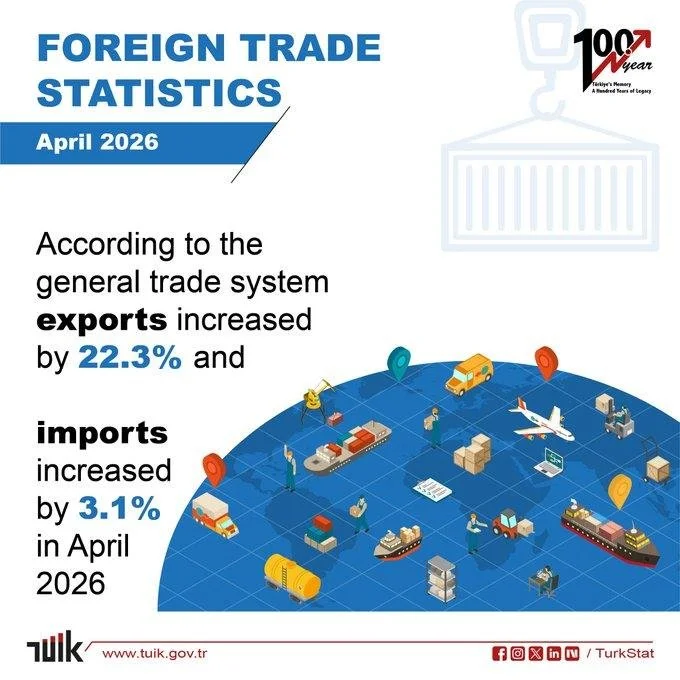
Pic foreign trade stats
https://www.shafaq.com/en/Economy/Iraqi-imports-from-Turkiye-climbs-to-820M-in-April
US Imports No Iraqi Crude Oil During Last Week
2026-05-31Shafaq News- Baghdad/ Washington Iraq, OPEC's second-largest oil producer, exported no crude oil to the United States during the last week, compared with 67,000 barrels per day (bpd) the previous week, according to data released by the US Energy Information Administration (EIA).
The EIA reported that imports from Saudi Arabia also fell to zero from 155,000 bpd a week earlier, while shipments from Libya remained unchanged at zero.
Canada remained the largest supplier of crude to the United States, exporting an average of 3.829 million bpd. Venezuela ranked second with 414,000 bpd, followed by Colombia with 211,000 bpd, Brazil with 200,000 bpd, Mexico with 145,000 bpd, and Ecuador with 114,000 bpd. https://www.shafaq.com/en/Economy/US-imports-no-Iraqi-crude-oil-during-last-week
Dollar Slips In Baghdad And Erbil Markets
2026-05-31Shafaq News- Baghdad/ Erbil The US dollar opened Sunday’s trading lower in Iraq, hovering around 153,000 dinars per 100 dollars. According to Shafaq News market survey, the dollar traded in Baghdad's Al-Kifah and Al-Harithiya exchanges at 153,300 dinars per 100 dollars, down from the previous session’s 153,450 dinars.
In the Iraqi capital, exchange shops sold the dollar at 153,750 dinars and bought it at 152,750 dinars, while in Erbil, selling prices stood at 153,050 dinars and buying prices at 152,950 dinars.
https://www.shafaq.com/en/Economy/Dollar-slips-in-Baghdad-and-Erbil-markets-1
Gold Prices Stabilize In Baghdad, Edge Lower In Erbil
2026-05-31 Shafaq News- Baghdad/ Erbil On Sunday, gold prices hovered around 980,000 IQD per mithqal in Baghdad and Erbil markets, according to Shafaq News market survey.
Gold prices on Baghdad's Al-Nahr Street recorded a selling price of 985,000 IQD per mithqal (equivalent to five grams) for 21-carat gold, including Gulf, Turkish, and European varieties, with a buying price of 981,000 IQD. The same gold had sold for 985,000 IQD on Saturday.
The selling price for 21-carat Iraqi gold stood at 955,000 IQD, with a buying price of 951,000 IQD.
In jewelry stores, the selling price per mithqal of 21-carat Gulf gold ranged between 985,000 and 995,000 IQD, while Iraqi gold sold for between 955,000 and 965,000 IQD.
In Erbil, 22-carat gold was sold at 1,019,000 IQD per mithqal, 21-carat gold at 973,000 IQD, and 18-carat gold at 833,000 IQD.
https://www.shafaq.com/en/Economy/Gold-prices-stabilize-in-Baghdad-edge-lower-in-Erbil-4
Aqaba Port Receives 44K Tons Of US Rice For Iraq
2026-05-31 Shafaq News- Baghdad/ Amman A shipment carrying 44,000 tons of US rice designated for Iraq arrived at Jordan's Aqaba Port on Sunday despite shipping disruptions and maritime restrictions affecting regional trade routes, Iraq's Ministry of Trade stated.
Lama Hashem Al-Moussawi, Director General of the State Company for Foodstuff Trading, noted that the company continues to implement its 2026 distribution plan for the food basket and social welfare programs, ensuring the uninterrupted supply of essential food items.
She added that “the company is closely monitoring shipping and unloading operations while coordinating with relevant authorities to ensure the timely delivery of supplies to warehouses and distribution centers across Iraq.”
https://www.shafaq.com/en/Economy/Aqaba-Port-receives-44K-tons-of-US-rice-for-Iraq
Seeds of Wisdom RV and Economics Updates Sunday Afternoon 5-31-26
Good Afternoon Dinar Recaps,
Banking Industry Pushes Back as Crypto CLARITY Act Faces Growing Resistance
A major battle between traditional banking and the digital asset industry could shape the future structure of U.S. financial markets.
Good Afternoon Dinar Recaps,
Banking Industry Pushes Back as Crypto CLARITY Act Faces Growing Resistance
A major battle between traditional banking and the digital asset industry could shape the future structure of U.S. financial markets.
Overview
The debate over cryptocurrency regulation intensified as JPMorgan Chase CEO Jamie Dimon publicly vowed that banks will continue fighting against the Digital Asset Market CLARITY Act. While the crypto industry views the legislation as a critical step toward regulatory certainty, traditional banks argue the bill would create an uneven playing field by allowing crypto firms to offer services without complying with the same rules and capital requirements imposed on banks.
Key Developments
1. JPMorgan CEO Signals Continued Banking Opposition
Jamie Dimon stated that the banking industry intends to continue opposing the current version of the CLARITY Act. He argues that the legislation would permit certain crypto companies to offer interest-bearing products while avoiding many of the regulatory obligations that banks must follow.
2. Debate Centers on Regulatory Fairness
According to Dimon, crypto service providers are not currently subject to the same Bank Secrecy Act (BSA) requirements, anti-money laundering standards, sanctions compliance rules, and capital reserve mandates that govern federally regulated banks. Banking groups contend that equal services should require equal regulatory oversight.
3. CLARITY Act Advances but Faces Political Hurdles
The legislation recently advanced through the Senate Banking Committee, fueling optimism within the digital asset industry. However, the bill must still pass both chambers of Congress and receive President Trump's signature before becoming law, leaving significant legislative hurdles ahead.
4. Crypto Industry Sees Bill as Path to Mainstream Adoption
Supporters argue the CLARITY Act would provide long-awaited regulatory clarity, encourage innovation, and accelerate institutional adoption of digital assets. The proposal has become one of the most closely watched cryptocurrency bills in Washington due to its potential impact on market structure and investor participation.
Why It Matters
The battle over the CLARITY Act represents more than a disagreement over cryptocurrency regulation. It highlights a broader struggle between traditional financial institutions and emerging blockchain-based financial systems, both competing for influence over the future of money and financial services.
Why It Matters to Foreign Currency Holders
Increased regulatory clarity could accelerate institutional participation in digital assets.
Growing competition between banks and crypto firms may reshape payment and settlement systems.
Regulatory outcomes could influence the future role of tokenized assets in global finance.
Implications for the Global Reset
Pillar 1: Financial System Modernization
The CLARITY Act debate reflects growing pressure to modernize regulatory frameworks as digital assets become increasingly integrated into mainstream finance.
Pillar 2: Competition Between Legacy and Digital Finance
Traditional banks and blockchain-based platforms are increasingly competing for control of financial services, payments, deposits, and investment products. The outcome could influence how future financial systems are structured.
Closing Insight
The fight over the CLARITY Act underscores the growing tension between established banking institutions and the rapidly evolving digital asset sector. Regardless of the bill's ultimate fate, the debate demonstrates that cryptocurrency is no longer operating on the fringes of finance—it is becoming part of the mainstream policy conversation.
This is not just a regulatory battle — it's a contest over who will help define the future architecture of global finance.
Seeds of Wisdom Team
Newshounds News™ Exclusive
Sources
Cointelegraph — "JPMorgan CEO Says Banks Will Continue Fighting Against CLARITY Bill"
U.S. Senate Banking Committee — "Committee Advances Digital Asset Market Clarity Act"
~~~~~~~~~~
Seeds of Wisdom Team RV Currency Facts Youtube and Rumble
Newshound's News Telegram Room Link
RV Facts with Proof Links Link
RV Updates Proof links - Facts Link
Follow the Gold/Silver Rate COMEX
Follow Fast Facts
Seeds of Wisdom Team™Website
Thank you Dinar Recaps
Gold vs Silver: Knowing The Difference Could Matter in a Crisis
Gold vs Silver: Knowing The Difference Could Matter in a Crisis
Lynette Zang: 5-31-2026
Gold and silver may both be precious metals, but they serve very different purposes during a crisis.
In this video, Lynette Zang breaks down how gold and silver respond to financial stress, inflation, and currency devaluation—and why understanding the difference could help protect your wealth.
Gold vs Silver: Knowing The Difference Could Matter in a Crisis
Lynette Zang: 5-31-2026
Gold and silver may both be precious metals, but they serve very different purposes during a crisis.
In this video, Lynette Zang breaks down how gold and silver respond to financial stress, inflation, and currency devaluation—and why understanding the difference could help protect your wealth.
Chapters:
00:00 Introduction
00:30 Gold vs. Silver: Warning Signal vs. Protection
00:56 Why Fiat Money Loses Purchasing Power
01:29 The Hyperinflation Pattern Repeats
02:09 Deflation, Inflation, and Economic Cycles
02:43 Gold’s Long-Term Role vs. Silver’s Volatility
03:46 Silver Signals Change, Gold Preserves Wealth
04:18 Lessons from Weimar: Gold vs. Silver in Crisis
06:05 Why Gold Remains the Global Anchor
07:20 Inflation as a Global Warning Sign
08:31 The Different Roles of Gold and Silver
09:43 Building a Sound Money Strategy Before It’s Too Late
10:50 Community, Redeemable Gold, and Taking Back Financial Power
11:54 The 3% Solution and Final Call to Action
News, Rumors and Opinions Sunday 5-31-2026
TNT:
Tishwash: I'm pretty sure EID ending today so we are now on to the option in this article
Al-Fayez sets a date for completing the cabinet.
The head of the “Design” coalition, Amer Al-Fayez, confirmed on Saturday that the completion of the ministerial cabinet of Prime Minister Ali Al-Zidi’s government will take place after the Eid Al-Adha holiday, noting that the decision will be made through an emergency session or immediately after the end of the parliamentary legislative holiday.
TNT:
Tishwash: I'm pretty sure EID ending today so we are now on to the option in this article
Al-Fayez sets a date for completing the cabinet.
The head of the “Design” coalition, Amer Al-Fayez, confirmed on Saturday that the completion of the ministerial cabinet of Prime Minister Ali Al-Zidi’s government will take place after the Eid Al-Adha holiday, noting that the decision will be made through an emergency session or immediately after the end of the parliamentary legislative holiday.
Al-Fayez told Al-Maalomah News Agency that "political forces and blocs are currently holding intensive internal meetings to discuss the names nominated to fill the remaining ministerial portfolios and to ensure the entitlement of the components and blocs."
He added that "the vote on the candidates may be held in an emergency session called by the House of Representatives during its current legislative recess," noting that "official meetings of the Coordination Framework forces are currently suspended, but will resume immediately after the Eid al-Adha holiday to finalize the matter." link
Tishwash: A member of parliament demands that al-Zaydi close two loopholes that are plundering the Iraqi budget.
MP Faleh Al-Khazali called on Prime Minister Ali Al-Zaidi on Sunday (May 31, 2026) to take practical and tangible measures to combat corruption in the files of implementing government contracts and the general budget, stressing the need to put an end to what he described as “the chaos of circumventing the law” through pretexts of adding components or changing spare parts in government contracts, warning of its serious repercussions on the general budget.
The MP also called for the instructions for implementing government contracts to be turned into legally binding legislation, considering that this would contribute to curbing the phenomenon of overpricing projects.
The following is the text of what Al-Khazali published in a post on the “X” platform, which was followed by the 964 Network , addressed to “Mr. Ali Al-Zaidi, the respected: Combating corruption requires practical steps, the most important of which are:
1- Stop the chaos of circumventing the law under the guise of adding a component or changing a spare part. This file contains destruction to the budget.
2- Converting the instructions for implementing government contracts into law, and this will stop the chaos of exorbitant project price hikes.”
Earlier, on Saturday (May 30, 2026), Prime Minister Ali Faleh al-Zaidi directed the establishment of the Supreme Sovereign Council for Integrity, Oversight and Recovery of Public Funds , during a special meeting on procedures for auditing government contracts, in the presence of the head of the Federal Financial Oversight Bureau, the head of the Federal Integrity Commission, the head of the Public Prosecution, and the judge of the Karkh Investigation Court specializing in integrity cases.
On Thursday (May 28, 2026), Al-Zaydi directed that an investigation be opened into a number of government contracts concluded during the government of Mohammed Shia Al-Sudani, within the framework of “combating corruption and protecting public funds.” He then met with Al-Sudani and discussed with him the completion of the formation of the government and support for development plans, without addressing the recent directives regarding the review of contracts. link
************
Courtesy of Dinar Guru: https://www.dinarguru.com/
Militia Man It's the execution phase gaining real speed after years of quiet foundational work...Things have changed... Cleaner government and political stability...This is an exciting and very uplifting time period we're in. I really believe momentum is gaining speed...At this stage we haven't seen anything like it in all the years I've been here...
Frank26 There's a lot about the monetary reform of the Iraqi dinar that is being suppressed and not being told to you just yet...The next 72 hours is going to lay out a golden road map for [Iraq's] monetary reform. But first it must start with the seating of [al-Kaidi's] government.
Ross Iraq isn’t poor. It’s an oil superpower. 5th-largest proven reserves on Earth (147 billion barrels). Lowest production costs globally. Still HOLDing $100B in foreign reserves at the CBI. Iraq can’t keep borrowing forever when its real wealth (oil in the ground + reserves) is massive (but trapped). The key to the revaluation is unlocking the wealth. This crisis is the justification for the clean break: IQD revaluation to actual asset-backed levels — not the artificial low rate tied to the old model...
The XRP & XLM Hybrid Financial Reset Has Begun | Jake Claver Interview
Black Swan Capitalist: 5-29-2026
DTCC just announced tokenization integration with Stellar (XLM) bringing $114 TRILLION in assets on-chain by 2027. CLARITY Act is moving forward.
Is this the final green light for XRP, XLM and the entire hybrid financial system?
In this explosive interview, Jake Claver (Founder of Digital Ascension Group) breaks down the real battles behind CLARITY Act, Wall Street’s multi-chain strategy, RippleNet as the settlement layer, tokenized real-world assets, and the under the radar opportunities most investors are completely missing.
This is one of the biggest wealth transfers in history. Don’t watch this unless you’re ready to position yourself.
The file of Iraqi funds in the US Federal Reserve: From occupation to temporary immunity
TNT:
Tishwash:The file of Iraqi funds in the US Federal Reserve: From occupation to temporary immunity
The issue of Iraqi funds deposited in accounts at the US Federal Reserve is one of the most complex financial files in Iraq's modern financial history.
These funds are linked to a series of UN resolutions and international sanctions that have shaped the Iraqi economy since the former regime's invasion of Kuwait on August 2, 1990, to the present day.
TNT:
Tishwash:The file of Iraqi funds in the US Federal Reserve: From occupation to temporary immunity
The issue of Iraqi funds deposited in accounts at the US Federal Reserve is one of the most complex financial files in Iraq's modern financial history.
These funds are linked to a series of UN resolutions and international sanctions that have shaped the Iraqi economy since the former regime's invasion of Kuwait on August 2, 1990, to the present day.
Resolution (1483) Legal and Economic Framework
UN Security Council Resolution 1483, adopted unanimously on May 22, 2003, established the legal and economic framework for managing Iraqi oil revenues following the US-led invasion of Iraq on April 9, 2003. The resolution was adopted under Chapter VII of the UN Charter, giving it international legal force. Its key features include:
- Recognition of the occupying power: The resolution explicitly recognized the United States and its allies as occupying powers under a unified command called the “Coalition Provisional Authority,” and obliged them to act in accordance with the United Nations Charter and international law, particularly the 1949 Geneva Conventions, to guarantee the rights of the Iraqi people.
Lifting the sanctions: The resolution ended the international isolation imposed on Iraq since 1990 under Resolution 661 and subsequent resolutions, as the Security Council lifted all financial and trade sanctions except for the ban on the sale of weapons and military equipment.
New financial resource management mechanisms
For managing financial resources, the decision stipulated the following:
1. Establishment of the Development Fund for Iraq (DFI): The fund was established and placed under the custody of the Central Bank of Iraq. It was allocated to collect oil export revenues, frozen assets of the former regime that the resolution mandated member states to transfer to it, and the surplus from the Oil-for-Food Program. The stated objective was to use these funds to meet humanitarian needs and for reconstruction. The disbursement mechanism was directed by the Coalition Provisional Authority in consultation with the Iraqi Interim Administration. To ensure transparency, the International Advisory and Monitoring Board (IAMB) was established, comprising representatives of the UN Secretary-General, the International Monetary Fund, the World Bank, and the Arab Fund for Economic and Social Development. This board approved independent auditors to ensure that oil sales and disbursements were conducted in accordance with international best practices.
2. Management of oil revenues: The resolution mandated that all oil sales revenues be deposited into this fund, with 5% of them being deducted for the benefit of the compensation fund established under Resolution 687 to compensate those affected by the invasion of Kuwait.
3. Spending of funds: The resolution specified the need to use the Fund’s money transparently to meet humanitarian needs, rebuild the economy, repair infrastructure, cover the costs of civil administration, and disarmament.
4. Termination of the “Oil-for-Food” program: The decision stipulated the gradual termination of the program within six months, and the immediate transfer of $1 billion of unrelated funds to the Development Fund for Iraq.
Resolution 1483 provided the legal cover under which the Coalition Provisional Authority exercised its influence and charted a course for channeling financial assets and oil revenues into reconstruction efforts. While it lifted sanctions, it placed Iraqi financial resources under international oversight and granted the Coalition Provisional Authority broad powers.
Executive Order 13303 and American protection
In conjunction with Resolution 1483, US President George Bush issued Executive Order 13303 on May 22, 2003, to provide broad legal protection for the Fund’s money and oil revenues from any international prosecution or seizure, to ensure the continuation of reconstruction.
Practical implementation: Regulation No. 2 of 2003
The practical implementation of the requirements of Resolution 1483 was carried out by the regulations issued by the Coalition Provisional Authority, in particular Regulation No. 2 of 2003. Part Three of it stipulated that the funds of the Development Fund for Iraq be kept in an account opened with the Federal Reserve Bank of the United States in New York in the name of “Central Bank of Iraq / Development Fund for Iraq Account”.
Although the regulations granted the Coalition Provisional Authority (CPA) administrator, Paul Bremer, the authority to direct the opening of accounts at other financial institutions, the primary and sole account was opened at the U.S. Federal Reserve Bank. The bank, acting on CPA directives, transferred 95% of oil revenues to the fund's account and 5% to a compensation account.
End of the Development Fund for Iraq (DFI)
Pursuant to Security Council Resolution 1956 of December 15, 2010, adopted at the request of the Iraqi government, the arrangement for depositing oil export revenues into the Development Fund for Iraq was terminated effective June 30, 2011. This ended the mandate of the International Advisory and Monitoring Board (IAMB). Consequently, the management of the funds was transferred entirely to the Iraqi government, but without comprehensive international protection. Iraq became dependent on an annual executive order issued by the US president (such as Executive Order 13303) to provide legal immunity for its funds held abroad against creditor claims.
Current money management: IRAQ2 account
With the original Development Fund for Iraq (IRAQ1) coming to an end in 2010, the management of oil funds moved to a new mechanism:
1. Existing Bank Accounts (IRAQ2): The Iraqi government has opened an alternative account at the Federal Reserve Bank of New York known as (IRAQ2). All revenues from Iraqi oil sales are deposited into this account and then transferred within 24 hours to the Central Bank of Iraq's account (IRAQ1) to avoid international claims or seizures, as the funds deposited therein are classified as sovereign funds belonging to a central bank.
2. Mandatory Deposit: Since Iraq prices its oil in dollars, it is obligated to deposit its revenues in the Federal Reserve Bank of New York. Furthermore, the outstanding external debt (approximately $40 billion) prevents Iraq from easily closing these accounts or transferring the funds, as they would be subject to immediate seizure by creditors once removed from the US protection umbrella.
3. Memorandum of Understanding: To ensure the continued flow and protection of oil funds, a memorandum of understanding was signed on June 2, 2014, between the Federal Reserve Bank and the Iraqi Ministry of Finance to regulate the operation of the IRAQ2 account, an agreement that still represents the legal basis for depositing Iraqi funds in the United States.
Temporary sovereign immunity
With the expiration of the international protection provided by the United Nations under Chapter VII, Iraq now relies on sovereign immunity, renewed annually by the US president, for funds deposited in the Federal Reserve, provided these are sovereign funds and not derived from commercial activities. This annual immunity aims to protect Iraq's funds from previous creditors, as there are still outstanding debts estimated at around $40 billion owed to countries both within and outside the Paris Club. There are also concerns that unknown creditors may file lawsuits once the sovereign immunity expires.
The position of the Central Bank of Iraq
The Central Bank of Iraq, represented by its Investment and Foreign Transfers Department, issued an official document addressed to the General Secretariat of the Council of Representatives, explaining the legal and logistical mechanisms adopted for managing Iraqi funds abroad. This document was a response to parliamentary inquiries submitted by MP Adnan al-Jabri.
The bank explained in its letter No. (5/3/1464) dated March 14, 2024, that the legal basis for depositing crude oil revenues into account (IRAQ2) dates back to after the expiration of the extension of the executive order issued by the US President in 2003, as well as after the end of the protection that the United Nations provided to Iraqi funds in 2010.
The central bank also warned that closing accounts at the Federal Reserve would have serious consequences, including:
A- Exposing Iraq to the risks of international and judicial claims.
b) Loss of the ability to conduct financial settlements in US dollars due to the lack of sufficient alternative channels.
The path towards permanent sovereign immunity
To secure Iraqi funds, a transition from temporary protection to permanent sovereign immunity is required. This can be achieved by completing the settlement of the remaining Paris Club debt and strengthening relations with major powers (the United States, China, the European Union, Japan, and Russia) to secure their support in protecting Iraqi funds. link
Iraq Economic News and Points To Ponder Sunday Morning 5-31-26
Members of the Parliamentary Integrity Committee: Al-Zidi's steps represent a strong start to combating corruption and recovering state funds
latest news Sunday, May 31, 2026 Baghdad - One News Members of the Parliamentary Integrity Committee praised the measures taken by Prime Minister Ali Faleh al-Zaidi in the fight against corruption, considering that the formation of the Sovereign Council for Integrity and Recovery of Funds and the start of reviewing government contracts represent a strong start in the path of reform and holding those involved in wasting public money accountable.
Members of the Parliamentary Integrity Committee: Al-Zidi's steps represent a strong start to combating corruption and recovering state funds
latest news Sunday, May 31, 2026 Baghdad - One News Members of the Parliamentary Integrity Committee praised the measures taken by Prime Minister Ali Faleh al-Zaidi in the fight against corruption, considering that the formation of the Sovereign Council for Integrity and Recovery of Funds and the start of reviewing government contracts represent a strong start in the path of reform and holding those involved in wasting public money accountable.
Members of the committee affirmed that the recent steps reflect a serious political will to open major corruption files and review contracts concluded during the past years, in order to protect public funds and recover wasted money for the state treasury.
They pointed out that the government campaign has entered the practical implementation phase by activating oversight and legal procedures against a number of files that are subject to audit, stressing that the next phase may witness the taking of more judicial and administrative measures against those involved in corruption cases in accordance with the law.
The committee members added that the success of these efforts requires continued coordination between the government, the judiciary, and oversight bodies to ensure that no entity or individual involved in corruption cases escapes legal accountability.
https://1news-iq.net/أعضاء-بلجنة-النزاهة-النيابية-خطوات-ال/
New Iraq Anti-Corruption Council Is ‘Illegal’, MP Warns
2026-05-31 04:45 Shafaq News- Baghdad The new anti-corruption council formed by Iraqi Prime Minister Ali Al-Zaidi violates constitutional provisions governing the country's independent watchdog bodies, lawmaker Mohammad Jasem Al-Khafaji said on Sunday.
A day earlier, Al-Zaidi ordered the formation of the Supreme Sovereign Council for Integrity, Oversight, and Recovery of Public Funds, which he will chair alongside the heads of the Federal Integrity Commission and the Federal Board of Supreme Audit. According to a statement from the Prime Minister's Office, the council will oversee ministries, provincial governments and other state institutions on major issues affecting public finances, with the aim of preventing waste of public funds, recovering state assets and referring findings to the judiciary.
However, Al-Khafaji, an MP from the Ishraqat Kanoon bloc that holds eight seats in parliament, argued that the two bodies are tasked with overseeing the executive branch and investigating corruption and waste of public funds, including within government ministries and the prime minister's office itself.
"How can the prime minister be the head of their council?" he asked, describing the move as a "clear constitutional and legal violation." The lawmaker urged the government to strengthen oversight institutions by nominating qualified candidates to lead them and submitting those nominations to Parliament for approval, rather than continuing to rely on acting officials.
He further called on the government to work through existing legislation governing the Integrity Commission and the Federal Board of Supreme Audit instead of establishing “illegal councils."
Al-Zaidi, according to his government’s pledge, is pursuing a broader anti-corruption campaign focused on strengthening financial oversight, reviewing major government contracts and recovering public funds.
On Saturday, he also directed the new council to assess the economic viability of government projects and establish specialized committees to review public contracts and ensure compliance with existing laws and regulations.
Read more: What does Iraq's new government promise? A guide to Ali Al-Zaidi's ministerial program
https://shafaq.com/en/Iraq/New-Iraq-anti-corruption-council-is-illegal-MP-warns
Al-Sudani To The Elders Of The Al-Shaab Area: The Relationship With The Tribes Is Permanent And Represents An Extension Of A Steadfast Path In Serving The Nation - 5/30/2026
Baghdad - One News 5/30/2026 The head of the Reconstruction and Development Coalition, Mohammed Shia Al-Sudani, received a group of sheikhs and dignitaries from the Al-Shaab area in Baghdad. During the meeting, the general situation was reviewed, and the role of the tribes in maintaining civil peace and supporting the state’s progress was emphasized.
Al-Sudani affirmed that the relationship with the tribes is long-standing, enduring, and constantly renewed, representing a continuation of a consistent commitment to serving national causes. He explained that the tribes' support and ongoing coordination were key factors in the success of previous government initiatives.
He called for supporting the current government in confronting present challenges and backing its efforts and those of its ministers, expressing his gratitude to all who have supported the state and government since 2003.
https://1news-iq.net/السوداني-لوجهاء-منطقة-الشعب-العلاقة-م/
Middle East: Al-Zaydi Is Expected To Make Major Changes Affecting The Popular Mobilization Forces As Part Of Steps To Restrict Weapons To The State
latest news Sunday,May 31, 2026 Baghdad - One News Asharq Al-Awsat newspaper reported that Iraq may witness steps in the coming period related to the issue of restricting weapons to the state, in conjunction with the completion of the plan to disband and integrate the Peace Brigades.
The newspaper added that the anticipated moves include the handover of weapons by a number of armed factions, as part of a process aimed at disarming heavy and medium weapons and restructuring the Popular Mobilization Forces.
She noted that these measures coincide with expected changes in some sensitive security agencies, which may include the intelligence service, as part of broader arrangements related to the country's security system.
The issue of restricting weapons to the state is one of the most complex and sensitive issues in Iraq, given its overlap with security, political and institutional dimensions, at a time when the government is seeking to strengthen state authority and consolidate its monopoly on the use of armed force. https://1news-iq.net/الشرق-الأوسط-من-المتوقع-أن-يجري-الزيدي/
Al-Sadr's Disarmament Move Reached US, Aimed At Easing Pressure On Iraq
2026-05-31 / 04:14 Shafaq News- Baghdad Muqtada Al-Sadr's decision to dissolve ties with Saraya Al-Salam, the armed wing of his Patriotic Shiite Movement (PSM), was conveyed to Washington, political analyst Rafid Al-Atwani told Shafaq News on Sunday, describing the move as an effort by Al-Sadr to ease pressure on the Iraqi government amid mounting international scrutiny of armed groups.
Al-Atwani, who is close to the PSM, argued that armed groups such as the Mahdi Army, founded by al-Sadr in 2003, emerged during the years of the US military presence in Iraq, while the current government has adopted a policy of restricting weapons to state institutions.
Al-Sadr, according to Al-Atwani, had previously sought to integrate Saraya Al-Salam members into Iraq's security institutions, but successive governments rejected the proposal and maintained the presence of armed factions outside official structures.
Saraya Al-Salam currently operates through three brigades within the Popular Mobilization Forces (PMF), a predominantly Shiite umbrella force incorporated into the Iraqi state in 2016. However, he suggested that the group's members could eventually be withdrawn from the PMF and integrated into another security institution, possibly the Federal Police, citing Al-Sadr's longstanding reservations about the PMF's leadership and some of its factions.
He noted that around 400 Saraya Al-Salam members remain outside the PMF structure and would require separate legal and financial arrangements, while some personnel could eventually be transferred to Al-Bunyan Al-Marsous, a civil organization affiliated with Al-Sadr.
The Shiite cleric's latest move, the analyst added, differs from previous suspensions or dissolutions of armed groups linked to the movement, noting that Al-Sadr took the decision to “keep the country away from the threat of military strikes or sanctions.”
Asked whether a new armed formation linked to the movement could emerge in the future, Al-Atwani said it was too early to tell. "Any new formation will depend on the circumstances Iraq faces in the future," he remarked.
On May 27, Al-Sadr announced the formal separation of Saraya Al-Salam from the PSM, stating that its members would join state institutions "in the national interest."
Prime Minister Ali Al-Zaidi, who has made state control over weapons a central pledge of his government program, and representatives of Al-Sadr had agreed on a mechanism to integrate the group into Iraq's security forces and transfer its weapons to the state, forming a committee to oversee the implementation process.
Read more: Ali Al-Zaidi's incomplete cabinet faces Iraqi armed factions test
The broader government plan is widely viewed as extending beyond Saraya Al-Salam to factions operating under the "Islamic Resistance in Iraq" umbrella, including Kataib Hezbollah, Asaib Ahl al-Haq, Kataib Sayyed al-Shuhadaa, and Harakat al-Nujaba. Although many of these groups are formally part of the PMF, they continue to maintain separate command structures and weapons networks outside direct government control.
Washington has increased pressure on Baghdad, linking support for the Iraqi government to limiting the role of armed factions within state institutions and their disarmament.
A source previously told Shafaq News that Iraq's Shiite Coordination Framework (CF), the country's main ruling coalition that includes parties linked to armed factions, is expected to discuss Al-Sadr's decision, the future of the PMF, and broader efforts to place weapons under state control during a meeting with Prime Minister Ali Al-Zaidi in the coming days.
https://shafaq.com/en/Iraq/Al-Sadr-s-disarmament-move-reached-US-aimed-at-easing-pressure-on-Iraq
Baghdad Advances Roadmap For Armed Faction Integration - 5/30/2026
2026-05-30 Shafaq News- Baghdad Iraqi Prime Minister Ali Al-Zaidi is preparing to launch the next phase of efforts to bring armed factions under state control, with a high-level meeting planned to set a timetable for disarmament, integration of fighters into official institutions, and the dismantling of faction-controlled sites, a government source told Shafaq News on Saturday.
The process will be carried out in three stages. The first stage involves identifying and documenting sites belonging to each faction or movement, followed by the assessment and handover of weapons according to a defined timetable. The third stage focuses on integrating faction members into the state institutions or the Popular Mobilization Forces (PMF).
According to the source, the integration process will be overseen by joint committees composed of representatives from the participating factions, relevant ministries, and security and military institutions under the supervision of the commander-in-chief of the armed forces.
Earlier this week, a committee formed by Patriotic Shiite Movement (PSM) leader Muqtada Al-Sadr convened its first meeting to oversee the formal full separation of Saraya Al-Salam from the movement and begin implementing the measures required under Al-Sadr’s one-week deadline.
Most of Iraq’s current armed groups emerged after the 2003 US-led invasion and expanded significantly following ISIS' takeover of large parts of Iraq in 2014.
The issue has also drawn growing international attention, particularly from the United States, which has linked support for the Iraqi government to reducing the influence of armed factions within state institutions.
Reports indicate that Washington opposes the participation of armed factions in government unless they are disarmed and has also called for ending government funding for some formations, adding pressure to Iraq’s already complex political landscape.
Read more: After Al-Sadr’s decision, is Iraq closer to restricting weapons to the state?
https://shafaq.com/en/Iraq/Baghdad-advances-roadmap-for-armed-faction-integration
Seeds of Wisdom RV and Economics Updates Sunday Morning 5-31-26
Good Morning Dinar Recaps,
China Accelerates Digital Yuan Expansion in Bid to Reshape Global Finance
Beijing is intensifying efforts to expand the digital yuan domestically and internationally as it seeks greater influence in the future of cross-border payments.
Good Morning Dinar Recaps,
China Accelerates Digital Yuan Expansion in Bid to Reshape Global Finance
Beijing is intensifying efforts to expand the digital yuan domestically and internationally as it seeks greater influence in the future of cross-border payments.
Overview
China is significantly expanding the use of its digital yuan (e-CNY) through new banking initiatives, government programs, and international payment projects. The effort reflects Beijing’s broader objective of strengthening financial independence, reducing reliance on Western-controlled payment systems, and increasing the global role of its currency in international trade.
Key Developments
1. China Expands Digital Yuan Adoption Across Multiple Sectors
The People’s Bank of China (PBOC) is encouraging banks to increase digital yuan usage through government spending programs, green energy payments, salary distributions, healthcare reimbursements, and other public-sector transactions. These initiatives are designed to build a larger domestic user base and strengthen the digital currency ecosystem.
2. International Trade Becomes a Major Focus
China is promoting the digital yuan for use in cross-border transactions, particularly among countries participating in the Belt and Road Initiative. Financial institutions are developing compatible products such as loans, trade financing tools, and letters of credit to facilitate broader international adoption.
3. Digital Yuan Supports China's De-Dollarization Strategy
Analysts believe the expansion reflects China's desire to reduce dependence on a global financial system heavily influenced by the U.S. dollar. Recent geopolitical tensions and sanctions-related concerns have reinforced Beijing’s interest in creating alternative payment channels and settlement mechanisms.
4. New Incentives Aim to Increase Usage
The PBOC has introduced additional incentives, including allowing interest to be earned on digital yuan holdings and authorizing more banks to participate in the system. Authorities are also exploring smart-contract functionality to automate payments and improve efficiency across supply chains and government programs.
Why It Matters
The digital yuan represents one of the most advanced central bank digital currency (CBDC) projects in the world. If adoption expands significantly, it could gradually influence how international trade settlements, cross-border payments, and financial transactions are conducted.
Why It Matters to Foreign Currency Holders
Growing use of digital currencies could reshape future payment networks.
Increased de-dollarization efforts may encourage greater currency diversification.
Alternative settlement systems could gradually reduce dependence on traditional banking channels.
Implications for the Global Reset
Pillar 1: Evolution of Digital Currency Infrastructure
China's investment in digital currency technology highlights the growing importance of CBDCs in the future global financial landscape.
Pillar 2: Alternative Cross-Border Settlement Systems
Efforts to expand digital yuan usage internationally demonstrate how nations are increasingly seeking payment systems that operate outside traditional Western-dominated financial networks.
Closing Insight
While the digital yuan still faces significant adoption challenges, China’s continued investment signals a long-term commitment to building an alternative financial infrastructure. The initiative reflects a broader global trend toward digital currencies, faster settlement systems, and greater competition in international finance.
This is not just a currency upgrade — it’s a strategic effort to influence the future architecture of global payments and trade.
Seeds of Wisdom Team
Newshounds News™ Exclusive
Sources
~~~~~~~~~~
🌱A Message to Our Currency Holders🌱
If you’ve been holding foreign currency for many years, you were not foolish.
You were not wrong to believe the global financial system would change.
What failed was not your patience — it was the information you were given.
For years, dates, rumors, and personalities replaced facts, structure, and proof. “This week” predictions created cycles of hope and disappointment that were never based on how currencies actually change.
That is not your failure.
Our mission here is different: • No dates • No rates • No hype • No gurus
Instead, we focus on:
• Verifiable developments • Institutional evidence
• Global financial structure • Where countries actually sit in the process
Currency value changes only come after sovereignty, trade, banking, settlement systems, and fiscal coordination are in place. History and institutions confirm this sequence.
You will see silence. You will see denials. That is not delay — that is discipline.
Protect your identity. Organize your documents. Verify everything.
Never hand your discernment to anyone who cannot show proof.
You deserve truth — not timelines.
Seeds of Wisdom Team
Newshounds News™
~~~~~~~~~~
Seeds of Wisdom Team RV Currency Facts Youtube and Rumble
Newshound's News Telegram Room Link
RV Facts with Proof Links Link
RV Updates Proof links - Facts Link
Follow the Gold/Silver Rate COMEX
Follow Fast Facts
Seeds of Wisdom Team™Website
Thank you Dinar Recaps
Jon Dowling: Weekly RV Report and Financial Updates for May 29, 2026
Jon Dowling: Weekly RV Report and Financial Updates for May 29, 2026
5-29-2026
Friday, May 29th, 2026, marks a date signaling profound shifts across our global landscape, as highlighted in the latest RV report. This isn’t just another news cycle; it’s a comprehensive update on geopolitical tremors, financial system overhauls, and commodities market dynamics, all pointing to a truly pivotal moment anticipated in June.
As always, this information is for awareness and contemplation, not financial advice. We’re encouraged to seek discernment and guidance as we navigate these transformative times.
Jon Dowling: Weekly RV Report and Financial Updates for May 29, 2026
5-29-2026
Friday, May 29th, 2026, marks a date signaling profound shifts across our global landscape, as highlighted in the latest RV report. This isn’t just another news cycle; it’s a comprehensive update on geopolitical tremors, financial system overhauls, and commodities market dynamics, all pointing to a truly pivotal moment anticipated in June.
As always, this information is for awareness and contemplation, not financial advice. We’re encouraged to seek discernment and guidance as we navigate these transformative times.
On the international stage, peace appears to be breaking out in unexpected places. Significant progress is reported regarding peace agreements between the US and Iran, with expectations of a swift signing in Islamabad, Pakistan.
This move could redefine regional stability. However, the conspicuous absence of Israel from these pivotal talks raises questions and fuels speculation about potential future conflicts once the ink on this agreement is dry.
Meanwhile, Iraq is making strides on its own path to sovereignty. Former President Abdul Latif has publicly committed to substantial internal reforms, including improved salaries, a stable currency, and a decisive effort to root out corruption and foreign proxies.
These critical steps pave the way for Iraq’s potential resurgence onto the global economic and political stage. Amidst these sweeping changes, new leadership is emerging, with Reza Pahlavi reportedly moving towards the premiership in Iran, while Iraq’s prime minister works diligently to assemble a governing coalition.
Perhaps the most electrifying development comes on the financial front. Insider confirmation from none other than Treasury Secretary Scott Ascent reveals plans for a groundbreaking $250 bill, set to feature President Trump’s portrait.
This isn’t just a new denomination; it’s a powerful symbolic gesture signaling a monumental shift: the replacement of the Federal Reserve dollar with a Treasury-backed currency, explicitly supported by gold and silver.
This move represents a decisive transition away from what’s described as the “corporate” financial system and towards a constitutional republic.
This monumental financial overhaul isn’t a distant dream; it’s slated to culminate by July 4th, with critical infrastructure like banks and credit unions reportedly preparing to integrate this new digital financial system as early as June 1st.
The global commodities market, mirroring the cautious anticipation, remains in a holding pattern. Silver prices hold steady, gold shows a marginal increase, crude oil prices are falling, and the dollar index is slightly weaker – all awaiting the definitive resolution of geopolitical tensions and the full introduction of these new financial systems. The world holds its breath, watching to see how these fundamental shifts will ripple through global markets.
The May 29th RV report closes with a tone of cautious optimism, a reminder that patience and faith in divine timing are paramount during this transformative period. The host wisely draws a parallel to historical economic events like Zimbabwe’s hyperinflation, not to predict disaster, but to underscore the sheer rarity and monumental significance of the financial transition we are currently witnessing. It’s a call to observe, understand, and discern, recognizing that we are living through a unique chapter in history.
For deeper insights and a full understanding of these unfolding events, we highly recommend watching the complete video from Jon Dowling.
The Dollar isn’t Different, it’s Just Next
The Dollar isn’t Different, it’s Just Next
Taylor Kenny: 5-29-2026
In the world of high finance, few terms carry as much weight—or as much misunderstanding—as the “Currency Reset.” To the uninitiated, it sounds like a plot from a dystopian novel. To the seasoned analyst, it is a mathematical inevitability.
In a recent, high-stakes conversation, Taylor Kenney sat down with Fernando Grijalva, a senior analyst at ITM Trading with decades of experience in international trade. Grijalva isn’t just a theorist; he has witnessed currency resets firsthand, including the Mexican peso crisis of the 1990s.
The Dollar isn’t Different, it’s Just Next
Taylor Kenny: 5-29-2026
In the world of high finance, few terms carry as much weight—or as much misunderstanding—as the “Currency Reset.” To the uninitiated, it sounds like a plot from a dystopian novel. To the seasoned analyst, it is a mathematical inevitability.
In a recent, high-stakes conversation, Taylor Kenney sat down with Fernando Grijalva, a senior analyst at ITM Trading with decades of experience in international trade. Grijalva isn’t just a theorist; he has witnessed currency resets firsthand, including the Mexican peso crisis of the 1990s.
Their discussion serves as both a warning and a roadmap for navigating what could be the most significant economic shift of our lifetime. Here are the key takeaways from their in-depth dialogue.
The first misconception Fernando Grijalva addresses is that a currency reset means the total collapse of society. In reality, a reset is a restructuring of currency and debt systems.
When a government’s debt becomes unsustainable and its currency loses purchasing power to the point of instability, the “rules of the game” are changed. This often involves the introduction of a new currency or a dramatic revaluation of the existing one. The catch? These resets are almost always unannounced. Governments do not give the public a “head start” to protect their assets; the change happens overnight.
According to Grijalva, a reset doesn’t happen in a vacuum. It is preceded by distinct “symptoms” that signal the end of a cycle. Currently, the United States and the global economy are flashing several red flags.
History shows that reserve currencies—the “global standards”—typically have a lifespan of roughly 80 to 100 years. The U.S. dollar has enjoyed this status since the mid-20th century, but that dominance is fading.
We are currently seeing the rise of the BRICS nations (Brazil, Russia, India, China, and South Africa), who are increasingly settling trades in their own currencies rather than the dollar. As the world moves toward a multipolar financial system, the dollar’s “exorbitant privilege” is diminishing, making a domestic currency reset more likely.
If the “paper” system is being restructured, where should wealth reside? Fernando stresses that physical gold remains the premier asset for a reset scenario for several reasons.
Grijalva specifically warns against “paper gold” or ETFs. During a true currency reset, counterparty defaults are common. If you don’t hold the physical metal, you may find yourself holding a worthless contract during a period of capital controls.
While a reset can be devastating for those holding cash or dollar-denominated debt (like bonds), it can be a massive opportunity for those positioned correctly.
Grijalva points to historical examples in Mexico and Venezuela. In every crisis, there is a transfer of wealth. Those who held hard assets before the reset saw their purchasing power skyrocket relative to the new currency, allowing them to acquire real estate and businesses for pennies on the dollar. This is how generational wealth is built during times of chaos.
The most critical takeaway from Grijalva and Kenney’s conversation is that you cannot “time” the market when it comes to a reset. By the time the announcement is made on the news, it is already too late to move your capital.
The goal isn’t to guess the date, but to position yourself now. Positioning means diversifying out of the “debt-based” system and into “value-based” assets like physical gold and silver.
Are you prepared for a shift in the global financial order?
Seeds of Wisdom RV and Economics Updates Saturday Afternoon 5-30-26
Good Afternoon Dinar Recaps,
Global Energy Investment Realigns as Geopolitical Risks Reshape Economic Priorities
Rising Middle East tensions and growing electricity demand are accelerating a historic shift in global energy investment patterns.
Good Afternoon Dinar Recaps,
Global Energy Investment Realigns as Geopolitical Risks Reshape Economic Priorities
Rising Middle East tensions and growing electricity demand are accelerating a historic shift in global energy investment patterns.
Overview
A new International Energy Agency (IEA) report reveals that countries worldwide are dramatically reshaping their energy investment strategies in response to geopolitical instability, energy security concerns, and surging electricity demand. As uncertainty surrounding the Middle East and the Strait of Hormuz continues, governments and corporations are increasingly prioritizing domestic energy production, grid expansion, and alternative energy sources.
Key Developments
1. Global Energy Investment Expected to Reach $3.4 Trillion
The IEA projects global energy investment will reach a record $3.4 trillion in 2026. Approximately $2.2 trillion is expected to flow into electricity grids, renewable energy, nuclear power, storage systems, low-emission fuels, and efficiency projects, while traditional fossil fuel investments are projected at $1.2 trillion.
2. Energy Security Concerns Drive Strategic Realignment
Recent crises, including Russia's invasion of Ukraine and ongoing tensions affecting the Strait of Hormuz, have prompted nations to rethink their dependence on foreign energy supplies. Many countries are accelerating efforts to develop domestic energy resources and diversify supply chains to reduce geopolitical vulnerabilities.
3. Electricity Infrastructure Becomes the Primary Investment Focus
Electricity-related spending is expected to approach $1.6 trillion in 2026, including nearly $550 billion for power grids and more than $100 billion for battery storage systems. The rapid expansion of artificial intelligence, data centers, and digital infrastructure is significantly increasing electricity demand worldwide.
4. Nuclear and Renewable Energy Continue Expanding
Investment in renewable energy is expected to reach approximately $665 billion, with solar power alone accounting for roughly $365 billion. Nuclear investment is also gaining momentum, exceeding $80 billion globally, as governments seek reliable sources of low-emission electricity.
Why It Matters
Energy has become a central pillar of economic security and financial stability. As nations redirect trillions of dollars toward energy independence and infrastructure modernization, capital flows are increasingly shifting away from traditional energy models and toward long-term strategic resilience.
Why It Matters to Foreign Currency Holders
Energy-producing nations may gain greater economic influence through enhanced energy security.
Increased infrastructure spending could impact government borrowing and fiscal policy decisions.
Shifting energy trade routes may influence global currency flows and international settlement systems.
Implications for the Global Reset
Pillar 1: Energy Security Becomes National Security
Governments are increasingly treating energy infrastructure as a strategic asset, accelerating investment in domestic production, power grids, and diversified supply chains.
Pillar 2: Capital Reallocation Reshapes Global Finance
The movement of trillions of dollars toward electricity, renewables, nuclear energy, and storage technologies reflects a broader restructuring of long-term investment priorities that could influence economic power balances for decades.
Closing Insight
The world is entering an era where energy security is becoming inseparable from financial security. The unprecedented scale of investment underway suggests governments are preparing not only for future energy needs but also for a more fragmented and competitive global economic landscape.
This is not just an energy transition — it's a strategic realignment of capital, infrastructure, and economic power.
Seeds of Wisdom Team
Newshounds News™ Exclusive
Sources
Modern Diplomacy — "Energy Investments Shift as Middle East Tensions Rise"
International Energy Agency (IEA) — "World Energy Investment 2026"
~~~~~~~~~~
Seeds of Wisdom Team RV Currency Facts Youtube and Rumble
Newshound's News Telegram Room Link
RV Facts with Proof Links Link
RV Updates Proof links - Facts Link
Follow the Gold/Silver Rate COMEX
Follow Fast Facts
Seeds of Wisdom Team™Website
Thank you Dinar Recaps