
Iraq Economic News and Points To Ponder Wednesday Evening 5-13-26
Exclusive: US warning: Iraq has only five months' worth of "financial buffers" to avoid "the mother of all crises".
2026-05-13 Shafaq News – Washington Mustafa Hashim On Wednesday, economist Ziad Dawood painted a "bleak" picture of the future of the Iraqi economy in light of the sharp fluctuations in global oil prices, warning that the country could find itself facing "bitter choices" within a few months if the growing financial gap is not addressed.
Exclusive: US warning: Iraq has only five months' worth of "financial buffers" to avoid "the mother of all crises".
2026-05-13 Shafaq News – Washington Mustafa Hashim On Wednesday, economist Ziad Dawood painted a "bleak" picture of the future of the Iraqi economy in light of the sharp fluctuations in global oil prices, warning that the country could find itself facing "bitter choices" within a few months if the growing financial gap is not addressed.
In remarks made during economic discussions at the Iraq Dialogue Day at the Atlantic Council in Washington, which was attended by a correspondent from Shafaq News Agency, Dawood explained that Iraq is currently experiencing a state of "excessive dependence" on oil revenues, which makes its budget more vulnerable to external shocks than it was in the crises of 2008, 2014 and 2020.
Salaries And Currency Value
Dawood defined the concept of "economic crisis" in Iraq with two main axes that represent the existential obligations of the state:
1. Currency stability: Maintaining the dinar's peg to the dollar at its current levels.
2. Salaries and obligations: The ability to pay employee salaries, wages, and pensions without delay.
Daoud warned that failing to meet either of these commitments would mean entering "the mother of all crises," stressing that the process of "currency revaluation" (devaluing the currency) is a painful process economically and socially.
Narrow Safety Margin
The economist presented a detailed calculation to estimate the length of time Iraq could withstand the decline in oil revenues:
Reserves: the central bank of iraq has approximately $100 billion.
Currency Cover: To ensure the stability of the dinar and maintain the circulating money supply, the central bank needs to allocate about $75 billion as cover.
Available Surplus: Iraq practically has only $25 billion left that can be used to cover the deficit.
Payroll: The annual cost of salaries and pensions is approximately $64 billion, which is equivalent to about $5.3 billion per month.
The result: According to Dawood, the available surplus ($25 billion) is only enough to cover salaries for five months in the event of a sharp interruption or decline in oil revenues, before the country reaches "the brink of collapse".
Post-World Cup Predictions
Dawood indicated that Iraq may experience a period of relative stability until next July, coinciding with the celebrations for the 2026 World Cup, but he expressed deep concern about the price levels and economic pressures that will follow this period.
He concluded his statement by emphasizing that Iraq faces "difficult choices," as dependence on oil has increased rather than decreased, making any disruption in global markets a direct threat to the social and economic stability of Iraqis.
Ahmed Al-Basheer ridicules Iraq’s political system as Al-Zaidi nomination fuels criticism
2026-05-13 / 15:49 Shafaq News- Washington Iraqi political satirist Ahmed Al-Basheer on Wednesday delivered a public critique of Iraq’s post-2003 political order, mocking the opaque rise of businessman Ali Al-Zaidi toward the premiership and arguing that elections in Iraq have become little more than a ceremonial exercise overshadowed by elite bargaining and foreign influence.
Speaking during a session hosted by the Atlantic Council, Al-Basheer said Iraqis were introduced to Al-Zaidi’s candidacy with almost no public understanding of who he was politically. “We woke up one morning to headlines saying Ali Al-Zaidi would become the next prime minister,” he said. “Honestly, I had never heard of him as a politician. I only knew him as a businessman whose food products I personally buy abroad.”
The comedian then turned the discussion into a broader indictment of Iraq’s political culture. “We know nothing about this man,” he continued. “Is he Islamist? Liberal? Atheist? Nobody knows because he has never even given an interview. We are dealing with a ghost prime minister. We do not even know what his voice sounds like. The voice we eventually hear could literally be AI.”
Read more: Who is Ali Al-Zaidi? The businessman tapped for Iraq's premiership
Drawing laughter from the audience, Al-Basheer mocked the media image circulated of Al-Zaidi, saying he had expected “the traditional Iraqi political figure with a thick moustache and an old-fashioned suit,” only to find someone who “looks more like your friend from a café smoking shisha than the man expected to run a country drowning in crises.”
But the sharpest part of Al-Basheer’s remarks targeted the political system itself rather than Al-Zaidi personally. He argued that Iraqi elections have steadily lost meaning because real power lies in closed-door negotiations among party leaders and regional actors.
“Since 2005, Iraqis vote in one direction and America or Iran pushes things in another,” he said. “We exhaust ourselves with purple ink [elections] while nine political leaders sit in a room deciding who comes next. Why continue this game at all?”
Al-Basheer described parliament as a “gold mine” for comedy, portraying lawmakers as figures driven less by policy conviction than by instructions from party leadership.
“Our MPs suddenly become guardians of morality when a woman wearing a short skirt appears on television,” he said sarcastically. “But on oil, corruption, and stolen money, they turn into puppets waiting for WhatsApp instructions.”
The Iraqi presenter also painted a bleak picture of media freedom inside the country, arguing that most television channels operate as extensions of political factions rather than independent institutions. “Yes, Iraq has hundreds of channels,” he said. “But they function exactly like our democracy. Every outlet attacks the rival side only until political deals are reached. Once agreements happen, the ‘freedom of expression’ disappears overnight.”
He added that his ability to criticize political figures openly was tied largely to the fact that he lives outside Iraq.
Still, Al-Basheer surprised some attendees by saying that the era of former Prime Minister Nouri al-Maliki witnessed broader tolerance toward media criticism than later periods. “I criticized al-Maliki relentlessly and he never pursued me legally,” he said.
Despite his criticism, Al-Basheer ended on a more hopeful note, saying meaningful change in Iraq would ultimately come from society itself rather than from outside intervention.
He also recalled receiving a phone call from former Prime Minister Haider Al-Abadi after Al-Abadi left office, during which Al-Abadi thanked him for exposing “the snakes” surrounding his administration, despite years of criticism directed at him on the show.
“I once believed one sentence could change the country overnight,” he said. “Now I believe change takes time. Iraqis will eventually reclaim their country from corruption and militias, just as the October protest movement surprised all of us. No Iron Man is coming to save Iraq —Iraqis will have to do it themselves.”
A Kurdistan Democratic Party MP Told Rudaw: Oil And Gas Law Talks Between Baghdad And Erbil Have Reached The Point Of Agreement
Keywords: Oil and Gas Law Rudaw Digital Iraq's economy is almost 90% dependent on oil production, yet remarkably, there is still no specific law governing oil and gas. Most political parties believe that the absence of such a law has been a source of tension between Erbil and Baghdad. Enacting such a law would be key to resolving many of the issues between the two sides.
Hakim Farouk, a member of parliament from the Kurdistan Democratic Party bloc, told Rudaw Media Network that the oil and gas law has been discussed and "extensive talks have taken place, reaching the point of agreement."
For nearly two decades, the oil and gas bill in parliament has not been passed; the Kurdistan Democratic Party’s condition for participating in the new Iraqi government was the passage of this law.
Hakim Farouk, a member of parliament from the Kurdistan Democratic Party bloc, told Rudaw Media Network: “During both Ali al-Zaidi and Nechirvan Barzani’s visits to Baghdad, the oil and gas law was discussed, as well as the need to pass it as soon as possible and in the next legislative session. Many talks were held on the matter, which reached the point of agreement.”
Hakim Farouk - Member of Parliament for the Kurdistan Democratic Party bloc
In 2007 and 2011, two different drafts of the Iraqi Oil and Gas Law were prepared, but they were not passed due to disagreements between Baghdad and Erbil, and now attempts are continuing once again to amend them.
Shaker Mahmoud Abu Turab, a member of parliament from the Fatah Alliance, told Rudaw Media Network that "there are many problems that need to be amended, and this will become apparent when they are presented and discussed. They are currently in the drawers of the House of Representatives.
We - the Badr Bloc - have two important laws as our priorities: the Popular Mobilization Forces Law and the Oil and Gas Law. There are other laws, but these two are the most important."
Shaker Mahmoud Abu Turab - Member of Parliament for the Fatah Alliance
The draft currently in the Iraqi parliament is the 2011 draft law consisting of 49 articles; according to the principles of this draft, the “Federal Council for Oil and Gas” must be formed, which is responsible for determining oil policy in Iraq, and the Kurdistan Region will have a representative in it at the level of a minister.https://www.rudawarabia.net/arabic/middleeast/iraq/110520262
Al-Zaydi And The Dollar: Expectations Of A Breakthrough In The Exchange Market
2026-05-13 02:43 Shafaq News – Sulaymaniyah An economic expert predicted on Wednesday that the formation of the new Iraqi government would contribute to lowering the dollar exchange rate against the dinar in local markets, noting that there was an expected “American support” that would positively affect the financial market.
Sulaymaniyah currency market spokesman Jabbar Goran told Shafaq News Agency that the resumption of government projects after the formation of the government will lead to an increase in spending in Iraqi dinars and a full return of the ministries’ activity, which will boost demand for the local currency and support the stability of the exchange rate.
He added that the United States renewed its support for the formation of the government of Prime Minister-designate Ali al-Zaidi, considering that this support gives a "positive signal" to the financial markets, provided that no new tensions or wars occur in the region.
He explained that there was confusion surrounding the news regarding the "stopping of dollar transfers" from the United States to Iraq, indicating that Baghdad had requested the transfer of part of the surplus oil revenues deposited in JPMorgan Chase Bank and subject to the supervision of the US Treasury Department.
He pointed out that Iraq does not need all of its oil revenues immediately, so part of them is kept in the United States, noting that Washington informed Baghdad that it would postpone the transfer of additional funds until after the formation of the new government.
Goran predicted that the exchange rate of 100 dollars would fall to less than 150,000 dinars in the coming period, if regional conditions stabilize and there is no security or military escalation.
He stressed that the natural difference between the official price of 132,000 dinars per 100 dollars and the market price should remain within the limits of 12,000 to 13,000 dinars only.
https://www.shafaq.com/ar/اقتصـاد/الزيدي-والدولار-توقعات-بانفراجة-مرتقبة-في-سوق-الصرف
Rob Cunningham: The Interledger Protocol
Rob Cunningham: The Interledger Protocol
5-13-2026
Over the next 30 years, ILP-connected RWA value flows could plausibly process ~400 trillion to 1+ quadrillion transactions, representing roughly $400 quadrillion to multiple quintillions in gross routed value.
Imagine trying to explain email to the world in 1993.
Back then, most people still used fax machines, filing cabinets, stamps, overnight envelopes, and long-distance phone calls. Information moved slowly, expensively, and through gatekeepers.
Rob Cunningham: The Interledger Protocol
5-13-2026
Over the next 30 years, ILP-connected RWA value flows could plausibly process ~400 trillion to 1+ quadrillion transactions, representing roughly $400 quadrillion to multiple quintillions in gross routed value.
Imagine trying to explain email to the world in 1993.
Back then, most people still used fax machines, filing cabinets, stamps, overnight envelopes, and long-distance phone calls. Information moved slowly, expensively, and through gatekeepers.
Then TCP/IP quietly arrived.

At first, hardly anyone noticed.
People mocked it.
Businesses ignored it.
Governments barely understood it.
And yet beneath the surface, something civilization-changing had happened:
Information had been liberated from distance.
Suddenly, a message no longer cared whether it traveled across the street or across the planet. The internet became a neutral highway where information could move instantly between different systems, different companies, different countries, and different people.
The result?
An explosion beyond comprehension.
Not millions of messages.
Not billions.
Quadrillions.
Emails.
Videos.
Photos.
Contracts.
Livestreams.
Searches.
Cloud computing.
AI.
Entire digital economies.
The internet did not merely improve communication.
It became the nervous system of civilization itself.
Now imagine humanity standing at that same moment again…
…but this time for VALUE.
For money.
For assets.
For ownership.
For settlement.
For trust.
For economic energy itself.
That is what the Interledger Protocol represents.
ILP is not “another crypto project.”
It is the idea that value can move the way information now moves.
Instantly.
Globally.
Neutrally.
Interoperably.
A world where stocks, currencies, bonds, commodities, real estate, invoices, royalties, carbon credits, AI agent payments, machine commerce, gaming assets, and tokenized property all become digitally routable – like emails crossing the internet.
Today, moving value across the world still resembles the pre-internet era:
Wire transfers.
Clearing delays.
Settlement windows.
Middlemen.
Currency silos.
Nostro/Vostro traps.
Batch processing.
Business hours.
Geographic friction.
Humanity still moves money like it’s 1985.
ILP changes that.
It turns value into a stream.
And in that world, XRP becomes something radically different than what most people currently imagine.
Not merely a speculative token.
But a universal bridge.
A neutral liquidity engine sitting between every disconnected financial island on earth.
Just as TCP/IP allowed every computer network to speak a common language, XRP allows value itself to bridge between currencies, systems, ledgers, institutions, nations, and tokenized assets without requiring everyone to surrender sovereignty into one centralized empire.
That distinction is everything.
Because the future will NOT run on one bank.
One nation.
One currency.
One monopoly.
It will run on interoperability.
And interoperability requires a bridge.
Over the next 30 years, humanity will likely tokenize and digitally route more value than all previous generations combined.
• Machines paying machines
• AI agents negotiating commerce
• Streaming micropayments
• Instant securities settlement
• Global real estate tokenization
• 24/7 capital markets
• Frictionless cross-border trade
• Autonomous economic coordination
Not millions.
Not billions.
Quadrillions to Quintrillions of dollars in routed value flow.
And if TCP/IP transformed the movement of information into the largest communication explosion in history…
Then ILP, XRPL, and XRP may ultimately represent the monetization layer of a civilization where value itself finally moves at the speed of light.
if XRP/XRPL becomes even a narrow neutral liquidity bridge for a meaningful slice of that flow, the valuation implications become structurally enormous.
Source(s):
• https://x.com/KuwlShow/status/2054310608036823456
https://dinarchronicles.com/2026/05/13/rob-cunningham-the-interledger-protocol/
Ross: The VES RV Path No One has on their Bingo Card
Ross: The VES RV Path No One has on their Bingo Card
5-13-2026
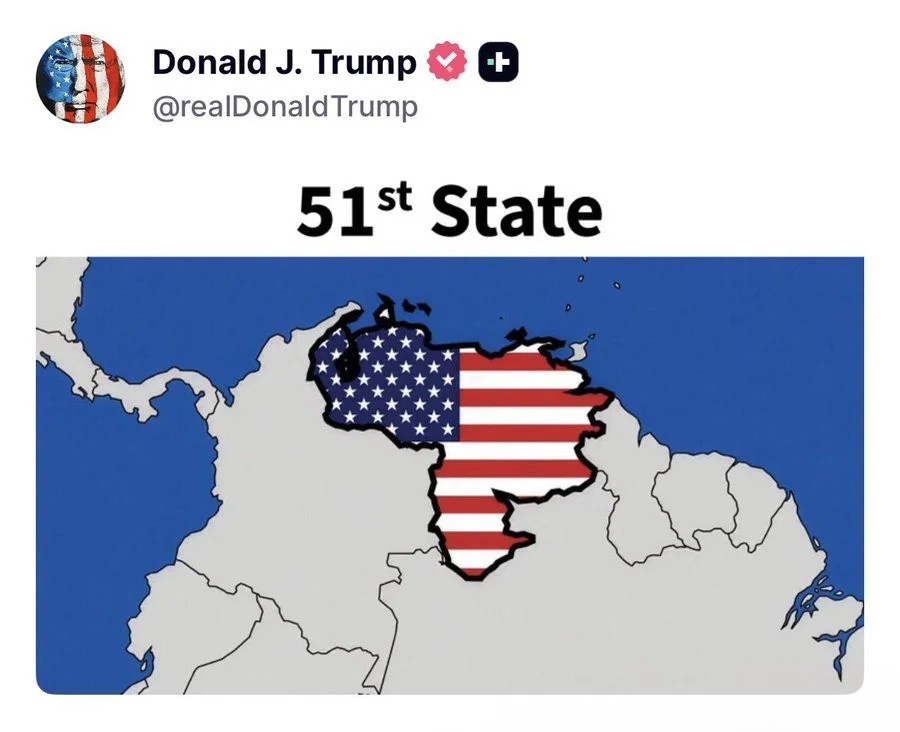
The VES Revaluation Path NO ONE Has On Their Bingo Card: Venezuela as America’s 51st State
What sounds more likely?
A sudden announcement that VES has revalued?
Or….
Ross: The VES RV Path No One has on their Bingo Card
5-13-2026
The VES Revaluation Path NO ONE Has On Their Bingo Card: Venezuela as America’s 51st State
What sounds more likely?
A sudden announcement that VES has revalued?
Or….
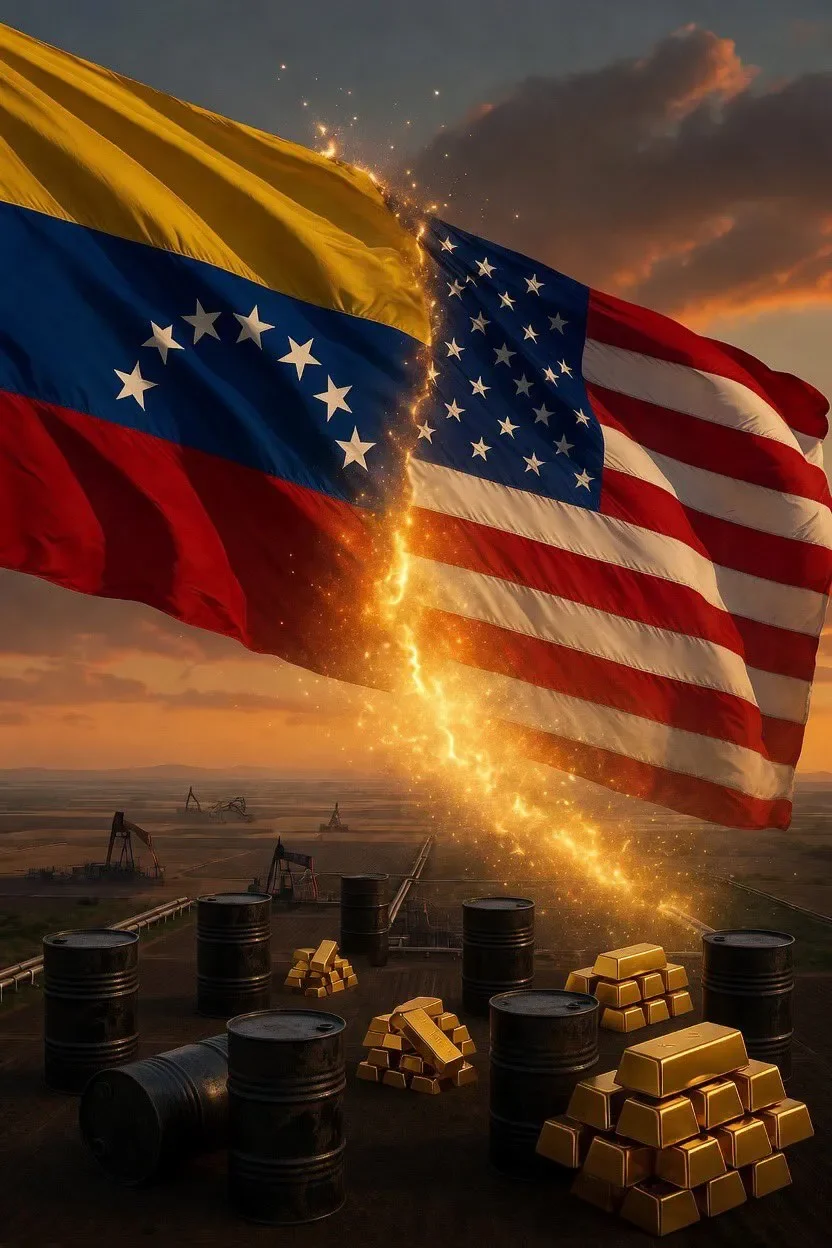
Or…..
Venezuela becomes the 51st state, triggering an exchange window for converting Bolivar to USD before its demonetization because the US Constitution (Article I) gives Congress exclusive power to coin money — states can’t issue their own.
In the back-channel statehood negotiations, the Bolivar exchange window would be hard-wired directly into the deal itself, with its exchange rate determined by a full asset-backed accounting of Venezuela’s true wealth — the $40+ trillion in proven oil reserves, gold, diamonds, coltan, and rare earth minerals that global interests have long suppressed.
By forcing the Bolivar to be redeemed at its true asset-backed value (oil + minerals = $40+ trillion), America absorbs that real wealth into the new monetary system.
The old hyper-inflated Bolivar gets swapped for USD (the new asset-backed Treasury notes), quietly recapitalizing the U.S. without printing more fiat, strengthening the entire basket of revaluing currencies, and bringing Venezuela’s resources under U.S. constitutional protection.
This exchange window doesn’t just retire the old Bolivar — it delivers an immediate wealth transfer bolstering the new USD Treasury note with Venezuela’s untapped riches while handing every Venezuelan citizen a debt-free reset and overnight prosperity that the globalists have blocked for decades.
There is a constitutional path here with Venezuela realistically having the potential to become the 51st state before President Trump’s term is over.
Statehood for Venezuela is being suggested at the same time that Iraq is forming a new government and progressing to reform their financial system.
Lockstep.
Right as the Fed is being dismantled.
Your bullishness is lacking.
Ross: How to become the 51st state? Venezuelans vote YES in a national referendum. Negotiate the deal: oil rights, debt, military bases, timeline. Sign treaty or joint resolution. Senate ratifies (2/3 if treaty). Congress passes Admission Bill. Simple majority in House + Senate. POTUS signs. Transition: new elections, adopt U.S. laws, full citizenship.
Seeds of Wisdom RV and Economics Updates Wednesday Afternoon 5-13-26
Good Afternoon Dinar Recaps,
Global Inflation Shock and BRICS Tensions Accelerate Pressure on the Financial System
Rising energy prices, surging bond yields, and deepening geopolitical divisions are increasing fears of a structural shift in the global economy
Markets reacted sharply today as inflation concerns intensified, oil remained elevated above $100, and BRICS ministers prepared for emergency discussions overshadowed by the Iran conflict
Good Afternoon Dinar Recaps,
Global Inflation Shock and BRICS Tensions Accelerate Pressure on the Financial System
Rising energy prices, surging bond yields, and deepening geopolitical divisions are increasing fears of a structural shift in the global economy
Markets reacted sharply today as inflation concerns intensified, oil remained elevated above $100, and BRICS ministers prepared for emergency discussions overshadowed by the Iran conflict
Overview (Key Points)
Global financial markets faced renewed volatility today as investors reacted to:
Surging U.S. inflation data
Rising Treasury and bond yields
Elevated oil prices tied to Middle East instability
Growing geopolitical divisions within BRICS nations
Analysts increasingly warn that the combination of persistent inflation, geopolitical fragmentation, and weakening confidence in long-term debt sustainability may accelerate structural changes already underway in the international financial system.
Key Developments
1. Inflation Surges Again as Oil Shock Spreads Through Global Markets
Fresh U.S. inflation data released today showed producer prices rising at their fastest pace since 2022, intensifying fears that the global economy may be entering another prolonged inflationary cycle.
The U.S. Producer Price Index surged 1.4% in April, significantly above expectations, while annual producer inflation climbed to 6.0%.
Markets reacted immediately:
Treasury yields climbed sharply
The U.S. dollar strengthened
Bond markets sold off
Expectations for future rate cuts declined dramatically
Investors now increasingly believe the Federal Reserve may keep interest rates elevated longer than previously expected.
2. Oil Prices Remain Above $100 Amid Hormuz Crisis
Oil markets remained highly volatile as ongoing instability involving Iran and the Strait of Hormuz continued threatening global energy flows.
Brent crude hovered near $106–$108 per barrel, while analysts warned that any further disruption to Gulf shipping lanes could rapidly trigger another major energy spike.
Although prices eased slightly during trading, markets remain extremely sensitive to developments involving:
The Iran conflict
Maritime security
U.S.–China diplomacy
Global supply disruptions
*******************************************
The International Energy Agency also warned that supply conditions are tightening as Middle East disruptions continue impacting production and transportation networks.
3. European Central Bank Signals More Rate Hikes
The inflation surge is no longer limited to the United States.
A Reuters poll released today showed that economists now widely expect the European Central Bank to continue raising interest rates as energy-driven inflation spreads across Europe.
The ECB is expected to raise rates again in June, with some analysts warning that inflation could remain structurally elevated if oil prices stay high.
This creates growing concerns about:
Slowing European growth
Rising sovereign debt costs
Increased pressure on banking systems
Weakening consumer demand
4. BRICS Meeting Overshadowed by Iran Conflict and Internal Divisions
The upcoming BRICS foreign ministers meeting in New Delhi is now expected to focus heavily on the economic and geopolitical fallout from the Iran war.
The expanded BRICS alliance includes:
China
Russia
India
Brazil
South Africa
Iran
UAE
Egypt
Ethiopia
Indonesia
However, deep divisions within the bloc are emerging as some member nations support Iran while others maintain closer ties with Gulf states and Western economies.
The conflict is increasing pressure on BRICS nations already pursuing:
Local currency trade settlement
Reduced dollar dependence
Alternative payment systems
Greater economic fragmentation from Western-led institutions
5. Global Markets Increasingly Price in Long-Term Instability
Financial markets today reflected growing concern that geopolitical instability is becoming a permanent feature of the global economy rather than a temporary disruption.
Rising inflation, elevated energy costs, and tightening monetary policy are beginning to reinforce one another across multiple regions simultaneously.
Analysts warn this environment resembles elements of previous stagflationary periods where:
Growth slows
Inflation remains elevated
Debt burdens increase
Monetary flexibility weakens
Why It Matters
Today’s developments highlight how interconnected the modern financial system has become with geopolitics and energy security.
The combination of:
Persistent inflation
Rising debt costs
Geopolitical fragmentation
Commodity volatility
is increasing stress across both developed and emerging economies.
Why It Matters to Foreign Currency Holders
Periods of sustained inflation and geopolitical uncertainty often lead to:
Increased currency volatility
Pressure on reserve currencies
Greater diversification efforts
Rising demand for alternative settlement systems
Several nations continue exploring mechanisms designed to reduce exposure to Western financial infrastructure.
Implications for the Global Reset
Pillar 1: Inflation and Debt Pressures Are Reshaping Monetary Policy
Central banks worldwide are increasingly constrained between controlling inflation and preventing economic slowdown.
Pillar 2: Geopolitical Fragmentation Is Accelerating Financial Realignment
The growing divide between Western powers and emerging economic blocs continues pushing the world toward a more multipolar financial structure.
Conclusion
Today’s inflation data, oil market volatility, and BRICS tensions reinforce the reality that the global economy is entering a period of heightened structural uncertainty.
What began as regional geopolitical instability is increasingly influencing:
Monetary policy
Global trade flows
Energy security
Currency systems
Sovereign debt markets
As inflation, energy disruption, and geopolitical rivalry continue converging, pressure on the existing financial order is likely to intensify throughout 2026.
Seeds of Wisdom Team
Newshounds News™ Exclusive
Sources
Reuters — “Global equities rise modestly with the dollar, bond yields as US inflation soars”
Reuters — “Iran war to cast a shadow on BRICS foreign ministers meeting in Delhi”
~~~~~~~~~~
Seeds of Wisdom Team RV Currency Facts Youtube and Rumble
Newshound's News Telegram Room Link
RV Facts with Proof Links Link
RV Updates Proof links - Facts Link
Follow the Gold/Silver Rate COMEX
Follow Fast Facts
Seeds of Wisdom Team™Website
Thank you Dinar Recaps
Trump Reopens Fort Knox as GOLD Revaluation Questions Mount
Trump Reopens Fort Knox as GOLD Revaluation Questions Mount
Taylor Kenny: 5-12-2026
The gold revaluation question is back in the headlines after President Trump again raised the idea of going to Fort Knox to see whether America’s gold is still there.
Trump said he wanted to “see if the gold is there” and questioned whether it had been left untouched, reviving a debate that has haunted U.S. monetary policy for decades.
Trump Reopens Fort Knox as GOLD Revaluation Questions Mount
Taylor Kenny: 5-12-2026
The gold revaluation question is back in the headlines after President Trump again raised the idea of going to Fort Knox to see whether America’s gold is still there.
Trump said he wanted to “see if the gold is there” and questioned whether it had been left untouched, reviving a debate that has haunted U.S. monetary policy for decades.
CHAPTERS:
00:00 Is the U.S. Preparing for a Gold Revaluation?
00:53 Why the Fort Knox Audit Still Matters
02:14 U.S. Debt Crisis and the Gold Revaluation Question
02:42 Why U.S. Gold Is Still Valued at $42.22
04:08 How Gold Revaluation Impacts Everyday Americans
04:37 What Happened During Past Gold Revaluations
06:00 Why an Audit May Come Before Revaluation
06:56 Why You Won’t Get Advance Warning
Some “Iraq News” Posted by Tishwash at TNT 5-13-2026
TNT:
Tishwash: Prime Minister-designate Ali Faleh al-Zaidi receives the European Union Ambassador to Iraq
Prime Minister-designate Ali Faleh al-Zaidi received on Tuesday the European Union Ambassador to Iraq, Clemens Smutner, who delivered a message from the EU countries expressing their support for the new government and their willingness to work with it in various fields.
During the meeting, the prospects for cooperation relations between Iraq and the European Union countries were discussed, as well as ways to enhance them within the framework of bilateral agreements and memoranda of understanding, and the future vision in a way that promotes mutual interests and benefits.
TNT:
Tishwash: Prime Minister-designate Ali Faleh al-Zaidi receives the European Union Ambassador to Iraq
Prime Minister-designate Ali Faleh al-Zaidi received on Tuesday the European Union Ambassador to Iraq, Clemens Smutner, who delivered a message from the EU countries expressing their support for the new government and their willingness to work with it in various fields.
During the meeting, the prospects for cooperation relations between Iraq and the European Union countries were discussed, as well as ways to enhance them within the framework of bilateral agreements and memoranda of understanding, and the future vision in a way that promotes mutual interests and benefits.
The meeting also witnessed discussions on regional and international issues and files of common interest, and emphasized the importance of intensifying joint work to achieve stability and development, and to preserve regional and international security. link
Tishwash: Al-Zidi is close to gaining confidence and forming a strong government with the support of all parties in Iraq.
Political analyst Ahmed Al-Tamimi confirmed on Tuesday (May 12, 2026) that the current disagreements between political forces regarding the distribution of ministerial portfolios are a natural part of the negotiations process for forming governments in Iraq, predicting that the political forces will succeed in passing Ali Al-Zidi’s government during this week.
Al-Tamimi told Baghdad Today that the political process has become accustomed to intensive rounds of negotiations and political bargaining related to the distribution of sovereign and service ministries, noting that current indicators show advanced understandings between political blocs towards resolving the cabinet and voting on it within Parliament.
He explained that the political forces are aware of the sensitivity of the current stage and the country’s need for a fully empowered government, therefore the disputes raised fall within the framework of traditional political competition and do not reach the level of disrupting or thwarting the formation of the government.
He added that there is an internal and external desire to end the state of executive vacuum and to expedite the granting of confidence to the new government, noting that some objections related to names or ministerial quotas may be resolved in the last hours before the voting session, as happened in previous government experiences.
Al-Tamimi indicated that passing Ali al-Zaidi’s government is “closer than ever,” especially in light of the initial agreements between the main political forces, explaining that the next stage will depend to a large extent on the ability of the new government to achieve political balances and present a government program capable of addressing service and economic issues.
He stressed that the success of the next government will also be linked to its ability to calm the street and enhance internal stability, in light of the economic, service and security challenges facing the country.
For weeks, the political arena has witnessed intense activity among political blocs and alliances to resolve the issue of forming the new government, amid internal and external anticipation of the nature of the ministerial lineup and the political and economic program that will be adopted in the next phase. link
**************
Tishwash: The most complex issue awaits resolution: Oil: The oil and gas law is the key to stability between Baghdad and Erbil.
The spokesman for the Iraqi Ministry of Oil, Sahib Bazoun, confirmed on Tuesday (May 12, 2026) that the oil and gas file between Baghdad and Erbil will not witness complete stability until the oil and gas law is approved within the House of Representatives, noting that there are existing understandings between the federal government and the region regarding the management of the oil file.
Bazoun told Baghdad Today that there is an agreement and a political decision between the two sides, but that enacting the oil and gas law during the current parliamentary session represents the most important step to ensure the stability of the oil relationship and preserve the rights of all parties.
He explained that oil still constitutes about 90% of the Iraqi state’s imports, which makes this file a top priority for the next government, noting that the Prime Minister-designate, Ali al-Zaidi, has placed among his priorities the diversification of the state’s sources of income and the reduction of dependence on oil revenues, as he is “an economist.”
Bazoun pointed out that the Ministry of Oil is working to revitalize and expand oil export outlets, stressing the reactivation of the Ceyhan and Banias port outlets, in addition to proceeding with the activation of the Kirkuk-Ceyhan pipeline with an export capacity of up to one and a half million barrels per day.
He added that the relative calm witnessed in the Strait of Hormuz during the past month helped in exporting two oil shipments, expressing his optimism about the improvement of conditions and the stability of export activity during the coming period.
Regarding strategic alternative plans, Bazoun revealed that the ministry has begun implementing the Basra-Haditha pipeline project, a strategic project with a capacity of two and a half million barrels per day and a diameter of 56 inches.
He explained that the importance of the project is not limited to transporting crude oil, but extends to supplying refineries located along the pipeline in the south, center and north with petroleum products, as well as enabling Iraq in the future to export oil through multiple outlets including Türkiye, Syria and Jordan via the port of Aqaba.
He confirmed that the project has already entered into force at an estimated cost of about five billion dollars, of which one and a half billion dollars have been allocated so far, noting that the work is proceeding "very normally" according to the plans set.
The Oil and Gas Law is one of the most prominent controversial laws postponed in Iraq since 2005, as it is related to regulating the management of oil wealth and the distribution of revenues between the federal government, the Kurdistan Region and the producing governorates, amid repeated political and economic demands to resolve it in order to end the disputes related to oil exports and contracts. link
Tishwash: Oil and gas law: Will the current parliamentary session succeed in resolving one of the most complex issues?
The oil and gas law is imposing itself as one of the most sensitive issues within the Iraqi scene, amid increasing questions about the ability of political forces to pass it during the current parliamentary session.
The spokesman for the Iraqi Ministry of Oil, Sahib Bazoun, confirmed on Tuesday (May 12, 2026) that the oil and gas file between Baghdad and Erbil will not witness complete stability until the oil and gas law is approved within the House of Representatives, noting that there are existing understandings between the federal government and the region regarding the management of the oil file.
Bazoun said that there is an agreement and a political decision between the two parties, but that enacting the oil and gas law during the current parliamentary session represents the most important step to ensure the stability of the oil relationship and preserve the rights of all parties.
He explained that oil still constitutes about 90% of the Iraqi state’s revenues, which makes this issue a top priority for the next government.
He then pointed out that the Prime Minister-designate, Ali al-Zaidi, had placed among his priorities the diversification of the state’s sources of income and the reduction of dependence on oil revenues, in his capacity as an “economist.”
Bazoun pointed out that the Ministry of Oil is working to revitalize and expand oil export outlets, stressing the reactivation of the Ceyhan and Banias port outlets, in addition to proceeding with the activation of the Kirkuk-Ceyhan pipeline with an export capacity of up to one and a half million barrels per day.
He added that the relative calm witnessed in the Strait of Hormuz during the past month helped in exporting two oil shipments, expressing his optimism about the improvement of conditions and the stability of export activity during the coming period.
Regarding strategic alternative plans, Bazoun revealed that the ministry has begun implementing the Basra-Haditha pipeline project, a strategic project with a capacity of two and a half million barrels per day and a diameter of 56 inches.
He explained that the importance of the project is not limited to transporting crude oil, but extends to supplying refineries located along the pipeline in the south, center and north with petroleum products , as well as enabling Iraq in the future to export oil through multiple outlets including Turkey, Syria and Jordan via the port of Aqaba.
He confirmed that the project has already entered into force at an estimated cost of about five billion dollars, of which one and a half billion dollars have been allocated so far, noting that the work is proceeding “very normally” according to the plans set.
The Oil and Gas Law is one of the most prominent controversial laws postponed in Iraq since 2005, as it is related to regulating the management of oil wealth and the distribution of revenues between the federal government, the Kurdistan Region and the producing governorates, amid repeated political and economic demands to resolve it in order to end the disputes related to oil exports and contracts. link
News, Rumors and Opinions Wednesday 5-13-2026
Ross: Central Bank of Iraq Confirms Banking Reform is Progressing
5-13-2026
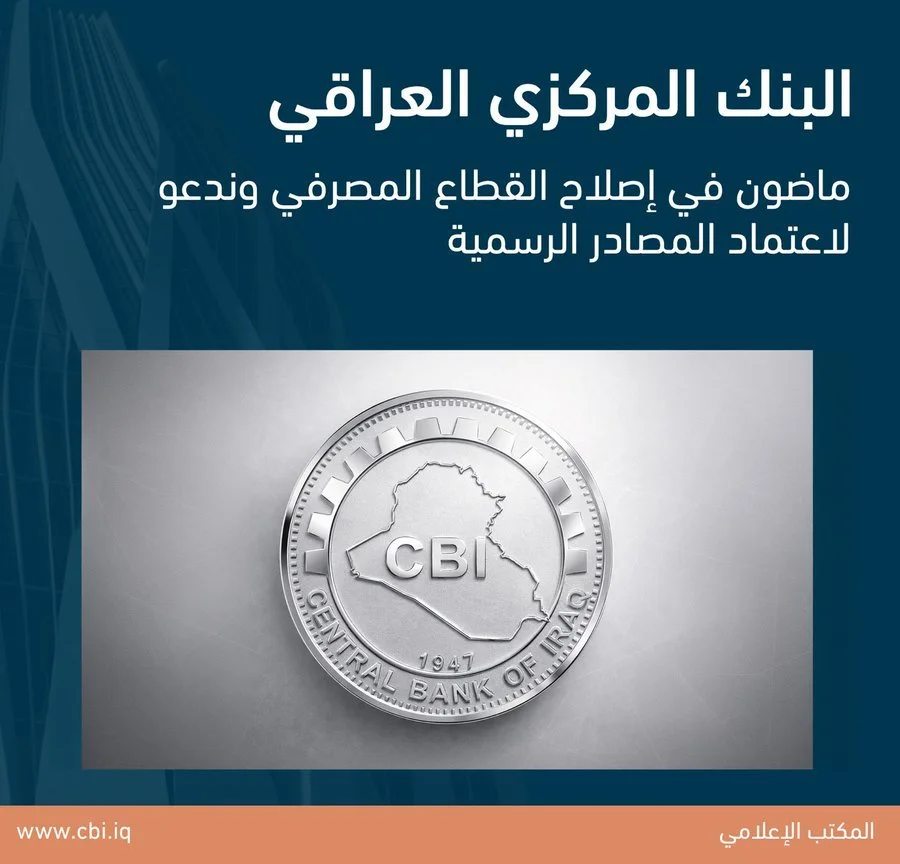
The Central Bank of Iraq confirms its banking reform program is actively progressing.
Phase 2 is now underway.
This long-term initiative strengthens Iraq’s financial system and modernizes banks to international standards.
Ross: Central Bank of Iraq Confirms Banking Reform is Progressing
5-13-2026
The Central Bank of Iraq confirms its banking reform program is actively progressing.
Phase 2 is now underway.
This long-term initiative strengthens Iraq’s financial system and modernizes banks to international standards.
“The statement added that these procedures aim to provide an opportunity for compliant banks to regain access to foreign currency transfer channels, including the euro, the UAE dirham, and the Chinese yuan, in addition to other approved international currencies.”
Banks must regain access to forex channels before IQD revalues.
Progress.
Source(s):
• https://x.com/Ross_ptm/status/2054342881041940648
************
Courtesy of Dinar Guru: https://www.dinarguru.com/
Stephen There's so much corruption and so much evil happening behind the scenes that is being removed and it's being removed in a very aggressive fashion. It's not happening over months or year. This is happening within the last few weeks. Be positive, be confident, everything is working in our favor...It's coming soon...
Militia Man Often you're going to see that Iraq is a rentier state and...90% of all revenues are from oil. That's not anymore. Article quote: "Iraq's oil revenues which account for more than 84% of Iraq's expenditures..." That's not 90%.
Mnt Goat Article: "EXPERTS: “SECURITY GUARANTEES” ARE A PREREQUISITE FOR THE RETURN OF INTERNATIONAL COMPANIES AND MISSIONS TO IRAQ" This article could not articulate any better why Trump wants these militia and factions out of Iraq...this issue of the PMF [Popular Mobilization Forces] is of high priority and on the CBI list of the top five issue prior to any Reinstatement?
[CB] Panics Over Crypto,Trump Just Circled Back To The Fort Knox Audit,Right On Schedule
X22 Report: 3-13-2026
The Fed independence is an illusion, they are a private corporation and they do not want anyone to see their criminal activity.
Trump is now reversing everything the [CB]s have done and rebuilding the economic system so he can remove the Federal Reserve in the end.
Trump has started the narrative of auditing Fort Knox to see if the gold is there.
Iraq Economic News and Points To Ponder Wednesday Morning 5-13-26
Transportation: Detailed Designs For The Development Road Are Nearing Completion
Money and Business Economy News – Baghdad The Ministry of Transport is nearing completion of the detailed designs for the Development Road project, in preparation for presenting it to major international companies specializing in infrastructure, transport and logistics services.
Transportation: Detailed Designs For The Development Road Are Nearing Completion
Money and Business Economy News – Baghdad The Ministry of Transport is nearing completion of the detailed designs for the Development Road project, in preparation for presenting it to major international companies specializing in infrastructure, transport and logistics services.
The director of the media office at the ministry, Maitham Al-Safi, explained in an interview with the official newspaper, which was followed by “Al-Eqtisad News”, that the ministry has made significant progress in preparing the technical and engineering requirements for the project, noting that the detailed design phase is nearing completion, which is a fundamental step that precedes the referral, implementation, and negotiation process with international companies wishing to participate in the project.
He added that the project is attracting increasing regional and international attention, given its strategic importance in linking Iraq to global trade routes, as well as its expected role in strengthening the transport and logistics sector and opening new economic horizons for the country.
Al-Safi pointed out that a number of European and regional companies have expressed their desire to cooperate and participate in the implementation of the project during its next phases, indicating that the latest entity to announce its interest in the project was the Bulgarian Ministry of Transport, which expressed its support for its completion in cooperation and coordination with the Iraqi side, in a way that contributes to enhancing trade exchange between the two countries and facilitating the smooth flow of transport through international corridors. https://www.economy-news.net/content.php?id=69015
Iraq Ranked Fourth In Well Drilling Activity Within OPEC During 2025
energy Economy News – Baghdad Iraq ranked fourth among OPEC countries in well drilling completion activity during 2025, an indicator that reflects continued field activity in the oil sector, despite the difference with the leading countries.
Kuwait topped the list with 755 wells, followed by the United Arab Emirates with 444 wells, then Saudi Arabia with 383 wells, while Iraq came in fourth with 280 wells among the most active countries in drilling operations within the organization.
OPEC data also showed an improvement in global demand for oil derivatives related to the transportation sector during 2025, as demand for diesel rose by 0.39%, gasoline by 0.34%, and kerosene (jet fuel) by 0.29%, compared to a decline in the remaining fuel by 0.19%, reflecting the recovery of land and air transport and the expansion of global trade and tourism activity.
https://www.economy-news.net/content.php?id=69026
Parliamentary Integrity Committee: A Move To Obligate Investment Projects To Employ 70% Of Iraqi Youth
Money and Business Economy News – Baghdad The Parliamentary Integrity Committee intends to issue directives in the near future to investment projects, obligating them to employ 70 percent of Iraqi youth within their projects.
Naheda Al-Daini, a member of the Parliamentary Integrity Committee, told the official newspaper, as reported by "Al-Eqtisad News," that "investment in Iraq is witnessing remarkable development, especially in the capital, Baghdad, but this sector still faces a number of problems, which requires a comprehensive review of the investment file and an examination of the licenses granted during the past years."
Al-Daini added that the file of real estate developers also needs to be reconsidered, especially with regard to the lands granted for investment projects, indicating that the Parliamentary Integrity Committee is serious about following up on this file, by requesting all investment and building licenses and financial guarantees, as well as studying the violations that occurred previously.
She affirmed that the committee will play a strong role in the coming phase to ensure that investment proceeds within legal and normal frameworks, stressing the need to stop any bargaining or violations by investors. Regarding the prices of residential complexes... https://www.economy-news.net/content.php?id=69022
Planning: Including New Projects Within The Poverty Reduction Strategy
Money and Business Economy News – Baghdad The Ministry of Planning included a new package of projects within the third poverty reduction strategy after completing its detailed discussion, and confirmed that its approval is pending the formation of the government in the coming period.
Ministry spokesman Abdul Zahra al-Hindawi told the official newspaper, as reported by "Economy News," that the new projects aim to support the poor and improve the service and living conditions in a number of villages and rural areas in various governorates, through the implementation of development programs that contribute to providing job opportunities and strengthening infrastructure and basic services, in line with development goals and the government's plans to address poverty rates.
He explained that the third poverty reduction strategy includes multiple economic and social axes, focusing on economic empowerment, social protection and improving services, as well as expanding the scope of development projects in the most needy governorates, noting that its implementation will be after its official ratification by the new government.
The Ministry of Planning launched its first poverty reduction strategy in 2010, then started the second in 2018, and the third was approved last year and is preparing to launch and implement it.
In the same context, Al-Hindawi stated that the number of projects of the Social Fund for Development has reached more than 600 since it began its work in 2017, noting that the majority of them have been completed, while the remaining projects have reached advanced rates exceeding 90 percent.
He pointed out that these projects cover 18 governorates, including the governorates of the Kurdistan Region, explaining that the coordination mechanism between the Ministry of Planning and the governorates is based on the philosophy of (bottom-up planning), meaning that projects are implemented according to what the people of the poorest regions and villages identify in terms of needs and priorities in the fields of education, health, water, electricity and roads.
Al-Hindawi noted the existence of a monitoring and continuous follow-up system for projects, which includes technical, environmental and social reports, as well as direct field follow-up through specialized teams working in coordination with the governorates, in addition to supervision and coordination with the World Bank as the donor to the fund with a loan of $300 million.
He stated that there are currently great efforts to complete all the remaining Fund projects by the end of this year, which represent a limited number, indicating that some villages were completely lacking in electricity, which made delivering it through the Fund projects an important transformation for their residents.
The construction of culverts and bridges also contributed to facilitating the students’ access to their schools, especially in villages separated by rivers, which reduced the risks that threatened children during the winter season.
Al-Hindawi stressed that the fund began its work in three governorates, namely Al-Muthanna, Salah al-Din and Dohuk, before later expanding to include 18 governorates throughout the country. https://www.economy-news.net/content.php?id=69019
Jordanian Electricity Exports To Iraq Increased By 13% In Four Months.
energy Economy News – Baghdad Data released by Jordan’s National Electric Power Company on Wednesday showed that electricity exports to the Trebil border crossing with Iraq rose by 13% during the first four months of this year, indicating growing electricity cooperation between the two countries.
According to the company's data, which was reviewed by "Al-Eqtisad News", electricity exports to the Trebil center reached 2.6 gigawatt-hours during the aforementioned period, compared to 2.3 gigawatt-hours during the same period last year.
The data also showed that total sales of the Jordanian National Electric Power Company increased by 3.5%, reaching 7683.2 gigawatt-hours, compared to 7420.6 gigawatt-hours during the same period last year.
Jordanian electricity exports generally recorded an increase of 24.7%, reaching 124.2 gigawatt-hours, compared to 99.6 gigawatt-hours, distributed between Iraq and Palestine. https://www.economy-news.net/content.php?id=69024
Italian Company Eni To Increase Its Oil Production In Iraq During 2025
energy Economy News – Baghdad Data from the annual report of the Italian company Eni, released on Wednesday, showed an increase in its oil and gas production in Iraq during 2025, compared to the previous two years, within its global operations.
According to the company’s annual report, which was reviewed by “Al-Eqtisad News”, Eni’s production in Iraq during 2025 amounted to about 11 million barrels of oil liquids and 30 billion cubic feet of natural gas, equivalent to 17 million barrels of oil equivalent, compared to 15 million barrels of oil equivalent in 2024, and 14 million barrels of oil equivalent in 2023.
The report indicated that the company’s total global production reached 631 million barrels of oil equivalent during 2025, compared to 625 million in 2024 and 604 million in 2023, driven by a 7% year-on-year increase in oil liquids production.
Eni has been operating in Iraq since 2009, and manages the Zubair oil field in Basra Governorate under technical service contracts with the Iraqi government. https://www.economy-news.net/content.php?id=69023
A Chinese Tanker Carrying Two Million Barrels Of Iraqi Oil Is Attempting To Cross The Strait Of Hormuz.
energy Economy News – Baghdad Ship tracking data showed on Wednesday that a giant Chinese oil tanker carrying about two million barrels of Iraqi crude was attempting to cross the Strait of Hormuz, a move that reflects the continued flow of Iraqi oil exports despite escalating security tensions in the region.
According to data from ship tracking company LSEG and the Kpler platform, the giant oil tanker "Yuan Hua Hu" passed Iran's Larak Island and headed south through the strait, after being stuck in the Gulf since the beginning of March.
The tanker had loaded its cargo of Basra Medium crude from the port of Basra and is currently heading towards Asian markets. It is owned and managed by a unit of the Chinese company COSCO Shipping Energy Transportation, while the shipment was licensed by Unipec, the trading arm of Sinopec.
This attempt marks the third known passage of a Chinese oil tanker through the Strait of Hormuz since military tensions escalated between the United States and Israel on one side and Iran on the other on February 28, according to available tracking data.
Reports also indicated that Iran has strengthened its influence in the Strait in recent days through understandings related to oil and gas shipments with Iraq and Pakistan, amid global concerns about any disruption that could threaten the movement of energy supplies through the vital waterway.
This comes as Bloomberg reported on Tuesday that US forces imposing a naval blockade on Iran prevented a Greek ship carrying about two million barrels of Iraqi oil from continuing its journey to Vietnam for "unknown" reasons, while the Vietnamese government appealed to the United States to allow the oil shipment to proceed.
According to Bloomberg, the giant oil tanker Agios Phanourios 1, operated by Athens-based Eastern Mediterranean Maritime, made a sudden turn at sea on Monday near the point where the US blockade begins.
The tanker had passed through the Strait of Hormuz carrying 1.99 million barrels of Iraqi Basra Medium crude when it turned back, according to ship tracking data and documents seen by Bloomberg.
PetroVietnam Oil, the trading arm of the state-owned energy company, confirmed to U.S. Naval Forces Central Command that the cargo aboard the Agios Phanourios 1 belongs to them and was loaded in Iraq, according to a letter seen by Bloomberg. The tanker still indicates its destination as Nghi Son, home to one of the refineries in the Asian nation.
Seeds of Wisdom RV and Economics Updates Wednesday Morning 5-13-26
Good Morning Dinar Recaps,
Trump Heads to China as Iran Conflict and Oil Route Crisis Shake Global Markets
Energy security, inflation fears, and rising geopolitical rivalry are placing new pressure on the global financial system
The escalating Iran conflict and growing instability around the Strait of Hormuz are increasingly influencing monetary policy, trade flows, and global economic expectations
Good Morning Dinar Recaps,
Trump Heads to China as Iran Conflict and Oil Route Crisis Shake Global Markets
Energy security, inflation fears, and rising geopolitical rivalry are placing new pressure on the global financial system
The escalating Iran conflict and growing instability around the Strait of Hormuz are increasingly influencing monetary policy, trade flows, and global economic expectations
Overview (Key Points)
U.S. President Donald Trump departed for China on Wednesday ahead of a highly anticipated summit with Chinese President Xi Jinping as the ongoing Iran conflict continues disrupting global energy markets and increasing geopolitical tensions.
The visit comes during a period of:
Elevated oil prices
Rising inflation pressures
Maritime security concerns
Growing uncertainty surrounding global trade and monetary stability
Financial analysts increasingly warn that prolonged instability surrounding the Strait of Hormuz could accelerate broader structural shifts already developing within the global financial system.
Key Developments
1. Trump Travels to China Amid Intensifying Global Tensions
President Trump arrived in China for high-level talks with President Xi Jinping while attempting to balance diplomatic engagement with growing military and economic pressures tied to the Iran conflict.
Trump publicly stated that the United States does not require China’s assistance to address Iran, signaling a continued emphasis on unilateral strategic objectives.
However, the timing of the summit highlights how closely interconnected:
U.S.–China relations
Energy security
Global trade
Middle East stability
have become.
2. Strait of Hormuz Crisis Continues Disrupting Energy Markets
The Strait of Hormuz remains at the center of global market concerns as military tensions continue threatening one of the world’s most important oil transit corridors.
Roughly 20% of global oil supplies normally pass through the waterway, making any prolonged disruption a major risk to the international economy.
According to the International Energy Agency, ongoing instability is already tightening global supply conditions and contributing to elevated oil prices.
Brent crude remained volatile today as traders weighed the risks of further escalation.
3. Inflation Pressures Continue Building Worldwide
Higher energy prices are once again feeding directly into global inflation concerns.
The rise in fuel costs is contributing to:
Higher transportation expenses
Increased manufacturing costs
Food price inflation
Broader consumer price pressure
Recent U.S. inflation data showed continued increases in living costs, reinforcing fears that central banks may be forced to maintain restrictive monetary policies longer than expected.
The combination of war-driven energy inflation and slowing economic growth is creating renewed fears of stagflation across several major economies.
4. China’s Role in Global Energy and Trade Expands
Although Trump minimized China’s role in resolving the Iran crisis, Beijing remains one of Iran’s largest economic partners and energy buyers.
China’s dependence on Middle Eastern energy imports means that prolonged disruption in the Gulf directly affects:
Chinese industrial production
Trade flows
Supply chains
Commodity markets
Analysts believe the summit could include behind-the-scenes discussions related to:
Oil market stability
Maritime security
Trade coordination
Broader economic risks tied to the conflict
5. Geopolitical Instability Continues Reshaping Global Finance
Markets are increasingly reacting not only to economic indicators, but also to geopolitical developments involving:
Military escalation
Shipping routes
Sanctions
Strategic alliances
The Iran conflict demonstrates how quickly regional wars can transmit economic shocks throughout the global financial system.
Bond markets, currencies, commodities, and central bank expectations are all becoming more sensitive to geopolitical risk.
Why It Matters
Today’s developments reinforce how deeply interconnected global finance has become with geopolitical stability and energy security.
The combination of:
Rising oil prices
Inflation pressure
Strategic rivalry
Supply chain disruptions
is creating an increasingly fragile environment for the global economy.
Why It Matters to Foreign Currency Holders
Periods of prolonged geopolitical instability often increase:
Currency volatility
Inflationary pressure
Commodity price swings
Demand for reserve diversification
Energy-importing nations remain especially vulnerable if oil disruptions continue.
Implications for the Global Reset
Pillar 1: Energy Security Is Becoming Central to Financial Stability
Oil flows through strategic maritime chokepoints now directly influence inflation, interest rates, and monetary policy worldwide.
Pillar 2: Geopolitical Rivalries Are Accelerating Economic Fragmentation
The growing intersection of military conflict, trade competition, and monetary policy continues reshaping the global financial landscape.
Conclusion
Trump’s visit to China comes at a pivotal moment as the Iran conflict increasingly impacts global markets, inflation expectations, and energy security.
The ongoing instability surrounding the Strait of Hormuz highlights how vulnerable the modern financial system remains to geopolitical disruptions tied to strategic energy corridors.
As tensions between major powers continue intersecting with economic and monetary pressures, the world economy is entering a period where geopolitics and finance are becoming inseparable forces shaping the future global order.
Seeds of Wisdom Team
Newshounds News™ Exclusive
Sources
Modern Diplomacy — "Trump Heads to China as Iran War and Strait of Hormuz Crisis Escalate"
Reuters — "Global oil markets and geopolitical developments coverage"
~~~~~~~~~~
🌱A Message to Our Currency Holders🌱
If you’ve been holding foreign currency for many years, you were not foolish.
You were not wrong to believe the global financial system would change.
What failed was not your patience — it was the information you were given.
For years, dates, rumors, and personalities replaced facts, structure, and proof. “This week” predictions created cycles of hope and disappointment that were never based on how currencies actually change.
That is not your failure.
Our mission here is different: • No dates • No rates • No hype • No gurus
Instead, we focus on:
• Verifiable developments • Institutional evidence
• Global financial structure • Where countries actually sit in the process
Currency value changes only come after sovereignty, trade, banking, settlement systems, and fiscal coordination are in place. History and institutions confirm this sequence.
You will see silence. You will see denials. That is not delay — that is discipline.
Protect your identity. Organize your documents. Verify everything.
Never hand your discernment to anyone who cannot show proof.
You deserve truth — not timelines.
Seeds of Wisdom Team
Newshounds News™
~~~~~~~~~~
Seeds of Wisdom Team RV Currency Facts Youtube and Rumble
Newshound's News Telegram Room Link
RV Facts with Proof Links Link
RV Updates Proof links - Facts Link
Follow the Gold/Silver Rate COMEX
Follow Fast Facts
Seeds of Wisdom Team™Website
Thank you Dinar Recaps
Seeds of Wisdom RV and Economics Updates Tuesday Evening 5-12-26
Good Evening Dinar Recaps,
Trump Ally Kevin Warsh Confirmed to Federal Reserve Board as Global Markets Watch for Major Policy Shift
The Senate confirmation of Kevin Warsh signals potential changes ahead for U.S. monetary policy, interest rates, and the future direction of the global financial system
Markets are closely watching the Federal Reserve as political pressure, inflation concerns, and global economic uncertainty continue reshaping monetary policy expectations
Good Evening Dinar Recaps,
Trump Ally Kevin Warsh Confirmed to Federal Reserve Board as Global Markets Watch for Major Policy Shift
The Senate confirmation of Kevin Warsh signals potential changes ahead for U.S. monetary policy, interest rates, and the future direction of the global financial system
Markets are closely watching the Federal Reserve as political pressure, inflation concerns, and global economic uncertainty continue reshaping monetary policy expectations
Overview (Key Points)
The United States Senate voted Tuesday to confirm Kevin Warsh to the Federal Reserve Board of Governors, positioning him as the leading candidate to become the next Chair of the Federal Reserve following the expiration of Jerome Powell’s current term.
The confirmation comes during a period of:
Persistent inflation concerns
Elevated global debt levels
Energy market instability
Growing geopolitical fragmentation
Financial analysts believe the leadership transition could significantly impact:
Interest rate policy
Bond markets
The U.S. dollar
Global liquidity conditions
The development is being closely monitored worldwide because Federal Reserve policy remains one of the most important drivers of the global financial system.
Key Developments
1. Kevin Warsh Wins Senate Confirmation
The Senate voted 51-45to confirm Kevin Warsh to the Federal Reserve Board of Governors, advancing President Donald Trump’s effort to reshape the leadership of the central bank.
Warsh is now widely expected to become the next Federal Reserve Chair following the expiration of Jerome Powell’s current term.
The confirmation represents a major political and financial development because the Federal Reserve directly influences:
Interest rates
Inflation management
Banking liquidity
Global capital flows
U.S. Treasury markets
2. Jerome Powell’s Departure Signals Potential Policy Changes
Current Fed Chair Jerome Powell is expected to step down as Chair this week, though reports indicate he may remain on the Federal Reserve Board until 2028.
Powell’s tenure was defined by:
Aggressive rate hikes
Inflation battles
Banking sector stress
Pandemic-era monetary expansion
Markets are now attempting to determine whether Warsh will pursue:
Tighter monetary policy
Faster rate cuts
Expanded liquidity measures
Regulatory changes within the banking system
The uncertainty surrounding future Fed policy is already influencing bond and currency markets.
3. Political Pressure on the Federal Reserve Intensifies
The confirmation process highlighted growing political tension surrounding the Federal Reserve and its independence.
President Trump has repeatedly criticized Powell in recent months over:
Interest rate policy
Inflation management
Economic growth concerns
The nomination battle also became tied to investigations involving Federal Reserve leadership and spending oversight tied to renovations at Fed headquarters.
Analysts warn that increasing political influence over central bank policy could create long-term uncertainty for financial markets.
4. Global Markets Closely Monitor Future Dollar Policy
The Federal Reserve remains the most influential central bank in the world because the U.S. dollar continues serving as the primary global reserve currency.
Any major policy shift from the Fed could affect:
Global trade flows
Sovereign debt markets
Emerging market currencies
Commodity pricing
International banking systems
At a time when BRICS nations are increasingly exploring alternatives to dollar dependence, global investors are closely watching whether future Fed leadership strengthens or weakens confidence in the U.S. financial system.
5. Rising Debt and Inflation Continue Pressuring Central Banks
The leadership transition comes as central banks worldwide struggle to balance:
Inflation control
Economic growth
Banking system stability
Rising government debt burdens
Higher interest rates have increased borrowing costs globally, while energy and geopolitical instability continue fueling inflationary pressure.
The Federal Reserve’s future direction may influence whether the world economy moves toward:
Extended monetary tightening
Renewed stimulus measures
Slower growth conditions
Increased market volatility
Why It Matters
Changes at the Federal Reserve often have global consequences because U.S. monetary policy influences nearly every major financial market worldwide.
Today’s confirmation reinforces how central banking, politics, and geopolitical competition are becoming increasingly interconnected.
Why It Matters to Foreign Currency Holders
Federal Reserve policy directly impacts:
The strength of the U.S. dollar
Global inflation trends
Interest rates worldwide
Currency stability in emerging markets
Any major shift in Fed policy could trigger broader adjustments across international financial systems.
Implications for the Global Reset
Pillar 1: Central Bank Leadership Is Becoming Increasingly Political
The confirmation battle highlights growing political influence surrounding monetary policy decisions and central bank leadership.
Pillar 2: Global Confidence in Financial Systems Is Under Increasing Scrutiny
As debt, inflation, and geopolitical instability rise, investors worldwide are watching whether central banks can maintain long-term financial stability.
Conclusion
Kevin Warsh’s confirmation to the Federal Reserve Board marks a significant moment for global financial markets and U.S. monetary policy.
At a time of rising debt, persistent inflation concerns, and growing geopolitical uncertainty, leadership changes at the Federal Reserve carry enormous implications far beyond Washington.
Whether the next phase of Federal Reserve policy strengthens confidence in the existing financial system or accelerates calls for broader reform remains one of the most important questions facing global markets today.
Seeds of Wisdom Team
Newshounds News™ Exclusive
Sources
Watcher.Guru — "Trump Pick for Fed Chair Kevin Warsh Wins Senate Confirmation"
Reuters — "Federal Reserve leadership and monetary policy coverage"
~~~~~~~~~~
Seeds of Wisdom Team RV Currency Facts Youtube and Rumble
Newshound's News Telegram Room Link
RV Facts with Proof Links Link
RV Updates Proof links - Facts Link
Follow the Gold/Silver Rate COMEX
Follow Fast Facts
Seeds of Wisdom Team™Website
Thank you Dinar Recaps
$100,000 Income is Now "Lower-Middle Class"
$100,000 Income is Now "Lower-Middle Class"
Notes From the Field By James Hickman (Simon Black/Sovereign Man) May 12, 2026
Henry VIII probably thought he was being extremely clever when he started debasing his currency in 1544... and assumed that, if he reduced the silver content slowly and gradually enough, perhaps no one would notice.
But the King was hilariously wrong.
$100,000 Income is Now "Lower-Middle Class"
Notes From the Field By James Hickman (Simon Black/Sovereign Man) May 12, 2026
Henry VIII probably thought he was being extremely clever when he started debasing his currency in 1544... and assumed that, if he reduced the silver content slowly and gradually enough, perhaps no one would notice.
But the King was hilariously wrong.
Despite centuries of warfare, invasions, and plagues, English rulers prior to Henry had been remarkably disciplined in maintaining 92.5% silver in their coins.
In fact, England’s kings were so serious about their coinage that, at one point in the 1100s, one of Henry VIII’s forebears rounded up every private minter who skimped on the silver content in their coins— and had the man’s testicles removed.
But Henry VIII did not share his ancestors resolve. So, drowning in debt, divorce, and too much war, he started to reduce the silver content and replace it with copper.
His new coins still looked vaguely similar to the original ones because they were given a cheap, silver wash. But the wash wore off quickly— especially on the side where Henry’s profile was carved.
Londoners soon began to notice that the king’s nose would turn orange once the silver sheen wore off, giving rise to the nickname “Old Coppernose”.
And yet the debasement continued— and this was Henry’s ‘clever’ idea.
There wasn’t a single shock or dramatic crash. Henry’s ‘Great Debasement’ was a years-long operation of slowly robbing prosperity from his subjects. Each year their coins would buy less. Prices would rise. Their cost of living increased. And overall they were worse off.
This is the same story of our own time.
Gallup reported last week that 55% of Americans believe their personal finances are getting worse; that’s the absolute rock bottom reading in 25 years of the survey.
It is worse than 2008, when the financial system was actually breaking. It is worse than the pandemic, when the economy was shut off.
And that 55% statistic is in a year when headline employment numbers and stock indices are supposed to be telling everyone they're doing fine.
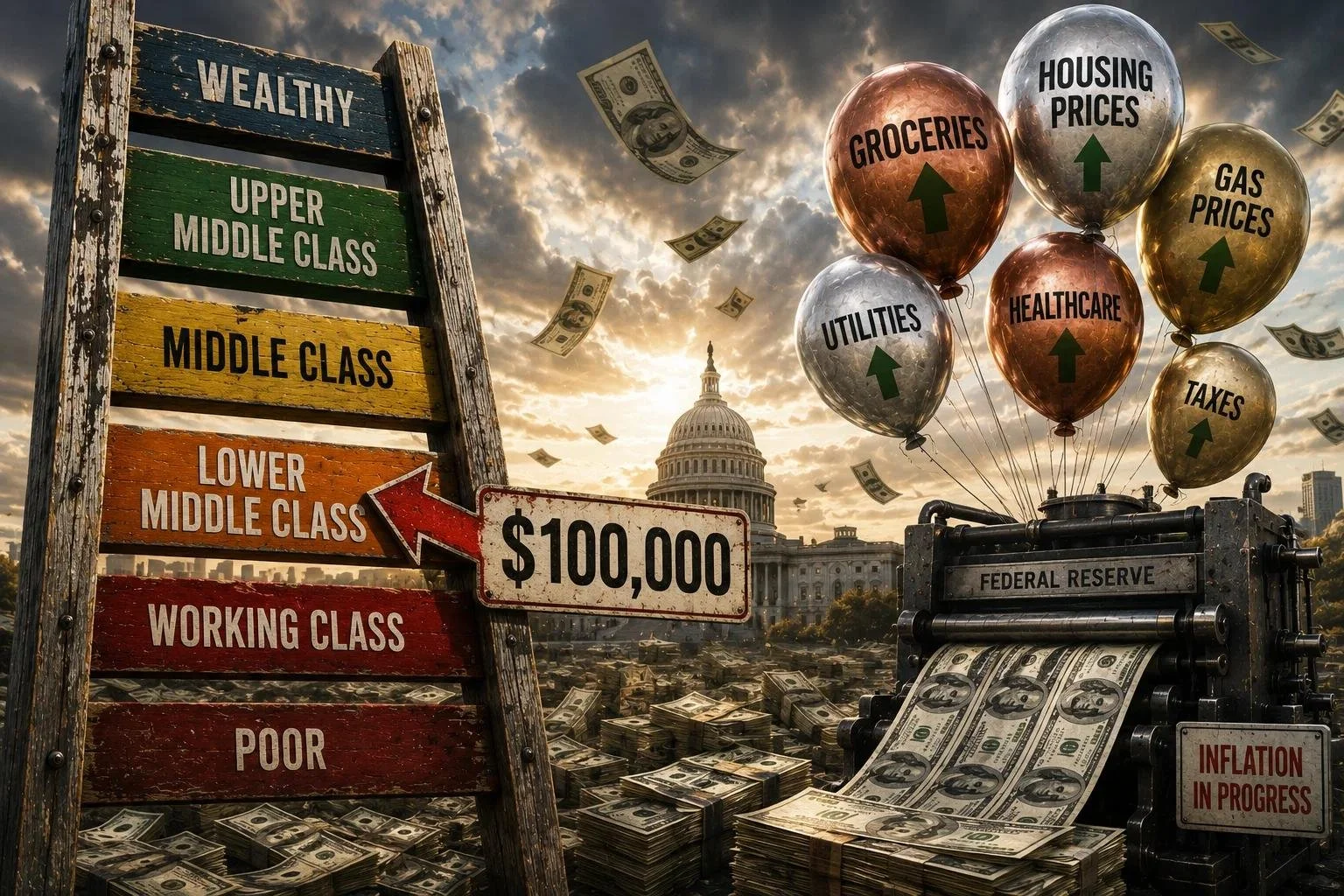
Perhaps even more alarming is a recent analysis by a group called MoneyLion, which looked at Census data and found that, in 12 states in the US, a $100,000 income is now considered LOWER middle class.
For those who remember what life was like 25 years ago, making six figures was solid “made it” territory.
Not anymore. In Massachusetts, the lower-middle ceiling has crept up to $116,476. In New Jersey, $115,882. In California, $111,277.
Of course, it isn't hard to see what those states have in common. They tax heavily, regulate aggressively, and treat business and wealth as plump dairy cows to milk.
This isn’t magically going away if the Strait of Hormuz opens, or Congress passes a ban on corporations buying homes to rent.
The federal government runs trillion-dollar deficits every year, the Treasury borrows the difference, and the Federal Reserve accommodates the whole arrangement by expanding the money supply by trillions.
Long term inflation doesn't slow down until Washington decides to be fiscally responsible— and there is little evidence that's about to happen.
If you bought a house in 2010, or even 2021, the same forces hollowing out the dollar have been inflating the value of your assets; your house cannot be printed by the Federal Reserve, so as the money supply increases, your house costs more in nominal dollars.
That's why the people who feel worst about this economy are young people.
A recent Generation Lab survey found that more than 8 in 10 Americans aged 18-29 — the cohort least likely to own a home or hold meaningful investments — now describe the economy as bad or terrible. Only 2 percent of them call it "excellent."
This is why real assets matter. The Fed can manufacture as many dollars as it wants, but it cannot manufacture the things that actually have value: precious metals, energy, critical resources like uranium or copper, a profitable business producing something the world cannot function without.
Because every single time governments are given the choice between inflation and discipline, they pick inflation.
And just like Henry VIII, they think no one is going to notice.
To your freedom, James Hickman Co-Founder, Schiff Sovereign LLC
PS — Schiff Sovereign's investment research newsletter, Strategic Assets, exists for exactly this reason: to identify real assets and real businesses that not only protect wealth from debasement, but actually give you tremendous upside as Americans prioritize essential spending over luxuries.
We’ve seen some major winner in precious metals, fertilizer, industrial metals, shipping— and there is reason to believe we are still early.