News, Rumors and Opinions Tuesday 5-12-2026
KTFA:
Clare: Expert warns of economic "collapse": Iraq's exports have declined dangerously
5/11/2026 Information/Baghdad...
Economic expert Ahmed Al-Waeli warned on Monday of a "catastrophe" threatening the country due to the inability of alternative routes to compensate for lost oil exports. He emphasized that the new parliamentary trend of opening appointment files will exacerbate the financial deficit.
KTFA:
Clare: Expert warns of economic "collapse": Iraq's exports have declined dangerously
5/11/2026 Information/Baghdad...
Economic expert Ahmed Al-Waeli warned on Monday of a "catastrophe" threatening the country due to the inability of alternative routes to compensate for lost oil exports. He emphasized that the new parliamentary trend of opening appointment files will exacerbate the financial deficit.
Al-Waeli told Al-Maalouma that "Iraq's exports through alternative outlets do not exceed one million barrels per day, which does not meet even a quarter of the actual needs." He explained that "the country has lost two-thirds of its export capacity, which used to exceed three million barrels per day through the Strait of Hormuz, causing a devastating blow to imports."
He clarified that "the Central Bank's assurances of securing salaries for only six months mean the beginning of a dangerous depletion of the cash reserves," noting that "continuing on this path will place the Iraqi economy before an unprecedented existential crisis."
Al-Waeli added that "the new parliamentarians' intentions to open appointment and contract files at this time will transform the entire budget into a consumer salary budget and increase the severity of the crisis," describing the situation as "a result of the chaos and poor administrative planning that plagues the financial sector." LINK
**
Tishwash: An economist told Nina: Central Bank transfers will last five months to resolve the financial crisis.
5/11/2026 Baghdad /
Economic expert Safwan Qusay confirmed: “The Ministry of Finance can fulfill the payment of operational dues in coordination with the Central Bank, by issuing and debiting transfers,” while he pointed out: “These transfers are valid until the end of October, and after that the government may resort to evaluating the Iraqi dinar.”
Qusay told the Iraqi National News Agency ( NINA ): "Despite the decline in Iraq's oil revenues to below one billion dollars per month in March and April, the Ministry of Finance can still meet its operational expenses by coordinating with the Central Bank through issuing and debiting transfers."
He pointed out that "the Central Bank has financial flexibility of 20 to 30 billion dollars, which it can use to meet the Ministry of Finance's obligations until the Ministry of Oil succeeds in expanding exports through other outlets, particularly (Banias, Aqaba, and Ceyhan), whether via the Kirkuk-Ceyhan pipeline or the national pipeline using tankers, and expanding tanker transport to reduce the Ministry of Finance's reliance on the Central Bank's reserves."
The economic expert emphasized that "this can help the Ministry of Finance until the end of October. After that, we may witness government instability and the Central Bank resorting to revaluing the Iraqi dinar, thus losing control over financial and economic stability." LINK
************
Courtesy of Dinar Guru: https://www.dinarguru.com/
Frank26 We need security and stability...We need Iranian influence in the media, government, banking to be removed from Iraq. We need the auctions to stop. We need the thievery to stop. We need to go digital with contracts. All of this is happening right before our eyes, all for the purpose of protecting the new exchange rate.
Thom Question: "Do think the new Prime Minister will be able to successfully implement a new government without the influence of the militias...?" Thom: I do, yeah. I think al-Zaidi has a real shot to do what others could not do. And with what al-Sadr was calling for late last week, I am very confident. But that doesn't guarantee success. And if they don't, they gotta deal with Daddy Trump's refusal to help them any further.
Stephen The country of Iraq has literally been used as a money smuggling country all these years...and here we have the Trump administration that is being so proactive, aggressive, in their rebuke and their removal of all of this Iranian influence in the country of Iraq.Why is that important for the Iraqi dinar? Because...all of these [corrupt] people had to be removed before any substantial amount of value was given to the Iraqi dinar. We're seeing that happen right before our very eyes. This is very very exciting.
Iraqi Dinar News: Iraq's New PM Just Revealed His Net Worth—Does This Mean Currency Adjustment?
Edu Matrix: 5-12-2026
Iraqi Dinar News: We researched the net worth of Iraq's new prime minister. Does this mean Iraq is looking at economic changes?
Seeds of Wisdom RV and Economics Updates Tuesday Morning 5-12-26
Good Morning Dinar Recaps,
US–China Tensions Deepen as Taiwan and Human Rights Take Center Stage in Trump–Xi Talks
Strategic rivalry between Washington and Beijing is expanding beyond trade into security, ideology, and global influence
The upcoming Trump–Xi summit is highlighting how geopolitical competition between the world’s two largest economies could reshape global markets and financial stability
Good Morning Dinar Recaps,
US–China Tensions Deepen as Taiwan and Human Rights Take Center Stage in Trump–Xi Talks
Strategic rivalry between Washington and Beijing is expanding beyond trade into security, ideology, and global influence
The upcoming Trump–Xi summit is highlighting how geopolitical competition between the world’s two largest economies could reshape global markets and financial stability
Overview (Key Points)
President Donald Trump confirmed that upcoming discussions with Chinese President Xi Jinping will include two of the most sensitive issues in U.S.–China relations:
American arms sales to Taiwan
Human rights concerns in Hong Kong and mainland China
The announcement signals that strategic competition between Washington and Beijing continues intensifying despite ongoing diplomatic engagement.
Markets and analysts are increasingly watching the relationship closely because tensions involving Taiwan, trade, and global supply chains carry major implications for:
Global markets
Currency systems
Semiconductor supply chains
International trade flows
The summit reflects a broader shift where geopolitical rivalry is becoming deeply interconnected with the global financial system.
Key Developments
1. Taiwan Remains the Most Dangerous Strategic Flashpoint
Taiwan continues to represent the central security issue between the United States and China.
The recently announced $11 billion U.S. weapons package for Taiwan has increased tensions with Beijing, which views foreign military support for Taiwan as interference in its sovereignty claims.
Washington continues balancing:
Support for Taiwan’s defense
Strategic deterrence
Diplomatic engagement with Beijing
Analysts warn that any escalation involving Taiwan could rapidly disrupt global trade and financial markets.
2. Human Rights Issues Add Pressure to the Summit
Trump confirmed he will raise concerns involving:
Hong Kong publisher Jimmy Lai
Religious freedom issues in China
Restrictions on political opposition and media activity
The move highlights how ideological and governance disputes are becoming part of the broader geopolitical competition between the two powers.
China continues rejecting foreign criticism of its internal policies, viewing such issues as interference in domestic affairs.
3. Global Markets Are Increasingly Sensitive to US–China Rivalry
The relationship between Washington and Beijing now affects:
Supply chains
Semiconductor production
Commodity markets
Currency stability
Global investment flows
Investors increasingly view geopolitical developments between the two nations as major drivers of market volatility and economic uncertainty.
4. Taiwan’s Strategic Importance Continues Growing
Taiwan remains central to the global semiconductor industry and broader Indo-Pacific security architecture.
Any disruption involving Taiwan could have immediate consequences for:
Technology markets
Manufacturing sectors
International trade networks
Financial confidence worldwide
This explains why global markets closely monitor military and diplomatic developments surrounding the Taiwan Strait.
5. Strategic Competition Is Reshaping Global Power Structures
The summit demonstrates how U.S.–China competition now extends across:
Military influence
Economic systems
Technology leadership
Ideological governance models
Both sides continue attempting to avoid direct conflict while simultaneously competing for long-term global influence.
Why It Matters
The United States and China remain the two most influential economies in the world.
Any deterioration in relations between them can directly impact:
Global trade
Currency markets
Energy flows
Supply chains
International investment
The increasing overlap between geopolitics and economics is accelerating uncertainty throughout the global financial system.
Why It Matters to Foreign Currency Holders
Periods of heightened geopolitical tension often trigger:
Currency volatility
Safe-haven asset movement
Trade instability
Shifting reserve diversification strategies
Countries and investors are increasingly seeking ways to reduce exposure to geopolitical shocks tied to major power rivalry.
Implications for the Global Reset
Pillar 1: Geopolitical Rivalry Is Reshaping Global Finance
Strategic competition between the United States and China is increasingly influencing trade systems, investment flows, and long-term monetary policy expectations.
Pillar 2: Supply Chain Security Is Becoming National Security
Control over semiconductors, shipping routes, and advanced technology infrastructure is becoming central to global economic power.
Conclusion
The upcoming Trump–Xi summit reflects a larger transformation underway in international relations and global finance.
What was once primarily an economic relationship is now increasingly defined by strategic rivalry, security competition, and ideological differences.
As tensions involving Taiwan, trade, and global influence continue growing, markets are recognizing that the future stability of the international financial system may depend heavily on how the United States and China manage this increasingly fragile relationship.
Seeds of Wisdom Team
Newshounds News™ Exclusive
Sources
Modern Diplomacy — "Trump to Raise Taiwan Arms Sales and Hong Kong Rights Issues in Xi Talks"
Reuters — "US-China tensions remain elevated ahead of Trump-Xi summit discussions"
~~~~~~~~~~
🌱A Message to Our Currency Holders🌱
If you’ve been holding foreign currency for many years, you were not foolish.
You were not wrong to believe the global financial system would change.
What failed was not your patience — it was the information you were given.
For years, dates, rumors, and personalities replaced facts, structure, and proof. “This week” predictions created cycles of hope and disappointment that were never based on how currencies actually change.
That is not your failure.
Our mission here is different: • No dates • No rates • No hype • No gurus
Instead, we focus on:
• Verifiable developments • Institutional evidence
• Global financial structure • Where countries actually sit in the process
Currency value changes only come after sovereignty, trade, banking, settlement systems, and fiscal coordination are in place. History and institutions confirm this sequence.
You will see silence. You will see denials. That is not delay — that is discipline.
Protect your identity. Organize your documents. Verify everything.
Never hand your discernment to anyone who cannot show proof.
You deserve truth — not timelines.
Seeds of Wisdom Team
Newshounds News™
~~~~~~~~~~
Seeds of Wisdom Team RV Currency Facts Youtube and Rumble
Newshound's News Telegram Room Link
RV Facts with Proof Links Link
RV Updates Proof links - Facts Link
Follow the Gold/Silver Rate COMEX
Follow Fast Facts
Seeds of Wisdom Team™Website
Thank you Dinar Recaps
Iraq Economic News and Points To Ponder Tuesday Morning 5-12-26
Central Banks Withdraw 111.6 Billion Yuan From China's Swap Lines
Banks Economy News - Follow-up The use of currency swap lines between global central banks and the People's Bank of China rose to a two-year high in the first quarter, an indication of growing international demand for the yuan and its expanding use outside of China.
By the end of March, central banks around the world had withdrawn about 111.6 billion yuan, equivalent to $16.4 billion, from the People’s Bank of China’s swap lines, marking the largest quarterly increase since 2023.
Central Banks Withdraw 111.6 Billion Yuan From China's Swap Lines
Banks Economy News - Follow-up The use of currency swap lines between global central banks and the People's Bank of China rose to a two-year high in the first quarter, an indication of growing international demand for the yuan and its expanding use outside of China.
By the end of March, central banks around the world had withdrawn about 111.6 billion yuan, equivalent to $16.4 billion, from the People’s Bank of China’s swap lines, marking the largest quarterly increase since 2023.
This rise reflects Beijing’s efforts to promote the use of the yuan in international transactions and provide greater liquidity in the Chinese currency to support trade and investment, at a time when some countries are showing increasing openness to reducing their reliance on the dollar in their financial transactions.
China's central bank pledges to continue its accommodative monetary policy.
The Chinese yuan is poised to overtake the Japanese yen to become the second most traded currency against the US dollar in the foreign exchange options market, after only the euro, according to LCH forecasts.
This rise comes as the use of the Chinese currency expands in global markets, supported by trade growth and increased demand for yuan-linked hedging and risk management tools.
According to the latest data from the Bank for International Settlements, the average daily trading volume in yuan-linked exchange options was $82 billion, compared to $102 billion for the yen and $236 billion for the euro.
The Chinese yuan's share of total global currency transactions rose to 8.5%, compared to about 7% in 2022.
https://www.economy-news.net/content.php?id=68986
The Baghdad Municipality Is Considering Launching A New Package Of Projects To Alleviate Traffic Congestion.
Money and Business Economy News – Baghdad The Baghdad Municipality is considering launching a new package of projects to alleviate traffic congestion on both the Karkh and Rusafa sides.
According to the official newspaper, Ahmed Raad, the media director of the Projects Department at the Secretariat, explained that "the study currently being carried out by the Maintenance Department in coordination with the Traffic Directorate and the municipal departments will be included in the Baghdad Secretariat's program to alleviate traffic congestion, which was launched by the government."
He stated that "the department is working in parallel to prepare plans for the maintenance of the bridges that it has built exclusively," noting that "there is a program for the maintenance of expansion joints in bridges that need this type of work, but the implementation of these projects faces challenges related to a lack of funding."
Raad pointed out that "there are ongoing communications with the Ministries of Planning and Finance in order to secure the necessary allocations and financial liquidity to include and implement maintenance projects, in order to ensure the sustainability of the infrastructure for bridges in the capital." https://www.economy-news.net/content.php?id=68983
Iran Opens New Land And Rail Routes For Imports After Adjustments
Arabic and international Economy News - Follow-up A member of the Iranian Chamber of Commerce's representative body announced that new decisions issued by the Ministry of Industry, Mines and Trade and the Trade Development Organization have made available new possibilities in recent days through land crossings and railways for importing goods.
Morteza Kohnvard explained to ISNA news agency that import procedures through various ports of entry have changed during the nearly seventy days of the war, fulfilling promises made by the government sector, the Trade Development Organization, and the Ministry of Industry. He stated that import mechanisms have been modified.
He added that the allocated quotas have reappeared on the relevant electronic platform in the last three or four days, and that import registration applications submitted since the beginning of the war but not yet approved have been processed and referred to the fee payment stage in the past two or three days, indicating an accelerated pace of operations.
He pointed out that the cessation of activities for more than two months necessitates expediting procedures, explaining that the majority of trade was conducted via the country's southern route, and that the closure of this route has complicated the situation.
He added that 70 percent of imports were transported via maritime routes, which have also been closed, preventing the exchange of goods, while transportation costs via alternative routes have risen significantly. He noted that recent days have seen changes and the issuance of new directives that have come into effect.
A member of the Iranian Chamber of Commerce's representative body confirmed that new import routes will be activated immediately, noting that applications are now being accepted. He explained that there is a railway route through Sarakhs, while imports from Afghanistan, Pakistan, and Iraq are negligible, with the majority previously arriving by sea. He added that only a limited percentage of goods were entering by land from Turkey, Eastern and Western Europe, and a portion from Russia, a route that remains open.
Kohnward explained that goods coming from other countries, particularly India and the rest of Asia, need alternative routes, either by rail in the northeast, by land through several countries, or by sea to Turkey, as alternatives to the southern route.
Regarding the possibility of carrying out imports without registering orders, the Iranian official confirmed that imports were not done without providing hard currency, but the approved facilities allow those who have the ability to secure currency within the country, whether themselves or through a third party, to register an import order without using bank currency, provided that the importer is responsible for providing the currency directly. https://www.economy-news.net/content.php?id=68987
Basra Gas Resumes Exporting Condensates To Global Markets
Energy Economy News – Baghdad The Ministry of Oil announced on Tuesday that the Basra Gas Company had successfully resumed loading and exporting a shipment of condensate, after a forced halt due to the repercussions of the Gulf War and the challenges that accompanied shipping and export operations in the region.
The Undersecretary of the Ministry for Gas Affairs, Izzat Saber Ismail, said in a statement received by “Al-Eqtisad News” that “Basra Gas Company was able to complete the loading of the tanker Dakosh with a quantity of 50,000 cubic meters of condensates,” stressing that “the operation was completed successfully and in full compliance with the requirements of the tenders and the approved technical and commercial standards.”
He added that "the tanker departed today, after completing the technical and logistical procedures," indicating that "this achievement was made possible thanks to the Ministry's follow-up and the efforts of the staff of Basra Gas Company, and through continuous communication with the relevant authorities in the related companies, which contributes to overcoming challenges and ensuring the smooth flow of export operations."
He stressed that “the achievements made during times of crisis are evidence of success, perseverance and a high sense of responsibility,” expressing his “hope that the loading and flow of tankers will continue normally in the coming days, which will contribute to strengthening the stability of export operations and fulfilling obligations towards contracting parties.”
He pointed out that "the Ministry and Basra Gas Company continue to support gas investment operations and maximize the benefit from hydrocarbon products, which enhances national revenues and supports the energy sector in Iraq."
https://www.economy-news.net/content.php?id=68984
Japan Is Supporting Cuba With Solar Panels To Address Electricity Shortages.
Arabic and international Economy News - Follow-up Japan's Foreign Ministry announced on Tuesday that Japan will supply Cuba with solar panels and other renewable energy equipment, given the latter's severe electricity shortage.
Japan's Jiji Press news agency reported on Tuesday that Cuba is facing widespread power outages as a result of fuel shortages following the de facto US oil embargo.
Japan is set to provide financial assistance of approximately one billion yen, through an international organization, to supply equipment that will be installed in 10 hospitals. https://www.economy-news.net/content.php?id=68989
Seeds of Wisdom RV and Economics Updates Monday Evening 5-11-26
Good Evening Dinar Recaps,
Oil Shock and Currency Volatility Intensify Pressure on the Global Financial System
Rising energy prices, inflation fears, and geopolitical instability are accelerating concerns about long-term monetary and economic stability
Global markets are increasingly reacting to geopolitical conflict as investors reassess inflation, currencies, and the future direction of the financial system
Good Evening Dinar Recaps,
Oil Shock and Currency Volatility Intensify Pressure on the Global Financial System
Rising energy prices, inflation fears, and geopolitical instability are accelerating concerns about long-term monetary and economic stability
Global markets are increasingly reacting to geopolitical conflict as investors reassess inflation, currencies, and the future direction of the financial system
Overview (Key Points)
Financial markets faced renewed volatility today as the ongoing Gulf crisis and rising oil prices intensified fears surrounding inflation, central bank policy, and global economic stability.
The U.S. dollar strengthened while several import-dependent economies experienced growing currency pressure amid concerns that disruptions involving the Strait of Hormuz could continue for an extended period.
Meanwhile, investors are increasingly warning that prolonged energy instability may force central banks to maintain tighter monetary policies, slowing economic growth while increasing financial stress across debt markets.
The developments highlight how rapidly geopolitical conflict is reshaping global monetary conditions and accelerating discussions surrounding long-term structural changes within the international financial system.
Key Developments
1. Oil Prices Continue Driving Global Market Volatility
Crude oil prices climbed again after renewed tensions involving Iran and the United States increased fears of prolonged disruption across Middle East energy routes.
Brent crude moved above $104 per barrel, while traders continued closely monitoring shipping activity through the Strait of Hormuz.
Analysts warn that sustained energy shocks could fuel broader inflation across transportation, manufacturing, and consumer goods sectors worldwide.
2. The U.S. Dollar Strengthens as Investors Seek Stability
The dollar edged higher today as investors moved toward safe-haven assets amid rising geopolitical uncertainty.
Currencies in several energy-importing economies, including Europe and Asia, faced increasing pressure as higher oil prices threatened trade balances and inflation stability.
This reflects how energy shocks continue influencing global currency markets and capital flows.
3. Central Banks Face Renewed Inflation Pressure
Markets are increasingly concerned that central banks may delay future interest rate cuts due to persistent inflation risks tied to rising oil prices.
Reuters reported that the Iran conflict has already slowed the global easing cycle, with major central banks maintaining higher rates amid inflation concerns.
Higher energy costs are complicating efforts to stabilize economies already burdened by elevated debt levels and slowing growth.
4. Sovereign Debt and Bond Markets Show Signs of Stress
Rising inflation expectations are increasing pressure on sovereign debt markets, particularly in highly indebted economies.
Analysts warn that prolonged geopolitical instability combined with higher borrowing costs could expose vulnerabilities across:
Government debt markets
Private credit sectors
Shadow banking systems
The Federal Reserve recently identified geopolitical risk and oil shocks as major threats to financial stability.
5. Multipolar Financial Trends Continue Expanding
As global instability rises, discussions surrounding:
Alternative payment systems
BRICS trade cooperation
Currency diversification
Reduced dollar dependency
continue gaining attention internationally.
While the U.S. dollar remains dominant, geopolitical fragmentation is accelerating conversations about a more diversified global financial structure.
Why It Matters
The combination of energy instability, inflation pressure, and geopolitical rivalry is creating growing strain on the existing financial order.
Modern markets are increasingly interconnected, meaning regional conflicts now carry immediate consequences for:
Currencies
Bond markets
Central bank policy
Global trade flows
Why It Matters to Foreign Currency Holders
Periods of geopolitical uncertainty often trigger:
Currency volatility
Inflation risks
Capital flight toward safe-haven assets
Pressure on import-dependent economies
Countries heavily reliant on energy imports may face additional stress on reserves and national currencies if oil prices remain elevated.
Implications for the Global Reset
Pillar 1: Energy Security Is Becoming Monetary Security
Control over energy flows and shipping routes is increasingly shaping inflation, interest rates, and currency stability worldwide.
Pillar 2: Geopolitical Fragmentation Is Reshaping Global Finance
Rising tensions between major powers are accelerating discussions around alternative trade systems, payment mechanisms, and reserve diversification.
Conclusion
Today’s market reactions reinforce a growing reality: geopolitical conflict is no longer separate from global finance — it is becoming one of its primary drivers.
As oil shocks, inflation fears, and monetary uncertainty intensify simultaneously, the international financial system faces mounting pressure from forces that continue reshaping the balance of economic power.
The current environment suggests the world may be entering a prolonged period where energy, geopolitics, and finance become more interconnected than ever before.
Seeds of Wisdom Team
Newshounds News™ Exclusive
Sources
Reuters — "Dollar edges up as Trump rejects Iran peace move"
Reuters — "Geopolitical risks, oil shock cited as top worries in Fed financial stability report"
~~~~~~~~~~
Seeds of Wisdom Team RV Currency Facts Youtube and Rumble
Newshound's News Telegram Room Link
RV Facts with Proof Links Link
RV Updates Proof links - Facts Link
Follow the Gold/Silver Rate COMEX
Follow Fast Facts
Seeds of Wisdom Team™Website
Thank you Dinar Recap
Iraq Economic News and Points To Ponder Monday Evening 5-11-26
Iraq Finance Minister And European Bank Discuss Economic Reform
Iraq Jawad Al-Samarraie May 11, 2026 The Ministry of Finance in Iraq.
Baghdad (IraqiNews.com) – Iraqi Finance Minister Taif Sami met with Caterina Hansen, Director of the European Bank for Reconstruction and Development (EBRD), on Monday, May 11, 2026. The high-level meeting, which included the head of the Iraqi Fund for External Development, focused on strengthening developmental cooperation and accelerating economic reform pathways within the country.
Iraq Finance Minister And European Bank Discuss Economic Reform
Iraq Jawad Al-Samarraie May 11, 2026 The Ministry of Finance in Iraq.
Baghdad (IraqiNews.com) – Iraqi Finance Minister Taif Sami met with Caterina Hansen, Director of the European Bank for Reconstruction and Development (EBRD), on Monday, May 11, 2026. The high-level meeting, which included the head of the Iraqi Fund for External Development, focused on strengthening developmental cooperation and accelerating economic reform pathways within the country.
According to an official statement from the Ministry, both parties reviewed a series of financial and economic files aimed at enhancing institutional performance. Specifically, the discussions highlighted mechanisms to support government projects that improve the efficiency of the financial sector, aligning with Iraq’s broader vision for sustainable economic stability and modern administrative practices.
Furthermore, the meeting explored opportunities for expanding technical and advisory cooperation. Minister Sami emphasized the importance of utilizing international expertise to support the government’s current reform agenda. This partnership is expected to create a more robust environment for investment and development, helping to diversify Iraq’s economy beyond its traditional reliance on oil.
Consequently, the continued coordination between Iraq and the European Bank is seen as a strategic step toward modernization. By integrating global financial standards and fostering institutional development, Iraq aims to ensure long-term fiscal health and a more resilient economic infrastructure for its citizens.
https://www.iraqinews.com/iraq/iraq-finance-minister-european-bank-cooperation-2026/
Iran's President Thanks Al-Sistani And Iraqis For “Backing Iranian People”
2026-05-11 Shafaq News- Tehran Iranian President Masoud Pezeshkian on Monday thanked Iraq's top Shia cleric, Grand Ayatollah Ali al-Sistani, known as The Marjaiya, for his support of the Iranian people, expressing gratitude as well to the Iraqi people for their solidarity with the Islamic Republic.
In a post on X, Pezeshkian described al-Sistani's religious authority as "an enduring fortress and steadfast pillar for the oppressed."
Masoud Pezeshkian@drpezeshkian
I extend the highest expressions of gratitude for the generous support extended by His Eminence Grand Ayatollah Sayyid al-Sistani (may his shadow endure) toward the Islamic Republic of Iran and those affected by the recent aggression, while appreciating the solidarity of the brotherly Iraqi people. The religious authority has always remained an impregnable fortress and a steadfast pillar for the oppressed.
Last March, al-Sistani urged “Muslims and free peoples of the world” to stand with Iran, warning that the continuation of war risked triggering "sweeping chaos and widespread instability" across the region.
The Marjaiya, alongside several other institutions, also launched a humanitarian aid campaign for both the Iranian and Lebanese peoples during the war.
The Securities Commission Grants The First Approval To A Foreign Brokerage Firm To Operate In The Iraqi Market.
The Iraqi Securities Commission announced on Sunday that it has issued official approval to a foreign brokerage firm to operate within the Iraqi stock markets, making it the first company to obtain this approval according to the modern regulatory procedures recently adopted by the commission .
The commission confirmed in a statement seen by Al-Sa’a Network that “this step comes within its plan aimed at developing and regulating the work environment in the Iraqi financial market, by promoting the principles of transparency, efficiency and commitment to modern international standards, which contributes to supporting investment and stimulating trading activity within the market .”
The statement added that "the Authority is working to attract international expertise and companies to the Iraqi market, with the aim of raising the level of financial and institutional performance and enhancing confidence in the local financial sector, which will positively impact the investment environment in the country ."
He explained that "the foreign company has completed all the necessary technical and regulatory requirements to obtain approval, including investor protection standards and ensuring the integrity of the legal and regulatory procedures for the work of brokerage firms ."
He explained that "granting this approval represents an important indicator of the Authority's direction towards opening the door for new foreign brokerage companies to enter the Iraqi market, which contributes to the development of the Iraqi capital market and increases its ability to attract local and international investments ."
The Authority stressed that "supporting and developing the stock market and protecting investors is one of its main objectives during the next phase, within the framework of its efforts to build a more stable and efficient financial market ."
Sources Told Al-Watan News That A Crucial Meeting Of The Coordinating Framework Will Be Held This Evening To Agree On The Final Formula For Sharing Ministerial Portfolios
latest news Monday, May 11, 2026 Baghdad – One News Sources told Lawan News that the coordinating framework is holding a meeting this evening, which it described as "crucial," to discuss the distribution of ministerial portfolios in the next government.
The sources said that the meeting will focus on resolving the remaining disputes regarding the sovereign and service ministries, and agreeing on the final formula for sharing portfolios between the framework forces and other political forces.
They added that the meeting comes amid escalating pressure to expedite the completion of political understandings, in preparation for passing the government cabinet within the House of Representatives during the next stage. According to the sources, the file of the Ministry of Interior and the service ministries will be among the most prominent files on the table for discussion. https://1news-iq.net/مصادر-لوان-نيوز-اجتماع-حاسم-للإطار-الت/
Iraq PM-Designate ‘Unlikely’ To Present Cabinet This Week
2026-05-11 Shafaq News- Wasit Prime Minister-designate Ali Al-Zaidi is unlikely to submit Iraq’s cabinet lineup to parliament this week despite earlier expectations of a swift confidence vote, Mohammed Al-Mayahy, head of the Wasit parliamentary bloc, told Shafaq News on Monday.
Al-Mayahy warned against rushing the government formation process, saying there was still sufficient constitutional and legal time to finalize the cabinet and cautioning that haste could produce a “distorted government.”
He explained that the next 10 days would likely determine the shape of the incoming government amid “broad political consensus” on forming the cabinet. Safwan Al-Gargari, Secretary-General of Iraq’s Parliament, had revealed that a parliamentary confidence session could be held on Monday or Tuesday once the cabinet lineup is submitted.
Al-Zaidi had not yet adequately reviewed the nominees proposed for ministerial portfolios, Al-Mayahy added, stressing that electoral entitlements and political balance would shape the final cabinet lineup.
Under Article 76 of Iraq’s constitution, Al-Zaidi has 30 days from his April 27 designation to form a government and secure parliamentary approval. Political sources earlier told Shafaq News that disputes continue over several sovereign and security ministries, particularly Oil and Defense, while Al-Zaidi was considering initially presenting around 14 ministerial portfolios for parliamentary approval as negotiations continue.
Read more: Ali al-Zaidi named Iraq's prime minister: Easy nomination, harder road ahead
https://www.shafaq.com/en/Iraq/Iraq-PM-designate-unlikely-to-present-cabinet-this-week
Egypt-China Consortium Launches $71M Iraq Oil Sector Project
2026-05-11 Shafaq News- Baghdad A consortium including Egypt’s Nasr General Contracting Company, a subsidiary of Hassan Allam Holding, and China’s EBS has launched a $71 million residential and logistics complex project for Iraq’s Midland Oil Company aimed at strengthening the country’s energy infrastructure.
During a foundation stone-laying ceremony, Ahmed Al-Mahmoudy, CEO and managing director of Nasr General Contracting, indicated that the company’s operations in Iraq reached around $123 million over the past year, including bridge rehabilitation projects in Mosul and road and intersection development works in Baghdad. Discussions continue over additional infrastructure and transport projects linked to the oil sector, he added.
The project comes as Iraq seeks to expand oil production capacity amid intensifying competition in global energy markets. Data published by S&P Global Energy in January 2026 indicated that Iraq is expected to bring one of the world’s largest new oil field developments online this year, adding substantial crude supplies to markets increasingly shaped by production growth outside the OPEC+ alliance.
Oil remains the backbone of Iraq’s economy, generating more than 90% of government revenue. As the second-largest producer in OPEC+, Iraq pumps around 4.4 million barrels per day.
Earlier this year, the Iraqi Drilling Company announced the drilling and rehabilitation of 237 oil wells nationwide in 2025, stressing Baghdad’s focus on expanding upstream capacity despite repeated calls for broader economic diversification.
Read more: Iraq’s oil bottleneck: Abundance trapped by dependency
https://www.shafaq.com/en/Economy/Egypt-China-consortium-launches-71M-Iraq-oil-sector-project
Ariel: The Changes are about to Commence
Ariel: The Changes are about to Commence
5-10-2026
The Changes Are About To Commence
1. Iraqi Parliament is ready for a vote of confidence on the next cabinet next week. The only way dollar shipments continue.
2. The Clarity Act is being scheduled for a vote next week by Thursday.
3. Kevin Warsh is set to be confirmed sometime next week as the new head of the Fed-Reserve.
Ariel: The Changes are about to Commence
5-10-2026
The Changes Are About To Commence
1. Iraqi Parliament is ready for a vote of confidence on the next cabinet next week. The only way dollar shipments continue.
2. The Clarity Act is being scheduled for a vote next week by Thursday.
3. Kevin Warsh is set to be confirmed sometime next week as the new head of the Fed-Reserve.
4. Mythos is forcing emergency hardening across legacy rails every central are racing to on-chain, auditable systems.
5. New U.S. Treasury Dollar series with Trump signature entering final phase ramp-up physical sovereignty marker.
6. Gold holding record highs while Wall Street quietly pushed $6,000+ targets central banks continue massive physical stockpiling ahead of wealth transfer.
7. Venezuela wage and exchange mechanism adjustments locked in for major “more bang for the buck” payoff for oil payments.
8. Emergency bank CEO sessions (U.S. + Canada + Singapore) producing accelerated ISO 20022 and cyber-hardening timelines.
9. Iraq Strategic Framework Agreement reactivation accelerating full counterterrorism, banking reform, and investment surge locked in.
10. White House East Wing Ballroom construction hitting final phase symbolic and operational venue for July 4 250th reset celebrations and major announcements.
~Happy Mothers Day Everyone
Source(s):
• https://x.com/Prolotario1/status/2053520848116388321
https://dinarchronicles.com/2026/05/11/prolotario-the-changes-are-about-to-commence/
Stephanie Starr: Financial Reset Timeline?
Stephanie Starr: Financial Reset Timeline?
5-11-2026
FINANCIAL RESET TIMELINE?
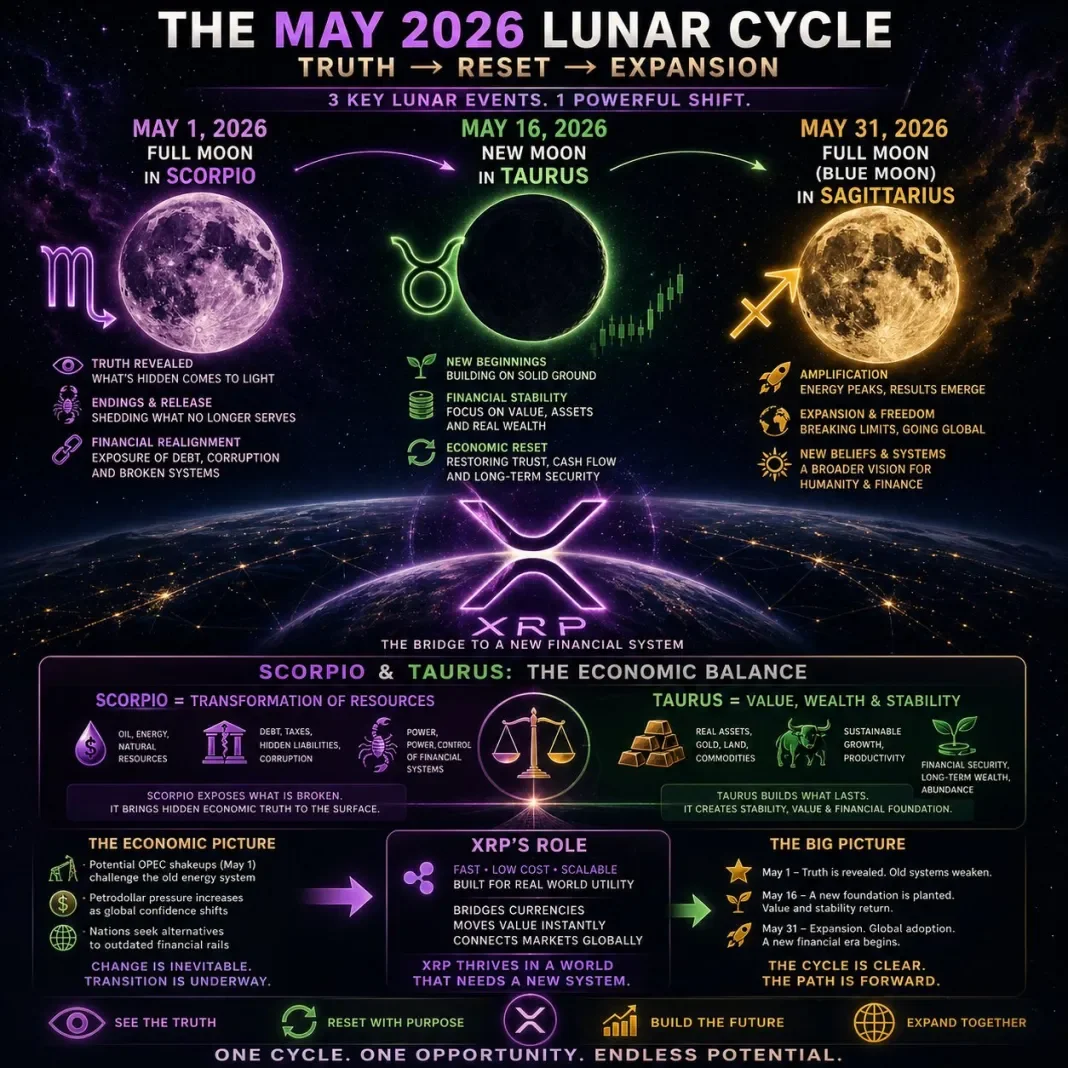
Look at this sequence of events unfolding alongside the powerful May 16 New Moon in Taurus:
May 14 — Senate Banking Committee schedules voting on the Clarity Act
May 15 — Jerome Powell’s term as FED Chair ends
Stephanie Starr: Financial Reset Timeline?
5-11-2026
FINANCIAL RESET TIMELINE?
Look at this sequence of events unfolding alongside the powerful May 16 New Moon in Taurus:
May 14 — Senate Banking Committee schedules voting on the Clarity Act
May 15 — Jerome Powell’s term as FED Chair ends
May 16 — Expected transition to pro-crypto Fed Chair Kevin Warsh begins pending Senate confirmation process
May 16 — New Moon in Taurus
Astrologically, Taurus rules:
money
banking
stability
value systems
long-term wealth building
While Scorpio (Taurus’ opposite sign) rules:
endings and rebirth…
debt
hidden systems
transformation
destruction & rebirth
exposure of truth – (UFO DISCLOSURE happened yesterday!)
Together Scorpio and Taurus create the “economic axis” Remember, we had our first FULL moon May 1st in the house of Scorpio
Now the energy shifts into Taurus:
rebuilding
financial clarity
stabilization
new monetary structures
redefining value and ownership
Whether you view astrology symbolically or spiritually, the timing is undeniably fascinating!!
A major financial bill tied to crypto regulation and “clarity”…
A transition in Federal Reserve leadership…
And a Taurus New Moon focused on security, wealth, and foundations… all converging within 48 hours.
Scorpio tears down what no longer works.
Taurus builds what comes next.
Seeds of Wisdom RV and Economics Updates Monday Afternoon 5-11-26
Good Afternoon Dinar Recaps,
Europe Faces Inflation Shock as Iran War Reshapes Monetary Policy Expectations
Energy-driven price pressures and rising bond yields are increasing fears of prolonged financial instability across the euro zone
The growing conflict involving Iran is no longer just a geopolitical crisis — it is rapidly becoming a major challenge for European central banks and financial markets
Good Afternoon Dinar Recaps,
Europe Faces Inflation Shock as Iran War Reshapes Monetary Policy Expectations
Energy-driven price pressures and rising bond yields are increasing fears of prolonged financial instability across the euro zone
The growing conflict involving Iran is no longer just a geopolitical crisis — it is rapidly becoming a major challenge for European central banks and financial markets
Overview (Key Points)
The ongoing Iran conflict is creating mounting inflation fears across Europe, forcing investors and policymakers to reassess the future direction of monetary policy within the euro zone.
Rising oil prices and instability surrounding the Strait of Hormuz have triggered sharp increases in European government bond yields, particularly in Germany and Italy.
Financial markets increasingly fear that prolonged energy disruptions could force the European Central Bank (ECB) to maintain tighter monetary policy for longer than previously expected.
The crisis highlights how geopolitical instability is becoming deeply interconnected with inflation, sovereign debt markets, and global financial stability.
Key Developments
1. Euro Zone Bond Yields Rise on Inflation Concerns
European government bond yields moved higher as investors reacted to renewed Middle East tensions and rising energy prices.
Germany’s benchmark yields climbed alongside Italian bond yields, signaling growing expectations that borrowing costs across Europe may remain elevated.
Markets increasingly believe the ECB could face pressure to prioritize inflation control over economic growth.
2. Europe’s Energy Vulnerability Remains Exposed
Despite diversification efforts in recent years, Europe remains heavily dependent on imported energy supplies tied to global oil and gas markets.
Disruptions linked to the Strait of Hormuz continue increasing concerns about:
Long-term supply insecurity
Higher transportation costs
Industrial production strain
Consumer price increases
This reinforces Europe’s vulnerability to external geopolitical shocks.
3. Oil Prices Continue Feeding Inflation Fears
Energy inflation is spreading through multiple sectors of the European economy.
Higher fuel and transportation costs are contributing to:
Rising production expenses
Consumer inflation pressures
Slower economic growth expectations
Analysts warn that prolonged energy instability could reverse recent progress made in reducing inflation across the euro zone.
4. Central Banks Face a Difficult Balancing Act
The European Central Bank now faces increasing pressure between two competing priorities:
Containing inflation
Protecting fragile economic growth
Aggressive rate hikes may help stabilize inflation expectations but could also increase stress on highly indebted European economies already facing slow growth.
5. Geopolitical Conflict Is Reshaping Global Monetary Policy
The crisis demonstrates how modern inflation is increasingly driven by:
Wars
Energy disruptions
Strategic rivalries
Supply chain instability
Central banks are no longer responding only to domestic economic conditions but also to geopolitical risks far beyond their borders.
Why It Matters
The euro zone plays a central role in the global financial system.
Persistent inflation combined with rising borrowing costs could impact:
Sovereign debt markets
Global investment flows
Banking stability
International trade confidence
The situation underscores how energy security and monetary policy are becoming increasingly intertwined.
Why It Matters to Foreign Currency Holders
Periods of inflation uncertainty often trigger:
Currency volatility
Shifts in capital flows
Changes in reserve allocation strategies
If European growth weakens while inflation remains elevated, pressure on major currencies and financial markets could intensify.
Implications for the Global Reset
Pillar 1: Energy Shocks Are Reshaping Monetary Policy
The Iran conflict highlights how energy disruptions now directly influence interest rates, inflation expectations, and sovereign debt markets.
Pillar 2: Geopolitics and Finance Are Becoming Increasingly Interconnected
Wars and strategic competition are playing a growing role in shaping global monetary decisions and financial stability.
Conclusion
The Iran war is rapidly evolving into more than a regional security crisis — it is becoming a major monetary and financial challenge for Europe and the broader global economy.
As energy volatility drives inflation fears higher, central banks may be forced into increasingly difficult policy decisions that carry long-term consequences for growth, debt markets, and financial stability.
The crisis reflects a larger transformation underway in the global economy where geopolitics, energy security, and monetary policy are now deeply interconnected.
Seeds of Wisdom Team
Newshounds News™ Exclusive
Sources
~~~~~~~~~~
Seeds of Wisdom Team RV Currency Facts Youtube and Rumble
Newshound's News Telegram Room Link
RV Facts with Proof Links Link
RV Updates Proof links - Facts Link
Follow the Gold/Silver Rate COMEX
Follow Fast Facts
Seeds of Wisdom Team™Website
Thank you Dinar Recap
Iraq Economic News and Points To Ponder Monday Afternoon 5-11-26
The Ministry Of Commerce Announces The Launch Of New Electronic Services And The Digital Linking Of Warehouses And Agents In Seven Governorates.
Money and Business Economy News – Baghdad The Ministry of Trade announced on Monday the launch of additional services as part of the electronic transformation in seven governorates, while revealing a plan to link warehouses and agents electronically.
Riyadh Al-Moussawi, Director General of the Commercial and Financial Control Department at the Ministry, said that "more than seven governorates have witnessed the launch of additional services within the electronic transformation, and work is continuing to expand these services."
The Ministry Of Commerce Announces The Launch Of New Electronic Services And The Digital Linking Of Warehouses And Agents In Seven Governorates.
Money and Business Economy News – Baghdad The Ministry of Trade announced on Monday the launch of additional services as part of the electronic transformation in seven governorates, while revealing a plan to link warehouses and agents electronically.
Riyadh Al-Moussawi, Director General of the Commercial and Financial Control Department at the Ministry, said that "more than seven governorates have witnessed the launch of additional services within the electronic transformation, and work is continuing to expand these services."
He explained that "the ministry is serious about implementing digital transformation plans and moving away from paper transactions, including the ration card and the mechanisms for serving citizens benefiting from it," indicating that "citizens will be able to complete transfer, splitting, deletion and other transactions via mobile phone."
He added that "there are plans to develop the program adopted in the Planning and Follow-up Department, which will allow us to know which citizens have received the food basket items from the agents, and which have not, as well as knowing the number of rations that have reached each agent."
He added that "the ministry is working on linking warehouses and agents electronically, while preparing a geographical map of the agents' network to know their locations accurately," noting "the trend towards equipping shops with surveillance cameras, in conjunction with the adoption of electronic payment devices." https://www.economy-news.net/content.php?id=68952
Al-Sudani's Advisor: Iraq's Revenues Are 4 Trillion Dinars And Expenditures Exceed 8 Trillion Dinars Monthly.
Money and Business Economy News – Baghdad Muzhir Muhammad Salih, advisor to Prime Minister Muhammad Shia al-Sudani, announced that Iraq’s revenues amount to about 4 trillion dinars due to the decline in oil exports, while its expenditures amount to 8 trillion dinars. To address this situation, Iraq has two options: internal and external borrowing.
Saleh said that Iraq’s public finances are going through a “sensitive phase” due to the significant drop in oil revenues, which has led to a decrease in monthly revenues to approximately 4 trillion dinars, compared to the country’s financial obligations of more than 8 trillion dinars per month.
The eight trillion includes salaries and basic operating expenses.
Muzhir Muhammad Salih pointed out that this situation creates a temporary liquidity crisis rather than a deficit that threatens the continuity of the state's ability, but the continuation of this gap for a long period will create more pressure on economic and monetary stability in Iraq.
Iraq’s oil revenues, which account for more than 84% of Iraq’s expenditures, have fallen to about 2.5 trillion dinars, which can only cover 34% of salary funds.
According to the Prime Minister's advisor, fiscal policy will follow two paths to deal with the crisis, the most important of which is the continuity of public spending, or it will follow both paths together.
The first path: Increase local financing activity through domestic borrowing and short-term loans in coordination with the central bank, which provides liquidity quickly to enable the state to meet its financial obligations. However, failure to implement this path positively will lead to increased inflationary pressures and affect the value of the dinar against the dollar.
The second path: resorting to external financing through international financial institutions, issuing bonds and borrowing from abroad, which supports the foreign reserves of the central bank, gives confidence in the financial stability of Iraq and stabilizes the value of the dinar against the dollar, but this step also has conditions and financial obligations.
The war between Iran, America and Israel led to the closure of the Strait of Hormuz since February 28, which was the main route for Iraqi oil exports, and despite the ceasefire now, there are still problems with the movement of oil tankers in the strait.
Muzhir Muhammad Salih noted that Iraq’s foreign reserves are currently less than $100 billion, which covers 12 months of imports, while the international standard for the trade capacity of foreign reserves is three months.
https://www.economy-news.net/content.php?id=68939
Parliamentary Finance Committee: Oil Revenues Cover Only A Third Of Salaries
Money and Business Economy News – Baghdad Iraqi oil revenues cover only about a third of salaries, and according to a member of the Finance Committee, Baghdad needs to borrow between four and five trillion dinars per month.
According to official statistics from the Iraqi Oil Marketing Company (SOMO), oil exports in March amounted to 18.6 million barrels.
Oil revenues for that month amounted to $1,157,121,000, equivalent to 2.5 trillion dinars at the official exchange rate of the dinar against the dollar.
The decline in Iraqi oil revenues comes at a time when the federal government needs 7.2 trillion dinars per month to secure the salaries of employees, retirees, and those covered by social welfare, including the salaries of the Kurdistan Region.
A report by the Federal Ministry of Finance on expenditures and revenues for January and February revealed that more than 84% of Iraq's expenditures depend on oil. Consequently, oil revenues cover only 34.7% of the total salaries for that month.
Borrowing approximately 4-5 trillion per month
Jamal Kojar, a member of the Finance Committee in the Iraqi Parliament, explained that "the federal government has to borrow between four and five trillion dinars per month, according to current oil revenues."
Reports from the Iraqi Ministry of Finance also showed that its debts amounted to 10.5 trillion dinars in the first three months of this year.
To address this shortfall in revenue and expenditure funds, the current caretaker government does not have a free hand to deal with it.
Jamal Kojer explained that there are several ways for the government to address this deficit, which are borrowing from government banks such as Al-Rafidain, Al-Rasheed and the Trade Bank of Iraq (TBI), where interest rates are low compared to private banks, or resorting to withdrawing the currency reserve at the Central Bank.
The Parliamentary Finance Committee Calls For The Disbursement Of Employee Salaries For The Month Of May Before Eid Al-Adha.
Money and Business Economy News – Baghdad The parliamentary finance committee confirmed that the government is able to secure the necessary liquidity to pay salaries, calling for the payment of employee salaries for the current month of May before the Eid al-Adha holiday.
Jamal Kojar, a member of the Finance Committee, told the official newspaper, as reported by “Al-Eqtisad News,” that “the salaries are secured and there is no dispute about them, and the government can distribute this month’s salaries before Eid, and there is no obstacle,” explaining that “the distribution process usually begins on the 18th of the month, and is supposed to be completed by the 25th.”
He added that “this month has a special status because of Eid al-Adha, which necessitates bringing forward the date of salary payments before the holiday, and there is a real possibility of achieving that.”
Regarding the financial situation, Koger explained that “the new government, if formed, will have three options for managing the current fiscal year. The first is to operate on a 1/12 system, which means difficulty in implementing the government program. The second option is to prepare a semi-annual budget, or to adopt a ready-made budget from the previous government if one exists, or to prepare a new budget in record time and send it to Parliament.”
He pointed out that “the third option is to enact a law similar to the food security law,” noting that “this option is the closest to being implemented given the limited time and the approaching end of the first half of the year.”
Kujer stressed that “a comprehensive budget is one that fully reflects the government program,” explaining that “resorting to temporary solutions may allow for the implementation of only parts of the program, and not its comprehensive implementation.”
Back to the Founders: Dr. Shelton on the Constitution, Gold, and the Future of the US Dollar
Back to the Founders: Dr. Shelton on the Constitution, Gold, and the Future of the US Dollar
In Gold We Trust: 5-10-2026
Gold near record highs. A weakening US dollar. An Iran crisis reshaping the global monetary conversation.
Against that backdrop, Dr. Judy Shelton shares her reflections on what a return to sound money could look like, and lays out a concrete path: a 50-year gold-backed bond, a US gold revaluation, and a quiet return to a gold-anchored system without a formal Bretton Woods II.
Back to the Founders: Dr. Shelton on the Constitution, Gold, and the Future of the US Dollar
In Gold We Trust: 5-10-2026
Gold near record highs. A weakening US dollar. An Iran crisis reshaping the global monetary conversation.
Against that backdrop, Dr. Judy Shelton shares her reflections on what a return to sound money could look like, and lays out a concrete path: a 50-year gold-backed bond, a US gold revaluation, and a quiet return to a gold-anchored system without a formal Bretton Woods II.
Watch this fascinating conversation between Dr. Shelton and Ronnie Stöferle, Managing Partner at Incrementum AG and co-author of the In Gold We Trust report, recorded on March 19, 2026.
Undoubtedly, as Dr. Shelton makes clear throughout the conversation, gold is not merely a commodity but a constitutional ideal, embedded in the original American vision of a dependable unit of account.
Drawing on Jefferson, Madison, Hamilton, and her own meetings with Secretary Bessent, she lays out a path toward what she calls a classical gold standard, take two.
More “Iraq News” Posted by Tishwash at TNT 5-11-2026
TNT:
Tishwash: The reason for postponing the vote on the cabinet today has been revealed.
Former MP Abdul Hadi Al-Saadawi revealed on Sunday the reasons for postponing the vote on the cabinet in the House of Representatives, attributing this to the failure of some political blocs to decide on their candidates for ministerial portfolios, which led to the inability to vote on the government formation today.
Al-Saadawi told Al-Furat News Agency, “It was likely that the Al-Zidi government would be given confidence today in the House of Representatives after all preparations were completed; however, the vote was postponed as a result of some political blocs not deciding on their candidates for the ministries.”
TNT:
Tishwash: The reason for postponing the vote on the cabinet today has been revealed.
Former MP Abdul Hadi Al-Saadawi revealed on Sunday the reasons for postponing the vote on the cabinet in the House of Representatives, attributing this to the failure of some political blocs to decide on their candidates for ministerial portfolios, which led to the inability to vote on the government formation today.
Al-Saadawi told Al-Furat News Agency, “It was likely that the Al-Zidi government would be given confidence today in the House of Representatives after all preparations were completed; however, the vote was postponed as a result of some political blocs not deciding on their candidates for the ministries.”
He added that "it is too early to announce the completion of the cabinet due to the existence of disagreements between the political blocs," indicating that "the absence of a fully empowered government is having a negative impact on the country."
Al-Saadawi pointed out that "there are major obstacles facing the prime minister-designate, even from within the coordination framework and the rest of the national space, which requires more consultation and effort to convince the blocs to proceed with presenting the cabinet and voting on it within the House of Representatives."
He pointed out that "Al-Zidi has a strong incentive to complete his cabinet through consultation and understanding with various political forces."
Regarding the challenges facing the new government, Al-Saadawi explained that "the first of these is the financial file," expecting "its move towards raising the exchange rate of the dinar to reduce the deficit in the 2026 budget," considering "this a difficult decision in addition to the security challenges in the region, especially the American-Iranian war and the repercussions it imposes on the country."
He concluded by saying that "the next government needs a clear economic and security vision to keep Iraq away from the region's conflicts." link
************
Tishwash: The Securities Commission grants the first license to a foreign brokerage firm to operate in Iraq.
On Sunday, the Securities Authority announced that it had granted official approval to a foreign brokerage firm to operate in the securities markets, making it the first company to receive this approval in accordance with the modern regulatory procedures adopted by the Authority.
The commission confirmed in a statement that this step comes within its ongoing efforts to regulate and develop the work environment in the Iraqi financial market and enhance transparency and efficiency in line with best international practices, and in a way that contributes to supporting investment, stimulating trading activity and attracting global expertise to the market.
She explained that the approval was granted after the company completed all the technical and regulatory requirements, ensuring the integrity of the procedures and protecting the rights of investors, as well as raising the level of institutional performance of brokerage companies operating in the market.
The statement affirmed that this approval is an important indicator of the Authority’s direction towards opening new horizons for brokerage companies, especially foreign ones, and encouraging the entry of new companies that contribute to the development of the Iraqi capital market and enhance investor confidence in it, which represents one of the Authority’s main objectives in regulating, protecting and developing the market. link
************
Tishwash: Mounting financial pressures threaten the 2026 budget.
The government faces an early challenge in preparing the 2026 budget, amid declining oil revenues and escalating financial pressures, which puts it in front of limited options between presenting an austerity budget or temporarily continuing spending according to the 1/12 rule. Meanwhile, economic experts and specialists believe that the 2026 budget will face major financial challenges due to declining revenues, which may push it to reduce spending or postpone its approval.
Budget preparation
Nermin Maarouf, a member of the Finance Committee in the previous parliamentary session, confirmed in an interview with Al-Sabah that the government, if formed soon, still has time to submit the draft budget law, noting that its approval in previous years was often delayed until May or June.
She added that the preparation of the budget in Iraq traditionally relies on simple items based on the allocations of the previous year, but she pointed out that there is no legal basis that allows for continued spending according to the (1/12) rule for two consecutive years in the absence of a budget.
Compound impact
For his part, crisis management expert Ali Al-Fariji believes that the 2026 budget is no longer just a matter of timing, but a test of the state’s ability to deal with a “compound shock” that includes a decline in oil revenues and export disruptions as a result of regional tensions, in addition to the continued rise in operational spending within an economy that is almost entirely dependent on oil.
Al-Fariji explained in an interview with “Al-Sabah” that preparing a budget in the near term seems unlikely, due to the absence of stable assumptions related to oil prices and export levels, which suggests that the (1/12) rule will continue to be used temporarily until the financial vision becomes clear.
Dependence on oil
He added that the main challenges are structural in nature, most notably the dependence of revenues on oil by nearly 90%, the high operating expenses which account for more than 70% of total spending, as well as cash pressures and weak efficiency of investment spending.
Oil revenues
In the same context, economist Jalil Al-Lami confirmed in an interview with Al-Sabah that the option of submitting a full federal budget seems difficult in the short term, suggesting that the (1/12) rule will continue to be used temporarily, especially with the clear decline in oil revenues.
Al-Lami pointed out that Iraq used to rely on oil exports of around 3.5 million barrels per day with monthly revenues ranging between 7 and 9 billion dollars, before they decreased to about 2 billion dollars or less at some times, while the country needs at least 8 to 10 billion dollars per month to cover operating expenses, creating a financial gap that may reach 6 billion dollars per month.
Austerity budget
Al-Lami predicted that if the budget is prepared, it will be an austerity budget, based on an oil price between $60 and $65 per barrel, with a total size between 130 and 150 trillion dinars, and an expected deficit between 20 and 30 trillion dinars, which is subject to increase depending on
Regarding developments in the oil market.
He added that the anticipated budget will not include an expansion in appointments or the launch of new projects, but will focus on completing existing projects and securing basic expenditures, with the possibility of resorting to internal borrowing or drawing from the cash reserve in the event that the crisis continues.
Temporary disbursement
He pointed out that “estimates indicate that the 2026 budget will either be a deferred budget managed through temporary spending, or an austerity budget focused on containing the crisis, at a time when the Iraqi economy is facing a real test to readjust the spending model and avoid slipping.”
Towards a liquidity crisis in the near term.
The parliamentary finance committee expressed its position on borrowing from the central bank to finance domestic expenditures, noting that this issue is linked to the formation of the government.
Borrowing proposal
Committee member Ribwar Karim told the Iraqi News Agency, as reported by Al-Sabah newspaper, that "the proposal to borrow from the Central Bank to finance domestic expenditures is on hold."
On forming the government.
He added that "there is a conviction among the political parties and blocs that there are serious attempts to appoint the next prime minister As soon as possible.
He explained that “if a government is formed, there will be no need to borrow, as a fully empowered government will begin its duties,” noting that “borrowing from the Central Bank is merely an opinion put forward by some members of parliament.”
He stated that “this proposal is primarily linked to the formation of the government, and if that happens, there will be no need for this proposal.” link
Tishwash: An Iraqi committee is exploring mechanisms for disarming factions amid escalating US pressure.
The Asharq Al-Awsat newspaper, quoting Iraqi political sources, revealed the formation of a high-level Iraqi committee tasked with preparing an executive project for disarming armed factions, in preparation for presenting it to American officials in the coming days, amid escalating American pressure on Baghdad regarding the issue of weapons and Iranian influence within Iraq.
According to the sources, the committee held unannounced meetings during the past period with leaders of armed factions to discuss mechanisms for disarmament and reintegration of some elements into the civilian and security state institutions, but some of those meetings witnessed tension and objections from parties that refuse to give up their weapons.
The information indicated that the committee is operating under a mandate from forces within the coordination framework, at a time when political warnings are increasing that the anticipated government headed by Prime Minister-designate Ali Faleh Kazem al-Zaidi may face major challenges in implementing reforms related to the issue of weapons and financial resources, which Washington accuses some Iraqi parties of smuggling to Iran.
According to the report, the US administration has shown support for al-Zaidi since his appointment, but it links the continuation of this support to making tangible changes related to reducing the influence of armed factions within Iraqi state institutions.
The newspaper also quoted officials and political sources as saying that the proposed project includes the disarmament of heavy and medium weapons and the restructuring of some formations of the Popular Mobilization Forces, amid doubts about the ability of the next government to actually implement these steps, with the likelihood that some of the current moves are an attempt to absorb American pressure and buy time.
In contrast, sources representing a number of armed factions confirmed their refusal to hand over weapons, believing that American pressure would not push them to back down from their positions or change the existing power equations.
In parallel, an informed source revealed an agreement between forces within the coordination framework and the prime minister-designate to form a special committee to restrict weapons to the state, which includes, in addition to al-Zaydi, Prime Minister Mohammed Shia al-Sudani, and the head of the Badr Organization, Hadi al-Amiri.
The source explained that the committee will develop practical mechanisms to regulate the weapons file and reintegrate some elements of the factions into civilian or security institutions, in line with the requirements of the current stage and the political and security challenges facing the country. link