Some “Iraq News” Posted by Tishwash at TNT 5-3-2026
TNT:
Tishwash: Economist: Federal Reserve transfers boost central bank reserves and support exchange rate stability
Economic expert Salah Nouri said on Sunday that the arrival of installments of Iraqi funds from the US Federal Reserve directly impacts cash liquidity and the Central Bank's reserves, noting the effect of this on the stability of the exchange rate.
Nouri told Al-Furat News Agency that "the arrival of a batch of Iraqi funds from the US Federal Reserve enhances the cash liquidity of the Ministry of Finance, as the ministry sells dollars to the Central Bank of Iraq."
TNT:
Tishwash: Economist: Federal Reserve transfers boost central bank reserves and support exchange rate stability
Economic expert Salah Nouri said on Sunday that the arrival of installments of Iraqi funds from the US Federal Reserve directly impacts cash liquidity and the Central Bank's reserves, noting the effect of this on the stability of the exchange rate.
Nouri told Al-Furat News Agency that "the arrival of a batch of Iraqi funds from the US Federal Reserve enhances the cash liquidity of the Ministry of Finance, as the ministry sells dollars to the Central Bank of Iraq."
He added that “the Central Bank’s receipt of quantities of dollars strengthens its foreign reserves, which increases its ability to provide dollars for travel purposes, especially for pilgrims, medical treatment and studying abroad, in addition to meeting the needs of traders through external transfers,” indicating that “this contributes to reducing the demand for dollars in the parallel market, which may lead to a decrease in the exchange rate.”
He noted that "the aforementioned exchange operations depend on the size of the amounts transferred from the US Federal Reserve." link
Tishwash: Faihan: The oil and gas law and the Popular Mobilization Forces law are among the priorities of the House of Representatives.
The First Deputy Speaker of Parliament, Adnan Faihan Al-Dulaimi, confirmed on Sunday that many important laws are on the parliament's table, while indicating that the oil and gas law and the Popular Mobilization Forces law are among the priorities of the House of Representatives' work.
Faihan told the Iraqi News Agency (INA): “After the parliamentary committees within the House of Representatives completed their work, they began studying the laws and submitting them to the Speaker of the House of Representatives,” adding that “the committees started with a package of laws that were presented for the first reading, and we have another package of laws that will be presented gradually on the agenda according to their importance.”
He continued, "There are several important laws that will be among the priorities of the political forces and the federal government to include on the council's agenda," adding that "the oil and gas law and the Popular Mobilization Forces law will be among the priorities of the House of Representatives." link
************
Tishwash: Ali al-Zaidi: We will form a government with a strong economy, with everyone's participation.
Prime Minister-designate Ali al-Zaidi confirmed on Saturday (May 2, 2026), during his visit to Sulaymaniyah Governorate, that he enjoys "great acceptance" among the political forces in the region, noting that the Kurdish parties have shown their clear support for the formation of the new government.
Al-Zaydi said in a press statement followed by “Baghdad Today”, that “the anticipated government will have a strong economy and be able to face the challenges”, noting that “there is great acceptance from the Kurdish parties supporting our government, in which everyone will participate.”
Prime Minister-designate Ali Faleh al-Zaidi met with Kurdistan Regional Government Prime Minister Masrour Barzani during his visit to Erbil, which he arrived in on Saturday morning, accompanied by a delegation of leaders from the Coordination Framework.
Al-Zaydi also met with the President of the Kurdistan Democratic Party, Masoud Barzani, in Erbil, in the presence of a delegation from the Coordination Framework. The meeting addressed the overall situation in the country and the course of the ongoing dialogues to form the government.
In the same context, Al-Zaidi held a meeting with the President of the Kurdistan Region, Nechirvan Barzani, during which they discussed the latest political developments in the country, before concluding his tour in Sulaymaniyah with a meeting with the President of the Patriotic Union of Kurdistan, Bafel Talabani, to discuss efforts to form the new government. link
************
Tishwash: Next week is crucial for passing Al-Zaidi's government, even with a simple majority, and there is optimism about its economic success
MP Murtadha al-Ibrahimi stated that he believes the government will proceed next week, even if it only secures a simple majority (half plus one) with the current 23 ministries.
Speaking to Al-Mirbad during his appearance on the "Al-Mutabi" program, al-Ibrahimi said that al-Zidi was the Coordination Framework's choice as a compromise candidate and received unanimous support. This, he explained, gives him national momentum, followed by international endorsements, which he sees as a positive indicator for his government.
Al-Ibrahimi predicted that al-Zidi will succeed in managing the country and is capable of leading the next phase, which he believes will be primarily economic.
Regarding his approach to dealing with factions and consolidating weapons under state control, al-Ibrahimi acknowledged the challenges of the internal situation. However, he believes that with the cooperation of all political forces, in coordination with international and regional actors, and considering the shared interests that bind Iraq to other countries in the region, there are all indicators pointing towards the success of al-Zidi's government. He added that the ministerial program currently being drafted will be the effective solution for addressing the Iraqi situation.
Al-Ibrahimi further stated that, to date, the distribution of ministries has not been discussed as much as the process of establishing a mechanism or criteria for allocating sovereign and other ministries based on electoral merit and parliamentary representation.
He indicated that they are optimistic about the government of Ali Faleh al-Zaidi amidst all the internal, regional and international welcome, and this requires support to make his government a success so that he and his cabinet can reach the shore of safety with the Iraqi people, according to al-Ibrahimi’s expression. link
Tishwash: The Prime Minister-designate arrives in Kurdistan accompanied by a delegation from the Coordination Framework
Baghdad/Al-Masalla: Prime Minister-designate Ali Faleh Al-Zaidi arrived in the Kurdistan Region on Saturday, accompanied by a delegation from the Coordination Framework.
The media office of the Prime Minister said in a statement received by Al-Masalla that the Prime Minister-designate, Ali Falih al-Zaidi, arrived in the Kurdistan Region of Iraq, accompanied by a delegation from the coordination framework. link
***************
Tishwash: The Prime Minister-designate: We have gained the acceptance and support of the Kurdish parties.
Prime Minister-designate Ali Faleh al-Zaidi and the head of the National Position Movement, Ali Hama Saleh, stressed on Saturday the importance of unifying visions and positions and prioritizing the national interest.
The Prime Minister’s Media Office stated in a statement received by Al-Maalomah that “Prime Minister-designate Ali Falih Al-Zaidi met with the head of the National Position Movement, Ali Hama Salih, during his visit to Sulaymaniyah Governorate, noting the acceptance of the Kurdish parties and their support for the new government.”
The statement added that "the meeting reviewed the developments in the general situation in the country and the steps taken to form the new government, in addition to emphasizing the importance of unifying visions and positions and prioritizing the national interest, in order to proceed with forming a government capable of facing challenges, consolidating stability, and fulfilling the aspirations of the Iraqi people." link
News, Rumors and Opinions Sunday 5-3-2026
KTFA:
Clare: Baghdad receives a new shipment of "cash dollars"... and an expert predicts an improvement in the value of the dinar.
5/2/2026
Iraqi economist Nabil Al-Marsoumi confirmed on Saturday that a new shipment of cash dollars had arrived in Baghdad, as part of what he described as American support related to the next phase and the formation of the government.
Al-Marsoumi said in a Facebook post that "Iraq receives about one billion dollars monthly, distributed in two cash installments," noting that the shipment that arrived yesterday comes within this ongoing financial context.
KTFA:
Clare: Baghdad receives a new shipment of "cash dollars"... and an expert predicts an improvement in the value of the dinar.
5/2/2026
Iraqi economist Nabil Al-Marsoumi confirmed on Saturday that a new shipment of cash dollars had arrived in Baghdad, as part of what he described as American support related to the next phase and the formation of the government.
Al-Marsoumi said in a Facebook post that "Iraq receives about one billion dollars monthly, distributed in two cash installments," noting that the shipment that arrived yesterday comes within this ongoing financial context.
He added that "the arrival of this dollar liquidity would contribute to improving the exchange rate of the Iraqi dinar during the coming week."
Injecting dollars into the markets enhances monetary stability and limits fluctuations in the exchange rate against the Iraqi dinar, especially with the recent increase in demand for foreign currency.
The United States has been transferring funds in amounts ranging from $400 million to $500 million at a time to Baghdad for many years, and these payments are linked to Iraqi oil sales.
Last April, the United States suspended dollar shipments to Baghdad, due to what American reports at the time described as an escalation of attacks by Iranian-backed militias on American interests. LINK
************
Tishwash: An economic expert told Nina: The return of cash dollar shipments will weaken the parallel market.
5/2/2026 Baghdad/
Economic expert Dirgham Muhammad Ali affirmed that the resumption of cash dollar shipments will weaken the parallel market.
In a statement to the Iraqi National News Agency ( NINA ), Muhammad Ali said, "The availability of cash dollars will weaken the parallel market, especially given its release to pilgrims and travelers to countries permitted to receive cash dollars." He explained that "the reassuring policy adopted by the Central Bank maintained market stability during the period of disruption."
He pointed out that "the decline in Iraq's foreign trade with several countries for various reasons has reduced the direct demand for dollars, and the implementation of the ASYCUDA system has curbed currency smuggling, creating a surplus at the Central Bank to fully finance and cover legitimate official imports at the official rate, while ensuring that dollars are not smuggled illegally."
The economic expert called for "adopting the ETHMS global accounting system for monitoring government expenditures and revenues and clearing accounts to increase the efficiency of the financial system in Iraq."
Iraq received a new shipment of dollars yesterday, Friday, as part of US support related to the upcoming phase and the formation of the government.
The United States transfers funds With sums ranging from $400 million to $500 million each time, the US has been sending payments to Baghdad for many years, tied to Iraqi oil sales.
The United States suspended these dollar shipments to Iraq last April, in what it described as a "temporary" measure.
US President Donald Trump announced yesterday, Friday, that he strongly supports Prime Minister-designate Ali al-Zaidi, and that al-Zaidi won with US assistance LINK
************
Courtesy of Dinar Guru: https://www.dinarguru.com/
Frank26 I am in love with everything I'm seeing. We're talking about the formation of your government to the announcement of your new prime minister. This is wonderful. I also like the speed of what I'm seeing on many things that are related to the monetary reform. I am now curious to see if Alaq is going to stick around or be removed...
JeffNotice how as they're getting close to forming the government they're talking about the banking reforms and a digital transformation? Hmmmm. Along with the '26 budget? Hmmmm. Yeah, because the formation of the government is a lynch pin to all of that including the rate change which is next after the formation...
Militia Man Article: "President Trump personally called Prime Minister designate Zaidi to congratulate him." He extended an official invitation to him once the new government is formed...This is a good indicator coming from the United States, all the way to the top, after weeks of applying pressure to encourage a functioning government. Washington is now shifting towards engagement and support of Iraq. It gives Zaidi early legitimacy and helps reduce short-term external friction during the transition. I think he's got a lot.
Trump’s Cryptic Message on Iraq’s New PM
Dinar For Dummies: 5-2-2026
In his remarks, President Trump expressed strong support for the new Iraqi leader, notably highlighting that the United States played a significant role in facilitating his rise to the position.
For those following the Iraqi dinar, there is a distinct sense of optimism surrounding these developments. The new Prime Minister has already begun actively engaging with Iraqi financial institutions, a move that many interpret as a clear signal toward long-awaited economic reform. This proactive leadership is seen as a positive indicator for the nation’s financial stability and growth potential.
Seeds of Wisdom RV and Economics Updates Sunday Morning 5-3-26
Good Morning Dinar Recaps,
Inflation Surge Returns: Energy Shock and Central Bank Divide Signal Global System Strain
Rising oil prices and persistent inflation are forcing central banks into conflicting strategies, increasing pressure on the global financial system
Good Morning Dinar Recaps,
Inflation Surge Returns: Energy Shock and Central Bank Divide Signal Global System Strain
Rising oil prices and persistent inflation are forcing central banks into conflicting strategies, increasing pressure on the global financial system
OVERVIEW (KEY POINTS)
Global markets are facing a renewed wave of instability as inflation accelerates again, driven largely by surging energy prices tied to ongoing geopolitical conflict.
This is happening now because oil shocks are feeding directly into consumer prices, while central banks struggle to determine whether to tighten policy further or protect slowing economic growth.
Key players include the U.S. Federal Reserve, European Central Bank, and other global institutions now navigating a deepening policy divide amid rising inflation risks.
The broader implication is clear: persistent inflation combined with policy fragmentation is increasing systemic stress and signaling deeper structural shifts in the global financial system.
KEY DEVELOPMENTS
1. Inflation Data Comes in Stronger Than Expected
Price pressures are reaccelerating.
U.S. inflation running near 3.5%, above target
Inflation spreading beyond energy into core sectors
2. Oil Shock Drives Second-Wave Inflation
Energy is feeding broader cost increases.
Rising oil impacting manufacturing, packaging, and transport costs
Secondary price increases expected across consumer goods and services
3. Central Banks Face Growing Policy Divide
Monetary strategy is fragmenting.
Some central banks signaling rate hikes to control inflation
Others hesitating due to growth slowdown risks
4. Stagflation Risks Begin to Emerge
Growth and inflation are moving in opposite directions.
Economies facing slower growth with rising prices
Central banks caught between inflation control and economic stability
5. Global Economies Feel Uneven Impact
Pressure is spreading unevenly across regions.
Emerging economies experiencing higher inflation spikes
Advanced economies showing resilience but rising risk exposure
WHY IT MATTERS
This moment highlights a critical shift: inflation is no longer easing as expected and is becoming structurally embedded again.
Markets are reacting with increased volatility as investors reassess expectations for interest rates, growth, and asset valuations.
For policymakers, the challenge is intensifying—raising rates risks slowing economies further, while holding back allows inflation to persist and spread.
At the system level, this signals a move toward a more fragmented and less predictable global financial environment.
WHY IT MATTERS TO FOREIGN CURRENCY HOLDERS
Purchasing power declines as inflation rises globally
Currency volatility increases due to policy divergence
Stronger dollar pressures weaker currencies
Higher import costs strain local economies
IMPLICATIONS FOR THE GLOBAL RESET
Pillar 1: Inflation Restructures Monetary Policy
Persistent inflation is forcing central banks to abandon synchronized easing and adopt divergent strategies, increasing systemic instability.
Pillar 2: Energy Markets Drive Financial Realignment
Energy shocks are reshaping global pricing systems, trade flows, and economic policy frameworks, accelerating structural change.
CONCLUSION
The return of strong inflation, combined with rising energy costs, marks a critical inflection point for the global financial system.
As central banks diverge and economic pressures build, the system is becoming more sensitive to shocks and less coordinated in response.
This is not a temporary disruption—it reflects a deeper transformation in how global finance responds to inflation, energy, and geopolitical risk.
When inflation returns and policy divides widen, the foundation of the global financial system begins to shift.
Seeds of Wisdom Team
Newshounds News™ Exclusive
Sources
Reuters — "Recent inflation data was ‘bad news,’ Fed’s Goolsbee says"
Business Insider — "Second wave of inflation from Iran war expected to hit consumers"
~~~~~~~~~~
🌱 A Message to Our Currency Holders🌱
If you’ve been holding foreign currency for many years, you were not foolish.
You were not wrong to believe the global financial system would change.
What failed was not your patience — it was the information you were given.
For years, dates, rumors, and personalities replaced facts, structure, and proof. “This week” predictions created cycles of hope and disappointment that were never based on how currencies actually change.
That is not your failure.
Our mission here is different: • No dates • No rates • No hype • No gurus
Instead, we focus on:
• Verifiable developments • Institutional evidence
• Global financial structure • Where countries actually sit in the process
Currency value changes only come after sovereignty, trade, banking, settlement systems, and fiscal coordination are in place. History and institutions confirm this sequence.
You will see silence. You will see denials. That is not delay — that is discipline.
Protect your identity. Organize your documents. Verify everything.
Never hand your discernment to anyone who cannot show proof.
You deserve truth — not timelines.
Seeds of Wisdom Team
Newshounds News
~~~~~~~~~~
Seeds of Wisdom Team RV Currency Facts Youtube and Rumble
Newshound's News Telegram Room Link
RV Facts with Proof Links Link
RV Updates Proof links - Facts Link
Follow the Gold/Silver Rate COMEX
Follow Fast Facts
Seeds of Wisdom Team™Website
Thank you Dinar Recaps
The Last Time America Hit 100% Debt-to-GDP, A Golden Age Followed
The Last Time America Hit 100% Debt-to-GDP, A Golden Age Followed
Notes From the Field By James Hickman (Simon Black / Sovereign Man) April 30, 2026
In the spring of 1946, hundreds of thousands of American soldiers were coming home from Europe and the Pacific, maimed, bruised, and shell-shocked. The economy they returned to was upside down.
Detroit was making tanks, not automobiles. Factories were making bullets, not baby carriages. Food was rationed. Fuel was scarce. And, overall, life in America had been bleak for the better part of two decades. The Great Depression gave way to a stretch of war that led many Americans to fear that their kids would soon be speaking German and goose-stepping with the Hitler Youth.
The Last Time America Hit 100% Debt-to-GDP, A Golden Age Followed
Notes From the Field By James Hickman (Simon Black / Sovereign Man) April 30, 2026
In the spring of 1946, hundreds of thousands of American soldiers were coming home from Europe and the Pacific, maimed, bruised, and shell-shocked. The economy they returned to was upside down.
Detroit was making tanks, not automobiles. Factories were making bullets, not baby carriages. Food was rationed. Fuel was scarce. And, overall, life in America had been bleak for the better part of two decades. The Great Depression gave way to a stretch of war that led many Americans to fear that their kids would soon be speaking German and goose-stepping with the Hitler Youth.
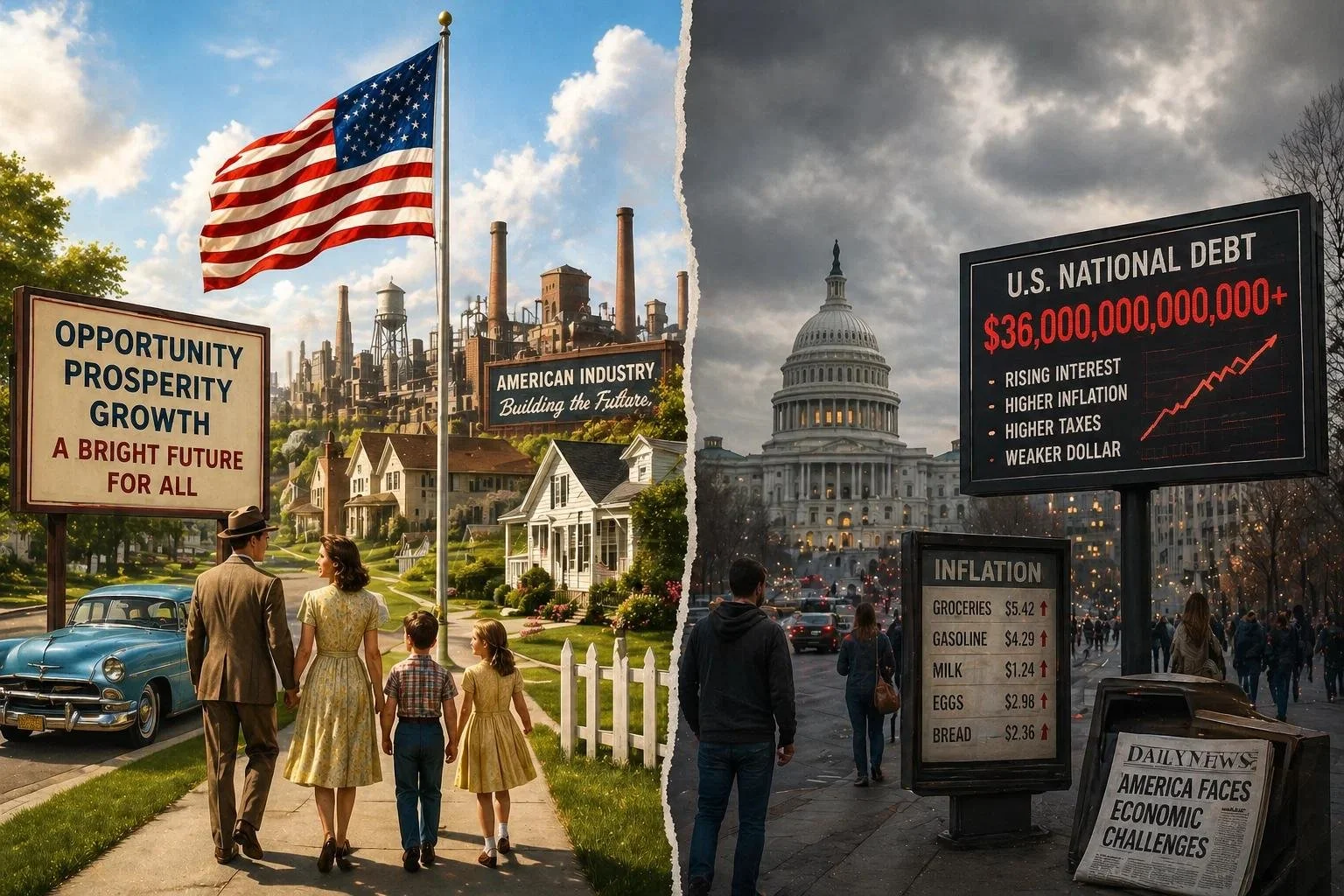
Government finances were equally bleak. Between all of the massive public works programs of the Great Depression and eye-popping costs of World War II, the US national debt topped 100% of GDP by the mid-1940s.
And yet that moment was the beginning of a new Golden Age.
Think about the world at the time: Britain was bankrupt. Germany and Japan had been turned to rubble. And the Soviets had won their part of the war by feeding twenty million bodies into the meat grinder.
America came out the other side with full manufacturing capacity intact, the dollar enthroned as the world's reserve currency, and virtually no economic competition anywhere.
What followed was two decades of suburb-building, highway-laying, automobile-making, and semiconductor-launching prosperity. There were bumps along the way, but on balance the economic trajectory of America was up and to the right.
Consequently, the US national debt started falling. And it’s easy to understand why. By 1946 there was no more war, no more depression.
The United States had just spent four years consuming every available resource to defeat the Nazis. But once the war ended, military spending (and hence the budget deficit) dropped like a rock. Congress started to run budget surpluses and used them to pay down the debt.
Over the next three decades, America’s debt-to-GDP ratio fell from 106% in 1946 to just 23% by the mid-1970s.
This week, fresh data from the Bureau of Economic Analysis confirmed that America's debt-to-GDP ratio has officially crossed 100% once again.
One caveat: this number is based on what the government calls "debt held by the public"; it conveniently leaves out the trillions of dollars that Washington “owes itself”, including Social Security trust fund IOUs, federal pension obligations, and other intragovernmental holdings.
Well, that money has to be repaid too. Pretending otherwise might make the debt appear smaller. But a broader, most honest measure of the debt right now is actually 130% of GDP, well beyond the WWII record.
But fine, we’ll use the government’s official number of 100%, which is just announced this morning.
Yes, America has been here before. 100% is not unprecedented. But there is a major difference.
Back in 1946, the debt was at 100% of GDP because the US had just defeated the Nazis. The debt binge ended when the war ended.
In 2026, the United States is not fighting Hitler. There is no once-in-a-century pandemic. There is no specific crisis that, once over, will allow Congress to bring spending back into line.
Rather, the debt is so high because the debt is so high.
Interest on the federal debt is over $1 trillion per year. That’s a huge chunk of tax revenue. The rest of America’s tax revenue is consumed by mandatory entitlements like Social Security and Medicare.
Literally everything else, including the military, roads, and light bill at the White House, are funded with more debt.
So in other words, the deficit is structural and permanent. It will be there no matter how much Congress cuts... if they were even interested in fiscal reform.
And yet Congress shows no interest in spending cuts. Even when the most rampant and obvious fraud is presented with a bow on it, Congress does nothing.
Even worse— people who actually try to stop the fraud get publicly crucified, arrested, or sued.
In 1946, the political momentum of the United States focused on growth, productivity, and fiscal discipline. In 2026, all of it points the other way.
And the dollar's status as the world's reserve currency— a major advantage that helped pay down the postwar debt— is also slipping.
Foreign central banks have been quietly selling US Treasuries and buying physical gold at the fastest pace in modern history. Since the start of the year, they have unloaded tens of billions of dollars worth of US government bonds, and the interest rate on Treasurys have climbed in response.
That shows how foreign confidence draining out of the dollar in real time.
Now, none of this means the world is ending.
We are not pessimistic people. Humanity's best days are still ahead. The technological advances now arriving in robotics, artificial intelligence, nuclear power, and biotech are not incremental upgrades; they are giant leaps for mankind.
Civilization will improve, productivity will rise, and the economic problems will sort themselves out.
But getting there requires persevering through the next several years of challenges... during which time we expect the average American to see a lower standard of living driven by higher taxes, persistent inflation, and a regulatory burden that gets heavier by the day.
Of the three, inflation looks the most baked in. Foreign governments are abandoning the dollar at a rapid pace, so the Federal Reserve will almost certainly step in to ‘print money’ and bail out the Treasury.
The impact will be more inflation.
This is why we continue to write that real assets are the right place to be. In difficult and conflict-prone times, the basics like food, water, energy, critical industrial metals, and productive technology become the world's most valuable resources. They hold their value regardless of which currency happens to be in fashion, or how high inflation goes.
And the key point is that, right now, many of the best real asset producers— which have huge upside ahead— are trading at absurd discounts. So it’s a great time to consider this strategy.
To your freedom, James Hickman Co-Founder, Schiff Sovereign LLC
Freedom Fighter: Attention to those Holding Foreign Currencies
Freedom Fighter: Attention to those Holding Foreign Currencies
5-1-2026
Attention: Global Currencies (IQD, VND, VES)
Today, May 1st — it’s OFFICIAL.
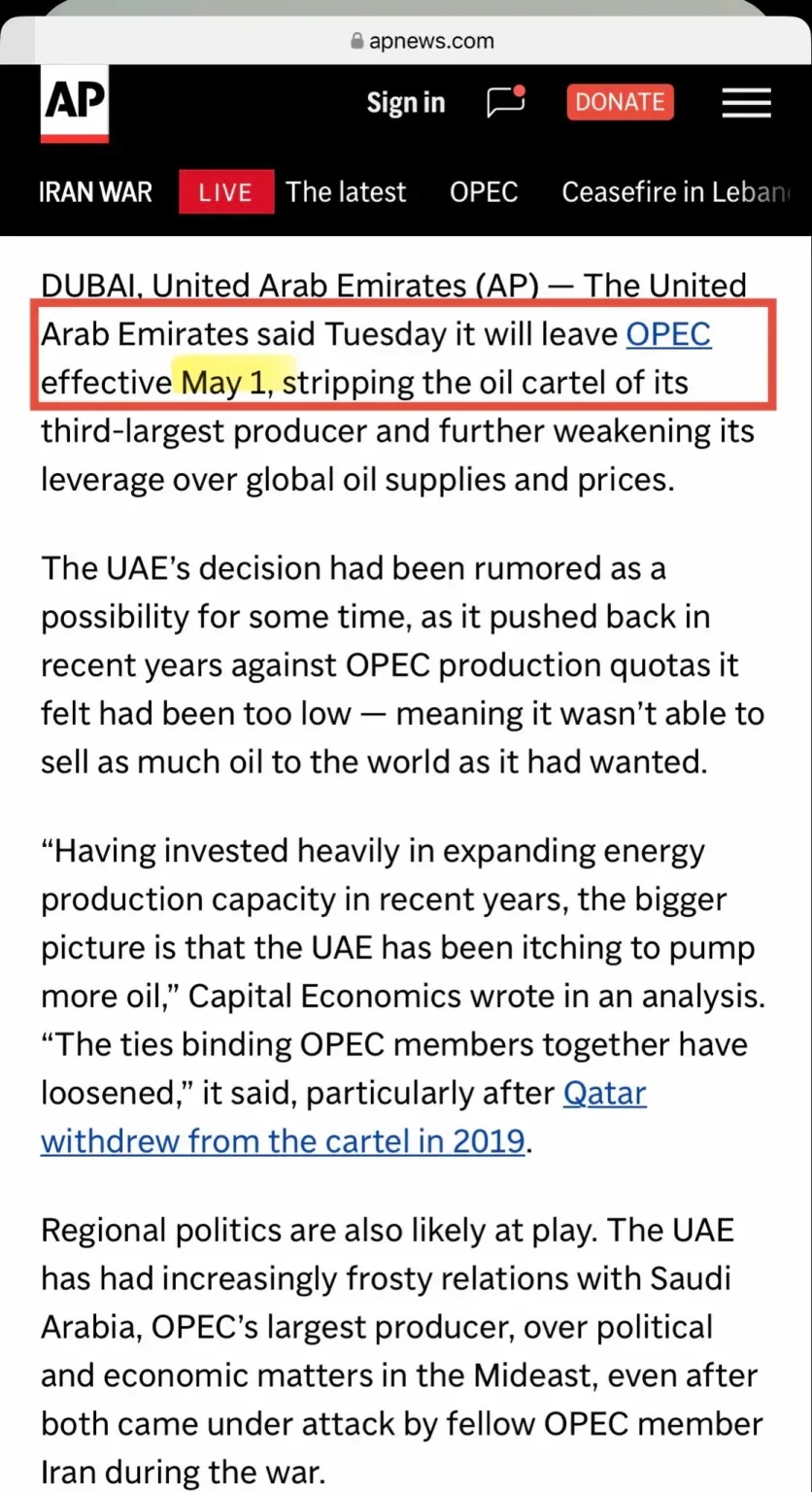
The UAE has officially LEFT OPEC to take full control of its oil production and sales.
Iraq (Dinar), Iran, Venezuela (Bolívar), and other oil-rich nations are directly tied to these changes—because their CURRENCIES are connected to oil production and global oil flows.
Freedom Fighter: Attention to those Holding Foreign Currencies
5-1-2026
Attention: Global Currencies (IQD, VND, VES)
Today, May 1st — it’s OFFICIAL.
The UAE has officially LEFT OPEC to take full control of its oil production and sales.
Iraq (Dinar), Iran, Venezuela (Bolívar), and other oil-rich nations are directly tied to these changes—because their CURRENCIES are connected to oil production and global oil flows.
Oil flows are shifting in real time.
And when oil flows shift… currencies follow.
Less centralized control → more independent oil sales → changing demand for currencies tied to those exports
This is how CURRENCIES move.
Receipts:
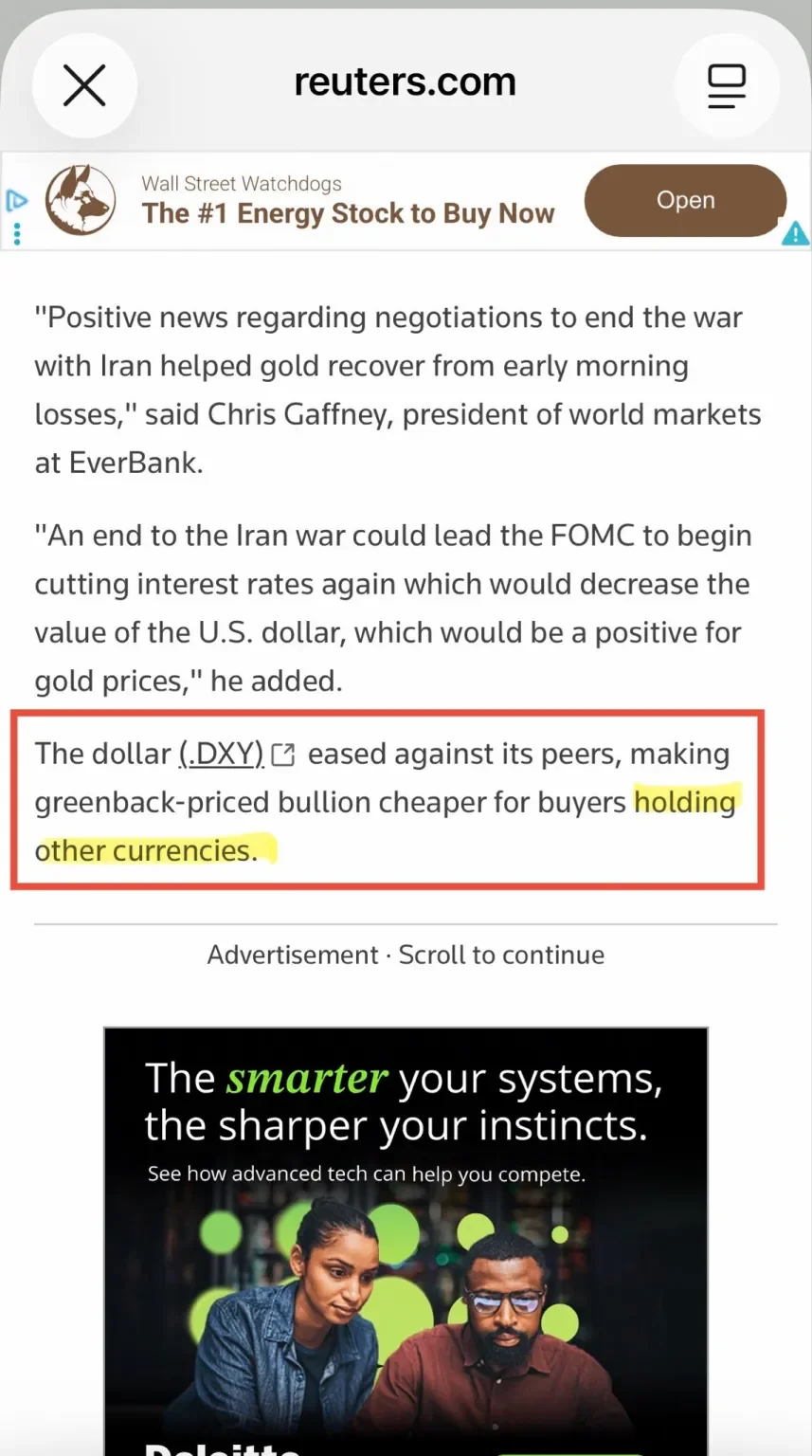
The U.S. Dollar is weakening now — and that shift is increasing the value and buying power of those holding other CURRENCIES
This is happening in real time.
Watch closely:
• Vietnamese Dong (VND) — emerging market demand strengthens
• Venezuelan Bolívar (VES) — benefits from global liquidity shifts
• Iraqi Dinar (IQD) — tied to oil flows and cross-border movement
• Japanese Yen (JPY) — rising as capital rotates
This is the pattern:
When the USD weakens → other currencies gain strength
When other currencies gain strength → holders of those currencies gain advantage
Source: Just released by Reuters.
Receipts:
Why the Fed Regards Gold as an 'Existential Threat' - James Grant
Why the Fed Regards Gold as an 'Existential Threat' - James Grant
Kitco News: 5-2-2026
As the U.S. debt hits 100% of GDP and the 30-year Treasury yield nears the 5% mark, the bond market is finally forcing Washington’s hand.
In this deep-dive interview, James Grant, founder of Grant’s Interest Rate Observer, joins Jeremy Szafron to discuss why the Federal Reserve now regards gold as an "existential threat" to its discretionary power.
Why the Fed Regards Gold as an 'Existential Threat' - James Grant
Kitco News: 5-2-2026
As the U.S. debt hits 100% of GDP and the 30-year Treasury yield nears the 5% mark, the bond market is finally forcing Washington’s hand.
In this deep-dive interview, James Grant, founder of Grant’s Interest Rate Observer, joins Jeremy Szafron to discuss why the Federal Reserve now regards gold as an "existential threat" to its discretionary power.
Grant warns that the current era of "Fiscal Dominance" means the Treasury’s interest bill is increasingly limiting what monetary policy can actually achieve.
We explore the hidden "time bomb" in the $30 trillion private credit market, where stripped-away covenants and opaque "marks" have created a cycle that Grant believes must end in a "gale of fear".
From the AI CapEx bubble to the 91-year debasement of the dollar, this is a masterclass in credit discipline and monetary history.
00:00 Inflation Meets Bonds: The 5% Warning
00:54 Fiscal Dominance: Is the Treasury Running the Fed?
03:29 The Private Credit Time Bomb
04:05 Insurance Risk: Private Equity’s New Play
07:24 The Erosion of Covenants and Opaque Marks
10:18 LMEs: The "Extend and Pretend" Peak
12:38 The AI CapEx Bubble: Bubble vs. Use Case
17:02 Tech Cycles: Lessons from Railroads & Fiber Optics
19:44 Dollar Liquidity and the Fed’s Next Trap
24:18 The 91-Year Debasement Trade: Gold $4,500
28:55 Silver: Industrial Demand vs. Monetary Value
42:39 Why the Fed Hates Gold: The Hard Limit
Seeds of Wisdom RV and Economics Updates Saturday Afternoon 5-2-26
Good Afternoon Dinar Recaps,
Hormuz Shock Escalates: Oil Spike and Sanctions Threats Push Global System Toward Breaking Point
Severe disruption in the world’s most critical النفط corridor is driving energy prices higher and forcing financial systems into a new phase of instability
Good Afternoon Dinar Recaps,
Hormuz Shock Escalates: Oil Spike and Sanctions Threats Push Global System Toward Breaking Point
Severe disruption in the world’s most critical النفط corridor is driving energy prices higher and forcing financial systems into a new phase of instability
OVERVIEW (KEY POINTS)
Global markets are under mounting stress as the Strait of Hormuz crisis deepens, with both military tension and financial restrictions tightening simultaneously.
This is happening now because oil flows through one of the world’s most critical chokepoints have been severely disrupted, while new U.S. warnings on sanctions are complicating global shipping operations.
Key players include the United States, Iran, OPEC+, global shipping firms, and central banks now reacting to rapidly rising oil prices and supply uncertainty.
The broader implication is clear: energy supply disruption combined with financial enforcement mechanisms is accelerating systemic strain across the global economy.
KEY DEVELOPMENTS
1. Oil Prices Surge to Multi-Year Highs
Energy markets are under extreme pressure.
Crude prices have surged above $120–$125 per barrel amid supply disruptions
Analysts warn of potential fuel shortages and inflation spikes
2. Strait of Hormuz Effectively Disrupted
Critical global supply route is constrained.
Roughly 20% of global oil flows through the strait
Shipping traffic significantly reduced due to conflict and security risks
3. U.S. Threatens Sanctions on Shipping Firms
Financial pressure is escalating.
Companies warned against paying Iranian transit fees
Violations could trigger sanctions enforcement and penalties
4. OPEC+ Faces Supply Constraints Despite Planned Increases
Production policy meets reality.
OPEC+ signaling output increases, but physical supply remains limited
Export constraints preventing meaningful market relief
5. Central Banks Confront New Inflation Shock
The policy environment is tightening again.
Rising oil prices feeding into global inflation expectations
Increasing difficulty balancing growth vs. price stability
WHY IT MATTERS
This situation represents a direct collision between geopolitics and global finance, where physical supply disruption is now amplified by financial restrictions like sanctions.
Markets are reacting with heightened volatility across energy, currencies, and bond yields, reflecting uncertainty about how long disruptions will persist.
For policymakers, rising energy costs are reigniting inflation just as economies were attempting to stabilize, complicating decisions on interest rates and liquidity.
At the system level, this highlights a key vulnerability: global finance depends on stable energy flows—and that stability is now under threat.
WHY IT MATTERS TO FOREIGN CURRENCY HOLDERS
Purchasing power declines as energy-driven inflation rises
Currency volatility increases due to trade imbalances
Oil-importing nations face significant pressure
Dollar strength may persist amid global uncertainty
IMPLICATIONS FOR THE GLOBAL RESET
Pillar 1: Energy Control Reshaping Financial Power
Disruptions in critical energy routes are reinforcing the importance of resource control in global financial influence.
Pillar 2: Financial Enforcement Expands Beyond Markets
Sanctions tied to shipping and trade signal a shift toward financial systems being used as tools of geopolitical enforcement.
CONCLUSION
The escalation in the Strait of Hormuz is not just a regional issue—it is a global financial stress event with far-reaching consequences.
As oil prices surge and shipping becomes more restricted, the effects are cascading across inflation, trade, and monetary policy.
This moment underscores a deeper shift: energy security and financial stability are now inseparable.
When the world’s most critical energy artery is constrained, the global financial system feels it immediately.
Seeds of Wisdom Team
Newshounds News™ Exclusive
Sources
Reuters — "OPEC+ set for output hike despite Hormuz disruption"
New York Post — "US warns shipping firms over Iran toll payments"
~~~~~~~~~~
Seeds of Wisdom Team RV Currency Facts Youtube and Rumble
Newshound's News Telegram Room Link
RV Facts with Proof Links Link
RV Updates Proof links - Facts Link
Follow the Gold/Silver Rate COMEX
Follow Fast Facts
Seeds of Wisdom Team™Website
Thank you Dinar Recaps
Iraq Economic News and Points To Ponder Saturday Afternoon 5-2-26
Iraq’s Central Bank says dollar flows steady despite oil halt
2026-05-02 Shafaq News- Baghdad US dollar transfers to Baghdad are continuing normally despite the halt in oil export revenues, Central Bank of Iraq (CBI) Governor Ali Al-Allaq said on Saturday, rejecting reports of a stoppage.
Speaking at the Sin Dialogue Forum, Al-Allaq confirmed that public-sector salaries remain secured, noting that the CBI will “continue supporting” the government despite reduced fiscal flexibility following the suspension of Iraq’s main oil export outlet amid the ongoing blockade of the Strait of Hormuz by Iran and the United States.
Iraq’s Central Bank says dollar flows steady despite oil halt
2026-05-02 Shafaq News- Baghdad US dollar transfers to Baghdad are continuing normally despite the halt in oil export revenues, Central Bank of Iraq (CBI) Governor Ali Al-Allaq said on Saturday, rejecting reports of a stoppage.
Speaking at the Sin Dialogue Forum, Al-Allaq confirmed that public-sector salaries remain secured, noting that the CBI will “continue supporting” the government despite reduced fiscal flexibility following the suspension of Iraq’s main oil export outlet amid the ongoing blockade of the Strait of Hormuz by Iran and the United States.
Transfers now account for about 95% of total dollar sales after the bank shifted operations into regulated channels aligned with anti-money laundering and counter-terrorism financing rules, while annual cash imports were reduced from around $14 billion to roughly $4 billion, limited mainly to travelers. Al-Allaq explained that the central bank cannot lend directly to the government but can use alternative tools, including securities, to manage liquidity and sustain spending.
He added that there are no restrictions on foreign currency transfers or sales, noting that dollars remain available for trade and travel, while the parallel market rate is unofficial and outside the bank’s framework.
The United States has for years transferred cash shipments to Baghdad in amounts ranging between $400 million and $500 million per tranche, tied to Iraq’s oil revenues. Washington suspended these transfers in April, according to US reports at the time, citing an escalation in attacks by Iran-linked armed groups against American interests. However, Iraqi economist Nabil Al-Marsoumi indicated that a new shipment of US dollars has arrived in Baghdad as part of ongoing monthly transfers.
Read more: Iraq’s oil bottleneck: Abundance trapped by dependency
https://shafaq.com/en/Economy/Iraq-s-Central-Bank-says-dollar-flows-steady-despite-oil-halt
Oil prices retreat despite continued Strait of Hormuz blockade
2026-05-02 Shafaq News An Iranian proposal on negotiations with the US sent crude oil futures diving on Saturday, but prices remained on track for weekly gains, with Tehran still blocking the Strait of Hormuz and the U.S. Navy blocking exports of Iranian crude.
Brent crude futures for July settled at $108.17, down $2.23 a barrel, or 2.02%. West Texas Intermediate futures finished at $101.94 a barrel, down $3.13, or 2.98%.
Iran sent its latest proposal for negotiations with the United States to Pakistani mediators on Thursday, state news agency IRNA reported on Friday, a move that could improve prospects for breaking an impasse in efforts to end the Iran war.
Still, the Brent benchmark and WTI were poised for a 2.95% gain over the week. Brent's June contract hit $126.41 a barrel on Thursday, marking the highest level since March 2022, before ending the session down.
"This Iran proposal has given hope to the market that there is an off-ramp for the United States," said Phil Flynn, senior analyst with Price Futures Group.
Oil prices have been on the rise since the U.S. and Israel attacked Iran at the end of February, resulting in the closure of the Strait of Hormuz and the disruption of shipments of about a fifth of the world’s oil and liquefied natural gas supply.
A ceasefire has been in place since April 8. UAE presidential adviser Anwar Gargash said on Friday Tehran could not be trusted over any unilateral arrangements it makes for the Strait of Hormuz, in a sign of deep mistrust on all sides.
By the end of trading on Friday, the oil market appeared to be accepting the uneasy truce in the conflict.
"The market rises and falls on the prospects of an outcome to the conflict," said John Kilduff, partner with Again Capital. "And right now the situation is a stalemate, at least until the market closes."
A senior official of Iran's Revolutionary Guards had threatened on Thursday "long and painful strikes" on U.S. positions if Washington renewed attacks on Iran, pushing oil prices to intraday peaks before retreating. (REUTERS)
https://www.shafaq.com/en/Economy/Oil-prices-retreat-despite-continued-Strait-of-Hormuz-blockade
Basrah Crude Ends Week Higher
2026-05-02 Shafaq News- Basrah Iraq’s Basrah crude grades posted weekly gains of more than 1% last week.
Basrah Heavy edged down by $13.60 in the latest trading session to $121.73 per barrel, while still recording a weekly gain of $1.36, or 1.13%. Basrah Medium also fell by $13.60 to $123.83 per barrel, posting a weekly gain of $1.36, or 1.11%.
Global oil benchmarks rose as investors assessed the impact of the US–Iran war on energy markets amid concerns over possible supply disruptions in the Middle East.
Brent crude futures settled $2.23 lower, or 2.02%, at $108.17 a barrel. US West Texas Intermediate (WTI) ended at $101.94 a barrel, down $3.13, or 2.98%. Despite the daily losses, both Brent and WTI were still set to close the week with gains of about 2.95%. https://www.shafaq.com/en/Economy/Basrah-crude-ends-week-higher
Dollar Drops In Baghdad, Remains Constant In Erbil
2026-05- Shafaq News- Baghdad/ Erbil The US dollar opened Saturday’s trading lower in Iraq, hovering around 153,000 dinars per 100 dollars.
According to a Shafaq News market survey, the dollar traded in Baghdad's Al-Kifah and Al-Harithiya exchanges at 153,100 dinars per 100 dollars, down from the previous session’s 153,900 dinars.
In the Iraqi capital, exchange shops sold the dollar at 153,500 dinars and bought it at 152,500 dinars, while in Erbil, selling prices stood at 153,700 dinars and buying prices at 153,600 dinars.
https://www.shafaq.com/en/Economy/Dollar-drops-in-Baghdad-remains-constant-in-Erbil
US Dollar Shipment Arrives In Baghdad, Dinar Set For Short-Term Gain
2026-05-02 Shafaq News- Baghdad A new shipment of US dollars has arrived in Baghdad as part of ongoing monthly transfers, Iraqi economist Nabil al-Marsoumi indicated on Saturday, linking the flow to the next phase of political developments and government formation.
Al-Marsoumi stated that Iraq receives about $1 billion each month in two cash installments, noting that the latest delivery falls within this continuing financial arrangement. He indicated that the inflow of dollar liquidity is expected to support the Iraqi dinar’s exchange rate in the coming week. The US dollar opened today’s trading lower in Iraq, hovering around 153,000 dinars per 100 dollars. https://www.shafaq.com/en/Economy/US-dollar-shipment-arrives-in-Baghdad-dinar-set-for-short-term-gain
Gold Prices Hold Ground In Baghdad, Dip In Erbil
2026-05-02 Shafaq News- Baghdad/ Erbil Gold prices in Iraq held steady in Baghdad while declining in Erbil on Saturday, with 21-carat gold trading at 996,000 dinars per mithqal in the capital and dropping to 993,000 dinars in the Kurdistan Region.
According to Shafaq News market survey, wholesale markets on al-Nahr Street in Baghdad recorded a selling price of 996,000 dinars per mithqal for 21-carat Gulf, Turkish, and European gold, with a buying price of 992,000 dinars, unchanged from Thursday.
Iraqi 21-carat gold was sold at 966,000 dinars per mithqal and bought at 962,000 dinars.
Retail prices showed Gulf 21-carat gold selling between 995,000 and 1.005 million dinars per mithqal, while Iraqi gold ranged between 965,000 and 975,000 dinars.
In Erbil, prices declined, with 22-carat gold selling at 1.040 million dinars per mithqal, 21-carat at 993,000 dinars, and 18-carat at 851,000 dinars. https://www.shafaq.com/en/Economy/Gold-prices-hold-ground-in-Baghdad-dip-in-Erbil
Hormuz Disruption Raises Egg Prices In Iraq
2026-05-02 Shafaq News- Baghdad Egg prices in Iraq have risen to around 80,000 Iraqi dinars (about $61) per carton following an increase in poultry feed costs linked to the continued closure of the Strait of Hormuz, the Eco Iraq Observatory stated on Saturday.
In a statement, the observatory said prolonged disruption in the strategic waterway had increased the cost of key feed components. Soybean meal, a primary ingredient, rose from 550,000 dinars (about $420) to 700,000 dinars (about $535) per ton.
The price of premix, a blend of vitamins and nutrients used in poultry feed, also climbed from 1.5 million dinars (about $1,145) to 2 million dinars (about $1,530) per ton, according to the statement.
The official price for a carton of table eggs ranges between 60,000 dinars (about $46) and 65,000 dinars (about $50), depending on size. However, the observatory noted that cartons are currently being sold for around 80,000 dinars (about $61) by traders, describing them as speculators violating regulations set by the Ministry of Agriculture.
Eco Iraq urges the government to “authorize egg imports temporarily to reduce production costs and bring prices back to previous levels.”
Meanwhile, Iraq had reached record egg production, with output hitting approximately 7 billion eggs in August 2022. Authorities at the time permitted exports to Gulf countries, as a “policy aimed at strengthening domestic agriculture and boosting local production.” https://www.shafaq.com/en/Economy/Hormuz-disruption-raises-egg-prices-in-Iraq
Dr. Scott Young: A Gold Backed Currency is Coming to End the Fed
Dr. Scott Young: A Gold Backed Currency is Coming to End the Fed
5-2-2026
Can we end the Fed while the Fed Chair is on the way out?
Why does Trump call Powell Too Late?
Does Trump know the Fed is dying?
What happens to the American Dollar?
Dr. Scott Young: A Gold Backed Currency is Coming to End the Fed
5-2-2026
Can we end the Fed while the Fed Chair is on the way out?
Why does Trump call Powell Too Late?
Does Trump know the Fed is dying?
What happens to the American Dollar?
What is Sound Money?
What is a Gold Backed Currency?
What does it mean to End the Fed?
In an insightful discussion, Dr. Scott Young delves into the significant shifts and controversies surrounding the Federal Reserve, particularly as leadership changes loom. His recent video offers a compelling look at the present and future of U.S. monetary policy, sparking vital questions about its independence and impact on both domestic and international stages.
The video highlights a pivotal moment for the Federal Reserve with Jerome Powell’s anticipated departure as Fed Chair.
This isn’t just a routine transition; it signals potential upheaval, underscored by what the discussion frames as unprecedented scrutiny and challenges to the Fed’s autonomy.
Dr. Young emphasizes that this pressure reveals a certain fragility in the institution’s independence – a principle long considered crucial for shielding monetary decisions from political influence. The erosion of this independence, the video warns, could significantly risk public trust and economic stablity.
A core theme explored is the paramount importance of a politically neutral central bank. For decades, the Fed’s ability to operate without bias has been presented as fundamental to the U.S. economy’s strength and its reputation as a global financial powerhouse.
This neutrality is essential for managing interest rates consistently, controlling inflation effectively, and navigating economic cycles with a steady hand. The video, reflecting a tone of concern, suggests that current leadership and policies may be failing to uphold these foundational principles, leading to frustration among observers.
Beyond U.S. borders, the discussion illuminates the far-reaching geopolitical consequences of American monetary policy. Decisions made at the Fed and Treasury can impact global economies and stability, illustrating how central banking actions can have unintended, yet significant, international repercussions. This broad influence underscores the intricate connection between domestic financial strategies and the wider world.
A major focus of Dr. Young’s commentary is inflation, presented as a direct outcome of the Fed’s substantial monetary supply expansion. Since 2020, trillions of dollars have reportedly been injected into the financial system. This flood of liquidity, the video argues, has outpaced genuine economic growth, creating inflationary pressures that diminish consumer purchasing power and introduce considerable economic uncertainty for everyday citizens.
In response to these perceived issues, the video champions a radical proposal: a call to “end the Fed” and adopt a gold-backed U.S. Treasury note system.
This perspective reflects a growing movement that questions the efficacy of fiat money and current central banking practices. Advocates for a gold standard argue it would reintroduce monetary discipline, curb unchecked currency printing, and potentially reduce national debt by anchoring currency value to a tangible asset.
Such a monumental shift would undoubtedly have profound implications for inflation management, debt resolution, and the overall stability of the economic system.
Finally, the discussion strongly emphasizes accountability, suggesting that central banking practices have contributed to a massive debt burden without delivering commensurate economic benefits. By proposing a currency overhaul that aims to eliminate this debt, the video advocates for a fundamental restructuring of the financial system.
The ultimate goal, as presented, is to restore transparency, responsibility, and long-term sustainability to the nation’s economic framework.
Dr. Young’s video offers a critical commentary on the current state of the Federal Reserve, its leadership, and the broader ramifications of its policies, while advocating for fundamental reforms to safeguard economic health.
News, Rumors and Opinions Saturday 5-2-2026
KTFA:
Clare: "Green light”... The doors of the White House are opening again for Iraq with a new opportunity contingent on distancing itself from Iran’s orbit.
5/1/2026
Following the appointment of Ali al-Zaidi as the new Iraqi prime minister, Baghdad has entered a new political phase, amid clear indications that the US administration views al-Zaidi as an opportunity to reshape its relationship with Iraq according to stricter conditions related to security, the economy, and regional influence.
Sources within the administration indicate that President Trump's phone call to al-Zaidi, his congratulations, and the official invitation to visit Washington represent a significant political signal of initial US acceptance of his appointment.
KTFA:
Clare: "Green light”... The doors of the White House are opening again for Iraq with a new opportunity contingent on distancing itself from Iran’s orbit.
5/1/2026
Following the appointment of Ali al-Zaidi as the new Iraqi prime minister, Baghdad has entered a new political phase, amid clear indications that the US administration views al-Zaidi as an opportunity to reshape its relationship with Iraq according to stricter conditions related to security, the economy, and regional influence.
Sources within the administration indicate that President Trump's phone call to al-Zaidi, his congratulations, and the official invitation to visit Washington represent a significant political signal of initial US acceptance of his appointment.
This also opens the door to potential support on key issues, including the state's monopoly on the use of force, the resumption of dollar inflows, and the strengthening of economic and investment cooperation, particularly in the oil and energy sectors.
However, this US openness does not appear to be unconditional. Reports from American research centers warn that any Iraqi government that includes figures linked to armed factions or close to Iran could face direct pressure from the Trump administration, which seeks to impose strict red lines on the composition of the next government.
These reports view Iraq as a strategic arena for countering Iranian influence, not only militarily but also financially, particularly by regulating the banking system and preventing Iraq from being used as a conduit to circumvent US sanctions on Tehran. This makes the issue of the dollar and financial transfers a pivotal part of the conditions for any future partnership.
According to estimates, al-Zaidi has not yet faced direct opposition from either Washington or Tehran, making him a more conciliatory candidate than a confrontational one. However, this flexibility could quickly turn into pressure if he fails to curb the influence of the factions or demonstrates a clear inclination towards the Iranian axis. LINK
*****************
Clare: Press Release
Economic Fury Targets Iranian Shadow Banking Networks Moving Billions in Foreign Currency
May 1, 2026
WASHINGTON—Today, the U.S. Department of the Treasury’s Office of Foreign Assets Control (OFAC) is designating three Iranian foreign currency exchange houses and their associated front companies as part of Economic Fury and Treasury’s ongoing efforts to disrupt the Iranian regime’s financial lifelines that sustain its war effort.
Collectively, Iranian exchange houses facilitate billions of dollars in foreign currency transactions each year. Because Iran primarily settles its oil sales in Chinese yuan, these exchange houses play a critical role in converting oil revenues into currencies that are more readily useable by the Iranian military and its partners and proxies.
“Iran is the head of the snake for global terrorism, and under President Trump’s leadership, Treasury is moving aggressively, through Economic Fury, to sever the Iranian military’s financial lifelines,” said Secretary of the Treasury Scott Bessent. “We will relentlessly target the regime’s ability to generate, move, and repatriate funds, and pursue anyone enabling Tehran’s attempts to evade sanctions.”
Today’s action is being taken pursuant to Executive Order (E.O.) 13902, which targets persons operating in Iran’s financial sector. These designations build on OFAC’s previous actions targeting Iran’s shadow banking mechanisms, including exchange houses, Iranian bank rahbar companies, and digital asset exchanges used to evade sanctions.
Today’s designations further disrupt the Iranian regime’s mechanisms for receiving payments for oil and other commodities, thereby increasing costs and reducing revenue for the regime’s destabilizing activities, and exposing individuals and the methods the Iranian regime uses to bypass sanctions and abuse the international financial system.
This action is in furtherance of the President’s National Security Presidential Memorandum 2 (NSPM-2), which undergirds Treasury’s continued campaign of maximum economic pressure against Iran’s shadow banking, money laundering, and sanctions evasion networks. Since February 2025, OFAC has sanctioned more than 1,000 Iran-related persons, vessels, and aircraft as part of this campaign. Iranian exchange houses
The Iranian regime’s shadow banking networks handle tens of billions of dollars’ worth of trade each year, much of it derived from Iran’s overseas sales of oil and petrochemicals. The rahbar networks that coordinate these transactions on behalf of sanctioned Iranian banks rely on Iranian currency-exchange houses and their agents.
Unlike rahbar companies, which are directly linked to, and work on behalf of, a specific sanctioned Iranian bank, these exchange houses often facilitate transactions for multiple different Iranian banking and petroleum export customers. They also have their own networks of foreign-based front companies that use their foreign commercial bank accounts to facilitate transactions in various currencies worth billions of dollars on behalf of sanctioned Iranian persons, including the Central Bank of Iran (CBI), exporters such as Iran’s National Iranian Oil Company (NIOC), and Iran’s military and security bodies.
Pedram Pirouzan and Associates Partnership Company, more commonly referred to as Opal Exchange or Pedram Pirouzan Exchange, is a leading sanctions-evasion facilitator owned and operated by Iranian national Pedram Pirouzan.
Opal Exchange maintains an extensive network of front companies that provide critical support to the Iranian importers and exporters that form the financial lifeline of Iranian banks and the regime more broadly. Many of Opal Exchange’s front companies are registered directly under the names of Pedram Pirouzan and his partner, Hossein Mohammad Rezaei, both of whom conceal their Iranian backgrounds when setting up front companies by listing their Dominica citizenship, obtained via investment, on registration documents.
This allows them to set up companies and bank accounts in foreign jurisdictions with access to the international financial system, further concealing the fact that their commercial activities ultimately benefit sanctioned Iranian persons. Masoud Mohammad Rezaei serves as a board member and official of Opal Exchange.
Read full post here: https://home.treasury.gov/news/press-releases/sb0483
Courtesy of Dinar Guru: https://www.dinarguru.com/
Jeff The prime minister doesn't have to complete all of his cabinet, he has to complete the majority. That news came out...a day or two ago. He can submit the majority of his cabinet for approval in parliament. It doesn't have to be 100%.
Frank26 [Iraq boots-on-the-ground report] OMAR: USA Trump congratulated Zaidi and gave him his full support. He even invited the new prime minister to come to Washington DC once the government is completed. They had a very good call. FRANK: Trump is working with your guy because your guy is working with Trump. This is what we need, security and stability.
Ariel What UAE did with OPEC and what Iraq is about to do along with Iran are not separate incidents but a coordinated progression towards a unified goal for currency revaluation. Especially after the IMF report that came out requesting that Iraq support their national currency with gold. (May 1st is shaping up to be a huge historical day for multiple countries.) ... Revaluation Support: A gold-backed dinar can hold a much higher exchange rate without collapsing back down.
************
The Biggest Banking Change in 100 Years is About to Hit Your Wallet
Daniela Cambone: 5-1-2026
A massive shift out of traditional banks into gold-backed crypto and stablecoins could trigger the biggest bank run in a century, warns Garrett Goggin.
“The US financial system used to be supported by the financial ministers of the G7... now it's being decentralized to millions of end users using Tether Dollar.”
More Iraq News Posted by Tishwash at TNT 5-2-2026
TNT:
Tishwash: US Dollar Shipments to Iraq Resume After Temporary Halt, Advisor Says
After a temporary halt, U.S. dollar shipments to Iraq have resume caused by regional tensions and financial restrictions
Dollar shipments from the United States to Iraq have resumed after a temporary halt, with the first transfer arriving in Baghdad, according to an economic advisor to the Iraqi prime minister.
On Friday, Mazhar Mohammed, economic advisor to the Iraqi prime minister, told Kurdistan 24 that the first batch of U.S. dollars had been delivered from New York following the resumption of air traffic and relative stabilization of the regional security situation.
TNT:
Tishwash: US Dollar Shipments to Iraq Resume After Temporary Halt, Advisor Says
After a temporary halt, U.S. dollar shipments to Iraq have resume caused by regional tensions and financial restrictions
Dollar shipments from the United States to Iraq have resumed after a temporary halt, with the first transfer arriving in Baghdad, according to an economic advisor to the Iraqi prime minister.
On Friday, Mazhar Mohammed, economic advisor to the Iraqi prime minister, told Kurdistan 24 that the first batch of U.S. dollars had been delivered from New York following the resumption of air traffic and relative stabilization of the regional security situation.
He said the cash shipment arrived via aircraft, marking the restart of a key financial channel used to supply Iraq’s domestic market with U.S. currency.
According to Mohammed, the physical cash shipments account for only about 5% of total dollar flows into Iraq, while approximately 95% of U.S. dollars are held within the Central Bank of Iraq and used to meet market demand through financial mechanisms.
He added that the United States transfers Iraq’s oil revenues on a monthly basis in two installments, totaling around $1 billion, which are deposited into accounts linked to the Iraqi government.
Iraq maintains two accounts at the U.S. Federal Reserve, known as Iraq1 and Iraq2. The first is used by the Central Bank of Iraq for currency reserves, while the second is designated for oil revenues.
The resumption follows a period in which U.S. dollar shipments to Iraq were temporarily halted, largely due to heightened regional tensions and security risks linked to the ongoing conflict involving Iran, the United States, and Israel.
During that period, disruptions to air travel and logistical concerns delayed physical cash deliveries, contributing to fluctuations in Iraq’s currency market and increased pressure on the Iraqi dinar.
In parallel, Washington had also tightened oversight of dollar transactions flowing into Iraq as part of broader efforts to prevent illicit financial transfers and limit access by Iran-backed networks. These measures included stricter compliance requirements on Iraqi banks and closer monitoring of dollar auctions conducted by the Central Bank of Iraq.
The combination of security concerns and financial controls had effectively slowed the flow of physical dollars into the country, even as electronic transfers and reserves remained available.
The arrival of the first shipment signals a return to more stable financial operations between Washington and Baghdad, as authorities work to normalize currency flows and maintain stability in Iraq’s monetary system. link
*************
Tishwash: Al-Zaidi briefed the Framework’s leaders on the details of his contact with US President Donald Trump.
2026-05-01 | 00:19 Baghdad
On Thursday (April 30, 2026), the Coordination Framework held its meeting in the presence of Prime Minister-designate Ali al-Zaidi to discuss the government formation process. Al-Zaidi briefed the Framework’s leaders on the details of his contact with US President Donald Trump. The meeting was also marked by the absence of the Secretary-General of the Sayyid al-Shuhada Brigades, Abu Ala alWalai, for the third time.
The term of the current Prime Minister, Mohammed Shia al-Sudani, ended without a visit to the White House, as did that of his predecessor, Adel Abdul Mahdi. As for the Prime Minister-designate, Ali al-Zidi, he received a direct invitation from the US President to visit Washington even before his government was formed, according to a statement from his media office. Since his designation, many world leaders have been dealing with al-Zidi as the de facto Prime Minister, as in the statement from the Syrian Presidency, which omitted the word “designated” from al-Zidi’s title.
So far, al-Zaidi has garnered a diverse basket of congratulations, both internal and external, ranging from Shiite and Sunni forces and the Kurdistan region to some neighboring countries such as Syria, the UAE, and Jordan.
The term of the current Prime Minister, Mohammed Shia al-Sudani, ended without a visit to the White House, as did that of his predecessor, Adel Abdul Mahdi. As for the Prime Minister-designate, Ali al-Zidi, he received a direct invitation from the US President to visit Washington even before his government was formed, according to a statement from his media office. Since his designation, many world leaders have been dealing with al-Zidi as the de facto Prime Minister, as in the statement from the Syrian Presidency, which omitted the word “designated” from al-Zidi’s title. So far, al-Zaidi has garnered a diverse basket of congratulations, both internal and external, ranging from Shiite and Sunni forces and the Kurdistan region to some neighboring countries such as Syria, the UAE, and Jordan.
A statement issued by the Coordination Framework, a copy of which was , stated that“the Coordination Framework held its received by regular meeting No. 275 today, Thursday, at the office of Hadi al-Amiri, in the presence of Prime Minister Mohammed Shia al-Sudani and Prime Ministerdesignate Ali Falih al-Zaidi. The attendees discussed all political, security, and economic issues and the challenges resulting from the ongoing war in the Middle East and its impact on Iraq.”
He added, “Regarding the government formation file, the attendees reviewed the results of the committees formed for this purpose, which have made clear progress in resolving the national entitlement within its constitutional timeframe.” He pointed out that“the Prime Minister-designate reviewed the steps for forming the government, the details of the ministerial program, and the telephone call he received from the US President.” The coordination framework stressed the importance of building the state on sound foundations that enhance its strength, prestige, and sovereignty.
On Monday evening (April 27, 2026), the Coordination Framework announced the nomination of Ali al-Zidi for the premiership, praising the “historic stances” of the head of the State of Law Coalition, Nouri Kamel al-Maliki, and the head of the Reconstruction and Development Coalition, Mohammed Shia al-Sudani, by relinquishing their candidacy for the premiership and for forming the next government. link
************
Tishwash: The Central Bank of Iraq is discussing with Azerbaijan the opening of bank branches and the development of electronic payment systems.
The Governor of the Central Bank, Ali Mohsen Al-Alaq, discussed today, Thursday, with the Azerbaijani Ambassador to Baghdad, Eldar Selimov, the development of cooperation, including opening branches of banks in the two countries and activating electronic payment cards.
The Central Bank said in a statement received by “Al-Eqtisad News” that “Al-Alaq received Salimov, and during the meeting, ways to enhance financial and banking cooperation between Iraq and Azerbaijan were discussed, with a focus on developing mechanisms for bilateral financial transfers, especially those related to the banking sector.”
He added that "both sides expressed their desire to expand the scope of banking cooperation, including the possibility of opening bank branches and strengthening financial partnerships, in a way that serves common interests and supports the movement of economic exchange between the two countries. The two sides also discussed the importance of developing the electronic payment card system in a way that contributes to facilitating the movement of travelers and raising the efficiency of financial operations, stressing the smoothness of transactions and their reaching ideal levels."
He added that "Salimov extended an official invitation to the Governor of the Central Bank of Iraq to participate in the Islamic Development Bank meetings scheduled to be held in Baku from June 16 to 19, 2026." link
Tishwash: 47 banks and payment companies in the heart of Baghdad... a broad campaign to break the dependence on cash
2026-05-01
As part of the “Financial Inclusion Week” activities, Dream City Mall in Baghdad was transformed into a meeting place that brought together more than 47 financial institutions, including government and private banks and electronic payment companies.
The initiative, launched by the Association of Private Banks and sponsored by the Central Bank, aims to break the stagnation among citizens in interacting with electronic services and provide banking services and open accounts for free to citizens, in a step to expand the culture of electronic payment and spread financial awareness away from the corridors of official banks.
electronic transactions, facilitating access to loans and transfers via telephone, in addition to encouraging the use of payment cards and POS devices, to reduce reliance on cash and enhance financial transparency
The Association of Banks is holding similar events in the Kurdistan Region, Mosul, Maysan, Nasiriyah and Muthanna
Majed Michel, Director of Relations at the Association of Banks, told that“the campaign began on April 27 and will continue until May 3,” indicating that “the events held in Dream City are witnessing the participation of 47 financial entities, including government, private and Islamic banks, in addition to companies supporting the banking sector.”
He added that“the goal of this participation is to provide free banking services to citizens, promote the use of the electronic system, open bank accounts and spread financial awareness and culture.”
For her part, Yasmine Hamza, director of the Bank of Beirut branch in Baghdad, explained that“the bank’s participation comes in support of the national economy and the banking sector, and in appreciation of the efforts of the Central Bank of Iraq in developing financial services.”
She explained that“during Financial Inclusion Week, the bank offers free services including opening accounts and issuing bank cards, in addition to giving citizens the opportunity to learn about the various services offered by participating banks, such as remittances and electronic services, as part of an initiative supported by the Central Bank.”
In the same context, Mohammed Ali Saad, Assistant Director of the Financial Inclusion Department at Key Card Company, said that“the company is participating in the Arab Financial Inclusion Week by providing informational services about bank cards issued by Al-Rafidain Bank, in addition to electronic payment solutions for merchants.”
He added that“the company provides citizens with services through the “Super Key” application and cards dedicated to employees and retirees, while it provides merchants with electronic payment systems and payment and installment platforms (BOS),” noting “a remarkable development in the adoption of electronic payment by citizens and the protection of their financial data.” link