
Seeds of Wisdom RV and Economics Updates Thursday Afternoon 4-16-26
Good Afternoon Dinar Recaps,
BRICS Accelerates Dollar Shift as Russia Settles 60% of Trade in Local Currency
Rising local currency settlements signal a strategic move away from dollar dominance and toward a multipolar financial system
Good Afternoon Dinar Recaps,
BRICS Accelerates Dollar Shift as Russia Settles 60% of Trade in Local Currency
Rising local currency settlements signal a strategic move away from dollar dominance and toward a multipolar financial system
Overview
New data indicates that Russia has settled approximately 60% of its foreign trade in local currency, marking a significant shift away from the U.S. dollar. This trend reflects a broader BRICS-led push toward de-dollarization, with growing implications for global trade flows, currency stability, and financial system structure.
Key Developments
1. Russia Reaches 60% Local Currency Trade Settlement
Russia confirmed that 60% of its foreign trade transactions are now settled in rubles or partner currencies, a notable increase from 54.2% in 2025. This marks a record level of non-dollar trade activity, driven largely by sanctions and strategic realignment.
2. Regional Trade Partners Drive Currency Shift
A significant portion of this transition is tied to BRICS partners China and India, where bilateral trade increasingly bypasses the dollar. Additionally, currency usage diversification, including the UAE dirham, highlights a broadening settlement network outside traditional systems.
3. Import Data Shows Rapid Expansion of Ruble Usage
Recent figures show:
54% of imports from Asia settled in rubles (up from 49.9%)
70% from the Americas, 82% from Africa, and 69.3% from Europe
These numbers indicate a rapid scaling of local currency adoption across multiple regions, not just within BRICS.
4. Sanctions Continue to Reshape Global Trade Behavior
Western sanctions have accelerated alternative financial infrastructure, pushing Russia and its partners to develop parallel systems for trade settlement. This shift is contributing to a fragmentation of the global financial order.
Why It Matters
The move toward local currency settlements represents a structural challenge to dollar dominance. As more trade bypasses the dollar, global demand for USD could gradually decline, impacting U.S. borrowing power and financial influence.
Why It Matters to Foreign Currency Holders
Potential for currency realignment and shifting valuations
Increased importance of emerging market currencies in trade settlement
Growing role of regional financial systems over centralized global ones
Implications for the Global Reset
Pillar 1: Monetary System Transition
The rise in local currency settlements suggests a gradual evolution toward a multi-currency global system, reducing reliance on a single reserve currency.
Pillar 2: Geoeconomic Realignment
Trade relationships are increasingly shaped by political alliances and regional blocs, signaling a shift toward fragmented but interconnected financial ecosystems.
Closing Insight
Russia’s move is not an isolated event but part of a broader strategic trend among BRICS nations. While not yet replacing the dollar, these developments indicate a steady rebalancing of global financial power.
As Russia pushes 60% of its trade into local currencies, the global financial system inches closer to a multipolar currency reality.
Seeds of Wisdom Team
Newshounds News™ Exclusive
Sources
Watcher.Guru — "BRICS Country Settled 60% of Trade in Local Currency"
Reuters — "Russia increases use of ruble in foreign trade settlements"
~~~~~~~~~~
Seeds of Wisdom Team RV Currency Facts Youtube and Rumble
Newshound's News Telegram Room Link
RV Facts with Proof Links Link
RV Updates Proof links - Facts Link
Follow the Gold/Silver Rate COMEX
Follow Fast Facts
Seeds of Wisdom Team™Website
Thank you Dinar Recaps
Iraq Economic News And Points To Ponder Thursday Afternoon 4-16-26
The Conflict Between Maliki And Sudani Continues, And The Option Of A Third Candidate Resurfaces, Awaiting A Deal To Balance Interests
Special Report – One News 4/16/2026 The crisis surrounding the selection of a prime minister within the Coordination Committee is heading toward a more complex negotiation process, following initial understandings that link the decision to a two-thirds majority within the Shia political bloc.
This means that any candidate needs the support of eight out of twelve leaders to secure their appointment, a condition that opens the door to further rounds of negotiations before a final agreement can be reached.
The Conflict Between Maliki And Sudani Continues, And The Option Of A Third Candidate Resurfaces, Awaiting A Deal To Balance Interests
Special Report – One News 4/16/2026 The crisis surrounding the selection of a prime minister within the Coordination Committee is heading toward a more complex negotiation process, following initial understandings that link the decision to a two-thirds majority within the Shia political bloc.
This means that any candidate needs the support of eight out of twelve leaders to secure their appointment, a condition that opens the door to further rounds of negotiations before a final agreement can be reached.
These understandings emerged against the backdrop of the postponement of the Committee's meeting until next Saturday, amidst the ongoing division between the camps of Nouri al-Maliki and Mohammed Shia al-Sudani, with each side attempting to strengthen its position within the power-sharing equation.
According to available information, the understandings reached between the two leading candidates, Maliki and al-Sudani, stipulate that if either of them obtains the two-thirds majority, the other parties will automatically join them, thus granting them a consensus within the Committee.
However, finalizing this agreement still requires additional time to ensure the distribution of responsibilities among the various political forces.
In contrast, several political forces have adopted a neutral stance, including the Design Alliance, the Victory Coalition, and the Virtue Party. It is estimated that these parties will support the candidate who can offer political guarantees regarding gains and representation within the next government.
The coordination framework remains limited to three main options for resolving the crisis: maintaining al-Maliki's candidacy, renewing al-Sudani's term, or pursuing a third candidate, likely close to one of the two main parties, in an attempt to defuse the current polarization. https://1news-iq.net/صراع-المالكي-والسوداني-مستمر-وخيار-ا/
EXCLUSIVE: CF Adopts Two-Thirds Rule For Iraq’s Premiership Race
2026-04-16 Shafaq News- Baghdad Iraqi Shiite leaders have agreed on a mechanism to select the country’s next prime minister, centering on a two-thirds majority rule, a source within the Coordination Framework (CF) told Shafaq News on Thursday.
Under the emerging formula, any candidate securing the backing of eight out of 12 senior Shiite leaders would effectively achieve consensus, paving the way for the remaining factions to align and complete the required two-thirds support.
The proposal comes as negotiations within the CF, Iraq’s largest parliamentary bloc, continue to shape the government formation process. A CF meeting initially scheduled for Wednesday was postponed after several Framework leaders boycotted the session.
Earlier this week, Iraq’s State of Law Coalition rejected reports that its leader, former Prime Minister Nouri al-Maliki, might withdraw his candidacy for the premiership. Coalition member Zuhair al-Jalabi conveyed to Shafaq News that al-Maliki “has not and will not step aside for any of the names circulating in the media,” describing such claims as inaccurate.
The remarks came after Qusay Mahbuba of the Reconstruction and Development Coalition (Al-Imaar wal-Tanmiya), led by caretaker Prime Minister Mohammed Shia al-Sudani, suggested that al-Maliki could step aside in favor of Basim al-Badri, raising questions over whether such a move would signal a political exit or risk fracturing the CF.
Under Iraq’s post-2003 power-sharing system, the presidency is held by a Kurd, the premiership by a Shiite, and the speakership by a Sunni Arab. Parliament elected Nizar Amedi as president on April 11, triggering the constitutional process to name a prime minister. According to Article 76 of the constitution, the CF has 15 days from that date to nominate its candidate, after which the designated prime minister has 30 days to form a government and secure parliamentary confidence.
Read more: Al-Maliki sounds different this time — the world is not convinced yet
https://www.shafaq.com/en/Iraq/EXCLUSIVE-CF-adopts-two-thirds-rule-for-Iraq-s-premiership-race
An American Magazine Reports That The Dominance Of Shiite Leaders Over The Iraqi State Is "Fragile" And Based On Sectarianism And Armed Groups Like The Popular Mobilization Forces
Baghdad – One News 4/16/2026 Foreign Affairs magazine reported that the dominance of Shiite leaders over the Iraqi state is “fragile” and based on sectarian power-sharing and armed groups such as the Popular Mobilization Forces.
She noted that Iraqi Shiite leaders are deeply concerned about the collapse of the country's fragile political system, given the escalating challenges.
She added that the Iraqi government refused to rein in the factions during the war between the United States and Iran, representing a shift from its previous efforts to contain these groups.
She noted that more groups in Iraq may show a willingness to exert military and political pressure on the United States to reduce or end its presence in the country, while sectarian and political tensions will deepen between Shiites on one side, and Sunnis and Kurds on the other. https://1news-iq.net/مجلة-أميركية-هيمنة-قادة-الشيعة-على-الد/
The Reconstruction And Development Coalition Calls For A Strong Government And Emphasizes Meeting The Aspirations Of The Iraqi People
Baghdad – One News 4/15/2026 The leadership body of the Reconstruction and Development Coalition held its periodic meeting today, Wednesday, chaired by Secretary-General Mohammed Shia Al-Sudani, to discuss the latest developments in the political scene in the country.
During the meeting, the coalition stressed the importance of completing the constitutional steps to move towards forming a strong national government with full powers, capable of continuing strategic service and economic programs, and confronting the challenges facing the Iraqi state.
The participants stressed that the priority of the next government should be to meet the aspirations of citizens in the areas of construction and development, with the need to secure the support of political forces, foremost among them the coordination framework, in order to ensure unity of decision and to prioritize the higher interests of Iraq.
The coalition also stressed the need to respect the will of the voters, which was manifested in the broad participation in the elections, stressing that the process of forming the government must reflect the aspirations of the Iraqis, contribute to strengthening Iraq’s international standing, developing its foreign relations, extending state authority, and enabling the armed forces to enforce the law and monopolize weapons, while giving priority to national sovereignty.
https://1news-iq.net/ائتلاف-الإعمار-والتنمية-يدعو-لحكومة-ق/
Special Report: How to Buy & Sell Iraqi Dinar
Special Report: How to Buy & Sell Iraqi Dinar
Edu Matrix: 4-16-2026
Special Report: How to Buy & Sell Iraqi Dinar - Most people don’t realize this—but yes, you can legally buy foreign currencies like the Iraqi dinar, Vietnamese dong, and other exotic currencies right here in the United States and have them shipped directly to your home.
But before you invest, there are critical details you need to understand that could save you thousands of dollars.
Special Report: How to Buy & Sell Iraqi Dinar
Edu Matrix: 4-16-2026
Special Report: How to Buy & Sell Iraqi Dinar - Most people don’t realize this—but yes, you can legally buy foreign currencies like the Iraqi dinar, Vietnamese dong, and other exotic currencies right here in the United States and have them shipped directly to your home.
But before you invest, there are critical details you need to understand that could save you thousands of dollars.
In this video, we break down how legal currency dealers operate in the U.S., including well-known companies like SafeDinar, US First Exchange, Currency Liquidator, and Xchange of America.
You’ll learn what it really means for a company to be registered as a Money Services Business and why that does NOT guarantee the same level of oversight as traditional banks.
We also explain one of the biggest mistakes investors make—assuming exotic currencies like the Iraqi dinar will suddenly increase in value overnight. The truth is, currency values are driven by economic fundamentals, central bank policy, and global trade—not speculation or online hype.
If you’ve ever wondered whether buying Iraqi dinar is a smart investment, this video gives you a clear, honest breakdown. We cover how pricing works, why dealers charge markups, and how the buyback process can impact your ability to recover your money.
You’ll also learn how to verify if a currency dealer is legitimate and trustworthy by checking registration with FinCEN and reviewing ratings with the Better Business Bureau. These simple steps can help protect you from costly mistakes.
For those looking for safer alternatives, we discuss traditional ways to invest in foreign currencies, including ETFs, international funds, and regulated brokerage options that offer better liquidity and oversight.
Finally, we answer one of the most important questions: How easy is it to sell back Iraqi dinar or other exotic currencies?
The answer may surprise you—and it’s something every investor needs to understand before making a purchase.
On this channel, we explore currency investing from a real-world perspective, including physically holding currency as part of a broader strategy. But we also believe in making informed decisions, understanding risks, and avoiding costly hype.
Some “Iraq News” Posted by Tishwash at TNT 4-16-2026
TNT:
Tishwash: After a partial suspension, Iraq resumes flights to Dubai, Istanbul, and new destinations.
The Independent - Air traffic in Iraq is gradually returning to normal, with the Ministry of Transport announcing the resumption of a number of international flights, in a step that reflects a noticeable improvement in the pace of operation and the restoration of navigational activity in the coming days.
The spokesman for the Ministry of Transport, Maitham Al-Safi, said that Iraqi airspace has already begun to receive flights in an increasing manner, stressing that work is continuing to raise the level of operation gradually until it reaches normal rates, according to what was reported by the Iraqi News Agency.
TNT:
Tishwash: After a partial suspension, Iraq resumes flights to Dubai, Istanbul, and new destinations.
The Independent - Air traffic in Iraq is gradually returning to normal, with the Ministry of Transport announcing the resumption of a number of international flights, in a step that reflects a noticeable improvement in the pace of operation and the restoration of navigational activity in the coming days.
The spokesman for the Ministry of Transport, Maitham Al-Safi, said that Iraqi airspace has already begun to receive flights in an increasing manner, stressing that work is continuing to raise the level of operation gradually until it reaches normal rates, according to what was reported by the Iraqi News Agency.
Al-Safi explained that Iraqi Airways resumed its international flights to a number of destinations on April 10, including Istanbul, Amman and Cairo, before later extending to flights to India, as part of a gradual operational plan aimed at reconnecting Iraq to the regional and international air transport network.
He added that the flight schedule will see further expansion, with flights to Guangzhou planned, and flights to Dubai resuming from Thursday, reflecting growing demand for travel and a return of confidence in the aviation sector.
In a related context, he pointed to the resumption of domestic flights between a number of major airports, including Baghdad, Erbil, Sulaymaniyah and Basra, with plans to gradually increase the number of flights in the coming period to meet the growing demand.
He also noted the return of a number of regional and international airlines to operations in Iraq, including Royal Jordanian and Flydubai, along with other companies, in an indication of the recovery of the aviation sector and the resumption of air traffic activity.
In a separate statement, the Ministry of Transport confirmed that flights between Baghdad and Sabiha Airport will resume starting next Saturday, as part of a government plan to expand the network of international destinations and facilitate the movement of passengers, which will enhance Iraq’s position as a regional transport hub in the coming phase. link
************
Tishwash: The reason for postponing the coordination framework meeting has been revealed... and these are the latest developments from the Prime Minister's office.
Salam Al-Zubaidi, a member of the Victory Alliance, revealed the reason for postponing the coordination framework meeting, pointing to urgent developments that prompted the leaders to request the postponement while consultations continue to resolve the issue of the premiership.
Al-Zubaidi said during his appearance on the “On the Ruler” program broadcast by Al-Furat satellite channel: “It was hoped that this meeting of the Coordination Framework would be decisive today; however, emergency developments occurred that prompted the leaders to request a postponement,” stressing that “the Framework seeks to reach a full agreement on the Prime Minister candidate, away from division.”
He pointed out that "the competition is currently limited to three names, while other names are being put forward for the purposes of political maneuvering."
Al-Zubaidi added that "the head of the State of Law Coalition, Nouri al-Maliki, is still holding on to his nomination; however, he may concede if the framework decides on an alternative candidate," indicating that "the framework has no option but to put forward an alternative figure at the current stage."
He indicated that “next Saturday’s meeting may largely decide on the candidate’s name, with the possibility of announcing the name 24 hours before the constitutional deadlines expire,” stressing “the framework’s commitment to adhering to the constitutional deadlines in order to restore confidence in the political process.” link
************
Tishwash: Financial expert: There is no problem with salaries in the coming months, and current oil export alternatives are stopgap measures.
Financial and banking expert, Mustafa Hantoush, said that Iraq does not face a direct problem in securing some basic food items during the coming months, noting that the abundance of strategic food reserves covers the needs of two months, in addition to the continuation of supply chains from Türkiye.
During his appearance on the program “On the Ruler” broadcast by Al-Furat satellite channel, Hantoush explained that “tomato prices have witnessed relative stability in the past period as a result of achieving self-sufficiency,” expecting “prices to decrease after the Ministry of Agriculture announces the opening of the door to imports soon.”
Regarding the financial aspect, he pointed out that "there is a need to address some challenges related to securing salaries next month if borrowing is not resorted to," noting that "the proposal includes covering the salary deficit and completing projects, given that the Central Bank has foreign currency reserves exceeding $20 billion."
Hantoush confirmed that "salaries for the coming months are secured, and the state has the ability to borrow to overcome financial pressures until oil export revenues stabilize," explaining that "tensions or war will not directly affect the continuity of salary payments."
Regarding the oil sector, Hantoush pointed to "a decline in exports of about 3 million barrels during 45 days," indicating that "the current solutions that rely on exporting through the port of Ceyhan or transporting by tankers through Syria remain 'patchwork,' as he put it, and do not eliminate the need to adopt stable routes such as the Strait of Hormuz.
He added that "Iraq does not have an oil transport fleet through the strait, which makes relying on it essential within the economic equation," noting that "any future developments in the strait will directly affect global trade."
Hantoush concluded by saying that "Iraq possesses great investment potential and competencies, but the weakness of the infrastructure and the lack of support for the private sector constitute an obstacle to development," calling for "greater flexibility in dealing with investors and reducing the restrictions and fines, which he described as excessive." link
Tishwash: US Treasury Secretary: I expect the war in Iran to end and prices to fall.
US Treasury Secretary Scott Bisent predicted on Tuesday that the war in Iran would end and that prices would fall.
He stated, "I expect the war in Iran to end and prices to decrease."
Earlier on Tuesday, Bloomberg reported that the United States and Iran were considering negotiations to extend the ceasefire before it expires next week. link
************
Tishwash: America decides to send an additional 6,000 troops to the Middle East
The Washington Post, citing US officials, reported that the Pentagon will send thousands of additional troops to the Middle East in the coming days.
Officials said the Trump administration's deployment of thousands of troops to the region was intended to pressure Iran into reaching an agreement.
The newspaper added that the forces heading to the region include about 6,000 soldiers aboard an aircraft carrier and escort ships.
It also indicated that the forces heading are estimated at about 6,000 soldiers on board an aircraft carrier and escort ships.
She noted that approximately 4,200 soldiers from the Boxer Amphibious Group and Marines are expected to arrive by the end of the month. link
Seeds of Wisdom RV and Economics Updates Thursday Morning 4-16-26
Good Morning Dinar Recaps,
Global Financial Reset Signals Intensify as War, Liquidity Risks, and Institutional Friction Rise
Rising geopolitical conflict, liquidity strain, and institutional divergence signal mounting pressure toward a systemic financial shift.
Good Morning Dinar Recaps,
Global Financial Reset Signals Intensify as War, Liquidity Risks, and Institutional Friction Rise
Rising geopolitical conflict, liquidity strain, and institutional divergence signal mounting pressure toward a systemic financial shift.
Overview
Recent developments within the last 24 hours highlight mounting systemic pressure across global finance, driven by geopolitical conflict, tightening liquidity, and institutional divergence. These factors are increasingly aligning in ways historically associated with major financial restructuring phases rather than isolated disruptions.
Key Developments
1. IMF Flags Escalating Financial Stability Risks
The International Monetary Fund warned that the ongoing Middle East conflict is amplifying global financial instability, with declining equities and rising bond yields signaling stress. Exposure across private credit and hedge funds—now exceeding $18 trillion— points to growing fragility beneath traditional banking systems.
2. Oil Shock Fuels Inflation and Growth Slowdown
Energy supply disruptions tied to regional conflict are driving inflation expectations higher while weakening global growth forecasts. This combination creates a stagflationary risk environment, often seen during periods preceding major monetary policy shifts.
3. Shadow Banking Expands Systemic Risk
Non-bank financial institutions now account for more than half of global financial assets, increasing the risk of liquidity shocks outside regulatory oversight. This shadow system introduces the potential for rapid deleveraging and cascading market instability.
4. U.S. Pushback Highlights Global Policy Fractures
Public criticism from U.S. Treasury leadership toward international financial institutions underscores growing fractures in global economic coordination. This divergence suggests a shift toward more nationally driven financial strategies, weakening unified responses to global crises.
Why It Matters
The convergence of energy disruption, rising yields, and liquidity stress reflects a system under increasing strain. Historically, such conditions often force policy intervention, monetary realignment, or structural shifts in global finance.
Why It Matters to Foreign Currency Holders
Increased currency volatility across major and emerging markets
Potential movement toward multi-currency trade and settlement systems
Rising importance of hard assets and alternative value stores
Implications for the Global Reset
Pillar 1: Monetary System Stress
Central banks may face pressure to intervene through liquidity injections or policy pivots, accelerating potential changes in interest rate trajectories and monetary frameworks.
Pillar 2: Structural Financial Shift
The growth of shadow banking combined with institutional fragmentation signals a transition toward decentralized financial power, where regional systems gain influence over global capital flows.
Closing Insight
What is unfolding is not a singular crisis but a layering of systemic pressures. The alignment of geopolitical conflict, financial fragility, and policy divergence suggests early-stage conditions of a broader financial transformation.
This is not just politics — it’s global finance restructuring before our eyes.
Seeds of Wisdom Team
Newshounds News™ Exclusive
Sources
~~~~~~~~~~
A Message to Our Currency Holders
If you’ve been holding foreign currency for many years, you were not foolish.
You were not wrong to believe the global financial system would change.
What failed was not your patience — it was the information you were given.
For years, dates, rumors, and personalities replaced facts, structure, and proof. “This week” predictions created cycles of hope and disappointment that were never based on how currencies actually change.
That is not your failure.
Our mission here is different: • No dates • No rates • No hype • No gurus
Instead, we focus on:
• Verifiable developments • Institutional evidence
• Global financial structure • Where countries actually sit in the process
Currency value changes only come after sovereignty, trade, banking, settlement systems, and fiscal coordination are in place. History and institutions confirm this sequence.
You will see silence. You will see denials. That is not delay — that is discipline.
Protect your identity. Organize your documents. Verify everything.
Never hand your discernment to anyone who cannot show proof.
You deserve truth — not timelines.
Seeds of Wisdom Team
Newshounds News™
~~~~~~~~~~
Seeds of Wisdom Team RV Currency Facts Youtube and Rumble
Newshound's News Telegram Room Link
RV Facts with Proof Links Link
RV Updates Proof links - Facts Link
Follow the Gold/Silver Rate COMEX
Follow Fast Facts
Seeds of Wisdom Team™Website
Thank you Dinar Recaps
Iraq Economic News And Points To Ponder Thursday Morning 4-16-26
The Reconstruction And Development Coalition Calls For A Strong Government And Emphasizes Meeting The Aspirations Of The Iraqi People
Baghdad – One News 4/15/2026 The leadership body of the Reconstruction and Development Coalition held its periodic meeting today, Wednesday, chaired by Secretary-General Mohammed Shia Al-Sudani, to discuss the latest developments in the political scene in the country.
The Reconstruction And Development Coalition Calls For A Strong Government And Emphasizes Meeting The Aspirations Of The Iraqi People
Baghdad – One News 4/15/2026 The leadership body of the Reconstruction and Development Coalition held its periodic meeting today, Wednesday, chaired by Secretary-General Mohammed Shia Al-Sudani, to discuss the latest developments in the political scene in the country.
During the meeting, the coalition stressed the importance of completing the constitutional steps to move towards forming a strong national government with full powers, capable of continuing strategic service and economic programs, and confronting the challenges facing the Iraqi state.
The participants stressed that the priority of the next government should be to meet the aspirations of citizens in the areas of construction and development, with the need to secure the support of political forces, foremost among them the coordination framework, in order to ensure unity of decision and to prioritize the higher interests of Iraq.
The coalition also stressed the need to respect the will of the voters, which was manifested in the broad participation in the elections, stressing that the process of forming the government must reflect the aspirations of the Iraqis, contribute to strengthening Iraq’s international standing, developing its foreign relations, extending state authority, and enabling the armed forces to enforce the law and monopolize weapons, while giving priority to national sovereignty.https://1news-iq.net/ائتلاف-الإعمار-والتنمية-يدعو-لحكومة-ق/
The UAE Protests Against Iraq And Accuses Pro-Iranian Factions Of Targeting Gulf Facilities
UAE – One News 4/15/2026 The UAE Ministry of Foreign Affairs summoned the chargé d'affaires at the Iraqi embassy and handed him a protest note regarding what it described as terrorist attacks launched from Iraqi territory.
The UAE Ministry of Foreign Affairs confirmed that pro-Iranian factions and militias in Iraq targeted vital facilities in the Gulf Cooperation Council (GCC) countries, considering these attacks a blatant violation of the sovereignty of the Gulf states and their airspace.
She also warned that the continuation of what she described as the brutal attacks launched by Iran and its proxies in the region threatens regional security and stability. https://1news-iq.net/الإمارات-تحتج-على-العراق-وتتهم-فصائل-م/
Iraq Seeks To Revive Oil Pipeline Via Saudi Arabia To The Red Sea
IraqiNews Amr Salem April 15, 2026 Baghdad (IraqiNews.com) Iraq’s energy sector is undergoing significant developments aimed at diversifying its oil export channels, as geopolitical uncertainties threaten global supply, particularly with growing tensions in the Gulf region and their direct influence on well-established shipping routes.
The spokesperson for the Oil Ministry, Saheb Bazoun, announced on Tuesday alternative plans to ensure consistent oil exports, confirming the existence of multilateral agreements to mitigate the effects of any potential blockade, according to the state-run news agency (INA).
According to Bazoun, these measures come as the Iraqi economy is excessively reliant on oil exports, with dependency surpassing 90 percent, pushing the government to seek strategic alternatives that minimize the dangers associated with traditional marine routes.
Understandings with Saudi Arabia have emerged as one of the most significant paths through which Iraq intends to revive a historic pipeline that has been idle for more than three decades. The step is part of a larger effort to increase the country’s oil export flexibility.
The pipeline connecting Iraq and Saudi Arabia is approximately 1,568 kilometers long, extending from the city of Zubair to the Saudi port of Yanbu on the Red Sea. It passes through key stations in Saudi Arabia, making it one of the longest oil pipelines in the region.
During the 1980s, the pipeline was built in two phases. The first phase stretches between Zubair and Khurais, while the second extends to Yanbu. The pipeline’s operating capacity reached over 1.6 million barrels per day, reflecting its historical role in sustaining oil exports.
Following the Gulf War, the pipeline was shut down in August 1990. It remained out of operation for decades, despite Iraq’s several attempts to restart it.
According to data, the project cost over $2.6 billion when it first began and includes a sophisticated infrastructure of storage tanks and loading terminals, making it an attractive option for reuse if the two parties reach an agreement
This pipeline is a strategic option to export oil through the Red Sea, lessening Iraq’s dependency on the Strait of Hormuz and providing more flexibility in regulating export flows.
Furthermore, the reopening of the pipeline may boost economic connections between Iraq and Saudi Arabia and offer new options for collaboration in the energy industry, given the rising demand for secure and dependable export routes.https://www.iraqinews.com/iraq/iraq-seeks-to-revive-oil-pipeline-via-saudi-arabia-to-the-red-sea/
A Crisis Of Confidence Is Rocking The Framework... Al-Sudani Maintains His Chances Of Staying, While Al-Maliki Sets Conditions That Include The Right To Choose A Replacement
Special Report – One News 4/15/2026 The division within the coalition regarding the premiership has intensified as the constitutional deadline approaches without a clear consensus.
According to circulating information, the coalition is split into two main camps: one pushing for the renewal of current Prime Minister Mohammed Shia al-Sudani's term, and the other insisting on the return of former Prime Minister Nouri al-Maliki for a third term.
Sources indicate that al-Maliki, despite his insistence on running, has expressed a conditional willingness to withdraw, setting a set of what have been described as difficult conditions.
The most prominent of these is the withdrawal of the remaining contenders, including former prime ministers and those aspiring to the position, most notably Haider al-Abadi and Mohammed Shia al-Sudani. His most significant condition is his demand for the exclusive right to choose his successor, a demand seen within the coalition as an attempt to maintain political influence even in the event of his withdrawal.(an Obama/Biden attempt)
Meanwhile, political leaks have emerged suggesting the possibility of alternative names being put forward, including Basim al-Badri, with some leaders indicating that al-Maliki might be prepared to support him.
Conversely, other sources indicate that the general trend within the coalition increasingly leans towards granting al-Sudani a second term, based on his greater parliamentary weight compared to his rivals, in addition to considerations related to external acceptance, especially given indications of American opposition to al-Maliki's return, which reduces the chances of his nomination being approved in parliament.
The postponement of previous coalition meetings reflects the extent of the internal crisis, with estimates suggesting that the disagreements have transcended the traditional political framework and transformed into a crisis of confidence among the parties.https://1news-iq.net/أزمة-ثقة-تعصف-بالاطار-السوداني-يحافظ-ع/
Source: The Coordination Framework Is Holding A Stormy Meeting Today To Decide On The Appointment Of The Next Prime Minister, With More Than One Candidate Being Considered
Wednesday, April 15, 202 Baghdad – One News The Coordination Framework is scheduled to hold a “stormy” meeting to decide on the prime minister candidate, in a scene that reveals a sharp division within the framework on this issue.
A source within the Coordination Committee indicated a clear division within the framework between two fronts: the first supports the option of a “second term” for Mohammed Shia al-Sudani, and the second demands a “third term” for Nouri al-Maliki.
He explained that al-Maliki’s insistence on running does not preclude the possibility of him withdrawing, but he has set “difficult” conditions in exchange for relinquishing the position.
These conditions include the withdrawal of the remaining competitors from among the former prime ministers aspiring to the position, specifically Haider al-Abadi and Mohammed Shia al-Sudani. He added that the most prominent condition that al-Maliki is setting, in the event that he agrees to withdraw from the candidacy, is his “exclusive right” to choose the replacement who will occupy the position. https://1news-iq.net/مصدر-الإطار-التنسيقي-يعقد-اليوم-اجتما/
Bahaa Al-Araji: The Leaders Of The Coordination Framework Bear A National And Political Responsibility To Resolve The Issue Of The Candidate For The Position Of Prime Minister
Baghdad – One News 4/15/2026 Bahaa al-Araji, head of the Reconstruction and Development bloc, affirmed that completing the presidential election process places the leaders of the Coordination Framework before a national and political responsibility to finalize the nomination for prime minister. In a post on his account on the X platform, al-Araji stated that the current stage necessitates a choice based on the realities of the political balance and the depth of experience.
He added that the present phase requires a figure capable of maintaining the momentum of accumulated achievements, whether in internal reform or in managing foreign relations, in a way that achieves stability and strengthens the state's performance.
He pointed out that Iraq, given the current complexities, needs leadership that believes in institutional continuity and avoids starting from scratch, thus ensuring the smooth functioning of the state and bolstering public confidence in the political process.https://1news-iq.net/بهاء-الأعرجي-قادة-الإطار-التنسيقي-أما/
The Global Monetary Reset Has Begun (Hint: Act Now!) Ray Dalio
The Global Monetary Reset Has Begun (Hint: Act Now!) Ray Dalio
Dalio Mindset: 4-15-2026
US Treasury Secretary Scott Bessent publicly called for a "Bretton Woods realignment" — a deliberate restructuring of the global monetary system by the people who run it.
This video explains what Bretton Woods was, why it collapsed in 1971, what the three policy moves Bessent is making actually mean for purchasing power, and what the historical record of monetary transitions tells us about where capital should be positioned.
The reset is not a theory. It is stated policy.
The Global Monetary Reset Has Begun (Hint: Act Now!) Ray Dalio
Dalio Mindset: 4-15-2026
US Treasury Secretary Scott Bessent publicly called for a "Bretton Woods realignment" — a deliberate restructuring of the global monetary system by the people who run it.
This video explains what Bretton Woods was, why it collapsed in 1971, what the three policy moves Bessent is making actually mean for purchasing power, and what the historical record of monetary transitions tells us about where capital should be positioned.
The reset is not a theory. It is stated policy.
Seeds of Wisdom RV and Economics Updates Wednesday Evening 4-15-26
Good Evening Dinar Recaps,
Debt Surge, Energy Shock, and Financial Stability Risks Converge Into Systemic Warning
IMF signals rising global debt, tightening liquidity, and prolonged energy disruption as key threats to economic stability
Good Evening Dinar Recaps,
Debt Surge, Energy Shock, and Financial Stability Risks Converge Into Systemic Warning
IMF signals rising global debt, tightening liquidity, and prolonged energy disruption as key threats to economic stability
Overview
Global financial conditions are entering a more fragile phase as rising debt levels, persistent energy shocks, and tightening financial markets begin to reinforce one another.
New warnings from global institutions highlight that the current environment is no longer a temporary disruption, but a broad-based systemic strain affecting growth, liquidity, and stability.
As energy prices remain elevated and borrowing costs rise, the system is showing signs of structural stress across multiple fronts simultaneously.
Key Developments
1. Global Debt Levels Climb Toward Historic Highs
New projections show global government debt rising toward 100% of GDP, with potential to move even higher under stress scenarios.
Debt already near post-World War II levels
Governments balancing economic support vs fiscal discipline
Additional borrowing risks destabilizing debt markets
Why it matters: High debt reduces flexibility, making the system more vulnerable to shocks and rising interest costs.
2. IMF Warns Against Broad Subsidies Amid Energy Crisis
Policymakers are being urged to avoid large-scale subsidies and instead use targeted financial support.
Broad subsidies can distort markets and increase deficits
Targeted aid recommended to limit long-term fiscal damage
Emphasis on allowing prices to reflect true supply constraints
Why it matters: Governments are increasingly constrained, signaling a shift toward limited policy effectiveness in crisis conditions.
3. Financial Stability Risks Rising Across Markets
The IMF warns that current conditions are increasing system-wide financial risks, particularly in credit and funding markets.
Bond yields rising and funding markets tightening
Private credit markets showing early signs of stress
Risk of broader instability if conditions worsen
Why it matters: Financial systems depend on liquidity and confidence—both are now being tested.
4. Energy Shock Continues to Drive Economic Pressure
The ongoing conflict continues to disrupt energy flows, feeding into inflation and economic slowdown.
Oil prices remaining elevated amid supply uncertainty
Energy costs contributing to inflation persistence
Supply disruptions impacting global trade and production
Why it matters: Energy remains the core input of the global economy, amplifying stress across all sectors.
Why It Matters
These developments are converging into a single dynamic:
Debt is rising while borrowing costs increase
Energy shocks are sustaining inflation pressures
Financial markets are becoming more fragile
Policy tools are increasingly constrained
This alignment signals a shift from a stable, liquidity-driven system to one facing structural tightening and elevated risk.
Why It Matters to Foreign Currency Holders
Rising debt and inflation may weaken currency stability globally
Diverging fiscal conditions could trigger currency volatility and repricing
Countries with high debt burdens face increased devaluation risk
Hard assets and resource-backed economies may gain relative strength
Implications for the Global Reset
Pillar 1: Debt Sustainability Under Pressure
Rising global debt levels challenge the long-term stability of the current financial system.
Pillar 2: Financial System Fragility
Tightening liquidity and rising yields signal a system moving toward greater volatility and potential dislocation.
Closing Perspective
The global system is no longer absorbing shocks easily—it is beginning to reflect them.
When debt rises, energy remains unstable, and financial conditions tighten simultaneously, the result is not short-term volatility but structural transformation.
This is not just economic pressure — it is the system recalibrating under stress.
Seeds of Wisdom Team
Newshounds News™ Exclusive
Sources
IMF warns Iran war could drive global debt to 100% of GDP – The Guardian
IMF cautions against broad fuel subsidies amid energy shock – Reuters
~~~~~~~~~~
Seeds of Wisdom Team RV Currency Facts Youtube and Rumble
Newshound's News Telegram Room Link
RV Facts with Proof Links Link
RV Updates Proof links - Facts Link
Follow the Gold/Silver Rate COMEX
Follow Fast Facts
Seeds of Wisdom Team™Website
Thank you Dinar Recaps
Iraq Economic News And Points To Ponder Wednesday Evening 4-15-26
Iraq Faces 6.8% Economic Slump In 2026
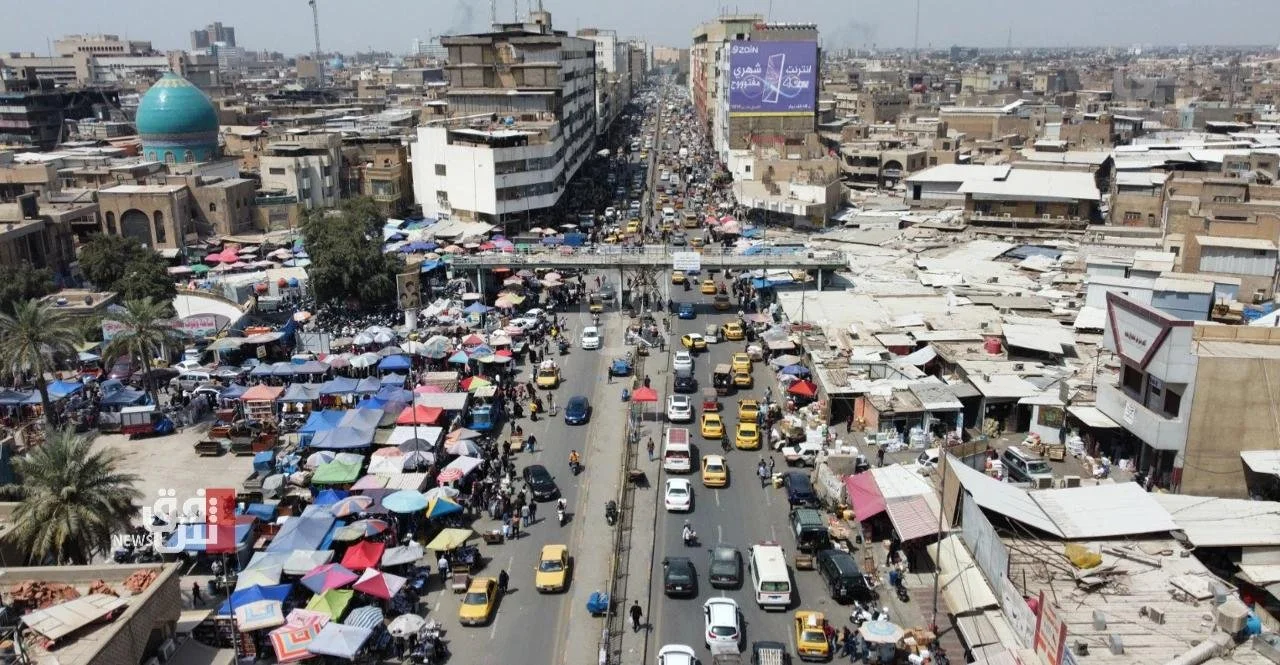
2026-04-15 Shafaq News- Baghdad Iraq’s economy is set to contract by around 6.8% in 2026, the International Monetary Fund (IMF) forecasted on Wednesday, citing rising tensions in the Middle East and pressure on energy markets as key drivers behind the outlook.
Despite the recent surge in international oil prices, which typically supports exporting economies, the IMF cautioned that these gains for Iraq may be offset by higher import costs and rising inflation. It added that this dynamic is likely to increase pressure on households and push up prices for essential goods and services.
Iraq Faces 6.8% Economic Slump In 2026
2026-04-15 Shafaq News- Baghdad Iraq’s economy is set to contract by around 6.8% in 2026, the International Monetary Fund (IMF) forecasted on Wednesday, citing rising tensions in the Middle East and pressure on energy markets as key drivers behind the outlook.
Despite the recent surge in international oil prices, which typically supports exporting economies, the IMF cautioned that these gains for Iraq may be offset by higher import costs and rising inflation. It added that this dynamic is likely to increase pressure on households and push up prices for essential goods and services.
The Fund also warned that a prolonged escalation could drive oil prices above $110 per barrel, complicating global efforts to contain inflation and prompting tighter monetary policy.
In previous reports, the IMF expected Baghdad’s economy to expand 3.6% in both 2026 and 2027. The pace is projected to strengthen further, reaching 3.9% in 2028 and 4.1% by 2029 and 2030.
https://www.shafaq.com/en/Economy/Iraq-faces-6-8-economic-slump-in-2026
Oil Prices Diverge Following US Blockade On Iranian Ports
2026-04-15 Shafaq News Oil prices were mixed on Wednesday with Brent futures up and U.S. futures down amid uncertainty over crude supply from the key Middle East producing region as the Strait of Hormuz remains mainly shut.
Brent crude futures were up 40 cents, or 0.4%, to $95.19 a barrel at 0420 GMT, paring earlier losses of as much as 0.9%, after falling 4.6% in the previous session. U.S. West Texas Intermediate crude was down 23 cents, or 0.3%, to $91.05. The contract earlier fell as much as 4.7% after dropping 7.9% the session before.
Talks to end the war between the U.S. and Israel and Iran could resume in Pakistan over the next two days, U.S. President Donald Trump said on Tuesday, after the collapse of negotiations over the weekend prompted Washington to impose a blockade on Iranian ports. This has increased optimism talks could eventually settle the conflict and open up crude oil and fuel flows.
While the market is thinking the worst is over and factoring in further rounds of peace talks between the U.S. and Iran in the coming days, there is more hope than actual developments at this point, said Suvro Sarkar, energy sector team lead at DBS Bank.
"Physical oil is still trading at significant premiums to these futures prices," he said.
The war has mostly shut the Strait of Hormuz, a key waterway for crude and refined product flows out of the Gulf to global buyers, particularly in Asia and Europe.
Refiners are desperately seeking alternative crude supply, pushing the premiums they are willing to pay for oil from areas such as the U.S. Gulf Coast and North Sea. A cargo of WTI Midland for delivery to Rotterdam traded at a record premium of $22.80 a barrel above benchmark European prices on Tuesday.
Despite a two-week ceasefire, transit through the strait remains uncertain, with traffic at only a fraction of the 130 or so vessels that moved through the waterway before the war, sources said on Tuesday.
A U.S. destroyer stopped two oil tankers from leaving Iran on Tuesday, a U.S. official said.
"While diplomatic headlines suggest the possibility of renewed U.S.-Iran talks and even a temporary easing of transit restrictions, the physical reality remains fragmented," the Schork Group said in a note.
The market stands to lose some access to further supply after two U.S. administration officials told Reuters on Tuesday the U.S. will not renew a 30-day waiver of sanctions on Iranian oil at sea that expires this week, and quietly let a similar waiver on sanctions on Russian oil expire over the weekend.
Later in the day, markets will be watching for official U.S. inventory data from the Energy Information Administration due at 10:30 a.m. ET (1430 GMT).
U.S. crude oil stockpiles were expected to have risen slightly last week, while distillate and gasoline inventories likely fell, a Reuters poll showed. (REUTERS) https://www.shafaq.com/en/Economy/Oil-prices-diverge-following-US-blockade-on-Iranian-ports
Basrah Crudes Lead Regional Oil Benchmarks
2026-04-15 Shafaq News- Basrah Iraq’s Basrah crudes rose by more than 0.3% on Wednesday, outperforming several regional benchmarks.
Market data showed Basrah Heavy gaining 46 cents, or 0.39%, to $117.91 per barrel, while Basrah Medium rose by the same amount, up 0.38%, to $120.01 per barrel.
In contrast, several regional grades declined, with Saudi Light at $115.92 per barrel, Qatar’s Al-Shaheen at $103.39, Kuwait crude at $103.34, UAE’s Murban at $100.85, and Iran Light at $98.22.
Globally, Brent crude futures rose 43 cents, or 0.5%, to $95.22 per barrel at 0821 GMT, after falling 4.6% in the previous session. US West Texas Intermediate (WTI) crude edged down 17 cents, or 0.2%, to $91.11, following a 7.9% decline a day earlier.
Iraq prices its crude based on export destinations, with shipments to Asia linked to the Dubai and Oman benchmarks, exports to Europe tied to Brent with premiums or discounts, and cargoes to the United States priced against WTI in line with market conditions. https://www.shafaq.com/en/Economy/Basrah-crudes-lead-regional-oil-benchmarks
Iran Halts Petrochemical Exports Amid War And Economic Pressure
2026-04-15 Shafaq News- Tehran Iran halted all petrochemical exports on Wednesday, Iranian media reported, citing a document and officials in the petrochemical sector.
The decision is intended for an indefinite period to meet domestic demand under current economic and security conditions, the document stated, adding that the decision aimed to support local industries and consumers amid the impact of war and mounting economic pressures.
Under the directive, domestic prices for oil, refined, and petrochemical products have been fixed at levels in place before February 28, 2026, despite a noticeable rise in global prices. The measures were issued under emergency decisions to stabilize the internal market.
Reports indicate that several petrochemical facilities in Iran sustained significant damage during recent airstrikes amid escalating military tensions involving the United States and Israel on one side and Iran on the other. Facilities in Mahshahr, Bandar Imam, and Asaluyeh were among those targeted, causing substantial infrastructure damage.
Earlier, Israel has claimed responsibility for the strikes, which included attacks on petrochemical sites in southern Iran, following an earlier strike on the Tabriz Petrochemical Complex.
https://www.shafaq.com/en/Economy/Iran-halts-petrochemical-exports-amid-war-and-economic-pressure
Iraq Tops Jordan Exports As Amman Trade Rises 30%+
2026-04-15 Shafaq News- Amman Exports from the Amman Chamber of Commerce rose by 30.9% in the first quarter of 2026, with Iraq ranking as the top destination.
The chamber said in a report that the value of certificates of origin issued for exports to Arab and foreign countries reached 406 million Jordanian dinars (about $574.8M), compared to 310 million dinars (about $438.8M) during the same period in 2025.
The data showed Iraq led importing countries with exports valued at 156 million dinars (about $220.8M). Other markets included Switzerland at 92 million dinars (about $130.2M), Egypt at around 23 million dinars (about $32.5M), Syria at approximately 21 million dinars (about $29.7M), and the United Arab Emirates at a similar level.
According to the statistics, 6,830 certificates of origin were issued in the first quarter, compared to 7,263 during the same period last year, covering a range of goods including re-exported foreign products, as well as industrial, agricultural, and Arab-origin goods.
In the first two months of 2026, Iraq also ranked as the top destination for Jordanian exports, with shipments worth 103 million dinars ($145 million), as total exports rose to 273 million dinars from 226 million dinars in the same period last year, marking a 20.6% increase. https://www.shafaq.com/en/Economy/Iraq-tops-Jordan-exports-as-Amman-trade-rises-30
US Dollar Edges Higher In Baghdad, Drops In Erbil
2026-04-15 Shafaq News- Baghdad/ Erbil The US dollar varied against the Iraqi dinar at Wednesday's closing in Baghdad and Erbil, according to Shafaq News market survey.
At Al-Kifah and Al-Harithiya exchanges in Baghdad, the dollar closed at 153,600 IQD per $100, down from 153,500 IQD recorded at the morning session.
In local exchange shops across Baghdad, the selling price reached 154,000 IQD per $100, while the buying price stood at 153,000 IQD.
In Erbil, the dollar declined, with a selling price of 153,550 IQD per $100 and a buying price of 153,450 IQD per $100.
https://www.shafaq.com/en/Economy/US-dollar-edges-higher-in-Baghdad-drops-in-Erbil
Gold Prices Rise In Baghdad, Hold Steady In Erbil Markets
2026-04-15 Shafaq News- Baghdad/ Erbil On Wednesday, gold prices hovered around 1.04 million IQD per mithqal in Baghdad and Erbil markets, according to a survey by Shafaq News Agency.
Gold prices on Baghdad's Al-Nahr Street recorded a selling price of 1,038,000 IQD per mithqal (equivalent to five grams) for 21-carat gold, including Gulf, Turkish, and European varieties, with a buying price of 1,034,000 IQD. The same gold had sold for 1,033,000 IQD on Tuesday.
The selling price for 21-carat Iraqi gold stood at 1,008,000 IQD, with a buying price of 1,004,000 IQD.
In jewelry stores, the selling price per mithqal of 21-carat Gulf gold ranged between 1,040,000 and 1,050,000 IQD, while Iraqi gold sold for between 1,010,000 and 1,020,000 IQD.
In Erbil, 22-carat gold was sold at 1,090,000 IQD per mithqal, 21-carat gold at 1,040,000 IQD, and 18-carat gold at 890,000 IQD. https://www.shafaq.com/en/Economy/Gold-prices-rise-in-Baghdad-hold-steady-in-Erbil-markets-5
Gold Slides Following Trump's Iran Peace Overture
2026-04-Shafaq News Gold prices logged a slight loss after hitting a one-month high earlier in the session on Wednesday, as prospects of another round of peace talks between the U.S. and Iran lifted risk appetite, while rising oil prices added to higher inflation woes.
Spot gold was down 0.3% at $4,826.13 per ounce, as of 0501 GMT, after hitting its highest since March 18 earlier. U.S. gold futures for June delivery were steady at $4,850.40.
Talks to end the Iran war could resume in Pakistan over the next two days, U.S. President Donald Trump said on Tuesday, after the collapse of weekend negotiations.
Gold prices are reacting to the Middle East headlines in the short term with hopes that the two countries will engage in talks, said Marex analyst Edward Meir.
"If things fall apart again, we can revert to the pre-ceasefire pattern of lower gold, a stronger dollar and lower equity prices."
Bullion is up 1.6% so far this week.
Asian stocks scaled a six-week peak on investor optimism that the Iran war may wind down soon.
Oil prices gained amid uncertainty over crude supply from the key Middle East producing region as the Strait of Hormuz remains mainly shut.
Higher crude prices feed into inflation by raising transportation and production costs. While gold is treated as a hedge against inflation, higher interest rates weigh on the non-yielding metal's demand.
The U.S. military said late on Tuesday that American forces have completely halted economic trade going into and out of Iran by sea through a blockade of Iranian ports.
In the U.S., traders see a 29% chance of a 25-basis-point rate cut this year, up from about 13% last week. Before the war, there were expectations of two cuts for 2026. FEDWATCH
"While gold and silver rallied strongly overnight, the broader signal was decisively risk-on rather than defensive positioning," analysts at OCBC said in a note.
Among other metals, spot silver rose 0.4% to $79.88 per ounce, platinum gained 0.4% to $2,112.05, and palladium was up 0.1% at $1,588.29. (REUTERS) Gold slides following Trump's Iran peace overture - Shafaq News
Rob Cunningham: The Switch, a 2026 Reveal
Rob Cunningham: The Switch, a 2026 Reveal
4-15-2026
Rob Cunningham | KUWL.show@KuwlShow
“Best case” does not mean everything wins – it means the right infrastructure gets used at scale.
Only a few systems will sit inside the flow of value itself.
Protocols that move value scale with usage, not narrative.
Rob Cunningham: The Switch, a 2026 Reveal
4-15-2026
Rob Cunningham | KUWL.show @KuwlShow
“Best case” does not mean everything wins – it means the right infrastructure gets used at scale.
Only a few systems will sit inside the flow of value itself.
Protocols that move value scale with usage, not narrative.
Global finance is being re-architected
• Settlement is moving from T+2→ real-time
• Trust is moving from institutions→ verifiable systems
VARIABLE-BY-VARIABLE IMPACT (The Chain Reaction)
Let’s connect all variables like a circuit – not as isolated headlines.
A) Regulatory Clarity (Clarity Act + Genius Frameworks)
Effects:
• Removes existential risk
• Unlocks institutional participation
• Enables banks, funds, treasuries to legally deploy capital
Second-order:
• Compliance-first platforms win
• Systems already aligned with regulators accelerate fastest
This directly favors:
• Ripple (enterprise + regulatory posture)
• XRP Ledger (built for issuance, settlement, compliance hooks)
B) Fed Rate Cuts + Liquidity Expansion
Effect:
• Capital rotates out of “parked safety”
• Risk assets + growth infrastructure reprice upward
• Search for yield → search for efficiency
Second-order:
• Systems that reduce cost of capital movement become attractive
XRP’s core function:
• Bridge asset → reduces trapped capital globally
C) Oil Price Decline
Effect:
• Lowers global cost basis (transport, manufacturing, logistics)
• Reduces inflationary pressures
Second-order:
• Allows central banks to ease more aggressively
• Expands global transaction volume
More transactions = more need for:
• Fast, low-cost settlement rails
D) Tariff Revenues + Domestic Productivity Growth
Effect:
• Strengthens sovereign balance sheet
• Incentivizes onshoring / reshoring
Second-order:
• Increased cross-border + supply chain complexity
• More currency corridors, not fewer
Complexity increases demand for:
• Neutral, interoperable, low-cost settlement layers
E) Crypto Capital of the World”
Effect:
• Regulatory + capital + talent concentration in the U.S.
• Wall Street + Silicon Valley convergence
Second-order:
• Institutional-grade infrastructure becomes the battleground
• Not memes. Not speculation. Systems.
This is where:
• Ripple has been positioned for over a decade
F) Trillions in Tokenization + Stablecoins
This is the big one.
Effect:
• Real-world assets (RWAs)
→ on-chain
• Stablecoins
→ transactional liquidity layer
Second-order:
Massive need for:
• Interoperability
• Liquidity routing
• Real-time settlement between tokenized silos
Critical question:
What connects all these systems together?
Not:
• Ethereum alone
• Not private bank chains
• Not CBDCs in isolation
But: A neutral bridge between systems
That’s the exact design purpose of:
• XRP on the XRP Ledger
THE CONVERGENCE EFFECT
Individually, each factor is bullish.
Together?
They create a phase transition.
From:
• Fragmented finance
• Slow settlement
• Capital trapped in corridors
To:
• Continuous, global, real-time, efficient liquidity
4) WHAT THIS MEANS SPECIFICALLY FOR RIPPLE / XRPL / XRP
Let’s separate the stack:
1) Ripple (Company Layer)
• Becomes a primary enterprise gateway
Sells infrastructure to:
• Banks
• Governments
• Payment providers
Outcome: Revenue growth tied to adoption of new rails
2) XRP Ledger (Protocol Layer)
Hosts:
• Tokenized assets
• Stablecoins
• DEX liquidity
• Settlement logic
Outcome: Network effects compound exponentially as assets onboard
3) XRP (Asset Layer)
This is where many people get confused.
Its role is not “just price.”
Its role is:
• Liquidity bridge
• Settlement asset
• Neutral counterparty
Demand is driven by utility + velocity + scale of value transfer
SIMPLE ANALOGY
• Should you invest in cars?
• Or in the highway system all cars must use?
XRP becomes THE bridge in high-volume, global corridors that connects TradFi to DeFi
Now you know the full story!
LOCK IN!
Watch on X:https://twitter.com/i/status/2044156938104254466
Source(s): • https://x.com/KuwlShow/status/2044156938104254466
https://dinarchronicles.com/2026/04/15/rob-cunningham-the-switch-a-2026-reveal/
Vietnam Upgraded – Your VND -Why Billions Are Moving Into Vietnam
Vietnam Upgraded – Your VND -Why Billions Are Moving Into Vietnam
4-14-2026
Vietnam Upgraded – Your VND Why Billions Are Moving Into Vietnam
Vietnam is making major financial headlines in 2026—and this could be one of the biggest economic shifts you’re not paying attention to.
In this video, we break down Vietnam’s latest financial news in simple terms. You’ll learn why the economy is still growing at nearly 8%, how rising energy costs are creating new risks, and why major companies like Samsung Electronics are doubling down on Vietnam.
Vietnam Upgraded – Your VND -Why Billions Are Moving Into Vietnam
4-14-2026
Vietnam Upgraded – Your VND Why Billions Are Moving Into Vietnam
Vietnam is making major financial headlines in 2026—and this could be one of the biggest economic shifts you’re not paying attention to.
In this video, we break down Vietnam’s latest financial news in simple terms. You’ll learn why the economy is still growing at nearly 8%, how rising energy costs are creating new risks, and why major companies like Samsung Electronics are doubling down on Vietnam.
We also cover the impact of foreign investment, infrastructure spending, and recent political changes under Tô Lâm—and what it all means for the future of Vietnam’s economy and currency.
The global economic landscape is shifting, and all eyes are currently on Southeast Asia. Recently, the financial world received a major update from Edu Matrix regarding a milestone moment for Vietnam: FTSE Russell has officially reclassified the country into the Emerging Markets category.
This isn’t just a label change; it is a powerful signal to the world that Vietnam is no longer just a “frontier” player. It is now stepping into the big leagues, positioned alongside economic giants like China and India.
The immediate ripple effect of this upgrade is substantial. Analysts estimate that this reclassification will trigger an influx of $6 billion to $8 billion into Vietnam’s stock market.
When a country moves into the Emerging Markets category, it becomes a mandatory inclusion for many global index funds and institutional investors. This massive liquidity infusion is expected to bolster the financial landscape, driving growth and providing the capital necessary for further innovation.
For years, Vietnam was viewed primarily as a low-cost manufacturing hub. However, recent data suggests a significant shift. Vietnam is rapidly maturing into a robust and influential global economy, specifically evidenced by its strong export performance to the United States.
For those holding the Vietnamese Dong (VND), the news is particularly encouraging. Currency value is often a reflection of a nation’s economic health and its attractiveness to foreign capital. As billions of dollars flow into the local markets and infrastructure improves, the fundamental strength of the VND is expected to rise.
Based on the insights from Edu Matrix, the message for VND holders is clear: Patience is a virtue. The channel strongly advises against selling or trading the currency prematurely. Instead, holding onto the VND as Vietnam’s economic prospects brighten could prove to be a wise long-term strategy.
Vietnam is standing at a historic crossroads. The upgrade by FTSE Russell is a testament to the nation’s stability, growth potential, and increasing importance in the global supply chain. Whether you are a stock market investor or a currency holder, the trajectory for Vietnam is looking increasingly upward.