
News, Rumors and Opinions Wednesday 4-15-2026
Re-enter Death Spiral When Iran War Stops – John Rubino
By Greg Hunter’s USAWatchdog.com
Analyst and financial writer John Rubino is still warning of a currency crisis.
He thinks the big run up in gold and silver in the past year are sending a message about the quality of fiat currency that governments print at will. Lots of money will be printed to prosecute the Iran war, and there will be a financial price to pay.
Re-enter Death Spiral When Iran War Stops – John Rubino
By Greg Hunter’s USAWatchdog.com
Analyst and financial writer John Rubino is still warning of a currency crisis.
He thinks the big run up in gold and silver in the past year are sending a message about the quality of fiat currency that governments print at will. Lots of money will be printed to prosecute the Iran war, and there will be a financial price to pay.
Rubino says, “War is incredibly expensive. If the US has to add another $1 trillion to the deficit to finish this thing off, that’s another trillion we have to borrow. . .. So, we are eroding the trust that people have in our big systems. . ..
The wars that we have seen lately are making the financial crisis coming our way . . much worse and making it come that much sooner.
The more money we borrow right now, the bigger of a deal it is for inflation and currency exchange rate and, ultimately, for gold and silver. Nobody should hope things like this happen, but if you are strictly looking at your own finances and you are a gold bug . . . we are screwing up the financial system that is bad for the fiat currencies and great for real money (gold and silver) and other commodities. . ..
There are a lot of reasons to think commodities benefit from this war. I am kind of hesitant to look on the bright side of war . . . but I do think a war time economy is inherently inflationary, and that is inherently good for commodities.”
If the war drags on, Rubino says, “It will make the coming financial crisis worse sooner.” If war finishes soon, can we all breathe a sigh of relief and be out of the woods? Rubino says, “Here’s hoping because that would be awesome.
Let’s say it ends tomorrow. Then we go back to what we were doing before, which is bailing out everybody in sight, creating huge amounts of currency and lobbying the Fed to cut interest rates. In other words, we re-enter the death spiral of the world’s fiat currencies.”
Rubino is especially bullish on silver. A year ago, silver was selling in the low $30 per ounce range. Today, even after the big sell-off, it is selling in the low $80 per ounce range. Rubino says you ain’t seen nothing yet.
Rubino says, “The silver story is great. More and more industries need it, and fewer and fewer mines are producing it. We have this decision point coming soon where the price is going to have to jump up to reflect the panic buying coming from the shortages.”
Rubino thinks you will be seeing $15,000 per ounce gold and $300 per ounce silver, but he can’t say exactly when. He just knows it will happen because with fiat currencies, history always repeats.
Rubino says, “This sounds crazy now, but they are probably going to happen. That is just how currency collapses play out. We have seen hundreds of currencies in human history that have died.
Just Google hyperinflation, and you will see a list of name brand countries that destroyed their currency. They rode them down to virtually zero. It’s hyperinflation, and something like that is coming. . .. We should not even think about it in terms of dollars, just buy it (physical gold and silver) to have real money.”
There is much more in the 36-minute interview.
https://usawatchdog.com/re-enter-death-spiral-when-iran-war-stops-john-rubino/
****************
Courtesy of Dinar Guru: https://www.dinarguru.com/
Steve Iraq elected a new president on Saturday which is awesome, awesome news...Iraq does nothing fast. They kick the can down the road. They do nothing out of urgency. I think a lot of that had to do with Iranian influence which has been holding [Iraq] back. But now they have a fire lit under their butt. They are getting things done...A lot could happen in the next 15 days.
Sandy Ingram Great news today. Vietnam has been upgraded by FTS Russel into emerging markets...This means the large global investors now see Vietnam as a stronger investment. Because of this, experts expect billions of dollars to flow into Vietnam. They're talking about $6 to $8 billion flowing into Vietnam's stock market...This would place Vietnam on the same level as China and India...Vietnam is moving from a low-cost manufacturing country to becoming a stronger, more important global economy. For those of you holding the VND, this is excellent news. Not good news, but excellent news...
Reset Intelligence Twenty-two Iraqi banks cut from the dollar system since 2023. Al-Huda Bank designated for laundering six billion dollars through the CBI dollar auction for the IRGC [Islamic Revolutionary Guard Corps]. One hundred and ninety-seven Iraqi exchange companies banned. Ten Iraqi banks liquidated under CBI reform last August. The banking rail that Iran used to move money through Baghdad for twenty years is welded shut
Gold & Silver Market BREAKING Behind the Scenes | Andy Schectman
Liberty and Finance: 4-15-2026
A warning from Andy Schectman points to increasing strain in the physical gold and silver markets as dealers face rising costs, tighter inventories, and greater risk.
While prices move unpredictably, large players continue taking physical delivery, signaling a deeper shift beneath the surface. This growing disconnect between paper markets and real metal supply is largely ignored by mainstream coverage.
Investors focused only on timing price moves may be overlooking the bigger issue of availability. If demand accelerates, the real challenge may not be price, but actually getting the metal when it matters.
Some “Iraq News” Posted by Tishwash at TNT 4-15-2026
TNT:
Tishwash: The President of the Republic affirms his commitment to strengthening the relations of cooperation and friendship between Iraq and America.
President Nizar Amidi affirmed on Tuesday (April 14, 2026) Iraq's keenness to strengthen relations of cooperation and friendship with the United States in a way that serves common interests.
The media office of the Presidency of the Republic stated in a statement received by “Baghdad Today” that “President Amidi received in Baghdad Palace the Chargé d’Affaires of the United States Embassy in Iraq, Joshua Harris, who conveyed his country’s congratulations on his election as President of the Republic, wishing him success in performing his duties.”
TNT:
Tishwash: The President of the Republic affirms his commitment to strengthening the relations of cooperation and friendship between Iraq and America.
President Nizar Amidi affirmed on Tuesday (April 14, 2026) Iraq's keenness to strengthen relations of cooperation and friendship with the United States in a way that serves common interests.
The media office of the Presidency of the Republic stated in a statement received by “Baghdad Today” that “President Amidi received in Baghdad Palace the Chargé d’Affaires of the United States Embassy in Iraq, Joshua Harris, who conveyed his country’s congratulations on his election as President of the Republic, wishing him success in performing his duties.”
Amidi expressed his "gratitude for the congratulations, stressing the importance of strengthening the partnership between the two countries in a way that contributes to supporting development paths and achieving stability."
The statement added that "the meeting also addressed the latest developments in the region, where the need to reduce escalation and adopt dialogue as a fundamental approach to addressing crises was emphasized, in order to enhance security and stability and consolidate international peace." link
Tishwash: The parliamentary finance committee is leaning towards adopting an annual budget for the current year and is ruling out a return to the tripartite system.
The Finance Committee in the House of Representatives is moving towards adopting an annual general budget for the current year.
In an interview with the official newspaper, which was followed by “Al-Eqtisad News”, MP Zainab Rahim Al-Jiyashi, a member of the Finance Committee, said that the goal of preparing an annual budget is to support vital service projects, especially in the health, education and infrastructure sectors, noting that this approach is consistent with the need to promote fairness in the distribution of resources and improve the quality of public services.
Al-Jiyashi added that "the annual budget represents a more accurate tool in managing public spending compared to multi-year budgets, as it allows for the periodic reassessment of priorities in accordance with economic and financial developments, which positively impacts the efficiency of government spending.
At the same time, she confirmed that it is impossible to return to the three-year budget model at the present stage, because it is not suitable for the economic conditions and fluctuations that the country is witnessing link
**************
Tishwash: The Iraqi banking sector is at a crossroads… either reform or forced merger
The Iraqi banking sector stands at a pivotal moment in 2026 that could completely reshape its landscape, amid mounting internal pressures and escalating external challenges related to international compliance, the flow of the dollar, and its relationship with the global financial system. Between talk of structural reforms and more stringent options that may include mergers or closures, the banking landscape in Iraq appears poised for profound changes that extend beyond the purely technical to encompass broader economic and political dimensions.
Iraq has more than 75 banks, including government, private, and foreign institutions, but actual activity is concentrated in a limited number of them. Government banks hold the largest share of deposits and transactions related to government salaries and public spending. In contrast, private banks face increasing challenges related to liquidity, compliance, and foreign exchange requirements, especially after the tightening of controls on dollar transactions in recent years.
Financial sources indicate that the Central Bank of Iraq is considering several avenues for restructuring the sector, ranging from tightening solvency and compliance standards and mandating mergers between small and weak banks, to potentially revoking the licenses of institutions unable to adapt to the new standards. These steps, if implemented, would effectively mean a shift from a phase of "gradual reform" to a more profound restructuring that may be imposed by the realities on the ground.
The exchange rate remains at the heart of this equation. The gap that has emerged between the official and parallel market rates in recent years has presented monetary policy with a significant challenge, especially given the Iraqi economy's near-total dependence on dollar-denominated oil revenues. Any disruption to the flow of hard currency or to the external transfer mechanism is immediately reflected in imports, prices, and market confidence.
The future of the foreign currency auction window remains one of the most sensitive issues. This mechanism, which for years served as a primary tool for supplying the market with dollars, is now subject to rigorous scrutiny, amid discussions about restructuring it to align with international standards for combating money laundering and terrorist financing. Restructuring this window effectively means changing the way private banks, money transfer networks, and foreign trade operate.
The biggest challenge is not limited to regulatory aspects, but extends to a crisis of confidence. A large segment of the Iraqi population still prefers to keep cash outside the banking system, due to past experiences, withdrawal restrictions, and weak digital services. Unofficial estimates indicate that a significant portion of the circulating cash does not pass through banking channels, limiting the central bank's ability to manage liquidity effectively.
In the background, integration with the global financial system stands out as a crucial test. Fully reintegrating Iraqi banks into international banking networks requires rigorous transparency standards, modernized compliance systems, and a rebuilding of trust with global financial institutions. Without this, the sector will remain vulnerable to restrictions, sanctions, or partial isolation.
Based on these facts, Iraq appears to face only two options: either to proceed with gradual reforms that calmly restructure the sector and gradually restore confidence, or to confront a scenario of mergers and coercive measures imposed by financial and regulatory pressures. In either case, this year could represent a turning point in the history of the Iraqi banking system, where the question is no longer whether change will occur, but how, when, and at what cost. link
Tishwash: The IMF predicts an economic contraction in Iraq.
The International Monetary Fund ( IMF ) predicted on Wednesday that the Iraqi economy will experience a significant contraction next year, placing the country among those most affected by the repercussions of ongoing conflicts in the Middle East and the pressures facing global energy markets.
According to the IMF's estimates, which were reviewed by the Al-Maalomah news agency, this decline stems from disruptions affecting the oil sector, the country's main source of revenue, coinciding with instability that has directly impacted shipping in vital global waterways, leading to disruptions in export operations and increased shipping and insurance costs.
The IMF warned that a prolonged continuation of the conflicts could drive up oil prices, which is typically accompanied by higher import costs and inflationary pressures.
This, in turn, negatively impacts the prices of goods and services within Iraq and increases the cost of living.
The data indicates that the economic impacts will affect several countries in the region to varying degrees, placing Iraq under the dual pressure of fluctuating revenues and increased government spending to address the crisis's repercussions. This could negatively affect the country's financial and economic stability. link
************
Tishwash: A small meeting of the framework was held at al-Maliki's house, and the latter proposed al-Shukri's name to assume the position of Prime Minister.
On Monday evening, the leaders of the Coordination Framework held a small meeting at the home of Nouri al-Maliki, head of the State of Law Coalition, to discuss the agenda of the upcoming meeting dedicated to deciding on the issue of the anticipated premiership. Al-Maliki is proposing the name of Ali al-Shukri to assume the position of Prime Minister.
An informed source told local media outlets, as reported by Al-Mirbad, that the meeting included the head of the State of Law Coalition, Nouri al-Maliki, the head of the Supreme Islamic Council, Humam Hamoudi, the head of the Wisdom Movement, Ammar al-Hakim, the Secretary-General of the Asa'ib Ahl al-Haq Movement, Qais al-Khazali, and the leader in the Popular Mobilization Forces, Abu Fadak al-Muhammadawi.
He indicated that the attendees discussed the agenda for the upcoming meeting of the Coordination Framework, which will be held at Humam Hamoudi’s house, and the proposed names nominated for the position of Prime Minister.
The source indicated that "Maliki proposed nominating the leader and former minister in the Sadrist movement, Ali al-Shukri, to assume the position of Prime Minister in the next government."
He added that "those present at the meeting agreed to add Shukri to the list of candidates, with all of them to be presented at the next meeting of the coordination framework." link
Seeds of Wisdom RV and Economics Updates Wednesday Morning 4-15-26
Good Morning Dinar Recaps,
Global Growth Downgraded as Energy Shock and Market Volatility Reshape Financial Outlook
New warnings from global financial institutions highlight rising risks to growth, stability, and monetary policy
Good Morning Dinar Recaps,
Global Growth Downgraded as Energy Shock and Market Volatility Reshape Financial Outlook
New warnings from global financial institutions highlight rising risks to growth, stability, and monetary policy
Overview
Global financial leaders are increasingly warning that the world economy is entering a period of heightened uncertainty and structural pressure. Fresh forecasts show global growth slowing as energy disruptions, inflation pressures, and geopolitical instability ripple across markets.
At the same time, investors are navigating volatile currency markets, elevated borrowing costs, and uncertain energy supply, conditions that are forcing governments and central banks to reassess economic strategies.
Key Developments
1. IMF Downgrades Global Growth Forecast
The International Monetary Fund (IMF) has reduced its outlook for global economic expansion as energy costs and geopolitical tensions weigh on the world economy.
Global GDP growth projected at around 3.1% for 2026, below earlier expectations
Emerging market growth estimates also lowered
Officials warn the outlook could deteriorate further if energy disruptions persist
Why it matters: Slower global growth combined with persistent inflation creates the conditions for economic stagnation and financial instability.
2. Emerging Economies Face the Greatest Economic Pressure
Developing economies are expected to bear the largest impact from higher energy and food prices.
Growth projections for emerging markets reduced to 3.9%
Oil-importing nations particularly vulnerable to rising costs
Currency volatility increasing across developing economies
Why it matters: Emerging markets often serve as the early stress points in the global financial system, where debt and currency crises can begin.
3. Energy Disruptions Continue to Influence Global Markets
Energy supply concerns remain central to the global economic outlook as shipping routes and supply chains face ongoing uncertainty.
Markets remain sensitive to supply risks linked to the Strait of Hormuz
Oil and gas price volatility continues to affect inflation forecasts
Governments warned against hoarding energy supplies during shortages
Why it matters: Energy is the foundation of the global economic system, and disruptions quickly spread into inflation, trade balances, and monetary policy.
4. Currency and Financial Markets Show Signs of Instability
Financial markets remain volatile as investors weigh geopolitical risk against economic fundamentals.
The U.S. dollar has recently traded near multi-week lows amid shifting expectations
Investors balancing safe-haven demand with hopes for geopolitical easing
Borrowing costs remain elevated compared with pre-crisis levels
Why it matters: Currency volatility reflects changing confidence in global financial stability, often signaling deeper shifts in capital flows and monetary power.
Why It Matters
These developments highlight a financial environment shaped by multiple simultaneous pressures:
Slowing global economic growth
Energy supply uncertainty
Currency volatility and capital shifts
Limited policy flexibility for central banks
When these forces converge, they increase the risk of systemic financial adjustments rather than isolated market fluctuations.
Why It Matters to Foreign Currency Holders
Currency markets may experience greater volatility as economic conditions diverge globally
Inflation driven by energy costs could reduce purchasing power across multiple economies
Countries with weaker fiscal positions may face rapid currency devaluation
Shifts in capital flows may strengthen commodity-linked or resource-backed economies
Implications for the Global Reset
Pillar 1: Economic Fragmentation
Slowing growth across regions is increasing the likelihood of diverging economic policies and currency movements.
Pillar 2: Energy-Driven Financial Pressure
Energy supply disruptions are amplifying inflation and trade imbalances, forcing structural adjustments in global markets.
Closing Perspective
The current environment reflects a system navigating overlapping economic shocks rather than a single crisis.
When growth slows, energy prices remain volatile, and currency markets shift simultaneously, the global financial structure begins to adapt in ways that can reshape trade, reserves, and monetary influence.
This is not simply a market cycle — it is the global system adjusting to a new economic reality.
Seeds of Wisdom Team
Newshounds News™ Exclusive
Sources
IMF cuts growth outlook, warns world drifting toward adverse scenario – Reuters
IMF cuts emerging economies growth estimate as war darkens outlook – Reuters
~~~~~~~~~~
A Message to Our Currency Holders
If you’ve been holding foreign currency for many years, you were not foolish.
You were not wrong to believe the global financial system would change.
What failed was not your patience — it was the information you were given.
For years, dates, rumors, and personalities replaced facts, structure, and proof. “This week” predictions created cycles of hope and disappointment that were never based on how currencies actually change.
That is not your failure.
Our mission here is different: • No dates • No rates • No hype • No gurus
Instead, we focus on:
• Verifiable developments • Institutional evidence
• Global financial structure • Where countries actually sit in the process
Currency value changes only come after sovereignty, trade, banking, settlement systems, and fiscal coordination are in place. History and institutions confirm this sequence.
You will see silence. You will see denials. That is not delay — that is discipline.
Protect your identity. Organize your documents. Verify everything.
Never hand your discernment to anyone who cannot show proof.
You deserve truth — not timelines.
Seeds of Wisdom Team
Newshounds News™
~~~~~~~~~~
Seeds of Wisdom Team RV Currency Facts Youtube and Rumble
Newshound's News Telegram Room Link
RV Facts with Proof Links Link
RV Updates Proof links - Facts Link
Follow the Gold/Silver Rate COMEX
Follow Fast Facts
Seeds of Wisdom Team™Website
Thank you Dinar Recaps
Iraq Economic News And Points To Ponder Wednesday Morning 4-15-26
Giant Tankers Head To Basra Ports, And Iraqi Crude Oil Flows To Markets Despite The Hormuz Blockade.
Money and Business Economy News – Baghdad Giant oil tankers continue their journeys to Iraqi ports to load crude shipments, despite escalating tensions in the Strait of Hormuz and the tightening of the US embargo on ships linked to Iran, in an indication of the continued global demand for Iraqi oil and the assurance of the security of its supplies.
Giant Tankers Head To Basra Ports, And Iraqi Crude Oil Flows To Markets Despite The Hormuz Blockade.
Money and Business Economy News – Baghdad Giant oil tankers continue their journeys to Iraqi ports to load crude shipments, despite escalating tensions in the Strait of Hormuz and the tightening of the US embargo on ships linked to Iran, in an indication of the continued global demand for Iraqi oil and the assurance of the security of its supplies.
Shipping data from the international ship-tracking company Kpler showed that the giant oil tanker "Alecia" - which is on the US sanctions lists - entered the waters of the Gulf and is expected to dock in Iraq in the coming days.
In the same context, the tanker "Agios Phanorios 1" was spotted making its way towards Basra to load a shipment of "Basra crude" destined for a refinery in Vietnam.
In contrast, the data revealed that the tanker "Rich Stary" failed to overcome the American embargo imposed on ships that had previously docked in Iranian ports, forcing it to return to the Strait of Hormuz one day after attempting to leave the Gulf.
This maritime confusion comes in the wake of Washington’s announcement of a comprehensive naval blockade on Tehran, which has severely restricted the movement of ships; tankers linked to the Iranian side have been unable to cross the strait in recent hours, and some have been forced to return to their points of origin.
These measures have caused a noticeable decline in shipping traffic through the Strait of Hormuz - the world's most important energy artery - amid a state of anticipation and caution prevailing in global energy markets as they await the outcome of the current escalation. https://www.economy-news.net/content.php?id=67929
Iraq Topped The List Of Importers Of Jordanian Exports During The First Quarter Of 2026
Money and Business Economy News – Baghdad Exports from the Amman Chamber of Commerce in Jordan grew by 30.9% during the first quarter of this year, with Iraq topping the list of importing countries, according to statistics published on Wednesday.
The Chamber stated, in a report seen by “Al-Eqtisad News”, that the value of certificates of origin issued for exporting goods to Arab and foreign countries amounted to 406 million dinars, compared to 310 million dinars for the same period in 2025.
The data showed that Iraq topped the list of importing countries with a value of 156 million dinars, reflecting the importance of the Iraqi market for Jordanian exports and the continued strength of trade relations between the two countries.
Exports were distributed among a number of countries, most notably Switzerland with a value of 92 million dinars, Egypt with about 23 million dinars, Syria with about 21 million dinars, in addition to the United Arab Emirates with a similar value.
According to statistics, the number of certificates of origin issued during the first quarter reached 6,830 certificates, compared to 7,263 certificates for the same period last year, while exports varied between foreign goods that were re-exported, industrial and agricultural products, and others of Arab origin. https://www.economy-news.net/content.php?id=67935
Airlines Will Resume Flights To Dubai Tomorrow And To Sabiha Gökçen Airport In Turkey On Saturday.
Money and Business Economy News – Baghdad The Ministry of Transport announced on Wednesday that the airline will resume its flights to Dubai on Thursday, while noting that flights to Sabiha Gökçen Airport in Turkey will resume on Saturday.
The Ministry's spokesman, Maitham Al-Safi, told the Iraqi News Agency, as reported by "Al-Eqtisad News": "Iraqi airspace is witnessing a gradual return of flights, with work continuing to increase the pace of operations progressively to reach normal levels."
He added that “Iraqi Airways has been operating flights to Istanbul, Amman and Cairo since last Friday, April 10, followed by flights to India,” noting that “the airline will operate flights to Guangzhou, and tomorrow, Thursday, April 15, to Dubai, in addition to resuming domestic flights, with a gradual operation that includes the airports of Baghdad, Erbil, Sulaymaniyah and Basra, with plans to increase them gradually during the coming period.”
He noted that "some regional and international airlines have begun resuming their flights to Iraq, including Royal Jordanian, Damascus Airlines, Felix Airways, Mahan Air, Aseman Airlines, and Flydubai."
The ministry stated in a statement received by the Iraqi News Agency (INA) that “airline flights between Baghdad and Sabiha will return to the skies, starting from next Saturday, April 18, as part of a plan to expand its network of destinations and facilitate travel for passengers.” https://www.economy-news.net/content.php?id=67936
The Ministry Of Trade Announces Its Full Readiness For The Start Of The Wheat Marketing Season.
Money and Business Economy News – Baghdad The Ministry of Trade announced on Wednesday its full readiness for the start of the 2026 wheat marketing season.
Ministry spokesman Mohammed Hanoun said in a statement received by “Al-Eqtisad News” that “all the ministry’s technical, administrative and logistical preparations have been completed for the launch of the local wheat marketing season for 2026,” indicating that “the ministry’s plan this year aims to achieve high efficiency in receiving operations and enhance food security in the country.”
He added that "preparations came early through a series of intensive meetings of the Central Marketing Committee, during which an integrated plan was developed to organize the marketing of the crop, in order to reduce the congestion at the receiving sites and facilitate the procedures for delivering wheat by farmers and marketers."
Hannon explained that "the ministry has adopted a pre-booking mechanism to regulate the entry of trucks into silos and warehouses, which will contribute to reducing waiting times and achieving greater smoothness in marketing operations, in addition to preparing flexible timetables for distributing quantities to receiving centers in various governorates."
He pointed out that "the technical and engineering teams have completed the maintenance and rehabilitation work of the silos and raised their readiness to receive the expected quantities of local production, in parallel with enhancing storage capacity and improving the efficiency of storage and transportation operations."
He explained that "the ministry is working in close coordination with the Ministry of Agriculture to align the marketing plan with the agricultural plan in order to ensure the absorption of the expected production without bottlenecks, as well as supporting farmers by simplifying procedures and accelerating the receiving processes."
Hannon stressed that "these measures come within the framework of the government's endeavor to support local products and achieve self-sufficiency in wheat," emphasizing that "the ministry is proceeding with the implementation of its plans to enhance the strategic reserve and secure the items of the ration card." https://www.economy-news.net/content.php?id=67932
An Iranian Oil Tanker Defies Sanctions And Crosses The Strait Of Hormuz Unhindered.
Arabic and international Economy News - Follow-up Iranian state media revealed on Wednesday that a giant Iranian oil tanker listed on US sanctions lists had openly entered Iranian territorial waters without any harassment.
Fars News Agency quoted maritime sources as saying that "the tanker continued its journey through the open sea and the Strait of Hormuz, with its Automatic Identification System (AIS) remaining operational, contrary to what ships under sanctions usually do."
According to data from the "TankerTrackers" website, "The (VLCC) class tanker, which is subject to sanctions by the US Office of Foreign Assets Control (OFAC), managed to reach its destination within Iranian waters without any recorded interference or harassment."
This tanker is among the largest oil tankers in the world, with a capacity of approximately two million barrels of crude oil.
Earlier today, U.S. Central Command (CENTCOM) Commander Brad Cooper confirmed in a statement that the naval blockade of Iranian ports had been fully implemented, with U.S. forces maintaining naval superiority in the Middle East.
US President Donald Trump announced on Sunday a blockade of Iranian ports, after a round of negotiations between the two sides in Islamabad on Saturday failed. https://www.economy-news.net/content.php?id=67934
The Dollar Is Declining In Baghdad
Stock Exchange Economy News – Baghdad The exchange rate of the US dollar declined this morning, Wednesday, in the markets of the capital, Baghdad.
The dollar exchange rate witnessed a decrease in the Al-Kifah and Al-Harithiya exchanges in Baghdad, recording 153,400 Iraqi dinars for every 100 dollars, compared to 153,700 Iraqi dinars recorded yesterday, Tuesday.
Selling prices in exchange shops in the local markets of Baghdad recorded a decrease, with the selling price reaching 154,000 dinars for 100 dollars, while the buying price recorded 153,000 dinars for 100 dollars.
Seeds of Wisdom RV and Economics Updates Tuesday Evening 4-14-26
Good Evening Dinar Recaps,
Energy Market Breakdown: Global Supply Shock Forces Policy Coordination
Governments and global institutions warn that energy restrictions could deepen inflation and accelerate economic instability
Good Evening Dinar Recaps,
Energy Market Breakdown: Global Supply Shock Forces Policy Coordination
Governments and global institutions warn that energy restrictions could deepen inflation and accelerate economic instability
OVERVIEW (KEY POINTS)
Global institutions including the IMF, World Bank, and International Energy Agency (IEA) are warning that the world is facing one of the most severe energy shocks in modern history. Supply disruptions tied to geopolitical conflict are now affecting global trade, inflation, and economic growth.
This situation is unfolding due to damage to energy infrastructure, shipping disruptions, and rising geopolitical tensions, particularly in critical oil transit routes. These disruptions are limiting supply at a time when demand remains structurally high.
Governments are responding by considering export controls and supply hoarding, actions that could further destabilize markets and worsen shortages. Global institutions are urging coordination to avoid escalating the crisis.
The broader implication is significant: energy is once again becoming a primary driver of global financial conditions, increasing the risk of inflation shocks and systemic instability.
KEY DEVELOPMENTS
1. Global Institutions Warn Against Energy Hoarding
Major institutions are calling for coordinated action.
IMF, World Bank, and IEA urge free flow of energy supplies
Warn that restrictions could intensify global shortages
2. Energy Infrastructure Damage Disrupts Supply
Conflict has directly impacted production capacity.
Over 80 oil and gas facilities damaged
Key supply routes facing continued disruption
3. Oil Prices Surge Amid Supply Constraints
Markets are reacting to reduced supply availability.
Oil prices pushed above $100 per barrel
Driving renewed global inflation pressure
4. Strategic Reserves Being Deployed
Emergency measures are already underway.
IEA has released hundreds of millions of barrels
Indicates severity of supply imbalance
WHY IT MATTERS
Energy is a foundational input across all sectors, meaning disruptions have broad economic consequences. Rising energy costs feed directly into inflation, production costs, and consumer prices.
Markets are reacting quickly, with increased volatility in commodities, equities, and bonds. This creates uncertainty in pricing and investment decisions, impacting global capital allocation.
For policymakers, the situation limits flexibility. Efforts to control inflation may conflict with the need to support economic growth, creating policy tension.
At the global level, this reinforces the role of energy as a geopolitical and financial lever, increasing fragmentation across regions.
WHY IT MATTERS TO FOREIGN CURRENCY HOLDERS
Energy-importing countries may see currency weakening
Purchasing power declines as fuel costs rise
Capital flows may favor energy-exporting nations
Exchange rates may shift based on energy access rather than policy
IMPLICATIONS FOR THE GLOBAL RESET
Pillar 1: Energy-Driven Inflation Regime
Persistent energy disruptions are reinforcing an environment where inflation is driven by supply shocks, not demand. This challenges traditional monetary frameworks and increases systemic instability.
Pillar 2: Resource-Based Economic Realignment
Control over energy resources is becoming a central determinant of economic strength. This accelerates a shift toward a more resource-influenced global financial structure, reducing reliance on purely monetary dominance.
CONCLUSION
The current energy shock is not an isolated event—it represents a structural disruption to global supply systems. The scale of the impact is forcing coordination among major institutions, signaling the seriousness of the situation.
As energy continues to drive inflation and economic outcomes, the global system is becoming more reactive and less predictable. This increases the likelihood of policy missteps and financial instability.
The combination of supply disruption, rising costs, and geopolitical tension creates a powerful catalyst for systemic change.
Energy is no longer just an economic input—it is a defining force shaping the future of the global financial system.
Seeds of Wisdom Team
Newshounds News™ Exclusive
SOURCES
Reuters — "IMF, World Bank, IEA urge countries to stop hoarding energy supplies"
Reuters — "IMF cuts growth outlook, warns potential global recession if Iran war worsens"
~~~~~~~~~~
Seeds of Wisdom Team RV Currency Facts Youtube and Rumble
Newshound's News Telegram Room Link
RV Facts with Proof Links Link
RV Updates Proof links - Facts Link
Follow the Gold/Silver Rate COMEX
Follow Fast Facts
Seeds of Wisdom Team™Website
Thank you Dinar Recaps
Seeds of Wisdom RV and Economics Updates Tuesday Afternoon 4-14-26
Sorry this post missed the 6 PM Newsletter
Good Afternoon Dinar Recaps,
Emerging Market Stress: IMF Downgrades Signal Rising Global Fragility
Falling growth forecasts and rising energy costs are exposing vulnerabilities across developing economies and global capital flows
Sorry this post missed the 6 PM Newsletter
Good Afternoon Dinar Recaps,
Emerging Market Stress: IMF Downgrades Signal Rising Global Fragility
Falling growth forecasts and rising energy costs are exposing vulnerabilities across developing economies and global capital flows
OVERVIEW (KEY POINTS)
The International Monetary Fund (IMF) has downgraded growth forecasts for emerging markets, highlighting how energy shocks and geopolitical conflict are now directly weakening global economic stability. Developing economies are being hit hardest due to their reliance on imported energy and external financing.
This is happening now because rising oil prices, disrupted trade routes, and capital flow instability are converging at once. The ongoing conflict has amplified existing vulnerabilities, particularly in nations already carrying high debt burdens and fragile currencies.
Countries across Asia, the Middle East, and Africa are at the center of this shift, with growth projections falling sharply and risk exposure increasing. Investors are becoming more cautious, leading to tighter financial conditions globally.
The broader implication is clear: stress in emerging markets often acts as an early warning system for deeper systemic shifts, making this a critical signal for a potential global financial reset environment.
KEY DEVELOPMENTS
1. IMF Cuts Emerging Market Growth Forecasts
The IMF reduced growth projections for developing economies.
Growth lowered to 3.9% from 4.2%
Reflects rising energy costs and geopolitical uncertainty
2. Energy Shock Disproportionately Hits Vulnerable Nations
Emerging economies are absorbing the brunt of rising energy prices.
Oil and food costs are driving inflation and trade imbalances
Import-dependent nations face currency depreciation risks
3. Capital Flow Instability Increasing
Investor behavior is shifting rapidly.
Heightened uncertainty is triggering risk-off sentiment
Leads to capital outflows and tighter financing conditions
4. Regional Growth Divergence Expands
Not all economies are impacted equally.
Some economies (like India) remain relatively resilient
Others face sharp contractions and negative growth outlooks
WHY IT MATTERS
This development highlights a growing imbalance in the global economy, where weaker nations face disproportionate pressure. That imbalance increases the likelihood of financial instability spreading across regions.
Markets are particularly sensitive to emerging market stress because it often leads to currency volatility, debt crises, and contagion effects. These risks can quickly spill into developed markets.
For policymakers, this creates a difficult environment. Supporting growth may require increased borrowing, while tightening policy to control inflation risks worsening economic contraction.
At the system level, these pressures contribute to fragmentation in global finance, reducing cohesion and increasing the likelihood of structural change.
WHY IT MATTERS TO FOREIGN CURRENCY HOLDERS
Emerging market currencies may weaken significantly under pressure
Purchasing power could decline due to imported inflation
Capital may flow toward stronger currencies, increasing divergence
Exchange rate volatility is likely to rise, reducing predictability
IMPLICATIONS FOR THE GLOBAL RESET
Pillar 1: Emerging Market Debt Pressure
As growth slows and borrowing costs rise, debt sustainability becomes a major concern. This increases the likelihood of restructuring, external support, or systemic financial adjustments.
Pillar 2: Currency Realignment Pressure
Diverging economic performance is accelerating currency fragmentation, where weaker economies experience depreciation while stronger ones consolidate influence. This dynamic supports a shift toward a multi-polar currency system.
CONCLUSION
The IMF’s downgrade is more than a routine adjustment—it is a signal of mounting systemic stress. Emerging markets are once again at the center of global financial risk, with multiple pressures converging simultaneously.
These conditions increase the likelihood of capital instability, currency volatility, and debt challenges, all of which have historically played key roles in broader financial transitions.
As these pressures build, the global system is becoming less stable and more fragmented, setting the stage for deeper structural shifts.
When emerging markets weaken at scale, the entire global financial system begins to feel the strain.
Seeds of Wisdom Team
Newshounds News™ Exclusive
SOURCES
~~~~~~~~~~
Seeds of Wisdom Team RV Currency Facts Youtube and Rumble
Newshound's News Telegram Room Link
RV Facts with Proof Links Link
RV Updates Proof links - Facts Link
Follow the Gold/Silver Rate COMEX
Follow Fast Facts
Seeds of Wisdom Team™Website
Thank you Dinar Recaps
Inflation Just TRIPLED as the Reset Accelerates
Inflation Just TRIPLED as the Reset Accelerates
Taylor Kenny: 4-14-2026
Consumer sentiment is at crisis levels and the Fed is trapped. The reset is already underway. The question is whether you’ll see it before it’s too late.
CHAPTERS:
00:00 Consumer Sentiment Crashes
00:28 The Dollar Reset Begins
00:58 Why Gold and Silver Aren’t Soaring
02:23 What’s Really Holding Gold Back
03:49 Paper Gold vs Physical Gold
04:17 Why China Is Buying Gold
04:46 The 4 Stages of Currency Collapse
06:12 The Global Move Away From the Dollar
07:09 Japan’s Bond Market Warning
09:01 The Debt Doom Loop
09:30 How to Protect Your Wealth
09:58 Surviving the Reset Webinar
Majeed KSA: Big Companies are Entering Venezuela
Majeed KSA: Big Companies are Entering Venezuela
4-14-2026
Majeed KSA@majeed66224499
They are not waiting on the sideline.
Big companies entering Venezuela headfirst.
Big oil companies like Chevron and Shell are trading assets and making deals with Venezuela so they can produce more oil and gas there and make more money as the country opens up its energy sector again.
Majeed KSA: Big Companies are Entering Venezuela
4-14-2026
Majeed KSA @majeed66224499
They are not waiting on the sideline.
Big companies entering Venezuela headfirst.
Big oil companies like Chevron and Shell are trading assets and making deals with Venezuela so they can produce more oil and gas there and make more money as the country opens up its energy sector again.
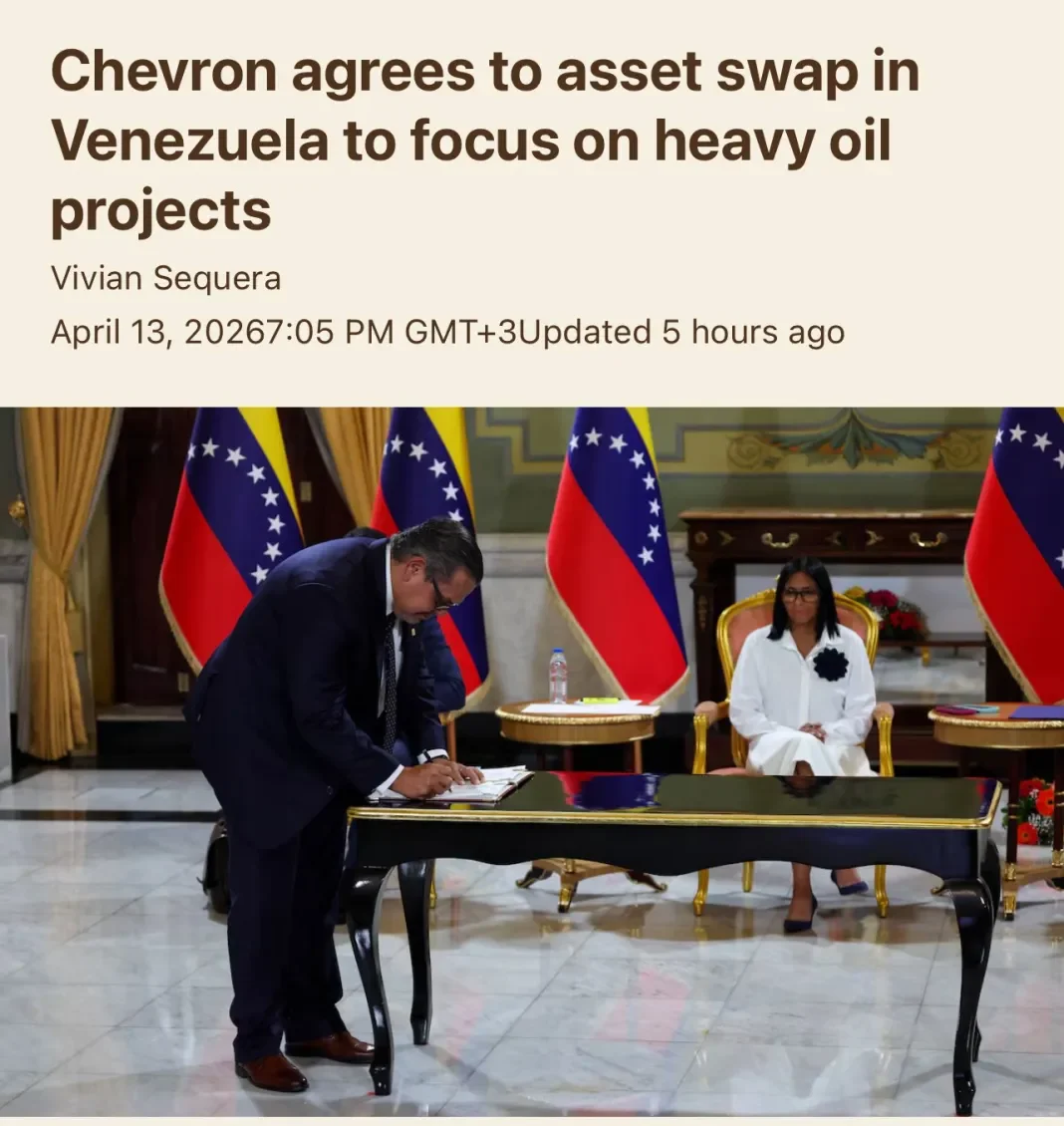
Within 30 days of the new mining law’s approval in April 2026, Venezuela must finalize the detailed regulations and contract rules needed to turn the law into actual mining agreements and operations for foreign investors.
They NEED the rate this month for the foreign contractors to start working immediately and to increase wages for citizens by May 1.
They need the new rate this month… it only takes the OFAC to remove sanction on Venezuela central bank.
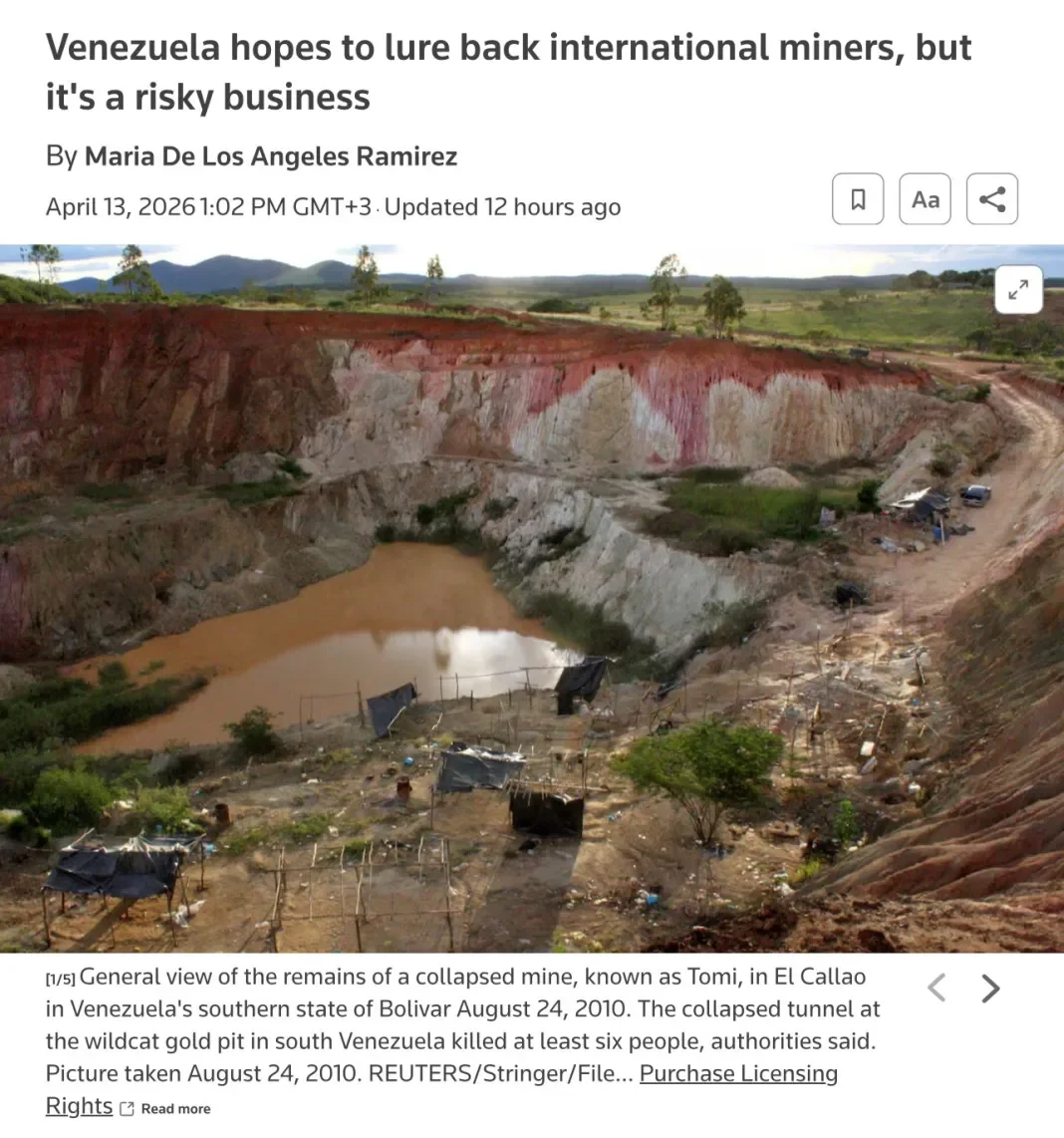
With big deals like this.
It means the central bank of Venezuela is being used.
Venezuela’s central bank is less focused on traditional monetary policy and more focused on managing dollars earned from oil, gas, and mining exports because those dollars now Keeps the economy functioning.
Now the central bank getting filled with dollars meaning removing the section from their central bank will be really really really fast… since the sanction got removed from Venezuela president… which caused her country to be able to access US financial system and assets abroad.
Source(s): • https://x.com/majeed66224499/status/2043894713393013127
https://dinarchronicles.com/2026/04/14/majeed-ksa-big-companies-are-entering-venezuel
Iraq Economic News And Points To Ponder Tuesday Afternoon 4-14-26
Iraq Economic News And Points To Ponder Tuesday Afternoon 4-14-26
Iraq Lifts Basrah Medium Nearly $2 For Asia As Oil Hits $119
2026-04-14 Shafaq News- Baghdad Iraq on Tuesday raised the official selling price of Basrah Medium crude bound for Asia, its largest market accounting for about 70% of exports, by around $1.70 per barrel, as global oil prices surge.
Oil markets have risen amid the US-Israeli war on Iran and disruptions to shipments through the Strait of Hormuz following Tehran’s closure of the waterway, tightening global supply and pushing prices higher. Basrah Medium itself was trading near $119 per barrel.
Iraq Economic News And Points To Ponder Tuesday Afternoon 4-14-26
Iraq Lifts Basrah Medium Nearly $2 For Asia As Oil Hits $119
2026-04-14 Shafaq News- Baghdad Iraq on Tuesday raised the official selling price of Basrah Medium crude bound for Asia, its largest market accounting for about 70% of exports, by around $1.70 per barrel, as global oil prices surge.
Oil markets have risen amid the US-Israeli war on Iran and disruptions to shipments through the Strait of Hormuz following Tehran’s closure of the waterway, tightening global supply and pushing prices higher. Basrah Medium itself was trading near $119 per barrel.
OPEC data showed the crude’s average price jumped to $117.62 per barrel in March 2026 from $66.77 in February, an increase of $50.85 in a single month. The average price has reached $82.70 per barrel so far in 2026, compared with $75.88 in 2025, indicating a sustained upward trend in Iraqi crude prices.
OPEC’s reference basket also rose to about $107 per barrel in March from $67.19 in February, with Iraqi crude ranking among the higher-priced grades alongside Kuwait and Iran.
https://www.shafaq.com/en/Economy/Iraq-lifts-Basrah-Medium-nearly-2-for-Asia-as-oil-hits-119
Dollar eases at Tuesday's close in Baghdad and Erbil
2026-04-14 Shafaq News- Baghdad/ Erbil The US dollar fell against the Iraqi dinar at Tuesday's closing in Baghdad and Erbil, according to Shafaq News correspondent.
At Al-Kifah and Al-Harithiya exchanges in Baghdad, the dollar closed at 153,500 IQD per $100, down from 153,700 IQD recorded at the morning session.
In local exchange shops across Baghdad, the selling price reached 154,000 IQD per $100, while the buying price stood at 153,000 IQD.
In Erbil, the dollar also declined, with a selling price of 153,550 IQD per $100 and a buying price of 153,400 IQD per $100. https://www.shafaq.com/en/Economy/Dollar-eases-at-Tuesday-s-close-in-Baghdad-and-Erbilb
Syrian-Iraqi Understanding On Energy And Trade
2026-04-14 Shafaq News- Washington Syria and Iraq have reached a set of new economic understandings, with plans to advance energy cooperation and facilitate bilateral trade, Syria’s Finance Minister Yisr Barnieh said on Tuesday, describing the communication with the Iraqi government as continuous and constructive.
Speaking to Shafaq News on the sidelines of the World Bank Spring Meetings in Washington, Barnieh added that developments in this “vital issue” are expected soon. He said Syria’s new government is prioritizing the removal of obstacles to trade and investment, stressing official efforts to strengthen ties between business sectors in both countries and restore economic relations to a strategic level.
On international engagements in Washington, Barnieh pointed to progress at the World Bank, where an agreement was reached on a “special annex” to support Syria’s financial sector and reform its financial institutions. The initiative aims to build human capacity, enhance sustainability, and advance digital transformation across Syria’s financial system.
He also confirmed efforts to establish a global “knowledge center” to help Syrian investors form effective partnerships between the public and private sectors.
Earlier, Central Bank of Syria Governor Abdul Qader Hasriya told Shafaq News that steps are underway to enhance financial cooperation with Baghdad, clarifying that ongoing communication with the Central Bank of Iraq includes plans to organize joint economic activities aimed at strengthening banking ties between the two countries.
https://www.shafaq.com/en/Economy/Syrian-Iraqi-understanding-on-energy-and-trade
Iraq Taps Najaf ‘White Gold’ To Unlock Billion-Dollar Mining Potential
2026-04-14 Shafaq News- Najaf Iraq is positioning Najaf as a key mining investment hub, highlighting high-purity silica sand –known as “white gold”– as a strategic resource, the Iraqi Geological Survey said on Tuesday.
Silica reserves in Iraq are estimated at around 350 million tons, with projections reaching up to 1 billion tons across Najaf and Al-Anbar, according to official and expert assessments. The resource is critical for solar panels, semiconductors, and fiber optics, placing Iraq within global supply chains for clean energy and advanced technology.
The Geological Survey revealed that it is expanding mining investment under existing laws to support industrial development and diversify revenues, citing Najaf’s geological and industrial potential. The province also holds deposits of limestone used in cement and construction, as well as quartz and industrial sands used in glass and ceramics.
The sector could generate billions of dollars and create more than 10,000 jobs, it added, as the global silica market is projected to reach $85.86 billion by 2033.Iraq also holds major reserves of other minerals, including sulfur, phosphate, and limestone.
US Offers A $10 Million Reward For Information On Kataib Hezbollah’s Al-Hamidawi
2026-04-14 Shafaq News- Washington The United States Department of State announced on Tuesday a reward of up to $10 million for information on Ahmad al-Hamidawi, the leader of Iraq’s Kataib Hezbollah.
In a statement, the State Department’s Rewards for Justice program accused Al-hamidawi of directing attacks against US diplomatic facilities in March 2026, adding that the group has, over several years, repeatedly targeted US personnel and facilities in Iraq using improvised explosive devices, rockets, and drone systems, and has been involved in the abduction of US citizens and the killing of Iraqi civilians.
According to the program, Al-Hamidawi received political, military, and intelligence training from Iran’s Islamic Revolutionary Guard Corps (IRGC), and he currently serves as secretary-general of Kataib Hezbollah and is a member of its “Shura Council” (The group of decision makers in the Kataib).
The statement noted that al-Hamidawi has played a central role in planning attacks against US and Iraqi security forces since 2007, and that he continues to incite violence through public protests and attacks targeting the US embassy in Iraq.
Earlier on February 26, 2020, the US State Department designated Al-Hamidawi as a Specially Designated Global Terrorist under Executive Order 13224, as amended. The designation led to the freezing of any assets he holds in the United States or under the control of US persons, and prohibits US individuals from engaging in transactions with him.
Kataib Hezbollah was designated as a foreign terrorist organization on June 24, 2009, under Section 219 of the US Immigration and Nationality Act. The designation bars US citizens from providing material support to the group and freezes its assets under US jurisdiction.
The statement also added that Kataib Hezbollah members have received training, weapons, and other support from Iran’s Quds Force and Lebanon’s Hezbollah, both of which are also designated by the United States as foreign terrorist organizations.
It further said the group operates closely with the IRGC’s Quds Force and follows directives from Iran’s Supreme Leader. “Kataib Hezbollah has carried out attacks aimed at expelling US and coalition forces from Iraq and promoting Iranian influence in the region,” the statement added.
The program also referred to a December 27, 2019, rocket attack by the group on an Iraqi military base near Kirkuk that killed a US civilian contractor, Nawres Hamid, and wounded several US and Iraqi personnel. It added that between December 27, 2019, and January 1, 2020, Kataib Hezbollah led protests outside the US embassy in Baghdad, during which demonstrators attempted to breach the compound.
The $13,000 Apartments the Government Won't Let You Buy
The $13,000 Apartments the Government Won't Let You Buy
Notes From the Field By James Hickman (Simon Black/Sovereign Man) April 14, 2026
On May 20, 1862, Abraham Lincoln signed the Homestead Act into law, and it essentially said: here's 160 acres of land. It's yours. For free. All you have to do is live on it and improve it. And between 1862 and 1934, the federal government distributed 270 million acres under the program — roughly 10% of all the land in the United States.
Even as far back as the American Revolution, the Founding Fathers understood that property ownership made people more engaged, more productive citizens. Ownership meant that you had a vested financial interest in your community... and your country.
The $13,000 Apartments the Government Won't Let You Buy
Notes From the Field By James Hickman (Simon Black/Sovereign Man) April 14, 2026
On May 20, 1862, Abraham Lincoln signed the Homestead Act into law, and it essentially said: here's 160 acres of land. It's yours. For free. All you have to do is live on it and improve it. And between 1862 and 1934, the federal government distributed 270 million acres under the program — roughly 10% of all the land in the United States.
Even as far back as the American Revolution, the Founding Fathers understood that property ownership made people more engaged, more productive citizens. Ownership meant that you had a vested financial interest in your community... and your country.
Over time, that idea fused with the concept of "the American Dream". And for decades that dream was a reality for millions of people.
After World War II, for example, America underwent a massive construction boom. Between postwar prosperity, the GI Bill, and the arrival of the modern 30-year fixed mortgage, home ownership surged from about 44% in 1940 to 62% by 1960.
More importantly, housing was affordable.
In 1950, median family income was about $3,000, yet the median home cost roughly $7,350. That’s just ~2.5 times median household income. Plus, with prevailing mortgage rates back then 4.5%, the monthly payments were trivial.
Because of that, families across America could easily make ends meet on a single income.
Today the median home sells for about $412,000. Median household income is roughly $83,700. That puts housing at 5x household income— double what it was in the 1950s.
More importantly, at today's mortgage rate of roughly 6.4%, the monthly payment on a median home (assuming a 20% down payment) consumes roughly 30% of household income.
The down payment is also so high these days that buying a home is nearly impossible, especially for young people or low-income workers. Even in dual-income households, homeownership is increasingly out of reach.
As we discussed on Friday, America’s housing problems go far beyond the ‘greedy’ Wall Street investors that are getting most of the blame for rising home prices.
Construction materials cost 40% more than they did five years ago, courtesy of the Federal Reserve printing trillions during the pandemic and igniting inflation.
Plus the regulatory permitting maze adds enormous costs. In Fremont, California, development fees alone run $157,000 per home before a single nail is hammered. And that doesn’t even include additional permitting costs and utility connection fees.
The government used to give away 160 acres for free. Now local governments charge six figures for permission to build.
Go figure that California, with its endless lip service about affordable housing, is also the epicenter of American homelessness.
But it turns out there's a ready-made solution staring policymakers in the face.
The office property market is a complete bloodbath right now. Between the sluggish economy, AI reducing demand for workers, and the lingering work-from-home paradigm, the prices of office properties across the country have tanked.
More than 200 distressed office buildings changed hands across the country in 2025, with average sale prices down 37% from 2019. In Manhattan, a 920,000-square-foot tower sold for $8.5 million, down from $332.5 million. That’s a 97% decline!
Then there’s 401 South State Street in Chicago, a 485,000-square-foot office building that sold last October for $4.2 million, down from $68.1 million in 2016. That’s less than $9 per square foot.
Housing in Chicago isn’t cheap. So just imagine you’re young, fresh out of college, and staring at the prospect of paying $1,200 per month to live in a cramped apartment with three roommates.
Instead, you could pay about $13,000 for 1,500 square feet worth of space in the 401 South State Street office building that would be yours to own.
Yes, duh, it’s an office building. So it wouldn’t have the conveniences of a traditional home— like private bathrooms and kitchens. But for $13 grand?!!? Who cares. You'd have your own private space, a roof over your head, and a door that locks.
Frankly, that's not so different from military barracks and university dorms. Americans manage just fine with communal facilities when the price is right.
That's the beauty of capitalism. Such living accommodations aren’t for everyone. But at a low enough price, a LOT of people would happily trade convenience for affordability. Shower at the gym. Eat at the fast-casual spot around the corner. Live with walking distance to work downtown.
Most 20-somethings might think that’s pretty cool— especially compared to the alternative of paying out the nose for rent and never managing to save enough money to buy a house.
Same logic for a family of six crammed into a two-bedroom public housing unit in decrepit conditions; they could have a few thousand square feet to themselves.
Here’s another scenario. Let’s say a family in Topeka, Kansas locked in a 2% mortgage during the pandemic. Dad got laid off and can't find another job locally. But they don’t want to sell the house to move across country, uproot the kids, and buy a new house somewhere else at a 6% rate. So they're stuck.
Instead, Dad buys 1,000 square feet in one of these bankrupt office buildings for less than $10k. His family stays home, he commutes to his new job in a new city, and flies home on the weekends to see his kids. They make it work... which they wouldn’t be able to afford with hotels or an AirBnb.
This would be a genuine ‘starter home’— a place where someone could actually save money and build toward a proper mortgage, instead of hemorrhaging rent to Blackrock every month while still falling behind.
But the government won't allow it.
Zoning codes, building regulations, occupancy requirements— a labyrinth of rules that forbid you from such options.
Let grown adults decide for themselves. That's how capitalism is supposed to work.
Nobody would pay $400,000 for a unit with no bathroom. But $13,000? For a lot of Americans, that's not a sacrifice— it's an opportunity.
The same politicians who claim to care about the poor, the homeless, and young people priced out of the American Dream have the obvious solution sitting right in front of them.
But they won't take it, because that would mean getting out of the way.
To your freedom, James Hickman Co-Founder, Schiff Sovereign LLC
PS — Another way to opt out of America's housing affordability disaster is to look elsewhere.
There are plenty of countries where you can buy a beautiful home in a major city for a fraction of what a starter unit costs in the US, and several of those purchases also qualify you for residency or eventual citizenship. So you're not just buying a home, you're buying optionality. We cover the best programs, exact thresholds, and on-the-ground intelligence in Plan B Confidential.
Wealth Transfer Underway: Central Banks’ Aggressive Move Into Gold
Wealth Transfer Underway: Central Banks’ Aggressive Move Into Gold
Lynette Zang: 4-14-2026
Central banks are aggressively moving into gold—and that’s not random.
A global wealth transfer is already underway.
While most investors remain focused on stocks, real estate, and paper assets, central banks are quietly accumulating physical gold at record levels. What do they see coming?
Wealth Transfer Underway: Central Banks’ Aggressive Move Into Gold
Lynette Zang: 4-14-2026
Central banks are aggressively moving into gold—and that’s not random.
A global wealth transfer is already underway.
While most investors remain focused on stocks, real estate, and paper assets, central banks are quietly accumulating physical gold at record levels. What do they see coming?
In this video, Lynette Zang breaks down why gold is outperforming traditional markets, how inflation is eroding your purchasing power, why real estate may be overvalued, and what this wealth transfer means for you.
Chapters:
00:00 Gold & Silver Overbought vs 200-Day
01:00 Oil Spike vs Weak Stocks & Bitcoin
02:10 Paper Markets & Price Manipulation
04:40 Why TIPS Don’t Protect You
05:40 Real Inflation = Lost Purchasing Power
06:50 How to Actually Protect Wealth
08:20 Inflation Data Is Manipulated
09:00 Housing Crash vs Gold Surge
12:00 Using Debt to Your Advantage
14:00 Currency Reset Strategy