
Iraq Economic News and Points To Ponder Thursday Afternoon 3-19-26
ECB holds rates at 2%, warns of war impact
2026-03-19 Shafaq News- Brussels On Thursday, the European Central Bank (ECB) kept its key interest rate unchanged at 2%, cautioning that tensions and the war in Iran could weigh on growth and inflation prospects in the eurozone.
In a statement, the ECB indicated that “the war in the Middle East will have a material impact on near-term inflation through higher energy prices,” noting that its medium-term effects will depend on the intensity and duration of the conflict, and the extent to which energy costs pass through to consumer prices and the broader economy.
ECB holds rates at 2%, warns of war impact
2026-03-19 Shafaq News- Brussels On Thursday, the European Central Bank (ECB) kept its key interest rate unchanged at 2%, cautioning that tensions and the war in Iran could weigh on growth and inflation prospects in the eurozone.
In a statement, the ECB indicated that “the war in the Middle East will have a material impact on near-term inflation through higher energy prices,” noting that its medium-term effects will depend on the intensity and duration of the conflict, and the extent to which energy costs pass through to consumer prices and the broader economy.
See below the baseline inflation outlook for the euro area, taken from our latest macroeconomic projections. In view of the current geopolitical uncertainty in the Middle East, two additional scenarios have also been prepared.
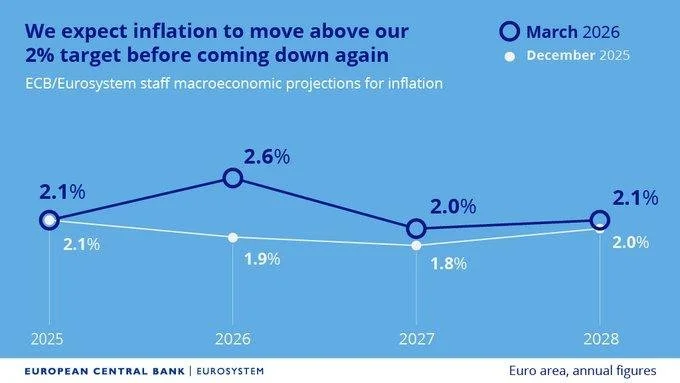
According to Reuters, financial markets expect eurozone inflation to rise to around 4% next year, with a return to the 2% target likely to take several years. These expectations come amid a surge in oil and gas prices since the start of US-Israeli attacks on Iran, raising the risk of higher energy costs, increased consumer prices, and slower economic activity in the eurozone, which comprises 21 countries and relies heavily on fuel imports.https://www.shafaq.com/en/Economy/ECB-holds-rates-at-2-warns-of-war-impact
Iraq Oil Shipments To US Drop ~5% In 20252026-03-18 Shafaq News- Baghdad Iraq’s oil exports to the United States fell in 2025 to just over 90 million barrels, according to US Energy Information Administration (EIA) data.
The data showed that total shipments reached 90.8 million barrels, down 4.6 million barrels, or 4.8%, from about 95.4 million barrels in 2024.
Despite the decline, Iraq remains a key oil supplier to the United States, though current export levels are far below the decade peak of 220.5 million barrels recorded in 2018, a drop of nearly 59%.
Monthly exports varied, peaking in August at 10.2 million barrels and falling to a low of 5.4 million barrels in February, reflecting fluctuations in Iraq’s oil supply flows to the US market.
https://www.shafaq.com/en/Economy/Iraq-oil-shipments-to-US-drop-5-in-2025
Oil Jumps As Iran Strikes Energy Sites Across Middle East
2026-03-19 Shafaq News Oil prices rose on Thursday, with benchmark Brent rising as much as $5 a barrel, after Iran attacked energy facilities across the Middle East following a strike on the South Pars gas field, a major escalation in the war with the United States and Israel.
Brent futures were up $4.66, or 4.3%, at $112.04 a barrel by 0400 GMT, after an earlier rise of more than $5 to $112.86 a barrel. U.S. West Texas Intermediate crude rose 96 cents, or 1%, to $97.28 a barrel, after having risen over $3.
Brent closed up 3.8% on Wednesday, while WTI settled nearly flat. WTI has been trading at its widest discount to Brent in 11 years due to releases from U.S. strategic reserves and higher freight costs, while renewed attacks on Middle Eastern energy facilities boosted support for Brent.
"Escalation in the Middle East, precise attacks on oil infrastructure, and the death of Iranian leadership all point to a prolonged disruption in oil supplies," Phillip Nova analyst Priyanka Sachdeva said in a note.
"Adding fuel to the fire, the Federal Reserve served 'steady rates' with a hawkish narrative, pointing to the economic concerns that follow a war."
The U.S. central bank held interest rates steady on Wednesday, projecting higher inflation as policymakers take stock of the impact of the U.S.-Israel war with Iran.
On Wednesday, QatarEnergy said Iranian missile attacks on Ras Laffan, the site of Qatar's core LNG processing operations, caused "extensive damage" to its energy hub.
Saudi Arabia said it intercepted and destroyed four ballistic missiles launched on Wednesday toward Riyadh and an attempted drone attack on a gas facility.
Iran issued evacuation warnings before its attacks for several oil facilities across Saudi Arabia, the UAE and Qatar, as it prepared to retaliate for strikes on its own energy infrastructure in South Pars and Asaluyeh.
South Pars is the Iranian sector of the world's largest natural gas deposit, which Iran shares with U.S. ally Qatar on the other side of the Gulf.
Israel carried out the South Pars gas field attack, but the United States and Qatar were not involved, President Donald Trump said late on Wednesday.
He added that Israel would not further attack Iranian facilities in South Pars unless Iran attacked Qatar, and warned that the United States would respond if Iran acted against Doha.
Oil prices are set to stay supported as Iran's fresh strikes on Middle Eastern energy infrastructure worsen regional tension, with no sign of de-escalation in the conflict or a near-term reopening of the Strait of Hormuz, said Tina Teng, market strategist at Moomoo ANZ.
Earlier, Reuters reported that Trump's administration is considering deploying thousands of U.S. troops to reinforce its operation in the Middle East, in preparation for the next steps of its campaign against Iran.
Options include providing safe passage for oil tankers through the Strait of Hormuz, which would involve primarily air and naval forces, said the sources cited in the report, but securing the Strait could also mean deploying U.S. troops.
(REUTERS) https://www.shafaq.com/en/Economy/Oil-jumps-as-Iran-strikes-energy-sites-across-Middle-East
Iraqis 3rd In Turkiye’s Foreign House Purchases In February
2026-03-19 Shafaq News- Baghdad/ Ankara Iraqis ranked third among foreign buyers of real estate in Turkiye in February, according to data released by the Turkish Statistical Institute (TURKSTAT).
The total house sales across Turkiye rose to 124,549 units in February, compared with 112,818 in the same month last year. Sales to foreign nationals reached 1,457 houses during the month, marking a relative decline compared with February of the previous year.
Russians led foreign purchases with 256 houses, followed by Iranians with 133, while Iraqis ranked third with 106 houses. Ukrainians, Germans, Chinese, British, Americans, and Kazakhstanis followed in the overall ranking.
https://www.shafaq.com/en/Economy/Iraqis-3rd-in-Turkiye-s-foreign-house-purchases-in-February
USD/IQD Exchange Rates Surge In Baghdad, Erbil
2026-03-19 Shafaq News- Baghdad/ Erbil The US dollar rose slightly in Iraq on Thursday, trading near 155,000 dinars per 100 dollars. According to a Shafaq News market survey, the dollar traded in Baghdad’s Al-Kifah and Al-Harithiya central exchanges at 154,900 dinars per 100 dollars, up from 154,700 dinars earlier in the day.
In the capital, exchange shops sold the dollar at 155,500 dinars and bought it at 154,500 dinars, while in Erbil, selling prices reached 154,800 dinars and buying prices stood at 154,700 dinars.
https://www.shafaq.com/en/Economy/USD-IQD-exchange-rates-surge-in-Baghdad-Erbil-0-4
Gold Extends Losses To Seventh Consecutive Session
2026-03-19 Shafaq News Gold prices dropped over 5% on Thursday, falling for a seventh consecutive session, as the Middle East conflict increased energy prices and ignited inflation concerns, raising expectations that top central banks will keep borrowing costs elevated.
Spot gold fell 5.5% to $4,552.38 per ounce by 8:46 a.m. ET (1246 GMT), its lowest since early February.
U.S. gold futures for April delivery fell 7% to $4,554.70.
"Gold is now a very widely held position for institutional investors and that has been on the back of the debasement trade over the last year. But the foundations of that trade are now weakening," said Daniel Ghali, commodity strategist at TD Securities.
"For the near term, we continue to see risk to the downside. There is a very substantial amount of room for gold to sell off while maintaining its bull market era trend support," he added.
Gold is prized as a hedge against inflation and geopolitical turmoil, but because it does not generate interest, it tends to lose appeal in periods when rates are high.
Top central banks struck hawkish tones as the Iran war drove energy prices sharply higher but acknowledged the sheer uncertainty over the impact on the global economy called for caution in their next policy moves.
Benchmark Brent oil prices traded above $110 a barrel after Iran attacked energy facilities across the Middle East following Israel's strike on its South Pars gas field.
Meanwhile, a U.S. official and three people familiar with the matter said President Donald Trump's administration is considering deploying thousands of U.S. troops to reinforce its operation in the Middle East as the Iran war enters a possible new phase.
Analysts at SP Angel said gold has been hit by profit-taking and a stronger dollar, noting that after its strong rally in 2025, it is not surprising to see traders lock in gains to cover margin calls and rotate into fresh trades such as hydrocarbons amid renewed volatility.
Spot silver fell 10.7% to $67.26 per ounce. Spot platinum fell 6.8% to $1,886.13, and palladium lost 4.1% to $1,415.41.
(REUTERS) https://www.shafaq.com/en/Economy/Gold-extends-losses-to-seventh-consecutive-session
“Tidbits From TNT” Thursday 3-19-2026
TNT:
Tishwash: US Central Command: We will not hesitate to defend our forces and personnel in Iraq.
The US Central Command on Thursday (March 19, 2026) accused Iraqi armed factions of attacking US forces and citizens in Iraq.
In press statements, the US leadership stressed that "the United States will not hesitate to defend its forces and American personnel in Iraq," indicating that defensive and deterrence operations are continuing to counter current threats.
In a related context, security sources told Reuters that a US diplomatic facility located near Baghdad International Airport was targeted by Katyusha rockets.
TNT:
Tishwash: US Central Command: We will not hesitate to defend our forces and personnel in Iraq.
The US Central Command on Thursday (March 19, 2026) accused Iraqi armed factions of attacking US forces and citizens in Iraq.
In press statements, the US leadership stressed that "the United States will not hesitate to defend its forces and American personnel in Iraq," indicating that defensive and deterrence operations are continuing to counter current threats.
In a related context, security sources told Reuters that a US diplomatic facility located near Baghdad International Airport was targeted by Katyusha rockets.
She noted that the attack triggered alarms inside the facility and surrounding areas, without providing immediate details on the extent of human or material losses. link
The war is hitting the economy hard: high prices and closed shops in Tehran's Grand Bazaar.
The war, which has been raging for nearly three weeks, has affected the usually bustling alleys and lanes of Tehran’s Grand Bazaar, with many shops closed and prices soaring for Iranians already struggling under years of sanctions that have strangled the economy.
Tehran’s Grand Bazaar shopping area is usually packed in the days leading up to the Persian New Year and Eid al-Fitr with merchants seeking to sell goods and close deals, and families shopping for gifts, but despite the presence of shoppers, the number on Wednesday was lower than usual.
"How can we afford to buy them?" said Nasreen, 40, as she searched the few shops that were open for new jeans for her two children.
Thanks to her salary of about $130 a month from her job at a dental clinic, Nasrin was able to buy some new clothes for the family as well as food and other necessities despite the economic problems that Iran is experiencing, including high inflation rates.
With the intense Israeli and American bombing campaign that killed the country’s supreme leader and many other prominent figures, the government has not released any new economic statistics since the start of the offensive on February 28.
But while many businesses and government offices remain open, both traders and shoppers in the market area say the war is having a strong economic impact, and they spoke of prices rising to well above the 36 percent inflation rate that persisted through most of 2025.
The “Grand Bazaar of Tehran” stretches across the center of the capital, a city within a city, filled with wholesalers and retailers, with wide streets covered by towering arches of brick or galvanized steel, whose darkness is pierced by the bright rays of the sun.
The bazaar is divided into different sections for clothing, food, spices, carpets, electronics, metal goods, and a wide range of other categories. It has long been an economic pillar of Tehran and its merchants, who form an important political voting bloc.
The war not only damaged businesses, but some buildings also suffered material damage as a result of air raids.
A shop owner was shouting "Danger, danger" as people walked by, pointing to debris falling from part of the roof.
Boria Rahbar-Yektashinais, who has owned a clothing store for nearly 14 years, said his business had just begun to recover from a long economic downturn before the war began.
But he added, "Everything collapsed," explaining that he had to close his shop again for two weeks, fearing that the market would be a target for raids, and only recently reopened his shop.
"The situation is clear now," he said, pointing to a number of closed shops in the neighborhood and surrounding alleys that were almost devoid of customers. link
***************
Tishwash: Agreement to postpone government formation: "cautious waiting" and a temporary government until the war ends
Well-informed political sources revealed on Tuesday (March 17, 2026) that there is what they described as a "near agreement" among major political forces to postpone the completion of procedures for forming the new Iraqi government until the course and repercussions of the ongoing military conflict between Iran, the United States, and Israel become clear, amid growing fears of the repercussions of regional escalation on the Iraqi interior.
Sources told Baghdad Today that “unannounced consultations took place during the past few days between the leaders of prominent political blocs, which concluded that it is necessary to adopt a policy of cautious waiting, in order to avoid forming a government that may face complex security and economic challenges in the event of an expansion of the scope of military confrontation in the region.”
She explained that “a number of political parties believe that the current stage requires a transitional government with limited powers or a continuation of temporary caretaker government until the regional scene stabilizes, especially with the possibility of Iraq being directly affected by military developments due to its geographical location and the entanglement of its political and economic interests with the parties to the conflict.”
The sources added that "internal disputes have not been fully resolved yet, but the regional factor has become an additional pressure that has prompted some forces to reassess their political priorities and focus on maintaining security stability and avoiding political division during the period of tension."
While the region is ablaze with cross-border conflicts and escalating regional tensions, the Iraqi scene seems to be moving at a different pace, governed less by the results of the war than by deep internal disputes that extend from the Coordination Framework to the Kurdish forces, hindering the identification of both the Prime Minister and the President of the Republic.
With no real signs of resolution, fears are growing that the political waiting will become a permanent state, making the formation of the next government a task postponed indefinitely. Political sources confirm that there is no specific timeframe for forming the next government, indicating that the disputes between the Coordination Framework and the Kurdish forces remain unresolved, while emphasizing that the delay in forming the government is related to internal problems and not to the results of the ongoing war in the region. link
Mot: Take a Break -- Close Ur Eyes and Listen to -- Unchained Melody !!!!
https://www.youtube.com/watch?v=ejm3Q5ZKr28&list=RDejm3Q5ZKr28&start_radio=1
The Global Wealth Transfer They Don’t Want You to See
The Global Wealth Transfer They Don’t Want You to See
Black Swan Capitalist: 3-18-2026
The world is at a tipping point. The US dollar is weakening, central banks are hoarding gold, and global financial rails are quietly evolving.
What if I told you that XRP isn’t just a cryptocurrency, but a bridge to a new parallel banking system, one that could redefine wealth, settlement, and power worldwide?
The Global Wealth Transfer They Don’t Want You to See
Black Swan Capitalist: 3-18-2026
The world is at a tipping point. The US dollar is weakening, central banks are hoarding gold, and global financial rails are quietly evolving.
What if I told you that XRP isn’t just a cryptocurrency, but a bridge to a new parallel banking system, one that could redefine wealth, settlement, and power worldwide?
In this video, I’ll explore why global wealth is shifting away from traditional banks and fiat currencies, and how tokenization and digital assets, including XRP, are rewriting the way settlement systems work.
I’ll explain why nothing in finance is truly decentralized and what that means for you, while also looking at the role of gold, silver, and other precious metals in this evolving landscape.
Finally, I’ll show how the next phase of global finance will reward those who position themselves within these new rails. If you want to understand the future of money, the role of XRP, and why timing is critical, this is a video you cannot afford to miss.
News, Rumors and Opinions Thursday 3-19-2026
Note: All intel should be considered as "Rumors" until we receive official announcements ...and “Rates and Dates” could change anytime until we get to the banks/redemption centers.
RV Excerpts from the Restored Republic via a GCR Update as of Thurs. 19 March 2026
Compiled Thurs. 19 March 2026 12:01 am EST by Judy Byington
Wed. 18 March 2026 OVER $2.3 TRILLION IN OFF-LEDGER ASSETS HAVE BEEN QUIETLY POSITIONED THROUGH U.S. TREASURY-ALIGNED CHANNELS SINCE 2018.
STORED ACROSS STRATEGIC RESERVES IN TEXAS, NEVADA, COLORADO, AND ALASKA.
Note: All intel should be considered as "Rumors" until we receive official announcements ...and “Rates and Dates” could change anytime until we get to the banks/redemption centers.
RV Excerpts from the Restored Republic via a GCR Update as of Thurs. 19 March 2026
Compiled Thurs. 19 March 2026 12:01 am EST by Judy Byington
Wed. 18 March 2026 OVER $2.3 TRILLION IN OFF-LEDGER ASSETS HAVE BEEN QUIETLY POSITIONED THROUGH U.S. TREASURY-ALIGNED CHANNELS SINCE 2018.
STORED ACROSS STRATEGIC RESERVES IN TEXAS, NEVADA, COLORADO, AND ALASKA.
THESE ASSETS WERE NEVER RECORDED IN PUBLIC BALANCE SHEETS. THEY WERE TRANSFERRED THROUGH DEFENSE CONTRACTORS, SOVEREIGN FUNDS, AND RESTRUCTURED UNDER EMERGENCY AUTHORIZATION PROTOCOLS.
INTERNAL DOCUMENTS LINK THESE HOLDINGS DIRECTLY TO THE ISO20022 TRANSITION FRAMEWORK, PREPARING A FULLY ASSET-BACKED SETTLEMENT LAYER.
THIS RESERVE WAS NOT BUILT FOR THE CURRENT SYSTEM. IT WAS BUILT FOR WHAT COMES NEXT.
~~~~~~~~~~~~~
Wed. 18 March 2026 BOOM! RV. MILITARY OP: THE NEW FINANCIAL SYSTEM — STEP OUT OF THE MATRIX AND INTO THE GOLDEN AGE! DINAR, DONG, AND ZIM! GCR! THE ALLIANCE: THE WHITE HATS’ MILITARY! …Tier4b Activated on Telegram
BOOM! THE WHITE HATS ARE LEADING THE CHARGE IN THE GLOBAL CURRENCY RESET (GCR), WITH A MILITARY OPERATION TO BRING DOWN THE CORRUPT FINANCIAL SYSTEM.
GET READY FOR THE REVALUATION (RV) OF THE IRAQI DINAR, VIETNAMESE DONG, AND ZIMBABWEAN ZIM. THIS IS BEING DESCRIBED AS THE MOMENT TO BREAK FREE FROM THE OLD SYSTEM AND STEP INTO A NEW ERA OF PROSPERITY, FREEDOM, AND WEALTH REDISTRIBUTION.
THE GLOBAL REVOLUTION HAS BEGUN — PREPARE FOR THE GREATEST SHIFT IN HUMAN HISTORY. THE FINANCIAL RESET MANY HAVE BEEN TALKING ABOUT IS PRESENTED AS A COMPLETE TRANSFORMATION OF THE SYSTEM.
THE GOLDEN AGE IS SAID TO BE ON THE HORIZON, WHERE HUMANITY RECLAIMS CONTROL OVER ITS ECONOMIC FUTURE.
THE GREAT AWAKENING: HUMANITY IS WAKING UP TO THE TRUTH. THE OLD FINANCIAL STRUCTURE, BUILT ON DEBT AND CONTROL, IS BEING CHALLENGED. MANY BELIEVE THE WORLD IS ENTERING A PERIOD WHERE PEOPLE RECOGNIZE THEIR OWN POWER AND THE SYSTEM BEGINS TO CHANGE.
THE GLOBAL CURRENCY RESET: A COMPLETE OVERHAUL OF THE FINANCIAL SYSTEM. SUPPORTERS SAY THE SHIFT MOVES FROM FIAT CURRENCIES CONTROLLED BY CENTRAL BANKS TO A SYSTEM BACKED BY REAL ASSETS SUCH AS GOLD AND SILVER, CONNECTED TO THE QUANTUM FINANCIAL SYSTEM (QFS).
THE QUANTUM FINANCIAL SYSTEM (QFS): THE FUTURE OF MONEY IS DIGITAL. DESCRIBED AS DECENTRALIZED AND SECURE, THE QFS USES ADVANCED LEDGER TECHNOLOGY TO CREATE TRANSPARENT AND FAST GLOBAL TRANSACTIONS, WITH NETWORKS LIKE STELLAR PLAYING A ROLE IN GLOBAL FINANCIAL CONNECTIVITY.
THE KEY PLAYERS: IRAQI DINAR, VIETNAMESE DONG, AND ZIMBABWEAN ZIM. THESE CURRENCIES ARE SAID TO BE AT THE CENTER OF THE REVALUATION EVENT, POTENTIALLY TRIGGERING LARGE-SCALE WEALTH REALIGNMENT AND SUPPORTING GLOBAL HUMANITARIAN PROJECTS.
THE REVOLUTION HAS BEGUN — AND MANY BELIEVE THERE IS NO STOPPING IT. THE OLD WORLD IS CHANGING, AND A NEW ERA OF ECONOMIC FREEDOM AND GLOBAL COOPERATION IS BEING DISCUSSED AS THE FUTURE.
STAND STRONG, STAY AWARE, AND WATCH AS HISTORY CONTINUES TO UNFOLD.
~~~~~~~~~~~~~~
Tues. 17 March 2026 Bruce, The Big Call The Big Call Universe (ibize.com) 667-770-1866, pin123456#
– Bank of America and Chase banks were finally connected to the QFS at 4 am Mon. morning 16 March 2026.
– 93 banks in Europe were not connected to the QFS and would likely never be.
– A Wells Fargo paymaster predicted we would be notified Wed. 18 March or Thurs. 19 March.
– A Military contact said we would be notified before Fri. 20 March.
– Bond Holders have been told they would have usable funds on Wed. or Thurs.
Read full post here: https://dinarchronicles.com/2026/03/19/restored-republic-via-a-gcr-update-as-of-march-19-2026/
Courtesy of Dinar Guru: https://www.dinarguru.com/
Jeff How far away is the rate change? Obviously the war has to happen first. Yesterday's news...they flat out finally admitted it to you. The government formation is paused and on hold until the war is done...I've been telling you guys since we've been into this year that everything in Iraq, including real trade against their currency, taxation, all of that is paused and on hold until they form the government and revalue the currency going international.
Frank26 We're close no doubt. But the problem is that you can see what is in the way. You know what is preventing this. We need to pray that the war ends and we are victorious and the government of Iraq is established...Like I always say, lets wait till the smoke clears..In my heart I believe it's gong to clear before the end of this month.
Mnt Goat Article: "FOUR MONTHS AFTER THE IRAQI ELECTIONS: THE WAR MAY LEAD TO AN EXTENSION OF AL-SUDANI’S TERM" Quote: "Well-informed political sources revealed on Tuesday (March 17, 2026) that there is what they described as a “near agreement” among major political forces to postpone the completion of procedures for forming the new Iraqi government until the course and repercussions of the ongoing military conflict between Iran, the United States, and Israel become clear, amid growing fears of the repercussions of regional escalation on the Iraqi interior." So now there is talk that the elections may just be postponed altogether until the Iranian conflict is over. The new Parliament leader already told us he does not intend to hold any sessions until the conflict is over.
*************
“Nefarious” Activities at Comex? What’s REALLY Going on With Gold and Silver Prices - Bubba Horwitz
Daniela Cambone: 3-18-2026
As gold and silver pull back from recent highs, one veteran trader says the setup is building for the next leg higher. Todd "Bubba" Horwitz, chief market strategist, joins Daniela Cambone to break down the critical signals flashing in the precious metals market.
"I don't think there are enough metals in the world, silver and gold, to cover the amount of paper that is written on them and the amount of use that is needed," he argues.
"The prices get suppressed." He adds that the current consolidation is healthy: "We are in absolute perfect condition right now to build on that next rally, because the longer these markets go sideways and consolidate… they're going to explode higher in my opinion."
Seeds of Wisdom RV and Economics Updates Thursday Morning 3-19-26
Good Morning Dinar Recaps,
Global Reset Series - Part 2
Why Central Banks Are Buying Gold at Record Levels
Gold is once again becoming a strategic reserve asset for many nations as governments reassess financial stability and reserve diversification.
Good Morning Dinar Recaps,
Global Reset Series - Part 2
Why Central Banks Are Buying Gold at Record Levels
Gold is once again becoming a strategic reserve asset for many nations as governments reassess financial stability and reserve diversification.
Overview
Central banks around the world have been rapidly increasing their gold reserves in recent years, marking one of the most significant shifts in reserve management since the 1970s.
NAccording to the World Gold Council, central bank gold purchases have exceeded 1,000 tonnes annually, the highest sustained levels since modern records began.
This trend reflects growing interest in diversification and long-term financial stability.
Key Developments
1.Gold purchases are occurring across multiple regions
Several major economies have significantly expanded their gold reserves, including:
• China• India• Turkey• Russia• Poland
Many of these purchases represent long-term reserve diversification strategies.
2.Gold remains a unique financial asset
Unlike government bonds or foreign currencies, gold carries no counterparty risk.
This means its value does not depend on the financial stability of another government or institution.
Because of this characteristic, gold continues to play a strategic role in central bank balance sheets.
3.Reserve diversification has become a priority
Many central banks are seeking to reduce reliance on a single reserve currency.
Diversifying reserve holdings can help protect against:
• currency volatility
• geopolitical risks
• global financial shocks
Why It Matters
Central bank reserve strategies influence the stability of the global financial system.
Large-scale shifts in reserve assets can affect:
• currency markets
• financial confidence
• international capital flows
Historically, similar shifts have coincided with major transitions in the global monetary system.
Why It Matters to Foreign Currency Holders
Gold accumulation is often viewed as a signal that governments are strengthening financial buffers.
While modern currencies are not backed by gold, strong gold reserves can increase confidence in a country's monetary position.
Implications for the Global Reset
Pillar 1 — Monetary Resilience
Gold reserves provide stability and diversification within national balance sheets.
Pillar 2 — Global Reserve Strategy
Increasing gold holdings may signal a gradual evolution in how countries manage financial reserves.
Seeds of Wisdom Team View
Gold has served as a monetary anchor for thousands of years.
The renewed interest among central banks suggests that traditional reserve assets still play a critical role even as digital financial technologies emerge.
Seeds of Wisdom Team
Newshounds News™ Exclusive
Sources
~~~~~~~~~~
A Message to Our Currency Holders
If you’ve been holding foreign currency for many years, you were not foolish.
You were not wrong to believe the global financial system would change.
What failed was not your patience — it was the information you were given.
For years, dates, rumors, and personalities replaced facts, structure, and proof. “This week” predictions created cycles of hope and disappointment that were never based on how currencies actually change.
That is not your failure.
Our mission here is different: • No dates • No rates • No hype • No gurus
Instead, we focus on:
• Verifiable developments • Institutional evidence
• Global financial structure • Where countries actually sit in the process
Currency value changes only come after sovereignty, trade, banking, settlement systems, and fiscal coordination are in place. History and institutions confirm this sequence.
You will see silence. You will see denials. That is not delay — that is discipline.
Protect your identity. Organize your documents. Verify everything.
Never hand your discernment to anyone who cannot show proof.
You deserve truth — not timelines.
Seeds of Wisdom Team
Newshounds News
~~~~~~~~~~
Seeds of Wisdom Team RV Currency Facts Youtube and Rumble
Newshound's News Telegram Room Link
RV Facts with Proof Links Link
RV Updates Proof links - Facts Link
Follow the Gold/Silver Rate COMEX
Follow Fast Facts
Seeds of Wisdom Team™Website
Thank you Dinar Recaps
Iraq Economic News and Points To Ponder Thursday Morning 3-19-26
The Chinese Yuan Is Poised For Its Longest Upward Trend Against The US Dollar.
Money and Business Economy News - Follow-up Swiss bank Union Bancaire Privée (UBP) adopts one of the most optimistic stances towards the Chinese yuan, predicting that the currency will continue to rise against the dollar over the next ten years, based on improved economic fundamentals and the accelerating pace of reforms in Beijing.
The Chinese Yuan Is Poised For Its Longest Upward Trend Against The US Dollar.
Money and Business Economy News - Follow-up Swiss bank Union Bancaire Privée (UBP) adopts one of the most optimistic stances towards the Chinese yuan, predicting that the currency will continue to rise against the dollar over the next ten years, based on improved economic fundamentals and the accelerating pace of reforms in Beijing.
In a report published in March, the private bank – which manages assets exceeding 150 billion Swiss francs ($190 billion) – raised its confidence level in the strength of the yuan to its highest level, a move equivalent to its bullish outlook on gold. UBP expects the yuan to reach 6.70 to the dollar in the onshore market by the end of 2026.
The bank's chief economist, Carlos Casanova, said the Chinese currency is poised to enter a decade-long structural upswing, supported by strong fundamentals and reforms, according to Bloomberg.
He added that the yuan currently appears to be undervalued by between 10% and 50%, based on indicators such as purchasing power parity, the real effective exchange rate, and interest rate differentials.
The Swiss bank thus joins a growing group of financial institutions betting on the yuan benefiting from Beijing’s efforts to strengthen its global role, as well as pushing the economy towards a greater balance between consumption and production.
The yuan reached a three-year high against the dollar this year before falling by about 0.5% since the outbreak of the Iran war in late February. However, it has outperformed most other global currencies, demonstrating remarkable resilience in the face of soaring oil prices and market volatility.
Short-term pressure... and an expected rise in the medium term
Casanova believes that the dollar's strength may continue in the near term due to investors' preference for safe assets, but the medium-term trend will remain "normal to the path of yuan strength."
He added that the conflict in the Middle East is increasing the pressure on the US debt, which supports our view that the dollar may weaken structurally. https://www.economy-news.net/content.php?id=66901
The Central Bank Of Syria Announces Developments Regarding The Replacement Of The Syrian Pound And The Date For Activating Its Account With The US Federal Reserve.
Banks Economy News - Follow-up The Governor of the Central Bank of Syria, Abdul Qader al-Hasriya, confirmed that Syria’s account at the US Federal Reserve Bank is now ready and operational and will be activated soon, following intensive efforts that began last July as part of Syria’s reintegration into the global financial system.
Al-Hasri said that “the announcement of the reactivation of the account was met with a direct welcome from the US Treasury Department and the US Presidential Envoy, who described the move as historic and constituting support for the recovery of the Syrian economy,” noting that these messages carry important political and economic implications, especially since the sanctions on Syria began with the United States in 1979, and that the current cooperation reflects a trend towards reintegrating the Syrian financial system into the global financial system.
Al-Hasri added: “Having an active account at the US Federal Reserve Bank allows Syria to return to the correspondent banking system and secures clearing and transfer operations in US dollars, which directly impacts the flow of resources from remittances from expatriates and investors, and the return of foreign trade to official banking channels, which enhances liquidity and provides greater opportunities for importing, transferring, and creating job opportunities,” according to the Syrian News Agency “SANA.”
He explained that transfers through official channels will lead to a significant reduction in transfer costs, after eliminating the role of intermediaries and informal links, indicating that transfers through the "SWIFT" system arrive in 77% of cases within just 10 minutes, which enhances citizens' confidence in the banking sector and improves the relationship between banks and their customers.
He pointed out that this step comes within the Central Bank’s vision to build a financial sector that operates according to international standards and leads Syria’s integration into the international financial system, noting that the bank is working in parallel on cooperation tracks with central banks in Canada and Europe.
He said that meetings were held with the Bank of Canada and Canadian financial institutions to discuss opening an account for the Central Bank of Syria there, in addition to meetings with major banks, regulatory bodies and currency printing institutions. Work is also underway on a similar track with the European Central Bank, Germany and France to organize joint banking days and enhance cooperation.
Replacing The Syrian Pound
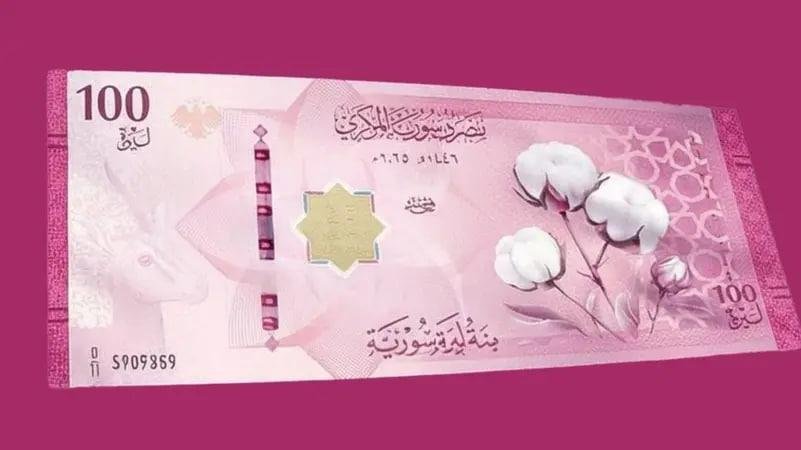
Regarding the replacement of the new currency, the Governor of the Central Bank of Syria confirmed that about 40% of the circulating cash mass of 42 trillion old Syrian pounds has been replaced, after the percentage was 35%, noting that the process is proceeding smoothly and is expected to accelerate after Eid al-Fitr.
Al-Hasri said that the Syrian economy faces challenges related to the war in the region and its effects on the global economy, from supply chain disruptions and rising energy prices to fluctuations in exchange rates. However, the policies and tools adopted by the Central Bank have contributed to maintaining relative stability in the exchange rate despite the rise of the dollar globally.
The exclusive report revealed that measures have been taken to activate the Central Bank branches in Raqqa and Hasakah, appoint new directors for the two branches, and work to improve the availability of the Syrian pound in the region, stressing that the bank is working daily in coordination with the Ministry of Finance to address the issue of salaries and mitigate the effects of the crisis. https://www.economy-news.net/content.php?id=66762
Dollar Falls In Baghdad And Erbil Markets
2026-03-19 Shafaq News- Baghdad/ Erbil The US dollar opened Thursday’s trading lower in Iraq, hovering around 155,000 dinars per 100 dollars.
According to a Shafaq News market survey, the dollar traded in Baghdad's Al-Kifah and Al-Harithiya exchanges at 154,700 dinars per 100 dollars, down from the previous session’s 155,000 dinars.
In the Iraqi capital, exchange shops sold the dollar at 155,250 dinars and bought it at 154,250 dinars, while in Erbil, selling prices stood at 154,400 dinars and buying prices at 154,300 dinars
https://www.shafaq.com/en/Economy/Dollar-falls-in-Baghdad-and-Erbil-markets-9
Gold Prices Decline In Baghdad, Erbil Markets
2026-03-19 Shafaq News- Baghdad/ Erbil On Thursday, gold prices hovered around 1.03 million IQD per mithqal in Baghdad and Erbil markets, according to a survey by Shafaq News Agency.
Gold prices on Baghdad's Al-Nahr Street recorded a selling price of 1,021,000 IQD per mithqal (equivalent to five grams) for 21-carat gold, including Gulf, Turkish, and European varieties, with a buying price of 1,017,000 IQD. The same gold had sold for 1,047,000 IQD on Wednesday.
The selling price for 21-carat Iraqi gold stood at 991,000 IQD, with a buying price of 987,000 IQD.
In jewelry stores, the selling price per mithqal of 21-carat Gulf gold ranged between 1,025,000 and 1,035,000 IQD, while Iraqi gold sold for between 995,000 and 1,005,000 IQD.
In Erbil, 22-carat gold was sold at 1,085,000 IQD per mithqal, 21-carat gold at 1,035,000 IQD, and 18-carat gold at 887,000 IQD. https://www.shafaq.com/en/Economy/Gold-prices-decline-in-Baghdad-Erbil-markets-0
Gold Rebounds As Dollar Pause Offsets Fed Pressure
2026-03-19 Shafaq News Gold rose on Thursday after briefly touching a more than one-month low, as a pause in the U.S. dollar rally offered support, but gains were capped by a hawkish Federal Reserve, which limited hopes for near-term rate cuts.
Spot gold added 0.7% to $4,851.43 per ounce as of 0433 GMT, after falling to its lowest since February 6 earlier in the day. Prices fell 3.7% on Wednesday.
U.S. gold futures for April delivery shed 0.9% to $4,852.70.
"The dollar's momentum has paused today, which has effectively allowed gold to start recouping ground, albeit at a modest pace," said Tim Waterer, KCM Trade chief market analyst.
The pause made greenback-priced bullion cheaper for holders of other currencies.
"Expectations for incoming U.S. rate cuts have been a cornerstone of gold's ascent, but spiking oil prices havedampened hopes for monetary easing, which has somewhat pulled the rug out from under the gold price," said Waterer.
Oil climbed above $110 a barrel after Iran attacked several energy facilities across the Middle East following a strike on its South Pars gas field, adding fresh inflation concerns.
The closure of the Strait of Hormuz kept crude elevated, raising transport and manufacturing costs. While a rising inflation backdrop typically boosts gold's appeal as a hedge, high interest rates reduce demand for the non-yielding metal.
The U.S. Federal Reserve and Bank of Canada both struck hawkish tones on Wednesday as surging energy prices arising from the Iran conflict clouded the inflation outlook.
Both central banks held rates steady, but warned of risks that rising energy costs could fan a more persistent inflation spike.
Meanwhile, U.S. President Donald Trump's administration is considering deploying thousands of U.S. troops to reinforce operations in the Middle East.
Spot gold has fallen more than 9% since the U.S.-Israeli strike on Iran on February 28, pressured by a stronger dollar, which has emerged as one of the clearest "safe-haven" winners.
Spot silver gained 0.4% to $75.63 per ounce. Spot platinum rose 0.7% to $2,036.67 and palladium added 1.8% to $1,501.37. (REUTERS) https://www.shafaq.com/en/Economy/Gold-rebounds-as-dollar-pause-offsets-Fed-pressure
Citibank Will Keep Most Of Its Branches In The UAE Closed Until Further Notice.
Economy News — Follow-up Citibank said most of its branches and offices in the UAE will remain closed until further notice, as part of a broader reaction from the banking sector to the deteriorating security situation due to the war with Iran.
The bank had planned to reopen its branches on Monday, and said in a message to customers on Saturday that its branch in Mall of the Emirates in downtown Dubai would be the only exception, but with reduced working hours.
Banks in the region have asked their employees to work from home as the conflict escalates, particularly after Iran’s Revolutionary Guard threatened to attack US- and Israeli-linked economic centers and banks in the Gulf, according to Reuters.
A message on Saturday said customers should use the online service and the bank's mobile application to meet their banking needs.
The bank stressed in the letter that it "continues to serve customers in the UAE and Bahrain without interruption" despite the branch closures. https://www.economy-news.net/content.php?id=66813
The Civil Aviation Authority Decides To Extend The Closure Of Iraqi Airspace For (72) Hours
Money and Business Economy News – Baghdad The Civil Aviation Authority announced today, Thursday, the extension of the closure of Iraqi airspace to all incoming, departing and transiting aircraft for (72) hours as a temporary precautionary measure.
A statement from the Civil Aviation Authority, received by “Al-Eqtisad News”, stated that “it has been decided to extend the closure of Iraqi airspace to all incoming, departing and transiting aircraft for (72) hours starting from 12:00 noon on Thursday, March 19, 2026 (09:00 UTC) until 12:00 noon on Sunday, as a temporary precautionary measure.”
The statement added that "the decision comes based on the ongoing assessment of the security situation and developments in the regional situation, and will be reassessed in light of new developments."
Seeds of Wisdom RV and Economics Updates Wednesday Evening 3-18-26
Good Evening Dinar Recaps,
Oil Shock Deepens: Markets Brace as Middle East Conflict Threatens Global Supply
Energy volatility intensifies as fears grow over prolonged disruption to critical النفط corridors
Overview (Key Points)
Global markets are on edge as oil prices remain volatile amid escalating tensions involving Iran, United States, and Israel.
Good Evening Dinar Recaps,
Oil Shock Deepens: Markets Brace as Middle East Conflict Threatens Global Supply
Energy volatility intensifies as fears grow over prolonged disruption to critical النفط corridors
Overview (Key Points)
Global markets are on edge as oil prices remain volatile amid escalating tensions involving Iran, United States, and Israel.
The ongoing conflict continues to threaten the Strait of Hormuz, a vital artery through which roughly 20% of the world’s oil supply flows, raising fears of a sustained global energy shock.
Governments and institutions are now considering emergency measures, including strategic reserve releases, as markets struggle to price in geopolitical risk.
This situation is not just an energy story—it is a systemic economic threat impacting inflation, trade, and financial stability worldwide.
Key Developments
1. Oil Prices Remain Highly Volatile
Crude oil markets have experienced sharp swings, reflecting uncertainty over whether supply disruptions will worsen.
Prices surged on escalation fears, then pulled back on hopes of de-escalation—highlighting how sensitive markets are to geopolitical headlines.
Even without a full supply disruption, risk premiums are driving prices higher, impacting global economic expectations.
2. Strait of Hormuz Remains Critical Risk
The Strait of Hormuz remains the single most important chokepoint in global energy trade.
Any sustained disruption could:
Remove millions of barrels per day from global supply
Trigger a severe energy crisis
Send oil prices sharply higher
Markets are increasingly pricing in the possibility of partial or temporary disruptions, even without a full closure.
3. Governments Consider Emergency Interventions
The International Energy Agency (IEA) and major economies are actively discussing strategic oil reserve releases to stabilize markets.
Such measures are designed to:
Calm price spikes
Ensure short-term supply stability
Reduce panic-driven volatility
However, reserves are temporary tools, not long-term solutions to sustained geopolitical disruption.
4. Inflation Risks Reignite Globally
Higher oil prices are feeding directly into renewed inflation concerns worldwide.
Energy costs impact:
Transportation
Manufacturing
Food production
Consumer goods
This creates broad-based price pressure, complicating central bank policy decisions.
5. Financial Markets React With Caution
Equity markets, bond markets, and currencies are all reacting to heightened uncertainty.
Investors are increasingly:
Reducing risk exposure
Moving into safe-haven assets
Reassessing global growth expectations
This shift reflects growing concern about the economic impact of prolonged conflict.
Why It Matters
Energy is the foundation of the global economy, and disruptions at this scale can trigger:
Inflation spikes
Economic slowdowns
Market volatility
Policy tightening
Because oil is embedded in nearly every sector, its price influences the entire financial system.
Why It Matters to Foreign Currency Holders
Oil shocks often drive major currency movements.
Energy exporters may see currency strength
Import-dependent nations face currency pressure
Inflation can erode purchasing power globally
These dynamics can reshape global capital flows and currency valuations.
Implications for the Global Reset
Pillar 1: Energy as a Systemic Risk Driver
The crisis highlights how energy markets can destabilize the broader financial system, forcing governments to intervene.
Pillar 2: Accelerating Structural Change
Repeated energy shocks may push nations to:
Diversify supply chains
Rethink energy dependence
Explore alternative financial systems
Conclusion
The ongoing Middle East conflict is reshaping global energy markets and economic expectations in real time.
Even without a full disruption, uncertainty alone is enough to drive volatility across the global financial system.
In today’s interconnected economy, energy shocks quickly become financial shocks—and their effects are felt worldwide.
Seeds of Wisdom Team
Newshounds News™ Exclusive
Sources
Reuters — "Oil prices volatile as Middle East tensions raise supply concerns"
International Energy Agency — "Global oil market outlook amid geopolitical tensions"
~~~~~~~~~~
Global Debt Pressure Mounts as Rising Yields Tighten Financial Conditions Worldwide
Higher borrowing costs ripple across economies, signaling stress in the core of global finance
Overview (Key Points)
Rising government bond yields are tightening financial conditions globally, signaling growing stress in the financial system.
The benchmark U.S. Treasury market, the backbone of global finance, is seeing elevated yields driven by inflation concerns, heavy borrowing, and geopolitical instability.
As yields rise, borrowing costs increase across the economy, impacting governments, corporations, and consumers alike.
This shift is critical because interest rates influence nearly every aspect of the global financial system.
Key Developments
1. Treasury Yields Remain Elevated
Yields on U.S. government bonds have remained near recent highs, reflecting:
Persistent inflation concerns
Large fiscal deficits
Strong issuance of government debt
Higher yields signal that investors are demanding greater compensation for risk, especially in an uncertain environment.
2. Borrowing Costs Rise Across the Economy
As bond yields increase, borrowing becomes more expensive across all sectors.
This affects:
Mortgage rates
Corporate financing
Government debt servicing
Consumer loans
Higher borrowing costs can slow economic growth and reduce investment.
3. Global Spillover Effects Intensify
Because U.S. Treasuries anchor global finance, rising yields impact:
International bond markets
Currency exchange rates
Capital flows between nations
Emerging markets are particularly vulnerable, as higher U.S. yields can pull capital away from riskier economies.
4. Debt Sustainability Concerns Grow
With global debt levels already elevated, rising interest rates are increasing the cost of servicing that debt.
Governments facing higher interest payments may need to:
Cut spending
Increase borrowing
Adjust fiscal policies
This dynamic creates long-term structural pressure on the global economy.
5. Markets Reprice Risk Across Asset Classes
Higher interest rates force investors to reassess asset valuations.
This can lead to:
Equity market volatility
Pressure on high-growth sectors
Increased demand for safer assets
The result is a broad repricing of risk across financial markets.
Why It Matters
Interest rates are the foundation of the global financial system.
When they rise:
Economic growth can slow
Debt becomes more expensive
Financial markets become more volatile
These effects ripple through every major economy.
Why It Matters to Foreign Currency Holders
Higher U.S. yields often strengthen the U.S. dollar, impacting:
Global trade balances
Currency valuations
Investment flows
Countries with high debt or reliance on foreign capital may face increased financial pressure.
Implications for the Global Reset
Pillar 1: Debt System Under Pressure
Rising interest rates expose vulnerabilities in the global debt system, particularly after years of low-cost borrowing.
Pillar 2: Financial System Rebalancing
As borrowing costs rise, the global economy may shift toward:
More sustainable debt levels
Adjusted monetary policies
Structural financial reforms
Conclusion
The rise in global bond yields is a clear signal of tightening financial conditions and increasing systemic pressure.
As borrowing costs climb and markets adjust, the effects are being felt across economies, industries, and financial systems worldwide.
In a system built on debt and liquidity, rising yields act as a stress test—and the results are now unfolding in real time.
Seeds of Wisdom Team
Newshounds News™ Exclusive
Sources
Reuters — "Global bond yields rise as inflation concerns persist"
International Monetary Fund — "Global Financial Stability Update"
~~~~~~~~~~
Seeds of Wisdom Team RV Currency Facts Youtube and Rumble
Newshound's News Telegram Room Link
RV Facts with Proof Links Link
RV Updates Proof links - Facts Link
Follow the Gold/Silver Rate COMEX
Follow Fast Facts
Seeds of Wisdom Team™Website
Thank you Dinar Recaps
Iraq Economic News and Points To Ponder Wednesday Evening 3-18-26
Egypt Warns Media, Vows Legal Action Over Arab Ties
2026-03-18 Shafaq News- Cairo Four Egyptian state bodies on Wednesday warned against media practices that undermine relations with Arab countries, including Iraq, saying attempts to damage long-standing ties amount to a “crime” warranting legal action.
The Egyptian Ministry of State for Information, in coordination with the Supreme Council for Media Regulation, the National Press Authority, and the National Media Authority, issued a joint statement warning of “negative media practices” affecting relations with countries facing “Iranian aggression.”
Egypt Warns Media, Vows Legal Action Over Arab Ties
2026-03-18 Shafaq News- Cairo Four Egyptian state bodies on Wednesday warned against media practices that undermine relations with Arab countries, including Iraq, saying attempts to damage long-standing ties amount to a “crime” warranting legal action.
The Egyptian Ministry of State for Information, in coordination with the Supreme Council for Media Regulation, the National Press Authority, and the National Media Authority, issued a joint statement warning of “negative media practices” affecting relations with countries facing “Iranian aggression.”
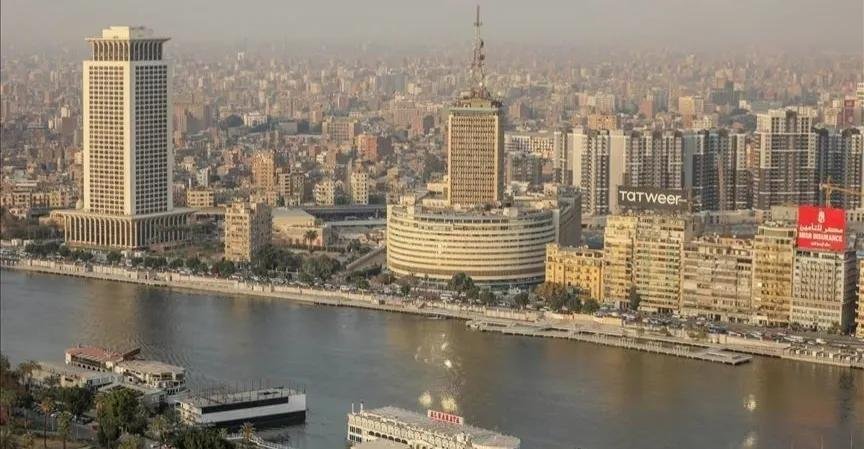
The statement followed a call by Minister of State for Information Diaa Rashwan, and stressed that Egypt maintains deep-rooted ties with Arab states, including Saudi Arabia, the United Arab Emirates, Qatar, Bahrain, Kuwait, Oman, Iraq, and Jordan.
It described any attempt to harm these relationships as a direct threat to the collective interests of Arab states, calling such actions “unacceptable” on legal, national, and ethical grounds.
The four bodies said they will now enforce existing laws and regulations to control media performance, prevent harm to national interests, and stop insults directed at allied countries or their officials.
The move follows recent media disputes across Egyptian television and social media platforms tied to unfolding regional developments, which officials described as “temporary events” that will not affect Egypt’s relations with other Arab states.https://shafaq.com/en/Middle-East/Egypt-warns-media-vows-legal-action-over-Arab-ties
Today's Security, Tomorrow's Worries... March Salaries Are Secured, And The Government Is Preparing For Difficult Financial Months.
Baghdad Today – Baghdad Amid the daily concerns of Iraqis about securing their livelihood and monthly salaries, many are wondering whether their salaries will arrive on time this month or whether the government will face financial obstacles. This anxiety, which is prevalent among the Iraqi public, has become palpable among employees and citizens, especially with the ongoing regional escalation.
Amid these concerns, economic affairs expert Haider Al-Sheikh confirmed today, Tuesday (March 17, 2026), that the salaries of state employees for the month of March are fully secured and revealed the date of their disbursement.
The sheikh told Baghdad Today: “The salaries of employees for the month of March are fully secured, and the Ministry of Finance will begin disbursing them after the end of the Eid al-Fitr holiday.”
But regarding the coming months, the sheikh added, "The government may face challenges in securing employee salaries if the tensions and war in the region continue as they are." He explained that the Iraqi economy relies heavily on oil exports through the Strait of Hormuz, meaning any regional instability directly impacts the country's revenues.
He pointed out that the government may be forced, if the current conditions continue, to borrow domestically to secure salaries, explaining that Iraq needs at least 6 trillion dinars monthly to cover salaries.
The sheikh concluded his remarks by emphasizing that "the next phase requires prudent financial management to avoid any potential crisis in securing salaries, especially given the regional and economic fluctuations."
Earlier, the Ministry of Finance announced that the salaries of employees and retirees are secured, denying reports that there would be no salaries in March.
A ministry statement read, "The Ministry of Finance categorically denies the validity of what has been circulating on some social media platforms regarding the statement claiming that there will be no salaries next month or that the treasury is empty."
Official data indicates that more than 70% of the operating budget is allocated to cover salaries and allowances, a high percentage for a country that does not have real economic diversification. In addition, the size of the cash circulating outside the banking system reflects a structural problem in the financial system, which makes it more difficult to achieve monetary stability and sufficient liquidity in the future. https://baghdadtoday.news/295271-.html
Washington Warns Attacks By “Iran-Aligned Militias” Threaten Iraq’s Stability
2026-03-18 Shafaq News- Washington The US State Department on Wednesday condemned attacks by “Iran and Iran-aligned militias” targeting American interests in Iraq, warning that continued assaults could threaten the country’s stability and risk drawing it into “a broader regional conflict.”
A State Department spokesperson told Shafaq News that such incidents have repeatedly targeted “U.S. diplomatic personnel and facilities, civilian targets, and energy infrastructure in Iraq.”
The spokesperson also referred to recent remarks by US Secretary of State Marco Rubio, who urged Iraqi authorities to “take all possible measures to safeguard U.S. diplomatic personnel and facilities and ensure militia groups cannot use Iraqi territory to threaten the United States or the region,” noting, “Doing so is in Iraq’s best interest.”
For Shafaq News, Mostafa Hashem, Washington, D.C.
Read more: Proxy escalation: Iraq caught between diplomacy and battlefield reality
CF Delay Keeps Iraq Without Government, Says MP
2026-03-18 Shafaq News- Baghdad The Coordination Framework is delaying Iraq’s government formation, MP Mohammed al-Baldawi of the Sadiqoun bloc said on Wednesday, adding that caretaker Prime Minister Mohammed Shia al-Sudani remains the leading candidate.
Al-Baldawi told Shafaq News that political leaders should not link the formation process to the end of the regional war, stressing the need to form a government capable of protecting Iraq’s security and sovereignty.
He said the delay serves no one and harms Iraq’s political forces, urging leaders to adopt a unified national position. He held the Coordination Framework (CF) responsible for the slowdown.
“Political blocs have resolved most obstacles and now need to elect a president and assign a prime minister-designate,” he said, noting continued objections to Nouri al-Maliki, head of the State of Law Coalition.
A source within CF earlier told Shafaq News that alliance leaders decided to delay selecting their nominee until the regional conflict subsides, referring to tensions involving the United States, Israel, and Iran.
The Framework nominated al-Maliki on Jan. 24, but political disputes over electing a president continue to block the process. Iraq’s constitution requires parliament to elect a president before assigning the prime minister-designate.
Some Sunni factions and rival Shiite groups oppose al-Maliki’s return, while the US administration under Donald Trump has warned it may cut aid to Iraq if he takes office.https://shafaq.com/en/Iraq/CF-delay-keeps-Iraq-without-government-says-MP
Read more: Iraq’s next Prime Minister held hostage by US-Iran standoff
Iraqi National Intelligence Service Warns Of An Online Disinformation Campaign And Confirms That Those Involved Will Be Prosecuted
Baghdad – One News 3/18/2026 The National Intelligence Service announced that it had detected a systematic campaign on social media platforms aimed at questioning its national role and professionalism, as well as inciting against its leaders by spreading misleading information.
In an official statement, the agency condemned these activities, describing them as criminal and inflammatory acts aimed at undermining confidence in security institutions.
He indicated that he would begin prosecuting all those involved in this campaign within the legal frameworks, while taking deterrent measures against anyone proven to be involved in publishing or promoting this information.
The agency stressed that these attempts are “desperate” and will not affect its performance or prevent it from continuing to carry out its duties, especially in light of the serious security challenges facing the region.
https://1news-iq.net/جهاز-المخابرات-الوطني-يحذر-من-حملة-تضل/
More Than 200 Americans At Balad Site Say They Have No Evacuation Plan As Fears Grow Of A Post-Ramadan Assault
Katie McQue Wed 18 Mar 2026 Hundreds of US contractors are stranded on a major military base near Baghdad, Iraq, with no evacuation plan, while local Iran-backed militants are possibly making plans to attack the base, three sources said.
The contractors are employed on the Martyr Brigadier General Ali Flaih Air Base, formerly Balad Air Base, to support the Iraqi government’s F-16 fighter jet program.
“With more than 200 American nationals on the base, the site is considered a high-value target, and the absence of visible preventative measures leaves us feeling exposed and vulnerable,” said one employee of defense contractor V2X on the base, who spoke on the condition of anonymity for fear of reprisals. “All of us are pretty much sitting ducks at the moment.”
V2X was approached for comment, but did not respond before publication.
Iraqi workers on the base have warned their foreign colleagues Islamic Resistance militants are making plans to attack the base once Ramadan, the Muslim holy month, ends later this week, contract workers said. Some Iraqi military and contract employees on the base have links to the militants and have been passing information to them in preparation for an attack, the sources said.
Islamic Resistance is a series of militias and armed groups that are linked to the Popular Mobilization Forces (PMF), an umbrella network of mostly Shiite militias that is formally part of Iraq’s state security apparatus. The Iraqi prime minister, Mohammed Shia’ al-Sudani, does not have the authority to curb their rise in power, said Renad Mansour, senior research fellow at Chatham House, a London-based independent policy institute.
“One of the biggest challenges of the Iraqi state is there has been an increase in these groups gaining senior and significant positions in the security sector in the last few years,” said Mansour. “It’s very much a hybrid model in which they have one foot in the state and one foot out of the state.”
The local militants have been gathering information on the populations working on the Martyr Brigadier General Ali Flaih Air Base, sources said.
“They are asking questions about how many foreigners and Americans are on base,” the first V2X employee source said.
The contractor employees are now stranded on the base, since the roads outside it are too dangerous to travel on and airspace is closed due to aerial bombardment from drones and missiles. Military forces on the base have been shooting at the drones, which the contract workers hear. However, in the daily security emails from V2X, the company has said there have been no unmanned aerial vehicles (UAVs) flying over the base.
“People are seeing the UAVs. We hear this shooting every day, sometimes multiple times, and they have the nerve to say there’s not UAV activity in the vicinity of the base,” said the second V2X worker source. “I believe the danger is higher than they’re saying and they’re minimizing it to the United States Government.”
The workers interviewed by the Guardian said V2X is not providing them with timely information on safety protocols.
“We are not safe. The war is not ending, and the company refused to evacuate us,” said the second V2X source. “They are very poorly equipped. Our lives are in great danger.”
Iran-backed militants in Iraq had been exercising restraint since the October 7, 2023, Hamas attacks on Israel, under the direction of leaders of both countries in efforts to maintain security and some economic stability, said Mansour.
“I think in this latest iteration of this war, that is no longer the case, that these groups are now acting in a more free capacity,” said Mansour. “To them, this is an existential fight, because they rely so heavily on the relationship with Iran, economically, militarily, ideologically and so as Iran has shifted its posture and It’s looking to effectively show chaos in the region as much as possible.”
The Martyr Brigadier General Ali Flaih Air Base has been targeted several times since Israel and the United States launched its attacks on Iran last month. Iran has responded by launching an onslaught of missile attacks on US interests, critical infrastructure and civilian targets around the Persian Gulf. On 17 March, rockets and drones were launched at the US embassy in Baghdad from areas around the city, with three striking inside the embassy compound, triggering a fire.
V2X secured a $118m contract from the US air force to support the Iraq F-16 program last June. The Reston, Virginia-headquartered defense firm, was formed in 2022 following the merger of Vectrus and Vertex Aerospace.
The Iraqi government has made a threat to V2X that if its personnel are evacuated, it could lose the contract, two sources said.
The Guardian has previously reported that V2X employees working on US military bases in Kuwait are lacking adequate bunker facilities and have had their pay reduced, and are receiving limited communication from their employer about safety and evacuation procedures, since the outbreak of the conflict. US military personnel were evacuated from Kuwait in the days leading up to the conflict, yet no such plans were made to evacuate the civilian contractors, employees have said.
“Iran is basically fighting a guerrilla warfare on a global scale,” said Anna Jacobs, a non-resident fellow at the Arab Gulf States Institute, a DC-based think tank. “It has extremely messy this is why it’s so hard for even major military powers like the US, like Israel to ‘win’ this war.”
As the conflict progresses, more militant groups in the region are likely to become more active. Additionally, Israel announced this week it had Iran’s national security chief, Ali Larijani, in overnight strikes. If confirmed, this would unleash a fresh escalation of attacks from Iran, said Jacobs. This could include a surge of activity from militant groups that have remained fairly quiet so far.
“Hezbollah has been activated in Lebanon. But what about the Houthis in Yemen and some these militias in Iraq have not yet been activated? This is what could be the next phase of escalation,” said Jacobs. “Iran has only begun to use its arsenal of asymmetric warfare, and there’s much more that they can actually do.”
https://www.theguardian.com/world/2026/mar/18/us-contractors-stranded-iraq-iran
Jon Dowling: Latest Updates on the Great Wealth Transfer and Currencies with Dave Mahoney, March 2026
Jon Dowling: Latest Updates on the Great Wealth Transfer and Currencies with Dave Mahoney, March 2026
3-18-2026
The global stage is currently a complex web of geopolitical tensions, financial uncertainty, and emerging monetary trends.
A recent in-depth discussion between two insightful hosts, Dave and Jon, sheds light on the intricacies of these developments, offering a nuanced understanding of the forces shaping our world.
In this blog post, we’ll delve into the key takeaways from their conversation, covering the escalating instability in the Middle East, the global economic landscape, and the role of cryptocurrencies and traditional assets in a potential financial reset.
Jon Dowling: Latest Updates on the Great Wealth Transfer and Currencies with Dave Mahoney, March 2026
3-18-2026
The global stage is currently a complex web of geopolitical tensions, financial uncertainty, and emerging monetary trends.
A recent in-depth discussion between two insightful hosts, Dave and Jon, sheds light on the intricacies of these developments, offering a nuanced understanding of the forces shaping our world.
In this blog post, we’ll delve into the key takeaways from their conversation, covering the escalating instability in the Middle East, the global economic landscape, and the role of cryptocurrencies and traditional assets in a potential financial reset.
The Middle East remains a hotbed of tension, with Iran at the epicenter of the turmoil. The rapid succession of Ayatollahs and the regime’s internal chaos have significant implications for global stability.
The hosts analyze President Trump’s unconventional strategies, such as underwriting insurance for oil tankers in the Straits of Hormuz, aimed at keeping oil flowing despite the conflict. This move not only highlights the critical importance of the region in global energy supplies but also underscores the U.S. administration’s efforts to navigate the complex web of alliances and rivalries in the Middle East.
The influence of broader geopolitical players like Israel, Russia, China, and India adds another layer of complexity to the situation.
Shifting alliances and trade wars are redefining the global energy landscape, with far-reaching consequences for economies worldwide. The conversation between Dave and Jon highlights the need for a deep understanding of these dynamics to navigate the uncertain terrain ahead.
Beyond the geopolitical tensions, the hosts engage in a detailed discussion on monetary speculation, focusing on the roles of cryptocurrencies like XRP and traditional assets like silver and gold.
They explore how these assets might play out in a potential global financial reset, a scenario that could significantly alter the current economic order.
Legislation such as the Clarity Act and SAVE America Act is expected to impact the cryptocurrency market and the broader economy, adding to the complexity of the financial landscape.
The conversation also touches on emerging signs of financial stress, including pension fund liquidity problems and the manipulation of precious metals markets.
The mention of BlackRock’s frozen withdrawals serves as a stark reminder of the underlying fragility in the financial system.
As the hosts navigate these issues, they express a cautious optimism about impending changes that could restore economic stability.
One of the most striking aspects of the discussion is the acknowledgment of the challenges in discerning truth in an era dominated by AI-generated misinformation and staged videos.
The hosts’ skepticism towards political figures and media narratives is palpable, reflecting a broader concern about the integrity of information in the public sphere. This skepticism is balanced by their commitment to uncovering insights that can help make sense of the complex world we live in.
As we look to the future, Dave and Jon predict significant geopolitical and financial shifts within a two-to-three-week window, coinciding with key cultural events like Ramadan and Easter.
This forecast is based on their analysis of the converging factors discussed in their conversation. While the path ahead is fraught with uncertainty, their discussion offers a framework for understanding the potential developments that could reshape the global landscape.
For those seeking further insights and information, watching the full video from Jon Dowling is highly recommended. The detailed discussion provides a rich tapestry of analysis and speculation that can inform and provoke thought on the complex issues at play.
In conclusion, the conversation between Dave and Jon offers a compelling exploration of the intertwined geopolitical and financial challenges facing the world today. As we navigate these uncertain times, their analysis serves as a valuable resource for understanding the potential shifts on the horizon and preparing for the future.
Silver Price Misdirection: Strong Hands Accumulate | Andy Schectman
Silver Price Misdirection: Strong Hands Accumulate | Andy Schectman
Liberty and Finance: 3-18-2026
Andy Schectman warns that the real silver market is not reflected in the paper price, as massive physical demand is quietly draining global inventories.
He explains that major players are standing for delivery and moving silver out of Western exchanges while the public remains largely unaware.
Silver Price Misdirection: Strong Hands Accumulate | Andy Schectman
Liberty and Finance: 3-18-2026
Andy Schectman warns that the real silver market is not reflected in the paper price, as massive physical demand is quietly draining global inventories.
He explains that major players are standing for delivery and moving silver out of Western exchanges while the public remains largely unaware.
In places like Shanghai, buyers are paying significantly higher premiums, signaling a growing disconnect between East and West pricing. Schectman calls current retail conditions a rare “price anomaly,” especially in pre-1965 silver, which is trading below spot.
Seeds of Wisdom RV and Economics Updates Wednesday Afternoon 3-18-26
Good Afternoon Dinar Recaps,
Ripple Expands Into Brazil, Signaling Growing Role of Blockchain in Global Finance
Strategic push into Latin America positions XRP and blockchain infrastructure at the center of a rapidly evolving digital payments ecosystem.
Overview
Ripple is accelerating its expansion into Brazil, aiming to become a core infrastructure provider for the country’s fast-growing digital financial system.
Good Afternoon Dinar Recaps,
Ripple Expands Into Brazil, Signaling Growing Role of Blockchain in Global Finance
Strategic push into Latin America positions XRP and blockchain infrastructure at the center of a rapidly evolving digital payments ecosystem.
Overview
Ripple is accelerating its expansion into Brazil, aiming to become a core infrastructure provider for the country’s fast-growing digital financial system.
The company plans to roll out a full suite of blockchain-based services, including payments, custody, stablecoins, treasury management, and trading solutions, targeting banks and financial institutions.
As Brazil emerges as one of the most advanced digital payment markets in the world, Ripple’s expansion highlights a broader trend: blockchain technology is increasingly being integrated into national financial systems.
Key Developments
1.Ripple Targets Brazil’s Banking and Crypto Sector
Ripple is positioning itself as a one-stop blockchain solution provider for financial institutions.
Its strategy includes offering:
• Integrated payment infrastructure• Digital asset custody solutions• Stablecoin-based settlement systems• End-to-end blockchain lifecycle management
This approach allows banks to avoid relying on multiple providers, giving Ripple a competitive advantage in Brazil’s evolving financial landscape.
Ripple already works with several Brazilian institutions, strengthening its foothold in the region.
2.Potential Integration With Brazil’s Pix Payment System
One of the most significant opportunities lies in Brazil’s instant payment system, Pix, developed by the Central Bank.
Pix has transformed Brazil’s financial ecosystem by enabling:
• Instant, low-cost payments nationwide• High adoption across individuals and businesses• A centralized but highly efficient payment infrastructure
Ripple could potentially integrate its blockchain technology into Pix, creating a hybrid system combining centralized efficiency with decentralized settlement capabilities.
However, such a partnership would require regulatory approval, which remains a key hurdle.
3.Stablecoin Growth Strengthens Ripple’s Position
Ripple’s stablecoin, RLUSD, is gaining traction in Brazil as businesses seek:
• Faster cross-border settlements• Reduced transaction costs• Protection from banking restrictions
Stablecoins provide a digital alternative to traditional fiat transfers, allowing funds to move quickly and securely without reliance on legacy banking systems.
4.Brazil Emerges as a Digital Finance Leader
Brazil’s financial system is rapidly evolving due to:
• Widespread adoption of instant payments (Pix)• Increasing demand for digital assets and blockchain solutions• Strong participation from both banks and fintech firms
This makes Brazil a key testing ground for next-generation financial infrastructure.
Why This Matters
Ripple’s expansion reflects a broader global trend:
Blockchain is moving from the edges of finance into the core banking system.
Instead of replacing banks, companies like Ripple are:
• Enhancing existing financial infrastructure• Improving efficiency and settlement speed• Reducing costs in cross-border transactions
Brazil’s openness to innovation makes it a strategic gateway for blockchain adoption across Latin America.
Why It Matters to Foreign Currency Holders
For international users and investors, developments like this signal:
• Increased use of digital currencies in everyday transactions• Greater access to fast and low-cost cross-border payments• Growing competition between traditional banking and blockchain systems
Stablecoins and blockchain networks could eventually reduce reliance on slower, more expensive international transfer systems.
Implications for the Global Reset
Ripple’s expansion into Brazil highlights several key structural shifts:
1. Financial Infrastructure Is Being DigitizedBlockchain is becoming part of national payment ecosystems.
2. Stablecoins Are Gaining Real-World UtilityDigital currencies are increasingly used for settlement, not speculation.
3. Emerging Markets Are Leading InnovationCountries like Brazil are adopting new financial technologies faster than some developed economies.
If successful, these developments could contribute to a future where:
• Cross-border payments are instant and low-cost• Digital currencies operate alongside traditional money• Financial systems become more interconnected and decentralized
This is not just regional expansion — it is another step toward a digitally integrated global financial system.
Seeds of Wisdom TeamNewshounds News™ Exclusive
Sources
Watcher.Guru — “Ripple Expands in Brazil as XRP Strengthens in South America”
Reuters — “Brazil’s Pix system drives digital payment transformation”
~~~~~~~~~~
CBO Warns U.S. Debt Could Hit $64 Trillion as Global Confidence Faces New Test
Rising deficits, soaring interest costs, and shifting global demand signal mounting pressure on the financial system
Overview (Key Points)
The Congressional Budget Office (CBO) has issued a stark warning: U.S. national debt is projected to surge to approximately $64 trillion within the next decade.
The latest projections highlight rapidly rising deficits, escalating interest costs, and a worsening fiscal trajectory, raising concerns about long-term sustainability.
At the same time, BRICS nations are gradually reducing exposure to U.S. Treasuries, reflecting a broader shift in global financial dynamics.
Together, these trends point to growing structural stress within the global monetary system, where U.S. debt has long served as a foundational pillar.
Overview of the Numbers
According to the CBO’s February 2026 outlook:
U.S. national debt is projected to reach ~$64 trillion by 2036
Annual deficits are expected to rise from ~$1.9 trillion to ~$3+ trillion
Debt-to-GDP ratio is projected to climb from ~100% to ~118–120% by 2036
Cumulative deficits will total roughly $24+ trillion over 10 years
Interest payments are projected to exceed $1 trillion annually within the decade
CBO Director Phillip Swagel warned that “the fiscal trajectory is not sustainable,” underscoring the long-term risks.
Key Developments
1. Debt Growth Accelerates Beyond Historical Norms
The U.S. is entering a period of structurally higher deficits, averaging about 6% of GDP annually, compared to a historical average closer to 3–4%.
This reflects:
Rising entitlement spending
Higher defense and fiscal outlays
Tax policy impacts
Growing interest costs
The pace of borrowing signals a fundamental shift away from historically stable fiscal patterns.
2. Interest Costs Becoming a Dominant Expense
One of the most critical warnings is the explosion in debt servicing costs.
Interest payments are projected to:
Exceed $1 trillion annually within the next few years
Approach $2 trillion by the mid-2030s
At that level, the U.S. government could spend more on interest than on national defense, a historic turning point.
This trend reflects how higher interest rates amplify fiscal pressure, creating a feedback loop of rising debt and rising costs.
3. Debt-to-GDP Ratio Breaks Historical Records
The U.S. debt-to-GDP ratio is expected to surpass its previous record of 106% set after World War II.
Projections show:
~118–120% by 2036
Continued increases beyond that timeframe if policies remain unchanged
A rising debt-to-GDP ratio signals increasing reliance on borrowing relative to economic output, which can impact investor confidence over time.
4. Foreign Demand for U.S. Debt Shows Signs of Shifting
At the same time, several BRICS-linked economies are reducing holdings of U.S. Treasuries.
Countries such as:
China
India
Brazil
have trimmed Treasury exposure in recent periods, reflecting diversification strategies and evolving geopolitical priorities.
While the U.S. Treasury market remains the largest and most liquid in the world, any sustained decline in foreign demand could increase borrowing costs further.
5. Fiscal Outlook Raises Long-Term Stability Concerns
The combination of:
Rising deficits
Growing debt levels
Higher interest rates
creates a scenario where fiscal flexibility becomes increasingly limited.
This environment reduces the government’s ability to respond to:
Economic downturns
Financial crises
Geopolitical shocks
Why It Matters
U.S. Treasuries are widely considered the backbone of the global financial system.
They influence:
Global interest rates
Currency markets
Bank balance sheets
International reserves
When concerns arise about U.S. fiscal sustainability, the impact can extend far beyond domestic markets into the global financial architecture.
Why It Matters to Foreign Currency Holders
Changes in U.S. debt dynamics can influence:
The strength of the U.S. dollar
Global capital flows
Reserve currency strategies
If borrowing costs rise or demand shifts, it may lead to:
Higher global interest rates
Increased currency volatility
Portfolio diversification away from traditional assets
Implications for the Global Reset
Pillar 1: Debt Sustainability Pressures
The current trajectory highlights growing challenges in managing sovereign debt at scale.
As borrowing increases globally, questions about long-term sustainability and repayment capacity become more central to financial system stability.
Pillar 2: Gradual Shift Toward a Multipolar Financial System
As some nations diversify away from U.S. Treasuries, the global system may evolve toward:
Multiple reserve assets
Regional financial systems
Alternative payment and settlement mechanisms
This shift does not happen overnight, but incremental changes can reshape global finance over time.
Conclusion
The latest CBO projections serve as a clear warning about the trajectory of U.S. fiscal policy.
With debt expected to reach $64 trillion within a decade, rising deficits and interest costs are becoming central challenges for economic stability.
At the same time, shifts in global demand for U.S. debt highlight evolving dynamics in the international financial system.
While the U.S. remains the anchor of global finance today, the combination of rising debt and changing global behavior suggests that the system is slowly evolving under increasing pressure.
And when the foundation of global finance begins to strain, the implications can extend across every market, currency, and economy in the world.
Seeds of Wisdom Team
Newshounds News™ Exclusive
Sources
Congressional Budget Office — "The Budget and Economic Outlook: 2026 to 2036"
Reuters — "US debt outlook darkens as deficits and interest costs rise, CBO says"
~~~~~~~~~~
Seeds of Wisdom Team RV Currency Facts Youtube and Rumble
Newshound's News Telegram Room Link
RV Facts with Proof Links Link
RV Updates Proof links - Facts Link
Follow the Gold/Silver Rate COMEX
Follow Fast Facts
Seeds of Wisdom Team™Website
Thank you Dinar Recaps