
Willem Middelkoop: Why $500 Silver is Possible as Comex Inventory Drops 30%
Willem Middelkoop: Why $500 Silver is Possible as Comex Inventory Drops 30%
Kitco News: 3-6-2026
Willem Middelkoop says the monetary reset is no longer a forecast. It is unfolding now.
Speaking with Kitco News at PDAC 2026, the Founder and CEO of Commodity Discovery Fund reiterated his aggressive silver outlook. “It was 2021 when I called for $100 silver,” he said. “Now I'm calling for $500 silver.”
Middelkoop argues that historical benchmarks still matter, noting the gold-silver ratio “traditionally has been one in 10 for over 2000 years,” while physical supply continues to tighten.
Willem Middelkoop: Why $500 Silver is Possible as Comex Inventory Drops 30%
Kitco News: 3-6-2026
Willem Middelkoop says the monetary reset is no longer a forecast. It is unfolding now.
Speaking with Kitco News at PDAC 2026, the Founder and CEO of Commodity Discovery Fund reiterated his aggressive silver outlook. “It was 2021 when I called for $100 silver,” he said. “Now I'm calling for $500 silver.”
Middelkoop argues that historical benchmarks still matter, noting the gold-silver ratio “traditionally has been one in 10 for over 2000 years,” while physical supply continues to tighten.
He added, “If you look at the silver production in Peru, it's down 40% over the last five years.” Beyond price targets, Middelkoop believes the global financial order is shifting east.
“The price discovery mechanism for gold and silver is moving from Chicago to Shanghai,” he said, adding, “I think this is Bretton Woods 3.0.”
He warned that “the next crisis could be a sovereign debt crisis,” but maintains that despite volatility and geopolitical tension, “We are just starting.”
01:06 - Silver Squeeze Setup
02:47 - Comex Credibility Cracks
04:18 - Shanghai Takes Over
07:36 - Mexico Mining Risk
08:50 - Fed No Longer Matters
09:53 - Bretton Woods 3.0
11:32 - Sovereign Debt Reckoning
13:39 - Middle East Political Fallout
17:20 - What It Means for Miners
19:01 - M&A and Copper Deals
23:06 - Portfolio Positioning
25:44 - Black Swan and Stacking
“Tidbits From TNT” Saturday 3-7-2026
TNT:
Tishwash: Foreign oil companies evacuate their employees from Iraq
Reuters reported on Saturday that several foreign oil companies have begun evacuating their foreign staff from oil fields in Iraq to Kuwait.
This comes amid fears of an escalating conflict in the region, as the US military in recent days abruptly canceled a major military exercise planned for an elite paratrooper unit, a move that has sparked speculation within the US Department of Defense about the possibility of sending ground troops to the Middle East as the confrontation with Iran widens.
TNT:
Tishwash: Foreign oil companies evacuate their employees from Iraq
Reuters reported on Saturday that several foreign oil companies have begun evacuating their foreign staff from oil fields in Iraq to Kuwait.
This comes amid fears of an escalating conflict in the region, as the US military in recent days abruptly canceled a major military exercise planned for an elite paratrooper unit, a move that has sparked speculation within the US Department of Defense about the possibility of sending ground troops to the Middle East as the confrontation with Iran widens.
Financial and consulting institutions have warned of potential repercussions on global oil supplies if the war with Iran continues, pointing to the possibility of a large part of production being halted due to the closure of the Strait of Hormuz.
Approximately 20% of the world's daily oil demand passes through the Strait of Hormuz. With the strait effectively closed for seven days, this meant that roughly 140 million barrels of oil, equivalent to about 1.4 days of global demand, were unable to reach the market. link
Tishwash: Iraq tells US Envoy it seeks to stay out of regional war
Iraqi Foreign Minister Fuad Hussein told the US chargé d’affaires Joshua Harris on Thursday that Iraq is working to avoid being drawn into the widening regional war, according to Iraq’s Foreign Ministry.
He warned that the fighting threatens broader regional stability and said Baghdad is trying to keep the conflict from spilling into Iraq.
Hussein also outlined the war’s potential economic impact on the country and reiterated that Iraq will protect diplomatic missions operating on its territory.
facebook post
Fuad Hussein, during his meeting with the US Chargé d'Affaires, affirmed Iraq's commitment to shielding itself from the repercussions of the war.
Arabic | English
On Thursday, March 5, 2026, Deputy Prime Minister and Minister of Foreign Affairs, Mr. Fuad Hussein, received the Chargé d'Affaires of the Embassy of the United States of America in Iraq, Mr. Joshua Harris.
During the meeting, they discussed developments in the war in the region and its repercussions on the regional situation. Mr. Fuad Hussein emphasized the seriousness of the continued war and its consequences for the security and stability of the entire region.
The minister stressed that the Iraqi government is making continuous efforts to keep the repercussions of the war away from Iraq, and to prevent it from slipping into the cycle of conflict, in order to preserve its security and stability.
The Minister also gave an explanation of the financial and economic effects of the war and its repercussions on Iraqi society, in light of the challenges facing the region.
In a related context, Mr. Fuad Hussein affirmed the Iraqi government’s commitment to protecting diplomatic missions operating in Iraq and ensuring their security in accordance with international agreements and norms.
He also reiterated that Iraqi territory would not be used as a launching pad for any hostile acts against neighboring countries. In this context, he referred to the Kurdistan Region leadership's declaration that the regional authorities would not allow any party to exploit its territory to organize acts of violence against neighboring countries, including the Islamic Republic of Iran.
Fuad Hussein Affirms Iraq's Determination to Keep the Country Away from the Repercussions of War During Meeting with the US Charge d'Affairs
Deputy Prime Minister and Minister of Foreign Affairs of the Republic of Iraq, HE Mr. Fuad Hussein, received on Thursday, 5 March 2026, the Chargé d’Affairs of the Embassy of the United States of America to the Republic of Iraq, Mr. Joshua Harris.
During the meeting, the two sides discussed the developments of the war in the region and its repercussions on the regional situation. HE Mr. Fuad Hussein stressed the seriousness of the continued war and its consequences for the security and stability of the entire region.
HE the Minister emphasized that the Iraqi government is making continuous efforts to keep Iraq away from the repercussions of the war and to prevent the country from being drawn into the circle of conflict, in order to preserve its security and stability.
HE the Minister also provided an explanation of the financial and economic impacts of the war and their repercussions on Iraqi society, particularly in light of the challenges currently facing the region.
In this context, HE Mr. Fuad Hussein reaffirmed the Iraqi government's commitment to protecting diplomatic missions operating in Iraq and ensuring their security in accordance with international agreements and diplomatic norms.
HE also reiterated that Iraqi territory will not be allowed to be used as a launching point for any hostile acts against neighboring countries. In this regard, HE referred to statements by the leadership of the Kurdistan Region affirming that the authorities of the Region do not permit any party to exploit its territory to organize acts of violence against neighboring states, including the Islamic Republic of Iran.
more of the article:
He added that Iraqi land will not be used to launch attacks against neighboring states.
The minister also referred to statements from Kurdistan Region authorities that the region will not allow its territory to be used for attacks against neighboring countries, including Iran.
The meeting comes as the United States and Israel continue strikes inside Iran, which Tehran has answered with attacks on Israeli targets and US interests across the region. link
************
Tishwash: A government advisor identifies four paths to achieving economic diversification in Iraq.
The financial advisor to the Prime Minister, Mazhar Muhammad Saleh, confirmed on Friday that achieving sustainable economic stability in Iraq requires expanding the productive base and activating four main policy paths to reduce dependence on oil revenues.
Saleh told Al-Furat News Agency: “The first path is based on manufacturing natural resources and maximizing their added value, indicating that Iraq possesses strategic resources such as silicon, sulfur and phosphate, and that moving from exporting raw materials to processing them industrially allows for the establishment of integrated production chains that contribute to increasing returns and generating job opportunities.
He added that the second track relates to revitalizing the micro, small and medium enterprises sector, as it is capable of absorbing about 60% of the workforce if the appropriate financial and regulatory environment is available, stressing the need to link these projects to a broader industrial strategy that focuses on infrastructure.
Saleh added that the third path includes developing the agricultural sector and enhancing food security through adopting digital transformation and developing logistics services, noting that expanding agricultural manufacturing doubles the economic value of products and creates productive links between agriculture and industry.
Regarding the fourth track, Saleh called for restructuring the tourism sector through partnership with the private sector and developing tourism infrastructure, stressing that Iraq represents a historical, archaeological and religious treasure trove that can be transformed into an important source of national income.
Saleh concluded by pointing out that achieving economic diversification requires the integration of policies that link industry, agriculture, services and tourism within a comprehensive development vision to build a more sustainable economy. link
Mot: Remember When?
News, Rumors and Opinions Saturday 3-7-2026
KTFA:
Paulette: IMO..... After listening to the CC, Frank stated in answer to a question that a HCL has never been passed. The question alleged that Maliki's COM passed an HCL in 2007 and sent it to Parliament. The questioner also asked if a COM has never passed a HCL, how can Parliament discuss a HCL much less pass one.
Upon further research this morning, it is reported that Maliki's HCL did pass a HCL in February of 2007 and sent it to Parliament in May of 2007. This was the culmination of a push by the Bush administration that started in 2004 after they hired the consulting firm Bering Point to help write the law.
The Bush administration considered this passage of the law as a Benchmark for the Maliki administration.
KTFA:
Paulette: IMO..... After listening to the CC, Frank stated in answer to a question that a HCL has never been passed. The question alleged that Maliki's COM passed an HCL in 2007 and sent it to Parliament. The questioner also asked if a COM has never passed a HCL, how can Parliament discuss a HCL much less pass one.
Upon further research this morning, it is reported that Maliki's HCL did pass a HCL in February of 2007 and sent it to Parliament in May of 2007. This was the culmination of a push by the Bush administration that started in 2004 after they hired the consulting firm Bering Point to help write the law.
The Bush administration considered this passage of the law as a Benchmark for the Maliki administration. Although it was sent to parliament, due to its contentious nature, it was never even brought for a First Reading in Iraq's Parliament. At least that is what my research revealed.
I know Frank continues to say Parliament is going to discuss and/or pass the HCL to give money to the citizens. I am confused as I don't understand from where this money will magically appear.
90% of Iraq's revenues come from oil sales in USD. Even an RI will not affect the value of the oil sales. In fact, each dollar will buy less IQD after the RI that we expect.
Additionally, Iraq is and has been functioning with a deficit over the last few years. We have seen many articles regarding this fact It was always my understanding that money remitted directly to the people can only be from a surplus.
I would really appreciate some clarification as to what HCL can be passed by Parliament much less even discussed as Frank himself even said that there has never been an HCL passed. Wouldn't a COM have to have had to pass it and send it to Parliament and it have a First Reading, a Second Reading, possibly a Third Reading and a vote???
I really think it would be helpful for Frank and his Teams to weigh in on this as to how Parliament can be in a position to discuss and pass a HCL possibly as early as Saturday and also as to where funds will come from to remit to the citizens......
If we have to wait until the HCL is passed prior to the RI, I think many of us would want to understand what to watch for and how soon this can occur. It just doesn't seem to me to be possible anytime soon.
Even the Oil and Gas Law between Baghdad and Kurdistan cannot be finalized and agreed as the non-oil revenues remain a contentious issue. How can a full HCL be ready for a vote? I am just trying to be a good student and I continue to have more questions than answers.
~~~~~~~~~~~~
Mike: IMO.. I dont know any more than most others about this 'Revalue process and HCL', but I have some long standing beliefs. One of those is that we will see the HCL (Article 140) prior to or at the same time as a new rate.
Im not sure of the exact numbers but I believe that oil sales are in USD and are around 3.5 to 4 mil bbls/day? As production increases, depending on the agreements with OPEC, that may increase.
Iraq has paid Kuwait and has paid for the oil infrastructure which needed to be built, so there should be more money for other modernization projects in the budget. Also, they are starting to use natural gas for their energy needs.
The HCL was never supposed to give citizens money as much as setting aside a portion of the oil sales for future generations- much like Kuwait.
It also sets the agreements between the Kurdish region and the Central govt. They have been discussing this for years. They have an idea where these numbers lie. As they find new oil or mineral deposits, the numbers may change slightly to account for this, but they know.
For them to make a final agreement on anything, they need a gentle push, or maybe a shove. They need to 'Save Face' in regards to their agreements. It's not something which we really understand.
The Reval, on the other hand, increases purchasing power. If the rate goes 1-1 with the dollar, and they remove the 3 zero notes, then they have gained a small amount of purchasing power. If their rate goes to $2.00, they now can buy twice as much as before, especially with imported goods and services.
This should also apply to contracts w outside contractors as they are paid with a revalued dinar.
We have seen for years that the banks in Iraq needed to increase their reserves. I really dont understand the 'financial system of this world', but if the CBI holds a billion dinar which is currently 1 million dollars, then after a reval at 1-1, its instantly a billion dollars.
I assume this is how we can afford to be paid.
They used the dollars we paid to survive the lean times to get their oil infrastructure going. The world took money out of the financial system when they devalued the dinar. Now they will be adding it back in.
My opinion- for what its worth- which aint much! As the Canadian bank story guy said, Be generous.
************
Clare: Exiled Crown Prince of Iran Reza Pahlavi Says He Has Accepted the Role as Iran’s Transitional Leader
Crown Prince Reza Pahlavi from Iran

by Jim Hoft Mar. 6, 2026 12:30 pm
Crown Prince of Iran Reza Pahlavi says he has agreed to accept the role of Iran’s transitional leader.
Reza Pahlavi is the son of the Shah of Iran who fled the country when Ayatollah Khomeneini took control of the Islamic nation.
Reza Pahlavi released this statement earlier today.
The Islamic Republic has launched missiles at the United Arab Emirates, Bahrain, Qatar, Kuwait, Oman, Jordan, Iraq, and Saudi Arabia. It is targeting our Arab neighbors. These violations of their sovereignty are unacceptable, and we condemn them. But this is nothing new. This is who the Islamic Republic has always been, and this is why it must end.
For nearly five decades, this terrorist regime has sown chaos and bloodshed across our region. It propped up Assad, turning Syria into a graveyard. It planted Hezbollah as a state within a state in Lebanon. It armed the Houthis to destabilize the Arabian Peninsula. It empowered militias in Iraq to undermine Iraqi sovereignty. It attacked the economic hubs of the Kingdom of Saudi Arabia and the United Arab Emirates.
None of this has ever been the desire of the Iranian people, but rather that of a regime occupying our country. Now, however, the landscape has fundamentally shifted.
Assad is gone. Hezbollah has been decimated. The regime’s military nuclear program has been set back. Its economy is in a freefall. The pillars of this regime’s aggression are crumbling. The Iranian people have paid the price in blood to reach this moment. The regime massacred tens of thousands of my compatriots in just two days, but it didn’t break the people.
Instead, the regime itself is breaking. Today, his History reminds us of our future potential. Before the revolution, Iran worked closely with Arab leaders, from King Faisal to Sheik Zahid to King Hussein to President Sadat. In Oman, my father helped Sultan Qabuz defend his country against insurgency. We were true partners then. We will be true partners again. LINK
Courtesy of Dinar Guru: https://www.dinarguru.com/
Militia Man Here is what was to be expected. They are making a move to withdraw Maliki's nomination officially. An official statement will likely be forthcoming very soon. If they do Al-Sudani is highly likely to get the nod for PM. He is the most qualified, has the largest bloc and global support. To me at this stage Maliki's nomination is effectively over. The outcome is looking to be a cleaner and more stable government, as the outcome.
Mnt Goat there is WOW! WOW! WOW! news to tell regarding the RV as we may be getting the new Iraqi government in place very shortly. Maliki still persisted in not dropping out, however...the Coordination Framework was forced to withdraw Maliki’s nomination. Article: "THE SHIITE FRAMEWORK DECIDES TO WITHDRAW AL-MALIKI’S CANDIDACY – ARAB MEDIA" A stormy meeting in Baghdad ends with a preliminary agreement within the Shiite framework to exclude Maliki from the race. Quote: "...the members of the framework reached a preliminary agreement in their meeting today to withdraw the nomination of Nouri al-Maliki for the presidency of the next Iraqi government and to choose an alternative to be determined later.” [Post 1 of 2....stay tuned]
Mnt Goat Can the Coordination Framework still be able to pick their candidate or is this now not allowed since they already pasted all the constitutional deadlines? Parliament turned this over to the Judiicary to decide what to do next. If it is to be enforced, we can be assured that al-Sudani will be the candidate, since his party has the largest winner in the elections, as the ruling states....according to this ruling, al-Sudani is already now the candidate. If this ruling holds true the Coordination Framework no longer gets to choose the nominee... WOW! WOW! WOW! again… [Post 2 of 2]
*************
Can Iraq Revalue At $3 Like Kuwait ?
Dinar for Dummies: 3-6-2026
In this video I compare the 2 countries of Iraq and Kuwait and the values of their currencies.
Seeds of Wisdom RV and Economics Updates Saturday Morning 3-7-26
Good Morning Dinar Recaps,
U.S. Signals Possible Russian Oil Sanctions Relief as Global Energy Markets Tighten
Energy shock from the Strait of Hormuz disruption forces Washington to reconsider supply restrictions.
Overview
• Treasury Secretary Scott Bessent signaled the U.S. could ease sanctions on additional Russian oil to stabilize global energy markets.
Good Morning Dinar Recaps,
U.S. Signals Possible Russian Oil Sanctions Relief as Global Energy Markets Tighten
Energy shock from the Strait of Hormuz disruption forces Washington to reconsider supply restrictions.
Overview
• Treasury Secretary Scott Bessent signaled the U.S. could ease sanctions on additional Russian oil to stabilize global energy markets.
• The move comes after Iran shut down shipping through the Strait of Hormuz, triggering supply disruptions.
• India received a 30-day waiver to purchase stranded Russian oil to help offset shortages.
• Brent crude surged to around $92 per barrel, reflecting tightening global supply conditions.
Key Developments
1. U.S. Considers Loosening Russian Oil Sanctions
During an interview with FOX Business host Larry Kudlow, U.S. Treasury Secretary Scott Bessent revealed that Washington may “unsanction” additional Russian crude to increase global supply. The administration is evaluating ways to release hundreds of millions of sanctioned barrels currently stranded at sea.
Bessent described the move as part of a temporary strategy to stabilize markets during the Middle East crisis, emphasizing that the Treasury could effectively increase supply simply by lifting restrictions on certain shipments.
2. Strait of Hormuz Closure Triggers Global Energy Shock
Energy markets were rattled after Iran closed the Strait of Hormuz, one of the world’s most critical oil shipping lanes, following U.S.-Israeli strikes that killed Iranian Supreme Leader Ayatollah Ali Khamenei.
The chokepoint normally carries roughly one-fifth of the world’s oil supply, meaning even temporary disruption creates immediate pressure on global markets. Tankers carrying millions of barrels of crude are now stranded, while nations dependent on Hormuz shipments scramble for alternatives.
3. India Granted Temporary Waiver for Russian Oil
India had previously agreed to reduce purchases of Russian crude under pressure from Western sanctions. However, the current crisis has forced a recalibration.
Washington granted India a 30-day waiver allowing it to accept Russian oil cargoes already stranded at sea. According to Bessent, India had been cooperating with Western sanctions and planned to replace Russian imports with U.S. energy exports, but the Hormuz disruption created a temporary supply gap.
Nearly half of India’s crude imports normally pass through the Strait of Hormuz, making the closure especially disruptive for the world’s third-largest oil consumer.
4. Oil Prices Surge as Supply Tightens
The disruption has pushed Brent crude prices to around $92 per barrel, with analysts warning that further escalation could drive prices significantly higher.
President Donald Trump addressed concerns about rising gasoline costs, stating bluntly: “If they rise, they rise.” The administration appears focused on ensuring physical supply remains available, even if that requires temporarily relaxing sanctions on Russian exports.
Why It Matters
This development reflects how quickly geopolitical conflicts can reshape global energy policy. Sanctions designed to isolate Russia are now being reconsidered because global supply stability is taking priority.
Key implications include:
• Sanctions flexibility: The U.S. may temporarily relax restrictions when markets face supply shocks.
• Russia’s continued relevance in global energy markets, even under sanctions.
• Growing energy vulnerability tied to key maritime chokepoints like the Strait of Hormuz.
Why It Matters to Foreign Currency Holders
For those watching global financial shifts, energy disruptions often trigger currency volatility and geopolitical realignments.
• Oil pricing influences the strength of petrocurrencies and trade balances worldwide.
• Sanction adjustments highlight how political tools are being used to control commodity flows.
• Energy crises often accelerate discussions around alternative trade systems and commodity-backed settlement models.
This environment reinforces a broader trend: global energy markets are increasingly tied to geopolitical power shifts and evolving financial alliances.
Implications for the Global Reset
Pillar 1 – Energy Control as Financial Leverage
Energy supply disruptions reveal how control over oil flows directly affects global monetary stability. Nations capable of redirecting supply quickly gain leverage in both trade negotiations and currency influence.Pillar 2 – Fragmentation of Sanctions and Trade Systems
If Russian oil begins flowing more freely again—even temporarily—it underscores the limits of sanctions in a multipolar energy market. Countries like India are increasingly navigating between Western systems and alternative energy partnerships.
The result is a more fragmented global trade structure, one of the key signals many analysts associate with the gradual restructuring of the international financial order.
This is not just politics — it’s global finance restructuring before our eyes.
Seeds of Wisdom Team
Newshounds News™ Exclusive
Sources
Newsweek — “Scott Bessent Says U.S. Could Lift Sanctions on More Russian Oil”
BBC — “Strait of Hormuz: Why the world’s most important oil chokepoint matters”
~~~~~~~~~~
China’s 2027 BRICS Chairmanship: A Quiet Strategic Shift With Major Global Financial Implications
Back-to-back leadership from Brazil, India, and China could accelerate the bloc’s push for financial reform and de-dollarization.
Overview
• China will assume the BRICS chairmanship in 2027, following Brazil (2025) and India (2026).
• Analysts see this three-year leadership sequence as potentially the most consequential period in BRICS history.
• The bloc now includes 11 full member nations and represents over 40% of the world’s population.
• Alternative payment systems and financial infrastructure reforms are expected to move from planning to action during China’s term.
Key Developments
1. Strategic Back-to-Back Leadership Cycle
Diplomatic groundwork for China’s BRICS chairmanship in 2027 is already underway, even before India’s 2026 term formally began. China’s top diplomat visited New Delhi just days before India assumed leadership, and both governments agreed to support each other’s chairmanship agendas.
This sequence—Brazil in 2025, India in 2026, and China in 2027—creates a rare opportunity for multi-year policy continuity within the bloc, allowing long-term initiatives such as financial reform and payment system development to gain traction.
The coordinated approach suggests BRICS leaders are attempting to move beyond symbolic cooperation toward structural economic initiatives.
2. A Much Larger and More Influential BRICS
The BRICS organization China will lead in 2027 is significantly larger than when Beijing last held the chairmanship in 2017.
Key changes include:
• 11 full member countries, including the addition of Indonesia in 2025
• Multiple partner nations exploring deeper alignment
• Representation of over 40% of the global population
The expanded membership has transformed BRICS from a loose political coalition into a growing economic bloc with increasing influence across the Global South.
Trade pressures and tariff disputes with Western economies have also pushed member states to explore alternative financial infrastructure, including payment networks independent of traditional Western systems.
3. De-Dollarization Returns to the Center Stage
One of the most closely watched issues ahead of China’s 2027 leadership term is the bloc’s evolving approach to reducing reliance on the U.S. dollar.
During the 2024 BRICS summit in Kazan, Chinese President Xi Jinping emphasized the need for structural reform of global financial governance.
Xi stated that BRICS nations must “deepen financial cooperation, promote the interconnection of financial infrastructure, and expand the role of the New Development Bank.”
Under China’s chairmanship, several initiatives are expected to re-emerge prominently:
• A BRICS cross-border payment system designed to facilitate trade outside traditional SWIFT networks
• Expansion of the New Development Bank’s role in development financing
• Calls for International Monetary Fund voting reforms to reflect the economic rise of emerging markets
If implemented, these measures could incrementally shift how global trade settlements occur.
4. India’s Role Remains Essential to BRICS Unity
Despite China’s growing influence within the bloc, analysts say India’s participation remains critical to BRICS credibility and stability.
Former Indian diplomat Vidya Bhushan Soni noted that Beijing now recognizes that BRICS initiatives cannot succeed without active Indian involvement.
As a result, China’s leadership approach in 2027 is expected to be more consensus-driven, emphasizing collective Global South leadership rather than purely Chinese direction.
Maintaining unity among diverse members—including India, Brazil, Russia, and several Middle Eastern economies—will be essential if the bloc hopes to implement meaningful reforms.
Why It Matters
The upcoming leadership cycle represents a rare moment of coordinated agenda-setting across multiple BRICS chairmanships.
Key potential outcomes include:
• Expanded financial cooperation among emerging economies
• Development of alternative payment networks
• Greater influence for the Global South in global financial governance
While these initiatives may develop gradually, the groundwork being laid today suggests BRICS is increasingly focused on structural economic influence rather than symbolic diplomacy.
Why It Matters to Foreign Currency Holders
For observers tracking potential global financial realignments, BRICS policy shifts remain an important indicator.
• Alternative payment systems could reshape international trade settlement flows.
• Expanded development financing could strengthen emerging-market currency ecosystems.
• Efforts to reduce dollar dependency may diversify global reserve and trade practices over time.
Even incremental progress could change the balance of financial influence between Western institutions and emerging economies.
Implications for the Global Reset
Pillar 1 – Multipolar Financial Infrastructure
If BRICS successfully builds cross-border payment systems and expands development financing mechanisms, the global financial landscape could gradually evolve toward multiple parallel financial networks rather than a single dominant system.Pillar 2 – Institutional Reform Pressure
Growing economic weight among emerging economies is increasing pressure for reforms within global financial institutions such as the IMF and World Bank.
China’s 2027 chairmanship may act as a catalyst for accelerating those conversations, particularly if the bloc presents unified proposals.
These developments suggest that the global economic order is slowly transitioning toward a more multipolar structure.
This is not just diplomacy — it’s the architecture of the next financial era being negotiated in real time.
Seeds of Wisdom Team
Newshounds News™ Exclusive
Sources
Watcher Guru — “BRICS Chairmanship for 2027: A Quiet Move With Huge Global Impact”
Reuters — “BRICS expansion and financial cooperation efforts gain momentum”
~~~~~~~~~~
🌱 A Message to Our Currency Holders🌱
If you’ve been holding foreign currency for many years, you were not foolish.
You were not wrong to believe the global financial system would change.
What failed was not your patience — it was the information you were given.
For years, dates, rumors, and personalities replaced facts, structure, and proof. “This week” predictions created cycles of hope and disappointment that were never based on how currencies actually change.
That is not your failure.
Our mission here is different: • No dates • No rates • No hype • No gurus
Instead, we focus on:
• Verifiable developments • Institutional evidence
• Global financial structure • Where countries actually sit in the process
Currency value changes only come after sovereignty, trade, banking, settlement systems, and fiscal coordination are in place. History and institutions confirm this sequence.
You will see silence. You will see denials. That is not delay — that is discipline.
Protect your identity. Organize your documents. Verify everything.
Never hand your discernment to anyone who cannot show proof.
You deserve truth — not timelines.
Seeds of Wisdom Team
Newshounds News
~~~~~~~~~~
Seeds of Wisdom Team RV Currency Facts Youtube and Rumble
Newshound's News Telegram Room Link
RV Facts with Proof Links Link
RV Updates Proof links - Facts Link
Follow the Gold/Silver Rate COMEX
Follow Fast Facts
Seeds of Wisdom Team™ Website
Thank you Dinar Recaps
Iraq Economic News and Points To Ponder Saturday Morning 3-7-26
Border Crossings: We Will Not Be Affected If Any Seaport Is Shut Down.
Money and Business Economy News – Baghdad The head of the Border Ports Authority, Lieutenant General Omar Al-Waeli, confirmed on Saturday that the border ports will not be affected if any sea port stops operating, as there are alternatives. He also indicated that the Authority's staff have begun bringing in all containers to supply the Iraqi market with goods around the clock.
Border Crossings: We Will Not Be Affected If Any Seaport Is Shut Down.
Money and Business Economy News – Baghdad The head of the Border Ports Authority, Lieutenant General Omar Al-Waeli, confirmed on Saturday that the border ports will not be affected if any sea port stops operating, as there are alternatives. He also indicated that the Authority's staff have begun bringing in all containers to supply the Iraqi market with goods around the clock.
Al-Waeli said, according to the official agency, that “all the staff of the Ports Authority are currently present at the seaports, and these staff have begun to bring in all the containers that are present after they have been subjected to the proper procedures,” noting that “the working departments, especially the customs employees, have been reinforced with staff in order to speed up the entry of goods.”
He added that "the Authority is working on implementing Cabinet Resolution No. 100 of 2026, which includes procedures to facilitate the release of containers," noting that "there are land ports such as Trebil, Arar, Safwan and Al-Qaim as alternatives in case any sea port stops operating."
He added that "the authority is working around the clock to ensure the entry of goods and commodities according to a well-thought-out plan, and work will not be affected if any port is shut down because there are other ports with neighboring countries." https://www.economy-news.net/content.php?id=66455
The Dollar Rises In Baghdad As The Stock Exchange Opens.
Money and Business Economy News – Baghdad The exchange rate of the US dollar rose this morning, Saturday, in the markets of the capital, Baghdad, with the opening of the stock exchange at the beginning of the week.
The dollar exchange rate in Baghdad’s Al-Kifah and Al-Harithiya exchanges was recorded at 156,400 Iraqi dinars per 100 dollars, after it had been recorded last Thursday at 156,000 dinars per 100 dollars.
The selling prices in exchange shops in the local markets of Baghdad also witnessed an increase, as the selling price reached 157,000 dinars for 100 dollars, while the buying price recorded 156,000 dinars for 100 dollars.
https://www.economy-news.net/content.php?id=66452
FAO: Global Food Prices Rise In February
Money and Business Economy News - Follow-up The United Nations Food and Agriculture Organization (FAO) said that global food prices rose in February after a five-month decline, as higher prices for cereals, meat and most vegetable oils offset lower prices for cheese and sugar.
The FAO Food Price Index, which tracks monthly changes in a basket of globally traded food commodities, averaged 125.3 points in February, up from 124.2 points in January.
The index is still less than 1% compared to last year, and nearly 22% lower than its peak in March 2022 following the outbreak of war in Ukraine.
Average grain prices rose 1.1% from the previous month, driven by a 1.8% increase in wheat prices due to climate risks in Europe and the United States. Prices remain 3.5% lower than their level a year ago.
Meat prices rose 0.8% compared to January.
Dairy prices fell 1.2%, continuing their months-long decline, mainly due to lower cheese prices in the European Union.
Sugar prices fell 4.1% to their lowest level since October 2020, reflecting expectations of ample global supply, including record production in the United States. https://www.economy-news.net/content.php?id=66451
USD/IQD Exchange Rates Climb In Baghdad, Dip In Erbil
2026-03-07 Shafaq News- Baghdad/ Erbil The US dollar opened Saturday’s trading higher in Baghdad, hovering around 156,000 dinars per 100 dollars, while edging lower by about 400 dinars in Erbil.
According to a Shafaq News market survey, the dollar traded in Baghdad's Al-Kifah and Al-Harithiya exchanges at 156,400 dinars per 100 dollars, up from the previous session’s 156,000 dinars.
In the Iraqi capital, exchange shops sold the dollar at 157,000 dinars and bought it at 156,000 dinars, while in Erbil, selling prices stood at 155,800 dinars and buying prices at 155,700 dinars.
https://www.shafaq.com/en/Economy/USD-IQD-exchange-rates-climb-in-Baghdad-dip-in-Erbil-5
Gold Prices Flat In Baghdad, Tick Up In Erbil
2026-03-07 Shafaq News- Baghdad/ Erbil Gold prices stabilized near 1.13 million IQD per mithqal in Baghdad on Saturday, while Erbil markets edged higher, with 21-carat gold rising by about 1,000 IQD per mithqal, according to a survey by Shafaq News Agency.
Gold prices on Baghdad's Al-Nahr Street recorded a selling price of 1.130 million IQD per mithqal (equivalent to five grams) for 21-carat gold, including Gulf, Turkish, and European varieties, with a buying price of 1.126 million IQD, unchanged from Thursday.
The selling price for 21-carat Iraqi gold stood at 1.100 million IQD, while the buying price reached 1.096 million IQD.
In jewelry stores, the selling price per mithqal of 21-carat Gulf gold ranged between 1.130 million and 1.140 million IQD, while Iraqi gold sold for between 1.100 million and 1.110 million IQD.
In Erbil, 22-carat gold was sold at 1.188 million IQD per mithqal, 21-carat gold at 1.135 million IQD, and 18-carat gold at 973,000 IQD. https://www.shafaq.com/en/Economy/Gold-prices-flat-in-Baghdad-tick-up-in-Erbil-4
US Dollar Drops In Baghdad, Erbil Markets
2026-03-07 Shafaq News- Baghdad/ Erbil The US dollar closed Saturday's trading lower in Iraq, hovering around 156,000 dinars per 100 dollars.
According to a Shafaq News market survey, the dollar traded in Baghdad's Al-Kifah and Al-Harithiya exchanges at 155,800 dinars per 100 dollars, down from the morning session’s 156,400 dinars.
In the Iraqi capital, exchange shops sold the dollar at 156,250 dinars and bought it at 155,250 dinars, while in Erbil, selling prices stood at 155,450 dinars and buying prices at 155,350 dinars.
https://www.shafaq.com/en/Economy/US-Dollar-drops-in-Baghdad-Erbil-markets
A Government Advisor Identifies Four Paths To Achieving Economic Diversification In Iraq.
{Economic: Al-Furat News} The financial advisor to the Prime Minister, Mazhar Muhammad Saleh, confirmed on Friday that achieving sustainable economic stability in Iraq requires expanding the productive base and activating four main policy paths to reduce dependence on oil revenues.
Saleh told Al-Furat News Agency: “The first path is based on manufacturing natural resources and maximizing their added value, indicating that Iraq possesses strategic resources such as silicon, sulfur and phosphate, and that moving from exporting raw materials to processing them industrially allows for the establishment of integrated production chains that contribute to increasing returns and generating job opportunities.
He added that the second track relates to revitalizing the micro, small and medium enterprises sector, as it is capable of absorbing about 60% of the workforce if the appropriate financial and regulatory environment is available, stressing the need to link these projects to a broader industrial strategy that focuses on infrastructure.
Saleh added that the third path includes developing the agricultural sector and enhancing food security through adopting digital transformation and developing logistics services, noting that expanding agricultural manufacturing doubles the economic value of products and creates productive links between agriculture and industry.
Regarding the fourth track, Saleh called for restructuring the tourism sector through partnership with the private sector and developing tourism infrastructure, stressing that Iraq represents a historical, archaeological and religious treasure trove that can be transformed into an important source of national income.
Saleh concluded by pointing out that achieving economic diversification requires the integration of policies that link industry, agriculture, services and tourism within a comprehensive development vision to build a more sustainable economy. LINK Raghid
Energy War Could Collapse Global Economies, Qatar Minister Warns
2026-03-06 Shafaq News- Doha The ongoing war in the Middle East could severely disrupt global energy markets and potentially “collapse world economies” if it continues for several weeks, Qatar’s Minister of State for Energy Affairs Saad Sherida Al-Kaabi warned on Friday.
In an interview with the Financial Times, Al-Kaabi—who is also the managing director and CEO of QatarEnergy—said energy-exporting Gulf states may be forced to halt production within weeks, a scenario that could push oil prices to around $150 per barrel.
Earlier this week, QatarEnergy declared force majeure and suspended liquefied natural gas (LNG) production after an Iranian military attack targeted operational facilities in the industrial cities of Ras Laffan and Mesaieed.
“Qatar’s return to normal delivery schedules would take weeks to months even if the conflict stopped immediately,” Al-Kaabi stated, warning that Europe would face significant pressure in the energy market as Asian buyers compete aggressively for available LNG cargoes, while other Gulf producers may also struggle to meet contractual supply commitments.
“We expect that anyone who has not yet declared force majeure will do so in the coming days if the situation continues,” Al-Kaabi said, noting, “All exporters in the Gulf region will have to declare force majeure. Otherwise, they will eventually face legal liability.”
The minister cautioned that a prolonged conflict could disrupt global economic growth and drive energy prices sharply higher worldwide.
Al-Kaabi said Qatar’s offshore facilities were not damaged, but the impact of the attack on land-based infrastructure is still being assessed. “We still do not know the full extent of the damage, and it remains unclear how long repairs will take,” he added.
He also indicated that Qatar’s $30B expansion project at the North Field—aimed at increasing LNG production capacity from 77 million tonnes to 126 million tonnes annually by 2027—will likely be delayed. The first phase had been scheduled to begin production in the third quarter of this year.
https://www.shafaq.com/en/Economy/Energy-war-could-collapse-global-economies-Qatar-minister-warns
Ariel: Do you See How Things are Coming Together?
Ariel: Do you See How Things are Coming Together?
3-6-2026
Prolotario @Prolotario1
Trump admin facilitated a large gold order between the U.S. and Venezuela, with up to 1,000 kilograms of gold to be shipped to the U.S.
And people are still out here trying to convince their followers we are not going back on the gold standard.
~Hold Your Foreign Currency
Ariel: Do you See How Things are Coming Together?
3-6-2026
Prolotario @Prolotario1
Trump admin facilitated a large gold order between the U.S. and Venezuela, with up to 1,000 kilograms of gold to be shipped to the U.S.
And people are still out here trying to convince their followers we are not going back on the gold standard.
~Hold Your Foreign Currency
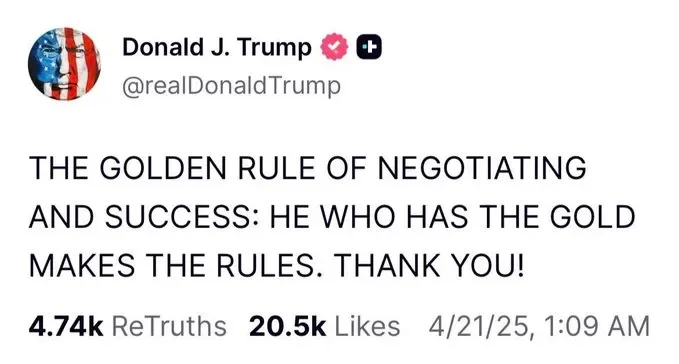
Do You See How Things Are Coming Together?
Do you see why we have been speaking of specific currencies?
Do you see why D. Trump ordered all of that gold now?
Do you see what is being prepared for you all?
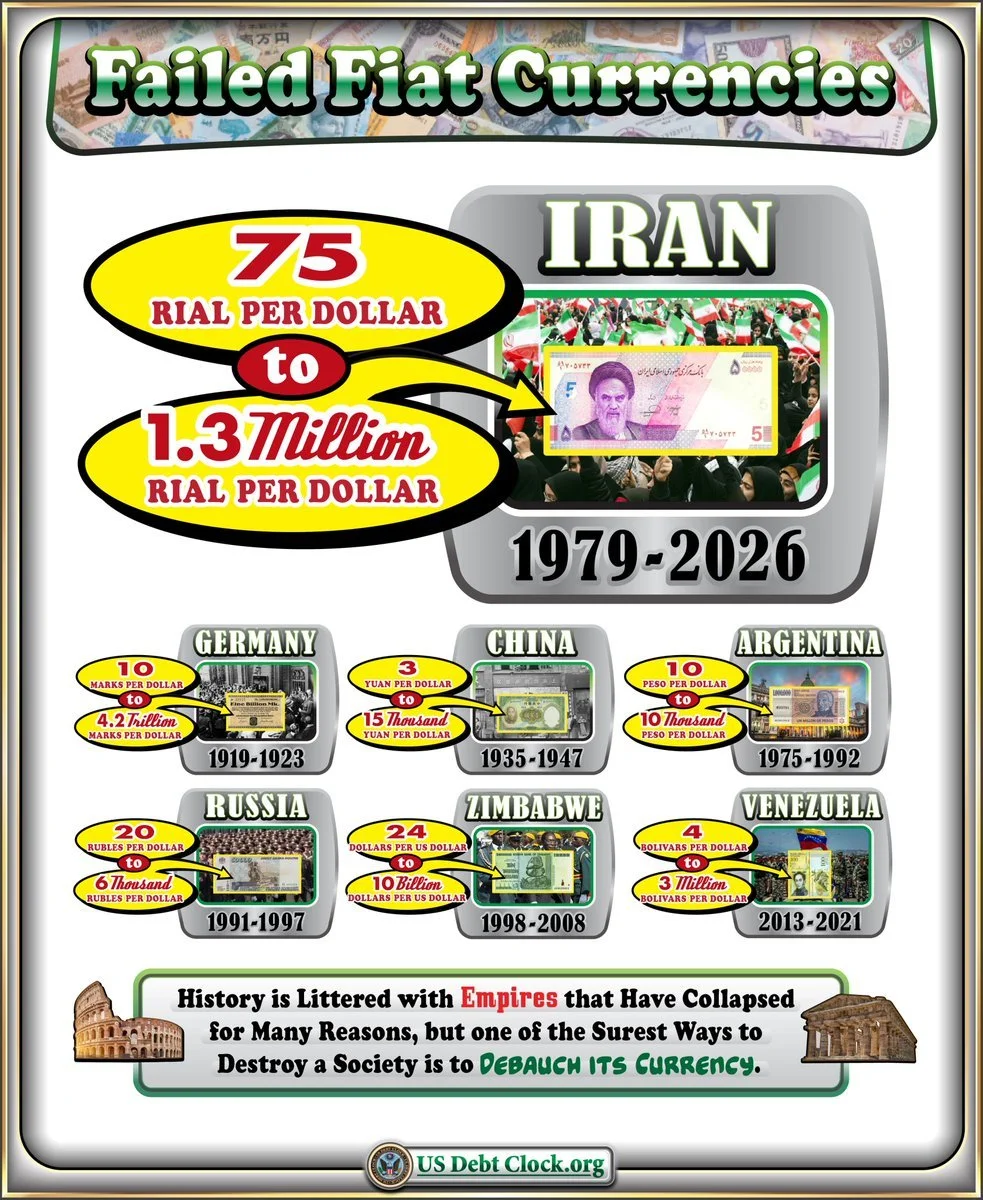
What corrections come after a devaluation?
Revaluations correct?
Seeds of Wisdom RV and Economics Updates Friday Afternoon 3-6-26
Good Afternoon Dinar Recaps,
Crypto Firms Move Into the U.S. Banking System as Financial Architecture Begins to Shift
Dozens of fintech and crypto companies are racing for banking licenses and direct payment system access — a development that could reshape the structure of global finance.
Overview
A quiet but significant transformation is underway inside the U.S. financial system.
In just 83 days, at least eleven financial and crypto companies have applied for or received approvals for U.S. national trust bank charters, signaling a rapid convergence between traditional banking and digital asset infrastructure.
Good Afternoon Dinar Recaps,
Crypto Firms Move Into the U.S. Banking System as Financial Architecture Begins to Shift
Dozens of fintech and crypto companies are racing for banking licenses and direct payment system access — a development that could reshape the structure of global finance.
Overview
A quiet but significant transformation is underway inside the U.S. financial system.
In just 83 days, at least eleven financial and crypto companies have applied for or received approvals for U.S. national trust bank charters, signaling a rapid convergence between traditional banking and digital asset infrastructure.
At the same time, crypto exchange Kraken has become the first digital asset firm granted access to the U.S. Federal Reserve’s core payments system, allowing it to move money across the same settlement rails used by thousands of traditional banks.
Together, these developments suggest that the next phase of the global financial system may not be built outside banking — but inside it.
Key Developments
1.Crypto Firms Seek U.S. Banking Licenses
A wave of major fintech and crypto companies has filed applications for national trust bank charters with the U.S. Office of the Comptroller of the Currency (OCC).
Companies reportedly pursuing or receiving approvals include:
• Circle
• Ripple
• BitGo
• Paxos
• Fidelity Digital Assets
• Crypto.com
• Morgan Stanley
• Payoneer
In total, 11 firms have filed applications within less than three months, signaling an accelerated push to merge digital asset infrastructure with regulated banking.
A trust bank charter allows firms to custody digital assets, settle payments, and operate financial infrastructure within the U.S. banking framework.
2.First Crypto Firm Gains Access to Federal Reserve Payment Rails
Another historic development occurred when Kraken received approval for a “master account” at the Federal Reserve.
This gives the firm direct access to the Fed’s core payment systems, which process trillions of dollars in transfers between banks every day.
Previously, crypto firms had to rely on intermediary banks to access these settlement networks.
Direct access means:
• Faster payment settlement
• Lower transaction costs
• Greater integration between crypto markets and traditional finance
This marks the first time a digital asset firm has been allowed into the central banking payment infrastructure.
3.The Financial System Is Quietly Being Rewired
While these changes have not produced dramatic headlines, industry observers say the U.S. financial system is effectively being renegotiated through regulatory approvals.
Instead of building alternative systems outside traditional finance, crypto infrastructure is increasingly being embedded directly into the banking framework.
That shift could reshape:
• Payment rails
• Digital asset custody
• Cross-border settlement networks
It also signals that digital assets may soon operate within the same regulatory structure as banks.
Why This Matters
The development represents a major structural shift in the global financial system.
Historically, digital assets and banking were treated as separate ecosystems.
Now, the two are rapidly converging.
If crypto firms obtain banking licenses and direct settlement access, they could begin providing:
• Global payment services
• Digital asset custody
• Tokenized financial products
All from inside the regulated financial system.
Why It Matters to Foreign Currency Holders
Digital asset infrastructure integrated into banking could accelerate the evolution of global payment systems.
Future financial rails may include:
• Tokenized deposits
• Stablecoin settlement networks
• Central bank digital currency (CBDC) interoperability
This would allow near-instant global settlement across borders, potentially reducing dependence on older financial messaging systems.
In other words, the plumbing of global finance is gradually being rebuilt.
Implications for the Global Reset
The current developments suggest the financial system is transitioning toward a hybrid architecture combining traditional banking with digital assets.
Three major trends are emerging simultaneously:
1. Banking licenses for crypto infrastructure
Digital asset companies are moving inside regulated banking frameworks.
2. Direct access to central bank payment systems
Crypto firms are gaining entry to the same financial rails used by global banks.
3. Tokenized financial infrastructure
Stablecoins and tokenized deposits are increasingly being designed to operate alongside fiat currencies.
Taken together, these shifts point toward a gradual restructuring of global finance rather than a sudden reset.
The institutions, rails, and regulatory frameworks that govern money, payments, and settlement are slowly being rebuilt for the digital era.
Banking and Blockchain Begin to Merge Into One Network.
This is not just fintech innovation — it is the early architecture of the next financial system.
Seeds of Wisdom Team
Newshounds News™ Exclusive
Sources
~~~~~~~~~~
Trump Demands Iran’s “Unconditional Surrender” as Middle East Conflict Intensifies
Escalating rhetoric and military strikes raise fears of a broader geopolitical confrontation with major implications for global markets and financial stability.
Overview
The war between Israel and Iran has entered a dramatically more dangerous phase after U.S. President Donald Trump demanded Iran’s “unconditional surrender.”
Trump made the statement publicly on social media as military operations intensified across the region, while reports emerged that Ayatollah Ali Khamenei had been killed during the conflict, leaving Iran’s leadership structure under temporary emergency governance.
At the same time, Israel expanded its airstrike campaign, targeting Iranian military infrastructure and suspected leadership bunkers.
The escalation signals a potential shift from limited regional conflict toward a broader geopolitical confrontation, a development that could have major consequences for global energy markets, financial stability, and the future architecture of international power.
Key Developments
1.Trump Escalates Pressure With Call for “Unconditional Surrender”
President Donald Trump publicly demanded Iran’s complete surrender, rejecting the possibility of negotiations or ceasefire talks.
Trump stated there would be “no deal” with Iran unless it fully capitulates, framing the conflict as a decisive moment for regional power balance.
He also indicated interest in helping determine Iran’s next supreme leader, following reports that Ayatollah Ali Khamenei died during the conflict, a development that would represent one of the most significant political shifts in Iran since the 1979 revolution.
The rhetoric marks a shift from earlier diplomatic pressure toward what observers describe as maximum strategic escalation.
2.Israel Expands Airstrikes Across the Region
Simultaneously, Israel intensified its military operations, carrying out airstrikes on Iranian positions and strategic sites linked to leadership infrastructure.
Among the reported targets was a bunker associated with Khamenei, as well as facilities tied to Iranian military networks.
These operations come as Iran continues retaliatory strikes across the region, increasing fears that the conflict could expand into a wider Middle East war involving multiple state actors.
3.Iran Signals Mediation Efforts but Rejects Capitulation
Iranian President Masoud Pezeshkian acknowledged that several countries are attempting to mediate the conflict, but insisted Iran would defend its sovereignty and national dignity.
Pezeshkian stated that any mediation must address those responsible for triggering the conflict, signaling that Tehran does not view surrender as an acceptable outcome.
Following Khamenei’s reported death, Iran’s political system has temporarily placed presidential authority within a leadership panel, reflecting the unique structure where the president normally operates under the authority of the supreme leader.
This leadership transition adds another layer of uncertainty to the already volatile geopolitical environment.
Why This Matters
This escalation represents one of the most consequential geopolitical confrontations in recent years, with implications extending far beyond the Middle East.
Three major global systems are directly exposed:
Energy markets — The Persian Gulf region remains the heart of global oil supply chains.
Global trade routes — Critical shipping lanes such as the Strait of Hormuz could face prolonged disruption.
Financial markets — Heightened geopolitical risk often triggers capital flight, commodity shocks, and currency volatility.
If the conflict widens, energy prices could surge further, increasing inflation pressures across Europe, Asia, and emerging markets.
Why It Matters to Foreign Currency Holders
Periods of major geopolitical conflict historically accelerate shifts in global monetary power.
Investors typically respond by moving capital into:
• Safe-haven currencies such as the U.S. dollar
• Precious metals like gold
• Energy-linked assets
At the same time, disruptions to oil supply chains could reshape energy trade relationships, particularly among BRICS nations attempting to expand non-dollar settlement systems.
The outcome of this conflict may therefore influence future currency alignments tied to global energy markets.
Implications for the Global Reset
The current crisis highlights a key structural reality of the modern financial system:
Geopolitical stability underpins the global monetary order.
Major wars can accelerate systemic shifts by:
• Disrupting energy supply chains
• Forcing new strategic alliances
• Reshaping global trade and payment systems
If the conflict continues escalating, the world could see significant changes in energy trade routes, financial alliances, and geopolitical influence.
Such shifts often precede major transformations in the global financial architecture, particularly when combined with rising debt levels, currency competition, and emerging alternative payment systems.
This is not just a regional conflict — it is a geopolitical moment that could reshape the foundations of global finance.
Seeds of Wisdom Team
Newshounds News™ Exclusive
Sources
~~~~~~~~~~
Seeds of Wisdom Team RV Currency Facts Youtube and Rumble
Newshound's News Telegram Room Link
RV Facts with Proof Links Link
RV Updates Proof links - Facts Link
Follow the Gold/Silver Rate COMEX
Follow Fast Facts
Seeds of Wisdom Team™ Website
Thank you Dinar Recaps
Jon Dowling: Global Reset Financial Updates with Lynette Zang, March 2026
Jon Dowling: Global Reset Financial Updates with Lynette Zang, March 2026
3-6-2026
In a recent episode of the Jon Dowling podcast, seasoned finance and precious metals expert Lynette Zang shared her insights on the rapidly evolving landscape of precious metals markets, particularly silver and gold.
With over six decades of experience in the field, Lynette offered a compelling analysis of the global economic shifts, government policies, and monetary systems transitioning from fiat to asset-backed structures.
Jon Dowling: Global Reset Financial Updates with Lynette Zang, March 2026
3-6-2026
In a recent episode of the Jon Dowling podcast, seasoned finance and precious metals expert Lynette Zang shared her insights on the rapidly evolving landscape of precious metals markets, particularly silver and gold.
With over six decades of experience in the field, Lynette offered a compelling analysis of the global economic shifts, government policies, and monetary systems transitioning from fiat to asset-backed structures.
One of the key takeaways from the discussion was the recent move by India’s Securities Exchange Board (SEBI) to price silver based on domestic spot prices rather than the London Bullion Market Association (LBMA).
According to Lynette, this signals a broader global shift toward valuing metals on true physical supply and demand rather than paper contracts. This change is significant, as it reflects a growing recognition of the importance of physical metals in the global economy.
Lynette highlighted the critical role that silver plays as both an industrial and monetary metal, making it a key indicator of market confidence and systemic fragility.
She referred to silver as “the fuse” that will ignite a significant revaluation of precious metals. The current silver price, Lynette argued, is disconnected from its fundamental value, which she estimates to be much higher due to debt levels and physical scarcity.
The implications of a significant revaluation of gold and silver are profound. Lynette suggested that gold could potentially reach $20,000 or even $40,000 per ounce, while silver could surge to $2,000+ per ounce.
Such a move would have far-reaching consequences for the global debt crisis and monetary reset. As Lynette noted, the current paper-based monetary system is inherently flawed, with a debt-based nature and significant risks from derivatives and leverage that are often vastly underreported.
The discussion also touched on geopolitical influences on silver prices, including recent U.S. tariff decisions and potential strategic buying of silver to undermine European banking systems.
Lynette emphasized the importance of understanding these dynamics and the role of the U.S. government and President Trump as a change agent, navigating the transition to a new financial system that may include a return to redeemable gold and silver-backed currency.
So, what can individuals do to prepare for this potential revolution? Lynette stressed the importance of holding physical metals as a means of preserving purchasing power amid systemic collapse.
She advocated for a community-based approach to security, self-reliance, and financial sovereignty, encouraging individuals to accumulate precious metals through creative means, such as preserving family heirlooms.
To help spread awareness about the difference between fiat currency and real money, Lynette introduced educational tools like “dime cards.” These simple yet effective tools can help individuals understand the value of physical metals and encourage them to take action now before it becomes too late.
As the world faces profound economic transformation, Lynette’s advice is clear: have a plan, build a community, and diversify your approach to wealth preservation. By doing so, individuals can navigate the coming precious metals revolution with confidence and security.
For further insights and information, be sure to watch the full video from Jon Dowling. With Lynette Zang’s expertise and guidance, you’ll be better equipped to understand the evolving landscape of precious metals markets and make informed decisions about your financial future.
News, Rumors and Opinions Friday 3-6-2026
KTFA:
Clare: The four presidencies reject the "attacks" targeting Iraqi cities, including the Kurdistan Region.
3/5/2026
On Thursday, the four Iraqi presidencies reiterated the country's "firm" position of not allowing its territory to be used to attack neighboring countries, while expressing their rejection of the "attacks" targeting Iraqi cities, including the Kurdistan Region.
The four presidencies held a meeting at Baghdad Palace, attended by President Abdul Latif Jamal Rashid, Prime Minister Mohammed Shia Al-Sudani, Speaker of Parliament Hebat Hamad Al-Halbousi, and Chief Justice Faiq Zaidan, according to a joint statement issued by their media offices.
KTFA:
Clare: The four presidencies reject the "attacks" targeting Iraqi cities, including the Kurdistan Region.
3/5/2026
On Thursday, the four Iraqi presidencies reiterated the country's "firm" position of not allowing its territory to be used to attack neighboring countries, while expressing their rejection of the "attacks" targeting Iraqi cities, including the Kurdistan Region.
The four presidencies held a meeting at Baghdad Palace, attended by President Abdul Latif Jamal Rashid, Prime Minister Mohammed Shia Al-Sudani, Speaker of Parliament Hebat Hamad Al-Halbousi, and Chief Justice Faiq Zaidan, according to a joint statement issued by their media offices.
The statement said that the meeting included an in-depth review of the latest security and political developments on the regional and international scenes, and their direct repercussions on the internal situation in Iraq.
According to the statement, the participants discussed the mechanisms adopted by the government to prevent the country from being drawn into the throes of external conflicts, and emphasized support for the government’s measures to impose security and stability and protect the country’s sovereignty, and the commitment to protecting the security of diplomatic missions, stressing the need to maintain Iraq’s pivotal and balanced role in promoting security and stability in the region.
The presidencies reiterated Iraq’s firm position of refusing to allow its territory to be used as a launching pad for attacks on neighboring countries or to threaten their security. They also reject attacks targeting Iraqi cities, governorates, and the Kurdistan Region of Iraq, and consider them a violation of national sovereignty.
The meeting stressed the need for an immediate cessation of military operations in the region and respect for the sovereignty and independence of states, calling on the international community to take urgent action to prevent the conflict from escalating. The meeting also emphasized that resorting to the negotiating track and diplomatic solutions is the best way to spare the region the serious repercussions of the conflict at the regional and international levels.
On the domestic front, the participants discussed the importance of expediting the completion of constitutional requirements, strengthening national unity to confront current circumstances, as well as supporting the government’s efforts to consolidate security and stability, improve the living and service conditions of citizens, and continue the path of reform and sustainable development.
At the conclusion of the meeting, the attendees stressed the need to support security measures aimed at establishing security and order, and to hold accountable those who spread rumors through the media or social media platforms, as they pose a direct threat to civil peace and internal security, in accordance with legal and judicial procedures. LINK
************
Clare: Popular Mobilization Forces Evacuate Bases Across Iraq Amid Fears of US and Israeli Strikes
3/5/2026
Armed factions within Iraq’s Popular Mobilization Forces have begun evacuating a wide network of military bases across the country, as fears mount over possible US and Israeli strikes targeting their positions.
Security sources revealed that, due to the possibility of anticipated strikes by the United States and Israel, groups affiliated with the Popular Mobilization Forces (PMF) have started evacuating a large number of their military bases.
According to security information, on Thursday evening, PMF armed groups began withdrawing from numerous bases and military facilities located along the borders of Nineveh province, as well as in central and southern Iraq.
Dilan Barzan, Kurdistan24 correspondent, reported citing a senior security source that the evacuation process has created security gaps in those areas.
To address the situation, Iraq’s Joint Operations Command has decided to deploy Iraqi army units temporarily to the locations from which PMF forces withdrew, in an effort to control the situation and prevent any potential security violations.
In another part of the information, sources stated that PMF bases had been subjected to continuous attacks for five consecutive nights, which contributed to a heightened state of alert and fear among the forces.
Regarding developments on the ground, the Kurdistan24 correspondent also revealed that earlier, a US military aircraft flying over the skies of Basra was targeted by armed groups and brought down.
According to information from security sources, unmanned aerial vehicles have been flying over the provinces of Salahaddin, Basra, Karbala, and Najaf for four consecutive nights, conducting close surveillance of the security situation and military movements in those areas.
As tensions intensify across Iraq, the withdrawal of PMF units and the deployment of Iraqi army forces signal growing security concerns amid the widening regional confrontation. LINK
Courtesy of Dinar Guru: https://www.dinarguru.com/
Frank26 Question: "What will a fair exchange rate be?" The government of Iraq wants it to be at least on par with the dollar, 1 to 1. If you have a million dinars, you have a million dollars. But you have to realize this is an RI. It's not an RV...This is a reinstatement. So it's possible that they may reinstate the value, which is $3.22 and then you have the float which will take $3.22 higher.
Walkingstick Question: to Iraqi bank friend Aki - "What is your reaction about what we have done to Iran?" AKI: My boss and I were prepared for this. We received updates and reports and we knew you guys were going to attack them. We just didn't know when. We agree that this campaign will not last long. We have been ready and are ready to go the moment they release the new rate.
Militia Man The CBI can and likely will proceed with a managed REER adjustment independent of the banking sector's final consolidation. As long as the core system is stable and compliant, which it increasingly is, mergers and compliance are ongoing, not prerequisites that must be 100% complete...Iraq is ready now or very close for the next phase. The CBI can move on a REER when prudent while the sector continues to consolidate in parallel.
************
Big News For Dinar Investors !
Dinar For Dummies: 3-5-2026
This is a very important development regarding the politics and leadership in Iraq.
Seeds of Wisdom RV and Economics Updates Friday Morning 3-6-26
Good Morning Dinar Recaps,
Oil Shock Sends Warning Through Global Financial System
Energy spike, inflation fears, and shifting central bank policy expectations signal mounting pressure on the global monetary system.
Overview
A sharp surge in global energy prices over the past 24 hours is sending shockwaves through financial markets and raising new concerns about inflation, interest rates, and economic stability worldwide.
Good Morning Dinar Recaps,
Oil Shock Sends Warning Through Global Financial System
Energy spike, inflation fears, and shifting central bank policy expectations signal mounting pressure on the global monetary system.
Overview
A sharp surge in global energy prices over the past 24 hours is sending shockwaves through financial markets and raising new concerns about inflation, interest rates, and economic stability worldwide.
Brent crude has surged to around $89 per barrel, marking its largest weekly gain since the pandemic-era market disruptions of 2020. The spike is linked to escalating geopolitical tensions in the Middle East that have disrupted shipping routes and refinery operations.
Financial analysts warn that sustained energy disruptions could delay central bank rate cuts, reignite inflation globally, and potentially trigger a new phase of financial restructuring across markets and currencies.
Key Developments
1.Energy Prices Surge as Supply Routes Face Disruption
Global energy markets have been shaken by near-halts in shipping traffic through the Strait of Hormuz, one of the most critical oil transit chokepoints in the world.
• Brent crude climbed to $89 per barrel
• European natural gas prices surged nearly 60%
• Energy markets recorded their largest weekly jump since 2020
Officials in the Gulf region warned that continued escalation could lead to production shutdowns, with some analysts projecting oil could spike toward $150 per barrel in an extreme disruption scenario.
2.Global Inflation Risks Rising Again
Higher energy costs are already feeding into inflation projections.
According to estimates cited by economists:
• A 10% increase in oil prices could add roughly 0.4 percentage points to global inflation
• Central banks may delay or cancel planned interest-rate cuts
• Borrowing costs may remain higher for longer
This sudden shift threatens to reverse the global disinflation trend that many central banks were counting on for 2026 monetary easing.
3.Markets React With Volatility
Financial markets responded quickly to the energy shock.
Recent developments include:
• Asian markets recording their worst weekly performance since 2020
• Global investors rotating toward safe-haven assets
• Currency volatility rising as markets reassess interest-rate expectations
Meanwhile, major economies are preparing emergency consultations. Finance ministers from the Group of Seven (G7) are expected to discuss market stability and energy supply risks in upcoming meetings.
Why This Matters
Energy has historically been one of the primary catalysts for systemic shifts in the global monetary system.
Major financial turning points—including the 1970s petrodollar era and the 2008 financial crisis—were preceded by energy shocks that triggered inflation, debt stress, and policy restructuring.
The current spike creates several structural pressures:
• Higher sovereign debt servicing costs
• Renewed inflation across developed economies
• Central bank policy reversals
• Currency volatility in emerging markets
In a highly leveraged global financial system, sustained energy inflation can expose weaknesses in banking systems, government debt structures, and global trade flows.
Why It Matters to Foreign Currency Holders
Energy shocks often accelerate monetary realignment across the international financial system.
When oil prices surge:
• Currency markets reprice risk rapidly
• Commodity-linked currencies strengthen
• Energy-importing nations face balance-of-payments pressure
These dynamics can reshape global liquidity flows and reserve currency positioning.
If energy disruptions persist, the world could see:
• More regional trade settlements in local currencies
• Accelerated development of alternative payment systems
• Greater diversification of global reserves into commodities and gold
Such shifts gradually reshape the architecture of the international monetary system.
Implications for the Global Reset
The current energy shock underscores how geopolitical conflict can quickly translate into systemic financial pressure.
Key reset signals emerging:
Energy dominance is again becoming central to currency stability.
Central banks may be forced to shift policy unexpectedly.
Global financial markets remain highly sensitive to geopolitical supply disruptions.
These dynamics reinforce a long-term trend: the world is moving toward a more fragmented and multipolar financial system, where energy security, payment infrastructure, and currency alliances increasingly shape global economic power.
This is not just geopolitics — it is monetary architecture being tested in real time.
Seeds of Wisdom Team
Newshounds News™ Exclusive
Sources
The Guardian — “Oil price heading for biggest weekly gain since 2020 as Brent hits $89”
Reuters — “Global markets themes: energy surge and inflation risks”
~~~~~~~~~~
BRICS Energy Lifeline Under Pressure as Strait of Hormuz Crisis Sends Oil Markets Surging
Iran conflict disrupts global oil flows, testing BRICS energy security and the bloc’s long-term de-dollarization ambitions.
Overview
The escalating Iran conflict has triggered one of the most significant shocks to global energy markets in nearly two years, placing enormous pressure on BRICS oil trade routes and energy security.
Oil prices surged after the closure of the Strait of Hormuz, a strategic waterway responsible for transporting roughly 20% of the world’s oil supply. As tankers halted transit through the corridor, global crude prices spiked sharply, and energy infrastructure across the Gulf region came under threat.
For BRICS nations — many of which rely heavily on Gulf oil corridors — the disruption is testing both the bloc’s energy stability and its broader push to reshape global financial systems through de-dollarization initiatives.
Key Developments
1.Strait of Hormuz Closure Disrupts Global Oil Supply
The shutdown of the Strait of Hormuz has effectively blocked one of the world’s most critical oil arteries, forcing major producers to adjust production and storage strategies.
Key developments include:
• WTI crude jumped $6.35 (8.5%) in a single session
• Gasoline prices reached a 1.75-year high
• Storage tanks at Saudi Arabia’s Ras Tanura terminal filled rapidly, forcing output adjustments
Energy intelligence firm Kayrros reported that multiple storage facilities in Saudi Arabia are nearing capacity, leaving limited room to store unsold crude shipments.
Iran’s Islamic Revolutionary Guard Corps (IRGC) also warned vessels transiting nearby waters that ships “could be at risk from missiles or rogue drones.”
Goldman Sachs estimates the disruption has added an $18 per barrel geopolitical risk premium to crude prices, highlighting the severe market impact if tanker traffic remains halted for several weeks.
(Source: Watcher.Guru)
2.Energy Infrastructure and Regional Facilities Targeted
The conflict has already begun affecting key energy infrastructure across the Gulf.
Recent incidents include:
• Drone attacks forcing shutdown of Saudi Arabia’s Ras Tanura refinery, which processes about 550,000 barrels per day
• A major fire at the UAE’s Fujairah oil hub following a drone strike
• Iranian retaliatory strikes targeting U.S. military bases and regional infrastructure
These developments have significantly increased volatility across global energy markets, particularly in Asia and Europe, which rely heavily on Persian Gulf energy exports.
3.China Moves to Protect Domestic Fuel Supply
In response to the escalating crisis, China ordered its largest refiners to suspend exports of diesel and gasoline, citing the conflict’s potential to tighten global supply.
The decision effectively reduces fuel available to international markets, adding further upward pressure on prices.
China’s move underscores how quickly major economies are shifting toward energy protectionism, prioritizing domestic supply security during periods of geopolitical instability.
Why This Matters
Energy supply disruptions historically play a major role in triggering global financial realignments.
For BRICS nations, the situation is particularly sensitive because:
• Several member states rely heavily on Persian Gulf energy routes
• The bloc has been actively building alternative trade and payment systems
• Energy exports are central to Russia, Iran, and Saudi-aligned economic strategies
If oil shipments remain blocked or disrupted, the crisis could delay or complicate BRICS efforts to expand non-dollar trade settlements.
In addition, prolonged supply disruptions could push global oil prices significantly higher, increasing inflation pressure across both developed and emerging economies.
Why It Matters to Foreign Currency Holders
Energy disruptions have historically triggered major currency and monetary shifts.
When oil prices surge:
• Energy exporters accumulate greater financial influence
• Oil importers face balance-of-payments stress
• Currency markets reprice risk rapidly
For countries exploring alternative settlement systems outside the U.S. dollar, stable energy trade flows are essential.
However, geopolitical conflict in key energy corridors creates volatility that often strengthens demand for traditional reserve currencies in the short term.
This dynamic creates a complex environment where de-dollarization ambitions continue long-term, but crisis conditions temporarily reinforce existing financial structures.
Implications for the Global Reset
The Strait of Hormuz crisis highlights several critical structural pressures shaping the future financial system:
Energy corridors remain the backbone of global economic power.
Financial systems tied to energy trade are vulnerable to geopolitical disruption.
Efforts to build alternative payment networks require stable trade routes to succeed.
For BRICS nations seeking to expand oil trade outside traditional Western financial infrastructure, the conflict represents a major stress test.
The outcome may determine how quickly the world moves toward a multipolar financial system where energy, currency settlements, and payment networks are more regionally diversified.
This is not just an oil shock — it is a geopolitical stress test for the future architecture of global finance.
Sources
Watcher.Guru — “BRICS Faces Major Test as Iran Crisis Threatens Global Oil”
Reuters — “Oil prices surge amid Middle East tensions and shipping disruptions”
~~~~~~~~~~
🌱 A Message to Our Currency Holders🌱
If you’ve been holding foreign currency for many years, you were not foolish.
You were not wrong to believe the global financial system would change.
What failed was not your patience — it was the information you were given.
For years, dates, rumors, and personalities replaced facts, structure, and proof. “This week” predictions created cycles of hope and disappointment that were never based on how currencies actually change.
That is not your failure.
Our mission here is different: • No dates • No rates • No hype • No gurus
Instead, we focus on:
• Verifiable developments • Institutional evidence
• Global financial structure • Where countries actually sit in the process
Currency value changes only come after sovereignty, trade, banking, settlement systems, and fiscal coordination are in place. History and institutions confirm this sequence.
You will see silence. You will see denials. That is not delay — that is discipline.
Protect your identity. Organize your documents. Verify everything.
Never hand your discernment to anyone who cannot show proof.
You deserve truth — not timelines.
Seeds of Wisdom Team
Newshounds News
~~~~~~~~~~
Seeds of Wisdom Team RV Currency Facts Youtube and Rumble
Newshound's News Telegram Room Link
RV Facts with Proof Links Link
RV Updates Proof links - Facts Link
Follow the Gold/Silver Rate COMEX
Follow Fast Facts
Seeds of Wisdom Team™ Website
Thank you Dinar Recaps
Iraq Economic News and Points To Ponder Friday Morning 3-6-26
Gold Prices Remain Stable Amid Assessment Of The Impact Of The Conflict In The Middle East.
Money and Business Economy News - Follow-up Gold prices were largely stable on Friday, after falling more than 1 percent in the previous session, as investors continued to assess the impact of escalating conflict in the Middle East on the global economy.
Spot gold was steady at $5,076.09 an ounce. U.S. gold futures for April delivery rose 0.1 percent to $5,084.50.
Gold Prices Remain Stable Amid Assessment Of The Impact Of The Conflict In The Middle East.
Money and Business Economy News - Follow-up Gold prices were largely stable on Friday, after falling more than 1 percent in the previous session, as investors continued to assess the impact of escalating conflict in the Middle East on the global economy.
Spot gold was steady at $5,076.09 an ounce. U.S. gold futures for April delivery rose 0.1 percent to $5,084.50.
On the sixth day of the war, Iran launched a series of attacks on Israel, the UAE and Qatar.
U.S. Defense Secretary Pete Hegseth and Admiral Brad Cooper, who commands U.S. forces in the Middle East, said the United States has enough ammunition to continue bombing indefinitely.
The United States and Israel launched a military campaign against Iran on Saturday, including strikes on targets across the country, which Iran responded to with attacks across the region.
The price of gold, which is usually seen as a safe-haven asset, has risen by about 18 percent since the beginning of the year, hitting consecutive record highs amid increasing geopolitical and economic uncertainty.
As for other precious metals, silver rose 0.1 percent to $82.26 an ounce in spot trading. Platinum gained 0.1 percent to $2,124.05, and palladium climbed 1.1 percent to $1,639.7 https://www.economy-news.net/content.php?id=66411
Fitch Affirms The Resilience Of Gulf Banks In The Face Of Credit Risks
Banks Economy News - Follow-up Fitch Ratings said that the banking systems in the Gulf Cooperation Council (GCC) countries have a high capacity to absorb shocks and do not face immediate credit risks despite the regional tensions that have escalated following the attacks launched by the United States and Israel on Iran on February 28.
The agency confirms that the ratings of Gulf banks depend primarily on its expectations regarding the ability of governments to support the financial sector, which Fitch believes is currently available, as most Gulf countries possess huge assets that provide protection during periods of turmoil, even if energy revenues are subject to short-term disruptions.
Strong banks and ample liquidity
The agency notes that the Gulf banks it rates are highly financially sound, supported by strong liquidity and capitalization levels. Fitch expects these factors to help contain any potential risks if the conflict does not extend beyond one month.
Fitch believes that geopolitical risks have always been a key factor in assessing the creditworthiness of Gulf debt issuers, including banks. However, the current scale and regional expansion of the conflict are the most extensive in years.
The agency believes that the robustness of the operating environment will be the most important factor to monitor during the next phase, particularly the growth of non-oil sectors and investor confidence, as these represent a key pillar in determining the strength of banks' credit profiles.
Limited impact if the conflict remains short-term
Despite these challenges, Fitch affirms that if the confrontation remains short and energy infrastructure does not suffer significant damage, its impact on Gulf economic growth will be temporary.
Therefore, the agency expects the impact on loan growth, asset quality and bank profitability to be limited, with the possibility that some financial indicators will come in slightly weaker than its previous estimates, without this affecting the banks’ standalone credit ratings.
Strong capital with potential funding challenges
Fitch notes that the capital ratios of Gulf banks are generally strong, driven by good internal growth over the past years and stricter regulatory legislation.
The agency warns that the current conflict could pose greater challenges to debt issuance in global markets, potentially pushing some banks to rely more heavily on more expensive domestic funding. However, Fitch does not expect this shift to put serious pressure on creditworthiness, thanks to strong capital and liquidity levels.
Government fiscal policies after the end of the conflict will also have a direct impact, as public spending may support bank loan growth beyond current expectations if governments resort to broad stimulus plans.
https://www.economy-news.net/content.php?id=66388
Iraqi Ports: Supply Chains To Iraq Operating Normally In Areas Beyond The Strait Of Hormuz
Basra – INA The Director General of the General Company for Iraqi Ports, Farhan Al-Fartousi, confirmed on Wednesday that supply chains to Iraq are operating normally in areas beyond the Strait of Hormuz. He noted, however, that they are experiencing disruptions in areas before the strait, on the Arabian Sea side.
Al-Fartousi told the Iraqi News Agency (INA): “The internal supply chains, or kerbs, between Iraqi ports and ports in the region, that is, beyond the Strait of Hormuz towards Iraq, are still operating as needed.
However, those beyond the Strait of Hormuz, or through the Strait of Hormuz, are suspended for all types of tankers.” He explained that “there are approximately 16 or 17 ships currently in the waiting area, specifically at the Umm Qasr North and Umm Qasr South ports, meaning they are only for cargo.”
He added, "Work is ongoing and procedures are streamlined within the port," noting that "there is a department called ISPS (International Security Service) responsible for organizing security according to international requirements.
This ensures the smooth flow of operations and conditions, while simultaneously conveying to ships in the port and those in the waiting area that our ports are safe."
He explained that "the ports of the General Company for Iraqi Ports always operate according to the requirements of the International Maritime Organization, particularly regarding security systems. The port is functioning well and with high efficiency."
He stated that "there is a rapid mechanism, under the direction and personal supervision of the Prime Minister, for clearing goods without delay, with exceptional procedures implemented by all parties operating within the port." He pointed out that "this is to ensure the timely arrival of goods, especially during Ramadan, and to provide all possible facilities for traders, mitigating any potential issues, particularly given the difficult circumstances in the region."
Al-Fartousi emphasized "the necessity of adapting to the current circumstances and protecting our ports and the assets of traders within the port." https://ina.iq/en/economy/46103-iraqi-ports-supply-chains-to-iraq-operating-normally-in-areas-beyond-the-strait-of-hormuz.html
Oil Prices Fall Amid The Possibility Of US Intervention In The Futures Market
Follow up –INA Oil prices fell on Friday for the first time in six days as the U.S. government considered intervening in the futures market to halt rising prices and granted waivers to Indian refineries to buy Russian crude oil in an effort to ease supply constraints caused by the war in the Middle East.
Brent crude futures fell $1.14, or 1.33%, to $84.27 a barrel, while U.S. West Texas Intermediate crude futures dropped $1.46, or 1.8%, to $79.55. https://ina.iq/en/economy/46185-oil-prices-fall-amid-the-possibility-of-us-intervention-in-the-futures-market.html
Oil Prices Rise To $87 A Barrel
Follow up –INA Oil prices rose to $87 a barrel on Friday. Brent crude futures rose to $87 a barrel amid the war between Iran, the United States and Israel and the halt of oil tankers crossing the Strait of Hormuz.
https://ina.iq/en/economy/46192-oil-prices-rise-to-87-a-barrel.html
US Central Command Denies Carrying Out An Airdrop In The Najaf Desert
Today, 12:31 Follow up –INA The US Central Command denied on Friday that it had carried out an airdrop in the Najaf desert. The Central Command's media office said in media statements monitored by the Iraqi News Agency (INA) that "we currently have no operational reports to support the claim regarding reports that spoke of US forces carrying out an airdrop in the desert of Najaf Governorate in southern Iraq."
Iranian President: We Commit To Achieving Lasting Peace In The Region, Some Countries Began Mediations
Today, 15:16 INA – SOURCES Iranian President Masoud Pezeshkian confirmed on Friday that some countries have begun mediation efforts.
“Some countries have begun mediation efforts, and we are committed to achieving lasting peace in the region. However, we will not hesitate to defend the dignity and sovereignty of our nation," Pezeshkian stated on "X".
He added, "The mediators should address those who ignited the tension by disregarding the Iranian people."
Iraq Ranks Second Among Oil Exporters Using The Strait Of Hormuz
2026-03-06 Shafaq News- Baghdad Iraq accounts for more than one-fifth of oil shipments passing through the Strait of Hormuz, making it the second-largest exporter using the strategic route after Saudi Arabia, according to data from the US Energy Information Administration (EIA).
Around 20 million barrels of crude oil and condensates transit the strait each day, representing roughly 20–25% of global seaborne oil trade. Saudi Arabia leads with about 37.2% of the total volume, followed by Iraq at 22.8%. The United Arab Emirates contributes nearly 12.9%, while Iran accounts for about 10.6%, slightly ahead of Kuwait at roughly 10.1%. Qatar represents around 4.4%, with other producers collectively comprising about 1%.
The Strait of Hormuz carries roughly a fifth of global oil and liquefied natural gas flows. Iran’s Revolutionary Guard Corps (IRGC) declared it has “full control” over the chokepoint, while ship-tracking services showed dozens of tankers idling on both sides. US President Donald Trump said the US Navy could escort oil tankers if needed.
https://www.shafaq.com/en/Economy/Iraq-ranks-second-among-oil-exporters-using-the-Strait-of-Hormuz
Oil Retreats After Six-Day Rally As US Considers Futures Market Action
2026-03-06 Shafaq News Oil fell for the first time in six days as the U.S. government is considering potentially intervening in the futures market to blunt rising prices and has given waivers to Indian refiners to buy Russian crude to ease supply constraints from the Middle East war.
Brent crude futures were down $1.14, or 1.33%, to $84.27 per barrel and West Texas Intermediate down $1.46, or 1.8%, to $79.55 as of 0251 GMT.
The U.S. has taken the steps to ease the surge in prices after it, along with ally Israel, started a military conflict with Iran on February 28 that has halted tankers from moving through the Strait of Hormuz, which typically carries roughly one-fifth of the world's daily oil supply, shut refineries and oil output and shuttered liquefied natural gas plants in the key Middle East energy-producing region.
In the previous four trading sessions since the war started, Brent has climbed 18% while WTI has gained 21%.
A senior White House official said on Thursday, the U.S. Treasury Department is expected to announce measures to combat rising energy prices from the Iran conflict, including potential action involving the oil futures market, without providing any details.
The potential move would mark an unusual attempt by Washington to influence energy prices through financial markets rather than physical oil supplies.
To ease physical supply constraints, which have caused refineries, especially in Asia, to start reducing their fuel processing, the Treasury also granted waivers for companies to start buying sanctioned Russian oil stored on tankers.
The first waivers were given to Indian refiners who have responded by buying millions of barrels of prompt Russian crude oil cargoes, sources said, reversing months of pressure on them to halt the purchases.
Analysts cautioned that the recent gain in prices isrelatively subdued compared to other price shocks, particularly after the full-scale Russian invasion of Ukraine in 2022, when prices rose above $100 a barrel.
“While panic around surging oil prices appears to be spreading beyond market circles, it’s important to put this move into perspective: despite crude’s almost 20% surge this month, the price is currently just $3.40 above its average over the last four years,” IG analyst Tony Sycomore wrote in a note.