
The Luddites Were Wrong In 1811 The AI Doomsayers Will Be Wrong Today
The Luddites Were Wrong In 1811. The AI Doomsayers Will Be Wrong Today
Notes From the Field By James Hickman (Simon Black) Sovereign Man February 24, 2026
In 1779, in a textile workshop in the English village of Anstey, a young apprentice named Ned Ludd was put to work on a knitting machine — one of the large mechanical frames that wove thread into stockings. He was too slow. His master had him whipped for it.
So Ned grabbed a hammer and smashed the machine to pieces.
The Luddites Were Wrong In 1811. The AI Doomsayers Will Be Wrong Today
Notes From the Field By James Hickman (Simon Black) Sovereign Man February 24, 2026
In 1779, in a textile workshop in the English village of Anstey, a young apprentice named Ned Ludd was put to work on a knitting machine — one of the large mechanical frames that wove thread into stockings. He was too slow. His master had him whipped for it.
So Ned grabbed a hammer and smashed the machine to pieces.

The story spread across England’s textile country. Over the next thirty years, Ned Ludd became a folk hero for every worker who felt threatened by the new machines that were pouring into their factories.
Now, the story is probably a myth — there’s no hard evidence Ned Ludd ever actually existed. But it didn’t matter. The movement that took his name was very real.
In March 1811, textile workers across England’s industrial heartland began breaking into factories at night, smashing power looms with sledgehammers. They called themselves Luddites. Over 200 machines were destroyed in the first month alone.
It was all motivated by fear; workers were terrified that machines would take their jobs and steal their livelihoods.
But think about the world back then: in the early 1800s when the Luddites were smashing looms, roughly 90% of the world’s population lived in what today would be considered extreme poverty.
Life expectancy in England was only about 35. One in three children didn’t make it to their fifth birthday. Houses were tiny. Food was scarce. Clean drinking water was a luxury. Heating your home meant an open fire, and most of the warmth went up the chimney. Indoor plumbing didn’t exist. Neither did antibiotics, electricity, or refrigeration.
That was normal life in 1811. But fast forward just over two hundred years.
Extreme global poverty has fallen from 90% to under 10%. Life expectancy has more than doubled. The poorest American today — not the wealthy, the average person — has access to more information, nutrition, comfort, and opportunity than the richest king on earth could have imagined in 1811.
Our homes are bigger. Our food is more plentiful. Our energy supplies are more abundant… and far more efficient.
And the reason is technology.
Every major leap in human prosperity has followed the same basic mechanism: new technology makes people more productive. More productivity increases supply of goods and services. More supply means lower prices. Lower prices mean more prosperity for everyone.
At the same time, there is always some short-term pain. Entire vocations and industries disappear… and that sudden change can be both difficult and scary.
But think about it— in literally EVERY major technological advancement throughout history, overall employment went UP. Economies prospered. Workers prospered.
That’s the great fear sweeping the world right now regarding artificial intelligence, and a lot of people are worried.
Earlier this month, for example, a viral essay by an AI startup CEO tore across the Internet and was viewed more than 80 million times.
His thesis: AI will have a COVID-level impact on the world, and the industry right now is the equivalent of being back in January 2020. Everything feels normal at the moment. But he believes that life will be unrecognizable (just like during Covid) in just a few months.
But while Covid was temporary, he believes the AI impact will be permanent.
Amazingly enough, due to this one viral essay, investors began dumping their stocks, triggering a major selloff.
Cybersecurity stock CrowdStrike, for example, dropped roughly 16% in days. Travel companies like TripAdvisor are down nearly 30%.
Financial firms like Charles Schwab and Raymond James fell 7% to 9% in a single session. Software giants like Salesforce and ServiceNow have shed a quarter to a third of their value.
All told, roughly $2 trillion in market value has been wiped off software stocks alone.
The logic behind the selloff is: if AI can scan code for security vulnerabilities, why do you need CrowdStrike? If an AI agent can plan your entire trip, book flights, and find the best hotel, why do you need TripAdvisor? If a chatbot can manage a portfolio or draft a financial plan, why are you paying Raymond James?
Investors looked at these industries and decided that AI wasn’t just going to help these companies — it was going to replace them. And they sold.
It’s amazing how overblown this is.
People said the same things about the Industrial Revolution — that machines would make human labor obsolete and destroy the working class.
They said it about personal computers in the 1980s — that automation would wipe out office jobs.
They said it about the Internet in the late 1990s — that e-commerce would obliterate entire sectors of the economy.
Every single time, the prophets of technological doom were wrong.
The reality is that, of course, some industries and vocations go away. But advances in technology have never led to sustained, long-term, widespread unemployment.
New industries emerge. New skills become valuable. The economy adapts. And the overall standard of living goes up.
But all along the way, there are always the self-interested evangelists insisting that THIS time is different. THIS technology is uniquely disruptive.
Yes, AI is obviously a massive advancement. It’s going to reshape industries. And plenty of businesses that exist today won’t survive the transition. That’s the nature of progress.
But the idea that we’re all going to be starving in the streets because a chatbot can draft a legal brief or scan code for security bugs is ludicrous.
Technology always makes people more prosperous and better off. It might not be crystal clear right now exactly how that plays out with AI. Early stages of a technology boom are never clear.
But the notion that one person’s viral essay could wipe trillions from global financial markets is peak paranoia.
The Luddites were wrong in 1811. The AI doomsayers will be wrong today.
To your freedom, James Hickman Co-Founder, Schiff Sovereign LLC
P.S. Technology has never destroyed prosperity. But reckless governments have — over and over again, for thousands of years.
The US national debt is over $38 trillion. Annual deficits are running at nearly $2 trillion. And neither party has any intention of doing anything about it.
Every month in Schiff Sovereign Premium, we dig into exactly where this is heading — the debt, the dollar, the historical parallels — and how to position yourself to benefit from what comes next.
Is the US Headed Toward a Gold Reset?
Is the US Headed Toward a Gold Reset?
Arcadia Economics: 2-24-2026
As we step into 2026, the world of finance is abuzz with discussions about the evolving dynamics of the gold and silver markets, the future of the US dollar, and the implications of rising global debt and geopolitical tensions.
In a recent, in-depth conversation with Chris Marcus of Arcadia Economics, Michael McNair, a seasoned asset manager with a focus on precious metals and macroeconomic trends, shared his expert insights on these pressing issues.
Is the US Headed Toward a Gold Reset?
Arcadia Economics: 2-24-2026
As we step into 2026, the world of finance is abuzz with discussions about the evolving dynamics of the gold and silver markets, the future of the US dollar, and the implications of rising global debt and geopolitical tensions.
In a recent, in-depth conversation with Chris Marcus of Arcadia Economics, Michael McNair, a seasoned asset manager with a focus on precious metals and macroeconomic trends, shared his expert insights on these pressing issues.
The discussion provides a fascinating glimpse into the potential shifts in global monetary policy and the role that gold and silver are poised to play in the years to come.
One of the key highlights of the conversation is McNair’s analysis of the Trump Administrationn’s influence on monetary and fiscal coordination.
According to McNair, the Trump Administration is expected to have a significant impact on the coordination between monetary and fiscal policies, potentially leading to a more synchronized approach that could have far-reaching consequences for the global economy.
A significant part of the discussion revolves around the anticipated changes in leadership at the Federal Reserve, with Christopher Worsh potentially being appointed as the new Fed Chair.
McNair shares his thoughts on how this change could influence monetary policy and the dollar’s standing in the global financial system.
The potential dismantling of the current dollar-centric monetary system is also explored, with McNair suggesting that we are on the cusp of a significant shift away from the dollar’s dominance.
A crucial aspect of the conversation is the evolving role of gold in the global financial landscape.
McNair emphasizes that gold is transitioning from being merely a hedge against US solvency issues to becoming a crucial reserve asset that will play a key role in balancing global trade imbalances.
This shift underscores the growing recognition of gold’s importance in the global monetary system, beyond its traditional role as a safe-haven asset.
The discussion also delves into the dynamics of the silver market, highlighting the industrial demand for silver as a critical factor that will influence its price and utility in the global economy. McNair touches on the dynamics of capital flows and trade deficits, providing insights into how these macroeconomic trends will impact the precious metals market.
One of the most compelling aspects of the conversation is the anticipation of a prolonged and potentially painful transition to a new global monetary order.
McNair suggests that this transition will be characterized by significant adjustments in the global financial system, with implications for investors, policymakers, and the broader economy.
In a related development, the conversation briefly highlights the impressive 2025 earnings of First Majestic Silver, a mining company that has benefited from the surge in silver prices.
The correlation between the company’s performance and the silver price underscores the potential for significant returns in the precious metals sector, particularly in companies with strong operational fundamentals.
As the global economy navigates the complexities of rising debt, geopolitical tensions, and shifting monetary policies, the insights shared by Michael McNair provide valuable perspectives for investors and policymakers alike.
The conversation with Chris Marcus offers a nuanced understanding of the evolving dynamics in the gold and silver markets and the broader implications for the global monetary system.
Ariel: The Accelerating Collapse of the Petrodollar in 2026
Ariel: The Accelerating Collapse of the Petrodollar in 2026
2-24-2026
Things Are Coming Down To The Wire: The Birth Of A New Power (Removing The Access) You Are In Prime Position
The Accelerating Collapse of the Petrodollar in 2026: Mechanics, Triggers, Iran/Iraq Nexus, and the Endgame for Dollar Hegemony
The petrodollar isn’t dying quietly in its sleep it’s being gutted alive, entrails spilling across the board as we speak. This isn’t some gentle “evolution” peddled by think-tank suits; it’s a structural hemorrhage that began decades ago and hit arterial spray in 2024-2025.
Ariel: The Accelerating Collapse of the Petrodollar in 2026
2-24-2026
Things Are Coming Down To The Wire: The Birth Of A New Power (Removing The Access) You Are In Prime Position
The Accelerating Collapse of the Petrodollar in 2026: Mechanics, Triggers, Iran/Iraq Nexus, and the Endgame for Dollar Hegemony
The petrodollar isn’t dying quietly in its sleep it’s being gutted alive, entrails spilling across the board as we speak. This isn’t some gentle “evolution” peddled by think-tank suits; it’s a structural hemorrhage that began decades ago and hit arterial spray in 2024-2025.
The core mechanism: oil priced and settled exclusively in USD created artificial, perpetual demand for dollars every barrel bought forced nations to hoard greenbacks, recycle surpluses into U.S. Treasuries, and keep the American debt machine lubricated. That monopoly is fracturing at warp speed in 2026.
Non-dollar oil trades jumped from near-zero to 20%+ globally by late 2025, BRICS pipelines are pumping yuan/ruble/rupee settlements at scale, and the old 1974 Saudi recycling pact (informal but ironclad) has effectively lapsed without renewal pressure.
Venezuela’s seizure in January 2026 wasn’t humanitarian theater it was a desperate U.S. lunge to claw back pricing power and force a “Petrodollar 2.0” revival. But the math doesn’t lie: once Iran falls and Iraq breathes free, the system hemorrhages irreversibly.
Iraq is the kill shot. CBI Governor Ali al-Alaq publicly denies any imminent exchange-rate shift or massive RV (as of February 2026), but the undercurrents scream otherwise: aggressive de-dollarization via POS rollout, electronic platforms to choke dollar smuggling, SWIFT integration for transparency, and gold reserve buildup positioning Iraq as a regional heavyweight.
The “delete three zeros” redenomination project remains live structural prep for a stronger dinar once stability hits.
Trump’s Venezuela grab (seizing Maduro, eyeing PDVSA reserves) was the dress rehearsal: force a compliant regime, flood markets with dollar-priced barrels to buy time, but the real prize is Baghdad.
Post-Iran strikes, Iraq stabilizes, Development Road ($17B corridor) links to BRICS trade arteries, and digital dinar launches on XRPL-style rails backed by oil/gold. Dollar oil trades in the region crater.
BRICS expands the playbook: Russia-China 99% non-dollar bilateral, India rupee-Russian oil, Brazil-China yuan-real pacts all scaling in 2026.
The petrodollar’s recycling loop (oil dollars → Treasuries → U.S. deficit funding) snaps when 30-40% of global energy settles outside USD.
Endgame in 2026 is multipolar monetary carnage. No single BRICS currency dethrones the dollar overnight it’s death by a thousand cuts: tokenized payments, commodity-backed digital units, regional blocs settling in local currencies.
Oil glut forecasts for 2026 (Venezuela barrels flooding back under U.S. control) might temporarily prop prices, but the structural shift is irreversible. Dollar share in reserves already at multi-decade lows (~58%), forex transactions slipping, petroyuan creeping in.
The U.S. either adapts (proactive pivot to digital dollar dominance, alliances with BRICS outliers) or reacts defensively (more interventions, tariffs, weaponized finance) but the empire’s monetary backbone is cracked.
Iran removal + Iraq freedom = petrodollar funeral pyre. The deepstate knows it.
Read Full Article: https://www.patreon.com/posts/things-are-down-151553441
Seeds of Wisdom RV and Economics Updates Wednesday Afternoon 2-25-26
Good Afternoon Dinar Recaps,
Tariffs Instead of Income Tax? Trump Floats Radical Revenue Shift in SOTU
Proposal signals potential restructuring of U.S. taxation, trade policy, and global capital flows
Good Afternoon Dinar Recaps,
Tariffs Instead of Income Tax? Trump Floats Radical Revenue Shift in SOTU
Proposal signals potential restructuring of U.S. taxation, trade policy, and global capital flows
Overview
During his State of the Union address, President Donald Trump stated that tariffs could eventually replace the federal income tax.
The remark immediately ignited debate across economic, political, and financial circles. While presented as a populist fiscal shift, the implications extend far beyond campaign rhetoric.
Replacing income tax with tariffs would fundamentally restructure how the United States funds its government — shifting the burden from domestic wage earners to imported goods and foreign producers.
This is not a minor policy tweak. It is a potential redefinition of America’s revenue model.
Key Developments
1. Tariffs as Primary Revenue Engine
Trump suggested that revenue collected from import duties could substitute for federal income taxes.
Strategic Implication:
The U.S. federal government collected over $2 trillion annually from individual income taxes in recent years. Tariffs historically generate only a fraction of that amount. To replace income tax entirely would require dramatically higher tariff rates or broad-based import levies.
Such a move would transform trade policy into fiscal policy.
2. Return to Pre-1913 Revenue Model
Before the ratification of the Sixteenth Amendment to the United States Constitution, the federal government relied heavily on tariffs and excise taxes.
Strategic Implication:
Reversing over a century of tax structure would require constitutional, legislative, and economic recalibration. It would also mark a symbolic shift toward economic nationalism reminiscent of late 19th-century trade frameworks.
The question becomes whether modern global supply chains can withstand a 19th-century revenue strategy.
3. Trade Policy Becomes Domestic Tax Policy
If tariffs replace income tax:
Imported goods become more expensive.
Domestic manufacturing gains protective advantage.
Consumers effectively pay tax through higher prices.
Trade partners likely retaliate.
Strategic Implication:
This reframes taxation as an externalized cost — shifting fiscal extraction from paychecks to consumption patterns.
However, the globalized nature of supply chains means cost increases would ripple through virtually every sector.
4. Global Market Reaction and Legal Hurdles
Implementing such a shift would require congressional approval and potentially new trade authority legislation. It would also invite World Trade Organization disputes and retaliatory tariffs from major trading partners.
Strategic Implication:
If enacted, the move could accelerate:
De-dollarization conversations
Bilateral trade blocs
Strategic “friendshoring”
Fragmentation of global trade norms
In essence, fiscal restructuring could catalyze geopolitical restructuring.
Why It Matters
This proposal intersects three high-stakes arenas:
Domestic Tax Policy
International Trade Architecture
Global Reserve Currency Stability
Income tax provides predictable revenue. Tariffs fluctuate with trade volume and economic cycles. Shifting to tariff dependency introduces volatility into federal budgeting.
Markets would need to reprice risk across equities, bonds, and commodities.
Why It Matters to Foreign Currency Holders
From a global reset perspective, several implications emerge:
Dollar Demand Dynamics: Tariffs can strengthen short-term dollar demand but weaken long-term trade relationships.
Inflationary Pressure: Higher import costs feed domestic inflation, impacting monetary policy.
Trade Bloc Acceleration: Countries may deepen regional trade arrangements to bypass U.S. tariff exposure.
If the United States reorients toward tariff-driven funding, global settlement patterns could shift accordingly.
Implications for the Global Reset
Pillar 1: Sovereign Revenue Sovereignty
Governments may reconsider domestic taxation models amid rising debt burdens.
Pillar 2: Trade as Strategic Weapon
Tariffs would no longer be negotiation tools — they would become structural fiscal instruments.
The deeper theme: economic policy is merging with geopolitical strategy.
Replacing income tax with tariffs would represent one of the most significant fiscal transformations in modern U.S. history.
Whether rhetorical or actionable, the statement signals a willingness to challenge entrenched economic frameworks.
This is not just campaign messaging — it is a signal flare in the broader debate over sovereignty, trade, and the architecture of global finance.
Seeds of Wisdom Team
Newshounds News™ Exclusive
Sources
Reuters — “Trump Proposes Expanding Tariffs in State of the Union Address”
U.S. Constitution Center — “The Sixteenth Amendment and the Federal Income Tax”
~~~~~~~~~~
BRICS at a Crossroads: What If Russia Returns to the U.S. Dollar?
Would Moscow’s pivot reshape the de-dollarization movement — or merely slow it down?
Overview
For years, the BRICS bloc has promoted local currency trade to reduce reliance on the U.S. dollar. After sweeping Western sanctions in 2022, Russia became one of the most aggressive advocates of de-dollarization.
Now, reports suggest Moscow may seek renewed access to the U.S. dollar system through a potential trade deal requiring approval from Donald Trump.
If true, the move would represent a strategic U-turn — and could significantly reshape the trajectory of BRICS’ monetary ambitions.
Key Developments
1. Russia’s De-Dollarization Drive Post-2022
After sanctions cut Russian banks from Western financial channels, Moscow accelerated trade settlement in:
Rubles
Yuan
Rupees
Dirhams
Reports indicate nearly 90% of trade with China and India shifted to local currencies.
Strategic Implication:
Russia’s push appeared ideological — but it may have been primarily sanctions-driven pragmatism. If dollar access returns, motivation for aggressive de-dollarization may weaken.
2. Potential U.S. Dollar Re-Entry
If Russia regains broader access to dollar settlement:
Cross-border energy sales could return to dollar pricing.
Russian banks could re-engage global clearing systems.
Pressure on alternative payment systems could ease.
Strategic Implication:
A Russian pivot back to the dollar would slow BRICS’ collective momentum toward alternative financial architecture.
It would not necessarily end de-dollarization — but it would blunt its urgency.
3. BRICS Is Bigger Than Russia
Even if Moscow recalibrates, other BRICS members maintain independent agendas:
China continues internationalizing the yuan for trade settlement.
India promotes rupee trade via special Vostro accounts.
Brazil and South Africa pursue diversified trade partnerships aligned with national interests.
Strategic Implication:
The de-dollarization effort would likely shift from coordinated acceleration to fragmented progression.
China, in particular, has long-term structural goals that extend beyond Russia’s immediate needs.
4. Narrative Shift: Ideology vs. Necessity
If Russia returns to dollar usage, it reinforces a powerful conclusion:
De-dollarization may have been less about dismantling dollar dominance — and more about surviving sanctions.
Strategic Implication:
Global markets could interpret the move as evidence that dollar liquidity remains indispensable during geopolitical stress.
That perception alone strengthens the greenback’s reserve status.
Why It Matters
This potential shift tests whether BRICS de-dollarization is:
A permanent structural realignment
orA tactical response to Western sanctions
If Russia re-enters the dollar system, it signals that financial access outweighs monetary sovereignty when economic pressure mounts.
Markets would likely interpret the move as:
Short-term bullish for the dollar
Moderately bearish for alternative settlement systems
A pause — not a reversal — of multipolar currency ambitions
Why It Matters to Foreign Currency Holders
For those watching global monetary restructuring:
A slowdown in de-dollarization may extend the dollar’s dominance cycle.
Yuan internationalization continues regardless.
Fragmentation of payment systems remains a long-term theme.
The global reset narrative does not disappear — it simply evolves at a slower pace.
Momentum shifts, but structural pressures persist.
Implications for the Global Reset
Pillar 1: Dollar Resilience Under Pressure
Even after sanctions and political weaponization, the dollar remains the system most nations ultimately seek access to.
Pillar 2: Multipolar Finance — Delayed, Not Denied
BRICS ambitions may slow, but structural drivers (debt burdens, sanctions risk, trade fragmentation) remain intact.
If Russia pivots back to the dollar, it reveals a key truth:
Access to liquidity still trumps ideology.
Conclusion
A Russian return to dollar settlement would not dismantle BRICS — but it would reshape expectations.
The alliance’s de-dollarization agenda would likely continue at a reduced pace, increasingly driven by China’s long-term strategy rather than Russia’s immediate necessity.
The bigger question becomes:
Is de-dollarization a revolution — or simply leverage in negotiation?
Seeds of Wisdom Team
Newshounds News™ Exclusive
Sources
Watcher Guru — “What Happens to BRICS If Russia Returns to the US Dollar?”
Reuters — “Russia Expands Local Currency Trade Amid Sanctions Pressure”
~~~~~~~~~~
Seeds of Wisdom Team RV Currency Facts Youtube and Rumble
Newshound's News Telegram Room Link
RV Facts with Proof Links Link
RV Updates Proof links - Facts Link
Follow the Gold/Silver Rate COMEX
Follow Fast Facts
Seeds of Wisdom Team™ Website
Thank you Dinar Recaps
Iraq Economic News and Points To Ponder Wednesday Evening 2-25-26
An Economist Says Reforming Private Banks Is Key To Stabilizing The Dollar And Boosting Confidence In The Financial Market.
Baghdad Today – Baghdad Economic expert Ahmed Abdel Rabbo confirmed on Wednesday (February 25, 2026) that the Central Bank of Iraq has taken a series of measures during the past period aimed at controlling the exchange market and enhancing financial stability, in light of the monetary challenges that Iraq has recently witnessed.
An Economist Says Reforming Private Banks Is Key To Stabilizing The Dollar And Boosting Confidence In The Financial Market.
Baghdad Today – Baghdad Economic expert Ahmed Abdel Rabbo confirmed on Wednesday (February 25, 2026) that the Central Bank of Iraq has taken a series of measures during the past period aimed at controlling the exchange market and enhancing financial stability, in light of the monetary challenges that Iraq has recently witnessed.
Abd Rabbo explained in an interview with “Baghdad Today” that the current stage requires speeding up the completion of the private banks reform project, as it is the cornerstone for achieving permanent stability in the dollar exchange rate within the local market, noting that the continued existence of some banks under sanctions contributes to creating bottlenecks in the supply of foreign currency and negatively affects the level of confidence in the banking sector.
Supporting Restructuring
He added that it is necessary to intensify efforts to support the work of Oliver Wyman, which is concerned with the restructuring of banks, in order to complete the banking compliance requirements within clear and announced timetables, which will contribute to removing a number of banks from the circle of restrictions and returning them to normal activity in accordance with transparent standards and strict supervision.
Reducing The Gap Between The Two Prices
Abdel Rabbo pointed out that achieving tangible progress in this direction will not only reduce the gap between the official and parallel dollar exchange rates, but will also send a genuine message of reassurance to the markets that the path of financial reforms is proceeding steadily, and that monetary stability is no longer a temporary measure, but a long-term strategic option to enhance confidence in the Iraqi financial market.
Over the past two years, Iraq has witnessed fluctuations in the dollar exchange rate as a result of tightening foreign transfer procedures and international compliance requirements, which prompted the Central Bank of Iraq to adopt stricter regulatory and supervisory mechanisms to control the currency sale window and enhance transparency.
Some private banks were also subjected to restrictive measures and sanctions, which affected the supply of foreign currency in the local market and widened the gap between the official and parallel exchange rates.
In this context, the restructuring of the banking sector has emerged as one of the most important paths of financial reform to ensure sustainable monetary stability and enhance confidence in the banking system. https://baghdadtoday.news/293908-.html
Al-Mada Newspaper: An Anticipated Shift Within The Coordination Framework May Remove Maliki And Enhance Sudani's Chances Of Securing A Second Term.
Baghdad – One News Al-Mada newspaper reported that political data indicates the possibility of a shift within the forces of the Coordination Framework that may lead to the removal of the leader of the State of Law Coalition, Nouri al-Maliki, from the race for the premiership, with the current Prime Minister, Mohammed Shia al-Sudani, having increased chances of assuming the position again.
The newspaper explained that the tour of Tom Barrack, the envoy of US President Donald Trump, in Baghdad was interpreted by political circles as an American green light to grant Al-Sudani a second term, in light of Washington’s search for a partner capable of maintaining stability and preventing escalation.
She added that the Sudanese is seen by some circles as a suitable guarantee for Washington to curb the movement of the factions, especially in the event that the United States carries out a new military strike against Tehran, which gives him an advantage in international calculations.
https://1news-iq.net/جريدة-المدى-تحوّل-مرتقب-داخل-الإطار-ال/
Iraq Exports 107M+ Oil Barrels In January
2026-02-25 Shafaq News- Baghdad Iraq exported more than 107,616,220 barrels of crude oil in January, generating $6,485,294,000 billion in revenue, according to data released on Wednesday by the State Organization for Marketing of Oil (SOMO).
Crude shipments from fields in central and southern Iraq accounted for 101,160,349 barrels, while exports from the Kurdistan Region via Turkiye’s Ceyhan port totaled 6,445 barrels.
No crude was exported to Jordan or from the Qayyarah field during the month.
https://www.shafaq.com/en/Economy/Iraq-exports-107M-oil-barrels-in-January
Dollar Steadies In Baghdad, Slips In Erbil On Closure
2026-02-25 Shafaq News- Baghdad/ Erbil The US dollar closed Wednesday’s trading flat in Baghdad, hovering near 154,000 dinars per 100 dollars, while edging lower by about 150 dinars in Erbil.
According to a Shafaq News market survey, the dollar traded in Baghdad's Al-Kifah and Al-Harithiya exchanges at 153,750 dinars per 100 dollars, unchanged from the morning session.
In Baghdad, exchange shops sold the dollar at 154,250 dinars and bought it at 153,250 dinars, while in Erbil, selling prices stood at 153,300 dinars and buying prices at 153,200 dinars.
https://www.shafaq.com/en/Economy/Dollar-steadies-in-Baghdad-slips-in-Erbil
Iraqi Resistance Coordination blasts “US interference” in Iraqi affairs
2026-02-25 Shafaq News- Baghdad The Iraqi Resistance Coordination Committee on Wednesday condemned what it described as US interference in Iraq’s political affairs, accusing Washington of “determining which political figures are allowed to assume government positions and which are excluded.”
In a statement, the committee, an umbrella group that includes armed factions allied with Iran, said relations between Iraq and the United States are not based on equality between sovereign states. It added that “the occupation continues to violate Iraqi airspace, whether through drones or warplanes,” calling this a serious security threat that undermines the country’s stability and territorial integrity and constitutes “a blatant violation of sovereignty and national dignity.”
The group also accused the United States of failing to fulfill its commitments. “We have not seen any real steps to implement the remainder of the agreement concluded with the Iraqi government, which stipulates the withdrawal of all foreign forces from Iraqi territory and airspace.”
It warned that what it called continued evasion and delay “leaves us with no choice but to assume our legal and moral responsibilities in taking positions befitting the dignity of our people and their legitimate right to end the occupation, if US forces insist on maintaining their presence and imposing their will on the country.”
A senior White House official reiterated the US administration’s opposition to the nomination of Nouri Al-Maliki for the post of prime minister, according to remarks reported on Wednesday by Asharq Al-Awsat newspaper. The official was quoted as saying that “a government controlled by Iran cannot put Iraq’s interests first, keep Iraq out of regional conflicts, or strengthen a mutually beneficial partnership between the United States and Iraq.”
Speaking to Shafaq News, a senior source within Iraq’s Coordination Framework (CF) said the US extended a deadline for the CF until February 27 to withdraw Al-Maliki’s nomination. He noted that the deadline was discussed during a meeting held on Monday, where Al-Maliki made clear he would not step aside, adding that any reversal would have to come from the bloc that nominated him.
https://www.shafaq.com/en/Iraq/Iraqi-Resistance-Coordination-blasts-US-interference-in-Iraqi-affairs
Trump's Pressure Goes Public... Maliki's Fate To Be Decided Friday Night
2026-02-24 Shafaq News – Baghdad On Tuesday, an official source within the Coordination Framework revealed details of the meeting of the Coordination Framework leaders, which was held last night at the home of the head of the Supreme Islamic Council, Humam Hamoudi, explaining that it witnessed the absence of both the leader of the Wisdom Movement, Ammar al-Hakim, and the Secretary-General of Asaib Ahl al-Haq, Qais al-Khazali.
The source told Shafaq News Agency that "the framework obtained a new extension of the American deadline for withdrawing al-Maliki's nomination, and the deadline will end next Friday. This was discussed during the meeting, and al-Maliki informed them that he does not intend to withdraw his nomination at all. He told them that the two-thirds who nominated al-Maliki should withdraw his nomination, and he does not object to that. This is the closest thing to the scene in the next few days."
He added that "the Sunni objection is no longer just from Halbousi, but there is now a Sunni political consensus from all blocs, parties and frameworks. This was officially communicated and discussed during a meeting last night."
According to the responsible source within the coordination framework, before Friday, that is, before the end of the new and final American deadline, there will be an important and decisive meeting of the coordination framework.
The source concluded by noting that the US Special Envoy to Iraq and Syria, Tom Barrack, clearly conveyed during his meetings in both Baghdad and Erbil the firm and clear US position of rejecting al-Maliki’s nomination for Prime Minister, and outlined what decisions Washington could make if the framework insisted on proceeding with al-Maliki’s nomination.
The issue of deciding on the presidency and the Iranian-American escalation topped the agenda of the coordination framework talks on Monday evening, where the need to finalize the formation of the new government was emphasized, without mentioning the candidate for its leadership, the leader of the State of Law Coalition, Nouri al-Maliki.
https://www.shafaq.com/ar/سیاسة/ضغوط-ترمب-تنتقل-للعلن-مصير-المالكي-يحسم-ليلة-الجمعة
Gold Revaluation Is Coming - Andy Schectman Explains The Endgame
Gold Revaluation Is Coming - Andy Schectman Explains The Endgame
Liberty and Finance: 2-24-2026
Andy Schectman CEO of Miles Franklin Precious Metals explains why gold revaluation by governments is increasingly likely rather than speculative.
He argues that treasury backed stablecoins and legislation such as the GENIUS Act create a powerful incentive for higher gold prices as interest flows are redirected into hard assets.
Gold Revaluation Is Coming - Andy Schectman Explains The Endgame
Liberty and Finance: 2-24-2026
Andy Schectman CEO of Miles Franklin Precious Metals explains why gold revaluation by governments is increasingly likely rather than speculative.
He argues that treasury backed stablecoins and legislation such as the GENIUS Act create a powerful incentive for higher gold prices as interest flows are redirected into hard assets.
Schectman notes that gold already sits on central bank balance sheets in revaluation accounts making an official reset structurally simple if confidence in fiat erodes further.
He connects this trajectory to long term policy thinking discussed by figures like Judy Shelton and Luke Gromen who view higher gold as a tool to manage debt and currency debasement.
The key message is that gold may rise dramatically through market forces first with formal revaluation coming only after prices are already much higher.
INTERVIEW TIMELINE:
0:00 Intro
1:40 Physical silver flows
19:00 Preparedness with metals
45:13 Junk silver - $1 below spot/oz
47:18 Gold revaluation & stable coins
“Tidbits From TNT” Wednesday 2-25-2026
TNT:
Tishwash: International development is moving towards three investment categories in Iraq.
The International Development Bank announced the launch of three new financial and investment products targeting investors, entrepreneurs, startups, and small and medium enterprises, in a move that the bank says aims to enhance liquidity, stimulate economic growth, and empower the private sector through flexible solutions with competitive returns.
The bank stated that the new products came in response to the market's need for more flexible financing tools that help with expansion and support financial stability within a safe banking environment.
TNT:
Tishwash: International development is moving towards three investment categories in Iraq.
The International Development Bank announced the launch of three new financial and investment products targeting investors, entrepreneurs, startups, and small and medium enterprises, in a move that the bank says aims to enhance liquidity, stimulate economic growth, and empower the private sector through flexible solutions with competitive returns.
The bank stated that the new products came in response to the market's need for more flexible financing tools that help with expansion and support financial stability within a safe banking environment.
The bank stated in a press release that the three products include a profit account, which offers customers a 6.5% profit rate paid upfront, providing immediate liquidity for reinvestment or managing financial obligations from day one; project finance loans with a reduced interest rate of 3.5% to support business growth and accelerate expansion, enabling startups and SMEs to enhance productivity and create jobs; and an investment deposit account with annual returns of up to 10% distributed monthly, providing investors with a regular income, as confirmed by the bank.
In a move that it said comes within its social responsibility and in consideration of the humanitarian dimension, the International Development Bank announced the postponement of all installments due during the month of Ramadan for government sector employees, with the aim of easing their financial burdens and enabling them to meet their needs. link
Tishwash: Sudani sponsors the signing ceremony of two preliminary agreements between Iraqi oil companies and US-based Chevron.
Iraqi Prime Minister Mohammed Shia al-Sudani oversaw the signing ceremony of two preliminary agreements between Iraqi oil companies and the American company Chevron on Monday (February 23, 2026).
The Prime Minister's Media Office stated in a statement received by "Baghdad Today" that "the first agreement was concluded between the Basra Oil Company and the American company Chevron to transfer the management of the West Qurna/2 field, while the second agreement relates to the Dhi Qar and North Oil Companies to develop the Nasiriyah field and the four exploration blocks in Dhi Qar Governorate, in addition to developing the Balad field in Salah al-Din Governorate, with the amendment of the previous agreement to add the Nasiriyah field to it.
The signing ceremony was attended by the US Special Envoy to Iraq, Tom Barrack, and the US Chargé d'Affaires, Joshua Harris."
During the ceremony, the Prime Minister stressed "the importance of these agreements in promoting reforms in the oil sector, and their positive impact on the economic and living standards in the governorates of Dhi Qar and Salah al-Din."
It is worth noting that Basra Oil Company and Lukoil had previously signed a settlement agreement, under which the contract was temporarily transferred to Basra Oil Company and all financial dues between the two parties were settled, with the settlement to become effective after the Cabinet approved it.
The statement indicated that "a framework agreement was signed between Basra Oil Company, Lukoil and Chevron, allowing for the temporary transfer of the contract to Basra Oil Company, which will later transfer it to Chevron after completing negotiations on the terms of the new contract. The agreement guarantees exclusive negotiation for one year for Chevron according to the standards agreed upon by the parties." link
*************
Tishwash: A new round of negotiations to join the World Trade Organization
Iraq is continuing its technical and legislative preparations to complete its accession process to the World Trade Organization, a move reflecting its efforts to strengthen its integration into the global economy and create a more stable and attractive investment environment. The Ministry of Trade confirmed that work is progressing rapidly to update the technical files related to goods.
In addition to reviewing the memorandum on the foreign trade system, in line with the new decisions relating to customs tariffs, as part of preparations for the fourth round of negotiations with the member states of the organization.
The spokesperson for the Ministry of Trade, Mohammed Hannoun, explained to Al-Sabah that the technical teams are continuing to complete the updating of the required data and information, in preparation for resuming negotiations on the goods and services files, which are among the basic pillars in the accession process.
He noted that the timeframe for Iraq's full membership in the organization remains contingent on progress in completing these negotiations, as well as the stability of the domestic economic situation. He expressed hope that Iraq's acceptance as a member would be announced in 2028-2029, provided the procedures proceed as planned.
Addressing the reasons for the delays in the accession process over the past years, Hanoun explained that one of the most significant factors was the failure to enact several important economic laws during the previous parliamentary session, most notably the draft Intellectual Property Law, which is considered essential for fulfilling Iraq's obligations to member states.
This law is viewed as part of a package of legislation necessary to guarantee the protection of commercial and industrial rights and to align the domestic legal environment with international trade rules.
According to experts, Iraq faces a number of objective challenges that require careful consideration before fulfilling the membership requirements. Foremost among these challenges is the continued heavy reliance on the oil sector as the primary source of revenue, given the weak diversification of the national economy's productive base. There is also a pressing need to modernize the legislative framework in the areas of trade, investment, and government subsidies, in order to align with the organization's rules and minimize any potential conflicts with its commitments.
Among the key areas of focus are the harmonization of customs and trade policies, enhancing transparency in administrative procedures, simplifying import controls, and developing the institutional and technical capacities of the entities responsible for managing the accession process and implementing international obligations. These steps are essential to ensure an orderly transition to a more open and competitive trade environment, without causing sudden shocks to the domestic market.
In the same context, the Administrative Undersecretary of the Ministry of Agriculture, Dr. Mahdi Suhr al-Jubouri, affirmed that Iraq has reached an advanced stage of negotiations, particularly regarding aligning agricultural policies with international standards. In a statement to Al-Sabah newspaper, he explained that the Ministry is working to adapt to the requirements of the Agreement on Sanitary and Phytosanitary Measures (SPS) of the World Trade Organization, which allows countries to take measures to protect human, animal, and plant health, while adhering to international standards issued by recognized institutions such as the International Plant Protection Convention and the World Health Organization.
Al-Jubouri explained that the legal framework governing the agricultural sector includes legislation that complies with international standards, such as the Animal Health Law No. (32) of 2013 and the Agricultural Quarantine Law No. (76) of 2012. These laws regulate pest and disease prevention measures, import controls, oversight of health certificates, and the application of agricultural quarantine rules at border crossings. He noted that these laws form an important foundation for enhancing confidence in Iraqi agricultural products in foreign markets.
In contrast, Al-Jubouri warned that the anticipated trade liberalization upon joining the WTO would lead to increased competition in the Iraqi market due to the gradual reduction of customs barriers, posing challenges for local producers, particularly in the agricultural sector. He emphasized the need for targeted and regulated agricultural support within clear legal frameworks to contribute to increased production efficiency, improved quality, and enhanced competitiveness.
Economic experts believe that completing the accession process represents a strategic step to enhance Iraq’s position in the international trading system, provided that this is accompanied by genuine structural reforms that contribute to diversifying the economy, improving the business environment, and developing the legislative and institutional infrastructure. link
Tishwash: The Central Bank warns against scams and fraud perpetrated using various banknotes.
The Central Bank warned on Monday of scams and fraud perpetrated using various banknotes.
The Central Bank’s media office stated in a statement received by the Iraqi News Agency (INA) that “a number of fraud and deception operations have been detected, perpetrated by unscrupulous individuals against citizens for the purpose of financial gain,” calling for “the need to take precautions and be wary of falling victim to these operations.”
He added that "the most prominent of these operations that are practiced inside Iraq are divided into several methods, including: selling a (1,000,000) million dollar note as a banknote, when in fact it is a commemorative note that is not in circulation, and that the highest denomination is (100) US dollars, with the promotion of black papers cut to the same dimensions as the dollar note as real (100) dollar notes, but they are coated with a black substance, claiming that after removing the black substance they will return to circulation, and there is absolutely no truth to that."
He explained that “among the operations carried out inside Iraq is also the promotion of banknotes withdrawn from circulation from several countries that have no monetary value and are exchanged for Iraqi currency in high amounts, using different methods, pretexts and claims to sell them to victims of fraud, as well as banknotes of dollars and dinars that are copied or printed bearing the word model or invalid or void, used as children’s toys and bearing the features of the banknote and promoted as real banknotes.”
The Central Bank confirmed, according to the statement, that "the relevant authorities have been notified in order to prevent its printing or importation from outside Iraq link
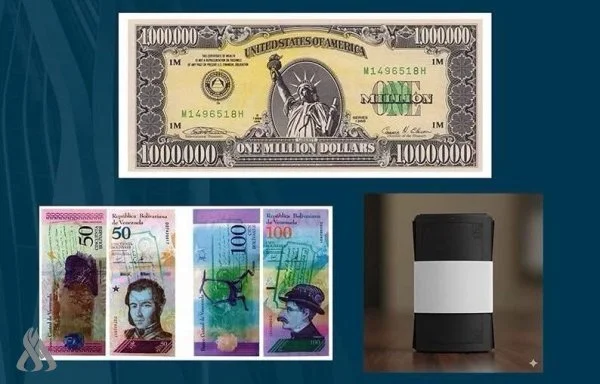
Mot: In Case Ur Wondering!!?? - It’s one of those weeks

News, Rumors and Opinions Wednesday 2-25-2026
Note: All intel should be considered as "Rumors" until we receive official announcements ...and “Rates and Dates” could change anytime until we get to the banks/redemption centers.
RV Excerpts from the Restored Republic via a GCR Update as of Wed. 25 Feb. 2026
Compiled Wed. 25 Feb. 2026 12:01 am EST by Judy Byington
“These first 250 years were just the beginning. The Golden Age of America is now upon us. The revolution that began in 1776 has not ended — it still continues because the flame of liberty and independence still burns in the hearts of every American Patriot.”…President Donald Trump State of the Union Address Tues. 24 Feb. 2026
Note: All intel should be considered as "Rumors" until we receive official announcements ...and “Rates and Dates” could change anytime until we get to the banks/redemption centers.
RV Excerpts from the Restored Republic via a GCR Update as of Wed. 25 Feb. 2026
Compiled Wed. 25 Feb. 2026 12:01 am EST by Judy Byington
“These first 250 years were just the beginning. The Golden Age of America is now upon us. The revolution that began in 1776 has not ended — it still continues because the flame of liberty and independence still burns in the hearts of every American Patriot.”…President Donald Trump State of the Union Address Tues. 24 Feb. 2026
Tues. 24 Feb. 2026 NESARA–GESARA: THE 30+1 PROTOCOLS SAID TO RESET THE WORLD SYSTEM …Mr. Pool on Telegram
For years, NESARA–GESARA has been dismissed as rumor. Yet in 2026, discussion around it has intensified, framed by supporters as a coordinated military and economic blueprint designed to dismantle the existing global financial order and replace it with an entirely new system. According to this narrative, what is coming is not reform – it is a controlled collapse followed by reconstruction.
Proponents describe NESARA not as legislation, but as a sequence of 31 operational protocols meant to be executed quietly, with maximum shock and minimal warning. The claim is that the current debt-based system is illegitimate, sustained by banking fraud, taxation mechanisms, and monetary control structures that were never meant to serve the public.
At the core of the plan is massive debt cancellation. Credit cards, mortgages, and bank-originated loans are described as subject to erasure, framed as correction for decades of systemic financial a***e. Supporters insist this applies only to debt generated within the centralized banking system, not private obligations, positioning it as targeted dismantling rather than blanket forgiveness.
The second pillar focuses on tax restructuring. The narrative claims the income tax system would be abolished entirely, with the IRS rendered obsolete. In its place, a simplified consumption tax on non-essential goods is proposed, while food, medicine, and used items would remain untaxed. The goal, supporters argue, is to sever the state’s ability to extract wealth directly from labor.
Central to the theory is the elimination of the Federal Reserve. According to the blueprint, fiat currency would be replaced by a U.S. Treasury–issued system backed by tangible assets such as gold and silver. This shift is described as the end of monetary manipulation and infinite debt creation, restoring national control over currency issuance.
Financial privacy also plays a central role. Under the NESARA framework, surveillance-based banking would be replaced by systems designed to protect personal transactions from state or corporate monitoring. Control of assets would shift away from centralized intermediaries and back to individuals.
The plan also includes large-scale humanitarian initiatives, funded by recovered assets and redirected capital. Housing, healthcare, infrastructure, and education are presented as priorities in what proponents describe as a transition from scarcity to abundance.
Finally, NESARA is framed as a system of restitution and redemption. Historical financial harm, hidden taxation, and monetary exploitation would allegedly be accounted for, with compensation mechanisms tied to asset exchanges and humanitarian obligations.
~~~~~~~~~~~~~~
Tues. 24 Feb. 2026 GLOBAL CURRENCY RESET: INSIDE THE REDEMPTION OPERATION …Juan O Savin on Telegram
The RV Redemption has begun. The NDAs are real. The post-redemption plans are locked. What you are about to read is the uncompromising truth about the Redemption Centers – the only gateways for the public under NESARA/GESARA protocols.
Banks are NOT your path. Elites use them. We, the people, go through Redemption Centers, even if they have a bank name slapped on the building. Here, rates are higher, and you (allegedly) walk out with QPhones, QLaptops, Quantum ID Access Cards, Rainbow Currency, debit cards, checks and even a temporary trust if your humanitarian project template is ready. This template, (allegedly) approved at the White House, was designed for those chosen to restore humanity.
Backbone of this operation:
Reclamation – returning stolen wealth seized by the Deepstate, Cabal, and bank cartels. Restitution/Reparation – undoing decades of unconstitutional theft: taxes, interest, property seizures, debt slavery.
Redemption – the exchange of currencies/ZIM bonds at rates never meant for public eyes. Only a fraction is for personal use – the rest fuels humanitarian projects.
ZIM bonds are gold-backed. Dinar, Dong, and others hit double-digit rates.
Debt Forgiveness: Medical debt? Gone. Financial chains? Broken. Universal Income: A new era of abundance begins.
Judy Note: It is advised to exchange/redeem your foreign currency at an official Redemption Center rather than a bank. You can only redeem Zim at a RC, the Dinar Contract Rate can only be given at a RC and banks will (allegedly) offer you lower exchange rates than what you can obtain at a RC.
It is my opinion, and I could be wrong, that to have a Humanitarian Project approved for the higher redemption rate on the Zim or foreign currency, you have to be in charge of the project with a written out business plan that shows how the money will be spent. It cannot be a project where you are just donating your monies to various causes.
• No Project submission: flat $15 million settlement, independent of quantity held.
• Approved Humanitarian Projects: 1 to 1 valuation on the first two 100 T Zim bond notes, then $25 million per 100T for up to 30 100T Zim Bond notes. If you hold more 100T Bond notes negotiations will be handled in a secondary session.
Read full post here: https://dinarchronicles.com/2026/02/25/restored-republic-via-a-gcr-update-as-of-february-25-2026/
Courtesy of Dinar Guru: https://www.dinarguru.com/
Jeff Countries that are on the US Treasury's OFAC list, that's a list of counties that support terrorism. Right now Iraq remains on that OFAC list of countries until they revalue their currency. This is the US government's collateral to ensure the US gets paid when the rate changes... That's the collateral used to ensure Iraq is going to revalue the currency and the United States gets paid.
Mnt Goat ...my CBI contact...said we would hear all kinds of comments about the independence of the CBI and how they can adjust the rate anytime they want. Yes this may be true but...Some don’t even realize there are two types of rates, one is the program rate and the other the FOREX rate...the ‘program’ rate tied to the de facto peg can be changed upwards or downwards by the CBI any time. This does not mean allowing the dinar back on FOREX... [Post 1 of 2....stay tuned]
Mnt Goat When the dinar goes back to FOREX it will be re-pegged and off the sole peg to the dollar and the program rate will go away. The newer lower denominations would have to first be rolled out. We are talking apples and oranges when we talk about these two rate types...The dinar can only have one ‘official’ rate. There is no such thing as an in-country rate and then a FOREX rate at the same time...When the dinar does go back to FOREX, the in-country rate (program rate) will change to the FOREX rate. [Post 2 of 2]
****************
Is Someone Front-Running a $20K Gold Revaluation?
GoldSilver: 2-25-2026
Someone just placed a $3.3 million bet that gold hits $20,000 an ounce by December 2026.
Insider trading? A hedge fund's insurance policy? Or something else entirely?
Alan breaks down the massive options position making waves in the gold market — what the chart actually shows, what it doesn't show, and why the "insider" theory might not hold up under scrutiny.
You'll learn exactly how this call spread works, what the potential $5.5 billion payday would look like, and the real reason a major fund might make this trade with no insider knowledge at all.
The truth is more nuanced — and more interesting — than the headlines suggest.
Seeds of Wisdom RV and Economics Updates Wednesday Morning 2-25-26
Good Morning Dinar Recaps,
EU–China Trade Talks Intensify in Beijing
Currency pressure, industrial overcapacity, and strategic rivalry redefine Europe–China economic relations
Good Morning Dinar Recaps,
EU–China Trade Talks Intensify in Beijing
Currency pressure, industrial overcapacity, and strategic rivalry redefine Europe–China economic relations
Overview
German Chancellor Friedrich Merz met with Xi Jinping in Beijing in a high-stakes effort to reset strained trade ties between Europe and China.
At the center of discussions were three core friction points:
Currency valuation pressures
Industrial subsidies and state-backed overcapacity
Market access and technology competition
The talks signal a pivotal recalibration in EU trade strategy toward China, especially in advanced manufacturing, green tech, and semiconductor-linked supply chains.
Key Developments
1. Currency Friction Intensifies
Merz urged Beijing to allow greater appreciation of the yuan, arguing that currency management distorts competitiveness and widens Europe’s trade imbalance. A stronger yuan would theoretically narrow export advantages in sectors where European manufacturers face heavy price pressure.
2. Industrial Overcapacity Under Scrutiny
European officials raised concerns over Chinese industrial overproduction, particularly in electric vehicles, solar panels, batteries, and steel. The EU argues that state-backed subsidies allow excess goods to flood European markets at artificially low prices — fueling protectionist sentiment across member states.
3. Strategic Technology Sensitivities
The discussions also reflected heightened EU caution in advanced manufacturing and tech sectors, including semiconductors, AI-linked components, and clean energy systems. Europe seeks both cooperation and protection — balancing economic engagement with industrial sovereignty.
4. Protectionist Winds Rising in Europe
Domestic political pressures within the EU are mounting. Farmers, industrial unions, and automotive manufacturers increasingly demand safeguards against low-cost imports, pushing Brussels toward a more assertive trade posture.
Why It Matters
This meeting underscores a structural shift in global trade dynamics.
Europe is no longer operating solely within a liberal trade framework — it is recalibrating toward strategic economic defense. The EU is signaling that market access will increasingly depend on:
Reciprocity
Transparency in subsidies
Currency alignment
Industrial fairness
The era of unchallenged export dominance is being politically contested. This could reshape:
Global manufacturing flows
EV and clean-tech supply chains
Currency stability debates
WTO enforcement mechanisms
This is not just currency debate — it is monetary leverage in motion.
Why It Matters to Foreign Currency Holders
Currency valuation is no longer a background issue — it is a geopolitical instrument.
If the EU presses harder on yuan appreciation:
The U.S. dollar’s relative strength dynamics may shift
The euro’s competitiveness posture may change
Capital flows into European manufacturing sectors could accelerate
BRICS currency cooperation discussions may intensify
Persistent disputes over industrial dumping and currency valuation often lead to:
Tariffs
Trade barriers
Fragmented payment systems
Diversification away from dollar-centered settlement
Foreign currency holders should watch for:
Yuan volatility
Euro trade rebalancing
Escalation into formal EU trade defense actions
Broader global trade bloc fragmentation
This is not just trade tension — it is economic architecture under renegotiation.
This is not merely a bilateral meeting — it is a strategic inflection point in global economic power distribution.
Implications for the Global Reset
Pillar 1: Currency Realignment Pressure
If Europe forces currency concessions, it challenges export-led models that rely on undervaluation — shifting monetary leverage.Pillar 2: Industrial Sovereignty Over Free Trade
The EU’s pivot reflects a broader movement toward strategic autonomy in critical sectors, signaling a retreat from pure globalization.
This is not merely about tariffs — it is about who controls manufacturing capacity, capital flows, and technological dominance in the next economic cycle.
Conclusion
The Merz–Xi meeting reflects a deeper transformation in global economic architecture.
Europe is balancing between engagement and protection. China is defending its export model. Both are navigating a world of supply chain fragmentation and geopolitical risk premiums.
Trade diplomacy is no longer transactional — it is structural.
Seeds of Wisdom Team
Newshounds News™ Exclusive
Sources
Reuters — “German Chancellor Merz Meets Xi in Beijing to Reset Trade Ties”
Financial Times — “EU Pushes China on Currency, Subsidies and Industrial Overcapacity”
~~~~~~~~~~
Madagascar Signals BRICS Pivot as Russia Rebuilds African Footprint
Island nation accelerates Moscow ties in energy, military, and media as BRICS expansion reshapes Africa’s geopolitical alignment
Overview
Madagascar’s foreign policy recalibration is no longer symbolic — it is operational. Interim President Michael Randrianirina traveled to Moscow, met with Vladimir Putin, and signaled that alignment with BRICS is becoming a strategic objective rather than diplomatic rhetoric.
The revival of the Madagascar–Russia partnership, dormant since the Soviet era, now anchors Antananarivo’s international positioning. Energy, military modernization, humanitarian coordination, and media cooperation are all being placed under a broader Russia–Africa cooperation framework.
This is not just diplomacy — it is realignment.
Key Developments
1. Energy & Industrial Investment: Gazprom and Rosatom in Focus
President Randrianirina openly invited Russian state-linked energy giants Gazprom and Rosatom to explore joint projects.
Strategic Implication:
Madagascar is positioning energy partnerships as the backbone of its BRICS engagement. Access to Russian capital, technology, and infrastructure expertise could accelerate industrial capacity — but it also deepens Moscow’s leverage in the region.
Energy cooperation is often the first step in long-term strategic integration.
2. Military Modernization Rooted in Soviet Legacy
Randrianirina emphasized that the Malagasy armed forces have historically relied on Russian equipment and now seek modernization through renewed defense cooperation.
Strategic Implication:
Military continuity creates institutional familiarity and dependency. Reviving defense ties cements Moscow’s influence in Madagascar’s security architecture — reinforcing Russia’s broader Africa defense diplomacy model.
Across Africa, security partnerships frequently precede economic alignment.
3. Humanitarian Diplomacy: Cyclone Aid as Strategic Soft Power
Following severe cyclones, Russia delivered humanitarian support, including an Mi-8 helicopter and logistical equipment.
Strategic Implication:
Humanitarian aid functions as strategic soft power. Tangible assistance reinforces diplomatic goodwill and accelerates political alignment. Aid deliveries create visible proof of partnership — strengthening Moscow’s credibility as an alternative to Western-led frameworks.
4. Media Access and Information Realignment
Randrianirina extended an invitation to Russian state media outlet RT to operate in Madagascar, framing it as a commitment to media diversity.
Strategic Implication:
Information access shapes geopolitical narrative. Opening media space to Russian platforms signals alignment not only in economics and defense — but also in information architecture.
Narrative influence is a core component of modern geopolitical power.
Why It Matters
BRICS expansion in Africa is accelerating. Madagascar’s pivot adds to a growing pattern of African governments reassessing legacy Western relationships in favor of diversified global partnerships.
Key themes emerging:
Energy security over traditional aid frameworks
Military modernization through non-Western suppliers
Bilateral cooperation bypassing multilateral gatekeepers
Soft power through infrastructure and humanitarian support
Madagascar is not acting in isolation — it is participating in a broader continental recalibration.
Why It Matters to Foreign Currency Holders
From a global reset lens, Madagascar’s alignment highlights three structural shifts:
Multipolar Financing Networks – BRICS-linked investment channels reduce dependence on Western-dominated financial institutions.
Commodity & Resource Strategy – African nations with strategic minerals gain leverage in global supply chains.
Sanctions-Resilient Trade Corridors – Bilateral energy and defense agreements create alternative settlement pathways outside traditional systems.
As BRICS influence expands in Africa, the architecture of global capital flows becomes more fragmented — and more competitive.
Multipolar Power Expands — Island Nations Join the Shift
Implications for the Global Reset
Pillar 1: Economic Diversification Outside Western Frameworks
Energy, military, and industrial deals increasingly bypass traditional Bretton Woods institutions.
Pillar 2: Strategic Sovereignty Through Alignment Choices
Countries are redefining sovereignty as the ability to choose between blocs rather than remain dependent on one.
Madagascar’s pivot reinforces a broader truth: geopolitical alignment is now an economic strategy.
This is not merely diplomatic repositioning — it is structural realignment in motion.
Seeds of Wisdom Team
Newshounds News™ Exclusive
Sources
Watcher Guru — “Madagascar Signals BRICS Alignment in Strategic Russia Shift”
Modern Diplomacy — “Russia-Africa Cooperation and the Expanding BRICS Footprint”
~~~~~~~~~~
🌱 A Message to Our Currency Holders🌱
If you’ve been holding foreign currency for many years, you were not foolish.
You were not wrong to believe the global financial system would change.
What failed was not your patience — it was the information you were given.
For years, dates, rumors, and personalities replaced facts, structure, and proof. “This week” predictions created cycles of hope and disappointment that were never based on how currencies actually change.
That is not your failure.
Our mission here is different: • No dates • No rates • No hype • No gurus
Instead, we focus on:
• Verifiable developments • Institutional evidence
• Global financial structure • Where countries actually sit in the process
Currency value changes only come after sovereignty, trade, banking, settlement systems, and fiscal coordination are in place. History and institutions confirm this sequence.
You will see silence. You will see denials. That is not delay — that is discipline.
Protect your identity. Organize your documents. Verify everything.
Never hand your discernment to anyone who cannot show proof.
You deserve truth — not timelines.
Seeds of Wisdom Team
Newshounds News
~~~~~~~~~~
Seeds of Wisdom Team RV Currency Facts Youtube and Rumble
Newshound's News Telegram Room Link
RV Facts with Proof Links Link
RV Updates Proof links - Facts Link
Follow the Gold/Silver Rate COMEX
Follow Fast Facts
Seeds of Wisdom Team™ Website
Thank you Dinar Recaps
The Decline Of The Dollar: Gold Is ‘Becoming The Reserve Asset’
One Of Wall Street’s Most Feared Hedge Fund Managers On The Decline Of The Dollar: Gold Is ‘Becoming The Reserve Asset’
Jake Angelo Fortune Updated Thu, February 12, 2026
Gold blasted past $5,300 per ounce last month as President Donald Trump’s hawkish foreign policy and tariff threats sent investors to safer assets. At the same time, U.S. deficit spending swelled to what the Congressional Budget Office called an unsustainable $1.9 trillion, a scenario that’s chipping away at the dollar’s standing as the world’s leading reserve currency.
One Of Wall Street’s Most Feared Hedge Fund Managers On The Decline Of The Dollar: Gold Is ‘Becoming The Reserve Asset’
Jake Angelo Fortune Updated Thu, February 12, 2026
Gold blasted past $5,300 per ounce last month as President Donald Trump’s hawkish foreign policy and tariff threats sent investors to safer assets. At the same time, U.S. deficit spending swelled to what the Congressional Budget Office called an unsustainable $1.9 trillion, a scenario that’s chipping away at the dollar’s standing as the world’s leading reserve currency.
The confluence of these factors has some investors predicting the fall of Treasury securities as the only true global reserve. Greenlight Capital founder David Einhorn made that apparent in a recent conversation with CNBC. The investing legend forecasts a monumental shift in global reserve assets, predicting that central banks will swap dollars for the yellow metal.
“The central banks around the world are buying gold,” Einhorn said. “Whereas a few years ago, it was mostly Treasuries.” He added that it is “becoming the reserve asset” because U.S. trade policy “is very unstable, and it’s causing other countries to say, ‘We want to settle our trade in something other than U.S. dollars.’”
To be sure, the dollar still dominates as the reserve currency of choice. While in the first half of last year, central banks dumped over $48 billion in Treasuries, in July 2025, the dollar still composed roughly a 58% share of all foreign exchange reserves, according to the International Monetary Fund. And gold purchases by central banks actually fell in 2025 from a high between 2022 and 2024, according to data from the World Gold Council.
Also, Einhorn has long predicted the price of gold will rise out of fears around U.S. monetary policy and fiscal policy. In an interview with CNBC last year, the hedge fund manager argued: “Gold is not about inflation. Gold is about the confidence in the fiscal policy and the monetary policy.” While the investor isn’t quite advocating for a return to the gold standard, he is a strong proponent of holding the metal as a hedge against U.S. fiscal and monetary mismanagement.
On Wednesday, Einhorn added that U.S. trade policy is sending jitters across global markets, fueling the “sell America” trend and sending central banks to safer assets like gold. While gold prices have eased since their peak last month, the currency’s value remains high, at around $5,100 per ounce as of Thursday morning.
The Einhorn effect
Einhorn has made a name for himself spotting financial red flags. The hedge fund manager rose to investing prominence in 2002 after taking a short position on Allied Capital, a midcap financial company. After giving a speech about his stance at the Sohn Investment Conference, the company’s stock went down 20% as Einhorn accused the company of defrauding the Small Business Administration.
Einhorn followed a similar playbook in 2007 after shorting Lehman Brothers, sharing his thesis about the financial institution’s overexposure to subprime-mortgage-backed securities at the Value Investing Congress. His prescient callouts of major firms via thoroughly researched presentations—and the resulting stock tumbles they initiate—has popularized the phrase “the Einhorn effect,” used to highlight the hedge fund manager’s striking influence on investor decisions. (This is not to be confused with the “Einhorn revolving shotgun” from the Call of Duty video game.)
Deficit fears fuel a bet on gold
Just as his early short calls exposed cracks in major financial institutions, the investor now sees structural vulnerabilities in government fiscal and monetary policies. Einhorn Wednesday highlighted his philosophy on gold, saying: “Our thesis on gold over the longer term has been that our fiscal policy and our monetary policies don’t make any sense.” At current spending rates, the U.S. deficit-to-GDP ratio is expected to reach 6.7% by 2036, per the CBO. However, Einhorn also noted other major developed currencies maintain high deficit-to-GDP ratios, explaining why gold, as opposed to a foreign currency, could become the preferred global reserve.
To Continue and Read More: https://www.yahoo.com/finance/news/one-wall-street-most-feared-192611075.html
Seeds of Wisdom RV and Economics Updates Tuesday Evening 2-24-26
Good Evening Dinar Recaps,
Geopolitics Overtakes Economics: The New Rules of Global Finance
From Tariffs to Central Banks, Power Now Trumps Policy Models
Good Evening Dinar Recaps,
Geopolitics Overtakes Economics: The New Rules of Global Finance
From Tariffs to Central Banks, Power Now Trumps Policy Models
Overview
This week’s financial landscape reveals a decisive shift: economic frameworks are being subordinated to geopolitical strategy.
From U.S. tariff maneuvers to Japan’s currency tolerance and Israel’s rate decisions, policymakers are increasingly prioritizing security threats, trade leverage, and strategic positioning over traditional economic indicators.
According to reporting compiled by Reuters, governments and central banks are recalibrating decisions around power, deterrence, and alliance management, not inflation models or textbook trade theory.
The pattern is clear: Money is now an instrument of statecraft.
Key Developments
1. Tariffs Reframed as Crisis Management
U.S. President Donald Trump replaced struck-down IEEPA tariffs with new 15% duties under Section 122, citing a balance-of-payments crisis tied to a $1.2 trillion trade deficit.
Former IMF official Gita Gopinath rejected the claim, noting the U.S. retains stable borrowing costs and market access — key indicators that no classical balance-of-payments crisis exists.
Strategic Impact:
Legal statutes are being repurposed to sustain tariff regimes. When one authority fails, another is invoked. Trade law is becoming flexible terrain in geopolitical contests.
2. Japan’s Yen Weakness Signals Strategic Tolerance
The yen weakened to around 155 per dollar, even amid speculation of intervention. Tokyo appears more willing to tolerate depreciation, balancing export competitiveness with fiscal flexibility.
Meanwhile, Japan is seeking assurances that new tariffs won’t “stack” on top of previous trade agreements tied to $550 billion in pledged U.S.-bound investment.
Strategic Impact:
Japan’s caution reflects a shift from economic optimization to risk containment diplomacy. Stability with Washington outweighs currency orthodoxy.
3. Israel Holds Rates Despite Easing Inflation
The Bank of Israel kept interest rates at 4%, even as inflation eased to 1.8%, within its 1–3% target range.
The reason: rising geopolitical uncertainty tied to Iran tensions.
Strategic Impact:
Monetary policy is no longer purely data-driven. Security risk is overriding inflation metrics, signaling a structural shift in central banking priorities.
4. Saudi Arabia’s Fiscal Expansion Accelerates
Saudi Arabia’s Q4 deficit widened to $25.28 billion, with full-year deficits exceeding revised projections as Vision 2030 projects accelerate.
Debt climbed sharply to 1.52 trillion riyals, reflecting expansionary policy despite moderate oil revenue growth.
Strategic Impact:
Mega-project diversification requires sustained borrowing. The fiscal gamble hinges on rapid non-oil growth before debt servicing pressures intensify.
5. Strategic Mineral Alliances Bypass Traditional Trade
Brazil and South Korea elevated ties into a strategic partnership targeting:
Critical minerals
AI development
Green industries
Renewed trade negotiations
As global tariff uncertainty grows, bilateral agreements are replacing multilateral confidence.
Strategic Impact:
Resource diplomacy is fragmenting supply chains into ideological blocs, accelerating “friendshoring” dynamics.
Why It Matters
We are witnessing a systemic pivot:
Trade deficits framed as security threats
Currency weakness tolerated for strategic aims
Central banks prioritizing geopolitics over inflation
Sovereign debt rising to fund diversification races
Bilateral mineral deals replacing multilateral trust
Economic policy is becoming an extension of foreign policy.
This is not just market turbulence — it’s the weaponization of economic policy.
Why It Matters to Foreign Currency Holders
For those watching global financial realignment:
Legal uncertainty increases currency volatility
Security-driven rate policy distorts traditional forecasting models
Supply-chain fragmentation pressures inflation dynamics
Strategic trade blocs alter capital allocation flows
Markets may treat these as temporary disruptions. The evidence suggests structural shifts.
Implications for the Global Reset
Pillar 1: Redefinition of Economic Crisis
Invoking “balance-of-payments crises” in stable economies redefines the legal threshold for protectionism worldwide.
Pillar 2: Central Bank Mandate Evolution
Security risk is increasingly embedded into monetary decision-making frameworks.
Pillar 3: Strategic Fragmentation
Bilateral mineral pacts and tariff stacking fears indicate global trade is reorganizing into aligned blocs.
The rules governing globalization are being rewritten in real time.
This is not just tariff maneuvering — it’s the legal reengineering of trade authority.
Seeds of Wisdom Team View
Three fractures are widening:
Legal fragility of tariff authority
Unsustainable tribute-style trade dynamics
Central banks subordinating economics to geopolitics
Markets remain calm.
Policy foundations are shifting.
When monetary frameworks bend toward security priorities, signaling mechanisms weaken — and volatility follows.
This is not just central bank discretion — it’s geopolitics overriding economic doctrine.
Seeds of Wisdom Team
Newshounds News™ Exclusive
Sources
Modern Diplomacy — "Financial Brief: A Weekly Roundup on the Geopolitics of Money | Feb 24"
Reuters — "Global markets, tariffs and central bank policy updates"
~~~~~~~~~~
Taiwan at a Crossroads: Strategic Ambiguity Under Pressure
Rising PLA Activity and U.S. Arms Support Reshape Deterrence Calculus
Overview
Taiwan is emerging as one of the most volatile flashpoints in global geopolitics. According to recent analysis, the long-standing U.S. doctrine of strategic ambiguity toward Taiwan may require recalibration as military pressure from China intensifies.
Regular air and naval patrols, median line violations, and gray-zone coercion have become routine since 2022. Meanwhile, Washington has approved an $11.1 billion arms package to strengthen Taiwan’s asymmetric defenses.
The question is no longer ambiguity versus clarity — it is how to recalibrate deterrence without triggering escalation.
Key Developments
1. Surge in Chinese Military Pressure
China’s military spending has risen to over $230 billion in 2024, up sharply from 2016 levels.
PLA aircraft incursions into Taiwan’s ADIZ surpassed 1,700 in 2023, reflecting sustained operational pressure.
China’s newest aircraft carrier, Chinese aircraft carrier Fujian, launched in 2022, now operates near the Taiwan Strait, symbolizing expanded maritime reach.
2. Gray-Zone Coercion Becomes Routine
Frequent air and naval patrols and regular median-line crossings aim to:
Drain Taiwan’s defense resources
Normalize military pressure
Avoid triggering direct U.S. intervention
This approach blurs the line between peace and conflict.
3. U.S. Strategic Ambiguity Under Strain
Under the Taiwan Relations Act, the United States supplies defensive weapons but offers no formal security guarantee.
However, in 2025 Washington approved $11.1 billion in advanced weapons, including:
Long-range rocket systems
Missile platforms
Unmanned aerial vehicles
Beijing condemned the move as destabilizing, while Taipei welcomed it as vital for deterrence.
4. Risks of Strategic Clarity
Some analysts argue for explicit defense guarantees. Others warn that formal clarity could:
Trigger pre-emptive action by Beijing
Accelerate regional militarization
Lock Washington into automatic escalation
Why It Matters
Taiwan is not only a security issue — it is a global economic linchpin.
Over 60% of global semiconductor production is based in Taiwan.
More than 90% of advanced sub-7nm chips are manufactured on the island.
A conflict in the Taiwan Strait would disrupt:
Global supply chains
Technology production
Defense systems
Automotive and AI industries
The economic fallout would be immediate and worldwide.
This is not just cross-strait tension — it’s the stability of the global semiconductor backbone.
Why It Matters to Foreign Currency Holders
Geopolitical escalation in the Taiwan Strait could trigger:
Safe-haven currency flows
Volatility in energy and shipping markets
Shockwaves through technology equities
Supply-chain-driven inflation spikes
Capital markets are tightly linked to semiconductor stability — and Taiwan is at the center.
Implications for the Global Reset
Pillar 1: Deterrence Redesign
Traditional ambiguity is eroding under sustained military pressure. A recalibrated approach must balance deterrence with escalation control.
Pillar 2: Supply Chain Sovereignty
The semiconductor concentration in Taiwan underscores the fragility of global manufacturing networks. Nations are accelerating reshoring and diversification strategies.
Taiwan’s status now influences both military doctrine and economic architecture.
Seeds of Wisdom Team View
Strategic ambiguity once preserved peace by fostering uncertainty.
Today, persistent gray-zone operations are testing its limits.
Full strategic clarity risks escalation.
Pure ambiguity risks miscalculation.
The path forward appears to be calibrated ambiguity — political restraint paired with credible deterrent capability.
The stakes extend beyond sovereignty. They encompass:
Global technology supply chains
Military balance in the Indo-Pacific
Financial system stability
This is not just regional rivalry — it’s the fault line between economic interdependence and military confrontation.
Seeds of Wisdom Team
Newshounds News™ Exclusive
Sources
Modern Diplomacy — "Taiwan at a Crossroads: Why Strategic Ambiguity Needs Recalibration"
Reuters — "U.S. approves new arms package for Taiwan amid rising tensions"
~~~~~~~~~~
Seeds of Wisdom Team RV Currency Facts Youtube and Rumble
Newshound's News Telegram Room Link
RV Facts with Proof Links Link
RV Updates Proof links - Facts Link
Follow the Gold/Silver Rate COMEX
Follow Fast Facts
Seeds of Wisdom Team™ Website
Thank you Dinar Recaps