
Seeds of Wisdom RV and Economics Updates Sunday Afternoon 12-28-25
Good Afternoon Dinar Recaps,
Silver Market Structural Imbalance: Squeeze Signals and Supply Stress
Veteran analysts warn silver’s rally may reflect deeper market mechanics, not just short-term price moves
Good Afternoon Dinar Recaps,
Silver Market Structural Imbalance: Squeeze Signals and Supply Stress
Veteran analysts warn silver’s rally may reflect deeper market mechanics, not just short-term price moves
Overview
The silver market is experiencing a sustained structural supply-demand imbalance
Industrial demand has surged as inventories tighten and production remains constrained
Severe price action, record levels, and delivery stress suggest deeper stress in the paper–physical relationship
Analysts with decades of experience see conditions that diverge from normal market behavior
Key Developments
Silver prices have surged sharply in 2025, breaking multiple historic levels and outperforming other precious metals in percentage terms as demand outpaces supply
Market observers point to persistent supply deficits and expanding industrial usage, particularly in technology and clean energy sectors
Structural constraints on physical inventories — and tight access to deliverable metal — are beginning to influence pricing behavior in futures and spot markets, according to expert commentary and investor analysis
Paper markets now face growing scrutiny as analysts note large leveraged positions may be under stress in environments where physical is scarce and delivery demand rises
Why It Matters
This is not a garden-variety rally. What experienced market observers are describing is a shock to the balance between promises (paper contracts) and deliverable reality (metal inventories). When delivery obligations start to outrun physical availability, the market begins to price risk differently, shifting attention from purely financial trading to real asset scarcity. This dynamic can expose structural vulnerabilities that normal supply-demand analysis alone does not capture.
Why It Matters to Foreign Currency Holders
For foreign currency holders, a stressed foundational market such as silver represents more than industrial risk — it signals monetary and systemic liquidity dynamics at work. When asset markets begin reconciling paper positions with physical reality, confidence in financial promises shifts. Hard assets that can be physically owned and delivered become a hedge against both currency risk and counterparty risk, particularly in an era of high global debt and monetary expansion.
Implications for the Global Reset
Pillar: Asset Scarcity Reframes Price Discovery
Structural metal scarcity elevates real inventories above abstract price signals.Pillar: Real Commodities Matter in Financial Architecture
Markets that fail to reconcile physical constraints with financial instruments create systemic stress points.
This is not just politics — it’s global finance restructuring before our eyes.
Seeds of Wisdom Team
Newshounds News™ Exclusive
Sources
Youtube -- "If You Own SILVER, You Need to See THIS NOW!": Andy Schectman | Silver Price 2025
Reuters — “Silver surges past $35/oz level to hit more than 13-year high”
The Guardian — “Elon Musk warns of impact of record silver prices before China limits exports”
~~~~~~~~~~
Bitcoin vs ISO Assets: Speculation vs Infrastructure
Why narrative-driven assets behave differently from settlement-grade systems
Overview
Bitcoin and ISO-compliant digital assets serve fundamentally different roles
Bitcoin is driven by speculation, liquidity, and narrative
ISO assets are designed for regulated settlement and interoperability
Infrastructure assets gain value through use, not hype
The distinction matters as the global financial system modernizes
Key Developments
Bitcoin continues to dominate retail and institutional speculative exposure
ISO 20022 has become the standard language for global payments
Only a limited set of digital assets are compatible with institutional rails
Financial institutions prioritize speed, finality, cost, and compliance
Alternative settlement systems are being built alongside legacy rails
Asset-backed models are replacing debt-only expansion frameworks
Speculation vs Infrastructure: How They Differ
Bitcoin — A Speculative Asset
Bitcoin’s value is primarily driven by belief, scarcity narrative, and liquidity access. It trades like a macro risk asset, responding to sentiment, monetary policy expectations, and capital flows. Its design prioritizes decentralization and security over throughput, resulting in slower settlement times and higher transaction costs during congestion.
ISO-Compliant Assets — Financial Infrastructure
ISO assets are engineered for interoperability within regulated financial systems. Their value proposition lies in efficiency, not appreciation. These assets facilitate rapid settlement, low-cost transfers, and messaging compatibility with central banks and financial institutions. Adoption depends on legal clarity and operational necessity rather than market excitement.
Why It Matters
As the financial system transitions, speculation and infrastructure will not be valued the same way. Speculative assets inflate early in cycles when liquidity is abundant. Infrastructure assets become indispensable later, when systems require reliability and scale. Confusing these roles leads to misaligned expectations about price behavior and adoption timelines.
Why It Matters to Foreign Currency Holders
For foreign currency holders, understanding this distinction is critical. Speculative assets may offer volatility-driven gains but lack settlement reliability. Infrastructure assets support cross-border trade, liquidity management, and monetary stability. As countries modernize payment systems, currencies aligned with ISO-compliant rails and asset-backed frameworks gain durability.
Implications for the Global Reset
Pillar: Narrative Leads, Infrastructure Lasts
Speculation captures attention early; systems that move value endure.Pillar: Function Determines Survival
Assets integrated into payment and settlement networks outlast those reliant on belief alone.
This is not just politics — it’s global finance restructuring before our eyes.
Seeds of Wisdom Team
Newshounds News™ Exclusive
Sources
Bank for International Settlements – “ISO 20022 and the evolution of global payment systems”
International Monetary Fund – “Global financial architecture and cross-border payment reform”
~~~~~~~~~~
Bitcoin vs XRP vs Gold: Speculation, Settlement, and Sovereign Trust
Three assets, three roles, one transforming financial system
Overview
Bitcoin, XRP, and gold serve distinct and non-interchangeable functions
Bitcoin operates as a speculative digital asset
XRP is designed for high-speed settlement and liquidity bridging
Gold remains the ultimate sovereign reserve asset
Confusing these roles leads to incorrect expectations about value and adoption
Key Developments
Bitcoin dominates digital asset speculation and liquidity flows
XRP continues integration into cross-border payment infrastructure
Central banks remain aggressive buyers of physical gold
Payment systems are upgrading to ISO-compliant digital rails
Asset-backed settlement models are gaining institutional support
Monetary systems are separating value storage from value movement
Role Comparison: How Each Asset Functions
Bitcoin — Speculation and Narrative
Bitcoin’s value is driven by belief, liquidity, and scarcity narrative. It performs well during risk-on cycles and monetary expansion. However, limited throughput, higher fees during congestion, and slow finality restrict its usefulness as a settlement asset at institutional scale.
XRP — Settlement and Liquidity
XRP was engineered to move value quickly, cheaply, and with finality. Its role is not to replace sovereign currencies, but to bridge them. XRP reduces reliance on pre-funded accounts and enables real-time cross-border settlement. Adoption depends on regulatory clarity and operational efficiency rather than speculative demand.
Gold — Sovereign Trust and Collateral
Gold anchors monetary confidence. It carries no counterparty risk and has functioned as a reserve asset across centuries. Central banks accumulate gold to protect balance sheets against currency debasement, sanctions, and systemic shocks. Gold does not move value — it secures it.
Why It Matters
The evolving financial system is modular. Different assets perform different tasks. Bitcoin captures speculative attention, XRP facilitates movement, and gold anchors trust. Systems that mistake speculation for infrastructure risk instability. Systems that align assets to function gain resilience.
Why It Matters to Foreign Currency Holders
For foreign currency holders, this distinction determines exposure. Speculative assets respond to sentiment. Settlement assets respond to usage. Reserve assets respond to confidence breakdowns. As the reset progresses, currencies tied to efficient settlement and credible reserves gain strength relative to those dependent on debt expansion alone.
Implications for the Global Reset
Pillar: Function Over Hype
Assets survive based on utility, not popularity.Pillar: Separation of Roles
Storing value, moving value, and pricing risk require different tools.
This is not just politics — it’s global finance restructuring before our eyes.
Seeds of Wisdom Team
Newshounds News™ Exclusive
Sources
World Gold Council – “Central banks and gold: reserve diversification trends”
Bank for International Settlements – “Cross-border payments and settlement modernization”
~~~~~~~~~~
Seeds of Wisdom Team RV Currency Facts Youtube and Rumble
Newshound's News Telegram Room Link
RV Facts with Proof Links Link
RV Updates Proof links - Facts Link
Follow the Gold/Silver Rate COMEX
Follow Fast Facts
Seeds of Wisdom Team™ Website
Thank you Dinar Recaps
News, Rumors and Opinions Sunday 12-28-2025
Note: All intel should be considered as "Rumors" until we receive official announcements ...and “Rates and Dates” could change anytime until we get to the banks/redemption centers.
RV Excerpts from the Restored Republic via a GCR Update as of Sun. 28 Dec. 2025
Compiled Sun. 28 Dec. 2025 12:01 am EST by Judy Byington
Sat. 27 Dec. 2025 Something big just happened, and most people missed it. …Charlie Ward and Friends on Telegram
For nearly a year, President Trump has been (allegedly) executing a quiet but deliberate economic realignment. While the public focused on headlines about inflation, gas prices, and GDP, the real operation unfolded behind the scenes. That was intentional. This was never meant to be a media event.
Note: All intel should be considered as "Rumors" until we receive official announcements ...and “Rates and Dates” could change anytime until we get to the banks/redemption centers.
RV Excerpts from the Restored Republic via a GCR Update as of Sun. 28 Dec. 2025
Compiled Sun. 28 Dec. 2025 12:01 am EST by Judy Byington
Sat. 27 Dec. 2025 Something big just happened, and most people missed it. …Charlie Ward and Friends on Telegram
For nearly a year, President Trump has been (allegedly) executing a quiet but deliberate economic realignment. While the public focused on headlines about inflation, gas prices, and GDP, the real operation unfolded behind the scenes. That was intentional. This was never meant to be a media event.
The surface indicators told part of the story. Fuel prices dropped. GDP stabilized. Consumer spending surged. Inflation cooled. Wages began catching up. Analysts called it a “soft recovery,” but the explanation never fit. This was not market correction. It was structural intervention.
Domestic energy production was restored by removing global regulatory locks disguised as environmental policy. Transportation costs collapsed as internal supply chains were rebuilt. ESG capital lost its grip on logistics and pricing. Foreign backchannels that inflated costs were severed. The pressure on households was not eased by chance. It was forced.
But those moves were only preparation. The real shift is happening now. NESARA systems are already (allegedly) active inside classified Treasury routing layers. Asset backed recalibration protocols have been (allegedly) uploaded to QFS nodes. Debt cancellation frameworks are (allegedly) live.
Seizure orders tied to criminal finance networks are being executed and reassigned through the only system built to survive this transition.
Tier 1 transfers have begun. Over ninety thousand ledger synced accounts are already (allegedly) in pre-disbursement status. Military supervised sync centers reported live movement days ago. Redemption infrastructure has moved into continuous readiness. These funds are not tax revenue or stimulus. They are reclaimed assets taken from trafficking, war profiteering, and offshore laundering operations and rerouted under sovereign settlement rules.
This is why the banks are silent. Retail institutions are (allegedly) positioning quietly. The Federal Reserve has stopped forward guidance. European clearinghouses are freezing payouts without explanation. The old system is(allegedly) being powered down gradually while the new one runs in parallel.
December is not random. It is the staging window. The full system switch is scheduled for January. Infrastructure is already deployed. Legacy fiat accounts are being detached from settlement layers. Once Tier 1 closes, that channel closes with it.
This was never about convincing the public. The public only understands after transitions are complete. Trump is not campaigning on the economy. He is dismantling the architecture that made permanent control possible.
If you are already positioned, there is nothing to wait for. Tier 1 is operational and nearly complete. Everyone else will learn what happened after the wealth has already moved.
The dollar will not vanish overnight. It will drain slowly while the asset backed system accelerates.
When people finally ask where the money went, the answer will be simple. It went to those who were paying attention.
~~~~~~~~~~~
World Economic Situation:
Sat. 27 Dec. 2025 A quiet panic is spreading through the global banking system, and it has nothing to do with markets. What is happening now is structural dismantling.
The old control grid built on debt, surveillance, and behavioral compliance is (allegedly) being taken apart deliberately and permanently. Banks are not collapsing on their own. They are (allegedly) being shut down node by node.
When Donald Trump returned to office in January 2025, the covert phase ended. Years of preparation(allegedly) moved into execution. Central-bank choke points were severed. Hidden asset pipelines were seized. Quantum-aligned financial channels were activated. Redemption Centers (allegedly) came online.
From that moment forward, gold recalibration systems began syncing across secure networks. Wealth that had been (allegedly) trapped inside elite-controlled structures started moving through verified, non-bank pathways. The press said nothing. But military cyber units, Treasury white hats, and intelligence veterans across multiple allied nations saw the same data: a banking system bleeding assets, fabricating solvency, running ghost ledgers, and scrambling to relocate gold like a collapsing regime.
Banks were never about money. They were about control.
Credit scores were behavioral leashes. Loans were compliance tests. Payroll data fed predictive systems. “Fraud prevention” masked biometric tracking. By 2020, central banks had (allegedly) plans to eliminate cash, merge medical data with spending behavior, and link identity verification to obedience scoring. The pandemic era wasn’t the endgame. It was a rehearsal.
That trajectory was supposed to lock in by 2026. It didn’t.
The expansion of Redemption Centers in early 2025 shattered the system’s defenses. These are not civilian money hubs. They are (allegedly) gold-anchored, QFS-synced, and structurally independent from BIS, IMF, and legacy central-bank networks. Banks cannot access them. Cannot audit them. Cannot freeze them. Cannot interfere.
For the first time in over a century, financial flow is exiting elite custody. That is why, right now, the response is frantic.
Gold is being pulled from contingency vaults in Switzerland and Northern Italy tied to post-WWII emergency liquidity frameworks. Major European banks are(allegedly) submitting fabricated asset reports just to stay inside transaction windows, reports that now fail upgraded Treasury verification protocols. Cyber attacks have been (allegedly) launched against QFS routing infrastructure, neutralized before reaching quantum layers. Media blackout directives have gone out globally, instructing outlets to mock, deny, and redirect attention, using the same coordination channels deployed during lockdowns and digital ID pushes.
The fingerprints are identical. The structure is collapsing. NESARA is no longer (allegedly) theoretical. It is active. Verified disbursements are already routing through quantum validation layers. January 2026 is the lock-in point. When the fiat scaffolding finally gives way, alignment will determine survival.
The panic is not about money. They can create digits endlessly. The panic is about losing control over who can hold value, who can move it, and who can build with it.
Redemption Centers (allegedly) bypass their grip. Quantum verification ends their surveillance. And the old system has no counter.
FINAL NOTE FOR DECEMBER 23, 2025: This is not a future event. It is operational. This Christmas is not symbolic. It is a staging window.
The largest financial realignment in human history is (allegedly) underway, quietly, decisively, and without reversal.
Read full post here: https://dinarchronicles.com/2025/12/28/restored-republic-via-a-gcr-update-as-of-december-28-2025/
Courtesy of Dinar Guru: https://www.dinarguru.com/
Mnt Goat My CBI contact...told me on my call...to Iraq that we will see articles about the removal of these larger three-zero notes and the swap out. She told me we already should have witnessed much recent news about the removal of the zeros and so pay close attention. She also said the CBI site will be updated with pictures of the newer lower denominations soon once the trigger is pulled to begin...
Frank26 Today you have a presidential decree for parliament to sit on the 29th. That's a very direct command. I believe they will obey. We should see your [Iraqi] government formed. We should see the HCL and we should see a new exchange rate. We should see the lower notes from the 29th to the 31st. Anything short of that is a complete failure especially with Mark Savaya right after you're supposed to do that.
Jeff They have 3 aspects of the government formation regarding the elections they have to do. They have to finish and complete the parliament. After they complete the parliament they have to finish and complete the president of the country, then the prime minister. This very next session of parliament around the 29th they could or might complete the formation of parliament. [Then] parliament can resume having sessions...By changing the rate while the government is being formed, during the year of '25, makes the most sense because it allows them to hit the ground running...Otherwise if they're waiting till the government's done, they would probably be waiting until at least February.
************
The Dollar’s WORST YEAR in a Decade - Global Currency Repricing Is Here
Lena Petrova: 12-28-2025
In this video, I break down why the dollar weakened sharply through 2025, what the drop in the US Dollar Index (DXY) really means, and why this move may signal a structural shift after decades of dollar dominance.
We look at the key drivers behind the selloff — rising US debt, widening fiscal deficits, slowing relative growth, tariff uncertainty, and growing global investor hedging against dollar exposure.
I address the big question: does a weakening dollar mean you should buy gold now? I explain why gold is often promoted during periods of dollar stress, the risks many overlook, and why gold isn’t always the automatic answer.
“Tidbits From TNT” Sunday 12-28-2025
TNT:
Tishwash: From "nothing" to billionaires... What are the secrets of the phenomenon of "exorbitant and rapid wealth" in Iraq?
Hussein Omran, a researcher in strategic, political, and regional security affairs, highlighted the phenomenon of "exorbitant and rapid wealth accumulation" that has spread in Iraq In recent years, he described it as a product of the "shadow economy" and not the result of investment acumen or genuine entrepreneurship.
Imran noted in a post that I followed Alsumaria News until the scene The Iraqi has become It is teeming with figures "with no commercial or industrial history" who, in record time, became billionaires.
The researcher attributed this shift to two main, almost guaranteed paths to wealth beyond oversight:
TNT:
Tishwash: From "nothing" to billionaires... What are the secrets of the phenomenon of "exorbitant and rapid wealth" in Iraq?
Hussein Omran, a researcher in strategic, political, and regional security affairs, highlighted the phenomenon of "exorbitant and rapid wealth accumulation" that has spread in Iraq In recent years, he described it as a product of the "shadow economy" and not the result of investment acumen or genuine entrepreneurship.
Imran noted in a post that I followed Alsumaria News until the scene The Iraqi has become It is teeming with figures "with no commercial or industrial history" who, in record time, became billionaires.
The researcher attributed this shift to two main, almost guaranteed paths to wealth beyond oversight:
The first path: the dollar "machine" and currency platform: Imran argued that manipulating the price difference between the official and parallel markets, fictitious invoices, and transfers made through front companies and banks lacking genuine oversight, transformed the dollar into a means of exorbitant profit with no risk or added value to the economy, in addition to serving as a cover for money laundering operations.
The second path: oil smuggling and the regional shadow market: The researcher explained that regional crises, particularly those related to Iran, created a massive parallel oil market. He emphasized that Iraq It has become a "corridor and outlet" through complex land and sea routes, where oil is sold under various guises via a system that includes tankers, intermediaries, and formal and informal facilities, making "proximity to oil" the shortest path to wealth.
Imran warned of the disastrous consequences of this model , emphasizing that it neither builds a state nor creates jobs, but rather produces a "parasitic elite" linked to or protected by politics, which fights any attempt at reform because it threatens its source of profit.
Imran described this situation as "Collapse The "quiet" collapse, which doesn't happen with a resounding explosion, but rather seeps into the structure of society when an entire generation becomes convinced that "work and production" stupidity
The researcher concluded his presentation with a question that sparked widespread discussion: "Do you know anyone who had nothing and is now a billionaire?", highlighting the clarity of the phenomenon and the inability of natural economic logic to explain it. link
************
Tishwash: The Iraqi parliament publishes the agenda for Monday's session.
The Iraqi parliament is scheduled to hold its first session of its sixth term on Monday at 12 noon, which includes two items on its agenda.
The first paragraph includes: the swearing-in of the new members of the House of Representatives, and the other includes: the election of the Speaker of the House of Representatives and his two deputies, according to a statement issued by the Parliament’s Media Department.
In the past few days, the Shiite, Sunni, and Kurdish political forces and parties that won the elections have intensified their discussions in order to decide on the three top leadership positions: Speaker of Parliament, President of the Republic, and Prime Minister.
After the fall of Saddam Hussein’s regime in the spring of 2003 at the hands of American forces and their allies, the major political forces of the Shiites, Kurds, and Sunnis adopted a quota system in distributing positions for the three presidencies: the Prime Minister’s office, the Republic, and Parliament.
Last Saturday, the head of the Supreme Judicial Council, Faiq Zaidan, confirmed that the first session of the new House of Representatives, scheduled for December 29, 2025, must decide on the appointment of the Speaker of the House and his two deputies, and it is not constitutionally or legally permissible to postpone or extend it. link
************
Tishwash: "Threaten them with their money": Savaya receives advice on the weaknesses of Iraqi politicians
The Middle East Monitor website offered advice to the US Special Envoy to Iraq, Mark Savaya, that if he wants to succeed in his Iraqi mission and survive what the report called the "theater of illusions" represented by Baghdad, he should scrutinize who is making money.
After the London-based website pointed out that Savaya came to his position as a reward for his loyalty, and not through hardening his resolve through Middle Eastern events and calculations, it noted that he comes to the den of wolves armed with a smile and an outstretched hand, but his experience is shallow and his mandate is to dismantle the Popular Mobilization Forces and cut the strong bond of loyalty that connects Baghdad to Tehran, in order to pull Iraq back into the sunlight from the darkness of Iran.
The report, translated by Shafaq News Agency, said that Savaya will walk through a maze of deception, where every door in front of him is a trap. It added that the leaders he will deal with have overcome dictatorships, invasions, coups, sanctions, revolutions, and wars, and buried their enemies. They speak cunningly and will mislead him by drowning him in unimportant details. It noted that they are skilled at camouflage and that their civility is merely a sword covered in silk, and that he will have to identify the twin forces behind their actions in order to understand them.
The report continued, saying: “These are not patriots, but rather a coterie of greed. They do not worship ideology, but rather power. They do not cling to faith, but rather to wealth. They are not ministers and parliamentarians, but rather leaders of a league wearing government clothes. They lead militia groups, order kidnappings, and silence journalists.” It added that they “have been looting Iraq since 2003, and they feed on a wounded lion like hyenas.”
The report said that, like all criminals, they "made one major mistake: they left a financial trail."
The report explained that their wealth is not in Baghdad, but rather their money is hidden in vaults in Switzerland, in Iranian banks, in shell companies, in offshore accounts, and in real estate in Europe, North America, and within the United States, noting that the “Panama Papers” scandal contributed to lifting the veil and to the US Treasury’s Office of Foreign Assets Control tracking them.
The report urged Savaya to use the weapon of "the power of fear" against these people because they fear poverty and bankruptcy, not troops and bombs, if he wanted his mission to succeed.
The report outlined this proposed scenario, with the author addressing Savaya: “Sit before them, smile diplomatically, and present them with a document granting the United States government full legal authority to investigate, trace, and seize any asset, account, or investment in their names, the names of their children, or the names of those in their inner circle.”
He continued, “Tell them this document means nothing if they are truly innocent. Watch their hands tremble, watch their masks break, and those who are honest will sign. But the corrupt will stall, and they will erupt in anger at the sudden infringement upon their sovereignty over their ill-gotten gains.”
He added, "These men are not motivated by dignity or belief. It is the fear of losing everything they have stolen that motivates them."
The report stated that "money is only one of their weapons; their second weapon is deception. They are experts in smiles, hugs, and schemes. They are a group of promises and betrayals, and they practice dissimulation," noting that this does not represent theology or science, but rather "a sacred art of lying," and every handshake is worthless.
The report continued, saying, "They will obstruct him, and stifle him with delays until he gets tired and defeated," adding that "we must remember that the Iraqi tragedy did not arise only in a state of chaos, but rather in the collaboration between cynical foreigners and opportunistic Iraqis, and between external power and internal treachery."
The report argued that Savaya was not sent to deal with a democratic entity, but rather with a market where loyalty is a commodity, where alliances can be auctioned off, and where patriotism can be faked. It added that "if Savaya wants to dismantle the Popular Mobilization Forces, and if he wants to destroy Tehran's grip, then he must harness the one thing these men fear, which is money, not truth, not principles, not justice."
The report concluded by addressing Savaya, saying, "Follow the money. Seize it. Threaten, use it, and only then will they bow down. Only then will they surrender. Only then will the empire of thieves tremble." It continued, "Follow the money, and never stop until their world collapses."
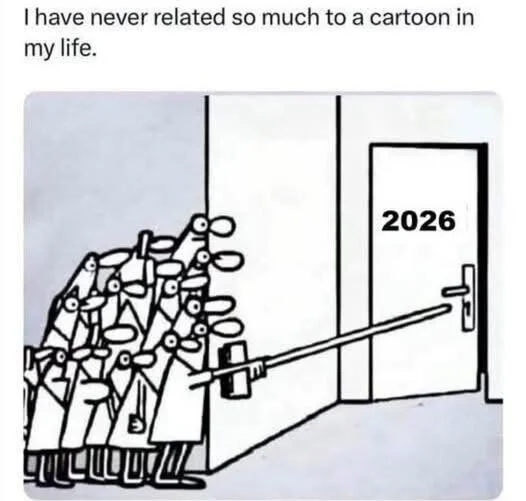
Mot: scary 2026
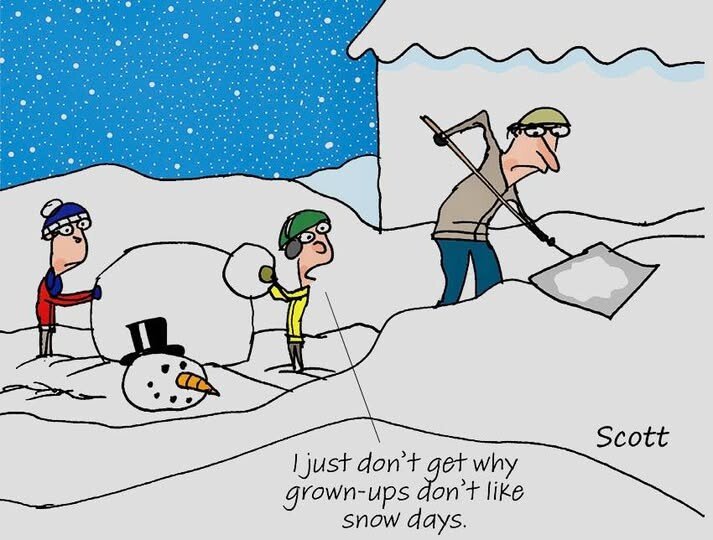
Mot: Snow Daze!!!
Seeds of Wisdom RV and Economics Updates Sunday Morning 12-28-25
Good Morning Dinar Recaps,
The Architecture of the New Global Financial System Is Already Visible
Gold-backed value, digital rails, and ISO-compliant assets form the backbone
Good Morning Dinar Recaps,
The Architecture of the New Global Financial System Is Already Visible
Gold-backed value, digital rails, and ISO-compliant assets form the backbone
Overview
Central banks are accelerating gold accumulation as neutral monetary collateral
The next system is shaping up as asset-backed, digital, and interoperable
ISO 20022 compliance has become the baseline requirement for participation
A limited group of digital assets are positioned for institutional use
Speed, finality, scalability, and compliance now outweigh ideology
Key Developments
Central banks have shifted from fiat expansion to reserve hardening
Gold is increasingly treated as balance-sheet insurance rather than a legacy asset
ISO 20022 messaging is live across major payment and settlement systems
BRICS introduced the Unit, a basket-backed settlement instrument for wholesale trade
Countries are preparing sovereign digital currencies backed by domestic assets
Interoperability between national systems is now the primary challenge
Special Focus: Key Watched Technologies and Assets
ISO 20022 Digital Assets
Only a small number of digital assets meet institutional requirements for messaging compatibility, regulatory oversight, and throughput. These assets are designed to function inside financial infrastructure, not outside it.
XRP as a Bridge Asset
XRP was designed to provide on-demand liquidity between currencies without requiring pre-funded accounts. Its ability to move value in seconds at negligible cost addresses the core inefficiencies of correspondent banking. Scalability, speed, and finality position XRP as connective infrastructure rather than a speculative store of value.
Bitcoin’s Structural Limitations
Bitcoin demonstrated that digital scarcity is possible, but it was not designed for modern settlement. Long confirmation times, high fees during congestion, and limited throughput restrict its usefulness for institutional-scale payments. Bitcoin functions as a speculative asset, not financial plumbing.
BRICS Unit and Multipolar Settlement
The BRICS Unit reflects a broader move toward collateral-backed settlement instruments that reduce reliance on any single national currency. It signals a shift from reserve dominance to asset-based trust.
Why It Matters
The global financial system is not collapsing — it is being rewired. Nations are preserving sovereignty while upgrading rails. Value is being anchored to assets, while movement of value is being digitized. This separation of what backs money from how money moves is the defining feature of the transition now underway.
Why It Matters to Foreign Currency Holders
For foreign currency holders, the reset changes what determines credibility. Currencies tied to real assets, efficient settlement, and compliant infrastructure gain durability. Those dependent on debt expansion, slow rails, and political leverage face repricing risk. Watching infrastructure readiness now matters more than watching headlines.
Implications for the Global Reset
Pillar: Assets Back Value, Networks Move It
Gold and national resources anchor trust, while digital rails provide speed and scale.Pillar: Interoperability Over Dominance
The future system favors connection between currencies, not replacement of them.
This is not just politics — it’s global finance restructuring before our eyes.
Seeds of Wisdom Team
Newshounds News™ Exclusive
Sources
Bank for International Settlements – “ISO 20022 and the future of global payments”
World Gold Council – “Central banks and gold: reserve diversification trends”
~~~~~~~~~~
Silver vs Gold: Same Monetary Family, Very Different Market Mechanics
Why silver behaves like a leveraged monetary metal while gold anchors stability
Overview
Gold and silver both function as monetary metals, but their market structures differ sharply
Gold trades primarily as a reserve asset, while silver straddles monetary and industrial demand
Silver’s smaller market size makes it more sensitive to leverage and liquidity stress
Divergence between the two often signals shifts in risk, inflation expectations, and liquidity
Key Developments
Central banks overwhelmingly accumulate gold, not silver, for reserves
Silver demand is split between industrial use and investment, tightening supply cycles
Paper-to-physical ratios are significantly higher in silver markets
Silver inventories are thinner relative to annual demand
Gold markets are deeper and more liquid, reducing volatility
Silver reacts faster — and more violently — during leverage unwinds
Market Mechanics: Why They Behave Differently
Gold
Gold functions as a monetary anchor. Central banks hold it, sovereigns settle with it, and it carries minimal industrial dependency. Its futures and OTC markets are large and liquid, allowing stress to dissipate more slowly. Gold moves when confidence shifts — but rarely gaps without cause.
Silver
Silver behaves like a pressure valve. Its dual role creates constant tension between industrial consumption and monetary demand. Because the silver market is much smaller, leveraged positions dominate price discovery during stress. When liquidity tightens or physical supply is constrained, silver reprices rapidly.
Why It Matters
Silver often moves after gold signals a trend — but moves faster and farther once constraints appear. This is not speculation; it is structure. When markets begin repricing monetary risk, gold establishes credibility while silver exposes fragility. The relationship acts as an early warning system for leverage, inflation, and settlement stress.
Why It Matters to Foreign Currency Holders
For foreign currency holders, the gold–silver relationship reveals confidence versus pressure. Gold reflects trust erosion in fiat systems, while silver reflects stress inside them. When silver outperforms sharply, it suggests leverage is unwinding and liquidity is thinning — conditions that often precede currency instability or repricing
Implications for the Global Reset
Pillar: Gold Anchors, Silver Signals
Gold stabilizes confidence; silver exposes structural strain.Pillar: Liquidity Determines Volatility
Smaller, leveraged markets reprice faster when systems are stressed.
This is not just politics — it’s global finance restructuring before our eyes.
Seeds of Wisdom Team
Newshounds News™ Exclusive
Sources
World Gold Council — “Gold Demand Trends and Central Bank Reserves”
Silver Institute — “World Silver Survey: Supply, Demand, and Market Structure”
~~~~~~~~~~
Ukraine Under Fire Ahead of Critical Zelenskiy–Trump Summit
Mass missile and drone strikes intensify pressure as peace talks approach
Overview
Russia launched a large-scale aerial assault on Kyiv and other regions
The attack came just ahead of a high-stakes meeting between President Zelenskiy and President Trump
Hundreds of drones and dozens of missiles targeted civilian and energy infrastructure
The timing signals an attempt to shape negotiations through escalation
Key Developments
Ukraine reported approximately 500 drones and 40 missiles launched overnight
Air raid alerts lasted nearly ten hours in Kyiv
At least one fatality and multiple injuries were confirmed, including children
Energy facilities were struck, leaving large portions of Kyiv without heat and power
Damage was reported across seven districts, including residential high-rises
Polish airspace disruptions triggered heightened regional military readiness
Peace discussions center on territorial control, security guarantees, and economic zones
A draft 20-point peace framework is nearing completion but remains unresolved
Why It Matters
This escalation underscores how military pressure is being used as leverage at the negotiating table. Energy infrastructure targeting highlights the weaponization of winter hardship, while the timing ahead of diplomatic talks suggests an effort to influence terms before concessions are finalized. The conflict remains a major destabilizing force for Europe and global markets.
Why It Matters to Foreign Currency Holders
For foreign currency holders, renewed escalation increases geopolitical risk premiums across Europe. Energy disruption, reconstruction costs, and prolonged uncertainty strain fiscal balances and influence currency valuation. Wars that drag into negotiation phases often trigger currency realignment, reserve shifts, and debt restructuring, all critical signals for those watching the global reset.
Implications for the Global Reset
Pillar: War Accelerates Financial Fragmentation
Prolonged conflict deepens the divide between geopolitical blocs and settlement systems.Pillar: Energy Security Equals Currency Stability
Targeted infrastructure attacks directly impact inflation, sovereign budgets, and monetary credibility.
This is not just politics — it’s global finance restructuring before our eyes.
Seeds of Wisdom Team
Newshounds News™ Exclusive
Sources
Reuters — “Russia launches massive air attack on Kyiv ahead of Zelenskiy-Trump talks”
Modern Diplomacy — “Ukraine Under Fire Ahead of Critical Zelenskiy-Trump Summit”
~~~~~~~~~~
Seeds of Wisdom Team RV Currency Facts Youtube and Rumble
Newshound's News Telegram Room Link
RV Facts with Proof Links Link
RV Updates Proof links - Facts Link
Follow the Gold/Silver Rate COMEX
Follow Fast Facts
Seeds of Wisdom Team™ Website
Thank you Dinar Recaps
The Biggest Credit Bubble in History
The Biggest Credit Bubble in History
WTFinance: 12-27-2025
The global financial landscape is on the cusp of a significant transformation, and according to Alasdair Macleod, a renowned expert in the field, the next few years will be marked by unprecedented turmoil.
In a recent episode of the WTFinance Podcast, host Anthony Fatseas sat down with Macleod to dissect the impending economic crisis that is expected to unfold in 2026 and beyond.
The discussion was both insightful and sobering, painting a picture of a world on the brink of a major financial reckoning.
The Biggest Credit Bubble in History
WTFinance: 12-27-2025
The global financial landscape is on the cusp of a significant transformation, and according to Alasdair Macleod, a renowned expert in the field, the next few years will be marked by unprecedented turmoil.
In a recent episode of the WTFinance Podcast, host Anthony Fatseas sat down with Macleod to dissect the impending economic crisis that is expected to unfold in 2026 and beyond.
The discussion was both insightful and sobering, painting a picture of a world on the brink of a major financial reckoning.
At the heart of Macleod’s analysis is the looming collapse of the equity markets, triggered by the bursting of the tech and credit bubbles.
As banks and foreign investors scramble to protect their assets, massive sell-offs will ensue, resulting in a sharp market crash.
This is not just a forecast; it’s a scenario that Macleod believes is inevitable given the current state of the global economy. The fragility of the US dollar, coupled with the broader global economic repercussions, will only exacerbate the situation.
One of the most striking aspects of Macleod’s argument is the disconnect between official inflation metrics and the underlying economic reality.
Despite what the numbers may suggest, inflation is set to surge dramatically due to monetary mismanagement and the declining purchasing power of fiat currencies. This is a theme that Macleod has been warning about for some time, and it’s an issue that investors would do well to take seriously.
The banking system, too, is facing significant challenges.
Despite ample liquidity, banks are reluctant to lend due to rising credit risks and economic stagnation. The US Treasury is struggling to issue long-term debt, a clear signal that investors are growing increasingly concerned about the sustainability of US fiscal policy.
Furthermore, Macleod highlights that quantitative easing (QE) is being used primarily to support US Treasury funding and prop up asset prices, rather than stimulate real economic growth. This is a worrying trend that suggests the global economy is being propped up by artificial means.
Geopolitically, the landscape is also shifting. China is strategically distancing itself from the weakening US dollar by accumulating gold reserves and promoting the yuan for international trade among BRICS and Shanghai Cooperation Organization members.
Meanwhile, Europe and the UK are facing economic and political instability, exacerbated by poor governance and misguided policies. Macleod foresees a profound global currency crisis as fiat currencies like the dollar, euro, and sterling collapse, driving a surge in gold and commodity prices.
So, what does this mean for investors? Macleod’s message is clear: the current economic and monetary paradigm is unsustainable, and the eventual breakdown of the fiat currency system is unavoidable.
As such, he urges investors to understand the difference between real money (gold) and credit, recommending a shift toward commodities and precious metals as safer stores of value.
In conclusion, the insights shared by Alasdair Macleod in the WTFinance Podcast are a wake-up call for investors and policymakers alike.
The global economy is on the cusp of a significant transformation, and it’s essential that we prepare for the challenges ahead.
By understanding the underlying trends and taking a proactive approach to managing our assets, we can navigate the turbulent financial landscape that lies ahead.
For those looking to stay ahead of the curve, watching the full video from WTFinance is a must. Macleod’s analysis is both nuanced and thought-provoking, offering a unique perspective on the global economic landscape. As we move into 2026 and beyond, his warnings should not be taken lightly.
Ariel: Potential Controlled Revaluation for the Iraqi Dinar (and more)
Ariel: Potential Controlled Revaluation for the Iraqi Dinar
12-27-2025
Ariel @Prolotario1
What is the one thing Donald Trump stated is the reason foreign countries like Iraq could not trade with the US? The artificial value of the fiat dollar was to high right?
Guess what the silver squeeze is doing to help alleviate that problem?
Ariel: Potential Controlled Revaluation for the Iraqi Dinar
12-27-2025
Ariel @Prolotario1
What is the one thing Donald Trump stated is the reason foreign countries like Iraq could not trade with the US? The artificial value of the fiat dollar was to high right?
Guess what the silver squeeze is doing to help alleviate that problem?
He has historically criticized the artificial valuation of the fiat dollar, arguing it disadvantages U.S. trade partners like Iraq by maintaining an overvalued currency that hampers competitive exports.
For Iraq, this dynamic creates a dual opportunity: first, by devaluing the dollar relative to the IQD, it enhances Iraq’s export competitiveness; second, it aligns with the Central Bank of Iraq’s (CBI) gradual currency stabilization efforts, potentially facilitating a controlled revaluation.
So please expect some major news going into the new year. Especially with the new leadership in Iraq.
SantaSurfing: “IT IS OFFICIALLY OVER” THE MOMENT WE’VE BEEN WAITING FOR! SILVER SQUEEZE IS HAPPENING! DOLLAR IS LOSING VALUE! SILVER SHORTAGE = BANKS FAILURE! WE’RE GETTING THAT CLOSE! HOLD!!! HOLD!!! (Not financial advice) THIS IS SPOT ON!
ASIAN GUY RECENT UPDATE 12/26/2025!
IT'S OVER: Banks Tap Fed for $17 BILLION as Silver Shorts Implode
Currency Archive
https://www.youtube.com/watch?v=6b5suA_yI-0&feature=youtu.be
Source(s): https://x.com/Prolotario1/status/2004729097063170425
Ariel : Iraqi Dinar Update, Mark Savaya Action Oriented Mindset
12-27-2025
Iraqi Dinar Update: Where We Are (Mark Savaya) Action Oriented Mindset
Mark Savaya’s presence in Iraq as this get-it-done businessman elevates the stakes tremendously, injecting the momentum needed to activate a system that’s been poised and waiting for far too long.
Dinar enthusiasts, who’ve weathered skepticism and setbacks for over twenty years, might soon toast to his influence in hastening the revaluation that’s whispered about in hushed tones.
Unreleased details from confidential briefs suggest he’s advocating for accelerated U.S.-Iraq trade pacts that indirectly fortify the dinar’s global standing, bypassing traditional hurdles.
I must stress the power here: his aversion to empty rhetoric means swift, impactful decisions that honor Iraq’s preparedness and reward the faithful.
In Other News
The silver squeeze accelerates a global shift away from dollar-centric trade, directly benefiting Iraq’s export-driven economy. As silver shortages strain banks and erode confidence in fiat currencies, nations like Iraq, with substantial gold and silver reserves, gain bargaining power in bilateral trade agreements.
Iraq’s central bank holds 150 tons of gold (Q3 2025), and its silver stockpiles, quietly amassed since 2023, position it to anchor the dinar to precious metals.
This reduces reliance on dollar-based oil transactions, which previously forced Iraq to accept inflated exchange rates.
Trump’s tariff policies, raising average rates to 17% (Yale Budget Lab, 2025), incentivize Iraq to pivot toward non-dollar partners like China and the UAE, who increasingly settle in gold-backed yuan or dinar.
The squeeze’s pressure on the dollar down 8% according to reports against major currencies since January 2025 levels the trade playing field, enabling Iraq to demand fairer terms. This sets the stage for a dinar revaluation.
Do You All See Where We Are Headed?
Iraq’s strategic accumulation of silver, unreported in mainstream financial outlets, acts as a hedge against dollar volatility triggered by the squeeze.
Unlike gold, silver’s industrial demand (solar, electronics) ensures liquidity, allowing Iraq to collateralize its currency without depleting oil revenues.
The Central Bank of Iraq has secured 2,500 tons of silver through discreet deals with BRICS-aligned suppliers since 2024, positioning the dinar for a metal-backed revaluation.
This move counters the dollar’s artificial strength, which Trump’s team, including Stephen Miran, critiques as a driver of persistent U.S. trade deficits.
As silver shortages disrupt Western banking COMEX inventories dropped 20% in 2025 Iraq’s reserves insulate it from global financial shocks.
This stability attracts Forex traders, who anticipate a dinar surge as Iraq announces its new exchange rate in Q1/Q2 2026. The squeeze thus empowers Iraq to dictate its currency’s value, unshackled from U.S. monetary policy.
You are probably hearing that for the 1st time. Yes, Iraq was hoarding silver to.
Read Full Article:
Seeds of Wisdom RV and Economics Updates Saturday Afternoon 12-27-25
Good Afternoon Dinar Recaps,
Where the World Stands in the Shift to a New Global Financial System
Some nations are structurally ready — others remain stalled by politics, debt, and compliance gaps
Good Afternoon Dinar Recaps,
Where the World Stands in the Shift to a New Global Financial System
Some nations are structurally ready — others remain stalled by politics, debt, and compliance gaps
Overview
The transition to a new global financial system is uneven and non-simultaneous
Readiness depends on payment rails, legal frameworks, reserves, and sovereignty
Many countries have completed technical upgrades but lack political or monetary alignment
A small group is structurally prepared, while others remain constrained by sanctions, debt, or instability
Key Developments
Global payment infrastructure modernization is largely complete in major economies
ISO 20022 messaging standards are operational across most central banking systems
Alternative settlement arrangements are expanding outside Western rails
Gold accumulation and reserve diversification continue among non-aligned states
Sanctions, capital controls, and debt overhangs remain the primary blockers
Readiness Snapshot: Who Is Ready — and Who Is Not
Countries Considered Structurally Ready
China
Russia
Saudi Arabia
United Arab Emirates
Singapore
These nations have functioning payment rails, sufficient reserves, legal authority, and geopolitical leverage to operate within a multipolar system.
Countries Partially Ready (Technical Progress, Political Constraints)
Brazil
India
South Africa
Indonesia
Egypt
They possess upgraded systems but remain cautious due to trade exposure, dollar reliance, or internal policy divisions.
Countries Not Yet Ready
Many highly indebted Western economies
Fragile states reliant on IMF programs
Sanction-dependent or politically unstable nations
These lack either monetary sovereignty or legal freedom to reposition.
Special Focus: Key Watched Nations
Iraq
Iraq is often viewed as technically ready but politically constrained. Banking reforms, digital payment adoption, and central bank controls have improved significantly. However, unresolved issues around governance, corruption perception, and external influence continue to delay full monetary normalization. Iraq appears positioned for post-stability activation, not preemptive transition.
Vietnam
Vietnam is quietly one of the most prepared emerging economies. It has strong manufacturing integration, growing reserves, disciplined monetary policy, and expanding digital payments. Vietnam’s caution is strategic — not structural. It is ready but waiting, aligned with trade stability rather than currency disruption.
Venezuela
Venezuela remains resource-rich but systemically blocked. Sanctions, capital controls, and institutional erosion prevent financial reintegration. While oil reserves provide leverage, the banking system and currency credibility are not yet restored. Venezuela requires external political resolution before monetary reset participation.
Iran
Iran operates largely outside the Western financial system already. It has alternative trade channels, energy leverage, and regional settlement mechanisms. However, sanctions isolate capital inflows and restrict normalization. Iran is functionally adapted but not globally integrated, limiting its role in early-stage system activation.
United States
The United States remains the anchor of the existing financial system, yet it is also the most constrained by its own scale. Technically, the U.S. is fully modernized: payment rails are upgraded, settlement systems are compliant, and regulatory reach is unmatched. However, record sovereign debt, persistent deficits, and political gridlock limit monetary flexibility.
The U.S. position is not about readiness — it is about control of transition. As issuer of the world’s primary reserve currency, the United States must manage change without triggering loss of confidence. This makes the U.S. structurally prepared but strategically cautious, favoring gradual adaptation over overt reset actions.
European Union
The European Union is highly advanced technically but fragmented politically. Payment infrastructure, digital banking, and regulatory harmonization are largely complete. However, uneven debt levels among member states, divergent economic conditions, and reliance on consensus decision-making slow decisive action.
The EU’s challenge is cohesion. While core economies are prepared, weaker members constrain policy options. This makes the EU operationally ready but institutionally limited. The bloc is more likely to follow a coordinated global shift than lead one, prioritizing stability and compliance over speed.
Why It Matters
The global financial reset is not a single event — it is a phased transition. Technical readiness alone is insufficient. Countries must align law, liquidity, legitimacy, and leadership. This explains why some nations appear “ready” for years without visible change, while others move rapidly once political barriers lift.
Why It Matters to Foreign Currency Holders
For foreign currency holders, readiness determines timing and credibility. Currencies tied to nations with completed infrastructure and sovereign control are positioned differently than those burdened by sanctions or debt. Watching who can move matters more than watching who talks. The reset rewards preparation — not speculation.
Implications for the Global Reset
Pillar: Infrastructure First, Value Second
Systems must function before currencies can reprice.Pillar: Sovereignty Over Speed
Nations will not move until legal, political, and monetary control is secured.
This is not just politics — it’s global finance restructuring before our eyes.
Seeds of Wisdom Team
Newshounds News™ Exclusive
Sources
~~~~~~~~~~
Forced Deleveraging in the Silver Market Signals Structural Stress
Rising prices expose leverage, liquidity limits, and paper–physical imbalance
Overview
Silver markets are experiencing forced deleveraging, not orderly normalization
A sharp price rally has stressed institutions with large paper short exposure
Liquidity assumptions are being tested as physical availability tightens
The disconnect between paper contracts and deliverable metal is widening
Key Developments
Analysts observing delivery data and positioning behavior report stress among major commercial participants
Rising silver prices are increasing margin requirements, locking up capital
Physical silver supply available for lease or delivery is tightening
Concentrated short positioning has reduced flexibility for large participants
Covering pressure accelerates price movement when liquidity thins
Market structure — not intent — is driving squeeze-like conditions
Why It Matters
This is a classic leverage unwind. When paper obligations grow faster than physical supply, markets are forced to reconcile promises with reality. Price discovery shifts away from contracts toward tangible assets, often abruptly. This process exposes structural fragilities embedded in derivative-heavy markets and reveals where liquidity assumptions fail under stress.
Why It Matters to Foreign Currency Holders
For foreign currency holders, forced deleveraging in precious metals is a warning signal. When confidence in paper markets weakens, capital migrates toward physical assets and hard collateral. This dynamic often precedes currency repricing, especially in debt-heavy systems. Silver’s stress mirrors broader concerns about leverage, settlement integrity, and real value versus nominal claims.
Implications for the Global Reset
Pillar: Physical Assets Reassert Price Authority
When leverage unwinds, tangible supply becomes the final arbiter of value.Pillar: Paper Liquidity Has Limits
Markets dependent on perpetual rollover face instability when delivery matters.
This is not just politics — it’s global finance restructuring before our eyes.
Seeds of Wisdom Team
Newshounds News™ Exclusive
Sources
~~~~~~~~~~

Seeds of Wisdom Special Christmas Eve Call Replay
Christmas Call Jester - Skydancer and R Jax 12 24 25.mp3
You can also hear the replay in our Telegram Archive Room
🌱Seeds of Wisdom Team 🌱
Seeds of Wisdom Team RV Currency Facts Youtube and Rumble
Newshound's News Telegram Room Link
RV Facts with Proof Links Link
RV Updates Proof links - Facts Link
Follow the Gold/Silver Rate COMEX
Follow Fast Facts
Seeds of Wisdom Team™ Website
Thank you Dinar Recaps
“Tidbits From TNT” Saturday 12-27-2025
TNT:
Tishwash: CBI Says China and India Account for Half of Iraq's Foreign Trade
The Central Bank of Iraq (CBI) announced on Thursday that trade with China and India now accounts for approximately 50 percent of the country’s total foreign trade.
In a statement, the CBI said Iraq’s trade volume with China reached $58.035 billion last year, while trade with India amounted to $31.102 billion.
Türkiye was also among Iraq’s key trading partners, with bilateral trade valued at $20.786 billion. The United States followed with $8.952 billion, while trade with South Korea stood at $7.661 billion and the United Arab Emirates at $5.307 billion.
TNT:
Tishwash: CBI Says China and India Account for Half of Iraq's Foreign Trade
The Central Bank of Iraq (CBI) announced on Thursday that trade with China and India now accounts for approximately 50 percent of the country’s total foreign trade.
In a statement, the CBI said Iraq’s trade volume with China reached $58.035 billion last year, while trade with India amounted to $31.102 billion.
Türkiye was also among Iraq’s key trading partners, with bilateral trade valued at $20.786 billion. The United States followed with $8.952 billion, while trade with South Korea stood at $7.661 billion and the United Arab Emirates at $5.307 billion.
Greece recorded trade worth $4.599 billion with Iraq, while Saudi Arabia ranked next with $2.771 billion.
The figures highlight Iraq’s growing economic ties with Asian markets, particularly China and India, which together dominate the country’s external trade. link
Tishwash: Uzbekistan and Iraq Discuss Expanding Trade and Economic Cooperation
During a working visit to the Republic of Iraq, Shohruh Gulamov, Deputy Minister of Investment, Industry and Trade (MIIT) of Uzbekistan, held a series of bilateral meetings with the heads of key state bodies and business structures of Iraq and took part in the Uzbekistan–Iraq Business Forum in Baghdad.
In talks with Juma Al-Bahadli, Deputy Minister of Industry and Mineral Resources; Ghassan Hamid, Deputy Minister of Trade for Economic Affairs; Salar Muhammad Amin, Deputy Chairman of the National Investment Commission; Adil Al-Aqqab, Head of the Iraqi Industrialists’ Union; and Ibrahim Al-Baghdadi, Chairman of the Economic Council of Iraq, the sides discussed ways to expand trade and economic cooperation.
The discussions covered measures to remove trade and regulatory barriers, optimise tariffs on priority Uzbek goods, speed up certification procedures, and develop logistics based on regional transport hubs.
Particular focus was given to prospects for increasing the export of construction materials, textiles, carpets, food products and jewellery, as well as enabling Uzbek companies to enter the Iraqi market.
Speaking at the business forum, organised with the support of the Embassy of Uzbekistan in Iraq and the Economic Council of Iraq, Shohruh Gulamov emphasised that trade is a priority for deepening economic partnership and highlighted the significant untapped potential of bilateral trade.
Cooperation opportunities in industry and mineral resources were also discussed, including the establishment of joint ventures, raw material processing, supplies of refined metals, and engineering services and equipment.
The forum brought together more than 150 representatives of Iraqi state bodies and businesses, as well as 25 leading Uzbek companies from the food, textile, pharmaceutical, electrical engineering, furniture and construction materials sectors. Participants were familiarised with Uzbekistan’s investment climate and export potential, while B2B meetings and an exhibition of Uzbek products were held on the sidelines.
Following the visit, the Iraqi side was invited to consider holding the first meeting of the Uzbekistan–Iraq Joint Economic Committee and the next business forum in Uzbekistan. link
**************
Tishwash: In a first-of-its-kind move, customs announces the success of the first fully integrated international crossing.
The General Authority of Customs announced today, Thursday, that it received transit trucks subject to the International Transport System (TIR) carried on roll-on/roll-off (RORO) ships at the port of Umm Qasr, in a step that is the first of its kind within the transit routes that pass through Iraqi territory.
The authority stated in a statement followed by “Iraq Observer”, that “the operation comes within the efforts to activate the international TIR agreement and enhance Iraq’s capabilities in managing multimodal transport operations, in line with the state’s plans to develop the transit sector and expand regional and international trade routes.”
The authority added in its statement that “after completing the necessary customs procedures, the trucks continued their overland journey towards Turkey and Syria, coming from the ports of the United Arab Emirates, in an indication of the readiness of the infrastructure of Iraqi ports and their ability to receive and operate advanced logistical transport patterns.”
The authority confirmed that the integration of the RORO transport mechanism with the TIR system achieves a number of operational and economic benefits, including accelerating transit movement, reducing handling time, lowering costs for transport and trading companies, as well as raising the levels of efficiency and safety in the transport of goods.
She pointed out that “this type of operation contributes to maximizing revenues, stimulating the national economy, and revitalizing transit traffic through Iraq.” link
Mot: It's A Marital Thingy!!!

Mot: It's A Marital Thingy!!!

Seeds of Wisdom RV and Economics Updates Saturday Morning 12-27-25
Good Morning Dinar Recaps,
China Condemns Israel’s Somaliland Recognition as Red Sea Tensions Escalate
Beijing warns of geopolitical and maritime fallout amid displacement concerns
Good Morning Dinar Recaps,
China Condemns Israel’s Somaliland Recognition as Red Sea Tensions Escalate
Beijing warns of geopolitical and maritime fallout amid displacement concerns
Overview
China publicly condemned Israel’s recognition of Somaliland as an independent state
Beijing views the move as a threat to regional stability and maritime security
Concerns center on forced Palestinian displacement and strategic control of Red Sea routes
Egypt aligned with China in supporting Somalia’s territorial integrity
Key Developments
Israel became the first UN member state to recognize Somaliland
Diplomatic relations were established, including plans for ambassador exchanges
Cooperation reportedly includes maritime security, intelligence, and surveillance
Somaliland declared full control of its airspace in late 2025
China and Egypt reaffirmed support for Somalia’s government in Mogadishu
Beijing warned the move could destabilize the Bab el-Mandeb Strait and Gulf of Aden
Why It Matters
This development underscores how diplomacy, security, and trade routes are now inseparable. Control of strategic chokepoints like the Bab el-Mandeb directly impacts global shipping, energy flows, and insurance risk. China’s reaction signals that maritime dominance — not just territory — is becoming a primary front in geopolitical competition, accelerating global fragmentation.
Why It Matters to Foreign Currency Holders
For foreign currency holders, Red Sea instability raises settlement, trade, and valuation risk. Disruptions to shipping lanes directly affect commodity pricing, inflation, and balance-of-payment stability. As geopolitical pressure shifts trade routes and alliances, currencies tied to secure logistics corridors and energy access gain importance, while those exposed to chokepoint risk face repricing.
Implications for the Global Reset
Pillar: Maritime Control Equals Financial Power
Strategic waterways now determine trade reliability, insurance costs, and currency demand.Pillar: Diplomacy Reshaping Trade Corridors
Recognition and alliance decisions increasingly redraw global supply chains and settlement routes.
This is not just politics — it’s global finance restructuring before our eyes.
Seeds of Wisdom Team
Newshounds News™ Exclusive
Sources
Modern Diplomacy — “China Slams Israeli Plan to Recognize Somaliland for Palestinian Relocation”
Al Jazeera — “Why Somaliland’s status matters in Red Sea geopolitics”
~~~~~~~~~~
BRICS 2025: De-Dollarization Advances as Gold Reserves Surge
Expanded bloc accelerates monetary hedging while stopping short of replacing the dollar
Overview
The expanded BRICS bloc now includes Egypt, Ethiopia, Iran, UAE, and Indonesia
Member nations account for nearly half of the world’s population and a significant share of global GDP
De-dollarization efforts focus on local currency trade and alternative payment systems
Gold accumulation by BRICS central banks reached record levels in 2025
Internal divisions limit momentum toward a single BRICS-backed currency
Key Developments
BRICS+ membership expansion reflects a push toward a multipolar financial system
Russia and India publicly reaffirmed they are not seeking to replace the U.S. dollar
BRICS central banks added nearly 800 metric tonnes of gold in 2025
Combined BRICS gold reserves now exceed 6,000 tonnes, representing over 20% of global central bank holdings
Russia and China together hold roughly three-quarters of the bloc’s gold reserves
Gold prices surged to approximately $4,400 per ounce amid sustained central bank buying
BRICS Pay continues development as a blockchain-based payment messaging system
The bloc launched a pilot of the “Unit”, a basket-backed settlement instrument for wholesale trade
A new precious metals exchange was announced to facilitate non-dollar trade in physical metals
Why It Matters
BRICS is not dismantling the dollar system outright — it is building insurance against it. By expanding membership, accumulating gold, and developing parallel settlement mechanisms, the bloc is reducing exposure to sanctions, currency volatility, and Western-controlled financial rails. This layered approach signals a gradual restructuring of global finance rather than a sudden rupture.
Why It Matters to Foreign Currency Holders
For foreign currency holders, BRICS’ strategy reinforces a critical trend: monetary power is shifting toward assets and settlement access, not rhetoric. Gold accumulation and alternative payment infrastructure reduce dependence on reserve currencies while protecting national balance sheets. As reserve diversification accelerates, fiat currencies lacking commodity backing or trade relevance face long-term repricing risk.
Implications for the Global Reset
Pillar: Gold as Strategic Collateral
Central banks are reasserting gold as a neutral reserve asset amid currency weaponization.Pillar: Parallel Payment Architecture
The creation of non-Western settlement systems reduces reliance on dollar-based rails without triggering immediate disruption.
This is not just politics — it’s global finance restructuring before our eyes.
Seeds of Wisdom Team
Newshounds News™ Exclusive
Sources
Watcher.Guru — “BRICS 2025 Summary: De-Dollarization Push and Gold Reserves Surge”
World Gold Council — “Central banks remain net buyers of gold amid reserve diversification”
~~~~~~~~~~
🌱 A Message to Our Currency Holders🌱
If you’ve been holding foreign currency for many years, you were not foolish.
You were not wrong to believe the global financial system would change.
What failed was not your patience — it was the information you were given.
For years, dates, rumors, and personalities replaced facts, structure, and proof. “This week” predictions created cycles of hope and disappointment that were never based on how currencies actually change.
That is not your failure.
Our mission here is different: • No dates • No rates • No hype • No gurus
Instead, we focus on:
• Verifiable developments • Institutional evidence
• Global financial structure • Where countries actually sit in the process
Currency value changes only come after sovereignty, trade, banking, settlement systems, and fiscal coordination are in place. History and institutions confirm this sequence.
You will see silence. You will see denials. That is not delay — that is discipline.
Protect your identity. Organize your documents. Verify everything.
Never hand your discernment to anyone who cannot show proof.
You deserve truth — not timelines.
Seeds of Wisdom Team
Newshounds News
~~~~~~~~~~
Seeds of Wisdom Team RV Currency Facts Youtube and Rumble
Newshound's News Telegram Room Link
RV Facts with Proof Links Link
RV Updates Proof links - Facts Link
Follow the Gold/Silver Rate COMEX
Follow Fast Facts
Seeds of Wisdom Team™ Website
Thank you Dinar Recaps
Rob Cunningham: The Ripple Beneath the Song
Rob Cunningham: The Ripple Beneath the Song
12-26-2025
Rob Cunningham | KUWL.show @KuwlShow
The Ripple Beneath the Song
In 1970, @GratefulDead released a song that sounded like a lullaby and moved like a prayer. @Ripple. “If I knew the way, I would take you home.” It didn’t preach. It pointed. A compass without a map – truth carried on water.
Forty-two years later, on June 2, 2012, a quiet line of code came alive. XRP.
Rob Cunningham: The Ripple Beneath the Song
12-26-2025
Rob Cunningham | KUWL.show @KuwlShow
The Ripple Beneath the Song
In 1970, @GratefulDead released a song that sounded like a lullaby and moved like a prayer. @Ripple. “If I knew the way, I would take you home.” It didn’t preach. It pointed. A compass without a map – truth carried on water.
Forty-two years later, on June 2, 2012, a quiet line of code came alive. XRP. No press tour. No parades. Just a ledger built for flow – value moving like water, not trapped in dams. Those who noticed felt the rhyme before they could explain it.
Songs don’t predict.
They recognize.
Lawfare, Fire, and the Test of Purity
When the system felt threatened, the noise arrived. ETHGate whispers. Selective enforcement. Years of SEC lawfare against Ripple Labs.
Not because XRP was a security – but because clarity itself is dangerous to toll collectors.
Then the quiet thunder: the DOJ affirmed XRP is not a security. Not spin. Not opinion. A jurisdictional line drawn where math met law.
The ledger held. The water kept moving.
The Proper Party
While headlines argued, reality gathered elsewhere. A proper party in New York—music, culture, capital—where artists and architects mingled. @LennyKravitz played it cool. No speeches. Just signal. History often turns in rooms where no one is live-tweeting.
From Palm Trees to Policy
At Mar-a-Lago, a different kind of accord took shape – not inked on parchment, but aligned in principle. Sovereign clarity over shadow games. Compliance without capture.
Enter RLUSD, aligned under New York Department of Financial Services, paired with XRP for lawful, instant settlement. Not rebellion – reformation.
Soon after:
A Strategic Digital Asset Reserve, with XRP under U.S. Treasury jurisdiction.
ISO 20022 compatibility – global rails speaking one language.
Ripple’s Bank Charter – from outsider to institution.
@The_DTCC recognition – plumbing meets protocol.
Water, meeting its riverbanks.
Clarity on the Horizon
As the Clarity Act and Market Structure legislation advance – guided by leaders like David Sachs & Patrick Witt – the pattern sharpens. Not coincidence. Convergence.
The song.
The code.
The trials.
The rulings.
The institutions.
All pointing the same way.
Coda
Ripple never promised riches. It promised direction.
And XRP never asked for belief – only for the math to be checked.
If you listen closely, the song is still playing.
The water is still moving.
And if you know the way…
it might finally be taking us home.
Source(s): https://x.com/KuwlShow/status/2004393549907808506
https://dinarchronicles.com/2025/12/25/rob-cunningham-the-ripple-beneath-the-song/
Imminent Monetization of Gold
Imminent Monetization of Gold
Palisades Gold Radio: 12-26-2025
In a compelling and eye-opening episode of Palisades Gold Radio, Brett Rentmeester, Founder and Managing Director of Winrock Wealth Management, delivers a sobering yet insightful analysis of the deep structural imbalances threatening the global economic order.
What emerges from his in-depth discussion is not just a critique of current monetary policy—but a warning that we are approaching a pivotal inflection point in history, one where the foundations of trust, value, and institutional credibility are being tested like never before.
At the heart of Rentmeester’s argument lies a fundamental shift that reshaped the global economy: the severing of the U.S. dollar from the gold standard in the early 1970s.
Imminent Monetization of Gold
Palisades Gold Radio: 12-26-2025
In a compelling and eye-opening episode of Palisades Gold Radio, Brett Rentmeester, Founder and Managing Director of Winrock Wealth Management, delivers a sobering yet insightful analysis of the deep structural imbalances threatening the global economic order.
What emerges from his in-depth discussion is not just a critique of current monetary policy—but a warning that we are approaching a pivotal inflection point in history, one where the foundations of trust, value, and institutional credibility are being tested like never before.
At the heart of Rentmeester’s argument lies a fundamental shift that reshaped the global economy: the severing of the U.S. dollar from the gold standard in the early 1970s.
What seemed at the time like a technical adjustment to monetary policy has, over five decades, evolved into a systemic experiment in fiat finance—one that may have reached its limits.
By removing the anchor of gold, central banks gained unprecedented freedom to create money. The result? Decades of escalating debt, rampant money supply expansion, and a steady erosion of purchasing power.
Workers have seen their real wages stagnate or decline, even as asset prices—especially financial assets—have soared. This divergence has not only widened inequality but also undermined faith in the very institutions meant to steward economic stability.
“Money no longer represents stored value,” Rentmeester observes. “It represents a claim on future productivity—productivity that may never materialize given the weight of accumulated debt.”
Rentmeester frames today’s challenges within a broader historical context, drawing on Neil Howe’s influential Fourth Turning theory. According to this cyclical model, societies pass through four distinct phases—High, Awakening, Unraveling, and Crisis—roughly every 80 to 90 years.
We are now deep within a Crisis phase, a period in which outdated institutions collapse under the weight of new realities, and a new social order begins to form.
We see the signs everywhere: political polarization, institutional distrust, economic fragility, and growing public frustration. Key systems like healthcare and education have become prohibitively expensive while delivering diminishing returns. Social safety nets, built during eras of robust population growth and productivity, are now straining under the pressure of aging demographics and declining birth rates.
As Rentmeester notes, “You can’t promise lifetime benefits to retirees if there aren’t enough workers to fund them. The math no longer works.”
Perhaps the most alarming trend Rentmeester identifies is the growing disconnect between debt and the real assets that back it. Governments across the developed world—particularly the U.S., Europe, Japan, and even China—are piling on debt at an unsustainable pace. Yet, there’s a dangerous illusion that this can continue indefinitely.
“We’re nearing debt saturation,” he warns. “At some point, markets stop believing that debt can be serviced or inflated away. When that happens, confidence evaporates—and with it, the value of fiat currencies.”
In response, central banks are quietly shifting strategy. A surge in gold purchases by central banks around the world—particularly in China, India, and Russia—suggests a quiet but profound revaluation of what constitutes “money.”
Meanwhile, the rise of blockchain technology has birthed new forms of value storage: tokenized gold, stablecoins, and digital asset platforms that could redefine trust and transparency in finance.
Are we witnessing the early stages of a new monetary foundation—one backed not by political decree, but by tangible assets and decentralized verification?
For investors, the message is clear: hedge against uncertainty. Rentmeester advocates for a diversified portfolio that includes exposure to real, tangible assets—not just traditional equities and bonds.
“The goal isn’t to predict the future,” he says. “It’s to build a portfolio that can survive multiple futures.”
Could China replace the U.S. dollar as the world’s dominant reserve currency? Rentmeester is skeptical. While China has made strides in internationalizing the yuan and accumulating gold, it faces its own deep challenges—demographic decline, a debt-fueled property crisis, and rigid political structures that may hinder adaptation.
Instead, he envisions a multipolar monetary system—one where no single currency reigns supreme, and value is anchored in a basket of assets, including gold, silver, energy, and perhaps even digital currencies backed by real-world collateral.
With systemic stress comes the risk of rising global conflict, as nations compete for resources, influence, and stability. But Rentmeester stops short of fatalism. He believes that technological innovation—especially in finance and energy—could provide the tools for coordination and renewal.
“The same forces that destabilize can also empower,” he notes. “Blockchain, decentralized identity, green energy tech—these aren’t just innovations. They’re potential building blocks for a more resilient, transparent, and inclusive system.”
Brett Rentmeester’s message is urgent but not hopeless. We are living through a period of profound transformation—one that demands awareness, preparedness, and courage.
The old paradigms of infinite growth, perpetual debt, and unquestioned institutional trust are fracturing. What comes next depends not just on policymakers, but on individuals making informed choices about how they earn, save, invest, and prepare.
As we stand at the edge of a new era, one truth becomes clear: money must once again represent real value. Whether we arrive at that future through crisis or conscious reform remains to be seen.
For those seeking to understand the forces shaping our financial future, Rentmeester’s insights on Palisades Gold Radio offer a crucial roadmap—one that every investor, policymaker, and citizen would do well to study.
Watch the full interview on Palisades Gold Radio for a deeper dive into Brett Rentmeester’s analysis of debt, gold, generational cycles, and the future of money.