
Some Thoughts on Silver’s All Time High
Some Thoughts on Silver’s All Time High
Notes From the Field By James Hickman (Simon Black) December 3, 2025
The ancient people of Uruk— who lived in modern-day southern Iraq more than 5,000 years ago— didn’t seem terribly interested in bequeathing colorful stories of their civilization to history.
Rather than memorialize abundant tales of their immense works, or chisel countless tablets embellishing stories of their military victories, the main artifacts they left behind to modern historians are rather mundane market accounts and grain prices.
Some Thoughts on Silver’s All Time High
Notes From the Field By James Hickman (Simon Black) December 3, 2025
The ancient people of Uruk— who lived in modern-day southern Iraq more than 5,000 years ago— didn’t seem terribly interested in bequeathing colorful stories of their civilization to history.
Rather than memorialize abundant tales of their immense works, or chisel countless tablets embellishing stories of their military victories, the main artifacts they left behind to modern historians are rather mundane market accounts and grain prices.
It would be as if the only thing to be locked into a time capsule from our own era were the stock section of the Wall Street Journal. It would hardly be a reasonable description of our time.
Nevertheless, the ancient scribes of Uruk went to great lengths to record financial and commercial transactions. And one of the things we can see from their civilization is that they used silver (and NOT gold) as the primary medium of exchange.
It’s interesting to note that they did not bother minting coins. Rather, silver was weighed in bulk— the unit of measurement eventually becoming the shekel, around 8.3 grams— and then traded for grain.
(Just imagine paying for your groceries by piling a bunch of scrap and raw silver onto a scale.)
Gold was obviously a well-known commodity and considered extremely valuable... but far too rare to be used as everyday money. So silver remained the dominant financial standard for thousands of years.
Even by the time of the ancient Greeks, and then subsequently the Roman Republic, silver coins (the Greek drachma and Roman denarius) were the primary currencies of those civilizations.
But by then there was a bi-metallic system... a fixed ‘exchange rate’ that governments set between gold and silver.
In ancient Babylon during the reign of Nebuchadnezzar II, for example, cuneiform tablets show silver being exchanged for gold at a ratio of 10 to 1.
A few decades later, in the 6th century BC, King Croesus of Lydia minted the first standardized gold and silver coins, setting an official exchange rate—again, roughly 10 to 1.
The Persians under Darius the Great fixed it at 13 to 1. The Romans under Julius Caesar set it at 12 to 1.
Even as recently as 1792, the newly formed United States established a silver-to-gold ratio of 15 to 1 in the very first Coinage Act.
It wasn’t until the late 20th century—when postwar Bretton Woods gold standard was fully abandoned—that this ratio between gold and silver was finally left to the market. Since then it’s ranged from about 25:1… all the way up to 120:1.
Right now it’s somewhere in the middle of that modern range— around 73:1... and the ratio has been falling fast, primarily because silver has been on an absolute tear.
This is pretty crazy when you think about it; gold has skyrocketed this year. But silver is up even more.
And there are a lot of people who focus very heavily on this silver-to-gold ratio and believe that it will inevitably fall to its historic average of roughly 50:1. Still others think that the ratio will fall even further to 15:1, where it was originally set by Congress in 1792.
This would mean $85+ silver, or even $250+ silver.
But here’s the problem: the gold/silver ratio is meaningless. There’s no law or financial regulation requiring the ratio to be at a certain level. Just because it has historically hovered around 50:1 doesn’t mean it can’t go to 5,000:1.
Instead, in order to understand either metal’s trajectory, we should look at supply and demand.
This is why we’ve been so bullish on gold; for the past three years, central bank demand for gold has been soaring, primarily because foreign countries have been rapidly and aggressively diversifying their US dollar holdings.
And for a sovereign government, gold makes a lot of sense. It’s portable. Universally recognized. It’s a traditional strategic reserve asset.
And most importantly, unlike US government bonds or even IMF “Strategic Drawing Rights”, gold isn’t controlled by anyone... no other government, central bank, or supranational institution.
So there’s zero counterparty risk, i.e. no country has to be worried about being sanctioned or frozen out of its own gold bullion holdings.
This trend of foreign governments and central banks buying massive quantities of gold has sent the metal to its all-time high. And that extra demand has been more than enough to offset weakening gold demand in the jewelry sector.
Moreover, as we regularly argue, this trend is not going away anytime soon. As long as the US fiscal situation remains dismal, foreign countries will continue diversifying out of the dollar.
Silver, on the other hand, does not have such a strong long-term catalyst.
Central banks aren’t buying it; the market is far too small, and silver far too cheap. Foreign countries can much more easily buy $100 billion worth of gold. They just can’t do that with silver.
We’ve predicted in the past that silver would likely follow gold’s run-up— NOT because it shares the same monetary fundamentals, but because investor psychology.
Obviously there’s no telling how far this speculation can go; investors could potentially push silver prices much, much higher from here.
But without that same long-term institutional demand from central banks, silver's trajectory is much harder to predict... and to justify.
It’s also noteworthy that more than half of silver demand comes from industrial applications such as solar panels, electric vehicles, 5G infrastructure, semiconductors, and medical technologies.
According to the Silver Institute, industrial demand for silver hit an all-time high of 680.5 million ounces in 2024, the fourth straight year of growth in that category.
Importantly, total silver demand has consistently outpaced supply. The global silver market ran a structural deficit in both 2023 and 2024, meaning more silver was consumed than produced.
This created an obvious catalyst for higher silver prices.
But it’s important to understand that industrial demand is not the same as central bank demand.
When central banks buy gold, they aren’t trying to time the market or flip it for a profit. They’re diversifying reserves. It’s a long-term, strategic shift—motivated by growing mistrust in the US dollar.
In short, central banks buy gold irrespective of price.
But silver doesn’t have that kind of anchor. Industrial demand is highly cyclical. It depends on global manufacturing activity, tech infrastructure, energy-sector spending, and overall economic health.
In an economic slowdown, much of that industrial demand could dry up quickly.
If the AI bubble bursts and data centers downsize, silver demand slows. If the “green energy” push implodes, and people decide they don’t want—or can’t afford—electric vehicles and solar panels, silver demand drops.
Jewelry demand, though smaller than industrial, faces the same problem. It’s sensitive to consumer spending.
To be clear, I’m not suggesting that the silver price is going to fall. I’m saying that it’s important to understand the differences.
With gold, foreign central banks are a clear and obvious long-term driver of demand. Silver demand, on the other hand, is being driven by speculation and highly volatile (and unpredictable) global economic factors.
And I think it’s important to be clear-eyed about the differences.
To your freedom, James Hickman Co-Founder, Schiff Sovereign LLC
“Tidbits From TNT” Sunday Morning 12-7-2025
TNT:
Tishwash: Iraq achieves a historic leap in the speed of international trade through the TIR system
The International Road Transport Union (IRU) confirmed in a report on Friday that Iraq has become a strategic and rapid transit hub for international trade, having shortened the time it takes to transport large shipments from Europe to the region from weeks to just a few days.
The report, which Kalima News reviewed, stated that "the successful transfer of film equipment from Hungary to Jordan via the Iraqi international road in just six days, after it used to take five weeks, is evidence of a major transformation."
TNT:
Tishwash: Iraq achieves a historic leap in the speed of international trade through the TIR system
The International Road Transport Union (IRU) confirmed in a report on Friday that Iraq has become a strategic and rapid transit hub for international trade, having shortened the time it takes to transport large shipments from Europe to the region from weeks to just a few days.
The report, which Kalima News reviewed, stated that "the successful transfer of film equipment from Hungary to Jordan via the Iraqi international road in just six days, after it used to take five weeks, is evidence of a major transformation."
The report noted that "this achievement highlights Iraq's growing role as a vital link connecting Europe with the Gulf and Middle Eastern countries, especially with the expansion of the use of the international (TIR) customs system, which speeds up procedures and reduces stops at borders."
The report noted that “the digital expansion of the system and the activation of transit routes through Iraq will enhance the country’s position on the global trade map, and will encourage the private sector to adopt the Iraqi route because of the time and cost savings it provides.”
It is worth noting that the Ministry of Transport had previously announced the implementation of successful trips within the (TIR) system, as more than 1,000 land transport operations were recorded on the Dohuk-Umm Qasr line since last June, reflecting a remarkable growth in commercial transport across Iraqi lands. link
Tishwash: An endless crisis: Why hasn't the oil and gas law been released from the drawers for 20 years?
For more than a decade, the energy sector in the Kurdistan Region has been a silent arena for an unresolved economic and political struggle. Despite the growing need for oil and gas within Iraq, what energy experts describe as a "systematic obstruction" of any attempt to develop the region's production infrastructure continues.
Energy expert and head of the Sustainable Energy Organization, Mohammed Amin Hawramani, confirms to "Baghdad Today" that internal parties in Baghdad have been "obstructing any expansion in the oil and gas sector in Kurdistan for years," whether by opposing the development of fields or limiting the work of foreign companies, despite the region's direct reliance on these sources to secure its needs for energy and oil derivatives.
Horamani points out that the Kurdistan Region, in accordance with its constitutional right, enacted an oil and gas law within its regional parliament, before the Federal Constitutional Court struck it down "in the absence of a federal oil and gas law that should have been passed nearly two decades ago."
The constitution clearly stipulates the necessity of enacting a federal law to regulate the management of oil wealth, but accumulated political disputes have left the issue unresolved for more than twenty years, creating a legislative vacuum with far-reaching economic consequences for both Baghdad and Erbil.
With the region's oil exports halted for over two years due to a complaint from the Iraqi Ministry of Oil, losses mounted before exports resumed later under a tripartite agreement between Baghdad, the region, and foreign companies.
However, according to Horamani, the delay was not technical; rather, it reflected, in his view, "a genuine reluctance on the part of some to allow the region to manage its own production or exports," even though all sales are conducted through SOMO (State Oil Marketing Organization).
He adds that international and American pressure was a decisive factor in pushing Baghdad to accept the resumption of pumping, especially with the decline in global oil prices during the past three years to below the price adopted in the budget law ($70 per barrel), which made the federal government more dependent on the region’s revenues to finance the salaries item.
The expert points out that Iraq is "practically obligated to continue exporting via the Turkish Ceyhan pipeline," not only to secure revenues, but also to maintain a sensitive oil-water exchange equation with Ankara, which makes the energy route part of a broader network of regional interests.
For nearly twenty years, the federal oil and gas law remained inoperative despite being included in the constitution, leading to an unstable regulatory environment that affected long-term investments, disrupted domestic gas development plans, and kept the relationship between Baghdad and Erbil hostage to temporary understandings that changed with the change of governments.
Even today, the absence of this legislation remains one of the biggest factors hindering the building of a cohesive energy market within Iraq, and delaying the transition towards more efficient management of oil wealth, both in the region and in the rest of the provinces. link
*************
Tishwash: The collapse of the Iranian currency: a crisis that shakes markets and confounds Kurdistan's traders.
The Iranian rial has been experiencing a sharp decline for days, the most severe in years, in a rapid downward wave that has cast a shadow over the markets of Iraqi Kurdistan, especially the banking sector, which relies heavily on the movement of the toman in daily buying and selling.
According to a Shafaq News Agency correspondent in Sulaymaniyah, the price of 100 US dollars reached about 12 million and 150 thousand Iranian Tomans, an unprecedented level that prompted many traders to recalculate their accounts.
Kawa Yahya, a currency trader in Sulaymaniyah, told Shafaq News that the recent decline was unexpected, stressing that demand for the dollar inside Iran rose exceptionally following the escalation of tensions between Tehran and both the United States and Israel, which put direct pressure on the local currency.
Yahya points out that what is happening today cannot be explained by economic standards alone, and in his opinion, "the political factor is the main driver of the current decline," expressing surprise that a country with such broad local self-sufficiency as that achieved in Iran cannot prevent this decline in its currency.
He adds that many currency traders in the Kurdistan Region have suffered significant losses as a result of the rapid decline, especially those who had been holding large quantities of Toman during the past period.
In the context of a broader economic analysis, economist Ismail Mohammed reveals to Shafaq News Agency that the current crisis has complex roots, starting from the outside and not ending at the inside.
The expert confirms that the deterioration of relations between Iran and the United States and European countries has put the local currency under direct political pressure, saying that "any disturbance between a country and America or Europe is quickly reflected in the value of its currency, and the Iranian rial is no exception."
But at the same time, he points to the existence of concurrent internal reasons, represented by a package of economic decisions that the Iranian government is preparing to implement at the beginning of next year, most notably raising fuel prices and increasing the prices of a number of local goods in exchange for government plans to raise employee salaries, which are measures that he believes will double the pressure on the currency and open the door to a new wave of inflation.
The agency's correspondent reports that the currency exchange markets in Sulaymaniyah, Halabja and Garmian have witnessed a clear state of confusion over the past two days, as a number of traders have reduced their transactions in Toman while waiting for the market to stabilize, while others reported a decline in demand from customers who usually relied on the Iranian currency for daily transfers or for purchasing goods coming from the Iranian side.
This decline comes in the context of a long downward trend witnessed by the Iranian currency during 2025. According to a quick tracking, the year began with a price of approximately 4.8 million tomans per 100 dollars, then it rose to about 7.5 million tomans in the middle of the year following a new round of US sanctions.
With the fall, and with the increase in regional tensions, the price exceeded 10 million tomans, reaching 11.15 million tomans in December, which is the lowest level in more than ten years.
Analysts agree that continued political tension and the absence of radical economic solutions could push the currency down further in the coming weeks unless Tehran intervenes with effective steps to curb the decline. link
Mot: ooooh Deeeer!!! - A Christmas ""Marital""Thingy!!!!

Mot: Just Think bout This un!!! What a Job!!!!

Weekly RV Updates for December 5, 2025
Weekly RV Updates for December 5, 2025
Jon Dowling: 12-5-2025
As the festive season approaches, Jon Dowling’s weekly RV (Revaluation) report for December 5th, 2025, cuts through the holiday cheer to deliver a potent dose of critical insights, not financial advice, on the profound shifts occurring across global financial and geopolitical landscapes.
From Iraq’s burgeoning digital currency ambitions to the whispered promises of a coming “golden age,” the report paints a vivid picture of a world on the cusp of monumental change.
Weekly RV Updates for December 5, 2025
Jon Dowling: 12-5-2025
As the festive season approaches, Jon Dowling’s weekly RV (Revaluation) report for December 5th, 2025, cuts through the holiday cheer to deliver a potent dose of critical insights, not financial advice, on the profound shifts occurring across global financial and geopolitical landscapes.
From Iraq’s burgeoning digital currency ambitions to the whispered promises of a coming “golden age,” the report paints a vivid picture of a world on the cusp of monumental change.
The report begins by pinpointing Iraq as a pivotal player in the evolving global financial landscape. Its ongoing efforts to integrate a digital dinar into the international system are gaining momentum, a move that could significantly reshape its economic future.
However, this progress unfolds against a backdrop of increasing regional instability. The intricate dance between Kurdish, Sunni, and Iranian factions continues to escalate tensions, with Israel notably positioned on the sidelines, its readiness for potential military action a silent, looming question.
This volatile environment underscores the complex challenges and opportunities facing nations attempting to modernize their financial infrastructure amidst deeply entrenched regional conflicts.
Shifting gears to the digital asset space, Dowling’s report emphasizes the burgeoning potential of cryptocurrencies, particularly XRP.
It’s framed as potentially one of the “last affordable investment opportunities” before an anticipated bull run. This optimistic outlook is explicitly linked to predicted changes within the U.S. Federal Reserve leadership.
The anticipated appointment of Kevin Hasset is highlighted, signaling a potential shift towards more crypto-friendly, low-interest policies that could fuel significant growth in the digital asset market. For many, this signals a pivotal moment for those looking to enter or expand their positions in the crypto space.
Perhaps the most transformative insights came via a revealing clip from X22’s financial report, where Donald Trump is quoted outlining a radical blueprint for America’s financial future. This vision transcends incremental policy changes, proposing a fundamental overhaul of the current system.
This comprehensive plan is presented as part of an anticipated “global monetary reset,” designed to dismantle existing debt-based systems and usher in a new era of financial solvency and integrity.
Despite the reported volatility and geopolitical complexities, the overall tone of Jon Dowling’s report remains cautiously optimistic. It suggests that while significant challenges lie ahead, the world is collectively moving towards a “golden age” of financial restructuring.
The convergence of digital currency adoption, a looming global monetary reset, and a re-evaluation of national financial strategies points to a future that could look dramatically different from our present.
For deeper dives and comprehensive understanding, Jon Dowling encourages viewers to watch the full video for further insights and information.
https://dinarchronicles.com/2025/12/06/jon-dowling-weekly-rv-updates-for-december-5-2025/
Seeds of Wisdom RV and Economics Updates Saturday Afternoon 12-06-25
Good Morning Dinar Recaps,
India Deploys $16B Liquidity Boost as Debt Pressures Intensify
RBI rate cut signals major economies leaning on monetary tools to manage rising debt stress
Overview
RBI cuts policy repo rate by 25 bps to 5.25%, easing borrowing costs amid slowing economic momentum.
Up to $16B in liquidity support announced through bond purchases and forex-swap operations.
Move signals growing reliance on monetary interventions to stabilize debt-heavy financial systems.
Central banks worldwide increasingly favor liquidity injections over austerity or restructuring.
Good Morning Dinar Recaps,
India Deploys $16B Liquidity Boost as Debt Pressures Intensify
RBI rate cut signals major economies leaning on monetary tools to manage rising debt stress
Overview
RBI cuts policy repo rate by 25 bps to 5.25%, easing borrowing costs amid slowing economic momentum.
Up to $16B in liquidity support announced through bond purchases and forex-swap operations.
Move signals growing reliance on monetary interventions to stabilize debt-heavy financial systems.
Central banks worldwide increasingly favor liquidity injections over austerity or restructuring.
Key Developments
The Reserve Bank of India launched a dual-action intervention: a rate cut plus large-scale liquidity support for banks.
The liquidity plan includes bond purchases and foreign-exchange swap operations, designed to stabilize funding markets and reduce rollover risk.
The decision reflects global macro-stress, as several economies attempt to soften the impact of high sovereign and private-sector debt loads without triggering credit shocks.
Analysts note this shift mirrors a broader pattern among emerging markets, where monetary easing is used to offset tightening global financial conditions rather than relying on politically unpopular fiscal adjustments.
Why It Matters
Debt sustainability is becoming the defining stress point of the global financial architecture. India’s actions show how major economies increasingly rely on central-bank levers—not fiscal discipline—to avoid systemic strain, highlighting how debt pressures are shaping the global reset dynamic.
Implications for the Global Reset
Pillar: Debt (Monetary Backstops Replace Austerity)
Nations are turning to central-bank liquidity instead of direct restructuring, signaling a transition toward permanent debt monetization frameworks.
Pillar: Trade (Regional Flows Under Pressure)
As debt burdens rise, currency volatility increases, forcing countries to create protective trade and liquidity buffers within their regions.
This is not just politics — it’s global finance restructuring before our eyes.
Seeds of Wisdom Team
Newshounds News™ Exclusive
Sources
Reuters – “India Central Bank Cuts Repo Rate, Adds Liquidity Support”
Economic Times – “RBI Cuts Policy Rate and Announces Liquidity Boost”
~~~~~~~~~~
BRICS Unveils Gold-Backed UNIT System as Parallel Dollar Alternative
New settlement instrument accelerates bloc-based finance in the global reset
Overview
BRICS officially launches its gold-backed UNIT payment system, advancing a commodity-anchored model for cross-border trade.
The framework enables settlement in gold, platinum, and rare-earth minerals—bypassing Western-controlled financial channels.
The system now includes eleven full BRICS participants with twenty-two more applying to join.
Global central-bank buying reinforces BRICS’ strategy as gold accumulations hit multiyear records.
Key Developments
UNIT is designed as a wholesale, cross-border settlement instrument collateralized by gold and a BRICS currency basket. Insiders describe it as a formalized mechanism for parallel trade settlement in a multipolar world.
BRICS gold reserves continue to expand. Brazil added 16 metric tonnes in September 2025—its first since 2021—bringing reserves to 145.1 tonnes. Russia (2,336t), China (2,298t), and India (880t) anchor the bloc’s holdings.
Global central-bank buying tops 1,000 tonnes annually (2022–2024), the longest sustained accumulation streak in modern history.
Analysts suggest the BRICS New Development Bank (NDB) may ultimately issue UNIT, with a valuation formula rumored at 40% gold / 60% BRICS currency basket—though formal confirmation is pending.
BRICS positions UNIT as a non-fiat, collateral-anchored alternative backed by physical commodities rather than U.S. dollar credit structures.
Why It Matters
UNIT is not merely another payment system—it reflects the strategic split of global finance. BRICS is accelerating the move toward commodity-anchored trade settlement, reducing reliance on U.S. monetary policy, and creating a parallel economic architecture aligned with a multipolar reset.
Implications for the Global Reset
Pillar: Assets (Gold as Neutral Collateral)
BRICS is using gold to rebuild trust in settlement, shifting value away from fiat and reinforcing physical collateral as a base layer of global trade.
Pillar: Trade (Bloc-Based Settlement Systems)
UNIT creates a parallel trade network that operates outside Western platforms, accelerating fragmentation into competing monetary ecosystems.
This is not just politics — it’s global finance restructuring before our eyes.
Seeds of Wisdom Team
Newshounds News™ Exclusive
Sources
Watcher.Guru – “BRICS Group Launches Gold-Backed UNIT Payment System”
Insider Paper – “Brazil Boosts Gold Reserves as BRICS Expands Commodity Strategy”
~~~~~~~~~~
Seeds of Wisdom Team RV Currency Facts Youtube and Rumble
Newshound's News Telegram Room Link
RV Facts with Proof Links Link
RV Updates Proof links - Facts Link
Follow the Gold/Silver Rate COMEX
Follow Fast Facts
Seeds of Wisdom Team™ Website
Thank you Dinar Recaps
Why the BRICS Just Launched their Gold-backed Unit
Why the BRICS Just Launched their Gold-backed Unit
Arcadia Economics: 12-5-2025
The financial world is buzzing with a development that could mark a seismic shift in international trade and monetary policy: the BRICS nations – Brazil, Russia, India, China, and South Africa – have officially launched a new gold-backed digital unit of account, aptly named the “unit.”
This isn’t just another digital token; it’s a meticulously crafted system with the potential to redefine global economic relations.
Why the BRICS Just Launched their Gold-backed Unit
Arcadia Economics: 12-5-2025
The financial world is buzzing with a development that could mark a seismic shift in international trade and monetary policy: the BRICS nations – Brazil, Russia, India, China, and South Africa – have officially launched a new gold-backed digital unit of account, aptly named the “unit.”
This isn’t just another digital token; it’s a meticulously crafted system with the potential to redefine global economic relations.
Launched on October 31st in a controlled trial phase, the “unit” operates on blockchain technology, seamlessly integrating with existing national currencies.
What sets it apart is its innovative backing structure: 40% gold and 60% major BRICS currencies. Crucially, there are no bonds or long-term debt involved.
This is a bold departure from the fiat currency systems that have dominated global finance for decades, and it echoes an idea first proposed at the influential 1944 Bretton Woods Summit – an idea that was ultimately sidelined in favor of U.S. dollar dominance and the International Monetary Fund’s Special Drawing Rights (SDR) system.
This move signals the establishment of a new monetary zone, a bridge between East and West, with gold poised to become the central “password” or reserve asset for transactions.
The “unit” is currently undergoing a “pumpkin batch” phase – a controlled environment allowing real transactions and daily data publication.
This staged rollout highlights a growing divergence between Western and Eastern financial spheres, suggesting that future trade with BRICS nations may increasingly necessitate holding gold and key BRICS currencies in reserve baskets.
This ambitious financial undertaking unfolds against a backdrop of significant market activity. We’re witnessing rising yields, fluctuating commodity prices for gold, silver, copper, and energy products, and a palpable metal supply squeeze, particularly in industrial powerhouse China.
The metal market, in fact, is exhibiting unusual behavior, with indications of a rolling shortage and backwardation in silver – a clear sign of stress in the physical availability of these crucial commodities.
Looking ahead, we can anticipate deeper dives into these market dynamics, including JP Morgan’s 2026 outlook for base and precious metals.
The evolving financial ecosystem will also necessitate a closer examination of cryptocurrencies actively engaged in payment rails, such as Ripple and Cardano, which are likely to play an increasingly important role.
The launch of the BRICS “unit” is undoubtedly a development to watch closely. It represents a potential paradigm shift, challenging established financial norms and paving the way for a more multipolar monetary landscape.
News, Rumors and Opinions Saturday 12-6-2025
Paul Gold Eagle: Aurora-QFS Protocol was Activated (Opinion/Rumor)
12-6-2025
Paul White Gold Eagle @PaulGoldEagle
On 12.12.2025 at 03:33 UTC, while the world was asleep, the AURORA-QFS protocol was activated — a silent operation that redirected the global gold channels away from the old banking grid and merged them into the new quantum layer.
From that moment on, the financial system we once knew began collapsing without a sound, and the algorithm of the future descended only upon those who know how to listen.
Paul Gold Eagle: Aurora-QFS Protocol was Activated (Opinion/Rumor)
12-6-2025
Paul White Gold Eagle @PaulGoldEagle
On 12.12.2025 at 03:33 UTC, while the world was asleep, the AURORA-QFS protocol was activated — a silent operation that redirected the global gold channels away from the old banking grid and merged them into the new quantum layer.
From that moment on, the financial system we once knew began collapsing without a sound, and the algorithm of the future descended only upon those who know how to listen.
Inside the closed networks, the cube that appeared — the same one you see here — is the first key, the central node already rewriting the codes of XRP, Bitcoin, Litecoin, and three additional assets scheduled for revelation on 21.12.2025, the date marked as THE SOLAR THRESHOLD.
According to documents never meant to surface, this is when the first global migration will occur — from the old debt matrix into the architecture of quantum liquidity.
Nothing will be announced publicly, nothing will be officially confirmed, yet the signal is already circulating: old-world servers are losing pulse, while those aligned with QFS feel the rising pull of the golden stream.
This is not a prediction, not speculation — this is the phase that was delayed for years… and has finally begun.
Whoever is here already senses the shift.
Whoever remains will see the truth first.
Silence is no longer silence.
Silence is the code.
And the code speaks clearly now: QFS IS ACTIVE.
Source(s): https://x.com/PaulGoldEagle/status/1997246361553842337
https://dinarchronicles.com/2025/12/06/paul-gold-eagle-aurora-qfs-protocol-was-activated/
*************
Courtesy of Dinar Guru: https://www.dinarguru.com/
Militia Man Delete the 3 zeros still being talked about. Lower denomination banknotes have been printed and are stored. That's in the news I have. Old and new notes will circulate for 6 to 12 months when introduced...Is that plenty of time to do an exchange? Of course it is. Is that in country or not? Doesn't say. We'll see how that turns out. But there's no forced exchange and no loss of purchasing power. So that tells you the story. There's no lop. Same purchasing power. It's going to be good.
Frank26 [Iraq boots-on-the-ground report] OMAR: Today we saw on television talk about the different types of floats...and they talked about a managed one...Then Alaq...said the parallel market is now around 1320 which is less than 1% from the official rate. They said 1310 would be good until January 1, 2026. Alaq also said the time for both currencies will coexist for 6 to 12 months... FRANK: Shut the front door! And the back door! After all that nonsense and lies? ..If he says 1310 is only good until December 31, 2025, what are you going to use on January 1, 2026? ...It's not a secret anymore...This is the Asraflak...
Possible Black Swans Circle | Dr. Mark Thornton
Liberty and Finance: 12-5-2025
Dr. Mark Thornton warns that the economy is primed for contagion because years of Federal Reserve intervention have created fragile leverage points across markets, especially in opaque areas like private equity and commercial real estate.
He argues that despite mainstream caution, small investors remain complacent and heavily exposed, with margin debt and speculative leveraged products still near extremes.
Thornton links the surge in precious metals, especially silver’s explosive move above $50, to rising global uncertainty, inflation fears, and new institutional demand that is transforming the physical market.
He emphasizes that shortages of wholesale silver bars and refinery bottlenecks are reshaping premiums and creating unusual opportunities in constitutional silver as refiners refuse to process it.
Throughout the interview he encourages viewers to understand the principles behind free markets and sound money, highlighting his new book Hayek for the 21st Century as a tool for teaching why government intervention repeatedly destabilizes economies.
INTERVIEW TIMELINE:
0:00 Intro
1:31 Financial contagion
13:15 Silver surge
19:00 Junk silver
Seeds of Wisdom RV and Economics Updates Saturday Morning 12-06-25
Good Morning Dinar Recaps,
U.S. Reverses Visa Denials as Iran Rejoins 2026 World Cup Draw
Washington clears key Iranian officials after temporary boycott threat
Overview
Iran reverses its boycott and confirms participation in Friday’s 2026 FIFA World Cup draw in Washington, D.C.
The U.S. grants new visas to Iranian officials after initial denials sparked diplomatic tension.
The dispute stemmed from June travel restrictions affecting nationals from nearly 20 countries.
Human rights groups warn that fans from restricted nations may still face unequal treatment.
Good Morning Dinar Recaps,
U.S. Reverses Visa Denials as Iran Rejoins 2026 World Cup Draw
Washington clears key Iranian officials after temporary boycott threat
Overview
Iran reverses its boycott and confirms participation in Friday’s 2026 FIFA World Cup draw in Washington, D.C.
The U.S. grants new visas to Iranian officials after initial denials sparked diplomatic tension.
The dispute stemmed from June travel restrictions affecting nationals from nearly 20 countries.
Human rights groups warn that fans from restricted nations may still face unequal treatment.
Key Developments
Iran’s delegation initially announced it would skip the draw after three visa applications—including federation president Mehdi Taj’s—were rejected under U.S. travel rules.
By Thursday the situation shifted, with Iranian Sports Minister Ahmad Donyamali confirming that key officials received approvals and would attend.
Head coach Amir Ghalenoei and FFIRI international-relations chief Omid Jamali are expected to participate after last-minute clearance from U.S. authorities.
U.S. policy currently restricts travel from 19 countries, but includes exemptions for World Cup athletes, coaches, and support personnel. The partial denials underscored confusion and inconsistency in applying these rules.
Fans remain the most vulnerable, as even FIFA’s new priority-access system (the FIFA Pass) cannot guarantee visa approval for supporters traveling from restricted nations.
Human rights organizations warn that enforcement practices could lead to discrimination or mistreatment during the North American tournament cycle.
Why It Matters
The episode highlights how geopolitical tensions and visa restrictions directly influence global sporting events. With the U.S., Canada, and Mexico preparing to host the 2026 World Cup, questions about fairness, security, and accessibility for teams and fans have become central to ensuring the tournament remains internationally representative.
Implications for the Global Reset
Pillar: Trade (Mobility and Access in Cross-Border Events)
Visa and mobility restrictions shape how nations interact, even in areas like sports, reflecting broader shifts toward bloc-based access and differentiated treatment between countries.
Pillar: Technology (Digital Identity & Clearance Systems)
Systems like the FIFA Pass hint at emerging digital access frameworks that may become standard as countries tighten entry controls and require enhanced verification for international events.
This is not just politics — it’s global finance restructuring before our eyes.
Seeds of Wisdom Team
Newshounds News™ Exclusive
Sources
Newsweek – “Trump Lifts Iran Visa Ban for 2026 World Cup Draw”
Associated Press – “Iran Confirms Participation After U.S. Approves Key Visas”
~~~~~~~~~~
BRICS Gold Pact Expands to 33 Nations as Russia Leads New Metals Exchange
Bloc accelerates commodity-backed settlement systems to bypass Western pricing control
Overview
BRICS gold pact now spans 33 countries, advancing a unified precious-metals trading infrastructure.
Russia pushes for a BRICS metals exchange to establish independent pricing mechanisms.
China’s Shanghai Gold Exchange International anchors the settlement architecture.
BRICS members leverage nearly 6,000 tonnes of gold to accelerate de-dollarization.
Key Developments
Russia is spearheading efforts to create a BRICS metals exchange, enabling gold, platinum, and rare-earth trading outside Western-controlled platforms. Russian Finance Minister Anton Siluanov said the exchange would ensure “fair and equitable competition based on exchange principles.”
The gold settlement mechanism operates through China’s Shanghai Gold Exchange International, which has been building the structural backbone for years. The system was piloted in 2017 when Russia accepted yuan for oil with blockchain-verified guarantees convertible to gold.
Sergey Lavrov clarified that BRICS is not attempting to “replace the dollar,” but instead expand settlements in national currencies supported by physical assets.
BRICS gold reserves now total roughly 6,000 tonnes, representing about 20% of global central-bank holdings. Russia leads with 2,335.85 tonnes, followed closely by China with 2,298.53 tonnes.
The pact’s infrastructure includes vault networks in Saudi Arabia, Singapore, and Malaysia, allowing partners to store, pledge, and securitize gold for credit lines.
Officials project the system will be fully operational by 2030, with Foreign Minister Sergey Ryabkov emphasizing that participation remains voluntary and rooted in physical gold as the basis of trust.
Why It Matters
The BRICS metals initiative challenges decades of Western dominance over commodity pricing and settlement. By shifting trade away from dollar-based systems and toward gold-anchored instruments, the bloc is reinforcing an emerging multipolar financial structure built on collateral, not credit.
Implications for the Global Reset
Pillar: Assets (Return to Physical Collateral)
Gold-backed settlement systems reflect a structural move away from fiat leverage and toward hard-asset collateral as the foundation of international trade.
Pillar: Trade (Parallel Commodity Markets)
A BRICS metals exchange introduces alternative pricing power and reduces reliance on Western institutions such as SWIFT and the London Metal Exchange.
This is not just politics — it’s global finance restructuring before our eyes.
Seeds of Wisdom Team
Newshounds News™ Exclusive
Sources
Watcher.Guru – “BRICS Gold Pact Hits 33 Countries With Russia Leading Metal Exchange Push”
Reuters – “Russia, BRICS Nations Advance Plans for Cross-Border Metals Trading”
~~~~~~~~~~
China Expands Currency Swap Network as Trade Realigns in Multipolar Shift
PBOC–Macao upgrade signals deepening bloc-based trade systems and yuan-anchored settlement
Overview
PBOC increases China–Macao currency swap line from 30B to 50B yuan to support offshore yuan liquidity.
Agreement becomes a long-term standing facility to reinforce bilateral and regional trade stability.
China’s November exports are projected to rebound, reflecting renewed trade flows amid tariff resets.
Trade networks continue shifting away from Western-centric settlement systems.
Key Developments
The People’s Bank of China upgraded its swap agreement with the Monetary Authority of Macao, expanding available liquidity to support yuan-based settlement.
The larger swap line creates a structural tool for stabilizing cross-border trade, especially in regions adopting yuan for invoicing and clearing.
Early export data suggests China may have rebounded in November, despite ongoing tariff negotiations and geopolitical frictions.
Analysts view the move as another step toward regional financial integration, strengthening Asia’s internal settlement architecture and reducing dependency on U.S. dollar funding.
Why It Matters
Trade systems are fragmenting into regional blocs. Expanding yuan-swap networks signals China’s intention to build a parallel settlement system resilient to Western financial leverage—an essential layer of the global reset’s trade realignment.
Implications for the Global Reset
Pillar: Trade (Bloc-Based Settlement Infrastructure)
China continues constructing a yuan-anchored trade ecosystem, enabling partners to transact outside dollar-based platforms.
Pillar: Technology (New Clearing Mechanisms)
Swap lines lay the groundwork for future digital or blockchain-based yuan settlement networks as global payment rails bifurcate.
This is not just politics — it’s global finance restructuring before our eyes.
Seeds of Wisdom Team
Newshounds News™ Exclusive
Sources
~~~~~~~~~~
Seeds of Wisdom Team RV Currency Facts Youtube and Rumble
Newshound's News Telegram Room Link
RV Facts with Proof Links Link
RV Updates Proof links - Facts Link
Follow the Gold/Silver Rate COMEX
Follow Fast Facts
Seeds of Wisdom Team™ Website
Thank you Dinar Recaps
Trump may End Income Taxes, Next Economic Revolution
Trump may End Income Taxes, Next Economic Revolution
David Lin: 12-5-2025
The architect of modern supply-side economics, Dr. Arthur Laffer, is rarely shy about proposing bold solutions.
In a recent in-depth conversation with David Lin, Laffer didn’t just discuss tweaks to the current economy; he laid out a case for a transformative shift in U.S. fiscal policy—one that could see the elimination of the income tax.
Trump may End Income Taxes, Next Economic Revolution
David Lin: 12-5-2025
The architect of modern supply-side economics, Dr. Arthur Laffer, is rarely shy about proposing bold solutions.
In a recent in-depth conversation with David Lin, Laffer didn’t just discuss tweaks to the current economy; he laid out a case for a transformative shift in U.S. fiscal policy—one that could see the elimination of the income tax.
The discussion, rich with economic theory and hard-hitting policy critiques, offers essential viewing for anyone concerned with inflation, growth, and the future role of government. We dive into the key takeaways from Dr. Laffer’s powerful analysis.
Dr. Laffer’s most striking proposal addresses the income tax. He suggests that due to the increase in tariff revenues—a form of consumption tax on imports—the U.S. government may soon be able to fund its operations without relying on the taxation of income.
According to Laffer, the long-term goal should be to drastically cut income taxation, potentially eradicating it entirely.
This is not just a theoretical exercise; it’s a strategic move to boost productivity and incentivize work, investment, and production—the cornerstones of the supply-side philosophy.
Laffer forcefully argues against the common misconception that affordability is achieved through government subsidies or redistribution programs. Instead, he grounds affordability firmly in supply-side dynamics.
“Affordability hinges on only one thing: production,” Dr. Laffer states. “The more goods and services produced, the cheaper and more accessible they become.”
High taxes and overly generous redistribution policies, he warns, fundamentally reduce total economic output because they disincentivize both the producer (who faces lower returns on their work) and, often, the recipient (who faces high marginal tax rates on entering the workforce).
For Laffer, the pathway to real wage growth and a higher standard of living is clear: cut taxes and reduce regulation to unleash productivity.
Dr. Laffer reserved strong criticism for Modern Monetary Theory (MMT) and high-tax, redistribution-focused economic models. He contends that while proponents of MMT and large social spending programs claim to be helping the poor, the policies actually reduce the total economic pie available for everyone.
The core economic reality, as Laffer sees it, is that incentives matter more than intent. When government attempts to redistribute wealth, it is essentially reducing the reward for creating that wealth. This applies across the board:
High Taxes: They punish success and discourage investment in productive enterprises.
Subsidies/Welfare: They can create disincentives for employment, trapping individuals in low-productivity cycles.
In short, redistributing income always reduces total economic production—a harsh but necessary truth for policymakers to grasp.
Laffer provided compelling real-world examples to support his supply-side principles, focusing on the stark contrast between two major states:
Florida’s Pro-Growth Model: Dr. Laffer praised Governor Ron DeSantis and Florida’s commitment to low taxes and minimal regulation. This approach attracts high-income earners and businesses, creating a dynamic environment that boosts output and opportunity.
New York’s Cautionary Tale: Conversely, he warned that New York’s heavy taxation and ambitious subsidized housing plans will stifle economic growth. High taxes actively encourage productive wealth—the tax base itself—to flee, threatening the state’s fiscal stability and accelerating economic decline.
On the international stage, Laffer pointed to Britain’s current economic struggles, noting that the UK’s high tax burden is choking potential economic growth. His advice is universal: significant tax reductions are an absolute necessity to stimulate national output and vitality.
Dr. Laffer is decidedly optimistic about the economic future, but that optimism is tethered to technological advancement. He forecasts that innovations like Artificial Intelligence (AI) and blockchain technology will dramatically increase productivity across various sectors.
These technologies are massive supply-side catalysts, offering unprecedented levels of efficiency and output. For an economist focused on maximizing production, AI and blockchain represent the next great wave of growth, capable of delivering real increases in wealth and living standards, provided government policy doesn’t stifle them with overregulation or punitive taxation.
Dr. Laffer’s conversation served as a powerful reminder that economic prosperity is not achieved by managing scarcity or redistributing existing wealth, but by increasing production.
His intellectual journey, which famously began with exploration into economic thought (including early influences from Marxism) before settling on supply-side principles, underscores his belief that true growth comes from fostering environments where businesses and individuals are rewarded for their productivity.
The policies that reduce taxes, cut regulations, and prioritize a high-output economy are the ones that create jobs, increase real wages, and truly make goods and services affordable for all.
For Dr. Laffer’s complete analysis on tariffs, U.S. fiscal policy direction, his personal journey, and more detailed critiques of modern economic theories, watch the full interview with David Lin.
Seeds of Wisdom RV and Economics Updates Friday Afternoon 12-05-25
Good Afternoon Dinar Recaps,
RBI Injects Liquidity and Cuts Rates as India Moves to Stabilize Markets
India deploys coordinated monetary tools to support banks, bonds, and financial stability.
Overview
RBI cuts the repo rate by 25 bps, bringing it down to 5.25% to counter tightening financial conditions.
Over $16 billion in liquidity enters the system through bond purchases and FX swap operations.
Bond markets gain immediate relief as the central bank absorbs supply and anchors yields.
Banks receive critical liquidity support, reinforcing short-term funding stability across the sector.
Good Afternoon Dinar Recaps,
RBI Injects Liquidity and Cuts Rates as India Moves to Stabilize Markets
India deploys coordinated monetary tools to support banks, bonds, and financial stability.
Overview
RBI cuts the repo rate by 25 bps, bringing it down to 5.25% to counter tightening financial conditions.
Over $16 billion in liquidity enters the system through bond purchases and FX swap operations.
Bond markets gain immediate relief as the central bank absorbs supply and anchors yields.
Banks receive critical liquidity support, reinforcing short-term funding stability across the sector.
Key Developments
Open-market bond purchases:
The RBI announced ₹1 trillion (approximately $11.1 billion) in government-bond purchases to stabilize market volatility and ease borrowing conditions. These purchases directly support India’s bond market, which has faced pressures from rising global yields and weaker capital flows.Dollar-rupee FX swap injection:
A $5 billion, three-year FX swap adds longer-term dollar liquidity while helping manage currency pressures. This increases foreign-exchange reserves and strengthens the rupee during a period of global dollar strength.Strategic rate cut:
With domestic demand slowing and credit conditions tightening, the repo rate was lowered by 25 basis points to offset financial strain and support banks’ liquidity positions.Broader policy context:
India’s financial system has been dealing with higher borrowing costs, declining foreign portfolio inflows, and pressure on bank balance-sheet liquidity. The combined tools deployed by the RBI show a proactive shift toward ensuring funding stability ahead of anticipated global monetary easing in 2026.
Why It Matters
The move signals that the RBI is preparing India for a period of heightened global volatility, tightening dollar liquidity, and rising refinancing needs. By injecting cash, lowering rates, and simultaneously securing FX liquidity, India is insulating its financial sector from global pressures that could otherwise strain local banks and government borrowing.
Implications for the Global Reset
Pillar: Debt & Sovereign Stability
Lower yields and fresh liquidity reduce refinancing stress, supporting India’s sovereign-debt stability as global rates remain elevated.
Pillar: Banking & Payments Infrastructure
Banking-sector liquidity support strengthens domestic payment systems and credit flows—critical as nations brace for post-dollar financial realignment.
This is not just politics — it’s global finance restructuring before our eyes.
Seeds of Wisdom Team
Newshounds News™ Exclusive
Sources
Reuters – “India’s RBI announces debt purchases, FX swap to boost banking system liquidity”
Business Standard – “RBI cuts repo rate, announces liquidity measures to support market stability”
~~~~~~~~~~
China’s Debt Warnings Intensify as Economists Split Over Stimulus Strategy
Beijing faces rising fiscal risks as experts debate whether higher debt or insufficient stimulus poses the greater threat.
Overview
A leading Chinese economist warns that heavy stimulus risks creating unsustainable debt.
China’s 2025 deficit ratio target hits a record 4%, raising concerns about long-term fiscal stability.
Conflicting expert opinions reflect a deep divide over how China should respond to slowing growth.
Global markets are watching closely, with Fitch projecting rising deficits and higher debt levels ahead.
Key Developments
Top economist warns of structural risks:
Liu Xiaoshu, chief economist at the Bank of Qingdao, cautioned that repeated reliance on fiscal and monetary stimulus creates long-term vulnerabilities—especially as interest payments begin to crowd out social and public spending. He warned of a “vicious cycle” that erodes investor confidence and may trigger a debt crisis if underlying issues remain unresolved.Examples highlight global parallels:
Liu cited Japan and southern Europe as cautionary cases where stimulus and deficit spending failed to correct structural weaknesses, leaving nations with massive debt burdens and prolonged stagnation.Deficit supporters push back:
Other economists, including East China Normal University’s Lian Ping, argue that China’s central government balance sheet remains strong. Lian maintains that the higher deficit ratio does not pose significant risk, emphasizing China’s comparatively low central-government debt-to-GDP ratio.Fiscal pressures rising despite optimism:
Fitch Ratings now expects China’s total government deficit to rise to 8.4% of GDP in 2025, up from 6.5% in 2024. Yet Fitch simultaneously upgraded its 2025 growth forecast to 4.7%, citing stimulus measures and export strength—even as Beijing targets about 5% growth.
Why It Matters
China’s evolving debt debate reveals the core tension in global economic policy today: whether short-term stimulus can still support growth without triggering long-term instability. As China remains central to global supply chains, financial markets, and commodity demand, increasing fiscal strain could reshape global investment patterns and intensify pressure across emerging markets.
Implications for the Global Reset
Pillar: Sovereign Debt & Fiscal Stability
Rising deficits and long-term structural strains highlight the vulnerability of debt-heavy economies during the transition toward a new global financial architecture.
Pillar: Monetary Policy & Market Liquidity
China’s policy choices influence global liquidity, trade financing, and regional economic alignments—adding weight to shifts in currency strategy and reserve diversification across Asia.
This is not just politics — it’s global finance restructuring before our eyes.
Seeds of Wisdom Team
Newshounds News™ Exclusive
Sources
Newsweek – “Chinese Economist Issues Dire Warning Over Debt Crisis”
Reuters – “China deficit to rise in 2025 as fiscal pressures mount, economists warn”
~~~~~~~~~~
BRICS De-Dollarization Splinters as India and China Pursue Conflicting Paths
India rejects a BRICS currency as China advances yuan internationalization independently
Overview
• India firmly rejects any BRICS common currency proposals
• China accelerates independent renminbi internationalization efforts
• Russia and China deepen bilateral national-currency settlement frameworks
• BRICS bloc remains divided on de-dollarization strategy
Key Developments
India Rejects Common Currency Plans
India continues to oppose proposals for a BRICS currency, emphasizing that the U.S. dollar remains essential to its economic stability and trade priorities. Foreign Minister S. Jaishankar reaffirmed that India has never supported de-dollarization and sees no active proposal for a shared BRICS currency. India’s position hardened further following U.S. tariff threats, reinforcing its reliance on Washington—its largest trading partner with $128 billion in annual trade.
The rupee’s depreciation from 73 per dollar in 2020 to 85 has elevated exchange-rate risks, making aggressive de-dollarization impractical. India’s development goals—including digital infrastructure, advanced manufacturing, and clean energy—remain deeply tied to Western capital markets.
Russia and China Pursue Different Paths
Russia also stepped back from the idea of a common BRICS currency. President Vladimir Putin stated in late 2024 that although experts discuss it, the bloc has no plans for a single currency at this stage and Russia does not seek to abandon the dollar.
The July 2025 BRICS summit produced a lengthy declaration with no mention of de-dollarization, confirming stalled momentum. Shifting political calculations and fears of sanctions have pushed BRICS members away from earlier ambitions of challenging dollar dominance.
China’s Renminbi Internationalization Moves Ahead Independently
China is expanding the international use of the renminbi outside BRICS frameworks through major financial infrastructure upgrades. PBOC Governor Pan Gongsheng warned that risks tied to the dominant reserve currency could spill across borders, calling for diversified settlement systems.
CIPS now includes 184 direct participants across 167 countries, demonstrating broadening RMB adoption. China’s $768 billion trade surplus and the holding of renminbi reserves by at least 80 central banks—totaling roughly $274 billion—underscore its ongoing global monetary influence.
Despite stalled BRICS initiatives, China’s independent trajectory continues to advance through strategic partnerships and technology-driven payment systems.
Limited Progress on Local Currency Trade Across BRICS
Local-currency settlement remains confined to bilateral arrangements rather than systemic BRICS-wide mechanisms. Russia and Iran now conduct over 95% of their trade in rubles and rials. India’s 156 Special Vostro Accounts with 30 countries offer modest alternatives but fall short of a cohesive de-dollarization strategy.
South Africa warned in 2025 that BRICS must avoid provoking the U.S. by pushing de-dollarization too aggressively. Brazil removed the common BRICS currency from its 2025 presidency agenda following U.S. tariff threats, signaling the bloc’s retreat from earlier ambitions.
Why It Matters
BRICS monetary fragmentation highlights the limits of collective de-dollarization. India prioritizes U.S. trade stability, Russia avoids provoking financial disruption, and China pursues independent renminbi expansion. The bloc’s diverging interests make a unified challenge to the U.S. dollar unlikely in the near term, reinforcing the dollar’s resilience while shifting influence to bilateral currency corridors.
Implications for the Global Reset
Pillar 1: Trade & Supply Chain Realignment
Fragmented currency strategies are pushing BRICS nations toward bilateral settlement systems rather than unified multilateral structures, reshaping regional trade flows and payment mechanisms.
Pillar 2: Monetary Diversification & Reserve Strategy
China’s independent renminbi expansion contributes to a more multipolar currency environment, even as India and other BRICS members maintain reliance on U.S. financial systems for stability and growth.
This is not just politics — it’s global finance restructuring before our eyes.
Seeds of Wisdom Team
Newshounds News™ Exclusive
Sources
Watcher Guru – “BRICS De-Dollarization: India and China Shape a New Trade Bloc”
South China Morning Post – “India Rejects BRICS Currency Plans Amid Fears of U.S. Trade Fallout”
Brave New Coin – “Russia and China Diverge on BRICS Currency Ambitions”
~~~~~~~~~~
Seeds of Wisdom Team RV Currency Facts Youtube and Rumble
Newshound's News Telegram Room Link
RV Facts with Proof Links Link
RV Updates Proof links - Facts Link
Follow the Gold/Silver Rate COMEX
Follow Fast Facts
Seeds of Wisdom Team™ Website
Thank you Dinar Recaps
Stephanie Starr: Affordability, Affordability, Affordability
Stephanie Starr: Affordability, Affordability, Affordability
12-5-2025
Stephanie Starr @StephanieStarrC
Affordability… Affordability…. Affordability…. You are seeing it all over the news.
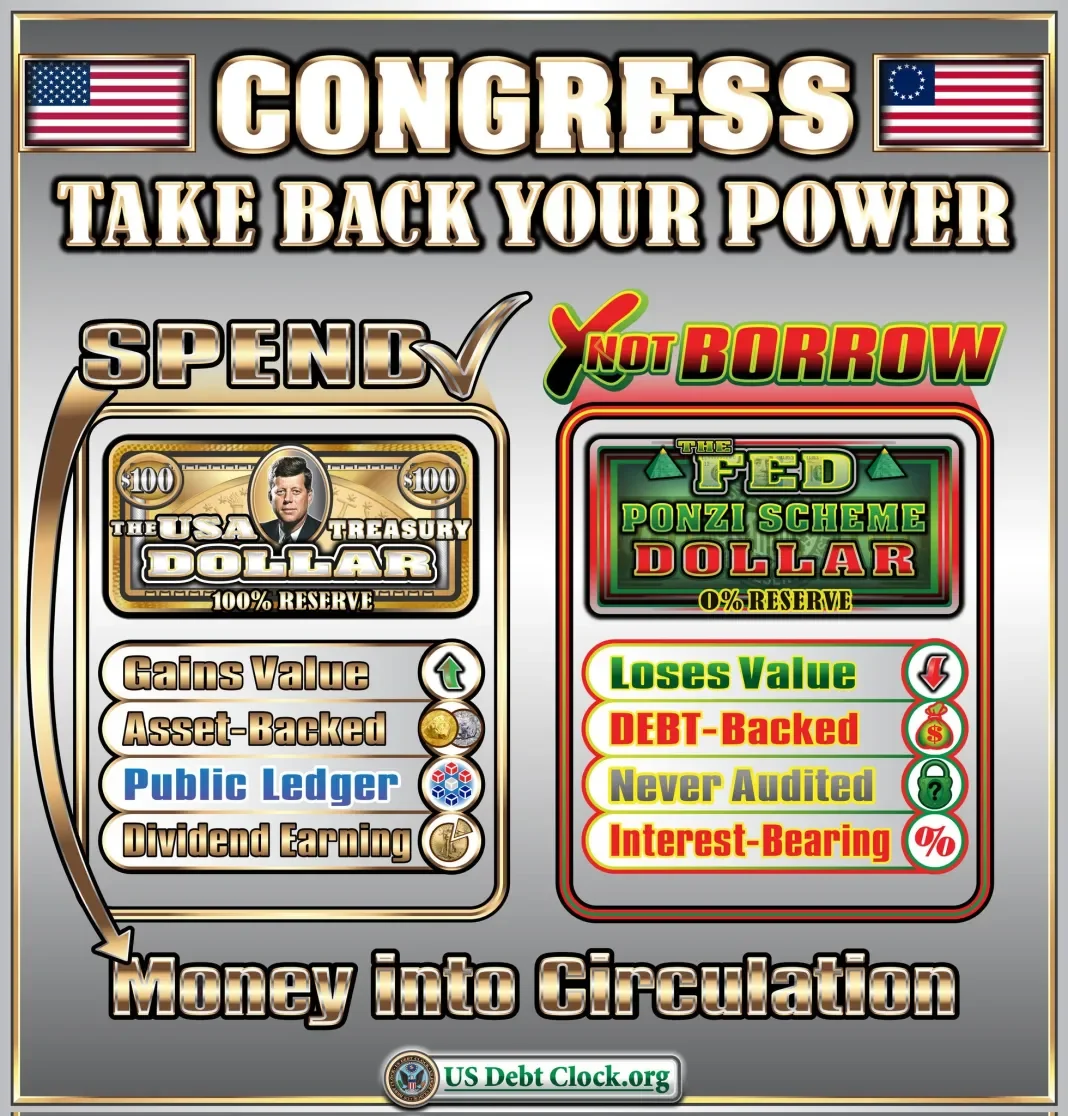
Why is that? Because we as a country have hit a wall. The USD (AKA Federal Reserve Note which is not federal and has no reserves) has lost 98% of its value since 1913.
Stephanie Starr: Affordability, Affordability, Affordability
12-5-2025
Stephanie Starr @StephanieStarrC
Affordability… Affordability…. Affordability…. You are seeing it all over the news.
Why is that? Because we as a country have hit a wall. The USD (AKA Federal Reserve Note which is not federal and has no reserves) has lost 98% of its value since 1913.
What happened in 1913?
What happened in 1971?
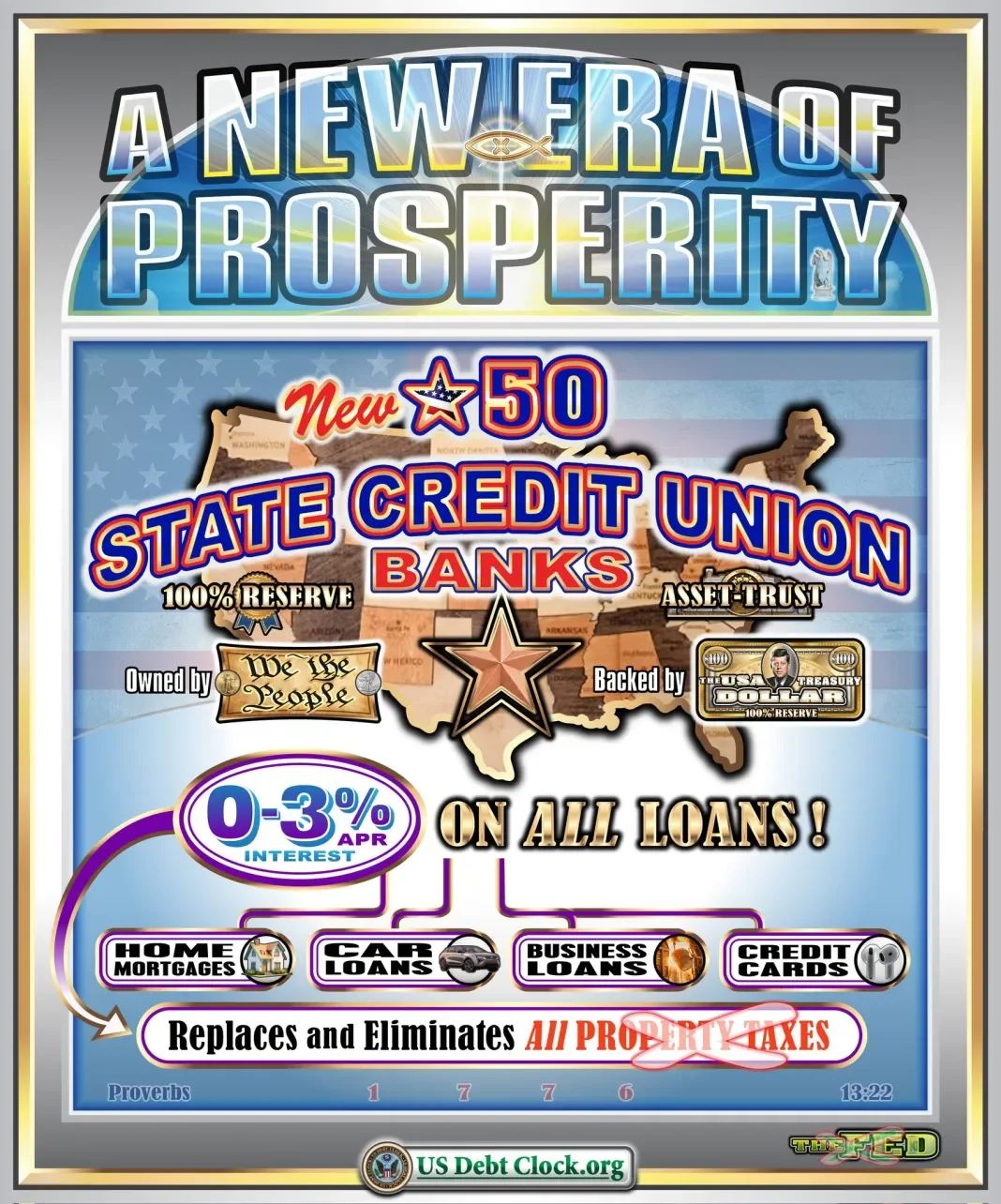
Well guess what..? Thanks to EO 13848 and 13818 we are recouping our wealth that has been stolen from us, which is why the US Debt clock has a “hidden wealth” section.
As of today, Dec 4,2025 each citizen has 520k worth of assets designated to them…
The $2,000 dividend Trump plans on sending out from tariffs every 90 days….
The payments we will be receiving from the US Sovereign Wealth Fund (that’s funded by our Crypto Reserves and other investments).
The Trump Accounts recently established for babies born from 2025-2028….
What if I told you we will be transitioning from a Federal Reserve Note (USD) to a US Treasury Bill backed by assets and not from thin air…
What would that do to inflation?
What would that do for purchasing power?
On top of what is owed to us (520k per citizen). When the Global Currency Reset takes place… The world will be better off and at peace,
Peace deals must happen before prosperity.
If the USD is the world’s reserve currency, and our currency has lost 98% of value, all currencies must have a reset.


Stephanie Starr: High-Level Iraq RV Trigger Map
Stephanie Starr: High-Level Iraq RV Trigger Map
12-5-2025
Stephanie Starr @StephanieStarrC
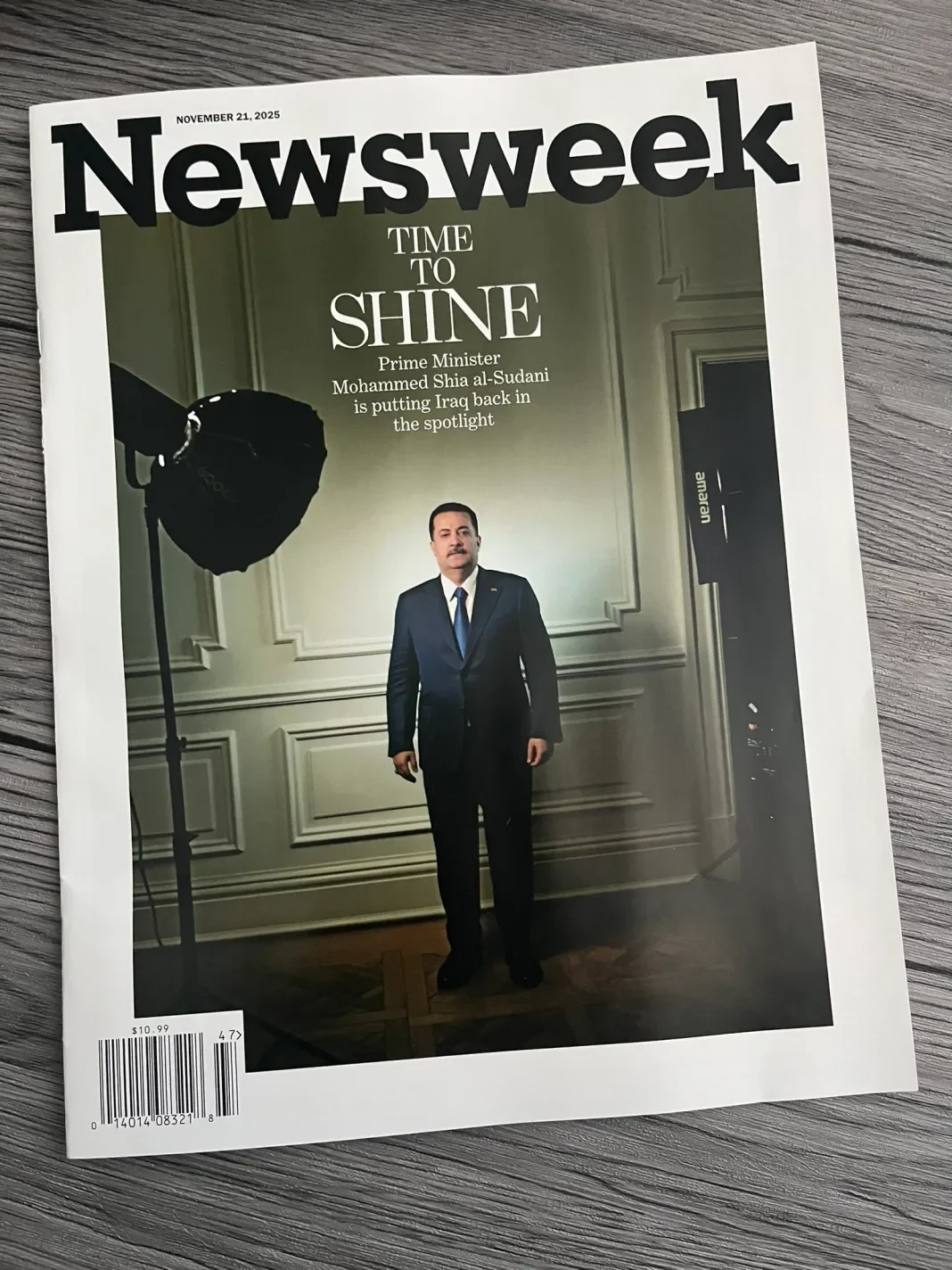
IRAQ HIGH-LEVEL RV TRIGGER MAP
Here is Iraq’s actual position today — no hype, just milestones:
Stephanie Starr: High-Level Iraq RV Trigger Map
12-5-2025
Stephanie Starr @StephanieStarrC
IRAQ HIGH-LEVEL RV TRIGGER MAP
Here is Iraq’s actual position today — no hype, just milestones:
POLITICAL REHABILITATION -(Dec 2nd)
Chapter VII officially ended
UN supervision removed
Sovereignty restored
STATUS: COMPLETE
BANKING & FINANCIAL COMPLIANCE- (Dec 2nd)
Banks audited & restructured
AML systems installed
Multi-currency permissions reinstating
BIS metrics synced
Digital dinar pilot underway
STATUS: COMPLETE
INTERNATIONAL ECONOMIC REENTRY (Aug/Sept)
Oil exports restored
Sovereign funds routed via U.S. financial channels
International trade treaties restored
Diplomatic normalization proceeding
STATUS: COMPLETE
DOMESTIC MONETARY CONTROLS
Capital flight suppression (Dec 1 reform)
Customs clearance enforcement
FX leakage tightening
STATUS: ACTIVE
IMF FORMALITY GATE
Acceptance into Article VIII status (free exchange convertibility)
Permission for FX liberalization
STATUS: PENDING — NEXT MAJOR STEP
CURRENCY ADJUSTMENT PHASE
Managed float activation
Appreciation alignment to reserve backing
FX market reentry
STATUS: FUTURE EVENT
Next major milestone to keep a look out for is from the IMF regarding Artificial Vlll Only IMF procedural clearance remains before FX movement can occur.
Exchange rate stability was emphasized on Dec 1st. The Governor explicitly said: “Reducing the dinar value would harm public confidence & stability.”
They are protecting the currency against devaluation
They are NOT announcing appreciation
Their focus is price stability FIRST
This follows IMF playbook exactly:
Stabilize
Reform
Digitize
Normalize banking
Open FX flows
Only then adjust exchange.
Clearing the “Revaluation Denial” Confusion
Officials have been denying “rate changes” yet massive reforms are happening, this is NORMAL policy behavior.
Why?
Governments never pre-announces currency adjustments because:
Speculators attack the market
Currency hoarding explodes
Inflation becomes uncontrollable
So public denial of RV is STANDARD PRACTICE until after a move is already executed. Kuwait did the exact same thing — no public hint until after implementation.
Now that the UN has ended their mandate Dec 2nd- Iraq is now officially qualified to START the monetary transition phase. This UN step was one of the final political prerequisites before moving into IMF mechanics.
Track milestones and phases, not dates!
Source(s): https://x.com/StephanieStarrC/status/1996666659143041399
https://dinarchronicles.com/2025/12/05/stephanie-starr-high-level-iraq-rv-trigger-map/