
Seeds of Wisdom RV and Economics UpdatesTuesday Morning 12-02-25
Good Morning Dinar Recaps,
UK Banks Get a Boost as BoE Eases Capital Rules — What It Means for Lending and Growth
London shifts regulatory posture to stimulate credit as global banking stress recedes
Good Morning Dinar Recaps,
UK Banks Get a Boost as BoE Eases Capital Rules — What It Means for Lending and Growth
London shifts regulatory posture to stimulate credit as global banking stress recedes
Overview
The Bank of England has lowered core capital requirements for major UK banks, reducing the Tier 1 minimum from 14% to 13%.
The shift follows strong banking-sector performance in recent stress tests and reflects confidence in the resilience of the financial system.
Regulators also flagged areas of rising systemic risk, including high valuations in AI-driven firms and rapid expansion of the private-credit market.
Key Developments
Major UK banks now have greater flexibility to lend or return capital to shareholders.
The BoE plans a broader review of how leverage ratios and capital buffers are structured, signaling potential further easing.
Despite loosening rules, regulators emphasized continued vigilance amid emerging asset bubbles.
Why It Matters
Lower capital requirements could stimulate bank lending and economic activity at a time of slowing global growth. But they also reduce shock-absorbing capacity if financial conditions deteriorate. This pivot signals a key moment in the balance between economic stimulus and systemic safeguards.
Implications for the Global Reset
Pillar: Banking Resilience vs. Credit Expansion
The shift encourages more liquidity and lending — but raises questions about the long-term integrity of global bank-risk structures.
Pillar: Regulatory Divergence & Systemic Risk
As the UK loosens rules while other regions maintain tighter regimes, global capital may begin reallocating toward lighter-regulated jurisdictions, reshaping flows and balance-sheet risk profiles.
This is not just politics — it’s global finance restructuring before our eyes.
Seeds of Wisdom Team
Newshounds News™ Exclusive
Sources
• Reuters – “Bank of England says UK lenders clear stress tests”
• Reuters – “Bank of England eases bank capital requirements”
~~~~~~~~~~
Eurozone Banks Launch Joint Stablecoin Initiative to Reclaim Payments Sovereignty
European lenders race to build digital-money infrastructure independent of U.S.-centric systems
Overview
Ten of Europe’s largest banks have formed a new joint company to launch a euro-backed stablecoin.
The system aims to provide a European-controlled digital-payments architecture for cross-border use.
The initiative marks the strongest move yet by traditional banks to challenge private stablecoins and U.S.-dominated payments rails.
Key Developments
The consortium plans to release its first regulated stablecoin in 2026, pending licensing approval.
The initiative is intended to serve businesses, banks, and consumers seeking faster and more efficient cross-border transactions.
The project reflects growing pressure in Europe to secure monetary autonomy in digital finance and reduce reliance on U.S. intermediaries.
Why It Matters
A bank-backed euro stablecoin could significantly shift the trajectory of digital-payments innovation. It could also reduce dependence on legacy card networks and the global dollar system — both central components of financial power and international leverage.
Implications for the Global Reset
Pillar: Payment-System Decentralization & Monetary Sovereignty
A euro stablecoin marks a direct challenge to dollar-based global payment corridors and accelerates Europe’s pursuit of monetary independence.
Pillar: Digital-Currency Infrastructure & Global Trade Settlement
The move pressures other regions to accelerate CBDC and stablecoin development, reshaping the structure of global settlement networks and reserve-currency dynamics.
This is not just politics — it’s global finance restructuring before our eyes.
Seeds of Wisdom Team
Newshounds News™ Exclusive
Sources
~~~~~~~~~~
Macron’s China Visit Highlights Europe’s Balancing Act Between Trade and Security
Paris seeks stability, access to technology, and protection of strategic industries
Overview
French President Emmanuel Macron will make his fourth state visit to China this week, with meetings scheduled in Beijing and Chengdu.
The visit comes amid intensifying strains between Europe and China over trade imbalances, strategic technologies, and geopolitical alignment.
European officials have warned that relations with Beijing have reached an “inflection point,” driven by concerns over China’s industrial overcapacity, dominance in key tech sectors, and its support for Russia.
Key Developments
Macron aims to rebalance Europe’s trade relationship with China, especially as Chinese steel and electric vehicle (EV) exports pressure European industries.
The European Union is advancing a new economic security doctrine to address risks linked to critical supply chains, technology transfers, and Chinese industrial policies.
China seeks to preserve its access to European markets while encouraging domestic consumption and showcasing innovation-driven economic growth.
The United States is closely watching the visit, wary of potential divergence between U.S. and European China policy.
Major European industries — including Airbus, French automakers, and advanced manufacturing sectors — have substantial interests tied to the outcome of the visit.
Why It Matters
Europe relies heavily on China for advanced technology, rare earth processing, and key inputs for its energy and EV industries. Macron must navigate economic dependency, strategic competition, and geopolitical pressure — maintaining European competitiveness without provoking trade retaliation or undermining U.S.-EU coordination. His diplomacy will influence broader EU-China relations at a time when the global economic landscape is rapidly shifting.
Implications for the Global Reset
Pillar: Strategic Trade Realignment — Europe is recalibrating its economic partnership with China to reduce vulnerabilities in critical industries while preserving access to essential technologies.
Pillar: Geopolitical Equilibrium — Macron’s engagement reflects Europe’s effort to maintain strategic autonomy, balancing U.S. expectations with its own economic priorities as global power centers continue to shift.
This is not just politics — it’s global finance restructuring before our eyes.
Seeds of Wisdom Team
Newshounds News™ Exclusive
Sources
~~~~~~~~~~
Seeds of Wisdom Team RV Currency Facts Youtube and Rumble
Newshound's News Telegram Room Link
RV Facts with Proof Links Link
RV Updates Proof links - Facts Link
Follow the Gold/Silver Rate COMEX
Follow Fast Facts
Seeds of Wisdom Team™ Website
Thank you Dinar Recaps
Iraq Economic News and Points To Ponder Tuesday Morning 12-2-25
Silver Jumps To An All-Time High, Supported By Tight Supplies
Money and Business Economy News - Follow-up Silver prices jumped more than 2% on Monday morning, hitting a new record high, benefiting from a continued decline in global supply and rising expectations of an interest rate cut in the United States this month.
Silver traded at $57.86 an ounce, its highest level ever, extending its gains for the sixth consecutive day after rising 6% in Friday's session.
Silver Jumps To An All-Time High, Supported By Tight Supplies
Money and Business Economy News - Follow-up Silver prices jumped more than 2% on Monday morning, hitting a new record high, benefiting from a continued decline in global supply and rising expectations of an interest rate cut in the United States this month.
Silver traded at $57.86 an ounce, its highest level ever, extending its gains for the sixth consecutive day after rising 6% in Friday's session.
On the stock market, shares of silver mining companies also rose on Monday, with Sun Silver shares climbing 20% and Silver Mines shares rising 12% in Australia, while shares of China Silver Group, listed in Hong Kong, jumped 14%.
Silver prices have more than doubled since the start of the year, supported by limited supplies in physical markets.
In 2025, silver stole the spotlight from gold after recording unprecedented record levels, confirming that its controversial title of "the devil's metal" is not without reason, as it is known for its sharp fluctuations that confuse markets and surprise investors.
Silver, which usually moves in the shadow of gold, made a historic leap this year, after its price exceeded $54.47 an ounce in mid-October, an increase of 71% year-on-year, before retreating slightly only to rise again amid a supply shortage crisis.
Market experts believe that this wave is not temporary, but rather carries new dynamics that may push prices even higher. https://economy-news.net/content.php?id=62914
Silver Prices Are Set To Shine In 2025
Stock Exchange Silver prices reached record highs in 2025, placing it in the spotlight and attracting the attention of global investors, despite challenges related to limited supply.
The metal, sometimes called "the devil's metal" due to its extreme volatility, achieved exceptional gains this year, coinciding with the rise in gold prices, which surpassed $4,000 per ounce.
Silver prices reached a record high of $54.47 per ounce in mid-October 2025, marking a 71% increase compared to the previous year, before declining slightly and then rising again.
This surge in silver prices is attributed to data indicating continued high demand relative to limited supply. A significant portion of the price increase is attributed to the growing demand from India, the world's largest consumer of silver.
The metal is used in the manufacture of jewelry, household items, and decorative objects, and the country's annual consumption is approximately 4,000 metric tons.
Prices in India rose to a record high of 170,415 rupees per kilogram on October 17, an increase of 85% since the beginning of the year, while the Indian market relies on imports that account for about 80% of its supply.
The industrial and technological dimension of silver demand is no longer limited to investment or traditional use. It has expanded to include growing industrial needs, particularly with the increasing production of electric vehicles, artificial intelligence applications, and solar energy.
Silver is used in standard electric vehicle batteries at a rate of approximately 25 to 50 grams per vehicle, and this could reach one kilogram in future vehicles with solid-state batteries. Silver is also utilized for its high electrical and thermal properties, making it a key component in modern clean energy industries.
Experts explained that the current supply and demand cycle, coupled with the scarcity of mine production in Central and South America over the past decade, makes silver one of the rare metals that combines investment value with industrial applications, reinforcing expectations that its prices will remain high in the near future.
October 2025 marks the third time in 50 years that silver prices have peaked, following January 1980 when the Hunt brothers attempted to control the market, and again in 2011 after the US debt ceiling crisis, when investors turned to gold and silver as safe havens. https://economy-news.net/content.php?id=62888
Gold Prices Remained Stable In Baghdad But Rose In Erbil
Monday, December 1, 2025 | Economy Number of views: 233 Baghdad ( NINA ) – Gold prices in Baghdad remained stable on Monday, while rising in Erbil.
The selling price of one mithqal (approximately 4.5 grams) of 21-karat gold from the Gulf, Turkey, and Europe in Baghdad's wholesale markets on Al-Nahr Street was 850,000 Iraqi dinars, with a buying price of 846,000 dinars.
The selling price of one mithqal of 21-karat Iraqi gold was 820,000 dinars, with a buying price of 816,000 dinars. In jewelry shops, the selling price of one mithqal of 21-karat Gulf gold ranged between 850,000 and 860,000 dinars, while the selling price of one mithqal of Iraqi gold ranged between 820,000 and 830,000 dinars.
Gold prices in Erbil have risen, with the selling price of 22-karat gold reaching 888,000 dinars, 21-karat gold 848,000 dinars, and 18-karat gold 727,000 dinars. /End https://ninanews.com/Website/News/Details?key=1264630
The Dollar Continues To Rise In Baghdad And Erbil
Stock Exchange The exchange rate of the US dollar against the Iraqi dinar rose on Monday afternoon in the markets of Baghdad and Erbil, coinciding with the closing of the stock exchange.
The dollar prices rose in the Al-Kifah and Al-Harithiya exchanges to record 142,900 dinars for 100 dollars, while the prices this morning were 142,650 dinars for 100 dollars.
Selling prices rose in exchange shops and local markets in Baghdad, with the selling price reaching 144,000 dinars for 100 dollars, while the buying price reached 142,000 dinars for 100 dollars.
In Erbil, the dollar also recorded an increase, with the selling price reaching 142,300 dinars per 100 dollars, and the buying price reaching 142,100 dinars per 100 dollars. https://economy-news.net/content.php?id=62936
Oil Prices Rose, Supported By OPEC+ Production Plan And Concerns Over Venezuela.
Economy |01/12/2025 Oil prices rose by as much as 1.5% after OPEC+ countries confirmed their plan to halt production increases during the first quarter of next year, in addition to concerns about potential US action against Venezuela, an oil-producing nation, which caused market volatility.
By 00:52 GMT, Brent crude had pared its gains to settle at $62.99 a barrel, up 0.98%. US West Texas Intermediate crude also rose 0.99% to $59.12 a barrel.
OPEC+ had agreed in early November to halt production increases, a move aimed at slowing efforts to regain market share amid concerns about oversupply.
Following Sunday's meeting, OPEC+ stated that it reaffirms the importance of a cautious approach, while maintaining full flexibility to halt or reverse any further voluntary production adjustments. https://www.mawazin.net/Details.aspx?jimare=271009
Oil Companies Extend Invitations To US Firms To Manage The West Qurna/2 Oil Field
Economy | 01/12/2025 Mawazin News – Baghdad The Ministry of Oil announced that it has taken the necessary steps to transfer the management of the West Qurna/2 oil field to a major American oil company, emphasizing that this move aims to sustain production and enhance the stability of global markets.
In a statement, the Ministry said, "The procedures included direct and exclusive invitations to a number of major American companies, entering into direct negotiations with them, and receiving their bids. The transfer process will be conducted through transparent competition and according to the established criteria for awarding oil field development contracts."
The Ministry added that "transferring the management of the West Qurna/2 field to an American oil company will serve mutual interests, enhance the stability of global markets, and ensure the continuity of Iraqi oil production operations, market share, and the sustainability of the country's resources."
It affirmed that this step strengthens the joint economic relations between Iraq and the United States and contributes to the transfer of modern technology, benefiting both countries. The Ministry noted that "the participation of more major American companies in developing the Iraqi oil sector underscores Iraq's strategic importance in this sector and contributes to diversifying the international expertise operating within it, thus achieving Iraq's economic interests and ensuring their sustainability." https://www.mawazin.net/Details.aspx?jimare=271035
For current and reliable Iraqi news please visit: https://www.bondladyscorner.com
“Tidbits From TNT” Tuesday Morning 12-2-2025
TNT:
Tishwash: Tomorrow, the Security Council will hold a session on the situation in Iraq.
The United Nations Assistance Mission for Iraq (UNAMI) announced on Monday that the Security Council will hold a session on the situation in Iraq on Tuesday.
A statement from the mission, received by the Iraqi News Agency (INA), said that "the United Nations Security Council will hold a session on the situation in Iraq tomorrow, Tuesday, at 10:00 a.m. New York time (6:00 p.m. Baghdad time)."
The statement added that "the Special Representative of the Secretary-General of the United Nations in Iraq, Mohammed Al-Hassan, is expected to brief the session on developments in Iraq and on the United Nations Assistance Mission for Iraq (UNAMI)."
TNT:
Tishwash: Tomorrow, the Security Council will hold a session on the situation in Iraq.
The United Nations Assistance Mission for Iraq (UNAMI) announced on Monday that the Security Council will hold a session on the situation in Iraq on Tuesday.
A statement from the mission, received by the Iraqi News Agency (INA), said that "the United Nations Security Council will hold a session on the situation in Iraq tomorrow, Tuesday, at 10:00 a.m. New York time (6:00 p.m. Baghdad time)."
The statement added that "the Special Representative of the Secretary-General of the United Nations in Iraq, Mohammed Al-Hassan, is expected to brief the session on developments in Iraq and on the United Nations Assistance Mission for Iraq (UNAMI)." link
Tishwash” An economist reveals an "impending shock" threatening creditors with the possibility of a change in the exchange rate!
Economic researcher Aziz Shwan confirmed that the Iraqi economy has recently witnessed direct effects of the policies of the government, which recently became a caretaker government, noting that these policies have had positive results and others burdened with future challenges.
Shwan explained to the newspaper's platform that the government has taken a series of measures to curb the outflow of hard currency abroad by tightening controls on dollar export channels and reducing unregulated activities. This has contributed to encouraging large investors to direct their investments domestically instead of transferring them abroad. This has had a positive impact on the local market by stimulating the productive and service sectors and giving the economy a degree of relative stability.
In contrast, Schwan pointed out that the significant expansion in government projects, especially infrastructure projects, has forced the government to increasingly rely on financing through domestic debt to cover growing obligations, creating additional pressure on public finances.
The researcher warned that the incoming government might find itself compelled to reassess the dinar's exchange rate against the dollar to make it more realistic, which could negatively impact domestic creditors, given that a significant portion of the public debt is denominated in dinars. He explained that any increase in the official dollar exchange rate would lead to a decrease in the real value of what creditors receive, threatening to create financial pressure on investors and institutions reliant on local debt instruments.
Shwan concluded by saying that the current stage represents a sensitive economic turning point for Iraq, where attempts to strengthen monetary stability intersect with the increasing requirements for financing government projects, stressing the need to adopt balanced financial and monetary planning and rearrange spending priorities to avoid side effects that may affect the market and investors and negatively impact the budgets of future years. link
************
Tishwash: Al-Sudani: Iraq is going through a recovery phase and regaining its leading role in the region.
Prime Minister Mohammed Shia al-Sudani affirmed on Monday that Iraq is going through a recovery phase and regaining its leading role in the region, while stressing the need to keep ambassadors away from any political alignments or squabbles .
His office said in a statement received by the Mail that “Al-Sudani received the new Iraqi ambassadors on Monday, congratulating them on gaining the confidence of the government and the House of Representatives to represent their country diplomatically in various countries around the world .”
Al-Sudani stressed that “the ambassadors’ mission is not a privilege but a duty and responsibility to represent the country, and they have the duty to defend the interests of Iraq and its people in all their diversity and components, by investing their expertise in diplomatic work,” stressing that “the selection of ambassadors was subject to criteria and requirements, and we are all confident in those who were chosen to be keen on representing Iraq in the best possible way, and to contribute to formulating the strategy of Iraqi diplomacy, and building a modern diplomacy that keeps pace with the requirements of the future .”
He pointed out that "the ambassador must stay away from any political alignments or squabbles," stressing that "Iraq is currently going through a phase of recovery, stability and restoring its leading role in the region, despite the events it has witnessed ."
He added: “Our government has managed to maintain a clear approach to foreign policy, establish broad relations, and not limit them to certain countries. We have maintained our principled position towards the Palestinian issue and the Zionist aggression, which has affected Arab and Islamic countries. Iraq’s balanced position regarding the events and developments in the region must be highlighted, while preserving the interests of Iraq and its people .”
He continued: "We are working to strengthen economic partnerships, and it is among the ambassadors' tasks to present studies and proposals in this regard," indicating that "the work of embassies should reflect the positive developments in development, reconstruction and stability in Iraq ."
He pointed out that "work in the field of economic diplomacy must be strengthened, and we seek to move from a rentier economy to a diversified one, and we have worked on developing the economy through a series of banking, customs and tax reforms, to contribute to creating an attractive investment environment ."
He continued: “We face environmental challenges and a water crisis, which requires a pivotal diplomatic role in negotiating with the countries concerned and international organizations. We emphasize strengthening the role of (soft diplomacy) through cultural and sporting aspects that bring peoples closer together .”
He explained that "all capabilities will be ready to support the path of the Ministry of Foreign Affairs and our ambassadors in various capitals, and the joint committees must be maintained and activated, because they represent the framework of foreign relations between Iraq and the rest of the countries ."
He pointed out that "during the days of the former regime, Iraqi citizens used to flee from Iraqi embassies, but today the state, its institutions and embassies are at the service of the citizen ."
He concluded by saying, "One of the ambassadors' priorities is to care for the Iraqi communities in all their diversity and with all their needs, and to work on connecting the communities with their country link
Mot: Get Ready to Splain Dis Un!!!!

Mot: . Last Thing It Will Ever Seeee!!!

Designing the Perfect Money | Hidden Secrets of Value Ep. 5 | Alan Hibbard
Designing the Perfect Money | Hidden Secrets of Value Ep. 5 | Alan Hibbard
GoldSilver: 12-1-20205
Ever wonder why gold coins appear in nearly every movie, video game, and myth — from Lord of the Rings to Super Mario Bros.?
Deep down, humanity knows gold represents real value.
In this episode of Hidden Secrets of Value, Alan Hibbard unpacks why that instinct is correct — and why our modern monetary system is collapsing without it.
Designing the Perfect Money | Hidden Secrets of Value Ep. 5 | Alan Hibbard
GoldSilver: 12-1-20205
Ever wonder why gold coins appear in nearly every movie, video game, and myth — from Lord of the Rings to Super Mario Bros.?
Deep down, humanity knows gold represents real value.
In this episode of Hidden Secrets of Value, Alan Hibbard unpacks why that instinct is correct — and why our modern monetary system is collapsing without it.
He explores the layers of money, revealing how the entire financial system rests on promises built atop a missing foundation: gold, silver, and bitcoin.
👉 In this video, you’ll discover:
The difference between decentralized and distributed systems — and why most crypto projects (and central banks) are not truly decentralized.
The Monetary Layer Pyramid, from Layer 1 (gold) to Layer 4 (credit cards).
Why fiat currencies like the U.S. dollar leak value — and why your energy and time are slipping away with them.
How the 1971 end of the gold standard removed the base layer, triggering decades of financial decay.
Why gold, silver, and bitcoin must return as the “Layer 1” foundation for personal and economic stability.
💡 Questions this episode explores:
Can any cryptocurrency truly be decentralized?
What’s the difference between security, scalability, and decentralization — and can all three exist together?
Why does everything in the economy feel unstable — and what can you do to fix it in your own life?
How do gold, silver, and bitcoin function as the true base layer of value?
Alan connects it all: physics, finance, and freedom.
If you’ve ever felt trapped on the financial treadmill, this episode shows how to step off — by rebuilding your foundation on honest money.
Watch the full series here: https://goldsilver.com/hsov
If the foundation of money is broken, everything built on top will fall.
The Fed Just Triggered the Final Stage of the Debt Cycle
The Fed Just Triggered the Final Stage of the Debt Cycle
VRIC Media: 11-30-2025
In the intricate dance of global economics, sometimes the most profound shifts happen not with a bang, but with a whisper.
Recent insights from VRIC Media highlight just such a pivotal, yet largely unnoticed, change in Federal Reserve policy – one that could have significant implications for your investments and the purchasing power of your money.
For months, the market watched the Fed as it worked to shrink its balance sheet, a process known as quantitative tightening, aimed at draining excess liquidity.
The Fed Just Triggered the Final Stage of the Debt Cycle
VRIC Media: 11-30-2025
In the intricate dance of global economics, sometimes the most profound shifts happen not with a bang, but with a whisper.
Recent insights from VRIC Media highlight just such a pivotal, yet largely unnoticed, change in Federal Reserve policy – one that could have significant implications for your investments and the purchasing power of your money.
For months, the market watched the Fed as it worked to shrink its balance sheet, a process known as quantitative tightening, aimed at draining excess liquidity.
But something fundamental has changed. The Fed has quietly stopped shrinking. Even more remarkably, it’s beginning to expand its balance sheet again, injecting fresh liquidity back into an economy that many already describe as overheated.
To the casual observer, this move seems counter-intuitive. We’re in an era marked by:
High stock valuations: Markets seem to defy gravity.
Persistent inflation: Your dollar isn’t going as far as it used to.
Low unemployment: The job market remains robust.
Robust consumer spending: People are still opening their wallets.
Why, then, would the central bank pivot from tightening to easing monetary policy under such conditions?
The answer, as the video brilliantly explains, lies in the escalating needs of government borrowing.
With a national debt ballooning, the U.S. Treasury needs to issue more bonds than ever before. However, the market, particularly for longer-term bonds, isn’t as enthusiastic a buyer as it once was. This forces the Federal Reserve to step in as the “buyer of last resort,” absorbing government debt by creating new money.
This situation, where monetary policy primarily serves to fund government spending rather than control inflation, is known as “fiscal dominance.” It’s a critical, and potentially dangerous, crossroads for any economy.
This dynamic isn’t new; it’s a pattern seen throughout economic history. Billionaire investor Ray Dalio, in his book How Countries Go Broke, details how late-stage debt cycles behave.
When a central bank pumps liquidity into an already strong economy experiencing inflation and high asset prices, it doesn’t stabilize a crisis. Instead, it acts like throwing gasoline on a blazing fire.
This isn’t a healthy bull market; it’s an unsustainable meltup, a “sugar rush” that can feel exhilarating while it lasts. But history teaches us that these cycles inevitably end, often with a sharp market correction when the Fed is eventually forced to tighten again to rein in runaway inflation.
These assets typically outperform during periods of monetary expansion and currency depreciation because they hold intrinsic value independent of central bank policy.
This moment is historic. It marks a new chapter where monetary policy, once seen as an independent arbiter of economic stability, becomes subservient to fiscal needs.
The danger isn’t necessarily an abrupt market crash (though always possible), but a more insidious, slow erosion of currency purchasing power over the long term.
The greatest risk lies in complacency – underestimating the long-term consequences of fueling speculative bubbles rather than managing inflation and fostering sustainable growth. Understanding this shift is vital for protecting your wealth and preparing for the economic landscape ahead.
For a deeper dive into this critical analysis and further insights, make sure to watch the full video from VRIC Media. This is information you can’t afford to ignore.
589bull: Apple Already Adopted Ripple Years Ago
589bull: Apple Already Adopted Ripple Years Ago
11-30-2025
589bull @589bull10000
APPLE adopted Ripple’s Interledger Protocol YEARS ago.
A full baked in, production level adoption:
589bull: Apple Already Adopted Ripple Years Ago
11-30-2025
589bull @589bull10000
APPLE adopted Ripple’s Interledger Protocol YEARS ago.
A full baked in, production level adoption:
Safari added ILP support
Apple Pay’s Web Payments framework uses ILP identifiers
ILP STREAM built into the payment request layer
Every iPhone inherits ILP routing at the browser level
1.5+ BILLION Apple devices → ILP-capable by default.
And Interledger was created by Ripple.
They chose the protocol that CONNECTS all ledgers:
Fiat
Stablecoins
FX rails
Tokenized assets
Blockchains (including XRP, XDC, QNT infrastructure)
Bank deposits
Apple Pay balances
Interledger = the neutral fabric of the new financial system.
Apple is plugged in
Now stack it up:
XRP ETFs live
RLUSD launching
Banks integrating tokenization
ODL corridors scaling globally
Fed + Treasury alignment
GENIUS Act rails forming
XRPL AccountSet clusters exploding
XDC trade rails activating
BNY Mellon custody infrastructure warming
Interledger is the protocol Apple already adopted.
When liquidity starts ripping across networks at machine speed, all that matters is the router.
And the router is ILP.
The value conduit is XRP.
The interface is Apple.
People are going to wake up one day and realize:
XRP is already installed on every Apple device on Earth.
We’re so early.
Source(s): https://x.com/589bull10000/status/1994962906895528254
https://dinarchronicles.com/2025/11/30/589bull-apple-already-adopted-ripple-years-ago/
Seeds of Wisdom RV and Economics Updates Monday Afternoon 12-01-25
Good Afternoon Dinar Recaps,
Singapore Expands Ripple’s Regulated Crypto Capabilities, Advancing Institutional Digital Payments
New licensing scope signals rising acceptance of tokenized payment rails across Asia-Pacific.
Good Afternoon Dinar Recaps,
Singapore Expands Ripple’s Regulated Crypto Capabilities, Advancing Institutional Digital Payments
New licensing scope signals rising acceptance of tokenized payment rails across Asia-Pacific.
Overview
Singapore’s financial regulator has approved an expanded operational scope under Ripple’s Major Payment Institution license, granting broader authority to facilitate regulated digital-token payment services.
The new approval enables banks, corporates, and financial institutions to use Ripple’s platform for regulated digital payments — including the use of tokens such as XRP and Ripple’s RLUSD stablecoin.
The expansion aligns with Singapore’s long-term strategy to lead digital-asset innovation and support institutional-grade payment infrastructure.
Key Developments
Ripple’s Singapore subsidiary can now provide a full end-to-end payments stack, including collection, custody, swapping, and cross-border payout capabilities through regulated channels.
Rapid growth across Asia-Pacific — with on-chain transaction activity recently reported up more than 70% year-over-year — has strengthened Singapore’s position as a regional digital-asset hub.
Ripple stated the updated license will streamline institutional workflows and accelerate adoption of tokenized payments across high-volume corridors.
The development follows broader regional momentum toward regulated stablecoins, digital-payment protocols, and automated liquidity networks.
Why It Matters
The formal integration of tokenized assets into regulated payments systems reflects a deeper shift in global monetary architecture. As institutions transition toward blockchain-enabled settlement, traditional banking rails face increasing competition from faster, programmable, cross-border digital payment networks. This transition may define the next decade of global finance.
Implications for the Global Reset
Pillar 3 — Institutional Restructuring, Monetary Policy & Systemic Shift
A major regulator expanding tokenized-payment permissions for an institutional provider signals a structural transition away from legacy correspondent-banking systems and toward digital, automated, interoperable payment rails.
Pillar 2 — Currency & Reserve System / FX
As stablecoins and digital tokens become embedded in licensed financial infrastructure, global currency flows may increasingly route through tokenized systems, changing liquidity dynamics and reducing reliance on traditional fiat-only pathways.
This is not just politics — it’s global finance restructuring before our eyes.
Seeds of Wisdom Team
Newshounds News™ Exclusive
Sources
Ripple – “Ripple Expands MPI License Capabilities in Singapore”
Cryptonews – “Ripple Secures Expanded License for Digital Payment Services in Singapore”
~~~~~~~~~~
Global Manufacturing Slump Deepens, Signaling Broader Economic Weakness Ahead
Sharp declines across Europe and Asia raise concerns about demand contraction and capital-market vulnerability.
Overview
New manufacturing data from major European and Asian economies shows a sharp decline in November output, marking one of the steepest month-over-month contractions this year.
The slump reflects weakening global demand, persistent cost pressures, and reduced export activity across multiple regions.
Analysts warn that the slowdown could spill over into equities, commodities, and global capital markets.
Key Developments
Surveys show that both new orders and production volumes fell at a faster-than-expected pace, underscoring a widespread loss of industrial momentum.
Asian manufacturers — including sectors in China, Japan, and South Korea — reported reduced forward bookings and weaker global shipping volumes.
European manufacturers continued to struggle with declining consumer demand and elevated input costs, compounding existing recession fears.
Economists note that the slowdown is beginning to affect corporate earnings expectations, credit conditions, and investor sentiment.
Why It Matters
A synchronized manufacturing downturn across major economies is a high-impact leading indicator that global growth may be entering a prolonged cooling phase. This environment typically triggers a flight to safety, with investors shifting from risk-heavy sectors into hard assets, metals, defensive equities, cash equivalents, and digital stores of value.
Implications for the Global Reset
Pillar 4 — Markets (Equities, Capital Flows)
A slowdown in global manufacturing threatens earnings, investor appetite, and liquidity — increasing market fragility and encouraging a reallocation toward safer or non-traditional assets.
Pillar 5 — Metals & Hard Assets
As industrial weakness pressures financial markets, investors often seek refuge in gold, silver, and other tangible assets, reinforcing the hard-asset pillar of the reset narrative.
Pillar 2 — Currency & Reserve System / FX
Recessionary conditions typically generate currency volatility, driving strategic portfolio hedging and raising questions about long-term reserve stability.
This is not just politics — it’s global finance restructuring before our eyes.
Seeds of Wisdom Team
Newshounds News™ Exclusive
Sources
~~~~~~~~~~
Seeds of Wisdom Team RV Currency Facts Youtube and Rumble
Newshound's News Telegram Room Link
RV Facts with Proof Links Link
RV Updates Proof links - Facts Link
Follow the Gold/Silver Rate COMEX
Follow Fast Facts
Seeds of Wisdom Team™ Website
Thank you Dinar Recaps
“Tidbits From TNT” Monday 12-1-2025
TNT:
Tishwash: A senior US official arrives in Baghdad
U.S. Deputy Secretary of State Michael Regas arrived in Baghdad on Monday, December 1, 2025, on an official visit to strengthen relations between the United States and Iraq.
The visit includes meetings with Iraqi officials and a visit to American diplomatic facilities.
The visit aims to support shared goals of achieving sovereignty and prosperity and enhancing stability and security in the region.
TNT:
Tishwash: A senior US official arrives in Baghdad
U.S. Deputy Secretary of State Michael Regas arrived in Baghdad on Monday, December 1, 2025, on an official visit to strengthen relations between the United States and Iraq.
The visit includes meetings with Iraqi officials and a visit to American diplomatic facilities.
The visit aims to support shared goals of achieving sovereignty and prosperity and enhancing stability and security in the region. link
Tishwash: “Key” is the guarantor of Iraq’s funds
The global smart card company's vision stems from the concept of "an easier life," where financial services are guaranteed for both citizens and the state. It relies on the best electronic systems to prevent the misappropriation or misuse of public funds.
One of the company's most significant achievements for the country was uncovering a large number of fraudulent individuals who had no real existence and were instead depriving legitimate beneficiaries of government financial support. Through its advanced technologies, the company ensured the smooth flow of funds to the rightful recipients.
To guarantee everyone's rights, the company adopts and leverages the best smart systems worldwide to offer advanced products characterized by ease of payment. This makes it the first national company to provide world-class services and keep pace with the latest developments in the international electronic payment field.
The company recognizes its significant responsibility to serve citizens and meet their needs, alleviating the burdens of life by providing world-class financial services. It continues its service operations across a wide area of the country, tailored to the needs of Iraqi families who require easy access to advanced financial products.
A review of financial activities and the payment landscape in Iraq reveals continuous development. The company operates in accordance with the demands of the local market, which seeks sustainable development and requires advanced products that prevent the return of those who manipulate public funds. This is emphasized by the directives of the Iraqi government and the Central Bank of Iraq, which regulates electronic payments and has contributed to a qualitative leap in this field, aiming to transition transactions from cash to electronic.
Adopting the best global payment systems, which facilitate financial transactions and provide them with greater flexibility and security, represents a growing objective for the company in its future endeavors. This is especially crucial given the urgent need to develop the payment system in Iraq, as it is a key driver of economic growth. The volume of work expected in Iraq necessitates the development of the payment system and the adoption of the best global technologies.
"K" Company understands that flexibility in conducting financial transactions is essential for the smooth and continuous operation of business.
Developing the components of electronic payments and keeping abreast of global developments in payment systems are among the most important aspects of its work, ensuring that our products are on par with the best international products. link
*************
Tishwash: Al-Nasik Islamic Bank: Expanding customer service channels is a priority
Al-Nasik Islamic Bank confirmed that its management is working to expand its services to citizens by developing banking products that meet the needs of various segments.
A responsible source at the bank stated that the bank seeks to provide practical solutions that facilitate customer transactions and keep pace with the rapid changes in the financial sector.
The source mentioned that the bank's management has developed a plan to introduce new services based on modern technologies and adhering to the Sharia standards that the bank adopts in all its dealings. He pointed out that the goal is to provide a more flexible and faster banking experience, especially with the increasing demand for digital services.
He added that the bank is focusing on promoting a culture of modern banking transactions in line with the trends of the national market, noting that management closely monitors customer feedback and strives to improve procedures to ensure better service. link
************
Tishwash: The Central Bank identifies 3 solutions to address the debt issue
The Central Bank of Iraq identified three solutions to address the country's debt problem.
While noting that a large part of the internal debt could be addressed through joint understandings, it stressed the need to diversify non-oil revenues and increase investments, asserting that these approaches would transform the economy from a rentier economy to a diversified and productive one.
Earlier, a number of economic experts downplayed the risks of Iraq’s internal and external public debt, stressing that its ratio is still within the safe international standard range, indicating that the strength of the foreign currency reserves has contributed to the stability of Iraq’s financial situation.
Amid this, the Prime Minister’s financial advisor, Dr. Mazhar Muhammad Saleh, stated in a statement to Al-Sabah last week that “only $3 billion remains of the Paris Club debt, and it will be settled by 2028, and that 47% of the internal debt remains within the investment portfolio of the Central Bank of Iraq, and it is covered as cash liquidity or cash liabilities at a rate of more than 100% in foreign currency, thanks to the strength of Iraq’s foreign reserves.”
The official spokesperson for the Central Bank, Alaa Al-Fahd, explained to Al-Sabah newspaper that “all countries, including the United States of America, have internal and external debts,” indicating that debt is not considered negative for the economy if it is directed towards investment spending, because it generates
For additional entry.
Al-Fahd continued, "The debts in Iraq are to cover the operational budget deficit, meaning they are directed towards consumption, and therefore they are a future constraint on debt repayment."
And its installments and interest.”
Al-Fahd identified three ways to address the country’s debt, most notably diversifying non-oil revenues, increasing investments, and partnering with the private sector, which could reduce dependence on oil, while acknowledging the difficulty of achieving the latter option in a short period of time.
Al-Fahd explained that the external debt amounts to $13 billion, while the internal debt amounts to 91 trillion dinars, noting that a large part of it can be dealt with because the banks are government-owned and state-owned, ruling out that these debts pose any danger to the economic reality, but continuing to rely on debt constitutes a warning bell, according to his description.
For his part, Dr. Ahmed Al-Hathal, Professor of Economics at Al-Mustansiriya University, said that the problem does not lie in the size of the debt as much as it lies in the way it is financed.
Al-Hathal added to Al-Sabah that “financing the deficit through the monetary institution by discounting bonds and financing current spending is the most dangerous path because it leads to unproductive monetary expansion that raises inflation and puts pressure on the exchange rate, and it also weakens the balance sheet of the central bank after it has come to own a large part of the internal debt, which is a worrying situation in any economy.”
He explained that the danger lies in the rentier nature of the economy, with inflated operating spending, stagnant non-oil revenues, and the inability of productive sectors to generate added value. This makes domestic borrowing for consumption, rather than investment, a future burden, because the state will pay off the debt burden by putting pressure on the limited tax capacity of the national taxpaying power, while the risks move from banks to public finances and then directly to the currency.
Al-Hathal explained that the accumulation of non-tradable bonds limits the ability of the monetary policymaker to manage liquidity and increases the fragility of the financial position, while inflationary financing leads to greater pressure on foreign reserves and depletes stabilization tools, making the currency vulnerable to decline with any oil shock.
He pointed out that talking about diversifying revenues and increasing investment remains logical in principle, but it does not address the real problem of continuing to finance the deficit in a way that generates inflation, increases monetary expansion, and weakens the ability to stabilize the currency, at a time when obligations are rising year after year without real structural reform. link
Mot: Ba -Ba- Bye!!!!

Mot: . Goes ON EVERY Daze!!!!!
News, Rumors and Opinions Monday 12-1-2025
Ariel: The World Enters a New System this December 1st
11-30-2025
From Stellar BRICS:
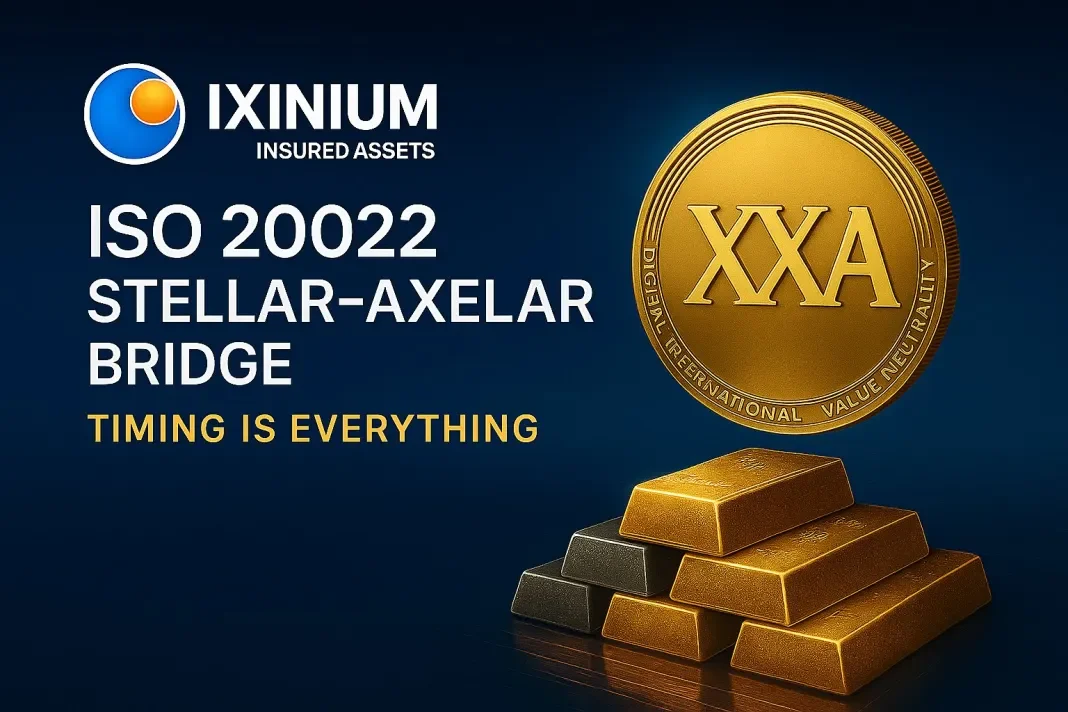
DECEMBER 1ST | THE WORLD ENTERS A NEW SYSTEM
Winter is coming… But this year?
THIS WINTER WILL BE HOT.
Because on December 1st, something the world has never seen before will ignite across the quantum grid:
Ariel: The World Enters a New System this December 1st
11-30-2025
From Stellar BRICS:
DECEMBER 1ST | THE WORLD ENTERS A NEW SYSTEM
Winter is coming… But this year?
THIS WINTER WILL BE HOT.
Because on December 1st, something the world has never seen before will ignite across the quantum grid:
THE BRICS x QFS PROJECT GOES LIVE.
The alliance that spans continents.
The system that rewrites global finance.
The partnership powerful enough to bend the old world into the new.
On December 1st, BRICS steps into the Quantum Financial System and activates the largest liquidity engine in the history.
Source(s): https://x.com/Prolotario1/status/1995219970347946301
************
Courtesy of Dinar Guru: https://www.dinarguru.com/
Militia Man There's a thing called the FATF, the Financial Action Task Force grade list. Review could take Iraq completely off this watch list is scheduled for the first part of 2026, but it is not a prerequisite for a revaluation...It's all coming together on schedule.
Mnt Goat Article: "THE CENTRAL BANK SETTLES THE DEBATE: THERE IS NO INTENTION TO AMEND THE EXCHANGE RATE OF THE IRAQI DINAR" This means no intention to devalue the dinar, get it?
Frank26 Kuwait, 1991, two weeks before they did an RV, before they came out with a new rate, their central bank released new note verification guides. That's what we're expecting. We call them the bulletin boards so the citizens wouldn't panic when the old notes suddenly became 1,000 time the street value. That was 1991...Germany in 1948, Renton Bank published, "currency exchange procedures" 10 days before the DM launched so that the public would know exactly how to walk in and trade their worthless paper for real currency. China back in 2015, the PBOC issued, "Offshore CNH handling instructions 72 hours before the stealth de-pegging...These scenarios have happened many time in the past.
France Is in TOTAL MELTDOWN — And Europe Is Next
Lena Petrova: 12-1-2025
For decades, France has been viewed as a cornerstone of European stability—an economic heavyweight, a political leader, and the EU’s second-largest economy.
But today, a dramatic new question is emerging across Europe: Is France becoming the new sick man of Europe?
In this video, we break down why analysts, investors, and even other EU governments are sounding the alarm about France’s political paralysis, soaring debt, and deepening economic crisis.
🔻 KEY THEMES COVERED
• France’s political collapse after Macron’s disastrous 2024 snap elections
• A parliament split into three hostile blocs, unable to pass a national budget
• France’s exploding public debt—now over €3 trillion
• Why interest payments may hit €100 billion a year by the end of the decade
• Fitch’s recent downgrade and what it signals about investor confidence
• Rising tensions inside the EU as France becomes the bloc’s weak link
• Why analysts fear an IMF or ECB intervention is no longer unthinkable
• How the 2027 French presidential election could trigger a market “freak-out moment”
As we explore today, France’s crisis is not only about economics—it’s about governance, institutions, and political fragmentation.
With the left, the right, and the center locked in a permanent three-way standoff, France cannot make decisions, even as its fiscal situation deteriorates.
Meanwhile, the rest of Europe is watching with a mix of concern and disbelief. Bond markets now treat French debt as riskier than that of Greece, Spain, or Portugal—countries devastated during the eurozone crisis.
Seeds of Wisdom RV and Economics Updates Monday Morning 12-01-25
Good Morning Dinar Recaps,
Geopolitical Tensions Reshape Investor Behavior Amid Shifting Global Alliances
Heightened uncertainty over conflict, energy security, and alliance structures pushes capital toward safer, alternative stores of value.
Good Morning Dinar Recaps,
Geopolitical Tensions Reshape Investor Behavior Amid Shifting Global Alliances
Heightened uncertainty over conflict, energy security, and alliance structures pushes capital toward safer, alternative stores of value.
Overview
Persistent geopolitical instability — especially surrounding Ukraine, energy security, and defense coordination — is driving investors back toward safe-haven assets.
Growing skepticism about traditional alliance structures has led market analysts to revisit the possibility of new settlement mechanisms, regional blocs, or alternative currency arrangements.
Volatility in defense and energy policy continues to influence global capital flows, intensifying concerns about systemic imbalances in the existing financial order.
Key Developments
Military and diplomatic uncertainty remains elevated, prompting defensive investment strategies and increasing attention to metals, commodities, and non-traditional assets.
Energy supply anxieties continue to pressure markets as winter demand rises and logistical risks persist, forcing investors to account for geopolitical disruptions.
Expanding discussions around alternative settlement frameworks — including new trade blocs and currency pathways — reflect rising doubts about the durability of the current monetary system.
Analysts note that investor psychology is increasingly tied to the perception of systemic realignment, not just short-term conflict dynamics.
Why It Matters
The continued geopolitical volatility reinforces a global environment defined by uncertainty, where traditional institutions and alliances appear less stable than in previous cycles. This atmosphere encourages both governments and investors to explore alternative financial systems, new trade routes, and non-Western monetary structures, all of which feed directly into the broader narrative of a coming restructuring in global governance and finance.
Implications for the Global Reset
Pillar 1 — Diplomacy & Peace / Geopolitics
Persistent conflict, shifting alliances, and rising geopolitical distrust are accelerating conversations about whether the old global order can maintain cohesion. These tensions create openings for new coalitions and alternative governance models.
Pillar 3 — Institutional Restructuring & Systemic Shift
Growing interest in new trade and currency blocs underscores a re-evaluation of existing systems, with geopolitical pressures acting as the catalyst. As confidence erodes in legacy frameworks, momentum builds for structural change in how nations coordinate economically and politically.
This is not just politics — it’s global finance restructuring before our eyes.
Seeds of Wisdom Team
Newshounds News™ Exclusive
Sources
~~~~~~~~~~
Dollar Weakness Deepens as Markets Price in 2026 Rate Cuts
Shifting expectations for U.S. monetary policy raise questions about future reserve-currency balance.
Overview
The U.S. Dollar Index (DXY) continued to fall, with futures sliding into the 99.40–99.50 range, reflecting growing market conviction that the Federal Reserve will adopt a more dovish stance heading into 2026.
This persistent dollar softness is renewing speculation about a long-term shift in the global reserve-currency structure, as investors weigh the implications of sustained monetary easing.
Analysts note increasing interest in diversifying away from USD-centric portfolios, fueling discussions about alternative currencies and multi-polar FX arrangements.
Key Developments
Futures markets now overwhelmingly anticipate rate cuts, citing slowing economic momentum and moderating inflation indicators.
The decline in dollar strength is strengthening foreign-currency performance broadly, particularly in emerging-market FX.
Institutional investors are again revisiting the idea of reserve diversification, a topic that historically gains traction whenever the dollar shows extended cyclical weakness.
The shift has revived public debate around future global reserve weighting, including potential roles for gold, commodities, and digital settlement assets.
Why It Matters
Dollar volatility is more than a market story — it is a structural question about the durability of U.S. monetary leadership. As rate expectations pivot, the global financial system must reassess its assumptions about liquidity, pricing power, and cross-border flows. A sustained period of dollar weakness would have direct implications for trade, debt sustainability, and the geopolitical balance built on USD dominance.
Implications for the Global Reset
Pillar 2 — Currency & Reserve System / FX
Markets are increasingly preparing for a potential re-weighting of global reserves, driven by shifting interest-rate trajectories and weakening confidence in the dollar’s singular role.
Pillar 3 — Institutional Restructuring & Systemic Shift
The scenario reinforces broader discussions about reshaping the global monetary architecture, with more nations signaling interest in diversified FX exposure, regional settlement currencies, and alternative stores of value.
This is not just politics — it’s global finance restructuring before our eyes.
Seeds of Wisdom Team
Newshounds News™ Exclusive
Sources
~~~~~~~~~~
Seeds of Wisdom Team RV Currency Facts Youtube and Rumble
Newshound's News Telegram Room Link
RV Facts with Proof Links Link
RV Updates Proof links - Facts Link
Follow the Gold/Silver Rate COMEX
Follow Fast Facts
Seeds of Wisdom Team™ Website
Thank you Dinar Recaps
Japan Is DUMPING U.S. Debt — A Global Market IMPLOSION Is Coming
Japan Is DUMPING U.S. Debt — A Global Market IMPLOSION Is Coming
Lena Petrova: 11-29-2025
Japan’s latest economic gamble is shaking the global financial system—and today we step back and unpack exactly what’s happening, why it matters, and how it could directly impact YOU.
Japan’s new multi-billion-dollar stimulus package has triggered market turmoil, sent the yen plunging, and raised serious questions about the future of U.S. borrowing.
With the yen hitting its weakest levels in nearly a year, Japan’s finance ministry is signaling possible intervention—but markets aren’t convinced.
Japan Is DUMPING U.S. Debt — A Global Market IMPLOSION Is Coming
Lena Petrova: 11-29-2025
Japan’s latest economic gamble is shaking the global financial system—and today we step back and unpack exactly what’s happening, why it matters, and how it could directly impact YOU.
Japan’s new multi-billion-dollar stimulus package has triggered market turmoil, sent the yen plunging, and raised serious questions about the future of U.S. borrowing.
With the yen hitting its weakest levels in nearly a year, Japan’s finance ministry is signaling possible intervention—but markets aren’t convinced.
Economists warn Japan’s aggressive spending could unintentionally destabilize the U.S. economy, especially as Japanese government bonds and the yen fall simultaneously, a rare and alarming signal of capital flight and market distrust.
For decades, Japan has been America’s biggest foreign lender, buying trillions in U.S. Treasurys and keeping American borrowing costs low. But that era is ending. With domestic Japanese bond yields soaring to 20- and 30-year highs, investors now have strong incentives to bring their money home.
In just one quarter, they dumped $62 billion in U.S. Treasurys—an exit that analysts warn could push U.S. yields even higher.
This shift affects YOU: mortgage rates near 7%, record credit-card APRs, rising car-loan costs, and a U.S. government suddenly facing higher borrowing rates after 40 years of cheap money fueled by Japan. As Japan battles aging demographics, 235% debt-to-GDP, weak currency, and rising geopolitical tensions with China, the country no longer has the capacity to subsidize America’s spending.
Even more dangerous: an unstable yen threatens the global “carry trade,” which supports everything from U.S. stocks to emerging markets. A carry-trade unwind could trigger rapid market volatility—something analysts at BlackRock, Morgan Stanley, and Société Générale say is now a real possibility.
This is a financial turning point. The era of easy money is over. The world is shifting. And understanding this transition is essential for protecting yourself and your finances.