
“Tidbits From TNT”Saturday Morning 11-8-2025
TNT:
Tiswhwash: I know it says 2027 don't let that bother you. I don't recall ever seeing an article like this about the Rupiah
Rp1,000 Becomes Rp1? Indonesia Eyes Rupiah Redenomination Bill by 2027
Jakarta. Indonesia is preparing a draft law to redenominate the rupiah --a long-discussed plan to trim zeros from the currency-- with the legislation targeted for completion in 2027.
The measure appears in Finance Ministry Regulation (PMK) No. 70/2025 on the ministry’s 2025–2029 strategic plan, issued on Oct.10 and enacted on Nov. 3.
TNT:
Tiswhwash: I know it says 2027 don't let that bother you. I don't recall ever seeing an article like this about the Rupiah
Rp1,000 Becomes Rp1? Indonesia Eyes Rupiah Redenomination Bill by 2027
Jakarta. Indonesia is preparing a draft law to redenominate the rupiah --a long-discussed plan to trim zeros from the currency-- with the legislation targeted for completion in 2027.
The measure appears in Finance Ministry Regulation (PMK) No. 70/2025 on the ministry’s 2025–2029 strategic plan, issued on Oct.10 and enacted on Nov. 3.
“The bill on the redenomination of the rupiah is a carried-over bill that is planned for completion in 2027,” the document states.
Redenomination would remove several zeros from rupiah denominations without altering purchasing power. For example, Rp 1,000 would become Rp1, but the value of goods and services remains unchanged.
Officials argue the move is intended to improve economic efficiency, increase the rupiah’s credibility, and enhance Indonesia’s competitiveness, while reinforcing confidence in the national currency.
The idea of trimming rupiah digits has periodically resurfaced for more than a decade.
In 2023, Bank Indonesia said it was technically ready to implement redenomination, including design work and operational planning, but had not yet found the right timing. Policymakers cited three main considerations: domestic and global macroeconomic conditions, monetary and financial system stability, and social-political dynamics. The central bank emphasized that redenomination is not devaluation, but past experiences (inflation, currency crises) make the public cautious.
A similar discussion emerged in 2016 under President Joko Widodo and then-BI Governor Agus Martowardojo. A draft bill was submitted to the legislature in 2015, but it has never been passed. link
************
Tishwash: ExxonMobil CEO optimistic after company's return to Iraq
ExxonMobil CEO Darren Woods said during an interview in Sao Paulo, Brazil, on Friday that he is optimistic about the company's potential return to Iraq.
Woods, who was in Brazil's financial center to attend events related to the UN Climate Summit (COP30), added that acquisitions represent a pivotal part of the company's work in the energy sector. link
************
Tishwash: Sudanese: There is no economic, service, or developmental field in which we have not made an achievement.
Prime Minister Mohammed Shia al-Sudani confirmed on Friday that his government was not formed in ideal circumstances, but it launched many projects without hesitation.
Al-Sudani said during a conference held in Baghdad, "We will choose the outstanding achievement in the fund and turn the page on the remaining pages of failure, corruption and limited vision. We choose construction, reconstruction and development. We launched the projects without hesitation, but with clear planning and vision and serious follow-up, and we continued day and night for the sake of achievement."
He added, "We are still planning for Baghdad not for one or two years, but for the next twenty-five years, just as we are planning for Iraq for the next twenty-five years."
He continued, "Our strength comes from you, the generous people of Baghdad, and our drive to perform our duty comes from your conviction in us, in our work, and in what we plan to complete."
Al-Sudani added, "We will expand the boundaries of the Baghdad Municipality to include new districts and sub-districts, and we will launch (Greater Baghdad Municipality) to end the problem of overlapping powers, overlapping services, and administrative and service confusion.
He added, "Our government was not formed in ideal circumstances, and trust was shaky between the citizen and the steps taken by state agencies. Thousands of stalled projects accumulated, and with them, sums exceeding $100 billion were frozen. The development process was disrupted, with a mono-economy and limited opportunities in government jobs."
He added, "We are not accustomed to complaining in our discourse, nor to attributing setbacks to past causes, despite the many chaotic decisions and lack of vision that we inherited. We started with priorities that directly relate to the needs of the Iraqi family, youth, students, workers, laborers, farmers, employees, and all segments of society, and we focused on combating corruption and poverty and reducing unemployment. There is not enough space to list the indicators of change and progress, but we say with certainty: there is no economic, service, or developmental field in which we have not made a clear and tangible achievement."
The Prime Minister added, "I call upon you, the people of Iraq, to support our honorable path. I call upon you to protect what you have achieved through your patience, efforts, and money. I call upon you to support the reconstruction and development process and to participate effectively in the elections. These elections are the most important since 2003 until today, because they will determine your future and the future of Iraq for the next twenty years. Every sincere vote is important, so never compromise your rights, never underestimate your strength, and do not allow the corrupt and the failures to return to manipulate you, your city, and your Iraq."
He pointed out that "Baghdad needs your support, and Iraq needs your support, so that we can continue the journey towards the future, and never return to the painful past, where there was failure, laziness, neglect, corruption, and poor planning and management.
Some in Baghdad have challenged us and said that they will garner the most votes, but we do not challenge anyone, because we trust you. We trust your choice, and you will not give your votes based on sect or ethnicity. Your vote will not be for a candidate only, but it is a vote for the present and the future, so do not allow the people of crises to return to you, nor the people of lies and deception to tamper with your lives."
He concluded by emphasizing that "election day is just one day, but its result will either move us forward for the next four years, or set us back another four years that will be lost from the progress." link
Mot: Ralph Better Pay Attention This Time!!!
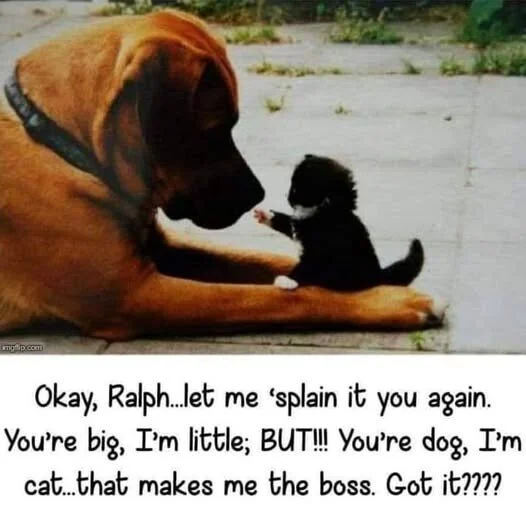
Mot: I Seeeeeeee UUUUUUUUuuuuuuuuuuuuuuuu!!!!

Ariel : Tariff Reverse Could Lead to a Iraq Dinar Revaluation
Ariel : Tariff Reverse Could Lead to a Iraq Dinar Revaluation
11-7-2025
SCOTUS Tariff Reverse: What Is The Alternative? Donald Trump Playing Another Ace
What do you all think?
Because there are quite a few reasons why this could lead to a Iraqi Dinar Revaluation. Think Trade deficits dropping by like 15% by mid-2026, starving import-based cabals of slush funds.
What’s not to like about that? Then States like Texas (gold/silver legal tender since Sept 2025) and Missouri speed this up a bit.
Ariel : Tariff Reverse Could Lead to a Iraq Dinar Revaluation
11-7-2025
SCOTUS Tariff Reverse: What Is The Alternative? Donald Trump Playing Another Ace
What do you all think?
Because there are quite a few reasons why this could lead to a Iraqi Dinar Revaluation. Think Trade deficits dropping by like 15% by mid-2026, starving import-based cabals of slush funds.
What’s not to like about that? Then States like Texas (gold/silver legal tender since Sept 2025) and Missouri speed this up a bit.
Tariff cash buys metals, arbitrages imbalances, forces dinar match without direct USD crash if possible.
Unexpected move: Tie tariffs to FARA probes on Soros/Open Society groups as foreign trade influencers, cutting their USD manipulation strings. Which would be a genius move directly or indirectly or inadvertently so to speak.
If the Supreme Court strikes down Trump’s main tariffs using emergency powers, he can switch to backup laws like Section 232 for national security reasons and Section 301 for unfair trade practices.
These let him put duties on imports from China, Mexico, and Europe without needing court approval right away, covering about 80% of what he planned.
The process starts with quick reviews by the U.S. Trade Representative, which his team can speed up in 60 to 90 days using emergency rules. This keeps pressure on trade imbalances, indirectly pushing the dollar’s value down by making imports cost more and exports cheaper.
Lower dollar value helps countries like Iraq trade fairly without their currency seeming too weak. Trump’s commerce secretary, Howard Lutnick, is already setting up these fast tracks to avoid Senate delays after the government shutdown ends.
Now, think about it – how does this fix things for the Iraqi dinar? I would like to think that the dollar’s fake high value right now blocks Iraq from setting their dinar at a fair 1-to-1 rate, hurting their oil sales.
But with tariffs potentially lowering the dollar, ig revoked Iraq’s central bank can revalue without a big shock to their market, especially since the U.S. Treasury oversees key Iraqi banks through 2025 agreements.
The U.S. Treasury’s control over Iraq’s main banks, like the Trade Bank of Iraq, gives Trump leverage to guide the dinar reset smoothly.
This includes joint meetings with the Federal Reserve to balance dollar flows and prevent inflation spikes during revaluation.
States like Texas and Missouri are already making gold and silver legal money, so Trump can tie tariff money to buying these metals for backing. This tethers the Treasury dollar to real assets, stabilizing the dinar at parity by matching both currencies to gold values.
Iraq’s $100 billion in reserves, mostly dollars, can then convert easily without loss. Overall, it creates fair trade where Iraq sells oil without getting crushed by the dollar’s overvalue.
Read Full Article: https://www.patreon.com/posts/scotus-tariff-is-143004076
Iraq Earning 7+ Billion USD a Month Spending in IQD, Massive Profits
Iraq Earning 7+ Billion USD a Month Spending in IQD, Massive Profits
Edu Matrix: 11-7-2025
The global economy is a complex interplay of currencies, and few situations are as intriguing—or as critical for those watching future financial shifts—as the ongoing dynamics between the Iraqi Dinar (IQD) and the US Dollar (USD).
For years, analysts have monitored the fundamental economic shifts within Iraq, driven by massive energy revenues and simultaneous government reforms. To truly understand where the IQD is heading, you need to go beyond the charts and look at the actual flow of money on the ground.
Iraq Earning 7+ Billion USD a Month Spending in IQD, Massive Profits
Edu Matrix: 11-7-2025
The global economy is a complex interplay of currencies, and few situations are as intriguing—or as critical for those watching future financial shifts—as the ongoing dynamics between the Iraqi Dinar (IQD) and the US Dollar (USD).
For years, analysts have monitored the fundamental economic shifts within Iraq, driven by massive energy revenues and simultaneous government reforms. To truly understand where the IQD is heading, you need to go beyond the charts and look at the actual flow of money on the ground.
That’s precisely why we are announcing a focused investigation trip planned for early 2026—a commitment to travel to the region and gain firsthand insights into how these two currencies interact daily.
Here is a deep dive into the compelling economic data that is driving this investigation and why the next few years will be crucial for Iraq’s currency future.
The core of Iraq’s economic stability lies in its massive oil resources. The latest figures reveal a staggering disparity between the currency flowing into the country and the currency used for its internal obligations.
In the first half of 2025 alone, Iraq generated $43.5 billion USD in oil revenues. This averages out to an incredible $7.25 billion USD entering state coffers every single month. This revenue is, naturally, denominated in the US dollar, the standard for international oil trade. This enormous and consistent inflow forms the powerful foundation of Iraq’s currency reserves.
Contrast this robust external income with the domestic necessity of paying the vast government workforce.
The monthly government payroll is substantial, amounting to approximately 3.92 trillion IQD. At current exchange approximations, that is roughly $2.8 billion USD distributed primarily to government employees.
The math is compelling: The incoming USD revenue ($7.25 billion/month) dramatically exceeds the internal IQD obligation ($2.8 billion/month). This massive surplus of USD provides the central bank with significant liquidity and exchange rate management power, setting the fundamental stage for the IQD’s long-term stability and potential revaluation.
Another critical factor we must investigate in 2026 is the duality of Iraq’s payment systems.
Over the past few years, the Iraqi government has pushed to modernize, implementing a digital banking system for payroll distribution. Government employees now receive their monthly salaries (the 3.92 trillion IQD) directly into digital accounts.
However, the transition from a cash-dominant society is slow. While the money is paid digitally, the vast majority of these funds are immediately withdrawn as physical IQD cash.
This reveals an essential truth: Cash remains the dominant medium of exchange within Iraq’s internal economy. Understanding the friction and flow between the digital banking sphere and the physical cash markets is vital to assessing the true velocity and health of the Iraqi dinar within its own borders. Our 2026 trip aims to explore these distribution hubs directly.
The dynamics of global finance, exemplified by the intricate currency flows in Iraq, underscore the need for sound, ongoing financial education in our personal lives.
Just as the Iraqi government must manage trillion-dinar payrolls and billion-dollar revenues, you must manage your personal wealth, investments, and tax obligations with precision.
The $7.25 billion USD pouring into Iraq monthly is a powerful economic engine. The complex system of digital IQD payrolls leading to physical cash withdrawal creates a fascinating internal market structure. Monitoring these indicators is not just an academic exercise; it is crucial for anyone interested in the future of the Iraqi dinar.
We look forward to bringing you detailed, on-the-ground reports from our 2026 investigation into these currency dynamics.
Seeds of Wisdom RV and Economics Updates Friday Afternoon 11-7-25
Good Afternoon Dinar Recaps,
BRICS Gold Currency Shift: The Gradual Architecture of a Global Reset
Gold-backed trade corridors and digital payment rails are reshaping world finance — one settlement at a time.
A Slow but Strategic Transformation
The BRICS gold currency initiative isn’t a sudden shock to the financial system — it’s an incremental strategy that is quietly altering the foundations of global trade and reserves.
Rather than replacing the dollar overnight, the bloc is building alternatives: digital payment rails, regional vault networks, and gold-linked settlement frameworks that operate in parallel to the existing system.
Good Afternoon Dinar Recaps,
BRICS Gold Currency Shift: The Gradual Architecture of a Global Reset
Gold-backed trade corridors and digital payment rails are reshaping world finance — one settlement at a time.
A Slow but Strategic Transformation
The BRICS gold currency initiative isn’t a sudden shock to the financial system — it’s an incremental strategy that is quietly altering the foundations of global trade and reserves.
Rather than replacing the dollar overnight, the bloc is building alternatives: digital payment rails, regional vault networks, and gold-linked settlement frameworks that operate in parallel to the existing system.
The BRICS framework has catalyzed cross-border payment systems that bypass Western sanctions.
Gold and silver demand have surged as nations seek “insurance” against geopolitical risk.
The process represents a monetary evolution, not revolution — a system shift achieved through infrastructure, not headlines.
The result: a distributed financial network emerging under the radar — one that points toward the next phase of the global financial reset.
Payment Systems Replacing Dollar Monopoly
At the core of this shift lies a multi-layered settlement ecosystem.
Rather than minting a single BRICS coin, member nations are linking national payment systems and regional clearinghouses in local currencies.
Roughly 90% of intra-BRICS trade is now settled in local currencies — up from 65% just two years ago.
The 2025 BRICS Summit confirmed expansion of these systems via blockchain-enabled digital platforms.
Russia and China are leading the rollout of independent payment infrastructures, while India and Brazil build domestic exchange mechanisms to connect.
Former Russian Ambassador Yury Ushakov explained:
“We believe that creating an independent BRICS payment system is an important goal for the future, based on digital technologies and blockchain.”
This decentralization does not eliminate the dollar — it dilutes its monopoly, opening the door to a multi-polar monetary ecosystem.
Central Banks Move Toward Hard Assets
The World Gold Council reported that central banks purchased 166 tonnes of gold in Q2 2025, a 41% increase from the average.
Russia, China, and India remain the largest accumulators — signaling a systemic pivot from paper reserves to physical value storage.
Russia: 2,335.85 tons of gold holdings
China: 2,298.53 tons, with accumulation through state-linked banks
Poland: largest non-BRICS buyer in 2024, reflecting a broader East-West pattern
Gold flows through COMEX, Shanghai, and Zurich continue to show unusual physical delivery patterns — suggesting sovereign demand underpins recent vault expansions.
Premiums on physical delivery remain high, reflecting sustained institutional accumulation.
Incremental Shifts, Structural Change
India’s External Affairs Minister S. Jaishankar recently clarified:
“We’re not seeking to replace the dollar. What we want is more stability in the global system.”
That stability now depends on diversification, not domination.
Survey data shows that 76% of central banks plan to increase gold reserves within five years — an unprecedented consensus in the modern era.
Sanctions are re-engineering payment systems toward regional independence.
New sovereign digital currencies are being tested for asset-backed cross-border use.
Nations are linking vault networks and local-currency trade invoicing as transitional steps.
This evolution represents the structural rewiring of the global system — slow, deliberate, and irreversible. The BRICS gold currency shift is less a headline than a blueprint: the architecture of a new hybrid world order, where tangible assets underpin digital exchange.
Analysis: Why It Matters for the Global Reset
The BRICS gold strategy embodies three pillars of the global reset:
Financial Infrastructure – creation of alternative rails to SWIFT
De-Dollarization – trade invoicing in local currencies
Asset-Backed Credibility – gold and silver accumulation to reinforce trust
Each small adjustment — from settlement corridors to central bank accumulation — erodes single-pole financial control and replaces it with a distributed balance of economic sovereignty.
The reset is not coming one day — it’s already underway in transactions, vaults, and ledgers.
This is not just politics — it’s global finance restructuring before our eyes.
Seeds of Wisdom Team
Newshounds News™ Exclusive
Sources:
Watcher.Guru – “BRICS Gold Currency Shift Highlights Strategic Moves in Global Trade”
Reuters – “Global Gold Demand Climbs 3% to Quarterly Record as Investment Soars”
~~~~~~~~~
Seeds of Wisdom Team RV Currency Facts Youtube and Rumble
Newshound's News Telegram Room Link
RV Facts with Proof Links Link
RV Updates Proof links - Facts Link
Follow the Gold/Silver Rate COMEX
Follow Fast Facts
Seeds of Wisdom Team™ Website
Thank you Dinar Recaps
Fed Bailout Triggered as Bank Reserves Crash to 5-Year Low
Fed Bailout Triggered as Bank Reserves Crash to 5-Year Low
Taylor Kenny: 11-7-2025
Beneath the calm surface of mainstream financial news, a seismic shift is underway, threatening the very foundations of the US banking system and, by extension, your financial security. Recent revelations paint a stark picture of fragility, with the Federal Reserve engaged in covert operations to prop up a system teetering on the brink.
This isn’t just about economic cycles; it’s about the integrity of your bank deposits, the future value of the US dollar, and your purchasing power.
Fed Bailout Triggered as Bank Reserves Crash to 5-Year Low
Taylor Kenny: 11-7-2025
Beneath the calm surface of mainstream financial news, a seismic shift is underway, threatening the very foundations of the US banking system and, by extension, your financial security. Recent revelations paint a stark picture of fragility, with the Federal Reserve engaged in covert operations to prop up a system teetering on the brink.
This isn’t just about economic cycles; it’s about the integrity of your bank deposits, the future value of the US dollar, and your purchasing power.
Alarming data reveals that US bank reserves have plummeted to their lowest levels in five years. This isn’t a minor fluctuation; it’s a flashing red light that forced the Federal Reserve to secretly inject emergency liquidity into the system. Simultaneously, they’ve quietly halted their much-touted Quantitative Tightening (QT) program.
What does this tell us? It signals a coordinated, urgent attempt to maintain an illusion of stability. The Fed’s emergency lending through the overnight repo facility, reaching levels not seen since 2020, is a clear indicator of severe, systemic liquidity constraints within the banking sector. They’re patching holes, but the ship is still leaking.
To understand the depth of this crisis, we need to look back a few years. During the unprecedented money printing spree of 2020, a surge of bank deposits, largely fueled by the Fed’s own actions, found its way into US Treasury securities. These were considered safe assets, yielding modest returns.
However, the financial landscape has drastically changed. As demand for US debt wanes and interest rates (and thus bond yields) have risen, banks are now sitting on massive unrealized losses on these very same Treasury bonds. Should they be forced to sell these bonds – for example, due to a surge in withdrawals – these hidden losses would become very real, potentially risking their solvency.
Adding fuel to this fire are declining commercial real estate values and rising delinquencies, creating yet another layer of “hidden losses” on bank balance sheets. Many banks are engaged in an unsustainable charade, what’s known as “extending and pretending” – avoiding the recognition of these losses in the hope that conditions improve.
This strategy is eerily reminiscent of the factors that led to the sudden collapse of Silicon Valley Bank.
The Fed’s pivot from tightening monetary policy to injecting liquidity is not a sign of recovery; it’s a testament to a systemic breakdown. This desperate injection of capital will almost certainly accelerate inflation, further eroding the purchasing power of your hard-earned money and devaluing the US dollar.
This cycle, if left unaddressed, promises to diminish your wealth and financial security.
The question is no longer if a significant financial reset is coming, but when, and how you can prepare.
In times of economic uncertainty and systemic fragility, tangible assets have historically served as a critical safeguard for wealth. As trust in fiat currencies and traditional banking systems wavers, the spotlight turns to physical gold.
For centuries, gold has been the ultimate store of value, acting as a hedge against inflation and a protector of purchasing power.
As the current monetary system strains under unprecedented pressure, many experts anticipate a “global monetary reset,” widely dubbed the “Great Gold Reset,” where gold is poised to play a central role in a new, more stable monetary system.
Watch the full video from ITM Trading with Taylor Kenney for a comprehensive analysis of the current financial environment and what it means for you.
News, Rumors and Opinions Friday 11-7-2025
Note: All intel should be considered as "Rumors" until we receive official announcements ...and “Rates and Dates” could change anytime until we get to the banks/redemption centers.
RV Excerpts from the Restored Republic via a GCR: Update as of Fri. 7 Nov. 2025
Compiled Fri. 7 Nov. 2025 12:01 am EST by Judy Byington
Restored Republic
Thurs. 6 Nov. 2025, Scott Brunswick
The Quantum Financial System is advancing in stealth. In Singapore and Tokyo, hidden banking nodes are now live, mirroring transactional flows through encrypted micro-tests. Each “network interruption” on legacy systems signals another handover to QFS control.
Note: All intel should be considered as "Rumors" until we receive official announcements ...and “Rates and Dates” could change anytime until we get to the banks/redemption centers.
RV Excerpts from the Restored Republic via a GCR: Update as of Fri. 7 Nov. 2025
Compiled Fri. 7 Nov. 2025 12:01 am EST by Judy Byington
Restored Republic
Thurs. 6 Nov. 2025, Scott Brunswick
The Quantum Financial System is advancing in stealth. In Singapore and Tokyo, hidden banking nodes are now live, mirroring transactional flows through encrypted micro-tests. Each “network interruption” on legacy systems signals another handover to QFS control.
Gold reserves are being relocated under armed escort through remote routes, while dormant vaults tied to the old monetary cabal are being drained. The slow “technical outages” seen in central banks are not errors—they are controlled disconnections.
Thurs. 6 Nov. 2025 Jentel: Jentel reporting window is anytime NOW til the 13th, best possibly case that they could send out notifications tonight. They are putting military in place to ensure safety. https://rumble.com/v71bg96-fallawsophy-11625-with-jennifer-fallaw.-jentel-rv-update..html
Thurs. 6 Nov. 2025 TNT: IMF Says 99% will happen Fri. 7 Nov. 2025: https://x.com/THE_TNT_TEAM/status/1986216671120646470?t=9POIM4Ejs1MZoDWM68pzCw&s=09
~~~~~~~~~~~~~~~
Thurs. 6 Nov. 2025 Bruce The Big Call:
A couple of sources said Fri. 7 Nov. was in play for Tier4b (us, the Internet Group) notification.
One said that Tues. Wed.11-12 Nov. was also a possibility.
Others said we could get notification over the weekend.
Redemption Centers will have better rates than the bank, and you cannot redeem Zim at a bank.
Two separate sources said President Trump will make an announcement on Thanksgiving Day about the QFS and we are on asset-backed USN currency.
Read full post here: https://dinarchronicles.com/2025/11/07/restored-republic-via-a-gcr-update-as-of-november-7-2025/
************
Courtesy of Dinar Guru: https://www.dinarguru.com/
Militia Man I think it still could be 4th quarter 2025. Does the REER settle somewhere around 3 times SDR? We're going to find out...Every step of what I'm talking about is documented. What they've been doing is primarily executed in my view already. The CBI has reserves ... $112 billion. They have compliance through all the new systems, international standards...Their next move is going to be an effective adjustment like they did in 2023. It's going to be immediate.
Frank26 I think Sudani is about to give you [Iraqi citizens] a date, not a rate, in order to pacify you Iraqi citizens and receive the vote that he needs. And maybe at the start of the year, all of this can come together. Be we have another scenario...The one that Trump has painted where it can happen right now without a second thought.
Nader From The Mid East Article: "Disruption of official working hours in Iraq from next Saturday to Wednesday" They're doing it for the election. They're going to stop schools and hours of work for three days all the way till Wednesday. Have nothing to do with RV or anything like that.
Should I Hedge My Gold Position With Bonds?
Mike Maloney: 11-7-2025
Join us live from the New Orleans Investment Conference where we sat down with John (traveling from Australia) to dig into one of the biggest questions investors face today:
If you’re right about inflation or monetary collapse, what should you hedge with — and if you’re wrong, what protects you then?
In this candid conversation we cover:
Why long-term government bonds may not be the safe haven you think they are
Why gold and silver may be the true undervalued hedges underpinned by central-bank buying
Why fiat currencies are all falling (just at different speeds) relative to precious metals
Why the next downturn could be far worse than 2008, and how that changes safe-asset thinking
How international investors (even outside the US) should think about currency risk, hedging, and diversification
If you are concerned about inflation, currency debasement, or the stability of traditional “safe” assets — this discussion gives a powerful framework to rethink your portfolio.
Seeds of Wisdom RV and Economics Updates Friday Morning 11-7-25
Good Morning Dinar Recaps,
Abu Dhabi’s Ambition: Bridging the Divide in Global Finance
How a rising Middle Eastern hub could reshape trade corridors and capital alignment
As rivalries deepen between the U.S., China, and India, Abu Dhabi is positioning itself as a neutral financial hub linking East and West. Through the Abu Dhabi Global Market (ADGM), the UAE plans to become one of the world’s top five financial centers within the next decade.
Good Morning Dinar Recaps,
Abu Dhabi’s Ambition: Bridging the Divide in Global Finance
How a rising Middle Eastern hub could reshape trade corridors and capital alignment
As rivalries deepen between the U.S., China, and India, Abu Dhabi is positioning itself as a neutral financial hub linking East and West. Through the Abu Dhabi Global Market (ADGM), the UAE plans to become one of the world’s top five financial centers within the next decade.
Key Points:
ADGM expansion targets partnerships with New York, London, Singapore, and Hong Kong.
The UAE’s unique geopolitical neutrality lets it handle U.S.-China and BRICS capital flows.
Gulf sovereign funds are quietly reallocating reserves into gold and non-dollar assets, signaling a shift toward multipolar finance.
Global Reset Implications:
A neutral Middle Eastern hub offering multi-currency settlement and cross-border payment networks is a cornerstone of a post-dollar trading order. If successful, Abu Dhabi could become a bridge node between SWIFT and BRICS systems, reducing Western financial dominance.
This is not just politics — it’s global finance restructuring before our eyes.
Seeds of Wisdom Team
Newshounds News™ Exclusive
Source:
Newsweek — As Rivalries Grow, One Financial Hub Seeks to Bridge US, China, India
~~~~~~~~~
Kazakhstan Joins Abraham Accords: Peace Meets Economic Realignment
Trump’s Middle East peace initiative expands again, linking diplomacy with trade corridors
The announcement that Kazakhstan will join the Abraham Accords marks a major shift in Eurasian diplomacy — one that links peace, energy, and infrastructure. This move aligns with Trump’s broader energy corridor diplomacy, connecting Central Asia to Middle Eastern logistics hubs.
Key Points:
Kazakhstan gains direct ties with Israel, UAE, and the U.S. for energy and tech exchange.
Central Asia becomes a bridge between BRICS economies (China, Russia, India) and Western trade frameworks.
Normalization deals increasingly include financial technology partnerships and joint digital currency experiments.
Global Reset Implications:
Peace accords now carry monetary integration clauses, paving the way for cross-border CBDCs and shared commodity-backed trade systems. Kazakhstan’s entry effectively positions Central Asia as a test zone for multipolar financial coexistence.
This is not just politics — it’s global finance restructuring before our eyes.
Seeds of Wisdom Team
Newshounds News™ Exclusive
Source:
Modern Diplomacy — Kazakhstan to Join Abraham Accords, Boosting Trump’s Peace Push
~~~~~~~~~
U.S. Security Moves: From Gaza to Damascus to Venezuela
Military strategy and monetary influence converge again
Washington’s multifront repositioning — from Gaza to Damascus to El Salvador — signals a blending of military presence with monetary power projection.
Key Points:
The U.S. pushed the UN to approve a Gaza stabilization force, cementing control over reconstruction funding.
Plans to establish a presence at a Damascus airbase suggest deeper control over the Levant’s oil and logistics routes.
Satellite imagery shows U.S. aircraft activity in El Salvador, extending surveillance and operations toward Venezuela.
Global Reset Implications:
Strategic deployments ensure the U.S. remains a gatekeeper of regional energy flows and dollar liquidity. Yet these moves also drive rival blocs — particularly BRICS and the SCO — to accelerate de-dollarized security alliances, balancing the equation.
This is not just politics — it’s global finance restructuring before our eyes.
Seeds of Wisdom Team
Newshounds News™ Exclusive
Sources:
Modern Diplomacy — U.S. Pushes UN to Approve Gaza Peace Force
Modern Diplomacy — US Moves to Establish Presence at Damascus Airbase
Newsweek — Satellite Photo Shows US Ramping Up Military Pressure on Venezuela
~~~~~~~~~
Trump’s Iran Opening: Sanctions Relief and the Currency Realignment Ahead
A potential U.S.-Iran thaw could trigger a new phase in global oil trade settlement
President Trump hinted that Iran has requested sanctions relief and that he is “open to hearing that.” If realized, this could reintegrate Iran into global markets, impacting oil pricing, currency flows, and regional alliances.
Key Points:
Sanctions easing could allow Iran to trade oil in multiple currencies, challenging the dollar’s pricing monopoly.
Gulf states and Asian buyers could settle oil trades in yuan, dirhams, or gold-backed instruments.
A U.S.-Iran rapprochement would reconfigure OPEC+ strategy and realign Middle East investment channels.
Global Reset Implications:
If Washington tolerates non-dollar energy settlements, this signals acceptance of a multi-currency order. Iran’s return could trigger broader adjustments in petrodollar recycling, weakening dollar liquidity dominance over time.
This is not just politics — it’s global finance restructuring before our eyes.
Seeds of Wisdom Team
Newshounds News™ Exclusive
Sources:
Modern Diplomacy — Trump Says Iran Seeking Sanctions Relief, Signals Openness to Talks
Newsweek — Trump Signals Shift on Iran
~~~~~~~~~
Gold’s Quiet Surge: The Metal Beneath the Monetary Reset
Central banks and sovereign funds are preparing for a parallel asset base
Recent IMF and central bank data show record gold accumulation in 2025 by BRICS+, the Gulf, and even Western reserves. As fiat volatility grows, gold remains the anchor for multipolar trust.
Key Points:
Central banks have added over 1,000 tons of gold since January 2025.
BRICS payment systems increasingly reference gold as a clearing unit for digital settlements.
Western funds quietly hedge against sovereign debt exposure via physical gold holdings.
Global Reset Implications:
Gold accumulation is the backbone of the new financial architecture — a silent bridge between fiat and digital assets. In a world of fragmented currencies, gold’s universal acceptance becomes the collateral base of global settlement.
This is not just politics — it’s global finance restructuring before our eyes.
Seeds of Wisdom Team
Newshounds News™ Exclusive
Sources:
Global gold demand climbs 3% to quarterly record as investment soars — Reuters
Gold’s rise in central bank reserves appears unstoppable — Reuters
Gold’s record-breaking rally: who’s keeping it going? — Reuters
World Gold Council, IMF Reserve Data (2025)
~~~~~~~~~
Seeds of Wisdom Team RV Currency Facts Youtube and Rumble
Newshound's News Telegram Room Link
RV Facts with Proof Links Link
RV Updates Proof links - Facts Link
Follow the Gold/Silver Rate COMEX
Follow Fast Facts
Seeds of Wisdom Team™ Website
Thank you Dinar Recaps
“Tidbits From TNT” Friday Morning 11-7-2025
TNT:
Tishwash: Iraq announces a new phase of security cooperation with America
The spokesman for the Commander-in-Chief of the Armed Forces, Sabah al-Nu’man, announced on Friday that Iraqi and American officials are committed to laying the foundations for a new phase of security cooperation, stressing that consultations between the two sides regarding the future of the relationship between the two countries will continue .
Al-Nu’man said in a statement received by Shafaq News Agency that “high-level American and Iraqi officials held technical consultations on November 6 in Baghdad regarding the future of the bilateral security relationship between the two countries, in line with the 2008 Strategic Framework Agreement and based on shared national security interests .”
TNT:
Tishwash: Iraq announces a new phase of security cooperation with America
The spokesman for the Commander-in-Chief of the Armed Forces, Sabah al-Nu’man, announced on Friday that Iraqi and American officials are committed to laying the foundations for a new phase of security cooperation, stressing that consultations between the two sides regarding the future of the relationship between the two countries will continue .
Al-Nu’man said in a statement received by Shafaq News Agency that “high-level American and Iraqi officials held technical consultations on November 6 in Baghdad regarding the future of the bilateral security relationship between the two countries, in line with the 2008 Strategic Framework Agreement and based on shared national security interests .”
He added that "the participants affirmed their continued commitment to laying the foundations for a new phase of security cooperation between the United States and Iraq that will continue to enable federal Iraq to provide its own security and deliver tangible benefits to both Americans and Iraqis ."
According to the statement, "High-level officials will continue their consultations in the coming months with the aim of strengthening long-term security cooperation and counterterrorism efforts that support and enhance the capabilities and readiness of the Iraqi Federal Security Forces, including the Peshmerga forces, and promote common interests in preserving Iraq's sovereignty, defeating terrorism, enhancing regional stability, and strengthening economic ties between the two countries link
Tishwash: Iraq closes the import chapter and opens the door to exports... achieving historic self-sufficiency in oil derivatives
In an economic shift that is the first of its kind in more than two decades, the Iraqi government has officially announced a complete halt to the import of key oil derivatives, most notably gasoline, gas oil (kerosene), and white oil, after the country achieved complete self-sufficiency in the production of these materials.
The announcement, which appeared in an official document issued by the office of Prime Minister Mohammed Shia, confirmed that the surplus of these products would be diverted to exports, after domestic production exceeded the level of internal consumption, in a move described as a crucial turning point in the course of the Iraqi energy sector.
This achievement is the culmination of three years of government efforts focused on operating new refineries and rehabilitating refineries damaged by wars and terrorism, within a strategic vision aimed at reducing dependence on foreign countries, especially Iran, which was the main supplier of imported derivatives in previous years.
Iraq, the second largest producer in OPEC, is on the verge of a new phase of energy independence, not limited to oil derivatives, but extending to the natural gas sector as well, as the government recently signed a contract with the American company “Excelerate Energy” to establish a floating platform for liquefied natural gas with a capacity of up to 15 million cubic meters per day, with the aim of supplying power plants with clean fuel and at a lower operating cost compared to fixed platforms.
Prime Minister Mohammed Shia al-Sudani confirmed that his government has set a timetable to achieve complete self-sufficiency in gas by 2028, noting that Iraq now has the ability to produce high-octane gasoline locally, and continues to strengthen its partnerships with American companies to train national staff on the latest energy technologies and develop oil and electricity fields.
This trend comes amid continued fluctuations in Iranian gas supplies, which have long been a double pressure factor on Iraq, both from the side of rising Iranian domestic consumption and from the side of international sanctions imposed on Tehran.
In the same context, Deputy Prime Minister for Energy Affairs and Oil Minister Hayyan Abdul Ghani confirmed that Iraq has managed to achieve a significant increase in production rates within the refining sector, enabling the country to reach self-sufficiency and reducing the need for imports to a minimum, with the expectation that imports will cease entirely by the end of this year.
He pointed to the operation of huge projects such as the Karbala refinery, the rehabilitation of the Al-Sumoud refinery in Baiji, and the opening of new units in the Chinese, Haditha and southern refineries, most notably the FCC unit with a capacity of 55,000 barrels per day.
While Iraq is moving towards full investment in associated gas by 2029, the minister revealed that its investment rate has increased from 53% to 74% since the current government took office, reflecting Iraq’s commitment to implementing the decisions of the Paris Climate Conference and reducing thermal emissions through renewable energy projects under implementation in cooperation with international companies, including the French company Total.
While Iraq is making leaps in the production of oil derivatives, the parliamentary Oil and Gas Committee recorded that refining capacity has reached unprecedented levels, reaching about 1.5 million barrels per day, which has been reflected in reducing the import of regular gasoline to about 15%, and improved gasoline to 80%, with more than 25 million liters per day entering the local market.
Oil expert Ahmed Askar described the government's decision to halt imports of gasoline, kerosene, and white oil as strategically timed, reflecting effective management of oil resources after the state treasury had been spending billions of dollars annually to cover shortages of these materials. He explained that this shift will free up those billions to be redirected towards development and infrastructure projects, emphasizing that self-sufficiency would not have been achieved without long-term investments in refineries and the development of downstream industries.
Askar did not conceal the existence of future challenges, including the need to ensure the sustainability of production, achieve a stable surplus for export, and regulate the local market in terms of quality and prices. He also pointed to the importance of strengthening strategic reserves of petroleum products and linking refineries to an integrated transportation and distribution system that ensures equitable distribution among the governorates.
With this achievement, Iraq is steadily moving towards ending its dependence on foreign sources for petroleum products and entering a new phase of economic sovereignty over its resources, at a time when the government is working to diversify energy sources and integrate oil and electricity production
With the completion of the major refinery projects, the country is entering a new chapter in its industrial history, one written by planning, not emergency measures; by sovereignty, not need; and by development, not deficit. link
****************
Tishwash: Iraq saves 8 trillion dinars after closing the gasoline import file… an economic step that restores balance to the budget and opens the door to exports for the first time
In an economic transformation considered one of the most significant achievements of the last two decades, Iraq has officially announced its entry into a phase of complete self-sufficiency in petroleum products.
This marks a shift from a country that relied for decades on importing gasoline, gas, and fuel oil to a producer and exporter capable of meeting its domestic needs and opening new avenues for regional and international exports.
This announcement, made in a statement issued by the office of Prime Minister Mohammed Shia al-Sudani on November 4, 2025, represents a turning point in the history of the Iraqi oil industry, following years of continuous work to rehabilitate and operate the major refineries in Karbala, Baiji, and Basra, and to expand production lines to meet increasing domestic and international demand.
Legal and banking researcher Saif Al-Halfi confirmed in a special statement to “Iraq Observer” that Iraq has achieved an unprecedented historical accomplishment in the oil industry, after officially announcing its entry into the stage of self-sufficiency in oil derivatives, moving from the position of an importing country to the position of a producer and exporter, in a step he described as “a qualitative shift in the structure of the national economy and the opening of a new door towards manufacturing industries and clean energy.”
Al-Halfi explained that the oil refining sector represents the backbone of the Iraqi economy today, as it is the bridge that transforms low-priced crude oil into vital, high-value derivatives such as gasoline, kerosene, gas oil, liquefied gas, and jet fuel. He pointed out that the high global and local demand for these derivatives has made developing refineries a strategic goal for the government to reduce imports and preserve hard currency.
He added that the announcement issued by the office of Prime Minister Mohammed Shia Al-Sudani on November 4, 2025, confirmed the achievement of complete self-sufficiency after three years of intensive efforts to rehabilitate and operate Iraqi refineries, including the Karbala refinery, the Baiji refinery, and the expansion of the Basra (Shuaiba) refinery, indicating that this step “astonished foreign refining companies and confused traders who had been exporting derivatives to Iraq for many years.”
Al-Halfi explained that Iraq currently has more than ten major refineries distributed across the north, center, and south of the country. He noted that the Karbala refinery, officially opened in 2023 with a capacity of 140,000 barrels per day, represents a significant leap forward thanks to its use of environmentally friendly technologies and its production of fuel that meets European standards. The Basra (Shuaiba) refinery operates at a capacity of 210,000 barrels per day and is one of the oldest refineries in the country. Meanwhile, the Baiji refinery, which was partially restarted after being damaged in the war against ISIS, is progressing towards restoring its full capacity of 300,000 barrels per day.
Al-Halfi pointed out that the projects of the Maysan refinery with a capacity of 150,000 barrels per day and the Faw refinery with a capacity of 300,000 barrels per day will make Iraq a regional player in exporting oil derivatives, especially since the Faw refinery is designed to be a strategic refinery for exporting high-quality fuel to Europe and America within the “Development Road” projects.
He revealed that Iraq's current refining capacity is 1.3 million barrels per day, and is expected to rise to 1.6 million barrels per day upon completion of the projects. This will enable the country to export the surplus and generate billions of dollars in revenue annually. He also explained that reducing imports will save approximately $3 billion annually that was previously spent on importing refined products, in addition to bolstering foreign currency reserves and improving the national budget.
Al-Halfi pointed out that this transformation will directly impact the lives of citizens by improving fuel quality and raising the octane level in gasoline to suit modern cars, in addition to improving the quality of kerosene and liquefied gas, and creating thousands of job opportunities in the fields of maintenance, operation, transportation and logistics.
At the same time, he pointed out that there are real challenges that could hinder this success, most notably the smuggling of petroleum products due to price differences between Iraq and neighboring countries, in addition to the age of some refineries, such as Al-Dura and Basra, which require comprehensive modernization. He also noted the shortage of electricity and industrial water, which affects the continued operation of some production units, calling on the government to establish a balanced pricing policy that encourages investment and maintains the economic viability of projects.
He explained that the Iraqi government is working to link the new refineries to export and internal transport pipelines to ensure a fair distribution of derivatives between the governorates, in addition to encouraging foreign investment through the BOT partnership system in the Nasiriyah and Faw refineries, with the aim of enhancing transparency and operational efficiency.
Al-Halfi stressed that this major development reflects the government’s strategic vision of transforming from a crude oil exporting country to a country that manufactures high value-added petroleum derivatives, indicating that the completion of the Karbala, Maysan and Faw projects will enable Iraq to confidently enter the club of oil refining countries, and will place it in a leading regional position in the field of energy and refining.
Al-Halfi concluded his statement by saying: “What is happening today in the refining sector is not just a technical achievement, but a national economic victory. Iraq is writing a new chapter in its industrial history, a chapter whose title is self-sufficiency, production and export, not dependency and importation. With this transformation, the country is getting closer to realizing the dream of cross-border refineries, to transform from an importer of fuel to an exporter of power.”
Iraq produces about 4 million barrels of crude oil daily, but until recently it faced a losing economic equation in the derivatives market, as it used to sell a liter of crude oil for less than 50 dinars, then import it later in the form of gasoline at a price of up to 1200 dinars per liter, before reselling it to citizens for only about 450 dinars, which caused annual losses estimated at about 6 billion dollars, or about 8 trillion Iraqi dinars.
Thus, Iraq is transforming from a fuel consumer to a producer and exporter, a move that is reshaping its national economy and opening new horizons for industrial development and clean energy. With the continued progress of the giant refinery projects in Maysan, Faw, and Nasiriyah, the country is approaching a new phase where the Iraqi economy is being redefined by refined oil, not crude, and by revenues that will bolster economic sovereignty and lay the foundation for a future based on production, not dependence, and on strategic planning, not improvisation. link
Mot: One of The Latest Things on my to ""Do List""

Mot: Yet another ""Motism"" fer That Person Who Ya Can't Please!!!

4 Secrets of the Truly Wealthy, According to Dave Ramsey
4 Secrets of the Truly Wealthy, According to Dave Ramsey
Caitlyn Moorhead Wed, November 5, 2025 GOBankingRates
One of Dave Ramsey’s most consistent pieces of financial advice is that wealth-building isn’t necessarily tied to how much money you make, but rather how you manage what you have. Many people assume that earning a higher income automatically leads to wealth, but Ramsey points out that a disciplined approach to spending and saving is far more important.
Truly wealthy people live below their means and when they do spend money, they don’t advertise it. Essentially, saving consistently is more important than the size of your paycheck or what you splurge on. Known for his no-nonsense approach to personal finance, Ramsey has helped millions of people get out of debt and take control of their financial futures. But what separates those who simply earn a good living from the truly wealthy?
4 Secrets of the Truly Wealthy, According to Dave Ramsey
Caitlyn Moorhead Wed, November 5, 2025 GOBankingRates
One of Dave Ramsey’s most consistent pieces of financial advice is that wealth-building isn’t necessarily tied to how much money you make, but rather how you manage what you have. Many people assume that earning a higher income automatically leads to wealth, but Ramsey points out that a disciplined approach to spending and saving is far more important.
Truly wealthy people live below their means and when they do spend money, they don’t advertise it. Essentially, saving consistently is more important than the size of your paycheck or what you splurge on. Known for his no-nonsense approach to personal finance, Ramsey has helped millions of people get out of debt and take control of their financial futures. But what separates those who simply earn a good living from the truly wealthy?
*********************
According to Ramsey, “When you quit worrying about what people think and you’re actually living life for you and your family — that causes you to make completely different purchases and live a completely different lifestyle.” Here are key principles that truly wealthy people understand and practice consistently.
They Don’t Dress To Impress
The wealthy don’t leave their financial futures to chance. They create a plan, stick to it and regularly review it, which doesn’t leave a lot of wiggle room for extravagant purchases like designer clothing. Think about some of the billionaires you see in the news — many aren’t dressing like a million bucks even though they have more than a billion bucks.
Ramsey would recommend taking baby steps toward building an emergency fund, paying off debt or investing for retirement well before you spend thousands of dollars on pants or shoes. The truly wealthy know where their money is going each month and it’s not hanging in their closet.
They Don’t Share Their Vacation Pictures
Ramsey is a strong advocate for long-term investing and wealth-building strategies. However, once someone has grown their wealth to be in a place where they are considered rich, they tend not to advertise how much they have or are spending.
TO READ MORE: https://www.yahoo.com/finance/news/4-secrets-truly-wealthy-according-110551464.html
FRANK26….11-6-25….ANOTHER BANK STORY
KTFA
Thursday Night Video
FRANK26….11-6-25….ANOTHER BANK STORY
This video is in Frank’s and his team’s opinion only
Frank’s team is Walkingstick, Eddie in Iraq and guests
Playback Number: 605-313-5163 PIN: 156996#
KTFA
Thursday Night Video
FRANK26….11-6-25….ANOTHER BANK STORY
This video is in Frank’s and his team’s opinion only
Frank’s team is Walkingstick, Eddie in Iraq and guests
Playback Number: 605-313-5163 PIN: 156996#
The End of Dollar Dominance? Gold, the Dollar, and the New Global Order
Nov 6
The End of Dollar Dominance? Gold, the Dollar, and the New Global Order
APMEX: 11-6-2025
The world of finance is changing fast. Geopolitical tremors, central bank maneuvering, and the digital revolution are all reshaping how we define value and stability. So, when the world’s oldest mint talks about the future of gold and the US dollar, it’s worth paying attention.
Recently, APMEX Market Pulse hosted a fascinating discussion between host Brad Elliot and Mark Schwarz from Monnaie de Paris, the venerable French institution with a 12-century history. This interview offered deep insights into market dynamics, geopolitical strategy, and why gold is currently shining so bright.
The End of Dollar Dominance? Gold, the Dollar, and the New Global Order
APMEX: 11-6-2025
The world of finance is changing fast. Geopolitical tremors, central bank maneuvering, and the digital revolution are all reshaping how we define value and stability. So, when the world’s oldest mint talks about the future of gold and the US dollar, it’s worth paying attention.
Recently, APMEX Market Pulse hosted a fascinating discussion between host Brad Elliot and Mark Schwarz from Monnaie de Paris, the venerable French institution with a 12-century history. This interview offered deep insights into market dynamics, geopolitical strategy, and why gold is currently shining so bright.
Monnaie de Paris is not just old; it is an economic institution. As the oldest operating mint in the world, its history is intertwined with the foundational concepts of currency and, crucially, bullion.
Mark Schwarz emphasized this heritage, noting France’s pivotal role in establishing the very idea of bullion standards. The mint is now set to re-engage with this legacy by launching a new bullion product, offering a tangible link to centuries of monetary stability. This move underscores a global trend: as monetary systems evolve, the foundational asset of gold remains indispensable.
Schwarz’s book, The New Currency War, provided the framework for understanding today’s complex financial battlefield. This war is no longer just about competitive devaluation—it’s about outright currency dominance.
Mark highlighted that the competition is now multifaceted, involving not just traditional fiat currencies, but also the emerging rivalry between state-backed Central Bank Digital Currencies (CBDCs) and private digital stablecoins. The race to define the next monetary architecture is officially on.
Perhaps the most compelling part of the discussion addressed gold’s impressive recent performance. Conventional wisdom suggests that with relatively low US unemployment and only moderate inflation, gold—often viewed as an inflation hedge or safe retreat—should be languishing.
Mark Schwarz offered a decisive counter-argument: Gold’s rise is primarily driven by geopolitics, not simple US economic indicators.
The interview delved into the paradoxical nature of the US dollar’s dominance. Mark explained the concept of “dollarization,” noting that the dollar’s role in global trade and reserves far outweighs the US economy’s share of global GDP.
This dominance, a vestige of the post-WWII Bretton Woods system, is increasingly being challenged. Geopolitical tensions, particularly sanctions, have spurred central banks—especially in emerging economies—to strategically diversify their reserves. They are moving into assets like gold and the Euro, hedging against financial risk and geopolitical dependency.
Looking ahead, the discussion shifted to the future of money. While acknowledging the rapid growth and investment significance of cryptocurrencies, Mark clarified that their high volatility still prevents them from being true viable currencies.
However, the future is undeniably digital. Schwarz emphasized the promise of stablecoins and, more significantly, Central Bank Digital Currencies (CBDCs) as the next frontier in monetary evolution. These digital forms offer the potential for faster, more efficient transactions while maintaining stability.
The conversation wrapped up by addressing a common misconception: that recent regulatory changes, specifically Basel III, would spark a massive, artificial spike in gold prices.
Mark confirmed that gold’s classification as a Tier-One liquid asset is secure, reinforcing its stability and liquidity in the banking system. But he stressed that this classification is an affirmation of gold’s status, not a trigger for immediate, massive price hikes. Gold doesn’t need regulatory loopholes to prove its value.
Mark Schwarz’s final advice to investors was clear and pragmatic: view gold as a long-term, stable component of a balanced portfolio.
Gold has a 12-century history of retaining value, and in today’s turbulent financial landscape defined by geopolitical uncertainty and a fragmenting monetary order, its role as a strategic, stable asset is more vital than ever.
It is not a speculative tool for getting rich quickly, but a cornerstone for preserving wealth slowly and securely.
To delve deeper into the insights from Monnaie de Paris and APMEX Market Pulse, be sure to watch the full video of this illuminating interview.