
Where The Price Of Oil Is Just $15/Barrel
Where The Price Of Oil Is Just $15/Barrel
Notes From the Field By James Hickman (Simon Black) Tues May 28 2024
In the year 1712, an English ironworker and part-time Baptist preacher named Thomas Newcomen finally put the finishing touches on a new invention that had been more than a century in the making.
Newcomen called it the ‘atmospheric engine’, and it was essentially a very crude, rudimentary steam engine that he used to pump water.
The idea had existed since the early 1600s, and a number of inventors had attempted to create something similar. But Newcomen was the first to develop a functioning engine, and his key breakthrough was including a fuel source (wood) to heat up water and create steam.
It’s remarkable that, even to this day, most automobile engines, generators, and electrical power plants still rely on Newcomen’s basic concept: burn a fuel to create heat, then harness that heat energy to generate motion and mechanical work.
Where The Price Of Oil Is Just $15/Barrel
Notes From the Field By James Hickman (Simon Black) Tues May 28 2024
In the year 1712, an English ironworker and part-time Baptist preacher named Thomas Newcomen finally put the finishing touches on a new invention that had been more than a century in the making.
Newcomen called it the ‘atmospheric engine’, and it was essentially a very crude, rudimentary steam engine that he used to pump water.
The idea had existed since the early 1600s, and a number of inventors had attempted to create something similar. But Newcomen was the first to develop a functioning engine, and his key breakthrough was including a fuel source (wood) to heat up water and create steam.
It’s remarkable that, even to this day, most automobile engines, generators, and electrical power plants still rely on Newcomen’s basic concept: burn a fuel to create heat, then harness that heat energy to generate motion and mechanical work.
Obviously, the design has been much improved since then; James Watt perfected Newcomen’s invention decades later with the first commercially viable steam engines (which ultimately kicked off the Industrial Revolution).
Inventors also discovered far more efficient fuel sources.
Coal, for example, was found to have more than twice as much heat energy per pound than wood… which is a key reason why coal became the most important commodity of the 1800s. But other commodities like oil and gas were later discovered to be even more fuel efficient than coal.
Today all three are still used in vast quantities. In fact, coal-fired power plants still produce over 2,300 gigawatts of electricity worldwide, which constitutes about 30% of global electricity production capacity.
Natural gas is also responsible for nearly 2,000 gigawatts (in addition to its widespread use in heating). And oil is clearly the most dominant fuel source for internal combustion engines which power global transportation.
Now, at the end of the day, all three commodities serve essentially the same purpose, i.e. they are fuel sources whose heat energy is harnessed to perform work. And because of this, their heat energy should be priced more or less the same.
For example, a barrel of oil contains the equivalent of 5.6 million British Thermal Units (BTUs) of heat energy. So, at a price of roughly $80 per barrel of oil, this is the equivalent of about $14.28 per million BTUs of heat energy.
Oil prices do vary from place to place. But the differences are fairly minor; the West Texas Intermediate price (used primarily in the US) is slightly lower than the Brent oil price (used primarily in the North Sea), but they are within a few percent of each other.
But natural gas is a totally different story.
In Europe, for example, natural gas prices are significantly higher than they are in the US and currently trade for roughly $9.12 per million BTUs. And only a few months ago, natural gas prices in Europe were nearly $14 per million BTUs, i.e. almost equivalent to oil price when measured in dollars (or euros) per million BTUs.
But natural gas prices in the US are dramatically lower than they are in Europe… and it’s easy to understand why: the US has some of the biggest natural gas reserves in the world, while Europe has almost nothing by comparison. (This is why Europe is so reliant on Russian gas).
And since Joe Biden has banned the exporting of LNG (liquefied natural gas) from the US, there’s basically nowhere for all that excess US natural gas to go.
This is why prices in the US are less than $3, versus more than $9 in Europe. If US producers were free to export, prices in the US would rise, prices in Europe would fall, the global natural gas prices would be more or less the same, just like global oil prices.
But, at least for now, LNG exports are banned… and that keeps prices incredibly cheap in the US. How cheap exactly?
Well remember that $80 oil is the equivalent of $14.28 per million BTUs of heat energy. US natural gas prices are $2.77 per million BTUs of heat energy. So, based on the price per million BTUs, natural gas is about 80% cheaper than oil in the United States.
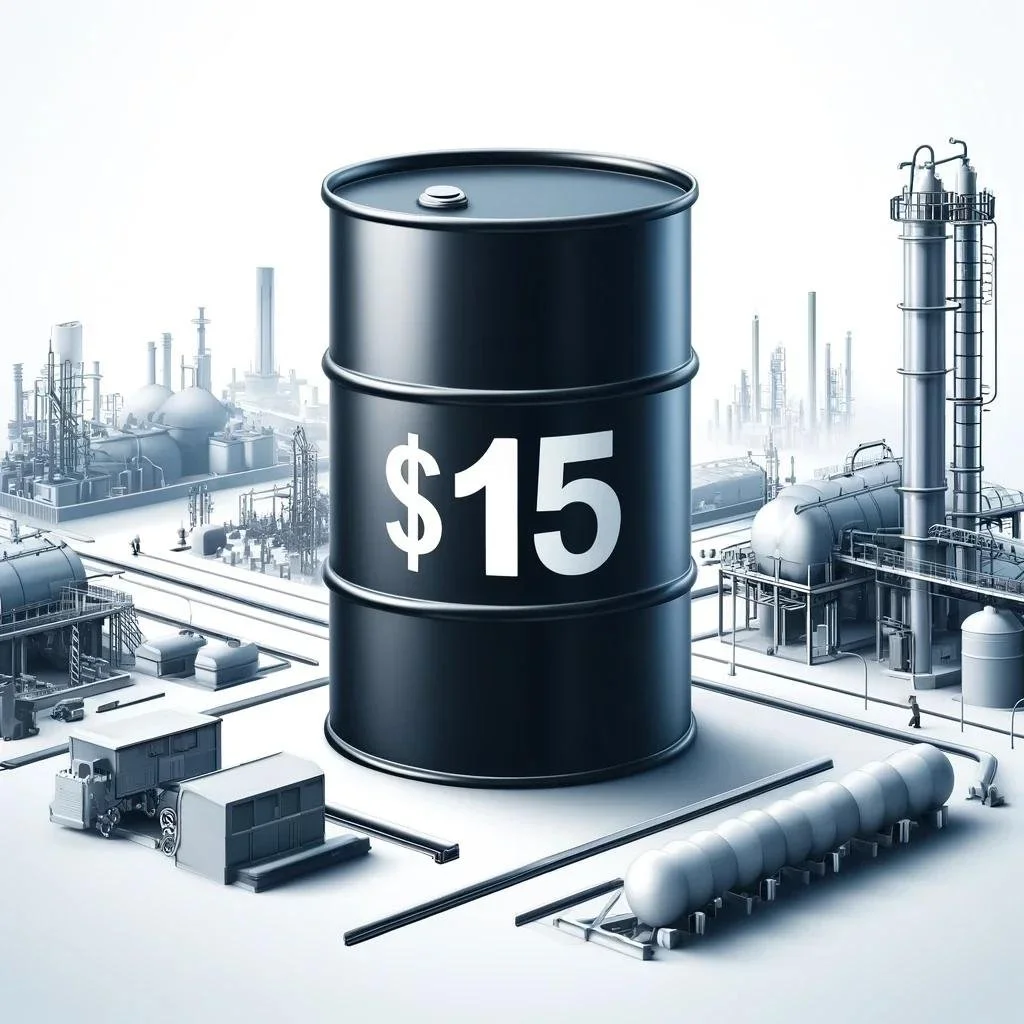
Another way to say it is that US natural gas is priced at the equivalent of $15 for a barrel of oil… which makes US natural gas the most underpriced conventional energy commodity in the world.
Now, I say “conventional” because there is another option that blows natural gas away-- and that’s nuclear.
The energy released in a nuclear reaction from just a single cubic foot of uranium is literally FIFTY BILLION times greater than the energy released from burning an equivalent amount of natural gas. So, nuclear is, by far, the cheapest and most efficient energy… which is why China, India, Russia, etc. are all feverishly building nuclear power plants.
The West, by comparison, is shutting their nuclear plants down. It is the dumbest policy imaginable.
So, at least for now, natural gas is America’s cheapest energy source. But it probably won’t stay that way for long.
First, large tech companies, which are building massive, energy-hungry AI data centers, are also looking at putting in their own power plants… which will most likely be powered by natural gas.
This increased demand will certainly have a big impact on price.
The second catalyst is that the export ban probably won’t last. There are lawsuits, legislation, and an upcoming election, any one of which could reverse the ban and start up LNG exports once again. When this happens, US natural gas prices could quickly rise
In either case, natural gas producers stand to benefit substantially from higher prices. And it just so happens that shares of many of the best quality producers right now are laughably cheap, with low multiples relative to earnings, book value, and Free Cash Flow.
We’ll talk about this more in the future, but our core view is that it makes a lot of sense to own ‘real assets’, i.e. scarce, high quality, productive assets that the world truly needs (and cannot be conjured out of thin air by central banks.)
Energy commodities like natural gas, and their highest quality producers, definitely fit that description, with the added benefit that they’re dirt cheap right now.
To your freedom, James Hickman Co-Founder, Schiff Sovereign LLC
P.S. If you’re interested in more analysis on this theme, including our best research on some of the most deeply undervalued real asset producers in the world, consider giving The 4th Pillar, our real-asset focused investment newsletter, a try.
https://www.schiffsovereign.com/trends/where-the-price-of-oil-is-just-15-barrel-150883/
Banking Habits You Should Change in Retirement
Banking Habits You Should Change in Retirement
Jordan Rosenfeld Sat, May 25, 2024
While retirement is often a time when you finally get to stop thinking so hard about many of the little details in life, there are some you want to stay on top of, like your banking habits.
Some of your pre-retirement banking habits may not be as useful, protective or financially savvy after retirement.
Experts explain some banking habits you might still be doing that you’ll want to change in retirement.
Wealthy people know the best money secrets. Learn how to copy them.
Not Saving More Than Before
Retirees should consider having more money in a bank account than they did while they were working and earning an income, according to Chris Urban, CFP, a retirement planner and founder of Discovery Wealth Planning.
Experts: Banking Habits You Should Change in Retirement
Jordan Rosenfeld Sat, May 25, 2024
While retirement is often a time when you finally get to stop thinking so hard about many of the little details in life, there are some you want to stay on top of, like your banking habits.
Some of your pre-retirement banking habits may not be as useful, protective or financially savvy after retirement.
Experts explain some banking habits you might still be doing that you’ll want to change in retirement.
Wealthy people know the best money secrets. Learn how to copy them.
Not Saving More Than Before
Retirees should consider having more money in a bank account than they did while they were working and earning an income, according to Chris Urban, CFP, a retirement planner and founder of Discovery Wealth Planning.
“These days, high-yield savings accounts are a good place to earn a reasonable amount of interest while also having access to your cash. These accounts are a great way to insulate your household from the ups and downs of the financial markets, where your other retirement and investment accounts may be invested,” Urban said.
Learn More: 7 Bills You Never Have To Pay When You Retire
Not Keeping Cash Liquid
Consider taking your spending money from this high-yield savings account and replenishing it in a tax-efficient way from your retirement and/or investment accounts in years when they have performed well, Urban explained.
“Sure, you might have what is referred to as ‘cash drag’ by holding too much in cash; however, in my opinion, retirement is much more about optimizing your overall happiness and life than it is about optimizing for investment performance,” he said.
Holding On to High-Fee Accounts
Retirees should steer clear of accounts with high fees, including maintenance fees, overdraft fees and ATM fees, according to Taylor Kovar, CFP, founder and CEO of 11 Financial.
“These fees can eat into retirement savings over time. Instead, consider switching to fee-free or low-fee accounts to minimize expenses and maximize savings,” he said.
Do your research and shop around different banks and credit unions to find accounts with low or no fees, added Lyle D. Solomon, Esq., an attorney who specializes in personal finance issues such as debt relief, taxes and estate planning at Oak View Law Group. “Don’t hesitate to switch if you find a much better deal elsewhere,” he said.
Using Non-Bank ATMs
Retirees should also be mindful of using non-bank ATMs, which often charge hefty fees for withdrawals, Kovar said.
To Read More:
https://www.yahoo.com/finance/news/experts-banking-habits-change-retirement-120105489.html
Goldilocks' Comments and Global Economic News Thursday Evening 5-23-24
Goldilocks' Comments and Global Economic News Thursday Evening 5-23-24
Good Evening Dinar Recaps,
What Is a Private Wealth Manager?
A bank's ledger balance is a record of all transactions that have been processed and approved at the end of a business day, including deposits, withdrawals, interest income, and bill payments.
That being said, is it really a stretch to anyone's imagination that we are moving into a digital processing center on a Global scale, and the banking system is just simply one section interfaced onto a Quantum Technological Systematic set of protocols designed to run numbers on equations until a balance between two parties are cleared?
Yes, we are finding that many positions in the banking system and around the world can be automated. Still, the need for a personal touch remains.
This would account for why Personal Wealth Manager positions are on the rise and Banks are currently making these changes to meet the needs of a new society.
Goldilocks' Comments and Global Economic News Thursday Evening 5-23-24
Good Evening Dinar Recaps,
What Is a Private Wealth Manager?
A bank's ledger balance is a record of all transactions that have been processed and approved at the end of a business day, including deposits, withdrawals, interest income, and bill payments.
That being said, is it really a stretch to anyone's imagination that we are moving into a digital processing center on a Global scale, and the banking system is just simply one section interfaced onto a Quantum Technological Systematic set of protocols designed to run numbers on equations until a balance between two parties are cleared?
Yes, we are finding that many positions in the banking system and around the world can be automated. Still, the need for a personal touch remains. This would account for why Personal Wealth Manager positions are on the rise and Banks are currently making these changes to meet the needs of a new society.
The synchronization of human behavior and technological advances are currently being held at a balance. Where we go from here will be determined by the choices both AI and Human Nature co-create in this new world.
There will always be pros and cons to each choice we make going forward, but the integration of the Techno-Human Race is forging a new path. It is an experimentation beyond everything we have encountered so far in history.
Movement forward is both scary and filled with opportunity. Yet, inside each of us is an explorer of space and time. We are walking into new frontiers and decisions will have to be made by each of us how far we are willing to go.
The transition into digital money and sudden wealth is a much larger step than many realize. We will cross over into a dimension of life few have seen in this lifetime.
We are at a crossroads, and movement into a new digital world that moves our money and the choices we make is rapidly approaching.
True freedom will not be the result of sudden wealth. Freedom comes from a much deeper place. The more that is given to us, the more is required for us to reach into those places hands can no longer touch. Here, we ask for wisdom and guidance from a place of creativity. Our creative nature knows how to walk beside the presence of our Creator forming a relationship that always has, is, and will be with us to the end.
The time to evolve is right in front of us now, and the choice to become creative entrepreneurs exploring New Frontiers is calling on us to resonate with new vibrations capable of moving our attention into higher ground. | CFA Institute
© Goldilocks
~~~~~~~~~
"XRP Price Nears Major Converging Point: Analyst Predicts 3,600% Jump To $20" | Trading View
When you take a look at some of the technical analysis on the price of XRP, it currently has a Relative Strength Index potential of moving into a bull run.
"An RSI is a technical tool used to measure the speed and change of price movements in a cryptocurrency. It is also used to determine the short-term momentum of a cryptocurrency’s market."
Twenty dollars would be just a beginning point of reference to obtain on its way to integrating its full demand over time at much higher levels.
Remember, Ripple is the liquidity coin that allows the movement of our money to take place in the digital economy. Ripple uses its cryptocurrency, XRP, as a liquidity bridge for cross-border payments. Financial institutions can convert fiat currency into XRP, send it across the XRP Ledger blockchain, and then convert it back to the destination currency.
It is necessary for Ripple to have a much higher price range than it is currently displaying to bring in a catalyst for its movement.
Ripple is moving from a speculative investment to one that is based on demand. This shift in its purpose and its role in the new economy will raise it to much higher levels to meet these new demands inside the new digital asset-based economy.
From a trading perspective, the movement of Ripple in its price and demand will pull us into the next economy.
Watch Ripple.
© Goldilocks
~~~~~~~~~
Central banking: embracing change | BIS
~~~~~~~~~
ABCs of Banking - Banks and Our Economy | CT Department of Banking
~~~~~~~~~
Imaging a better climate future in China: Greenpeace-hosted climate change forum - Greenpeace East Asia
~~~~~~~~~
Lawmakers Push to Make IRS Direct File Program Permanent After Successful Pilot - Franklin County Free Press
~~~~~~~~~
US Debt Clock: Elon Musk’s Revolutionary Vision! Transforming the American Economy with Blockchain and AI, the New US Treasury Dollar, and Precious Metals Backing Currency! - American Media Group
~~~~~~~~~
#Ripple’s $XRP is a military operation. | Twitter
~~~~~~~~~
IMPORTANT IMF Report on Iraq's Economy GDP Prediction Good News | Youtube
~~~~~~~~~
Text - H.R.4763 - 118th Congress (2023-2024): Financial Innovation and Technology for the 21st Century Act | Congress.gov | Library of Congress
👆Now, we can move forward.
~~~~~~~~~
LIVE | FOMC Meeting Minutes Data Release - LIVE | 5/22/2024 | Youtube
👆 Goldilocks pointed to this article
~~~~~~~~~
(ZiG/USD) IMF Calls Zimbabwe Switch to Gold-Backed ZiG an ‘Important’ Step - Bloomberg
~~~~~~~~~
Follow Goldilocks' Roadmap
Follow Goldilocks' Timeline
Goldilocks' Telegram Room
Q & A Telegram Room
Goldilocks on the Seeds of Wisdom Team™ Website
Subscribe to Newsletter
Thank you Dinar Recaps
9 Ways To Become Rich If You Were Born Poor
9 Ways To Become Rich If You Were Born Poor
Cindy Lamothe Fri, May 17, 2024,
Growing up with wealth is a privilege that lends financial stability and provides greater opportunities for future success. But what if you weren’t born with a silver spoon in your mouth? It’s hard to fathom going from poor to wealthy in a single lifetime, but according to experts, it’s not some distant fantasy. It isn’t easy either.
“Wealth building for individuals starting from a disadvantaged economic position requires a multifaceted approach, focusing on education, smart financial decisions and leveraging available opportunities creatively,” said Dennis Shirshikov, head of growth at Summer.
“Education, both formal and informal, is a cornerstone. It’s not just about earning degrees but acquiring financial literacy,” he added.
Overall, though, some experts disagree on how best to build wealth — especially when starting from a place of financial insecurity. Some say to invest in education, while others suggest skipping the fancy schools altogether.
9 Ways To Become Rich If You Were Born Poor
Cindy Lamothe Fri, May 17, 2024,
Growing up with wealth is a privilege that lends financial stability and provides greater opportunities for future success. But what if you weren’t born with a silver spoon in your mouth? It’s hard to fathom going from poor to wealthy in a single lifetime, but according to experts, it’s not some distant fantasy. It isn’t easy either.
“Wealth building for individuals starting from a disadvantaged economic position requires a multifaceted approach, focusing on education, smart financial decisions and leveraging available opportunities creatively,” said Dennis Shirshikov, head of growth at Summer.
“Education, both formal and informal, is a cornerstone. It’s not just about earning degrees but acquiring financial literacy,” he added.
Overall, though, some experts disagree on how best to build wealth — especially when starting from a place of financial insecurity. Some say to invest in education, while others suggest skipping the fancy schools altogether.
Below are some ways to become rich if you’re starting out with limited resources, according to the experts.
Capitalize on High Demand Skills or Industries
One strategy, according to Shirshikov, is to capitalize on high-demand skills or industries.
“Whether it’s learning a trade, tech skills or entering emerging markets, aligning one’s skillset with market demands can provide a substantial economic uplift.”
Start a Business
Entrepreneurship also plays a crucial role, Shirshikov continued. “It involves higher risks but offers greater control and higher rewards.
“I’ve observed several cases where individuals from modest backgrounds have started their own businesses in fields as varied as cleaning services to tech consultancies, scaling these ventures into substantial wealth over time.”
The key, he says, lies in starting small, minimizing initial costs and gradually expanding as the business generates revenue.
Focus on Getting a Good Education
“The key to building wealth for people starting from scratch is to focus on getting a good education and developing valuable skills,” said Joe Chappius, financial planning and tax expert at TaxClimate.com.
“This builds you a solid foundation that will open doors to better job opportunities and higher income for you later on.”
Melanie Musson, finance expert with Clearsurance, agrees.
“Take a class and read some books. When you don’t grow up rich, you miss out on the lifestyle learning you get just by living in a wealthy household. So, to make up for that, you have to take the initiative to educate yourself.”
To Read More:
https://finance.yahoo.com/news/9-ways-become-rich-were-120057219.html
The Fed Is Already Insolvent. Here’s How We Think This Plays Out
The Fed Is Already Insolvent. Here’s How We Think This Plays Out
Notes From The Field By James Hickman ( Simon Black ) 5-22-24
On Tuesday, September 15, 1992, the two most powerful financial officials in the British government held an urgent meeting that night to review their plan for when the markets opened the next morning.
The tone of the meeting must have felt frantic… even desperate… because the value of the British pound had been falling for weeks.
Investors and speculators were rapidly losing confidence in the UK government, mostly due to the ridiculous “Exchange Rate Mechanism” (ERM) which essentially pegged most European currencies to the German Deutschemark.
Rational investors viewed the ERM as an almost comical impossibility.
Germany’s economy was light years ahead of everyone else. Germany had vastly higher productivity, far greater savings, low inflation, high growth, and much more responsible monetary policy.
The Fed Is Already Insolvent. Here’s How We Think This Plays Out
Notes From The Field By James Hickman ( Simon Black ) 5-22-24
On Tuesday, September 15, 1992, the two most powerful financial officials in the British government held an urgent meeting that night to review their plan for when the markets opened the next morning.
The tone of the meeting must have felt frantic… even desperate… because the value of the British pound had been falling for weeks.
Investors and speculators were rapidly losing confidence in the UK government, mostly due to the ridiculous “Exchange Rate Mechanism” (ERM) which essentially pegged most European currencies to the German Deutschemark.
Rational investors viewed the ERM as an almost comical impossibility.
Germany’s economy was light years ahead of everyone else. Germany had vastly higher productivity, far greater savings, low inflation, high growth, and much more responsible monetary policy.
So, to even pretend that a country like Italy or even Britain could fix its exchange rate to the Deutschemark, i.e. to essentially mirror Germany’s economic performance-- was a total joke.
Britain joined the Exchange Rate Mechanism in October 1990. Prime Minister Margaret Thatcher had spent years trying to keep Britain out of the ERM, viewing it as giving up national sovereignty.
But Thatcher was about to retire. And the new batch of leaders insisted that pegging Britain’s economy to Germany was the way forward.
Their experiment didn’t even last two years. By the summer of 1992, inflation in Britain was more than 3x Germany’s. Plus, Britain had a major budget deficit.
Financial speculators correctly recognized, given the massive disconnect between the British and German economies, that Britain would not be able to maintain its fixed exchange rate with the Deutschemark.
So, traders began short selling the British pound, i.e. betting that the value of the pound would fall because the British government would devalue its currency.
The sell-off reached a crisis on September 15th, when the head of Germany’s central bank suggested to the Wall Street Journal that weaker countries (like Britain) would have to devalue their currencies.
That’s what led the British Chancellor of the Exchequer and head of the Bank of England-- the two most powerful policymakers in British government finance-- to meet that evening.
They knew that the German central bank’s comments would encourage even more traders to dump the British pound. So, the two men pledged to do ‘whatever it takes’ to defend the pound and defeat the speculators.
It didn’t work.
The following morning on September 16th, the Bank of England did everything it could. They raised interest rates, they bought back pounds, they bought government bonds, they made all sorts of outlandish promises.
But speculators didn’t believe any of it. They could see the numbers, and they knew that the Bank of England simply didn’t have the financial resources to maintain such an unrealistic exchange rate.
One of those speculators was George Soros, who famously bet $10 billion against the British pound… far exceeding the Bank of England’s financial resources
By the end of that day, the British central bank had exhausted its capital and was essentially bankrupt. The British government had to bail them out to the tune of 3 billion pounds, and then announce that they were formally leaving the ERM-- proving the speculators right.
This is an important story to understand, because it’s likely that something similar may happen to the Federal Reserve and US dollar over the next several years.
The Federal Reserve is already insolvent.
According to its most recent annual financial statements, the Fed has just $51 billion in equity, versus a whopping $948 billion in mark-to-market losses. This means the Fed is insolvent by roughly $900 billion.
This is a big problem. Remember that the Fed is still a bank, i.e. it has financial obligations, liabilities, and depositors that it needs to pay.
For example, commercial banks like JP Morgan and Bank of America have deposited a total of $3.4 trillion of their customers’ money, i.e. YOUR money, with the Fed. And the Treasury Department holds another $700 billion deposit at the Fed.
The Fed owes money to foreign governments. They owe trillions of dollars from repurchase agreements to banks and businesses across the global financial system.
So, yeah, the insolvency of the Federal Reserve is a pretty big deal. Yet, at least for now, no one is saying a word about it.
But just like the Bank of England in 1992, sooner or later, someone is finally going to say something… and do something… about the Fed’s insolvency.
There’s a good chance that means betting against the dollar… just like speculators bet against the pound three decades ago. And that would ultimately reduce the value of the dollar, increase inflation, and trigger a new ‘Bretton Woods’ agreement in which the US dollar is no longer the world’s reserve currency.
George Soros became known as “The Man Who Broke the Bank of England”. (Though given his malign proclivity to fund progressive activists, he is known by several other names in my household, none of them reverent).
Within the next several years there could be some Chinese or Russian financier who becomes known as “The Man Who Broke the Fed”.
This isn’t sensational. The Fed is already insolvent by $900+ billion, according to its own financial statements. Social Security is insolvent. The US government is insolvent by tens of trillions… and they further anticipate the national debt to grow by $20 trillion over the next decade.
These are facts, not fantasies.
And this is why it makes so much sense to hedge these risks by owning real assets which are scarce, valuable, and uncorrelated to the US dollar.
Gold is a great example. And as we’ve argued before, even though it’s already near its all-time high, we believe it can go much higher from here.
More on that soon.
To your freedom, James Hickman Co-Founder, Schiff Sovereign LLC
Here’s Why I Regret Being So Extreme Saving Money
I’m a Super Saver: Here’s Why I Regret Being So Extreme Saving Money
G. Brian Davis Sat, May 18, 2024
Most people spend too much and save too little of their paycheck. But it’s possible to go too far in the opposite direction.
While saving more money helps you build wealth and passive income streams, and possibly reach financial independence at a younger age, extreme savings and frugality come with a cost. Before budgeting for a high savings rate, beware of the following pitfalls.
Missed Experiences with Loved Ones
Life is meant to be shared. Sometimes that means spending money to share experiences with your family and friends.
“In their relentless pursuit of savings, I’ve seen many people sacrifice cherished experiences, personal growth opportunities, and meaningful connections with loved ones,” said Abid Salahi, co-founder of FinlyWealth. “One particular client of mine, driven by an insatiable desire to save every penny, missed out on attending important family events and cultivating hobbies.”
I’m a Super Saver: Here’s Why I Regret Being So Extreme Saving Money
G. Brian Davis Sat, May 18, 2024
Most people spend too much and save too little of their paycheck. But it’s possible to go too far in the opposite direction.
While saving more money helps you build wealth and passive income streams, and possibly reach financial independence at a younger age, extreme savings and frugality come with a cost. Before budgeting for a high savings rate, beware of the following pitfalls.
Missed Experiences with Loved Ones
Life is meant to be shared. Sometimes that means spending money to share experiences with your family and friends.
“In their relentless pursuit of savings, I’ve seen many people sacrifice cherished experiences, personal growth opportunities, and meaningful connections with loved ones,” said Abid Salahi, co-founder of FinlyWealth. “One particular client of mine, driven by an insatiable desire to save every penny, missed out on attending important family events and cultivating hobbies.”
Instead of being exclusively focused on saving, he advised, “Prioritize quality time with loved ones, engage in hobbies and activities that bring you joy, and cultivate a mindset of abundance rather than scarcity.”
Tolls on Personal Relationships
Missing out on shared experiences aside, hardline stances can impact your personal relationships.
Carl Rodriguez of NX Auto Transport has seen it firsthand. “One lesser-known downside to extreme frugality is the potential impact on relationships. Saving aggressively can sometimes lead to conflicts with friends or family members who have different spending habits or expectations.”
That proves especially true for your romantic relationships, where your finances intertwine with another person’s. “It’s important to find a balance and communicate openly about financial goals to avoid strain on relationships.”
Lack of Investment in Your Children
The better experiences and education you provide your children, the more likely they are to grow into successful, balanced, intellectually curious adults. But don’t let your desire to save money interfere with being present for your kids.
Mado Eldemrdash from Tireonway.com weighs his own regrets about investments in his children. “I worry it has affected my children, the quality of schools and clubs we’ve sent them to. All these financial behaviors can impact our quality of life and may affect my children’s professional futures.”
Neglected Personal Development
To Read More:
https://finance.yahoo.com/news/m-super-saver-why-regret-160237203.html
9 Reasons Banking In-Person Is More Financially Savvy Than Banking Online
I’m a Bank Teller: 9 Reasons Banking In-Person Is More Financially Savvy Than Banking Online
Laura Beck Fri, May 17, 2024
Most of us do our banking completely online now. It’s just a fact of the digital age — when you can deposit a check right into your bank’s mobile app, what’s the point of trekking to a branch? However, veteran bank teller Rachael P. says we shouldn’t abandon in-person banking entirely.
“There are still plenty of advantages to physically going into a branch,” Rachael shared. “Sure, digital banking is easy. But something can be lost when you have zero human interaction with your bank.”
While digital banking is booming, she believes making an effort to head into branches periodically can actually pay financial dividends. Here are the nine reasons you should consider in-person banking over banking online, according to a bank teller.
*************
I’m a Bank Teller: 9 Reasons Banking In-Person Is More Financially Savvy Than Banking Online
Laura Beck Fri, May 17, 2024
Most of us do our banking completely online now. It’s just a fact of the digital age — when you can deposit a check right into your bank’s mobile app, what’s the point of trekking to a branch? However, veteran bank teller Rachael P. says we shouldn’t abandon in-person banking entirely.
“There are still plenty of advantages to physically going into a branch,” Rachael shared. “Sure, digital banking is easy. But something can be lost when you have zero human interaction with your bank.”
While digital banking is booming, she believes making an effort to head into branches periodically can actually pay financial dividends. Here are the nine reasons you should consider in-person banking over banking online, according to a bank teller.
Catch Errors and Fraud Faster
“Something just feels more official when you’re looking at physical statements and documents rather than numbers on a screen,” Rachael said. “It makes it easier to identify errors, missing funds or potential fraud right away rather than just scrolling past it.”
Speaking to a real person can facilitate quicker resolution as well.
Tap Into Professional Expertise
“At the end of the day, we’re trained financial professionals who understand banking, regulations and money management inside and out,” she stated. “Sure, that internet chat rep seems friendly. But you’ll get way deeper insights by actually talking to someone face-to-face.”
Negotiate Better Rates and Fees
You’d be surprised what a teller or personal banker can do if you simply ask politely. Whether it’s lowering fees, getting a better interest rate or waiving penalties, simply walking into a branch gives you way more flexibility than online interactions.
Build Relationships and Get Personalized Service
“When you bank in person, we get to know you as a real individual,” Rachael explained. “Not just an account number. That allows us to treat you as a person and provide much more personalized service tailored to your specific needs and situation.”
Ask Questions More Easily
To Read More:
https://news.yahoo.com/finance/news/m-bank-teller-9-reasons-180015154.html
An Economist’s Rule for Making Tough Life Decisions
An Economist’s Rule for Making Tough Life Decisions
Quartz Sarah Todd
"Whenever you cannot decide what you should do, choose the action that represents a change."
“You must change your life,” Rainer Maria Rilke exhorts readers in the final line of his poem “Archaic Torso of Apollo.” It’s a surprise-twist ending, meant to capture the sudden nature of epiphanies. Having spent the entire poem contemplating the beauty of an ancient Greek statue, Rilke practically reaches through the page to shake readers by the shoulders, urging us to transform ourselves—to use our rapidly-dwindling time on Earth as wisely as Apollo’s sculptor did.
But changing your life is a big deal. It takes a lot of work and emotional energy. And it’s often very difficult to predict if a dramatic turn will actually make us happier and more fulfilled, or if it will be the biggest mistake ever and we’ll shrivel up into little raisins of regret.
An Economist’s Rule for Making Tough Life Decisions
Quartz Sarah Todd
"Whenever you cannot decide what you should do, choose the action that represents a change."
“You must change your life,” Rainer Maria Rilke exhorts readers in the final line of his poem “Archaic Torso of Apollo.” It’s a surprise-twist ending, meant to capture the sudden nature of epiphanies. Having spent the entire poem contemplating the beauty of an ancient Greek statue, Rilke practically reaches through the page to shake readers by the shoulders, urging us to transform ourselves—to use our rapidly-dwindling time on Earth as wisely as Apollo’s sculptor did.
But changing your life is a big deal. It takes a lot of work and emotional energy. And it’s often very difficult to predict if a dramatic turn will actually make us happier and more fulfilled, or if it will be the biggest mistake ever and we’ll shrivel up into little raisins of regret.
So we waffle over whether or not to quit a job, change careers, start a business, or go back to school, weighing endless pros and cons. In behavioral economics, this phenomenon is known as status quo bias. People are generally predisposed to favor sticking with their current circumstances, whatever they may be, instead of taking a risk and bushwhacking their way toward a different life.
That’s an instinct we should fight against, according to the findings of a new study by Steven Levitt, University of Chicago economist and Freakonomics co-author, published in Oxford University’s Review of Economic Studies.
The study asked people who were having a hard time making a decision to participate in a randomized digital coin toss on the website FreakonomicsExperiments.com. People asked questions ranging from “Should I quit my job?” to “Should I break up with my significant other?” and “Should I go back to school?” Heads meant they should take action. Tails, they stuck with the status quo.
Ultimately, 20,000 coins were flipped—and people who got heads and made a big change reported being significantly happier than they were before, both two months and six months later.
“The data from my experiment suggests we would all be better off if we did more quitting,” Levitt said in a press release. “A good rule of thumb in decision making is, whenever you cannot decide what you should do, choose the action that represents a change, rather than continuing the status quo.”
Do more quitting may sound like strange advice in the midst of a pandemic that’s mauling the labor market. Those lucky enough to still have a stable income and health insurance may be quite sensibly wary of jettisoning those things for the great unknown.
But dig a little deeper, and Levitt’s suggested rule of thumb for decision-making turns out to be decidedly evergreen, and may even have added significance in current upheavals of the Covid-19 era. We’re biased toward upholding the status quo, but it’s a bias that hurts us.
Flip a Coin, Make a Change
There are plenty of caveats to this experiment, which collected data over the course of a year beginning in 2013. For one thing, as Levitt explains, the subject pool wasn’t at all random.
To Read More: LINK
The Latest Social Security Trustees Report Spurs Angst About The Program's Solvency
The Latest Social Security Trustees Report Spurs Angst About The Program's Solvency
Kerry Hannon·Senior Columnist Yahoo Finance Fri, May 17, 2024
Amid uncertainty around Social Security, here's what financial advisers are telling clients
Social Security isn’t shattered, but it’s shaky.
The new report on Social Security, which predicts that the combined retirement and disability trust fund reserves will go broke in 2035, has put more Americans on edge, especially those nearing retirement who are worrying about how much in benefits they can expect.
The 2024 Social Security and Medicare trustees report projects insolvency one year later than last year’s estimate. That scarcely brighter outlook stems from the strong economy and wage growth, which has ramped up payroll tax payments that fund the program. For now, low unemployment has meant that more workers are adding to the program, even while a rising number of baby boomers begin to tap their benefits, the trustees said.
The Latest Social Security Trustees Report Spurs Angst About The Program's Solvency
Kerry Hannon·Senior Columnist Yahoo Finance Fri, May 17, 2024
Amid uncertainty around Social Security, here's what financial advisers are telling clients
Social Security isn’t shattered, but it’s shaky.
The new report on Social Security, which predicts that the combined retirement and disability trust fund reserves will go broke in 2035, has put more Americans on edge, especially those nearing retirement who are worrying about how much in benefits they can expect.
The 2024 Social Security and Medicare trustees report projects insolvency one year later than last year’s estimate. That scarcely brighter outlook stems from the strong economy and wage growth, which has ramped up payroll tax payments that fund the program. For now, low unemployment has meant that more workers are adding to the program, even while a rising number of baby boomers begin to tap their benefits, the trustees said.
The potential depletion of the fund does not, however, translate to an empty till. There will still be money to pay benefits at that stage — though only 83% of what’s been promised to current and future beneficiaries. In other words, without a fix, beneficiaries could see a 17% cut in benefits.
“Congress is painting itself into a corner on fixing Social Security’s pending insolvency,” Mary Johnson, a Social Security and Medicare policy analyst, told Yahoo Finance. “Failure to act on the program in time would lead to automatic benefit cuts.”
How widely would that cut be felt? The program paid nearly $1.4 trillion in benefits last year to about 67 million Americans. For about half of seniors, Social Security provides at least half of their income, and for about 1 in 4 seniors, it accounts for at least 90% of income.
There are several solutions to fix the shortfall, including ratcheting up payroll taxes that fund the program, currently 12.4% split evenly by employees and employers. Other proposals include raising the retirement age for younger workers or lifting the cap on how much of a person’s income is subject to the Social Security tax. For 2024, the Social Security tax limit is $168,600.
Will Social Security be there for you?
One of people’s greatest retirement fears is a reduction in or elimination of Social Security in the future, according to research from the Transamerica Center for Retirement Studies. Seven in 10 people are concerned that Social Security will not be there for them when they’re ready to retire. And nearly 1 in 3 people rely on or expect to rely primarily on Social Security.
I talked to several experts about the advice they’re giving their clients on planning for Social Security as part of their retirement income. Here’s what they said:
1. Assume a reduced benefit
To Read More:
7 Secret Perks of Having a High Credit Score
7 Secret Perks of Having a High Credit Score
Adam Palasciano Wed, May 15,
In an economy highlighted by sky-high interest rates for auto and home loans, having a good credit score has probably never mattered more.
According to the Consumer Financial Protection Bureau, a credit score is a prediction of your credit behavior, such as how likely you are to pay a loan back on time, based on information from your credit reports.
If your credit score is lacking, you might want to consider ways to boost it as soon as you can. Why? Because having a high credit score comes with some sweet financial perks.
Best Perks of Having a High Credit Score
Here are seven secret perks of having a high credit score, according to RedRoofRipon and Equifax:
7 Secret Perks of Having a High Credit Score
Adam Palasciano Wed, May 15,
In an economy highlighted by sky-high interest rates for auto and home loans, having a good credit score has probably never mattered more.
According to the Consumer Financial Protection Bureau, a credit score is a prediction of your credit behavior, such as how likely you are to pay a loan back on time, based on information from your credit reports.
If your credit score is lacking, you might want to consider ways to boost it as soon as you can. Why? Because having a high credit score comes with some sweet financial perks.
Best Perks of Having a High Credit Score
Here are seven secret perks of having a high credit score, according to RedRoofRipon and Equifax:
Access to lower interest rates: A high credit score will translate into favorable interest rates on auto loans and mortgages. If you’re in the market for a new car or to buy your first home, the status of your credit score is the first thing you’ll want to be concerned about. Even a difference of just 1% can save you thousands (if not tens of thousands) of dollars over the life of a sizable loan.
More favorable loan terms: A high credit score can also mean more favorable loan terms. These can be lower down payment requirements and extended repayment periods, depending on what your lender offers.
Higher credit limits: Since a higher credit score shows that you’re more likely to pay back your loans without an issue, some financial institutions and lenders will be glad to offer you higher credit limits. This can be for an auto loan or mortgage — or even a higher spending limit on your credit card.
More likely to be approved For rentals: Renting an apartment comes with certain financial approvals from the landlord. To guarantee you’ll be a responsible paying tenant for the duration of a lease, landlords will often run credit checks before you can sign. The higher your credit score, the more likely you’ll be approved to move in.
Loans can be approved faster: Sometimes, a higher credit score means you won’t have to wait very long for your loan or credit card application to be approved. Since a higher score is indicative of your ability to pay your bills on time and in full, there usually isn’t a need for the lender to take a closer look at your finances before approving.
To Read More:
https://news.yahoo.com/finance/news/7-secret-perks-having-high-184605843.html
5 Simple, Effective Ways To Set Yourself Up for a Financially Secure Future
5 Simple, Effective Ways To Set Yourself Up for a Financially Secure Future
Gabrielle Olya Tue, May 14, 2024
One of the easiest ways to set yourself up for a financially secure future is to contribute to your workplace retirement savings account — but many women are not doing this. In fact, only 52% of women participate in 401(k) plans, and the average 401(k) account balance for men ($89,000) is 50% greater than that of women ($59,000), according to Bank of America’s 2023 Financial Life Benefits Impact Report.
This means they may also be leaving free money on the table if their employers offer matching contributions. Given the unique financial challenges that women face — including the gender pay gap and a longer life expectancy resulting in a need for more retirement savings — we should be doing all we can to maximize retirement accounts to ensure we’re on track for a secure financial future.
In this “Financially Savvy Female” column, we’re chatting with Julie Virta, CFP, senior financial advisor for Vanguard’s Personal Advisor Services, about how women can set themselves up for a financially secure future.
5 Simple, Effective Ways To Set Yourself Up for a Financially Secure Future
Gabrielle Olya Tue, May 14, 2024
One of the easiest ways to set yourself up for a financially secure future is to contribute to your workplace retirement savings account — but many women are not doing this. In fact, only 52% of women participate in 401(k) plans, and the average 401(k) account balance for men ($89,000) is 50% greater than that of women ($59,000), according to Bank of America’s 2023 Financial Life Benefits Impact Report.
This means they may also be leaving free money on the table if their employers offer matching contributions. Given the unique financial challenges that women face — including the gender pay gap and a longer life expectancy resulting in a need for more retirement savings — we should be doing all we can to maximize retirement accounts to ensure we’re on track for a secure financial future.
In this “Financially Savvy Female” column, we’re chatting with Julie Virta, CFP, senior financial advisor for Vanguard’s Personal Advisor Services, about how women can set themselves up for a financially secure future.
What are some ways women can maximize an employer-sponsored retirement account?
Vanguard research has shown us that savings rates, diversification, costs and the ability to remain disciplined and focused on long-term investment outlook are key factors that can give participants the best chance for success.
We recommend that participants build up to the recommended savings rate of 12-15% by first trying to meet their employer match (if applicable), and then increasing by 1% annually until they achieve the desired savings rate, which is a combination of employee and employer contributions.
For context, we found that annual automated savings rate increases result in participants saving 20-30% more after three years than employees without automatic increases. If an employer plan does not offer this, participants can consider increasing their savings rate annually on their own.
To note, when switching jobs, a rollover is an option to pursue, as they likely come with flexible investment choices and no tax consequences. We recommend marking your calendar as quickly as possible to see when you can start contributing to the new plan.
What should women do if they do not have access to an employer-sponsored account? How should they decide between traditional and Roth IRA?
In deciding between a Roth and traditional IRA, employees should factor in their current and anticipated tax brackets. When the marginal tax rate stays the same, the Roth and the traditional IRA will generate the same after-tax withdrawal values, even though Roth taxes are paid at the time of contribution (as contributions are made with after-tax dollars) and traditional IRA taxes are paid at the time of withdrawal.
To Read More:
https://news.yahoo.com/finance/news/simple-effective-ways-set-yourself-163447747.html