
The Secret to Becoming a Money Jedi and Unlocking Financial Independence
The Secret to Becoming a Money Jedi and Unlocking Financial Independence
May the Life Force be with You!
2. January 2023 Financial Imaginer
Do you want to be a Money Jedi? Of course you do! Who wouldn’t want to have the power to control their finances and achieve financial independence? In this blog post, we will discuss the secret to becoming a Money Jedi and unlocking your true financial potential. It all comes down to harnessing the life force! Your focus determines your reality. Qui-Gon Jinn
Ok, enough small talk, let’s dive right into it!
The Secret to Becoming a Money Jedi and Unlocking Financial Independence
May the Life Force be with You!
2. January 2023 Financial Imaginer
Do you want to be a Money Jedi? Of course you do! Who wouldn’t want to have the power to control their finances and achieve financial independence? In this blog post, we will discuss the secret to becoming a Money Jedi and unlocking your true financial potential. It all comes down to harnessing the life force! Your focus determines your reality. Qui-Gon Jinn
Ok, enough small talk, let’s dive right into it!
A long time ago in a Galaxy far, far away stories were told about a group of people who managed to control their life force…
The Life Force
The life force is the “secret ingredient” to unlocking financial freedom. It’s an intangible energy that can be found in all things, including and especially in money.
In a way, money is your “lifetime” converted into some intangible and powerful thing at your disposal. Isn’t money some sort of “time pill”, compressed and ready to use whenever you need it?
If you are serious about becoming a money Jedi, you need to start recognizing the life force in anything around you!
Feel it.
It’s everywhere.
This isn’t just a lame portfolio of boring stocks, this is your freedom dividend fund.
This isn’t a Lamborghini, it’s half a lifetime of freedom being depreciated on the road.
This isn’t a relaxing five-star resort holiday, it’s one year less of work closer to retirement.
This isn’t a nice McMansion with 3,000 sqft, it’s two decades of unpleasant extra work – or if you rent it out it’s your fortress of freedom!
You see, young Padawan, one got to gain complete control over your life force!
You got to learn how to control and make use of it.
Do or do not. There is no try. Master Yoda
By harnessing this power, you can gain complete control over your money and use it for your highest good: Time!
Becoming a Money Jedi requires dedication and practice but with the right guidance, anyone can do it!
Financial Independence is just 2 Parsecs Away!
To continue reading, please go to the original article here:
The Worst Assets To Inherit and How To Address Them Before It’s Too Late
The Worst Assets To Inherit and How To Address Them Before It’s Too Late
David Nadelle Thu, January 26,
The sudden and lengthy appearance of the coronavirus pandemic delivered many lessons — among them, that life can be taken away from even the healthiest individuals in the blink of an eye. Planning appropriate asset allocation before you die is an absolutely necessity for every adult.
Having a legally binding will in place lets you decide who will inherit your financial assets and possessions when you pass away. However, if you die without a will, the state in which you lived will make these very important decisions for you.
The Worst Assets To Inherit and How To Address Them Before It’s Too Late
David Nadelle Thu, January 26,
The sudden and lengthy appearance of the coronavirus pandemic delivered many lessons — among them, that life can be taken away from even the healthiest individuals in the blink of an eye. Planning appropriate asset allocation before you die is an absolutely necessity for every adult.
Having a legally binding will in place lets you decide who will inherit your financial assets and possessions when you pass away. However, if you die without a will, the state in which you lived will make these very important decisions for you.
Financial assets are usually more straightforward, but as AARP noted, “Even IRAs and 401(k)s can be problematic, since they aren’t easy to transfer to the next generation or your children hold on to them for sentimental value.” Cash may be the best asset to leave behind, according to some experts.
You always want to do right by the deceased, but sometimes receiving another’s possessions when they pass can be more of an inconvenience than good fortune. Here are five of the worst assets to inherit and how to address them before it’s too late.
Businesses
While it is a reasonable and kind act to pass on your hard-earned business to your children, not every child wants to “take over the family business.” A business requires a succession plan so there are no unresolved expectations and operating details. Barring passing it over to a family member, business owners will need to arrange a buy-out by any existing partners — or a sale to a prospective buyer — while they are still living and working.
Timeshares
The one good thing about inheriting a timeshare is that it is already (partially) paid for. However, inheriting a timeshare means taking over a shared vacation resort, condo or property that won’t increase in value, that comes with annual fees and maintenance costs — and that includes strict regulations and flexibility concerns. Timeshares are often more of a headache than a relaxing adventure away from home, so those who are considering passing them down to another should find out first if the timeshare is even wanted and if not, make arrangements to disclaim it.
To continue reading, please go to the original article here:
https://www.yahoo.com/finance/news/worst-assets-inherit-address-them-182019998.html
9 Principles & Strategies to Becoming a Millionaire (in 2023)
9 Principles & Strategies to Becoming a Millionaire (in 2023)
By Psychologist & Writer Dr. Benjamin Hardy
It’s not how good you are but how good you want to be - You have to want it!
We all become the product of our desires - If you don’t want to become successful – you won’t – We all have stories and values in our mind – and a lot of people think that wealth or success is bad - this is not true - There has to be a “why” behind it -
9 Principles & Strategies to Becoming a Millionaire (in 2023)
By Psychologist & Writer Dr. Benjamin Hardy
It’s not how good you are but how good you want to be - You have to want it!
We all become the product of our desires - If you don’t want to become successful – you won’t – We all have stories and values in our mind – and a lot of people think that wealth or success is bad - this is not true - There has to be a “why” behind it -
https://www.youtube.com/watch?v=pmIhDENqbfc
Psychologist Dr. Benjamin Hardy Explains: Money Habits Keeping You Poor
https://www.youtube.com/watch?v=m2NChuS4dSo
This Video Will Teach You More Than Reading 100 Books | Dr. Benjamin Hardy
Don’t Hide Your Emergency Cash in These Spots
Don’t Hide Your Emergency Cash in These Spots
Cynthia Measom January 23, 2023
To keep from having to go into debt when the unexpected happens, financial experts recommend that you open a savings account and build an emergency fund that can cover three to six months' worth of expenses. While that's all well and good, sometimes you need to have cash within arm's reach.
"It is smart to have a stash of money on hand in case of natural disasters or major power outages when electronic money transfers may not be possible," said Andrew Latham, certified financial planner and content director for SuperMoney. "However, the lion's share of your emergency savings should be in an FDIC-insured savings account earning interest."
Don’t Hide Your Emergency Cash in These Spots
Cynthia Measom January 23, 2023
To keep from having to go into debt when the unexpected happens, financial experts recommend that you open a savings account and build an emergency fund that can cover three to six months' worth of expenses. While that's all well and good, sometimes you need to have cash within arm's reach.
"It is smart to have a stash of money on hand in case of natural disasters or major power outages when electronic money transfers may not be possible," said Andrew Latham, certified financial planner and content director for SuperMoney. "However, the lion's share of your emergency savings should be in an FDIC-insured savings account earning interest."
If you're hiding emergency cash at home, here are some spots you should avoid.
Buried in Your Yard
"If you want to keep your cash accessible but not in a bank account, you might get tempted to put it in a coffee can or plastic bag and bury it in your yard," said Laura Adams, MBA and personal finance expert with Finder. "That might be the worst place for cash because it could get destroyed, forgotten or stolen. Even if you have home or renters insurance, it never covers lost, damaged or stolen cash."
In a Safe That Isn't Waterproof or Fireproof
"If you want cash on hand, ensure it's in a waterproof and fireproof safe or locked cabinet," Adams said. "Make sure you don't keep all your emergency money at home because a natural disaster such as a fire, flood or windstorm could put you at risk of losing all of it."
Under a Loose Floorboard or Behind a Loose Brick
To continue reading, please go to the original article here:
https://finance.yahoo.com/news/don-t-hide-emergency-cash-200301493.html
5 Major Money Mistakes To Avoid When You’re Nearing Retirement
5 Major Money Mistakes To Avoid When You’re Nearing Retirement
Jan 24, 2023 By Jennifer Taylor
You’ve been working hard your entire adult life and you’re finally nearing retirement. The prospect of having more time to relax and enjoy yourself is exciting, but you’ll need money to do that.
As you wrap up your peak earning years and prepare to step away from the workforce, it’s important to make smart money moves that will protect your nest egg. All it takes is one poor financial choice to throw a wrench in your plans — and financial stability — so take the time to make informed decisions.
5 Major Money Mistakes To Avoid When You’re Nearing Retirement
Jan 24, 2023 By Jennifer Taylor
You’ve been working hard your entire adult life and you’re finally nearing retirement. The prospect of having more time to relax and enjoy yourself is exciting, but you’ll need money to do that.
As you wrap up your peak earning years and prepare to step away from the workforce, it’s important to make smart money moves that will protect your nest egg. All it takes is one poor financial choice to throw a wrench in your plans — and financial stability — so take the time to make informed decisions.
When faced with a large amount of cash, it can be tempting to share it with loved ones — i.e., your children — or indulge yourself with luxury items. However, this money needs to last your entire retirement, which could span decades. Here’s a look at common financial blunders you don’t want to make as you get older if you want to avoid a major financial setback.
Building Wealth
Collecting Social Security Benefits Too Soon
Many people make the mistake of taking Social Security income as soon as they can because it’s available. Others start early because they’re afraid the system will run out of money. Neither approach is the best way to maximize benefits.
“You receive more each month if you wait until your full retirement age, and you can even get increases after that — amounting to roughly 8% per year until you’re 70,” said Justin Pritchard, CFP, founder of Approch Financial, Inc. in Montrose, Colorado.
Having patience can literally pay off.
“Instead of claiming as soon as possible, run some numbers to determine how much you’ll earn if you wait,” he said. “Remember that a surviving spouse who takes over your benefit will be affected by your decision, so choose carefully.”
Cashing Out a Retirement Account
To continue reading, please go to the original article here:
https://www.gobankingrates.com/money/financial-planning/major-money-mistakes-avoid-turn-60/
The Future of Banking: When Will We No Longer Need Cash?
The Future of Banking: When Will We No Longer Need Cash?
Andrew Lisa Tue, January 24, 2023
In 1950, Americans could pay for dinner at a restaurant even if they left their money at home for the first time in history. That was the year Diners Club introduced the world’s first credit card.
More than 70 years later, the cashless society that’s been promised since then still hasn’t materialized. Despite direct deposit, BNPL, Apple Pay, Venmo, cryptocurrency and the rest, green paper rectangles with pictures of dead presidents still have a home in our wallets.’
The Future of Banking: When Will We No Longer Need Cash?
Andrew Lisa Tue, January 24, 2023
In 1950, Americans could pay for dinner at a restaurant even if they left their money at home for the first time in history. That was the year Diners Club introduced the world’s first credit card.
More than 70 years later, the cashless society that’s been promised since then still hasn’t materialized. Despite direct deposit, BNPL, Apple Pay, Venmo, cryptocurrency and the rest, green paper rectangles with pictures of dead presidents still have a home in our wallets.’
If mobile banking apps and blockchains didn’t bring death to the dollar, is the long-awaited cashless society a myth, or is the generation coming of age today the last that will ever see paper money outside of a museum?
The Writing Is on the Wall for the Good Old Greenback
According to The New York Times, central banks across the world are experimenting with digital versions of their money — kind of like Bitcoin, but issued by the state and controlled as a currency. Sweden, China, Japan and others are introducing these digital currencies alongside old-fashioned cash. The plan in large would be to phase out paper money gradually over time.
According to the Atlantic Council, the U.S. Federal Reserve recently began working on a bank-to-bank digital currency of its own designed to speed up transfers between the world’s financial institutions. Unlike the previously mentioned countries, America’s central bank digital currency (CBDC) is only for wholesale transactions and isn’t yet a consumer currency — “yet” being the key word.
To continue reading, please go to the original article here:
https://finance.yahoo.com/news/future-banking-no-longer-cash-120025072.html
What Does This Look Like 10 Years From Now?
What Does This Look Like 10 Years From Now?
Simon Black January 23, 2023
On March 2, 1629, after years of escalating tensions with his own government, King Charles I of England dissolved parliament and ordered all the politicians to go home.
He was only in the fourth year of his reign, but Charles was already a very unpopular king. One of his worst habits was frequently abusing his power and taking unilateral executive actions-- raising taxes or passing new regulations-- which would ordinarily require the approval of parliament.
But Charles hated going through parliament, and he routinely found ways to bypass them; often he would creatively interpret obscure passages of ancient laws as justification to do whatever he wanted.
What Does This Look Like 10 Years From Now?
Simon Black January 23, 2023
On March 2, 1629, after years of escalating tensions with his own government, King Charles I of England dissolved parliament and ordered all the politicians to go home.
He was only in the fourth year of his reign, but Charles was already a very unpopular king. One of his worst habits was frequently abusing his power and taking unilateral executive actions-- raising taxes or passing new regulations-- which would ordinarily require the approval of parliament.
But Charles hated going through parliament, and he routinely found ways to bypass them; often he would creatively interpret obscure passages of ancient laws as justification to do whatever he wanted.
In one instance, Charles decided that a 400+ year old law, which had first been decreed under Henry III in the early 1200s, gave him the authority to demand payment from everyone in the country making more than 40 pounds per year. It did not.
In another example, he claimed that ‘tradition’ entitled him to collect customs and duties on various imports, even though English law clearly required parliamentary approval on all imposts.
Charles also famously demanded money from wealthy merchants and banks, calling them “forced loans”. He even seized literally TONS of silver from the Royal Mint that was being stored on behalf of wealthy individuals and foreign governments.
Parliament made attempts to block Charles; when he asked for money to raise an army and go fight in the Thirty Years War (which had been raging in Europe since 1618), parliament refused. When he wanted funds to bail out a close relative in Denmark, parliament again refused him.
Sometimes their disputes even spilled into the courts, where judges had to determine the legality of the king’s taxes and regulations.
But nothing was ever settled, and no compromises reached. In fact the conflict continued to escalate, until Charles finally dissolved parliament in 1629… effectively shutting down the government.
This is an often-repeated story throughout 5,000+ years of human history; there have been countless examples of dysfunctional governments and terrible leadership that fail to reach a rational compromise over the nation’s finances.
And such examples tend to be a hallmark of a nation in decline.
In the case of Charles, he would go on to be arrested, tried, and executed, and England plunged into a civil war.
Louis XV of France, and his successor Louis XVI, also routinely fought with their parliaments over royal finances. France would soon go bankrupt and dive head-first into revolution.
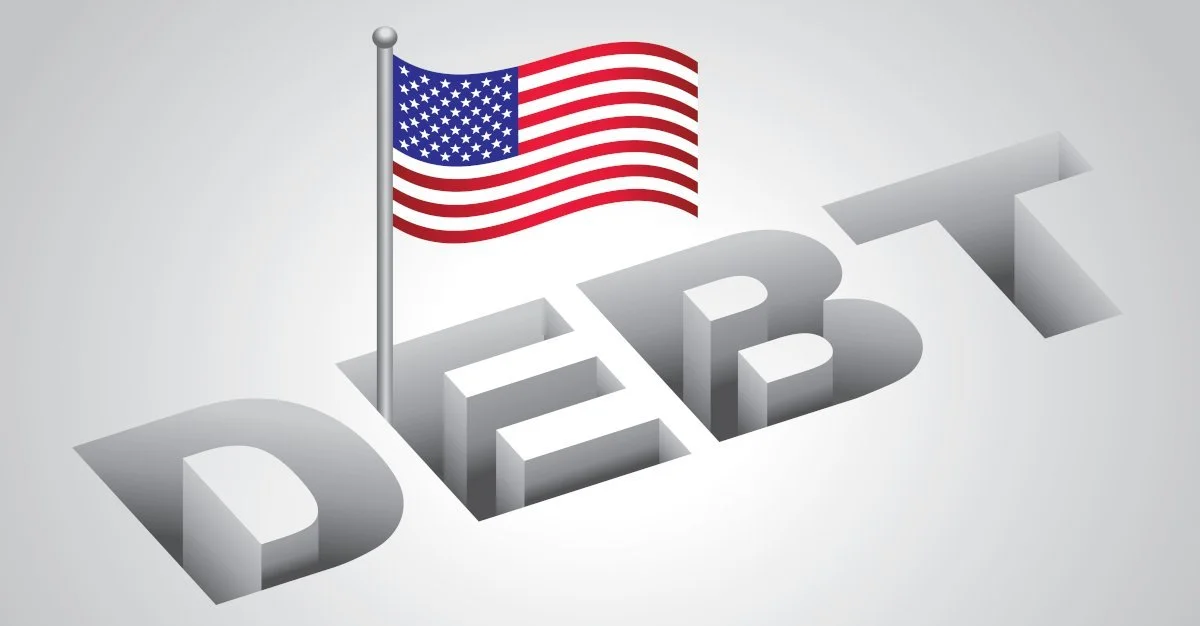
These are lessons worth noting, given that the United States government is once again at the precipice of default.
The national debt now stands at nearly $31.5 trillion. This is the current statutory ‘debt ceiling’, meaning that the Treasury Department no longer has the legal authority to borrow more money.
This means that yet another government shutdown is potentially on the table, as is a default on the national debt.
If this story sounds familiar it’s because this has already happened in recent history-- in 2011. And 2013. And 2018. And 2019.
Now it’s happening again. And unsurprisingly, both sides have dug in and claim they are unwilling to negotiate their demands.
To say this is yet another humiliation for the United States is a massive understatement. The entire world can see that, not only is the US government incapable of managing its finances… but also that its politicians cannot rationally solve problems. It’s pitiful.
What I really want to focus on today, however, is the future: what do you think this problem will look like 10 years from now?
Today it’s already a terrible embarrassment… and a major problem.
The national debt is so big that, this fiscal year, the Treasury Department will spend close to $1 TRILLION just to pay INTEREST.
This is happening at a time when:
1) Interest rates are rising (which means that the government’s annual interest bill will increase)
2) The economy is slowing (so tax revenues will decrease)
3) Government spending is still outrageous, with a $1+ trillion deficit expected this fiscal year
This is a pretty disastrous scenario. And if you plot this trend line starting from where we are today, it’s easy to imagine what might happen over the next decade.
If deficits are already $1 trillion per year right now, how high will they be in a decade? If the national debt is $31.5 trillion today-- roughly 120% of US GDP-- how high will it be a decade from now?
It’s silly to assume that the United States can simply keep growing the national debt forever without consequence. It’s silly to assume they can run trillion dollar deficits every year without consequence.
Today those consequences are just embarrassments and minor inconveniences. Ten years from now they may be major catastrophes.
This is the entire point of having a Plan B. The future is far from certain-- and it’s possible that voters finally elect competent leadership who act responsibly and arrest the nation’s decline.
And that’s a nice hope, and it would be great if it happens.
But it’s a lot more rational to focus your energy on things that you can control. And that’s a Plan B.
If your government is on a clear path to more humiliation and fiscal ruin, it makes sense to ensure you don’t have all of your eggs in one basket.
To your freedom,
Simon Black, Founder Sovereign Research & Advisory
https://www.sovereignman.com/trends/what-does-this-look-like-10-years-from-now-145298/
What To Do With Lump Sum Pension Payout
What To Do With Lump Sum Pension Payout
I’m about to get $130,000 from a lump-sum pension payout, but I don’t know what to do with it
By Beth PinskerFollow
A reader wants to know the best way to invest a lump sum of money to have it last through retirement
Got a question about the mechanics of investing, how it fits into your overall financial plan and what strategies can help you make the most out of your money?
Dear Fix My Portfolio, I am about to receive a lump-sum payout from a pension plan I was in. It’s around $130,000. Need some advice on the best way to invest this money. I am turning 60 in April and don’t have a 401(k) or IRA plan. Stephen in Connecticut
What To Do With Lump Sum Pension Payout
I’m about to get $130,000 from a lump-sum pension payout, but I don’t know what to do with it
By Beth PinskerFollow
A reader wants to know the best way to invest a lump sum of money to have it last through retirement
Got a question about the mechanics of investing, how it fits into your overall financial plan and what strategies can help you make the most out of your money?
Dear Fix My Portfolio, I am about to receive a lump-sum payout from a pension plan I was in. It’s around $130,000. Need some advice on the best way to invest this money. I am turning 60 in April and don’t have a 401(k) or IRA plan. Stephen in Connecticut
Dear Stephen,
It’s great that you’re asking what to do about moving around a major sum of money before it actually happens. So many people move the money first and ask questions later, which can cost you quite a bit in taxes and lost gain.
“I cannot tell you how many calls and inquiries I have received after an investor has made an incorrect rollover decision or unadvisable Roth conversion decisions, incurred huge tax liabilities, or caused their Medicare premiums to be double what they might otherwise be, and then called me to ask for help after the damage was done,” says Eric Amzalag, a financial planner and owner of Peak Financial Planning in Woodland Hills, Calif.
If $130,000 is going to be the majority of your nest egg for retirement, then you most likely want to do a direct rollover to an IRA account and never touch the money yourself. Your pension plan should be able to send the money directly to wherever you set up an account — most major financial institutions should have an option for you to open a rollover IRA account — and then you won’t owe tax until you take out distributions.
If the money comes to you in the form of a check and then you deposit it into an IRA account within 60 days of the distribution, you can likely defer the tax. But the timing can be tricky, and if you miss your window, you’ll owe the IRS income tax on the full amount.
Your investment choices
To continue reading, please go to the original article here:
The Similarities Between Fitness and Personal Finance
The Similarities Between Fitness and Personal Finance
December 20, 2021 Financial Pilgrimage
What do physical fitness and personal finance have in common? On the surface, there are a lot of differences between your fitness program and financial wellness. One involves income, spending, saving, and investing. The other involves physical activity, nutrition, and overall health. The reality is that financial fitness (and just fitness) are some of the most critical areas of our lives. It’s no coincidence that there are striking similarities between fitness and finance once you start digging in.
Financial Fitness is Behavioral
The Similarities Between Fitness and Personal Finance
December 20, 2021 Financial Pilgrimage
What do physical fitness and personal finance have in common? On the surface, there are a lot of differences between your fitness program and financial wellness. One involves income, spending, saving, and investing. The other involves physical activity, nutrition, and overall health. The reality is that financial fitness (and just fitness) are some of the most critical areas of our lives. It’s no coincidence that there are striking similarities between fitness and finance once you start digging in.
Financial Fitness is Behavioral
Fitness programs have always been a big part of my life. So when referring to fitness, we’ll be talking about both sides of the equation, including physical activity and nutrition. Being raised by a dietitian and having a love of sports had me interested in both early on. Looking back, I feel fortunate to have built habits in both areas at a relatively young age.
Growing up in a house with two younger brothers and a junk food-loving dad, the competition for unhealthy food was fierce. My mom would go grocery shopping every ten days, and the one bag of chips or package of cookies would be gone within a day, sometimes minutes. That would leave us with nothing but rice cakes, fruits and veggies, and other healthy options for the rest of the week and a half. It was rough.
We had home-cooked meals that consisted of protein, carbs, and vegetables most nights. But, as I got older, I realized that having home-cooked meals was a rarity compared to other households.
We’d still get fast food on occasion. My dad was a fast-food manager, after all. With three kids in the house, sometimes the easy thing was to bring home a big bag of burgers and fries so we could eat and then make our way to evening activities. This taught me that one of the most critical nutrition lessons is “everything in moderation.” Eating fast food, sweets, or potato chips is fine on occasion as long as most of what you put into your body is more on the healthy side.
Whenever a new diet fad becomes popular, I’ll ask my mom about it to get her thoughts. Usually, she rolls her eyes. Over the years, there have been so many diet fads—Atkins, Paleo, Intermittent Fasting, Mediterranean, South Beach, and on and on. Almost everyone will swear by one of these diets and back it by “science.” I understand that some diets result from personal beliefs or food allergies. However, most people latch onto these fad diets, stick with them for a while, and then end up right back where they started. We’ll hit on this topic more below.
Personal Finance is Personal – So Is Fitness
When attending FinCon, a conference for personal finance nerds like me, the theme was “personal finance is personal.” This statement means that everyone’s situation is different. It’s one of the reasons why I believe there are so many personal finance bloggers as we all connect to other people in different ways. What I’ve learned through personal finance is that if you want to change your behavior, you have to change your habits.
Financial and fitness programs are behavioral, and they’re personal. Hopefully, this blog post resonates with some people, but it can’t be relatable to everyone. So all I can do is tell my story and share the experiences I’ve learned over my lifetime with the hope that it makes an impact.
We have a deep emotional connection to both food and money. For example, I know when I’m stressed and tired, that’s when I tend to stuff my face with junk food or drink alcohol. Similarly, others may practice “retail therapy” and take it to the malls to run up their credit card bills. It’s a vicious cycle that hits us in our weakest moments. So how do we change our habits? I’m not sure, but maybe understanding the similarities between fitness and financial wellbeing will be helpful.
To continue reading, please go to the original article here:
https://financialpilgrimage.com/fitness-and-personal-finance/
How to Create Wealth during a Recession
How to Create Wealth during a Recession
By Financial Imaginer
There’s no time like the present to create wealth. Most wealthy people know that it’s during difficult times when possibilities for building wealth abound. So if you’re looking to create some serious financial stability for yourself and your loved ones, don’t wait – don’t let this crisis go to waste – start now. Learn how to create wealth during a recession with the following 8 tips.
1. Never let a Crisis go to Waste.
When it comes to creating wealth, there’s no such thing as a bad time – only good opportunities disguised as bad times. So instead of being afraid of a recession, use it as an opportunity to create wealth. Change your goggles, instead of using your fear glasses, look for opportunities!
How to Create Wealth during a Recession
By Financial Imaginer
There’s no time like the present to create wealth. Most wealthy people know that it’s during difficult times when possibilities for building wealth abound. So if you’re looking to create some serious financial stability for yourself and your loved ones, don’t wait – don’t let this crisis go to waste – start now. Learn how to create wealth during a recession with the following 8 tips.
1. Never let a Crisis go to Waste.
When it comes to creating wealth, there’s no such thing as a bad time – only good opportunities disguised as bad times. So instead of being afraid of a recession, use it as an opportunity to create wealth. Change your goggles, instead of using your fear glasses, look for opportunities!
2. Get Creative with Your Investments
Wealth creation is all about thinking outside the box. If you want to create wealth during a recession, you have to be creative and think differently than “the rest of us“.
The building blocks of your [financial] life.
But don’t worry, there are plenty of ways to create wealth without putting your life savings at risk. For example, you could start a business or invest in real estate, another way is by investing in distressed assets. This could be anything from a house that’s in foreclosure to a business that’s about to go bankrupt. Of course, you need to be careful with these kinds of investments, but if you do your homework, you could see some serious opportunities during a recession.
You can also get creative with more traditional investments, like stocks and bonds. For example, you could invest in companies that are doing well despite the recession. The high percentage of passive investing results in more generic sell-offs of everything and stock pickers might find stocks at undeservedly low levels.
Another option is to start your own business. Many people lose their jobs during a recession, but if you have an entrepreneurial spirit, this could be the perfect time to turn your ideas into reality and pivor into a new life altogether. There are many resources available to help you get started, so there’s no excuse not to at least try.
What’s the worst that could happen?
To continue reading, please go to the original article here:
https://www.financial-imagineer.com/how-to-create-wealth-during-a-recession/
Crash at Mad Wallstreet
Crash at Mad Wallstreet
By Financial Imaginer
In the late 1990’s we used to go to a club called “Mad Wallstreet” in central Switzerland. It was the club everyone loved to go to, and it had a really cool feature: Prices for drinks used to be shown like stock market tickers. They fluctuated in line with demand, the general mood on the dance floor and it played with our emotions. We learned how to take advantage of a market crash!
The more people ordered drinks, the higher the prices would go. If at one point demand started to fade away, the guys behind the counter would initiate a stock market crash. Whenever that happened, all the drinks from simple beers to cocktails and shots would suddenly be incredibly cheap and the crowd would cheer!
Crash at Mad Wallstreet
By Financial Imaginer
In the late 1990’s we used to go to a club called “Mad Wallstreet” in central Switzerland. It was the club everyone loved to go to, and it had a really cool feature: Prices for drinks used to be shown like stock market tickers. They fluctuated in line with demand, the general mood on the dance floor and it played with our emotions. We learned how to take advantage of a market crash!
The more people ordered drinks, the higher the prices would go. If at one point demand started to fade away, the guys behind the counter would initiate a stock market crash. Whenever that happened, all the drinks from simple beers to cocktails and shots would suddenly be incredibly cheap and the crowd would cheer!
We were usually in the best mood when prices crashed as it meant a round of new drinks for everyone! We loved the excitement of that place but hated when prices were at all-time highs.
Never let a Good Crisis go to Waste
Recently, while reminiscing about these memories I asked myself:
Why are we not the same when the stock market crashes?
Instead of panic selling, we should be panic buying!
If the stock market dips, it should be like a discount offer in the supermarket. If there’s even an actual stock market crash, we should look at it like a “Black Friday Sale”.
Stock market crashes don’t happen every year, there are just a few opportunities like this in your life.
Never let a good crisis go to waste.
A crisis offers the opportunity to do things you couldn’t do before.
How come so few of us like to buy and invest on such occasions?
It’s a question of how you are prepared. Your mindset, who you surround yourself with, and whether or not you have a plan define your actions.
How to Prepare for a Crash?
The very best thing to do is to always be prepared for one.
You don’t want to be in a situation where you might be forced to sell your assets at panic prices.
You do want to be prepared to take advantage of such a situation!
To be prepared, have a plan!
Keep some cash on hand, have a buying list or a rebalancing plan for your portfolio ready in the drawer. When the dip or crash happens, follow through with your plan. Buy more stocks with your cash or rebalance your portfolio towards more risk.
Warren Buffett always keeps a potential buying list in his drawer. He starts by identifying what value he sees in certain companies and then decides at which price he would be interested to buy.
“Every decade or so, dark clouds will fill the economic skies, and they will briefly rain gold. When downpours of that sort occur, it’s imperative that we rush outdoors carrying washtubs, not teaspoons. And that we will do.” Warren Buffett
If you are prepared for a stock market crash, you will appreciate them coming.
To continue reading, please go to the original article here:
https://www.financial-imagineer.com/crash-at-mad-wallstreet/