.Why The Saudi Oil Attack Is A ‘Big Deal’
Why The Saudi Oil Attack Is A ‘Big Deal’
It Could Be A ‘Game Changer’ In Stock Markets And Crude Prices
By Mark DeCambre Published: Sept 15, 2019 9:13 p.m. ET
S&P Global Platts forecasts $5 or $10/bbl. spike in Brent oil prices
This Saturday, Sept. 14, 2019, satellite image provided by NASA Worldview shows fires following Yemen's Houthi rebels claiming a drone attack on two major oil installations in eastern Saudi Arabia.
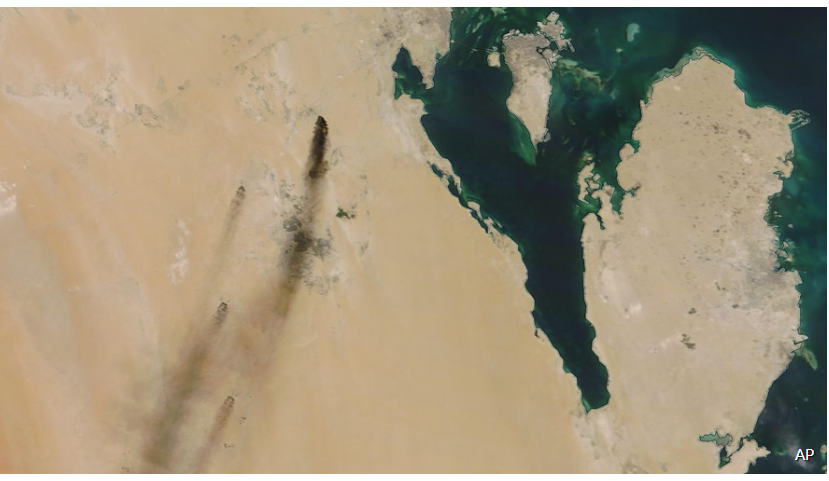
An intensifying Middle East conflict is threatening to throw the world’s energy market into disarray after weekend drone attacks destroyed parts of Saudi Aramco’s Abqaiq plant — one of the world’s largest processors of oil — and a separate nearby oil field.
On Saturday, the drone attacks, directed at Saudi Arabian oil facilities that account for nearly 10 million barrels of crude-oil production, resulted in massive plumes of black smoke emanating from the oil field, and a shutdown that could lead to about 50% of its production being at least temporarily thrown offline.
Prominent crude-oil strategist Phil Flynn at Price Futures Group told MarketWatch on Sunday that the drone strike was a “big deal” that could result in a major spike in crude-oil prices, because of the potential disruption to global supplies.
This isn’t the first such strike in the region, but this most recent attack highlights the vulnerability of Arabian Peninsula’s oil production and the far-reaching implications of political clashes in the Middle East on the rest of the world.
Here’s what investors need to know about the weekend drone strikes and the implications for global markets:
What Happened?
Ten automated, aerial, combat drones launched an attack on Saudi Aramco’s Abqaiq plant in Buqyaq and the Khurais oil field on Saturday at 3:31 a.m. and 3:42 a.m. local time, according to Gulf News.
To continue reading, please go to the original article at



Rob Cunningham: The Transformation of the Global Monetary System
10-12-2026
XRP: The Transformation of the Global Monetary System
Wall Street Investment Banking.
Correspondent Banking.
Central Banking.
Fractional Reserve Lending. Global Payments.