Iraq Economic News and Points To Ponder Thursday Afternoon 9-3-26
Small Banknote Shortage Causes Daily Disruption In Kirkuk Markets
2026-09-03 Shafaq News- Kirkuk Merchants and residents in Kirkuk, northern Iraq, are increasingly struggling to obtain 250-dinar ($0.19), 500-dinar ($0.38) and 1,000-dinar ($0.76) banknotes, with traders reporting shortages of small denominations and growing difficulties using worn or damaged notes in daily transactions.
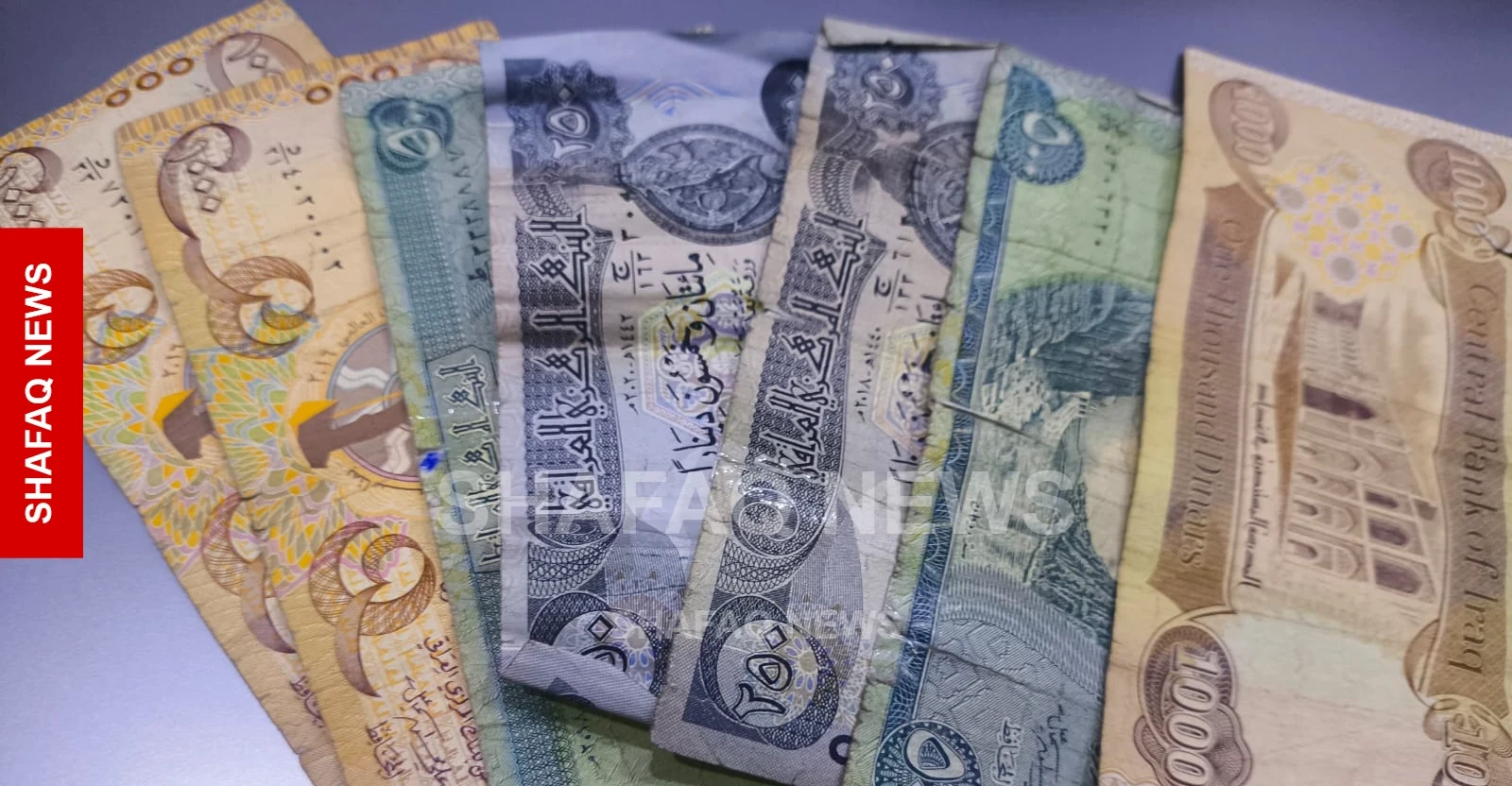
Abbas Ahmed, a shopkeeper in Kirkuk’s Doctors Street market, told Shafaq News that obtaining the three denominations has become increasingly difficult. “When customers pay with larger notes, some shops ask them to buy another item rather than give them their change.”
Some small-denomination notes reaching shops are also torn, dirty or heavily worn, making merchants and customers reluctant to accept them.
Samer Abdullah, a currency exchanger on Republic Street, noted a sharp increase in demand for small denominations, while supplies remain inconsistent.
Residents and merchants often turn to exchange shops for smaller notes, but the quantities available fluctuate. Some notes brought in for exchange are already damaged and need to be replaced rather than returned to circulation.
Small-denomination notes change hands more frequently than larger ones, making them more vulnerable to wear and tear, Abdullah explained.
Describing the shortage as a daily problem, Hamza al-Jubouri, a wholesaler in Kirkuk’s Citadel Market, told Shafaq News that small amounts of change are often needed in wholesale and retail transactions, leaving merchants with limited options when the required denominations are unavailable.
Some traders hold on to 250-dinar, 500-dinar, and 1,000-dinar notes rather than spend them, fearing they will be unable to replace them later. This further reduces the number of these notes circulating in the market.
Shafaq News’ review of currency issuance data shows that the number of 1,000-dinar notes rose from 718 million in 2022 to 775 million in 2026. The number of 250-dinar notes increased from 795 million to 818 million, while 500-dinar notes fell slightly from 147 million to 145.4 million.
Together, the three denominations accounted for about 1.738 billion notes in 2026, compared with roughly 1.660 billion in 2022, an increase of about 78.4 million notes.
The figures do not indicate how many of those notes are physically available in shops or remain in good enough condition for daily use. They reflect issuance data rather than the number of notes actually circulating or the proportion that has become damaged.
The Central Bank of Iraq (CBI) continues to list 250-dinar, 500-dinar and 1,000-dinar notes among the country’s officially circulating denominations. It has also stated that older notes remain legal tender alongside newer issues.
In an interview with Shafaq News, Economist Ali Khalil said the availability of small denominations should be measured not only by the number of notes issued but also by the number that remain fit for circulation.
Frequent handling makes small-denomination notes particularly vulnerable to damage, meaning some of the issued supply may have been removed from circulation or require replacement.
Khalil pointed out that the existence of more than one billion notes across the three denominations does not necessarily indicate a surplus in the market. “Damaged notes may no longer be usable even if they remain part of the official issuance figures.”
He called for stronger mechanisms to replace damaged notes, ensure a steady supply of new notes and monitor the movement of cash through banks, exchange shops and merchants.
The CBI has procedures for handling damaged banknotes, including criteria for their replacement depending on the type and extent of damage. An electronic service is also available through the Ur platform to submit requests for the replacement of damaged banknotes.
In 2020, the central bank reinstated penalties related to shortages of 1,000-dinar, 500-dinar, and 250-dinar notes, effective Oct. 1 of that year, under rules governing the circulation and replacement of banknotes and their counting and sorting.
Office worker Suhad Ibrahim told Shafaq News that consumers are among those most affected because they have little control over the availability of small denominations when making everyday purchases.
Customers who pay more than the price of an item sometimes do not receive their full change or are asked to buy another item to avoid losing the remaining amount.
The shortage is particularly noticeable in shops, markets and public transportation, where small cash payments are common.
Despite their low face value, 250-dinar, 500-dinar and 1,000-dinar notes remain an important part of Iraq’s cash-based economy. While official figures show an increase in the number of 250-dinar and 1,000-dinar notes since 2022 and a slight decline in 500-dinar notes, merchants in Kirkuk continue to report difficulty obtaining small denominations in usable condition.
https://www.shafaq.com/en/Economy/Small-banknote-shortage-causes-daily-disruption-in-Kirkuk-markets
USD/IQD Edges Higher In Baghdad, Steady In Erbil
2026-09-03 Shafaq News- Baghdad/ Erbil The US dollar opened Thursday’s trading mixed in Iraq, hovering around 154,500 dinars per 100 dollars.
According to a Shafaq News market survey, the dollar traded in Baghdad's Al-Kifah and Al-Harithiya central exchanges at 154,650 dinars per 100 dollars, up from yesterday's session’s 154,400 dinars.
In the Iraqi capital, exchange shops sold the dollar at 155,000 dinars and bought it at 154,000 dinars, while in Erbil, selling prices stood at 154,600 dinars and buying prices at 154,500 dinars
https://www.shafaq.com/en/Economy/USD-IQD-edges-higher-in-Baghdad-steady-in-Erbil
Iranian Rial Falls To Record 2.2M Per US Dollar
2026-09-02 Shafaq News- Tehran Iran’s currency fell to a record low on Wednesday, with the US dollar trading above 220,000 tomans, equivalent to 2.2 million rials, on the free market, from just over 210,000 tomans two days earlier.
Market data showed the dollar at about 220,300 tomans, the euro near 255,000, and the British pound around 297,000. The Imami gold coin, a widely followed domestic store of value, rose to about 226 million tomans.
US Treasury Secretary Scott Bessent unveiled “Operation Economic Outcast” on August 24, targeting nearly 60 Iran-linked individuals, entities, and vessels and widening potential secondary sanctions across sectors including digital assets, technology, gold, aviation, and shipping.
Renewed US-Iran military exchanges and a US blockade have since added pressure on Iran’s economy and crude exports. Iranian loadings fell to about 220,000 to 255,000 barrels per day in August from roughly 2 million bpd in March, according to industry data cited by Reuters.
Central Bank Governor Abdolnaser Hemmati said on September 1 that Iran had sufficient foreign-currency reserves and was prepared to inject up to $2 billion into the market to curb volatility. One Iranian toman = 10 rials
https://www.shafaq.com/en/Economy/Iranian-rial-falls-to-record-2-2M-per-US-dollar
Basrah Crude Prices Jump Nearly 6%
2026-09-03 Shafaq News- Basrah Iraq’s Basrah crude prices climbed sharply on Thursday, with Basrah Heavy rising $4.81, or 5.99%, to $85.15 per barrel, while Basrah Medium gained $4.81, or 5.75%, to $88.45.
Other regional grades also advanced. The OPEC basket rose 3.63% to $95.32 per barrel, while Oman crude gained 5.16% to $99.18.
Saudi Arab Light climbed 6.70% to $91.78 per barrel, while Kuwait Export crude rose 7.21% to $96.11.
Benchmark futures moved more narrowly. Brent slipped 0.30% to $95.34 per barrel, while US West Texas Intermediate eased 0.11% to $90.91. Murban crude edged higher to $106.10.
https://www.shafaq.com/en/Economy/Basrah-crude-prices-jump-nearly-6
Gold Jumps 1% As Dollar, Yields Ease Ahead Of US Jobs Data
2026-09-03 Shafaq News Gold rose more than 1% on Thursday as the U.S. dollar and Treasury yields eased, while investors strapped in for U.S. nonfarm payrolls data that could help shape expectations for the Federal Reserve's next policy move.
Spot gold rose 1.1% to $4,434.70 per ounce by 0425 GMT after hitting a near one-month low in the previous session.
U.S. gold futures gained 1.5% to $4,480.10.
The U.S. dollar was under pressure while U.S. Treasury yields slipped from multi-year highs. A softer dollar makes greenback-priced metals less expensive for holders of other currencies.
Key U.S. nonfarm payrolls data is due on Friday. Meanwhile, the ADP National Employment Report showed U.S. private payrolls increased moderately in August.
"The payrolls report will probably be the biggest defining moment of the week. If the jobs report misses expectations, and September rate hike bets decline, that could see gold move higher," said Ilya Spivak, head of global macro at Tastylive.
"If prices get over the $4,400 level they're currently in, we are going back in the direction of $4,500 and then $4,700."
Markets are currently pricing in a 62% probability of a U.S. rate hike this month, the CME FedWatch Tool showed.
U.S. economic activity increased modestly, employment rose slightly, and prices increased moderately in recent weeks, according to a mixed report published on Wednesday by the Fed that may do little to convince central bank policymakers one way or another as they weigh whether to raise interest rates at their September 15 to 16 meeting.
Gold is traditionally seen as an inflation hedge, but higher rates increase the opportunity cost of holding the non-yielding asset.
On the geopolitical front, top aides to U.S. President Donald Trump are pushing to keep the Iran war from escalating before November's midterm elections to staunch Republican electoral losses, four people familiar with the discussions said. White House officials will consider ramping up military action after the November 3 vote, the sources said.
Among other metals, spot silver rose 1.2% to $66.08, platinum climbed 1% to $1,777.79 and palladium firmed 0.8% to $1,356.50. (REUTERS) https://www.shafaq.com/en/Economy/Gold-jumps-1-as-dollar-yields-ease-ahead-of-US-jobs-data